Bhutan had been on my list for a long time, not because it was a “must-see,” but because it felt genuinely different. After a lot of travel, I’ve found myself less interested in seeing more of the same and more curious about places that operate on their own terms. Bhutan seemed like one of those places — the country itself and its culture.
It’s a country that limits tourism and talks openly about happiness instead of GDP, and those limits were part of what drew me in. I knew access would be structured, movement guided, and spontaneity more limited than in most places I’ve traveled, and I was curious what that would feel like.
I wasn’t expecting some untouched Shangri-La. I knew Bhutan had changed, and that tourism, even when carefully managed, leaves its mark. But I wanted to experience a place that’s actively trying to protect itself.
And yes, the hike to Tiger’s Nest was up there too.
My flight from Delhi to Bhutan wasn’t until 12:30 p.m., but I left for the airport around 8:30 a.m. — and I’m glad I did. Check-in was fine; it was security that nearly did me in. The lines went on forever, and Delhi has separate screening areas for men and women, though you don’t realize that until you’re already committed to the wrong line. Almost every scanner showed a green light for “male,” so I dutifully put my bags on the belt — only to be waved out by a guard who tried (unsuccessfully) to explain that I needed to be somewhere else entirely.
By the time I understood, I had to sprint back for my boarding pass and then across to another screening area. Inside the women’s line, every single person set off the buzzer (apparently that’s the norm), so we all got shuffled into tiny, curtained booths for a handheld wand check. It was slow and mildly chaotic, and all I could think about was my bags sitting alone on the other side of the belt — but somehow, miraculously, they were still there when I came out.
I reached the gate with about 45 minutes to spare.
The flight from Delhi to Paro was about two hours, and easily one of the most beautiful descents I’ve ever experienced. I’d made a point of booking that left-side seat because I’d read it was where you’d see the Himalayas — and sure enough, they came into view, stretched across the horizon in long, jagged rows, rising beyond layers of cloud.

I’d also read that landing in Paro Airport is considered one of the more technical in the world, with only about 50 pilots trained to do it, so I was prepared to feel very on edge — I’m one of those people who loves travel but not flying. I half-expected the landing to feel like a roller coaster in the air. Instead, the descent was incredibly smooth.
The plane banked gently as it followed the curves of the valley — one wing dipping, then the other — moving in a smooth, almost S-shaped path, all done visually, without instrument-guided landing systems. I’d imagined something tense or jerky; what I got instead was quiet, controlled — and honestly, absolutely beautiful.
I’m sure there are landings that are far more frightening, but this one was not only calm — it was one of the most beautiful flights I’ve ever experienced.
During the descent, a soft Bhutanese flute melody began playing over the speakers — gentle and slow and strangely fitting with what was outside the window. Just before landing, the announcement came:
“Welcome to Bhutan — the Land of the Thunder Dragon.”

Paro Airport is one of the nicest airports I’ve seen. The whole place feels thoughtfully designed — carved wood, painted beams, traditional Bhutanese architecture everywhere. In Bhutan, even new buildings are required to follow traditional design, so the airport feels cohesive rather than themed. Even the baggage carousel had a miniature dzong built into the center, which made me smile.
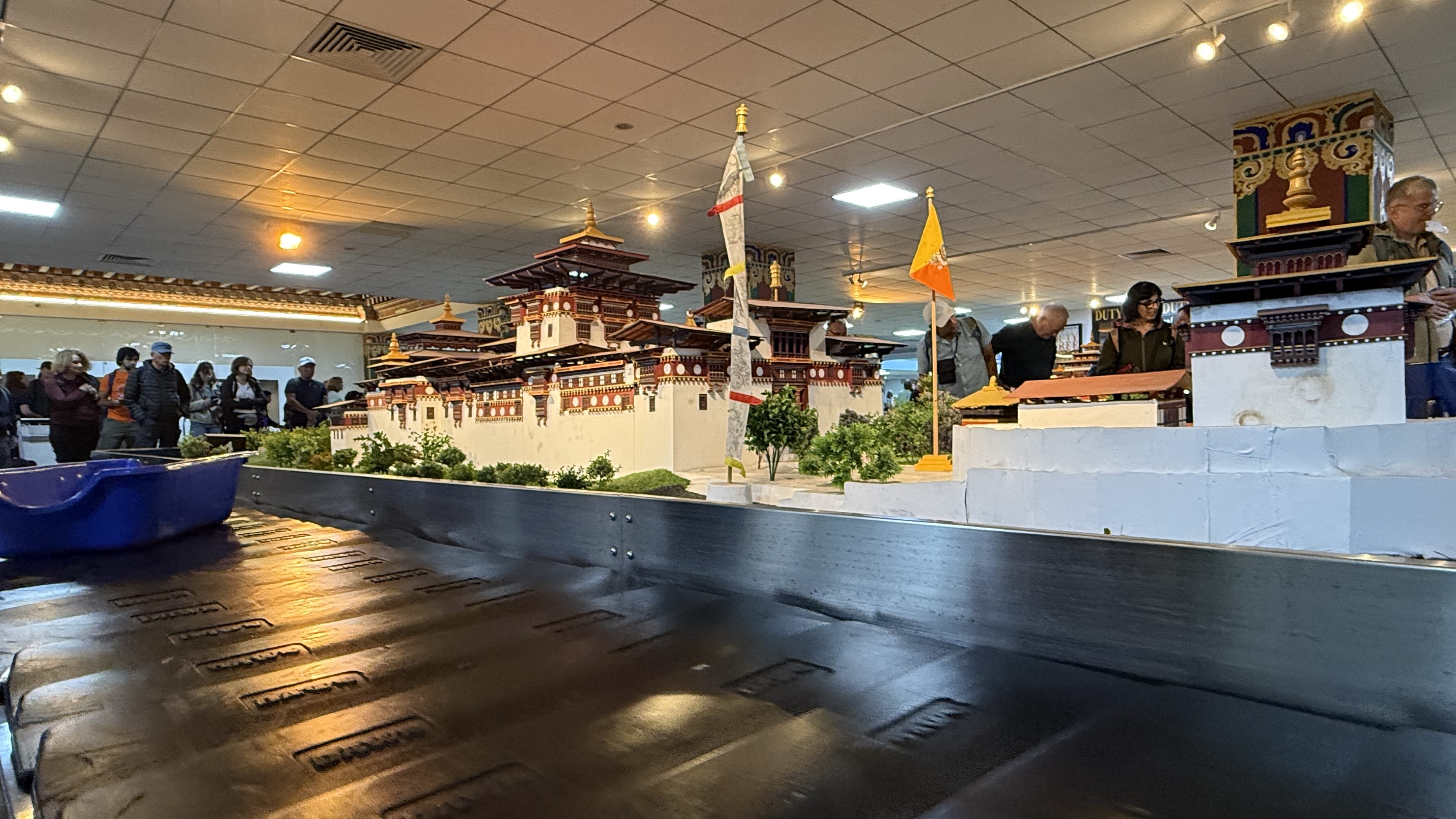
After passport control — where I got one of the most beautiful stamps in my passport — I spotted my driver holding a sign for our tour group.
Outside, I got into a van and began the drive toward Thimphu, about an hour and a half away. The road winds along the river, past hillsides draped in prayer flags and colorful archways marking sacred areas.

And then I started seeing flashes of red — chilies drying on the green rooftops and window ledges of whitewashed houses. Bhutanese cuisine uses chilies in almost everything, and they were everywhere.
As we approached Thimphu, traffic slowed to a crawl. My guide explained that the Global Peace Prayer Festival 2025 was happening that week, and that the former king, Jigme Singye Wangchuck’s 70th birthday was also drawing people from all over the country. The streets were packed. Near our hotel, it felt busy almost all day. Definitely more crowded than usual, according to our guide.
Thimphu didn’t feel particularly quiet or intimate — at least not during this visit. Even with the crowds, there was no honking and no frantic weaving through traffic. Just patient movement and people making their way toward celebrations, a striking contrast to what I’d just experienced in Delhi.
Later that evening, I met up with the group I’d be traveling with on this Intrepid trip. There were nine of us in total — two friends from San Francisco, two women from Seattle, one from Colorado, one from Australia, and a couple from Canada. Eight women and one man, along with our guide, Deepak, and our driver, Yoda.
Over the next ten days, we’d be traveling through western and central Bhutan — the route most visitors follow — but for now, it was enough just to finally be here.
We started the morning by driving out of Thimphu toward the trailhead for Cheri Monastery, following a winding road through pine-covered hills and small clusters of homes. Along the way, we stopped at a hillside memorial centered around a large rock painting of Guru Rinpoche, the Buddhist master said to have flown into Bhutan on the back of a tigress. Hundreds of prayer flags stretched across the site, creating a bright canopy that moved with the wind.

A few minutes later, we reached the trailhead for the hike. The trail isn’t long — maybe an hour to the top — but it gains enough elevation that you feel it.
Before the climb began, we crossed a covered wooden bridge spanning the Wang Chhu River, its blue-green water rushing below. The bridge was wrapped in rows of colorful prayer flags fluttering softly in the morning air.
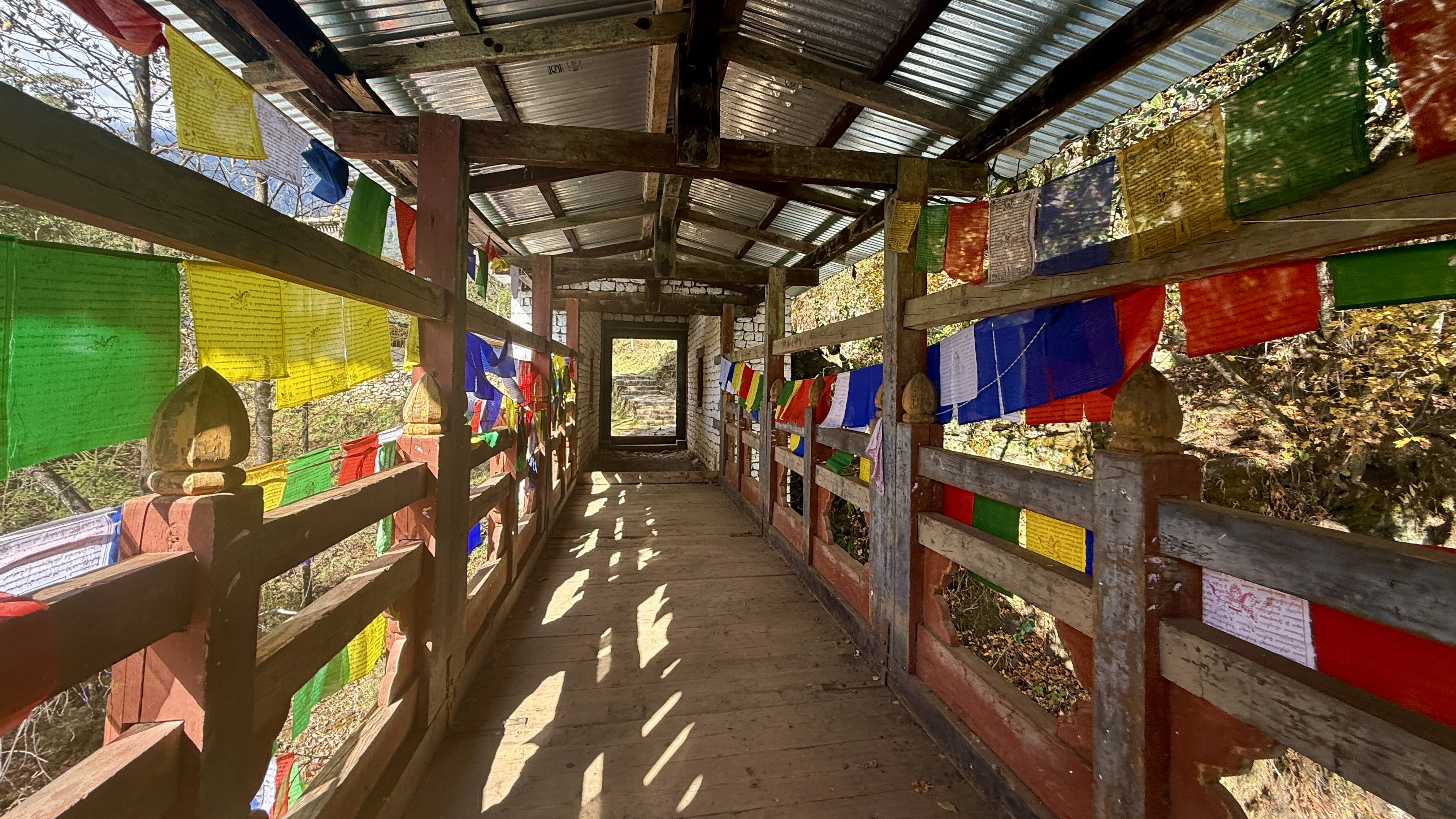
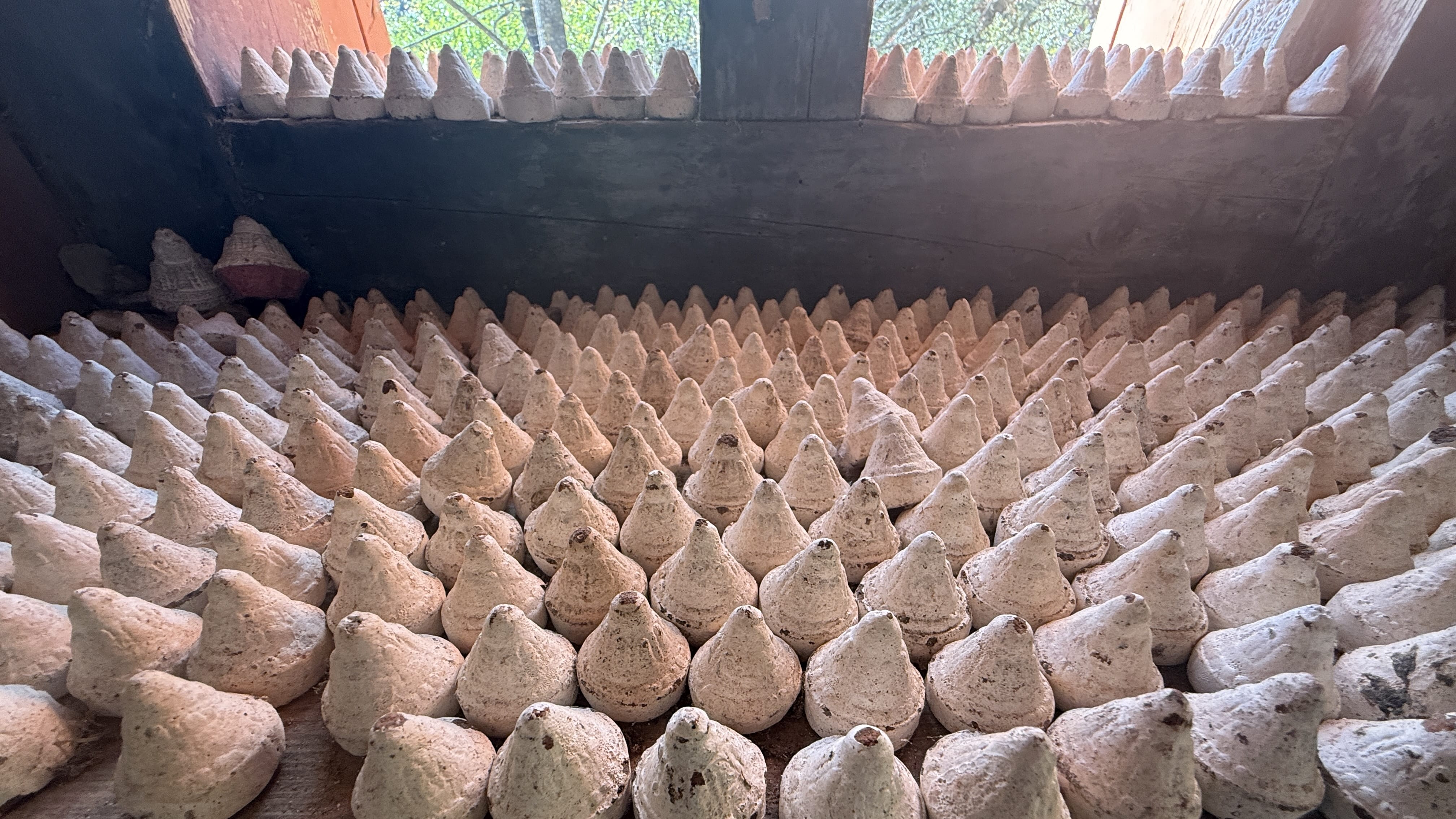
Inside, lined along the windowsills and corners, were hundreds of small, teardrop-shaped white forms. At first, they looked like bits of chalk, but my guide explained they were tsa-tsa — small clay memorial offerings, sometimes mixed with the ashes of loved ones. Because bridges in Bhutan are seen as spiritual thresholds, the placement made sense. The tsa-tsa aren’t just left behind; they’re carried forward as the river moves beneath them.
Walking through that bridge, with the wood creaking underfoot and the water rushing below, felt like one of those subtle Bhutan moments when something ordinary becomes quietly sacred.
Just beyond the bridge stood a small white stupa, marking the entrance to the sacred area. Many people pause there for a short prayer before beginning the climb.
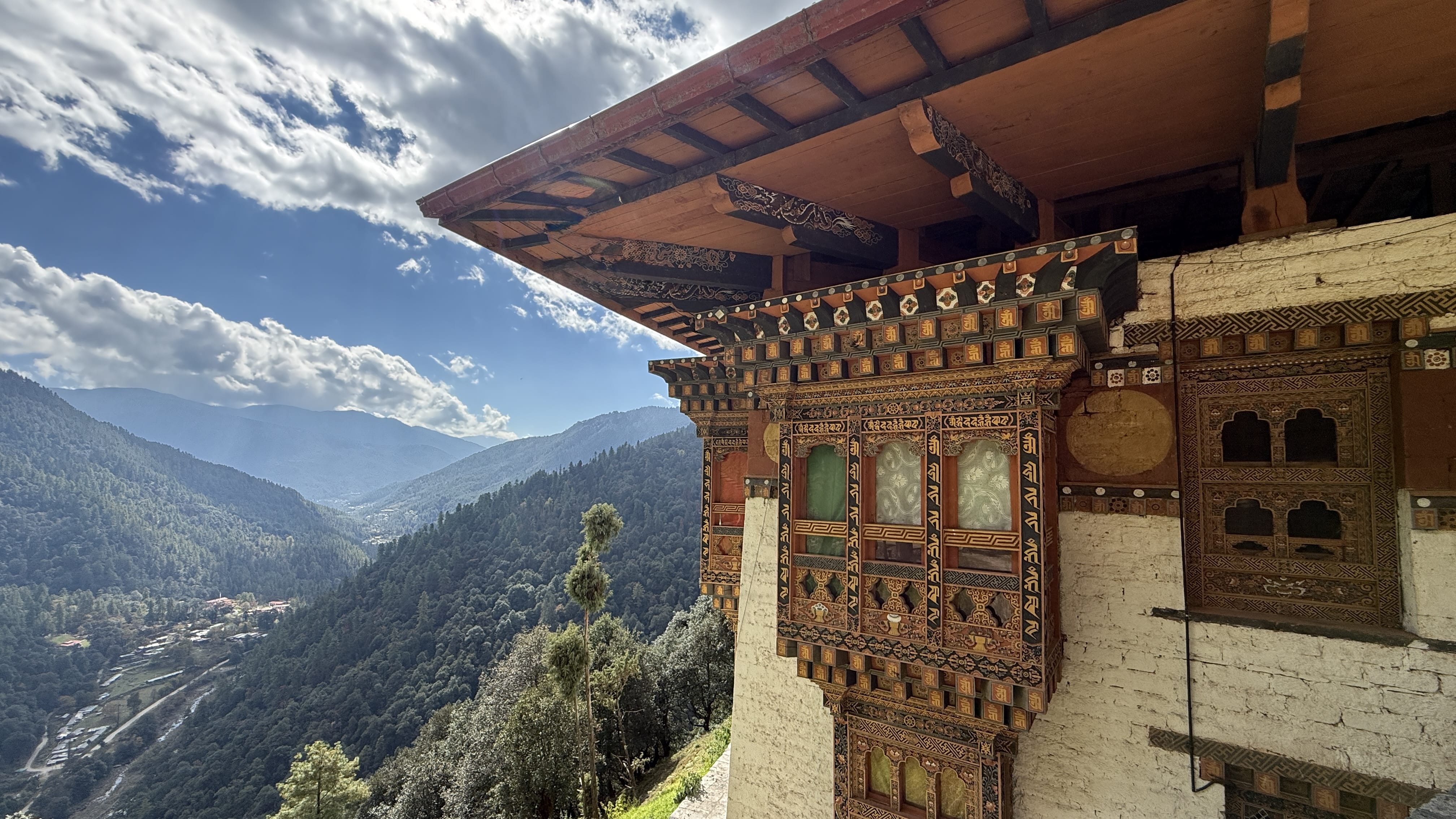
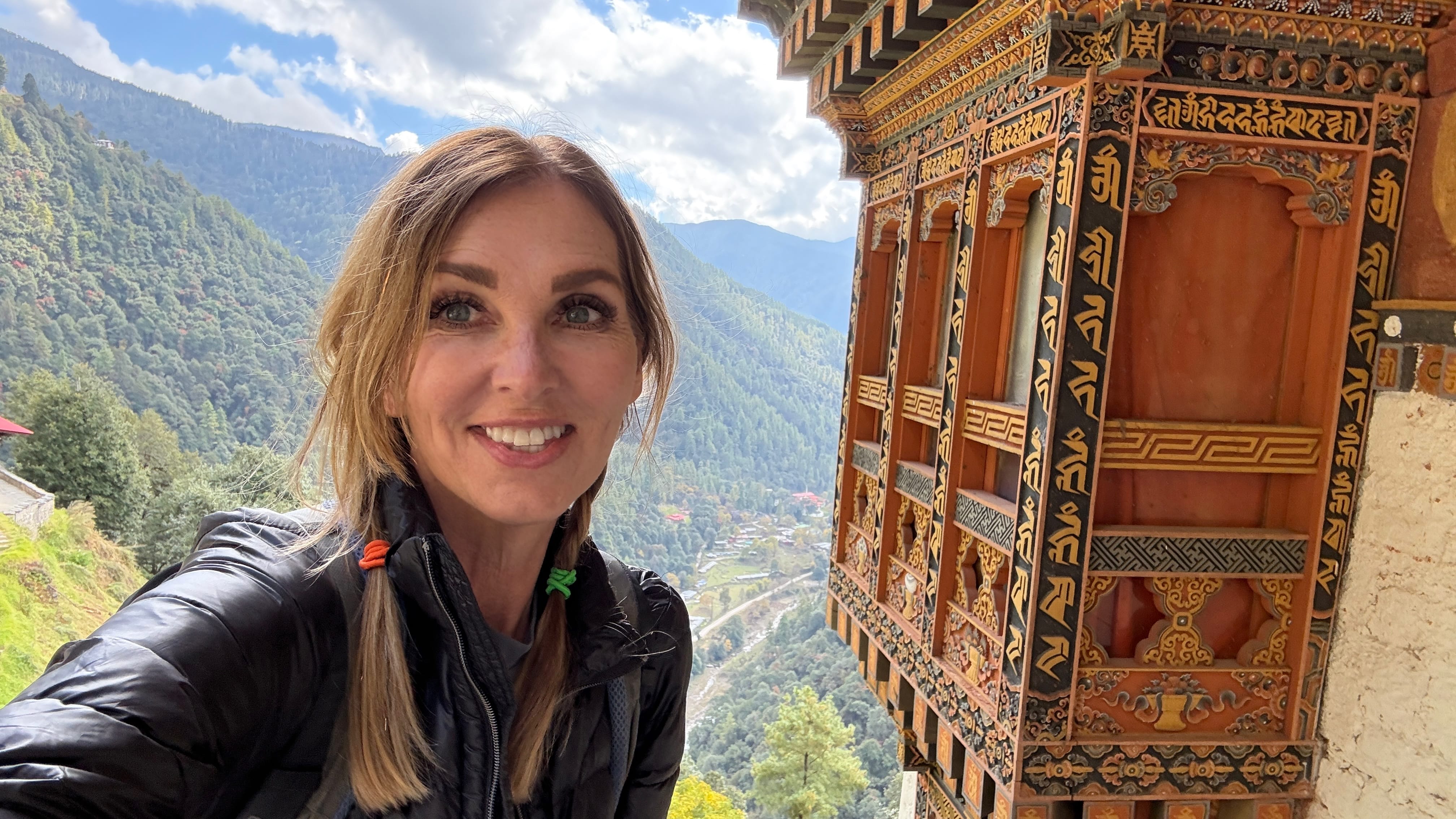
Cheri Monastery — also called Chagri Dorjeden — dates back to the early 1600s and is considered the birthplace of Bhutan’s first monastic order. At around 2,800 meters (9,200 feet), it sits high on the mountainside with sweeping valley views.
I took the hike slowly, aware of the altitude but never struggling. The monastery appeared ahead, perfectly settled into the green hills.

Inside, the monastery was stunning — bright murals, quilted banners and thangkas, and intricate butter sculptures. A row of life-sized guardian figures stood along one wall, dressed in robes and wearing carved wooden masks. Some held ritual weapons. My guide explained they were protector deities, believed to guard the monastery from negative forces. I’d never seen anything like them — beautiful yet a little haunting.
This was my first monastery interior in Bhutan, and also my first reminder that photography isn’t allowed inside religious spaces — something that would shape how I experienced temples throughout the trip.
A monk sat off to the side, striking a horizontal temple drum (a nga) with a curved stick, keeping a slow, steady rhythm as he chanted. Another monk offered a small amount of blessed water before we left. It tasted faintly of menthol or camphor — cool, herbal. I sipped a little and touched the rest to my head and shoulders. My first blessing.

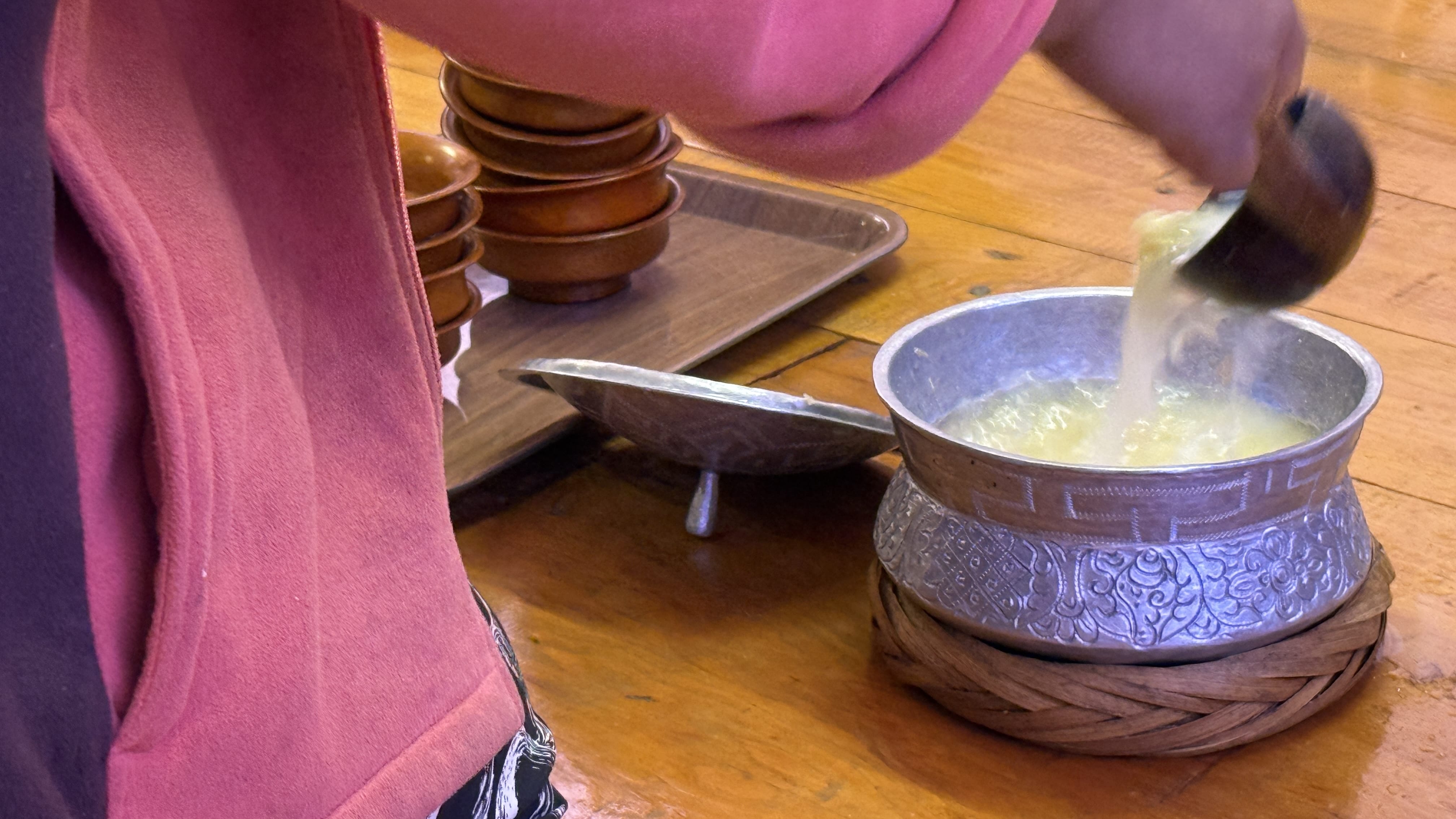
After the hike, we visited Simply Bhutan Museum, a cultural center designed to offer a look into traditional village life. There were demonstrations of building techniques, archery, and the chance to try butter tea. The staff were warm and genuinely eager to explain the meaning behind what we were seeing.
I’ll be honest, though — while I absolutely understand the importance of preserving culture, parts of it felt a little staged. The archery, for example, wasn’t quite the same as what I later learned is practiced in real competitions, where targets are set astonishingly far away. Here, the setup felt more symbolic than authentic, complete with a small target and a celebratory dance if you hit the center.
The butter tea, too — I would have preferred trying it quietly in a local setting rather than as part of a demonstration.
In hindsight, I would have traded this stop for more time elsewhere. But that’s one of those things you don’t really know until you’ve been — and now I do.
After lunch, we headed to the National Memorial Chorten, one of the most beautiful stupas in Thimphu. From afar it gleams white with golden spires; up close, the details are endless — painted symbols, carved patterns, and rows of prayer wheels circling the base. Built in 1974 in memory of the Third King, it’s both a monument and an active place of worship. Locals walked clockwise around the stupa, spinning prayer wheels and quietly chanting.
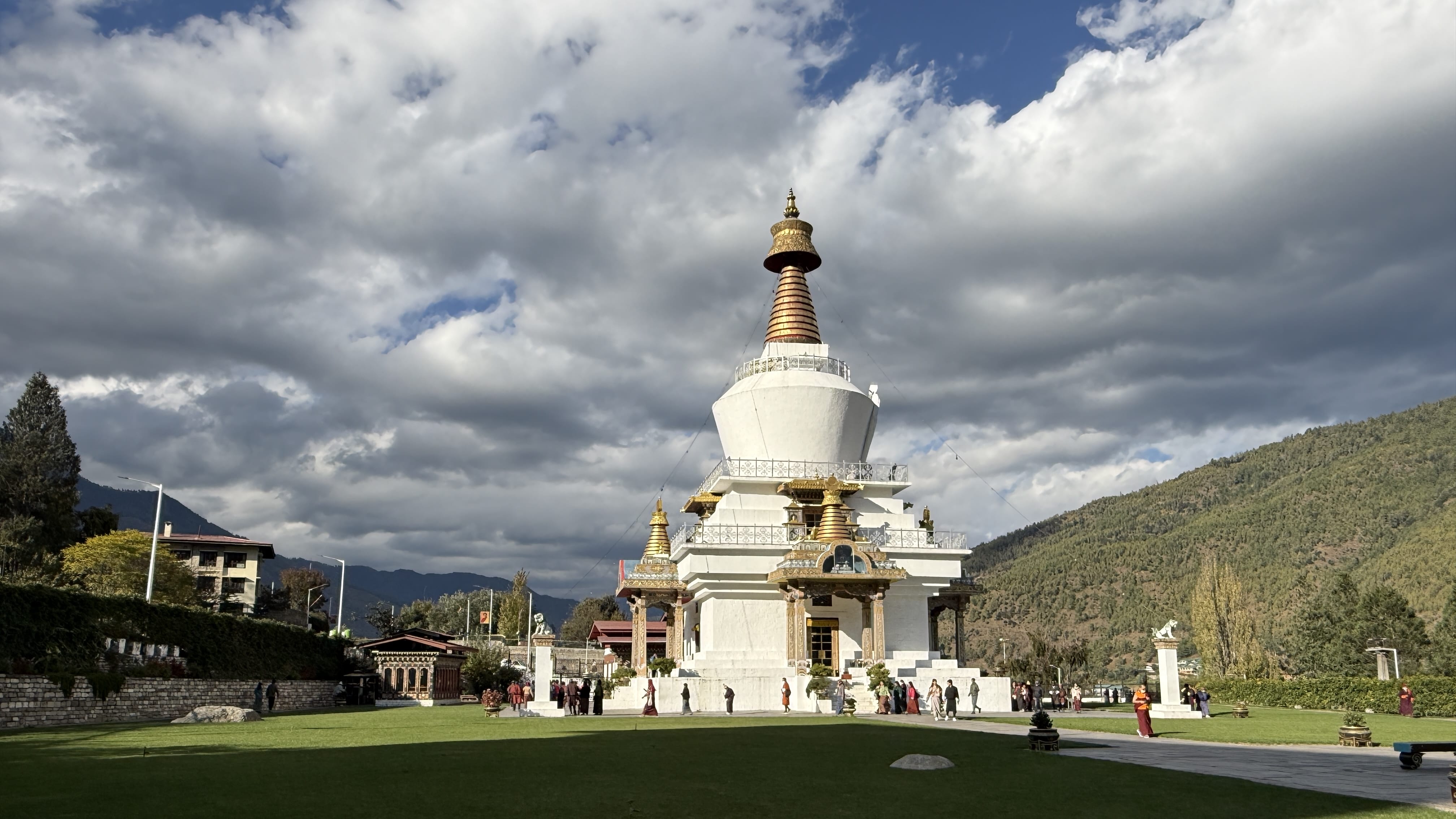
Inside was filled with color. The chorten rises three stories, each level representing a stage of spiritual awakening. Murals of deities covered the walls, some gentle, others fierce. At the center stood an enormous image of Vajrakilaya surrounded by glowing butter lamps and intricate offerings.
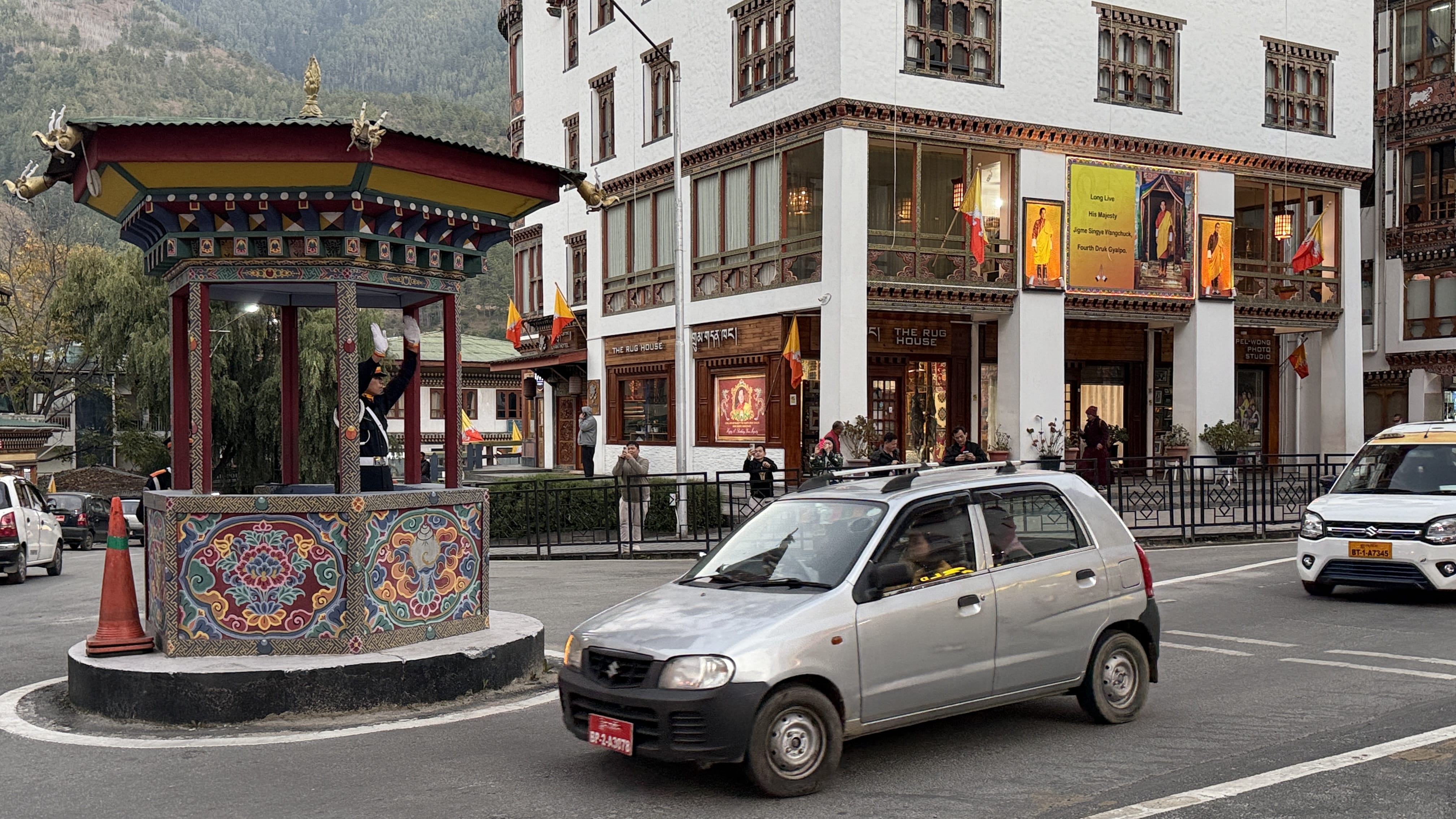
On the drive toward the palace, I finally saw one of Thimphu’s famous traffic officers. Bhutan has no traffic lights, so intersections are managed by uniformed guards who stand in small, pagoda-shaped booths. Watching him direct traffic was unexpectedly mesmerizing — graceful movements that really did look choreographed.
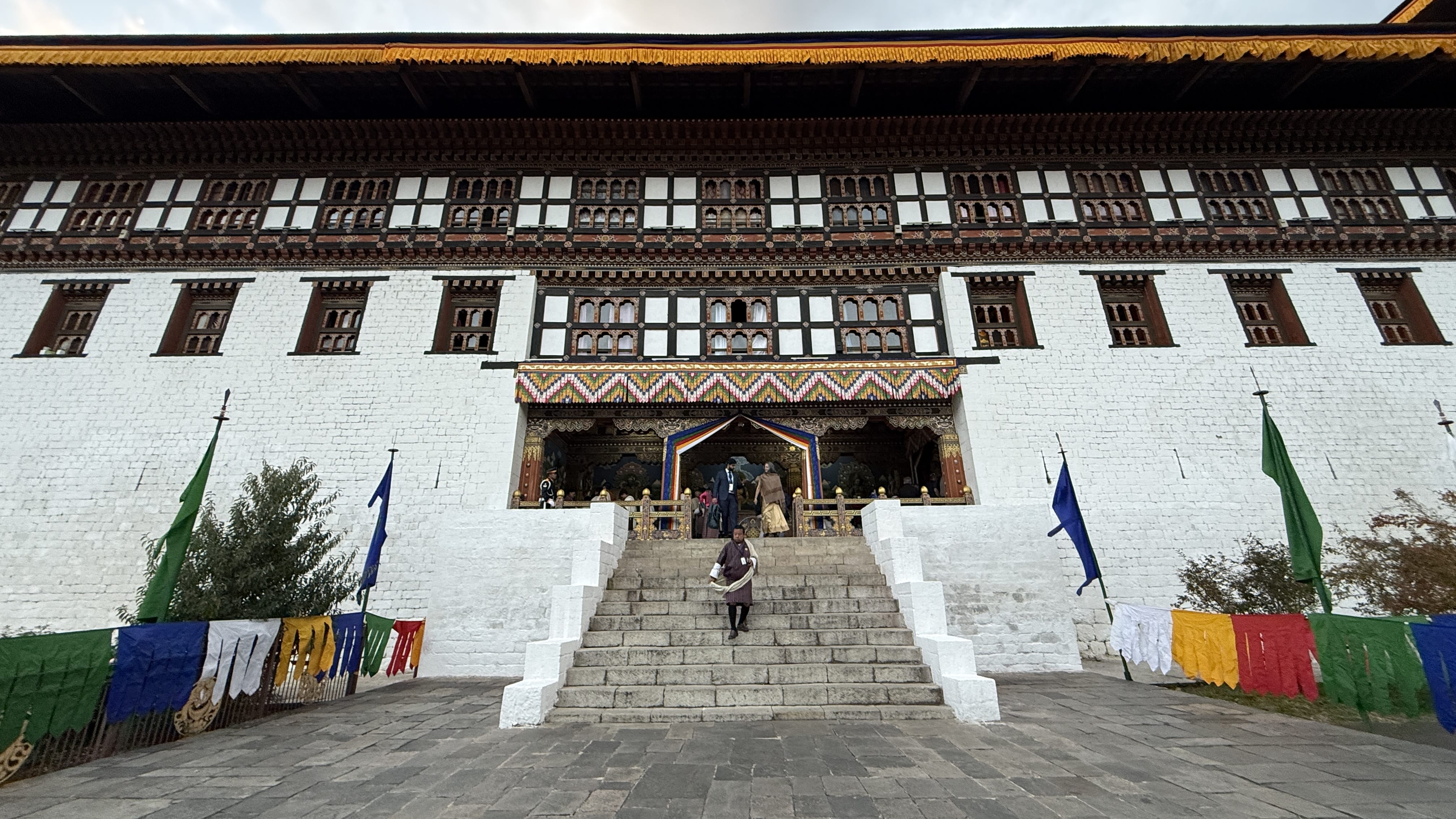
Our final stop was Tashichho Dzong, the massive fortress-monastery on the edge of Thimphu. Workers were busy hanging bright banners and covering upper windows with red fabric in preparation for the King’s upcoming birthday.
We left Thimphu early for the long drive to Phobjikha Valley (pronounced foh-bee-kha), about 135 kilometers away. It doesn’t sound far, but the road curves steadily through the mountains, climbing and descending over high passes. Even with good weather, it’s a four- to five-hour journey.
As we left Thimphu, my guide mentioned that parts of Bhutan had dealt with militant groups crossing over from the Indian border in the late 1990s and early 2000s. Before taking military action, he explained, the King made repeated attempts to resolve the situation peacefully, including dialogue and small gestures meant to encourage the militants to leave on their own.
One story he shared involved handing out oranges as part of a genuine effort at goodwill. When those efforts failed, the government eventually acted to protect the country’s sovereignty. It was told lightly, yet it hinted at how complicated border regions can be — even in a place as peaceful as Bhutan.
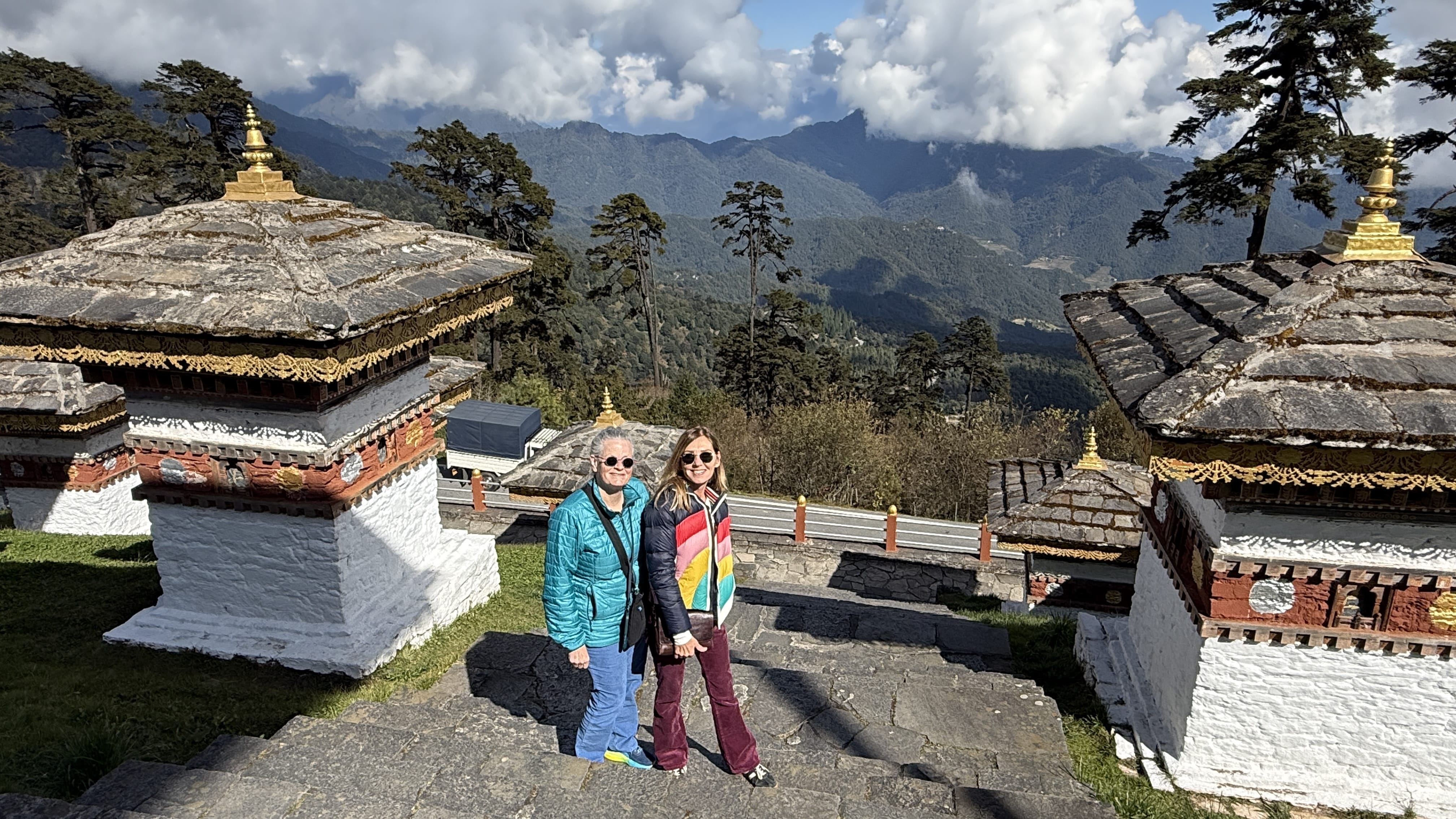
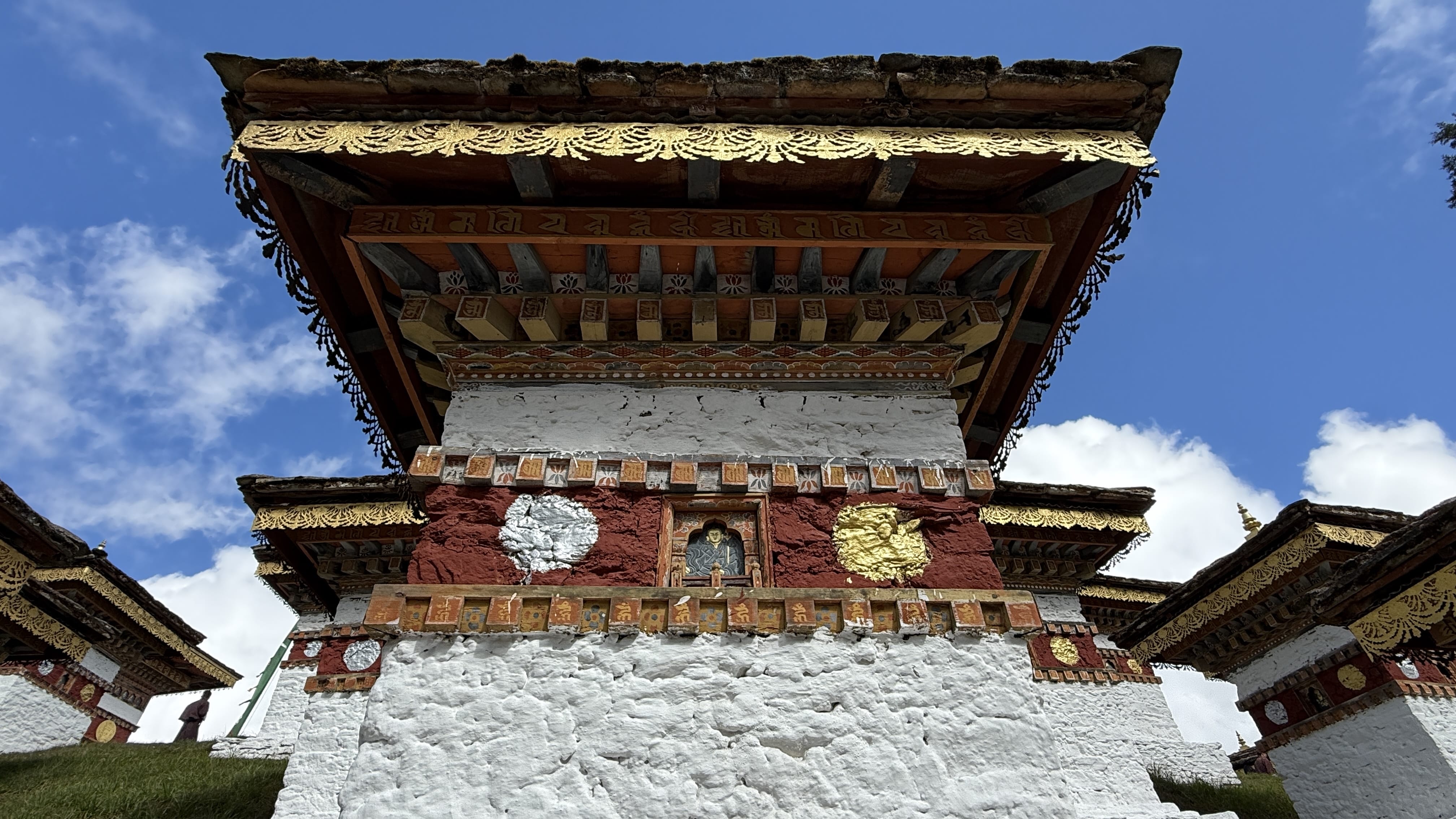
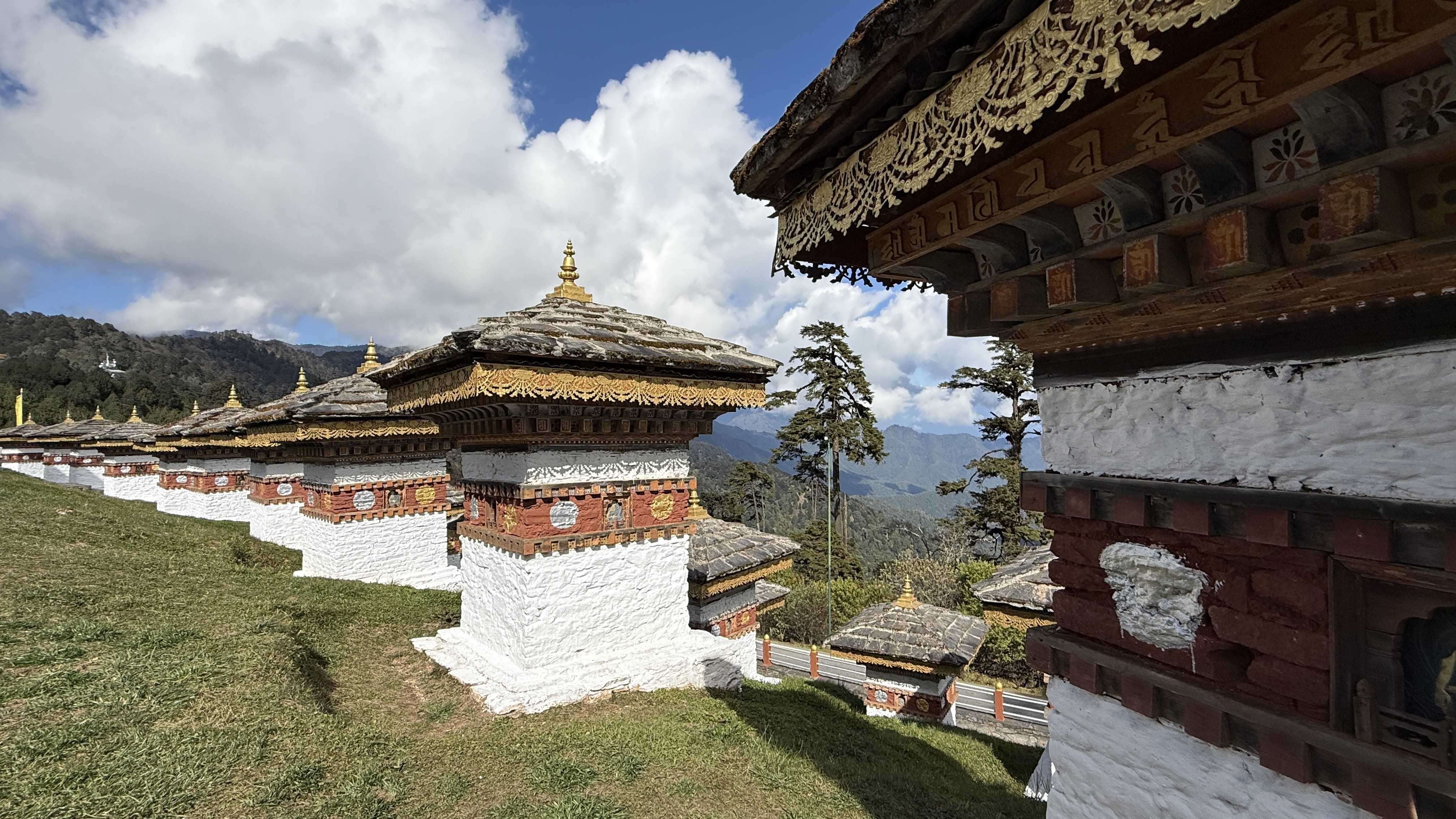
After about an hour, we reached Dochula Pass (approximately 3,200 meters / 10,200 feet), a windswept saddle lined with 108 white chortens and bright prayer flags. On clear days, you can see a sweep of Himalayan peaks; but, even wrapped in fog, it was beautiful.
(In Bhutan, the highest points along the road are marked by mountain passes draped with chortens and prayer flags, where blessings are carried by the wind from one valley to the next.)
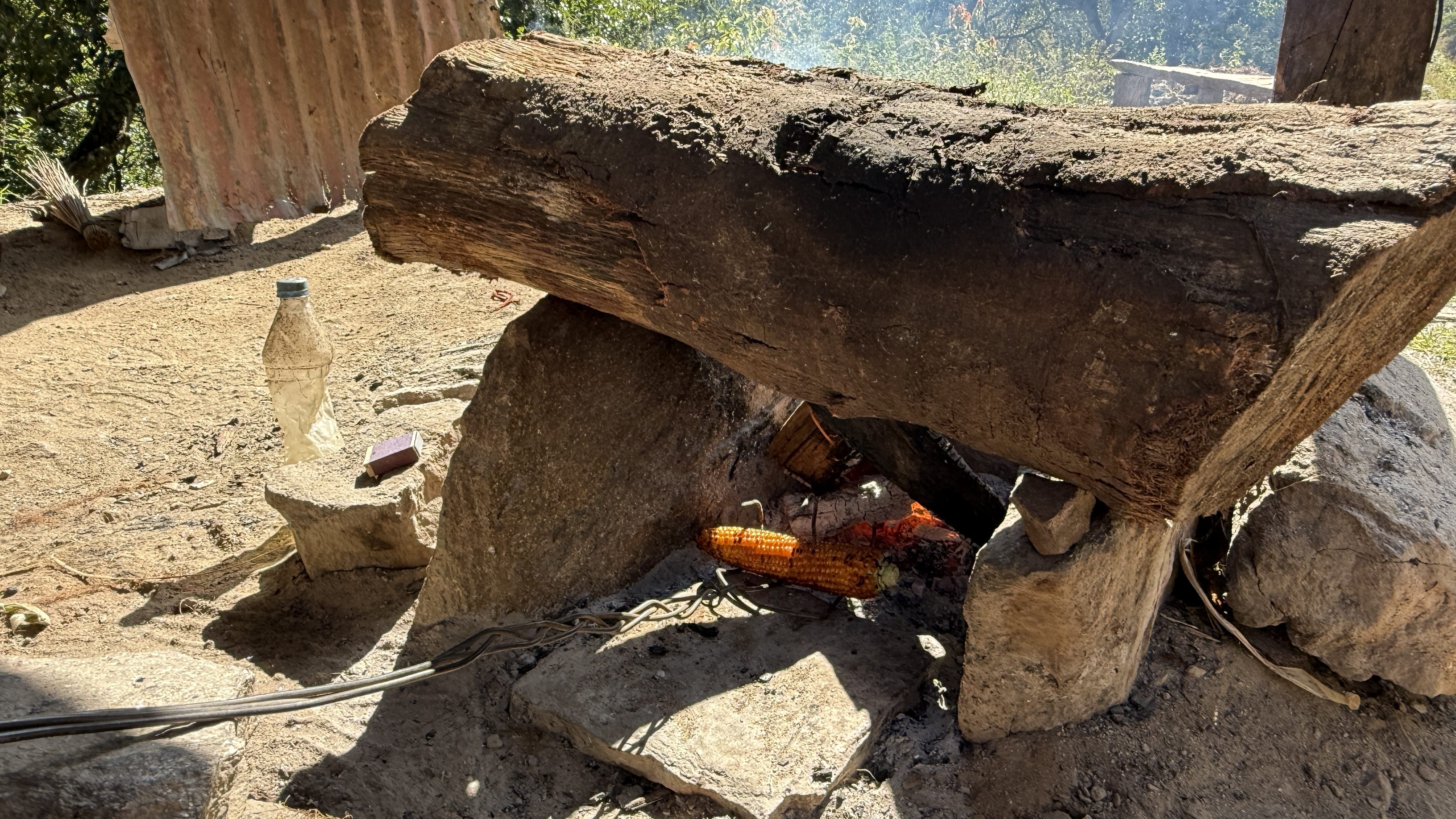
After Dochula Pass, we began passing small roadside setups where people were grilling corn over open fires. It wasn’t on the agenda, but after seeing a few, we asked our guide if we could pull over. He seemed almost surprised — like it hadn’t occurred to him that we might want to stop — but once we said yes, that was that.
The corn was served straight from the fire, salted and finished with a squeeze of lime — simple, and incredibly good.
We dropped down into a lower valley for lunch at Lobesa Restaurant. As with all our meals so far, it was buffet-style, with an assortment of Bhutanese dishes — including ema datshi (chilies and cheese), kewa datshi (potatoes and cheese), red rice, and vegetables.
After lunch, we continued climbing toward Lawala (Lawa La), at around 3,200 to 3,250 meters. Here, the landscape shifts to dwarf bamboo, rhododendrons, and long, open views. As the road begins to descend, the glacial basin of Phobjikha opens up — a broad valley dotted with farmhouses and prayer flags.
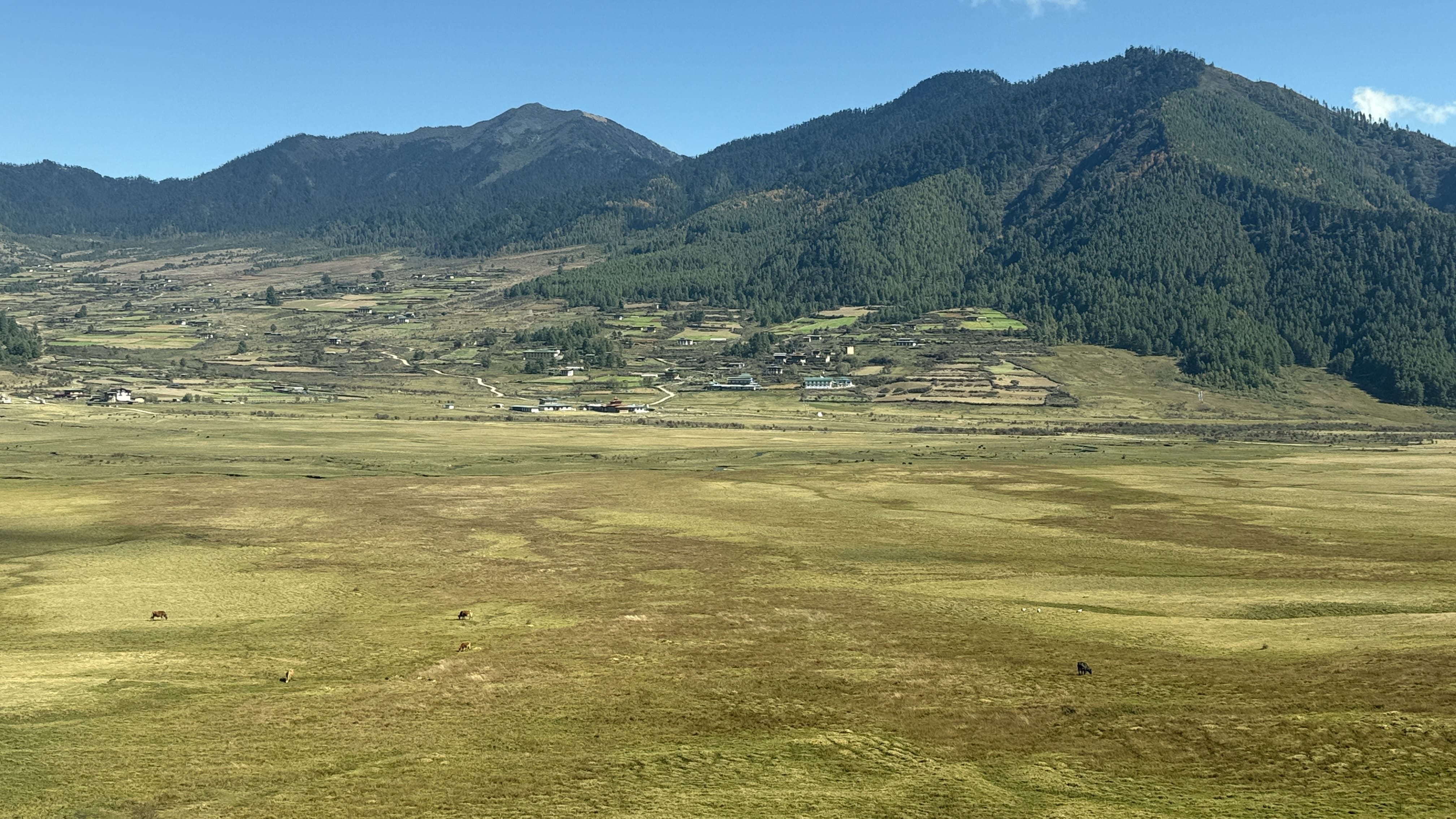
Phobjikha Valley is a wide, bowl-shaped glacial valley in central Bhutan, part of the larger Gangtey region. At just over 3,000 meters (about 10,000 feet), it’s one of the highest and most unspoiled valleys in the country — a mix of open meadows, dark pine forests, and a quiet that feels almost suspended in time.
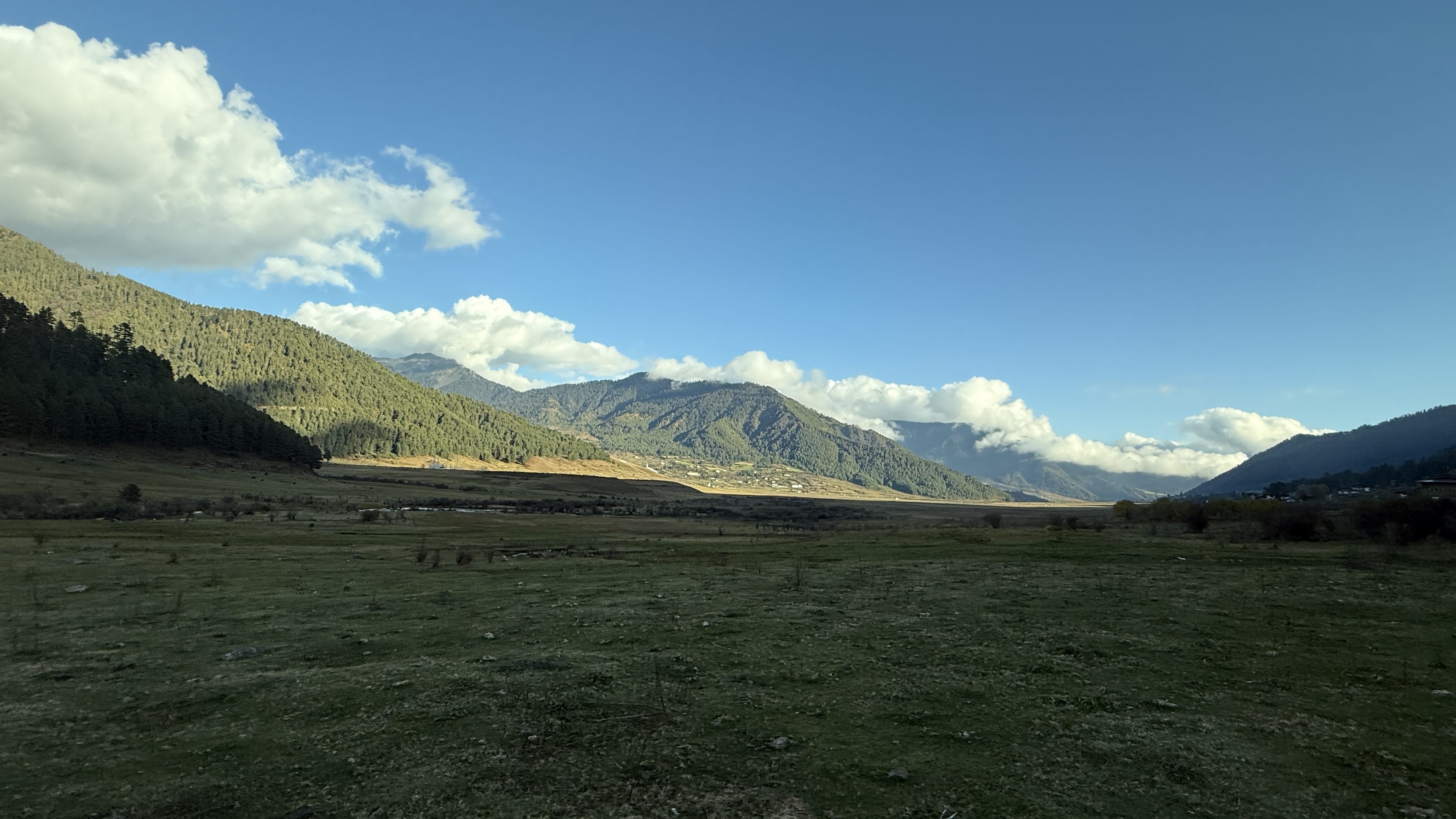
Electricity here is limited, and many farmhouses and hotels still rely on wood-burning stoves. Nights are cold, mist settles over the fields, and the stillness is the kind that makes you slow down whether you mean to or not.
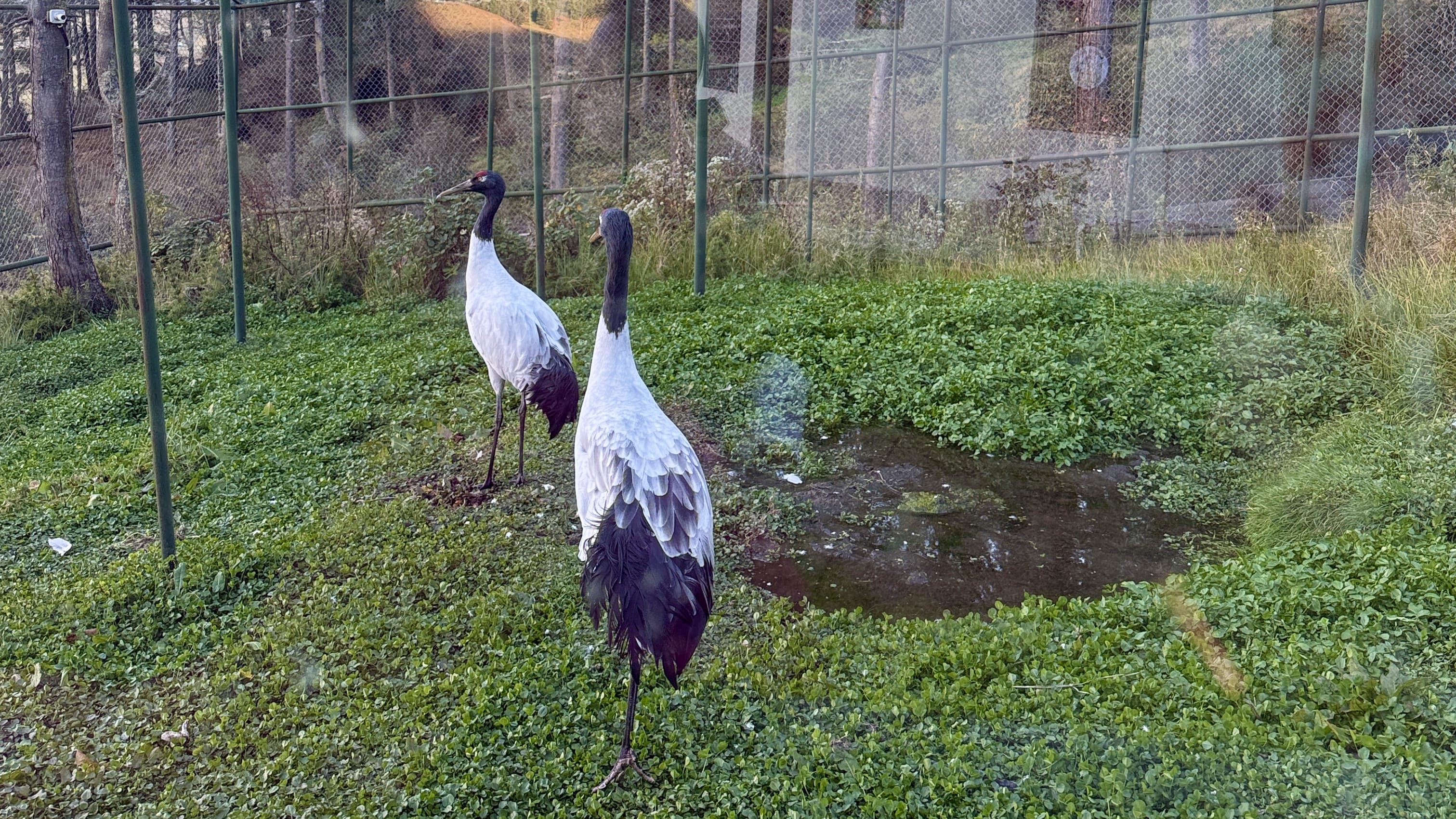
Before checking in, we stopped at the Black-Necked Crane Education Centre, which overlooks the wetlands where the cranes winter. Inside, the exhibits are small; outside, scopes are set up toward the meadows where the birds gather from October to February.
The center also has an outdoor enclosure area for birds that can’t survive in the wild due to injury. On the day I visited, there were a couple of black-necked cranes there as well, though I didn’t learn their specific stories.
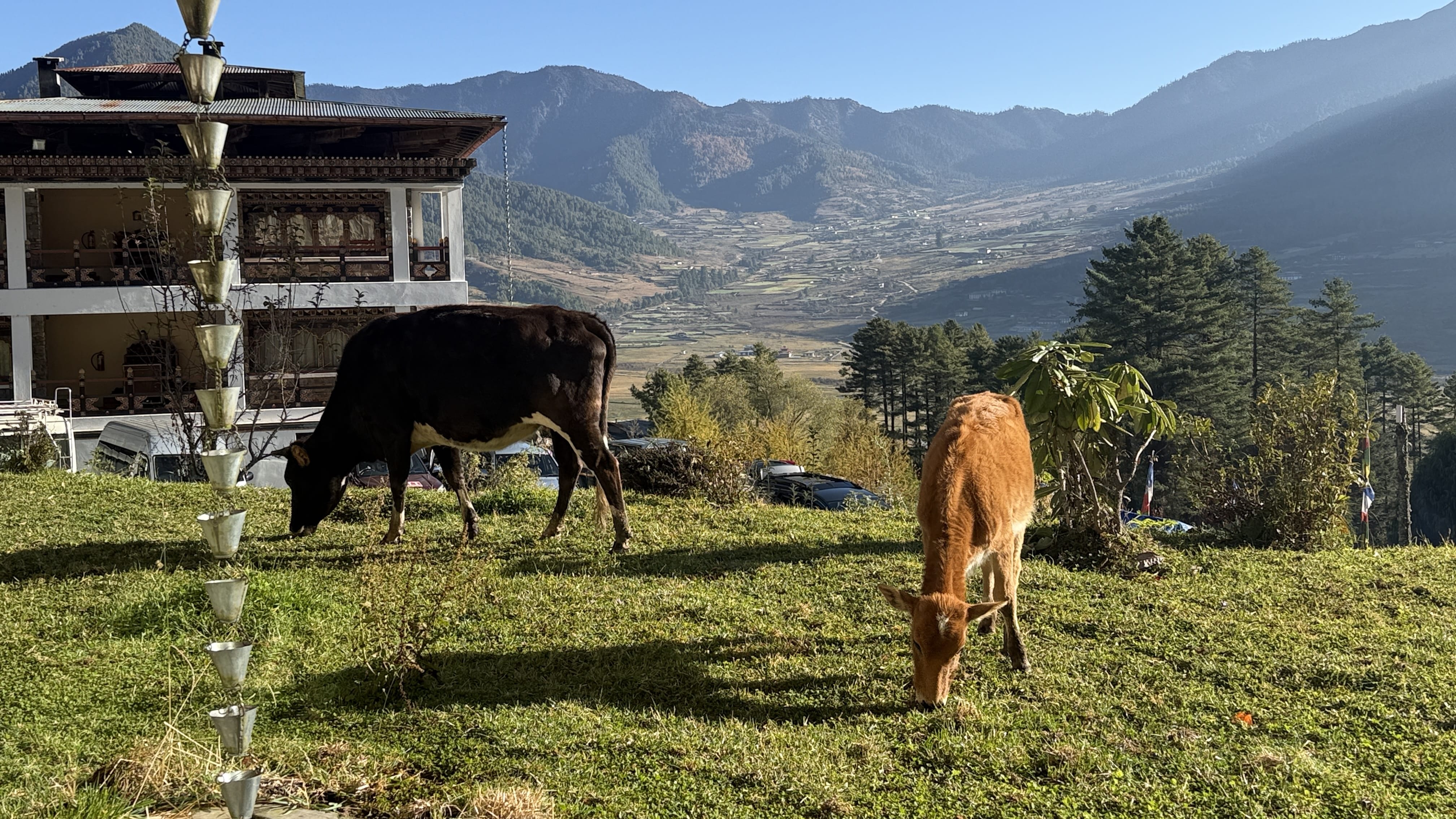
From there, we drove a short distance to our hotel for the next two nights. Dewachen Hotel & Spa sits on a hillside overlooking Phobjikha Valley, surrounded by pine forest and open fields, with cows grazing quietly in the grass around the hotel — exactly what I’d pictured when I first imagined Bhutan.
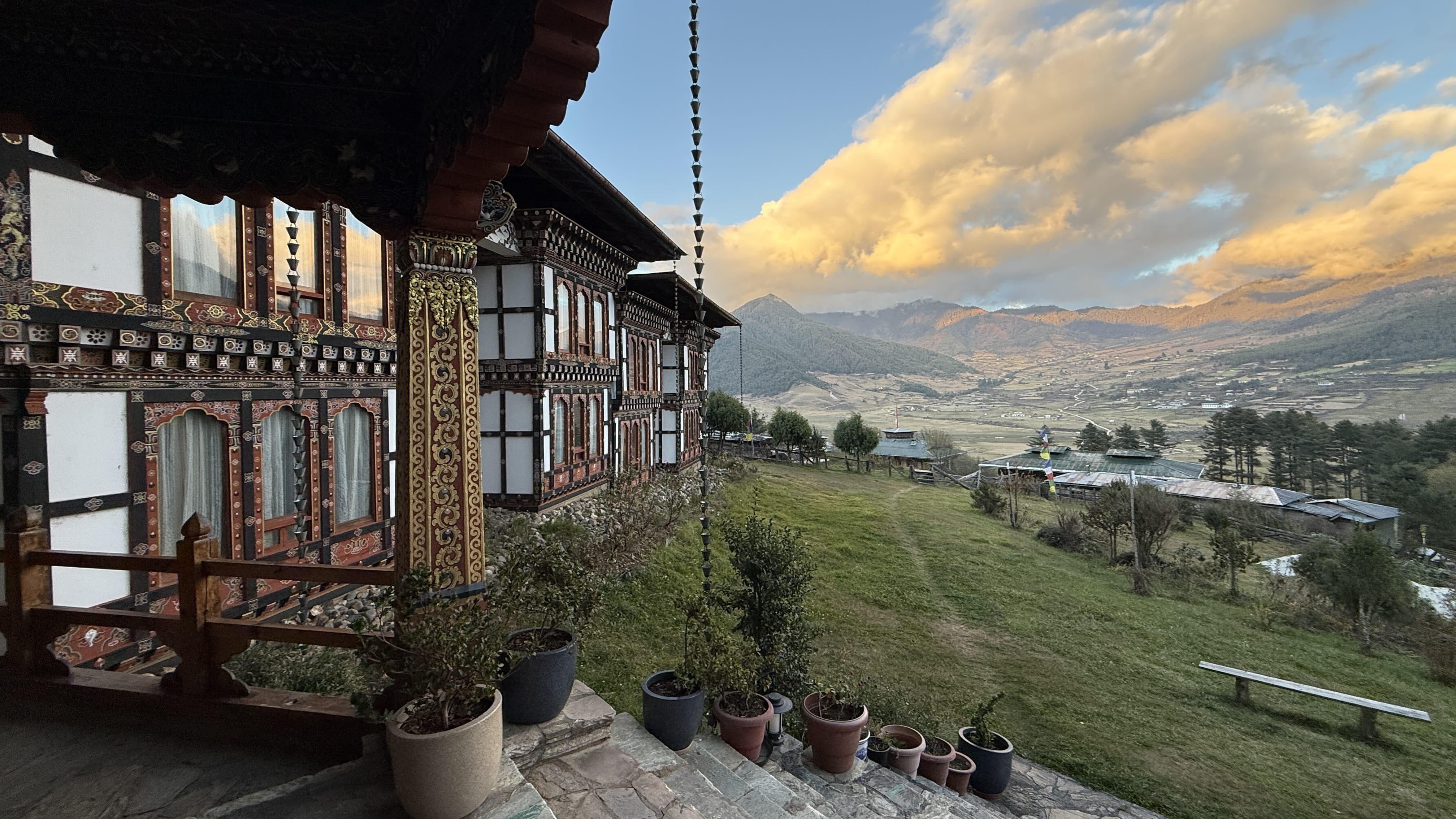
We’d been warned that electricity can be unpredictable out here, and sure enough, during dinner the lights went out three times — complete darkness.
Later that night, back in my room, one of the attendants came by to light the small wood-burning stove. The air smelled faintly of wood smoke, and the room felt warm and peaceful. The fire didn’t last through the night, but by then I was warm under the covers.
After breakfast, we drove about ten minutes down into the valley to begin a short hike toward Gangtey Monastery, where the annual Black-Necked Crane Festival was taking place. We crossed a small bridge over the river and followed a gentle trail that began in open fields, with wide views across Phobjikha Valley. The path climbed gradually, weaving through patches of forest before opening again to the glacial meadows below.
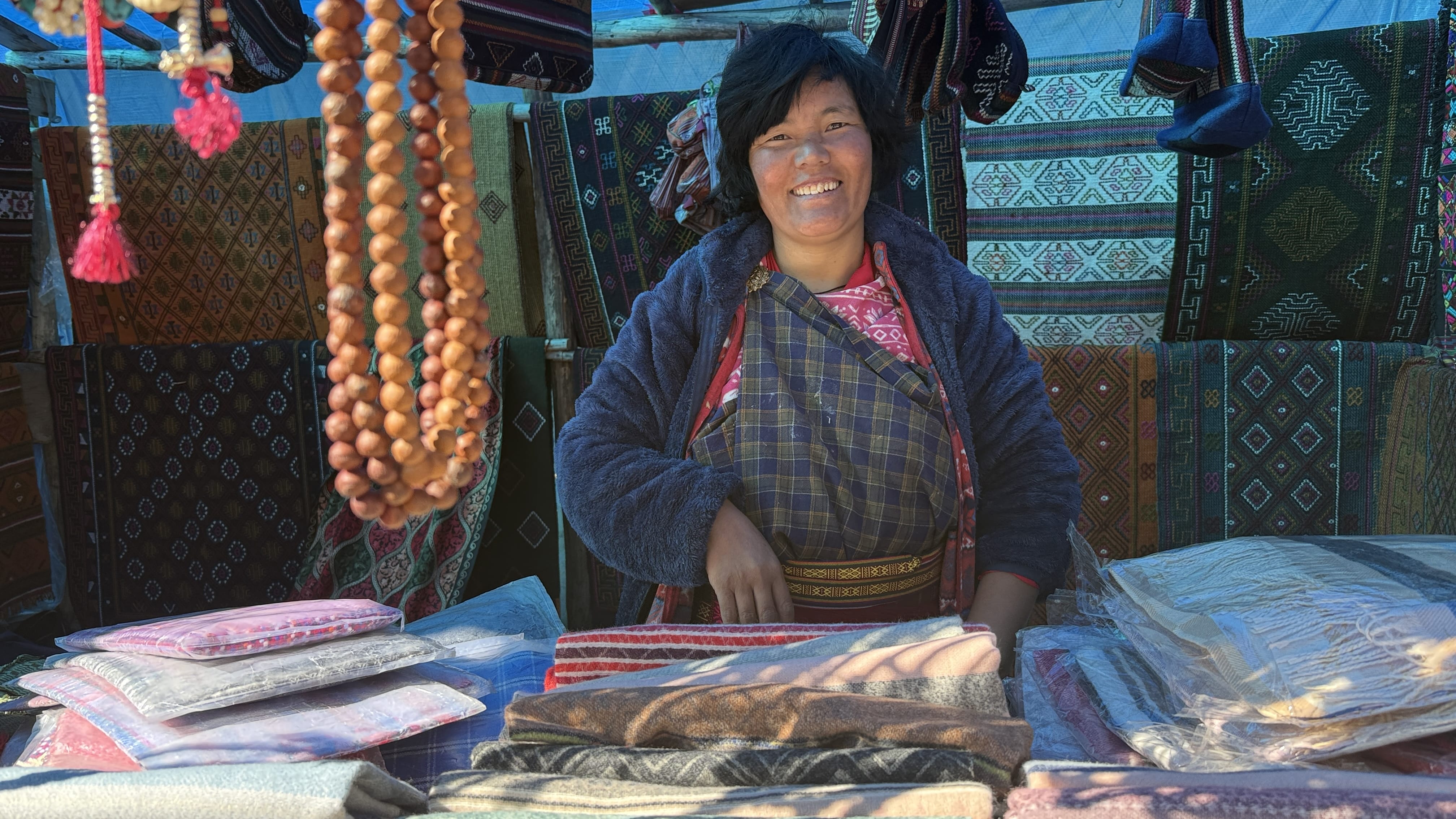
Along the way, a few local men had set up small craft stalls — hand-painted stones, wooden carvings, woven goods, and bright necklaces made from local materials.
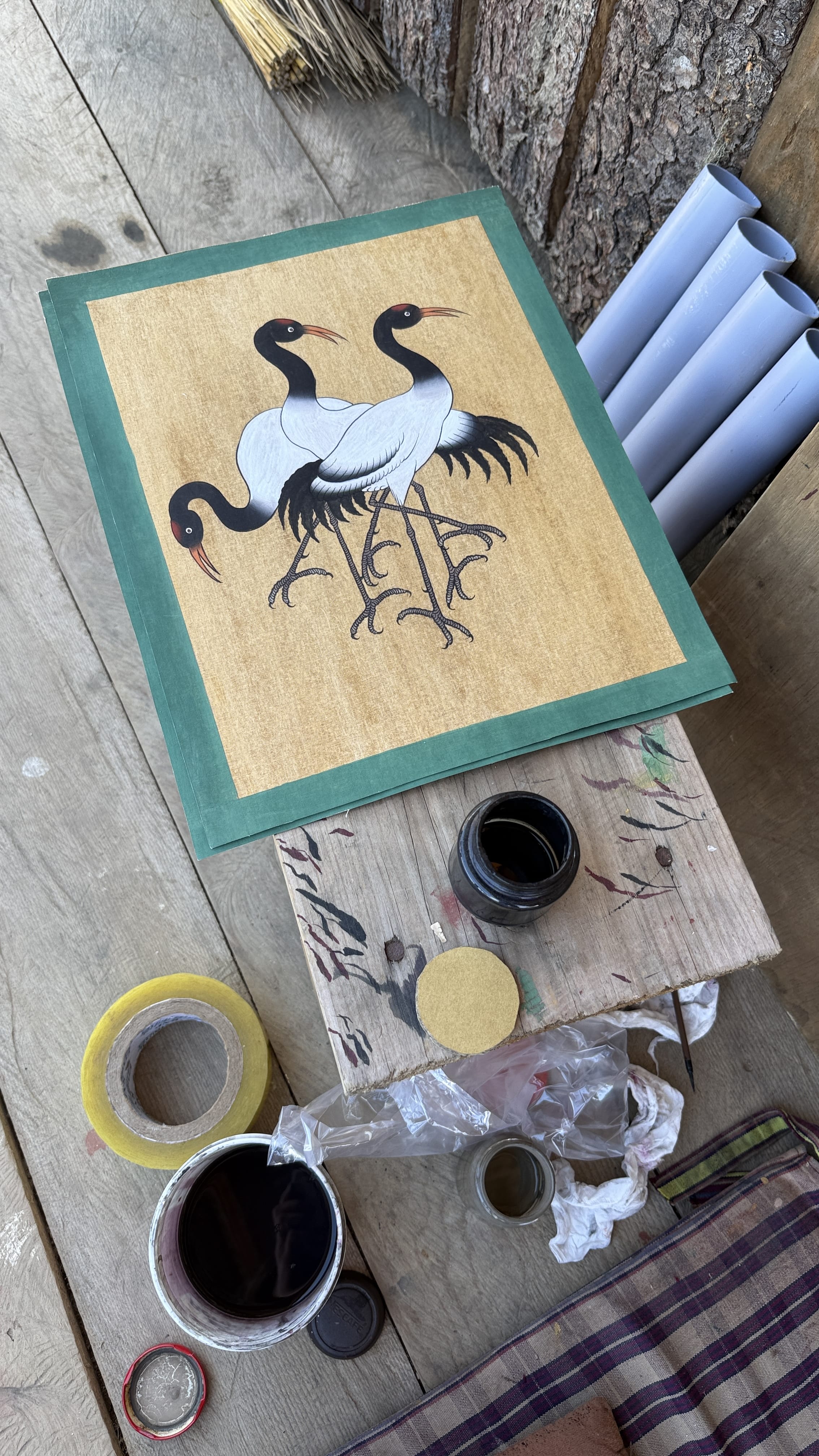
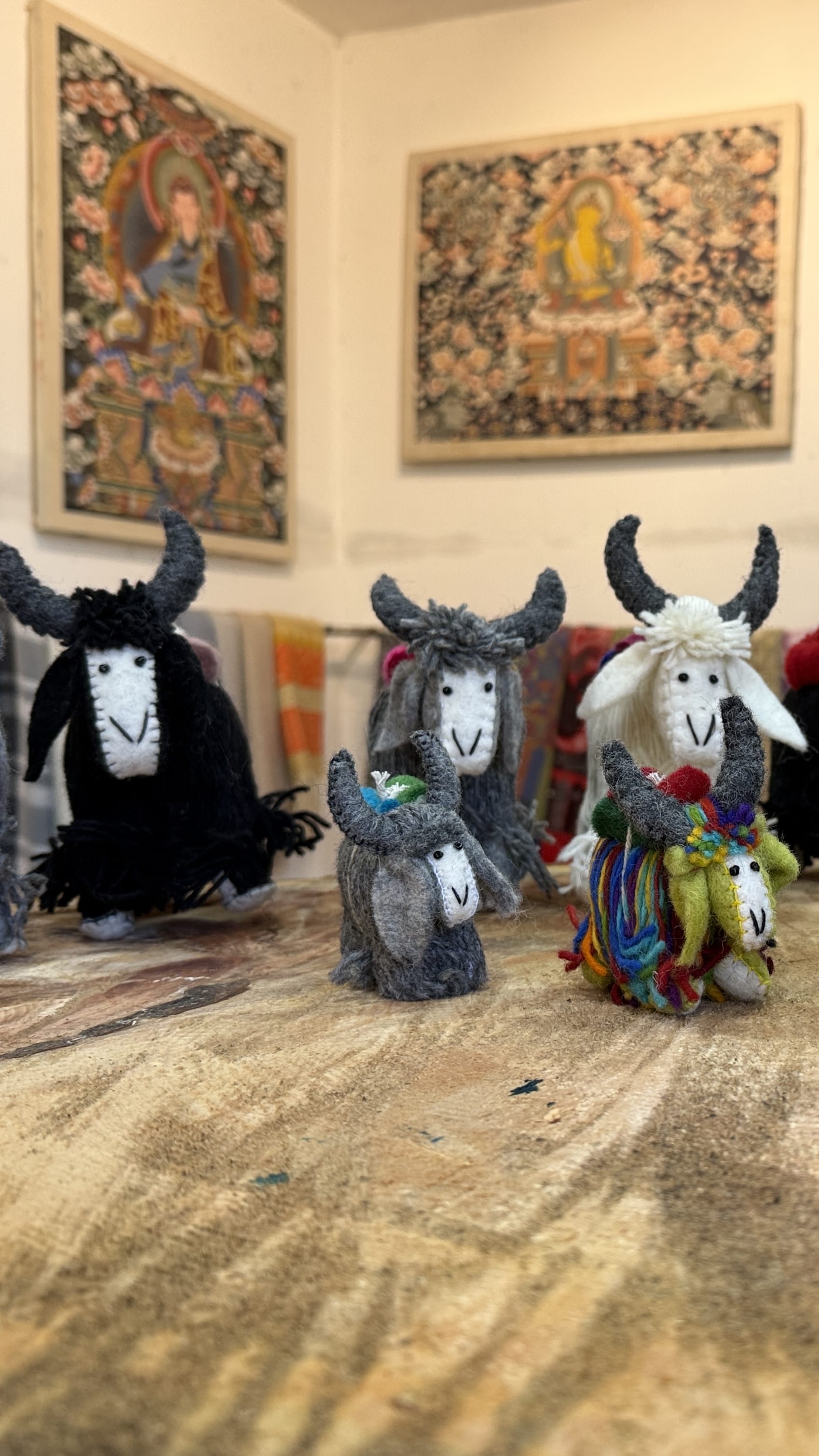
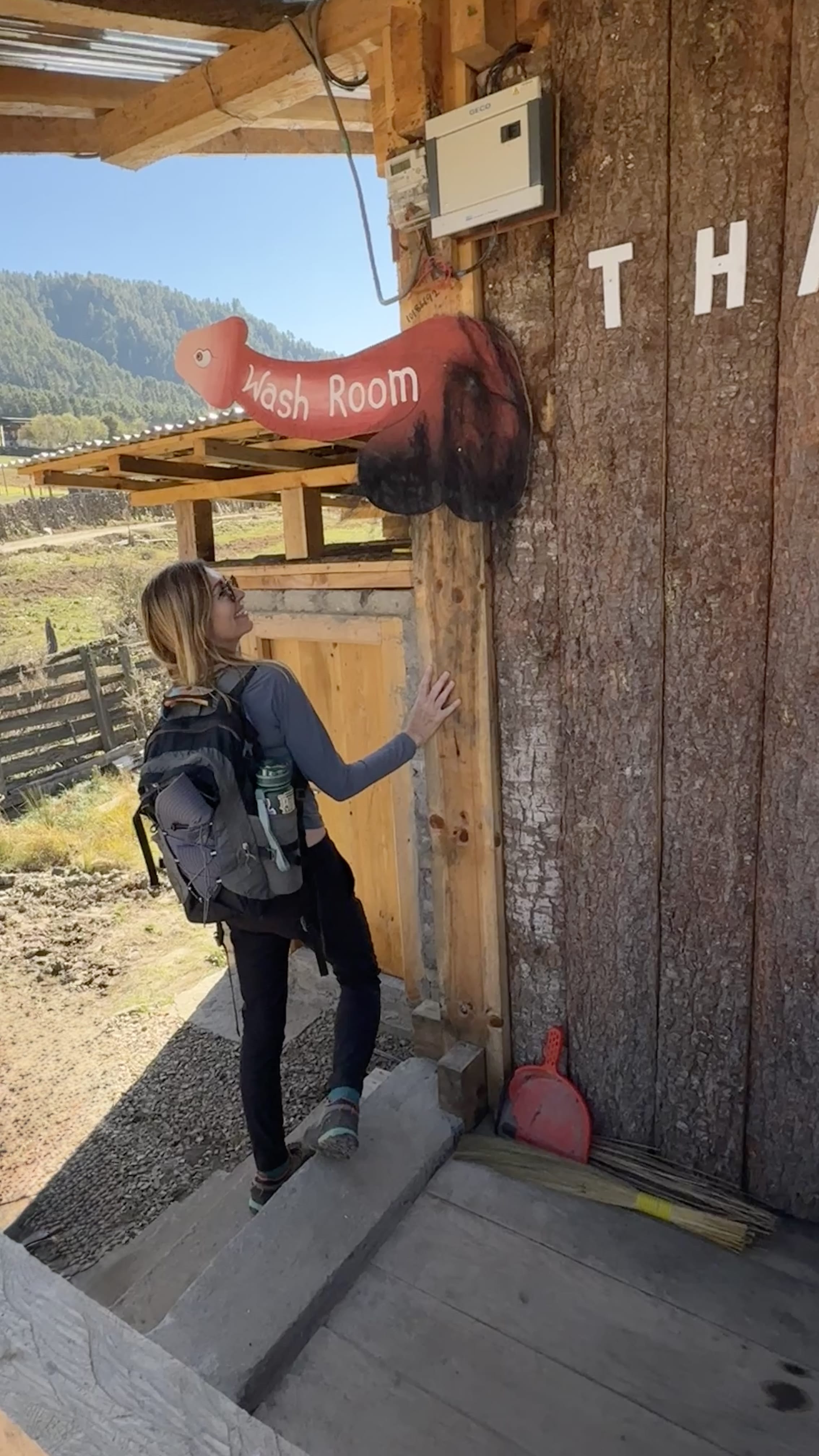
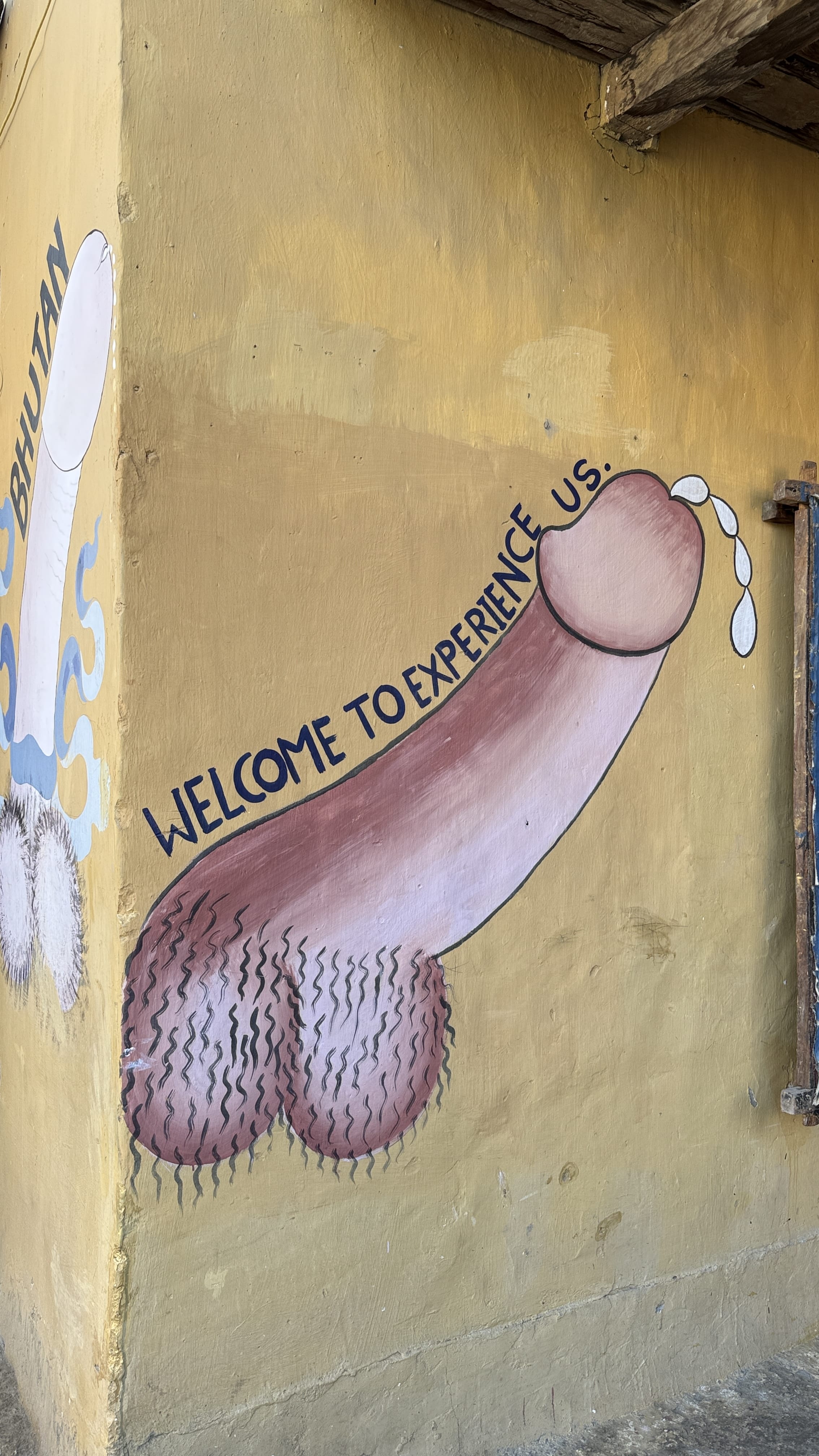
A little farther on, we came across a small art gallery selling thangka paintings, felted animal figures, and soft woven scarves. It also had a very unexpected washroom sign. I’d read that phallus imagery appears throughout Bhutan—painted on houses or carved into wood as a protective symbol—but I wasn’t exactly expecting one pointing the way to the bathroom.
Like many monasteries in Bhutan, Gangtey Monastery s set along a ridge. It’s one of the most important Nyingma monasteries in the country and the spiritual center of the Gangtey region. Even without the festival, it would be worth the climb — the woodwork and painted details along the outer walls are some of the most beautiful I saw in Bhutan.
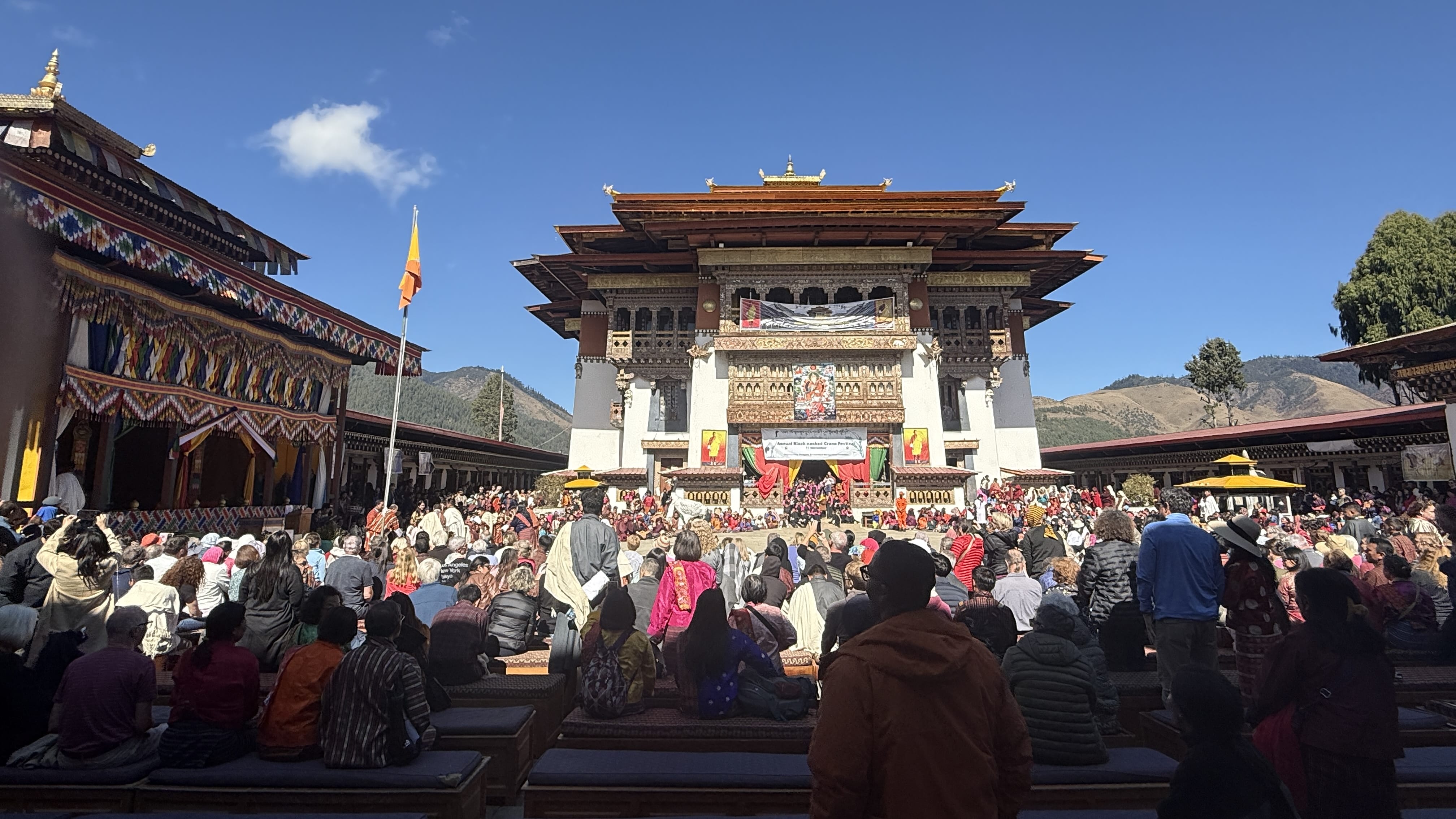
Each year on November 11, Gangtey hosts the Black-Necked Crane Festival to celebrate the arrival of the endangered cranes migrating from Tibet. Locals say the birds circle the monastery three times before landing in the valley — a gesture believed to bring blessings.
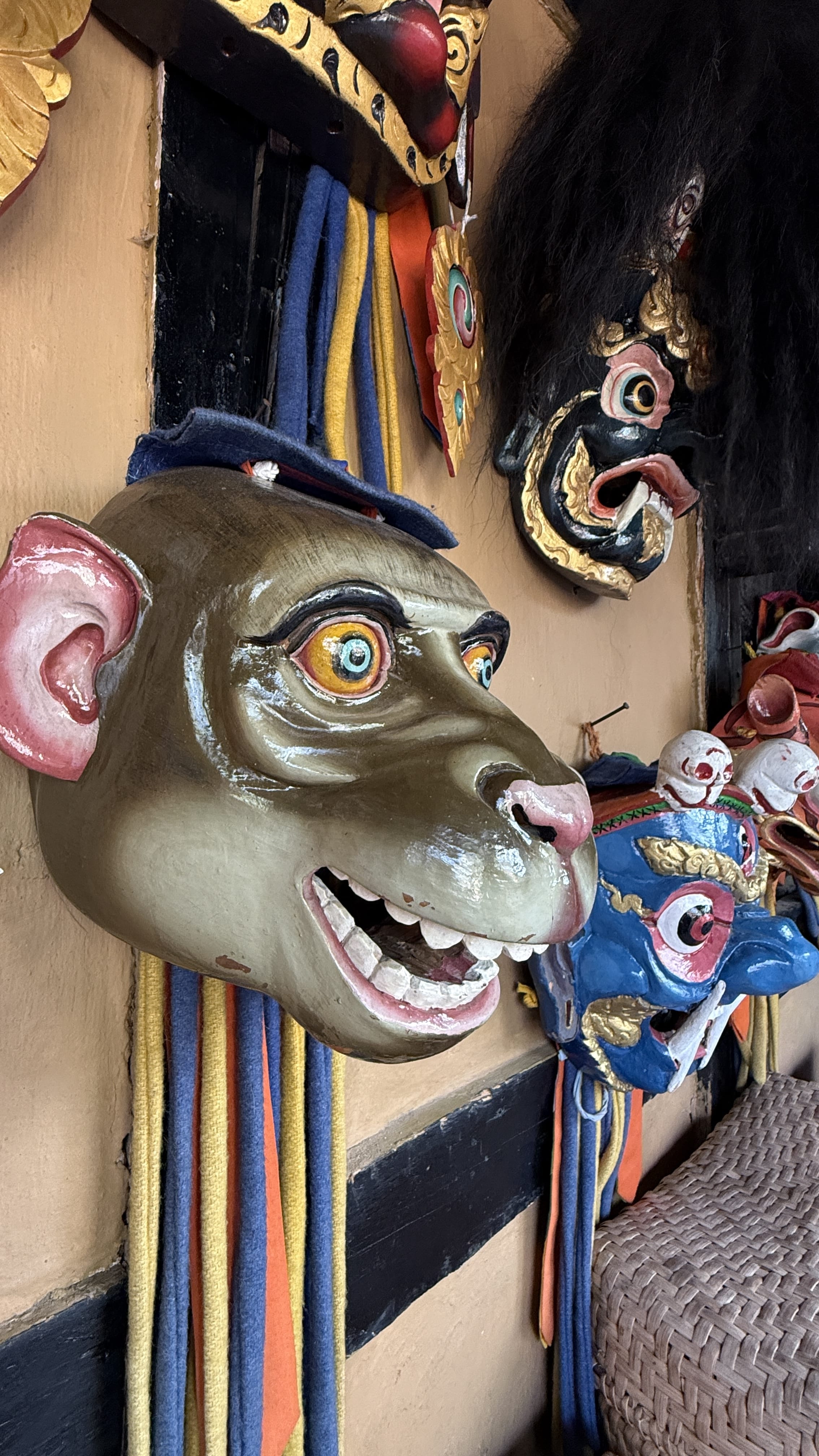
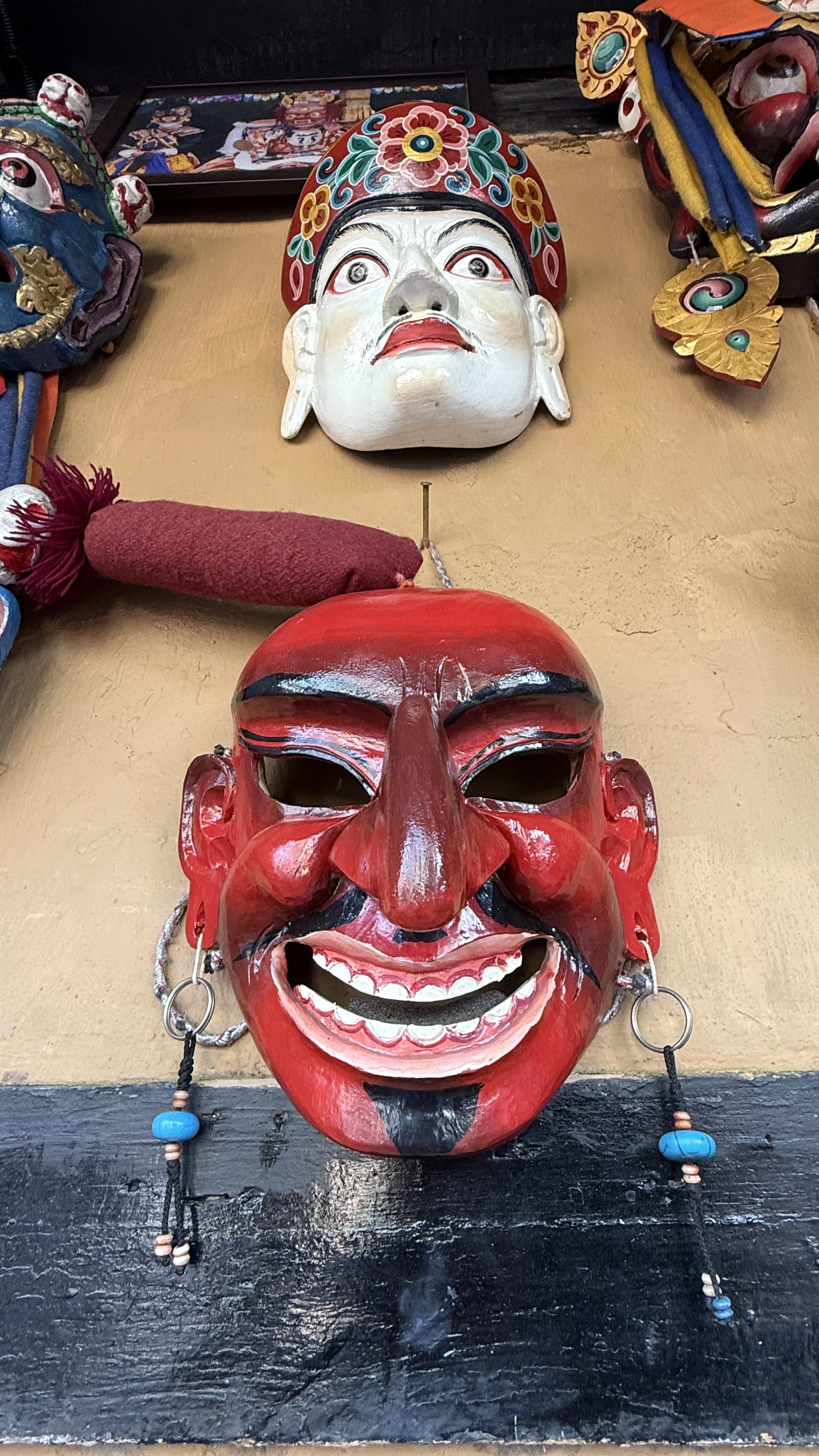
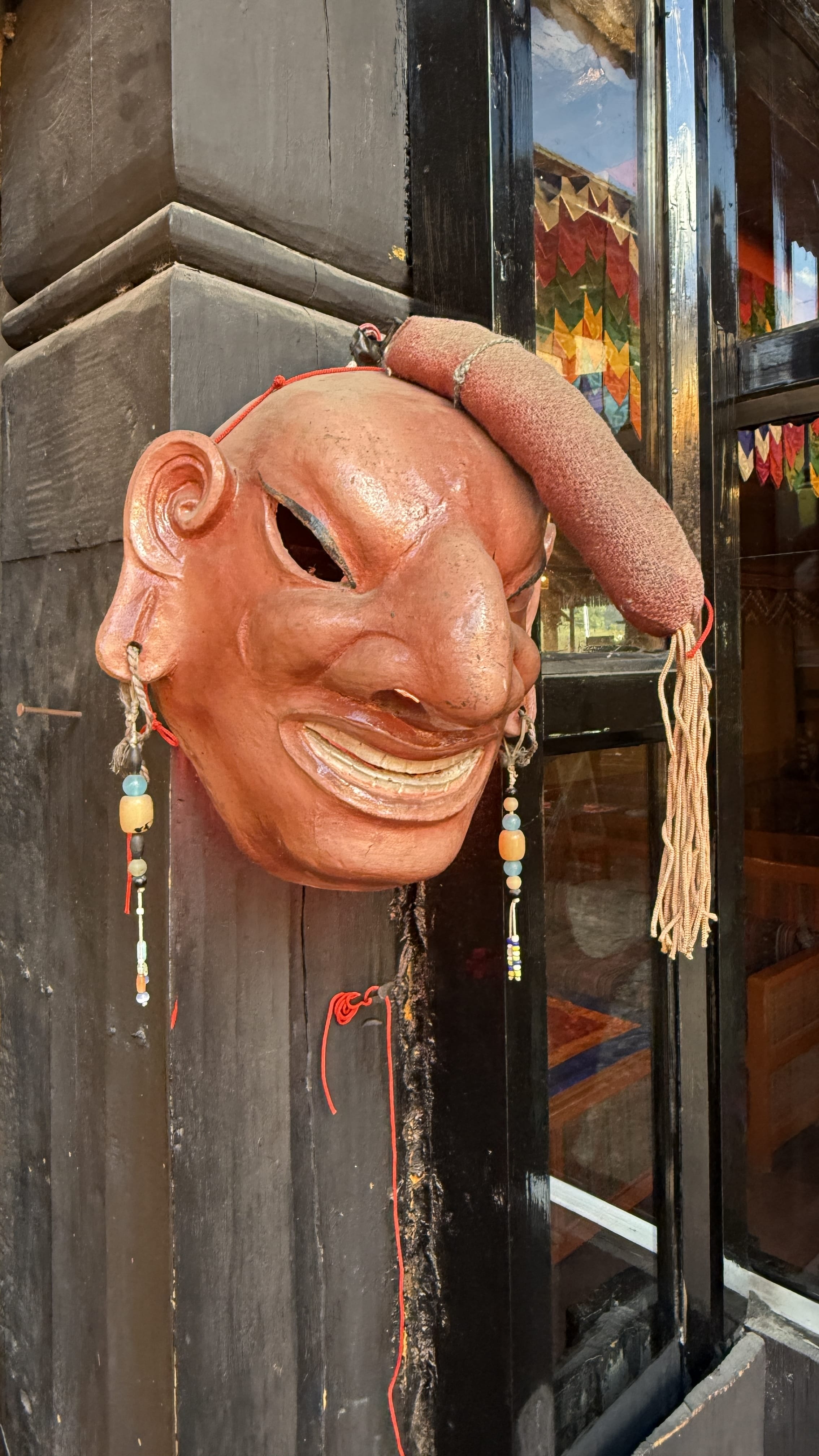
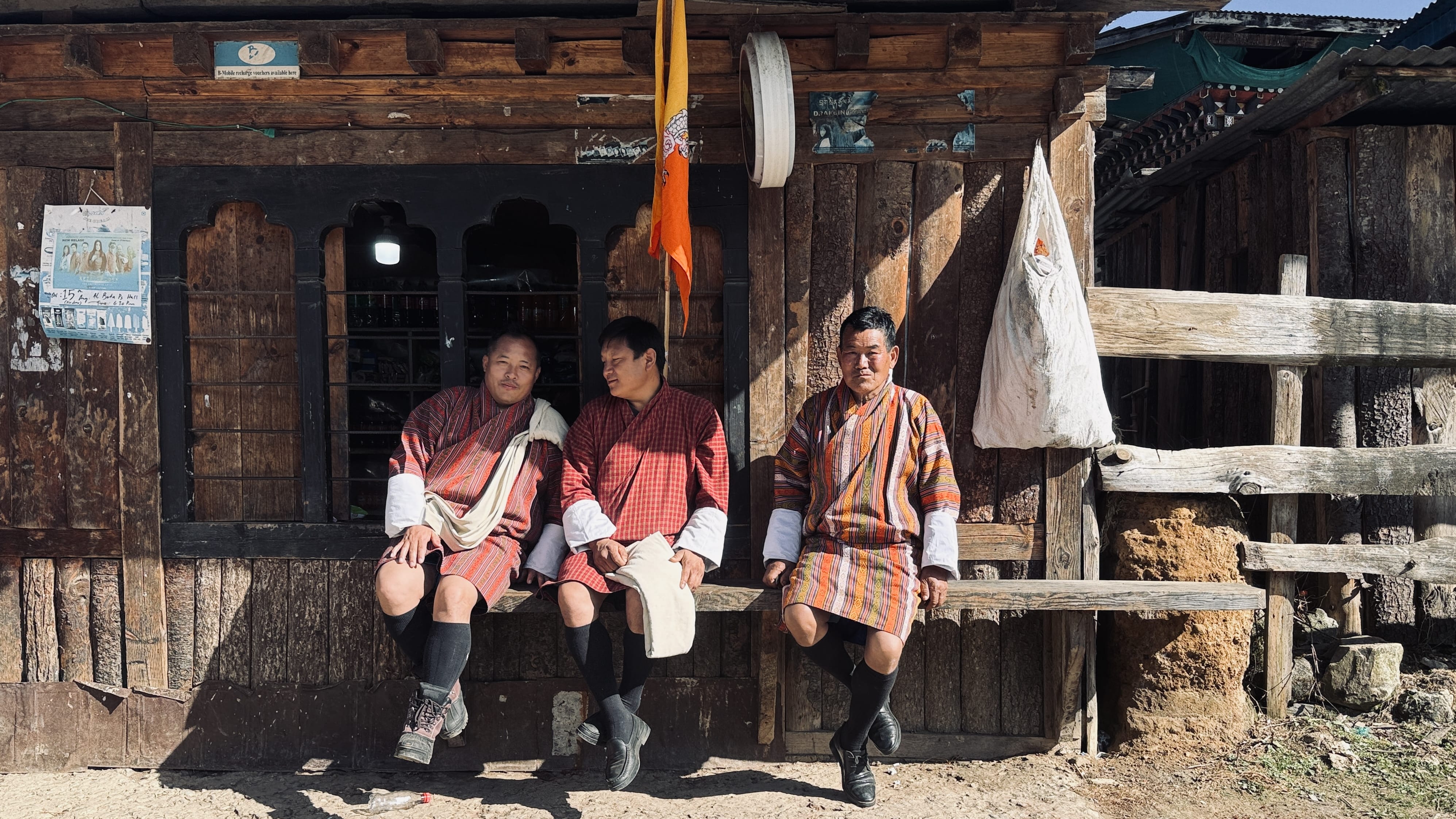
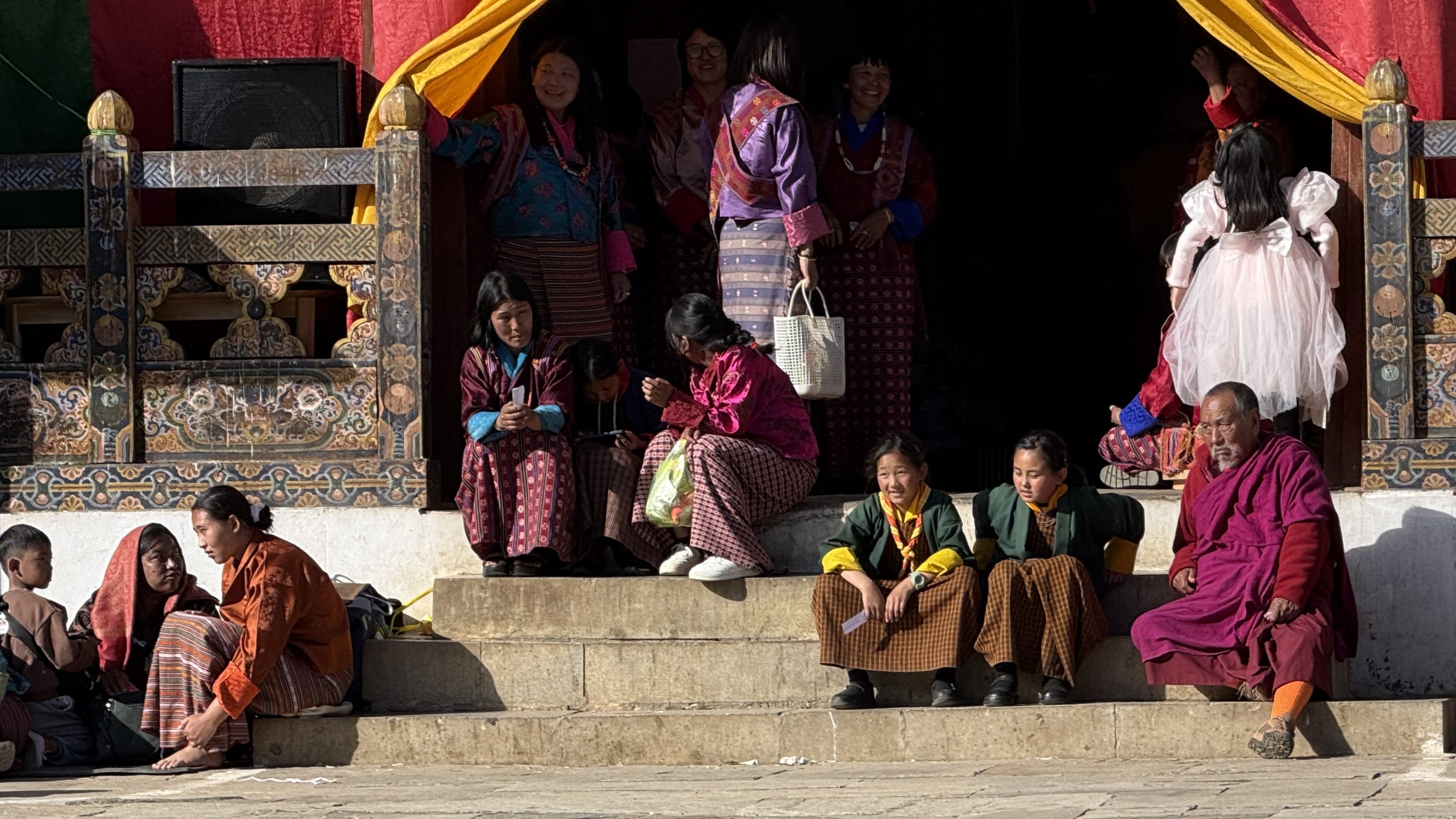
When we arrived, the courtyard was alive with color and movement: monks in bright robes, men in traditional gho and women in kira, along with groups of dancers — both children and adults — and masked performers reenacting folk stories.
We watched for about an hour before heading to a small restaurant nearby for lunch.
On the walk to and from lunch, we could see several black-necked cranes out in the fields. They were far away, but still easy to identify — tall silhouettes moving slowly through the grass. At one point we even saw a small group flying across the valley, wings sweeping over the meadows.
After lunch, we returned to the monastery for the afternoon performances — more traditional dances, masked performers, and storytelling centered on the cranes and their role in the valley. The atmosphere was a mix of community pride, devotion, and celebration.
After dinner, I tried something I’d been curious about since arriving in Bhutan: a traditional hot-stone bath, or dotsho. It’s a common practice here, especially in colder regions like Phobjikha, where river stones are heated over a fire and used to warm a wooden tub, sometimes with local herbs added. After a long day of hiking and festival crowds, it was exactly what I needed — simple, warm, and deeply relaxing.
👉 You can read more about the full experience in my separate post on traditional hot-stone baths in Bhutan.
After breakfast, we said goodbye to Phobjikha Valley and started the drive toward Punakha. It had been a really lovely stay — I loved everything about it: the lodging, the stone bath experience, the Black-necked Crane Festival, the hiking, and the beauty of the valley itself. What more could you ask for? And, as we pulled out, cows grazed quietly in the fields — one last, very Phobjikha moment.
The road climbed gradually back up to Lawala Pass (about 3,360 meters / 11,000 feet), which we’d crossed on Day 3 of the trip. This time, though, we actually stopped — long enough to wander among the prayer flags draped across the slope and browse the roadside stalls instead of just passing through.

Vendors sat along the roadside selling yak-wool scarves (I bought one), handwoven belts, and local snacks like dried yak cheese, strung up in little cubes to dry in the sun.
Our driver, Yoda, bought a few pieces for us to try. The idea is to suck on the cheese until it softens before chewing. The problem was that my piece was way too big, and it immediately triggered my gag reflex. I never got anywhere near the “soft” stage. Eventually, I found a discreet moment to get rid of it. Let’s just say dried yak cheese may be an acquired taste — one I didn’t quite acquire.
Next, we stopped at Wangdue Phodrang Dzong, sitting high above the Punatsangchhu River. The original dzong, dating back to the 1600s, was almost completely destroyed by fire in 2012. Its ongoing restoration is a testament to Bhutanese craftsmanship — rebuilt using traditional methods with interlocking wood and stone instead of nails— a remarkable process.
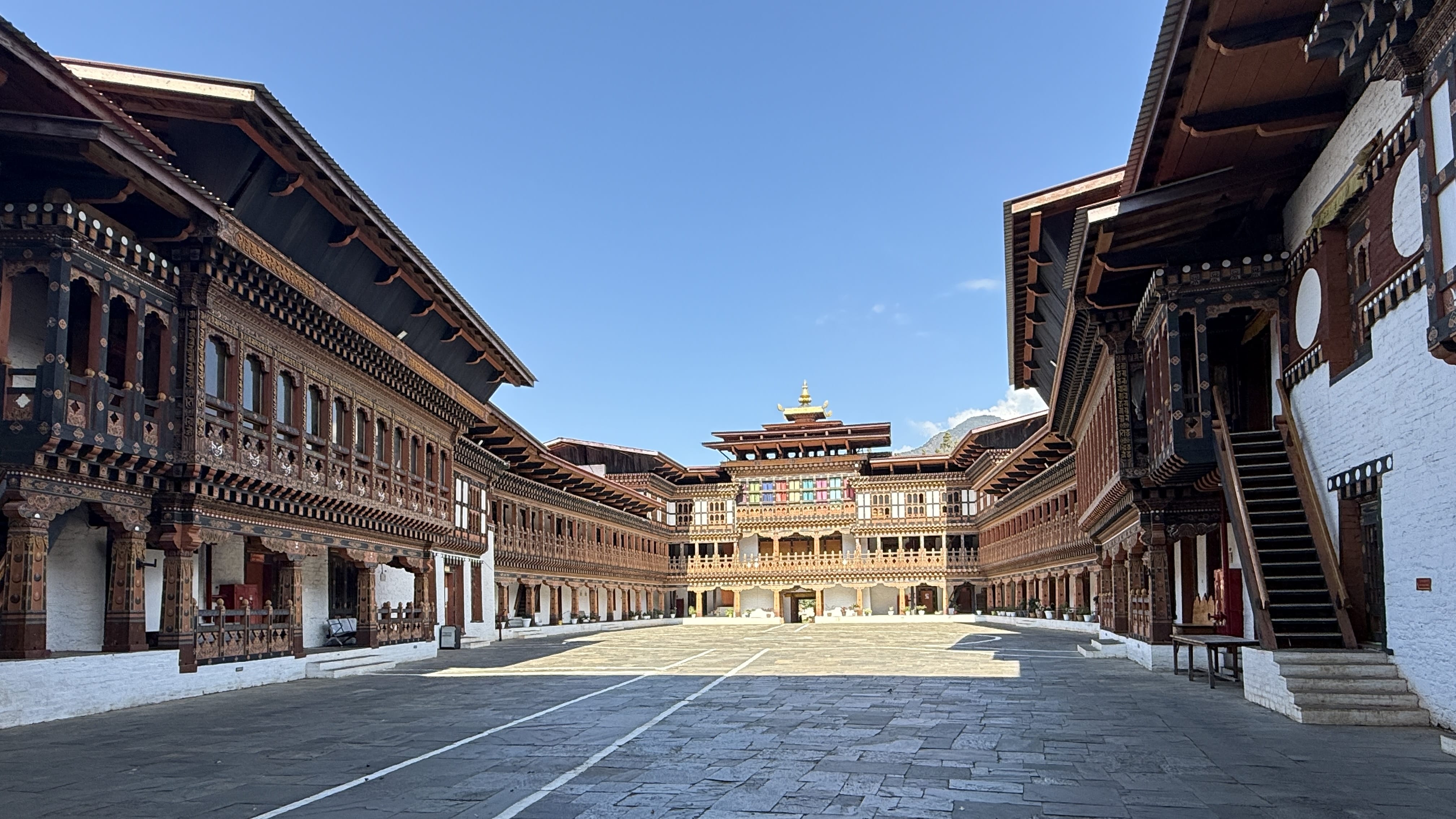
Even from a distance it’s striking, but up close you can see the care going into every beam and carving. Inside, I saw one of the most beautiful gompas of the trip.
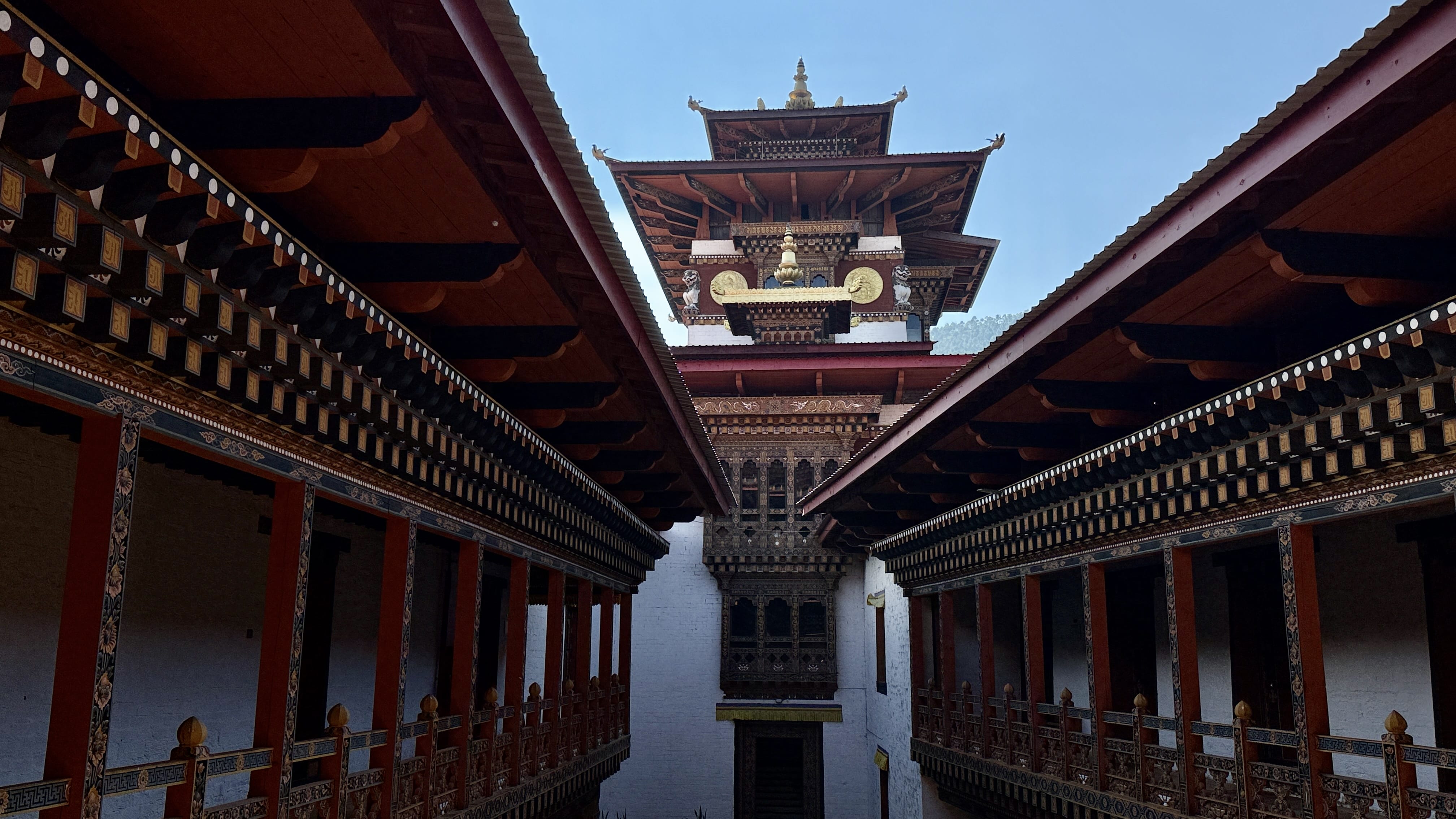
At one point, I watched a monk break apart a large butter sculpture, drop the pieces into a bucket, and carry it out. Later, I noticed the same monk standing on the gompa’s balcony, rolling the broken pieces into balls and tossing them out the window. I said something and gestured, enough to get my meaning across. He balled up a big piece, handed it to me, and I threw it out — which earned me a genuine laugh and a moment of shared amusement that felt oddly perfect.
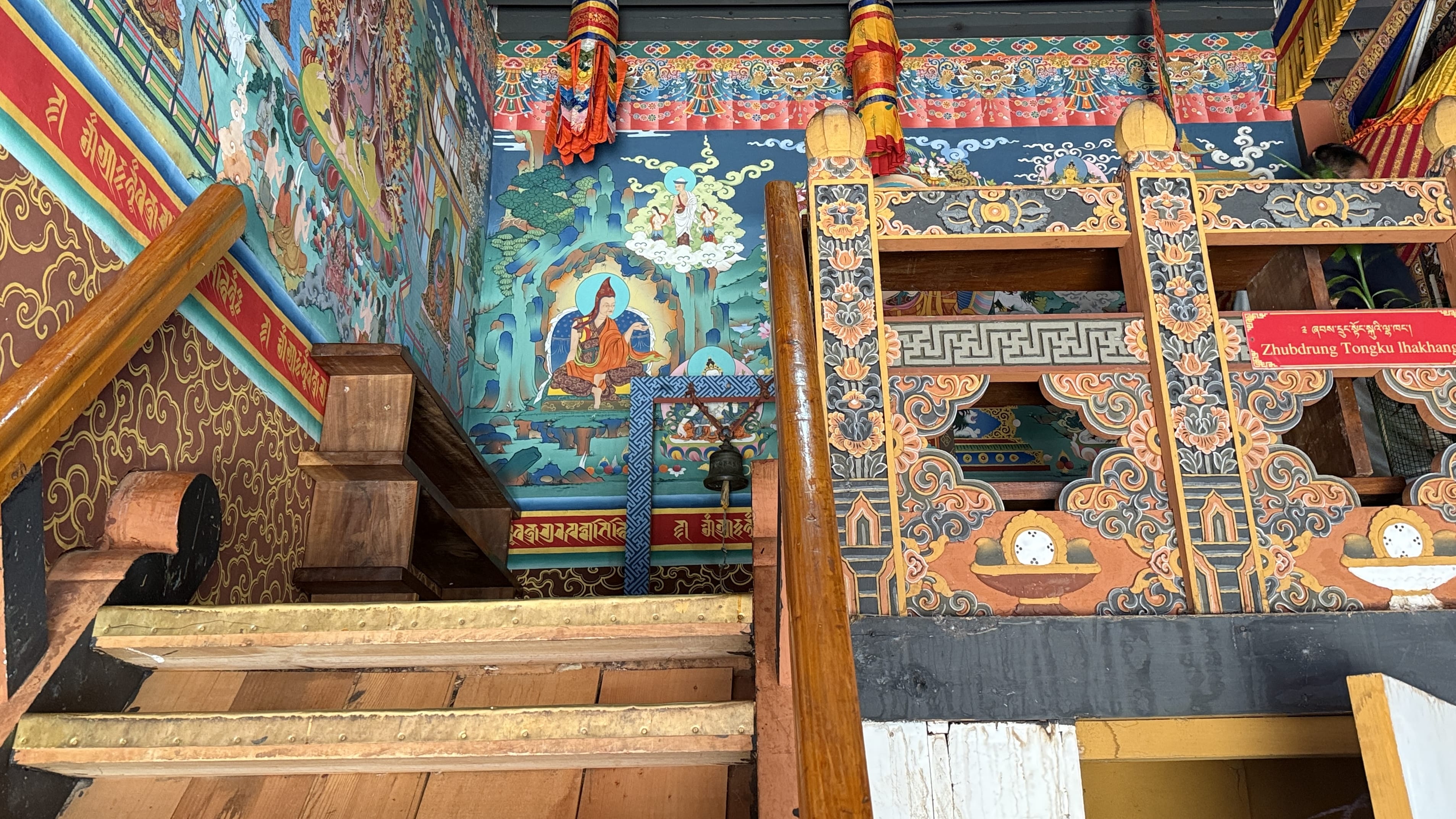
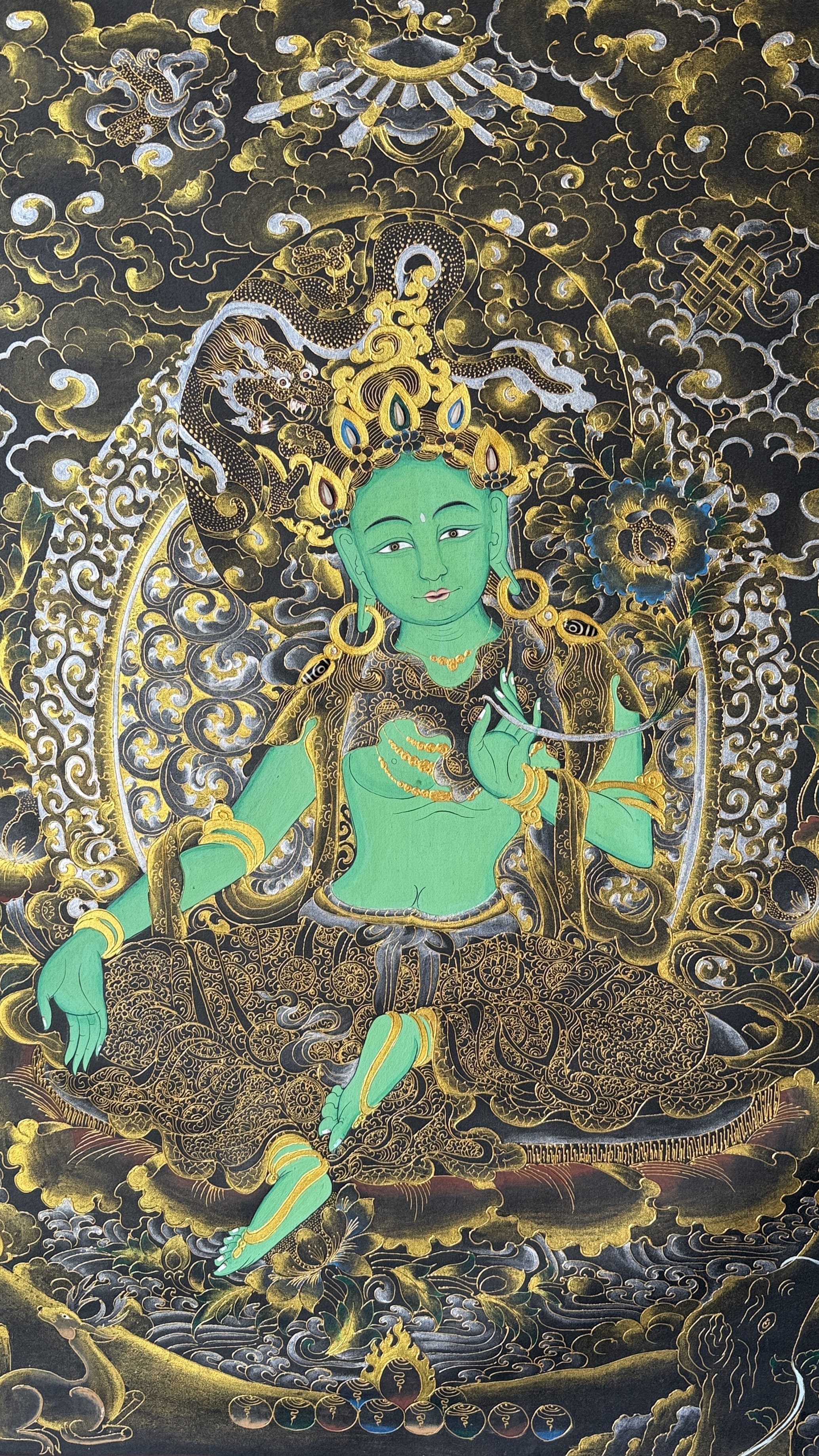
In Sopsokha Village (where the Divine Madman’s monastery is located), we stopped at a small thangka studio. The artist who welcomed us — along with his two brothers — came from a long line of painters, now in their fourth generation. He showed us their work and explained the symbolism behind different motifs.
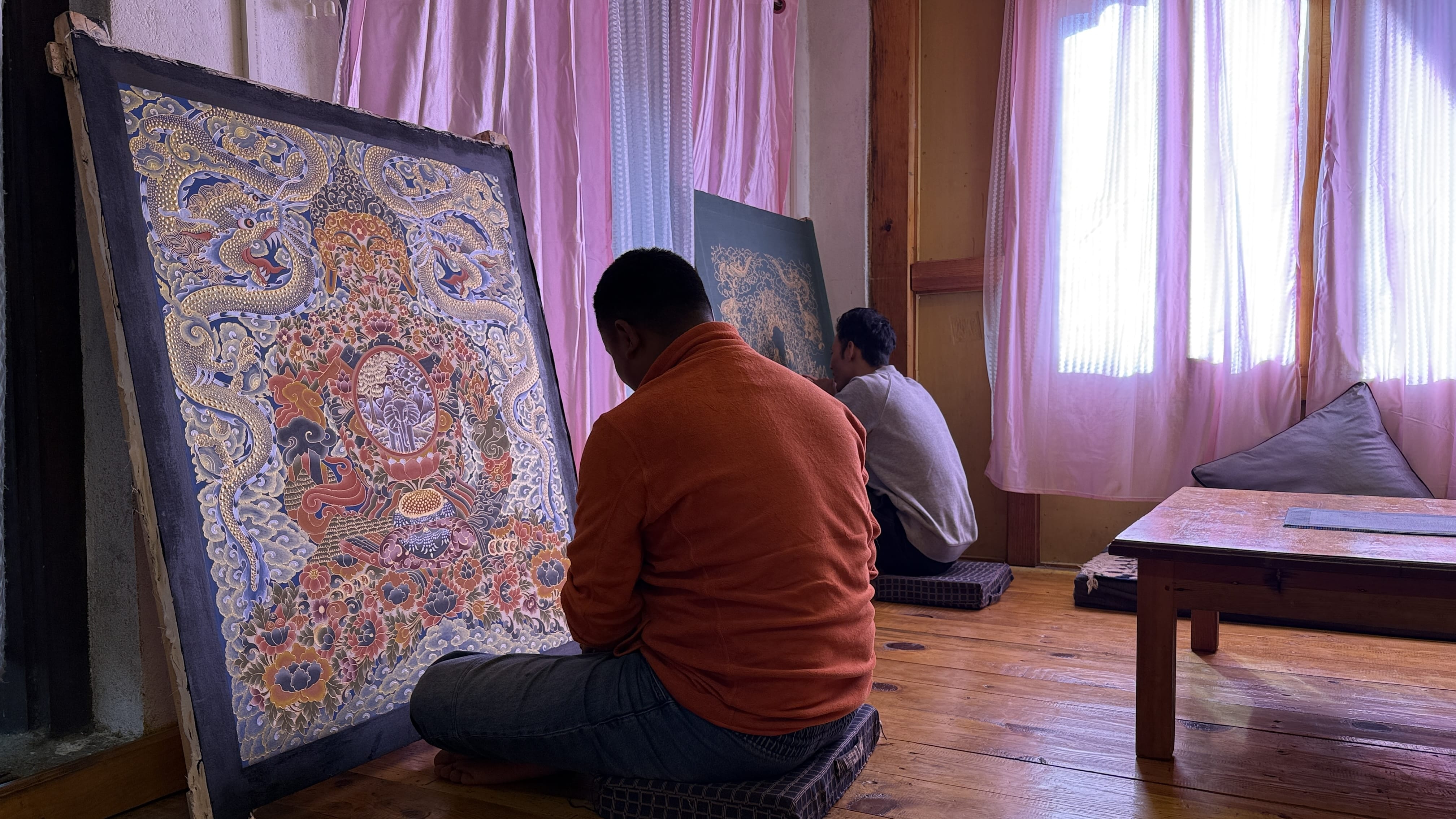
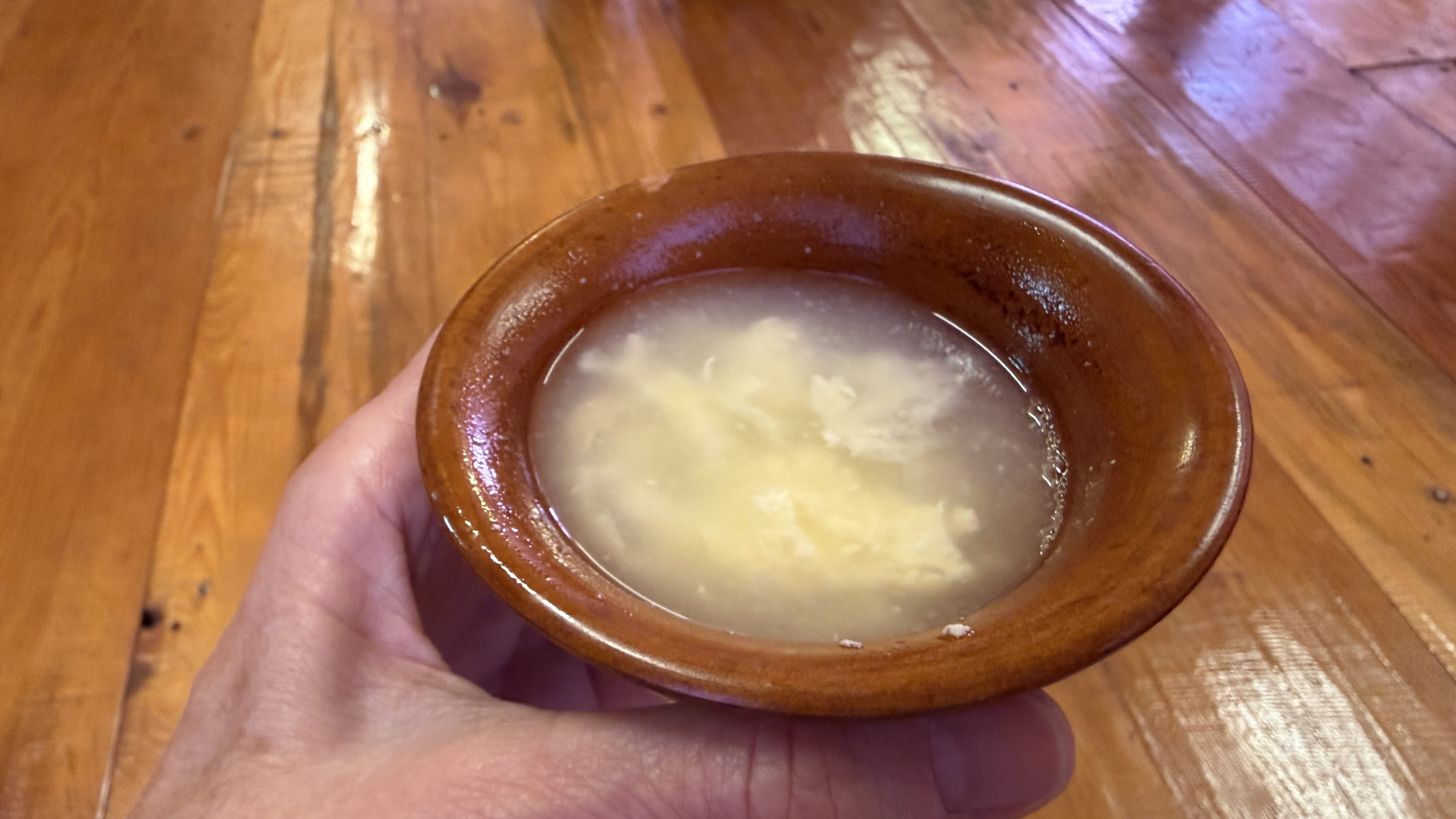
Then he offered us something unexpected: cordyceps liquor, a homemade spirit infused with the prized Himalayan fungus known for its medicinal properties. It’s served warm, almost like a broth. I tried to take a polite sip, but the floating bits on top made it feel more like drinking a medicinal soup than a drink. I did my best, but let’s just say it wasn’t easy to get down.
Afterward, we stepped into their main studio, its walls filled with hundreds of thangka paintings. Each one seemed more intricate than the last — the imagery, the colors, the sheer level of detail — quietly stunning without needing much explanation.
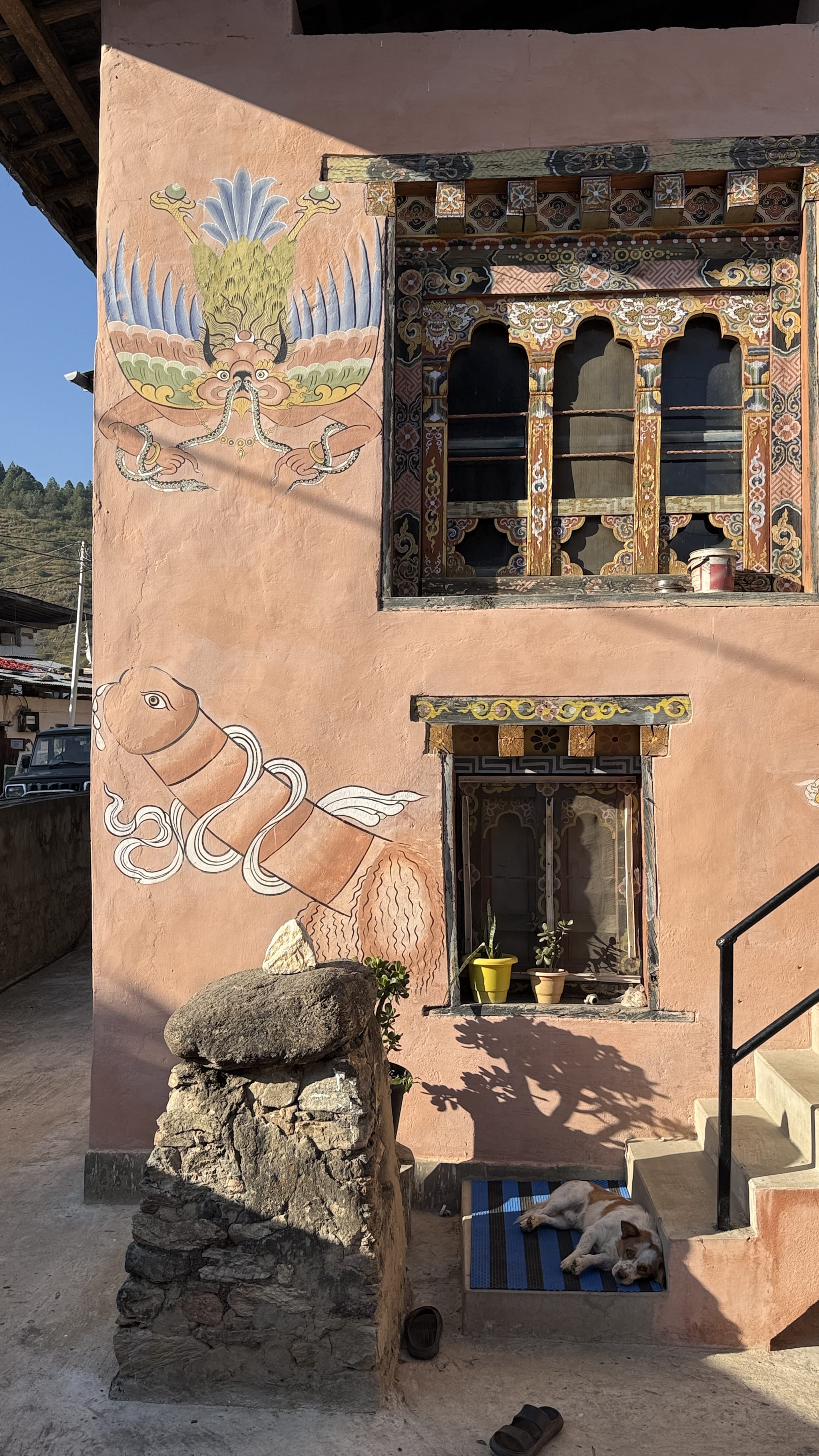
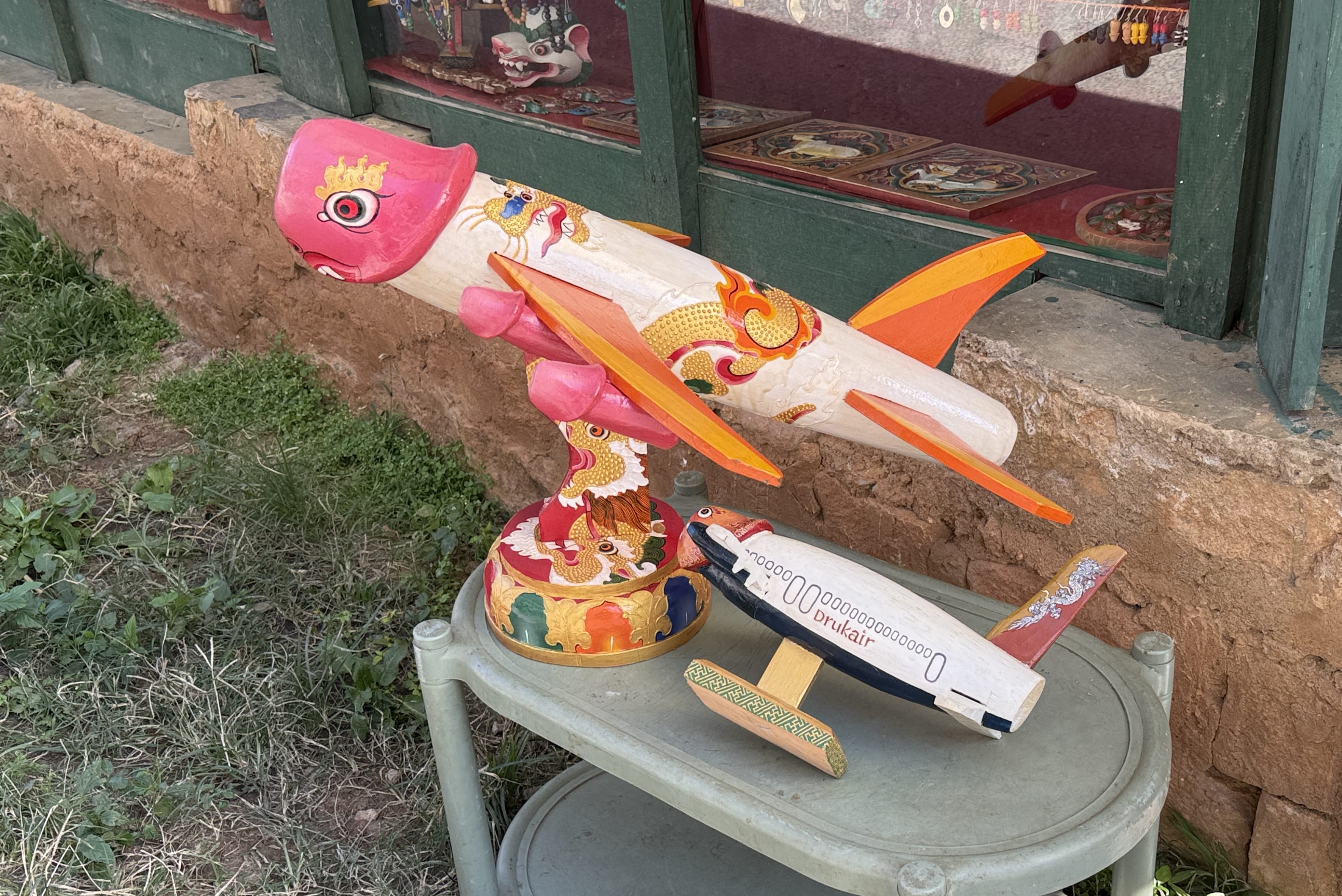
We continued on foot for the short hike to Chimi Lhakhang, also known as the Fertility Temple. The trail winds directly through Sopsokha Village, a place that perfectly captures Bhutan’s blend of humor and devotion. Nearly every house is painted with bold, stylized phalluses — some winged, others wrapped in ribbons — symbols of luck, protection, and fertility.
Locals sell carved and painted versions along the path, and the whole walk has a light, mischievous energy that feels uniquely Bhutanese. The imagery isn’t meant as a joke; it’s tied to protection, fertility, and the belief that humor can ward off negativity.
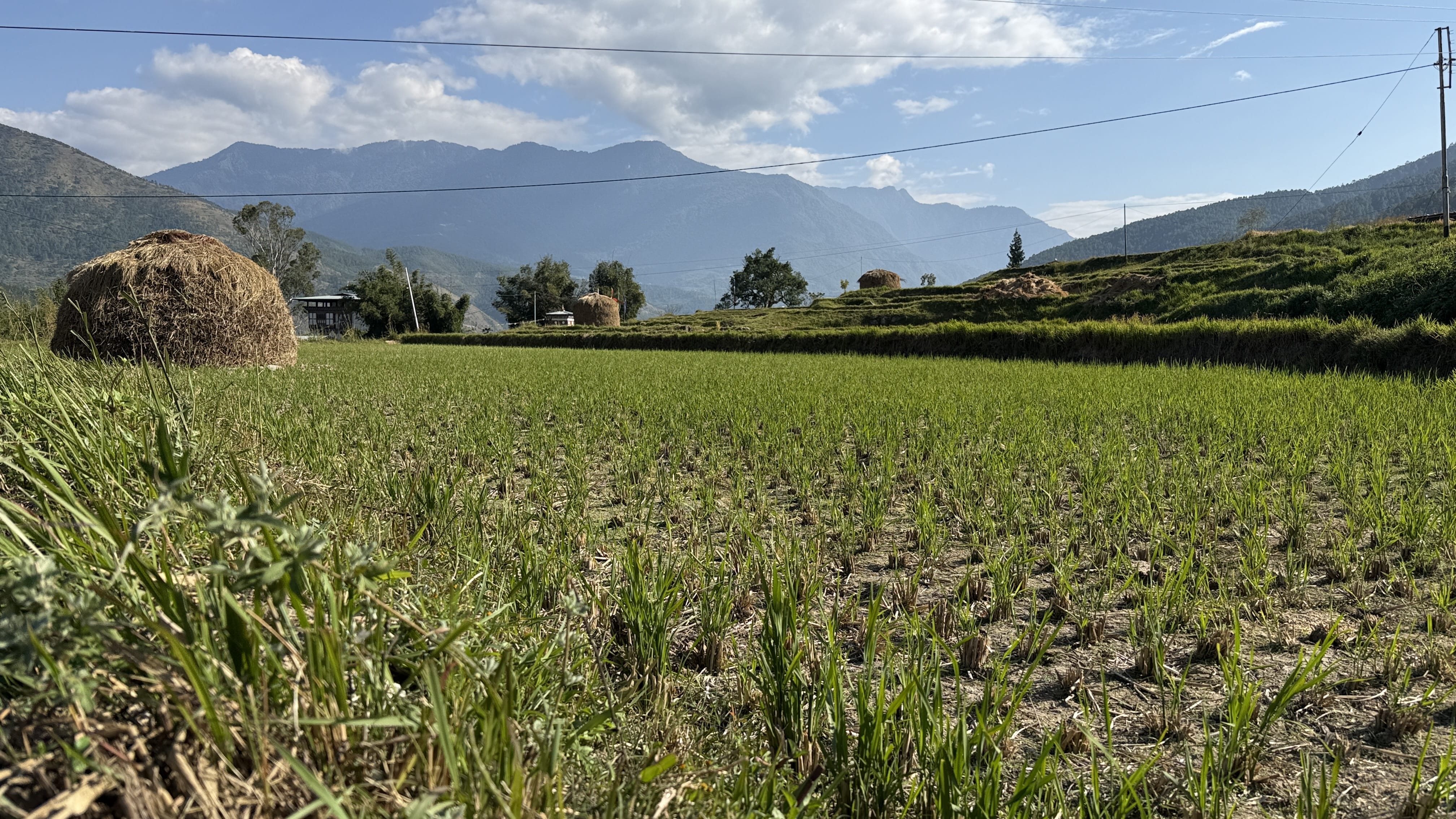
Walking between rice paddies, mustard fields, and the brightly painted homes of Sopsokha, it’s easy to see how Bhutan blends irreverence with deep spirituality.
Chimi Lhakhang is dedicated to Drukpa Kuenley, the “Divine Madman,” a Buddhist teacher from the late 1400s known for his unconventional approach to enlightenment. He rejected rigid monastic rules, drank wine, sang bawdy songs, and used humor and shock to expose ego and hypocrisy — not to rebel, but to show that awakening could exist in ordinary human life.
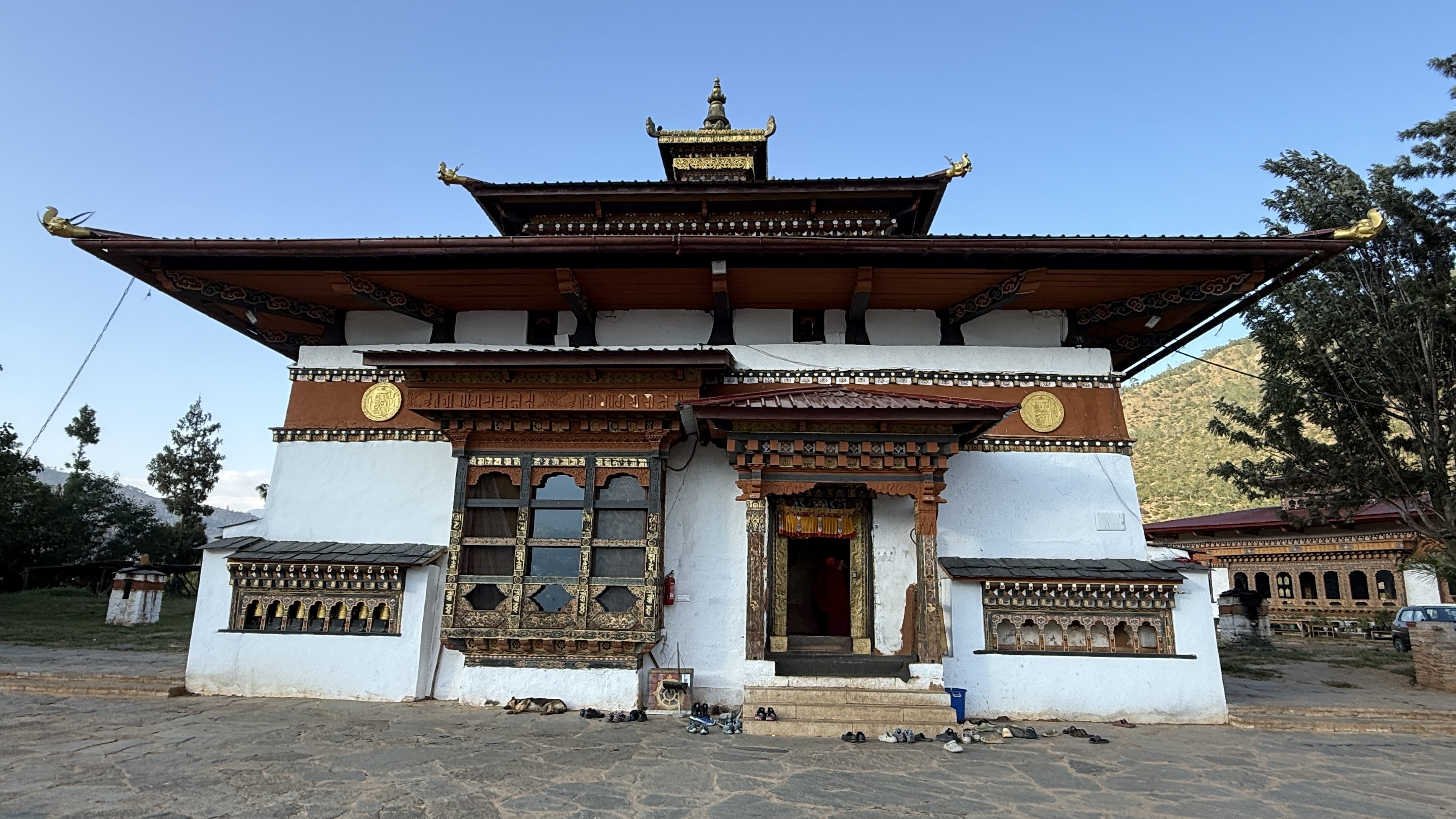
Legend says Kunley subdued a demoness here with his “Thunderbolt of Wisdom” — a spirit said to have taken the form of a black dog — and the temple was founded on that very spot. Today, the wooden phallus — said to have been brought from Tibet by Kunley himself — is still used by monks to bless visitors, especially women hoping to conceive.
When it was my turn for a blessing, the monk tapped a bow and arrow, a bone, and then the wooden phallus gently against the top of my head — a rapid sequence of symbolic tools passed down through centuries.
Inside, there was an entire notebook filled with baby photos and handwritten notes from women who said they conceived after coming here for a blessing.
Little did he know I didn’t need a fertility blessing; I’m the mother of five. But the moment felt warm, playful, and unmistakably Bhutanese — reverent and irreverent at once.
Finally, we arrived in Punakha, where we’d be spending the next two nights. Our hotel sat across the river from the dzong, with peaceful views of the water and the hills beyond. That evening we had a delicious dinner in the hotel restaurant, along with a glass of local wine — perfect after a long travel day.
Part 1 ends here, with our arrival in Punakha after the cool, open quiet of Phobjikha and those first days of settling into Bhutan.
In Part 2, the journey continues west — through Punakha, back toward Thimphu, into the quieter Haa Valley, and finally on to Paro, where the trip’s most anticipated hike, Tiger’s Nest, comes into view.
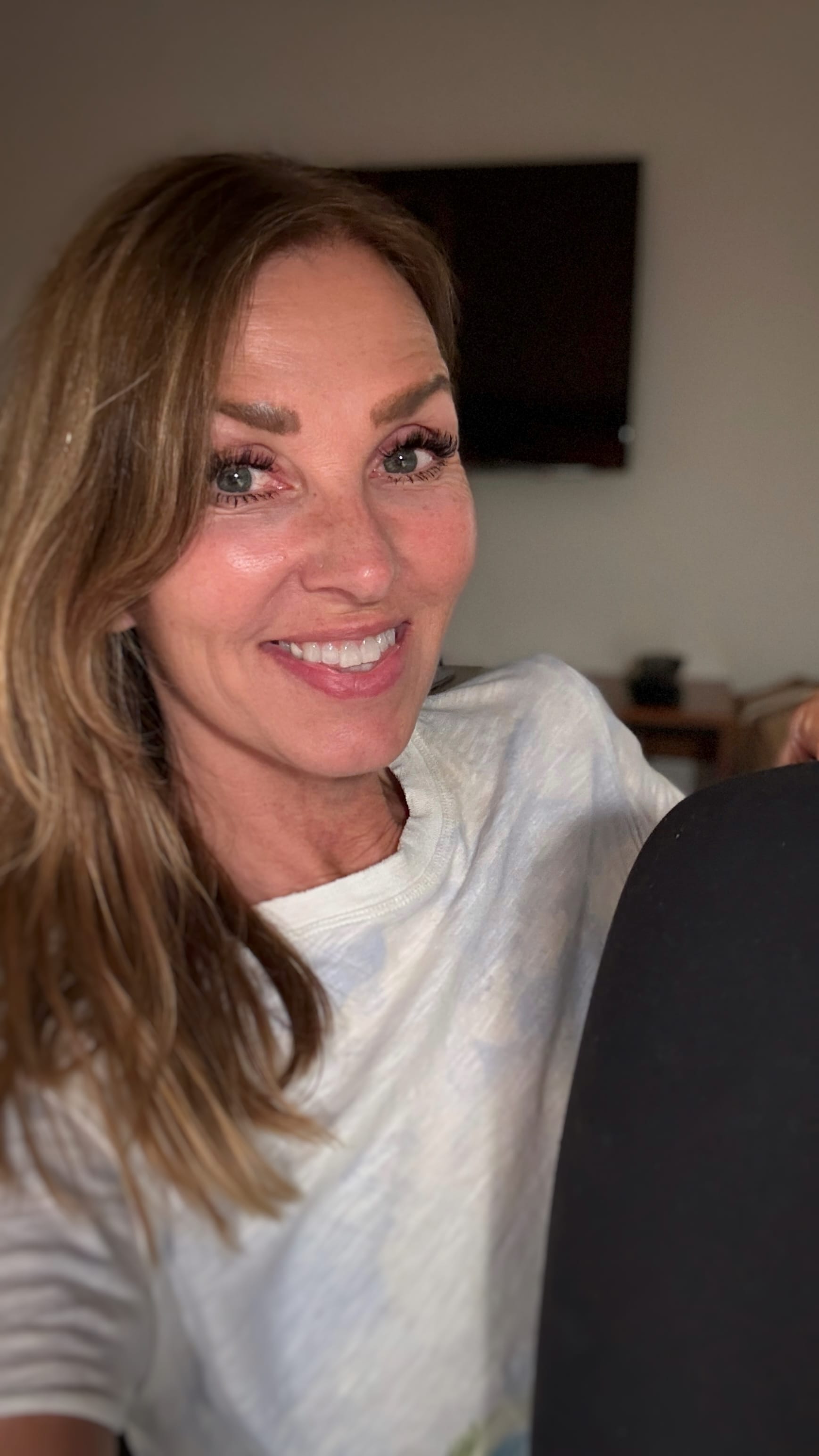
Hi, I’m JoAnne—writer, wanderer, and lover of places that surprise me. I’ve traveled to 60+ countries (and counting), usually with a camera in one hand and a notebook in the other. I’m drawn to mosaics, markets, and mountains, and I write to remember what moved me. When I’m not traveling, I’m working on my blog Travels Afoot, trying new creative projects, or planning my next adventure.