After five days in Uganda—something I wrote more about in Gorillas, Red Dirt Roads, and the Quiet Between—we crossed back into Rwanda and drove about 45 minutes to Musanze, stopping briefly in town for a coffee break. Afterward, the rest of our Intrepid group continued on to Kigali to catch flights home that evening.
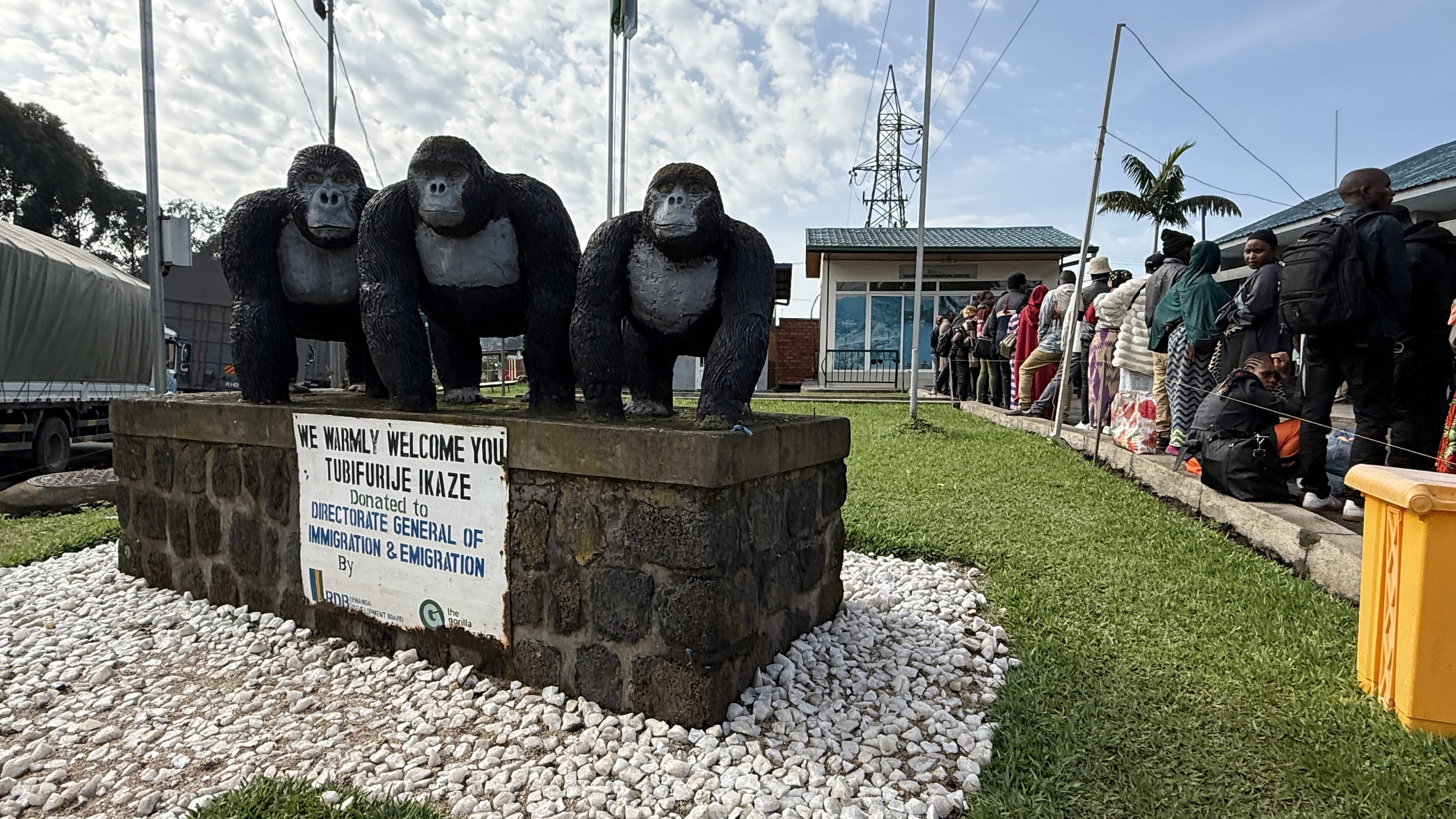
But for me, this was where I said goodbye to my travel companions.
When I read the Intrepid itinerary for the group portion of my trip, I quickly realized two days in Musanze wouldn’t be enough. So before the trip even began, I booked four extra nights on my own — giving me three full days in Musanze.
Before moving on to Uganda, I had already spent two nights here with the group — which really meant only one full day — something I wrote about in 2 Nights in Musanze: Golden Monkey Trekking and Visiting Volcanoes National Park. Looking back, I’m glad I’d planned to come back. Because, that short stay confirmed what I already suspected.
As it turned out, my guide offered to drop me off in town while the others finished their coffee before continuing on to Kigali.
It felt a little strange waving goodbye from the front passenger seat of the van as it pulled away—that brief moment of “okay, now it’s just me.” But more than anything, I was excited. I had some really good things lined up, and I’d chosen to be here on purpose.
Musanze sits at the edge of Volcanoes National Park—Dian Fossey territory, known for its green volcanoes, dense forest, and mountain gorillas. At the same time, it’s a busy, everyday city with traffic, markets, and normal life unfolding beside a major conservation area. That contrast is part of what brought me back.
For these extra days, I chose to stay at La Locanda, a small property just outside town—close enough to reach the center by motorbike or a 10–15 minute walk, yet quiet enough to feel like a little green oasis.After booking, I reached out by email to see if they could recommend someone who could help arrange permits, transportation, and activities during my stay. Shortly afterward, I received a reply from Kevin Murungi, the manager of La Locanda, who said he could assist with organizing logistics and excursions through the local tour company Eco Care Travels. Throughout the process, he (Kevin) was always prompt and clear in his responses.
In the weeks before my trip, Kevin helped organize everything—from securing permits to arranging transportation and answering countless small questions. As it turned out, he was also the one who drove me during my first two days in Musanze and again at the end of my stay when it was time to return to Kigali.
By the time I arrived back in Musanze, all the details were already in place, and Kevin was there to meet me in person, which made settling in feel easy from the very beginning. Once he walked me to my room and I set my bag down, it felt good to know I didn’t have to rush anywhere.
Not long after I arrived, steady rain began to fall—hard enough that there wasn’t much reason to go anywhere. I spent the rest of the afternoon resting, reading, and writing.
Nothing dramatic, just a quiet beginning before the next few days unfolded.
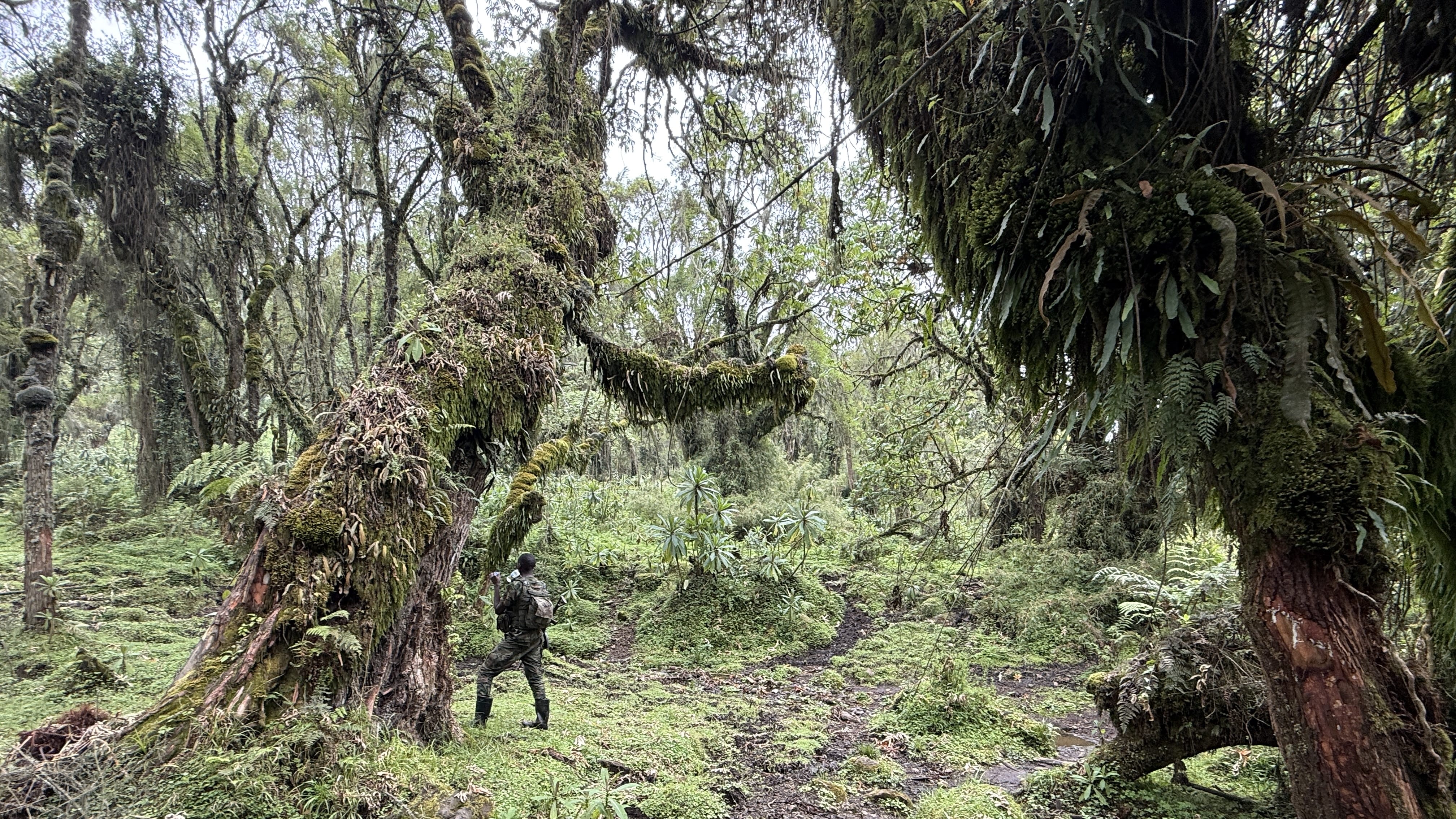
Today I hiked to Dian Fossey’s former research center—Karisoke—and to her gravesite in Volcanoes National Park. This hike was one of the main reasons I had wanted extra time in Musanze. Fossey had done so much for gorilla conservation, and being able to walk to the place where she lived and worked felt like a quiet way to pay my respects. It was one of the activities Kevin had arranged for me.
My day started early with a quick breakfast at La Locanda—an omelet, fresh fruit, and a strong French press of coffee. Afterward, I climbed into a 4×4 and headed toward Volcanoes National Park headquarters in Kinigi, about a 15–20 minute drive from town. Once there, Kevin brought me to the registration area to check in, followed by the familiar stretch of waiting: coffee in hand while guides were assigned and small groups slowly formed. At his suggestion, I rented gaiters, since the trail was expected to be very muddy.

After I was assigned a guide and group, we climbed back into the vehicle and drove another 20–30 minutes to the Dian Fossey trailhead parking area, located near farmland and small villages just outside the park boundary. There, the guide, Jerome, briefed us and handed out walking sticks. It was also where I hired a porter — Thomas.
From the parking area, we began walking through open farmland for a short distance before reaching the stone wall that marks the entrance to Volcanoes National Park. Once inside, the landscape shifted quickly, and we continued along the general route Dian Fossey once used to reach the original Karisoke Research Camp.
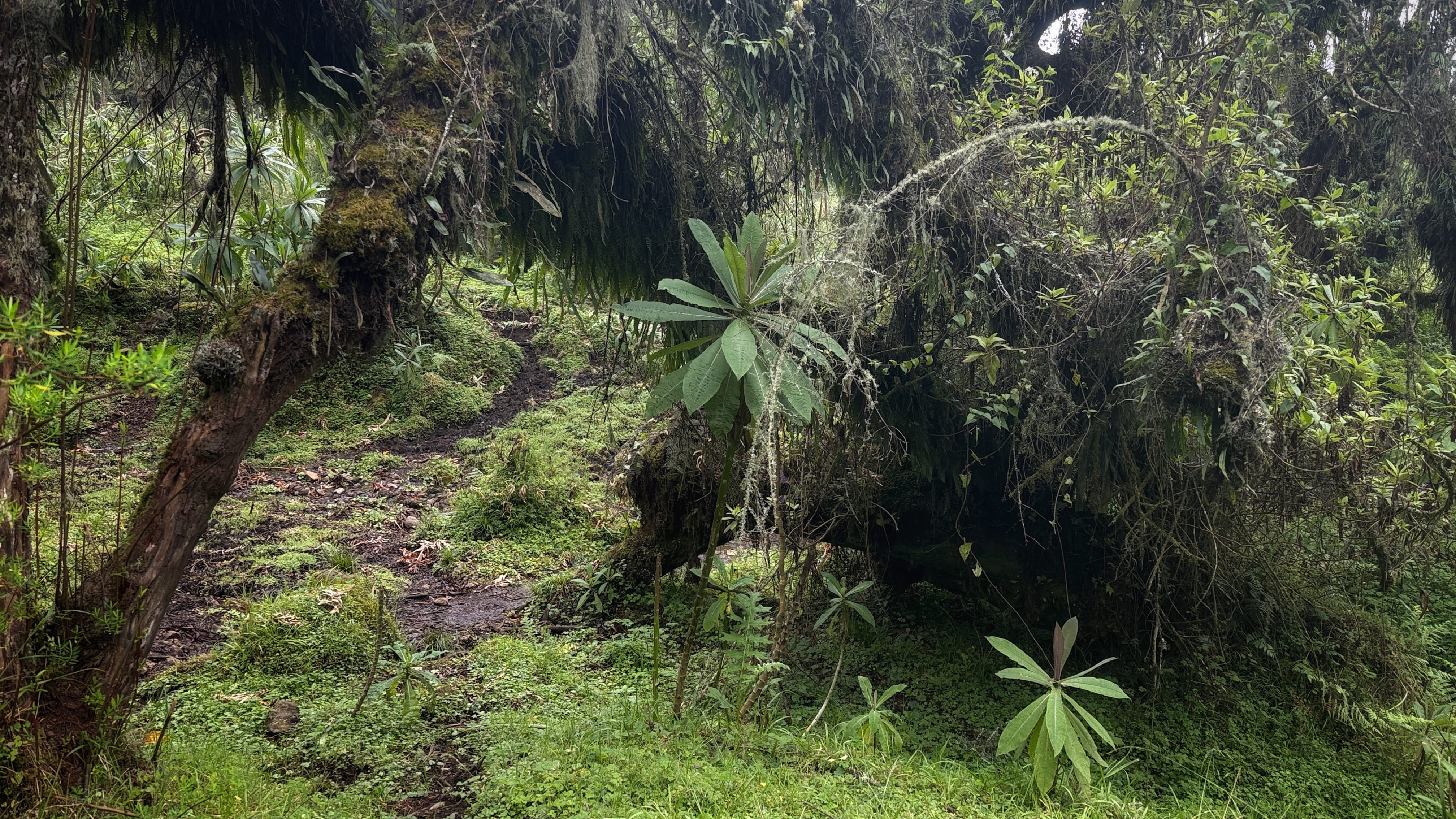
The distance isn’t especially long—about two miles up and two miles back—but the steady climb, altitude, and mud make it feel harder than it sounds. In some places the mud was deep and slick. In others, it had been churned into uneven, water-filled craters that were impossible to walk straight through.
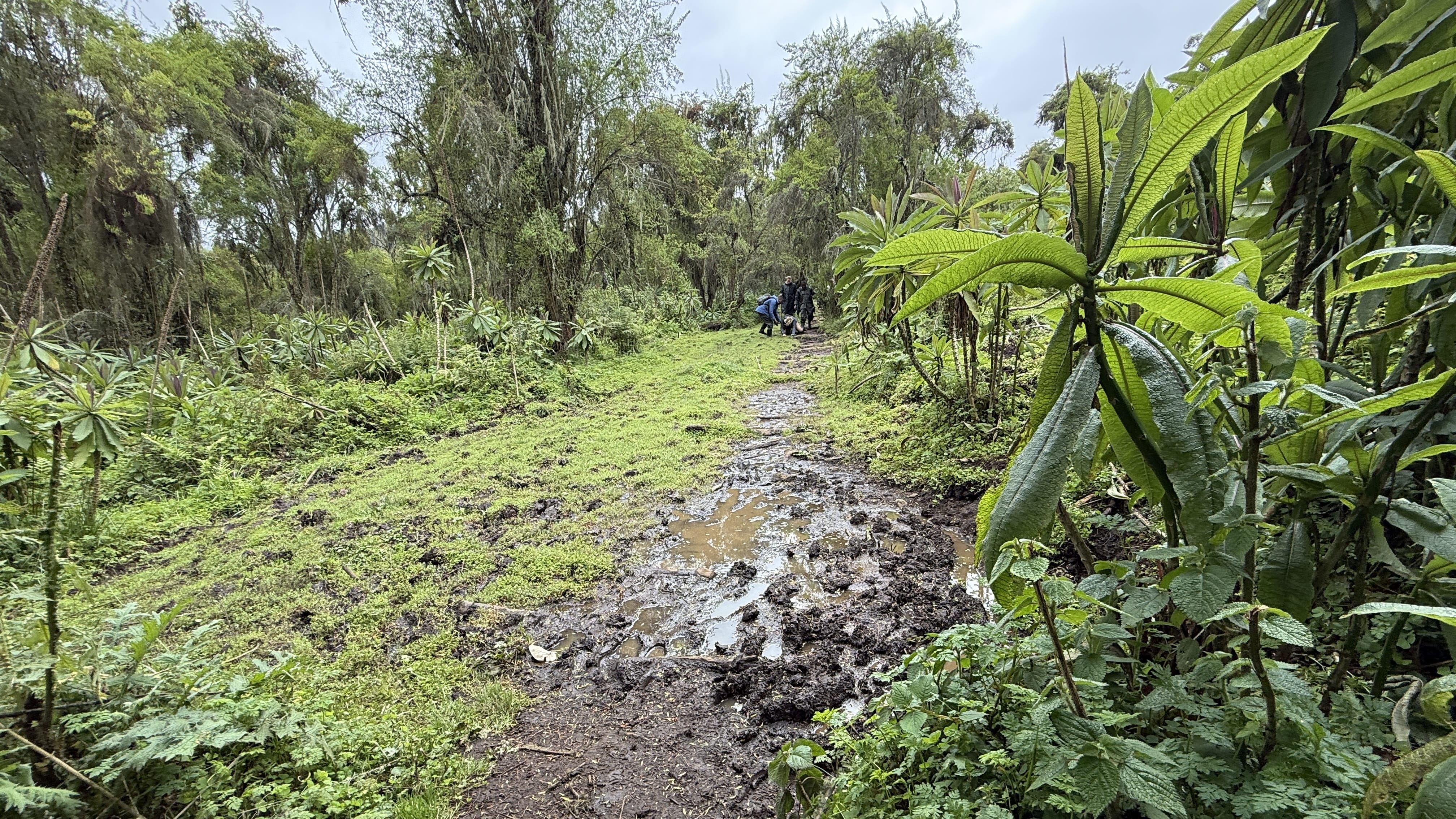
My normal stride didn’t always reach the next stable patch of wood or tree limb, so more than once I had to push off and leap farther than usual—fully committed midair, hoping I’d stick the landing.
Higher up, the air cooled and the forest changed. Towering trees wrapped in moss and draped with hanging vines closed in around the trail, the air damp and everything intensely green.
Thomas stayed close the entire hike. When a log shifted under my boots and I slid, he was there to steady me before I lost my balance completely. I was very glad I had hired a porter. He helped on slippery stretches and sometimes stepped straight into deep mud so I wouldn’t have to.
A light drizzle came and went—never heavy, but enough to hint at how difficult the trail would be in real rain. As we climbed higher, the air turned cold, and I was glad I’d packed a jacket.
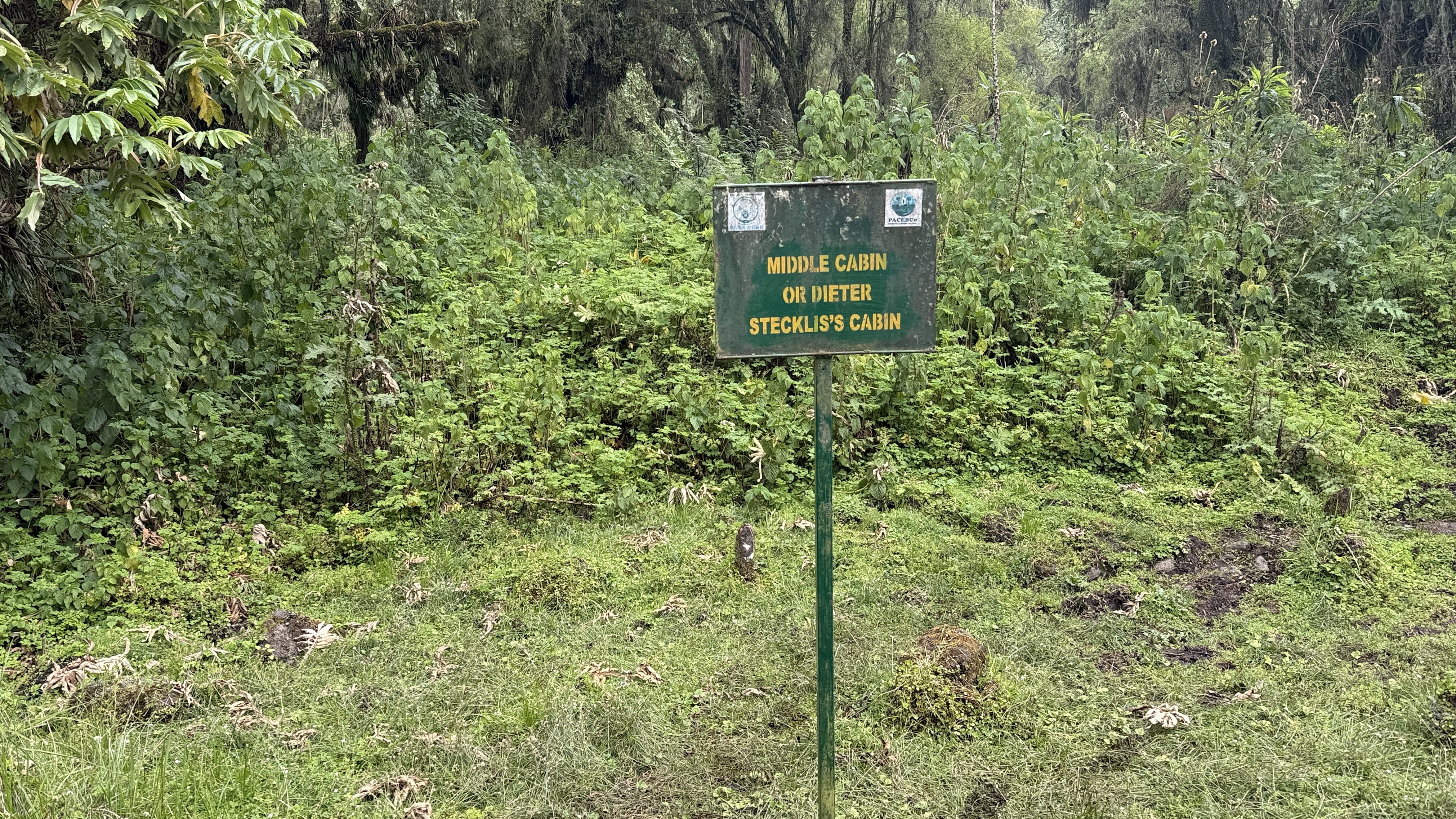
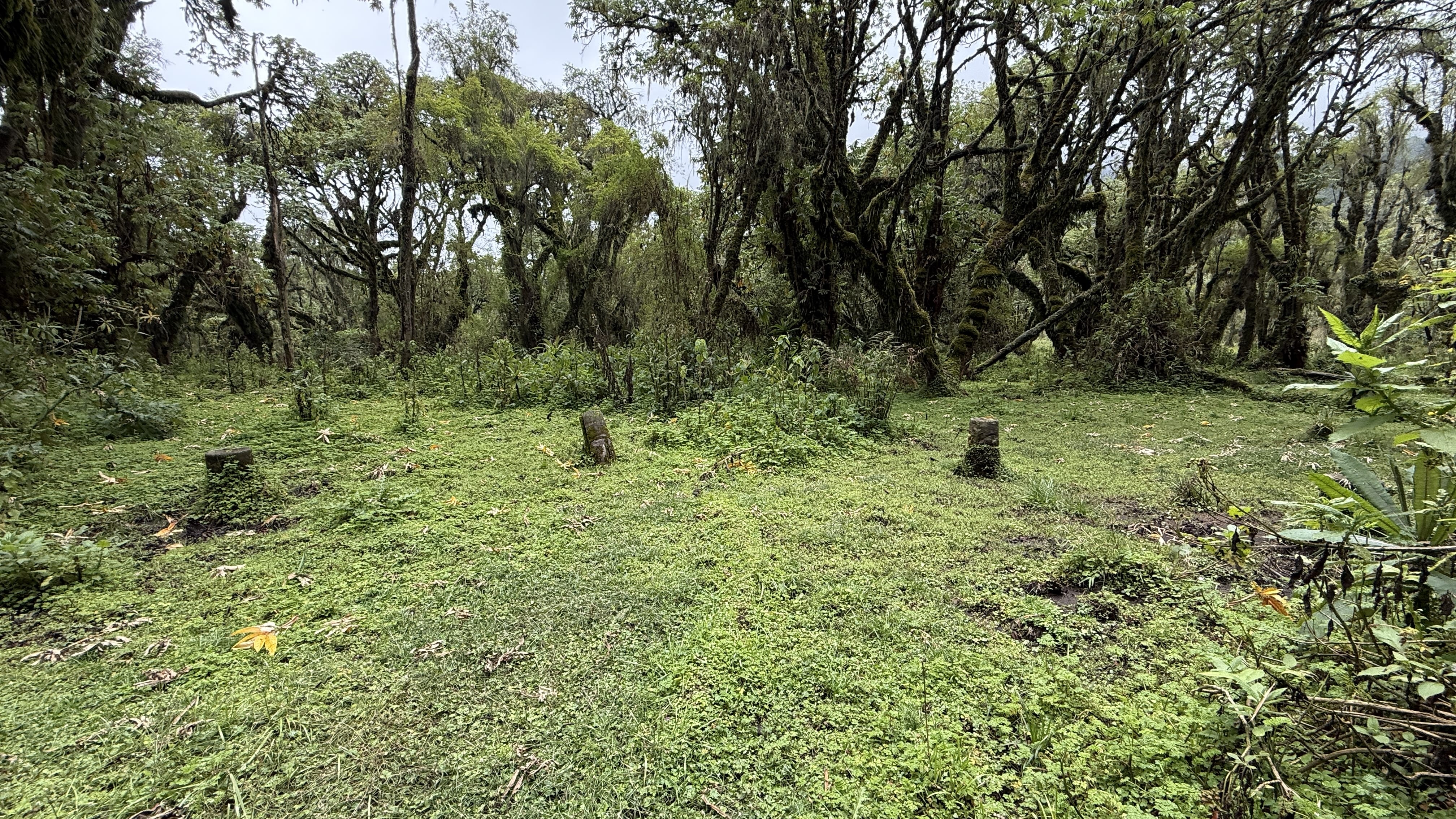
After several hours of steady climbing, we reached what remains of the Karisoke Research Camp. A sign lists 17 structures that once stood here, but walking through the site now, only a handful are marked—and even those are little more than scattered cement blocks and weathered signs.
Nearby is the gorilla cemetery, where Dian Fossey is buried beside Digit, the gorilla she loved and whose killing deeply affected her work. Other gorillas are buried there as well—some killed by poachers, others lost to illness or injury. Above her name is the word Nyiramachabelli — a Kinyarwanda name often interpreted as “the woman of the mountain.” It seemed fitting.
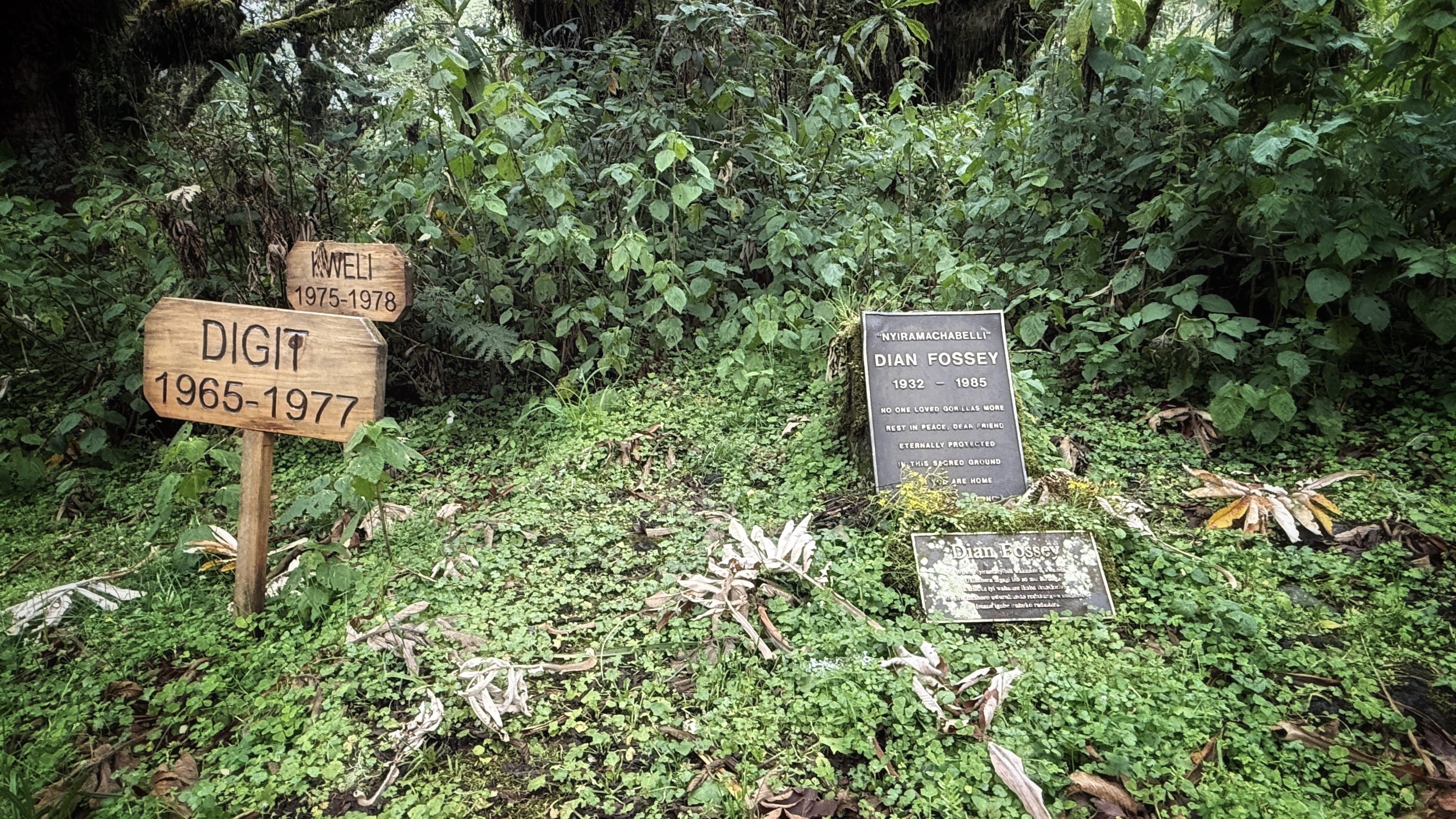
The area felt simple and still. Standing there—after walking the same path she had walked decades earlier and visiting her grave—was quietly significant.
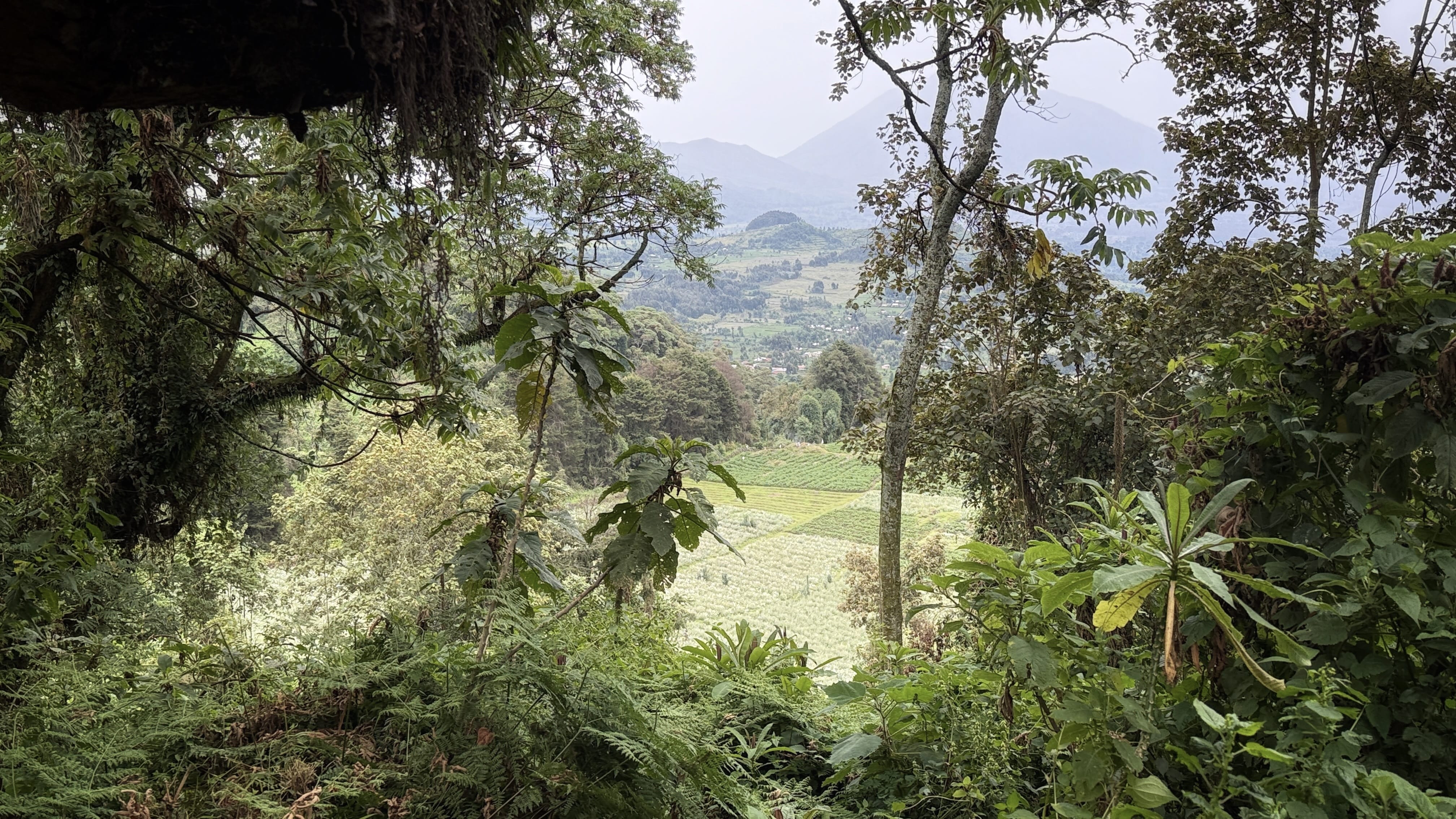
The descent was muddy but far easier than the climb, and I had no trouble keeping pace on the way down.
I realized I hadn’t brought enough food—just a couple of small bananas and a liter of water. Not exactly ideal for a long uphill day. Renting the gaiters, however, turned out to be one of the best decisions I made.
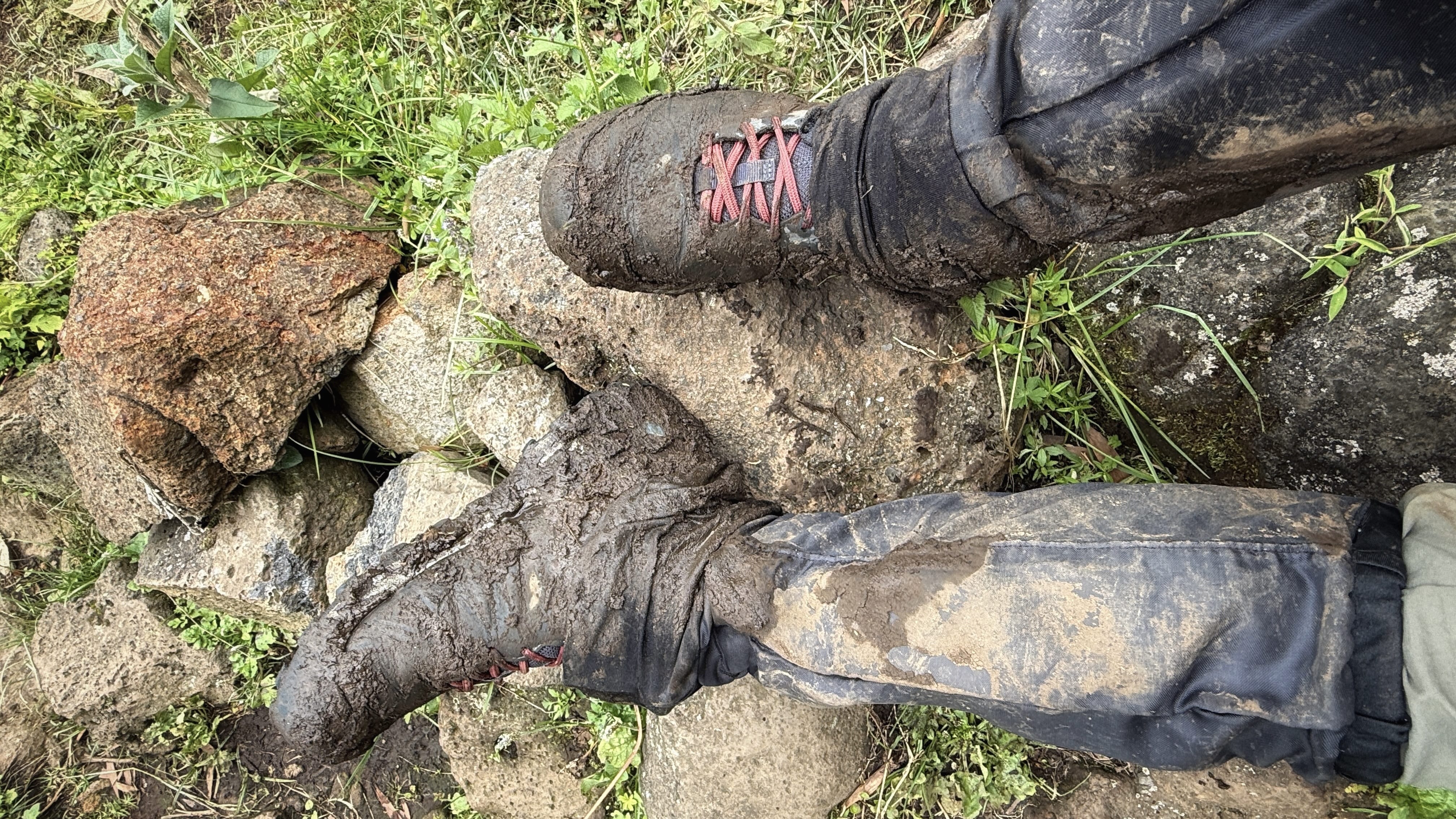
When I reached the parking lot where the trail ends, Kevin was waiting with a folding chair already set up. He helped me peel off boots completely covered in mud and handed me flip-flops and a warm towel. After hours on the trail, it wasn’t expected, but it was deeply appreciated. I could get used to ending hikes this way.
On the drive back, we stopped at the Dian Fossey Gorilla Fund café. I had toured the museum on a previous trip, but this time I just needed food. Carrot cake and a cappuccino—perfect.
Back at La Locanda, Kevin took my muddy boots (and socks) to be cleaned. A few hours later, they were returned spotless — you’d never guess I had trudged through all that mud.
I headed to my cottage to wash up and later that afternoon had the massage Kevin had arranged for me. I mean, could this day get any better? A morning hike and an afternoon massage.
When I arrived at the treatment room, I saw the massage therapist was male. We exchanged a quick hello. It struck me as a little odd that he didn’t really make eye contact and seemed to look slightly past me. People are shy sometimes, I thought, and I didn’t make a big deal of it — it was just slightly awkward.
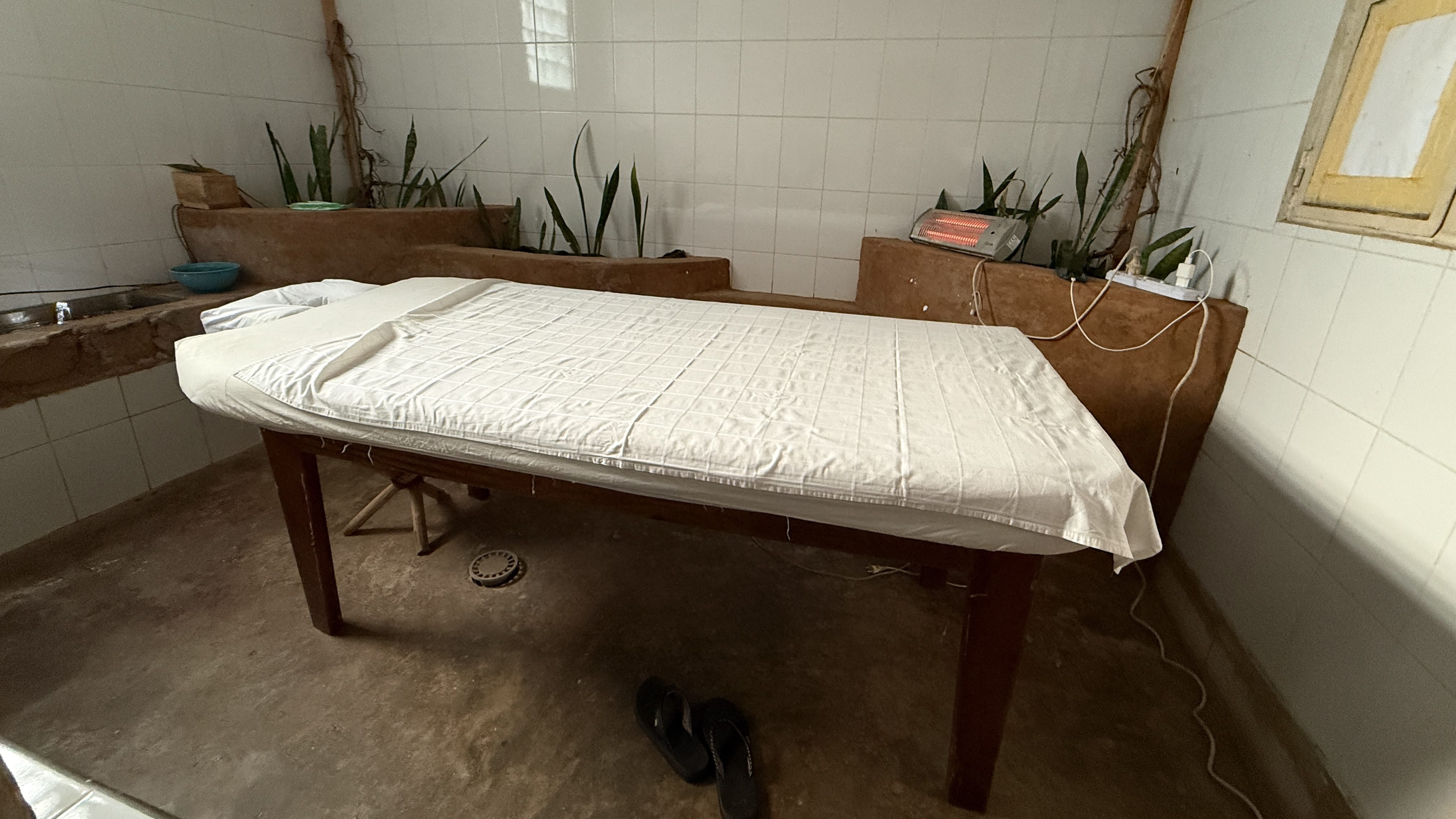
He stepped out for a few minutes so I could undress and settle under the sheet he’d left on the table. When he returned, he asked what level of pressure I preferred.
“Medium firm,” I said.
It was perfect.
What was scheduled as a 45-minute massage stretched closer to 90. I think he spent nearly half of it working on my back alone. It had been a long time since I’d had a massage this good.
Afterward, I walked over to the restaurant for dinner.
That day happened to be Valentine’s Day.
So when I arrived at the restaurant, there was a table for one set just for me—a small vase of fresh flowers and a red napkin folded into a rose. Frank Sinatra was playing softly in the background. My Way. My mother’s favorite.
It made me smile and tear up at the same time.
I ordered melanzane alla parmigiana — grilled eggplant layered with tomato sauce and local cheese — and ended up eating nearly the whole thing. It was that good.
By the time I got back to my room, I was exhausted. An early night after a long first full day back in Musanze.
Today, after breakfast, I headed to Volcanoes National Park to register before setting out for golden monkey trekking. (I’d already trekked to see the golden monkeys once with my group earlier in the trip — but I had prebooked this one during my solo days, so here I was again.)
From the park headquarters we drove about thirty minutes toward Kinigi, where a large new complex appears to be taking shape, and began walking from the old parking area beside a village.
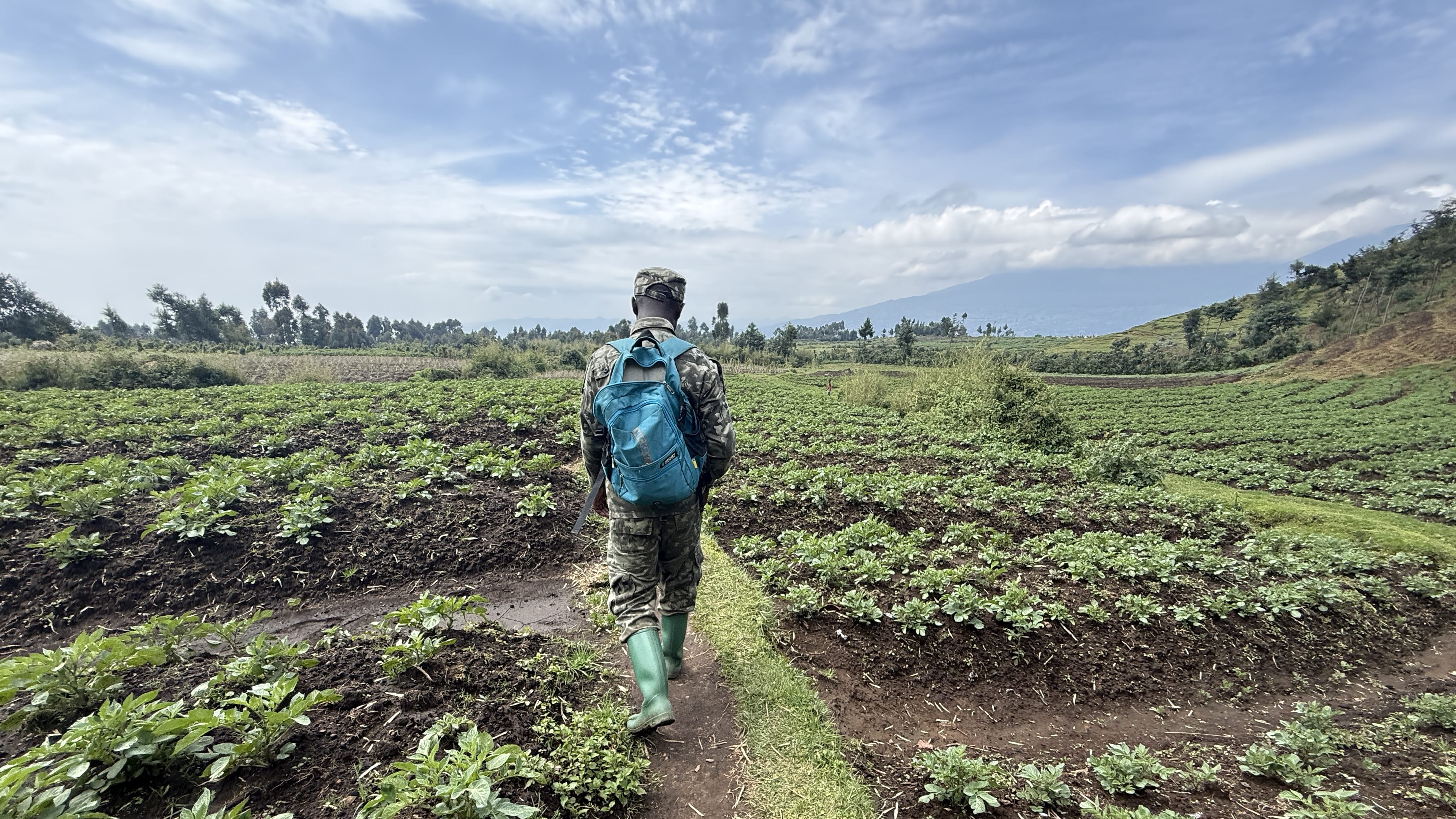
The trail followed the edge of farmland before gradually climbing toward the forest, a walk of roughly forty to fifty minutes—an easy, steady climb.
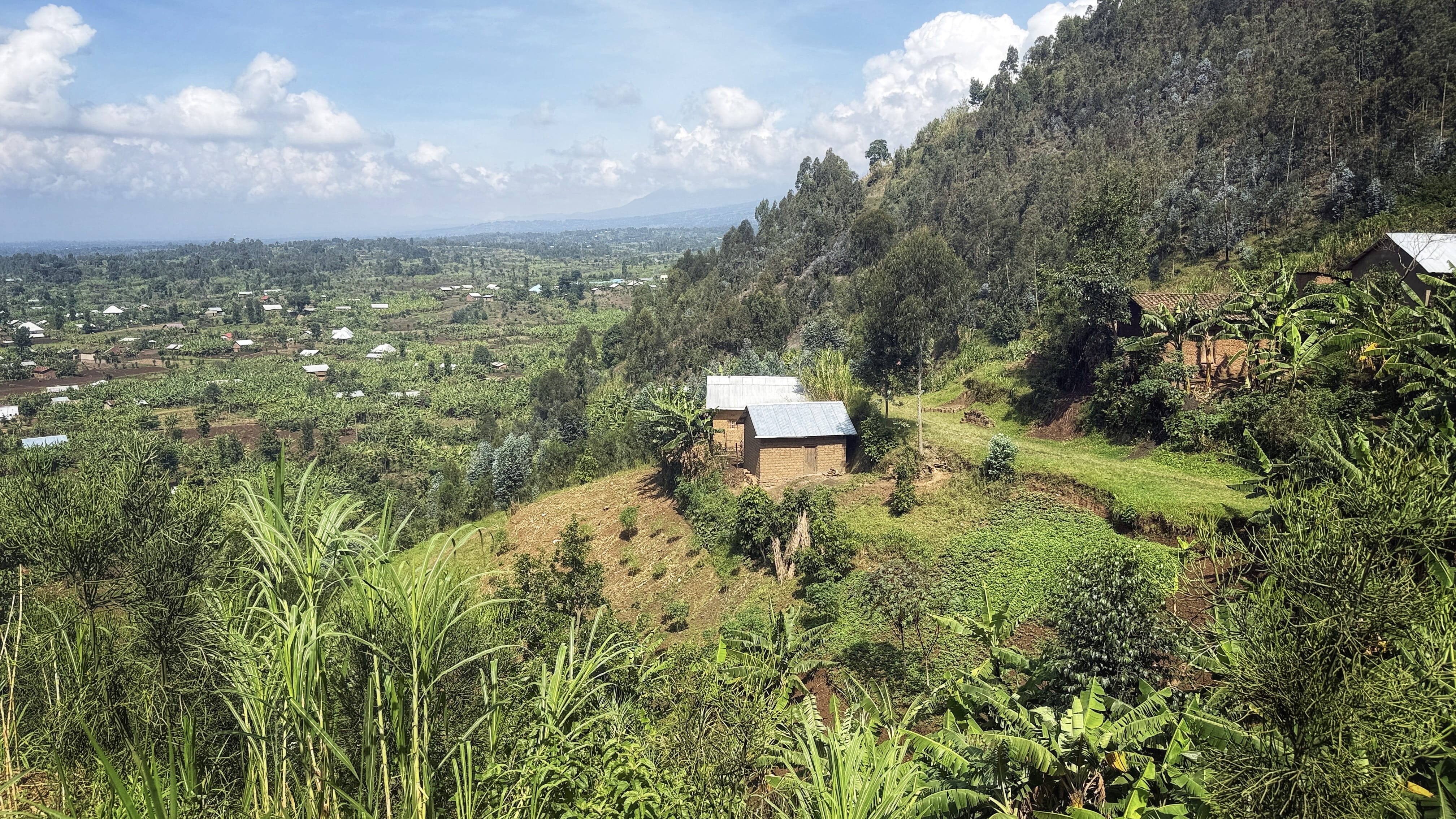
As we moved through the patchwork of cultivated fields, the landscape slowly opened around us. The Virunga volcanoes rose in the distance — part of the chain shared between Rwanda, Uganda, and the Democratic Republic of Congo.
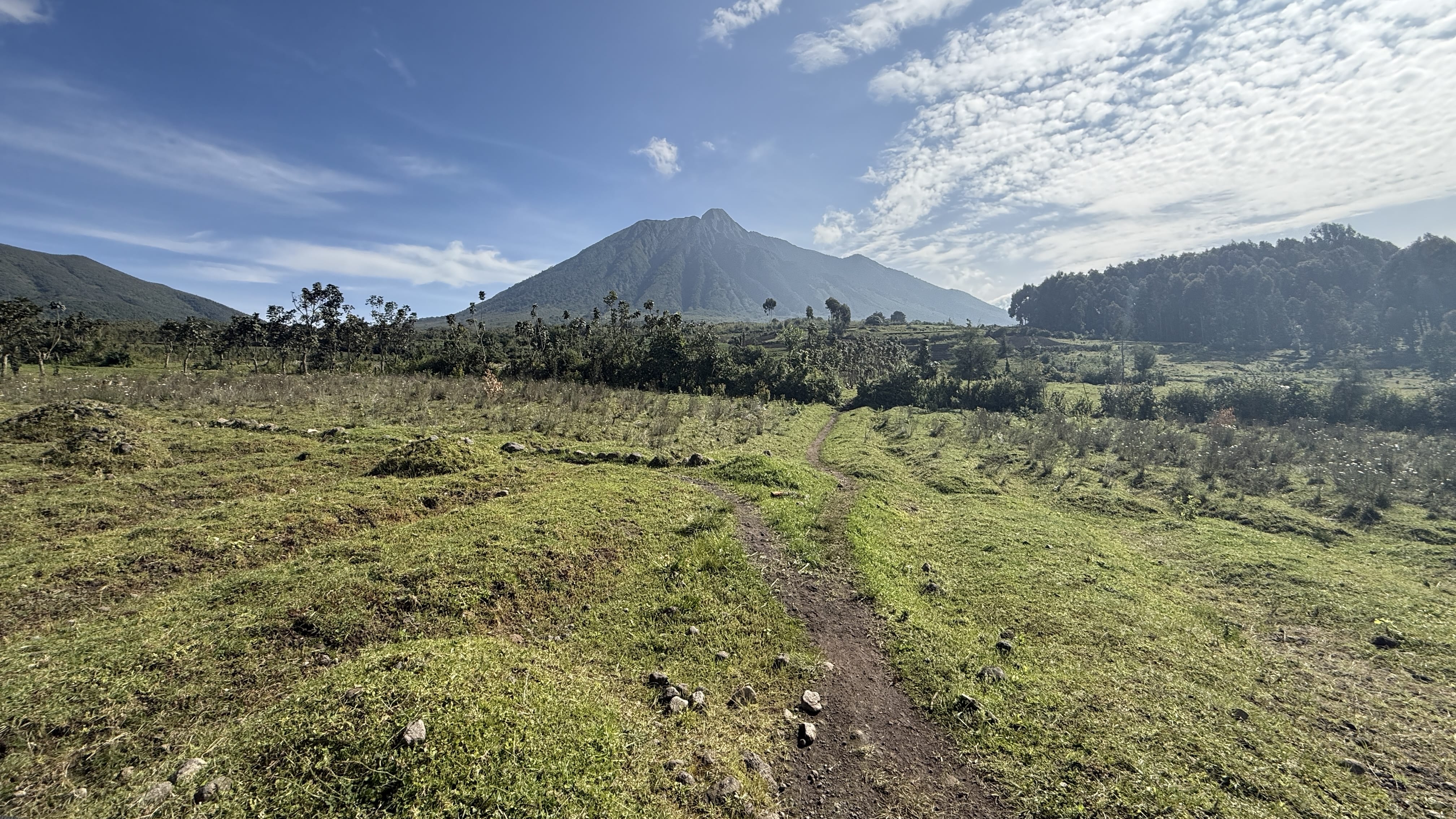
At one point, the trail followed a narrow stream where dark volcanic rock lined the water—a reminder that this agricultural landscape sits on ancient lava. The surrounding gardens were intensely lush, with rows of potatoes and climbing vines in every direction. You could tell the potato varieties apart by their flowers: purple blossoms for purple potatoes, white for the white variety.
We also had to cross a pasture with a few cows, and for a brief moment a couple of them started charging in our direction. My reaction was immediate—step behind the guide. It was over quickly, but definitely a little startling.
Near the forest edge, the rules tightened.
Masks on within fifty meters of the monkeys.
Voices low. Slow movement. Don’t step on their tails.
Then came the first flicker of gold in the bamboo.
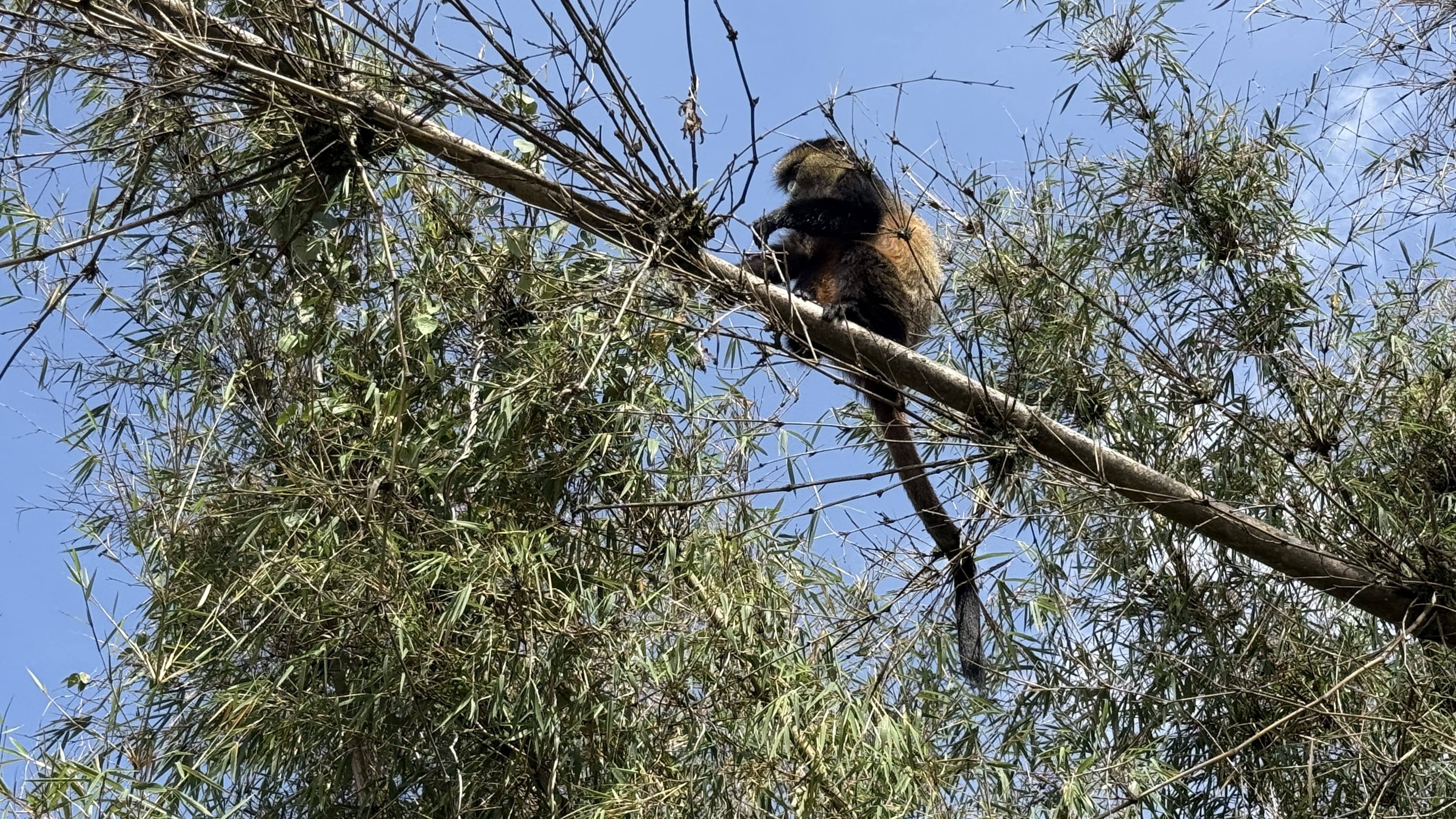
At first it was only motion—branches shaking, shadows jumping.
And then suddenly they were everywhere.
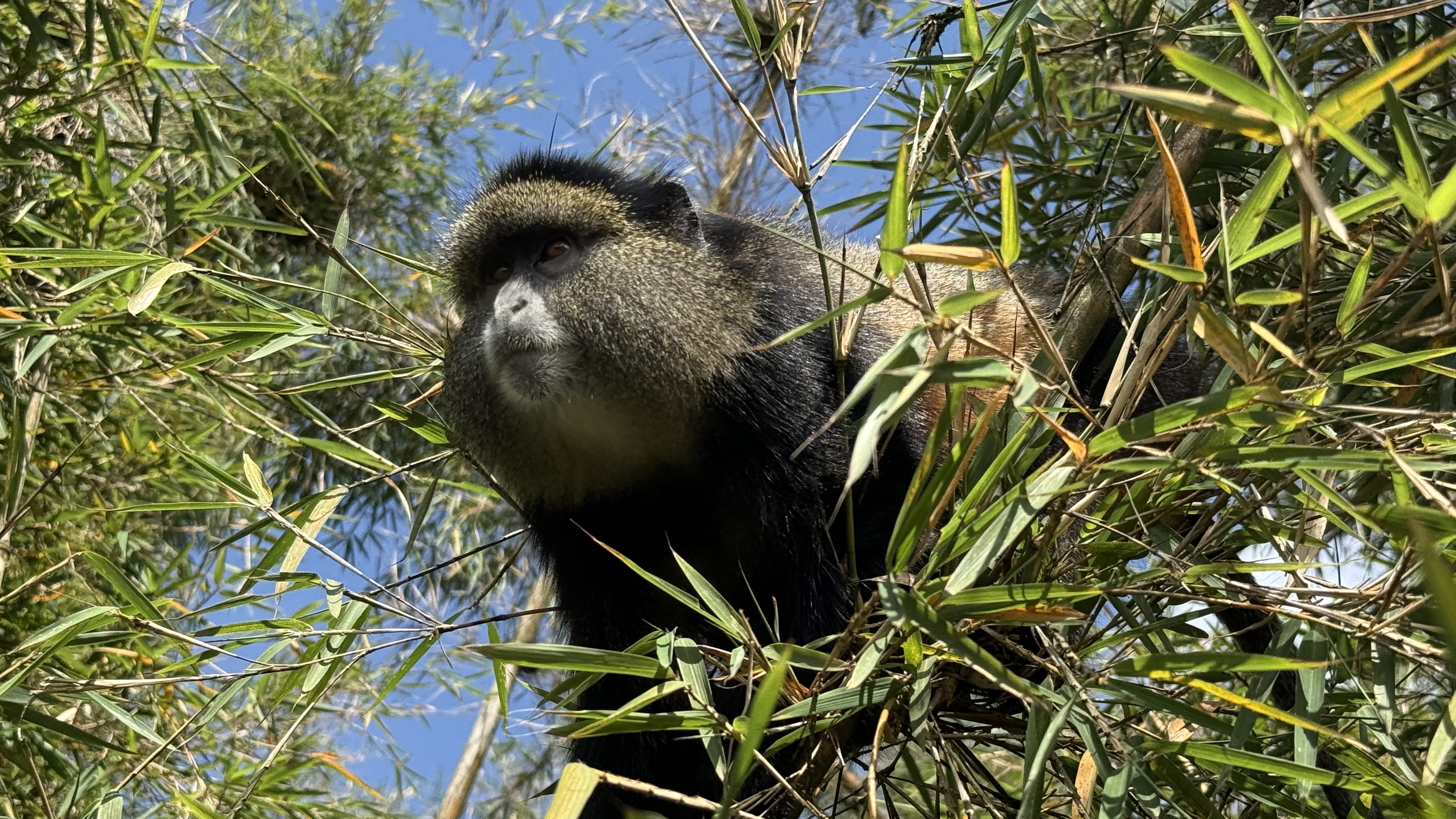
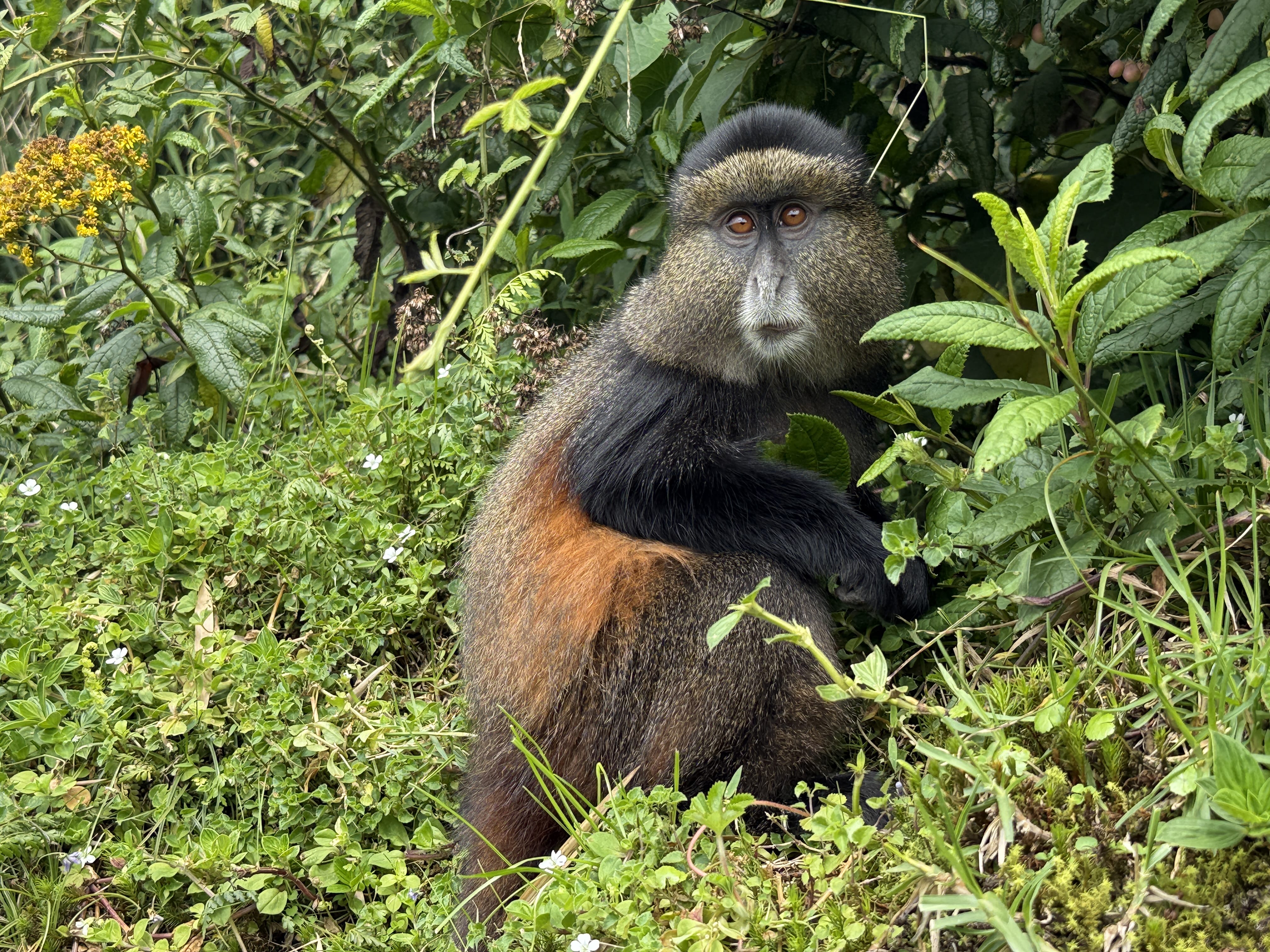
The troop here numbers just over fifty golden monkeys, one of several groups that live in the bamboo forests of the Virunga Mountains along the borders of Rwanda, Uganda, and the Democratic Republic of Congo.
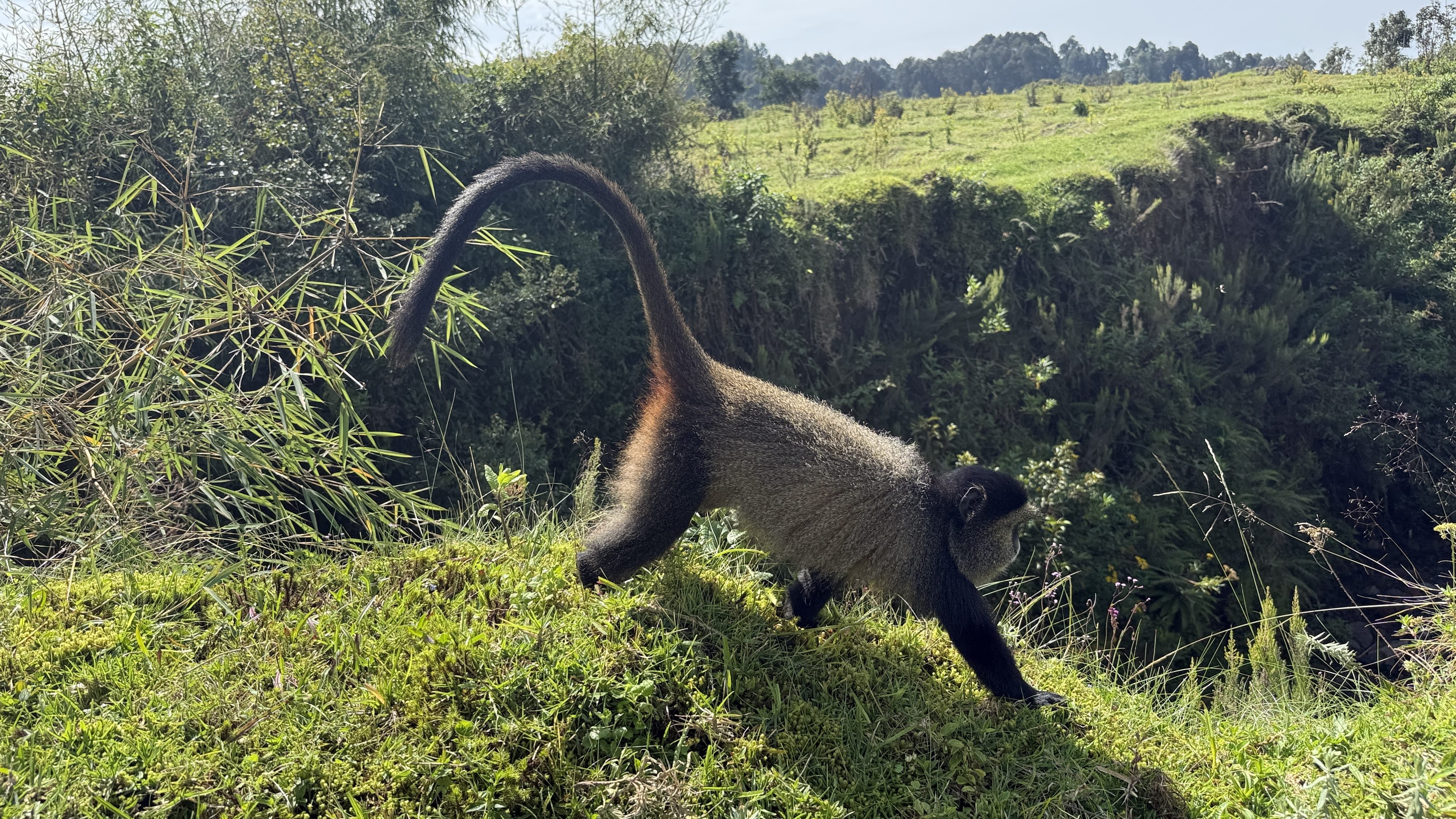
The monkeys were full of restless energy—digging, jumping, climbing, and playing almost constantly. They were always eating too: bamboo shoots, leaves, grubs, and even small raspberries they found growing along the ground near a low stone fence.
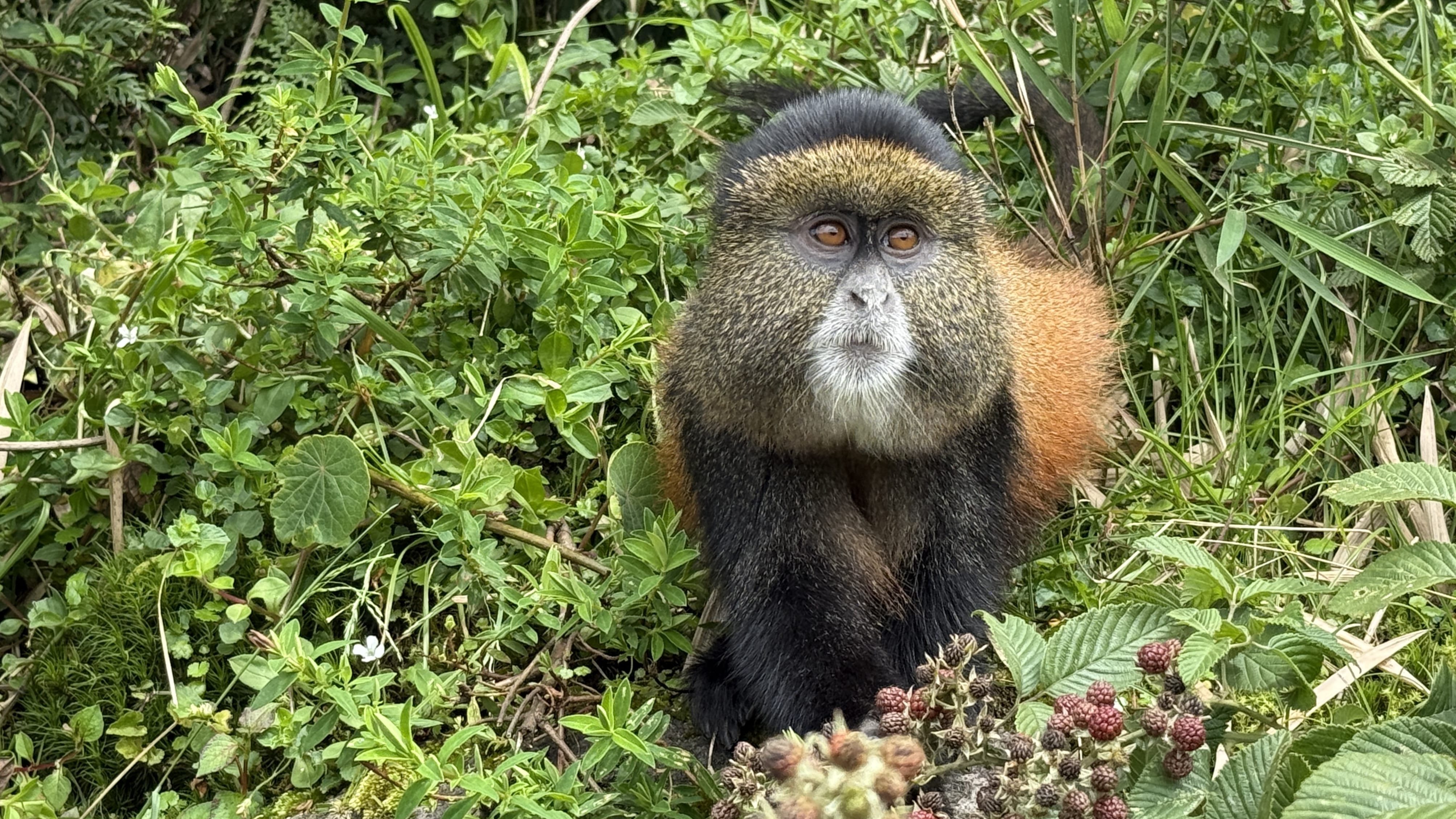
Some clung to the bamboo, nibbling shoots with quick, efficient bites. Others spilled into the nearby field, racing across the ground, chasing one another, and leaping effortlessly over stone walls and open patches of earth.
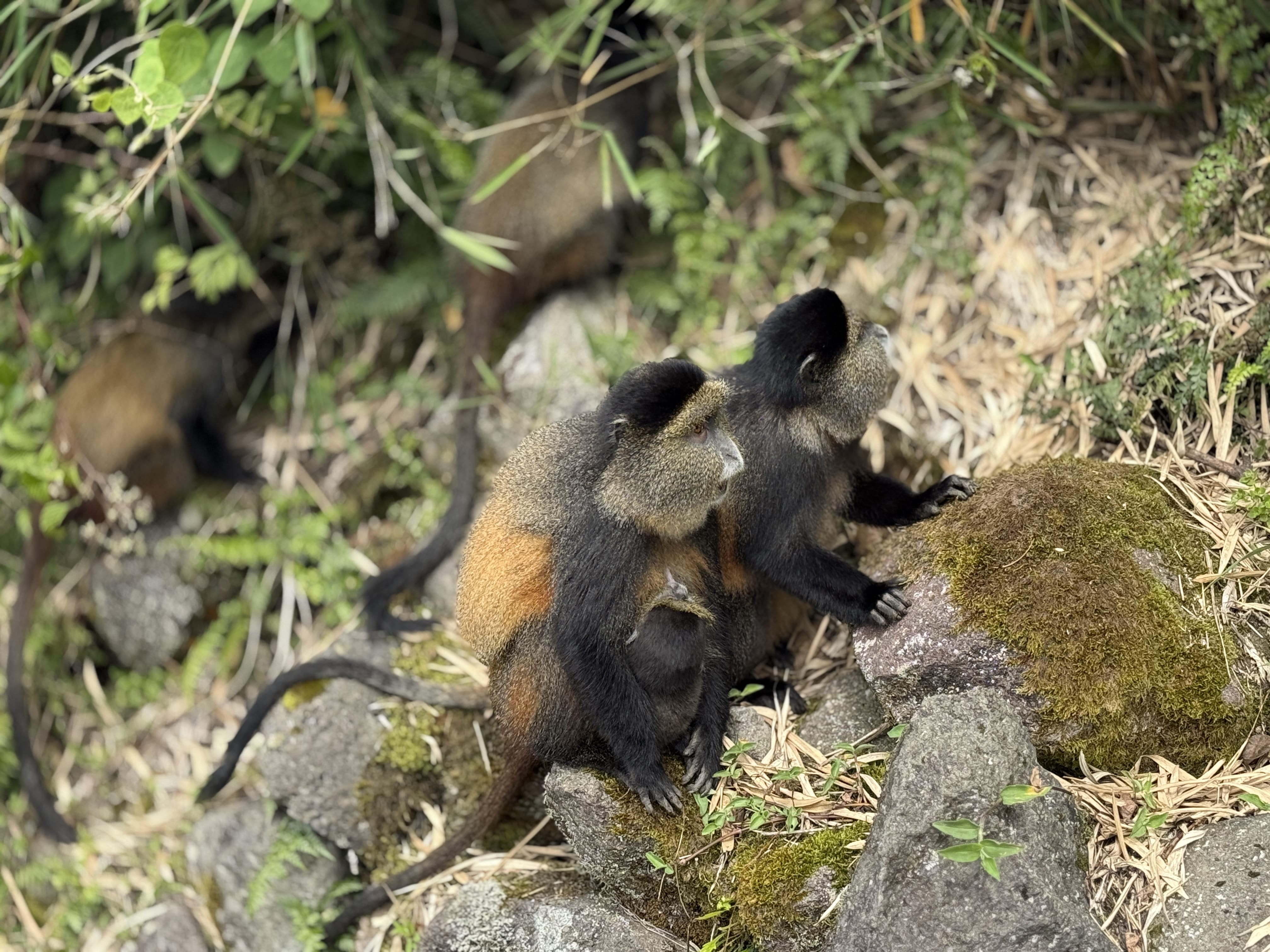
I noticed a tiny infant pressed against its mother’s belly, barely visible beneath her fur. Another adult leaned in close, and for a second it looked almost as if their faces touched—something small and tender hidden inside all that motion.
And then, just as quickly as it began, the hour was over.
Golden monkeys may not have the solemn presence of larger primates, but the experience felt special in a completely different way—faster, lighter, joyful. I didn’t realize until later that they’re endangered and found only in the Virunga Mountains. Knowing that added another layer to the experience.
Just like the day before, Kevin was waiting when I finished the trek—again with a hot towel and ready to help me out of my muddy boots.
We climbed back into the van and started toward town, but before returning, I asked if we could stop at the bank so I could withdraw more cash.
Light rain returned shortly after I got back, continuing on and off for most of the afternoon. I spent the time reading and writing, letting the morning settle.
In the early evening, umbrella in hand, I walked to the restaurant for dinner. I ordered the cannelloni—homemade pasta filled with tomatoes, spinach, and cheese—and once again, it was excellent. Every meal here had been consistently delicious, something I’d quietly come to appreciate.
It still feels a little strange for me to allow an afternoon simply to rest. I often think I need to keep moving, to fill every hour. But after a full morning, the stillness was actually pleasant. Maybe it helped that I had just come off nine busy days of group travel. Either way, slowing down felt like exactly what I needed.
For my last day in Musanze, I booked what I thought would be a half-day walk around the Twin Lakes.
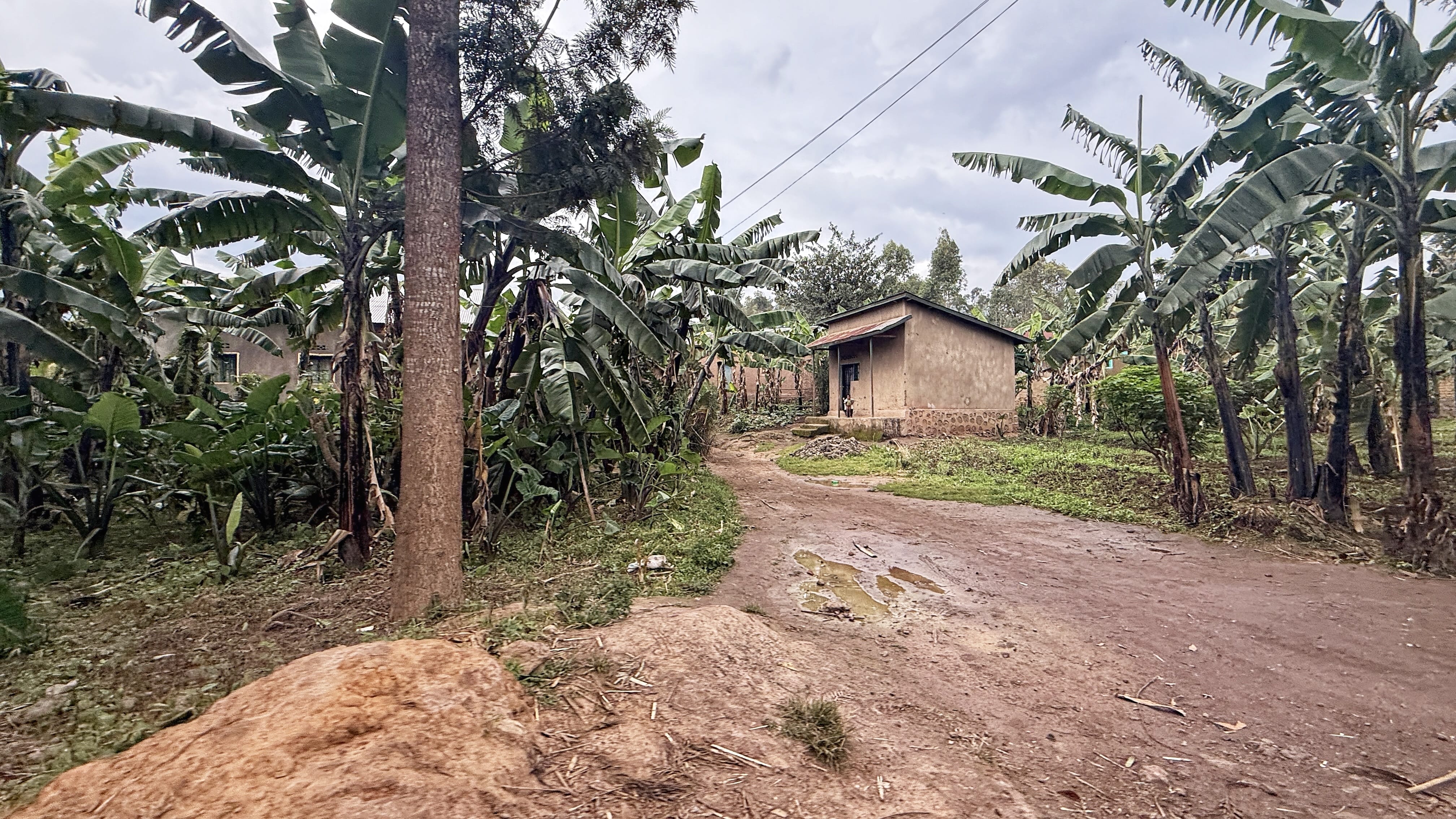
So, after a quick breakfast, I met my prearranged driver and we headed toward the lake area, where my guide would be waiting for me. It was about a 25-minute drive, the last 15 along a bumpy dirt road lined with banana plantations, cultivated fields, and scattered brick-and-mud homes that gradually clustered into a small rural village.
Once my guide and I introduced ourselves, we started walking back up the same dirt road I had just been driven down. Not even five minutes in—very much in true JoAnne fashion—I got distracted mid-conversation, took my eyes off the road, stepped wrong, and went straight down.
For a few seconds I thought I might have actually hurt my leg, but I was just as mortified knowing several local people behind me had a perfect view of the whole thing. Oh well.
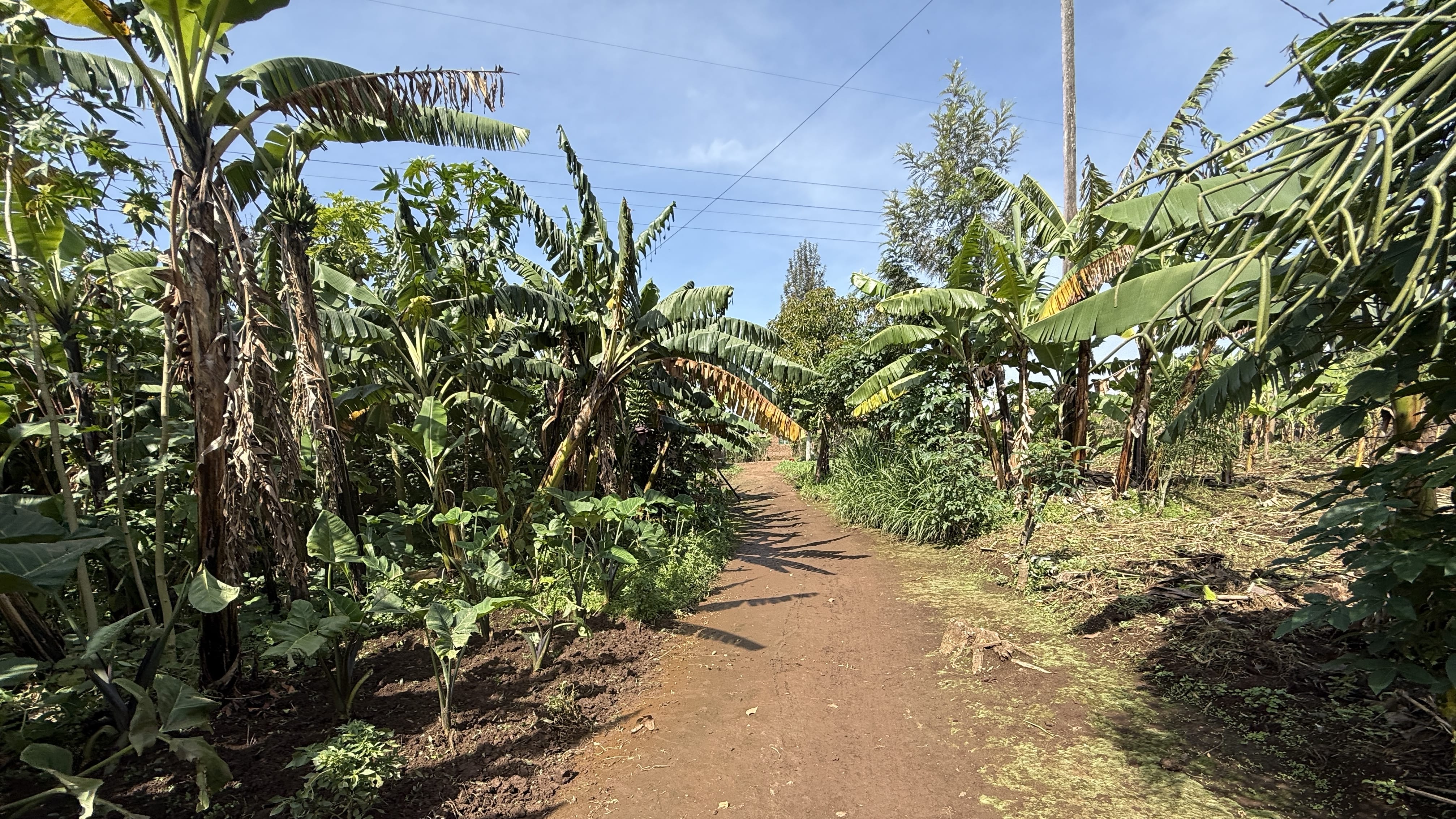
After brushing off my fall—and the embarrassment—we continued a bit farther down the road before turning onto a narrow path cutting through thick banana trees, the small ones I’ve grown so fond of seeing here.
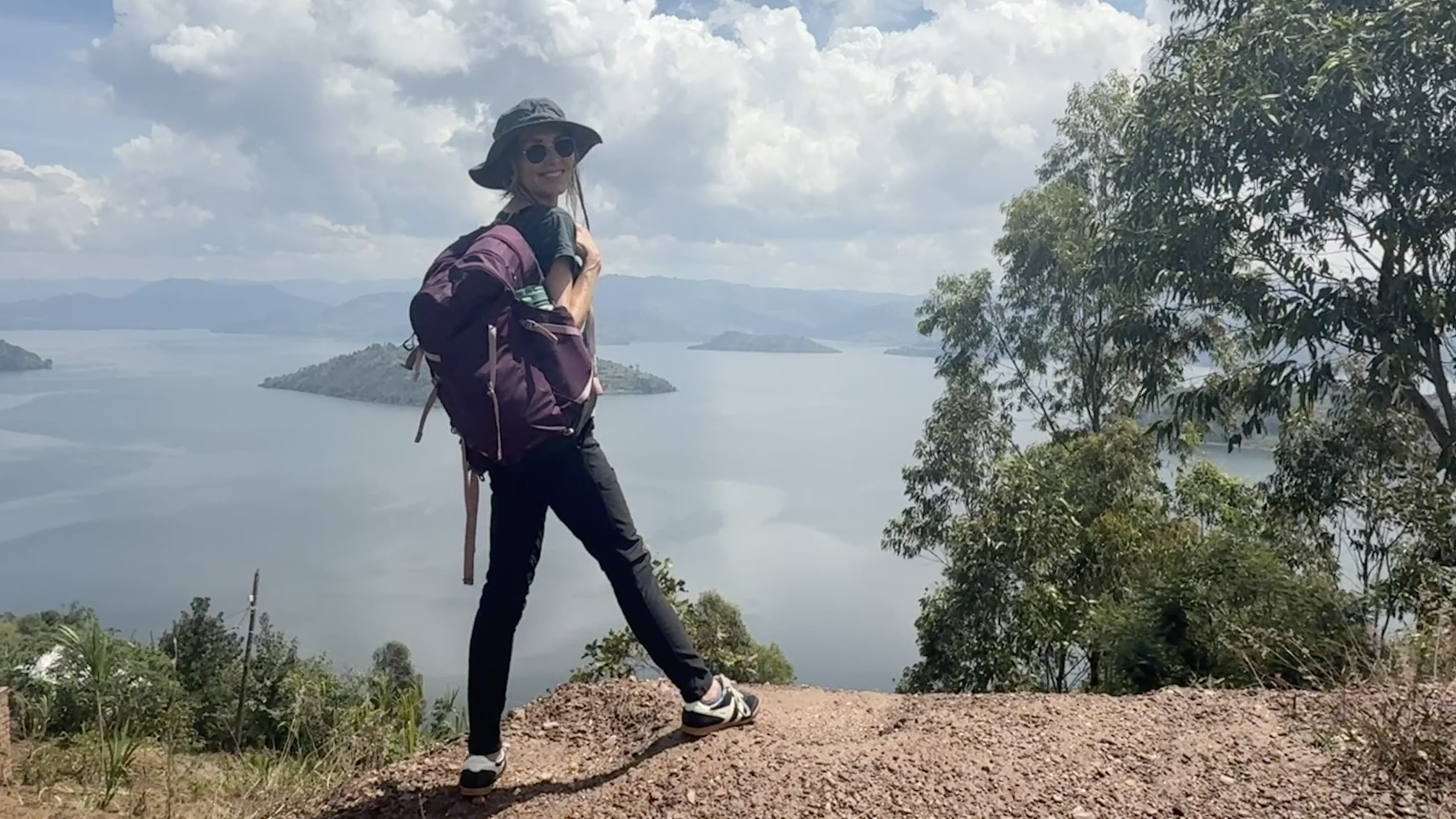
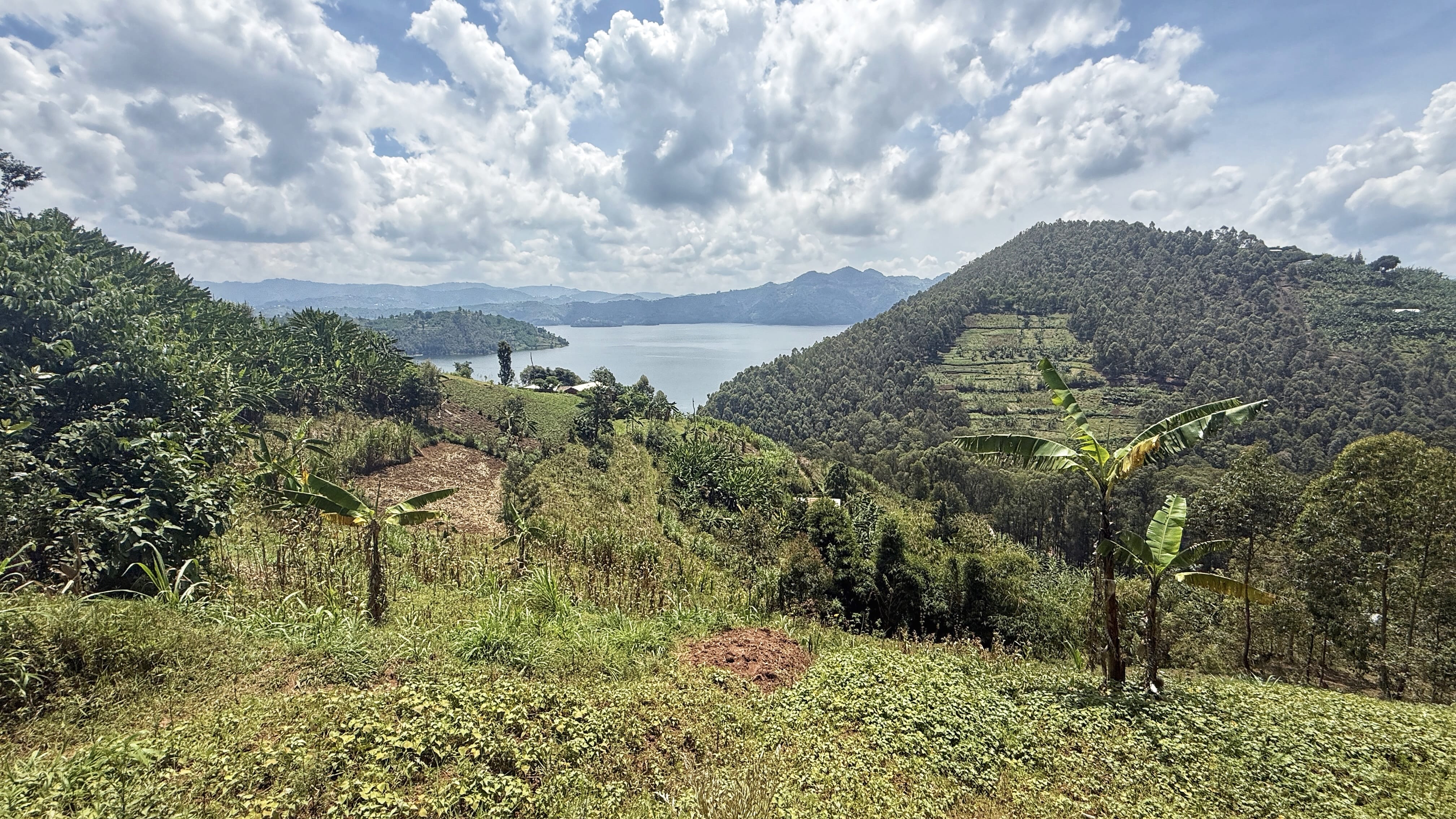
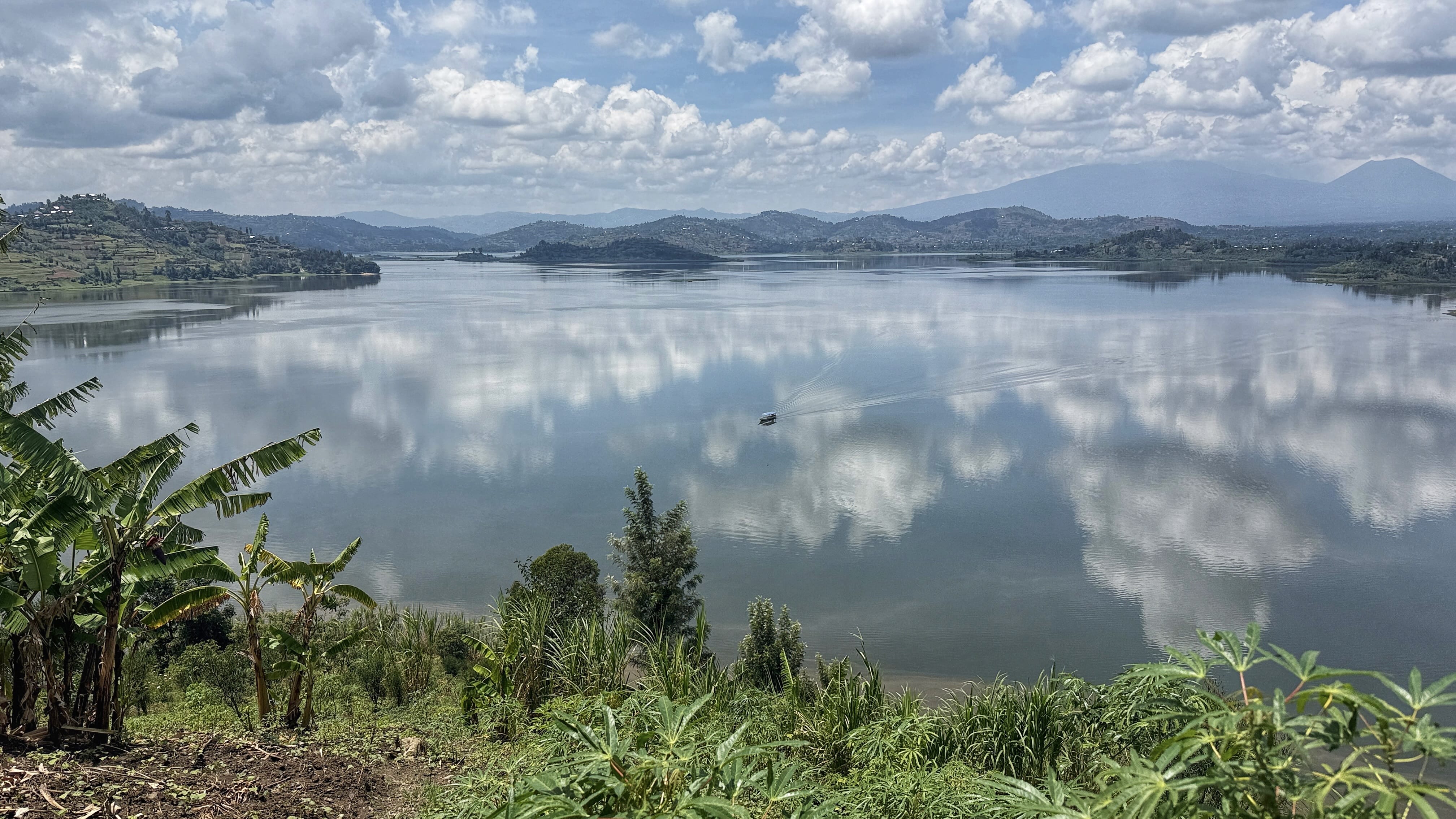
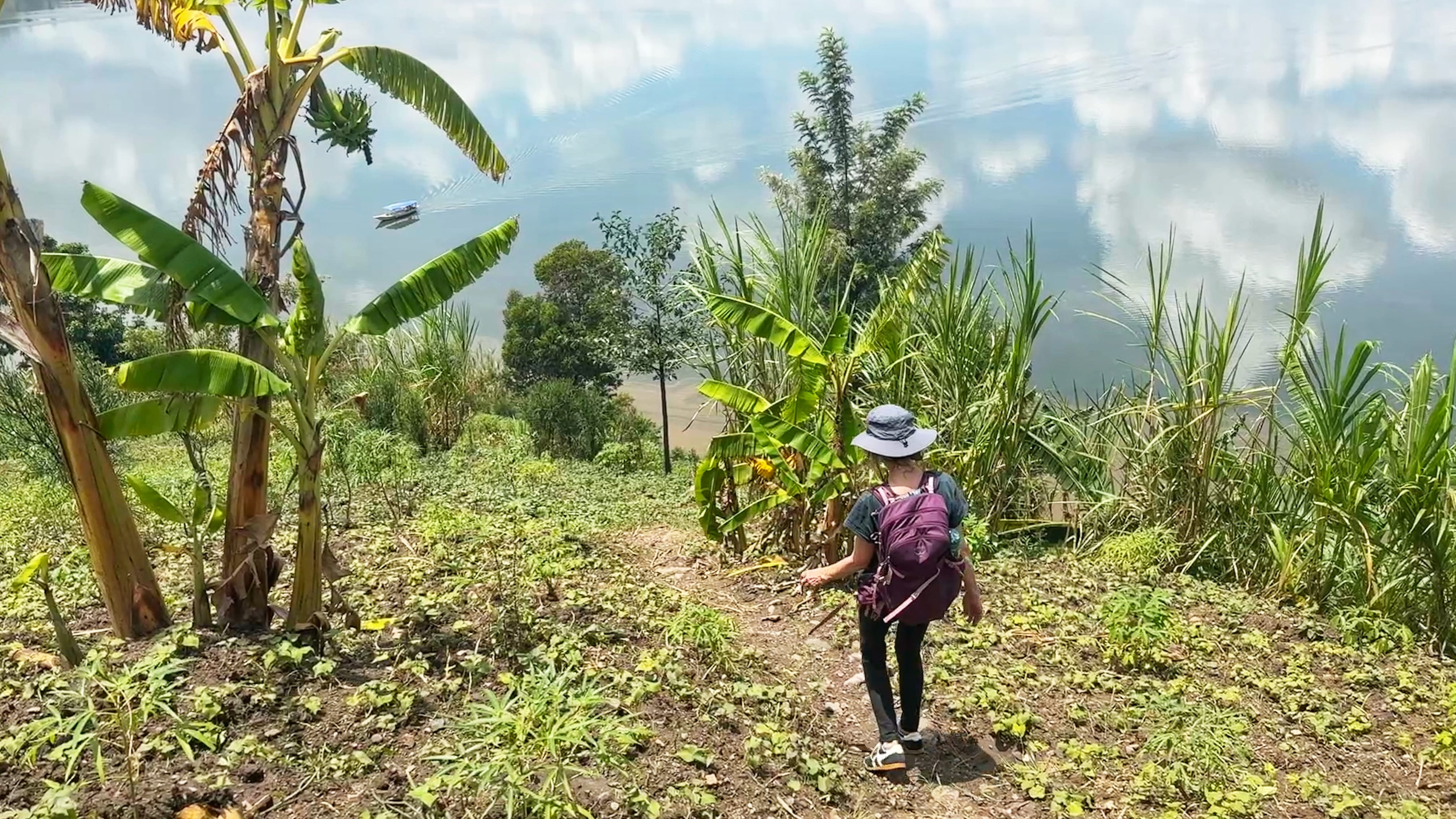
When I first read about hiking near the Twin Lakes, it sounded like a gentle walk with nice viewpoints and maybe a boat ride at the end. Some routes are like that. But mine was a guided ridge hike above Lake Burera and Lake Ruhondo.
Again, because I thought it would be an easy walk, I wore a cotton T-shirt, heavier walking pants instead of my lightweight ones, and sneakers instead of hiking boots with grip and ankle support. I also left my hiking poles behind.
There was quite a bit of uphill, but the ridgeline just kept unfolding—water, hills, sky—one view replacing the next. We passed small villages, terraced farmland, and stretches of deep green countryside.
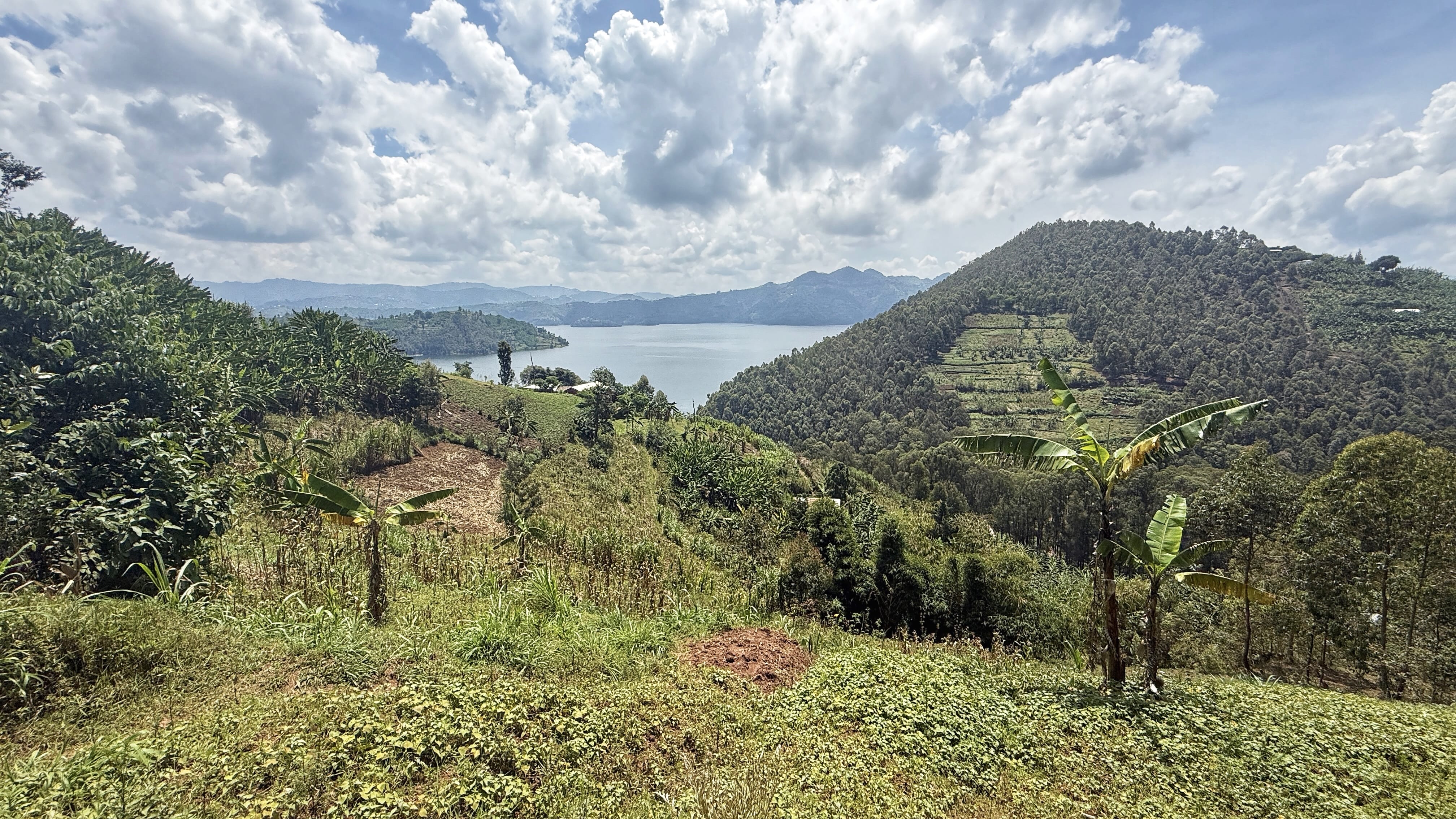
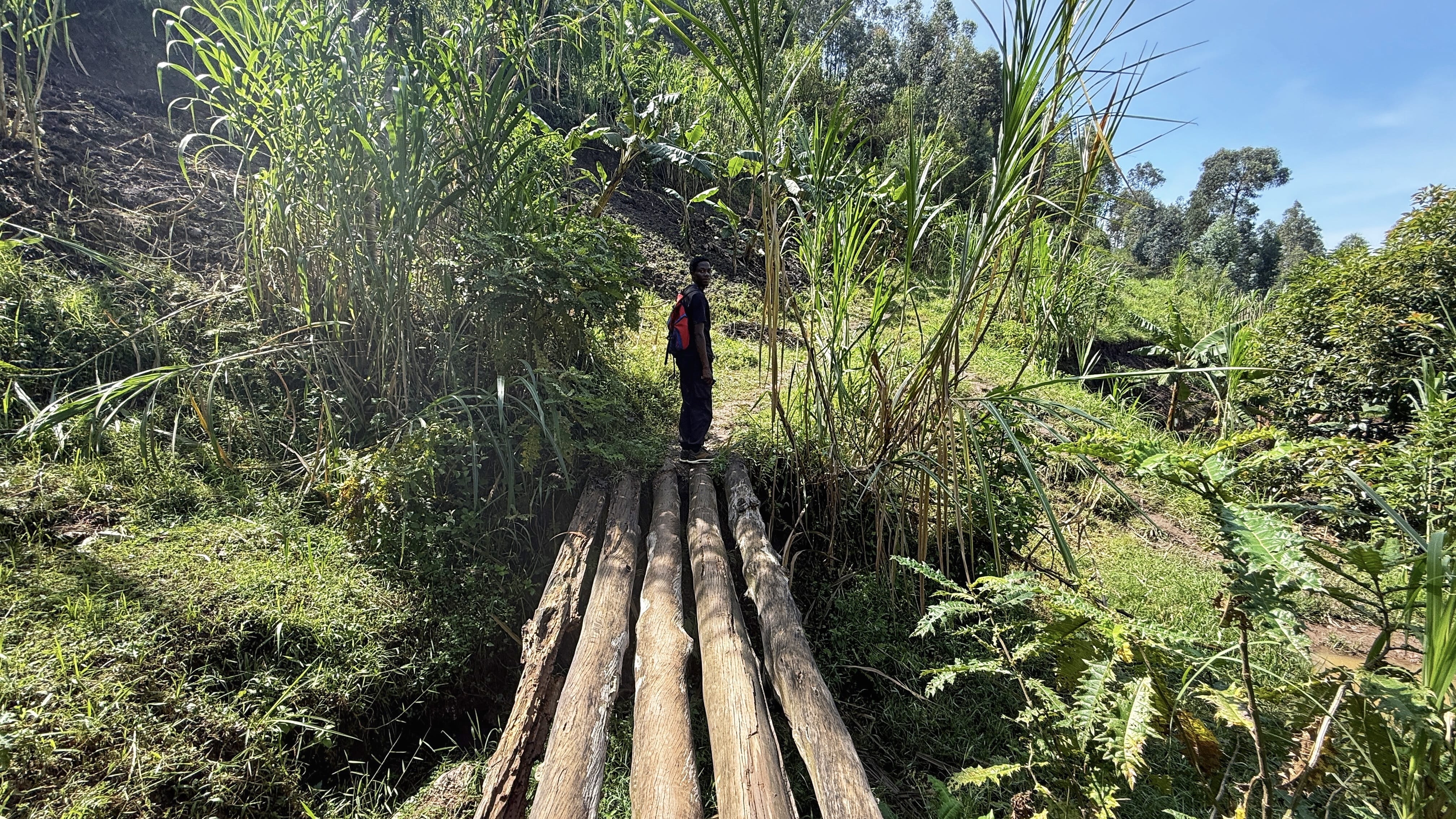
Several times, we crossed simple log bridges laid over narrow streams, carefully stepping across the uneven, slightly shifting logs.
It felt like 90 degrees, though it was probably closer to 70, with humidity making everything feel hotter.
At times it felt like a mini botany tour—my guide pointed out unusual plants and explained how some are used as local herbal remedies. Every so often we passed people along the trail or working in the fields, and I saw sorghum and beans spread out on large mats to dry in the sun.
At one point the view opened wide enough to see the entire chain of Virunga volcanoes in the distance. We also passed piles of handmade bricks drying in the sun—something I noticed more than once. My guide explained that families shape and dry them this way before selling them for local construction.
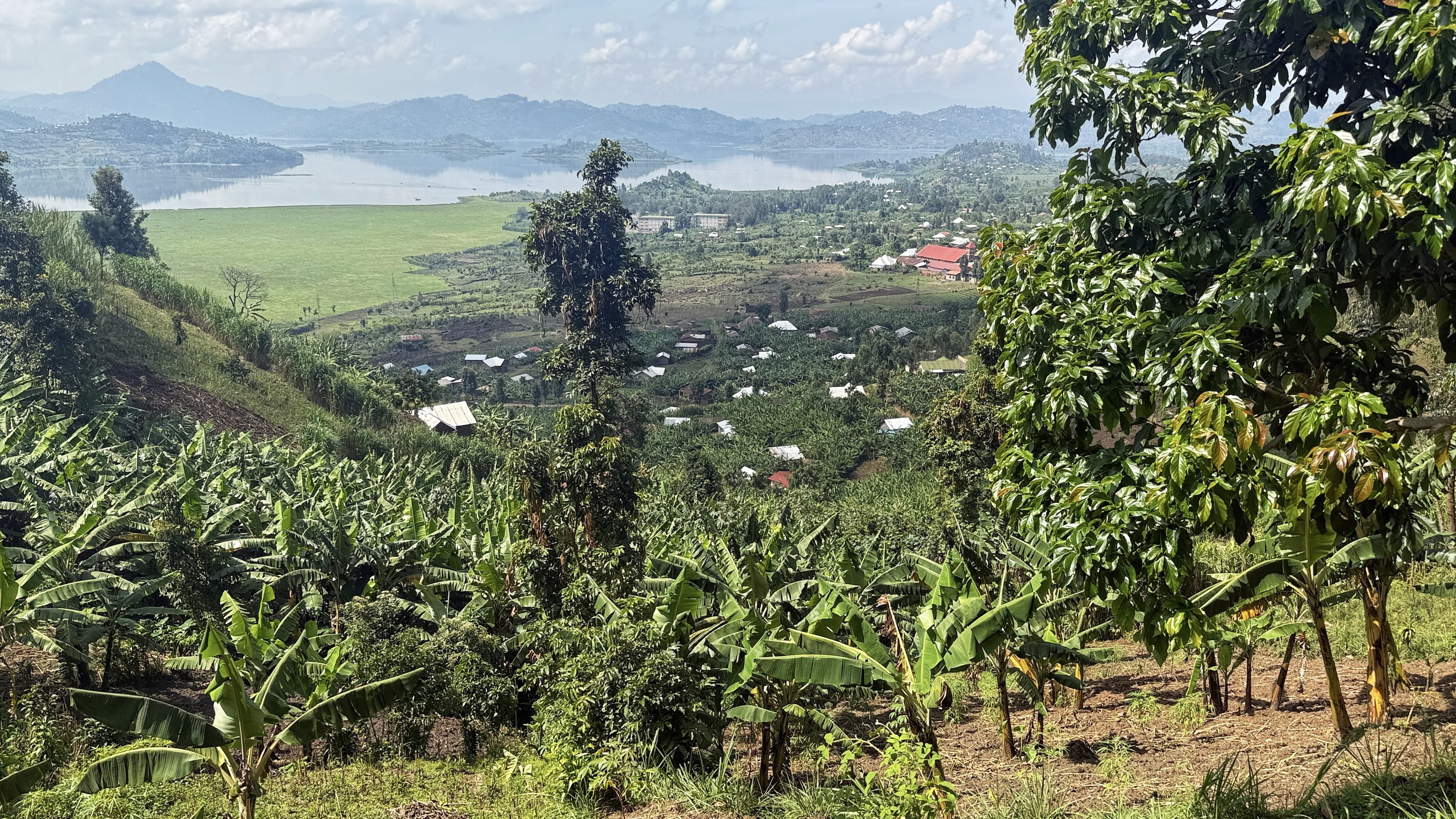
As we climbed higher, the views kept expanding until I could see both Lake Burera and Lake Ruhondo at the same time—a sweeping, almost 360-degree panorama of water, hills, and scattered villages below. The lakes were formed by volcanic activity years ago, when lava flows blocked the river valleys and left behind their winding shorelines.
We continued along the ridgeline. It was one of those bright, blue-sky days when everything looked extra vivid.
Eventually we descended toward Lake Burera, walking briefly along the shoreline before climbing slightly again and descending once more—this time toward Lake Ruhondo through a forest of tall eucalyptus trees. This section was the toughest, and I really had to watch my footing. I definitely missed my hiking poles here.
At the lakeshore, we boarded a covered wooden boat—thank goodness for the shade—and rode across the water to Ruhondo Beach Resort, which sits on a small island, where we stopped for lunch and a beer.
And that beer tasted incredibly good after the heat and the hike.
We had planned to walk a bit more along the lake, but dark clouds rolled in with thunder and rain, so we climbed back into the boat and crossed to the opposite side instead. After a short final walk, we reached a different endpoint from where we had started. We said our goodbyes, and I headed back to La Locanda.
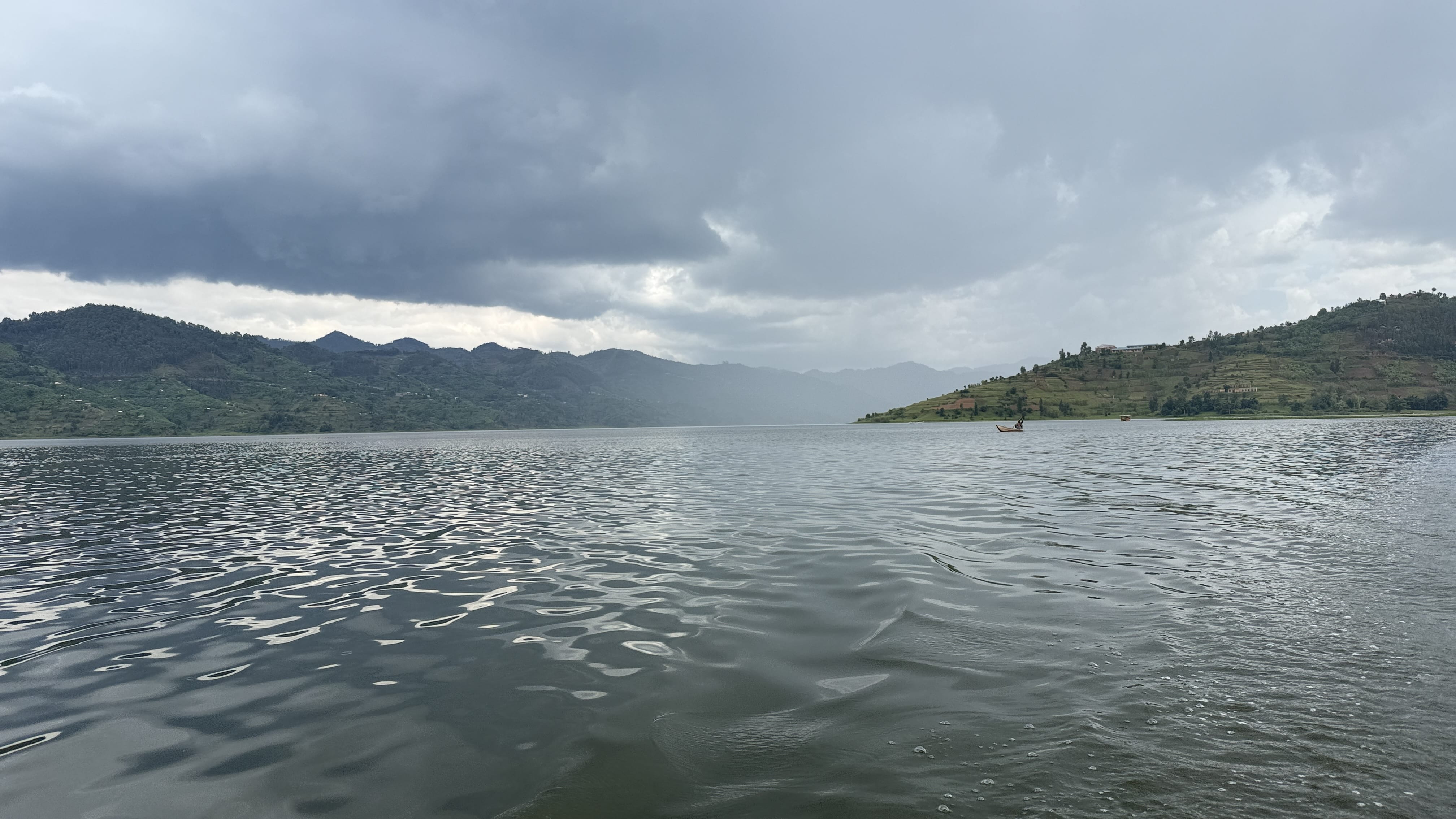
It turned out to be a far better last day than the easy walk I had imagined — out on a trail, a little sweaty, slightly underprepared, and completely glad I’d done it.
After breakfast the next morning, I walked into town to visit Ishua. The website said it opened at 8:00, but when I arrived the gates were closed and no one was around. A small, quiet reminder that travel rarely runs exactly on schedule.
And then it was time to say goodbye to Musanze.
Later on the drive, I mentioned again how incredible the massage in Musanze had been and how much I regretted not asking the price ahead of time. Had I known it was only $35, I probably would have booked one every day.
That’s when Kevin told me something I hadn’t realized — the massage therapist was blind.
When he said it, a small detail returned to me. I remembered the way he had looked in my direction when I first entered the room — not quite at me. The thought had crossed my mind briefly, but I had dismissed it. What stayed with me, then and now, was how skilled and attentive he was. It was honestly one of the best massages I’ve had in years.
I later learned that in Rwanda, vocational programs train people with visual impairments in skills like massage therapy — work that provides steady employment and independence.
As the car pulled away from La Locanda and the green hills slowly faded behind us, I felt grateful for the time I’d had there—time to walk, to look closely, and to simply be present before heading back to Kigali, where I was booked for two nights.
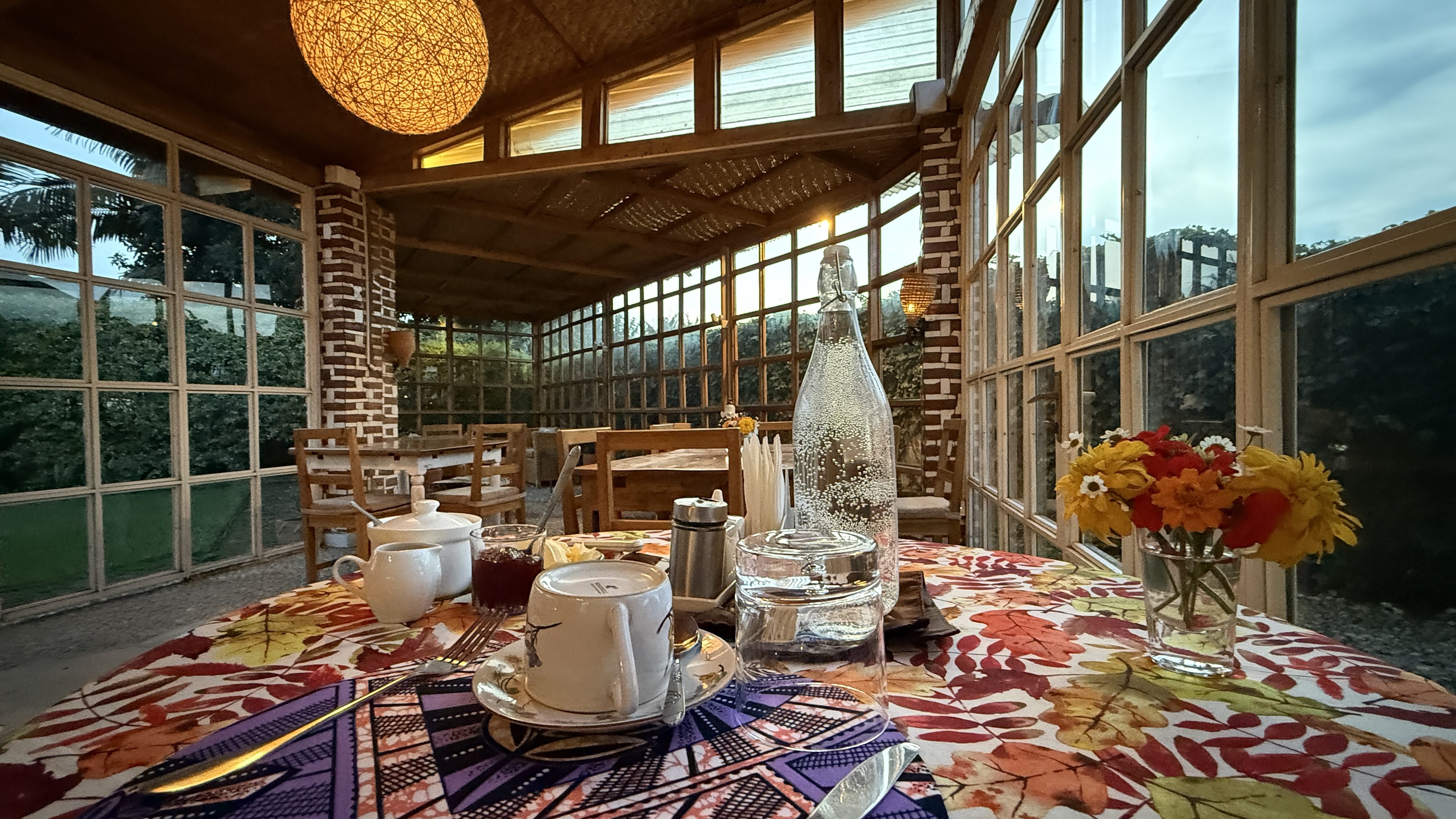
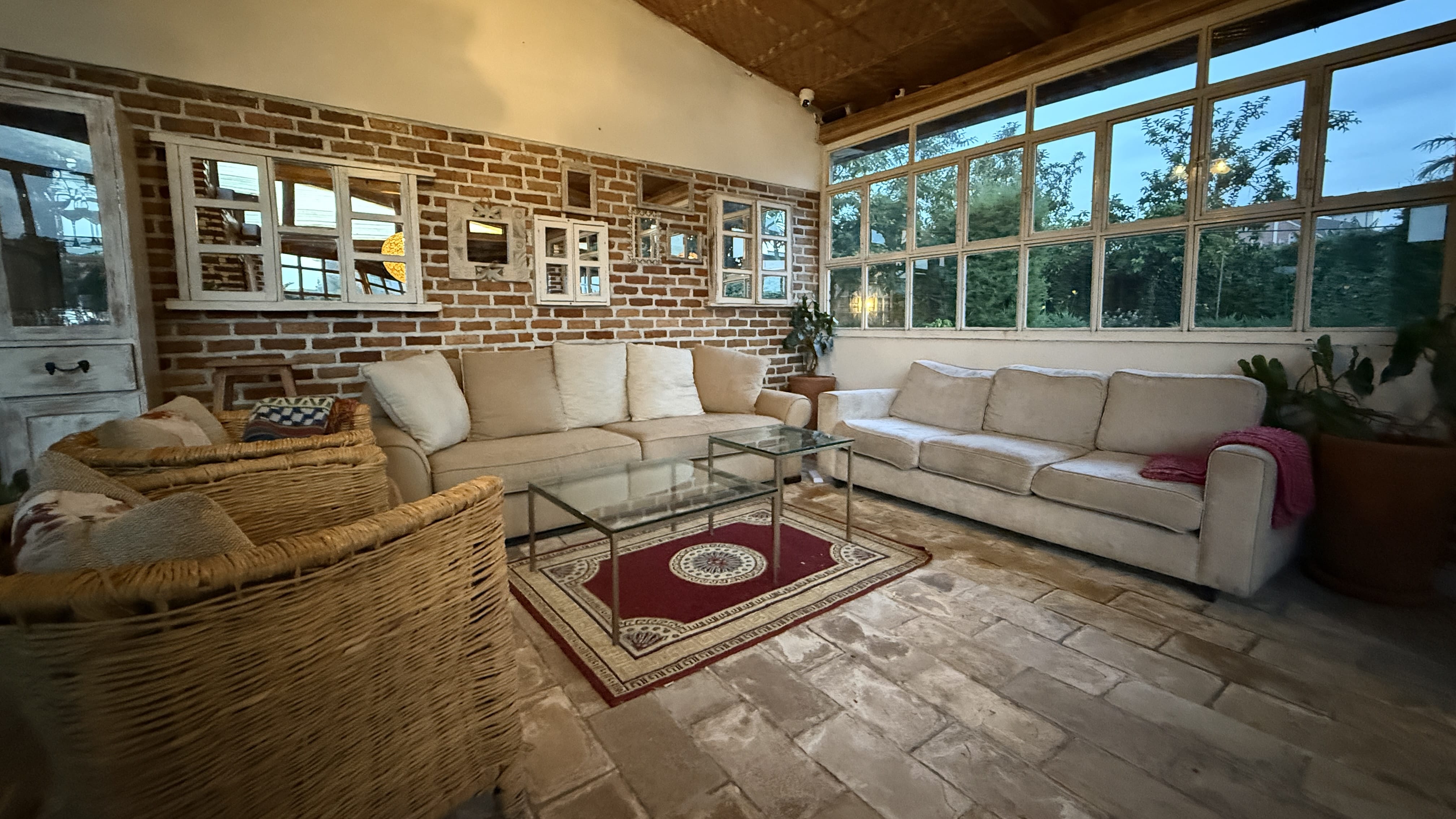
For my three solo days (four nights) in Musanze, I stayed at La Locanda, a small, peaceful guesthouse just a couple of blocks from the main road into town. Comfortable beds, reliable hot-water showers, and a shaded patio made it an easy place to rest between hikes. The property shows a little wear here and there, but nothing that detracts from its warmth.
Breakfast and dinner are served on site, with several good vegetarian options. Coffee arrives in a French press, and dinners typically include soup or salad, an entrée, and dessert. After long hiking days, I rarely felt any desire to eat elsewhere.
The dining room is bright with large windows, and there’s a cozy seating area near reception with a fireplace. Small touches — like Saturday yoga, Friday pizza night with live music, and on-site massages — make it feel personal without being overdone. With only a handful of rooms, it’s the kind of place where traveling alone feels comfortable.
When I wanted to head into town, it was simple: walk to the main road and wave down a moto-taxi. They’re inexpensive and easy to find.
Although this return to Musanze focused mostly on hiking and time outdoors, the town offers much more beyond the trails. On an earlier visit with my group, I explored the Dian Fossey/Karisoke area, visited Gorilla Doctors and the Ellen DeGeneres Campus of the Dian Fossey Gorilla Fund, and spent time in several cultural and arts spaces nearby. Those experiences added important context to everything happening in Volcanoes National Park.
This time, I chose to stay active in the landscape. But if you’re planning time in Musanze, I’d recommend including some of those conservation and cultural sites as well. You can read more about that earlier visit here: [link].
A few small things made a big difference during my time in Musanze. If you’re planning to hike or trek in Volcanoes National Park, these are worth knowing:
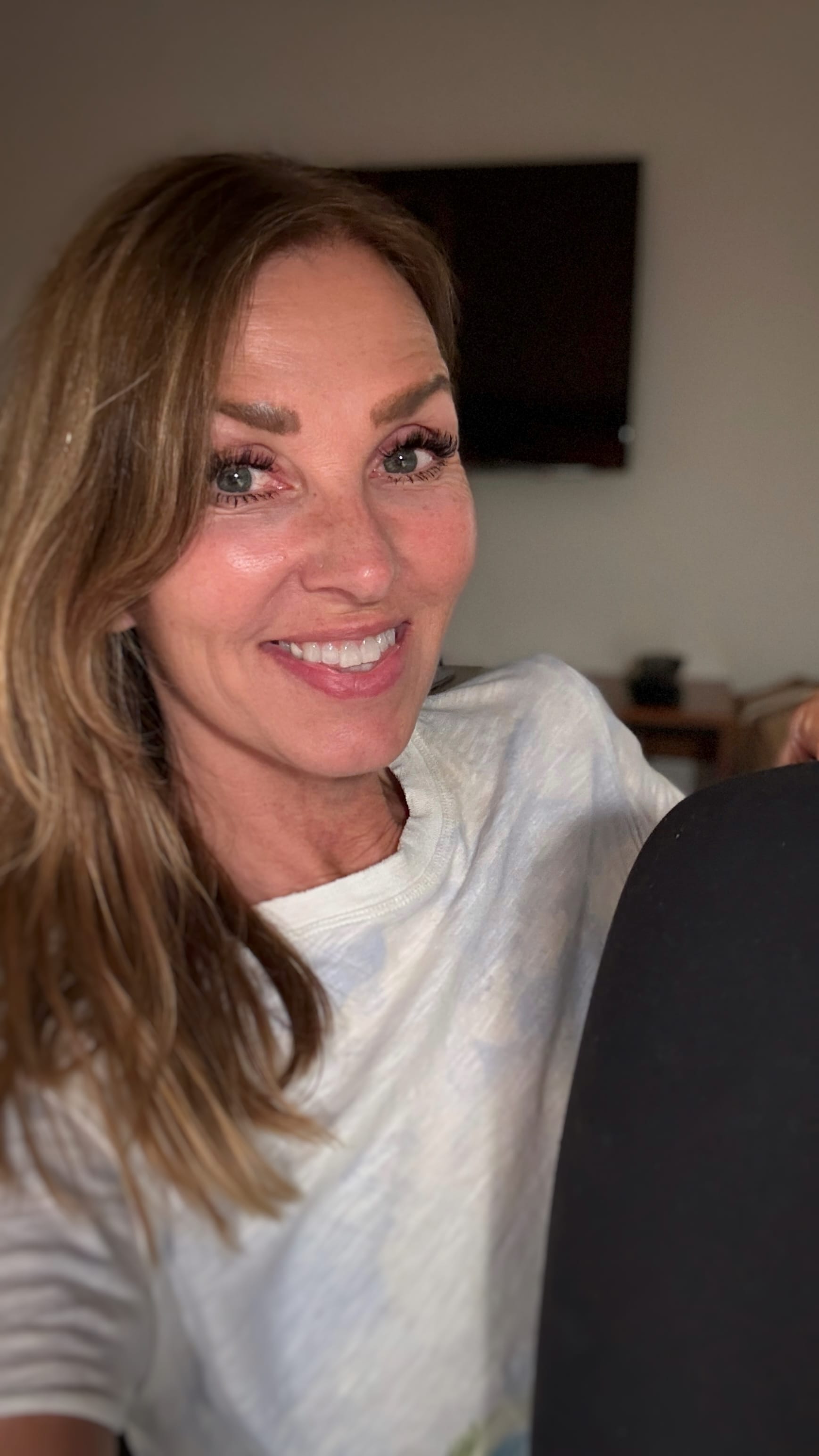
Hi, I’m JoAnne—writer, wanderer, and lover of places that surprise me. I’ve traveled to 60+ countries (and counting), usually with a camera in one hand and a notebook in the other. I’m drawn to mosaics, markets, and mountains, and I write to remember what moved me. When I’m not traveling, I’m working on my blog Travels Afoot, trying new creative projects, or planning my next adventure.