Vietnam was the final leg of my three-week Southeast Asia trip. I started in Thailand — Bangkok, Kanchanaburi, Ayutthaya, and Chiang Mai — then continued through Cambodia, spending time in Siem Reap and Phnom Penh before heading to Vietnam to wrap up the journey.
If you missed the earlier parts of the trip, you can start here:
→ 7 Days in Thailand: Bangkok, Kanchanaburi, Ayutthaya & Chiang Mai
→ 5 Days in Cambodia: Siem Reap & Phnom Penh
Next: 6 Days in Vietnam.
I flew into Vietnam from Phnom Penh, arriving in Ho Chi Minh City after a little more than an hour in the air.
Still commonly known as Saigon, it’s Vietnam’s largest city and economic center. And saying it’s busy is an understatement — motorbikes are everywhere, sidewalks doubling as cafés, and colonial-era buildings standing alongside modern high-rises.
About 40 minutes after leaving the airport, we arrived at the Eden Star Saigon Hotel located in the heart of the city. Cool face cloths and glasses of blended fruit juice were handed to us at check-in — a nice touch after traveling. After being shown to our rooms and washing up, we were back out the door to explore.
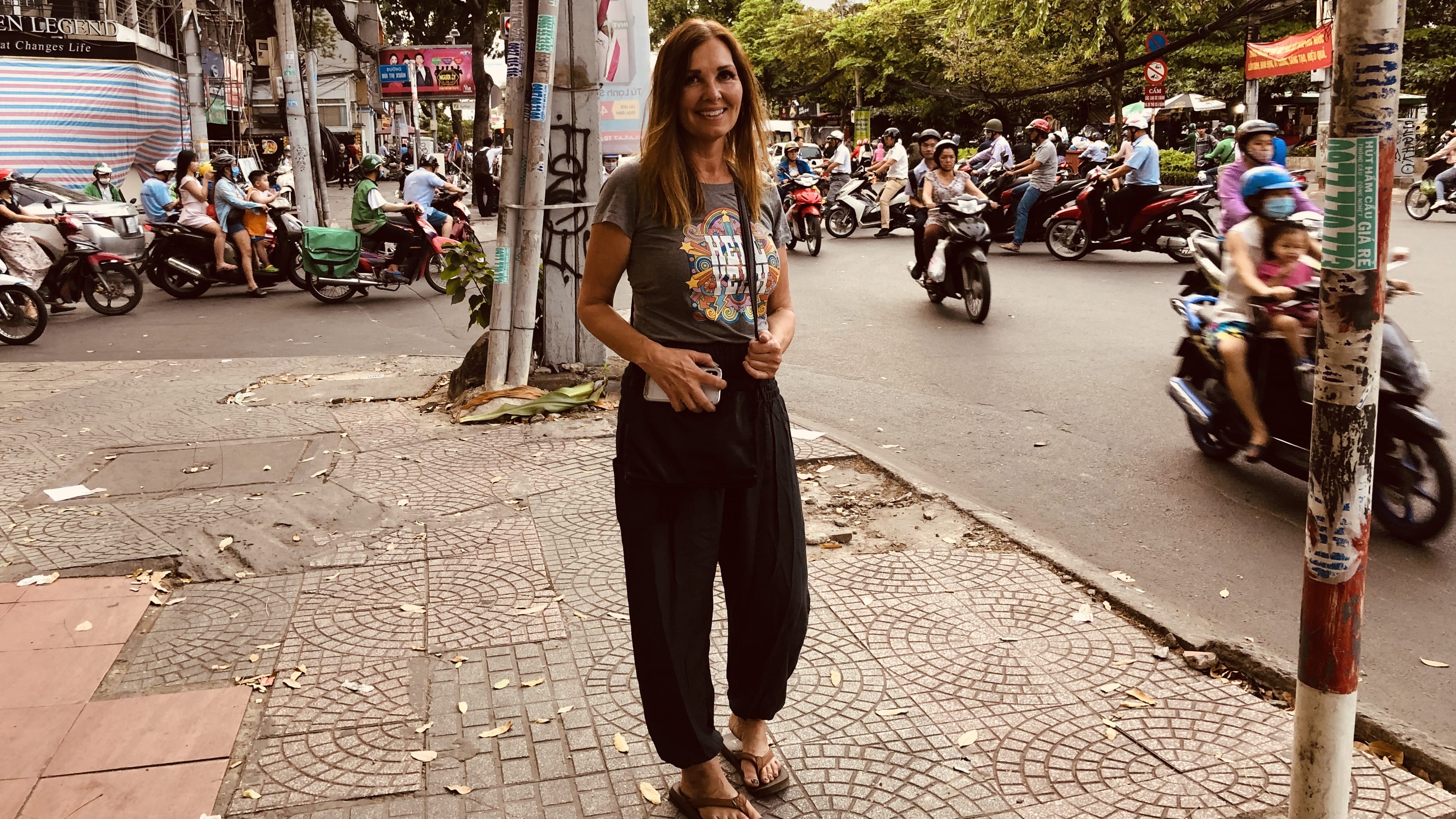
That’s when the motorbikes really hit me.
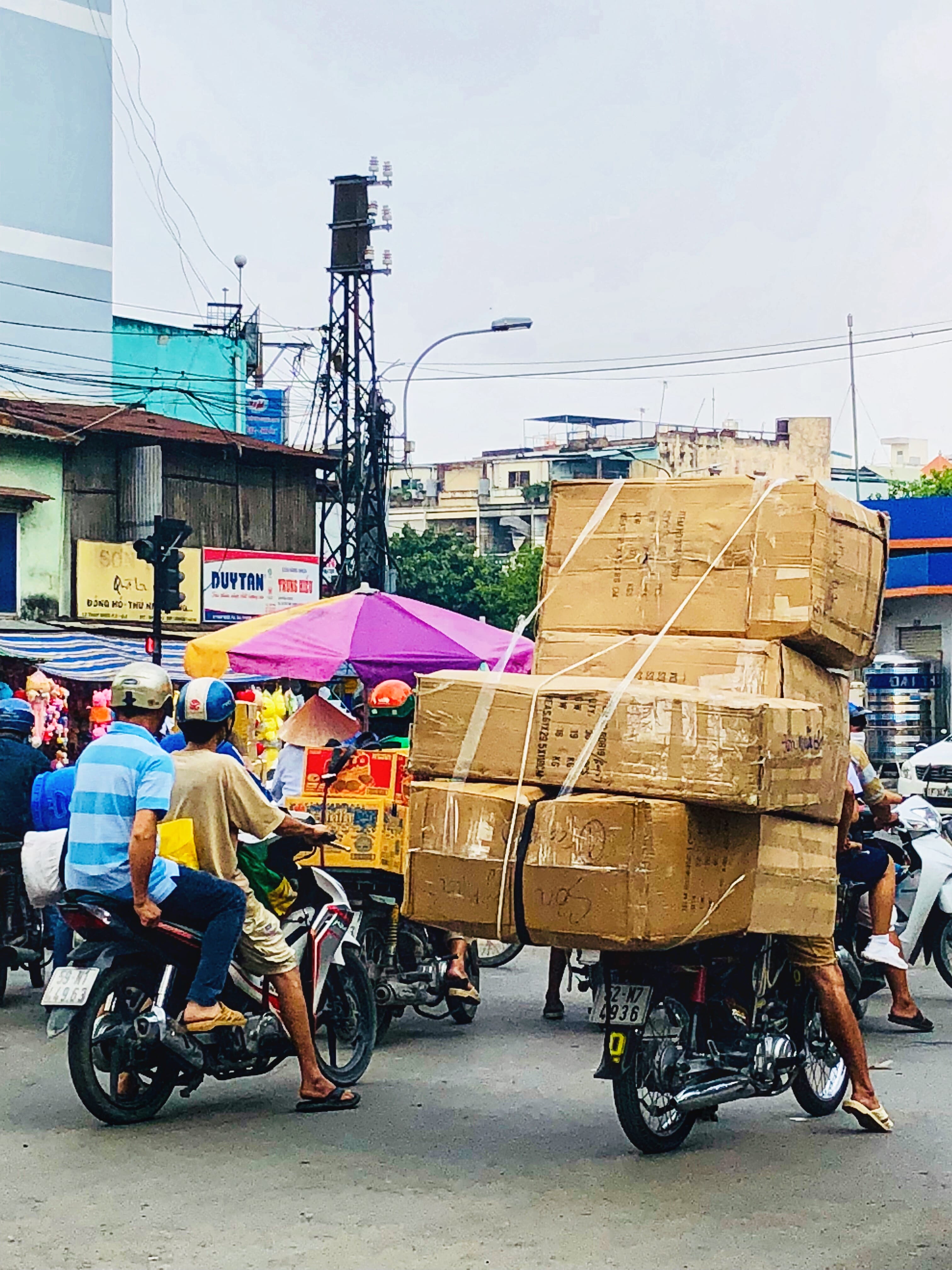
In a city of roughly 12 million people, around 8.5 million motorbikes are registered — and you feel every single one of them. Crossing the street quickly became our first challenge. You don’t run, and you definitely don’t stop. You just step out and walk at a steady pace. Somehow the scooters weave around you as if choreographed. It feels impossible at first — and then, oddly, manageable.
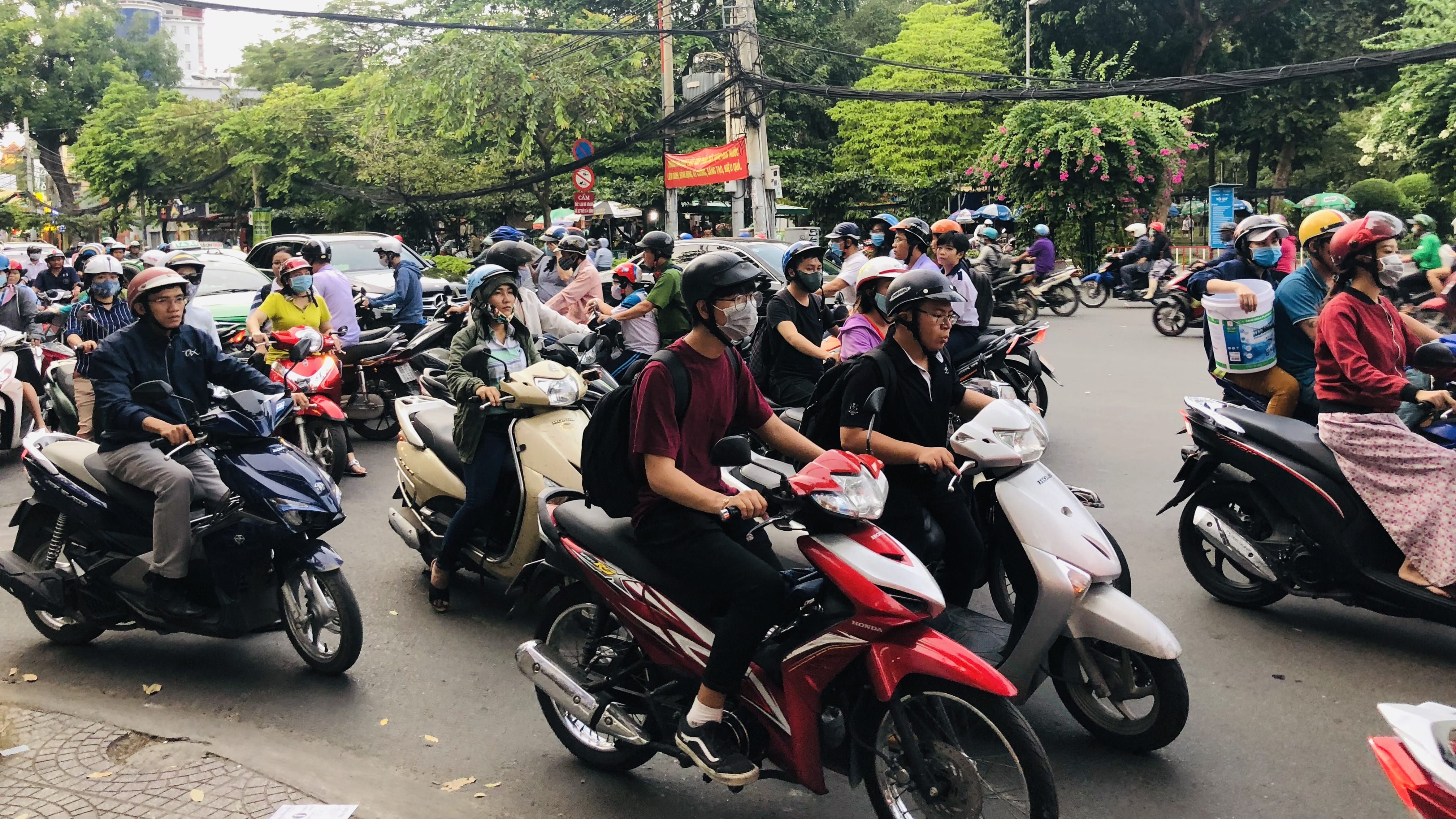
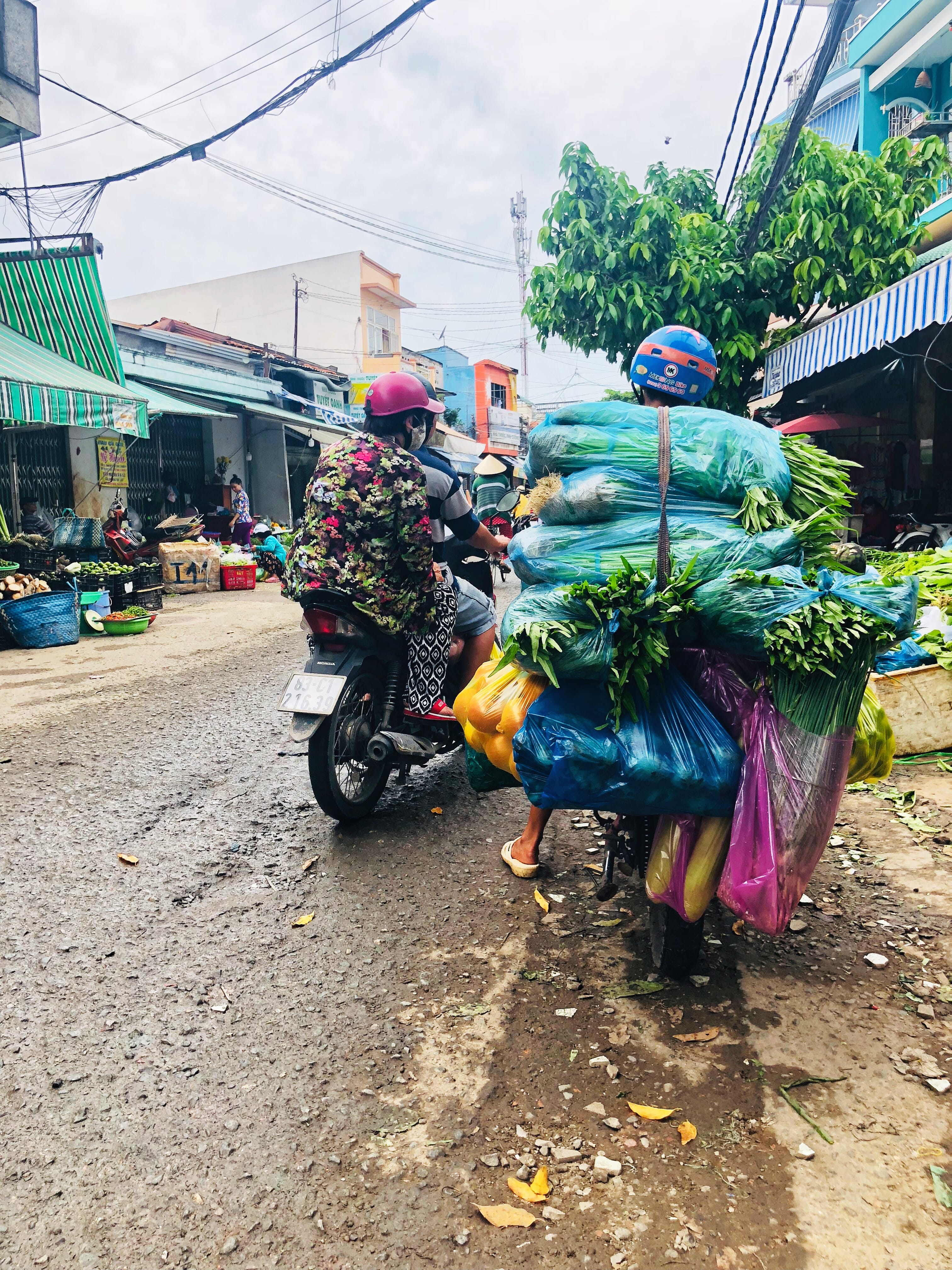
The motorbikes carried everything: boxes stacked impossibly high, ladders, crates of fruit and vegetables, chairs — whatever needed to get from one place to another. It felt like the entire city ran on two wheels.
We spent the rest of the afternoon wandering the neighborhood near our hotel, getting a feel for the streets and stopping here and there along the way.
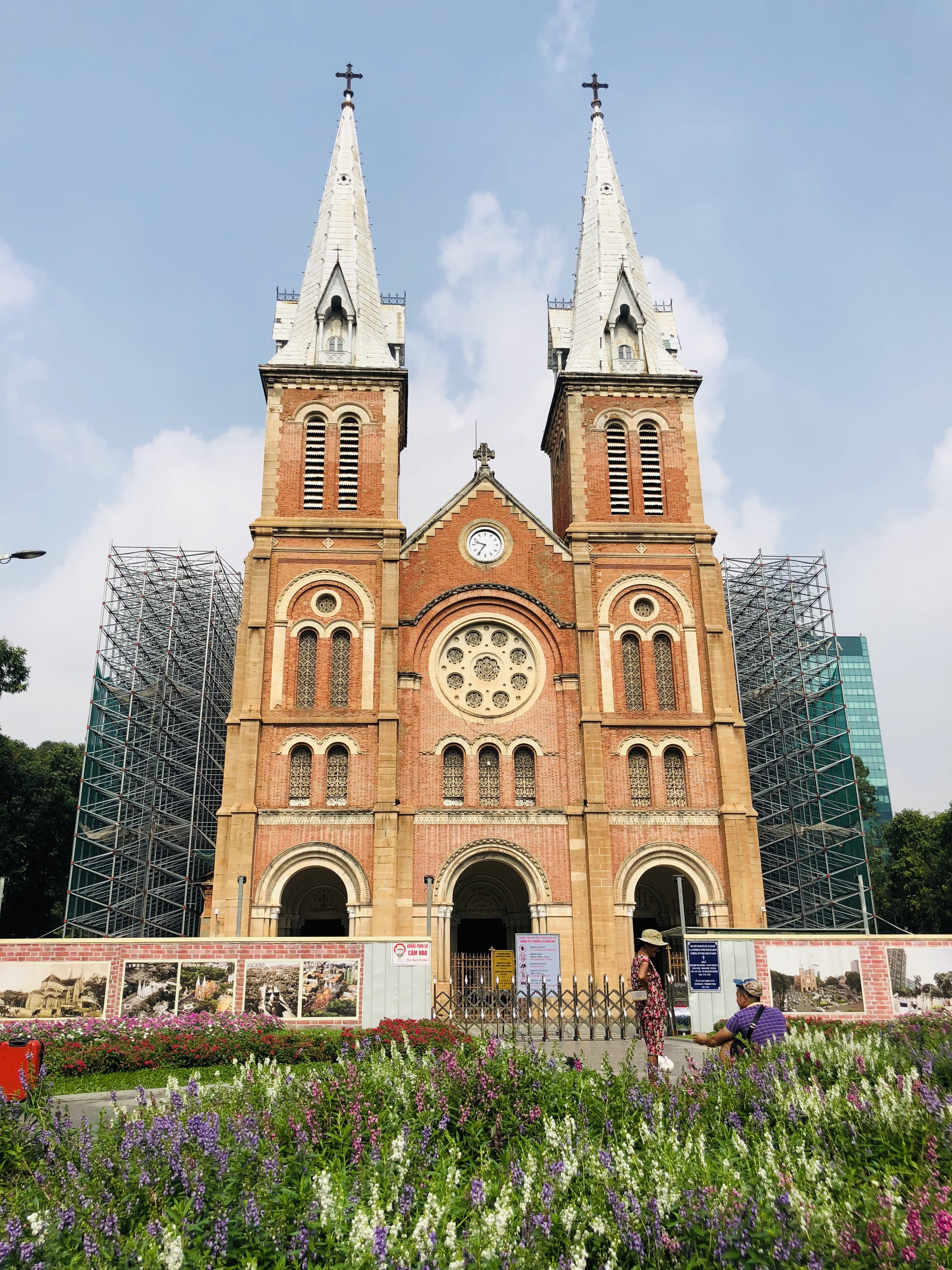
After a late breakfast, we met our guide in the hotel lobby for a tour of the city. Our first stop was one of Ho Chi Minh City’s best-known landmarks: Notre Dame Cathedral Basilica of Saigon.
Built in the late 19th century during French colonial rule, the cathedral’s red brick façade and twin bell towers stand out immediately against the swirl of traffic around it. Having visited the original Notre Dame Cathedral in Paris, I could definitely see the similarities — though on a much smaller scale.
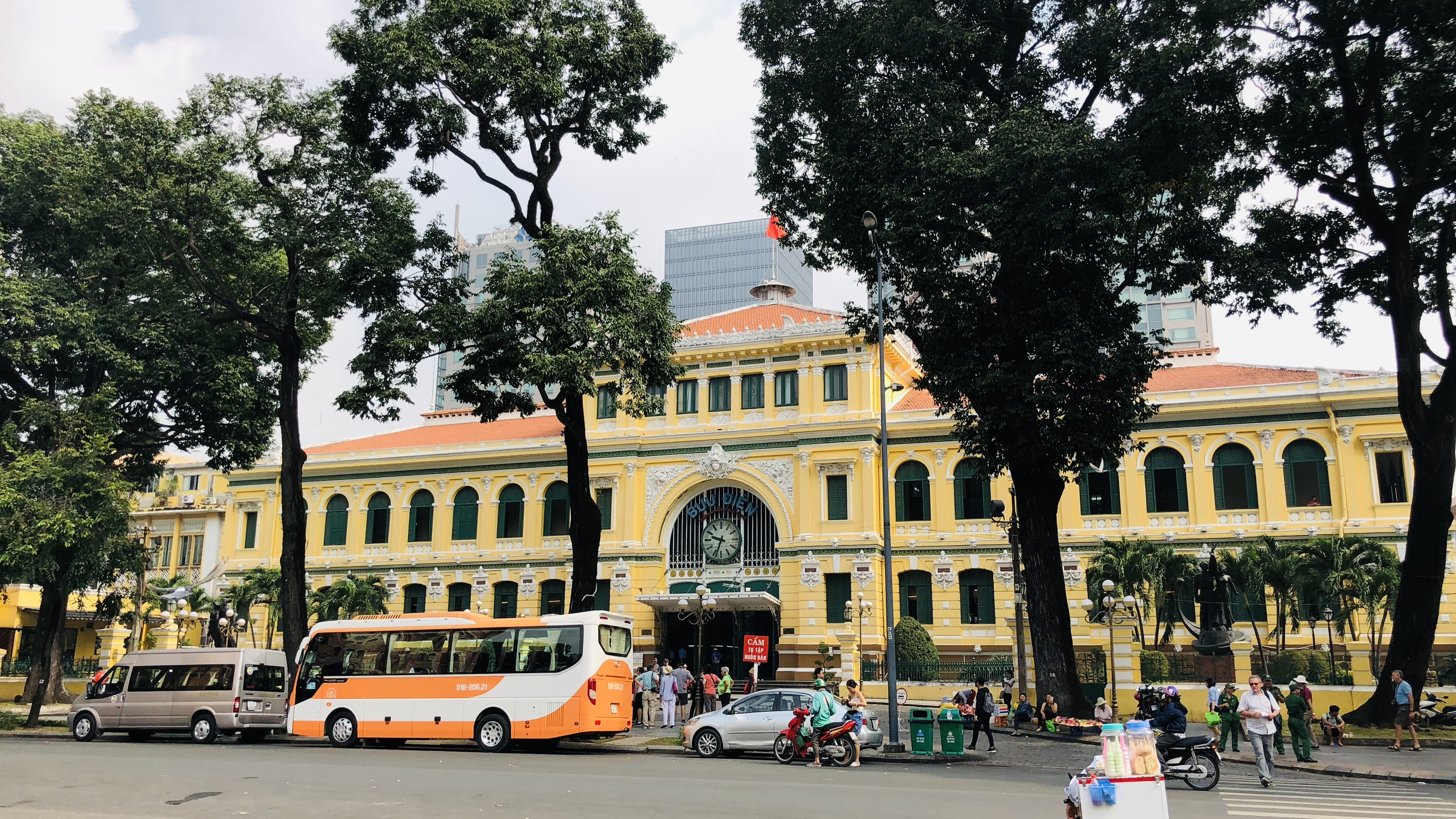
From there, we walked across the square to the Saigon Central Post Office, one of the city’s most recognizable historic buildings. Designed by Gustave Eiffel (yes, that Eiffel), the post office dates back to the late 1800s and still functions as an active post office today.
Inside, the space is bright and grand, with high vaulted ceilings, arched windows, and large vintage maps lining the walls. Counters run along the sides, and locals and visitors alike move through the space sending mail, buying stamps, or just stopping in to look around. It felt less like a museum and more like a working part of daily life — which made it even more interesting.
After the post office, we headed to the War Remnants Museum.
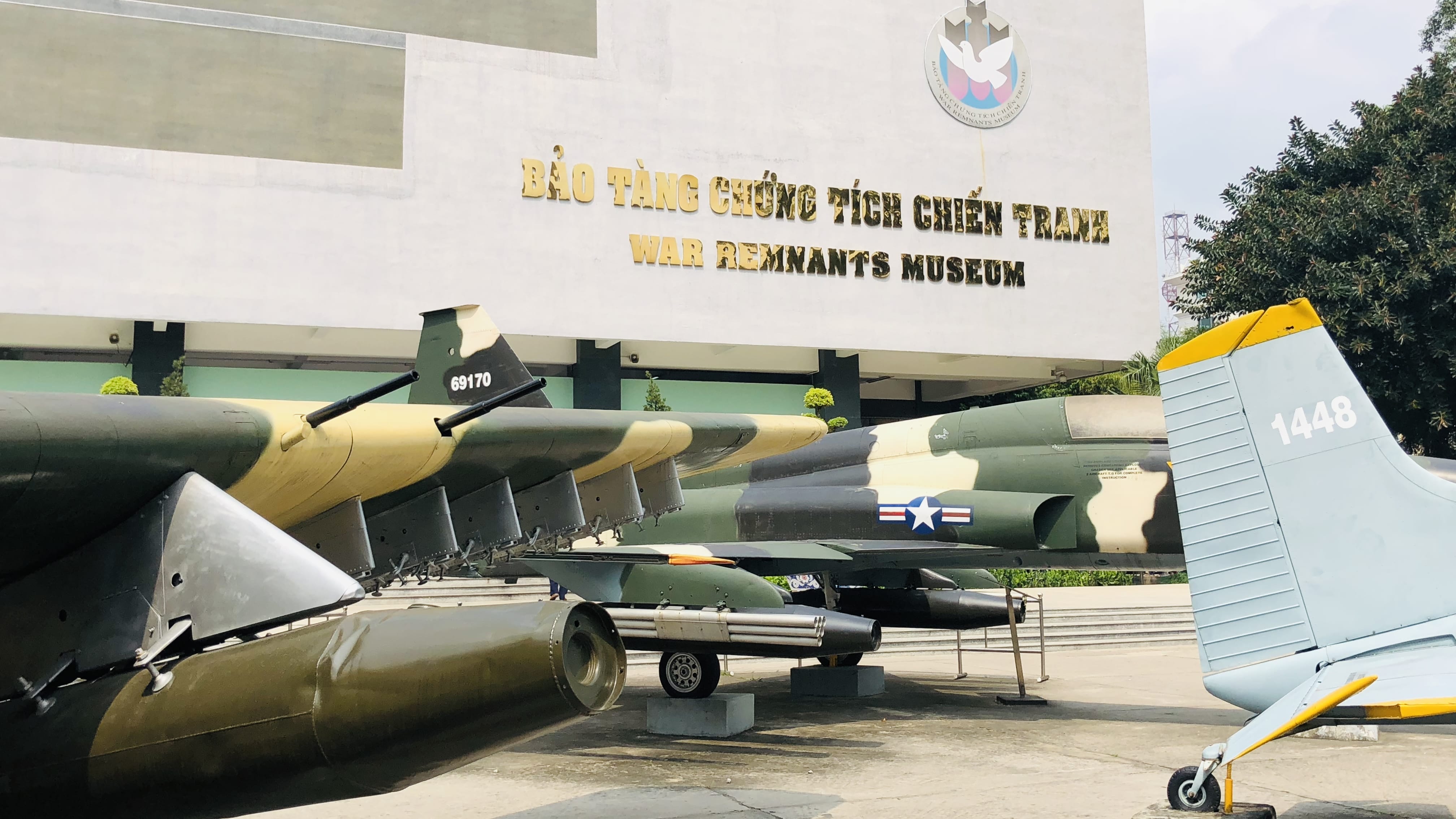
The War Remnants Museum documents the long-term impact of the Vietnam War through photographs, artifacts, and personal accounts. It focuses largely on how the conflict affected Vietnam and its people. Outside, military equipment fills the courtyard — aircraft and heavy machinery on display before you even step inside.
Walking through the exhibits is sobering. The photographs are difficult to look at, and the personal stories make the scale of the war feel less abstract. It’s one thing to read about history in a textbook; it’s another to stand in a quiet room surrounded by images that show exactly what it meant for the people who lived through it.
Lunch was at Home Saigon Vietnamese Restaurant, located down a small alley decorated with colorful hanging lanterns. The food was traditional and with plenty of choices.
From the restaurant, we headed to the Jade Emperor Pagoda. Built in the early 1900s by the local Chinese community, the pagoda is dense with detail: dark wooden beams, carved figures, incense smoke hanging in the air, and altars packed into nearly every corner.
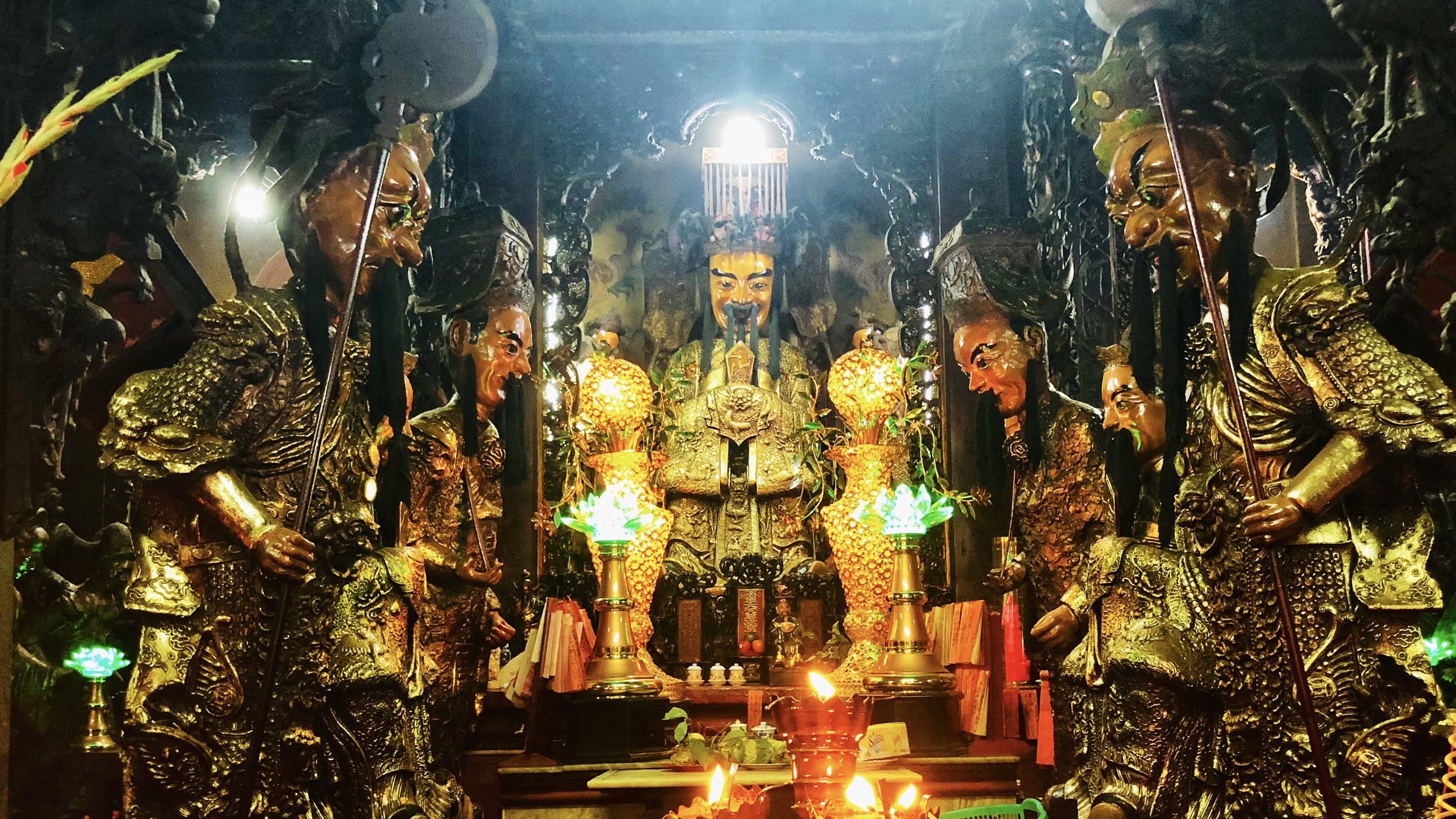
The air was kind of hazy with incense—statues of deities filled the rooms, surrounded by candles, fruit, and coils of incense burning overhead. It was busy but quiet at the same time — locals stopping to pray while visitors moved through the space. It was clearly a living part of everyday life in the city.
We then walked past the Saigon Opera House, a grand French colonial building with an ornate façade and arched windows. Completed in 1900, it’s definitely one of the city’s most elegant landmarks.
Just beyond the Opera house stands Ho Chi Minh City Hall, another colonial-era building. With its pale yellow exterior, decorative balconies, and clock tower, it’s impressive even from the outside (it isn’t open to the public).
Directly in front of City Hall is Nguyen Hue Walking Street, a wide pedestrian boulevard stretching toward the Saigon River. It’s a lively area filled with evening walkers, street performers, cafés, and places to sit and watch the city move.
One of the most popular spots along the street is The Café Apartment — a former apartment building now filled with small cafés and shops. Its stacked balconies, mismatched signs, and slightly faded charm make it a fun place to wander and soak in the energy.
By then, we were ready to slow down. We found a place to sit and watched the city move around us.
We left Ho Chi Minh City and headed south to Cai Be, where we boarded a longboat to explore the Mekong Delta.
Our first stop was the Thanh Tri workshop in Cai Be, where we watched crispy puffed rice being made. It was a simple process, but interesting to see up close.
Whole grains, still in their husks, were poured into a large wok-shaped pot filled with black sand from the Mekong River and heated over an open flame. As the worker stirred the mixture, the grains suddenly began to pop, rising through the sand with sharp cracking sounds. When it was finished, everything was sifted through mesh screens to separate the rice from the sand and husks. Even the leftover husks were saved and later used as fuel. Nothing wasted.
Lunch was at the Mekong Ecolodge, where we were served several traditional dishes from the delta region. Afterward, we climbed back into our longtail boat and made our way to Tan Phong Island in the Mekong Delta, where we traded the boat for bicycles.

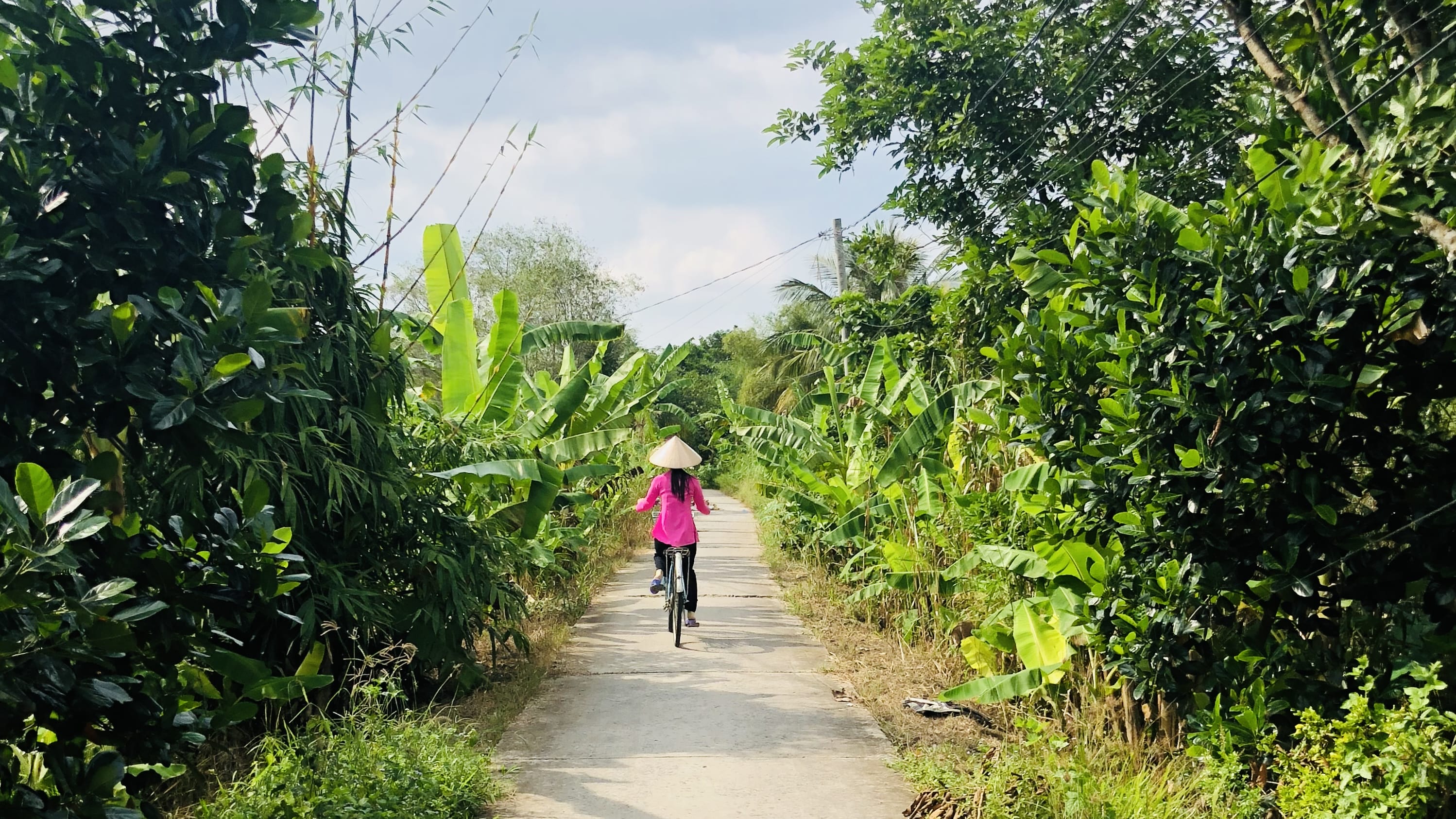
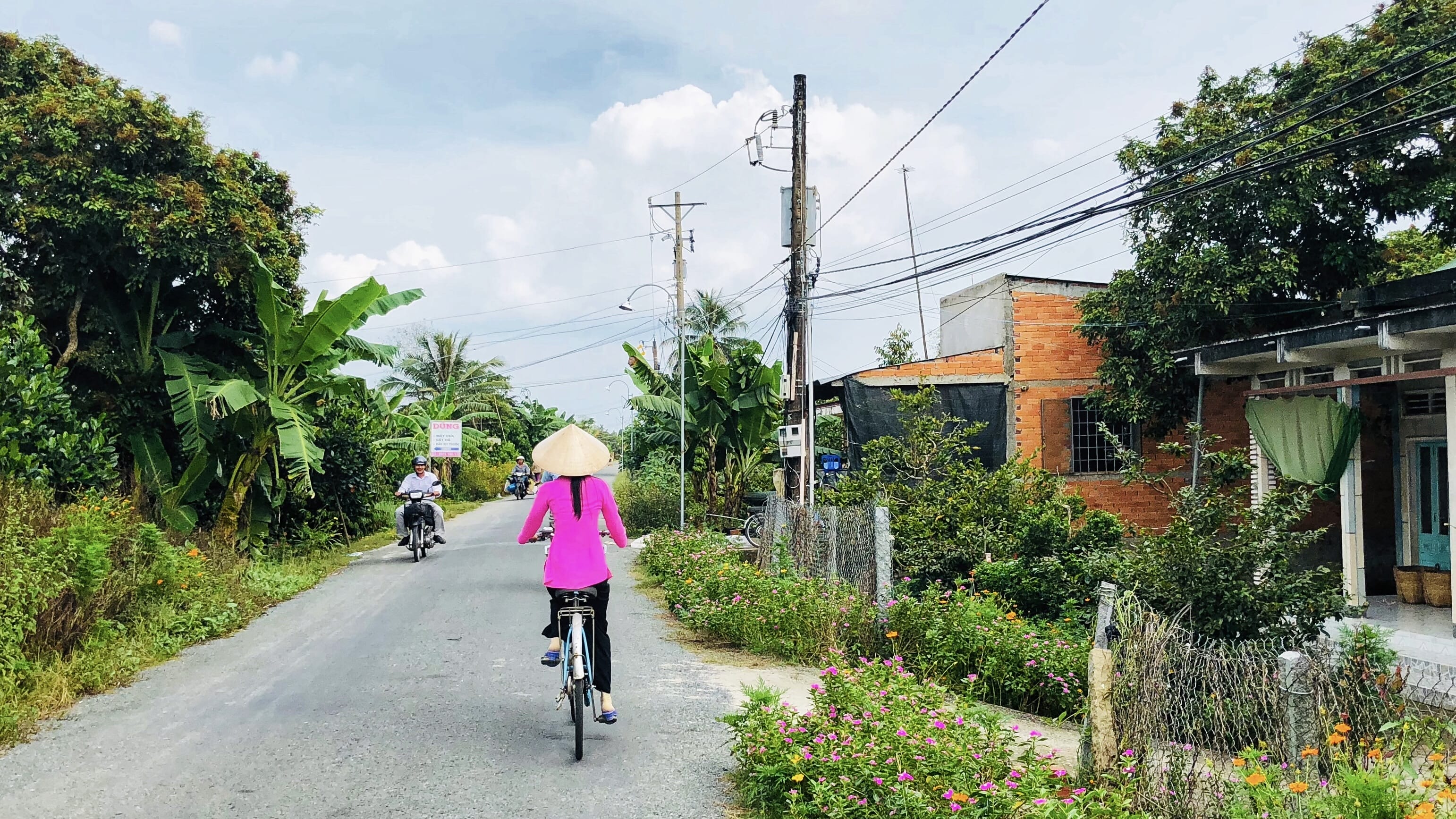
The ride was flat and easy, winding past fruit orchards heavy with tropical produce, banana trees stretching overhead, and thick hedges of green lining the narrow concrete paths. . Women in conical hats pedaled past us, and every so often a motorbike hummed by, but for the most part it was quiet.
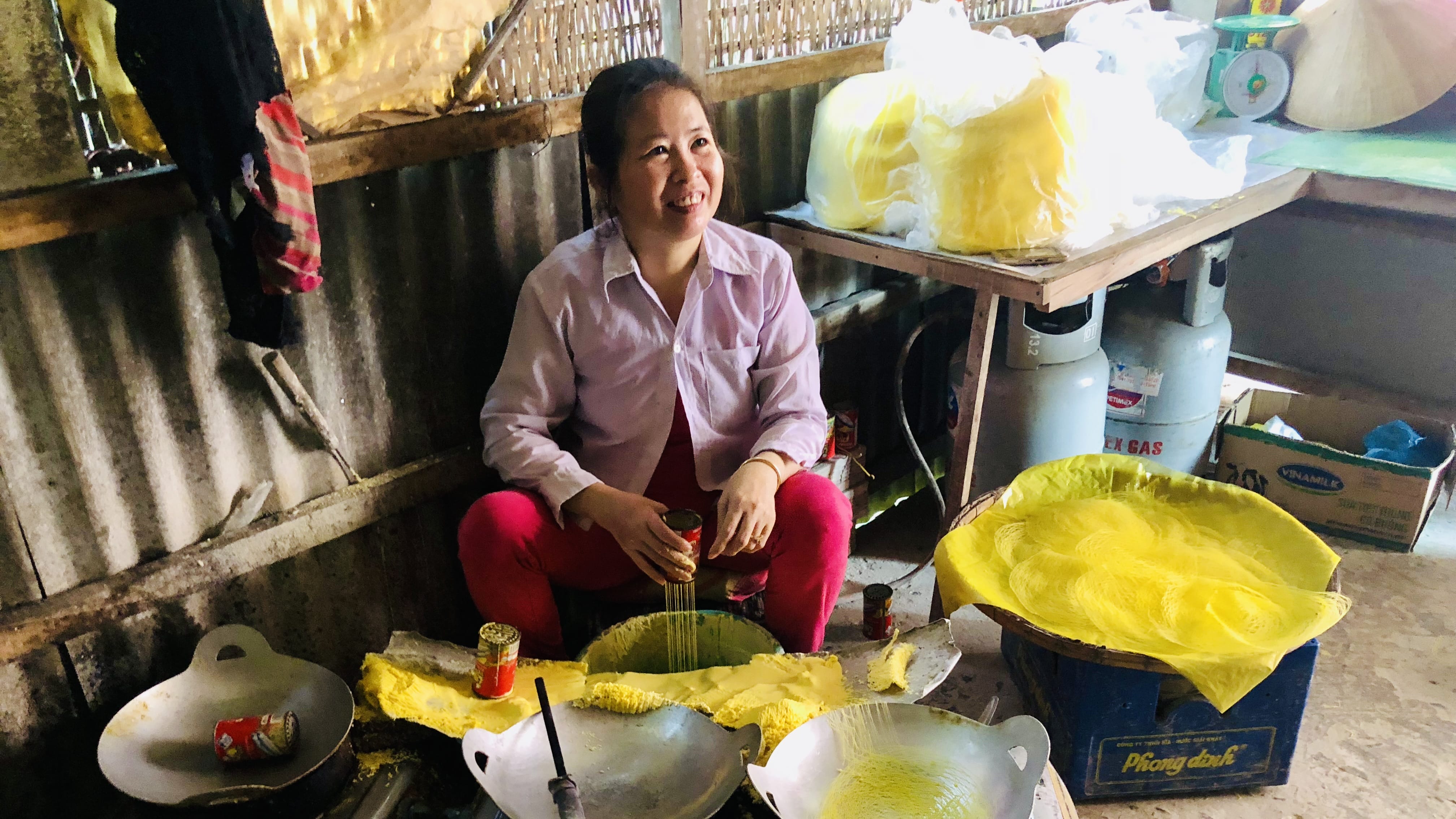
At one point, we stopped at a small house where a woman was making rice noodles by hand. She pressed thick yellow batter through a metal can with tiny holes, and thin strands dropped into the wok below.
Before leaving, we walked across a nearby Cầuk hỉ or “monkey bridge,” a narrow wooden footbridge built over one of the canals—simple but slightly wobbly.
From there, we continued riding through the orchards before eventually leaving our bikes and walking to a nearby dock. We transferred into a narrow wooden boat and moved into smaller canals, the water turning muddier as the banks closed in with trees and tangled roots. Our guide stood at the back, steering us through the bends while we sat low to the water, passing under branches that nearly brushed our heads.
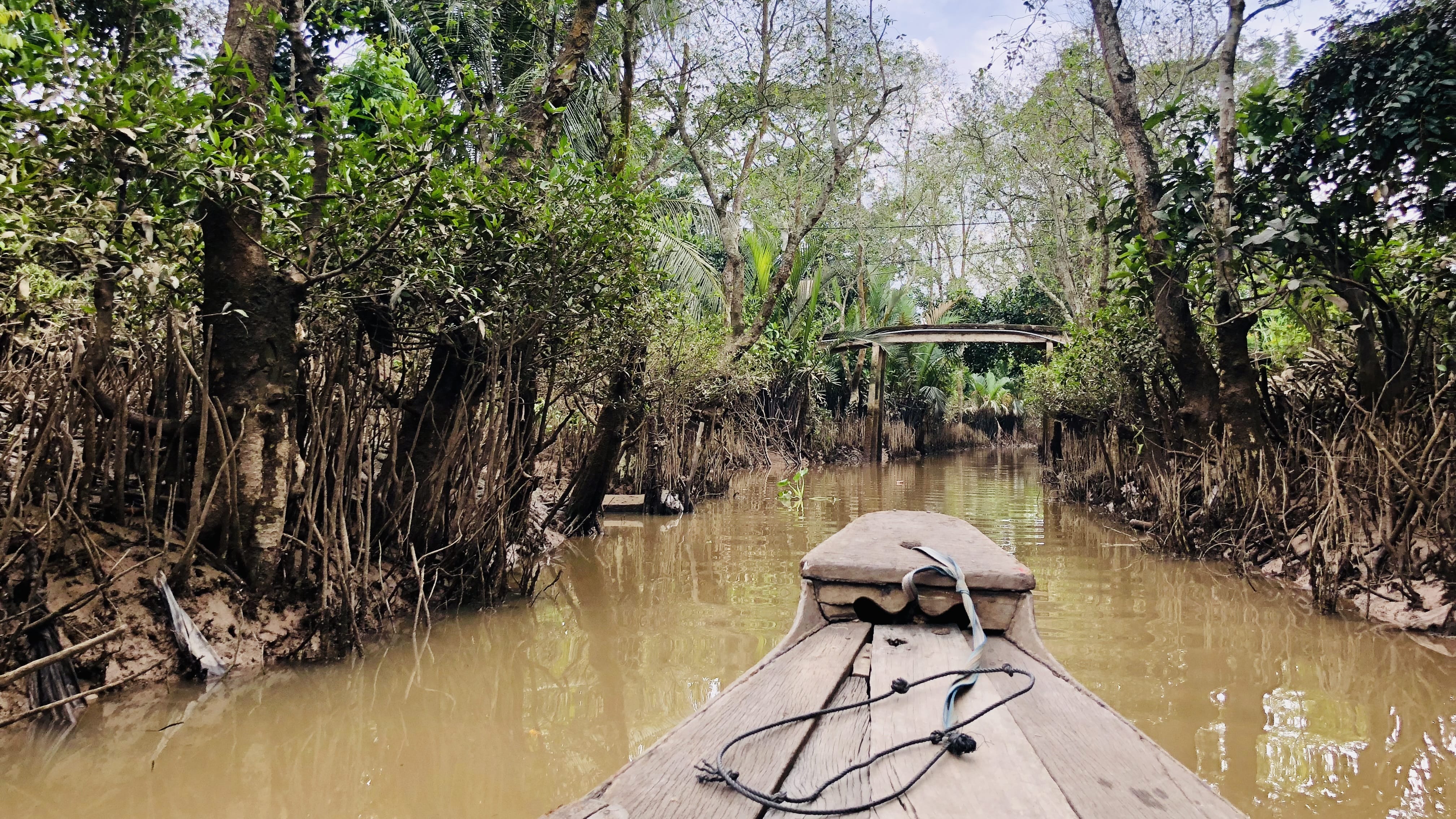
Eventually, we made our way on to Can Tho and checked in at the Victoria Can Tho Resort. After a full day of moving between river and road, the riverside setting felt especially calm. We ended the evening with cocktails by the pool — an easy, relaxed way to wrap up the day.
Our room had a balcony overlooking the pool, and when I woke up that morning, I opened the double doors, stepped outside, and finally said, “Good morning, Vietnam.” A little cliché, maybe — but I had been waiting to say it.
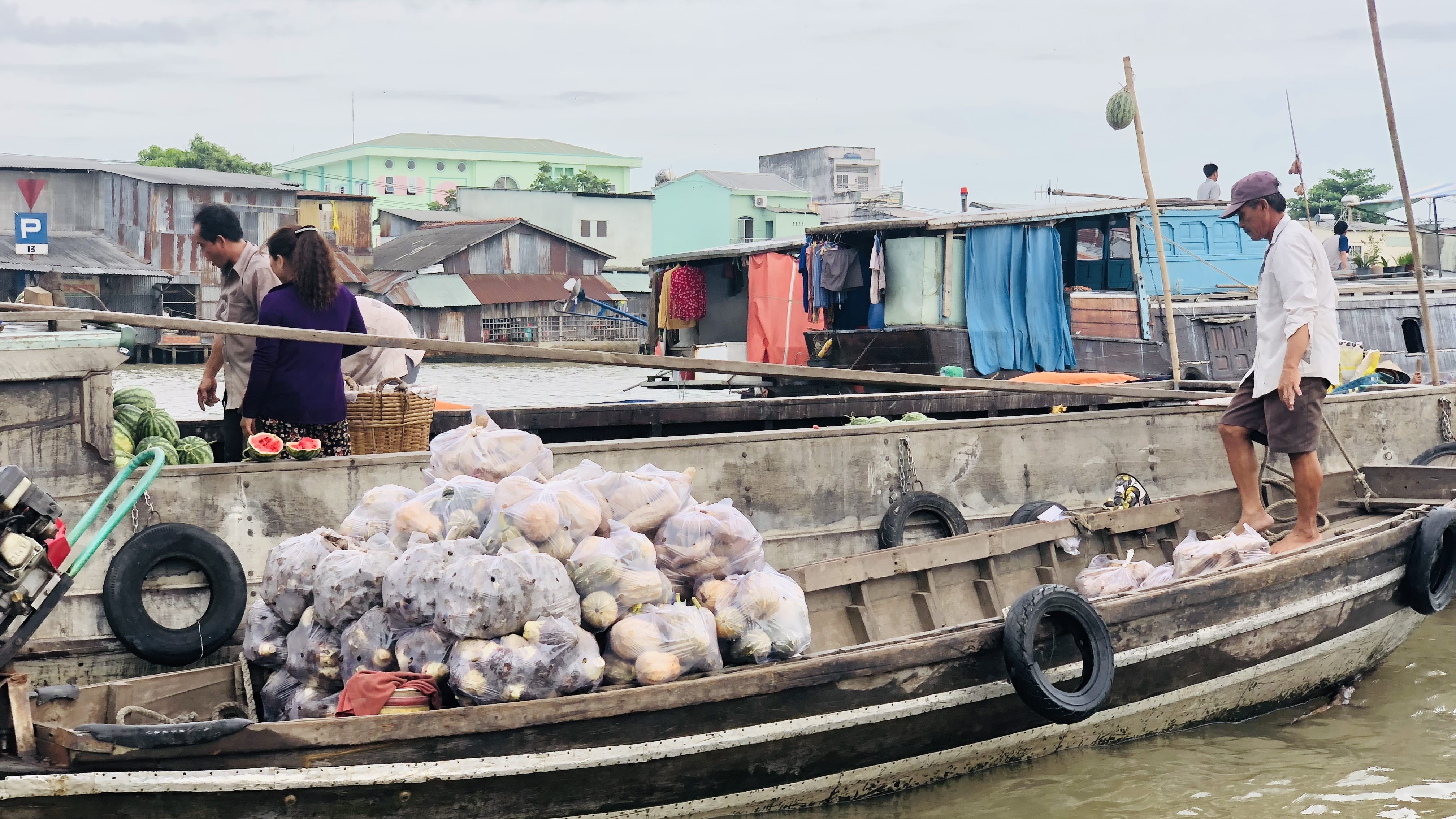
After breakfast — an impressive buffet at the hotel — we met our guide and headed out early for the Cai Rang Floating Market, one of the largest in the Mekong Delta. By the time we arrived, the river was already busy. Boats clustered together, engines humming, vendors calling across the water.
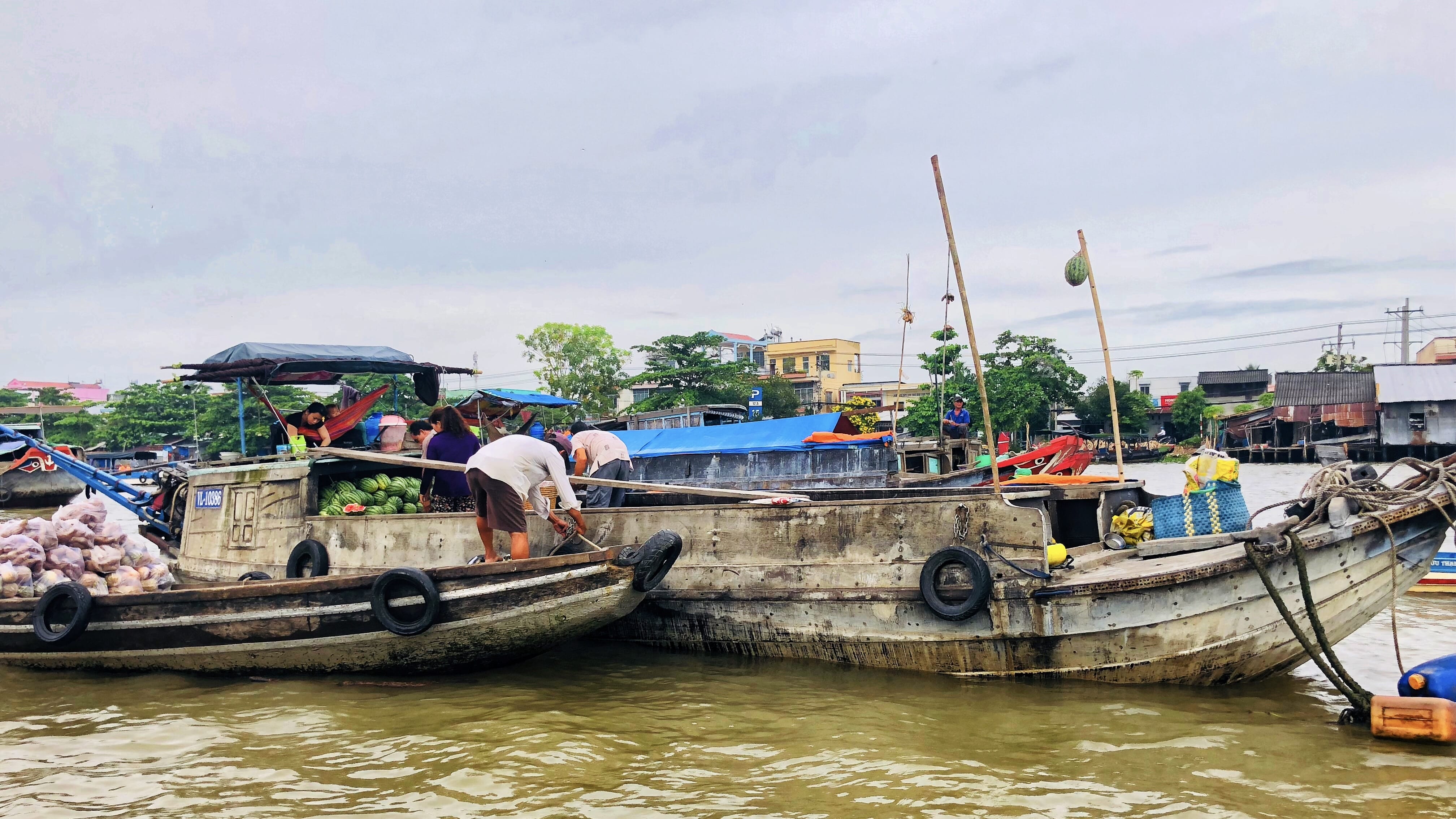
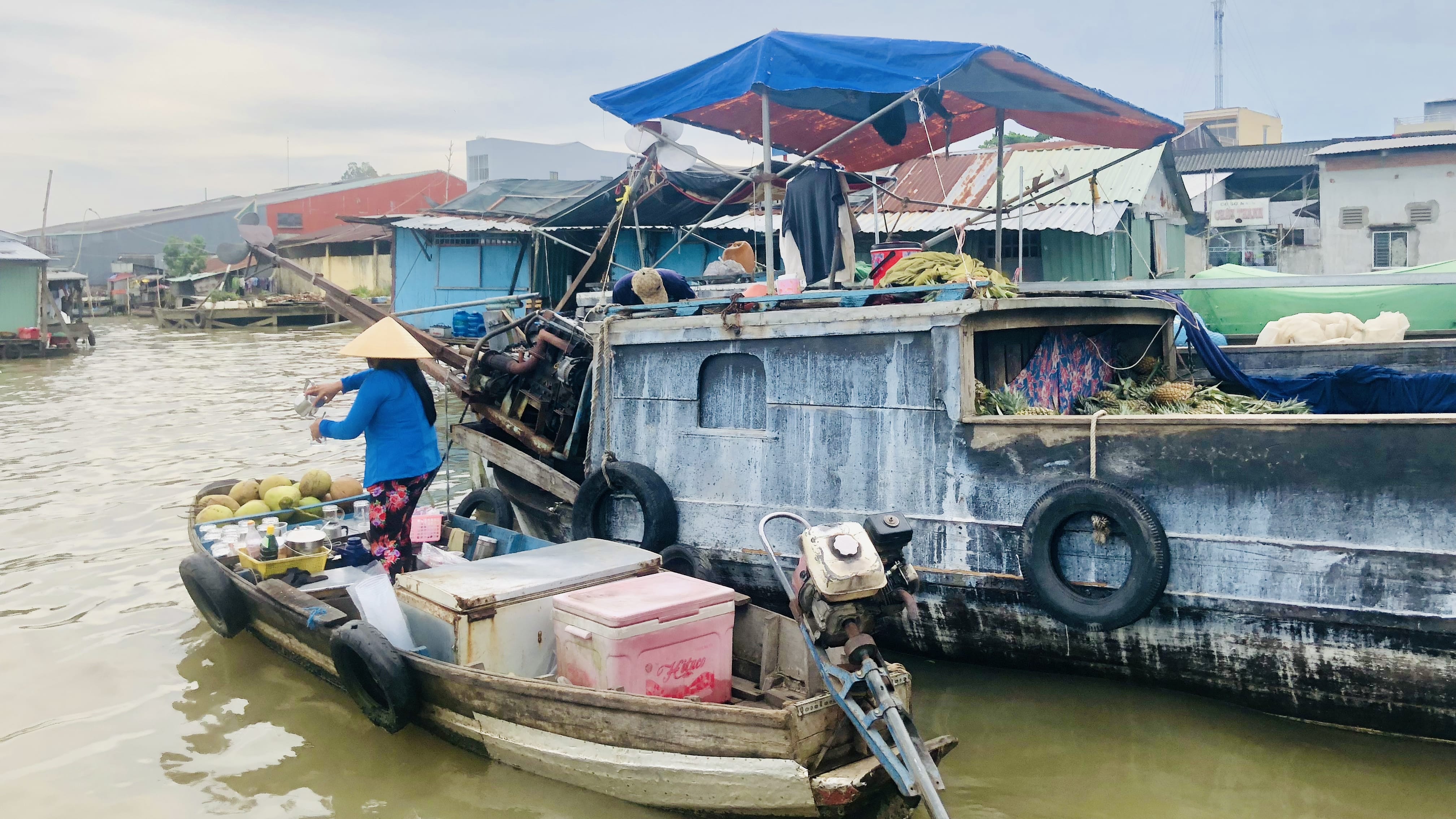
Some of the smaller boats clearly catered to visitors, selling drinks and fruit. But many of the larger boats were stacked high with produce — watermelons, pineapples, yams, cabbage — moving steadily through the waterway. Laundry hung from the sides. Engines were exposed. The wood was worn and patched—and clearly working boats. This wasn’t just a backdrop for tourists but rather morning commerce happening the way it has for years.
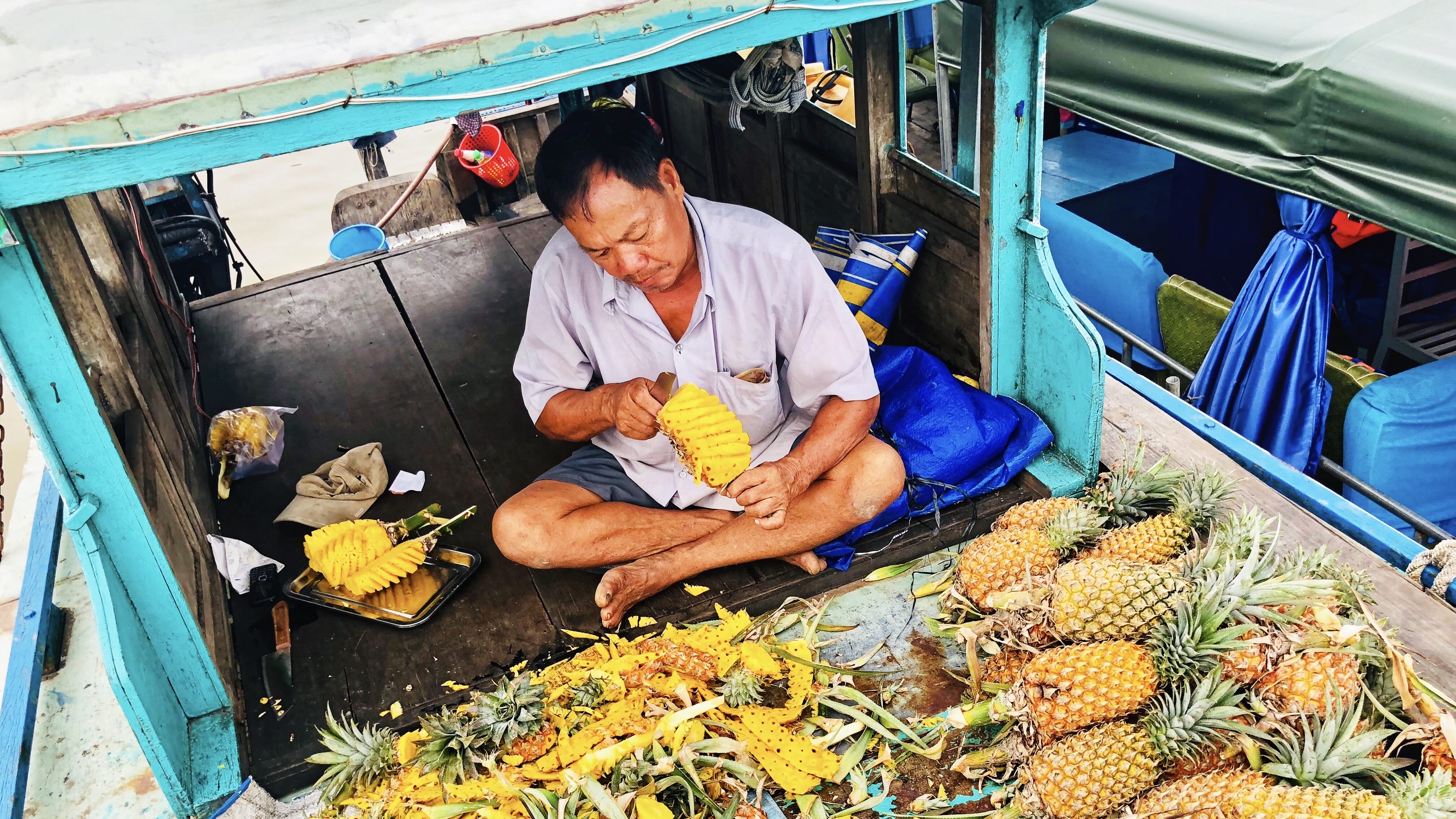
At one point, we pulled up alongside a narrow wooden boat piled high with pineapples. A man sat cross-legged inside, methodically carving one with a small knife, the floor around him scattered with bright yellow peels and spiky crowns. He sliced it into spirals and handed it up to me right there on the river. It was unbelievably sweet and juicy — and a little messy — easily one of the best pineapples I’ve ever had.
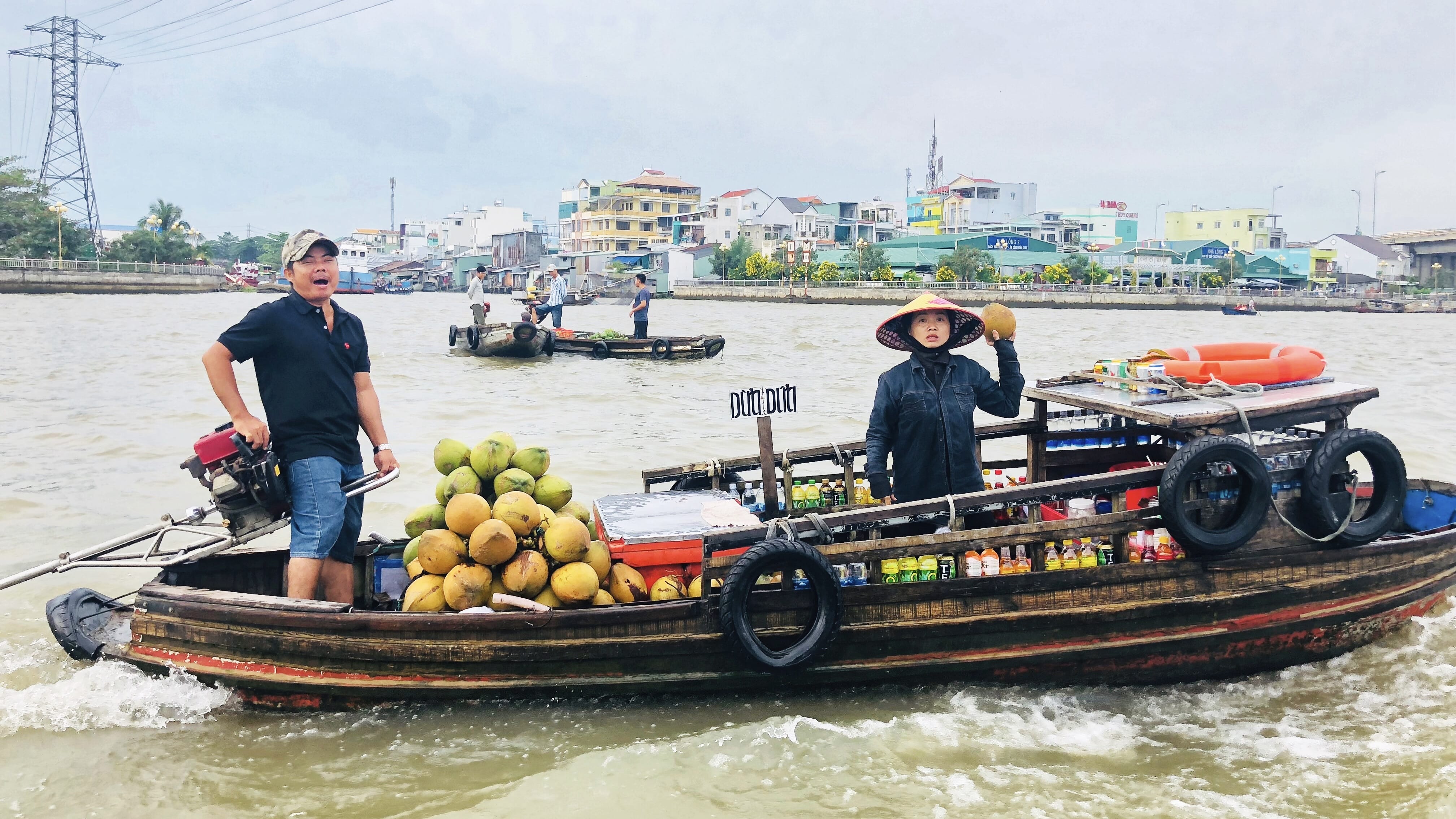
Later, I bought a fresh coconut from another boat. The woman cracked it open with practiced ease and passed it up with a straw. Sitting there in a gently rocking wooden boat, eating fresh pineapple and sipping cold coconut water in the middle of the Mekong Delta, felt simple and perfect.
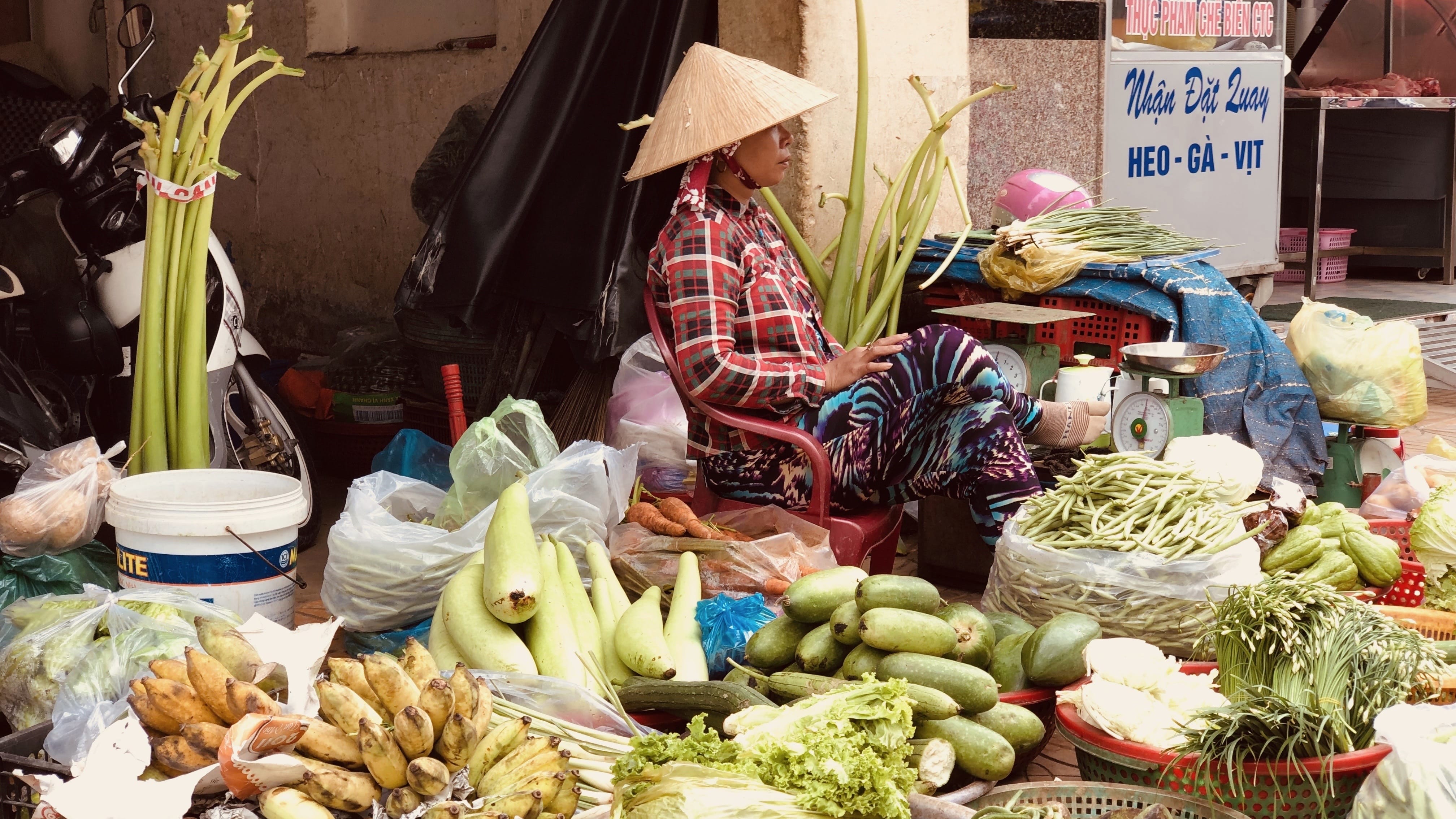
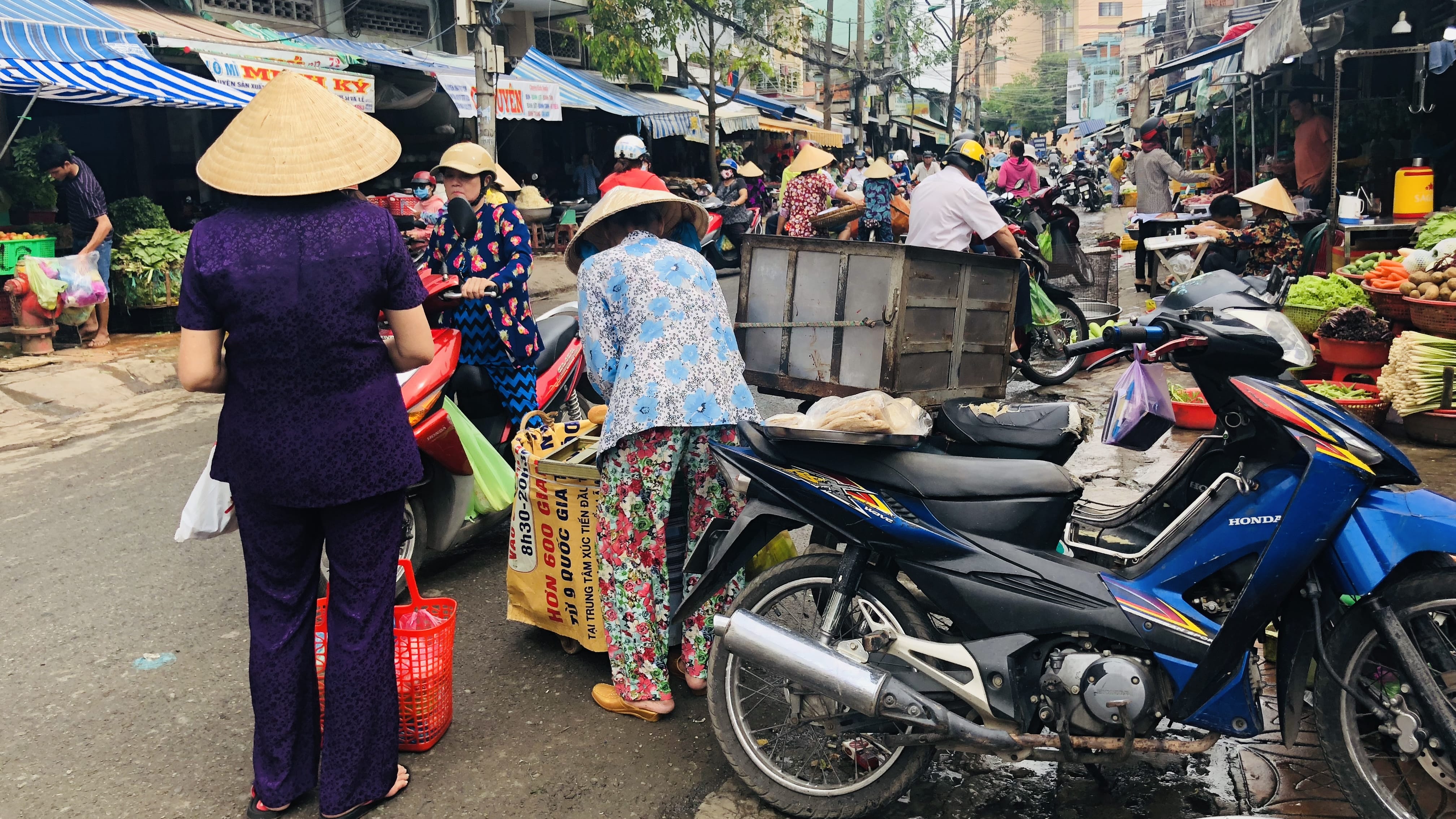
After leaving the floating market, we headed into Can Tho Market. Inside, rows of stalls sold fish laid out on ice, crabs and squid in shallow trays, piles of herbs, spices, kitchen tools, clothing — just about everything. Women in conical hats chopped vegetables, weighed fish, bargained, and chatted with customers. Scooters squeezed through narrow aisles. It was busy, loud, and slightly chaotic in that everyday way local markets tend to be.
I really enjoyed this day. Both the floating market and the city market felt authentic. Yes, tourism exists — it always does — but so does real life, and here the two seemed to overlap without canceling each other out.
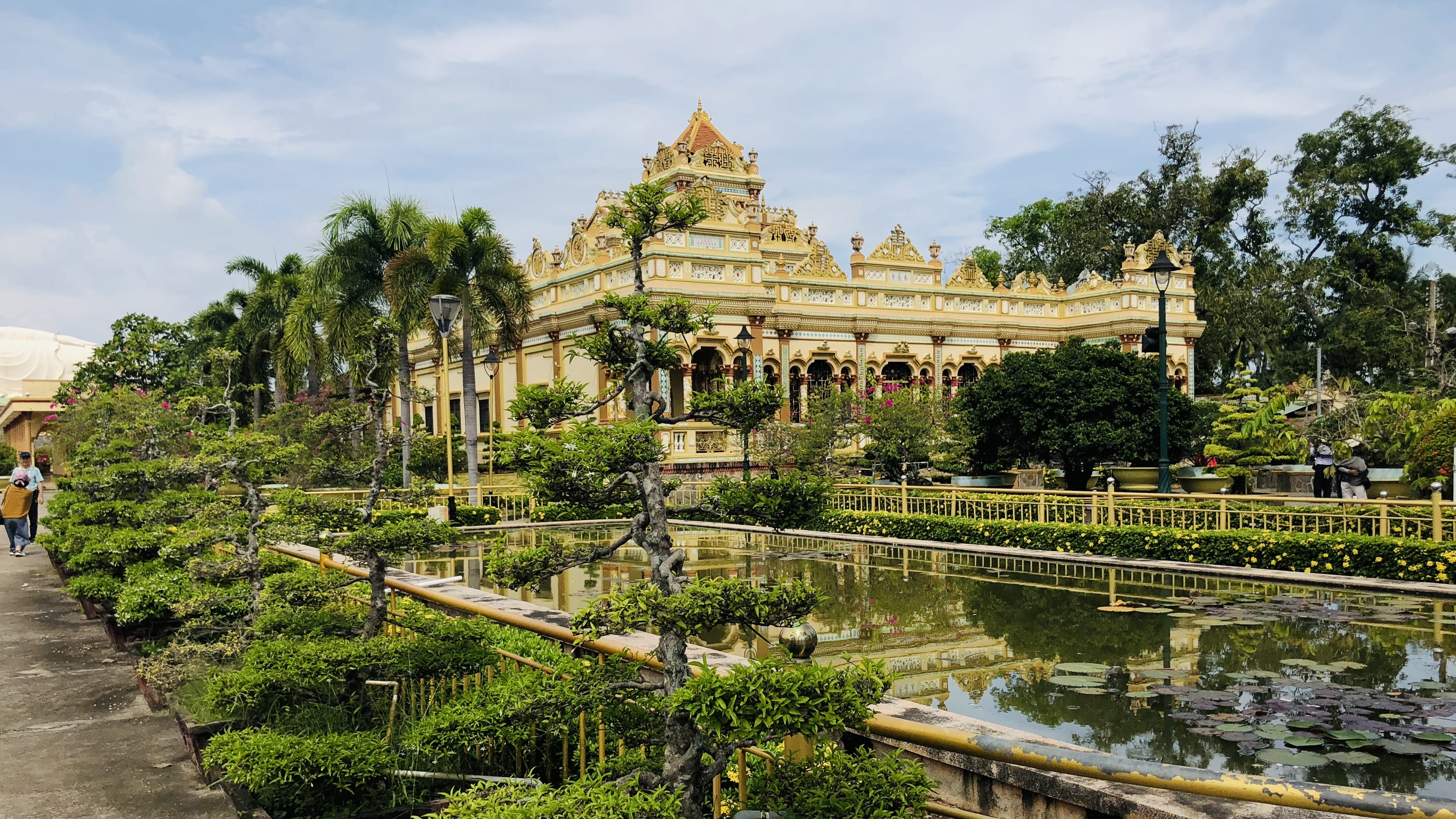
From Can Tho, we began the long drive back to Ho Chi Minh City. About halfway through the journey, we stopped at Vinh Trang Temple near the center of My Tho. The pagoda blends Vietnamese, Chinese, and Khmer architectural influences.
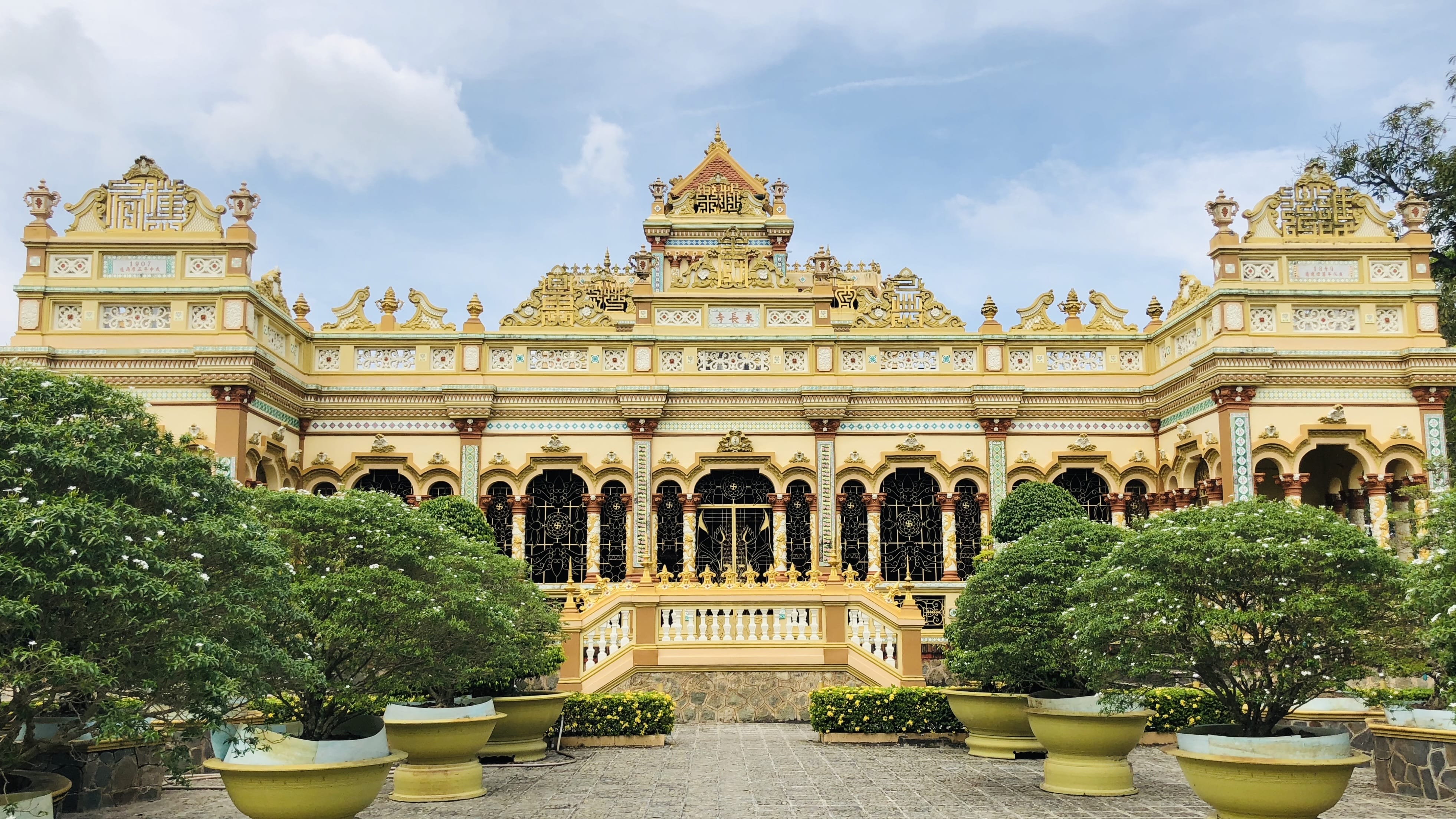
Beyond the main façade, the complex opens into a series of courtyards and shrines. Ornate archways lead into smaller sanctuaries surrounded by bonsai and flowering plants.
Scattered throughout the grounds are several Buddha figures, including a tall standing Buddha rising above the trees and a large reclining Buddha stretching across one end of the complex. Inside the temple halls, carved wooden altars and gold-toned statues fill the space.
And then, just like that, we were back among the motorbikes.
Traffic thickened as we approached Ho Chi Minh City — scooters weaving between cars, horns sounding, riders balancing everything from grocery bags to entire families. The calm of the temple felt far away.
By the time we arrived, it had been another full day. We ended with dinner at Home Saigon Restaurant. I ordered fried rice served inside a dried coconut — simple and delicious, and a perfect way to wrap up the day.
We spent our final full day in Vietnam exploring more of Ho Chi Minh City, starting with a visit to the Cu Chi Tunnels, located outside the city.
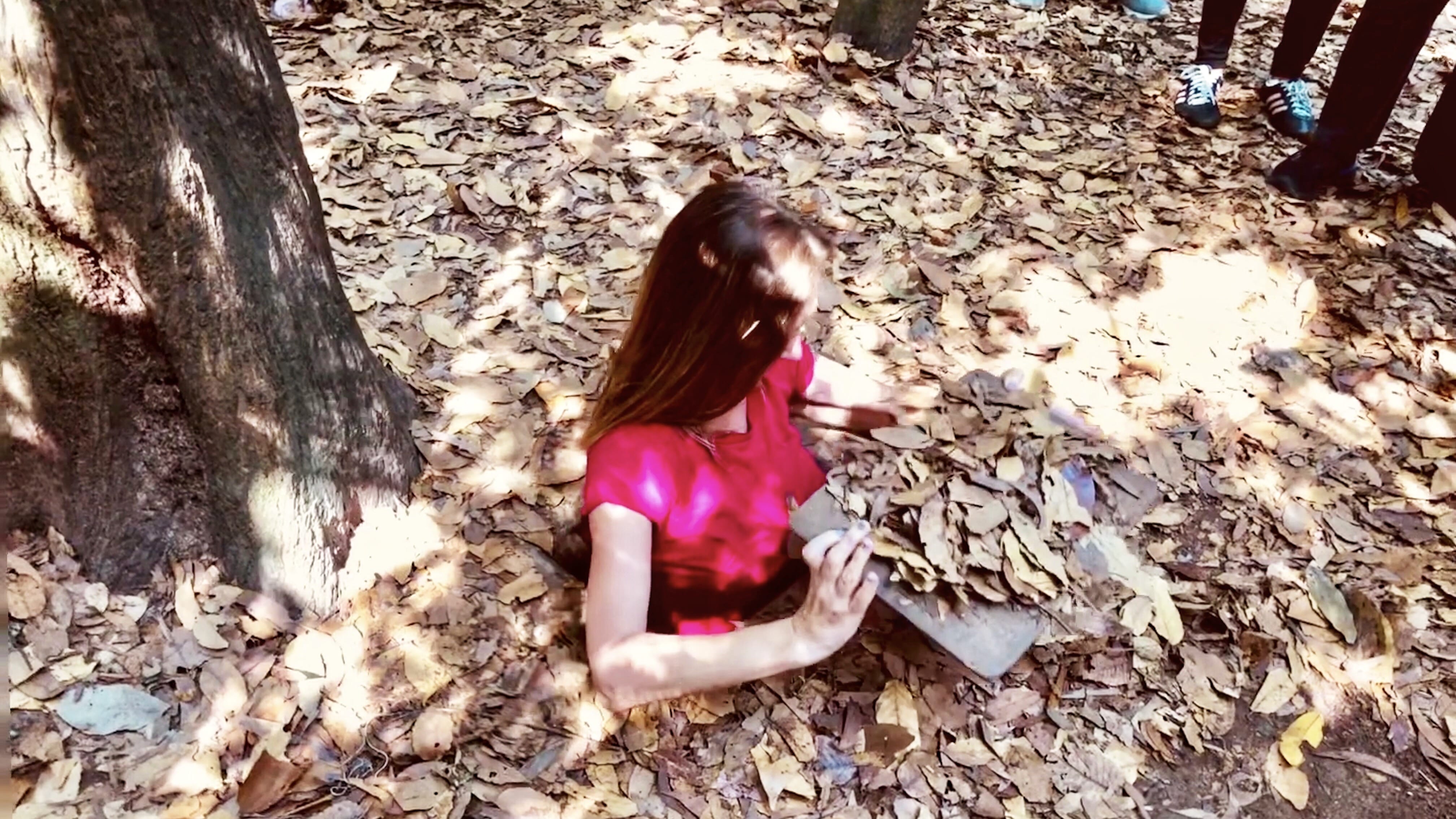
The tunnels are part of a vast underground network used during the Vietnam War, stretching for miles beneath the jungle. They served as living quarters, supply routes, hospitals, and hiding places. Seeing them in person made their scale and ingenuity much easier to understand. We walked through the site, learned how the tunnels were constructed, and saw examples of the narrow entrances, hidden trapdoors, and everyday tools used by those who lived and worked underground.
At one point, I climbed down into one of the chambers and crouched while a wooden cover was placed over the opening. With grass and dirt layered on top, it completely disappeared into the ground. Kneeling there, fully concealed, was sobering — and very different from anything else we’d experienced on the trip.
Back in the city, we headed up to the Saigon Skydeck for a completely different perspective. From the observation deck, the city stretched in every direction — dense, sprawling, and constantly moving. After days spent navigating traffic and crossing streets at ground level, it was striking to see it all from above.
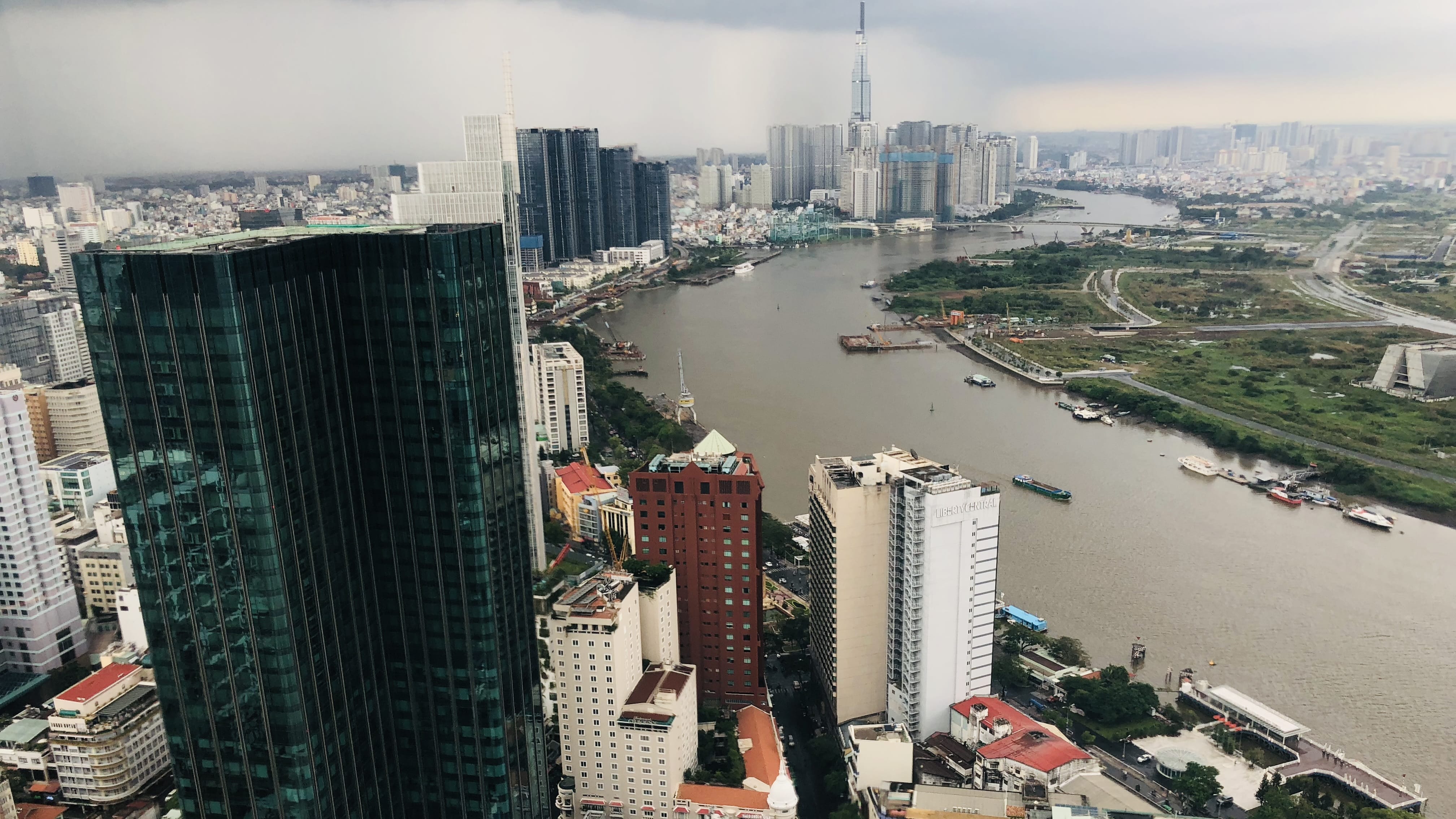
Before heading back down, we enjoyed a couple of cocktails while taking in more of the city.
From there, we made our way to Ben Thanh Market, the city’s central market and one of its most recognizable landmarks. With more than 1,500 booths packed inside, the market was a maze of food stalls, souvenirs, clothing, spices, and household goods. It was busy, loud, and chaotic — and fun to wander through.
We wrapped up the evening with dinner back at Home Saigon Restaurant, where we had eaten the night before. It’s a fantastic place. After dinner, we headed for what we thought would be a relaxing 60-minute foot massage. It turned out to be anything but.
The chairs were set up right near the entrance of a makeshift salon, with constant noise and people coming and going. The air smelled strongly of something like industrial glue. Both of us were getting massages from separate therapists, and at one point they each climbed up behind the chairs and onto our shoulders, putting their full weight on us — not exactly what either of us expected from a foot massage. Cheap, but definitely not relaxing.
After breakfast, we said goodbye to Vietnam—definitely not enough time, but enough to leave me wanting more. We flew back to Bangkok, where we spent the night before an early-morning flight the following day.
Six days in Vietnam wasn’t nearly enough, but it was a nice introduction—from the energy of Ho Chi Minh City to the quieter Mekong Delta. The mix of markets, food, and everyday life made it a place I’d happily return to.