
7 Days in Georgia – Part 2: Kutaisi, Mestia, Ushguli & Tbilisi

This part of the trip took me deeper into the mountains—through Svaneti, Ushguli, and back to Tbilisi.

If you missed Part 1 of my week in Georgia, you can read it here.

Day 4 — Kutaisi to Mestia

I arrived in Kutaisi from Gudauri the night before, pulling in around 7:30 PM after a long day of driving. Kutaisi was just a stop that made sense to break up the trip—not a major destination on our itinerary—, but since my hotel was close to the old town, I got up early to walk a little before we hit the road again. When would I ever be passing through this little place again?

The White Bridge, which crosses the Rioni River, was just a few minutes away. The river was surprisingly rough — fed by glacial melt and rain from the Caucasus — and the rocky riverbed only made the current stronger. As I crossed the bridge, I couldn’t help but notice the bronze statue perched along the railing — often called Picasso’s Boy. The nickname comes from a scene in the 1960 Georgian film An Unusual Exhibition, where a boy in a similar pose is described as “the kind of boy Picasso would have painted.”

Bronze sculpture of a boy holding two hats on the White Bridge over the Rioni River in Kutaisi, Georgia.
Picasso’s Boy” on Kutaisi’s White Bridge (Rioni River).

Kutaisi is one of Georgia’s oldest cities and once served as the capital. The name supposedly comes from kuta, meaning stone, which makes sense — limestone juts out along the riverbanks and even through parts of the old town.

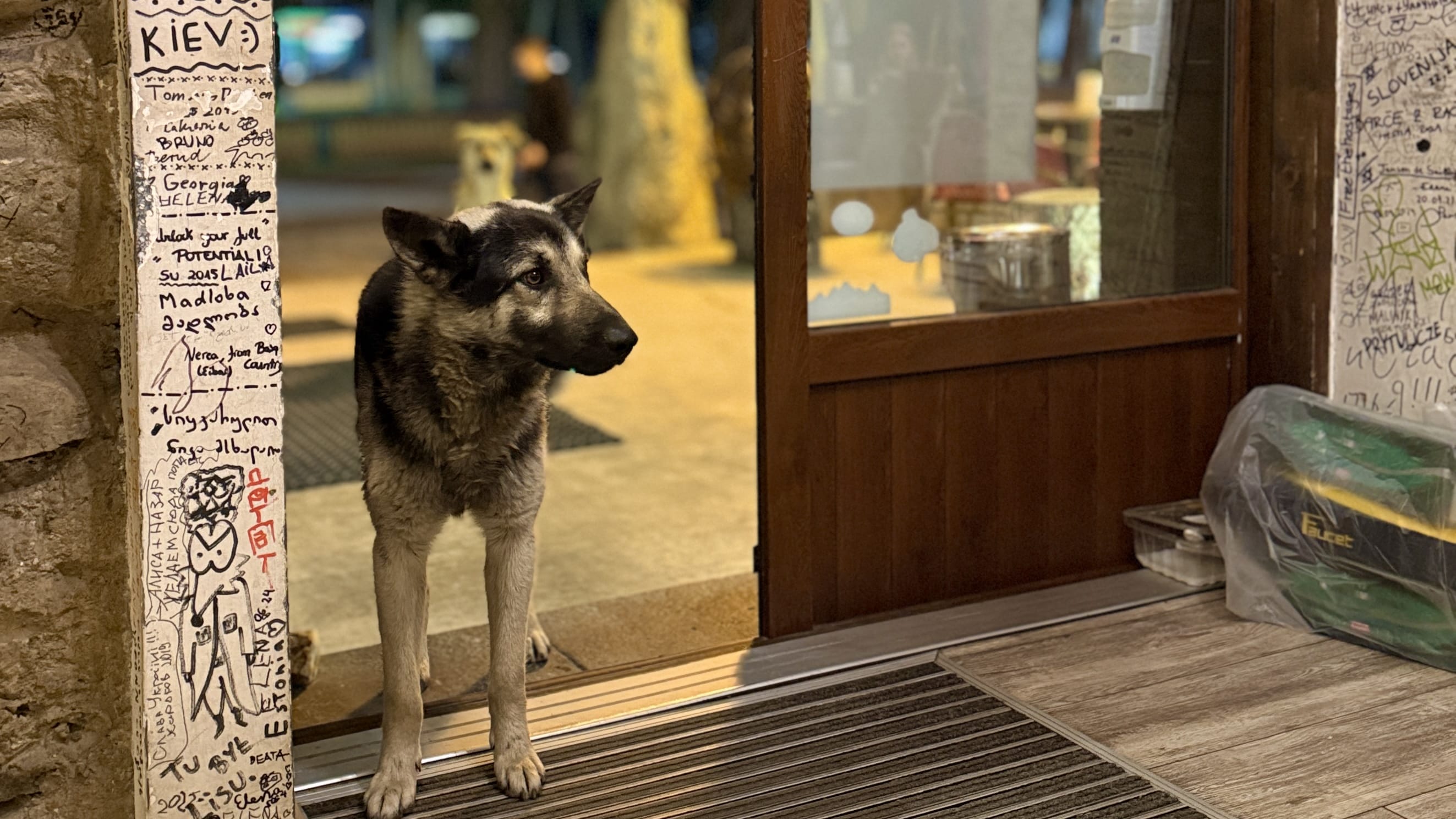
There seemed to be stray dogs everywhere — most napping in along the sidewalk, some watching the world go by, and a few trailing behind me like I was the Pied Piper.

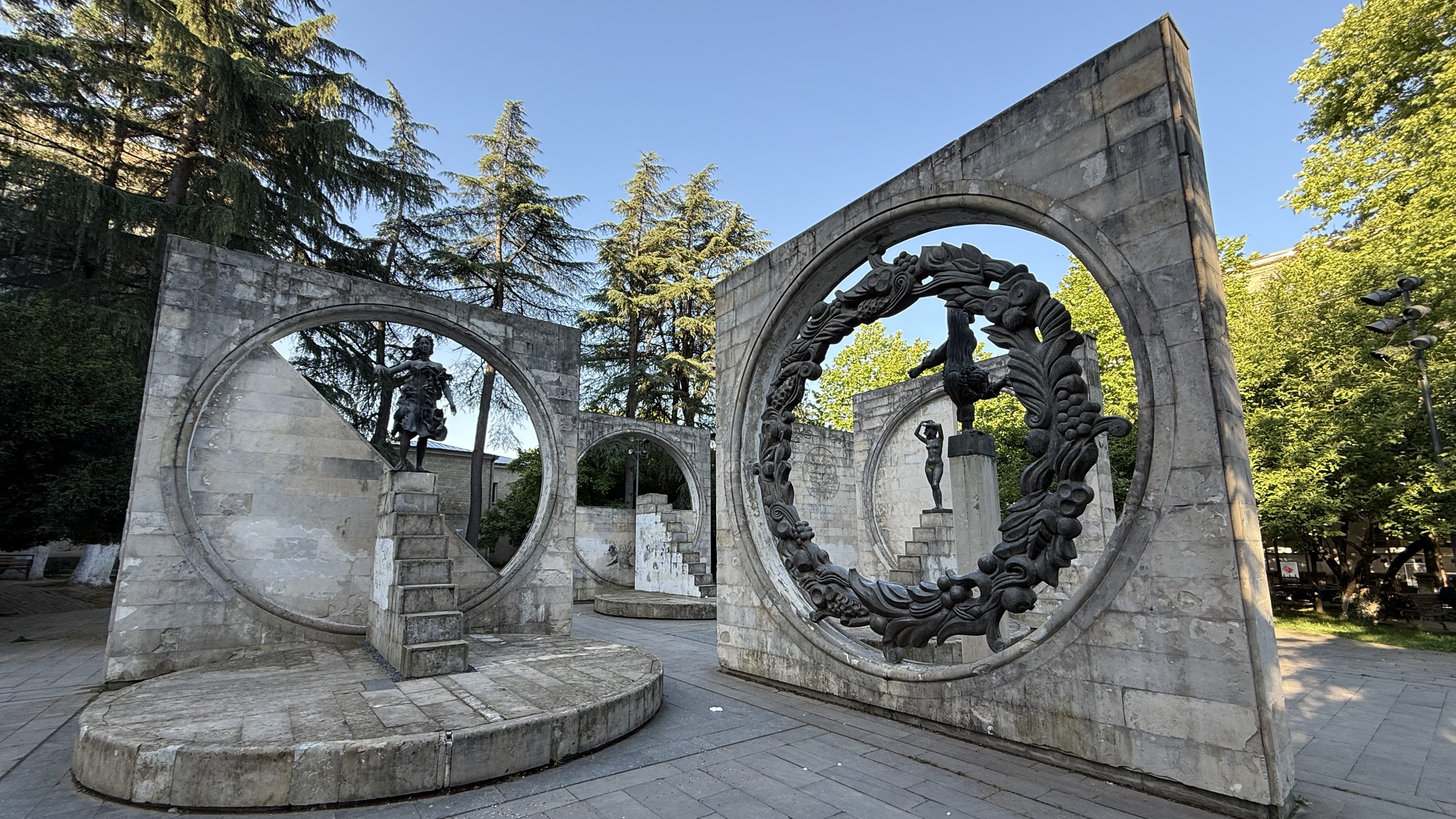
A little farther on, I wandered into a small park filled with Soviet-era statues. Some looked athletic, others more theatrical, and one, I believe, was a clown. I wasn’t entirely sure what all of them were meant to represent, but Kutaisi definitely felt like a place that deserved more than the hour I could give it.

Bagrati Cathedral & Motsameta Monastery

The first stop of the day was Bagrati Cathedral, built in the 11th century on a hill overlooking Kutaisi, where it would once have been visible across much of the valley. Inside, the bright mosaic icons near the front immediately stood out—Saint John the Baptist on one side, the Virgin and Child on the other—set against pale stone walls.

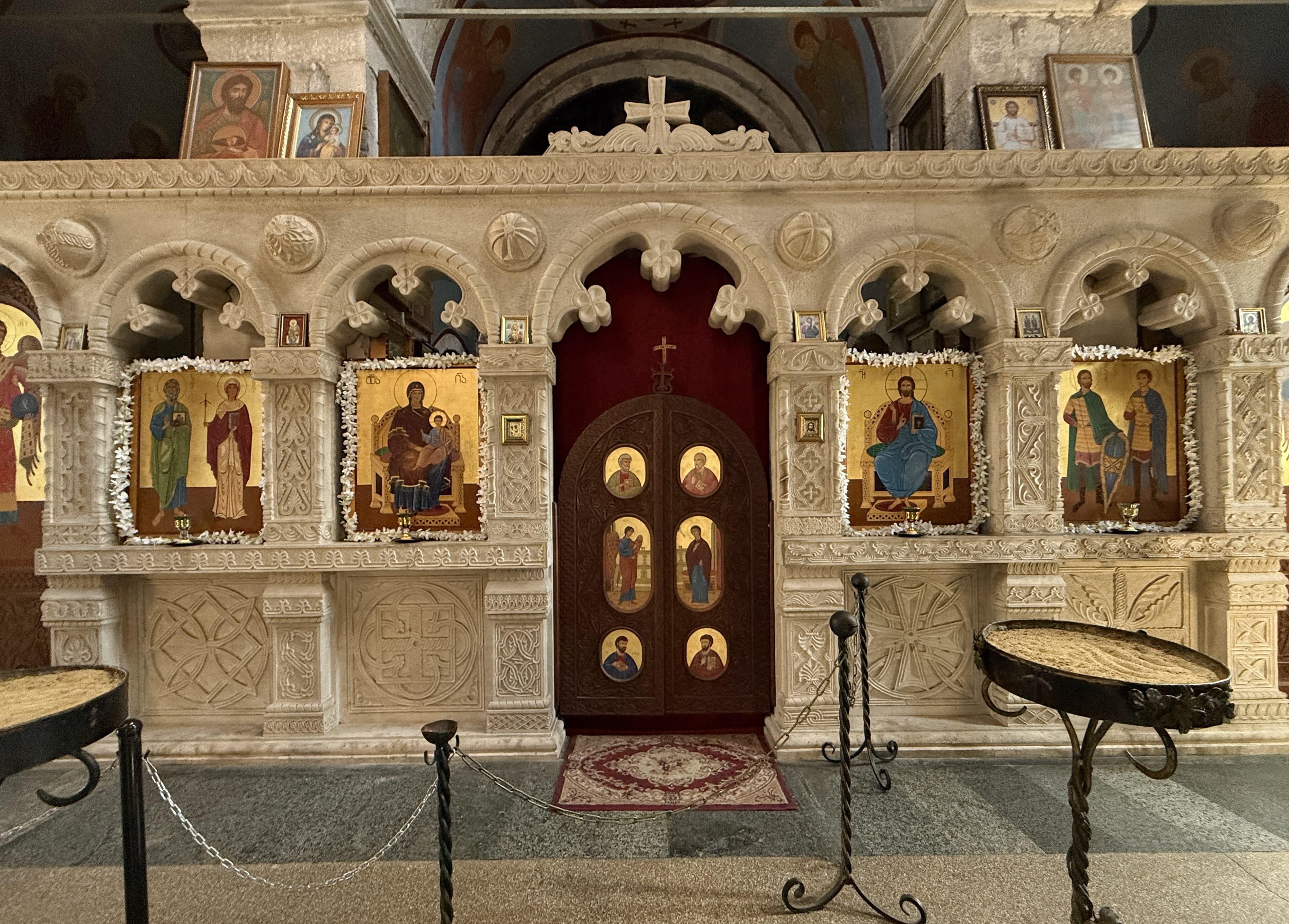
We visted Montsmeta Monastery, right after, and although it dates to the same period, the contrast was immediate — not just in size, but in purpose. Much smaller in scale, Motsameta is inward-focused. The carved stone iconostasis dominates the interior, a series of shallow arches filled with gold-ground icons and finely worked reliefs centered on a deep red doorway. From the courtyard, it’s easy to miss how exposed the setting really is; the monastery’s position above the gorge only becomes clear once you step back.

Lunch in Zugdidi

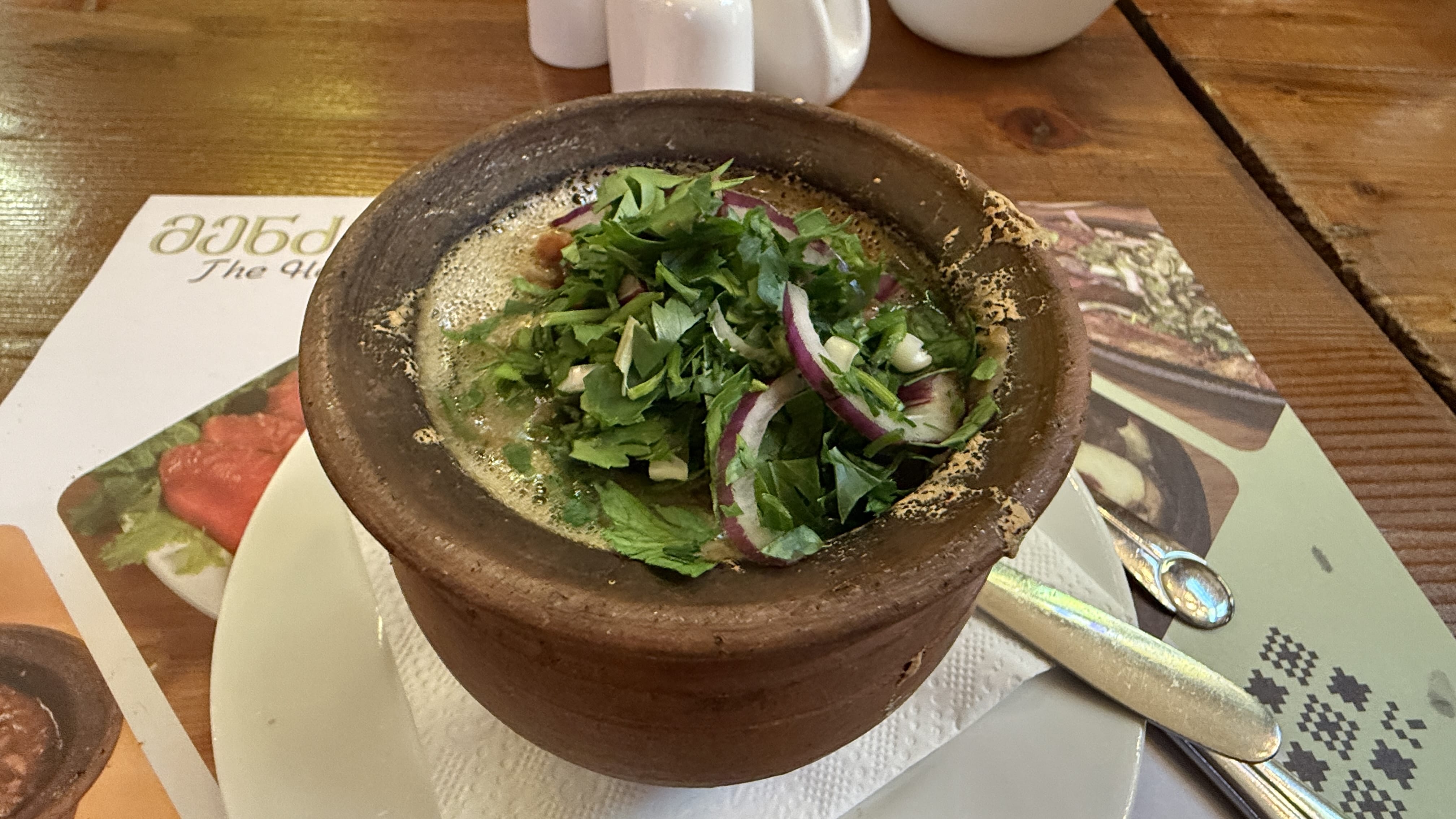
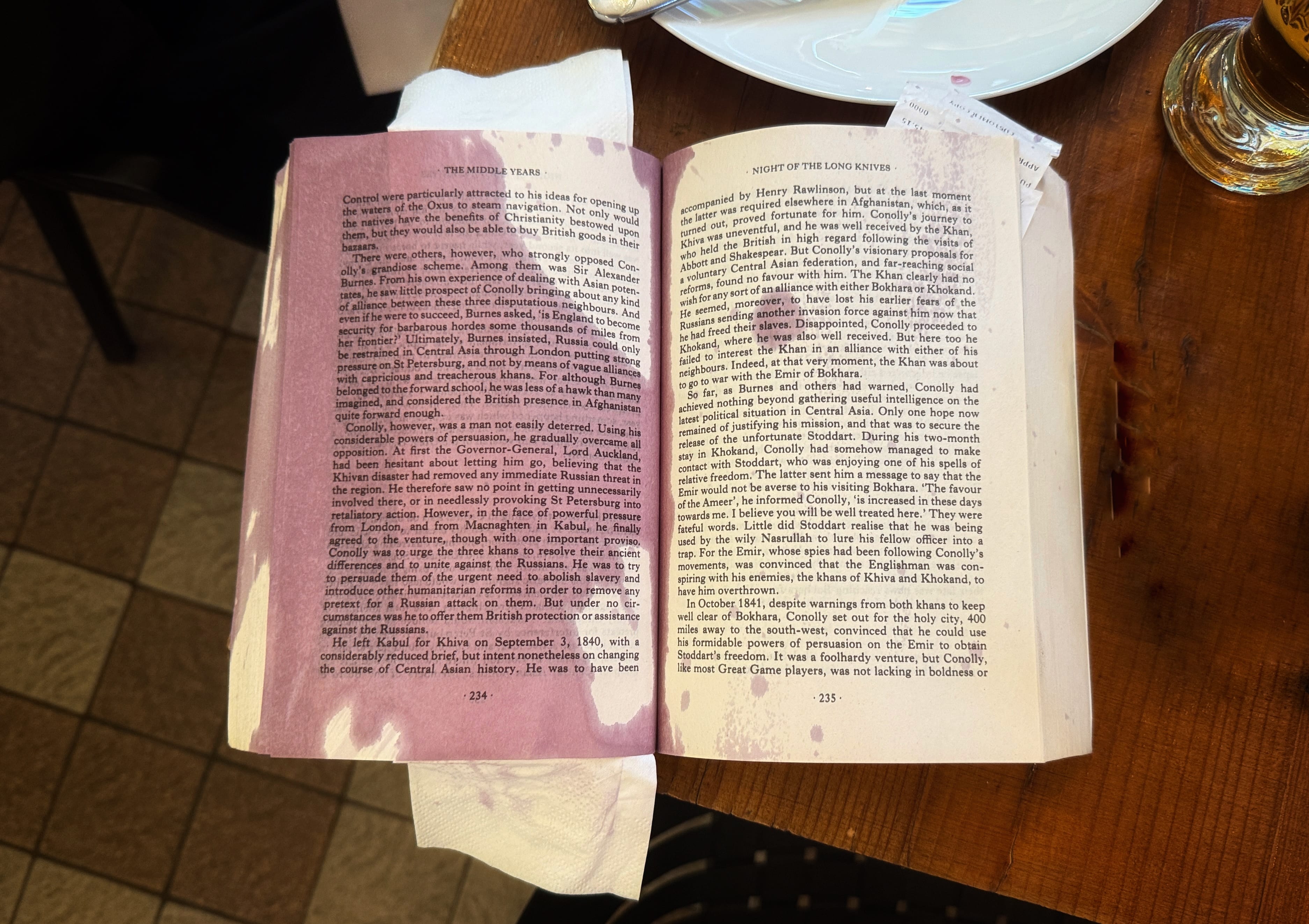
We continued to Zugdidi for lunch at Mednzeli. I ordered red beans in a clay pot and a glass of wine. One member of our group is a Catholic priest who always brought this really thick book to the table. I still don’t know how I managed it, but I knocked my wine straight onto his book — thank goodness it wasn’t the Bible.

He wasn’t thrilled, of course, but I apologized over and over, and he eventually said it was fine — an accident. I joked that he’d think of me every time he opened that now-permanently-purple book. For the record, the beans were terrific — and so was the wine once I refilled my glass.

Drive into Upper Svaneti

The drive from Zugdidi into Upper Svaneti is long, winding, and dramatic — towering peaks, deep gorges, and switchbacks curling around cliffs. At one point, the ridgelines we followed marked the border with Russia. The drive was also colorful; in places, the slopes lining the road were dotted with patches of yellow rhododendron.

Yellow rhododendron lined the road on the way towards Upper Svaneti during our 7 days in Georgia
Yellow Rhododendron Bushes

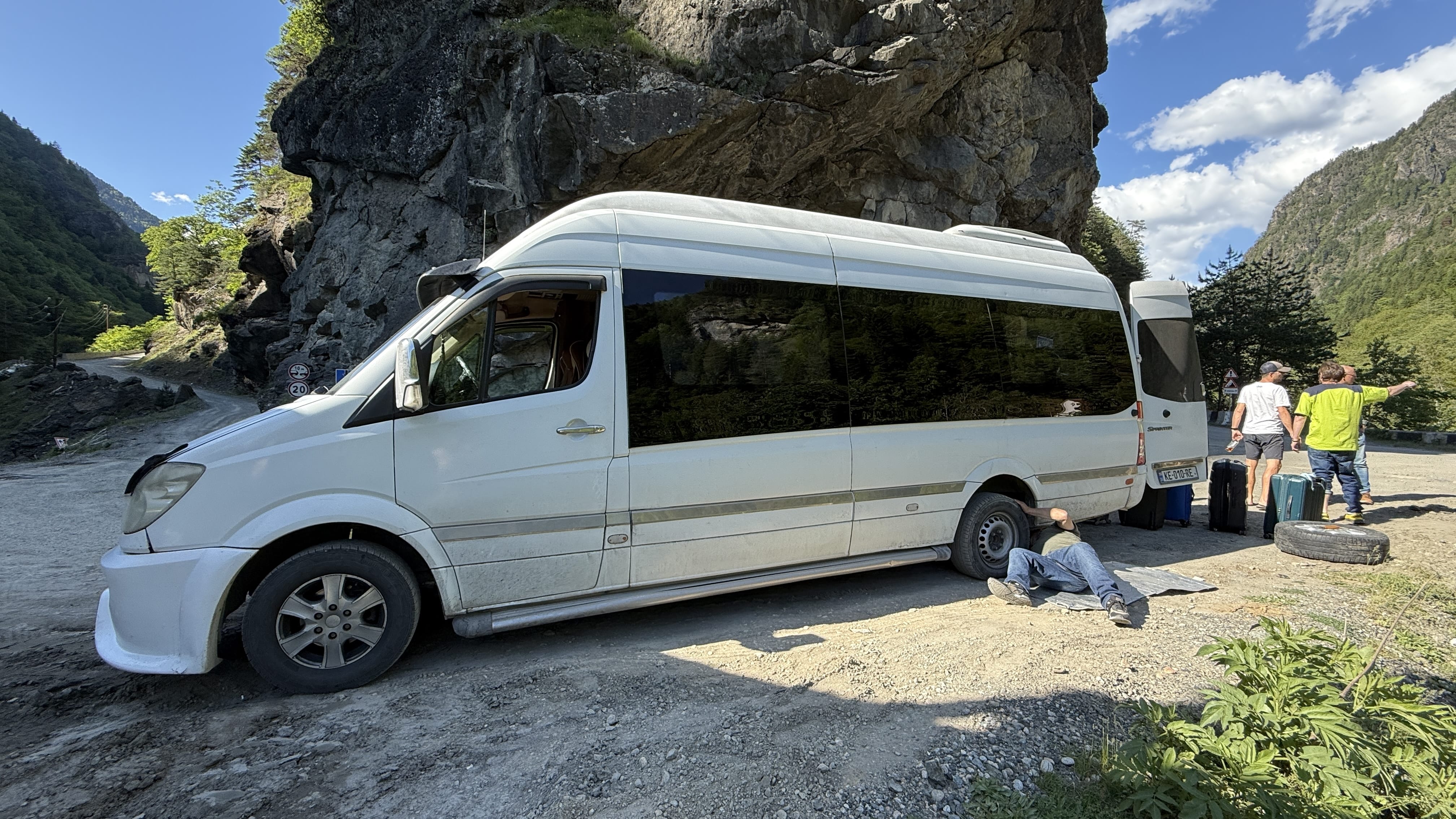
A flat tire in the middle of nowhere slowed us down, adding to an already long mountain drive. Because of the delay, we didn’t reach Mestia until after 7 PM, just in time to stretch my legs before dinner.

Minibus stopped on a mountain road with a flat tire during a road trip in Georgia’s Caucasus Mountains
A flat tire and an unscheduled stop somewhere in the Caucasus.

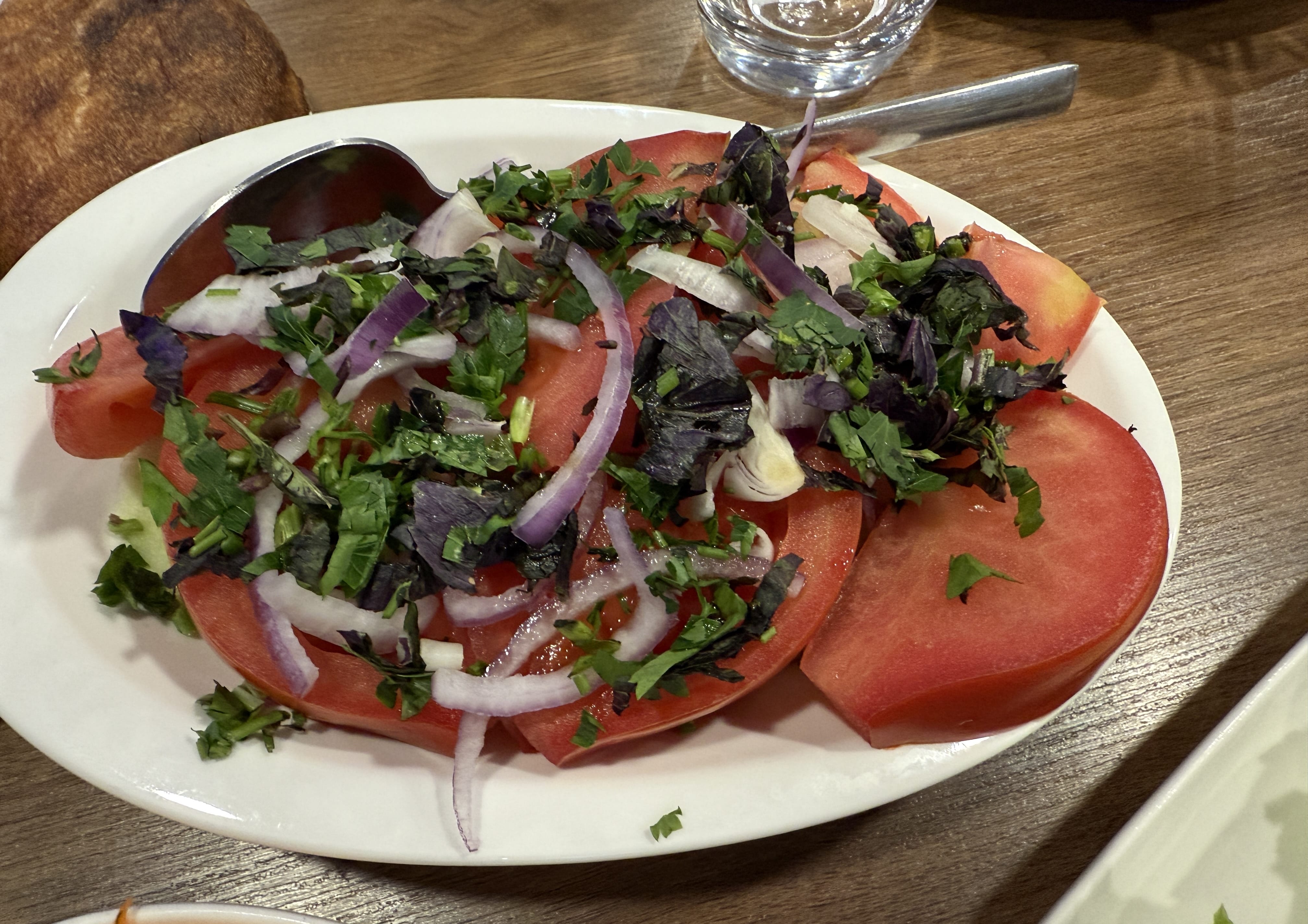
Dinner at our hotel was good: fresh tomato-onion salad, a perfectly seasoned carrot salad, and (yes) more eggplant with walnut paste—paired with a delicious Georgian wine.

We checked into the Shara Hotel for two nights — crisp mountain air, peaks in every direction.

Day 5 — Mestia → Ushguli → Mestia

Before we headed out for the day, I took a short walk into town — just a few minutes to the tiny “downtown,” basically a couple of streets with coffee shops, restaurants, souvenir stores, and a little cinema.

I stopped at a bakery where they were making shotis puri, the canoe-shaped Georgian bread baked in a clay oven called a tone. The baker braced himself on the rim of the oven and reached inside with a cloth-wrapped paddle, slapping each loaf onto the hot wall. Quick, physical, fun to watch. The bread was 1.50 lari (about 55 cents), still warm and delicious.

Ushguli

After breakfast, we loaded into four-wheel-drive vehicles and drove toward Ushguli — about an hour away on a narrow road with steep drops and views that looked like they’d been painted.

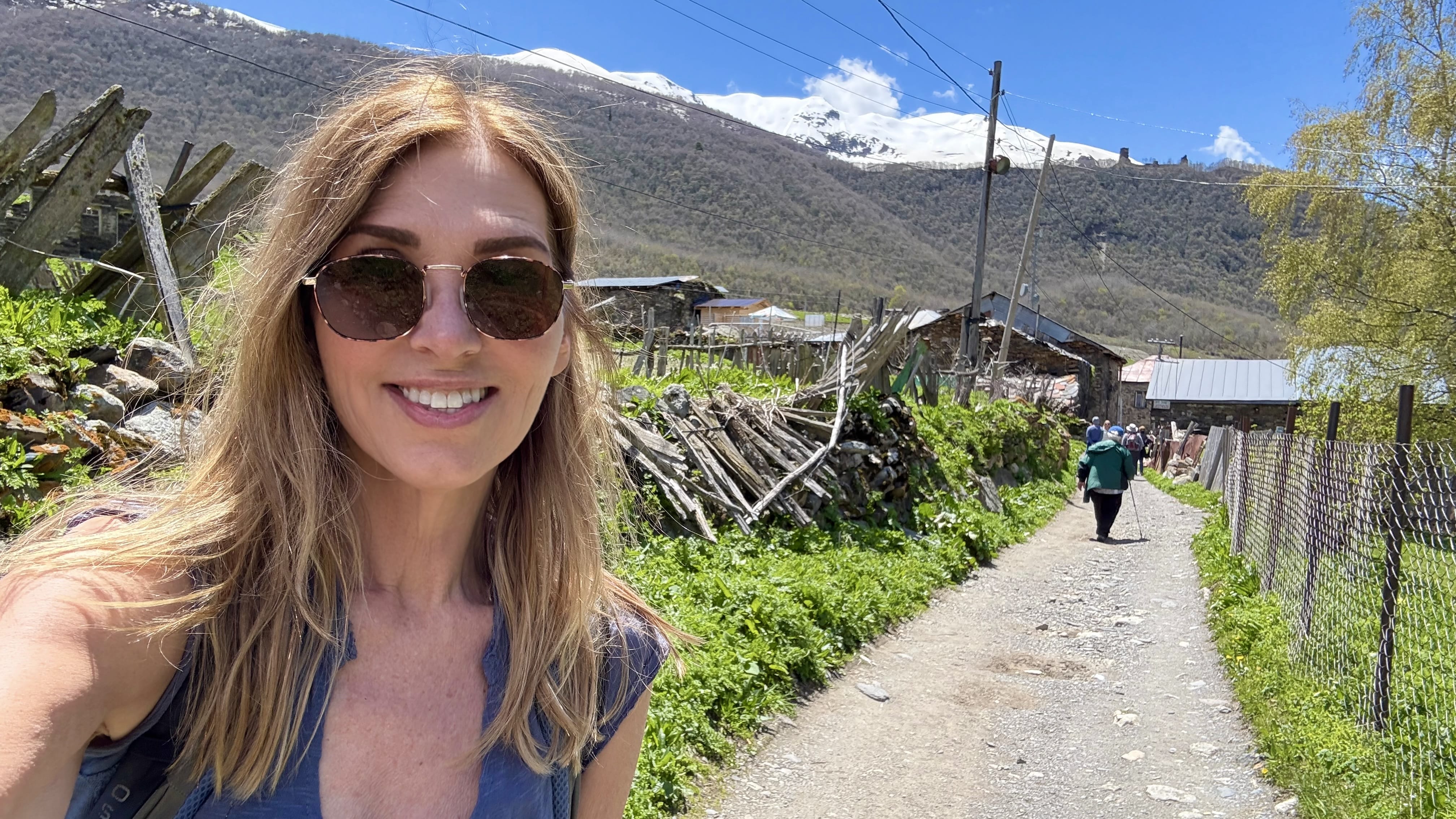
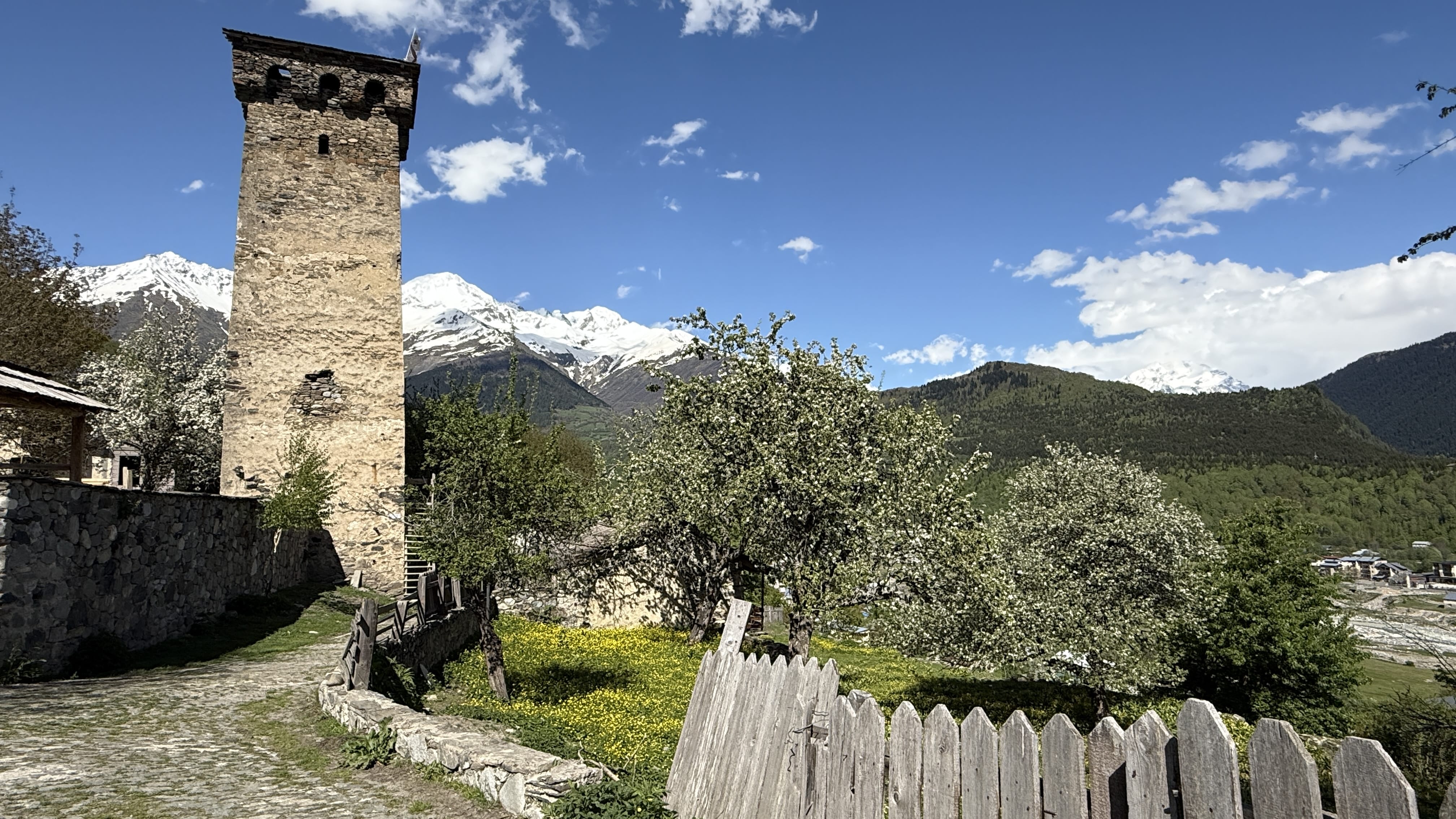
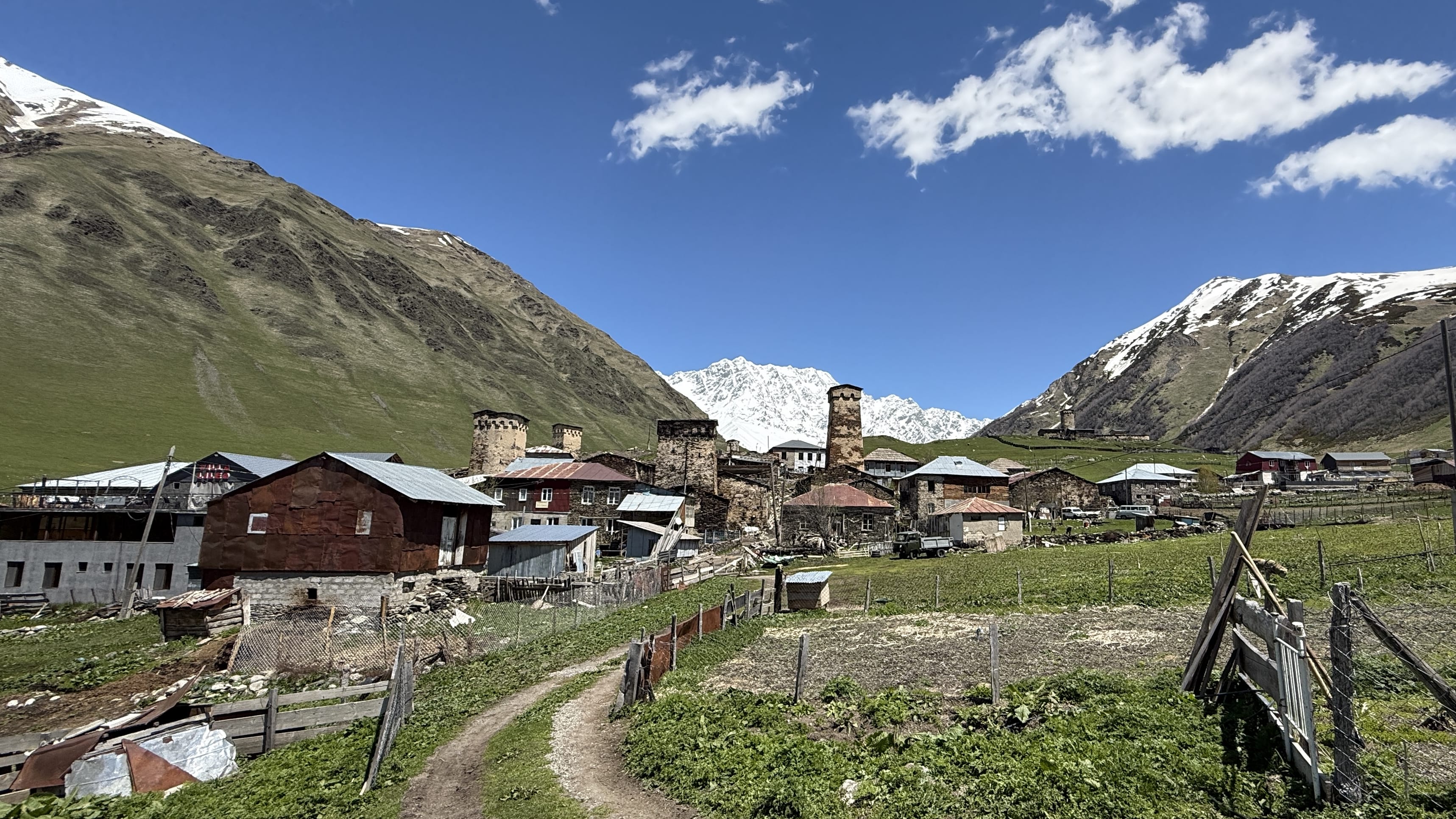
Ushguli is one of the highest continuously inhabited villages in Europe. It feels incredibly remote and almost untouched: stone houses with sagging wooden balconies, muddy lanes, cows wandering freely, haystacks, rusted trucks, and the region’s iconic Svan watchtowers rising everywhere against the mountains.

Svaneti, Georgia mountain road with rustic fences and green meadows, backed by snow-capped Caucasus Mountains under a clear blue sky.
Spring in Svaneti — green valleys, snowy peaks.
Cluster of stone homes and defensive towers in Ushguli village with Caucasus Mountains in the background
Ushguli’s skyline of stone and towers.
Traditional stone buildings and a Svan tower in Ushguli village, Svaneti, Georgia
One of Ushguli’s many medieval towers.

The Svans have their own language and traditions. Historically, families lived in tall defensive houses with animals below and people above — rugged, practical, and distinctly Svan.

While wandering through Ushguli — of all places — I stumbled on a makeshift little cinema. It was called DEDE Cinema, which already felt absurd in a village of stone barns, cows, and medieval towers.

Out of curiosity, I looked it up on my phone and discovered that the film they were showing was called Dede—not just the name of the cinema—and that it had actually been filmed right here in Svaneti, in Ushguli itself. Released in 2017, the film went on to win several international awards, including top prizes at European film festivals.

A hand-painted Cinema DEDE  sign in one of the most remote villages in Georgia genuinely cracked me up, only in Georgia.

Small stone structure with hand-painted “Cinema” sign in Ushguli, Svaneti, Georgia
Yes—Ushguli has a cinema.

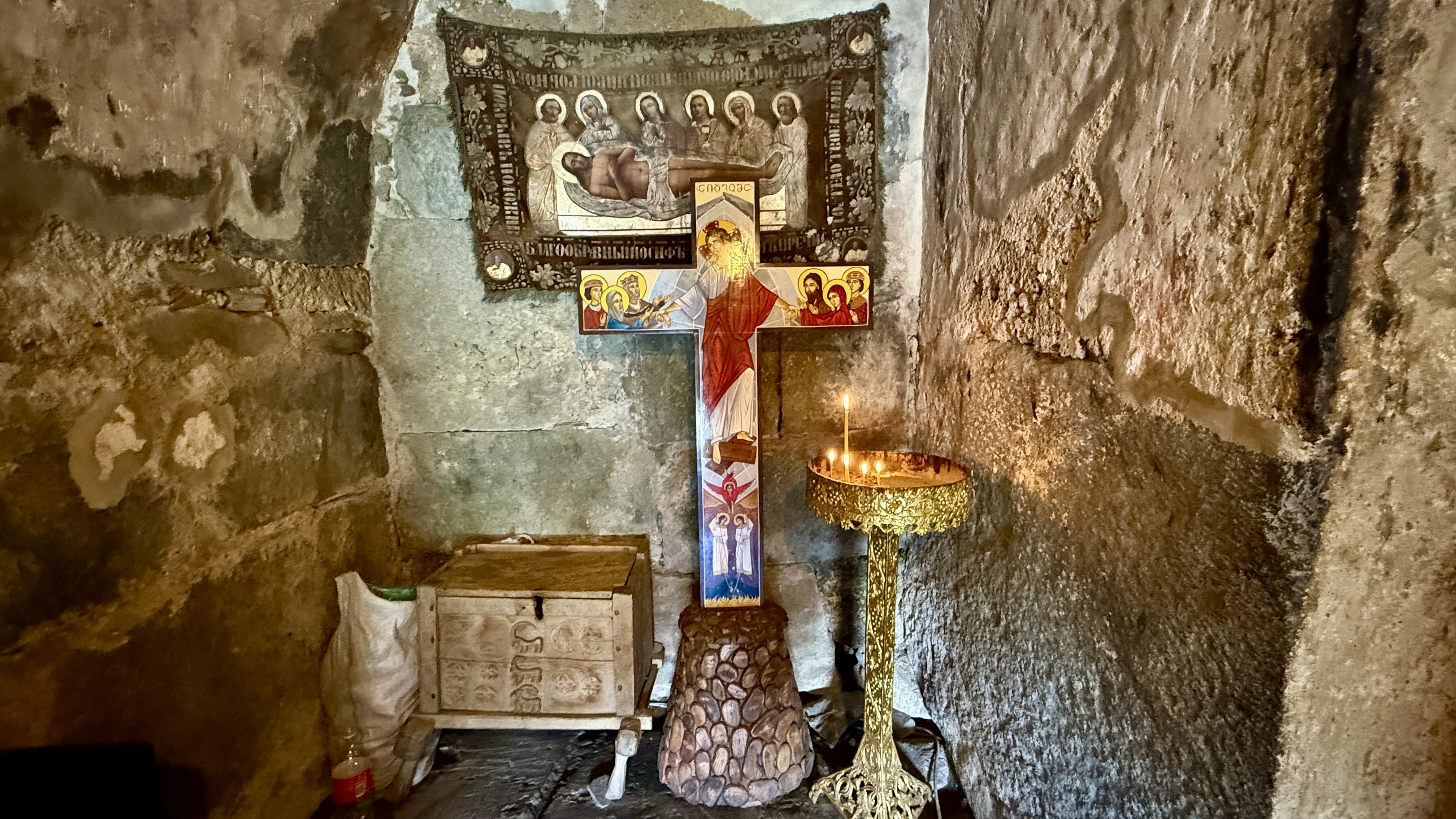
Ushguli has a few small churches scattered around the village. Lamaria Church — St. Mary — was open, so I went inside. The church is tiny and very old: uneven stones underfoot, frescoes fading into the walls, wooden icons, and two crowns sitting on a ledge by the altar. I lit a few candles for myself and a couple of people back home.

Nearby was a large metal cauldron that I later learned was traditionally used to boil entire cows for village feasts. Not exactly a charming image, and definitely something I could’ve gone my whole life without knowing — but still interesting.

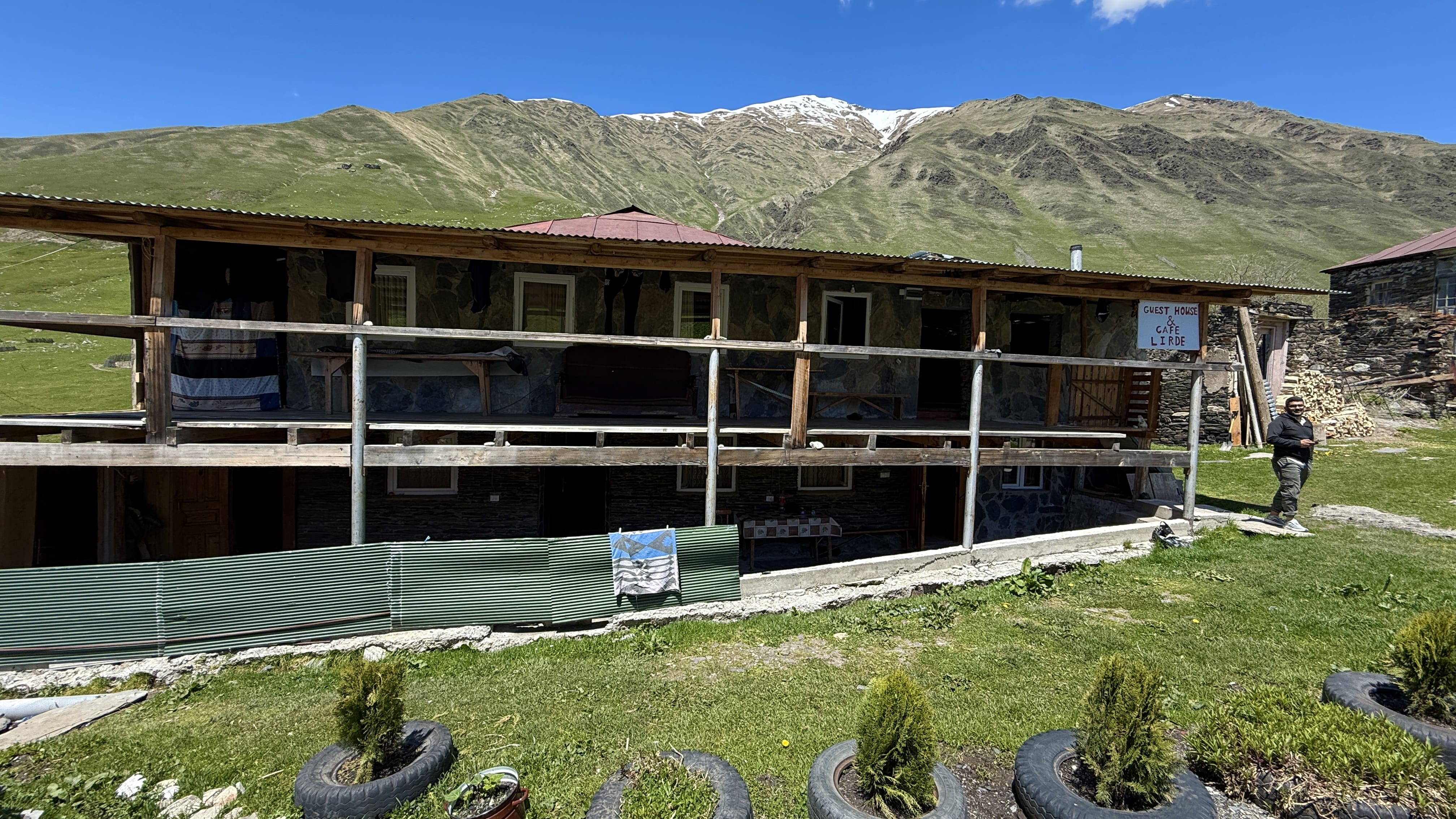
As I wandered through Ushguli, I noticed a few rustic little guesthouses—family homes with laundry flapping outside.

It made me wonder why a stay here had never been included in the itinerary. With such a small group traveling with Native Eye, it would have been entirely doable—and likely a very authentic experience.

Not that our hotel in Mestia wasn’t nice — it was — but Ushguli felt like a place that deserved more time. Trails branched off everywhere. Even though this wasn’t a hiking-focused trip, part of me wished we’d had a free day here to explore on foot.

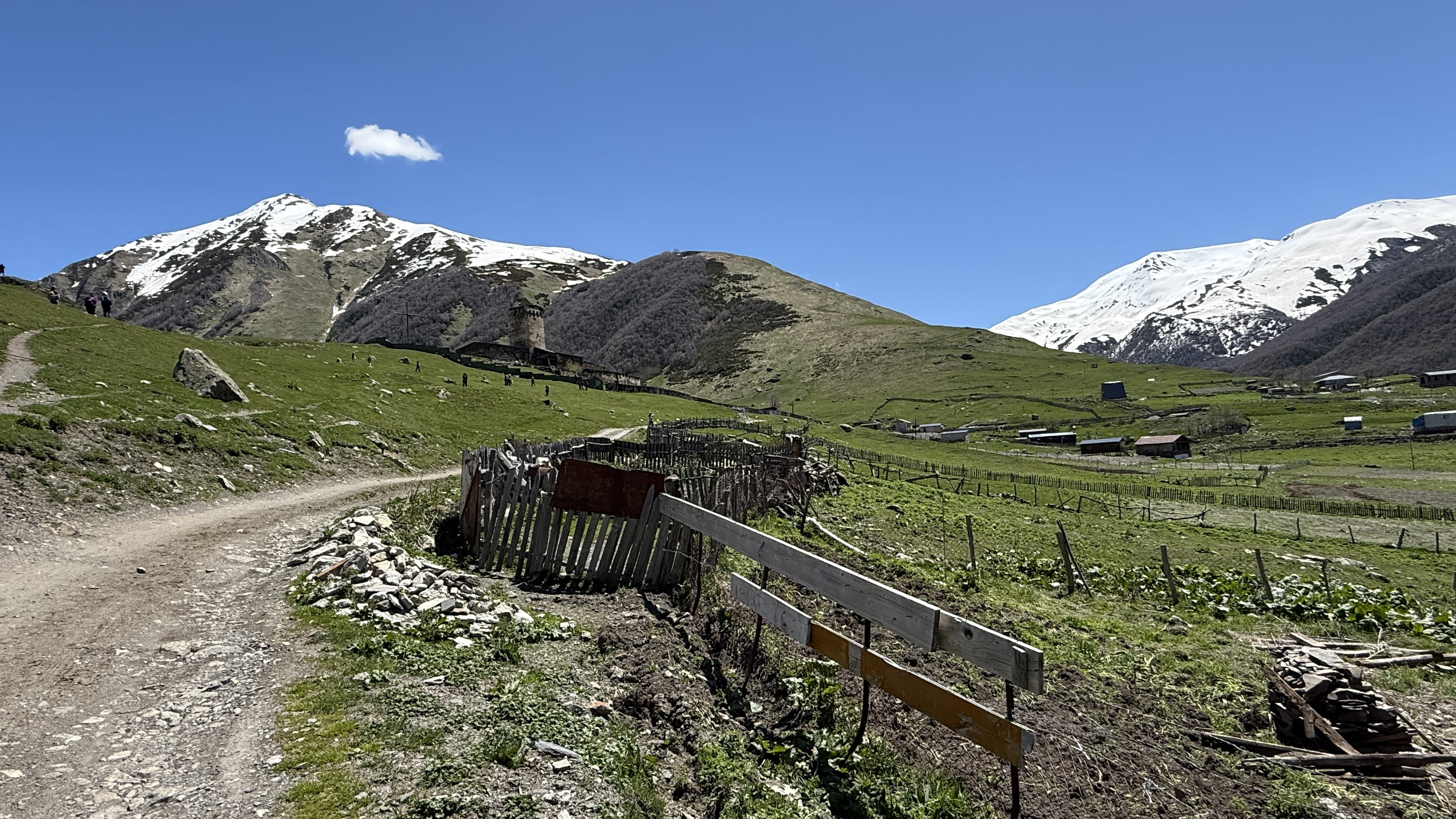
Dirt road winding through a green valley toward snowcapped Caucasus Mountains near Ushguli, Svaneti, Georgia
The road into Ushguli, with the mountains getting closer.

But that is the trade-off with small-group travel vs. traveling on your own: you cover distance, but sometimes you want to do or experience things they don’t think to include. It wasn’t the first time on this trip that I felt this way.

Lunch in Ushguli

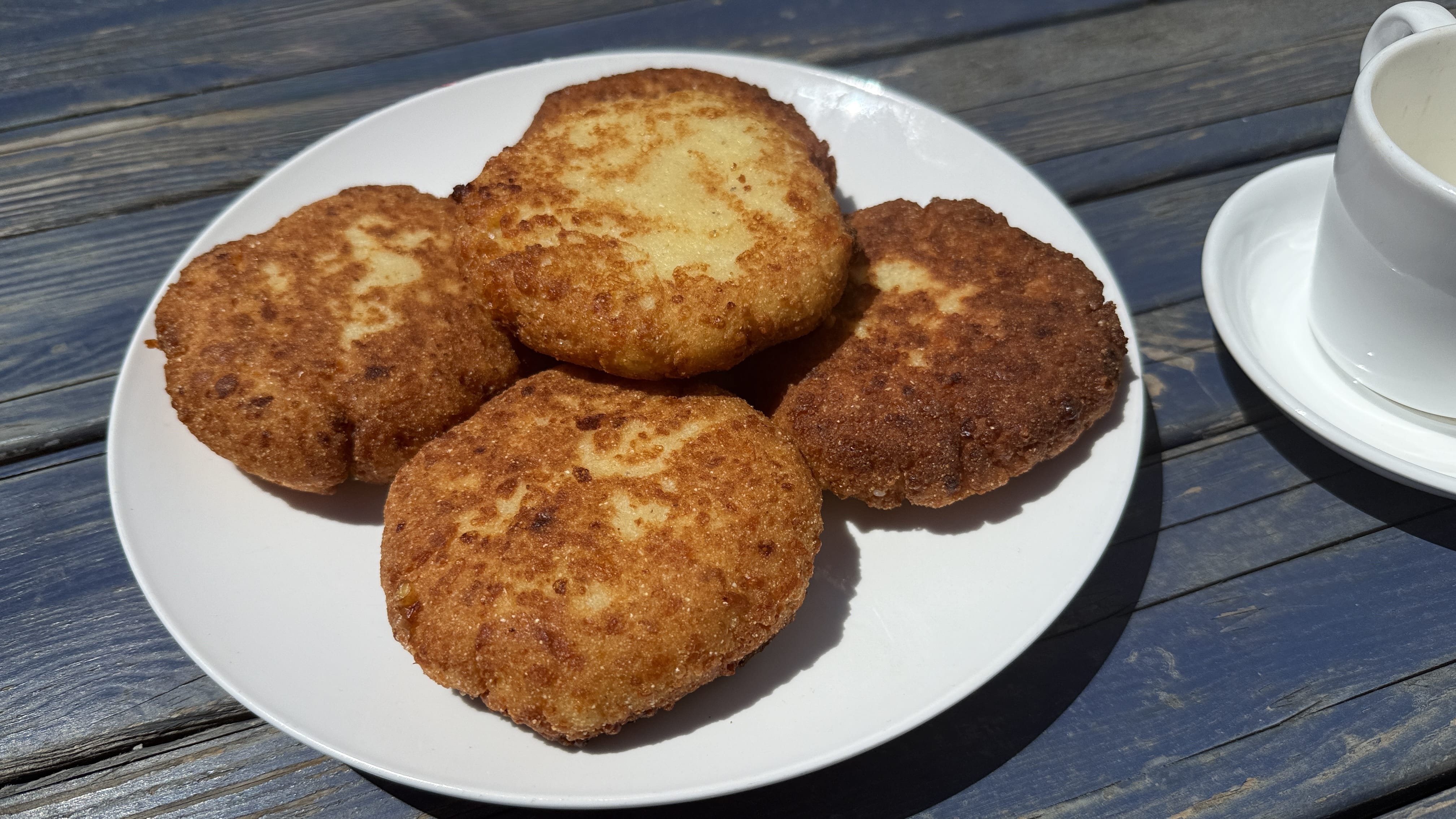
Lunch was outside at the nearby Koshki Café, overlooking the snow-covered peaks of Mount Shkhara, Georgia’s highest mountain. I ordered eggplant with walnut paste (predictable, I know) and the region’s thick, hearty cornbread. Simple and perfect.

Back to Mestia

Back in Mestia, we visited the Mikheil Khergiani House Museum, set inside a traditional Svan home. As mentioned earlier, animals occupied the lower level, with family living space above.

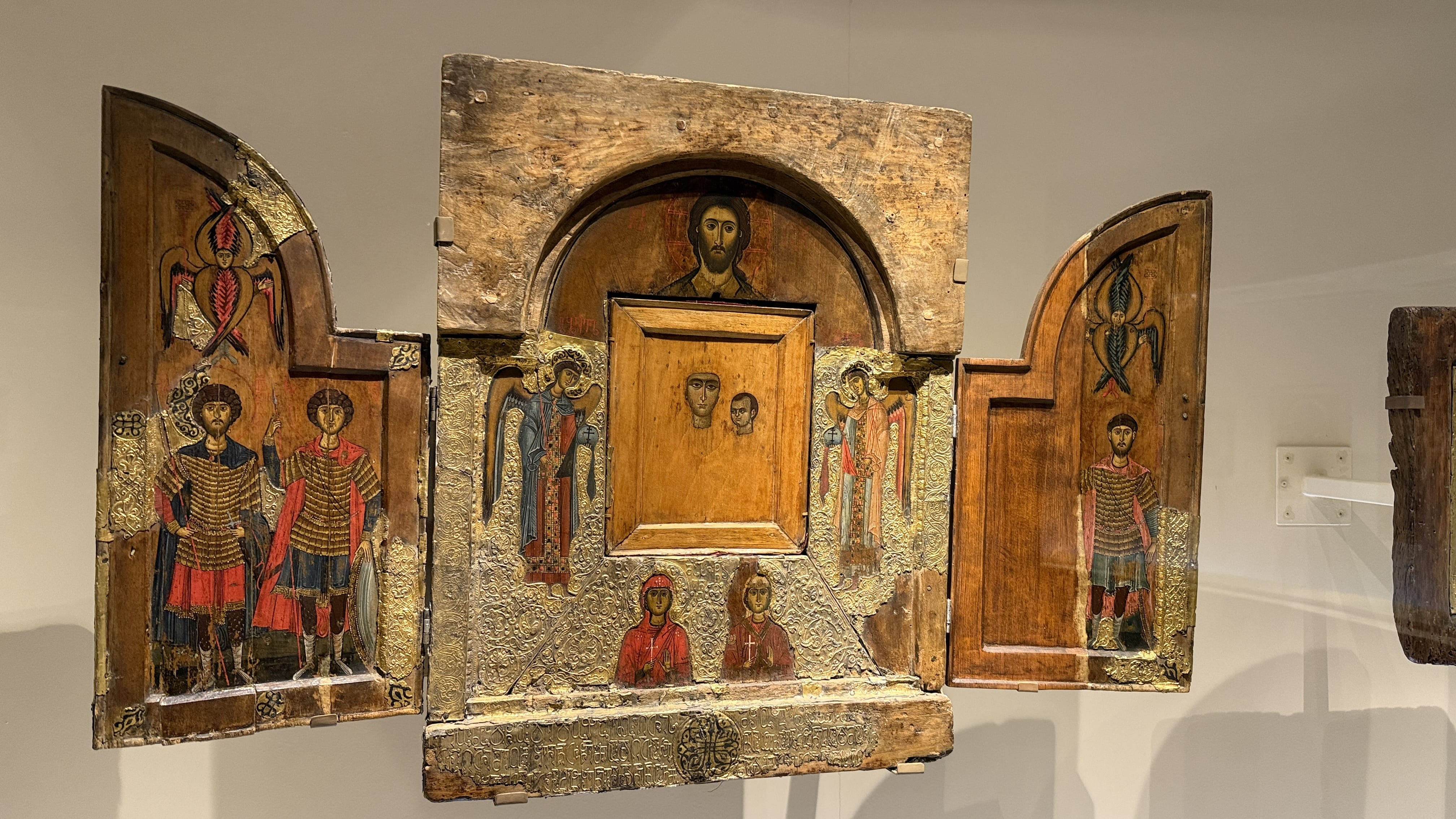
From there, we walked to the Svaneti Museum of History and Ethnography, which holds everything from ancient icons to jewelry, tools, weapons, and beautifully preserved textiles. 

Medieval Georgian triptych icon with painted saints and metal repoussé panels, displayed at the Svaneti History and Ethnographic Museum in Mestia
Medieval Georgian triptych icon

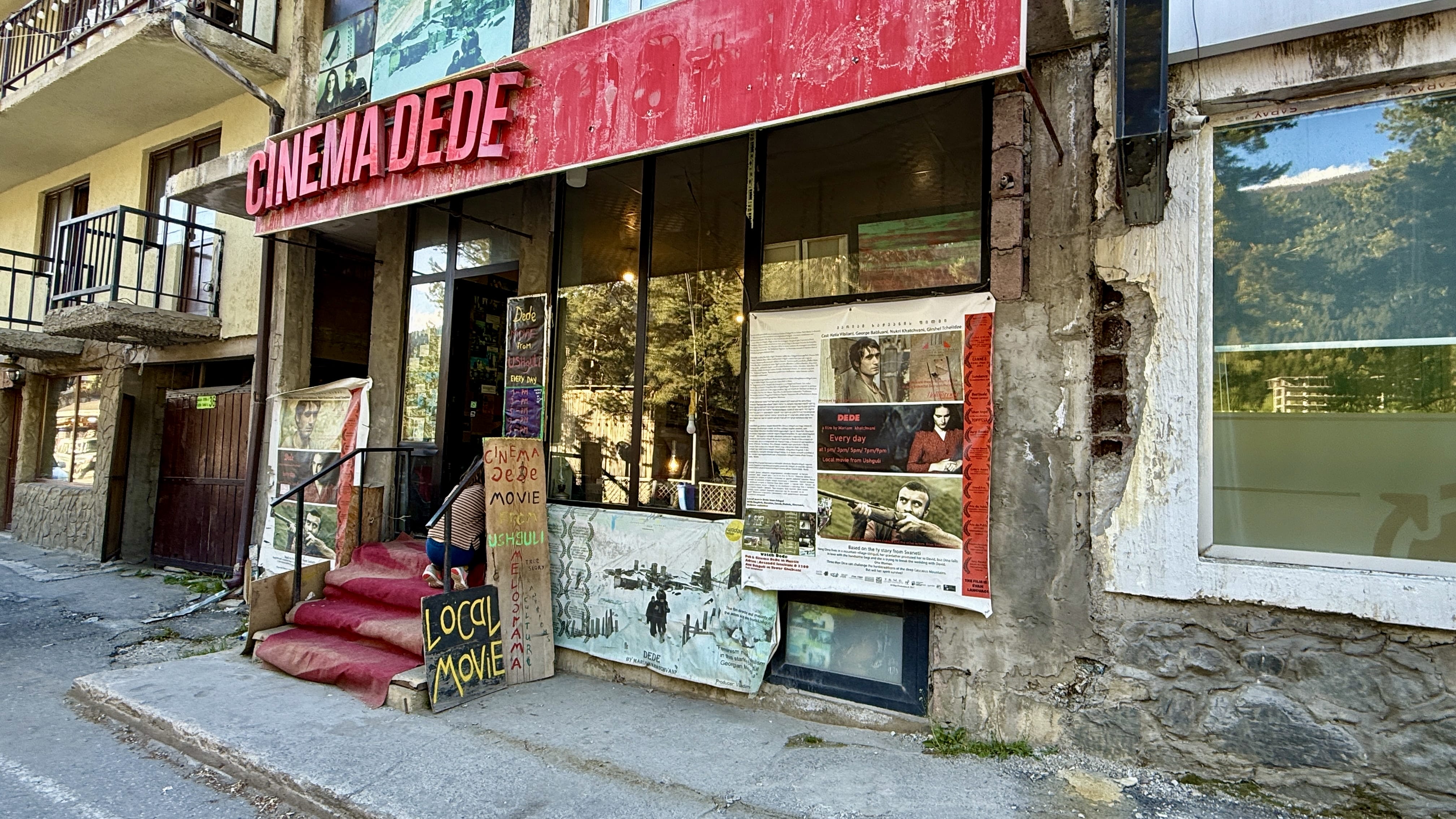
A couple of us walked back toward the hotel after visiting the Svaneti Museum, passing the cinema I’d noticed earlier that morning when I went out for a walk. This time, I finally caught the name painted above the door — Cinema Dede, the same name as the makeshift cinema I’d seen earlier while wandering around in Ushguli.

A woman out front was repainting the sign by hand, “Dede” written in fresh red paint. The showtimes were listed for the entire day: 1, 3, 5, 7, and 9 PM. Obviously, Dede is the only film they show in this area.

Street view of Dede Cinema entrance in Mestia, Svaneti, Georgia, with posters and a red sign above the door.
Dede Cinema in Mestia — the tiny local movie spot.

It was close to 5 PM, and once I got back to the hotel, I couldn’t stop thinking about whether I should see the film or not. Not that I couldn’t watch it at home someday — but how often do you get to watch a movie that was shot in the exact village you stood in that morning? Too good to pass up.

So I skipped dinner and went to the 7 PM screening — and I’m glad I did.

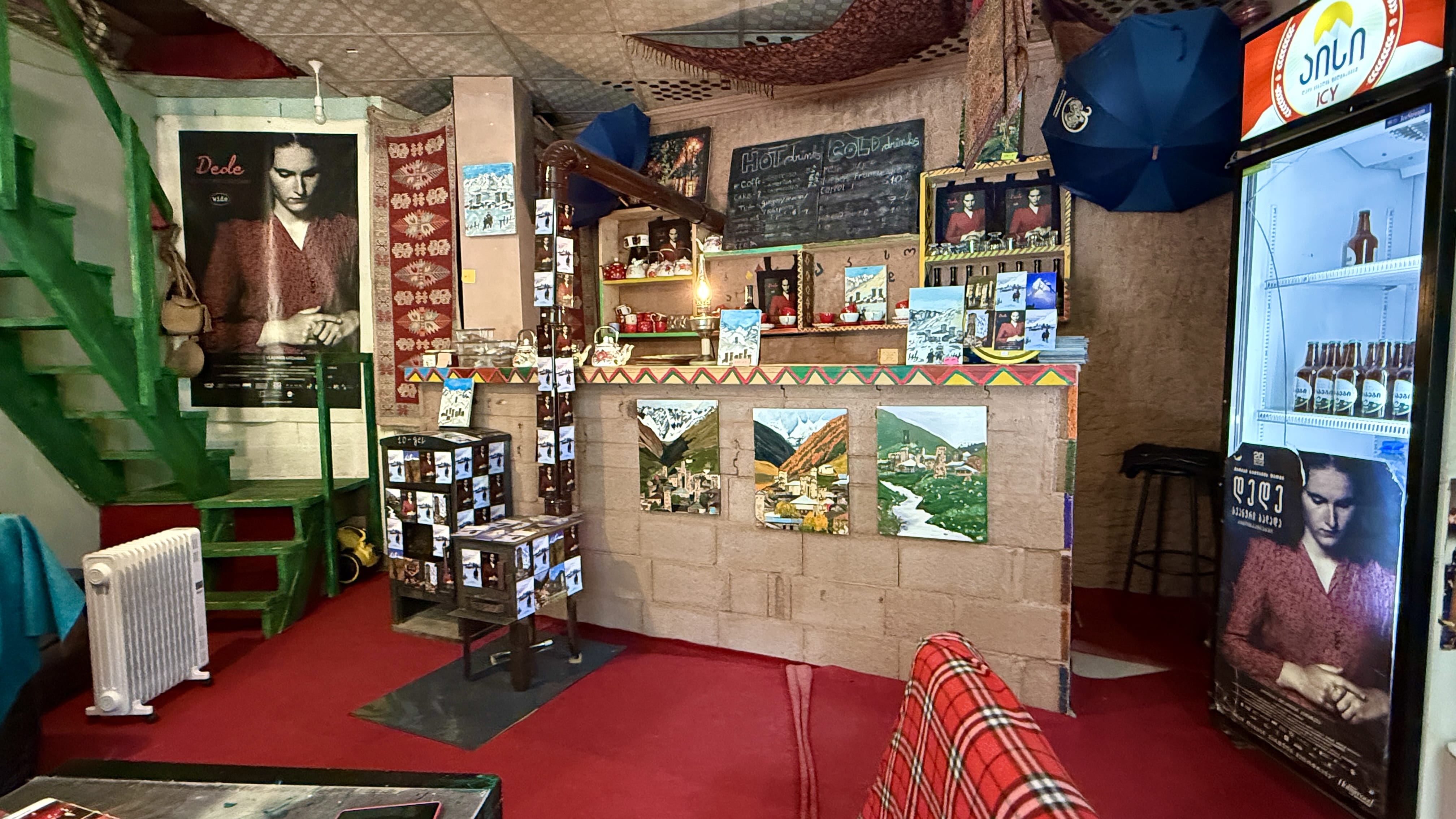
Inside, it felt more like a quirky little art café than an actual theater — travel photos, old posters, mismatched chairs, the whole place held together by charm more than structure. A tiny counter sold coffee, tea, wine, and smoked beer. Only three of us were there for the 7 PM showing—me and a couple.

Interior of Dede Cinema in Mestia with cozy counter, posters, souvenirs, and colorful decor in Svaneti, Georgia.
Inside Dede Cinema, Mestia.

We climbed the steep, painted steps to a small upstairs screening room—basically a tiny space with maybe 20 fold-up canvas chairs (definitely not the cushy theater seats I’m used to). And honestly? It was quirky, and I loved it.

Dinner in Mestia

By the time the movie ended, I was ravenous, having skipped dinner. I walked farther into town and stopped at Laila, a small restaurant plastered with stickers, signatures, flags, and bits of currency sealed under the tabletops. It felt easy and welcoming — exactly what I needed.

I ordered (yes) eggplant with walnut paste and a glass of wine. A few minutes later, the waiter walked over, handed me a folded piece of paper, and said, “This is for you.”

I waited until he walked away before opening it. Inside was a handwritten message:
“You are so beautiful.”

I’m sure I blushed — it was so unexpected, and honestly a little uncomfortable because I had no idea where to look afterward. The waiter kept making very strong eye contact with me, which didn’t help. Still, the food was great, and the wine hit the spot after a long, surreal day.

Day 6 — Mestia to Tbilisi

Before we loaded up in the morning, I took one more walk through Mestia and spotted a statue of Queen Tamar — revered for ruling during Georgia’s Golden Age — standing proudly in the town center.

: Equestrian statue of Queen Tamar in Seti Square, Mestia, Svaneti, Georgia, photographed from a low angle against a blue sky.
Queen Tamar in Seti Square, Mestia.

It was going to be a long drive to Tbilisi—eight hours or so—so after about four hours on the road, we stopped in Zugdidi for lunch. We ate at Diaroni Restaurant, where I had what might have been the best pot of red beans of the entire trip—thick and peppery.

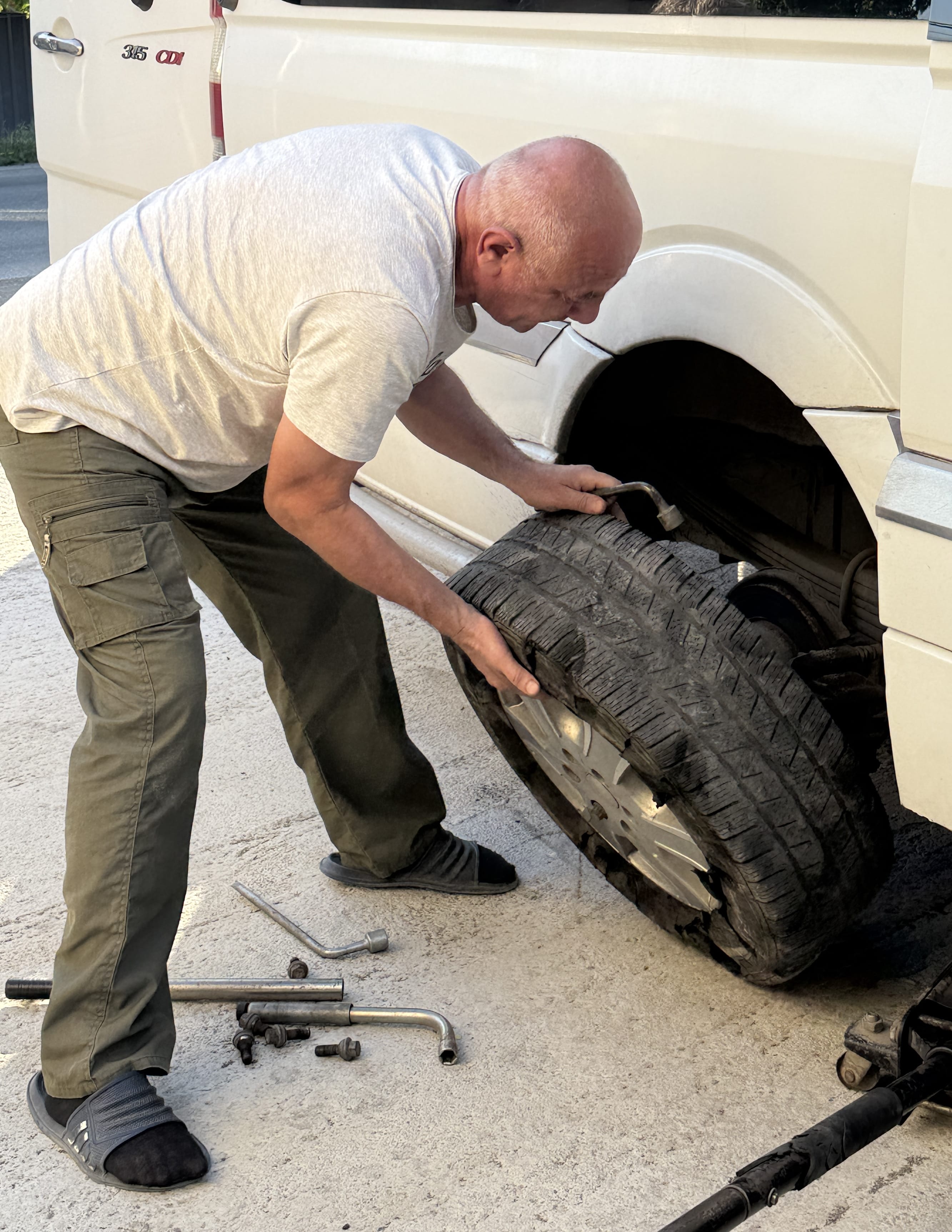
After lunch, we continued toward Tbilisi, and about two hours in, we heard a loud pop. One of the tires had shredded. Our driver kept going anyway, and by the time the wheel finally refused to turn, the tire was destroyed and the rim had taken a beating.

Almost lucky for us — when that happened, unbelievably, we were directly across the street from a small garage. And somehow the driver managed to coax the van — beaten tire and all — just a little farther, pulling straight into the garage.

Within minutes, a handful of people appeared — no discussion, no hesitation. Someone loosened bolts; someone else rolled out a spare. Tools were passed hand to hand. The tire came off in thick, torn strips, the rim scraped and bent from being driven on far too long. It was messy and loud and slightly chaotic — but also funny, efficient, and strangely heartwarming to watch.

And since we were in Surami—the town where the flat happened—we stopped again for nazuki, the local sweet bread. Just as soft, warm, and tasty as the last time we had it, this loaf had even more raisins. What a treat.

By the time we returned to the Old Metekhi Hotel in Tbilisi (the same hotel where we had stayed at the beginning of our time in Georgia), I was tired but not done — I ended up going out for a glass of wine with a few people from the group.

Much of the day was driving, but the little moments — chocolate-covered apricots, roadside help, warm bread — kept it interesting.

Day 7 — Exploring Tbilisi

Today was all about exploring Tbilisi.

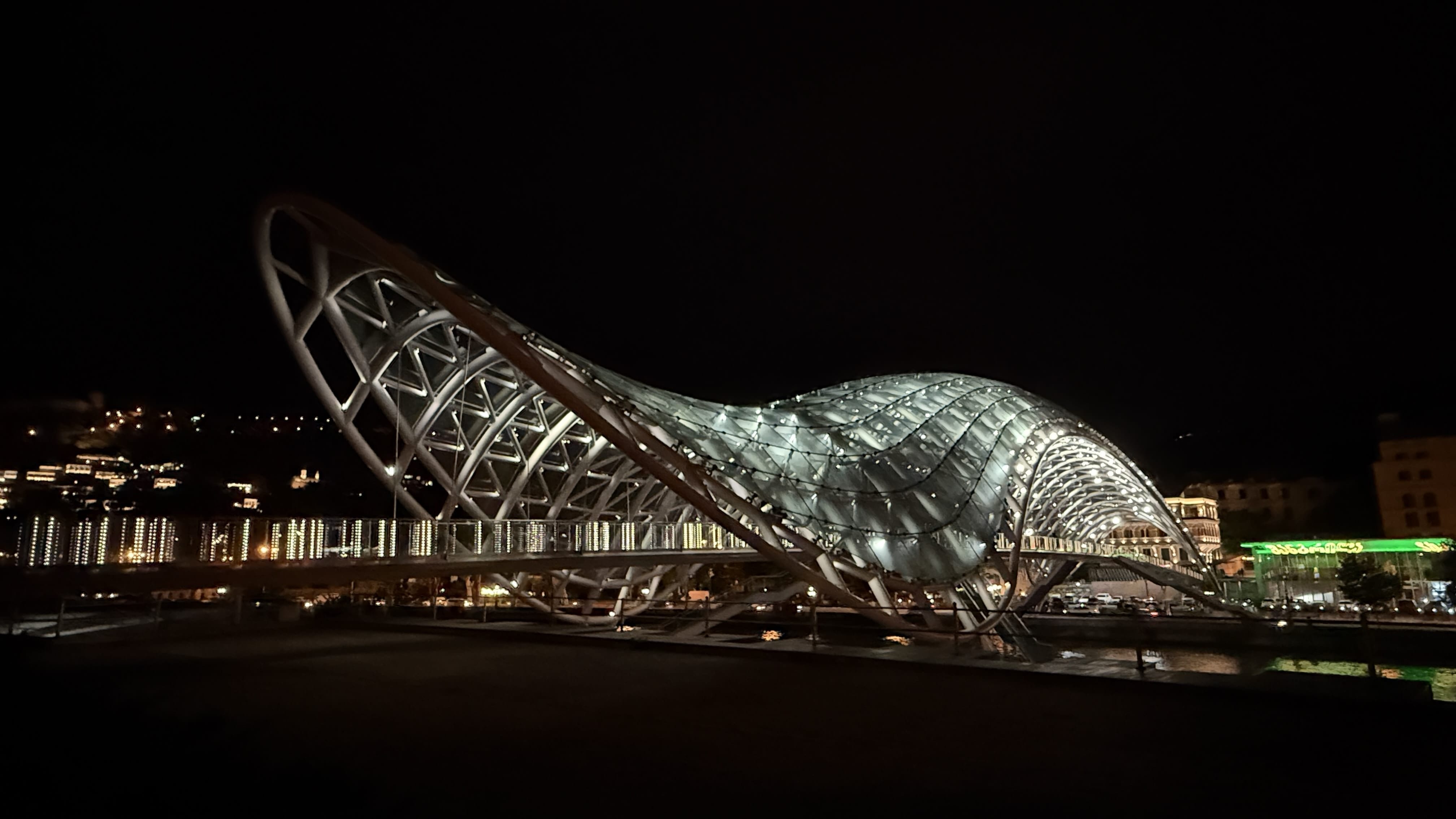
From our hotel, it was an easy walk to Metekhi Church and the statue of King Vakhtang. We crossed the Bridge of Peace, rode the cable car up from Rike Park, passed the steel “tree,” and made our way toward the Mother of Georgia statue (Kartvlis Deda). Somewhere along the way, I bought strawberries from a street vendor — so ripe and sweet.

Modern glass-and-steel Bridge of Peace spanning the Kura River in Tbilisi, Georgia
Bridge of Peace

We cut through Heydar Aliyev Park and into Abanotubani, one of the city’s oldest quarters, passing the domed sulfur bathhouses along the way. Trying a sulfur bath was something I’d been looking forward to in Georgia. After walking past so many in Abanotubani, I booked a visit to Orbeliani Baths for later that day — I wrote about the full experience here.

Domed sulfur bathhouses in Abanotubani, the historic bath district of Tbilisi, Georgia
Walking through Abanotubani, where Tbilisi’s sulfur baths rise straight out of the street.

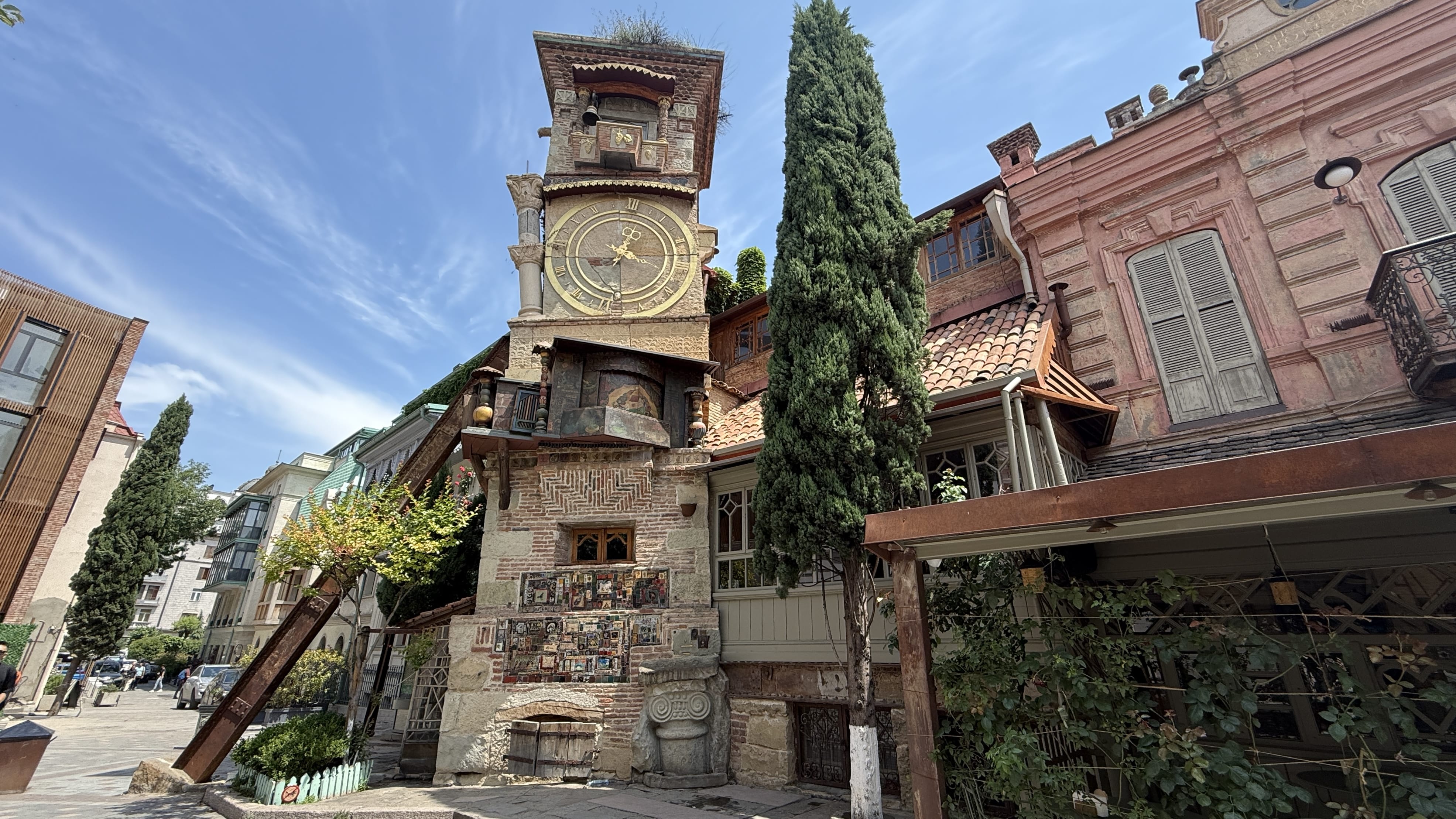
We visited the Tbilisi History Museum/Caravanserai, admired Sioni Cathedral, and walked along Iona Shavteli Street past the (leaning) Clock Tower of the marionette theater.

Leaning clock tower of the Gabriadze Puppet Theatre in Tbilisi, Georgia
The crooked little clock tower — a popular landmark.

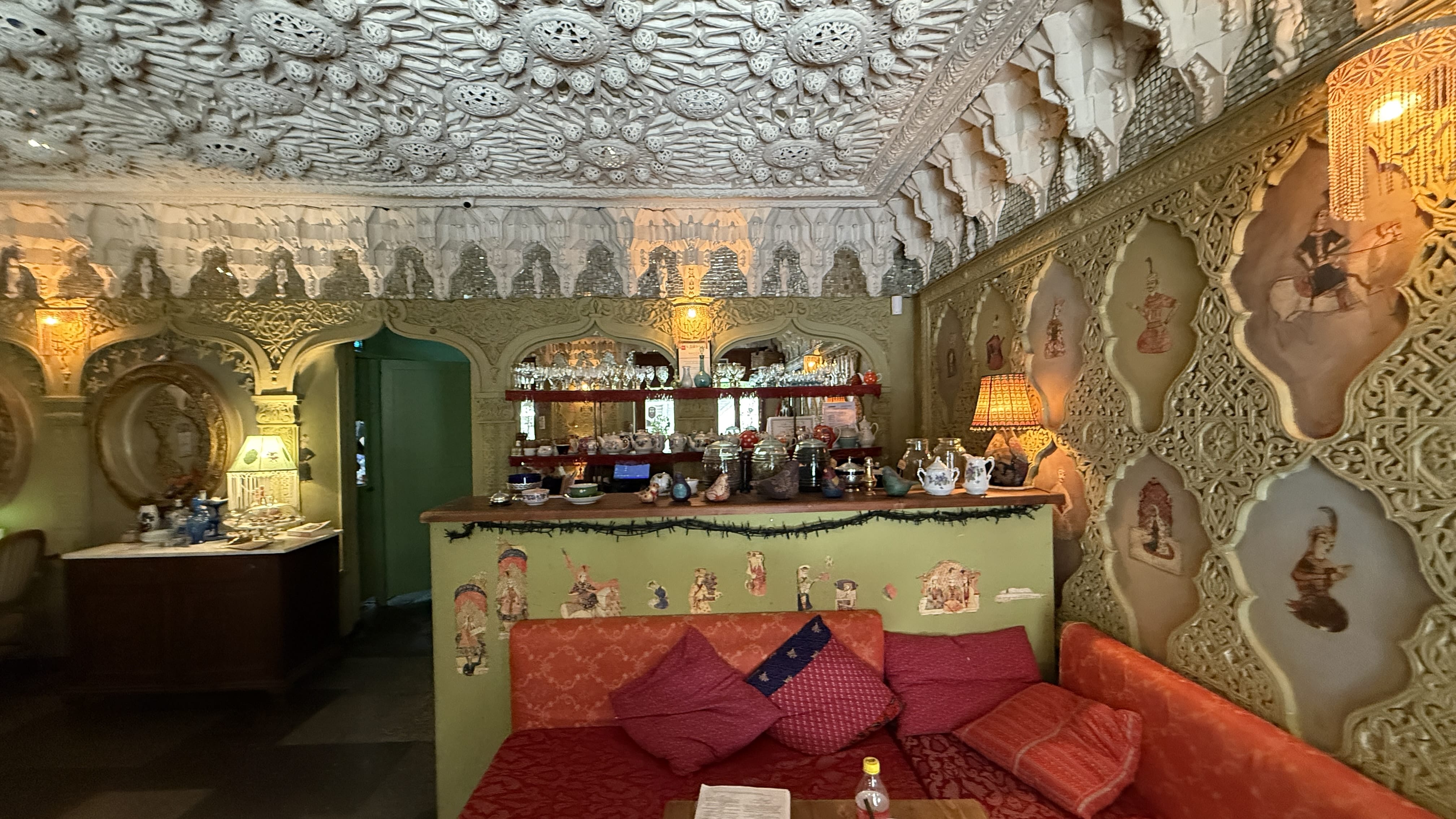
Lunch was at Lilea, one of the most visually interesting places I ate in Tbilisi. The moment I stepped inside, it felt like someone’s ornate sitting room — part tea house, part dream sequence. The ceiling was covered in intricate, lace-like plasterwork, and the walls lined with hand-painted Georgian figures framed inside gold, arched panels. Lamps with beaded fringe glowed in the corners, and shelves behind the bar crowded with mismatched teapots and old glass jars.

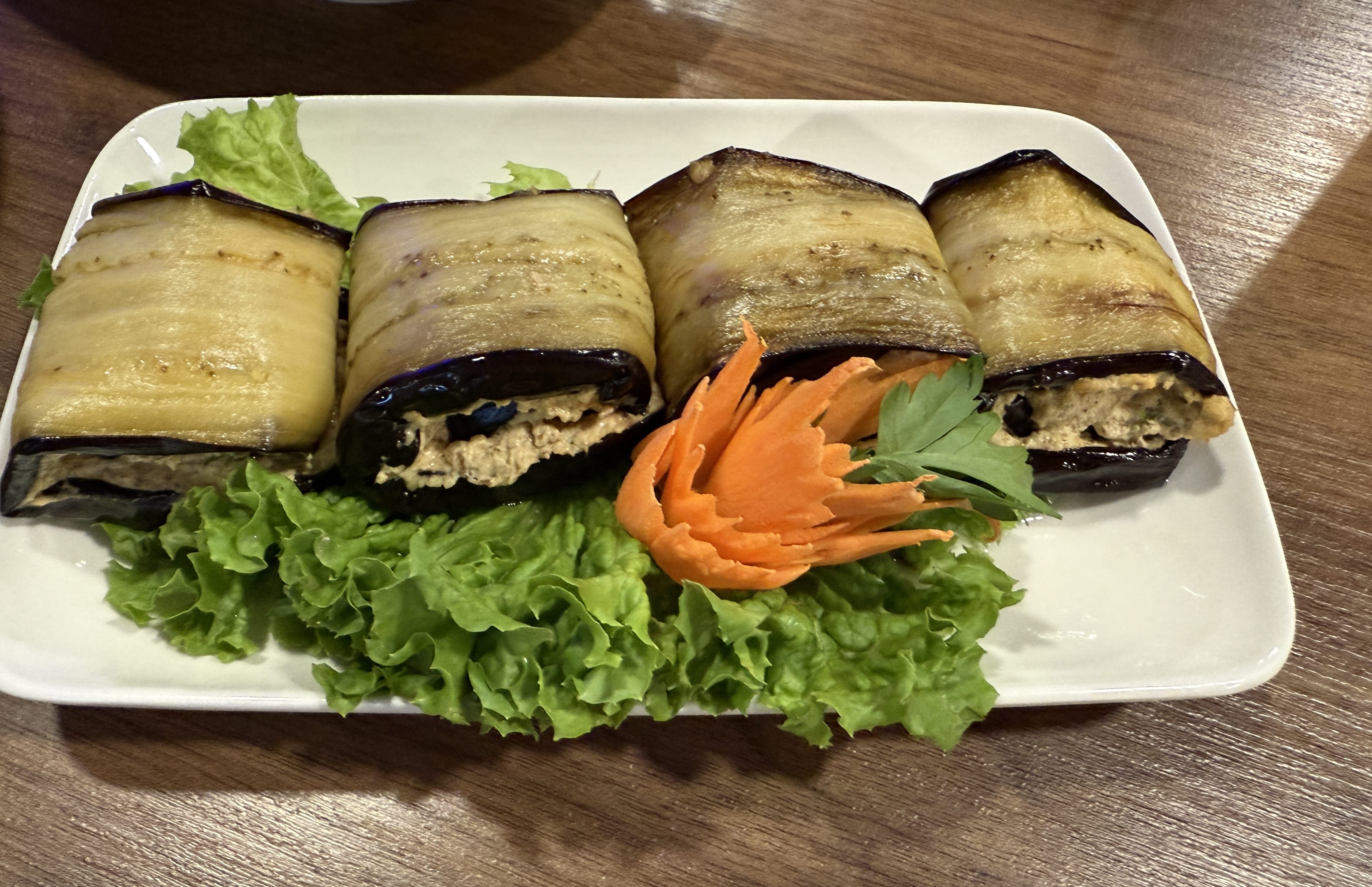
I sat on a red-cushioned bench and ordered eggplant roll-ups (again). Lilea’s version was a bit different from the others I’d had around Georgia — lighter, not as walnut-heavy, almost more delicate. Not better or worse, just their own spin.

At the bottom of the bill, in tiny type, was a line I almost missed:
“Fact check: 20% of Georgian territory is occupied by Russia.”
A quiet reminder that history is always nearby, even at lunch.

Ornate interior of Lilea restaurant in Tbilisi with carved plaster ceiling and decorative walls
Inside Lilea — part tea house, part dream sequence, and completely unforgettable.

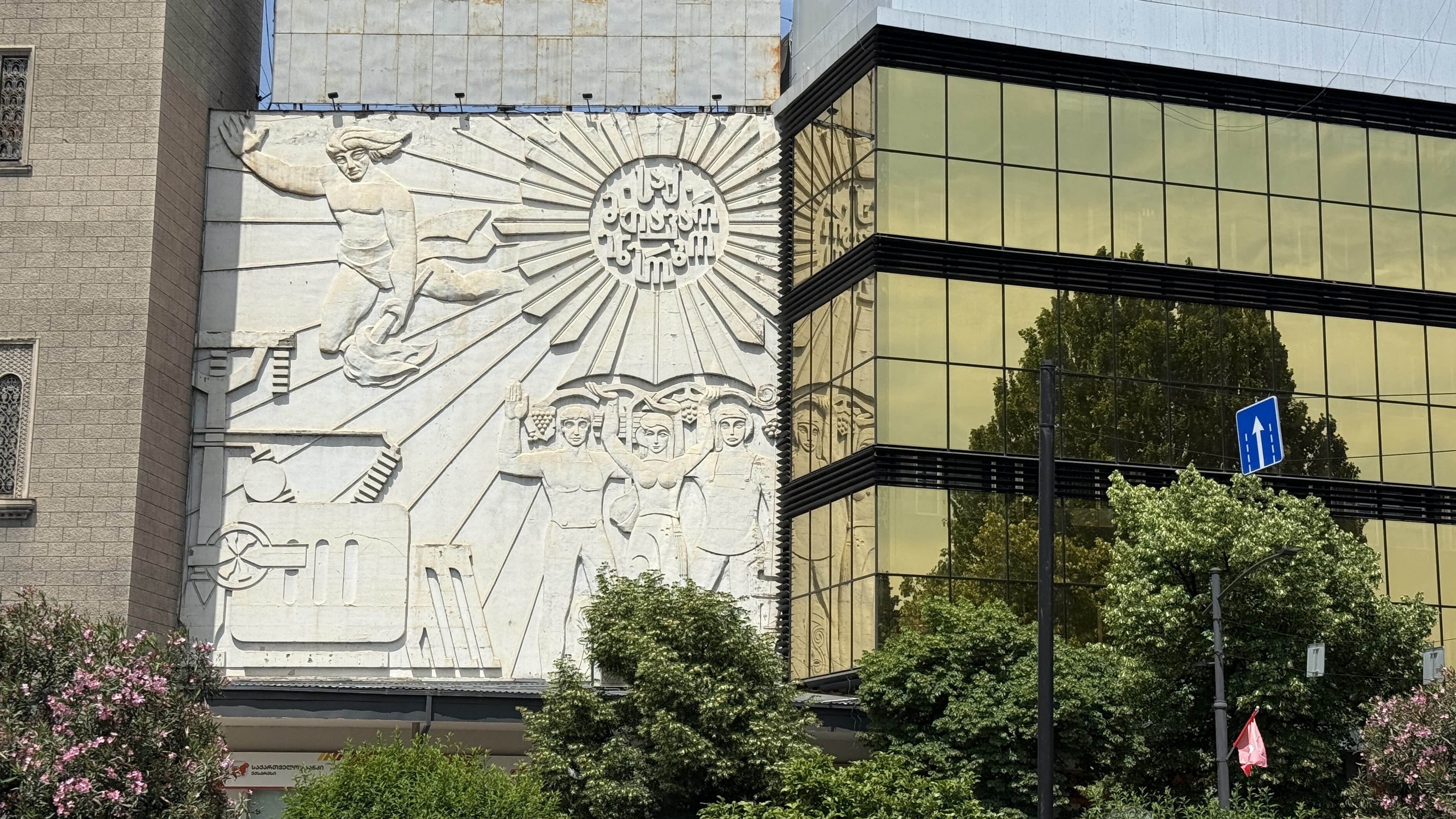
In the afternoon, I wandered through an older pocket near Alexander Pushkin Street, where a few Soviet-era buildings haven’t been smoothed over or restored. I came across a striking bas-relief at 2 Niko Nikoladze Street. When I’m in places where the Soviet presence is still visible, I’m always on the lookout for details like this.

Soviet-era bas-relief sculpture on a building facade in Tbilisi, Georgia
A reminder of Tbilisi’s Soviet past — still part of the everyday streetscape.

I stopped inside the Kashveti St. George Church, located across the street from the former Parliament building, then walked over to the funicular and rode it up to Mtatsminda Park — a hilltop park with open views, cafés, amusement-type rides, and plenty of benches for sitting.

Tbilisi has statues everywhere — historic, quirky, and sometimes unexpected. One of the most surprising is a statue of Ronald Reagan in Rike Park. It felt random at first, but it’s less about pop culture than politics: a nod to Georgia’s post-Soviet identity and its long-standing desire to align with the West.

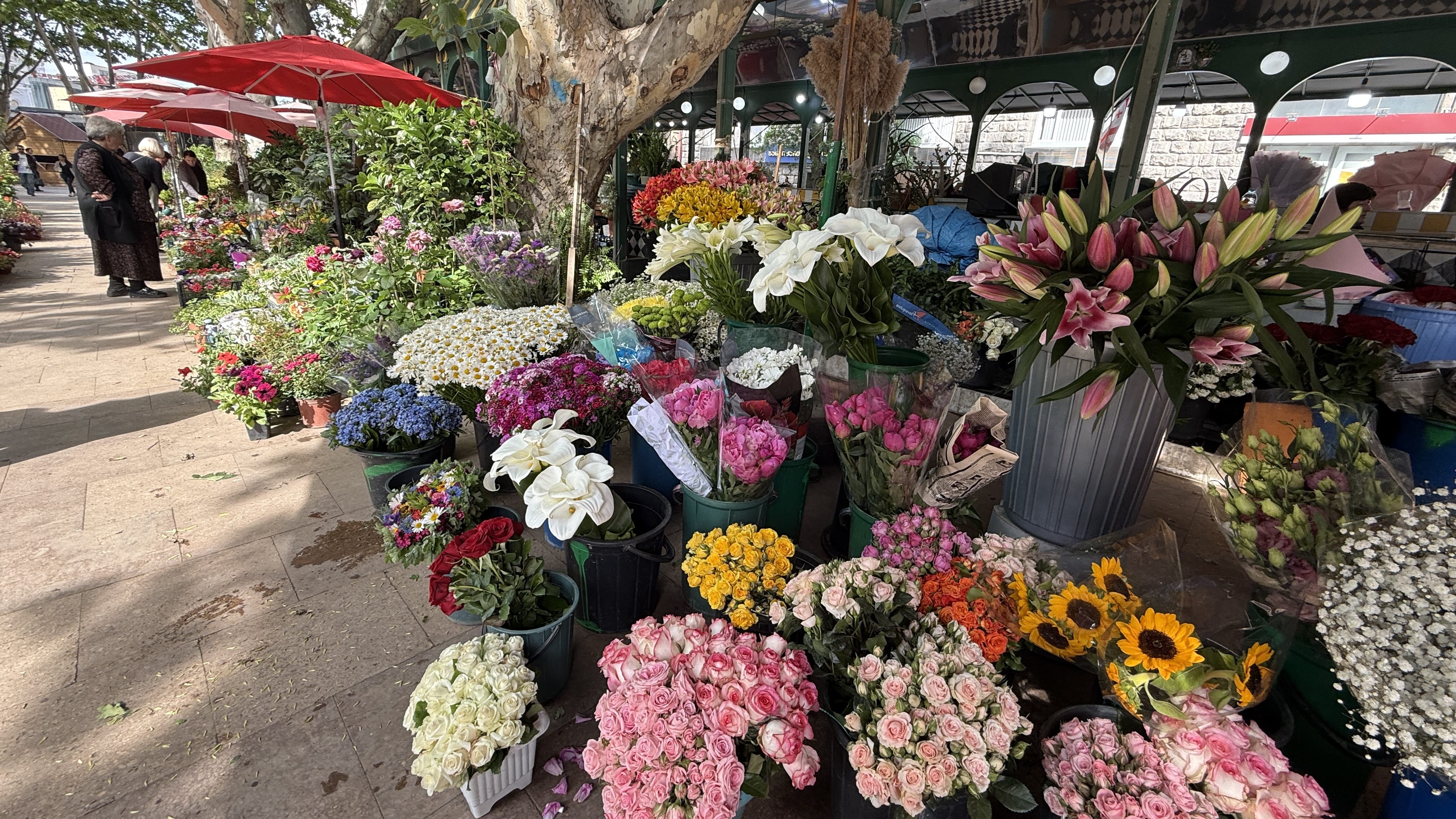
I ended the afternoon at Orbeliani Square, where a massive flower market stretches along the street, buckets overflowing with lilies, roses, and peonies.

Flower market at Orbeliani Square in Tbilisi with colorful bouquets and vendors
Buckets of flowers spilling onto the street at Orbeliani Square.

Before my sulfur bath appointment, I headed back to the hotel for a glass of wine and a snack. After the bath, I took a quick shower and slowly made my way back, thinking about how full and beautiful this week had been.

Tomorrow I’d be saying goodbye to Georgia and starting the journey toward the Armenian border, marking the final week of my time in the Caucasus.

After a week of mountains, villages, and quiet towns, I was leaving in love with Georgia — easy to walk, full of great food, and endlessly interesting.

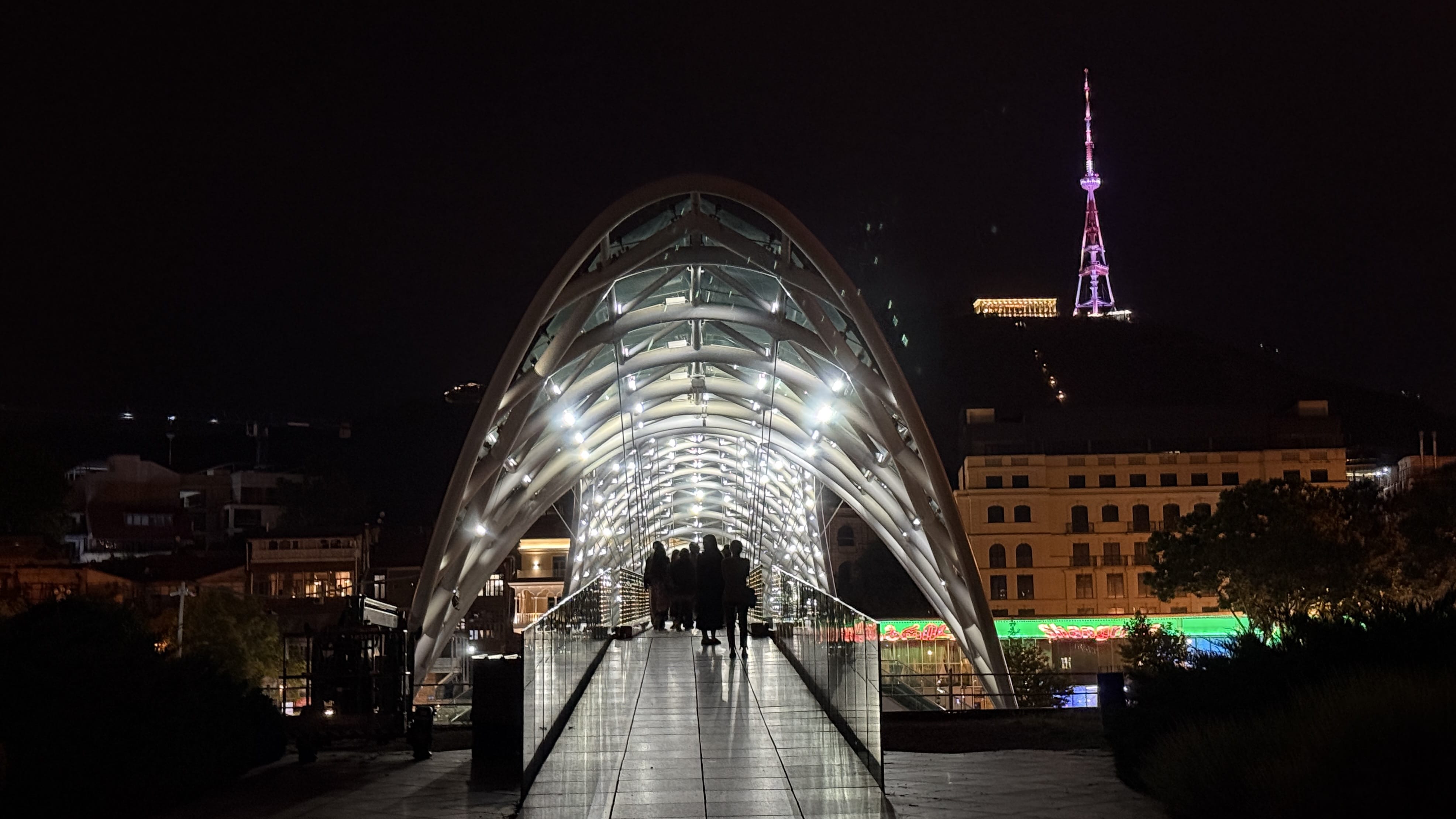
Illuminated Bridge of Peace at night with people walking across in Tbilisi, Georgia
The Bridge of Peace lit up after dark, with Mtatsminda glowing in the distance.

Related posts:

JoAnne Cross headshot

About the Author

Hi, I’m JoAnne—writer, wanderer, and lover of places that surprise me. I’ve traveled to 60+ countries (and counting), usually with a camera in one hand and a notebook in the other. I’m drawn to mosaics, markets, and mountains, and I write to remember what moved me. When I’m not traveling, I’m working on my blog Travels Afoot, trying new creative projects, or planning my next adventure.
📍 More about me | ✈️ Explore destinations