
7 Days in Georgia – Part 1: Tbilisi, Sighnaghi & Kutaisi (Days 1–3)

I spent three weeks in the Caucasus—Azerbaijan, Georgia, and Armenia—traveling with Native Eye, a small-group cultural travel company. This post covers Part 1 of my time in Georgia (Week 2 of the trip), following the first leg of my 7 Days in Georgia itinerary from Tbilisi to wine country and into the mountains.

After a week in Azerbaijan, it was time to cross into Georgia—the second leg of my journey through the Caucasus. If Azerbaijan had been all misty mountains, stained-glass palaces, and long winding drives, Georgia promised something different: vineyards, monasteries, mountain passes, and an intriguing capital city.

Trip Snapshot (Days 1–3)
  • Route: Sheki → Lagodekhi Border → Sighnaghi → Tbilisi → Mtskheta → Stepantsminda (Kazbegi) → Gudauri → Ananuri → Gori → Uplistsikhe → Surami → Kutaisi
  • Where I stayed: Old Hotel Metekhi (Tbilisi) • Hotel Carpe Diem (Gudauri) • Boutique Hotel Argo (Kutaisi)
  • Highlights: Okro Winery + qvevri cellar • Gergeti Trinity Church hike • Soviet Friendship Monument • Ananuri Fortress frescoes • Uplistsikhe cave town • Surami nazuki bread
  • Food worth ordering again: eggplant with walnut • chvishtari • Imeruli khachapuri • churchkhela (for the road)
  • Quick heads-up: the Georgian Military Highway can mean slow traffic (especially trucks), and Gergeti is high enough to feel it.

Day 1 — Crossing Into Georgia

We left Sheki in the morning and drove west toward the Lagodekhi border. After getting stamped out of Azerbaijan, we crossed the strip of no man’s land on foot and lined up at Georgian passport control. Just like that, we were in Georgia.

A Little About Sighnaghi

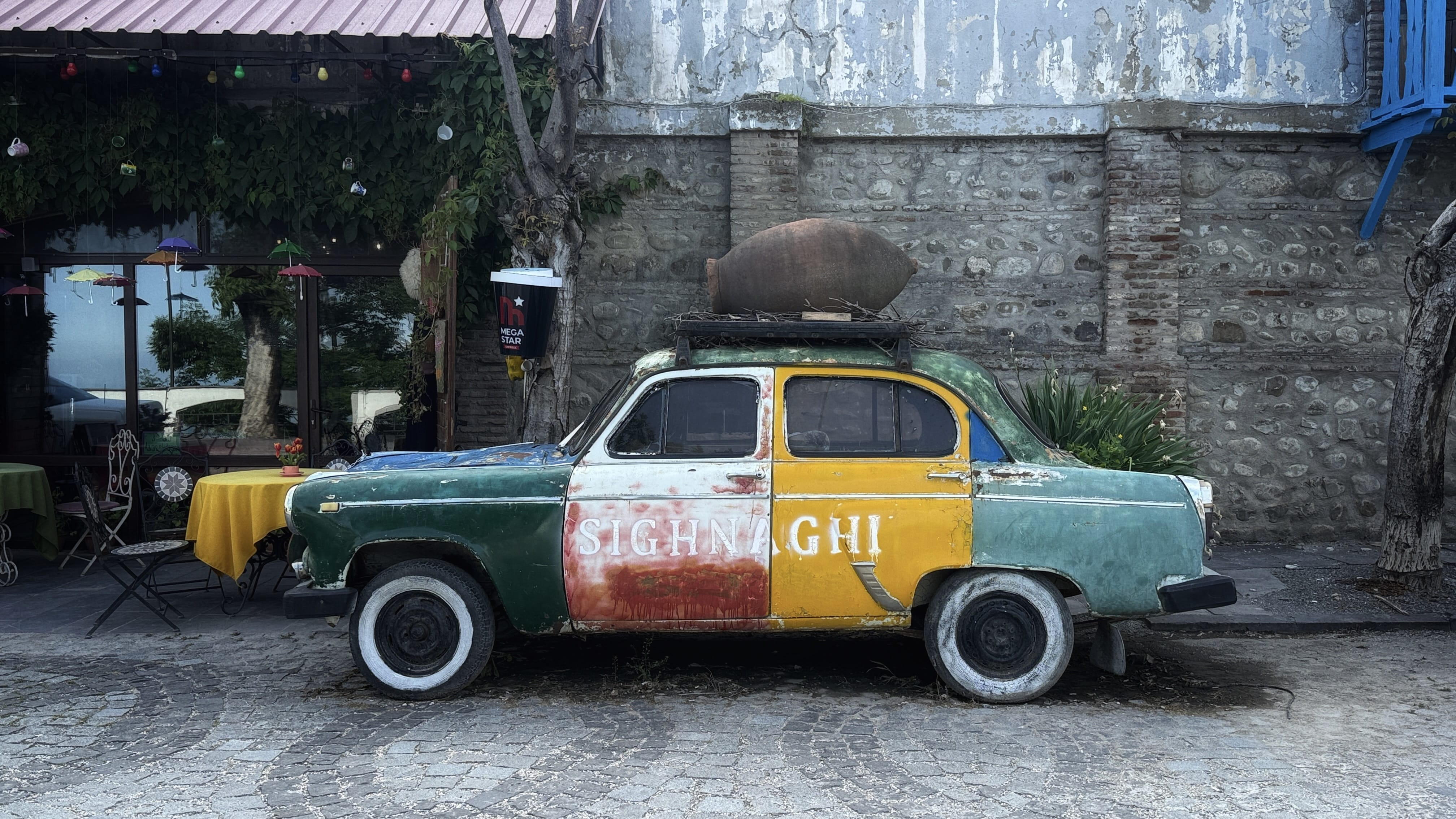
Vintage Soviet-era car painted green, yellow, and red parked in Sighnaghi, Georgia, along a cobblestone street during a 7 days in Georgia itinerary.
Vintage Soviet-era car .

A new van and our new Georgian guide were waiting on the other side. She was friendly and easygoing, and I could tell right away this was going to be a good week. The drive to Tbilisi takes about two to three hours, but we broke it up with a stop in Sighnaghi, a hilltop town in the Kakheti wine region.

Sighnaghi is known for its cobbled streets, wooden balconies, and sweeping views over the Alazani Valley. Parts of its 18th-century defensive walls still circle the town. It’s earned the nickname “City of Love” partly because its marriage-registration office was once open 24/7—a romantic little legend that still circulates, whether it’s strictly true anymore or not. It’s one of those places made for slow wandering.

Okro’s Winery

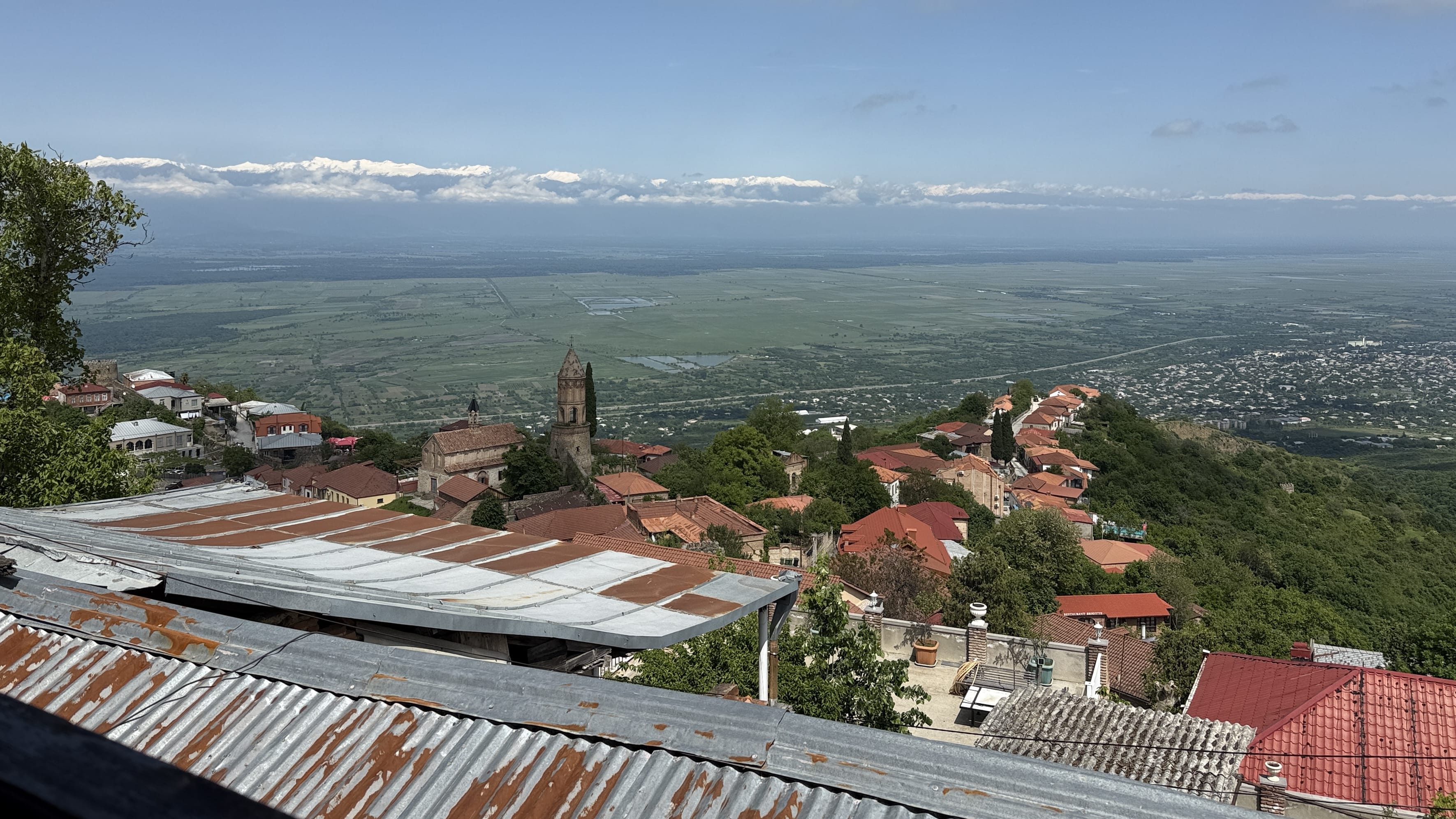
 We stopped in Sighnaghi for lunch at Okro Winery Restaurant & Cellar, a family-run place. It was a beautiful but cool afternoon, and luckily, they had little green fleece blankets at the tables that I wrapped around myself. From the terrace, we looked out over the red roofs of town and across the Alazani Valley, with the Caucasus fading into the distance.

7 Days in Georgia itinerary: view over Sighnaghi and the Alazani Valley
Looking out over Sighnaghi and the Alazani Valley.

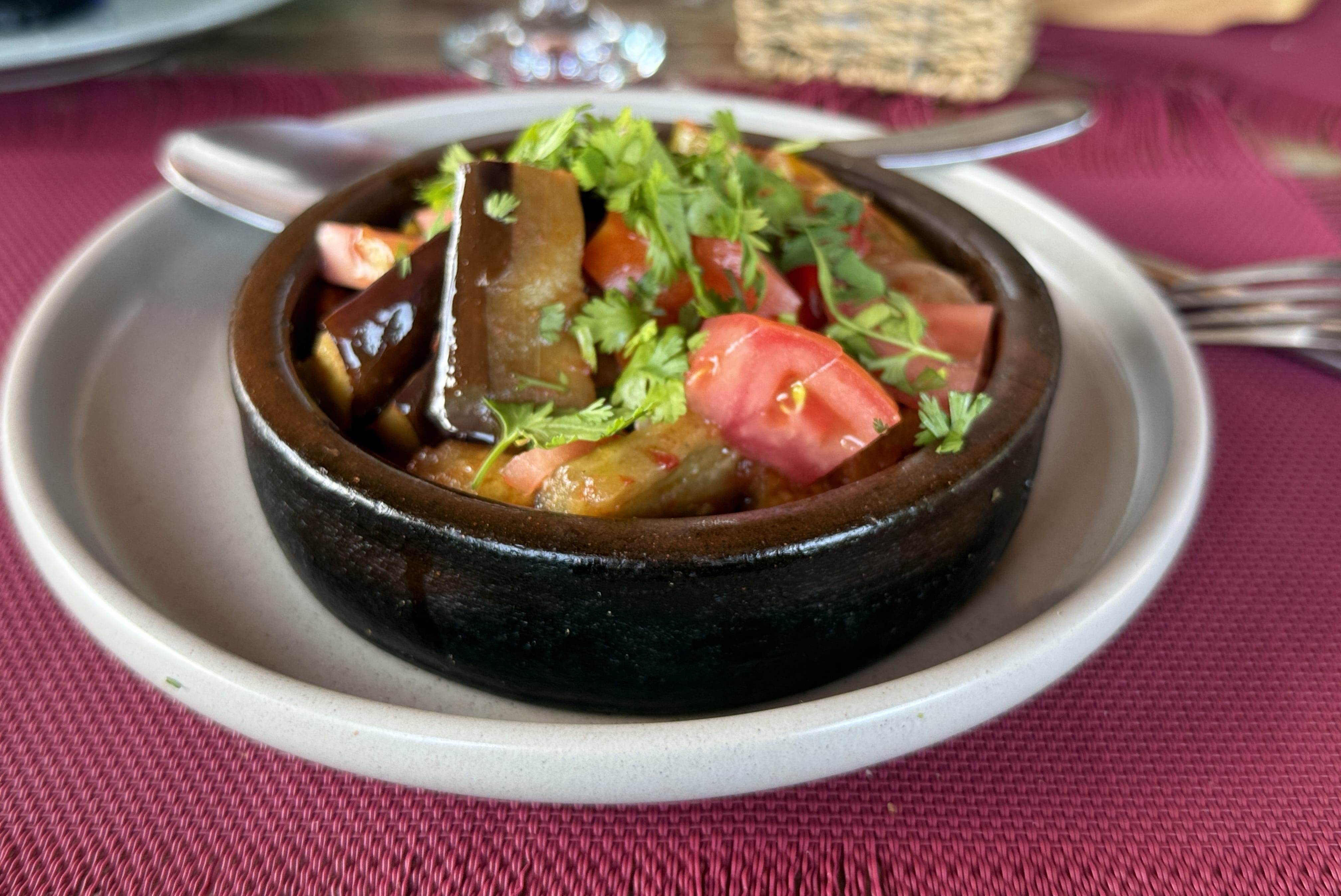
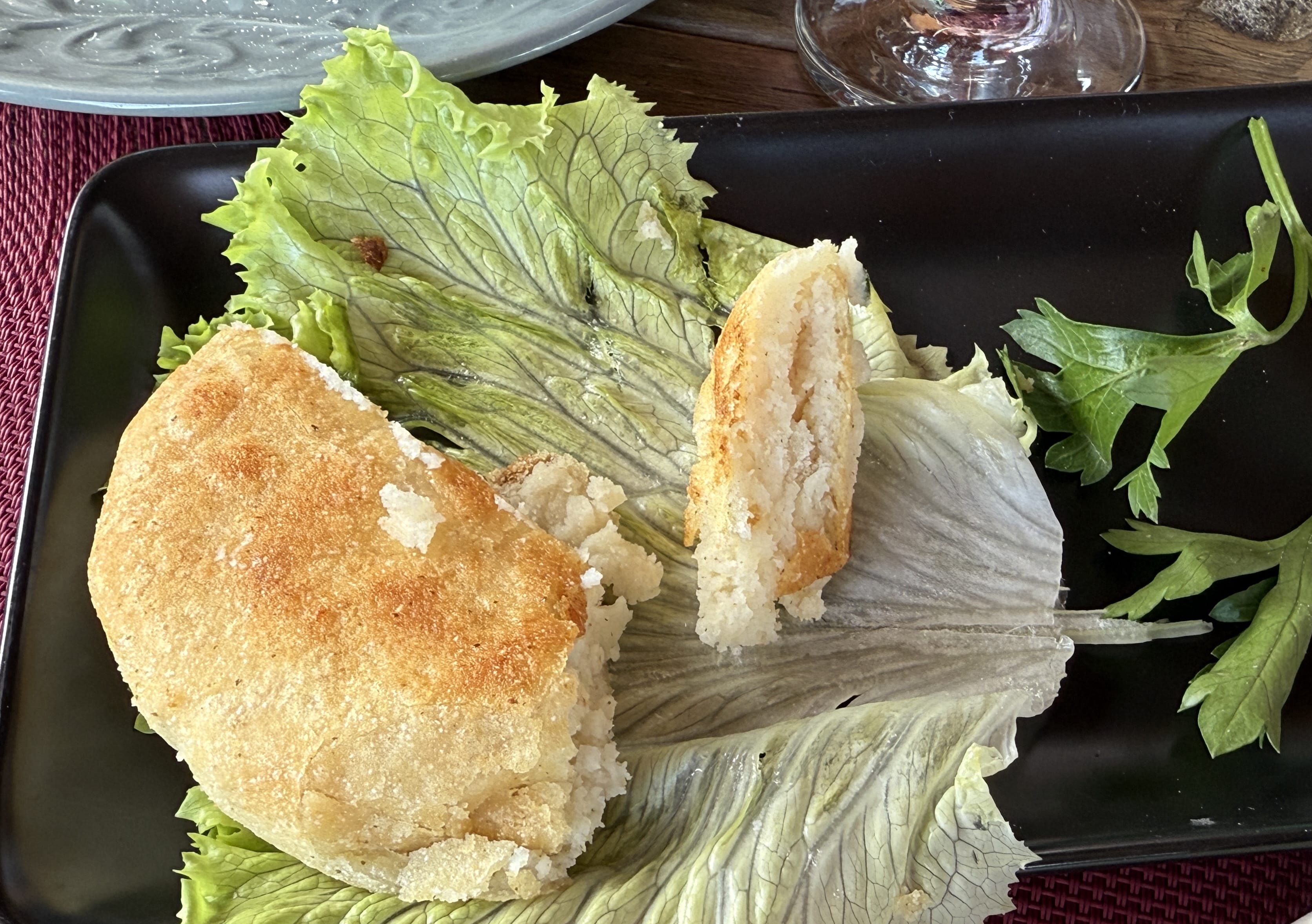
Lunch was simple and excellent: Georgian cheese cornbread (so good) and a roasted vegetable stew—Georgian style (whatever that means). The restaurant had a solid menu with plenty of vegetarian options, and what I ordered was genuinely delicious. That cornbread, in particular, was so good it could be dangerous.

While we ate, we sampled several of Okro’s natural wines—white, rosé, and red. They were unfiltered and a little earthy, which is what Kakheti is known for. We ended with a shot of chacha, Georgia’s grape brandy, which felt equal parts tradition and dare.

Bottles of natural Georgian wine at Okro Winery in Sighnaghi, Kakheti wine region
The line up of wines in our tasting.

Afterward, we went down into the cellar to see the qvevri, the large clay vessels buried in the ground where wine ferments. You mostly see the openings at floor level. It’s a winemaking method that’s been used in Georgia for thousands of years and hasn’t changed much.

Wandering Through Sighnaghi

After lunch, we wandered through Sighnaghi, passing small shops and tables set along the street where vendors sold locally made goods. 

Handmade felt dolls and animals displayed by a local vendor in Georgia, photographed during a 7 days in Georgia itinerary.
Handmade felt dolls and if you look close you can spot the vendor as well.

Before long, we reached a preserved section of the town’s defensive wall, built during the reign of King Erekle II as part of a larger fortification system. The walls once wrapped around Sighnaghi for several kilometers.

18th-century defensive walls in Sighnaghi, Georgia, part of the historic hilltop town.
Sighnaghi’s old defensive walls.

Wine Ice Cream

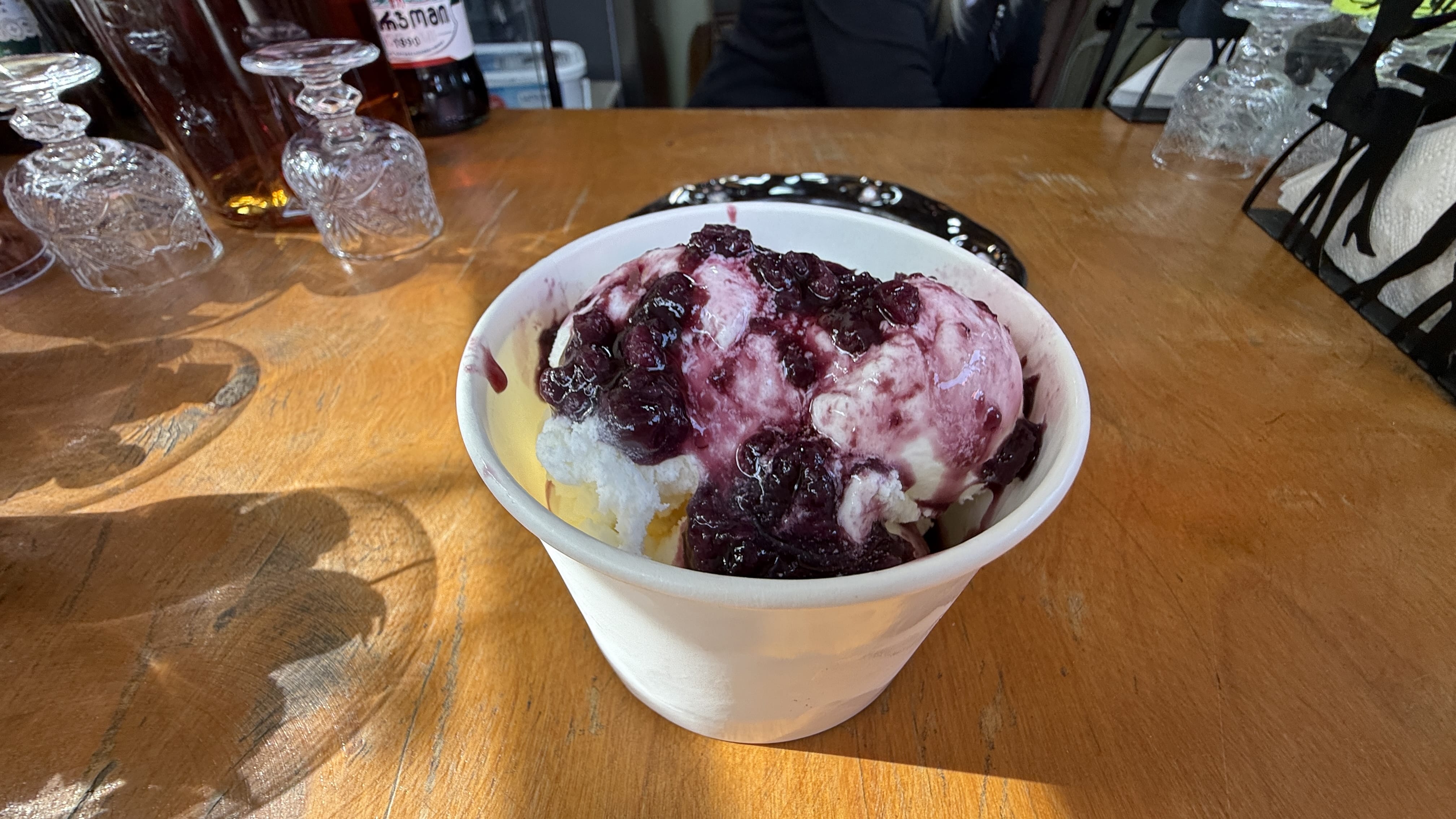
More than a few cafés and stands in Sighnaghi were advertising wine ice cream, which isn’t something you see every day. I couldn’t resist. I bought mine from a tiny spot called Café Medea. A scoop of vanilla came topped with a swirl of tart red wine sauce—cold, creamy, slightly boozy, and much better than I expected.

Arrival in Tbilisi

We drove into Tbilisi from the villages and straight into the city—old streets, wooden balconies, churches, and modern glass buildings packed tightly together.

It shouldn’t work, but it does.

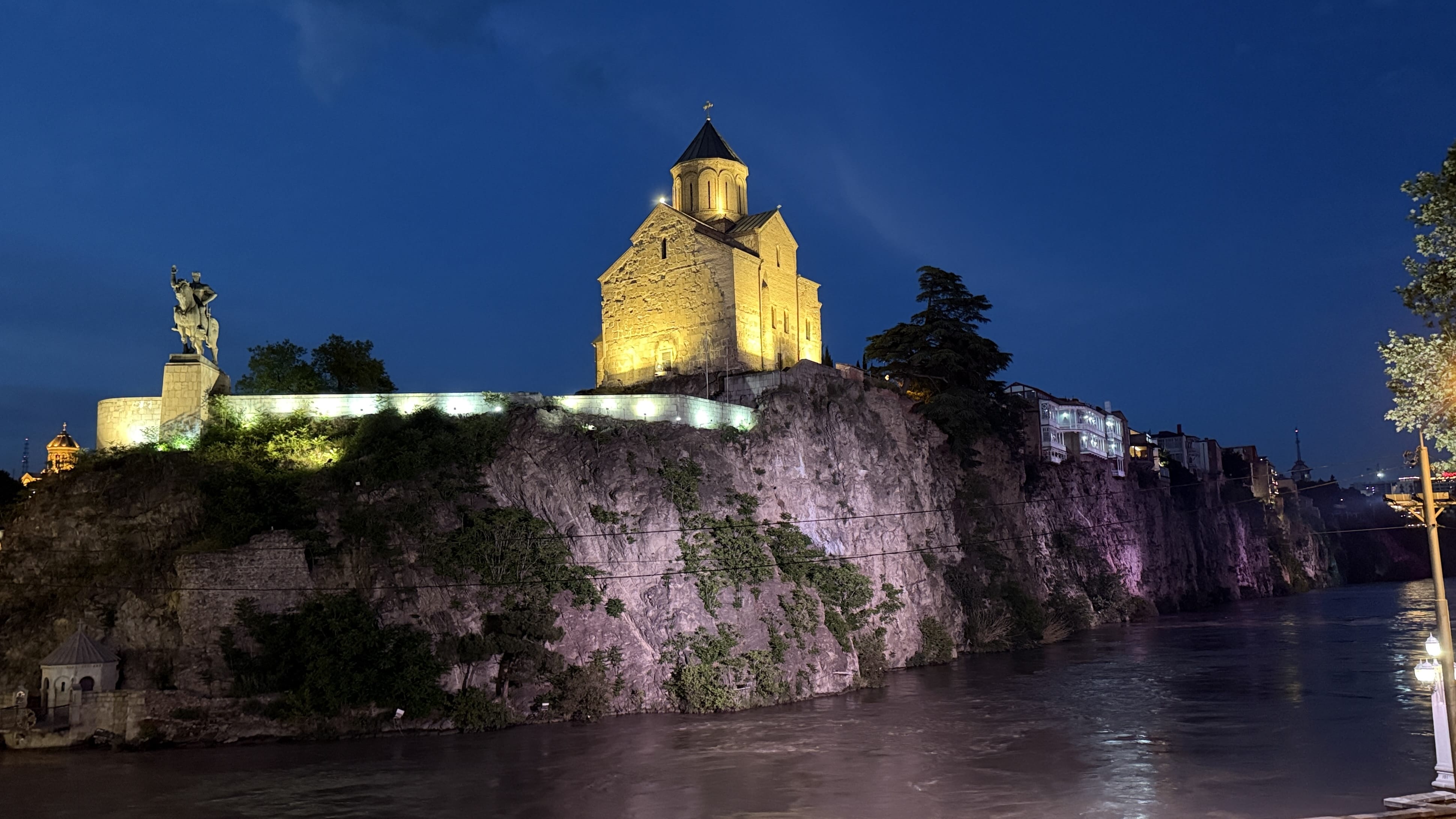
Our hotel, Old Hotel Metekhi, sat right on the Kura River in the old town. The building was covered in ivy, with wrought-iron balconies and a slightly faded elegance I immediately loved. The views were spectacular: the river below, the jumble of rooftops, and the historic Metekhi Church glowing on the cliff across the water.

My room was on the bottom floor—good thing, since there was no elevator—and had double doors opening onto a balcony hanging over the river. I stood there for a while, listening to the water and watching boats pass beneath the cliffs, before heading back out.

That evening, I walked across the bridge into the old town. Narikala Fortress glowed on the hill, churches were lit up, and the river reflected everything twice over. In Gorgasali Square, I found a perfect spot to sit and listen to street performers—drummers, singers, and a small band playing traditional music—as people strolled past with ice cream and plastic cups of wine.

Metekhi Church illuminated at night above the Kura River in Tbilisi, Georgia
Metekhi Church lit up at night

Day 2: Tbilisi and Beyond

The next morning we left Tbilisi and headed north to Mtskheta, Georgia’s old capital and an important religious center.

View from a window overlooking Tbilisi’s Old Town and the Kura (Mtkvari) River, photographed during a 7 days in Georgia trip.
View from my window overlooking Tbilisi’s Old Town and the Kura River.

Jvari Monastery

Our first stop was Jvari Monastery, a 6th-century stone church perched high on a hill where the Aragvi and Mtkvari rivers meet. The church is modest—thick walls, a simple cross on top—but the setting is what makes it special.

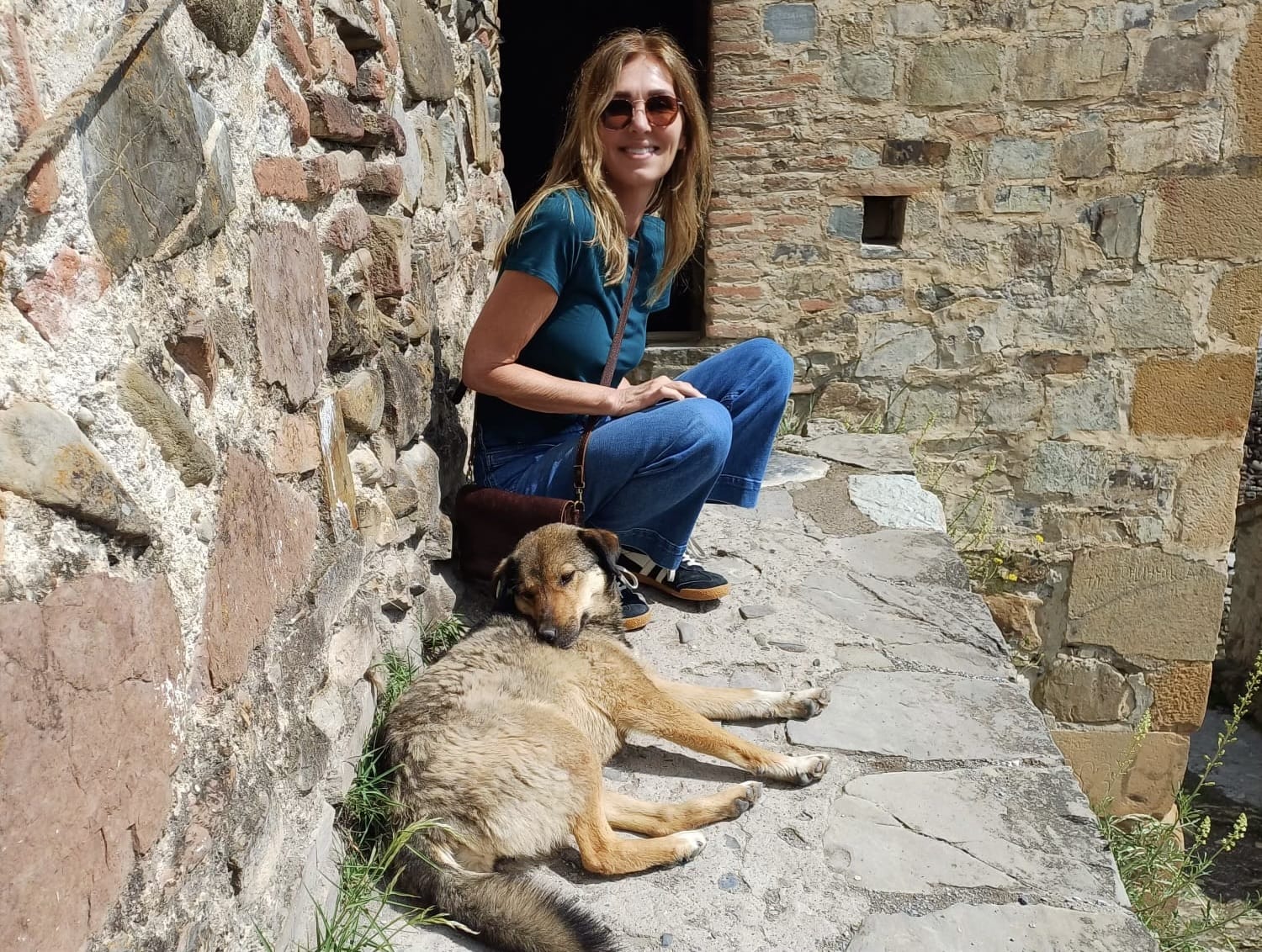
Dog resting near Jvari Monastery in Mtskheta, Georgia, with the surrounding hills and monastery grounds in the background
A resident dog lounging in front of Jvari Monastery.

Svetitskhoveli Cathedral

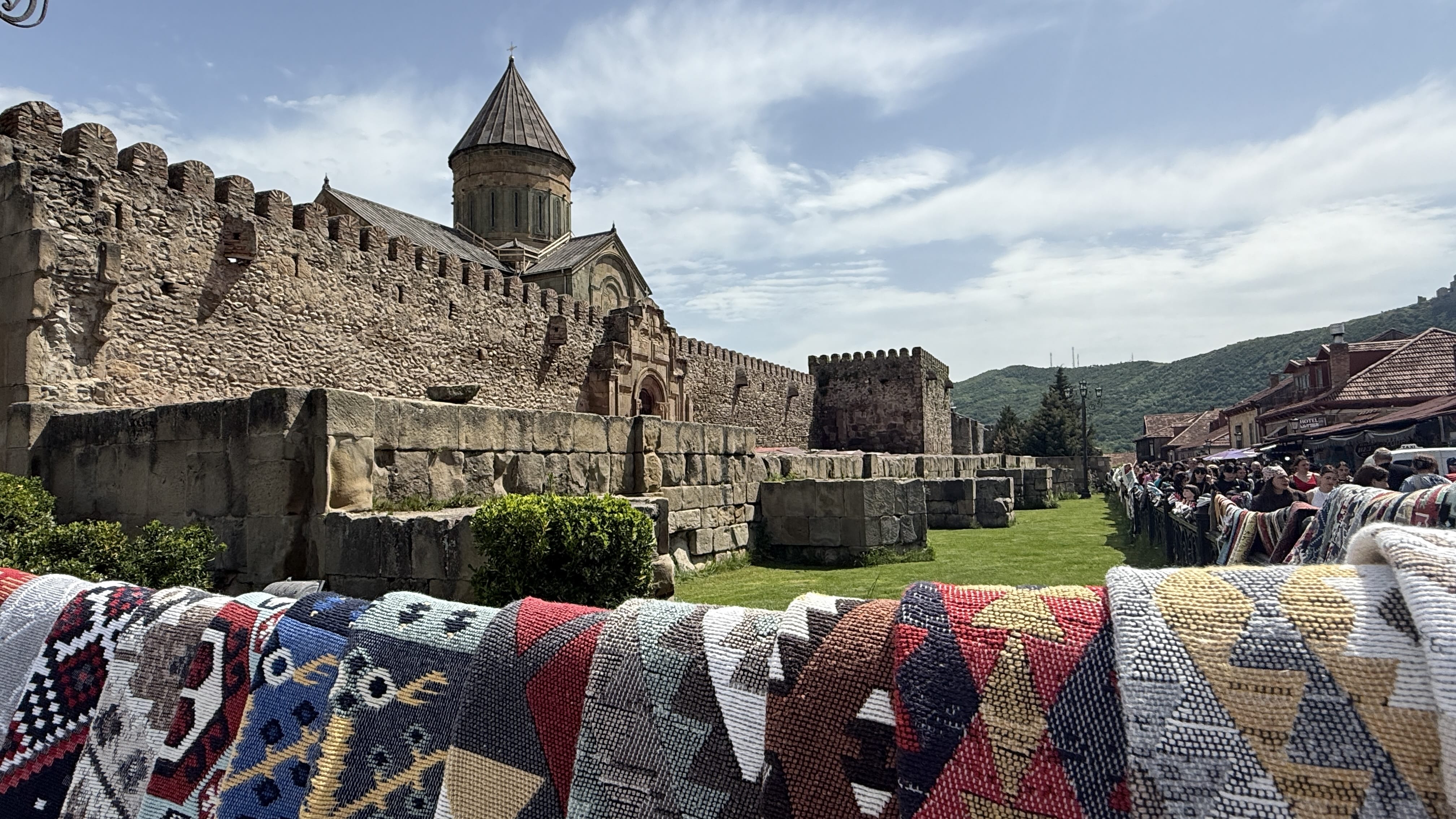
Next, we visited Svetitskhoveli Cathedral, built in the 11th century and once the main cathedral of the Georgian Orthodox Church. Kings were crowned and buried here, and major ceremonies took place under this roof. A mass was in progress so that we couldn’t go inside, but even from the outside, the cathedral felt impressive.

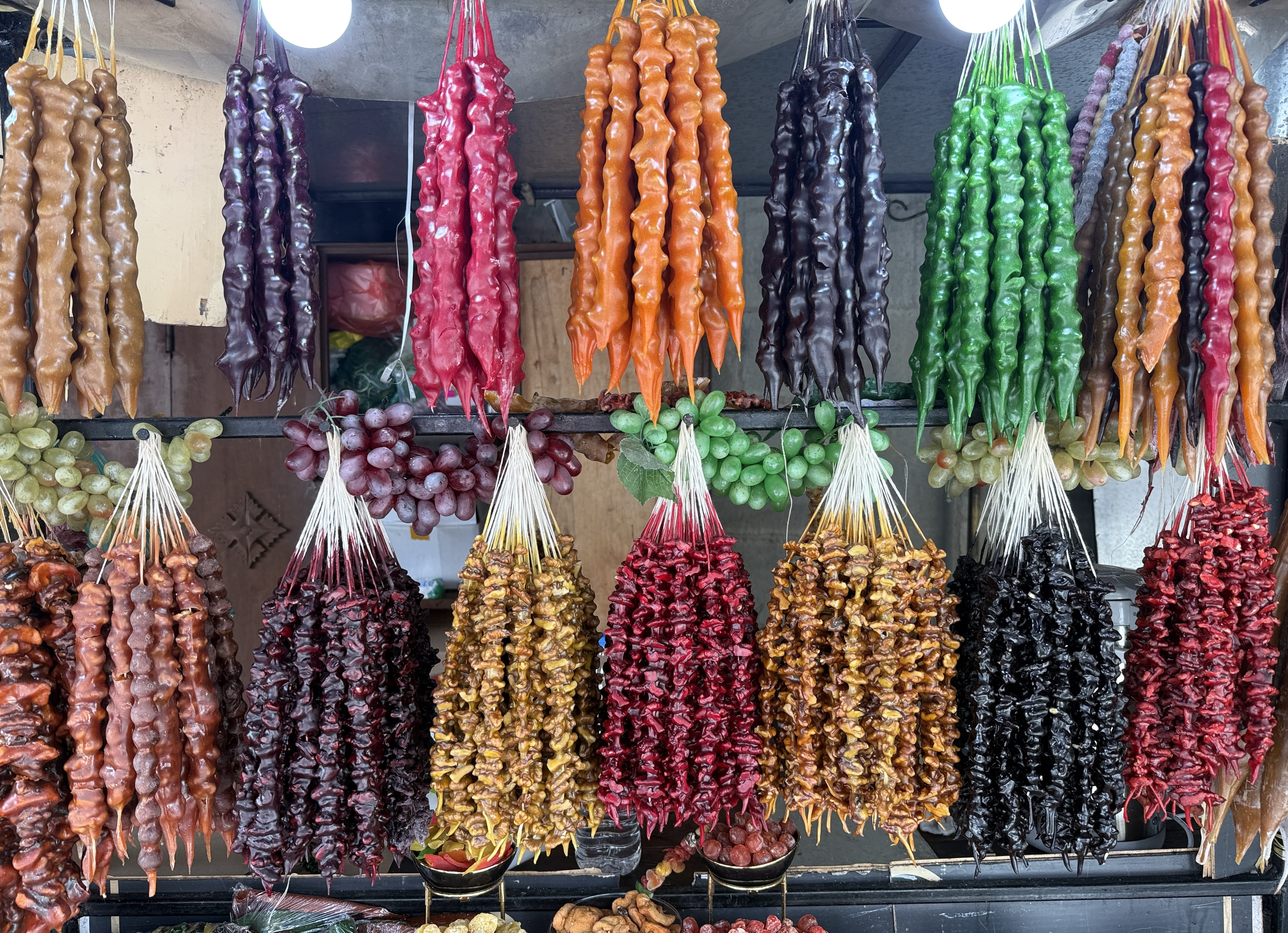
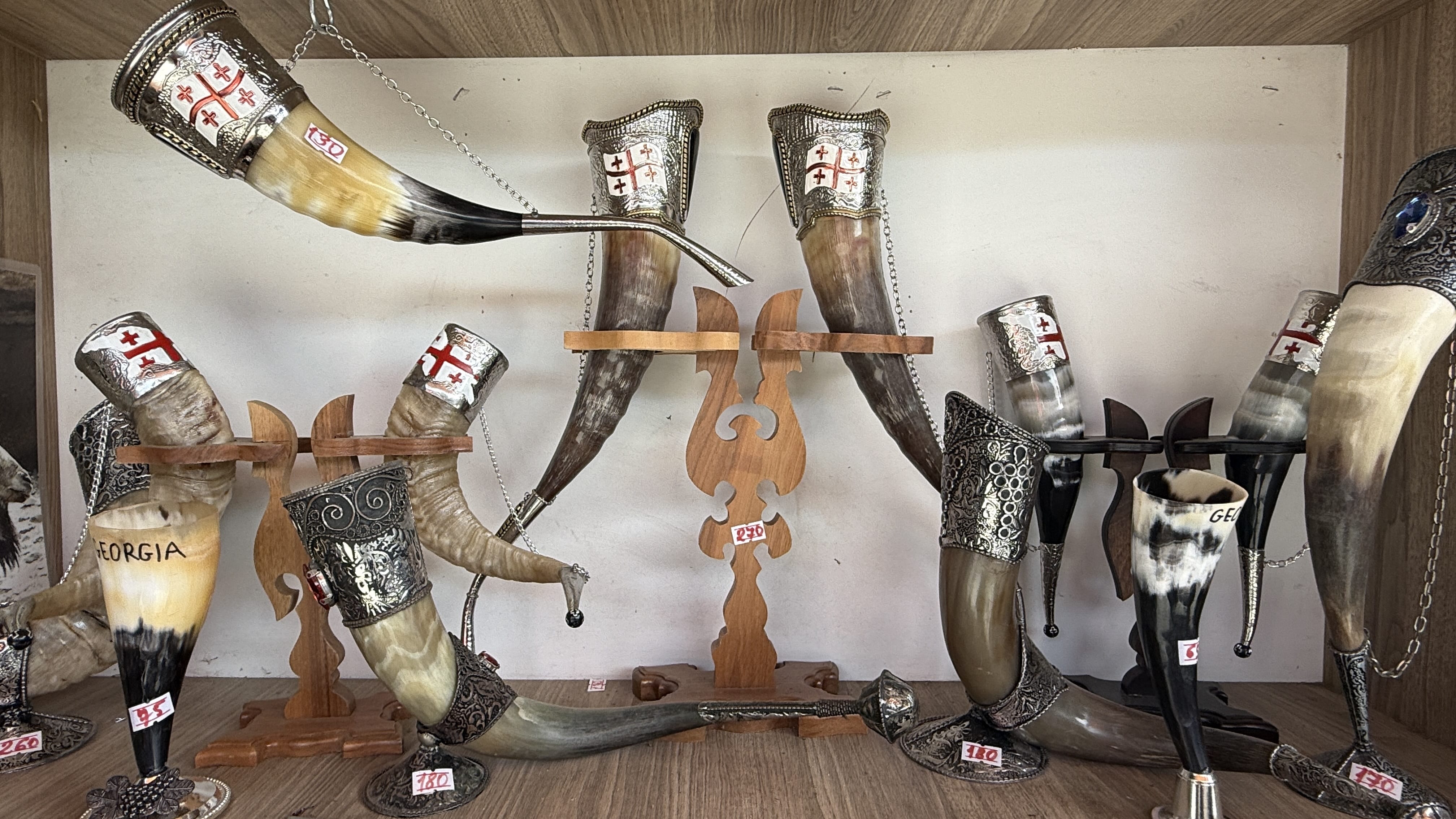
Vendors lined the street selling sheepskin hats, wool vests, rugs, churchkhela (walnut candies), and horn-shaped wine cups. The place was packed with tourists and local families.

Lunch and More Georgian Food

We stopped for lunch nearby at a restaurant called Ananuri. I ordered eggplant with walnut purée—another popular Georgian dish I was already starting to recognize. I hadn’t realized it was served cold when I orderd it, but it was fabulous, and it became something I ended up ordering quite often during my seven days in Georgia.

I also had chvishtari, a cornbread with cheese baked inside. One of the women I was traveling with ordered the beans cooked in a clay pot and let me have a taste—they were delicious as well. Between the winery lunch and this meal, it was clear Georgian food was definitely going to agree with me.

The Georgian Military Highway & Endless Trucks

After lunch, we followed the Georgian Military Highway, the only land route connecting Georgia and Russia. The truck traffic is nonstop. At one point, we were stuck behind what felt like an endless line of tractor-trailers crawling through the mountains—tankers, freight trucks, and tractor-trailers from all over.

It wasn’t a short delay. For long stretches, the opposite lane was essentially a parked convoy—trucks lined up around bend after bend, engines idling while drivers waited. Every time we rounded a curve, there was another line of trucks stretching toward the pass. It’s clear how crucial the road is for regional trade.

A new tunnel is being built, funded partly by the Chinese, to bypass one of the worst bottlenecks. Even with the construction, the drive was beautiful: steep valleys, switchbacks, and patches of snow still clinging to the ridges.

Stepantsminda & Gergeti Trinity Church

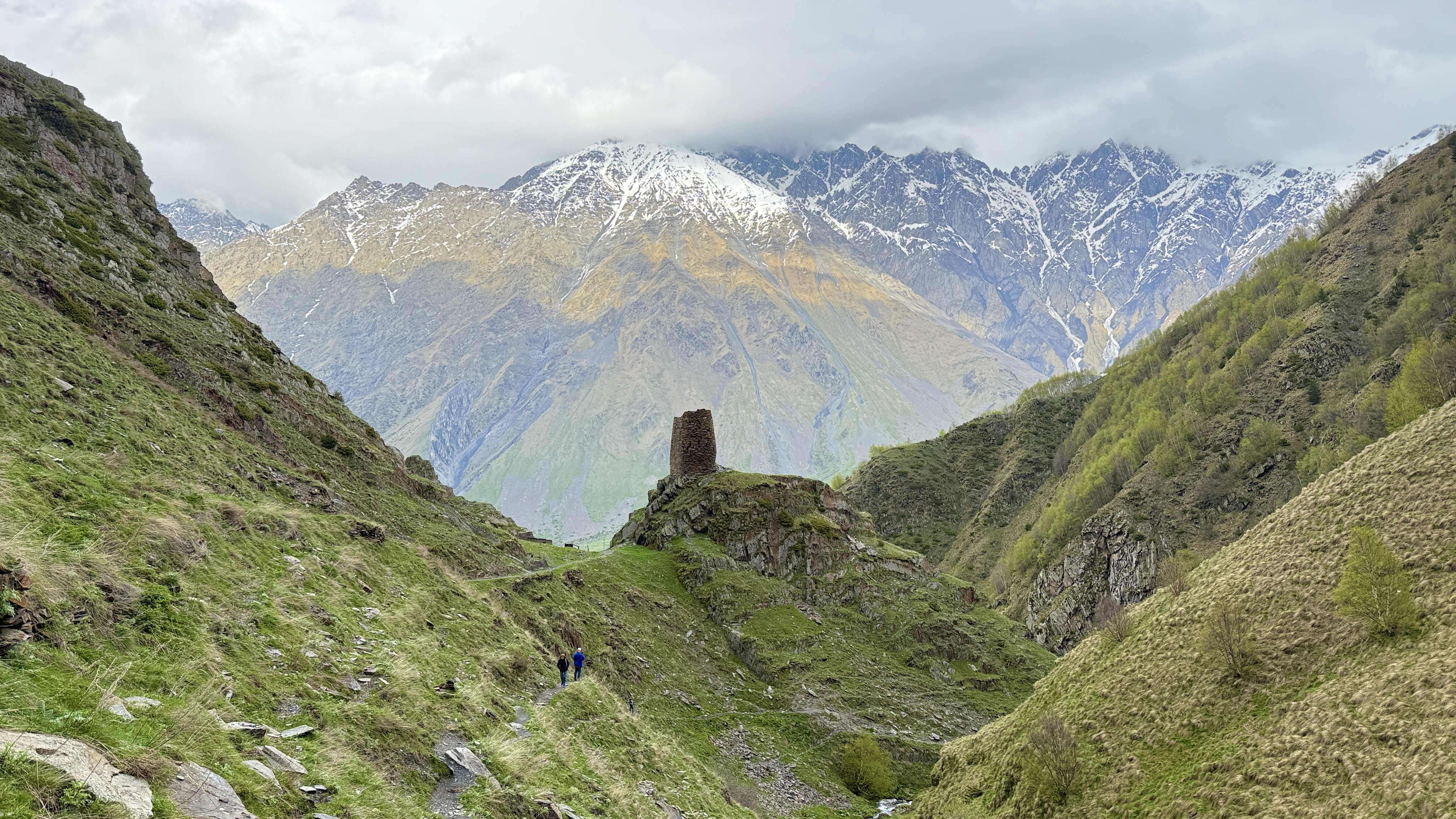
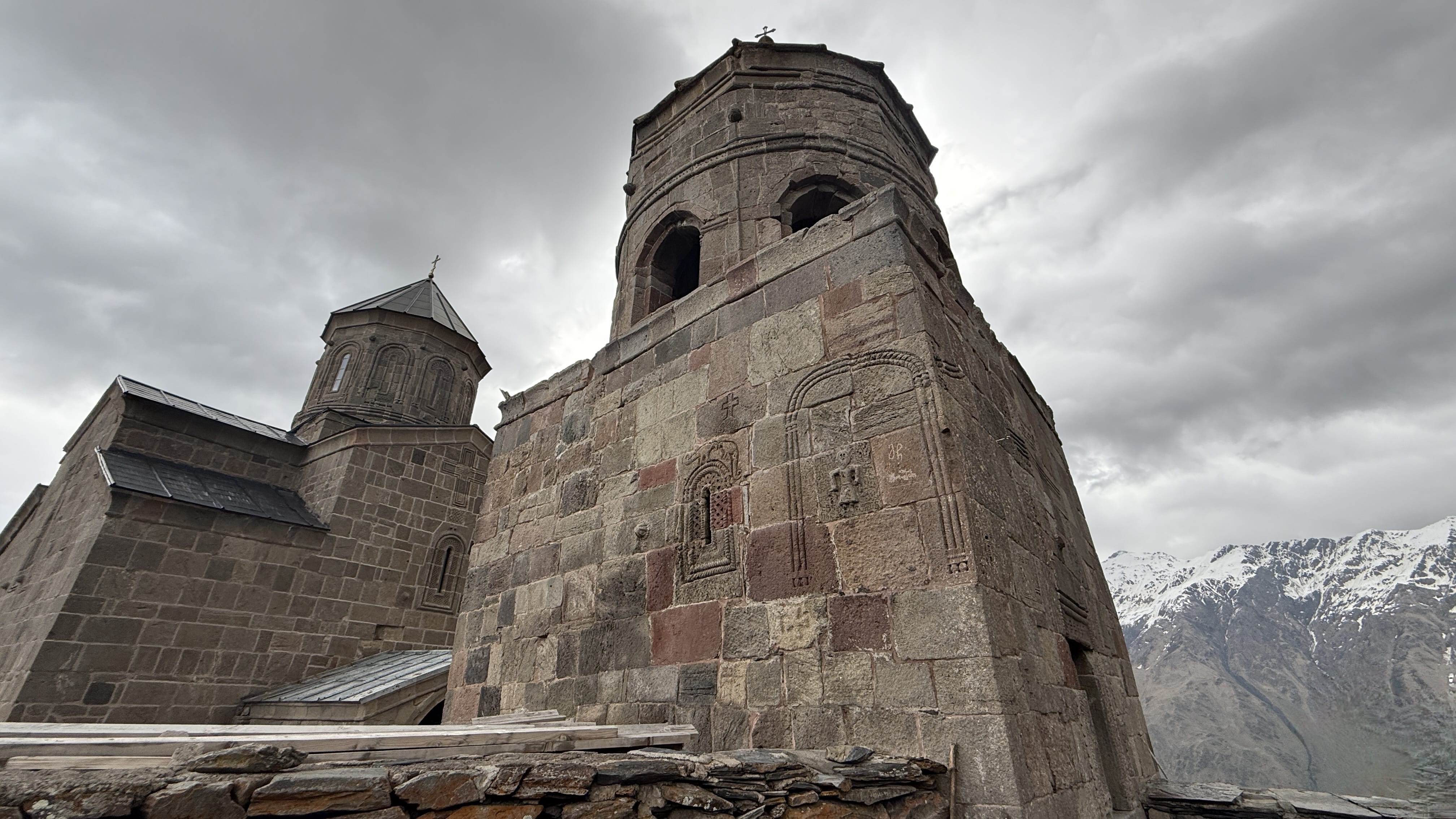
The last town before the border is Stepantsminda (Kazbegi). From here, we began the hike up to Gergeti Trinity Church, a small 14th-century stone church set above the valley, with Mount Kazbek rising behind it.

Hiking trail winding through a green mountain valley near Stepantsminda, Georgia, with rocky slopes and stormy skies
The hike began just outside Stepantsminda.

The trail isn’t long, but it’s high—over 2,100 meters—and I felt it. The path climbed steadily across open hills, with very little shade, and the altitude caught up with me near the top. I ended up with a mild headache, almost certainly from the elevation.

Still, the scenery more than made up for it: rolling green slopes, patches of snow, and the massive sweep of the Caucasus in every direction. Eventually the church came into view, sitting alone on the ridge with nothing around it but mountains and sky.

And hiking up mattered—at least to me it did. How often do you get to hike up to a stone church in the high Caucasus? Approaching it on foot made it feel like a place rather than just a stop. I’d been looking forward to hiking the full route—it was one of the few real hikes on our itinerary—and the plan had been presented as optional, with rides available for those who didn’t want to walk.

Stone exterior of Gergeti Trinity Church near Mount Kazbek in Georgia, with carved details and mountain backdrop
Up close at Gergeti Trinity Church

Honestly, we were lucky we even got to hike up at all—I think she would’ve preferred we drive both ways and skip the hike entirely.

The Friendship Monument

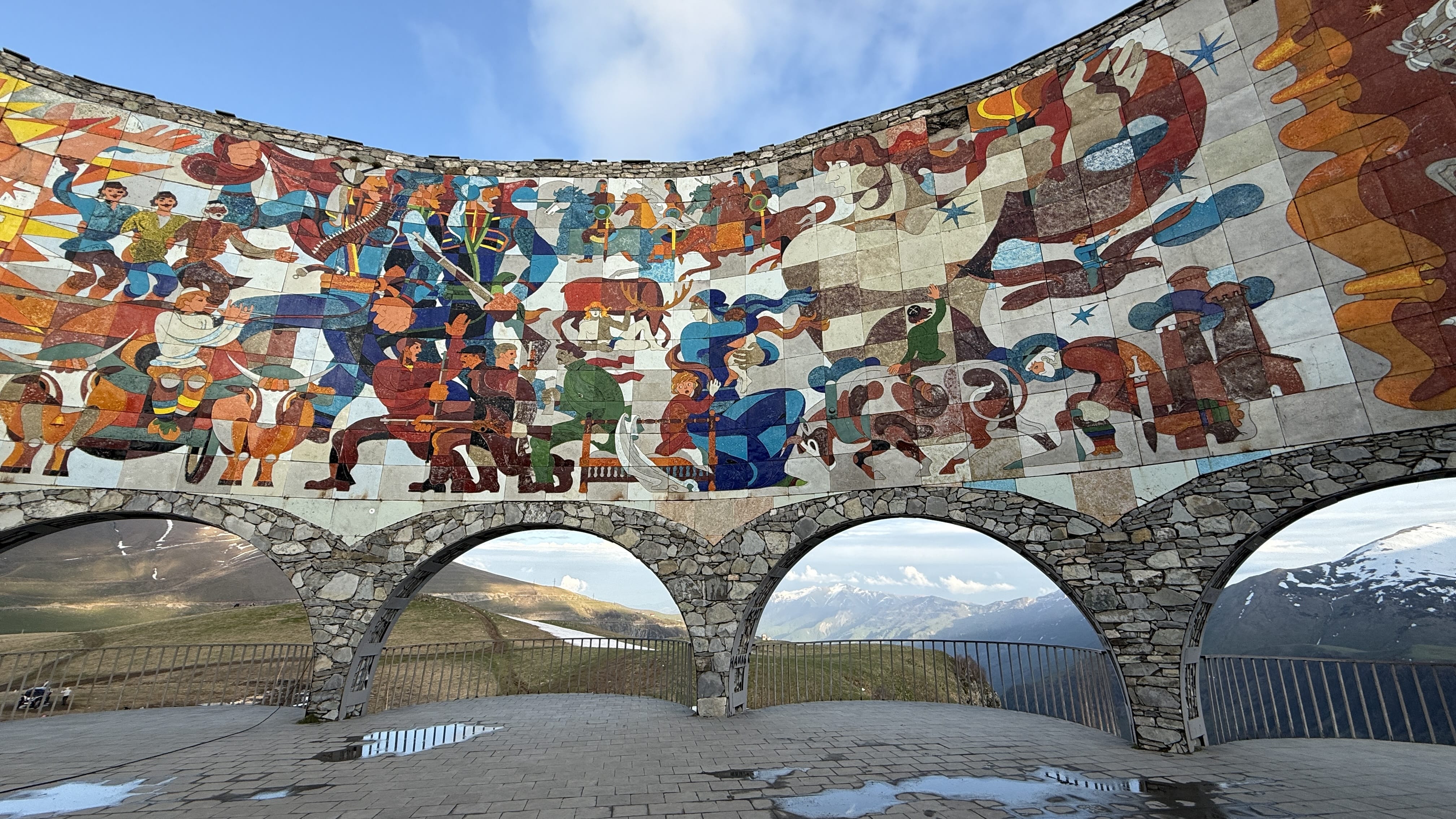
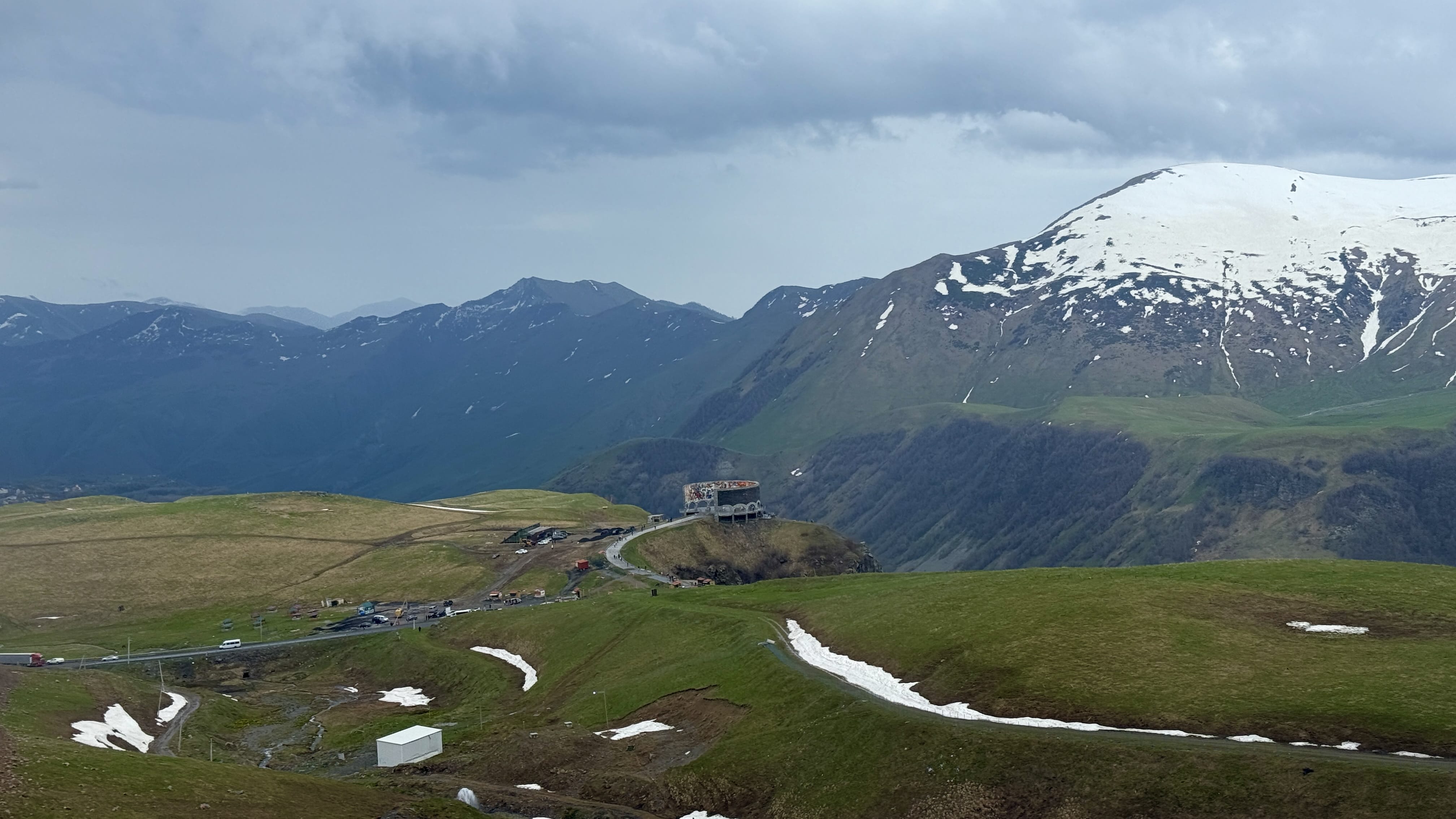
On the drive toward Gudauri, we stopped at the Soviet-era Friendship Monument—something I’d noticed earlier and asked our guide if we could pull over for.

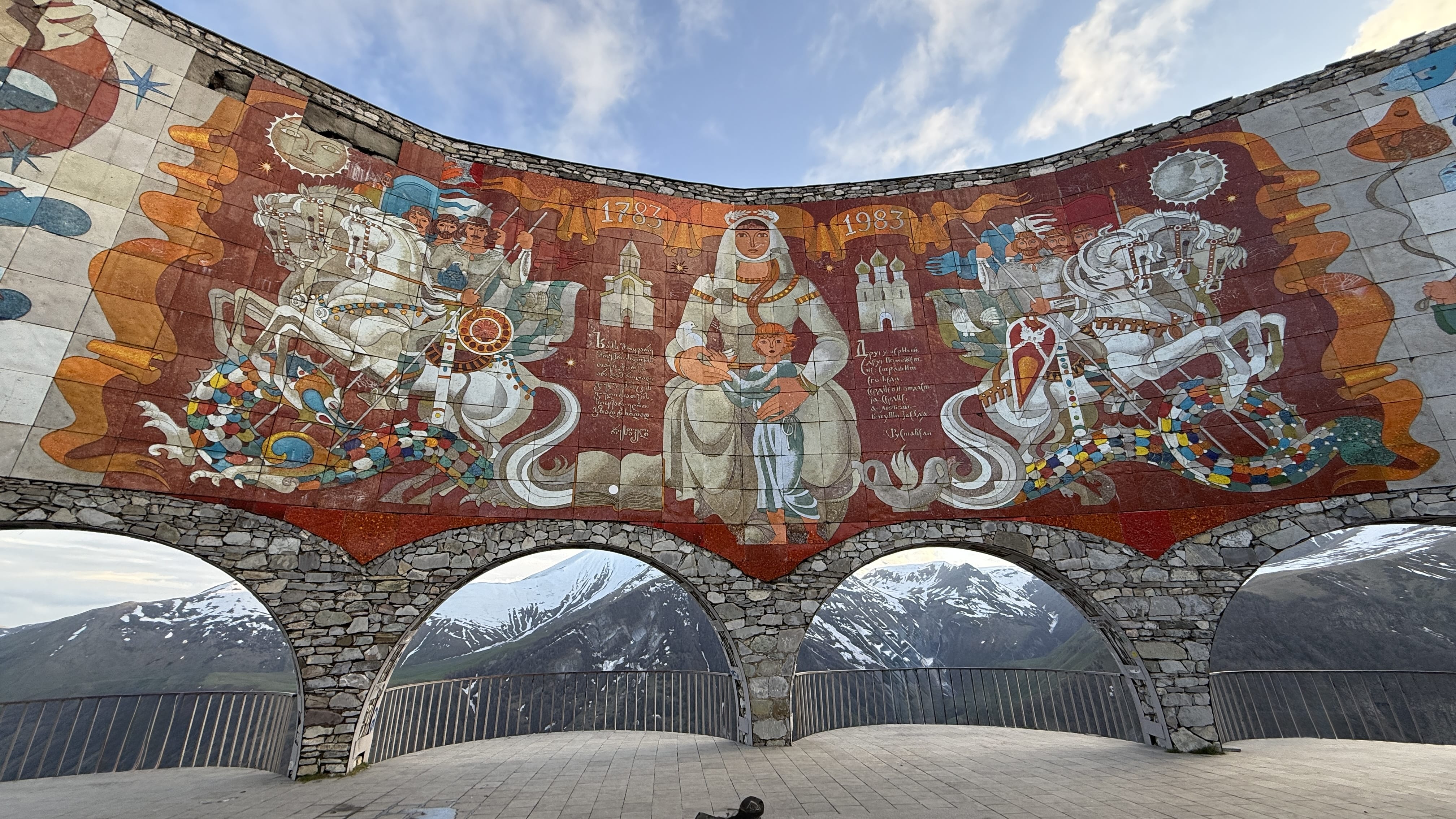
Soviet-era Friendship Monument near Gudauri, Georgia, with colorful mosaic panels overlooking the Caucasus Mountains
The Soviet-era Friendship Monument outside Gudauri

Built in the 1980s to commemorate the Treaty of Georgievsk, it was intended to symbolize unity between Georgia and Russia. It’s a concrete half-circle perched on a cliff, completely open to the mountains. Inside, a mural wraps around the entire structure—one side showing Georgian history and mythology, the other Russian. In the center, a woman holding a child symbolizes peace (or the future—depends who you ask).

I originally assumed it was a mosaic, but it’s actually made of painted ceramic tiles—bold, colorful, and unmistakably Soviet. Seeing it in such a dramatic setting made it even more striking.

7 Days in Georgia
This photo gives the best sense of the scale—one huge mosaic wall, and nothing but mountains behind it.

We stayed that night at Hotel Carpe Diem near Gudauri— an alpine-style hotel with big windows overlooking the slopes, and clearly a popular base for skiers in season.

Day 3 — Gudauri → Kutaisi via Ananuri, Gori & Uplistsikhe

Ananuri Fortress

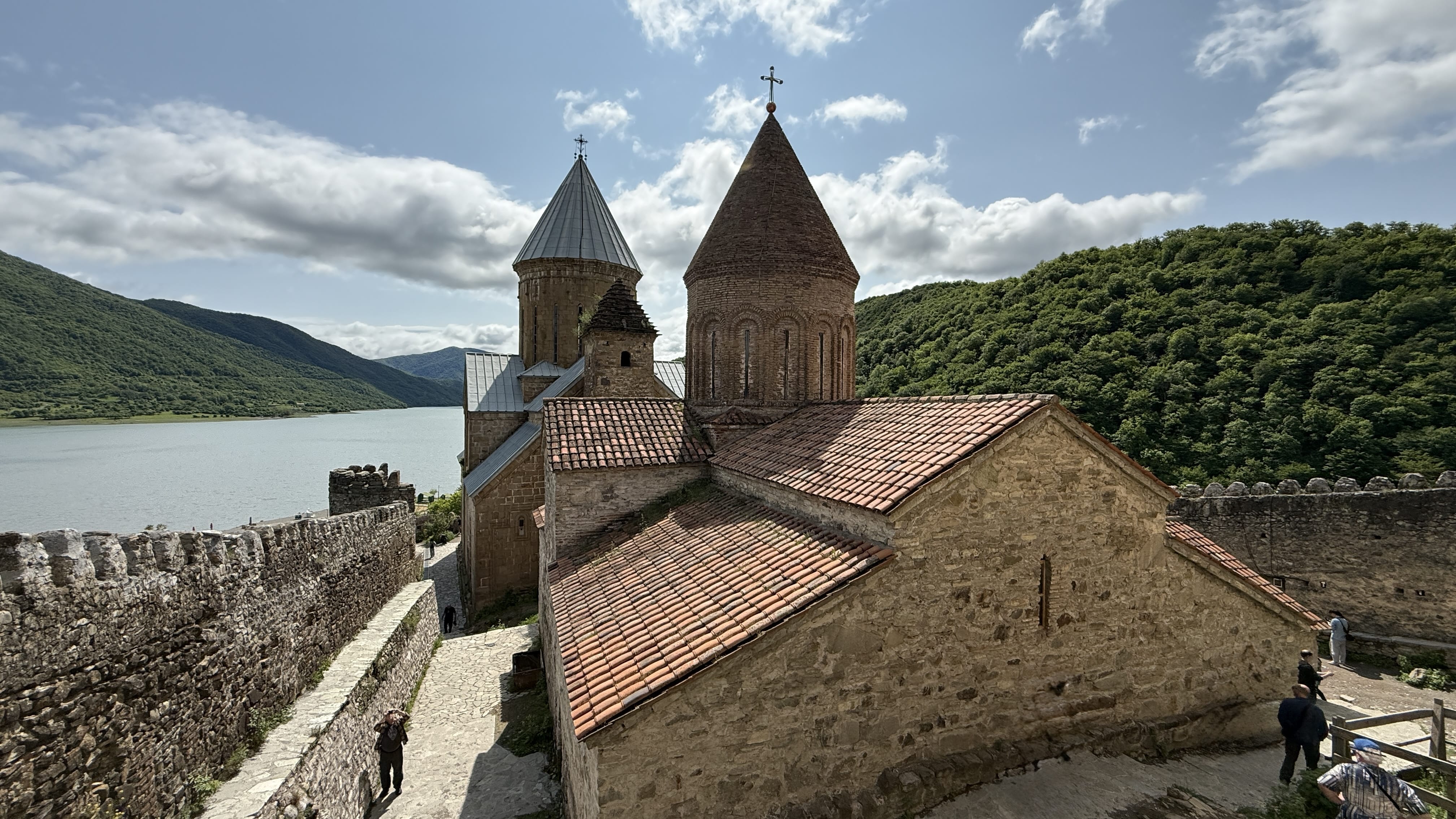
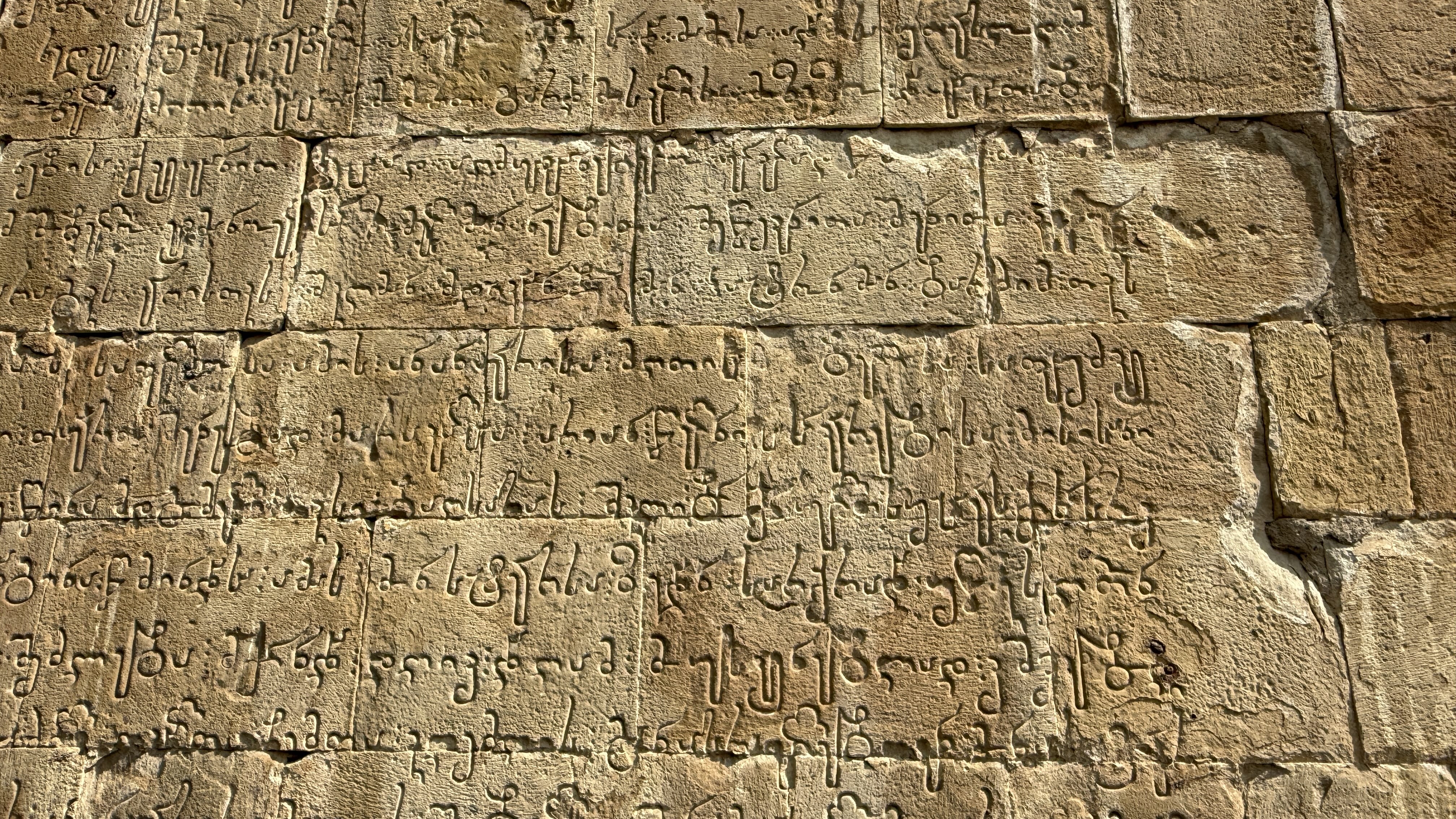
Our first stop was Ananuri Fortress, which sits above the Zhinvali Reservoir. The views of the turquoise water and surrounding mountains were stunning. We wandered through stone towers and old churches. On one wall, you could still see Georgian script etched into the stone — surprisingly clear after centuries.

Ananuri Fortress complex with the Church of the Assumption and the smaller Church of the Savior overlooking the Zhinvali Reservoir.
The Ananuri Fortress.
Close-up of medieval Georgian inscriptions carved into the stone walls of the church at Ananuri Fortress, Georgia.
Carved Georgian script.

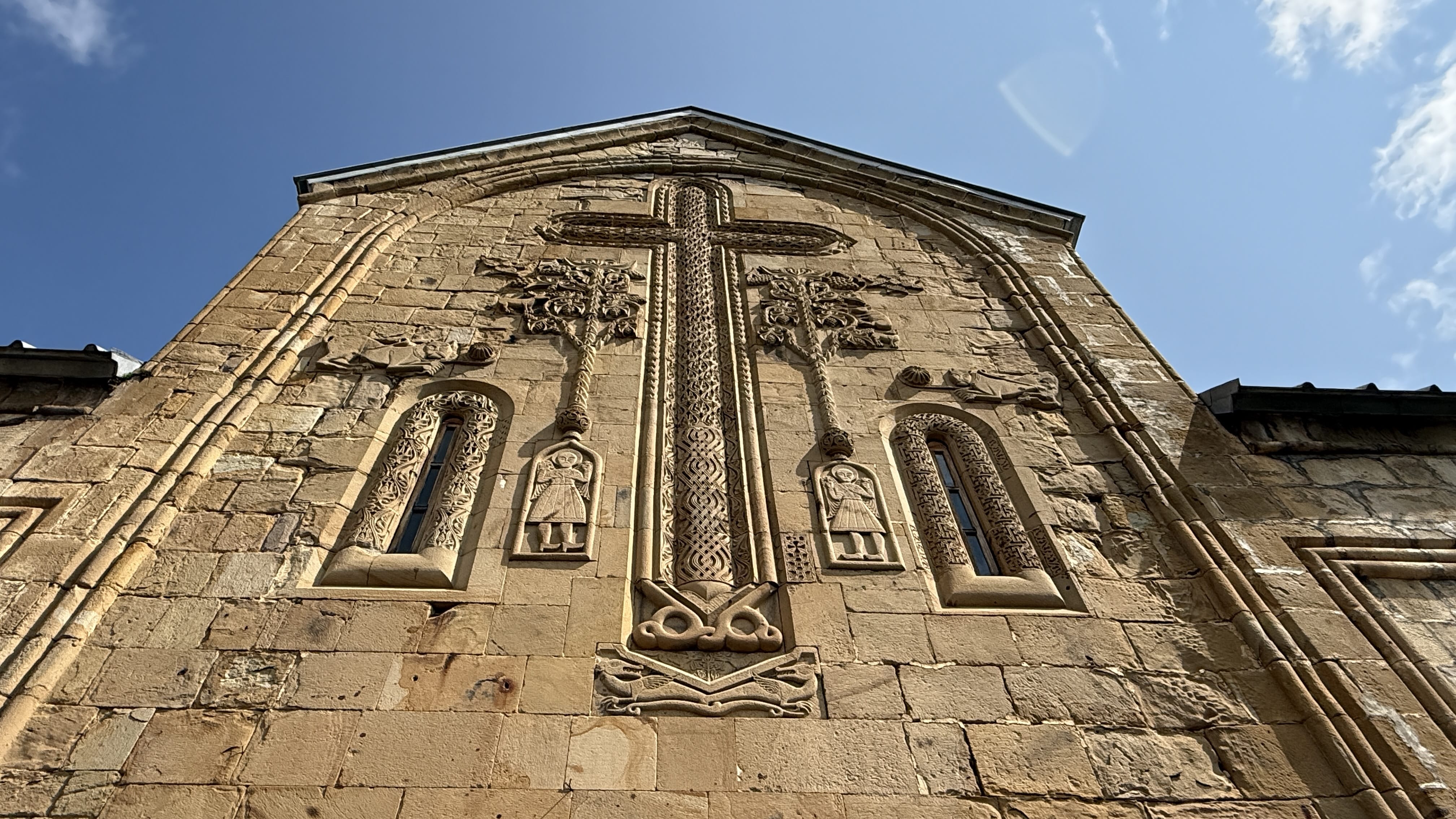
Inside the walls are two churches, the larger being the Church of the Assumption, built in the late 17th century. Its exterior is covered in carved stone crosses, saints, and inscriptions, and even before stepping inside, it felt layered with history. 

The church was dim and atmospheric. Frescoes covered the walls — most faded— and at the front stood a full iconostasis with painted panels and gold detailing. 

Gori: Stalin’s Birthplace

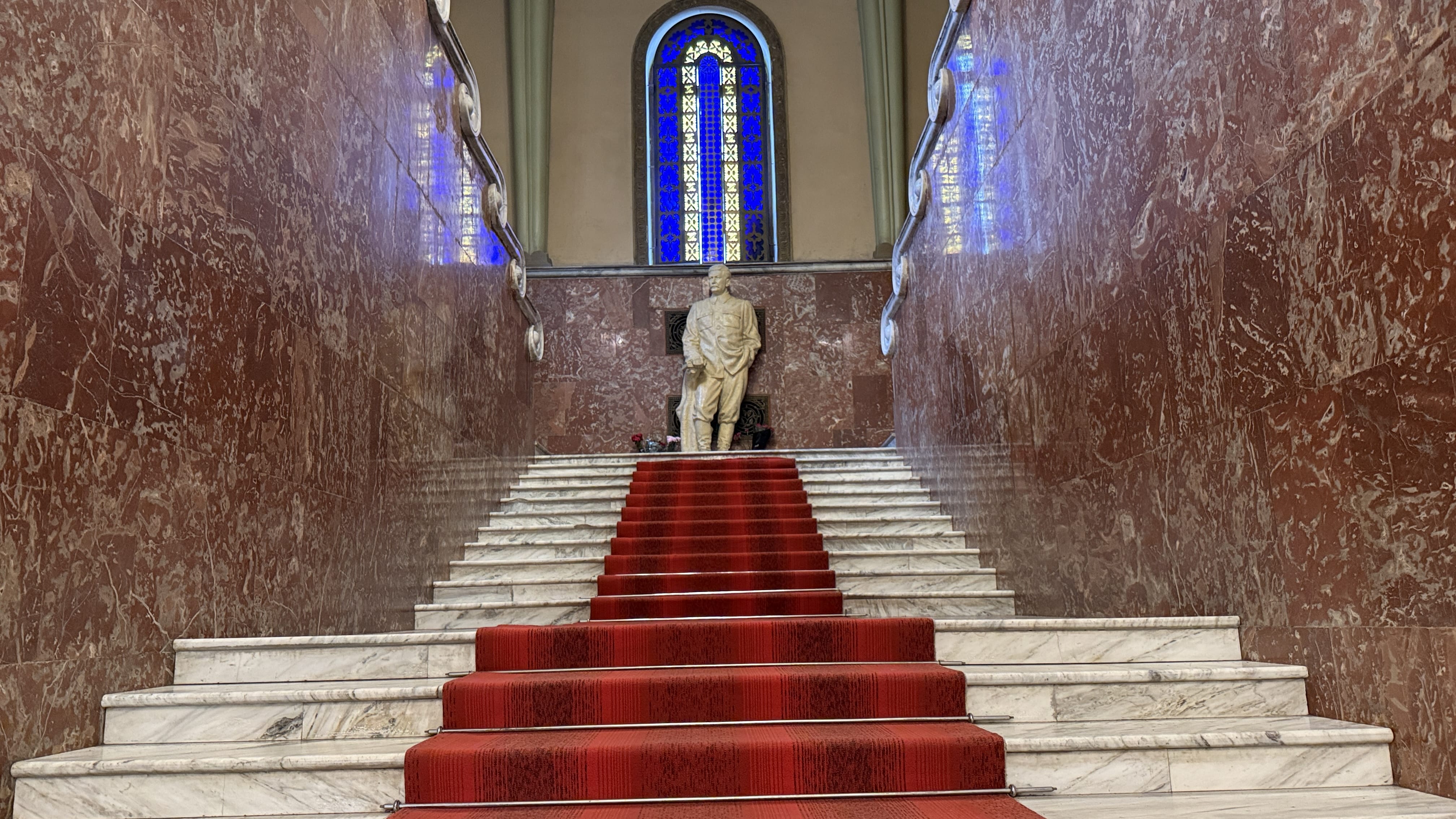
From there, we continued to Gori, Joseph Stalin’s birthplace, home to the Stalin Museum, which we visited.

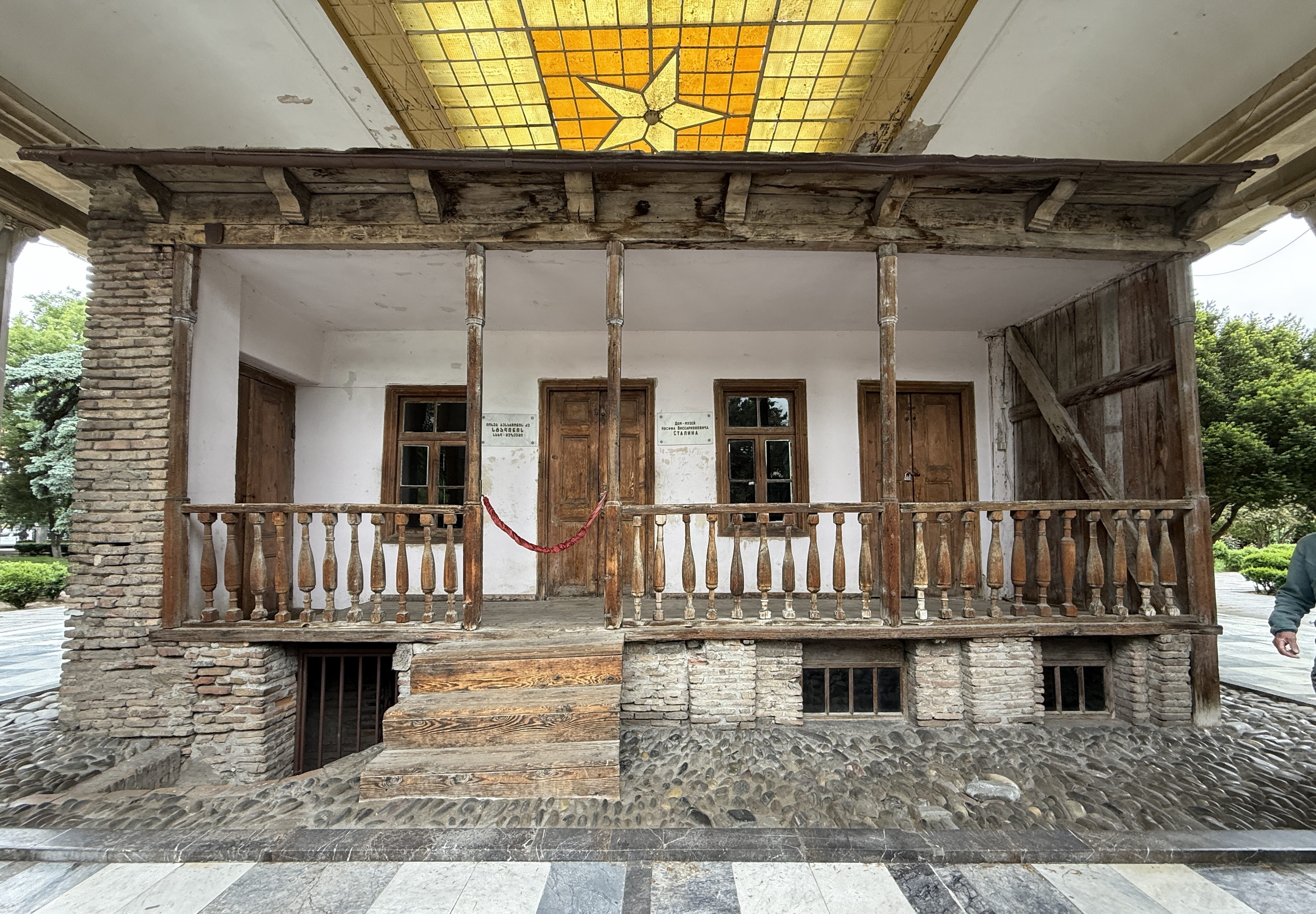
We started at the small wooden house where he was born, preserved under a pavilion on the museum grounds. Outside stands a statue of him — apparently the only Stalin statue still standing in Georgia.

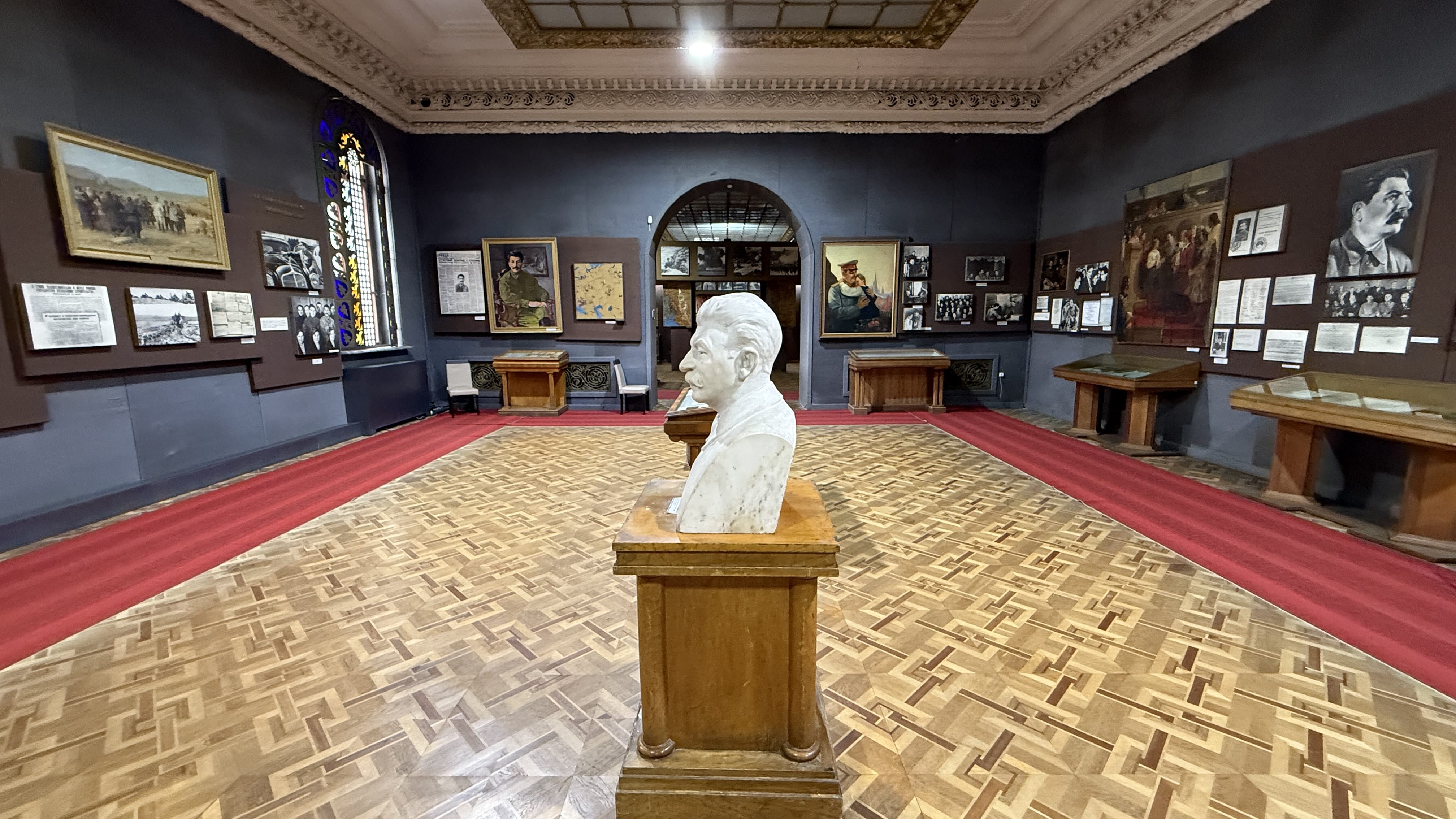
Inside, many exhibits still verge on glorifying him: gifts sent for his 70th birthday, photos from childhood to leadership, even images of him with Churchill and Roosevelt. There is a section acknowledging the atrocities of his rule, though small and tucked away.

Stalin hated flying, so he traveled by train. His green railroad carriage is on display; everything inside is original, except the red carpet. You can even see the narrow bed where he slept.

The whole place felt… strange. Interesting, but strange.

At lunch I ordered the eggplant with walnut paste again, plus red beans — both just as good as before.

Uplistsikhe: Cave Town in the Wind

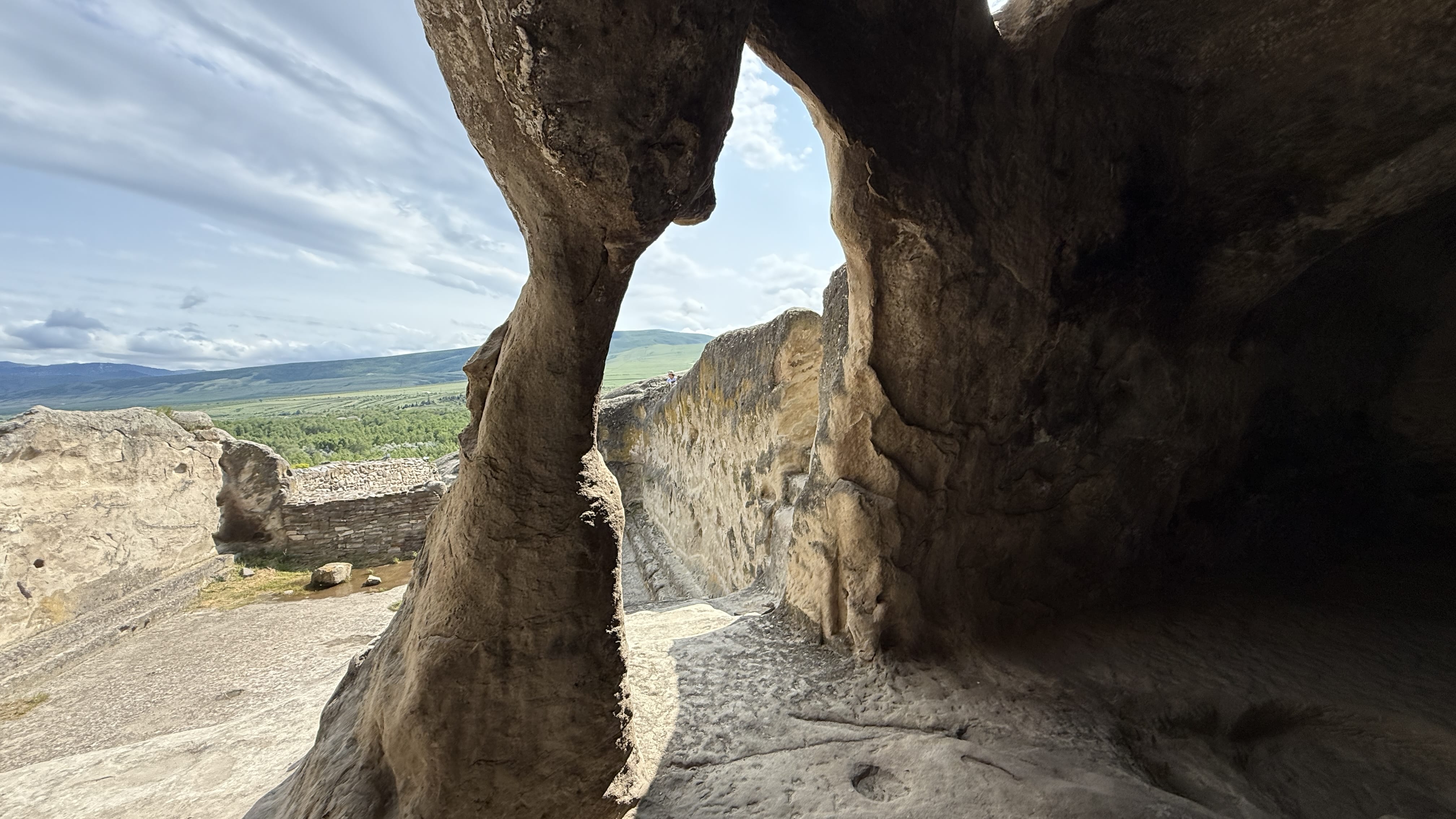
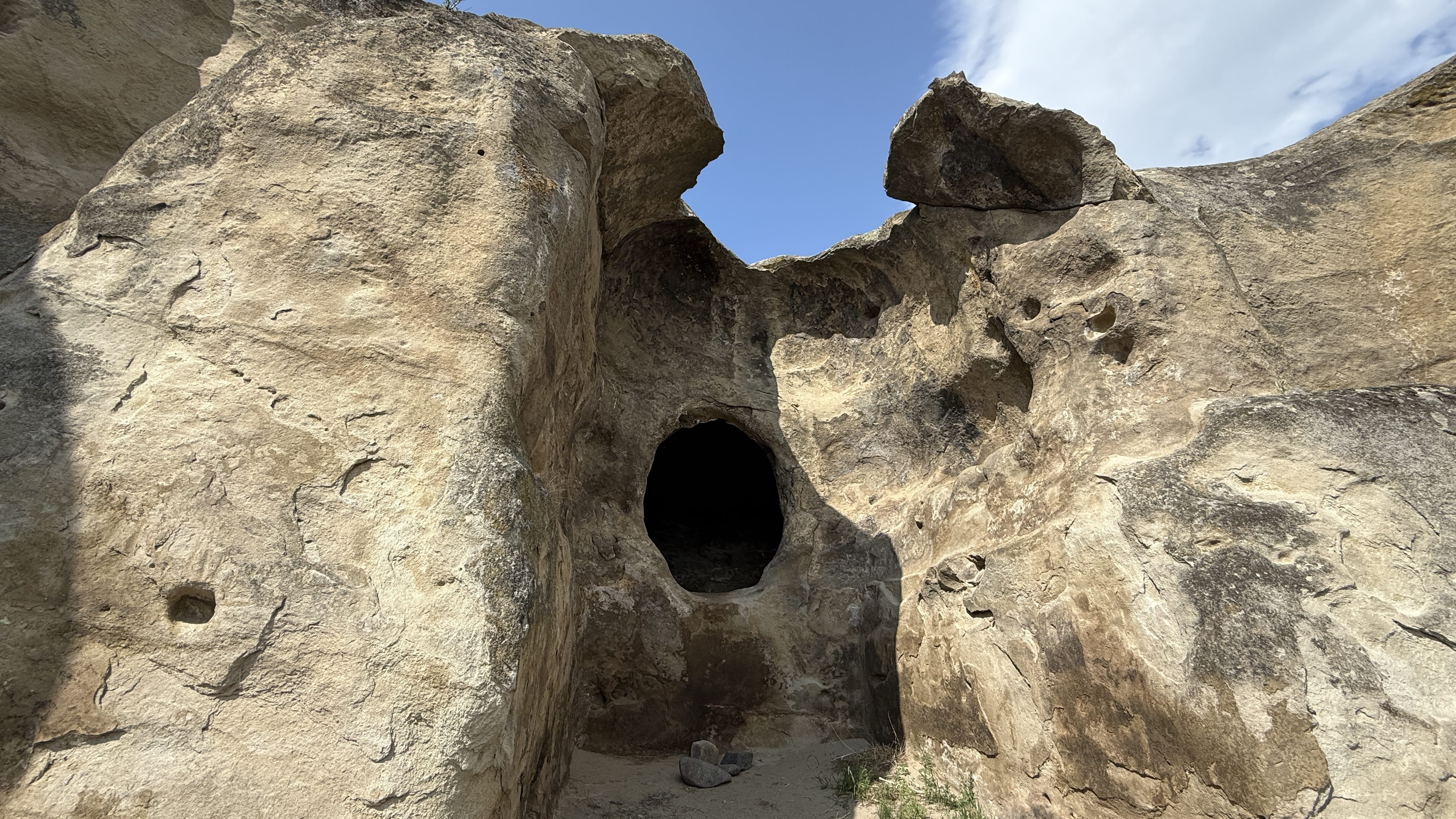
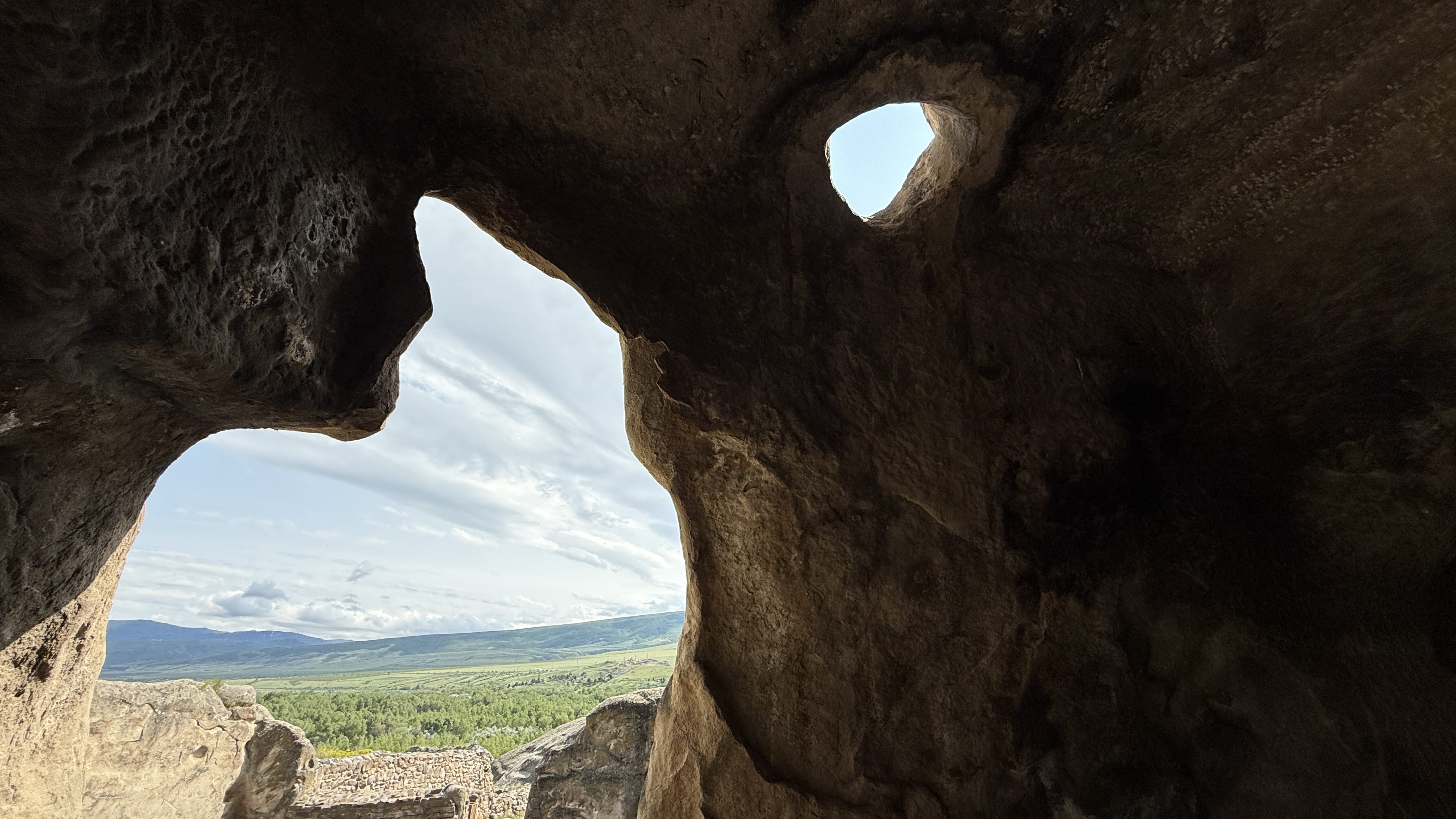
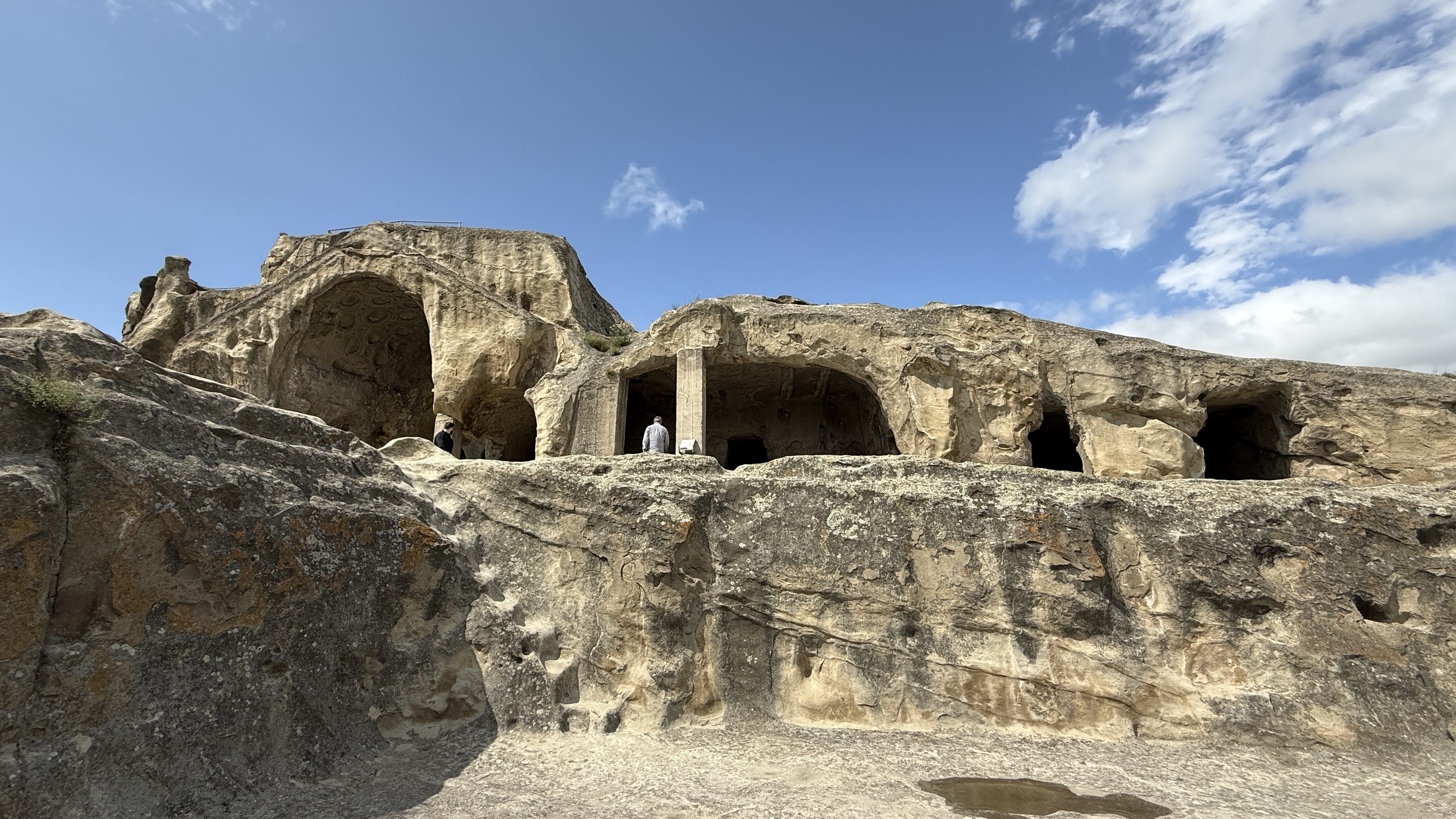
Next, we drove to Uplistsikhe, an ancient cave town carved into sandstone cliffs about 20 minutes from Gori. One of Georgia’s oldest settlements, it was once a center of pagan worship before Christianity took hold.

Rock-cut dwellings and carved chambers at Uplistsikhe, an ancient cave city in Georgia.
Uplistsikhe—an ancient cave city.

It was a fun place to climb around — tunnels, chambers, natural steps, hidden corners. I kept thinking how much my grandson would have loved it here.

The wind was wild — so strong that I sometimes had to grab a rock to steady myself. The views over the valley and river were beautiful, especially with the bright blue sky.

Sweet Bread in Surami

From Uplistsikhe, it was about two hours to Kutaisi, where we’d stay for the night. Just before reaching the city, we stopped in Surami, famous for its sweet bread, nazuki.

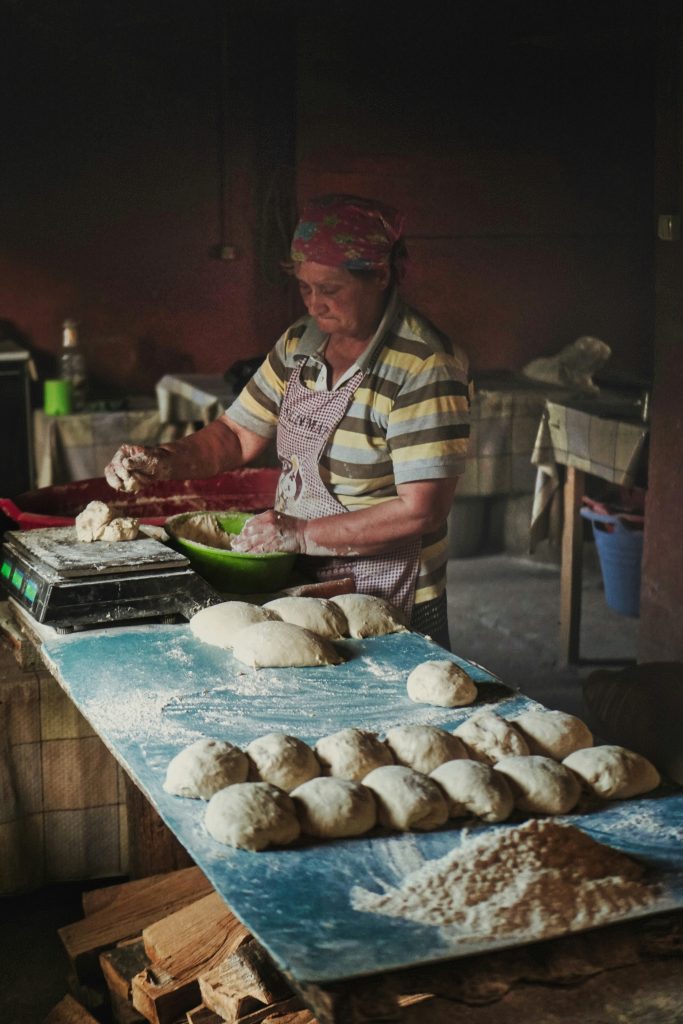
About fifty huts line a two-mile stretch of highway, tables stacked with golden loaves fresh from the oven. We stopped at one, stepping inside to the smell of warm dough and sugar. The baker had just pulled a batch from the tone oven and was brushing the tops with a sugar glaze.

Georgian woman shaping bread dough by hand on a floured table in a traditional kitchen.
Making sweet bread in Surami,

We bought a few and tore off pieces in the van. The bread was soft, warm, slightly sweet, and filled with raisins. I instantly understood why Surami is known for this — it’s pretty much exclusive to the town.

Dinner & Overnight in Kutaisi

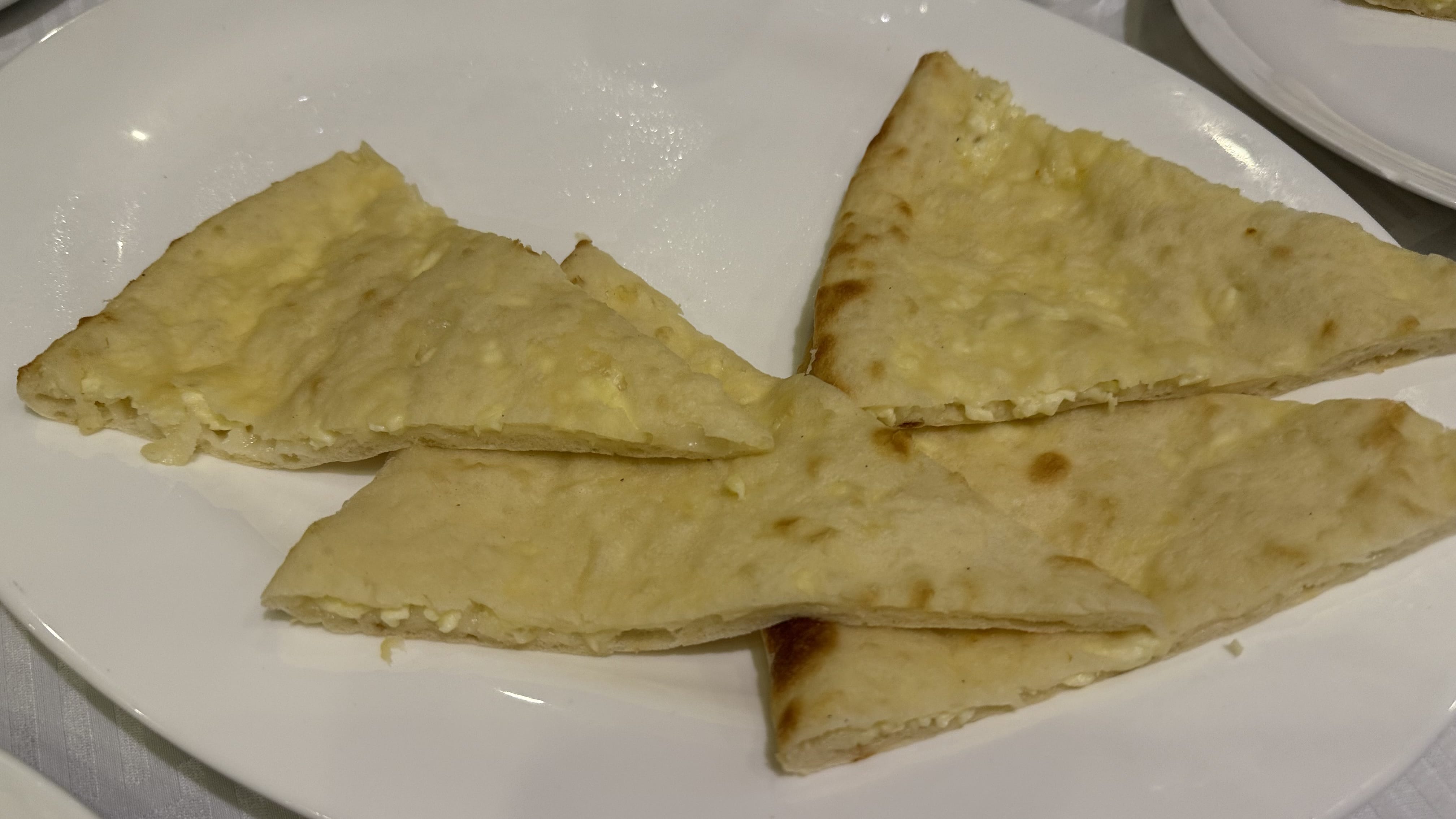
We stayed at Boutique Hotel Argo, where dinner included Imeruli khachapuri, a round cheese bread they described as a Georgian version of pizza without sauce. It was filled with warm, slightly salty Imeruli cheese and paired perfectly with a glass of Georgian red wine.

Slices of Imeruli khachapuri, a Georgian cheese-filled flatbread, served on a white plate with melted cheese inside the thin baked dough.
Georgian cheese bread.

During dinner, we also enjoyed a performance of traditional Georgian music and dance — a lively and fun ending to the day.

Tomorrow we’d be heading to Mestia — deeper into the mountains.

Coming Up Next

Read Part 2 of 7 Days in Georgia → where we head into the Caucasus Mountains, explore Mestia, and spend time in some of Georgia’s most dramatic landscapes.

Related Blogs

JoAnne Cross headshot

About the Author

Hi, I’m JoAnne—writer, wanderer, and lover of places that surprise me. I’ve traveled to 60+ countries (and counting), usually with a camera in one hand and a notebook in the other. I’m drawn to mosaics, markets, and mountains, and I write to remember what moved me. When I’m not traveling, I’m working on my blog Travels Afoot, trying new creative projects, or planning my next adventure.
📍 More about me | ✈️ Explore destinations