Updated Jan 2026
Kyrgyzstan was the second stop on my two-and-a-half-week journey through Central Asia. I flew into Almaty, spent two days there, and then crossed into Kyrgyzstan, traveling overland from Bishkek to Osh.
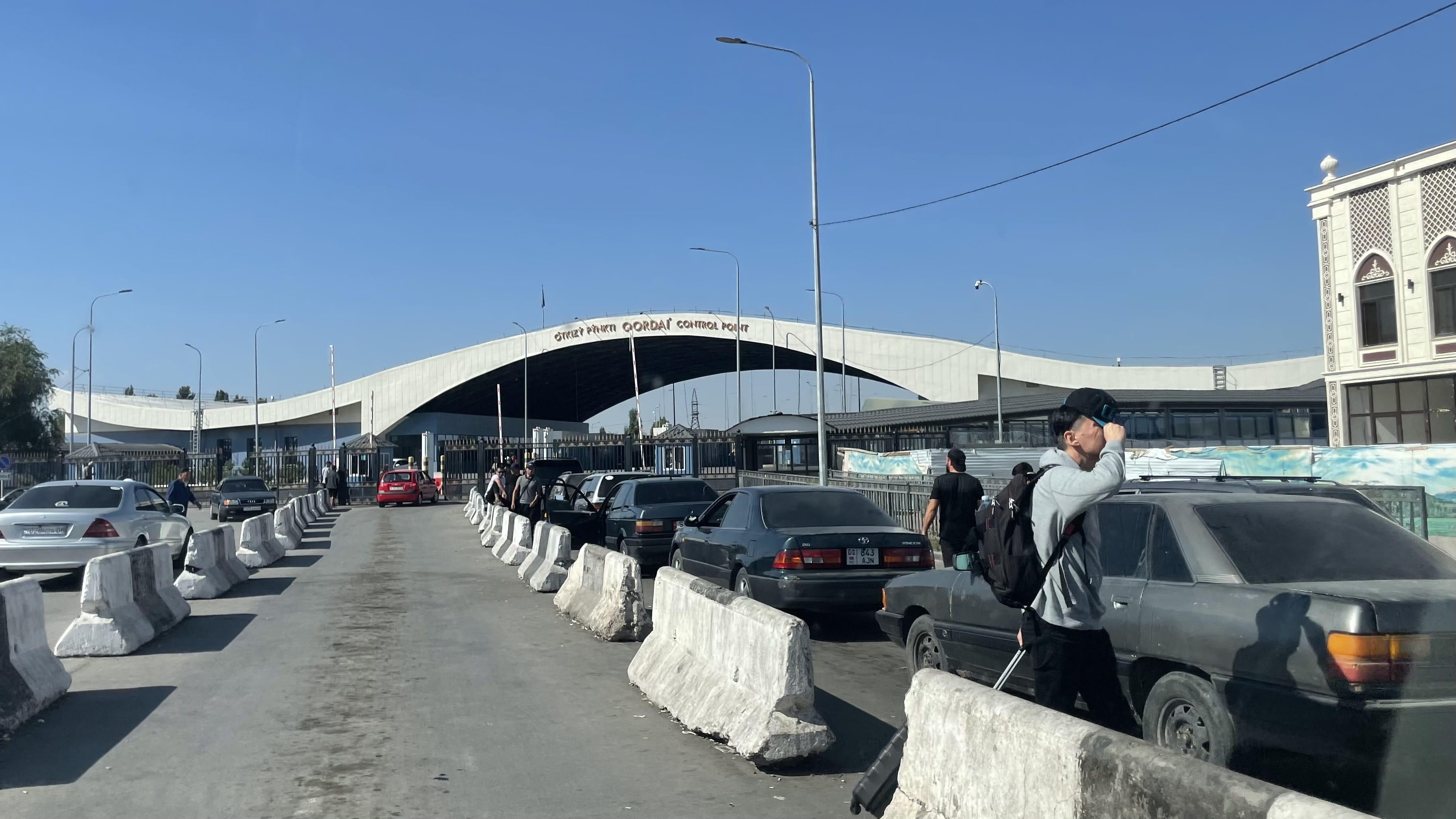
The border crossing was straightforward enough. We drove about three hours from Almaty to the Korday/Ak-Zol crossing, unloaded our bags, and walked through the narrow gated path to passport control. First came the exit process on the Kazakh side, then a stretch of “no man’s land” — a strange in-between zone where you don’t quite belong to either country. It felt odd to walk through that strip of pavement with my suitcase, the space quiet except for the shuffle of other travelers.
On the Kyrgyz side, I handed over my documents again, answered a few questions, and waited while my bags were checked before receiving the stamp that let me through.
It wasn’t complicated, but travel feels different when you arrive on the ground instead of by air. There’s no jet bridge or baggage carousel — just you and your bag, walking into a new country.
From there, we regrouped, climbed back into the van, and continued toward Bishkek.
Kyrgyzstan is a small, landlocked country in Central Asia, largely made up of mountains, which explains why so much of the travel here revolves around high passes, alpine lakes, and long stretches of empty road. The Tien Shan range shapes nearly everything about the landscape.
Once part of the Soviet Union, Kyrgyzstan became independent in 1991, though Soviet mosaics, monuments, and apartment blocks still define much of its built environment. Traveling through the country, what stood out was how easily nomadic traditions, rugged landscapes, and Soviet-era traces existed side by side.
After clearing the border, we drove the short distance into Bishkek, the capital and largest city of Kyrgyzstan. Set at the foot of the Tian Shan mountains near the Kazakh border, the city feels defined as much by its setting as by its history. Soviet-era architecture still dominates much of Bishkek — heavy concrete buildings, wide squares, mosaics, and monuments — softened by leafy parks, busy markets, and cafés.
Before we began to explore Bishkek, we stopped for a much-needed lunch break at a local restaurant, Arzu —and it did not disappoint.

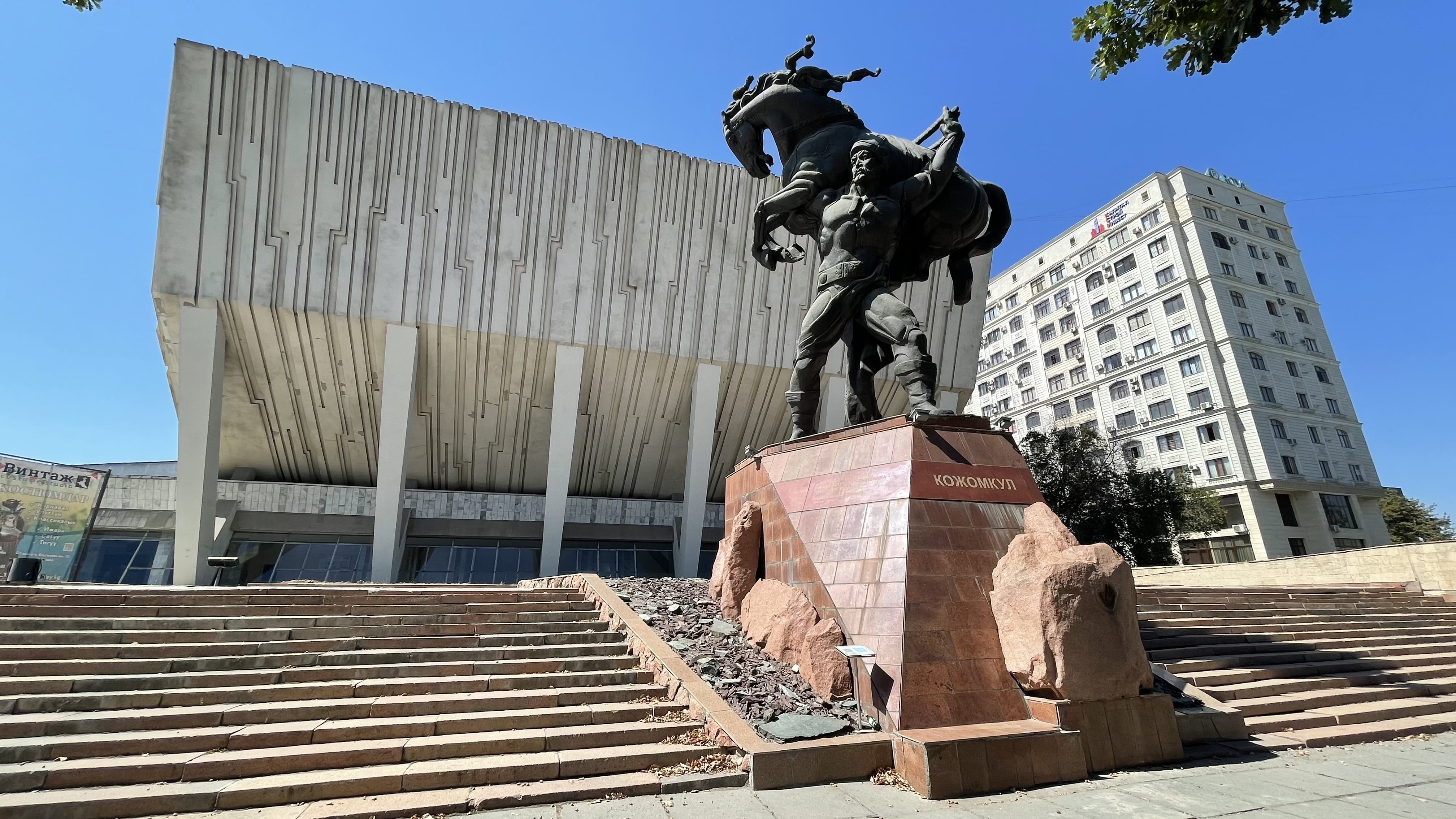
After lunch, we headed to the Sports Palace, an angular white marble building. Out front stands a monumental statue of Kojomkul, the legendary Kyrgyz strongman — perfectly matching the building’s sense of power and motion. When it was built, there was a broader vision for Bishkek to become a “white city,” and the Sports Palace is a good example of that ambition: bold, optimistic, and unmistakably Soviet in its confidence.
From there, we stopped at a building that had once been a textile factory — though, judging by the women still sewing inside, maybe it continues to function in some form. The real reason for the visit was the striking Soviet mosaic on the exterior, bearing the inscription “Our writing is for you, Motherland.” Like much of the monumental art of the time, it was meant to reinforce communist ideals.
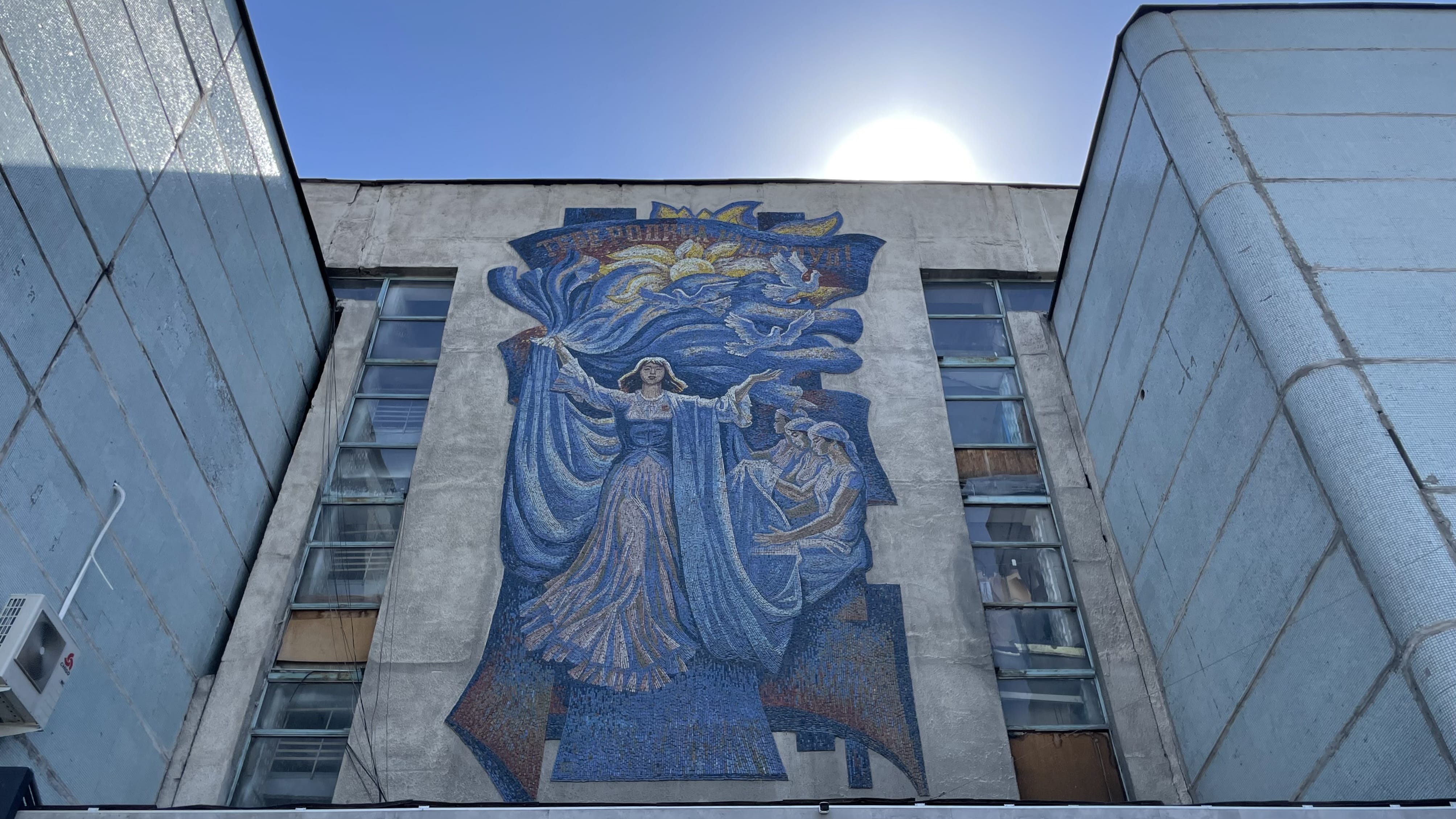
While we were there, one of the seamstresses inside laughed when a guy in our group asked if she could fix a rip in his shirt — then agreed and stitched it up on the spot. It turned out to be a good stop for both the art and the repair.
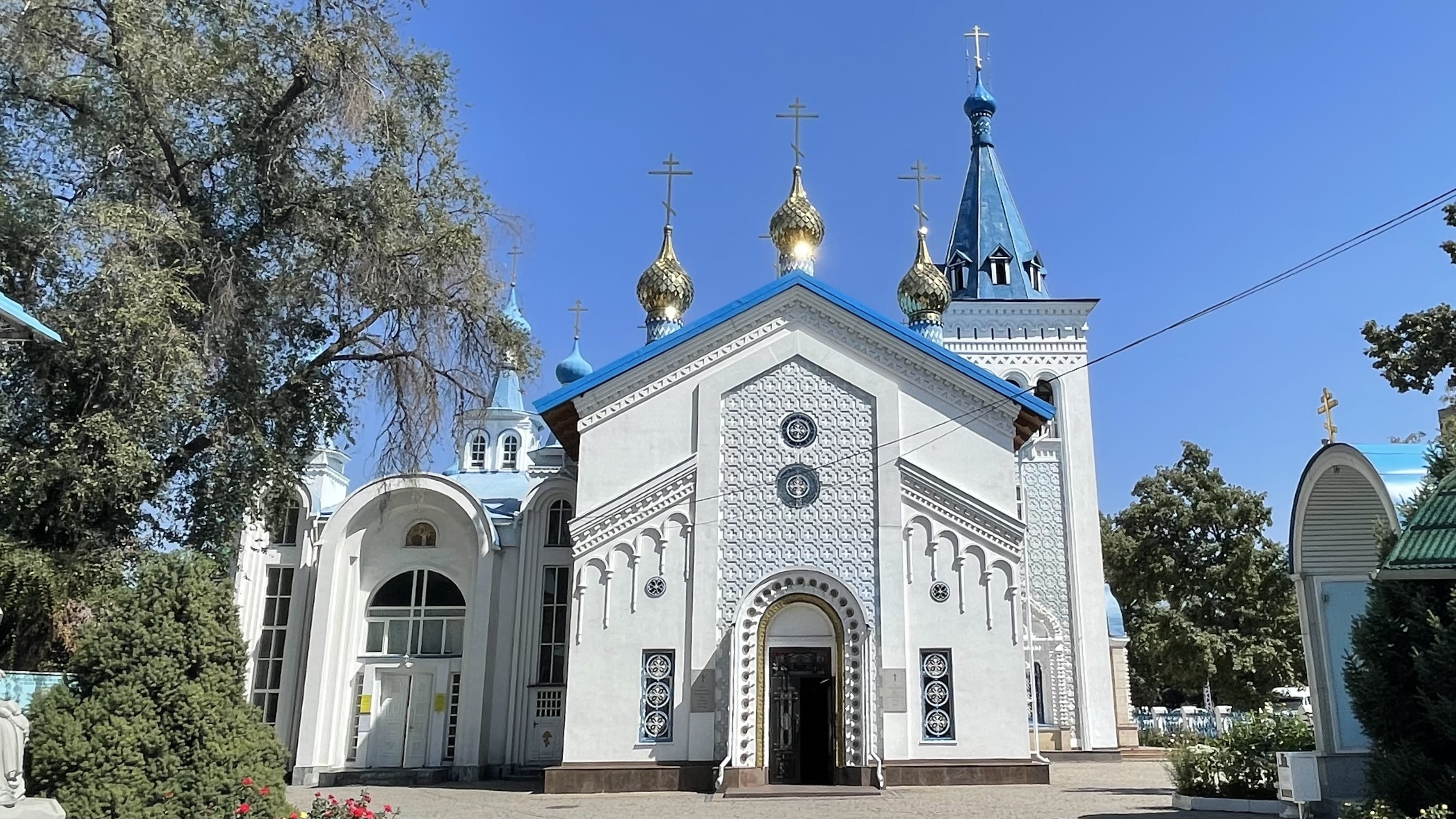
Next, we headed to the Holy Resurrection Orthodox Cathedral, one of Bishkek’s oldest churches. Its exterior stood out immediately — white patterned plaster walls, arched details, blue roofs, and gold onion domes — a sharp contrast to the Soviet-era buildings I’d seen so far.
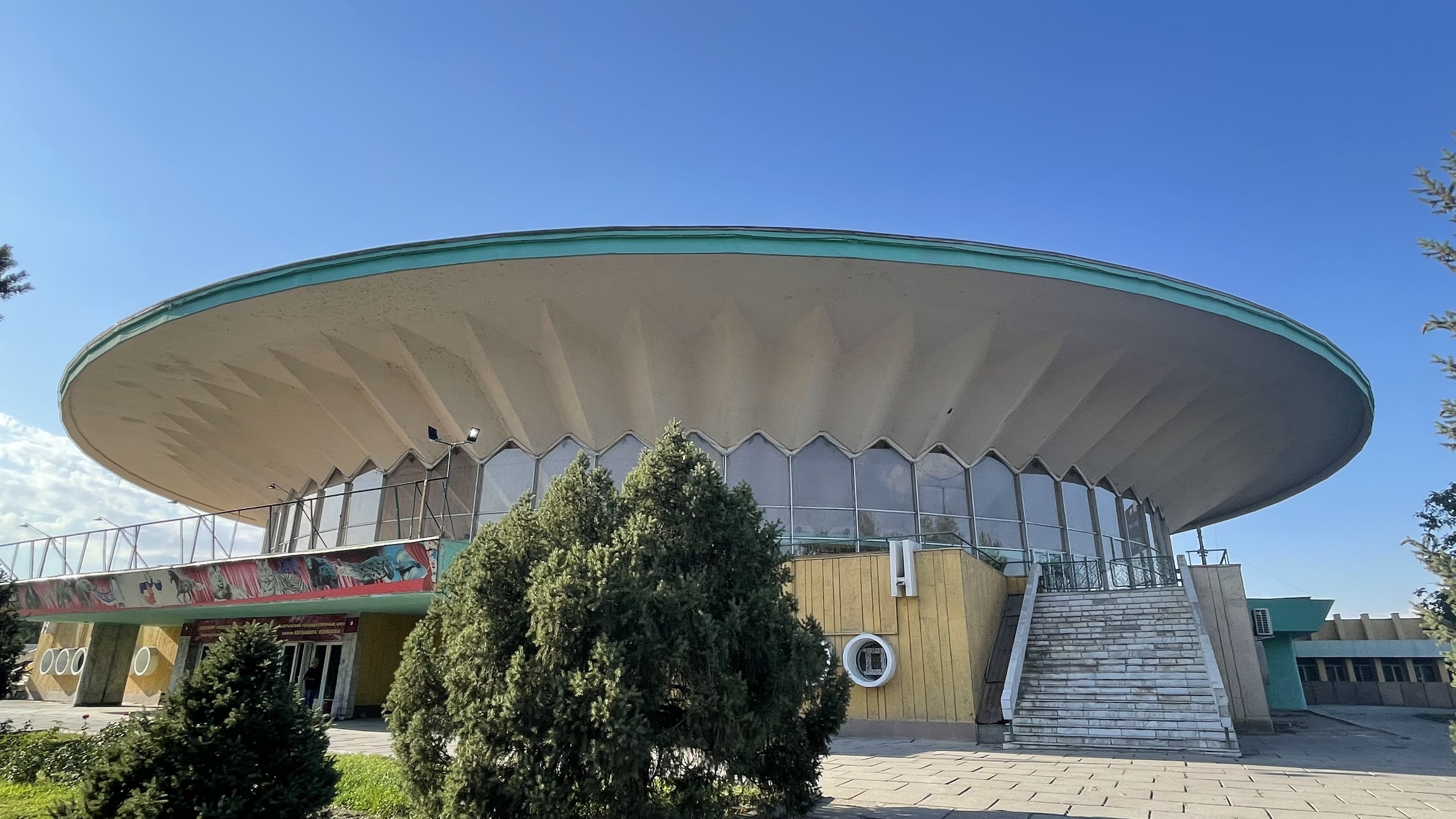
From there we walked to Victory Square, with its eternal flame and heavy symbolism, and then to the Bishkek Circus, which looked strikingly similar to the one I’d seen in Almaty just a few days earlier — both with that modern, flying-saucer-like shape. Before the Russian Revolution, circuses were reserved for the aristocracy; after 1917, they were nationalized and became entertainment for everyone.
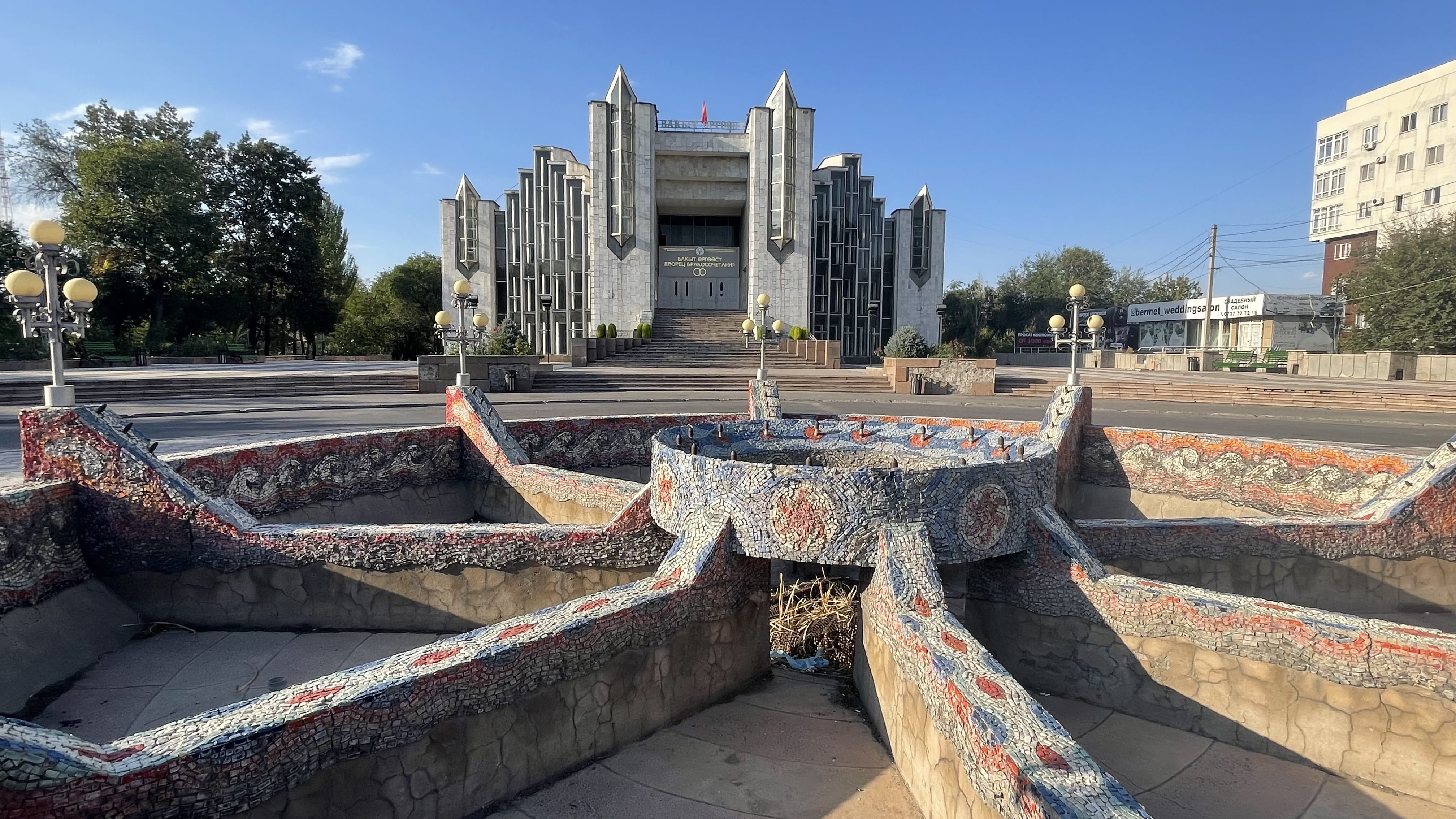
The Wedding Palace came next, another Soviet-era institution meant to replace church weddings with civil ceremonies. Out front was a mosaic fountain — no longer working, but still beautiful enough to imagine how it once looked.
We stopped briefly at Panfilov Park, a green space with tree-lined paths, monuments, and a small amusement park. In the middle of the park stood a statue of Masha and the Bear, a Soviet cartoon character that felt both random and oddly fitting — one of those quirky cultural leftovers that made me smile.
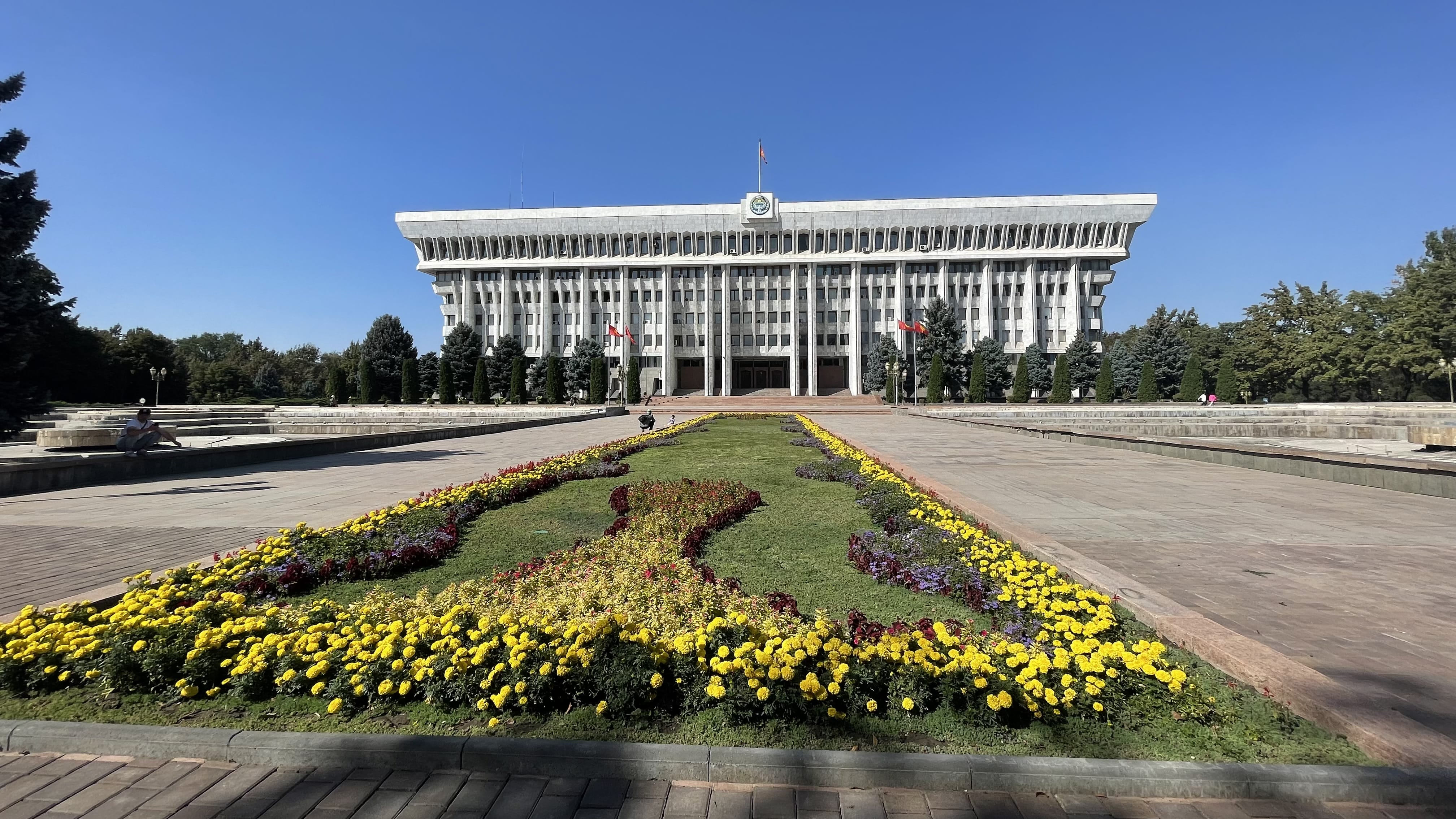
We passed the Drama Theater with its sculpted reliefs and continued on to the Presidential Office building, landscaped with fountains and flowers and framed by the stark government White House.
Later, we passed the Ala-Too Cinema, Bishkek’s oldest movie theater from the 1960s with its Soviet bas-relief, and the Opera and Ballet House nearby. At Ala-Too Square, in front of the State History Museum, preparations were underway for Independence Day. By evening, the square was full of crowds, music, and flags.
That evening we had dinner at an Italian restaurant called Cyclone. Afterwards, we joined the Independence Day celebrations along Chuy Avenue, where the whole city seemed to be out. It was a lively close to the day.
This morning, we walked to Kyrgyz National University to see The Path of Enlightenment, a large mosaic created in 1978 by artist Satar Aitiev, installed on the exterior wall above the entrance to one of the university buildings. It felt very different from the Soviet mosaics we’d been seeing — less about heroic workers and ideology, and more hazy and painterly, almost philosophical. Our guide told us it caused a bit of a stir at the time, back when Bishkek was still called Frunze, because it didn’t fit neatly into the usual Soviet style.
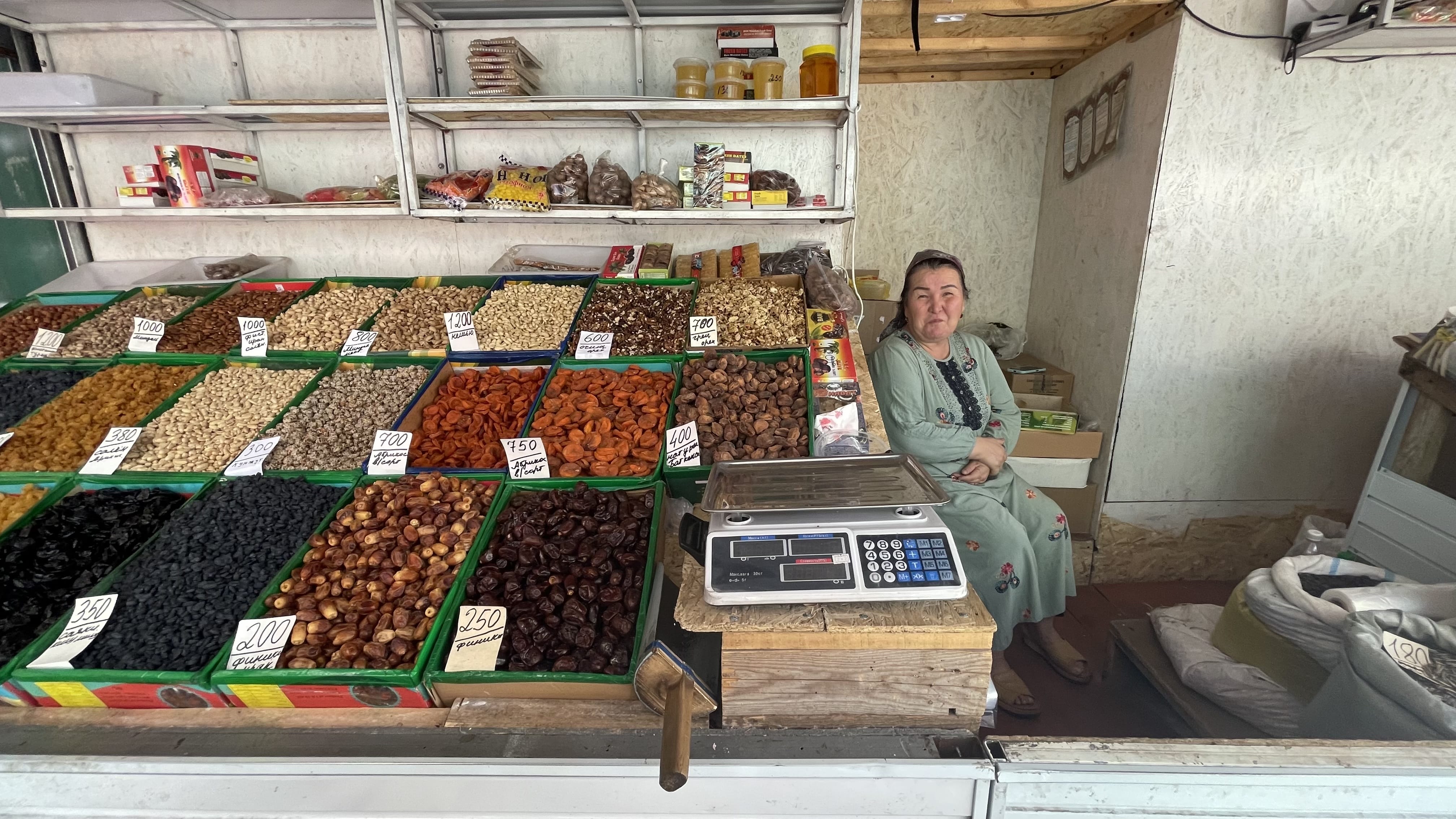
From there, we headed to Osh Bazaar — Bishkek’s largest market, with roots dating back more than 2,000 years to the Silk Road. Inside were sacks of dried apricots and walnuts, stacks of warm lepeshka bread, rows of household goods — and so much more. One vendor pressed an apple into my hand with a smile, while nearby a couple of men leaned over a game of backgammon as kids darted between stalls.

Leaving Bishkek behind, we drove east toward Tokmok, a small Soviet-style city. Stalinist-era buildings and memorials lined the streets, and a massive monument featuring a Soviet Il-28 bomber dominated one square.
Not far from Tokmok stands the Burana Tower, one of Kyrgyzstan’s most important Silk Road landmarks. Part of the ancient settlement of Balasagun, the 11th-century minaret once stood over 40 meters(but now just 24.6 after centuries of earthquakes).

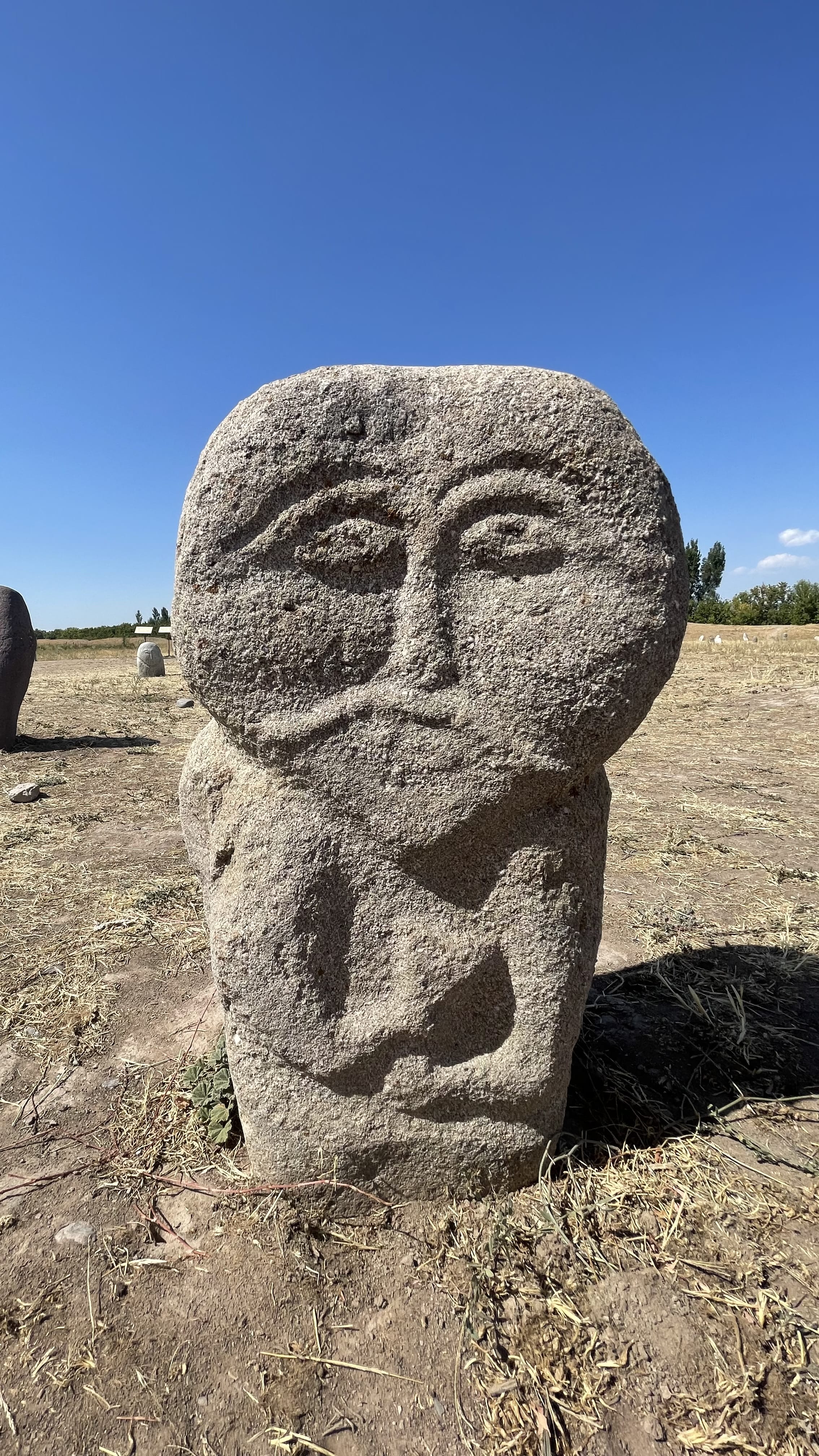
Around the tower are the remains of a citadel, petroglyphs, carved stone grave markers called balbals, and a small museum. The climb up the tower’s narrow staircase was steep, but the view from the top opened out across the valley toward the Tian Shan mountains — worth it.
By late afternoon we reached Lake Issyk-Kul, a vast alpine lake that never freezes, even in winter. The Kyrgyz people consider it sacred.
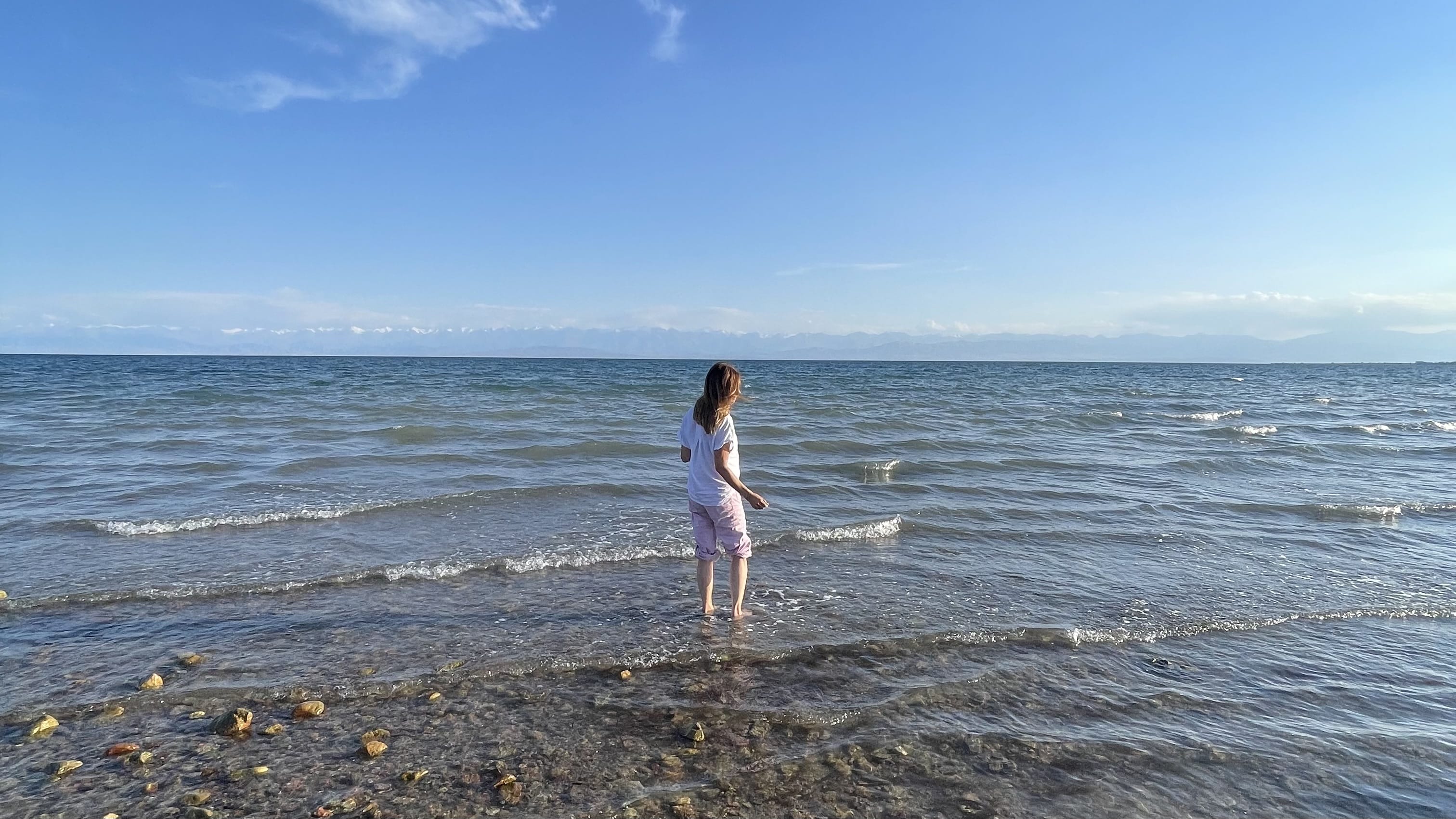
We followed the northern shore to Cholpon-Ata for the night. It had been a long, day of driving, and unfortunately our hotel was mostly closed for the season — cold, empty, and not exactly welcoming.
We left Cholpon-Ata in the morning and continued east along the lake. On the map it looks like a four-hour drive to Karakol, but with stops it stretched into most of the day.
One stop was at a Soviet-era bus stop in Grigoryevka — plain white on the outside but lined with plaster reliefs inside.
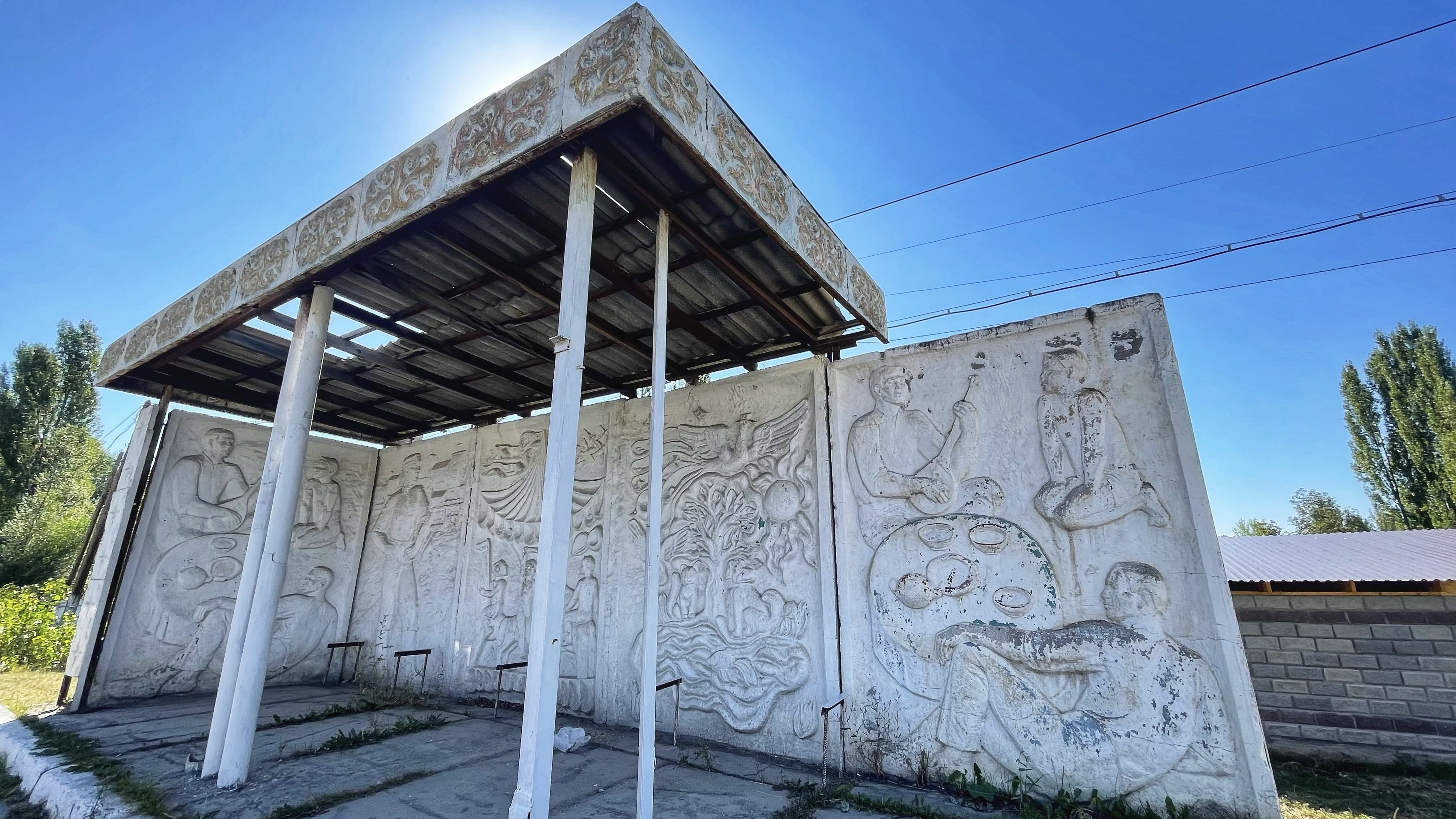
While I was taking photos, I noticed a local couple nearby, the man wearing a traditional felt hat called a Ak-kalpak. With help from our guide, I asked if I could photograph them. Not only did they agree, they invited us back to their home for tea and bread.

The unexpected stop became the highlight of the day. At one point the woman began affectionatley calling me her daughter and explained her belief that every seventh person is spiritually enlightened — so our visit was a blessing for her. In truth, she was the blessing.
Along the way, we passed more of Kyrgyzstan’s wonderfully quirky bus stops. Scattered across the country, no two are alike. Many are covered in mosaics; others concrete reliefs, curved roofs, or unexpected geometric shapes. Some feel playful, others oddly monumental—and they often sit in the middle of nowhere.
Even faded, cracked, and a bit worse for wear, they’re fascinating pieces of design. More than simple shelters from sun, wind, and snow, they’re small roadside artworks—and I would have loved to stop at every single one.
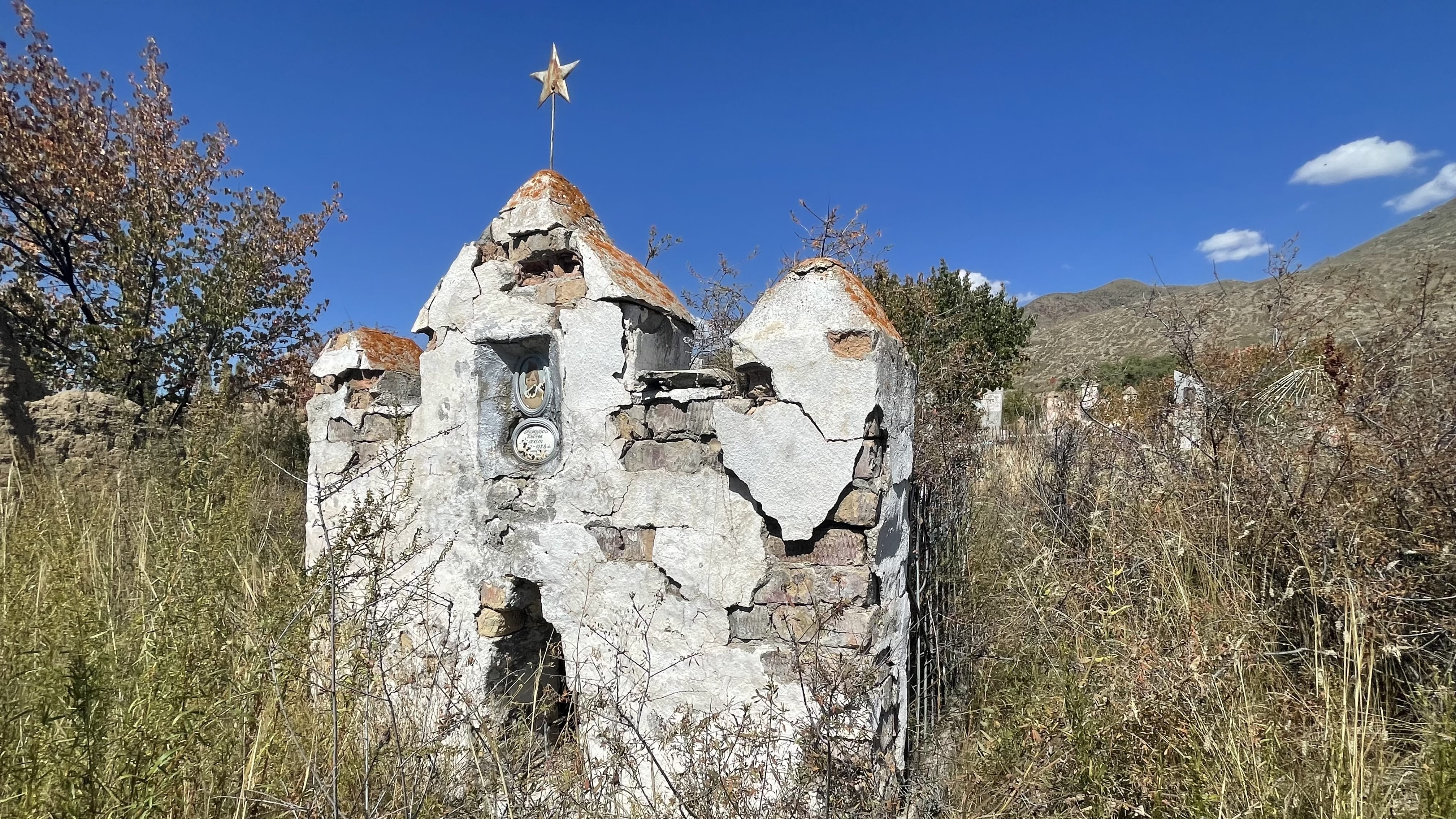
We also stopped briefly at an old cemetery we were passing. Along the drive, our guide pointed out several low burial mounds nearby—easy to miss if you didn’t know what you were looking for. These ancient kurgans date back thousands of years, built by nomadic tribes long before Karakol existed, when this region was part of the Silk Road world.
From the road, they looked like simple rises in the earth, but knowing what they were made the landscape feel deeper. I was honestly a little frustrated not to stop and explore them more.
Our first stop in Karakol was the Orthodox Cathedral of the Holy Trinity, a wooden church rebuilt in 1895 that has survived earthquakes, state takeovers, and restorations.

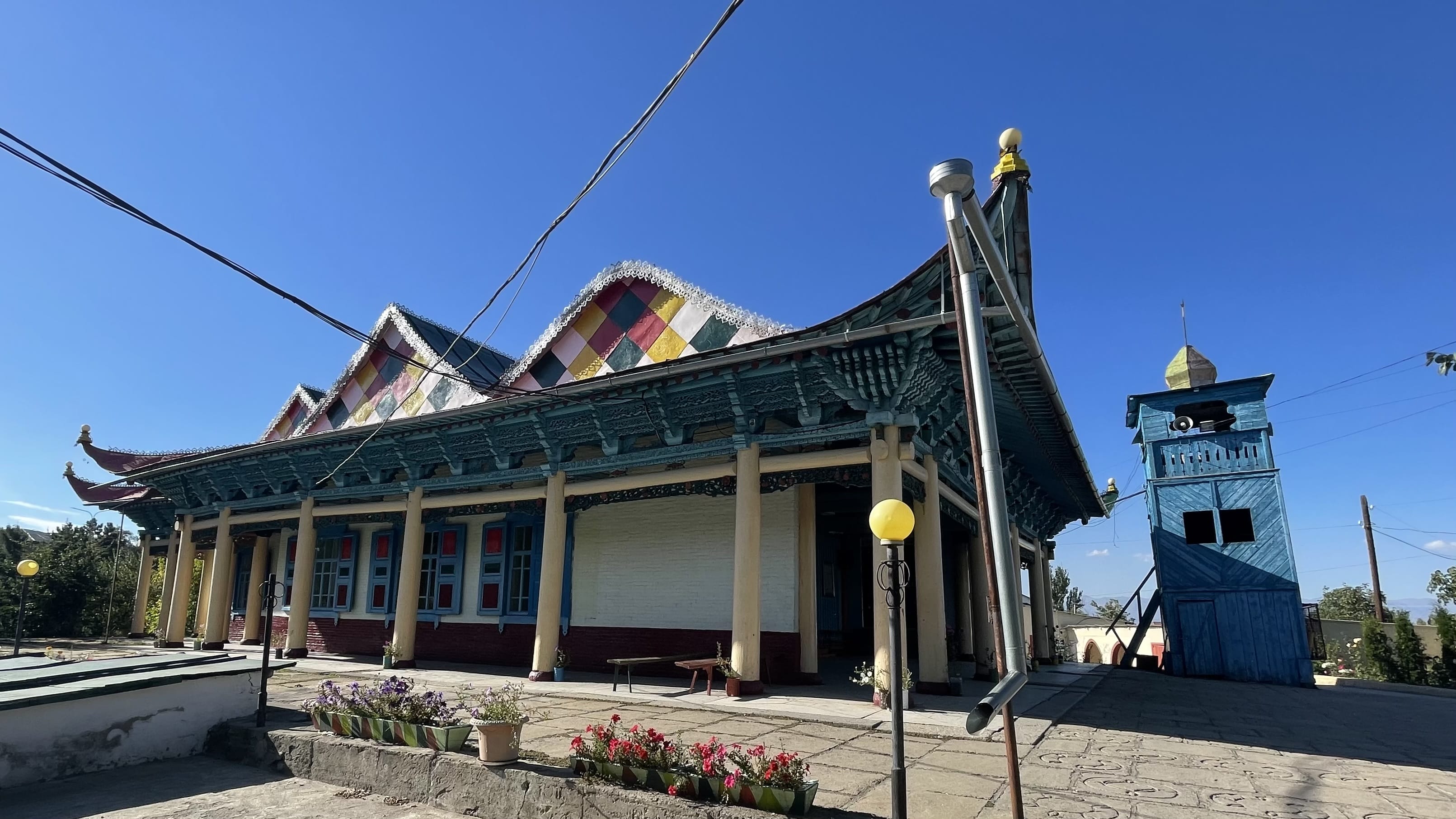
From there we visited the Dungan Mosque, built in 1910 by Chinese Muslim refugees and constructed entirely without nails. To enter, we had to put on long robes and scarves provided at the door, making us look like a group of wizards.
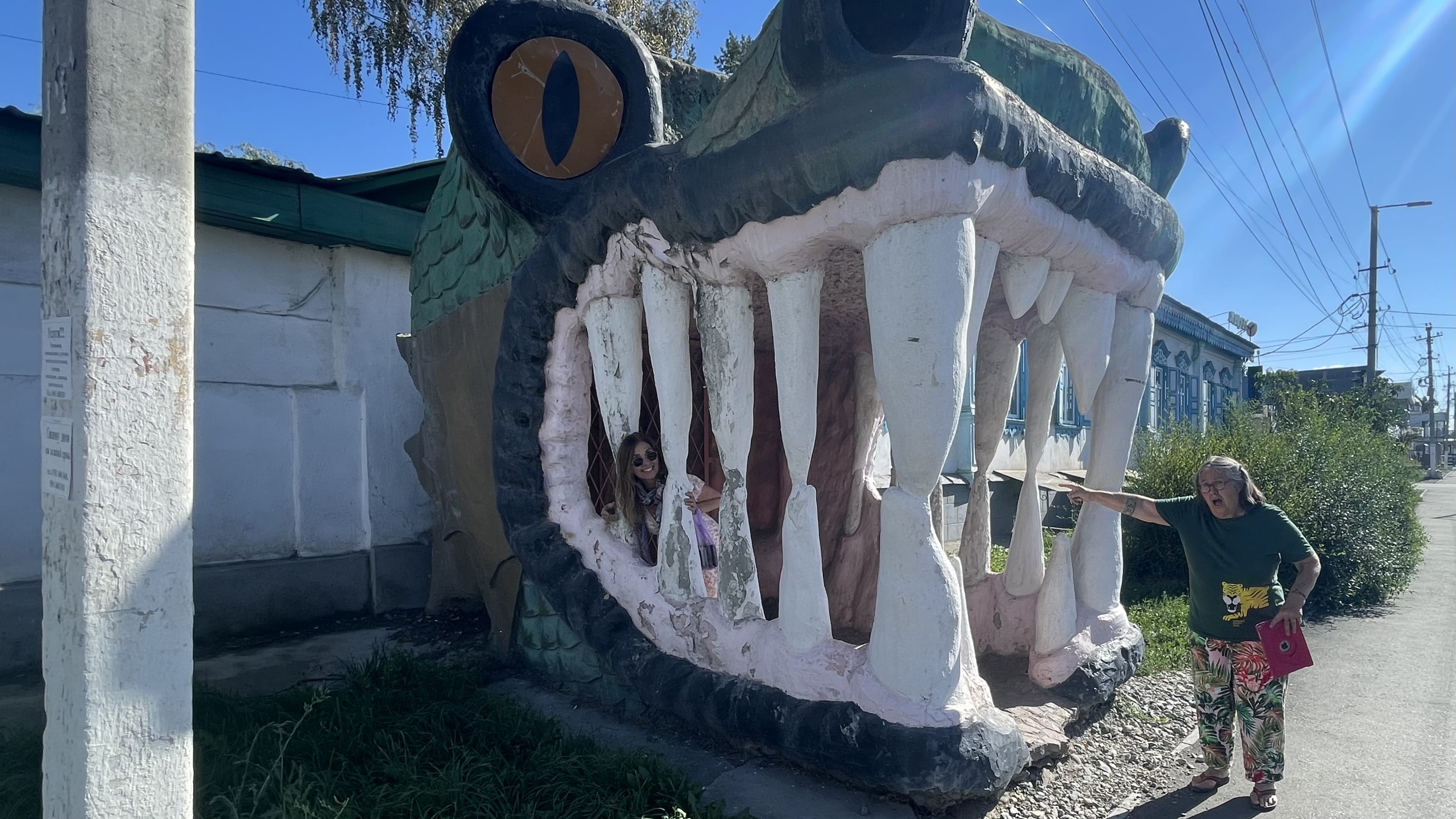
Afterward, we made a quick stop at Karakol Coffee—because of course—for iced coffee, passing a giant alligator sculpture along the way.
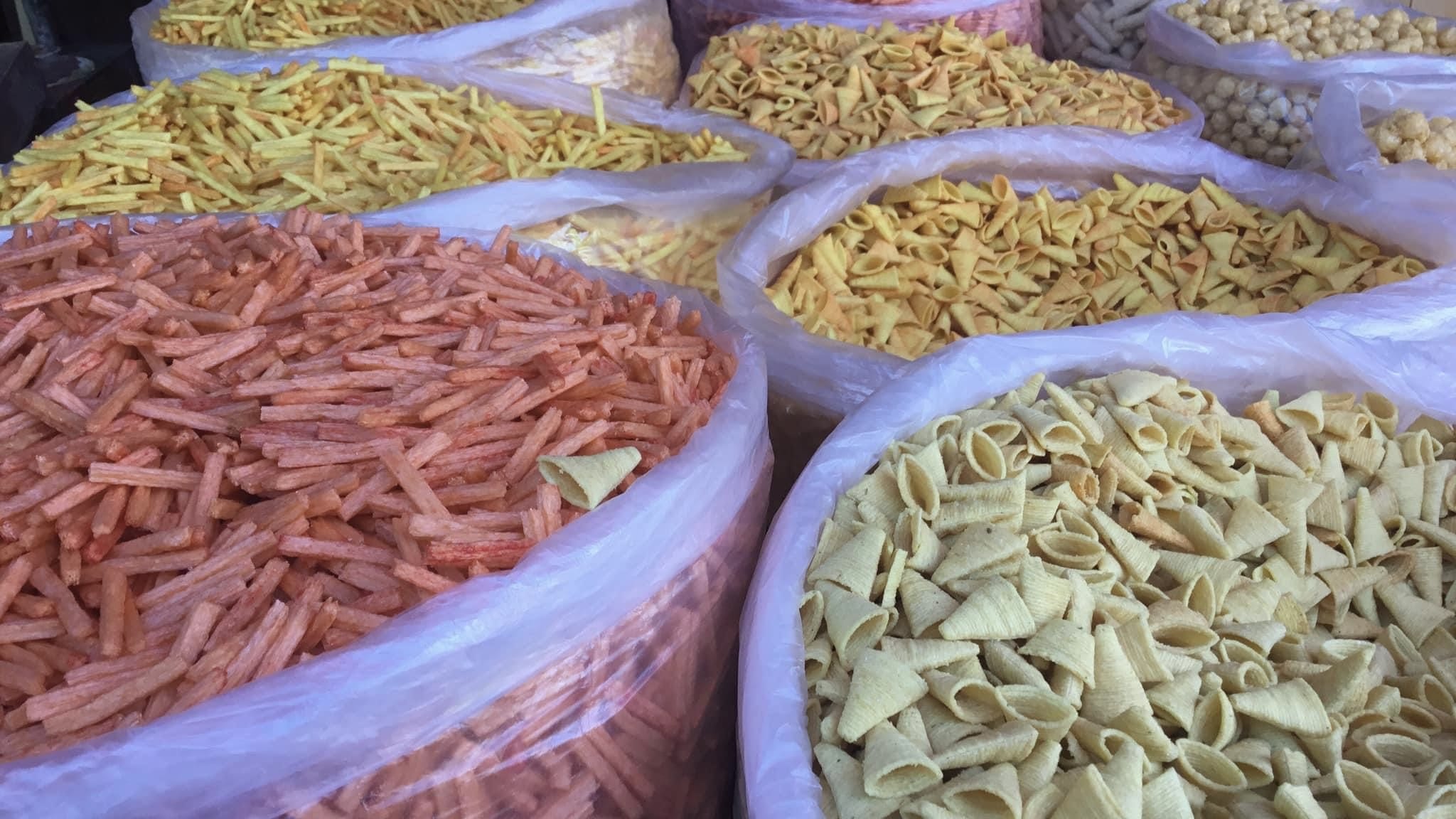
We ended the afternoon at Karakol Bazaar, wandering stalls piled with dried fruit, spices, clothing, and bits of Soviet memorabilia. To my surprise, I spotted a snack that looked just like Bugles — not the American kind, but their Kyrgyz cousins, sold in giant barrels. They tasted different, of course, but it was funny to find something so familiar so far from home.
After quick showers, five of us squeezed into a tiny car and headed out for dinner — a chaotic but fitting end to another long day.
This was the day we traded our van for three four-wheel-drive vehicles, and it quickly became clear why. The road ahead was dirt tracks, potholes, and switchbacks.
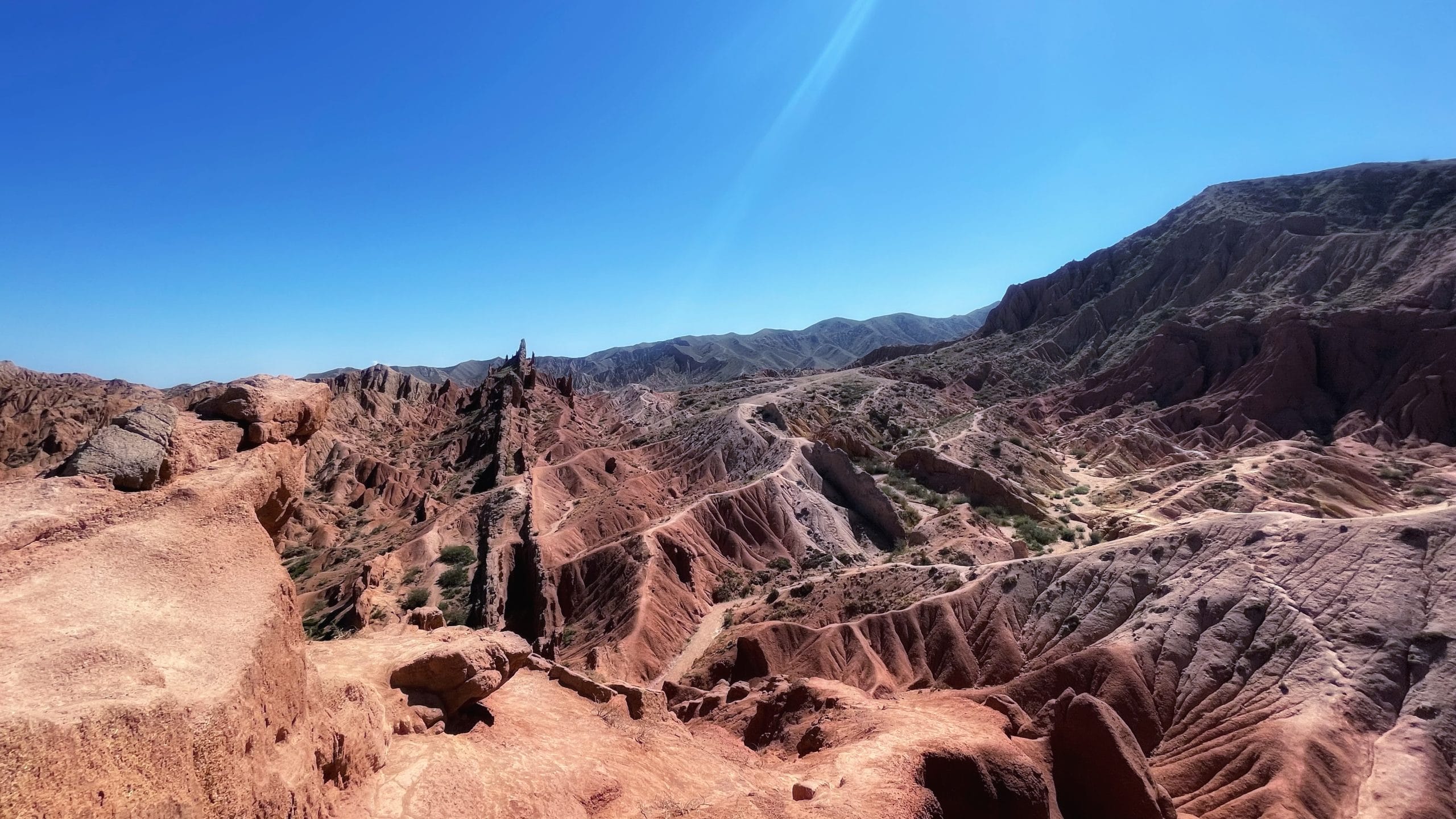
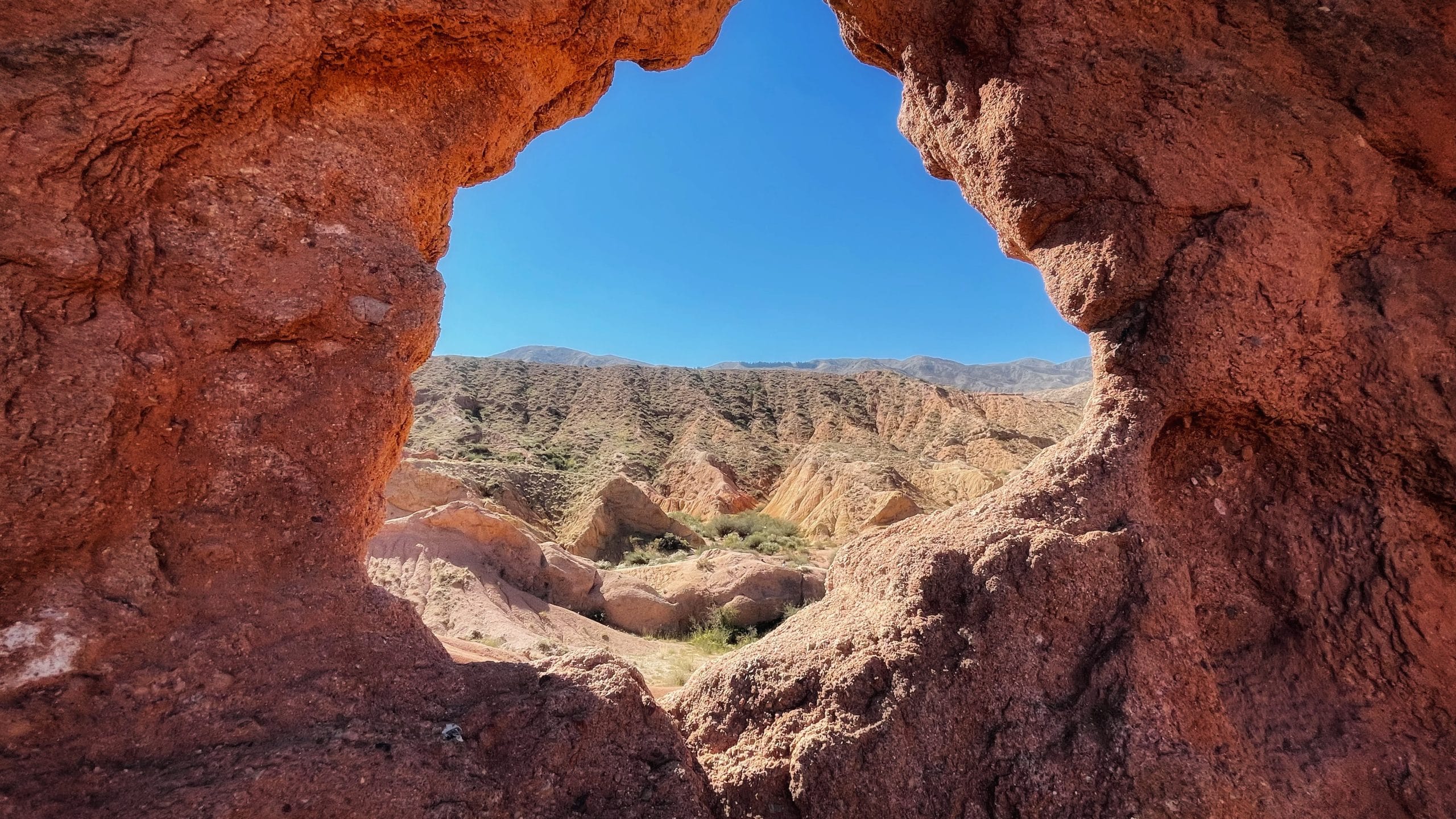
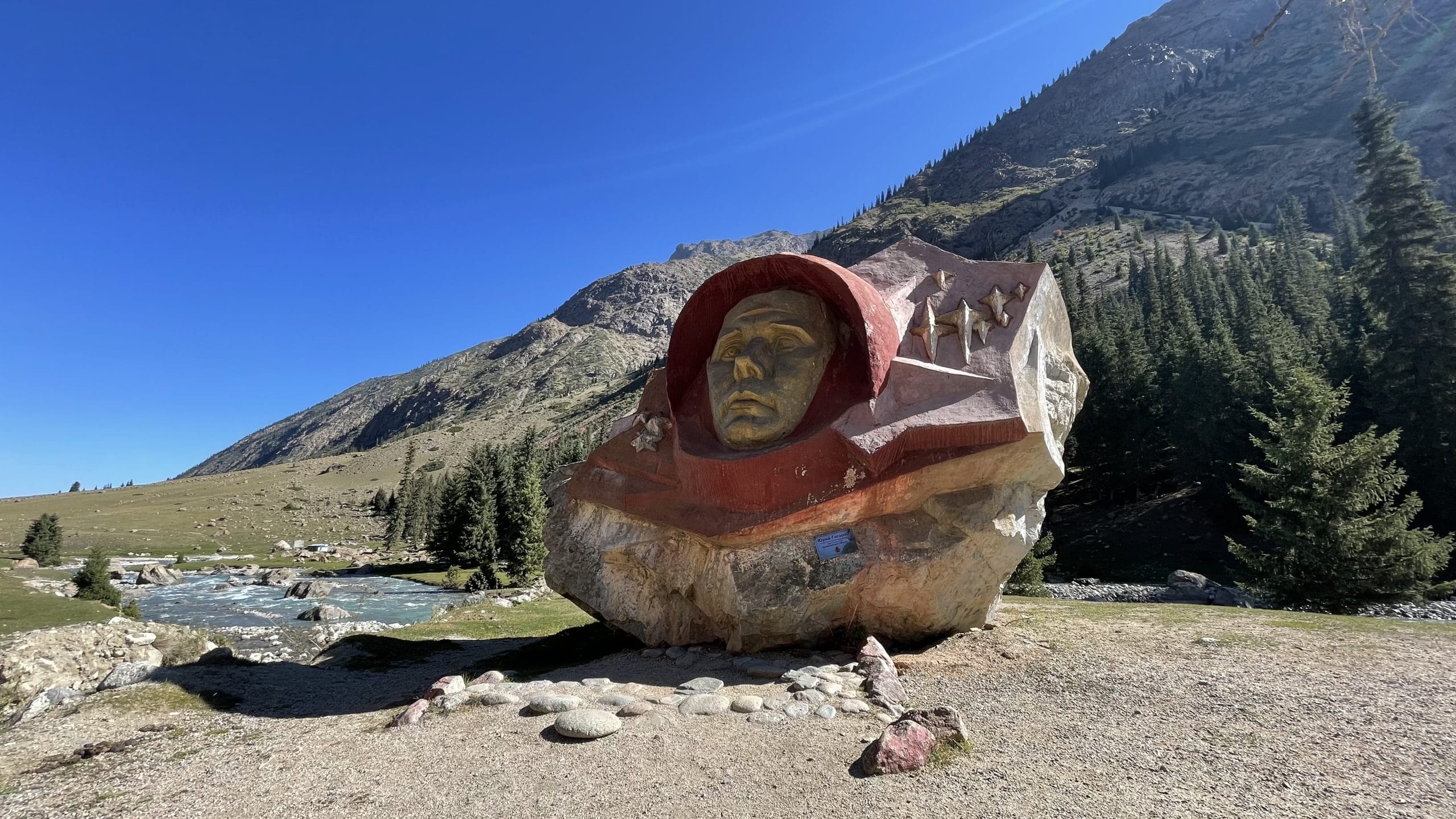
We followed the southern shore of Issyk-Kul past shifting scenery — Skazka (Fairy Tale) Canyon’s red rock formations, a boulder carved with Yuri Gagarin’s face in Barskoon, and the ruins of Aalam Ordo, an abandoned cultural complex.
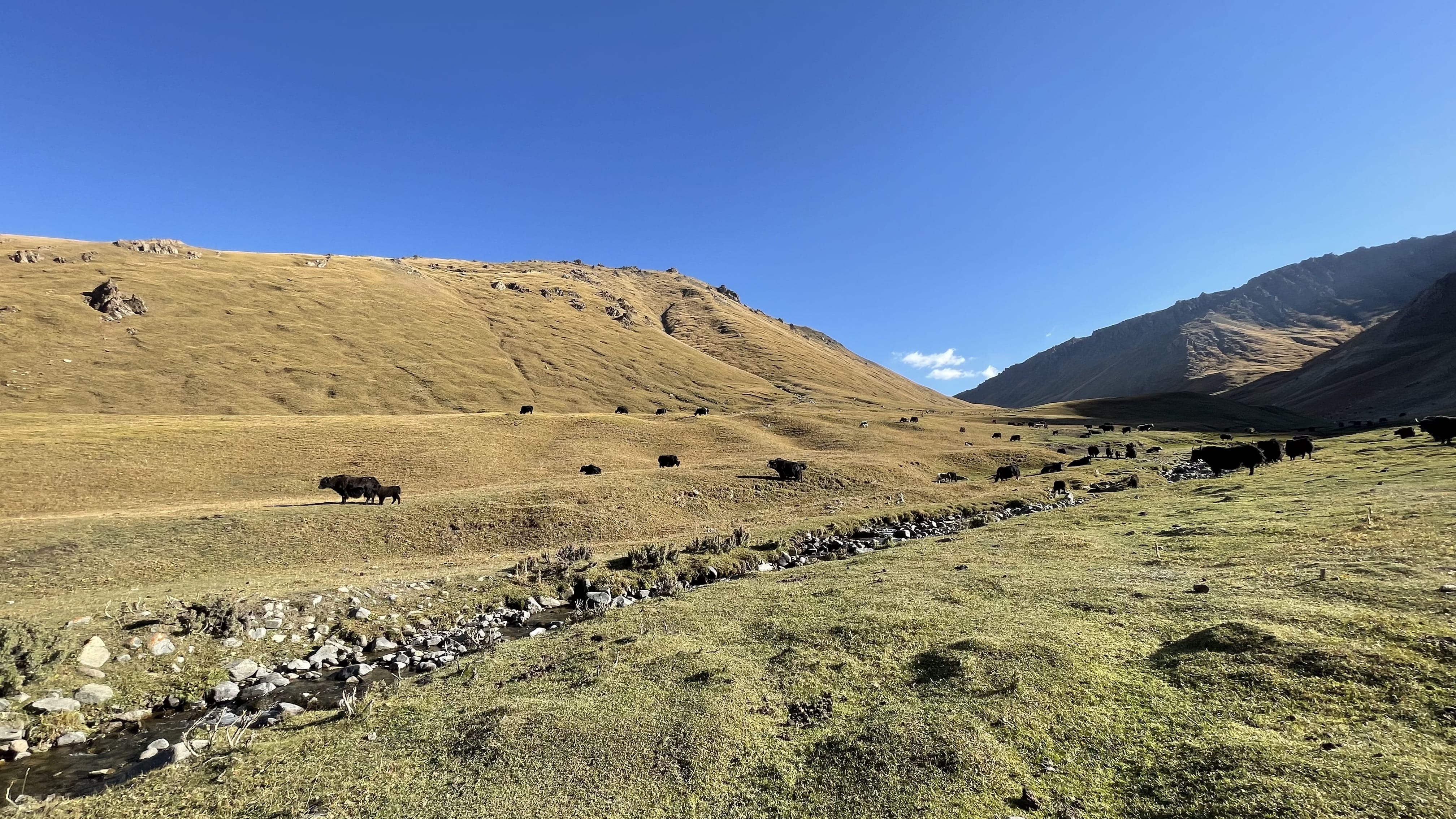
By late afternoon we reached Song Kol Lake, an alpine lake ringed by mountains. Wide, empty, and utterly peaceful, it was one of the most beautiful places of the trip. High in the mountains, Song Kol is a summer pasture where nomadic families still bring their herds, living in yurts along the shore. Just before arriving, we passed a wide open field dotted with grazing yaks—a quiet, fitting introduction to the landscape.
We spent the night in a yurt camp near the shore, which ended up being one of my favorite experiences in Kyrgyzstan. I wrote more about staying at Song Kol Lake and what the yurt camp was like here.

The yurts — round felt tents decorated with bright fabrics — were simple but surprisingly warm thanks to little coal stoves inside. Outside, the sky was filled with stars; inside, it was cozy enough to sleep soundly.
In the morning, stepping out of the yurt to see the lake and mountains spread out before me was unforgettable.
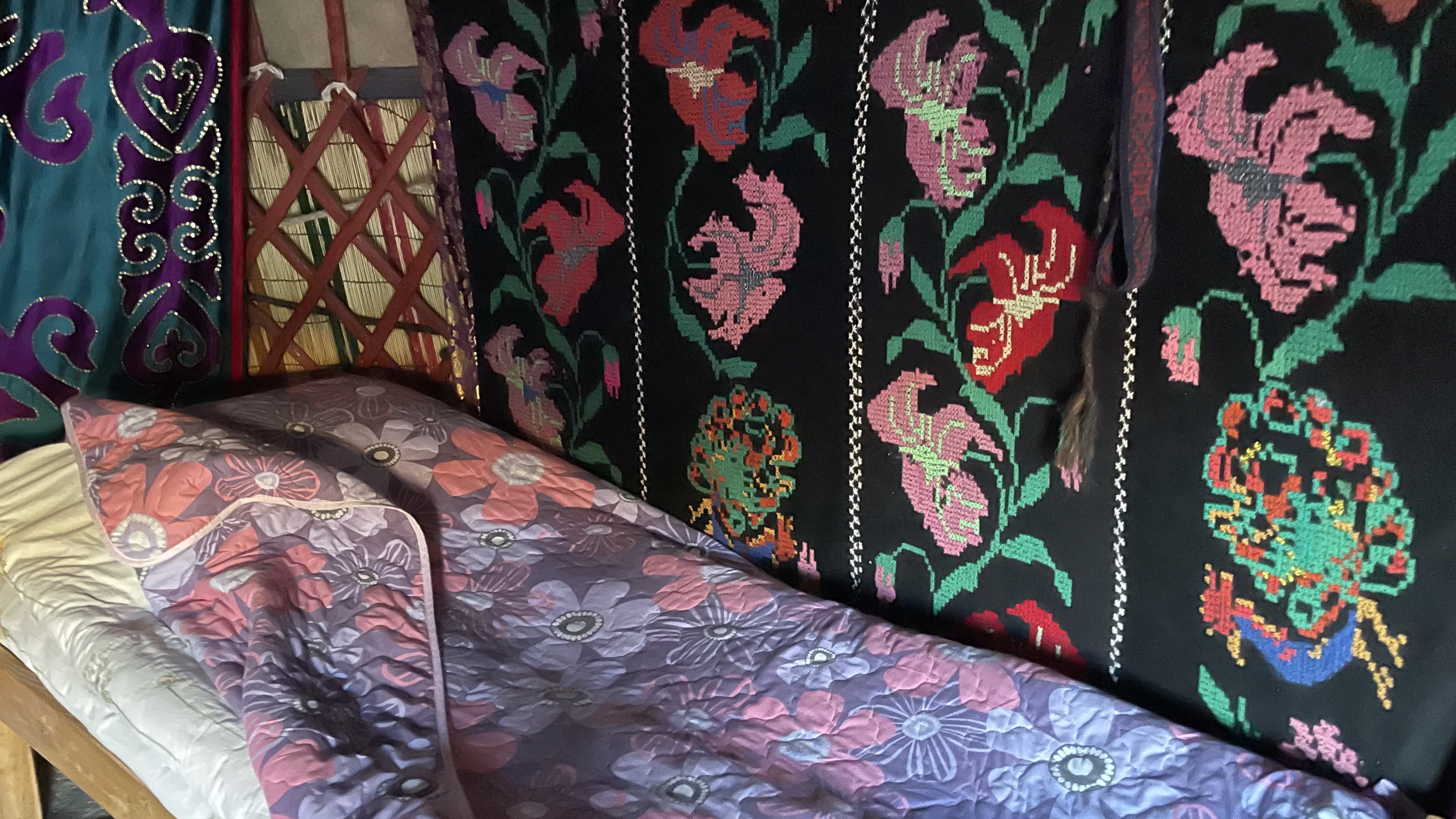
Facilities were basic — a couple of sinks and Western-style toilets, no showers — but the food was excellent. Everything was cooked in the kitchen yurt and served in a larger dining yurt. The bread that night might have been the best of the trip.
The camp also offered horseback rides and hiking options. If I could do it again, I’d spend two nights here: one to ride into the hills, another to follow the trails on foot. The combination of scenery, fresh air, and the novelty of staying in yurts made Song Kol a place I didn’t want to leave.

After a late morning walk along the shores of Song Kol, it was time to move on. We packed up camp and began the long drive toward Kazarman, trading the stillness of the lake for a day of rugged roads and high mountain passes. The route wound through wide, empty valleys—huge stretches of land with almost nothing in between, except the occasional herder camp.
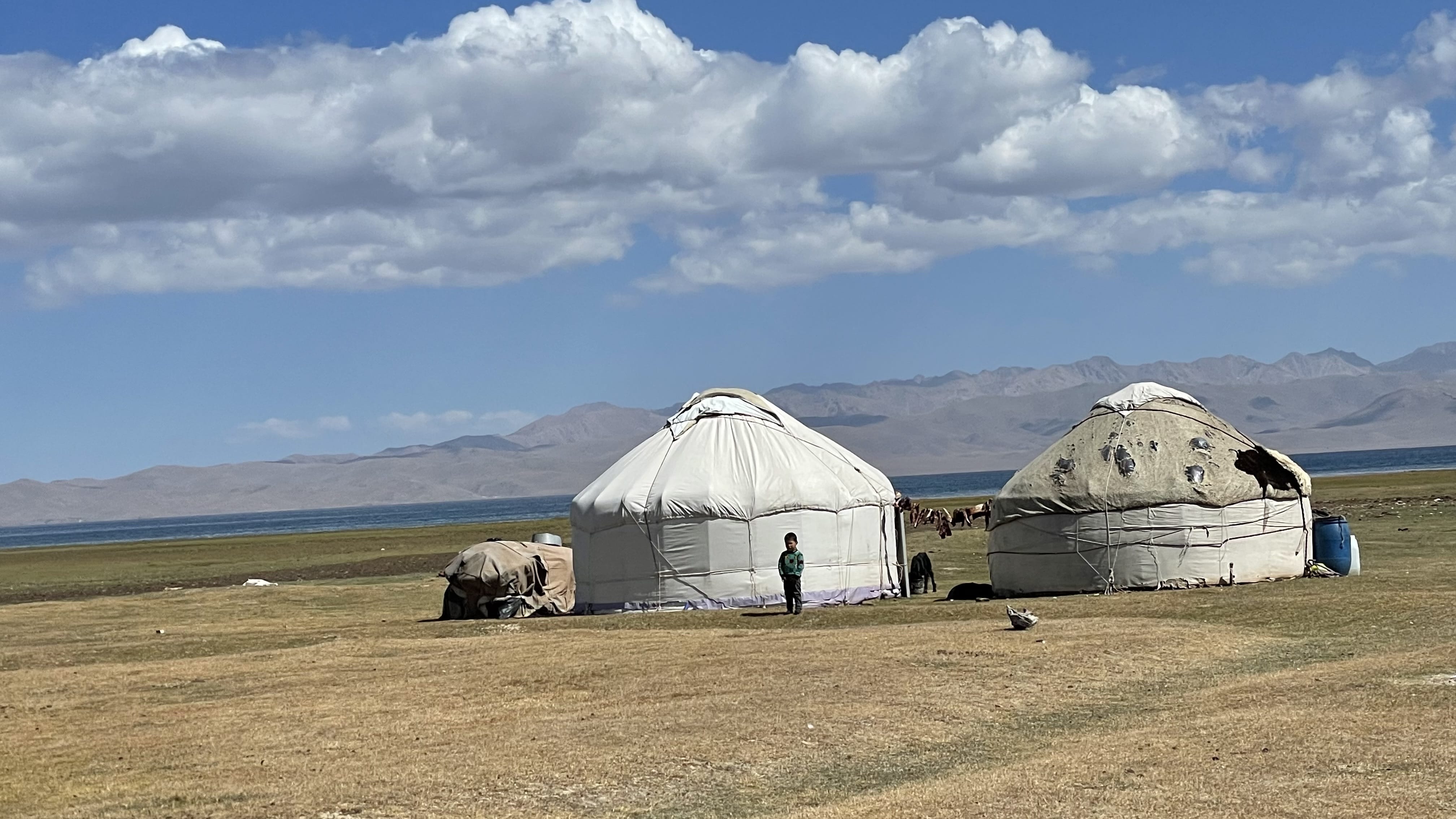
At one point, we passed a single small camp: two yurts, a car, and miles of open space in every direction. Outside, a string stretched between posts held strips of butchered meat drying in the mountain air—a glimpse into daily life out here.
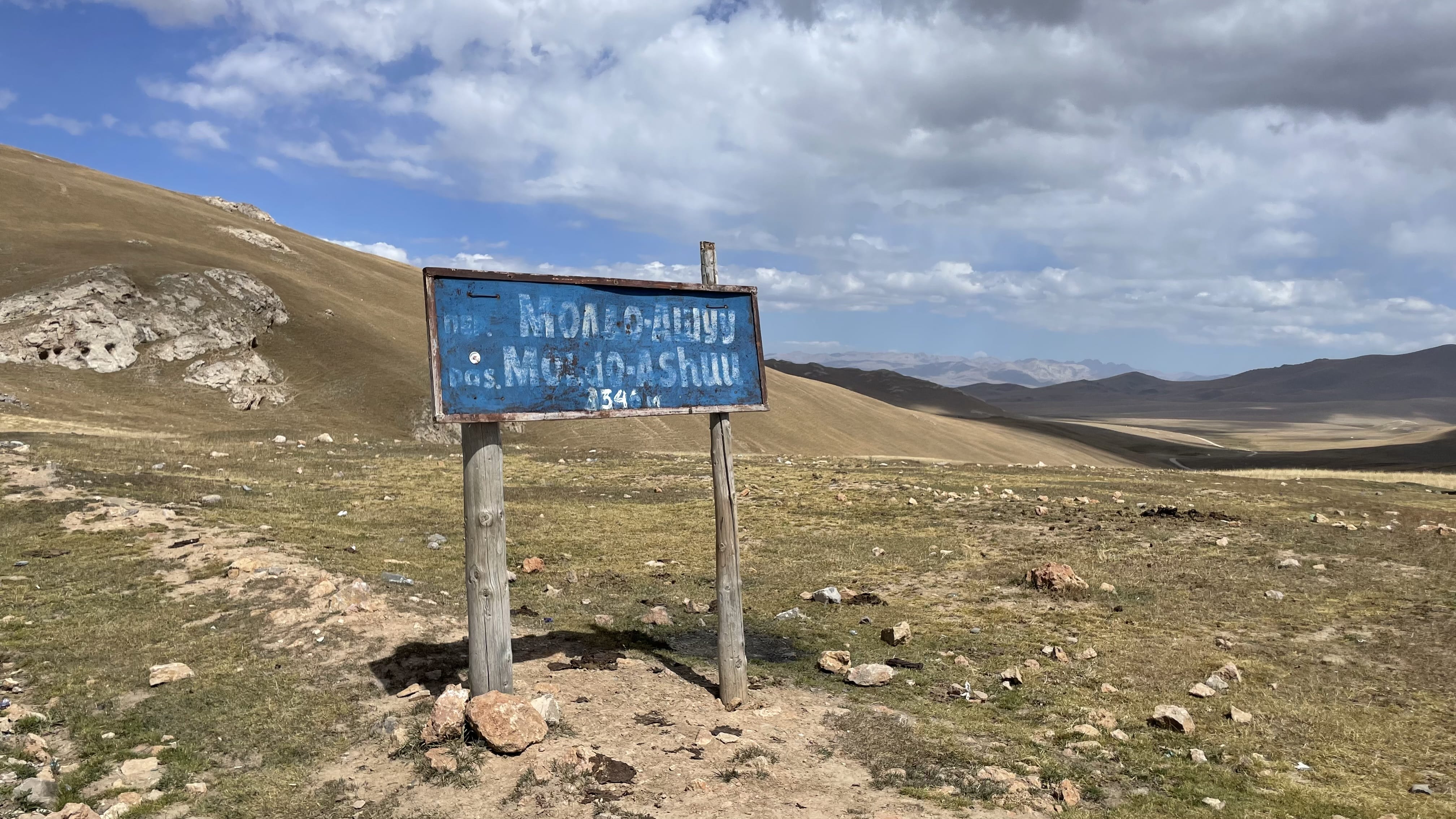
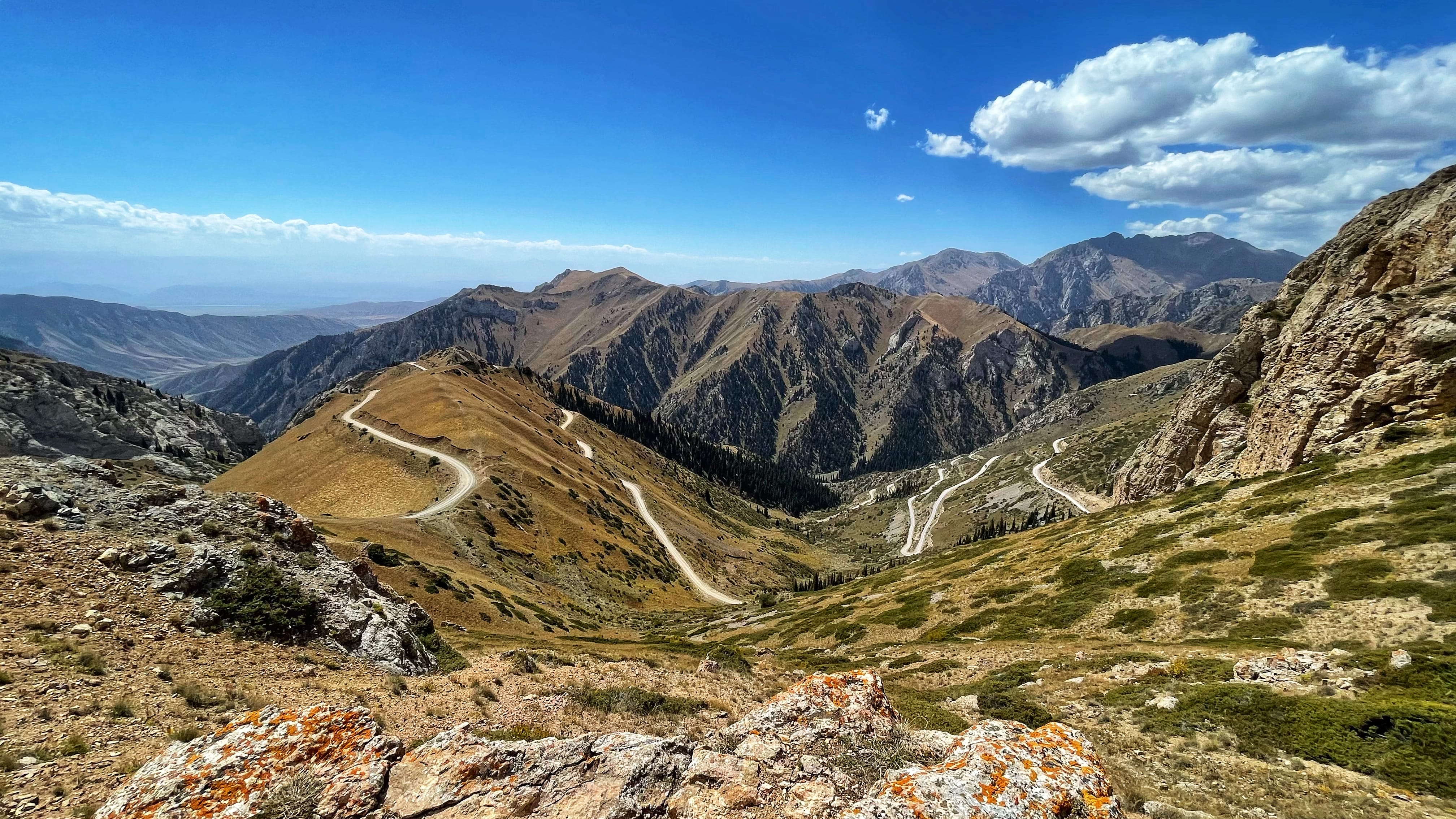
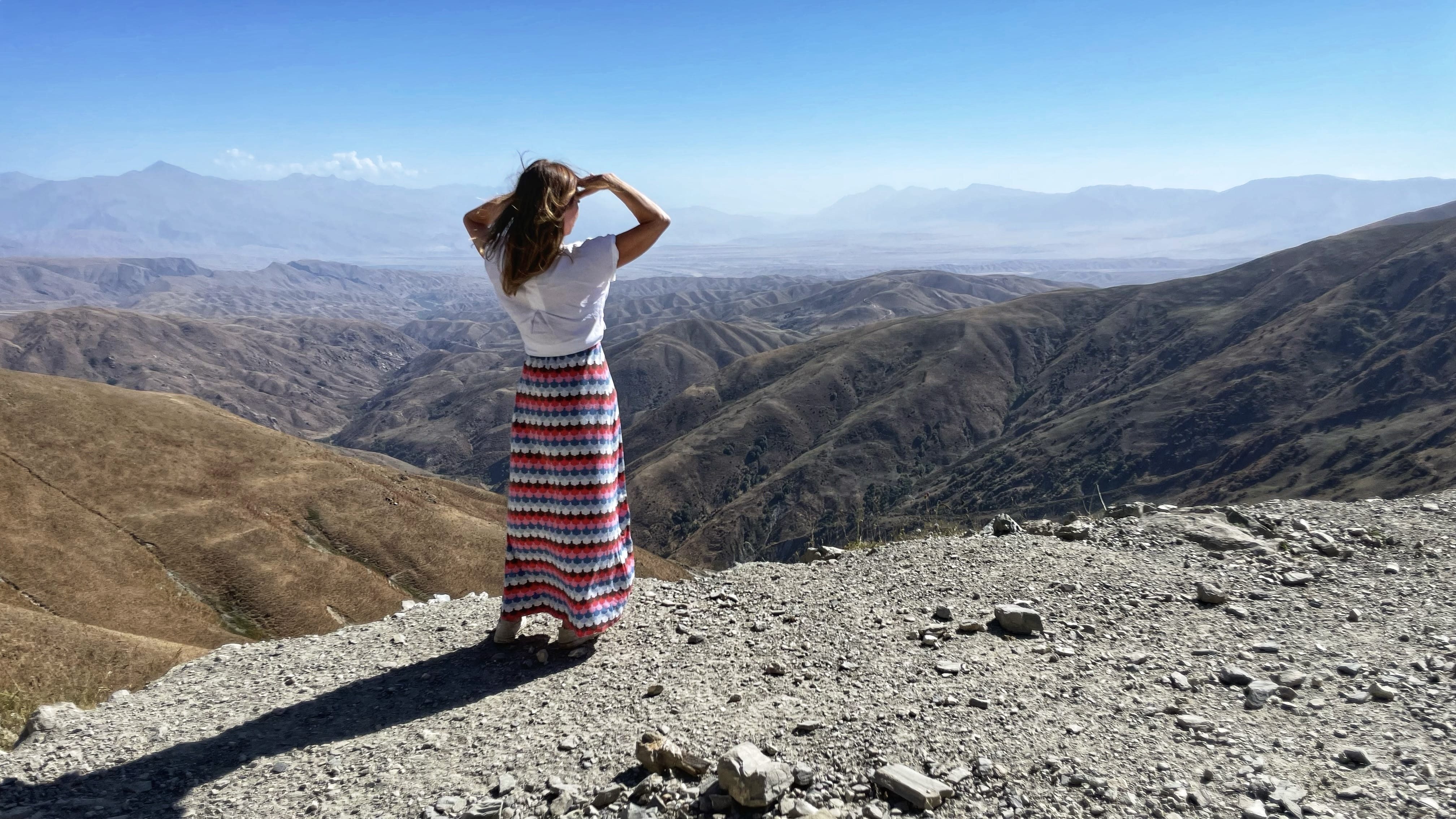
The drive from Song Kol toward Moldo-Ashuu Pass followed the rough Song Kol–Kazarman road, climbing steadily into the mountains. We pulled over whenever we found a safe spot to stretch our legs and take in the scenery. As the road climbed higher, the landscape grew more dramatic, until we finally reached Moldo-Ashuu Pass at 3,400 meters above sea level.

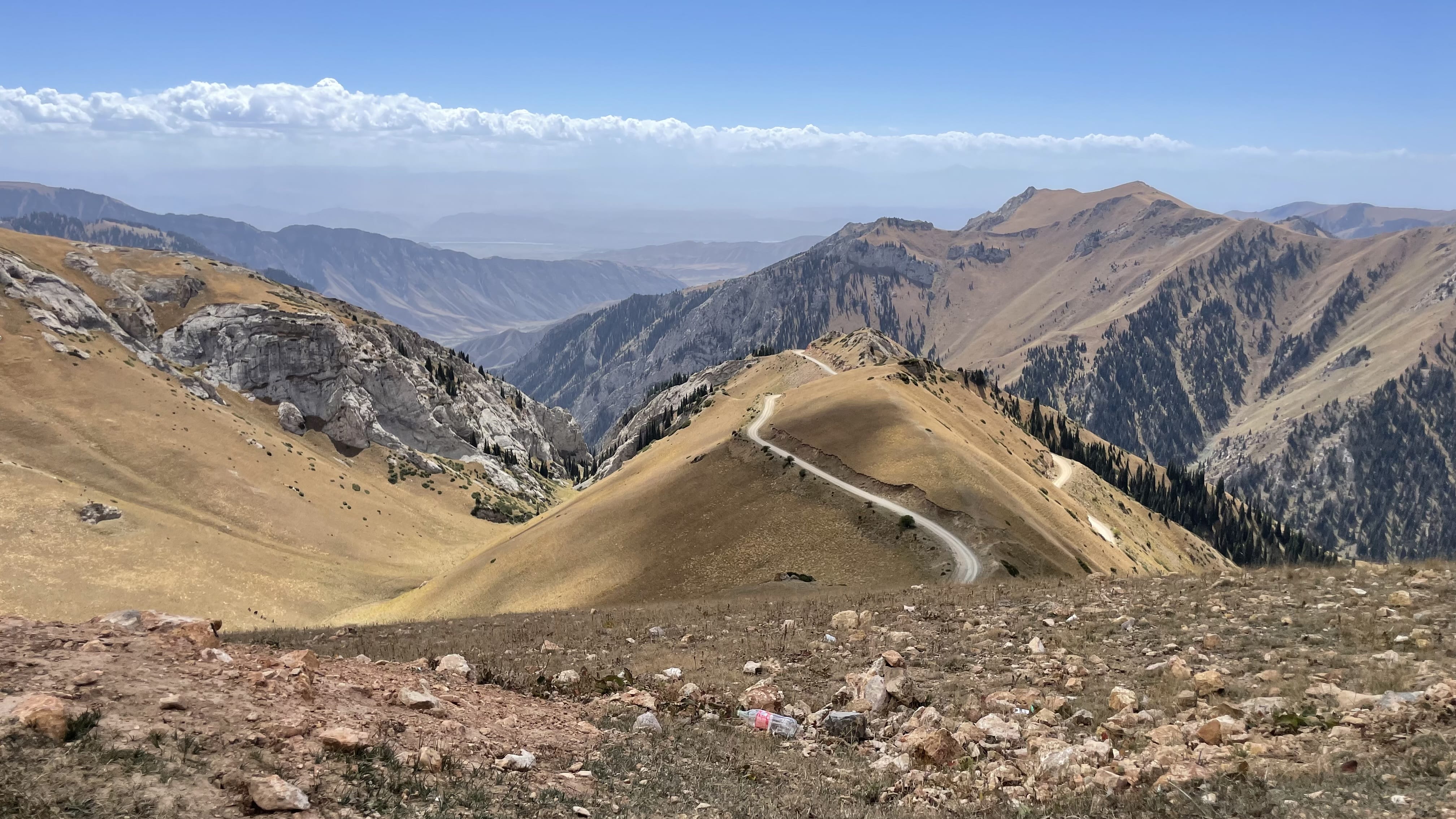
From the top, the land stretched out in every direction—golden hills, jagged ridgelines, and a dirt road snaking down the mountains in endless switchbacks. It’s considered one of the most beautiful mountain passes in Kyrgyzstan, with sweeping 360-degree views and distant glimpses of the Tian Shan range. I could have sat there for quite a while, just taking it all in.
Not long after, we stopped for a roadside picnic lunch. And lucky us—the host from our Song Kol yurt camp had given our guide a couple of loaves of lepeshka, the warm, round Kyrgyz flatbread, to add to our little afternoon feast. Everything spread out on the picnic blanket was good, but once again, the bread was the star.
We hadn’t been back on the road long before one of the vehicles got a flat, so we pulled over and waited. Before long, kids from a nearby village appeared and challenged us to bike races, which turned the delay into an unexpectedly fun break.

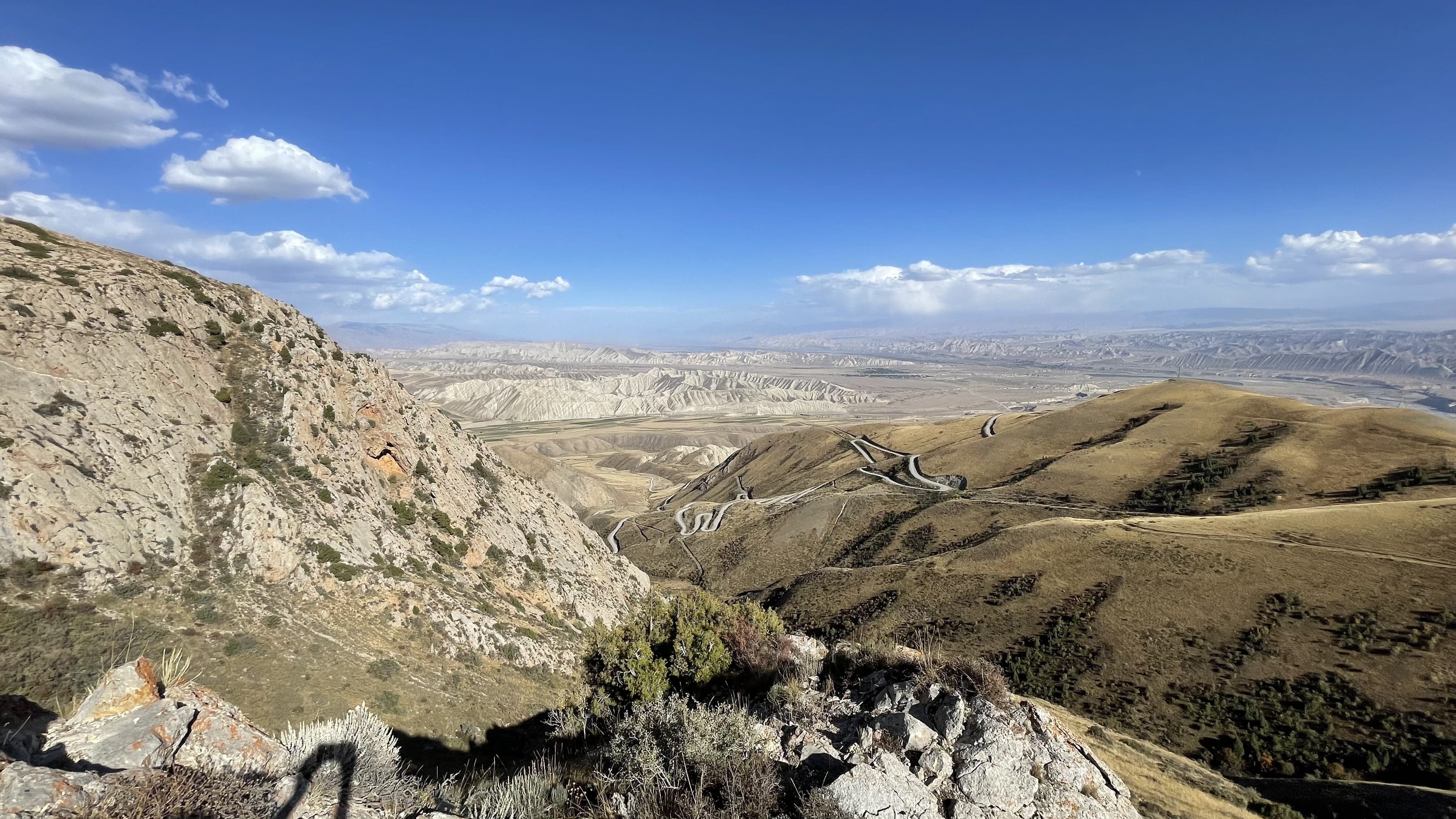
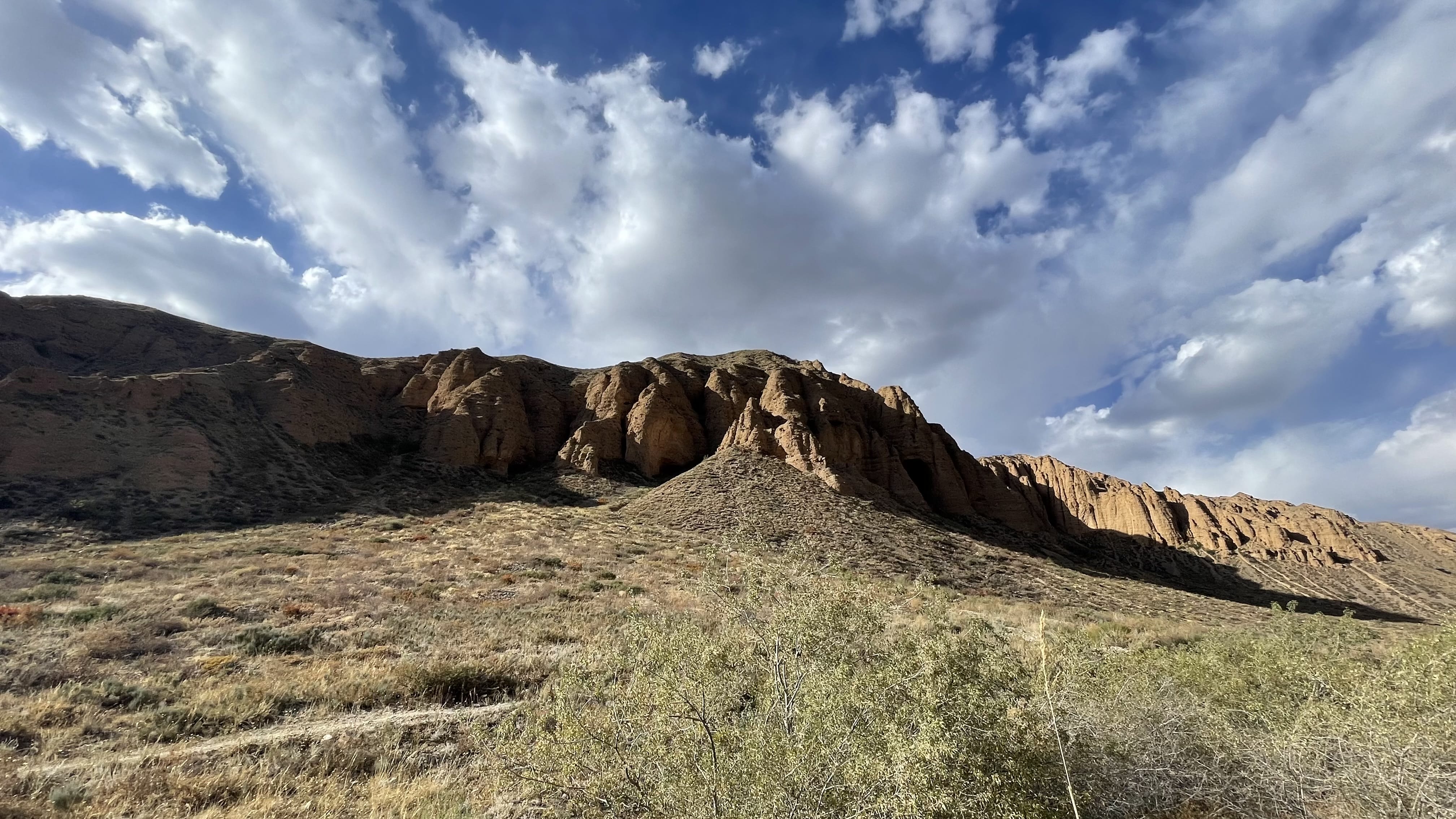
Once back on the road, the scenery opened up again—layered hills and wide valleys rolling out beneath a big blue sky—one last stretch of incredible views before we rejoined the main road and continued on toward Kazarman. As we went, the landscape kept changing, with bands of sandstone and clay eroded into shapes that looked almost like cave entrances cut into the hillsides.
By early evening we reached Kazarman and checked into Elai Guest House, a family home turned guesthouse. Dinner was hearty, home-cooked, and perfect after a long day of travel.
The day started with a big breakfast and strong coffee, then we climbed into the vehicle and headed toward Osh, where we’d be spending the night.
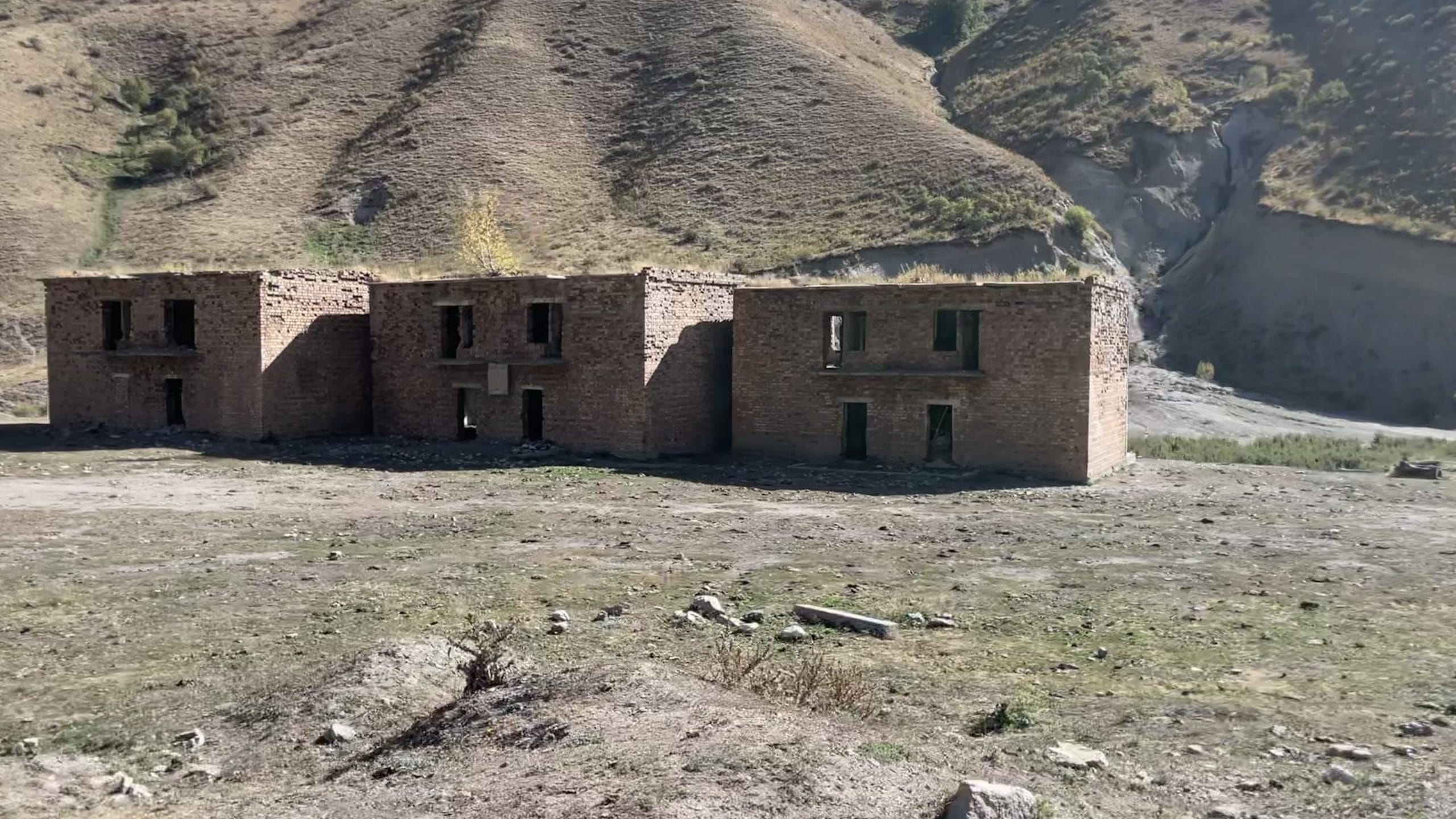
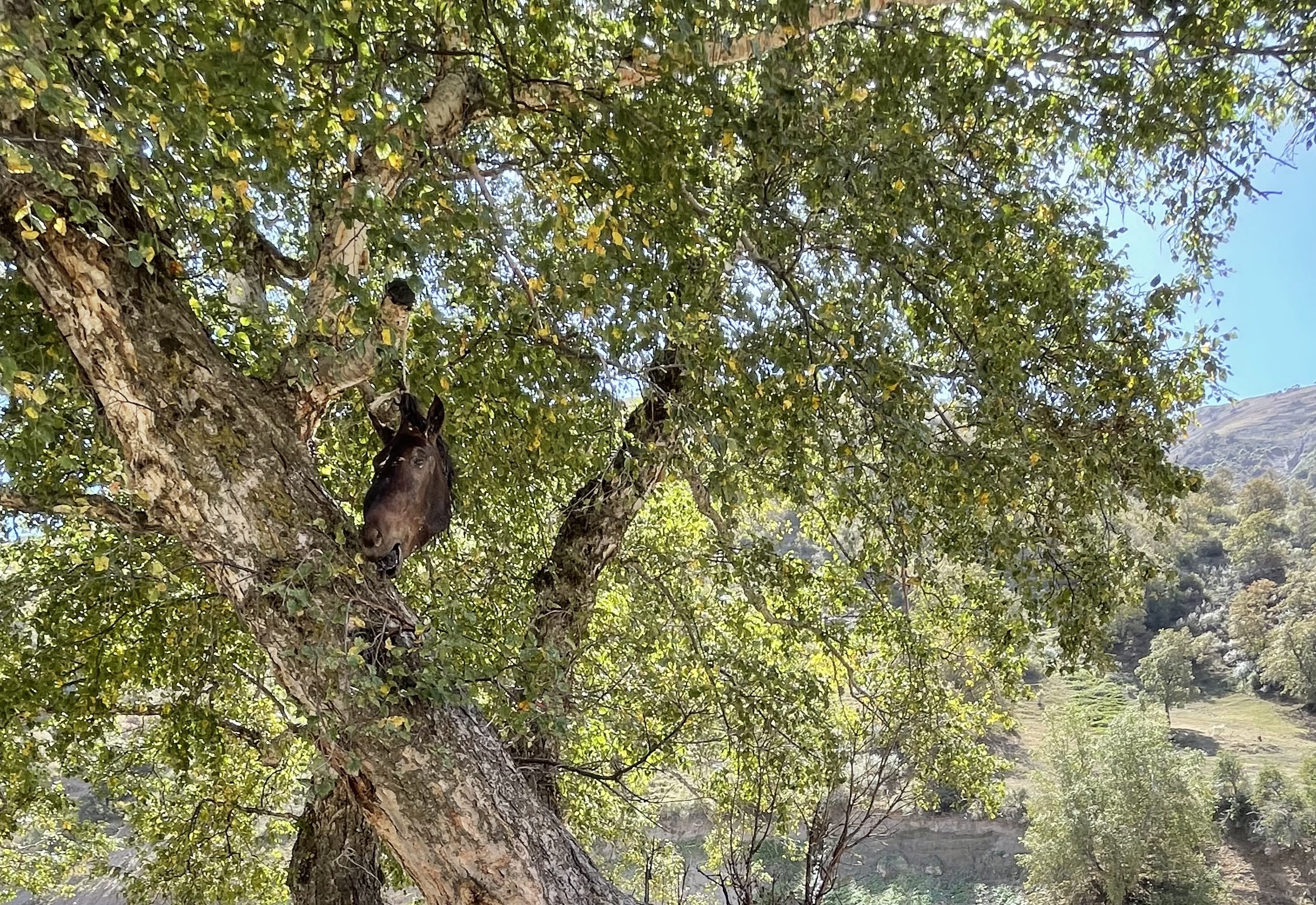
About an hour in, somewhere along a quiet stretch of road in the Naryn region, we passed a cluster of abandoned maintenance buildings and a few trailers that looked like people had once lived in them. Hanging from a nearby tree was the head of a horse — unsettling, and completely unexpected.
I had no idea what it meant at the time, but later learned it’s traditionally seen as a kind of protection — a marker tied to nomadic beliefs, meant to guard the land and keep bad spirits away. Knowing that didn’t make it any less jarring to see, but it did give the moment some context instead of just shock.
The road carried on through increasingly remote terrain, the landscape opening up as we continued south, layers of mountains fading into the distance.
By late afternoon we arrived in Osh, Kyrgyzstan’s second-largest city and one of its oldest, with roots stretching back to the Silk Road. We stopped for lunch, checked into our hotel, and then headed out on foot to explore.

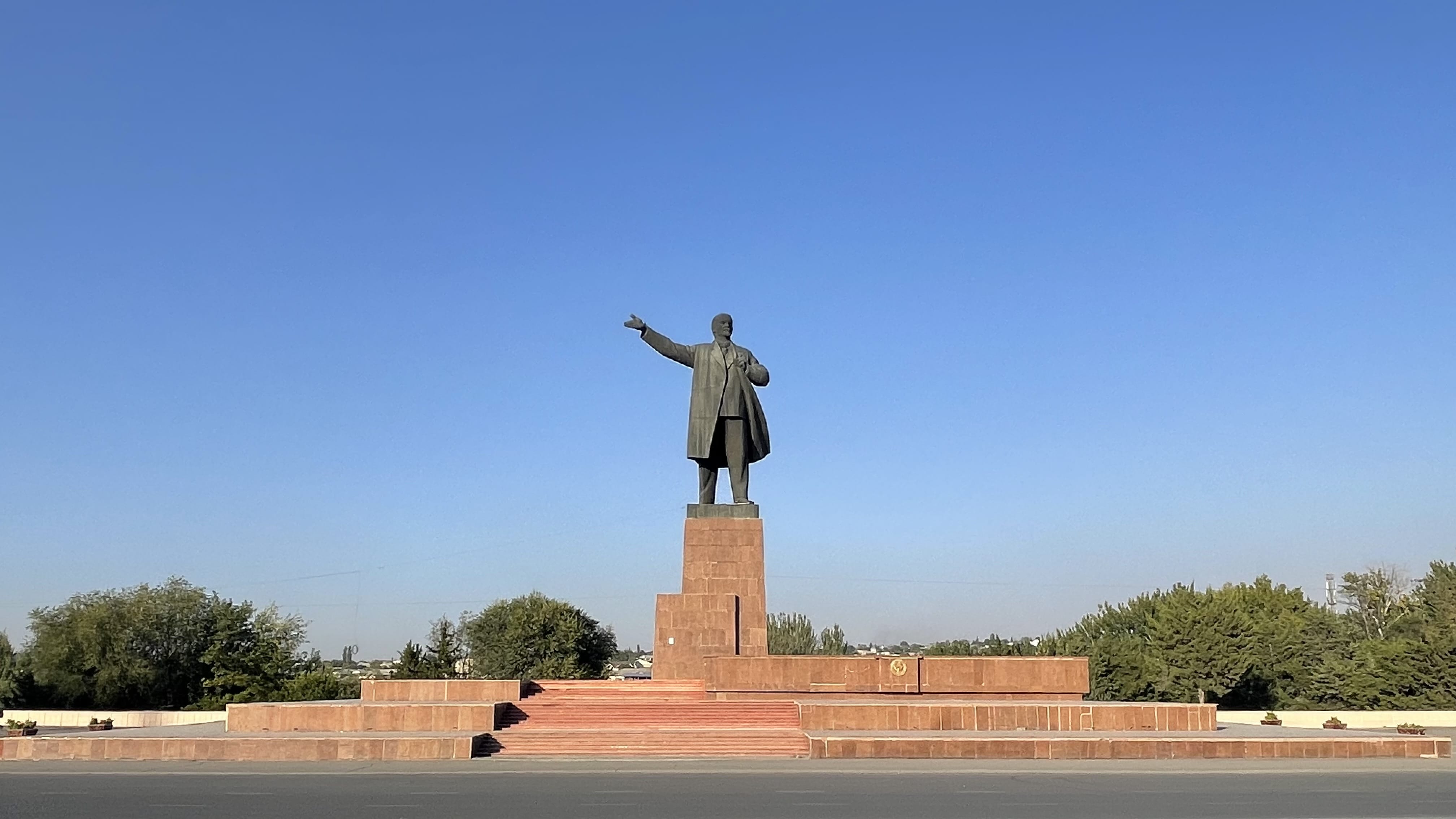
A massive Lenin statue still dominates the city center—less political now than nostalgic, one of many Soviet monuments that were never fully erased.
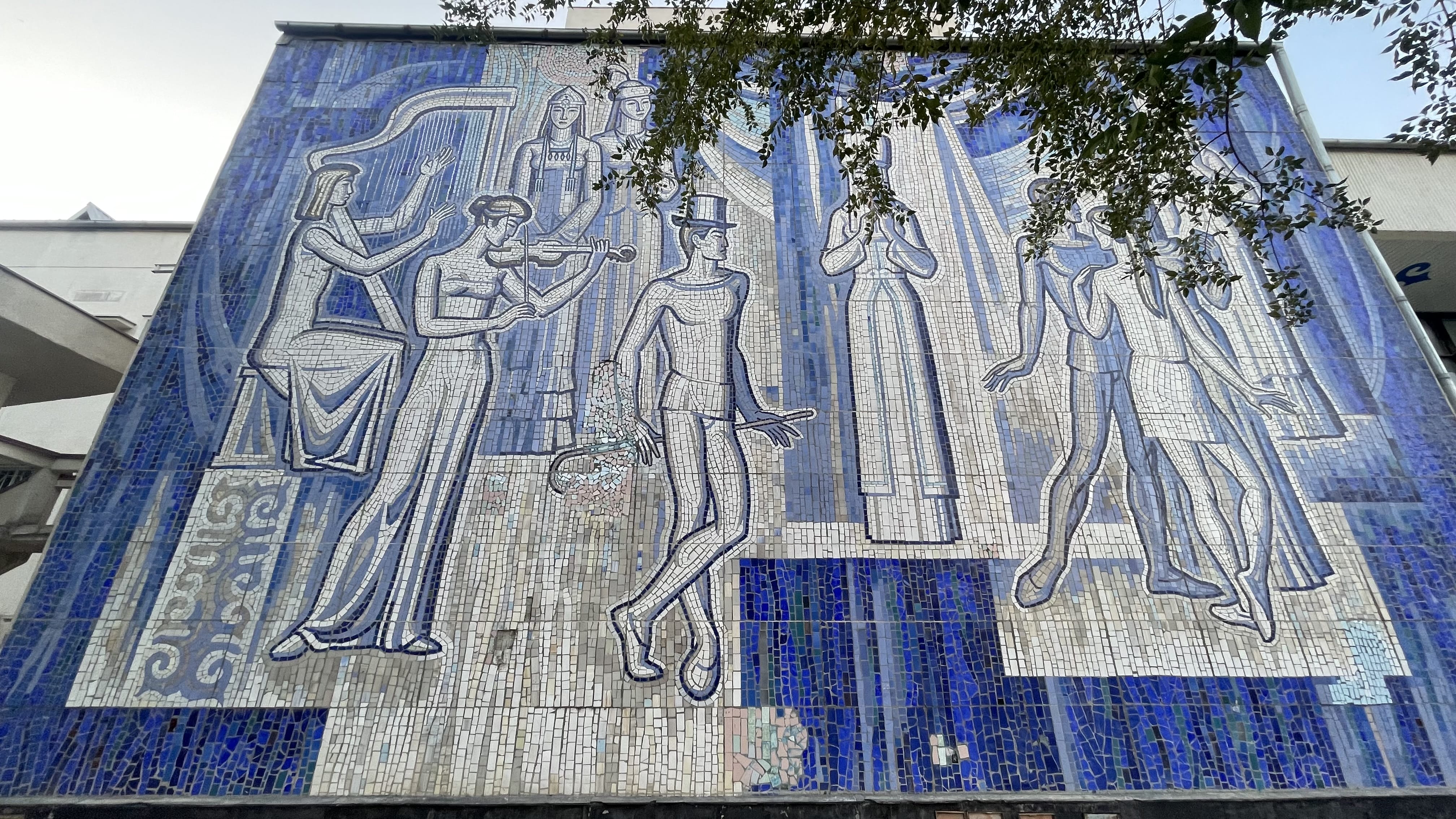
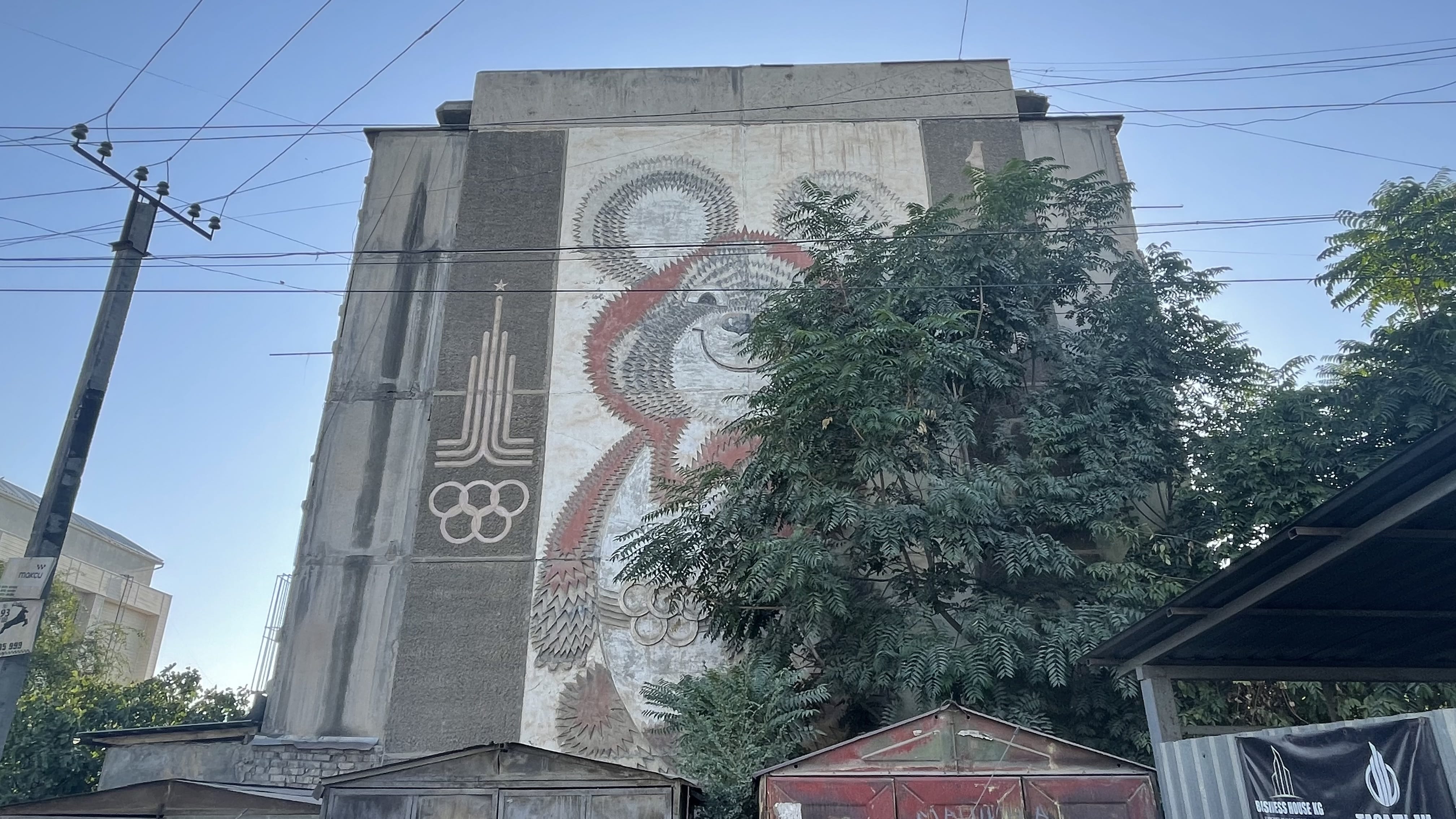
Nearby, I spotted several Soviet-era mosaics around the Drama Theater and city square, along with a faded Olympic-era advertisement that felt like a relic from another time.
Wandering farther, I came across a sidewalk stand selling chalap shoro, a tangy, salty drink made by dissolving kurut—fermented yogurt balls—into carbonated water. It was strange to see it prepared in a huge ceramic vessel and stirred with what looked like a mop. It wasn’t my favorite, though the locals clearly felt otherwise; stalls selling it were everywhere.
Osh deserved more than a day, but that was all we had. The next morning we would head toward the Osh–Andijon border, leaving Kyrgyzstan behind and beginning the next leg of our Silk Road journey in Uzbekistan.
And just like that, my week in Kyrgyzstan was over. Much of it had been spent on the road — sometimes through breathtaking scenery, sometimes just watching the hours pass. That’s the reality here: distances are long, and what looks close on a map can take half a day.
Looking back, I wish I’d had more time. At Song Kol, I learned you could arrange treks or rides directly from the yurt camps — something I would have jumped at if I’d known. It was a reminder not to rely entirely on a tour company, even a thoughtful one, to anticipate everything that matters to me.
Kyrgyzstan offers extraordinary hiking, nomadic culture, and deeply human encounters — often when you least expect them.
For me, Osh was the final chapter. The next morning, we crossed the Osh–Andijon border and continued our Silk Road journey into Uzbekistan.
👉 If you’d like to keep following along, you can read about my six days in Tajikistan [link to next post].