Thailand was the first stop on my three-country trip, and a place I’d wanted to visit for a long time. I was drawn by the architecture—gold-covered temples packed with detail—but also by the culture, the markets, the food, and the chance to visit an elephant sanctuary. It’s also a relatively affordable place to travel, which made it an easy choice.
Once I arrived, the contrasts were immediate—busy streets, beautiful temples, incredible food, and a rhythm that somehow balanced chaos and calm. Over the course of a week, I split my time between Bangkok, a side trip to Kanchanaburi, Ayutthaya, and finally Chiang Mai—four very different windows into the country.
This trip covered a lot of ground—from Bangkok’s temples and canals to elephant encounters, ancient ruins, and the mountains around Chiang Mai. What follows is a day-by-day account of my 7 days in Thailand, mixing major sights with smaller moments along the way.
It was a long flight to Bangkok, and I arrived feeling both wired and completely drained.
My driver was waiting just outside International Arrivals (always a relief). As we headed into the city, even at 10 p.m., Bangkok felt wide awake.
Neon signs glowed, brightly lit billboards flashed, and endless streams of headlights cut through the traffic as we made our way through the city. Tuk-tuks, motorbikes, and cars wove in and out around us—complete chaos, yet somehow everything flowed.
After about 30 minutes, we arrived at our hotel — the AETAS Lumpini. The staff greeted us with cool towels and juice, which felt especially good after such a long travel day. The hotel was close to plenty of restaurants, making it a convenient base for our first days in Thailand. At that point, though, all I really wanted was sleep—and I was grateful to finally have a comfortable place to land.
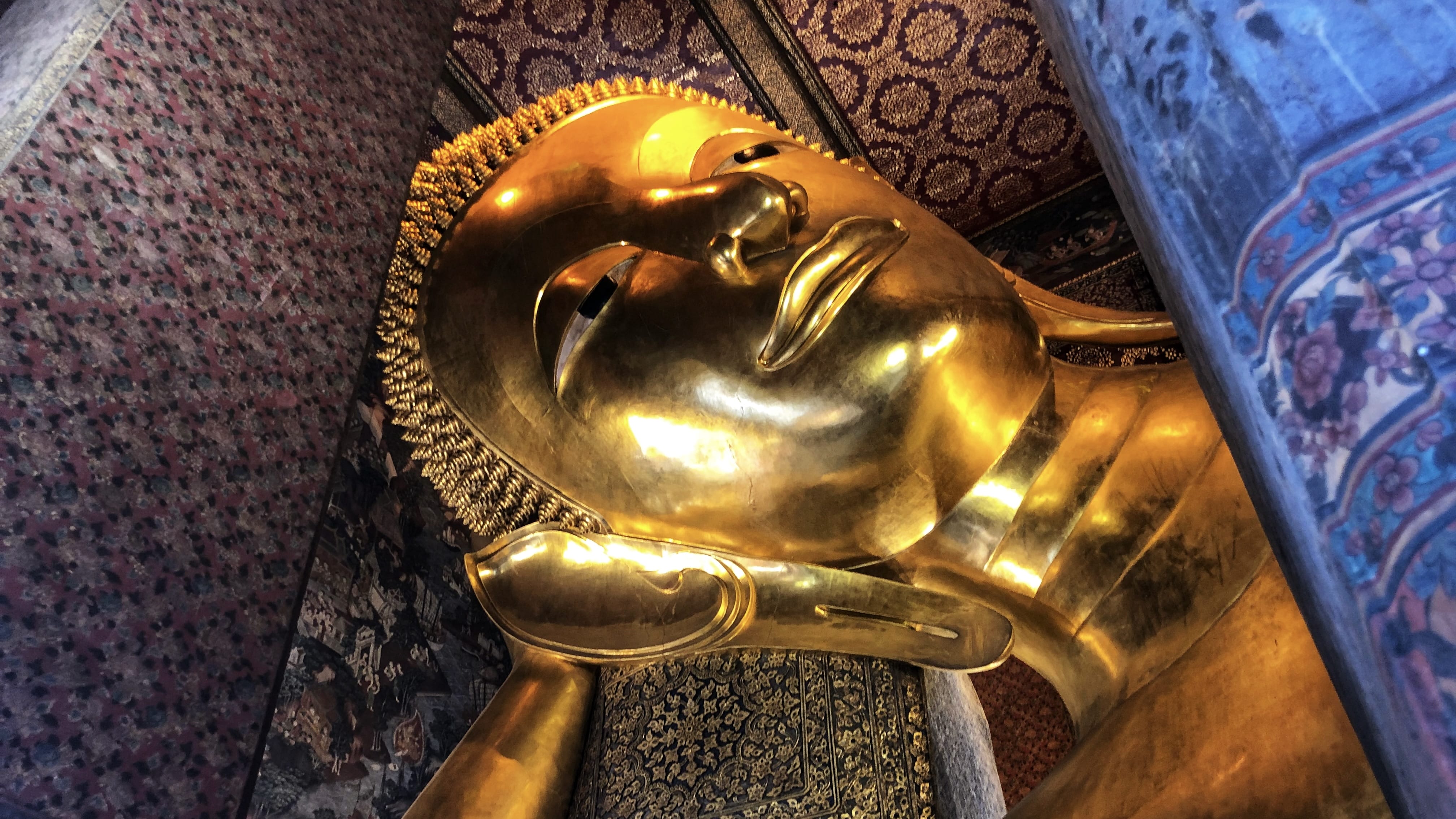
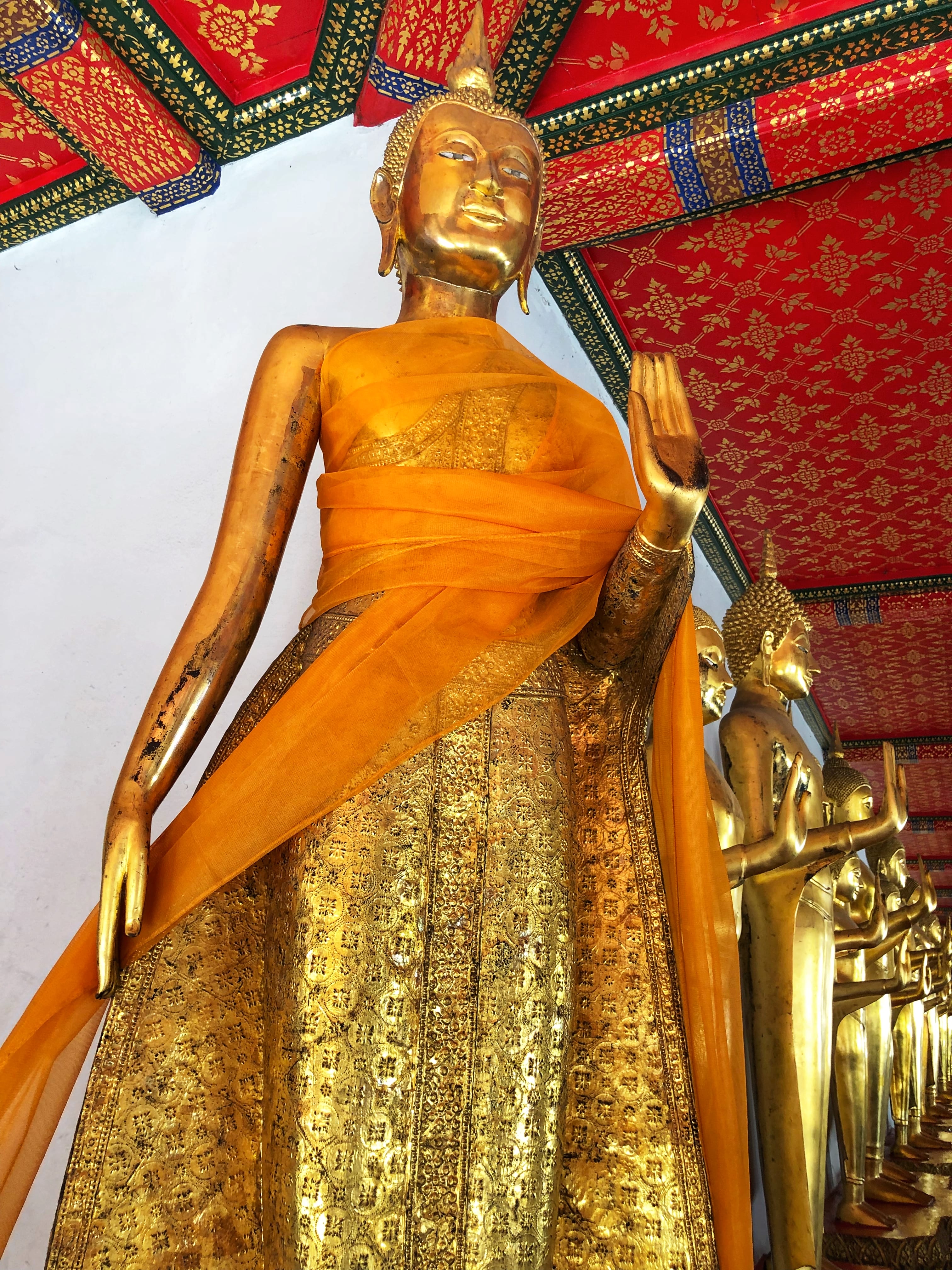
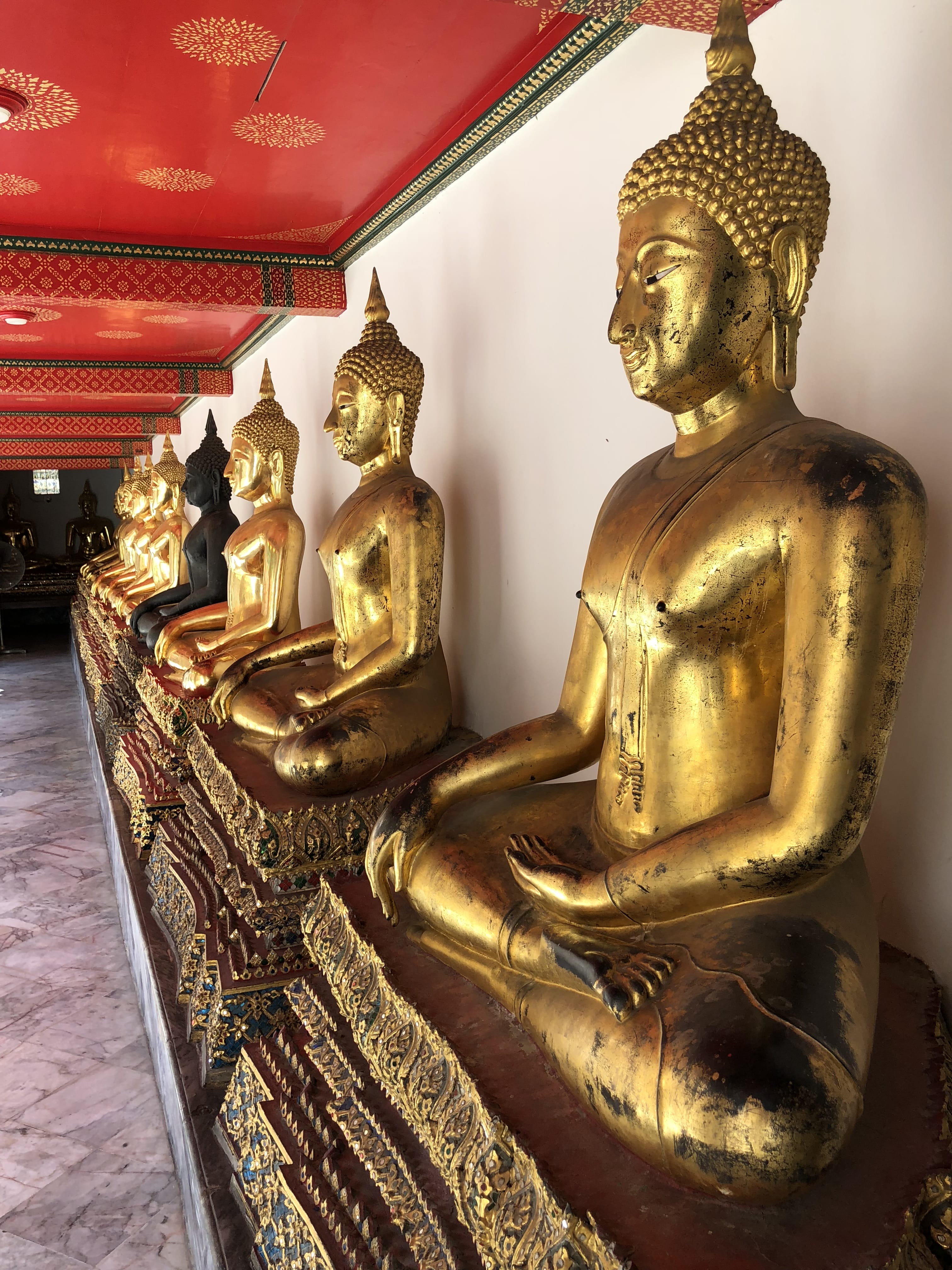
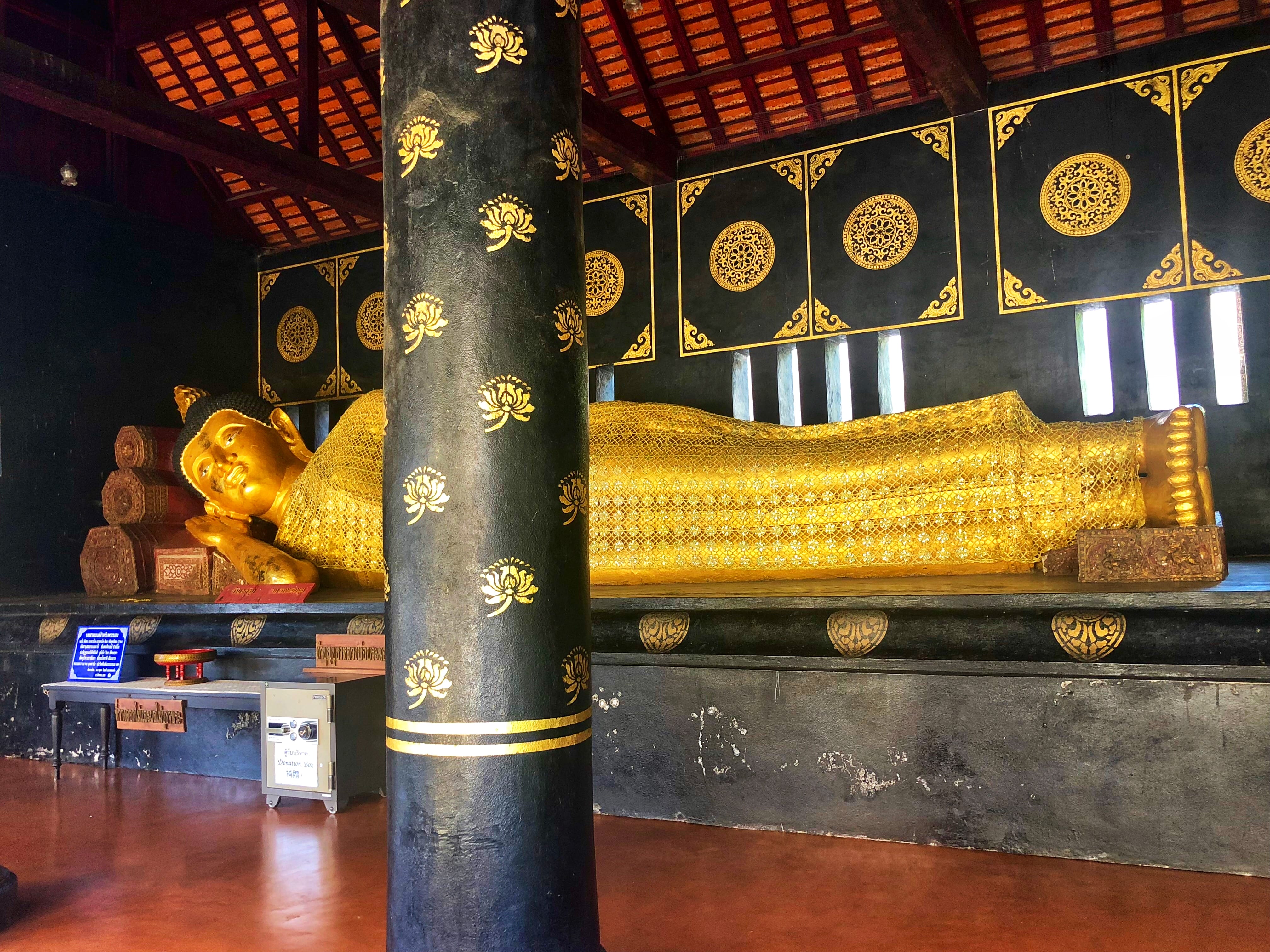
We started the day with a visit to Wat Pho, arriving just in time to hear the monks’ morning chanting. Afterward, we wandered through the temple grounds and made our way to the famous Reclining Buddha, stretching an impressive 45 meters long.
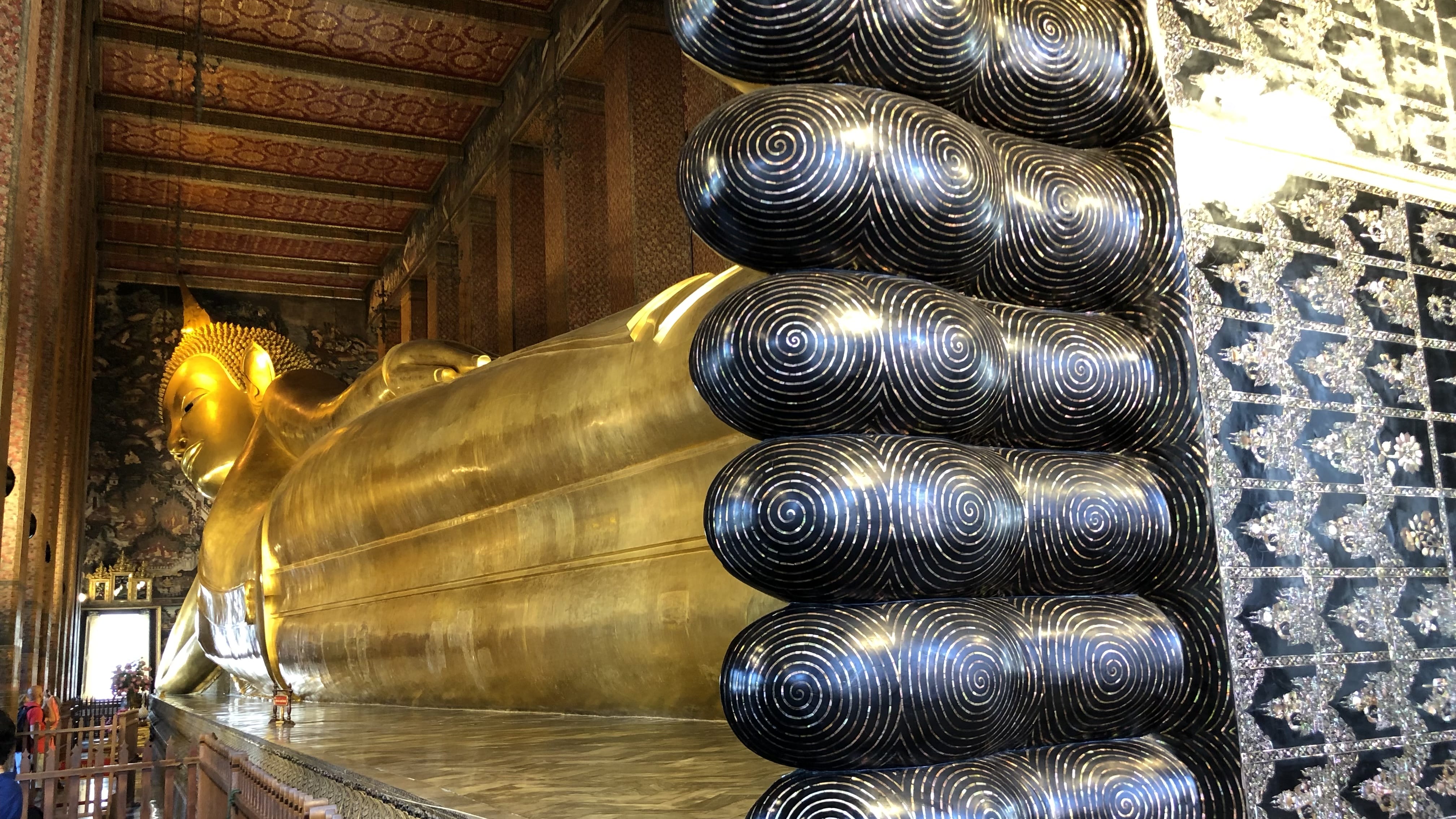
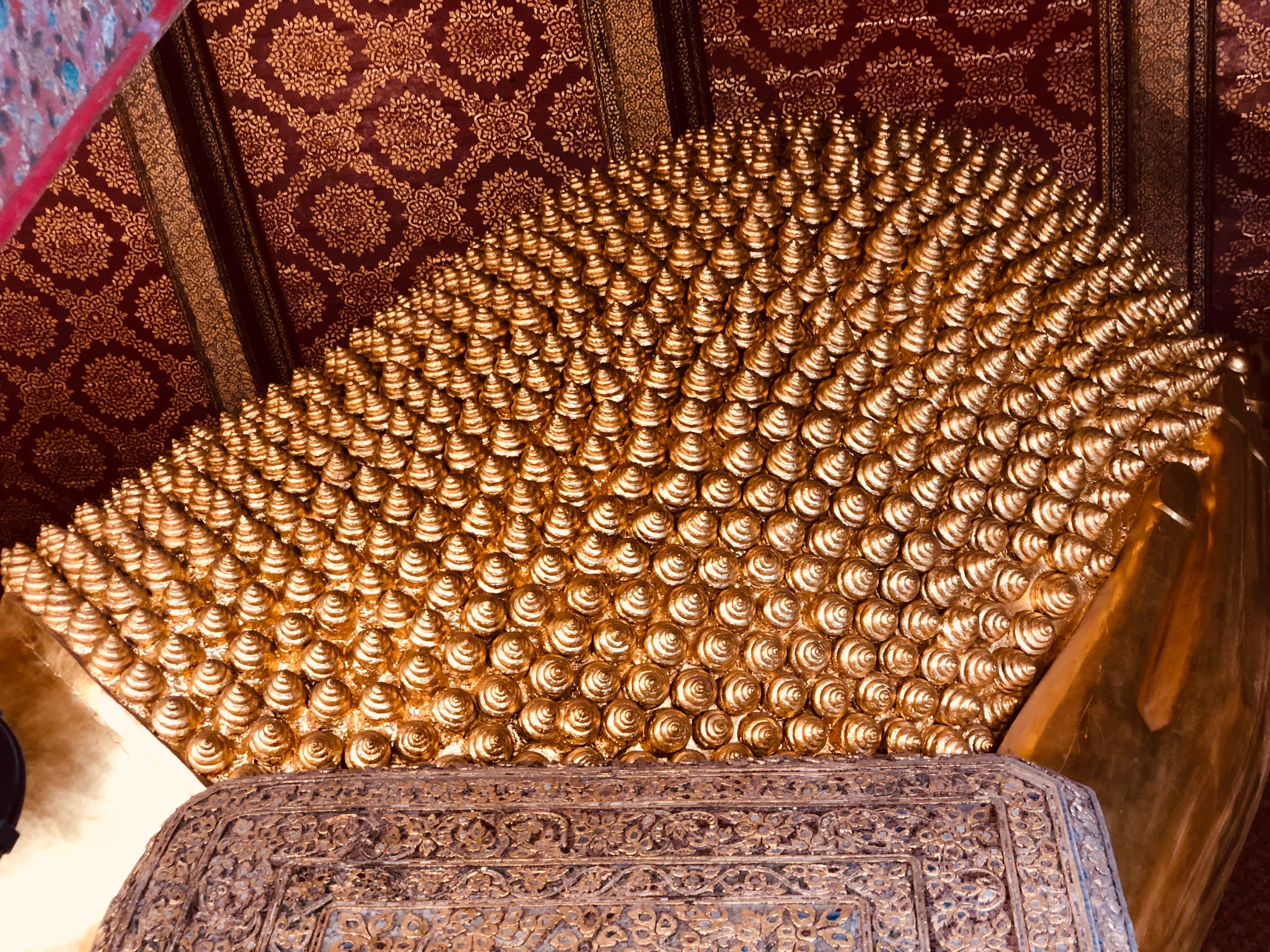
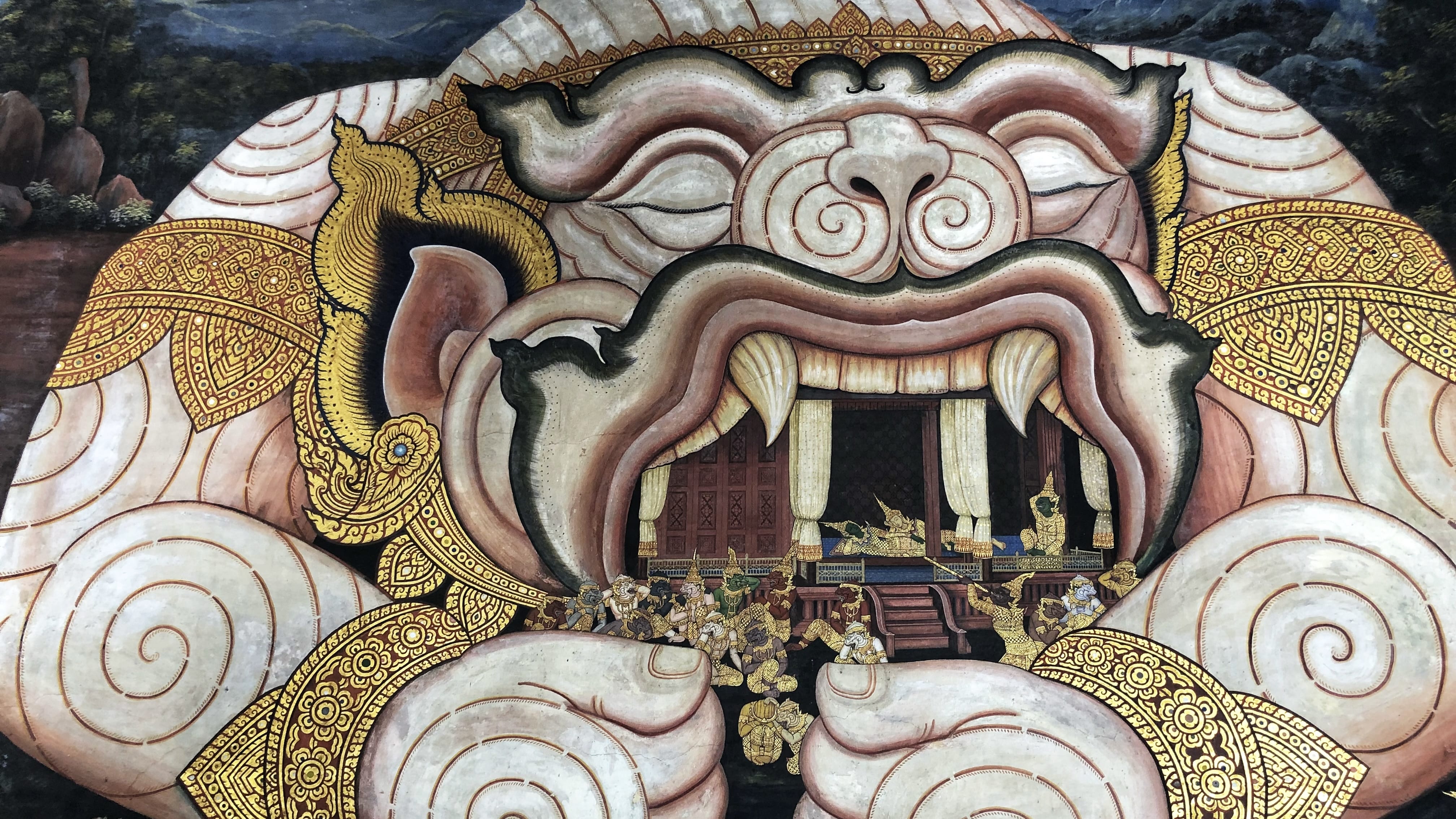
The statue is massive—completely covered in gold and so long you have to keep moving to take it all in. The face has a calm, peaceful expression, and the soles of the feet are decorated with intricate mother-of-pearl designs that make you stop and stare. As impressive as the Buddha is, the room itself is just as striking, with walls covered in murals depicting scenes from Buddhist teachings and cosmology, packed with detail in every direction.
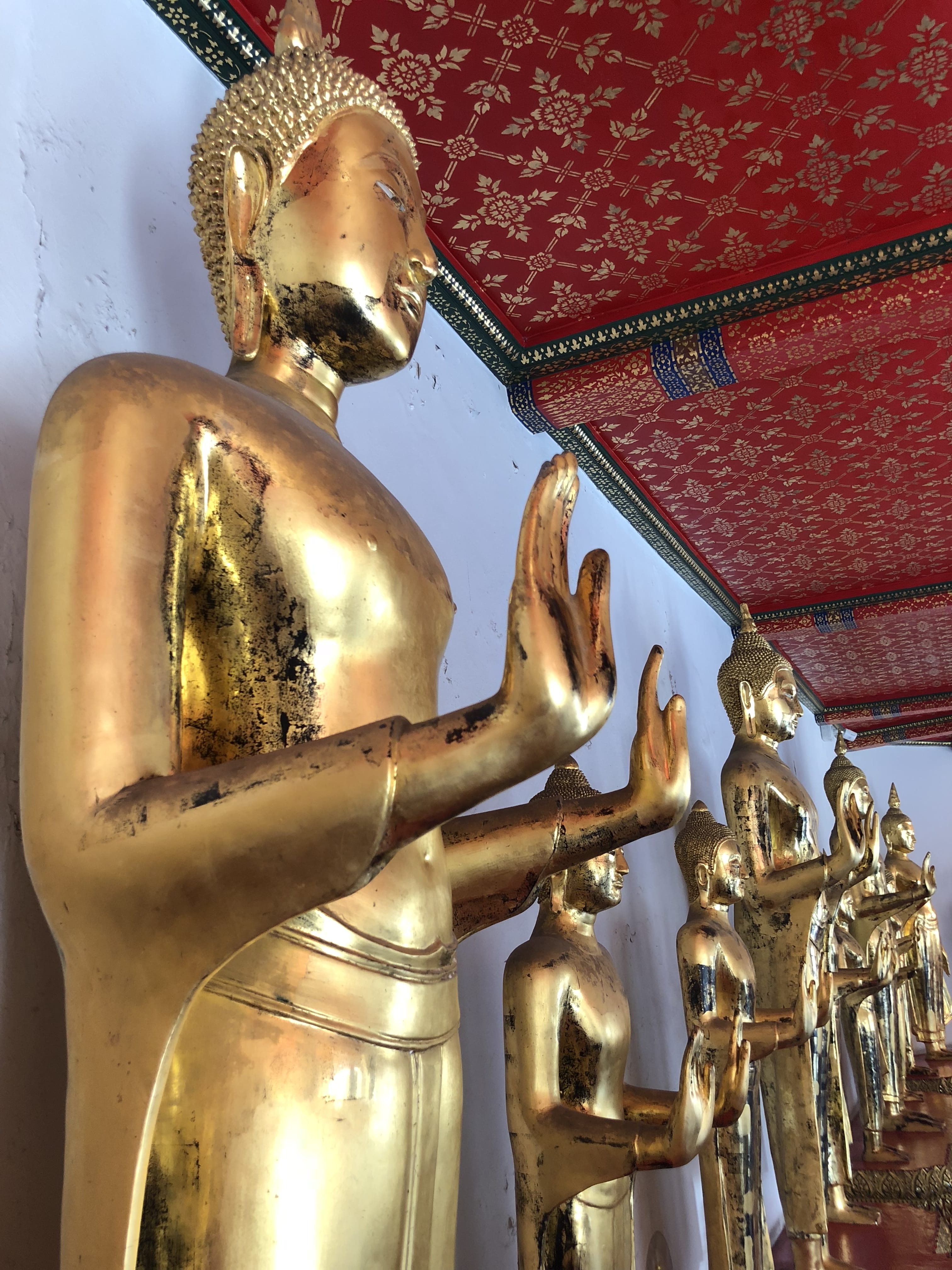
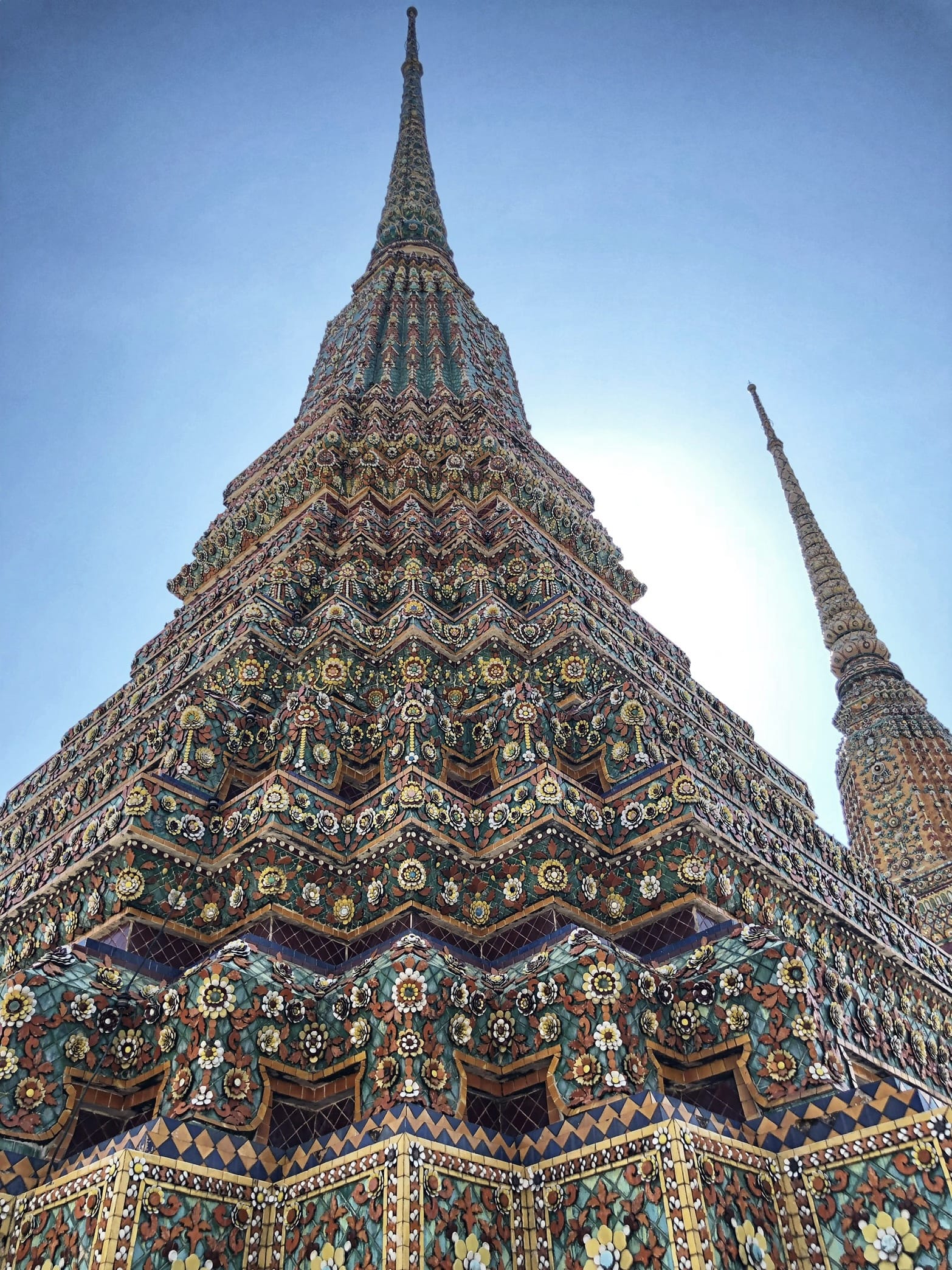
Wat Pho felt expansive and surprisingly calm for such a central location. Between the courtyards, stupas, and smaller shrines, there was so much to wander through and take in.
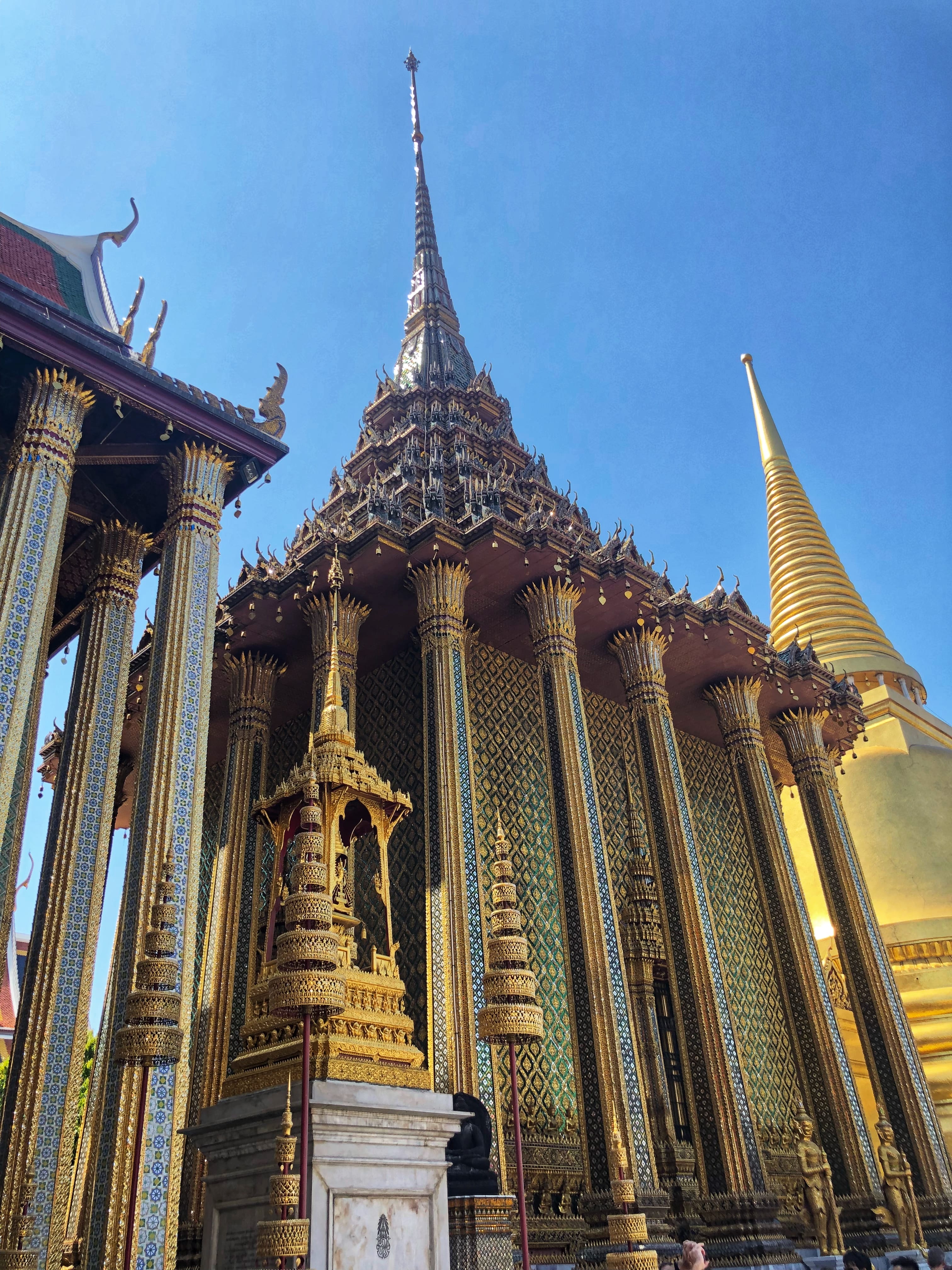
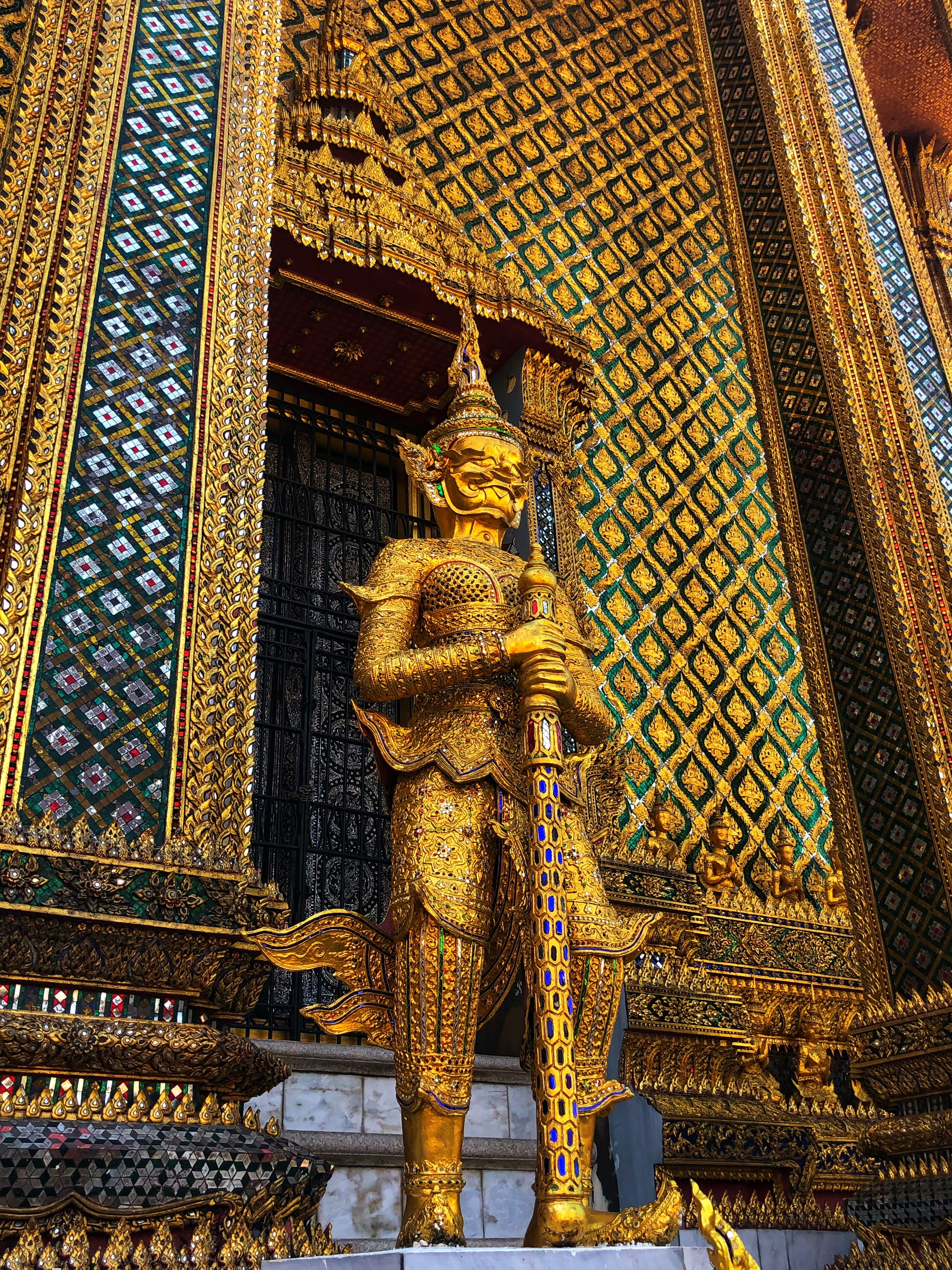
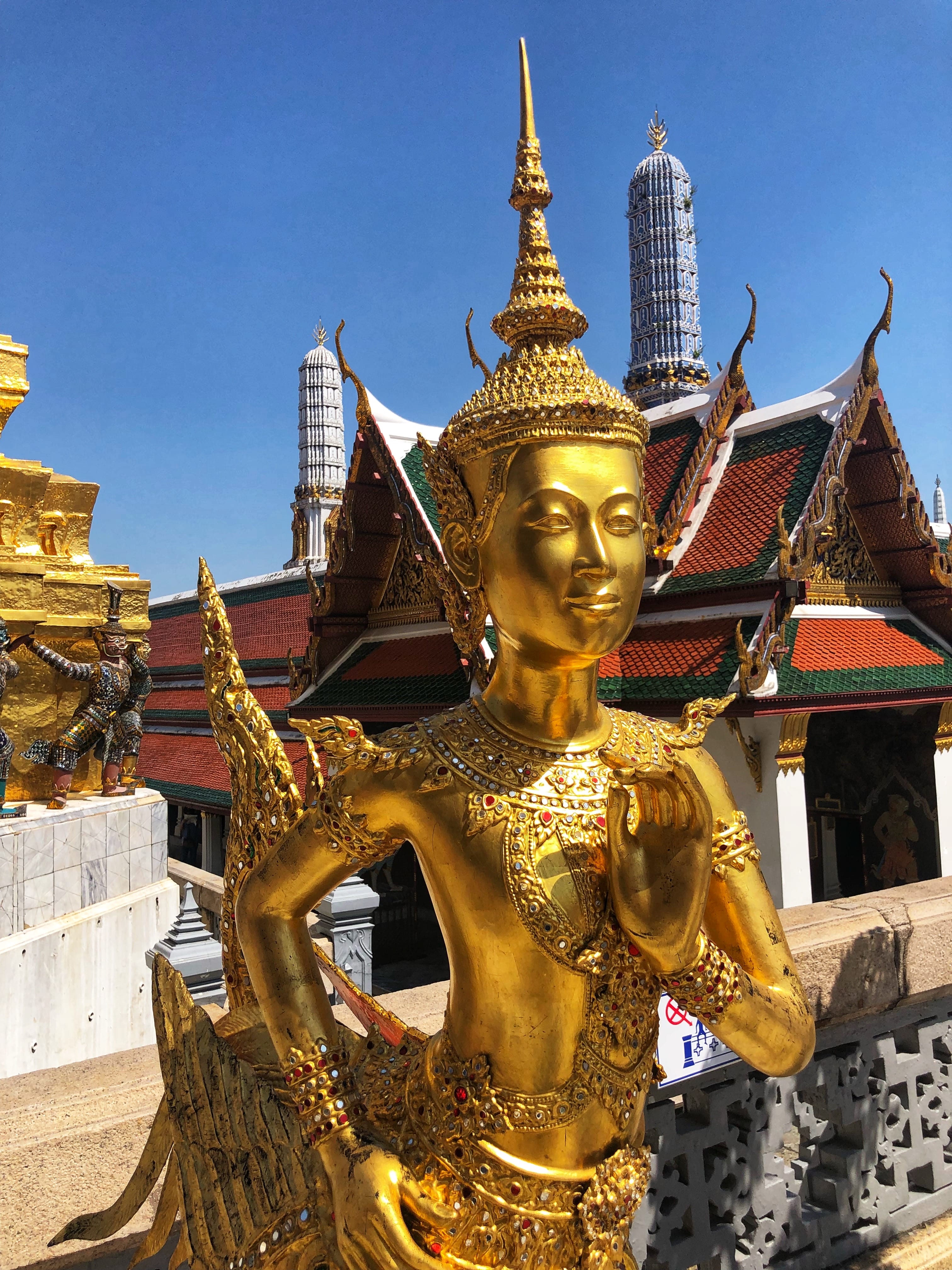
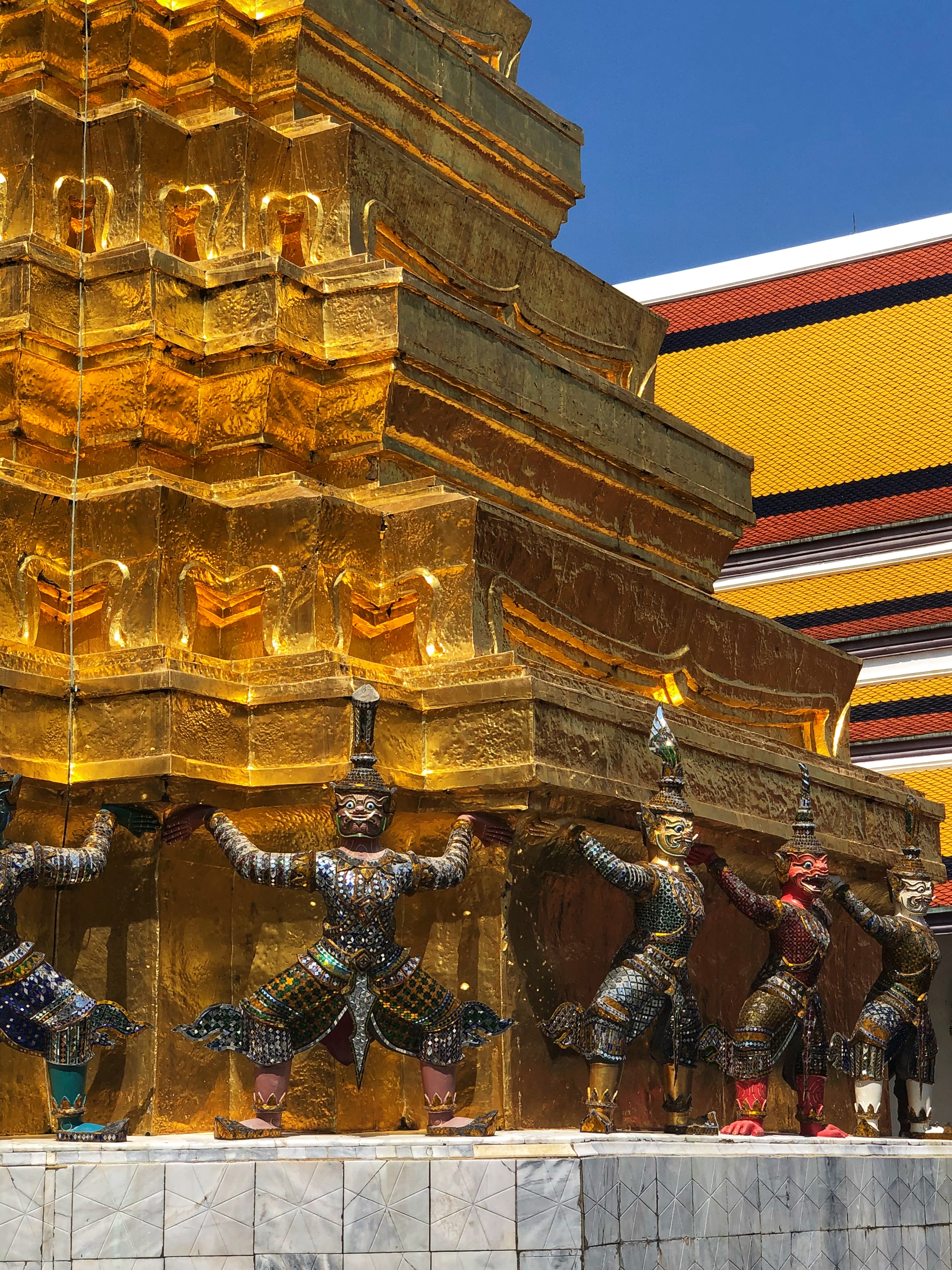
From there, we headed to the Grand Palace complex, probably the most famous site in Bangkok. Built in 1782, the grounds are enormous, with more than 100 buildings—temples, halls, and pavilions—spread throughout.
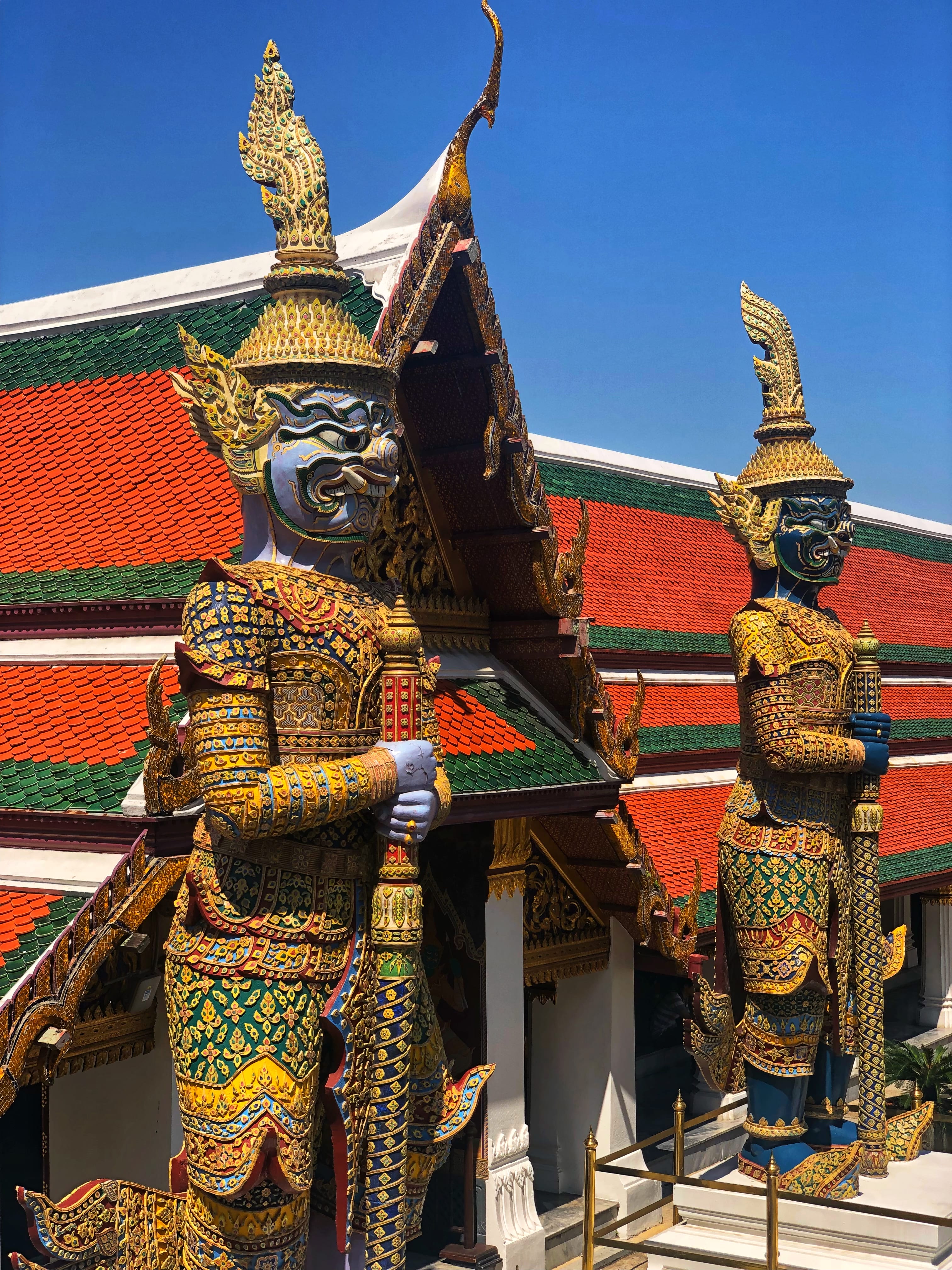
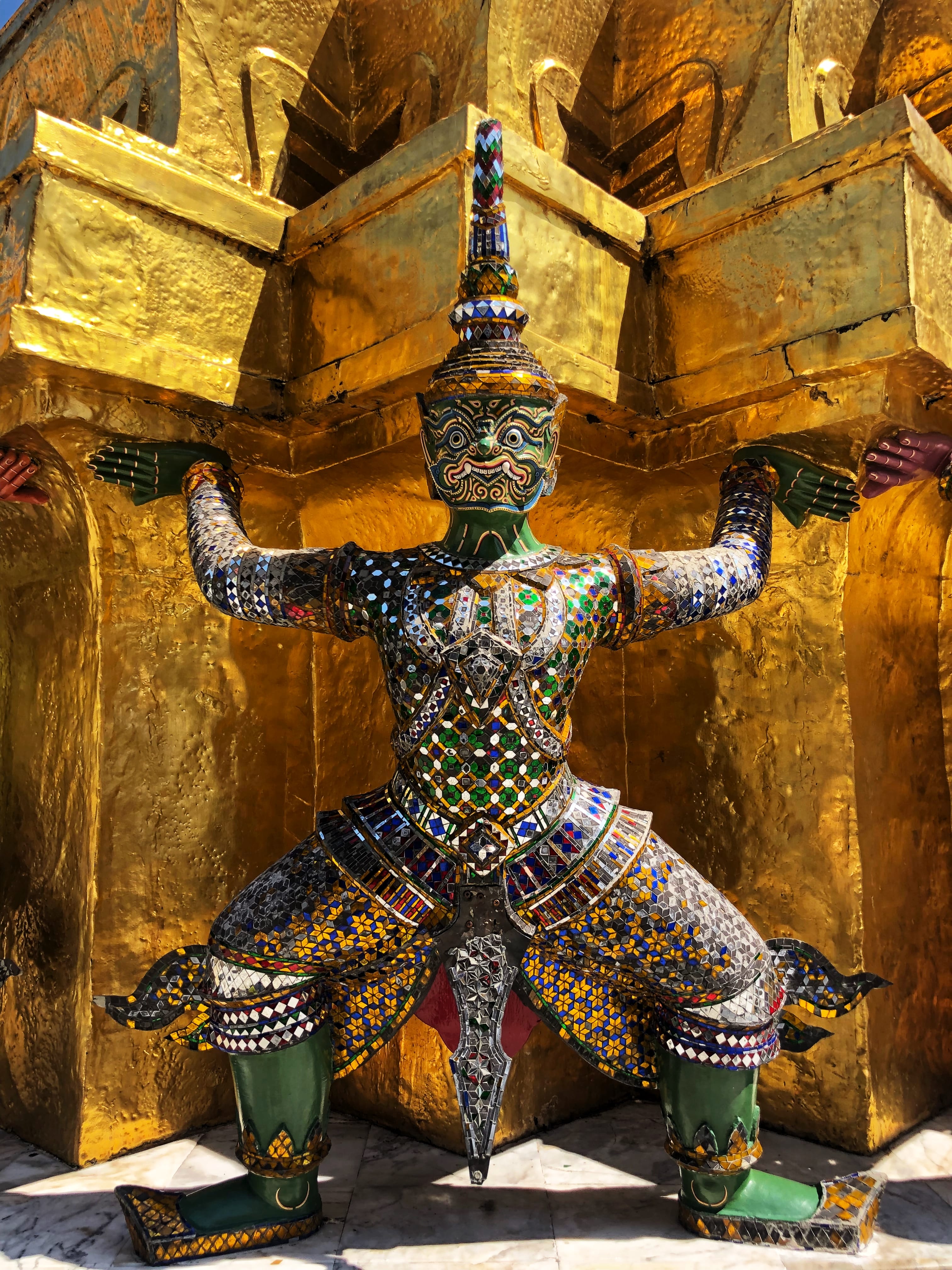
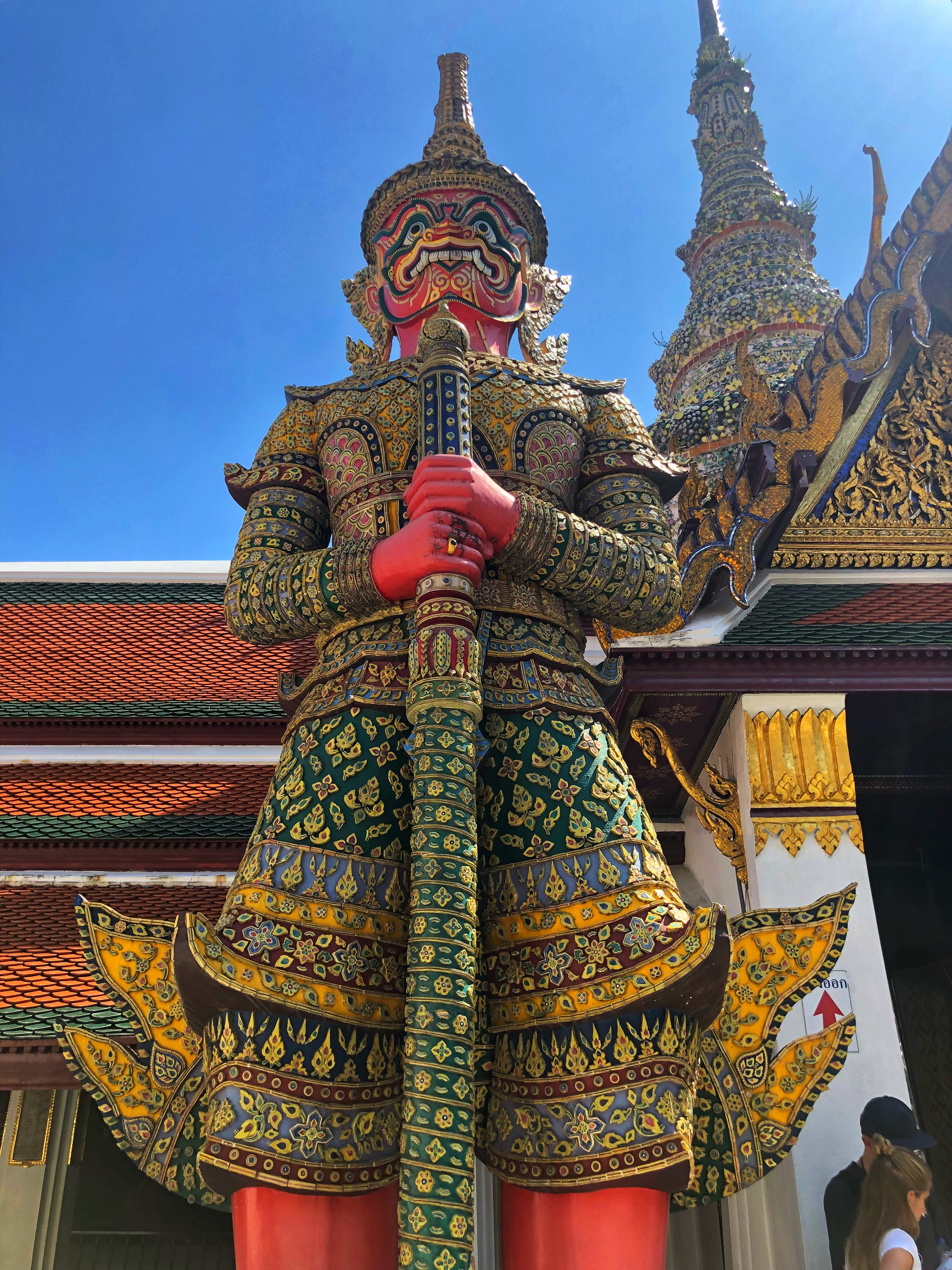
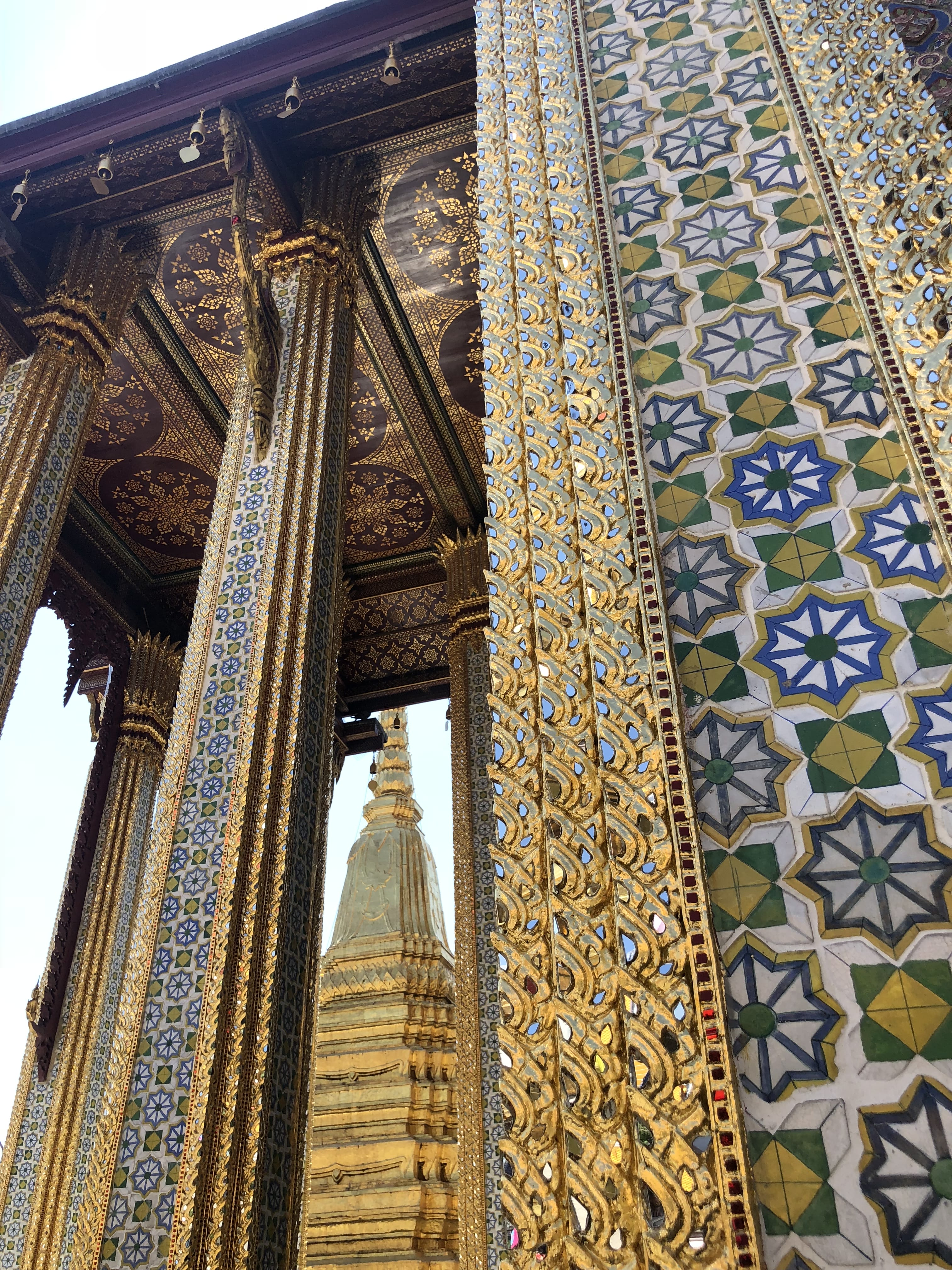
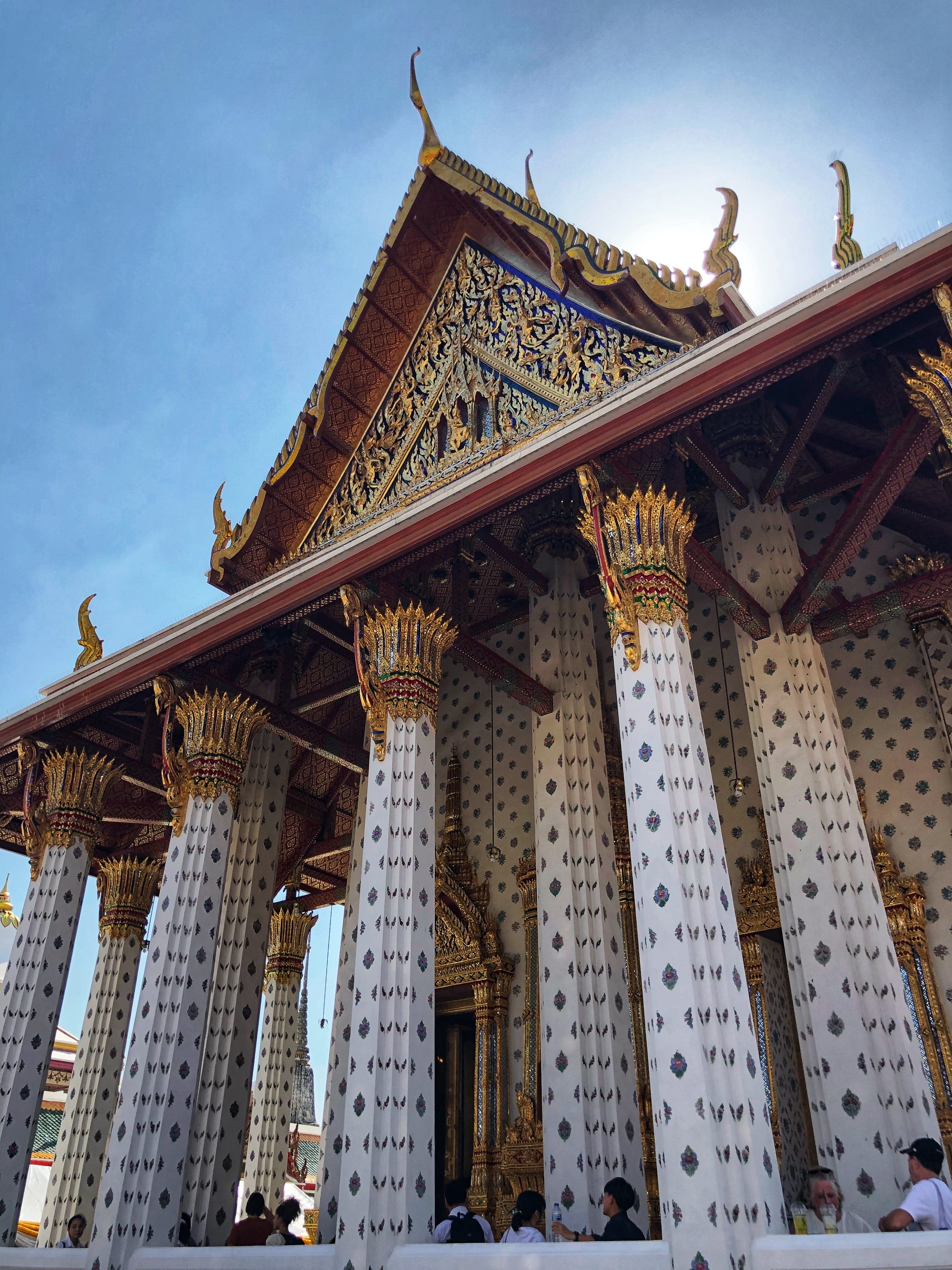
The architecture is completely over the top: steep gold-covered roofs, intricate carvings, and color everywhere you look. It’s layer upon layer of gold and detail—so dense that one visit doesn’t feel like enough to properly take it all in.
One of the highlights of the Grand Palace complex is the Emerald Buddha, carved from a single piece of green stone and dressed in seasonal gold robes adorned with jewels. It’s the most revered Buddha image in Thailand and is believed to protect the country.
Lunch was at Supatra River House, a traditional Thai restaurant right on the river. It was a classic, tourist-friendly stop, but the setting made for a nice break in the middle of a very full day.
Full and rested, we headed to Chinatown, one of the oldest and busiest parts of the city—and one of the largest Chinatowns in the world. We walked along Yaowarat Road, passing shops selling everything from bird’s nests to shark fins. We ducked into a tiny traditional tea shop for a cup of Chinese tea. Afterward, we wandered around Talad Kao Market, packed with fresh produce, herbs, and spices, buzzing with activity.
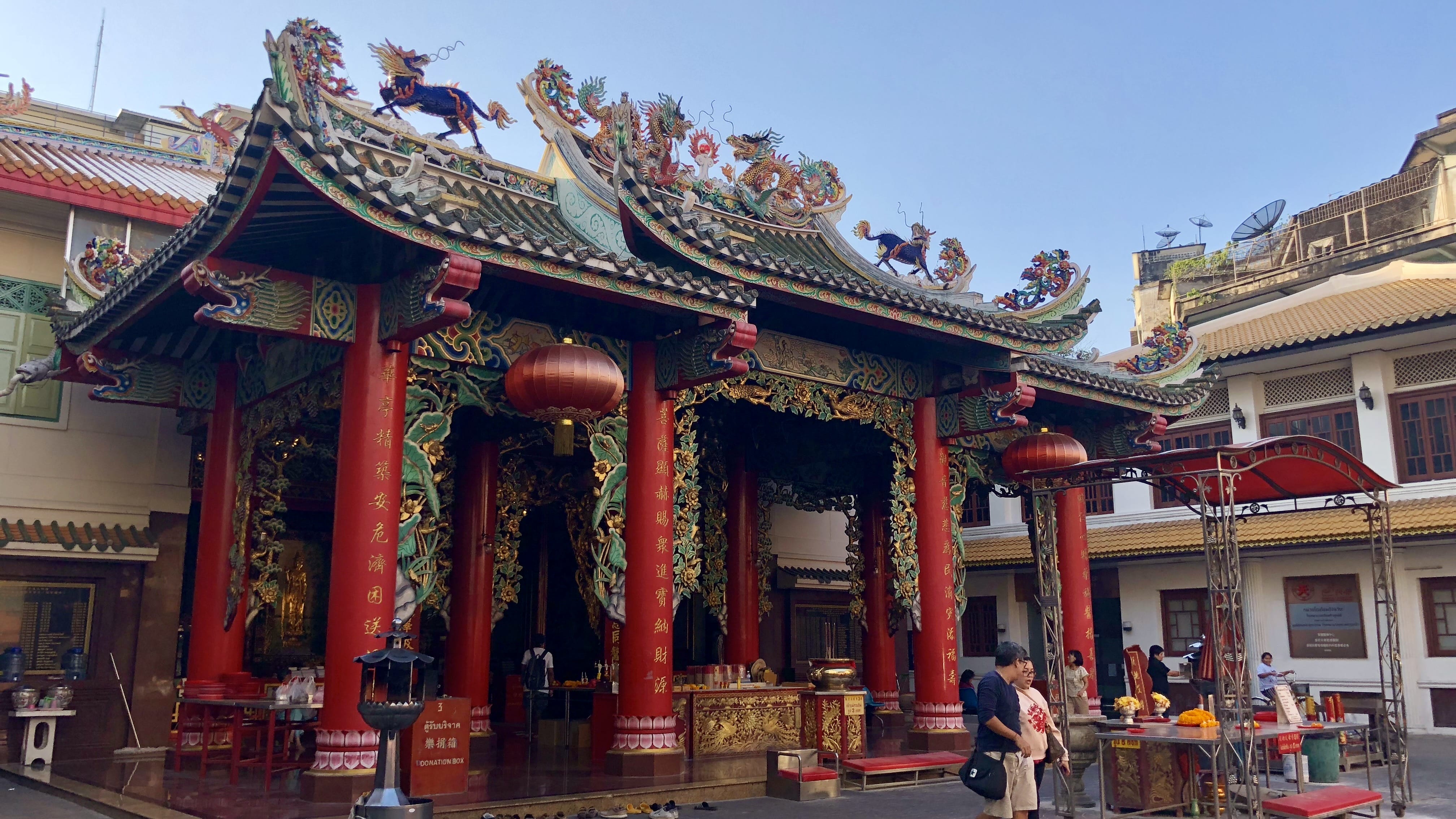
From there, we went to Wat Leng Noei Yi, a Taoist temple filled with red and gold tones, curved roofs, and detailed dragon carvings—a beautiful contrast to the Buddhist temples earlier in the day.
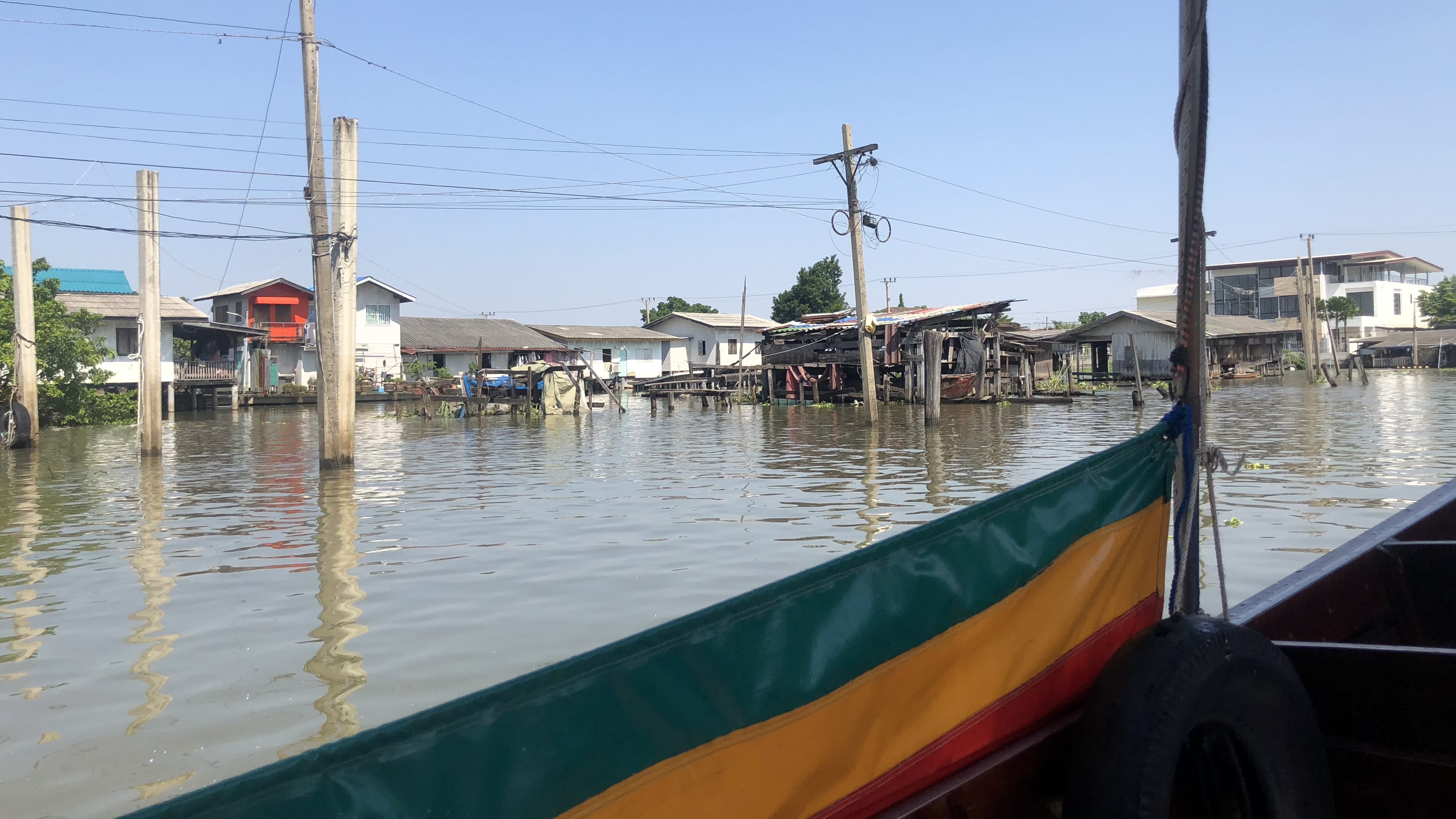
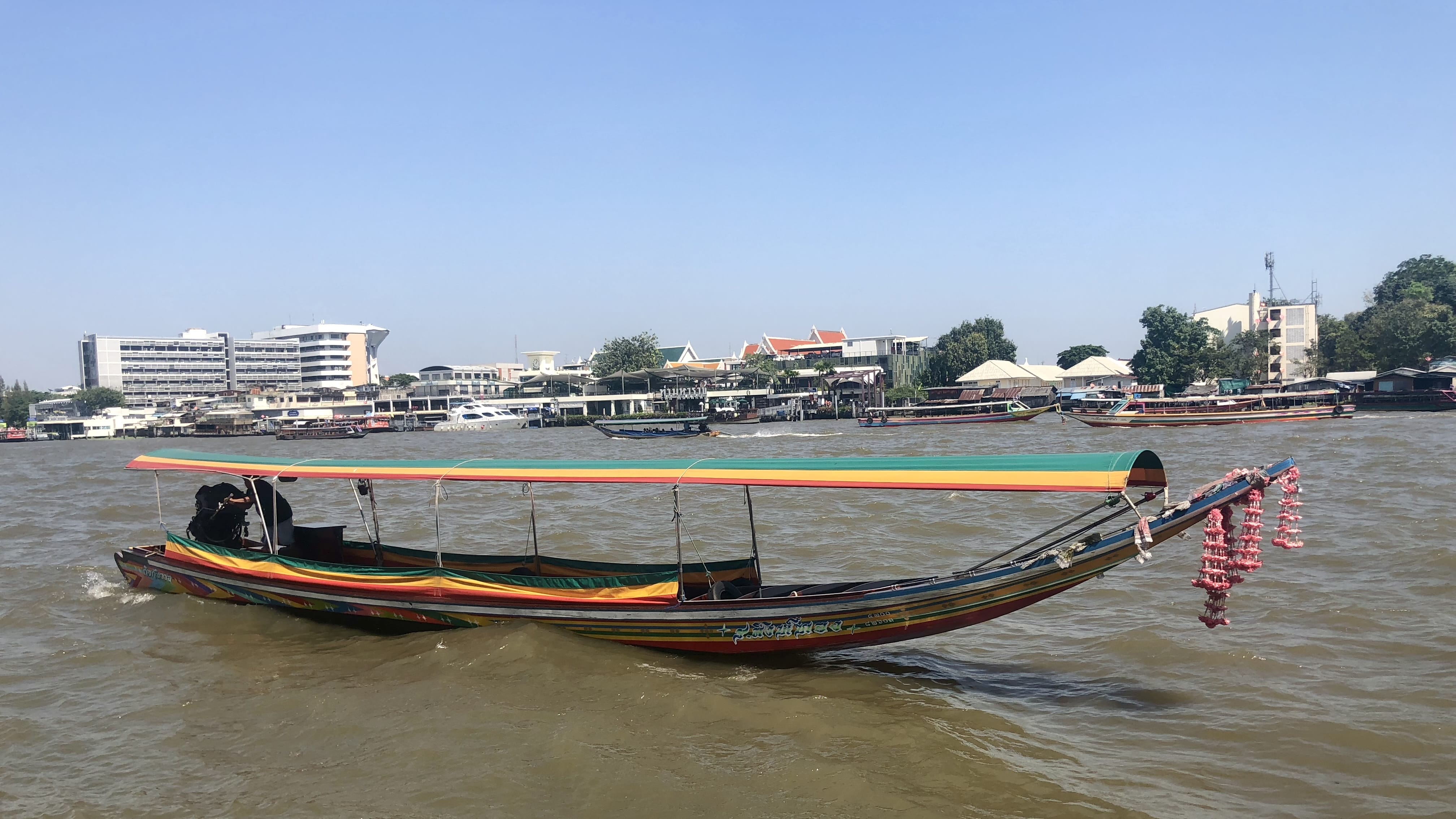
We made our way to Ratchawong Pier and boarded a longboat to explore the klongs of Bangkok Noi. These narrow boats, with their engines mounted on the back, are built for weaving through the canals.
Cruising along, we passed rows of wooden houses on stilts, many weathered and worn, sitting right at the water’s edge and connected by narrow walkways and small docks—intimate glimpses into daily life along the canals.
It was an enjoyable way to spend the afternoon. Almost as soon as we set off, our guide tossed bread into the water, and catfish immediately swarmed the boat, crowding the surface in a sudden, chaotic rush. It was unexpected and oddly fascinating to watch.
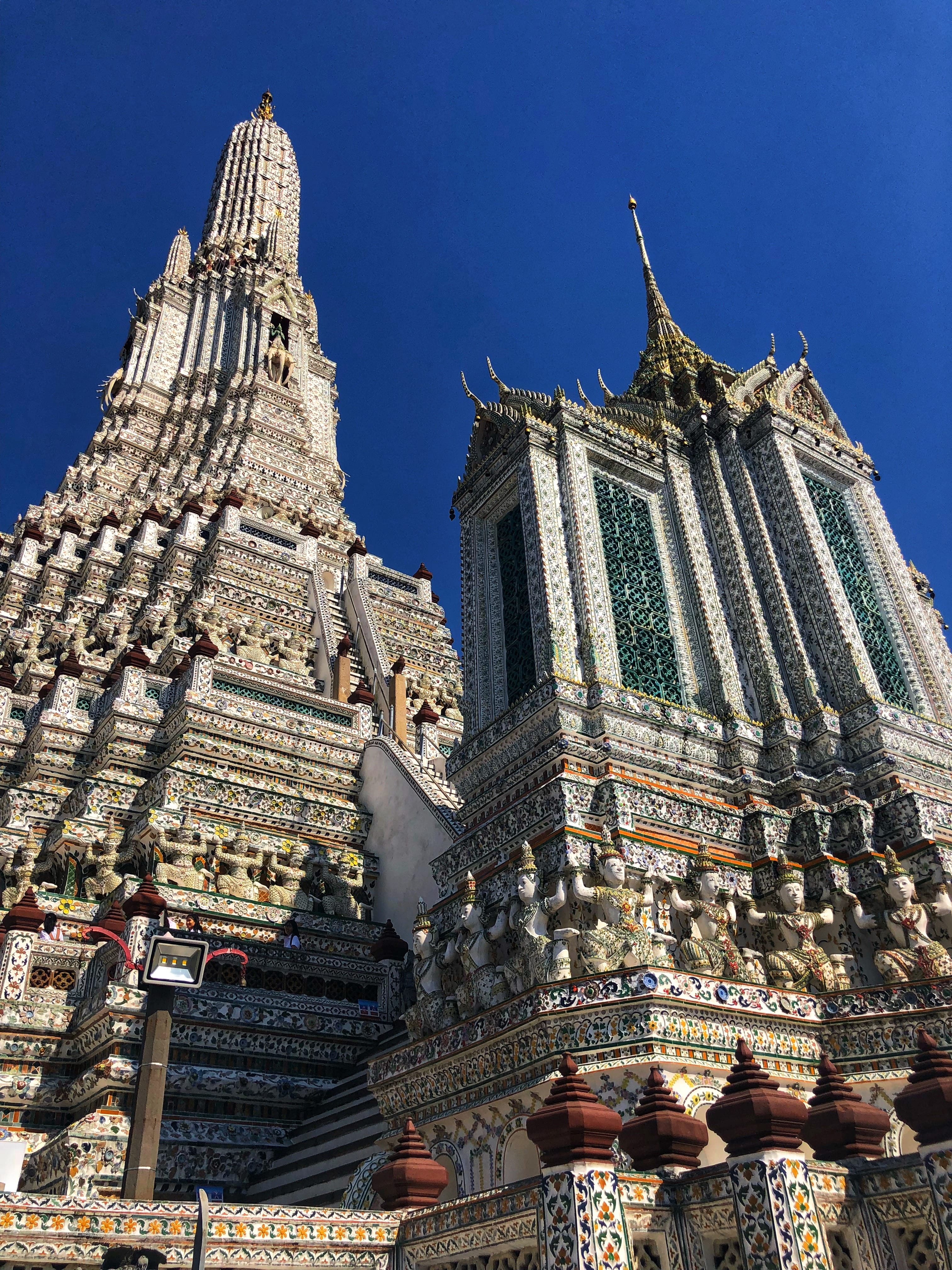
After the boat ride, we visited Wat Arun, the Temple of Dawn, its towering spire covered in tiny pieces of colorful porcelain that catch the light and shimmer.
With so much to see and do in Bangkok, it was a full day—layered with contrast, movement, and an overwhelming amount of beauty.
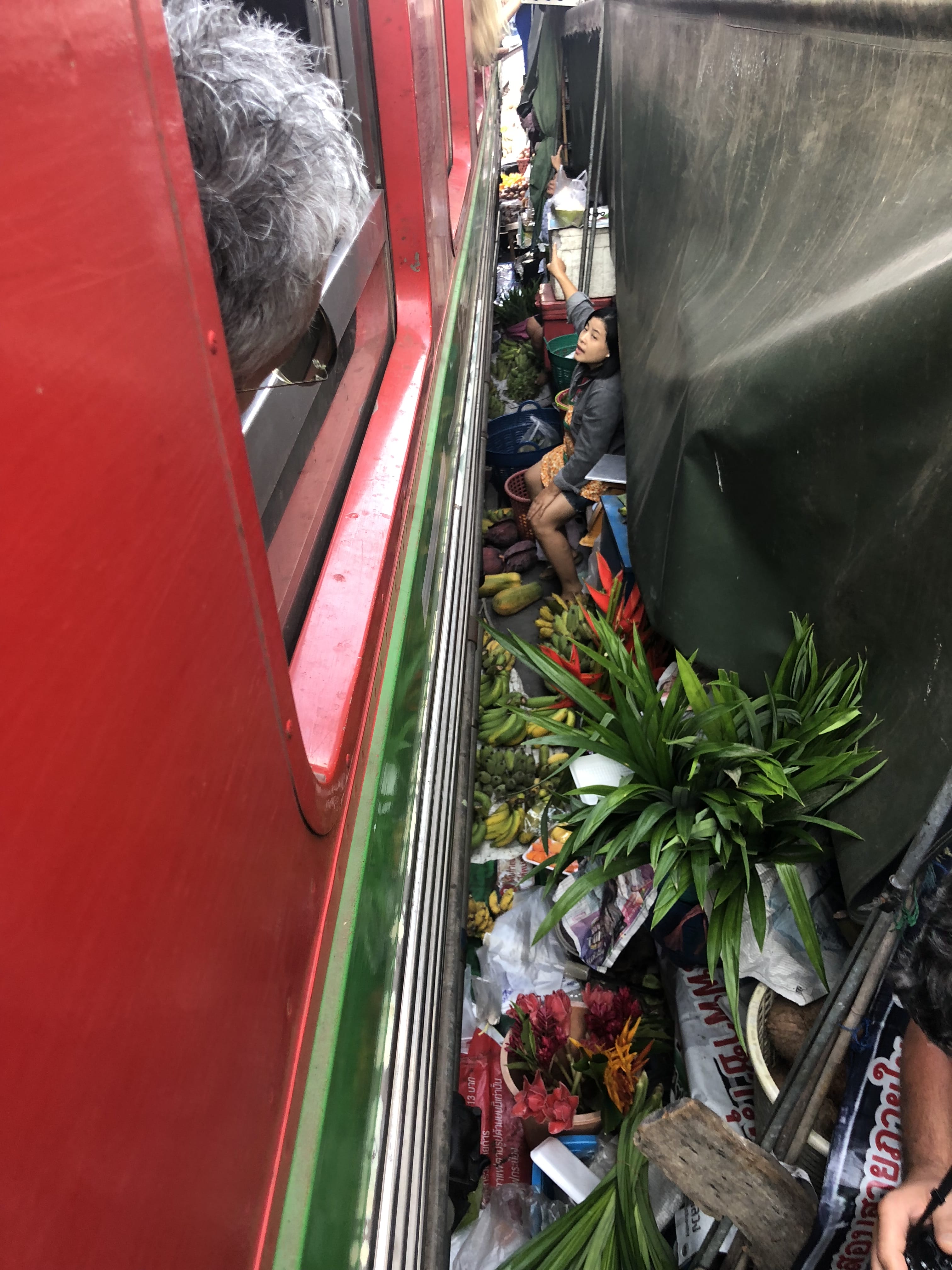
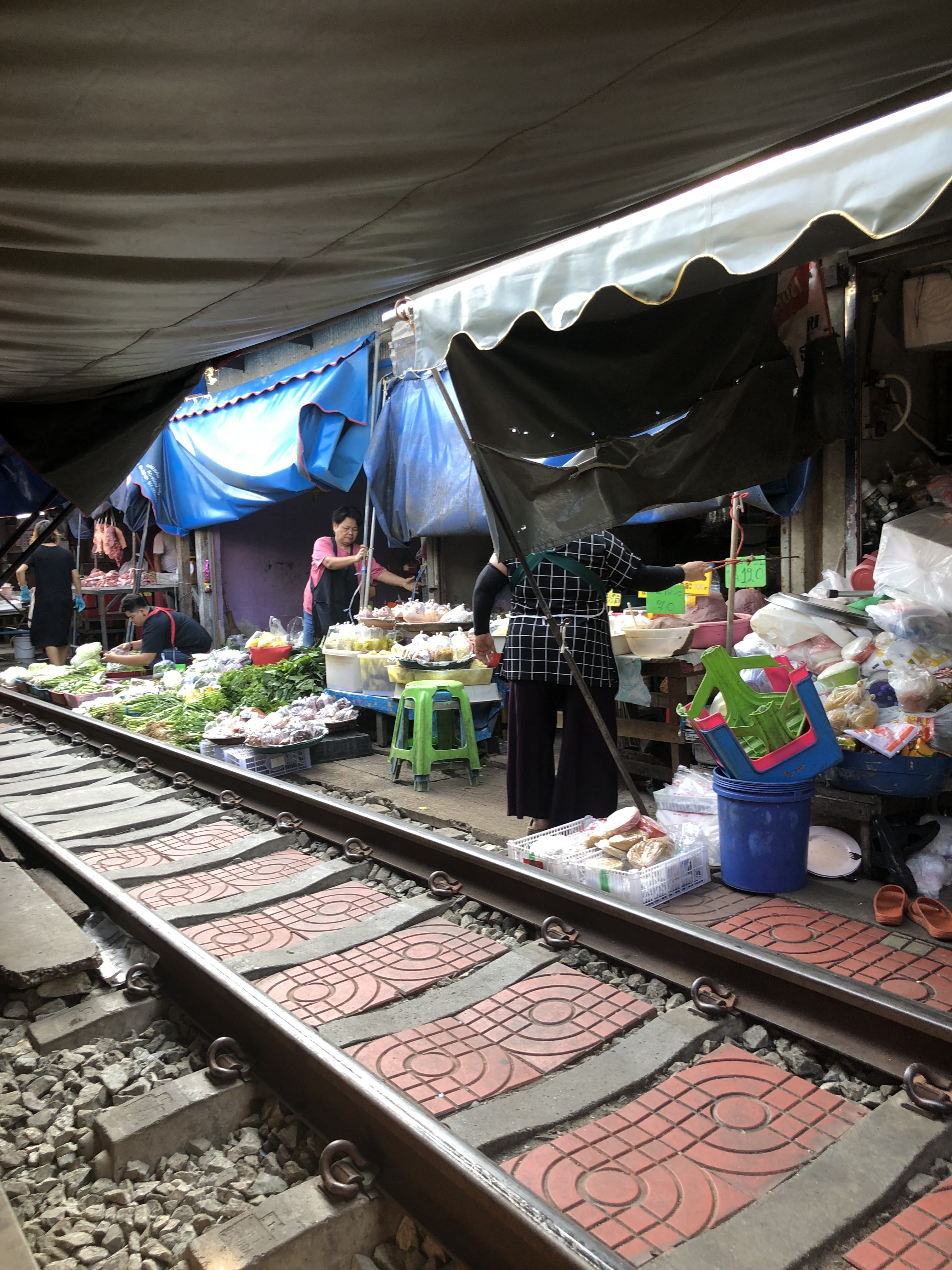
After a quick breakfast, we headed south of Bangkok toward Samut Songkhram, about 80 kilometers away. Our first stop was Maeklong Railway Market, a working market set up directly along active train tracks.
The real draw here is watching the vendors in action. About eight times a day, when a train approaches, they move with incredible speed—pulling back their goods, collapsing awnings, and clearing the tracks just in time. The train rumbles through, inches from baskets of produce and hanging clothes, and moments later everything is set back in place, as if nothing had happened. It’s a strangely seamless routine, precise and practiced, and impressive to watch.
Hot and thirsty from walking through the market, my guide grabbed fresh coconut juice for both of us, which we drank straight from the coconut.
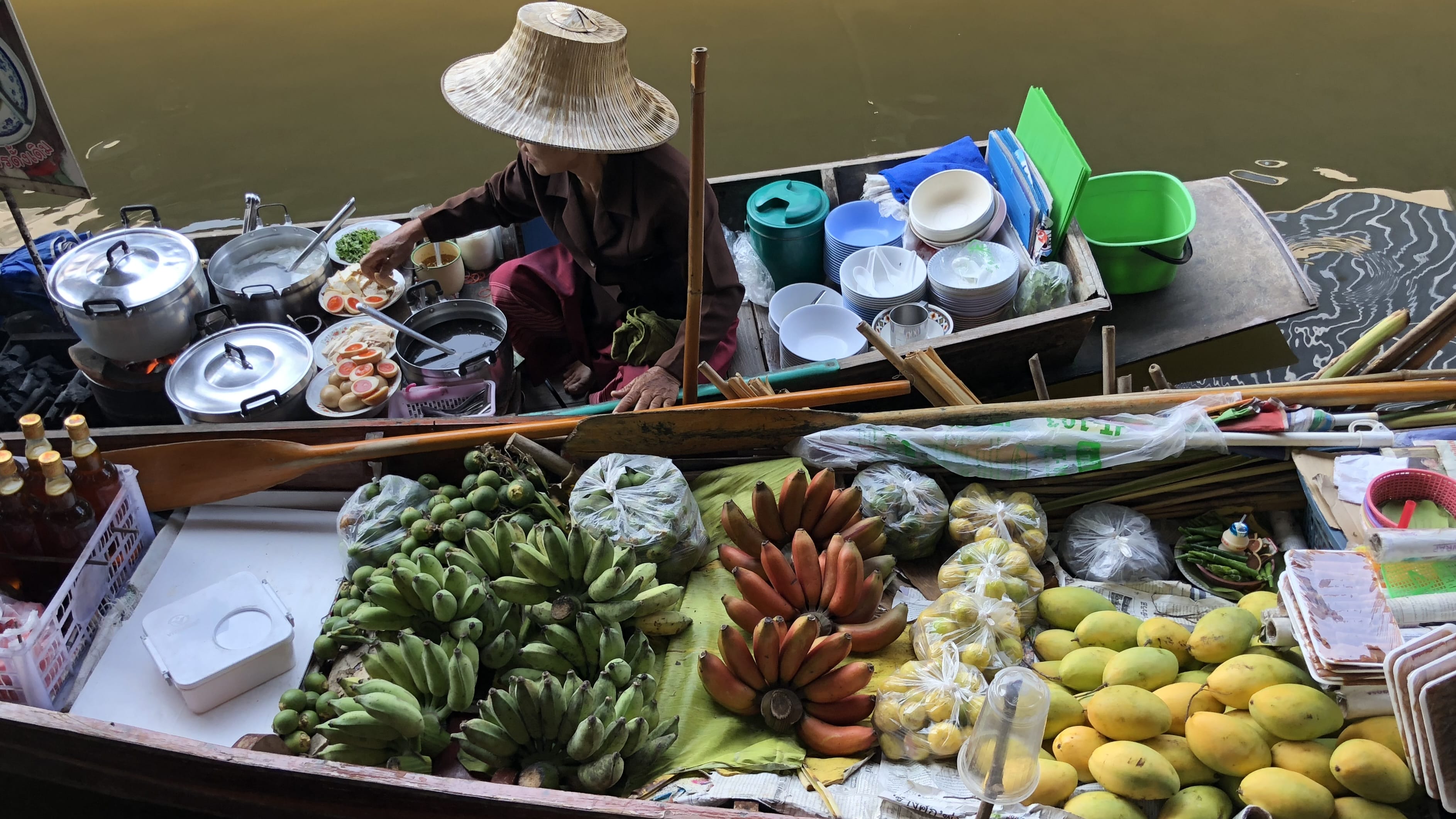
From there, we continued on to Damnoen Saduak Floating Market, boarding a small wooden boat to explore the canals. Even before getting on the water, the area was busy and loud, with stalls selling food, fruit, and souvenirs.
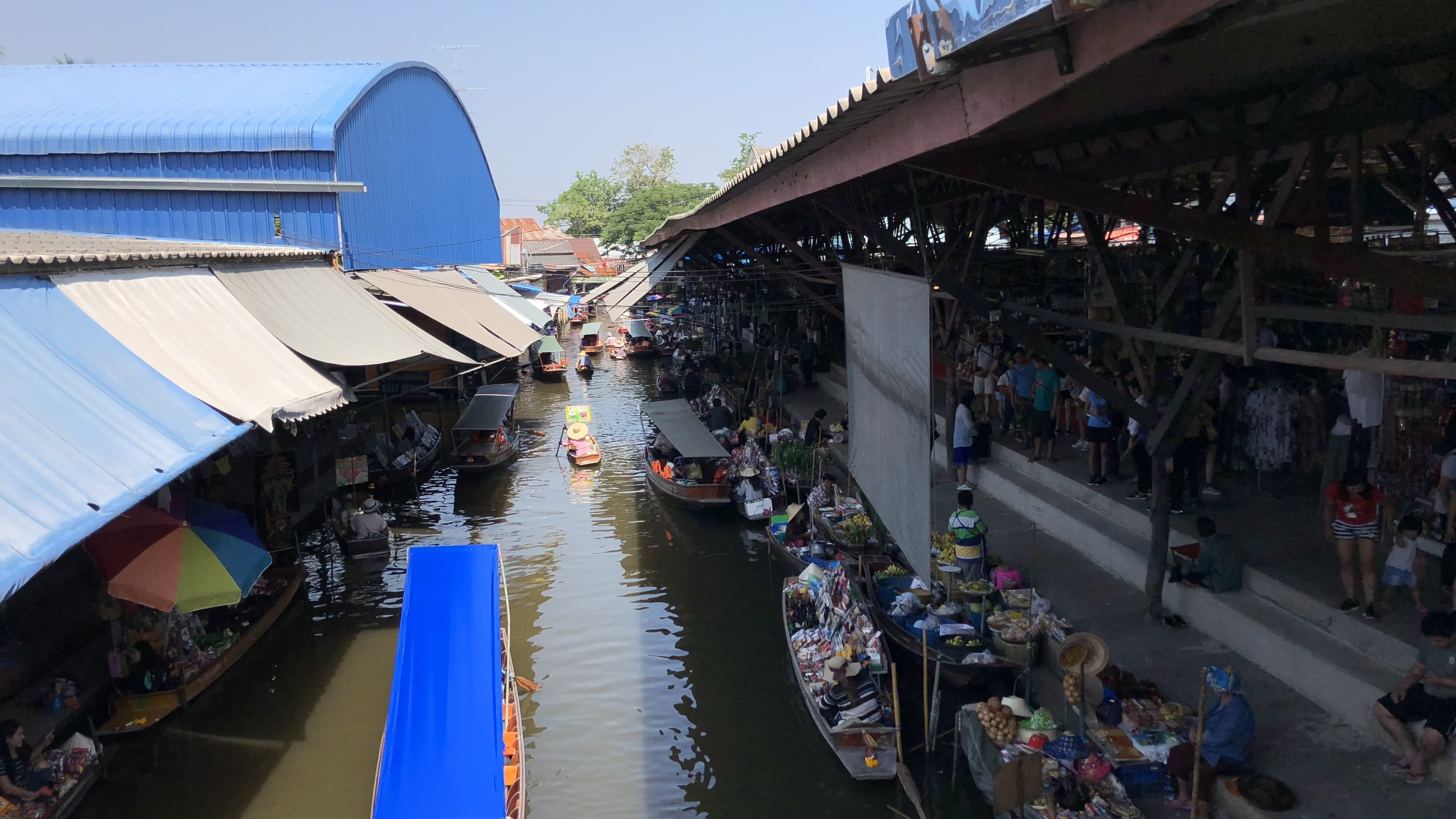
Once in the boat, we moved slowly through a maze of klongs. At times there was real congestion, boats inching forward in tight spaces while vendors called out and tour boats idled as people took photos. Many vendors sold fruit and snacks, but some boats were fully equipped with small grills or burners, cooking food right on board. Watching someone flip skewers or fry snacks while balancing over the water was fascinating, even if it felt more staged than spontaneous.
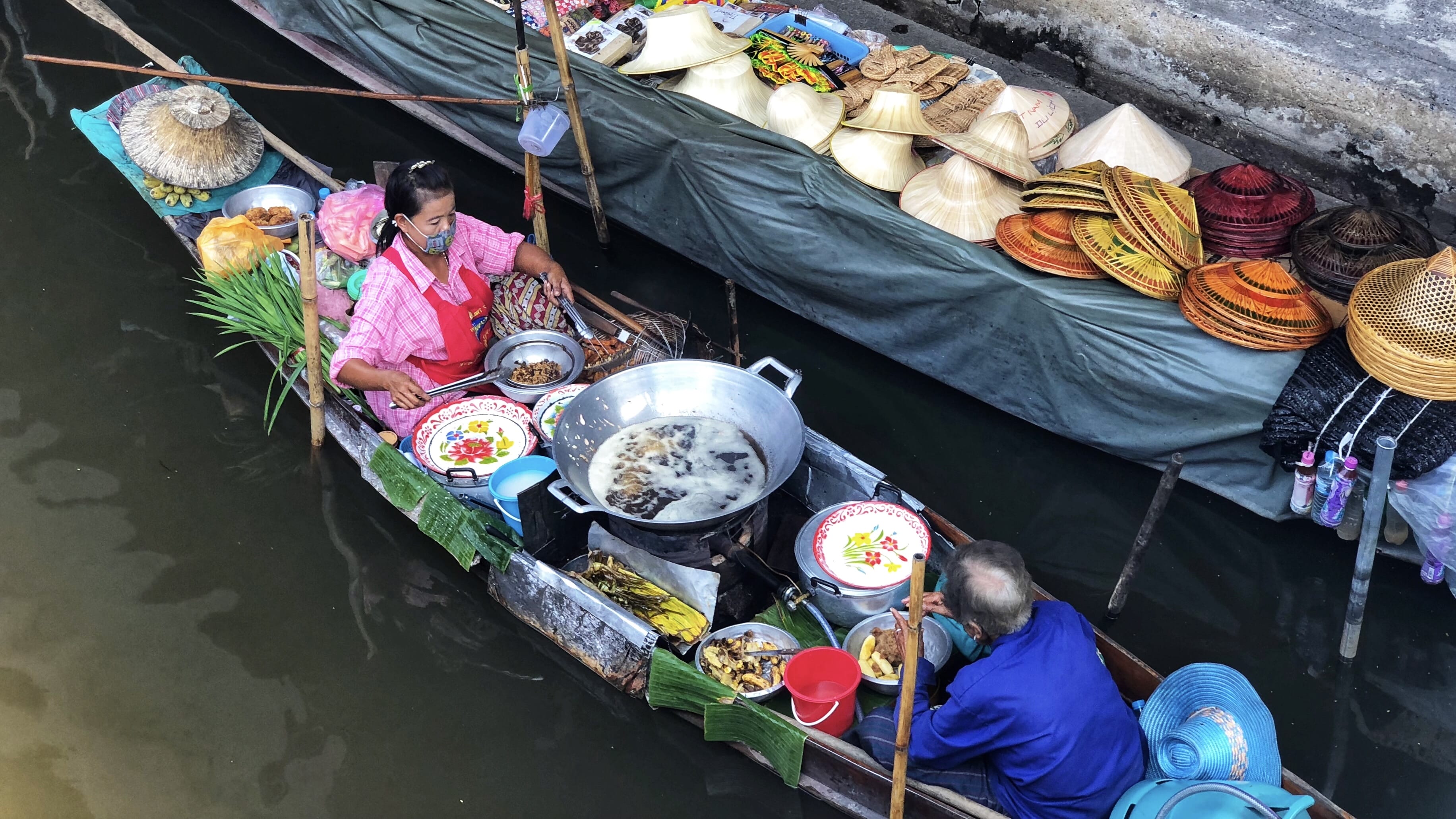
I asked our guide whether this was still a working market or mostly for tourists. His answer was honest: a bit of both. These canals once functioned as primary transportation and trading routes, and while that world still exists in pockets, tourism has reshaped much of it. Some vendors now depend almost entirely on visitors, and the rhythm of the market has shifted because of that.
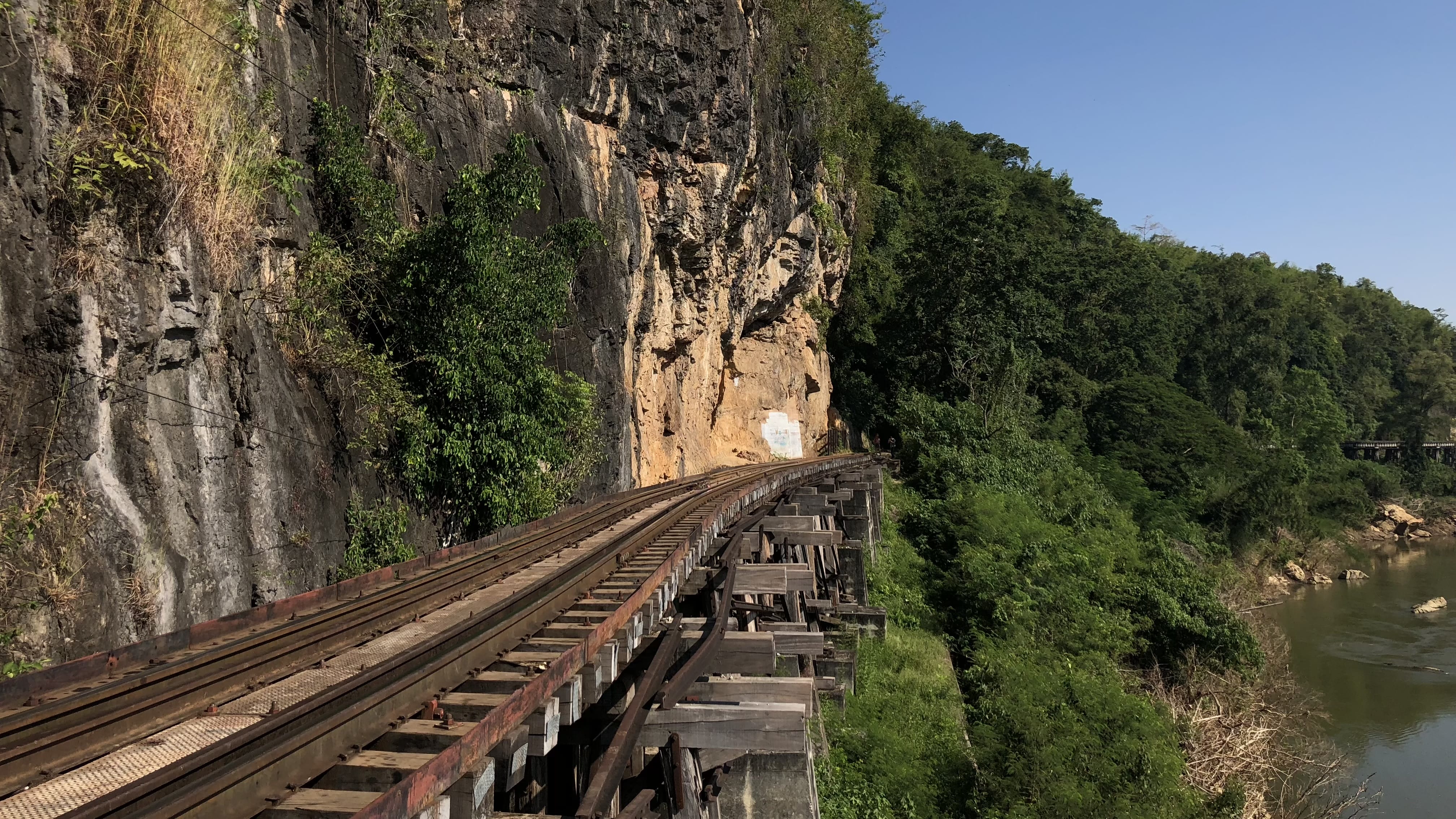
In the afternoon, we made our way to Kanchanaburi, where we visited the Bridge over the River Kwai and the nearby war cemetery. Both sites are connected to the Thai–Burma Railway—often referred to as the Death Railway—built during World War II using forced labor. The cemetery’s long rows of headstones give a sense of the scale of loss.
By the time we arrived at our hotel for the night, it felt like we’d covered an enormous amount of ground—geographically and emotionally—in just one day.
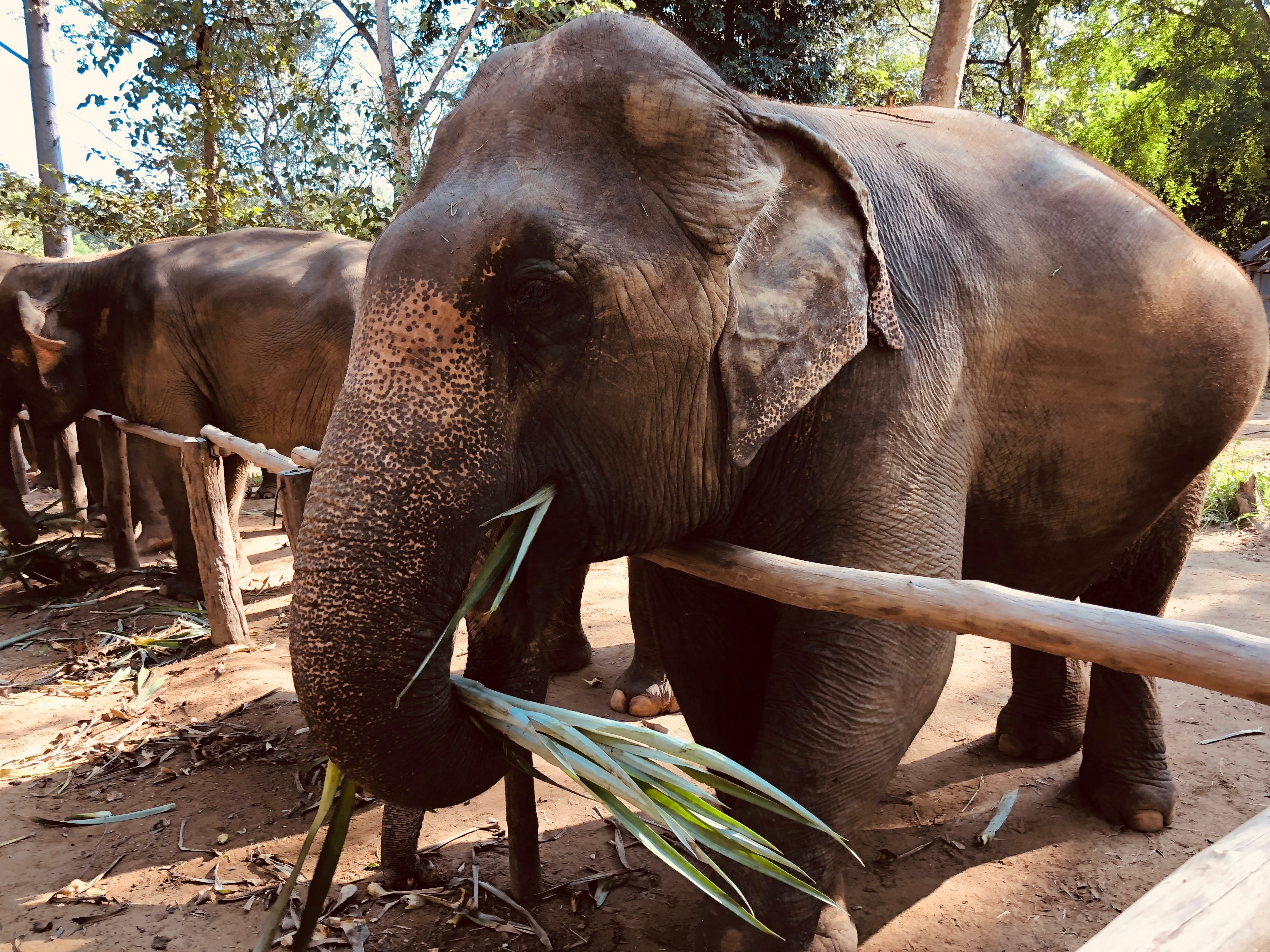
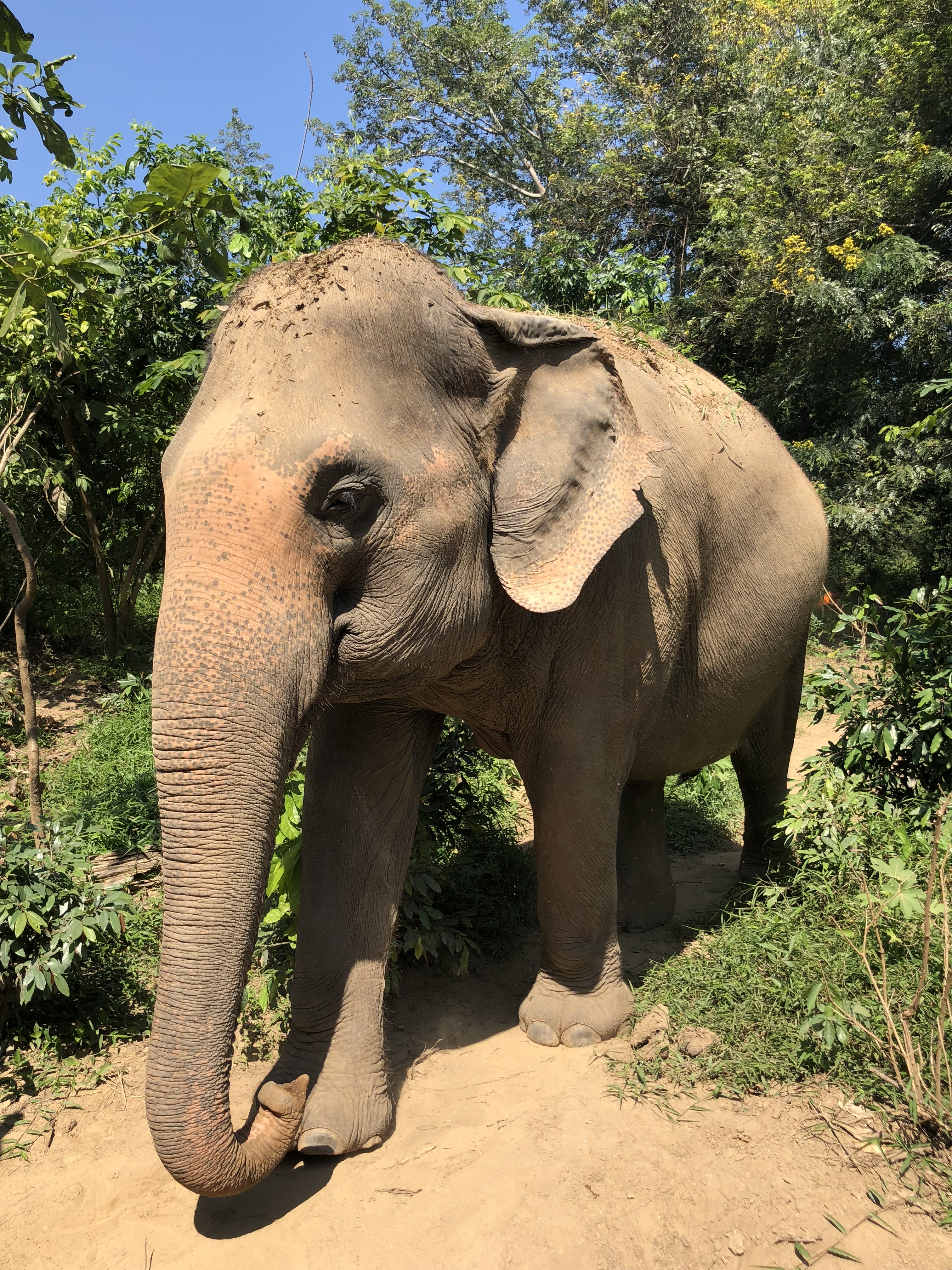
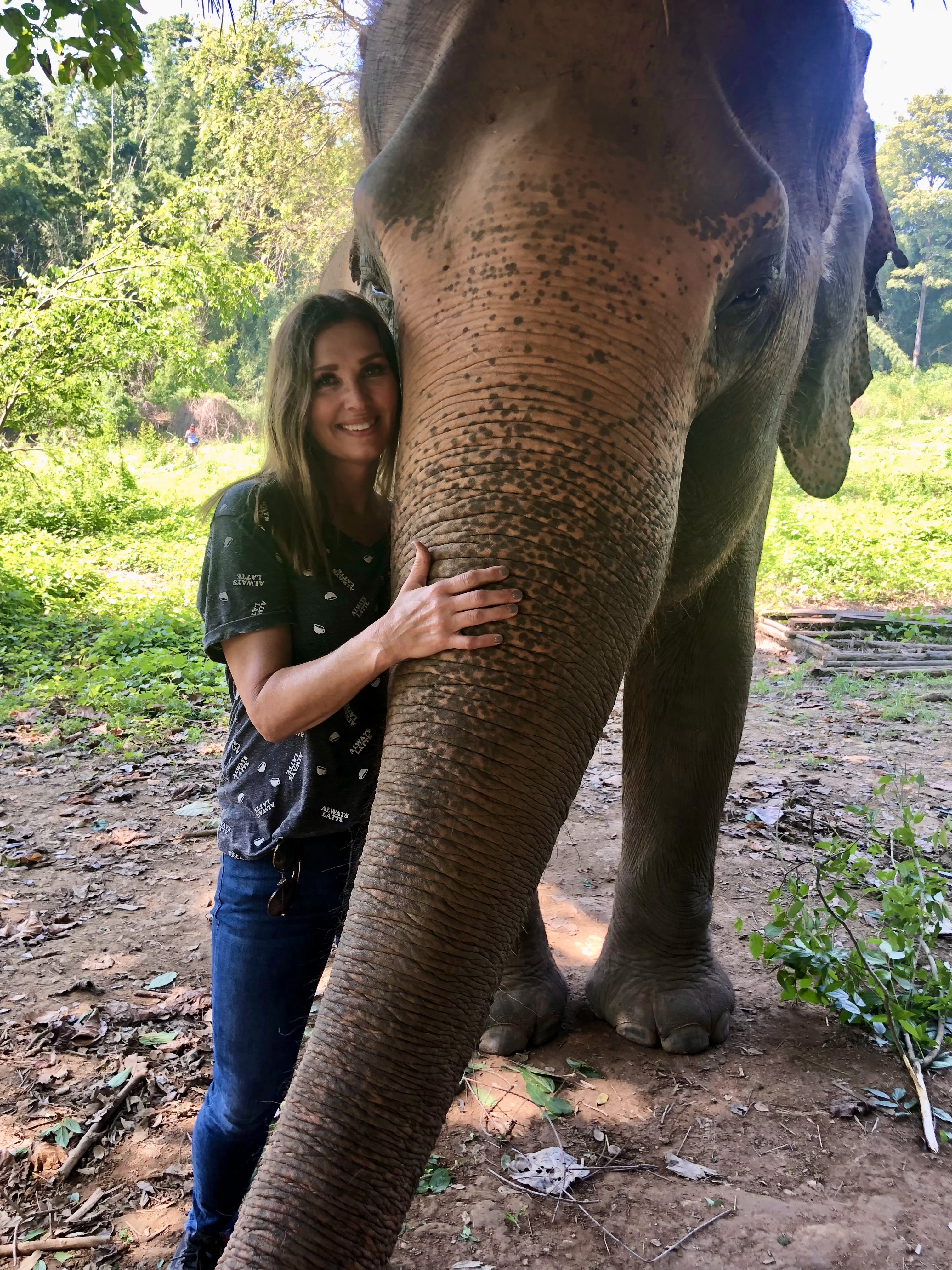
Today we spent the at Elephant Haven in Kanchanaburi — a highlight of the trip for this lifelong elephant lover. It wasn’t always a sanctuary. Until 2015, it operated as a trekking camp, where elephants were used for rides and tourist experiences. In recent years, Thailand—like much of Asia—has seen a shift toward transforming camps like this into ethical sanctuaries, places meant to give elephants a better life.
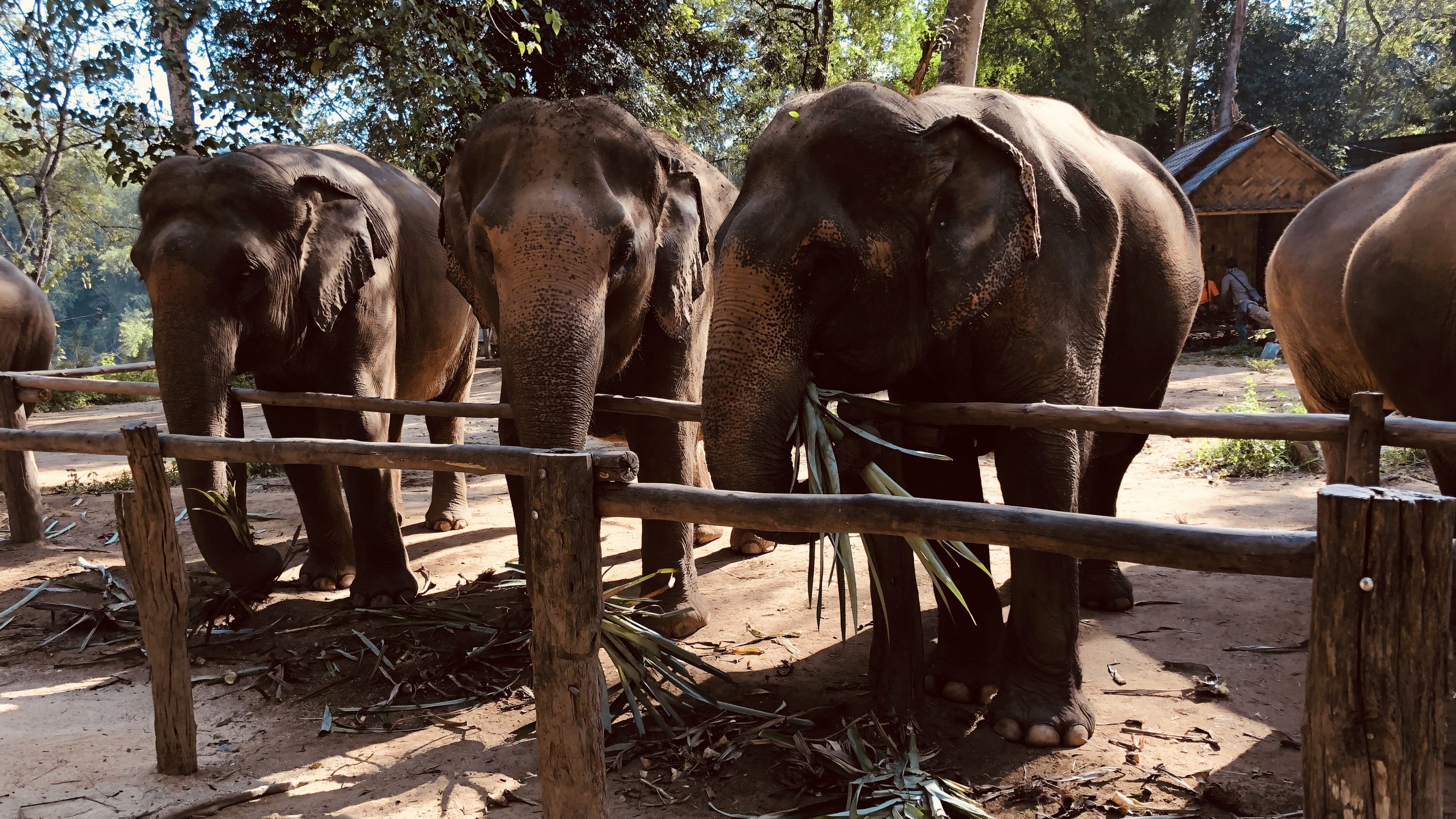
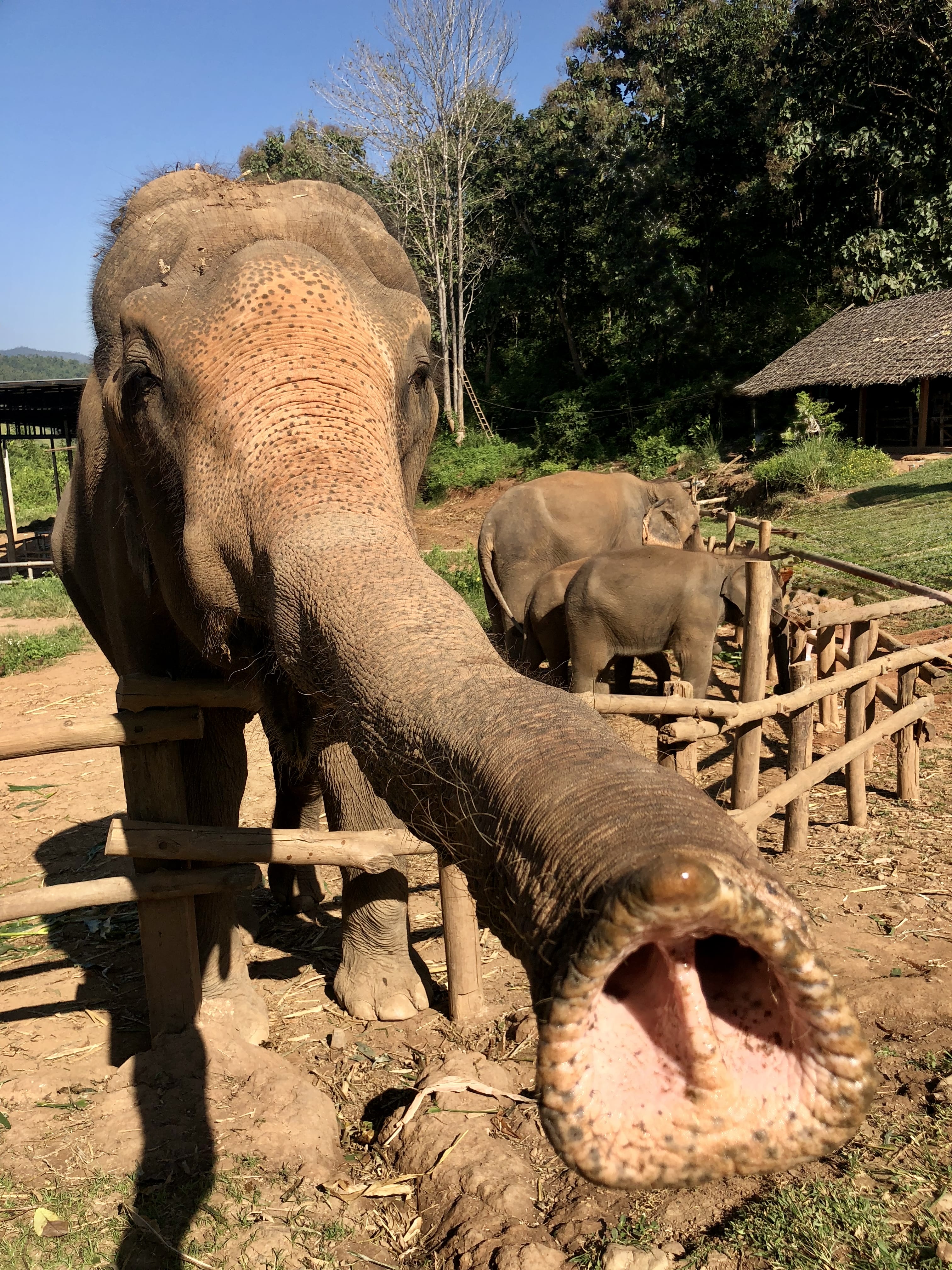
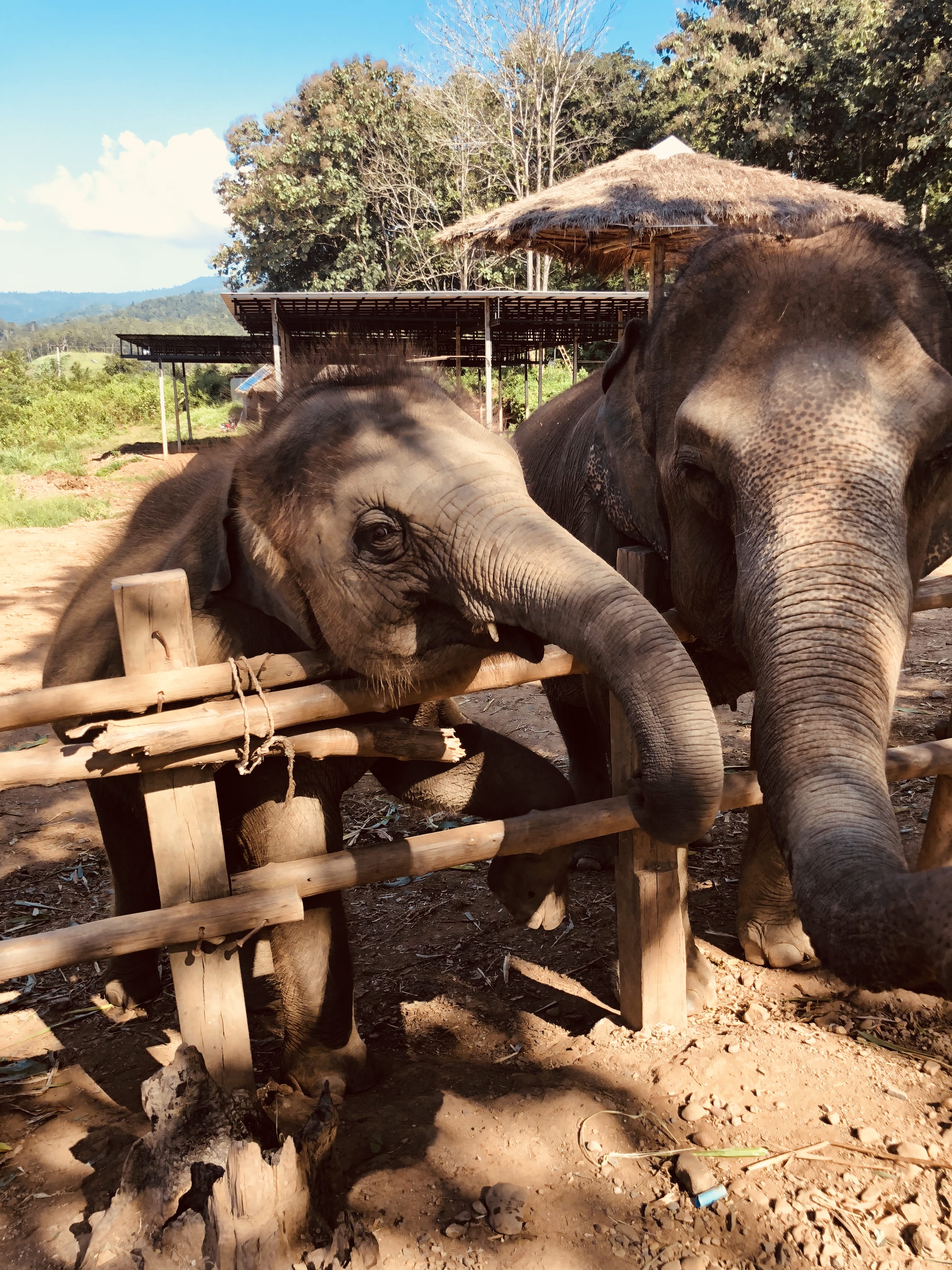
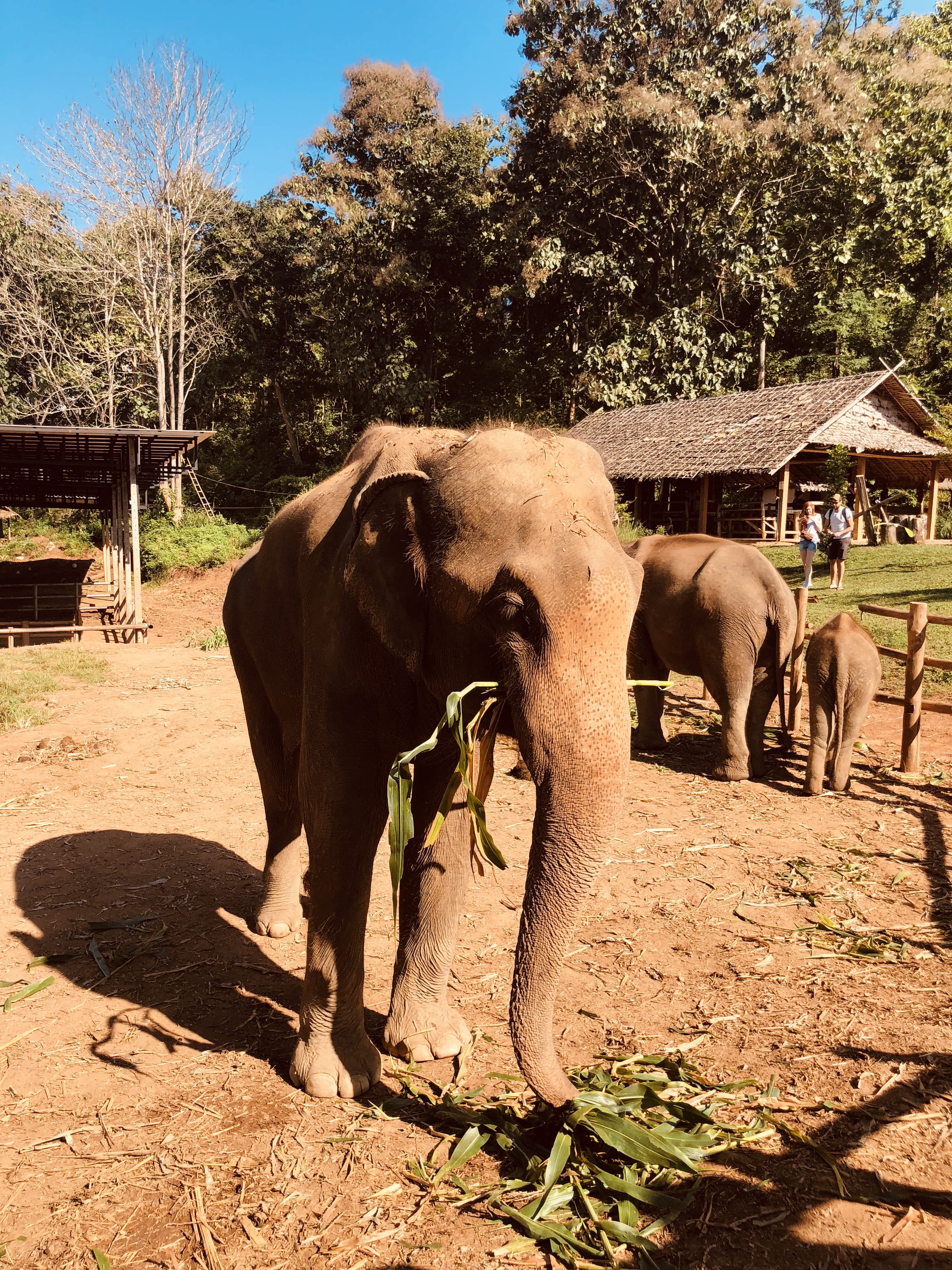
At Elephant Haven, the seven resident elephants — Thong Koon, Lamyal, Chopper, Pimjai, Ngern Dam, Boonme, and Mali — now have the freedom to roam, socialize, and cool off in the mud or the nearby River Kwai, at least as much as captivity allows. Some still bear visible scars, quiet reminders of what came before.
I booked the full-day experience, which included lunch, knowing a half day wouldn’t be enough for me. I wasn’t sure what to expect — I thought it might be a private visit — but when I arrived there were about six other people, still a small and manageable group. After a brief safety talk, we began by preparing food for the elephants: “medicine balls” made from fruit, grains, and other nutrients. We fed them what we’d made and then walked alongside them through the forest, following their pace rather than directing it.
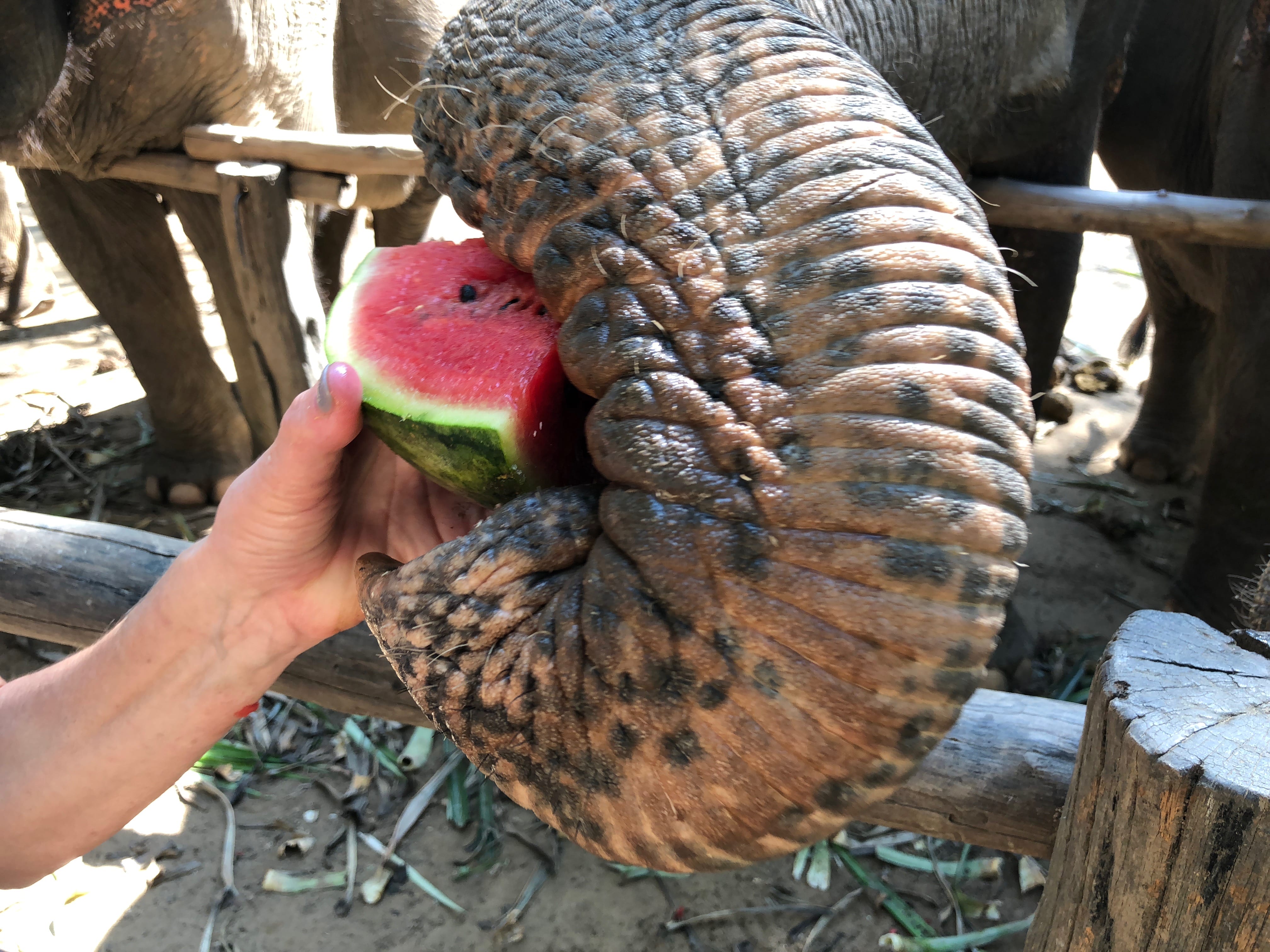
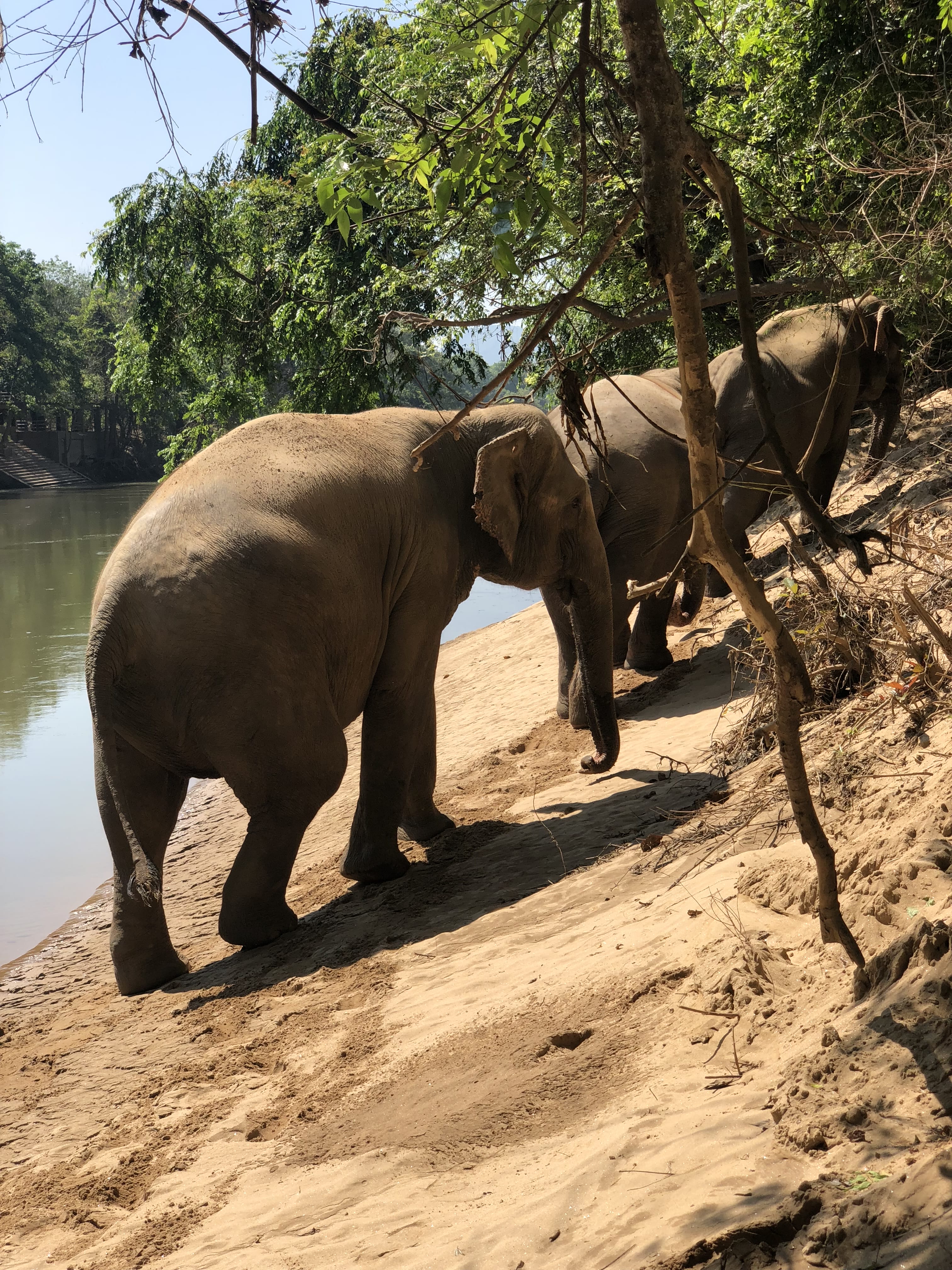
Later in the afternoon, we went down to the river so the elephants could bathe. Some lingered in the water, others coated themselves in mud, and a few wandered off entirely. Before leaving, we gave them bowls of watermelon slices, which they happily devoured.
We spent most of the day there, and it ended up being one of the most immersive experiences I’ve had.
Afterward, we returned to Dheva Mantra Resort. The property was beautifully landscaped and surprisingly quiet, with very few other guests around. I’d booked a late-afternoon Thai massage, which was outstanding. Thai massage is less about relaxation and more about deep stretching and pressure — it feels almost like assisted yoga — and it was exactly what I needed after such a full day.
We had dinner at one of the resort’s restaurants that evening, lingering over a relaxed meal before turning in. After the intensity of the day, the calm of the resort felt especially restorative.
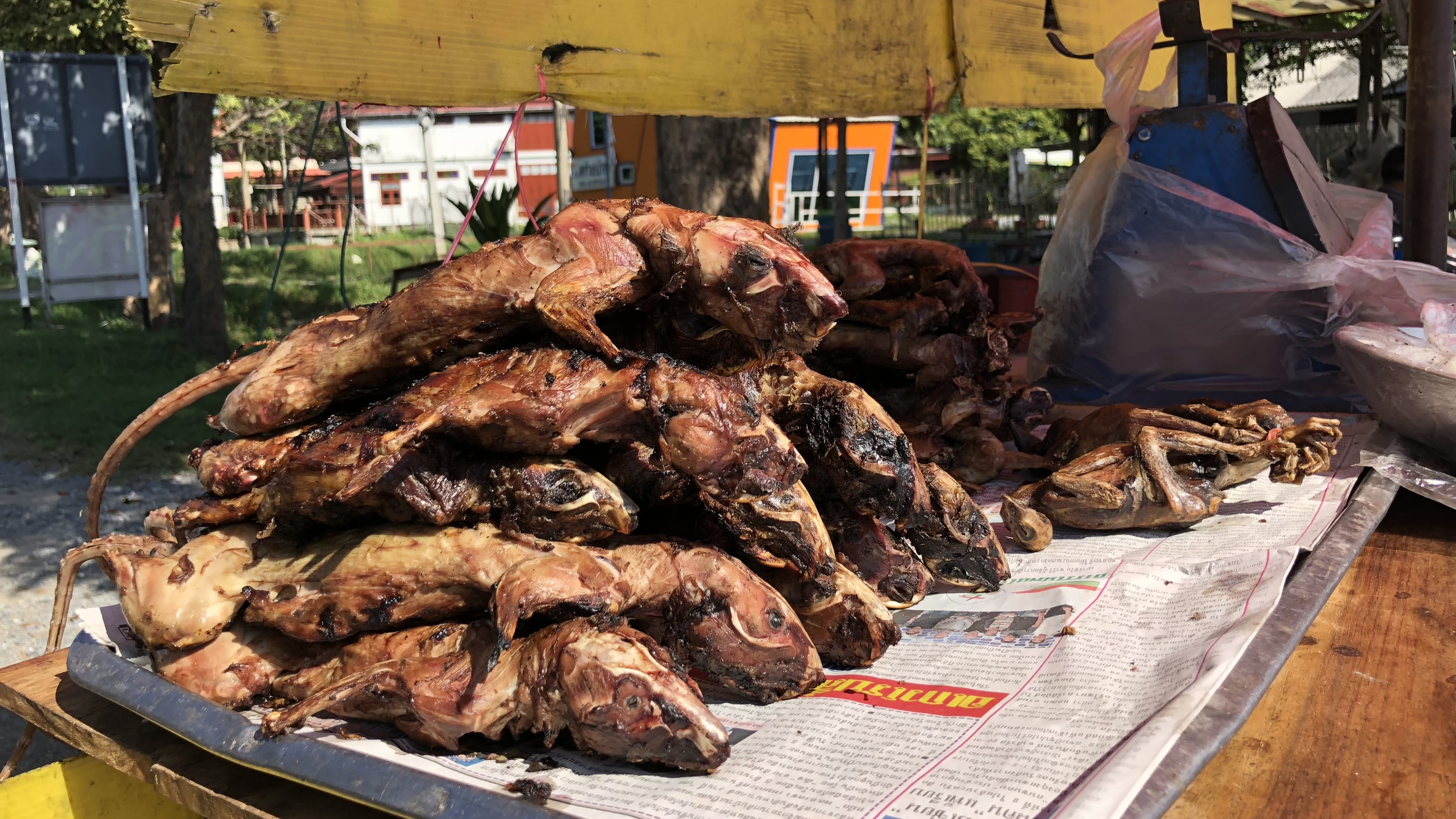
After breakfast at the hotel, we headed to Ayutthaya, making a brief stop along the way to see one of the largest reclining Buddha images in the area. Something unexpected that caught my eye during the drive were roadside stands selling grilled rats—apparently a fairly popular local food in this region.
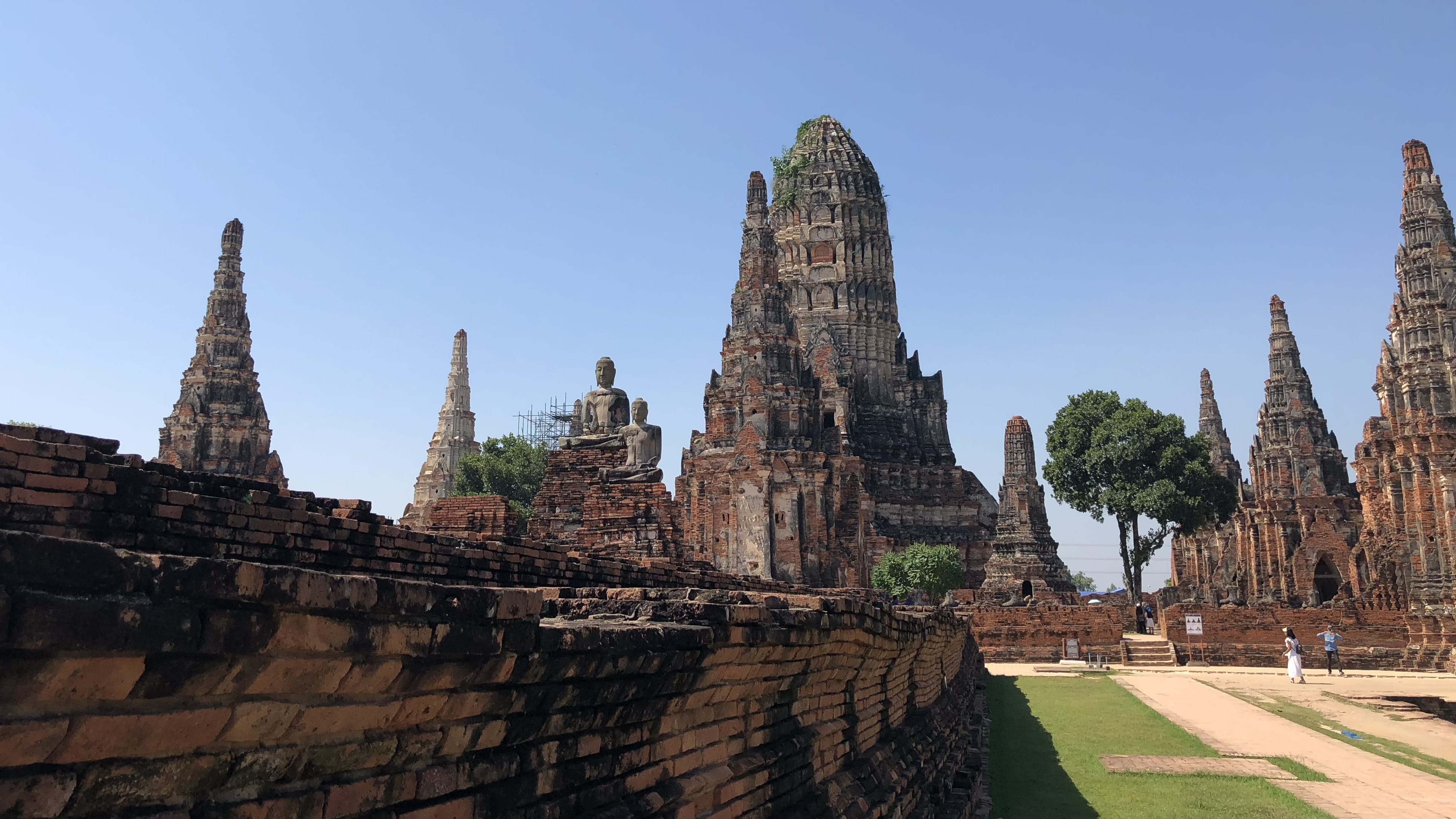
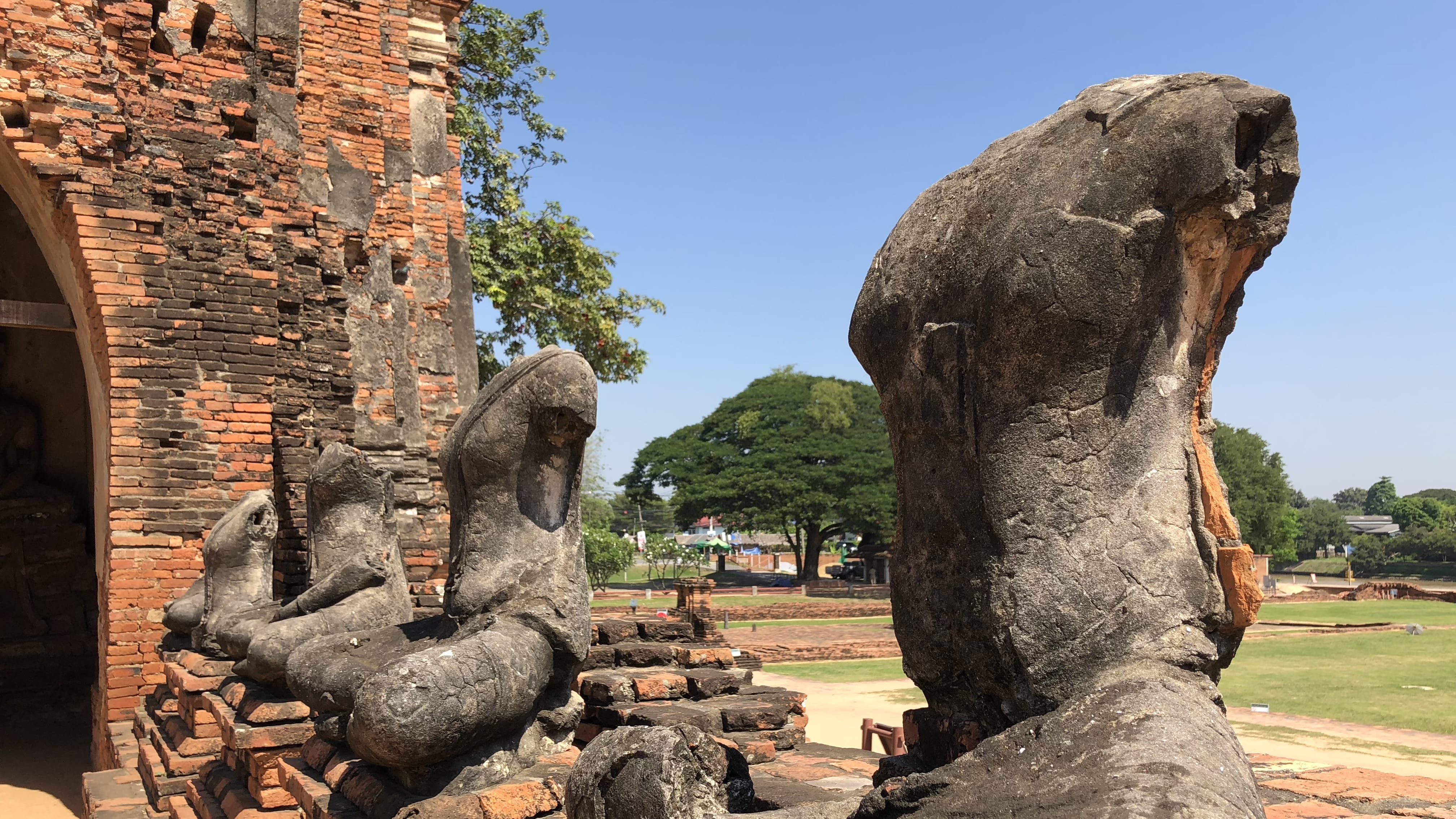
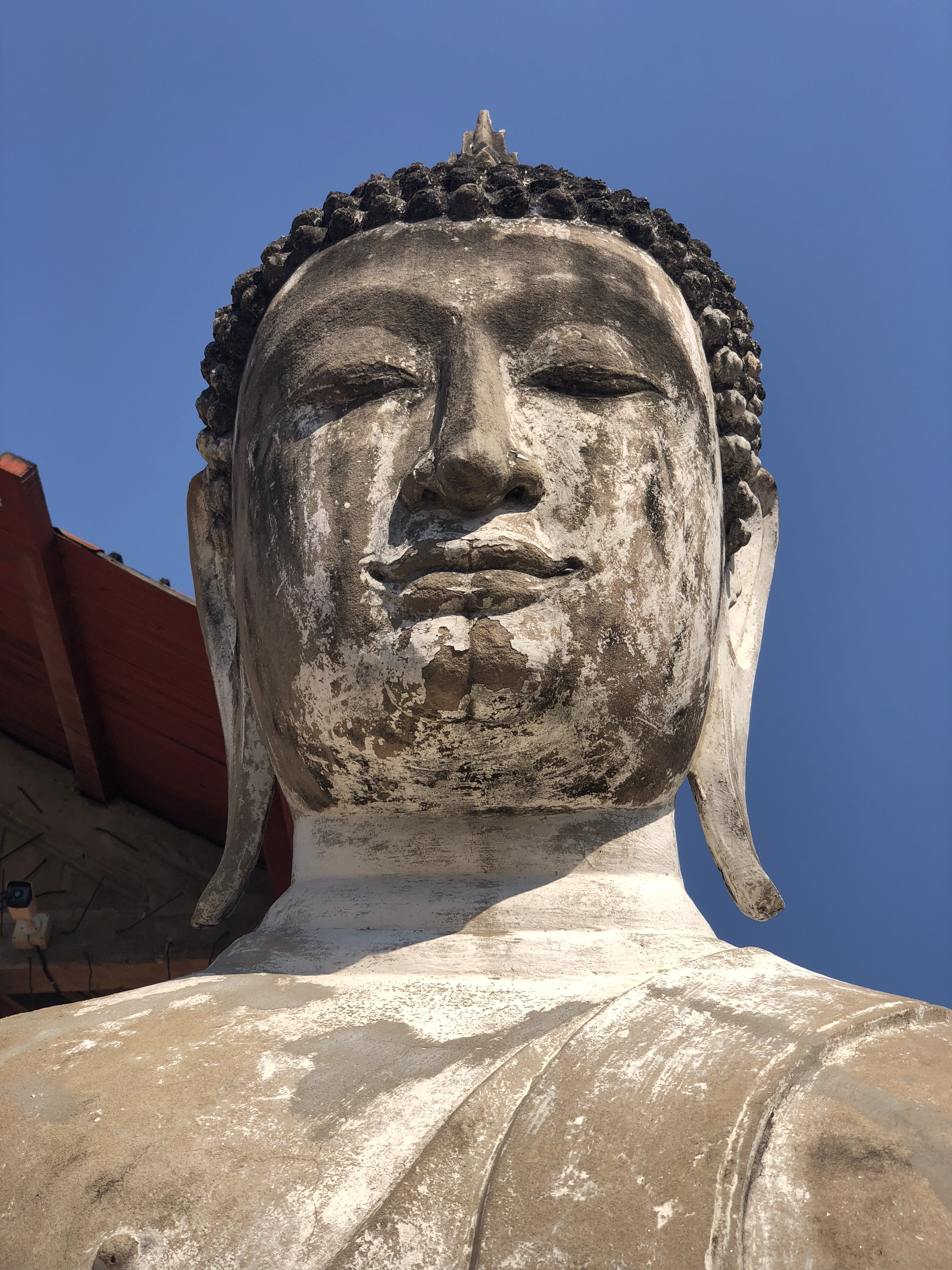
Upon reaching Ayutthaya Historical Park, we hopped into a brightly colored “Kermit” tuk-tuk—one of those small local details that instantly makes you smile—and set off through the ruins. At Wat Chaiwatthanaram, one of the most striking sights was a long row of seated Buddha statues lining a brick walkway, their bodies intact but their heads missing.
The damage is a quiet reminder of Ayutthaya’s violent past. When the city was sacked in the 18th century, many Buddha heads were destroyed or removed—sometimes as acts of war, sometimes later taken away. What remains is weathered brick and physical evidence of history left exactly as it is.
From there, we stopped at the 37-meter Reclining Buddha at Wat Lokayasutharam, its head supported by a carved lotus.
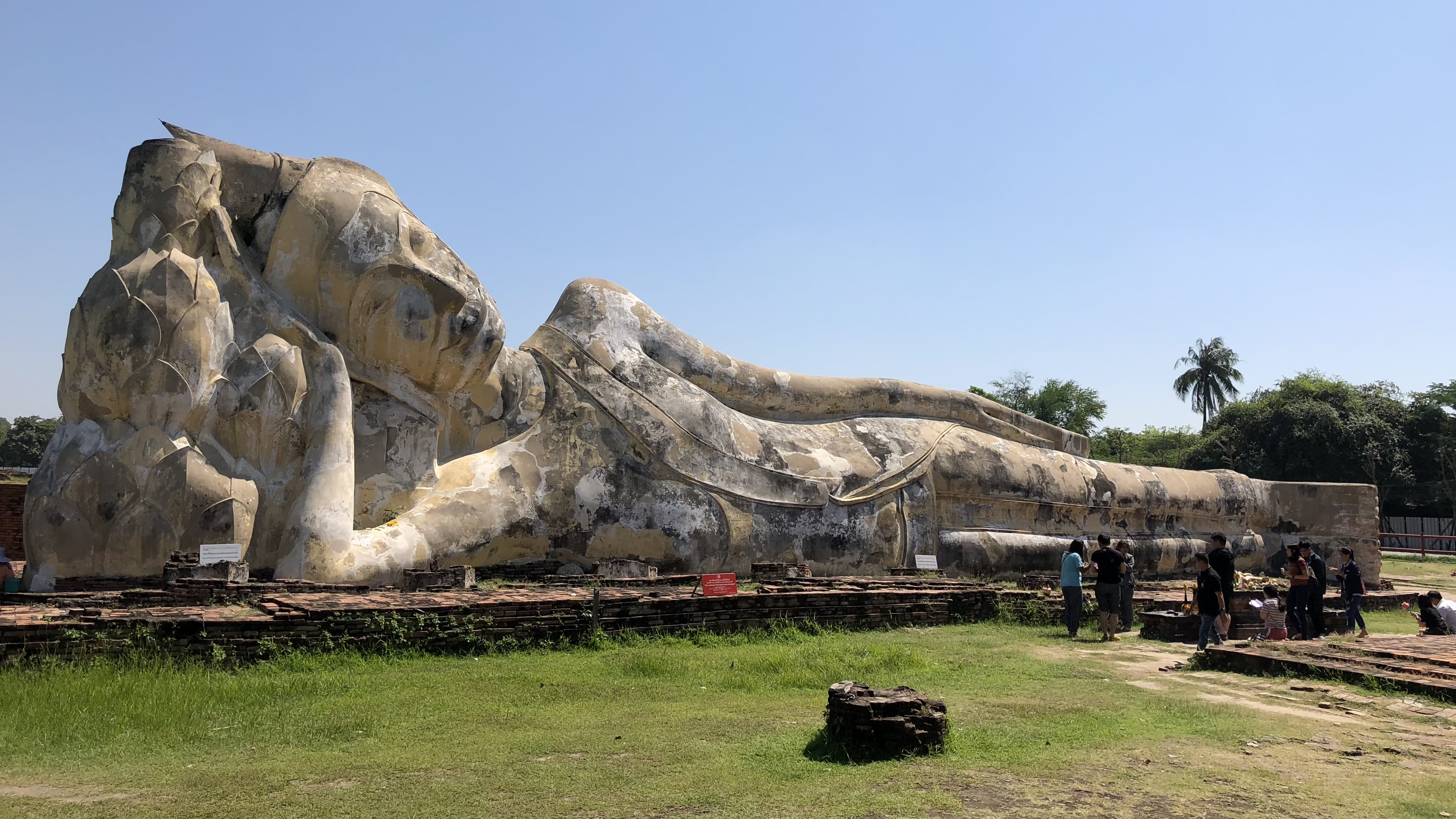
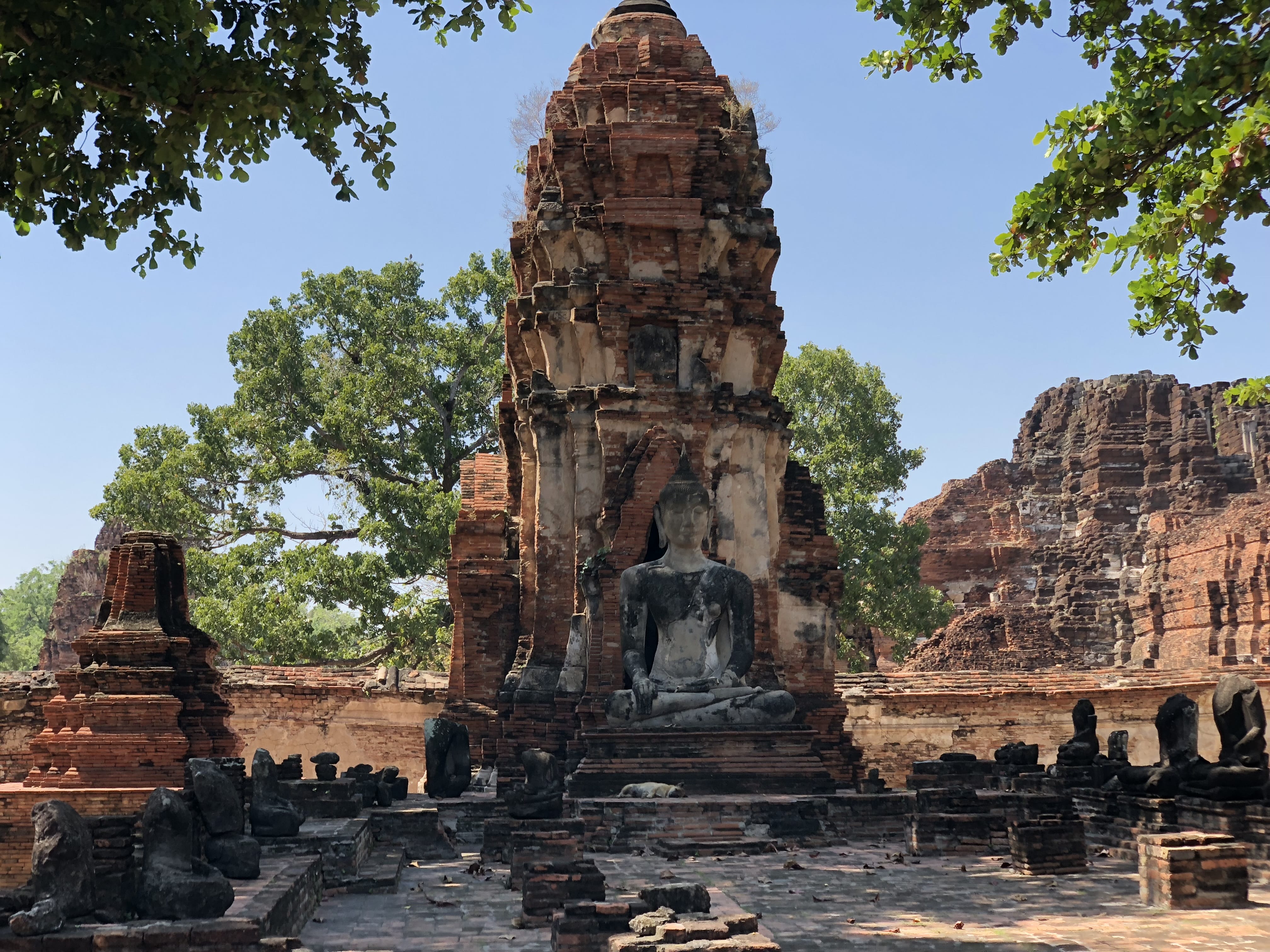
Next, we headed to Wat Mahathat, one of Ayutthaya’s most recognizable temple ruins. Like much of the historical park, it’s a landscape of crumbling brick towers, broken Buddha statues, and quiet walkways that make it easy to imagine how vast this place once was.
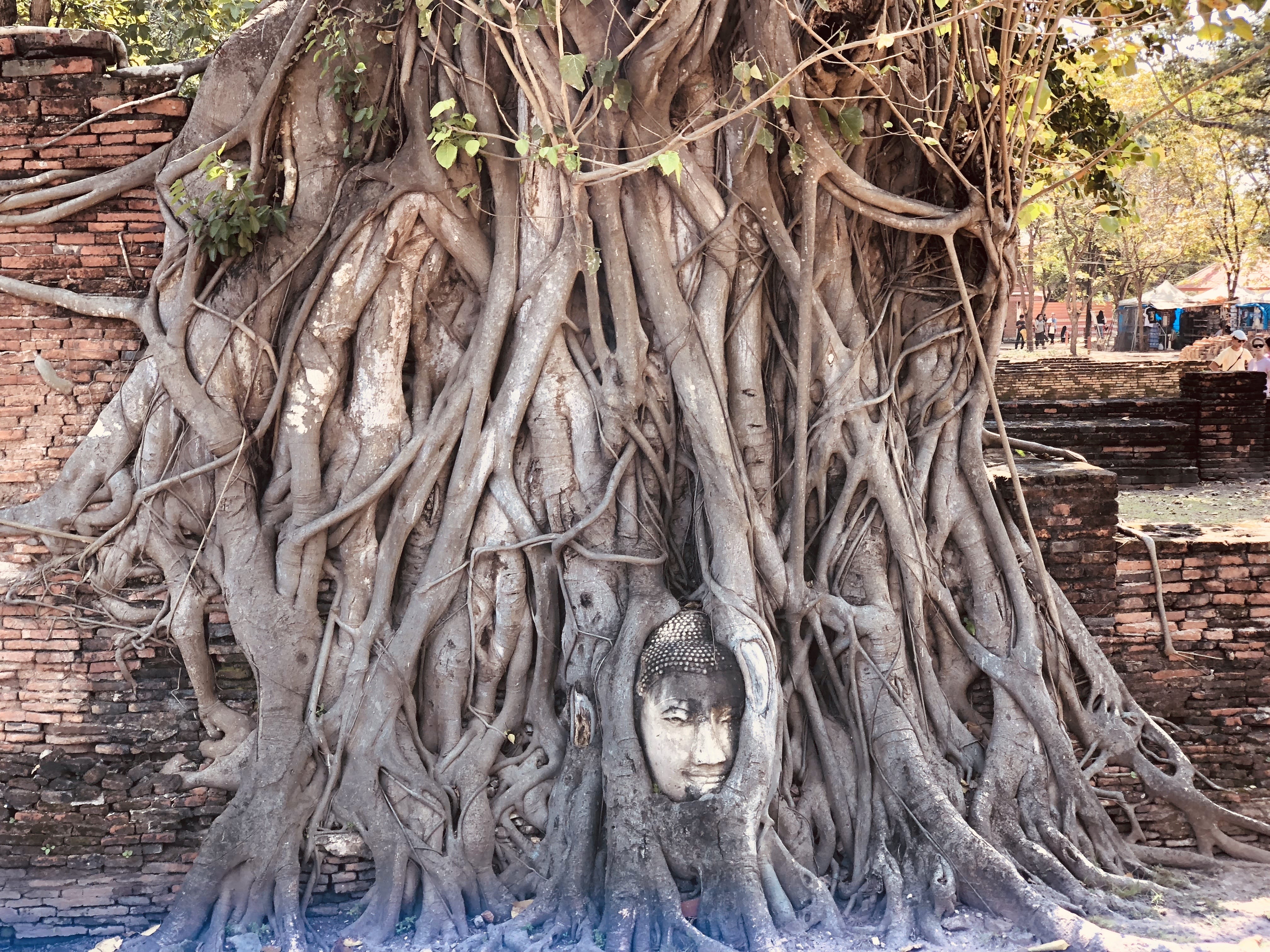
The detail everyone comes to see is the Buddha head entwined in the roots of a tree. Our guide pointed it out, and I’m glad he did—I might have missed it otherwise. Once you’ve seen it, though, you start noticing it everywhere: in photo books, postcards, and even framed on walls far outside Thailand. It’s become an image inseparable from Ayutthaya itself.
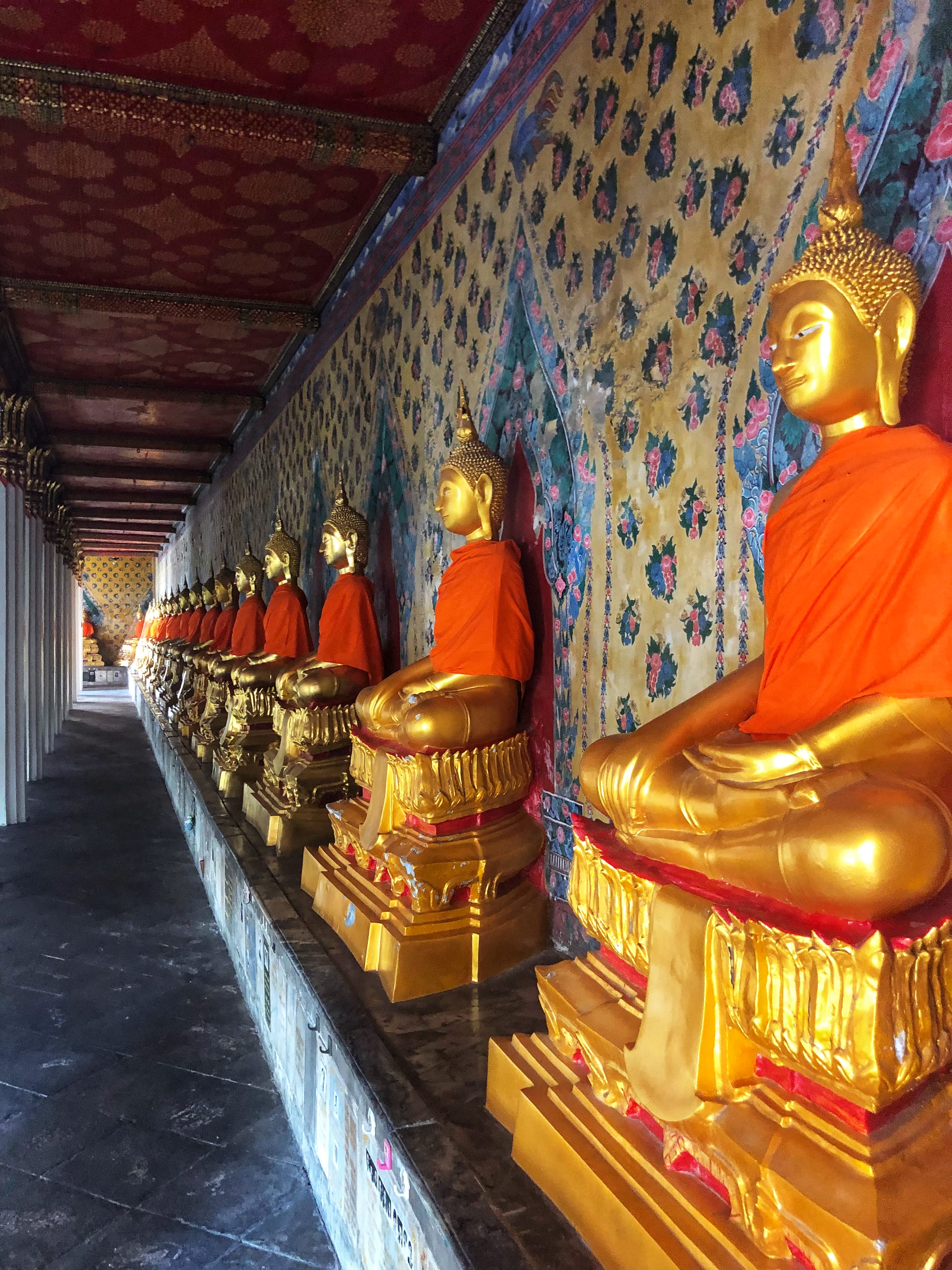
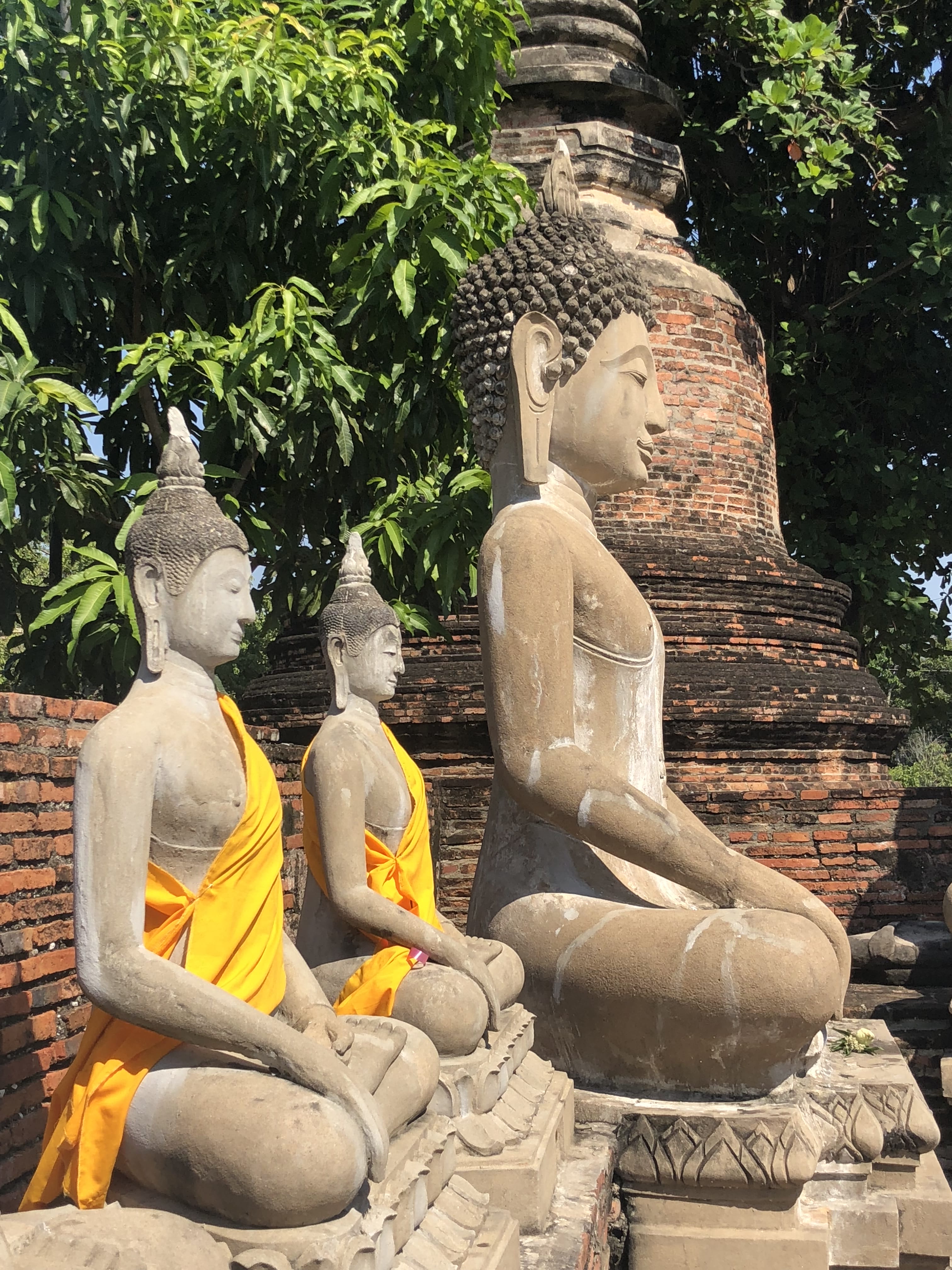
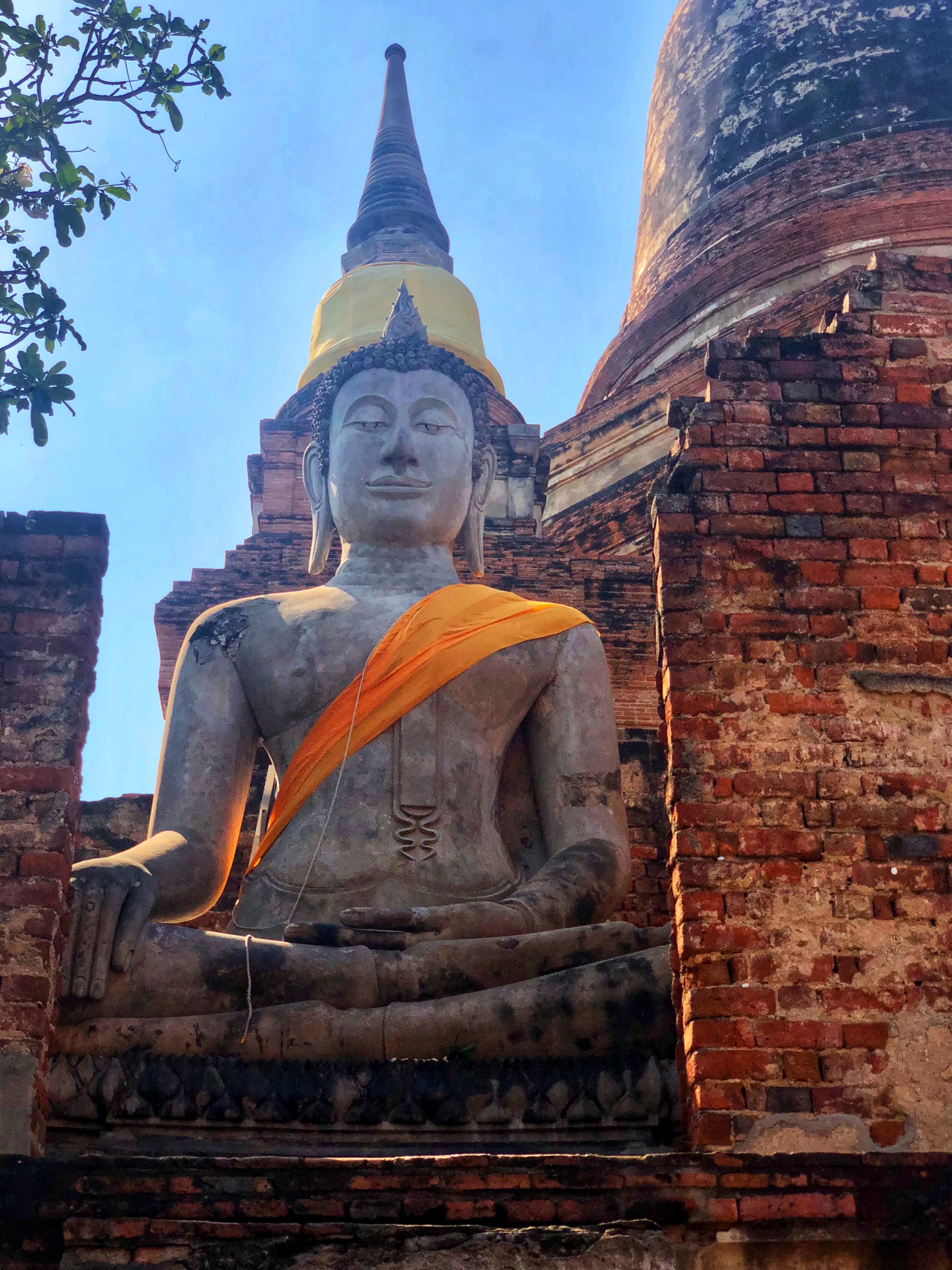
After Wat Mahathat, we continued on to Wat Yai Chai Mongkhon, known for its large chedi and long rows of seated Buddhas draped in saffron cloth. It felt more open and expansive, with a different energy than the quieter ruins we’d just walked through.
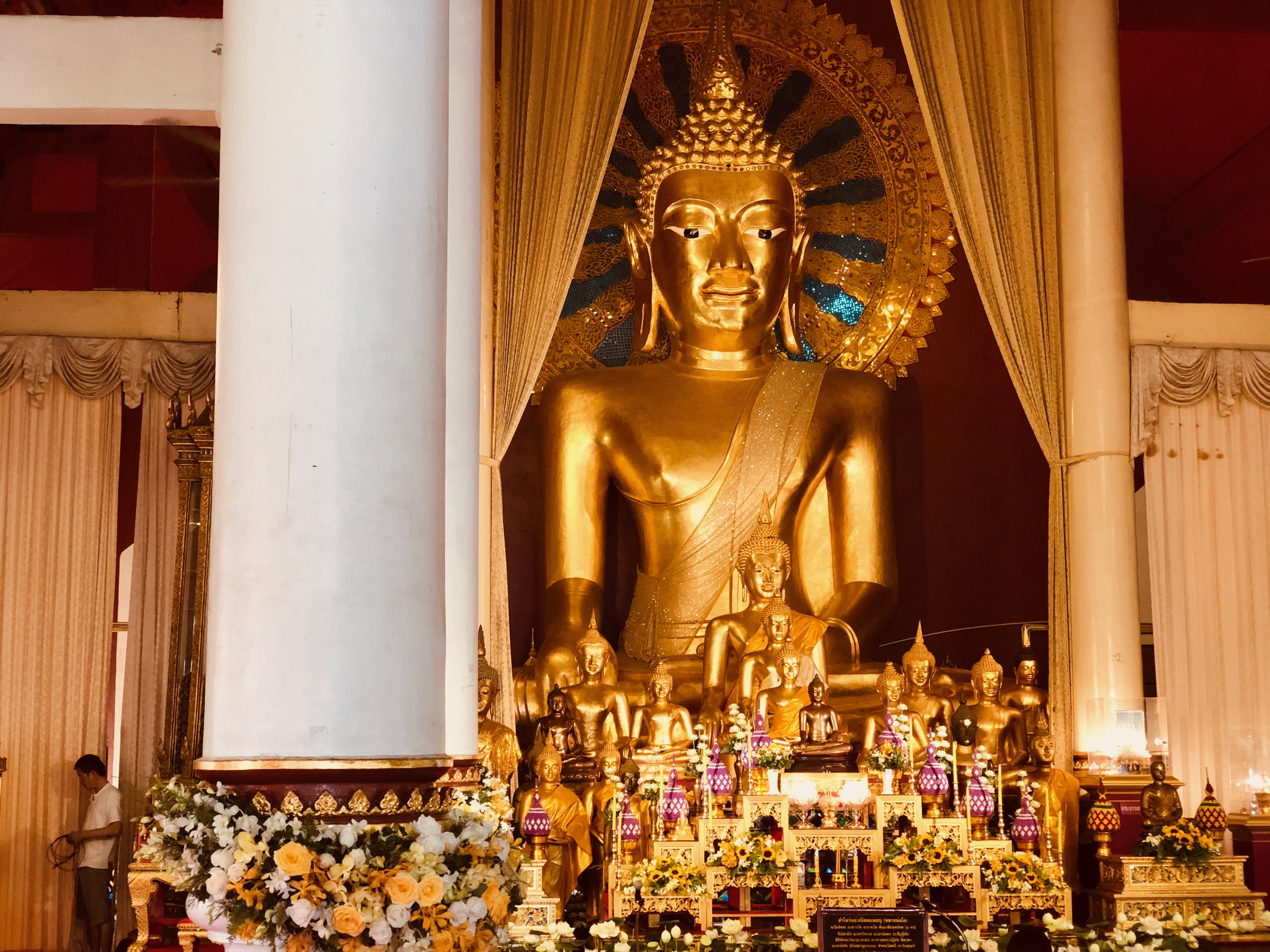
From there, we visited Wat Phanan Choeng, a Buddhist temple and home to what many people simply call the Buddha of Ayutthaya. Inside, a 19-meter-tall seated Buddha, completely covered in gold, dominates the hall, filling the space with a sense of scale and stillness.
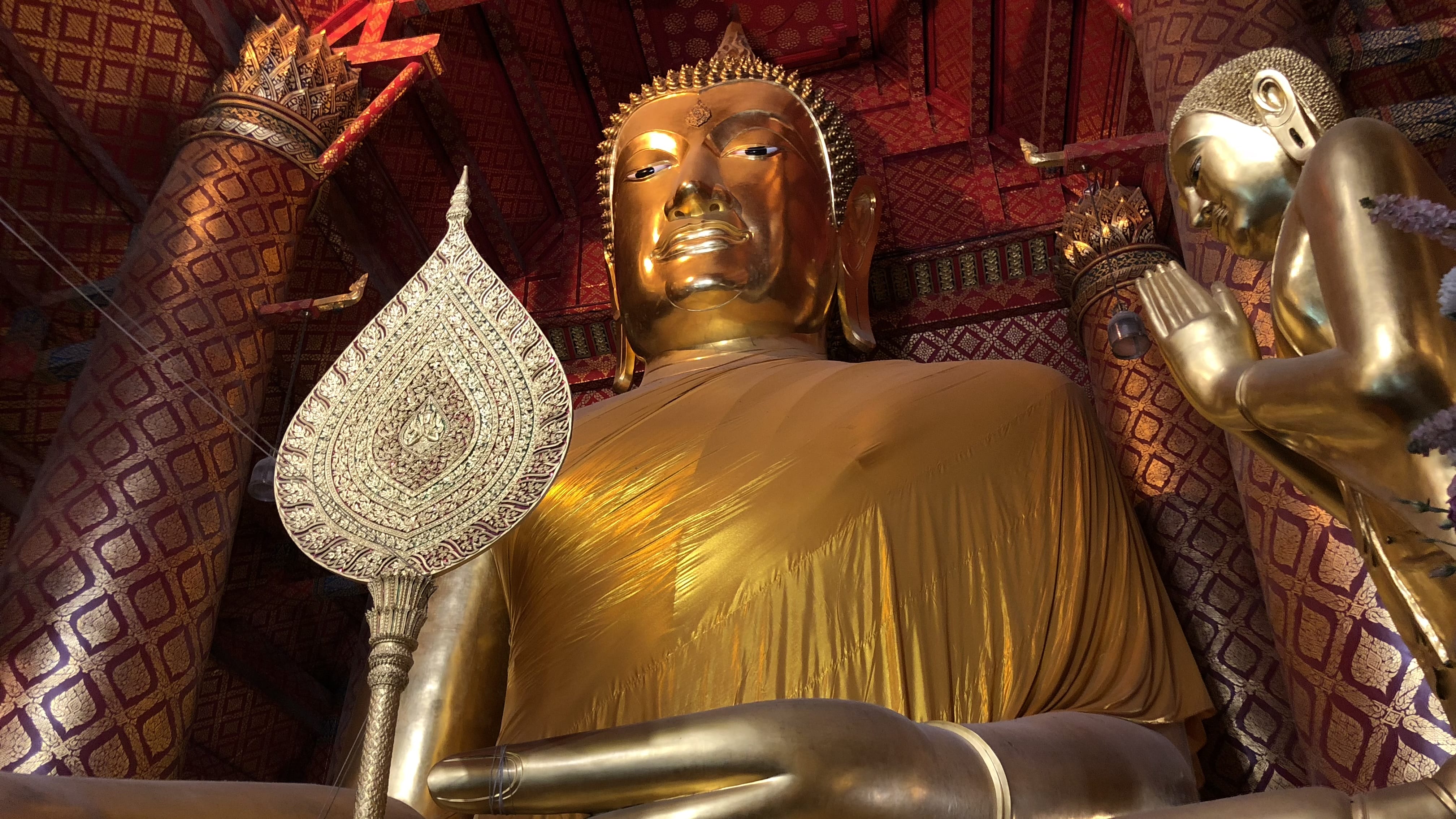
The walls lining the hall are covered with hundreds—maybe thousands—of small Buddha figures set into neat rows.
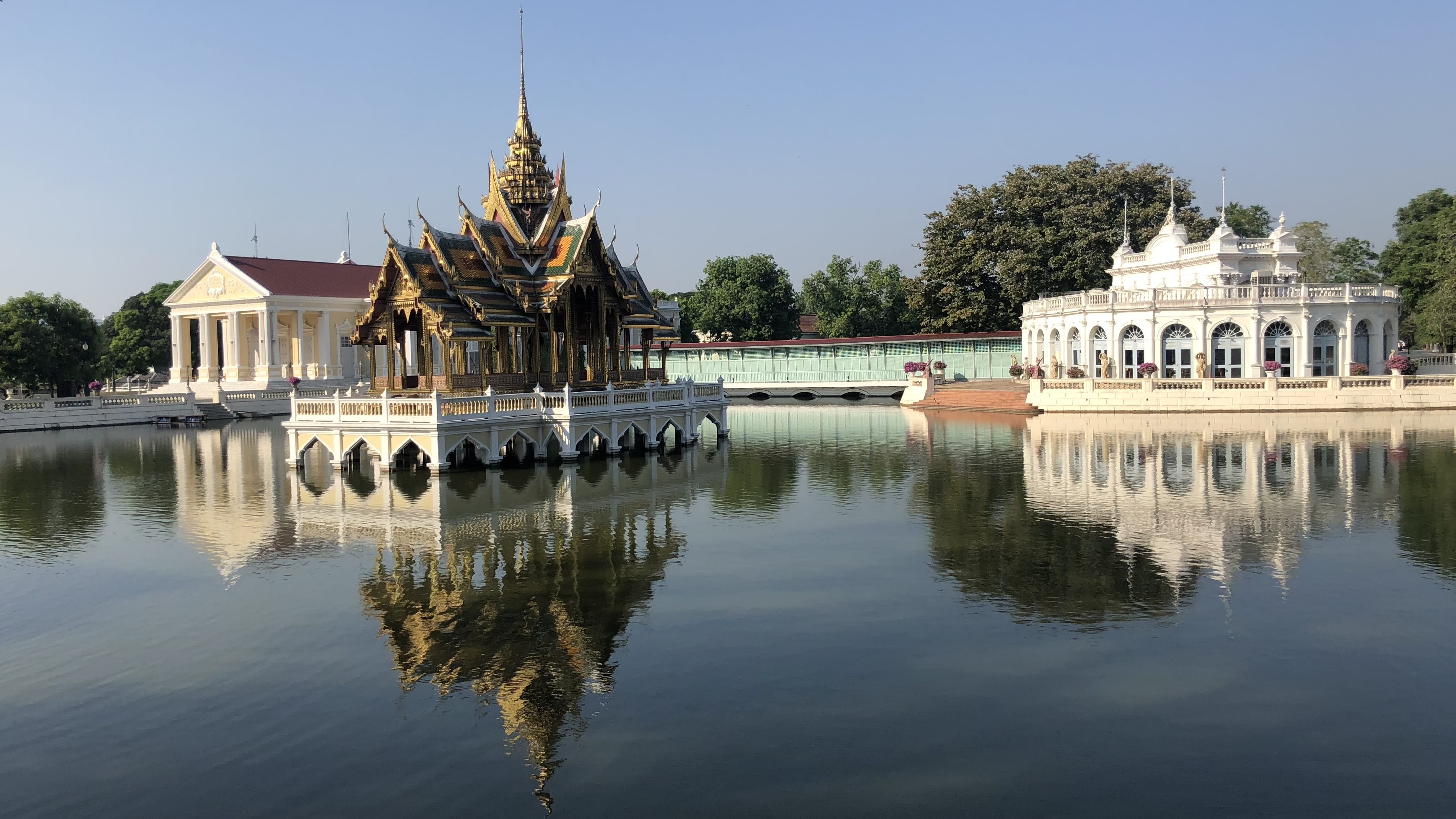
After lunch, we headed out on a long-tailed boat ride to Bang Pa-In Summer Palace, where we explored the serene royal grounds, especially peaceful in the afternoon. Our final stop was Wat Niwet Thammaprawat, a striking Gothic-style Buddhist temple with stained-glass windows—an unexpected and memorable contrast to everything we’d seen earlier in the day.
Following breakfast, we drove from Ayutthaya to Bangkok International Airport, where I caught a short flight to Chiang Mai, followed by a transfer to our hotel, Ratilanna, where we’d spend the next two nights.
By noon, we were back out exploring, starting at Mahachulalongkornrajavidyalaya University, a large Buddhist university and monastery complex just outside Chiang Mai. What stood out to me wasn’t just this site, but how it fit into a pattern I’d been noticing throughout Thailand.
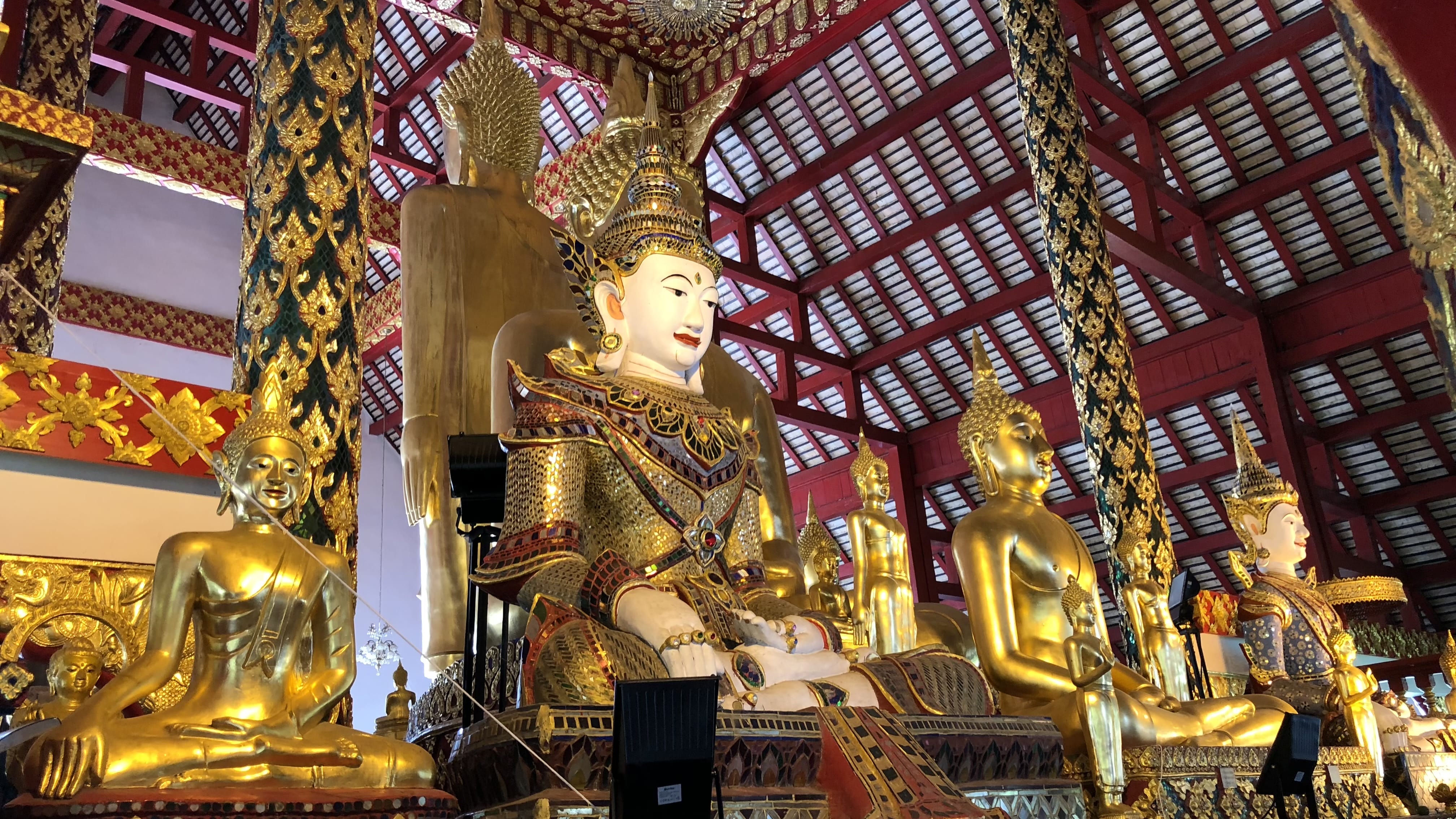
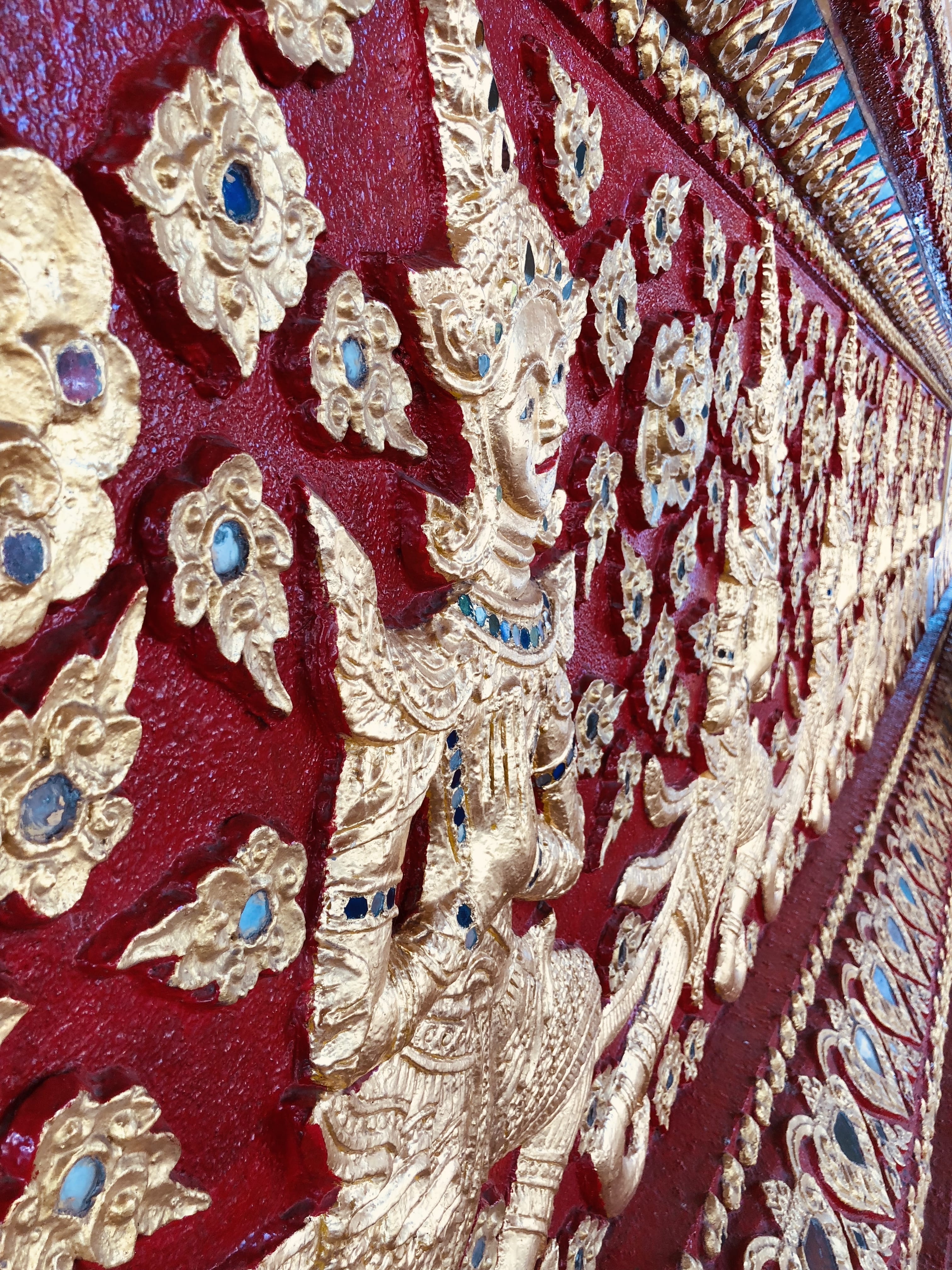
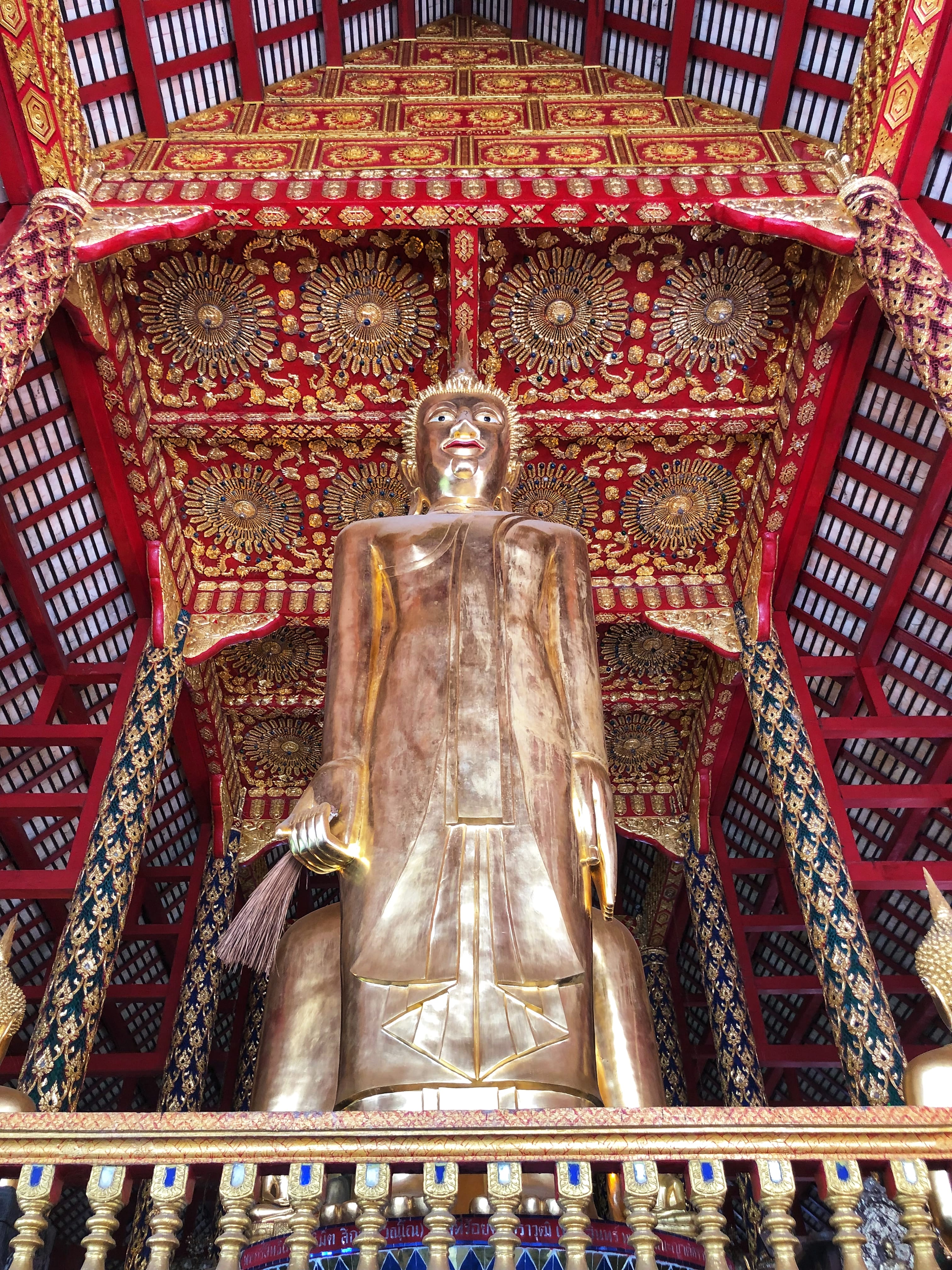
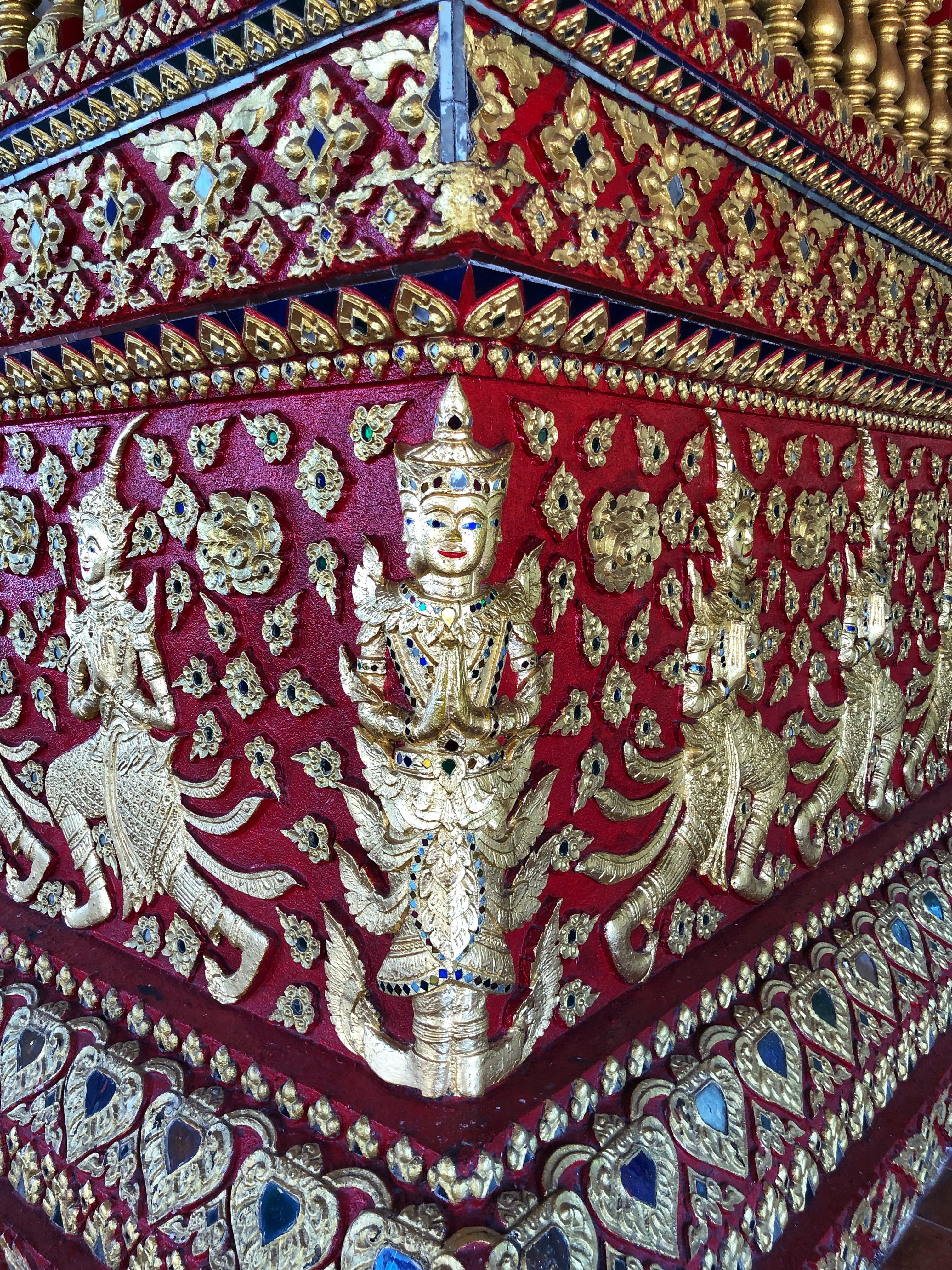
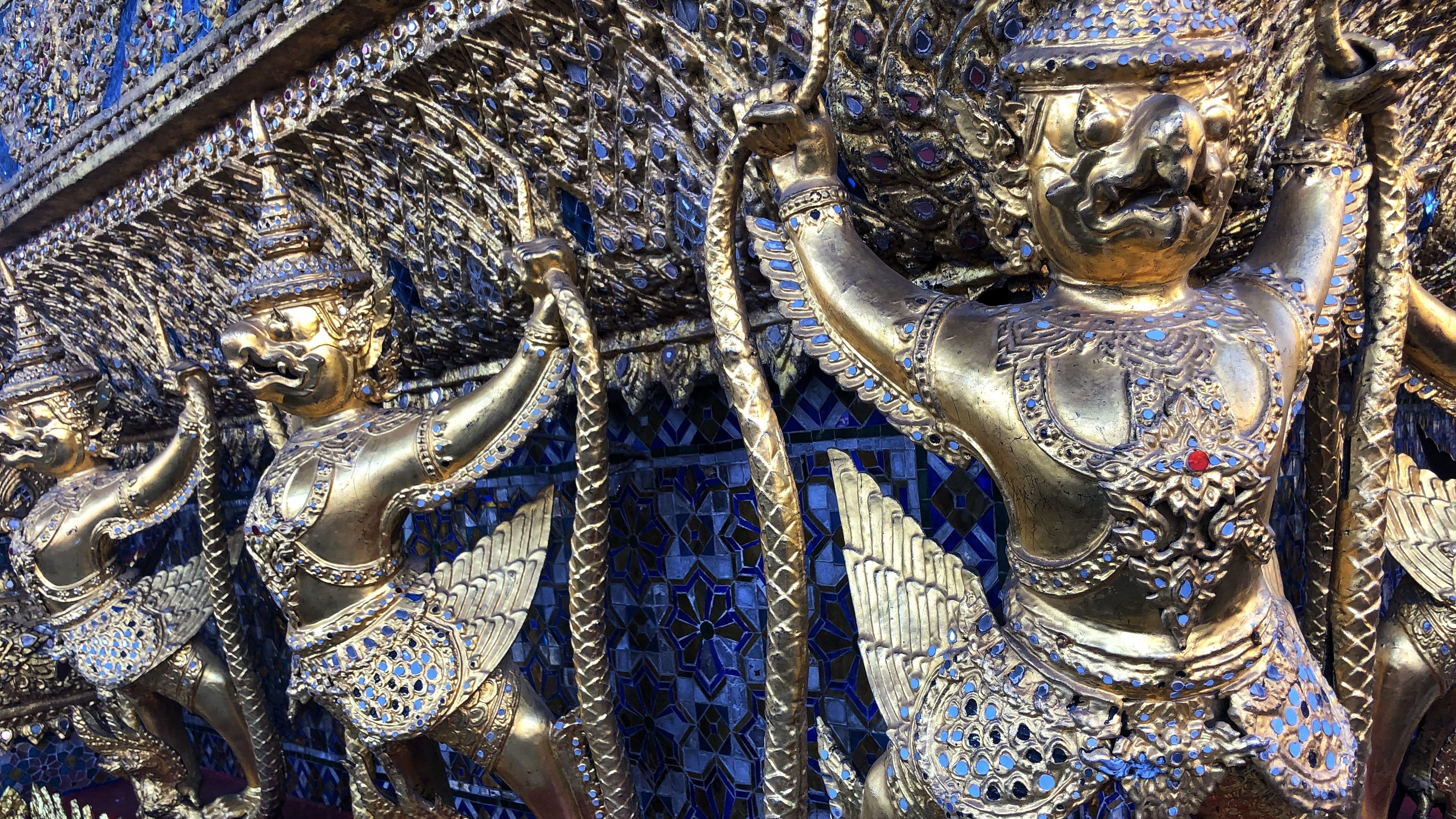
Everywhere we went—temples, universities, shrines—the craftsmanship and architecture felt consistently next level. Layers of gold, red, and mirror inlay, along with intricately carved figures and richly decorated interiors, made each place feel elaborate and intentional.
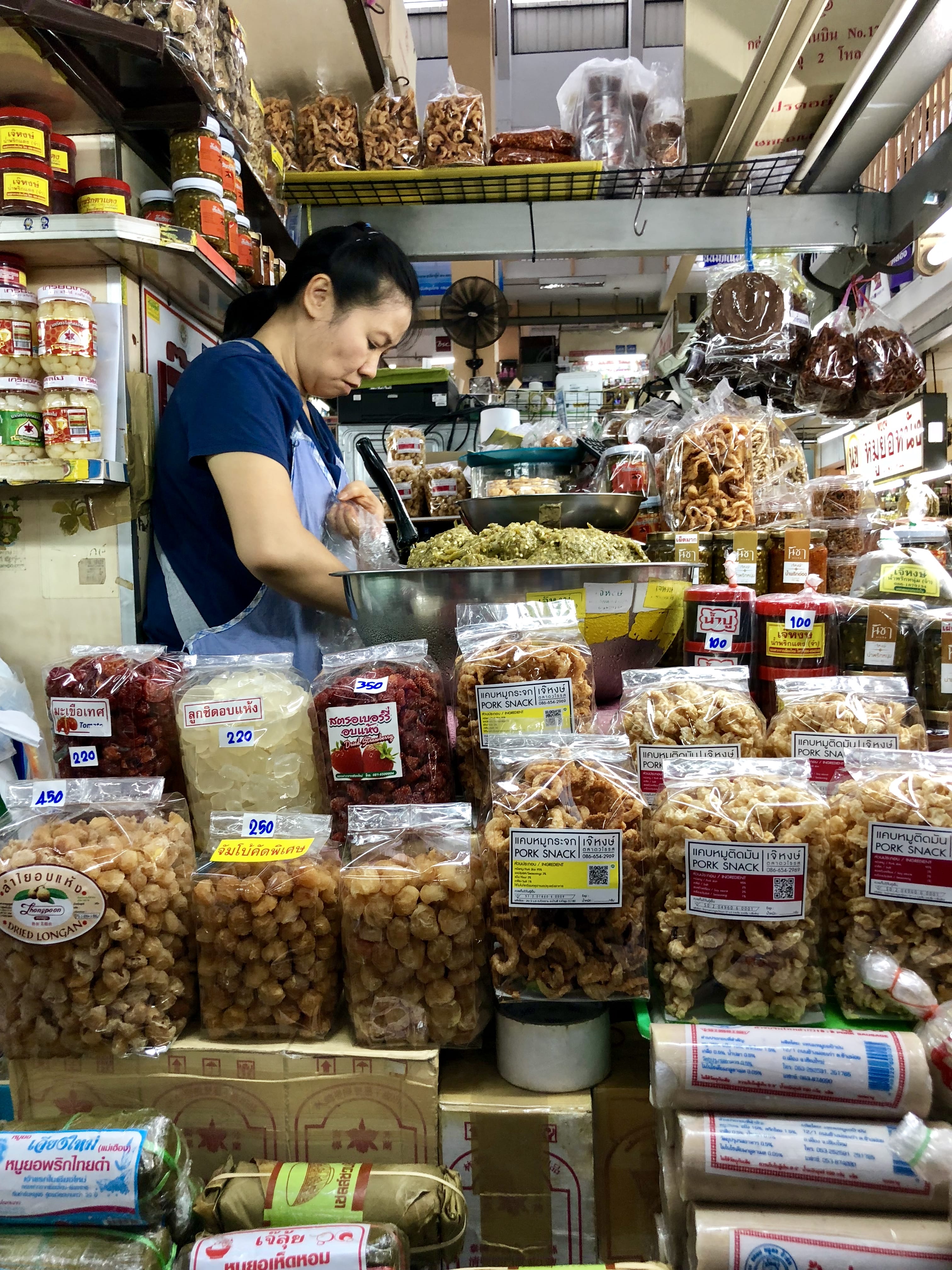
Lunch was at Pun Pun, a well-known vegetarian restaurant, and it was excellent. Afterward, we wandered through Chinatown, with our guide pointing out foods and ingredients I wouldn’t have been able to identify on my own.
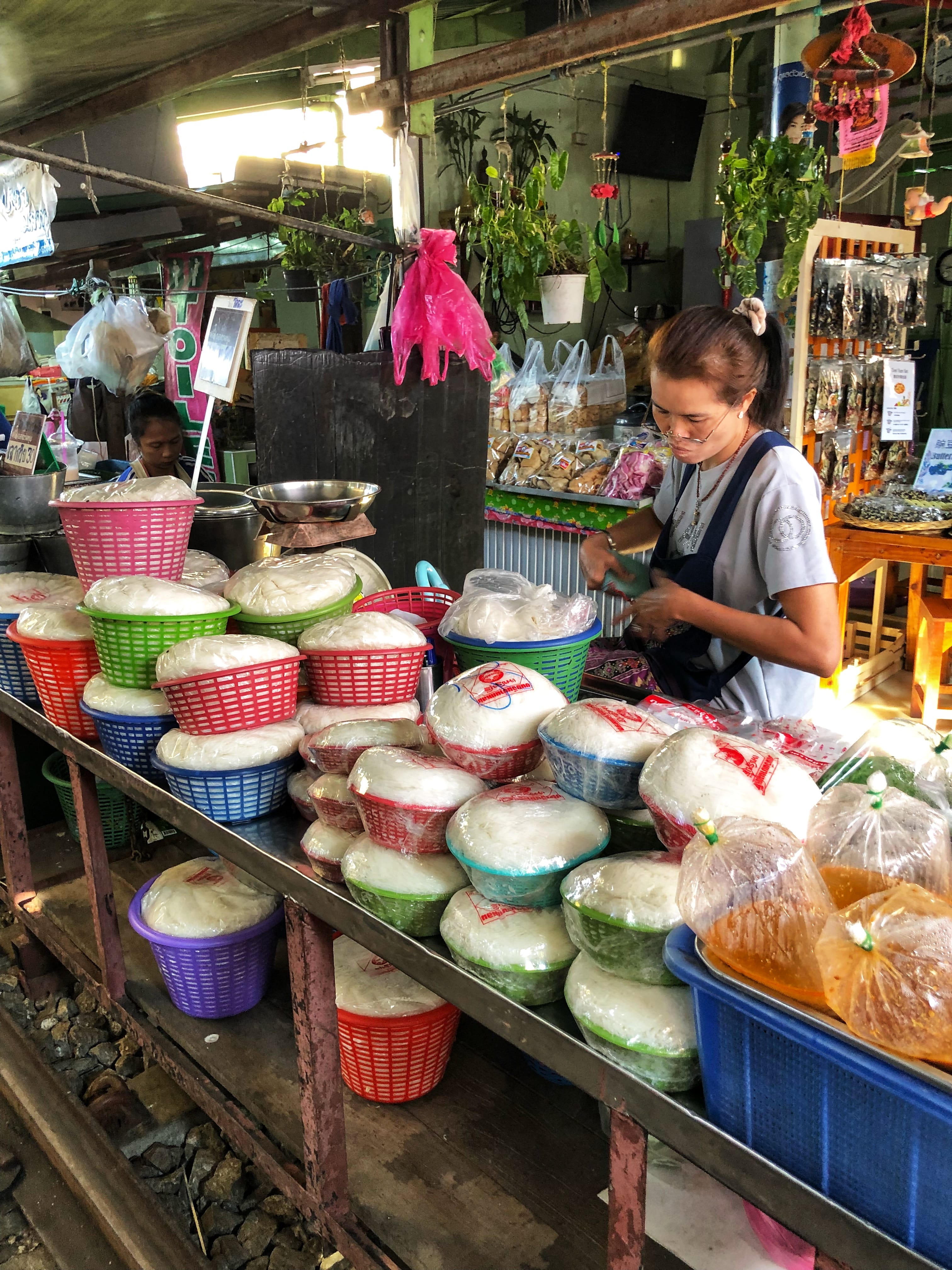
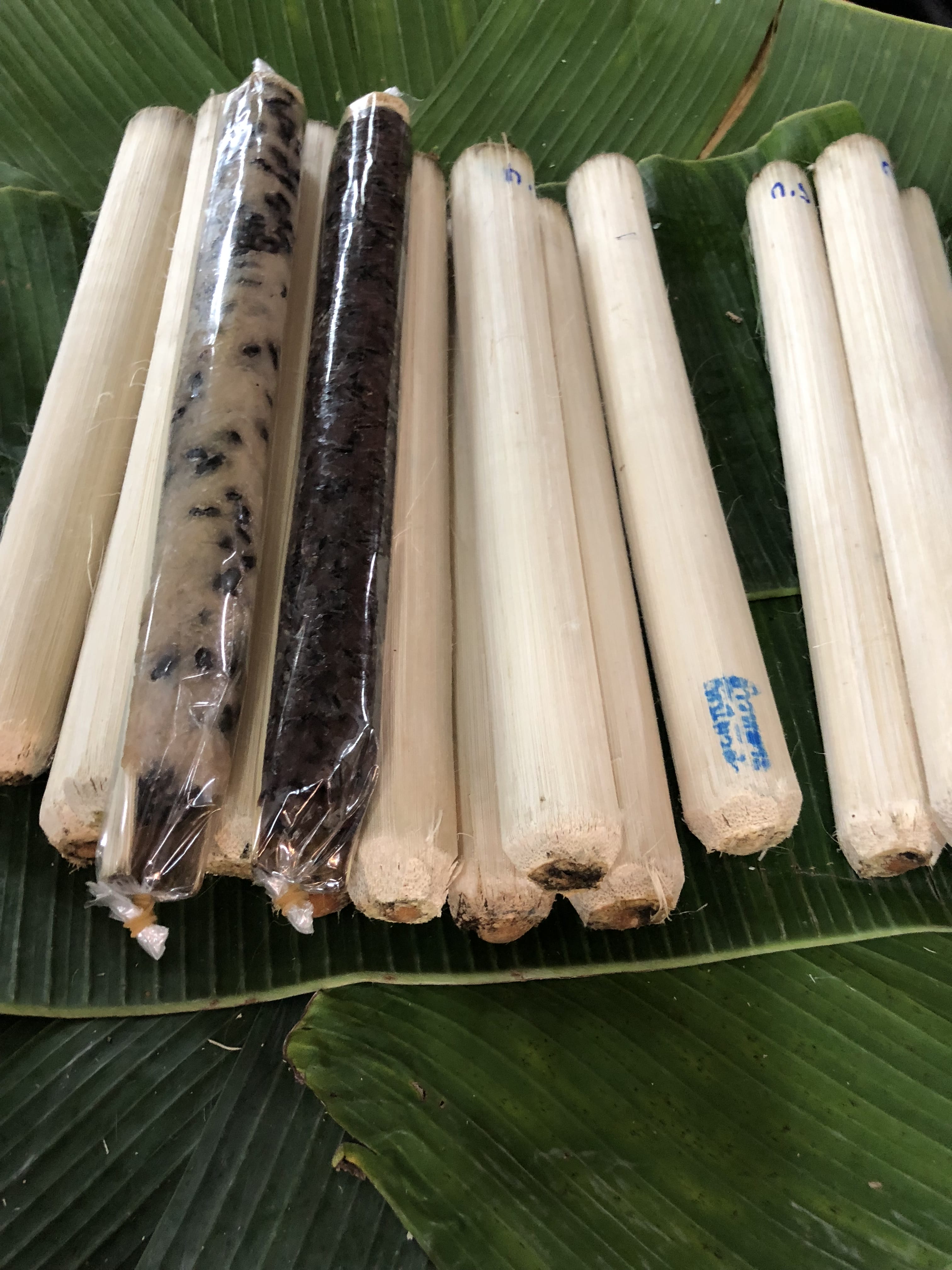
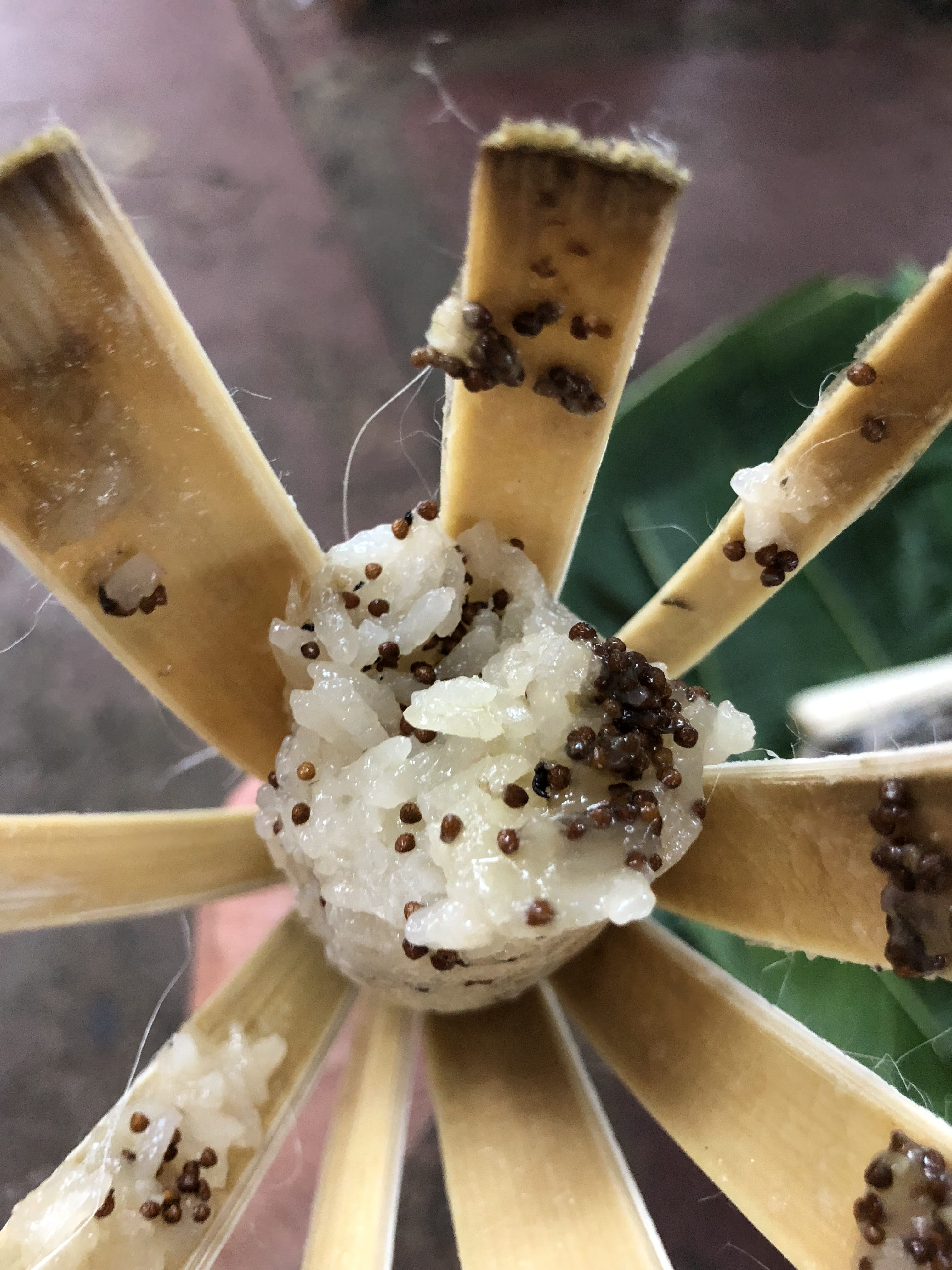
One woman, in particular, caught my eye. She was carefully filling lengths of bamboo with sticky rice, sealing them before they’d be cooked over fire. Some were plain, others mixed with black beans or grains. It was quiet, repetitive work, and oddly mesmerizing to watch—the kind of everyday process you rarely stop long enough to notice.
There were also vendors selling fried insects—crickets, grasshoppers, silkworms, and bamboo worms—piled high in trays like snacks. Curiosity got the better of me, so I bought a small bag. The grasshoppers were a hard no: chewy and not happening. The crickets, surprisingly, were fine—crunchy, slightly nutty, and much easier to eat once I got past the idea of it.
From there, we visited Wat Chiang Man, the oldest temple in Chiang Mai. One of its most distinctive features is a chedi supported by carved elephant figures. We then continued on to Wat Chedi Luang, a separate temple complex dominated by the remains of a massive brick chedi that once housed the Emerald Buddha.
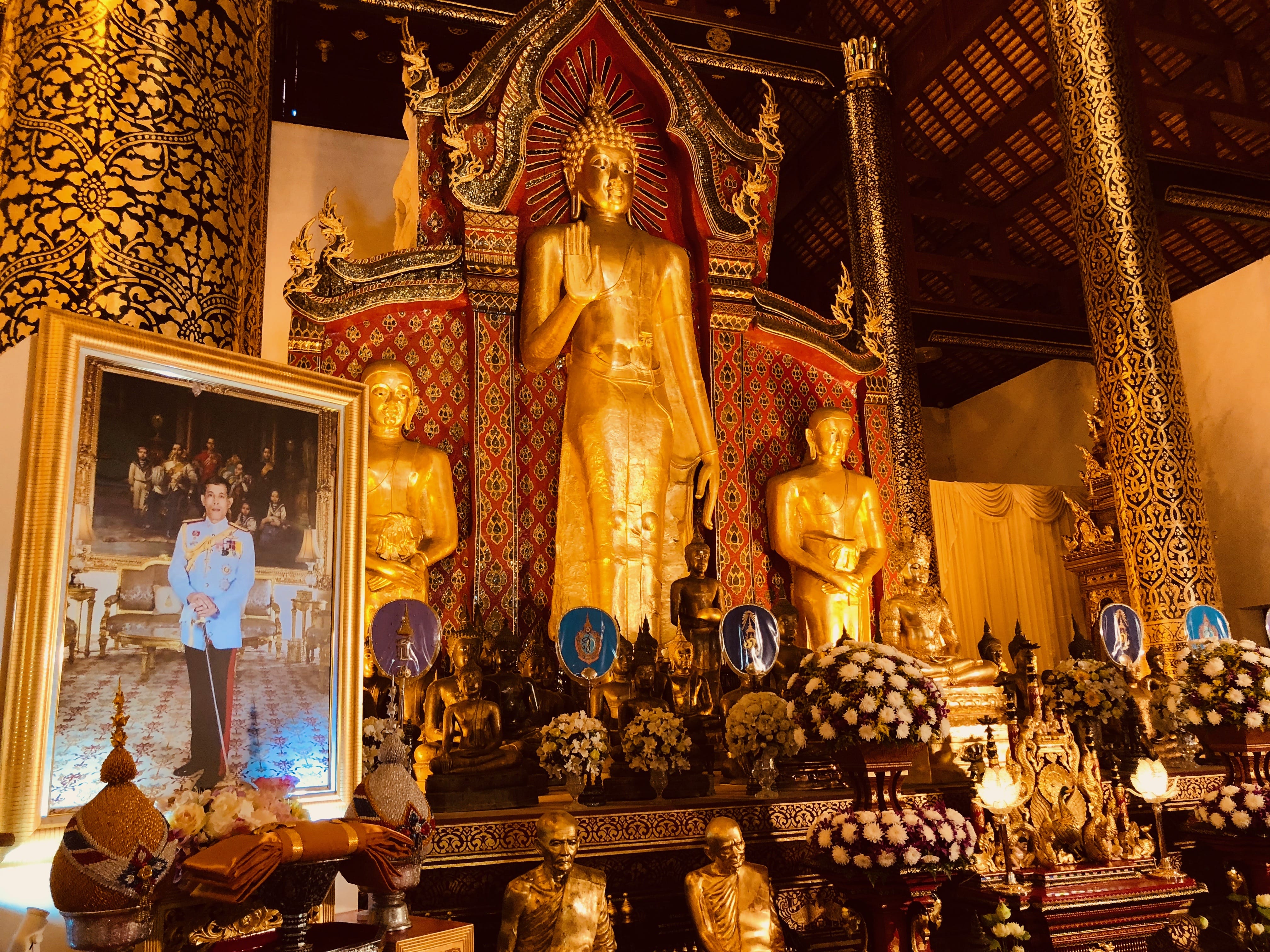
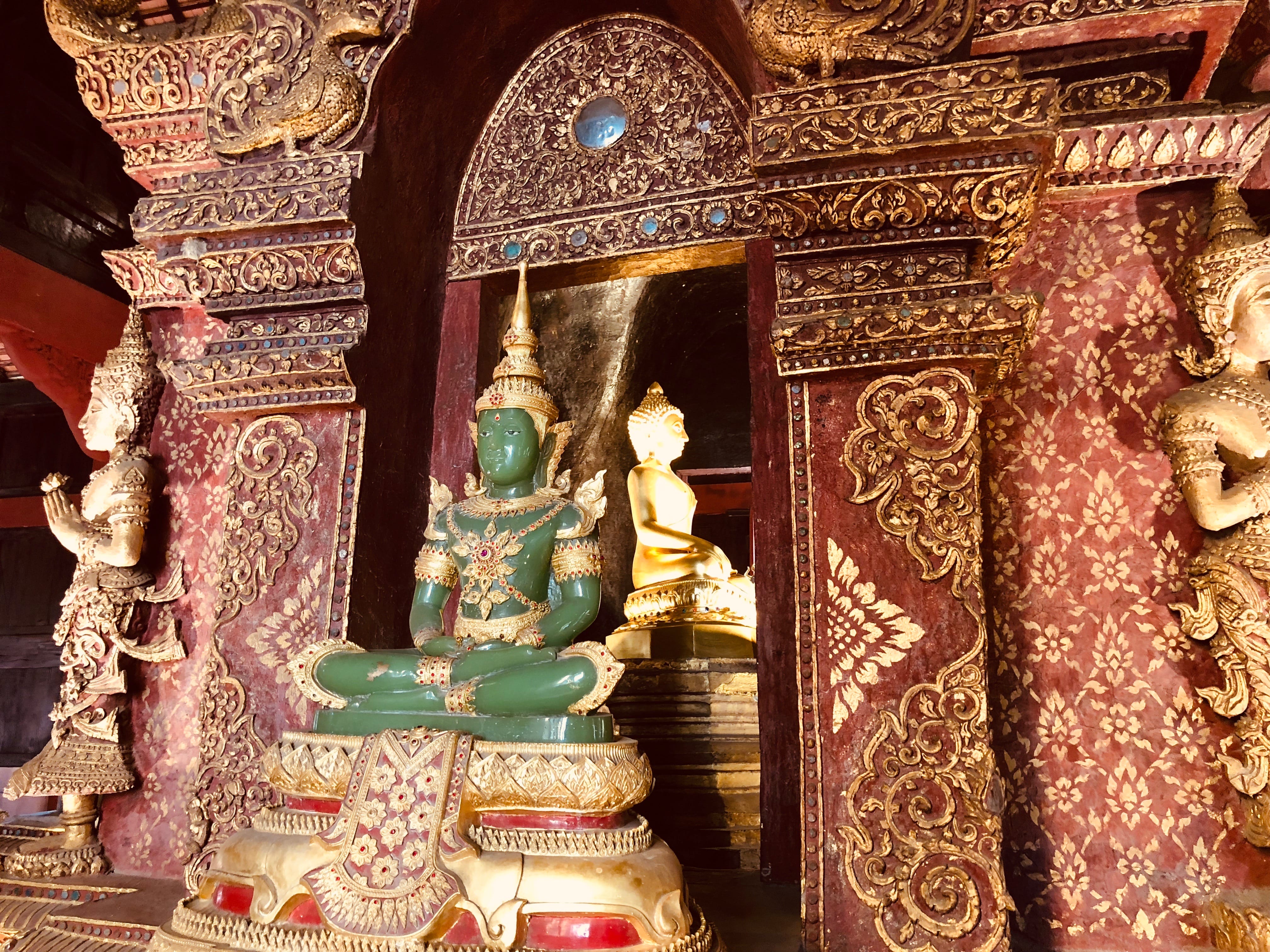
Later, we visited Wat Phra Singh Woramahawihan, another distinct complex known for its richly decorated interiors and important Buddha images. Inside, the space is filled with gold—a seated Buddha, a large standing figure, and a jade Buddha—all set within intricately painted and carved halls.
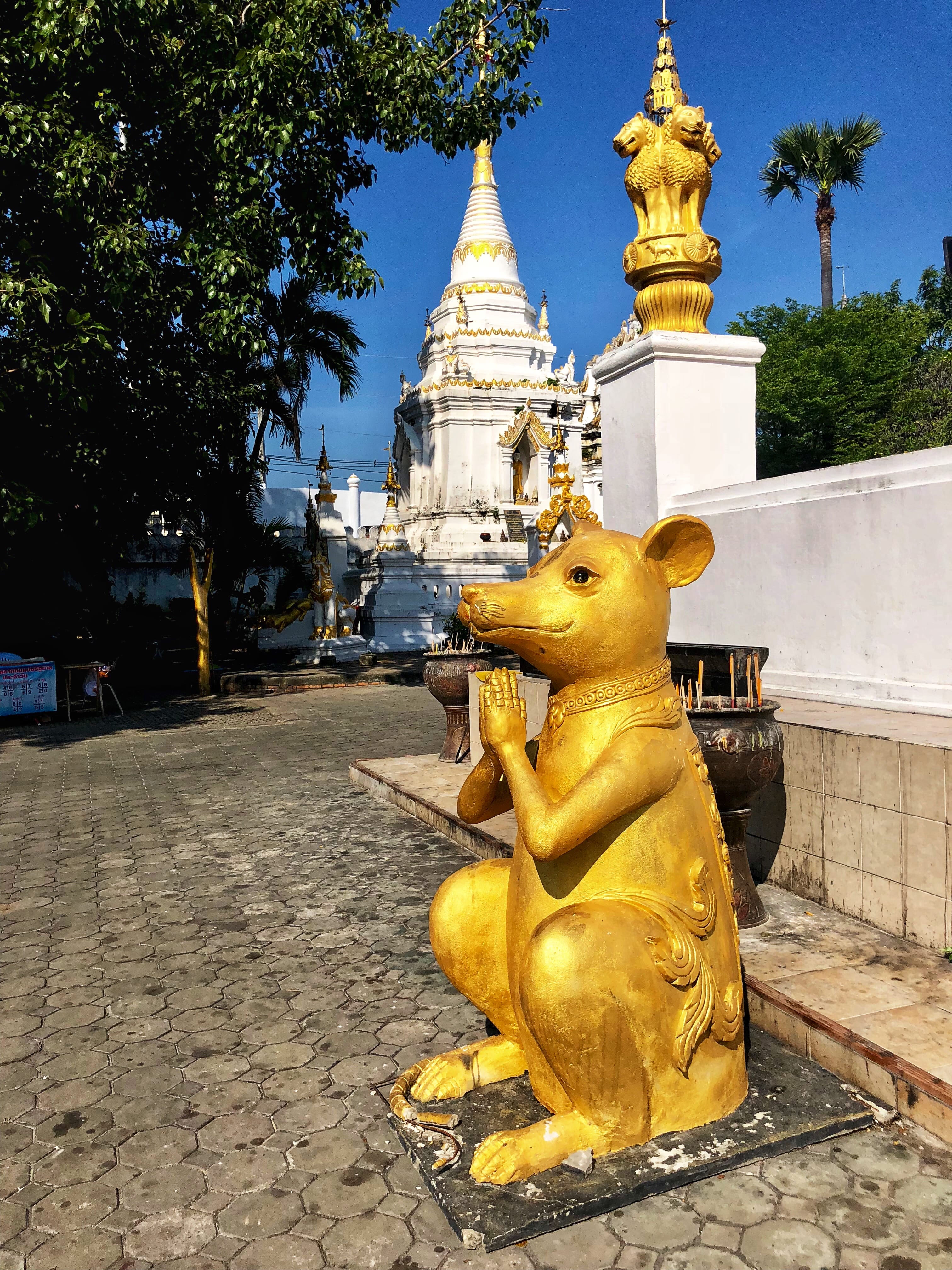
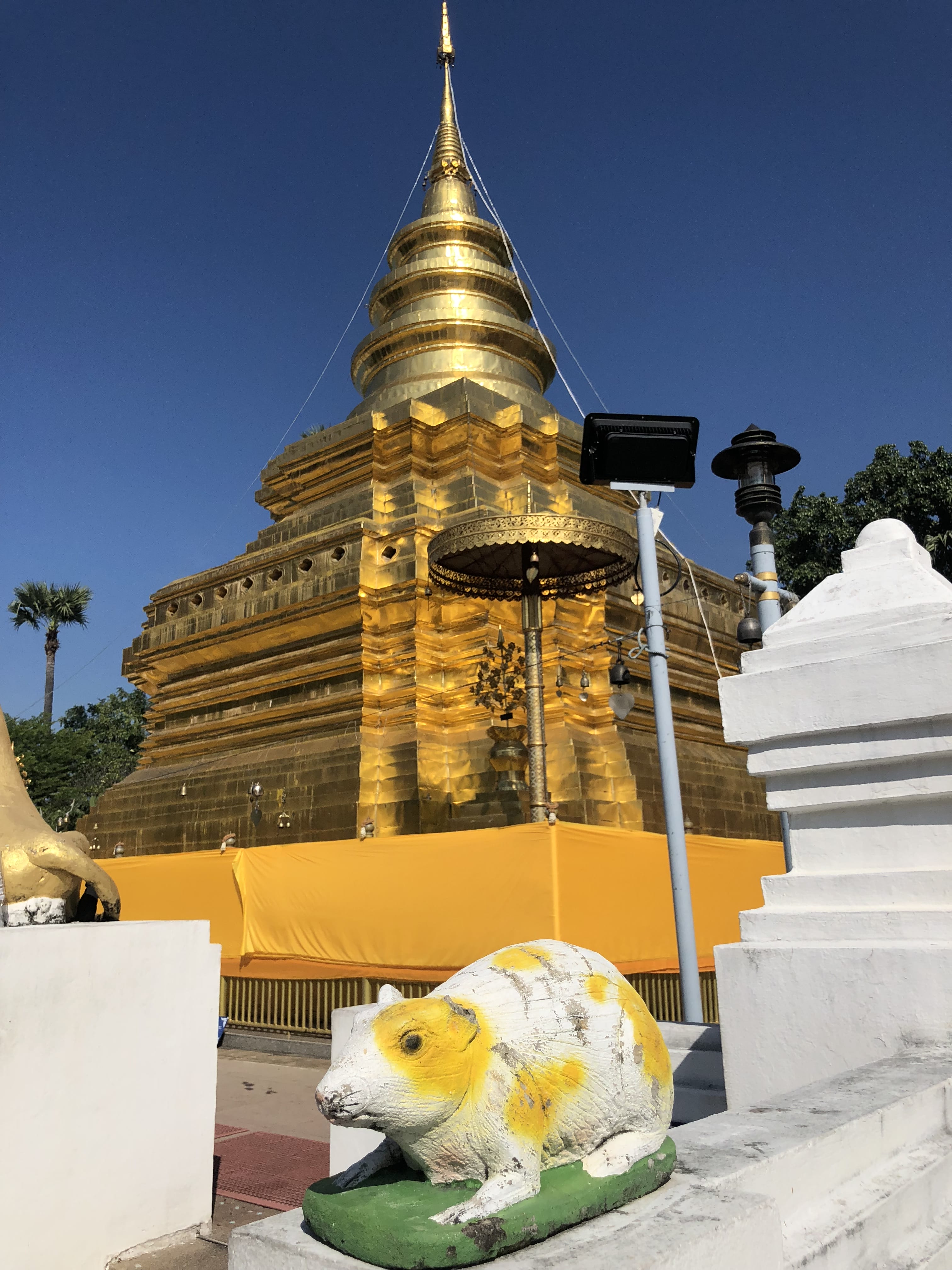
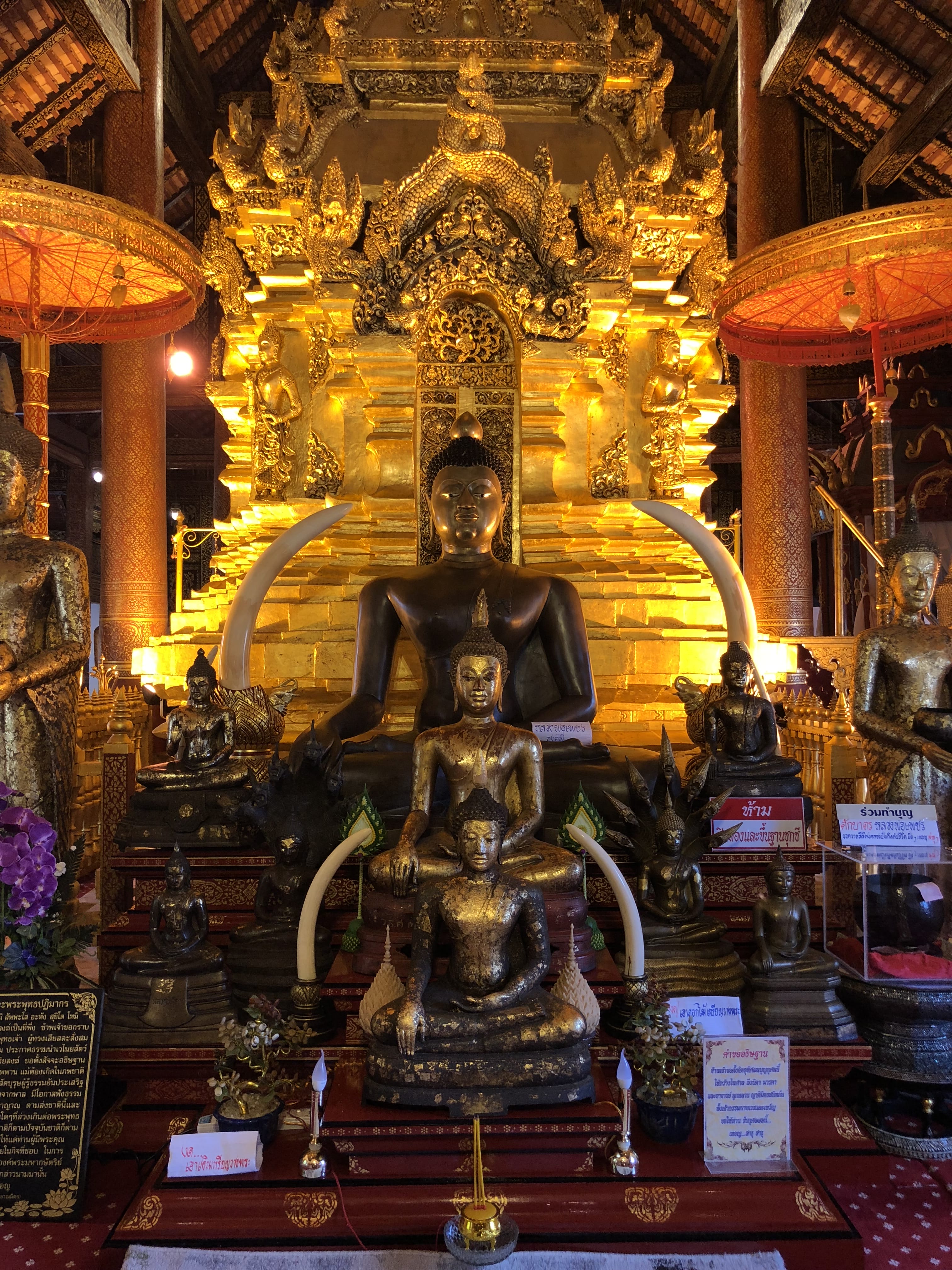
Our final temple stop was in the Chom Thong area, at Wat Phra That Si Chom Thong . The temple grounds were dotted with small rat statues—offerings connected to local beliefs and the Chinese zodiac—leading up to an interior that was strikingly ornate, filled with gold Buddhas and layered decoration. It was one more reminder of how visually dense and spiritually significant Chiang Mai’s temples are.
It had been another very full day. Back at the hotel, it was nice to slow down—relaxing by the pool with a cocktail or two before calling it an early night.
Hard to believe this was my last full day in Thailand. We covered a lot of ground on this trip — from Bangkok to Kanchanaburi, Ayutthaya, and finally Chiang Mai — and this day felt like a fitting way to bring it all together.
We began the morning at the Mae Wang–Ban Kat Market, a small local market. We wandered slowly, stopping every so often to look at unfamiliar items for sale and watching vendors cook over small grills.
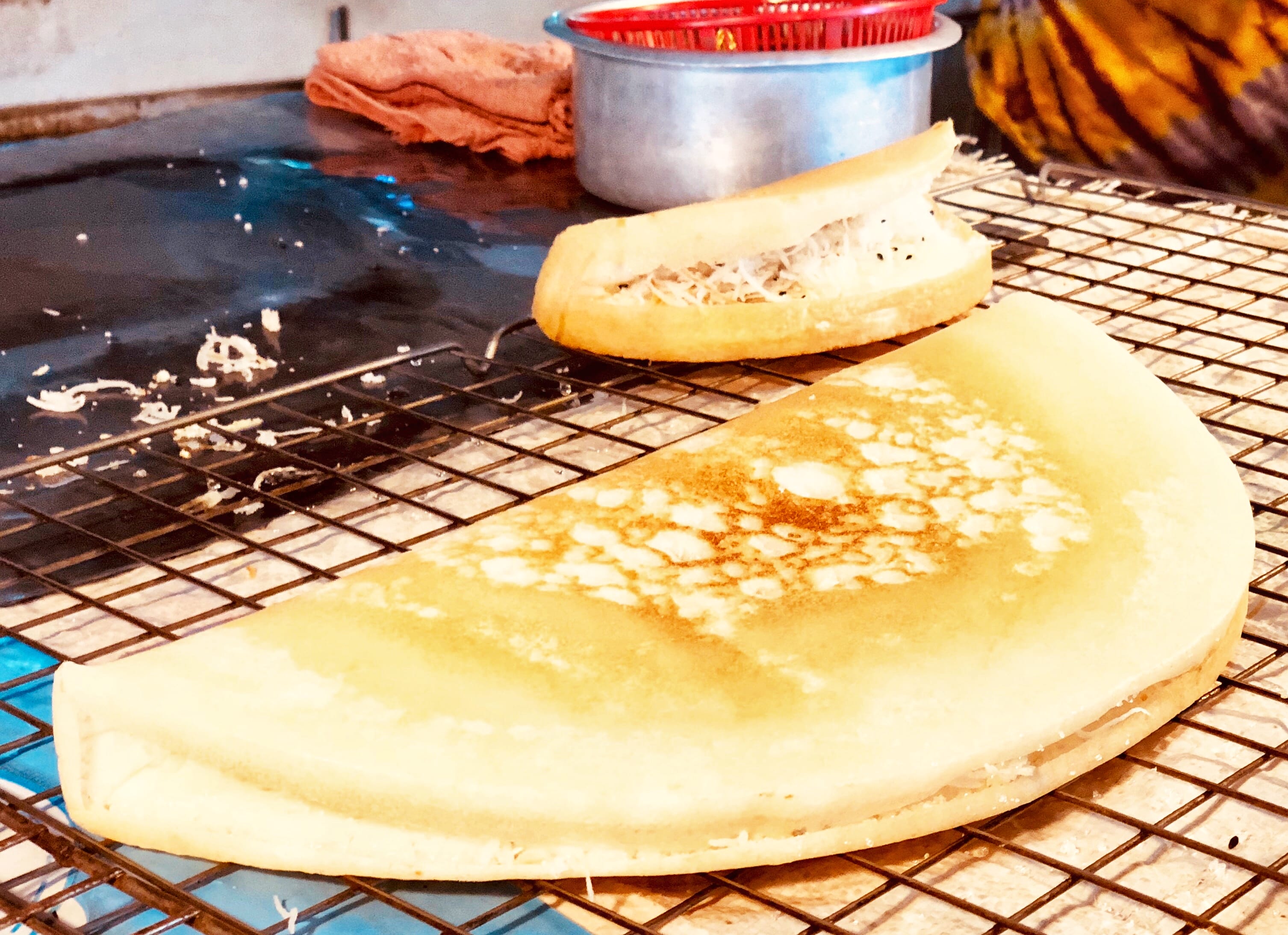
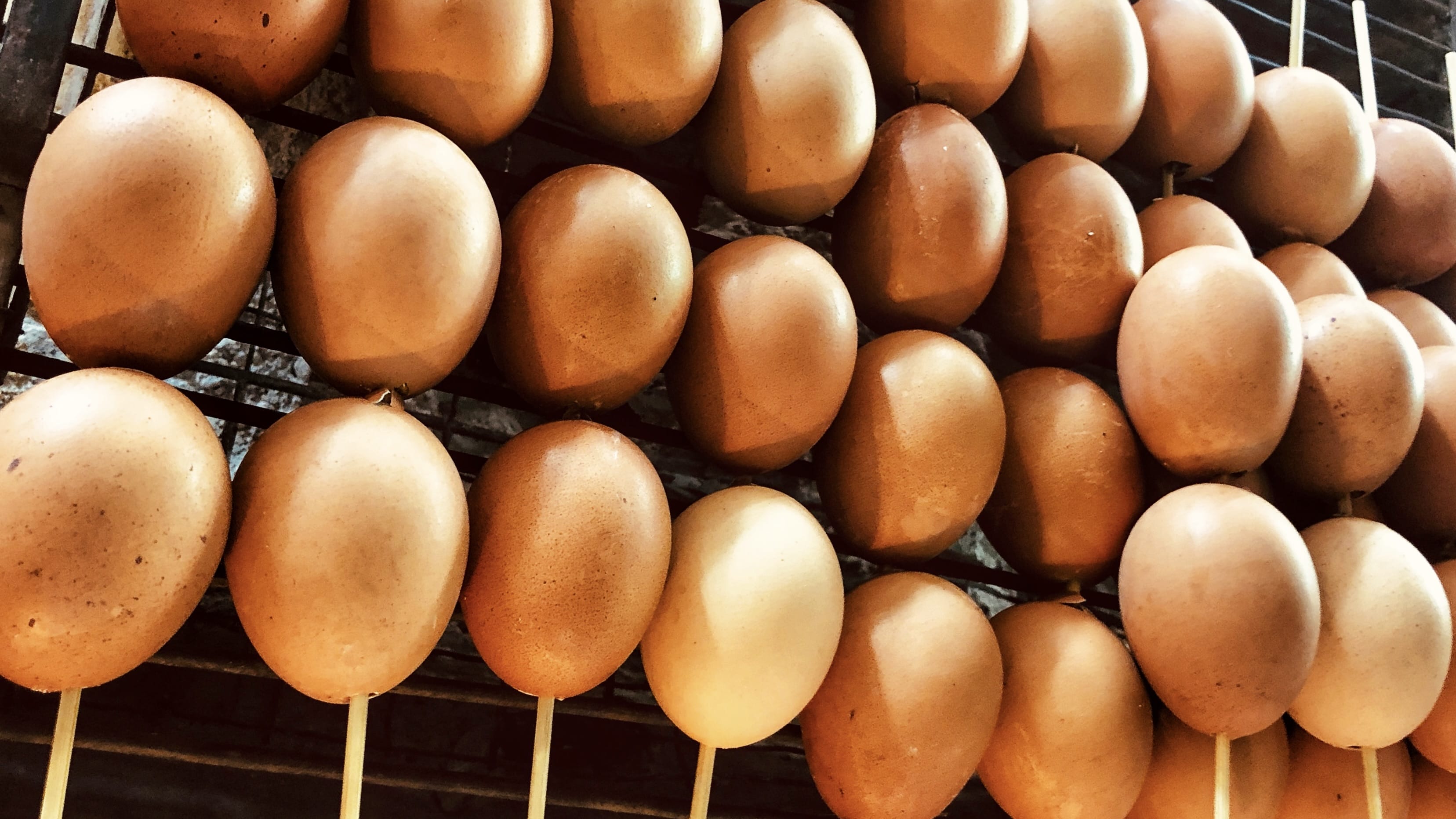
There were eggs skewered on sticks, simmering and turning brown from soy sauce; trays of banana-leaf–wrapped parcels; pots of curries and soups and a woman making khanom buang — thin, crisp Thai pancakes folded around sweet coconut filling and strands of egg yolk floss. Our guide bought a couple for us to share—sweet and tasty.
From the market, we headed to Mae Wang Elephant Home. I hadn’t realized we’d be visiting another elephant operation, and I was thrilled to have another opportunity to spend time with elephants. The setting was smaller and felt less structured than the one we’d visited earlier in Kanchanaburi. There was a male elephant named Big Joe, along with a baby who was — unsurprisingly — impossible not to fall for.
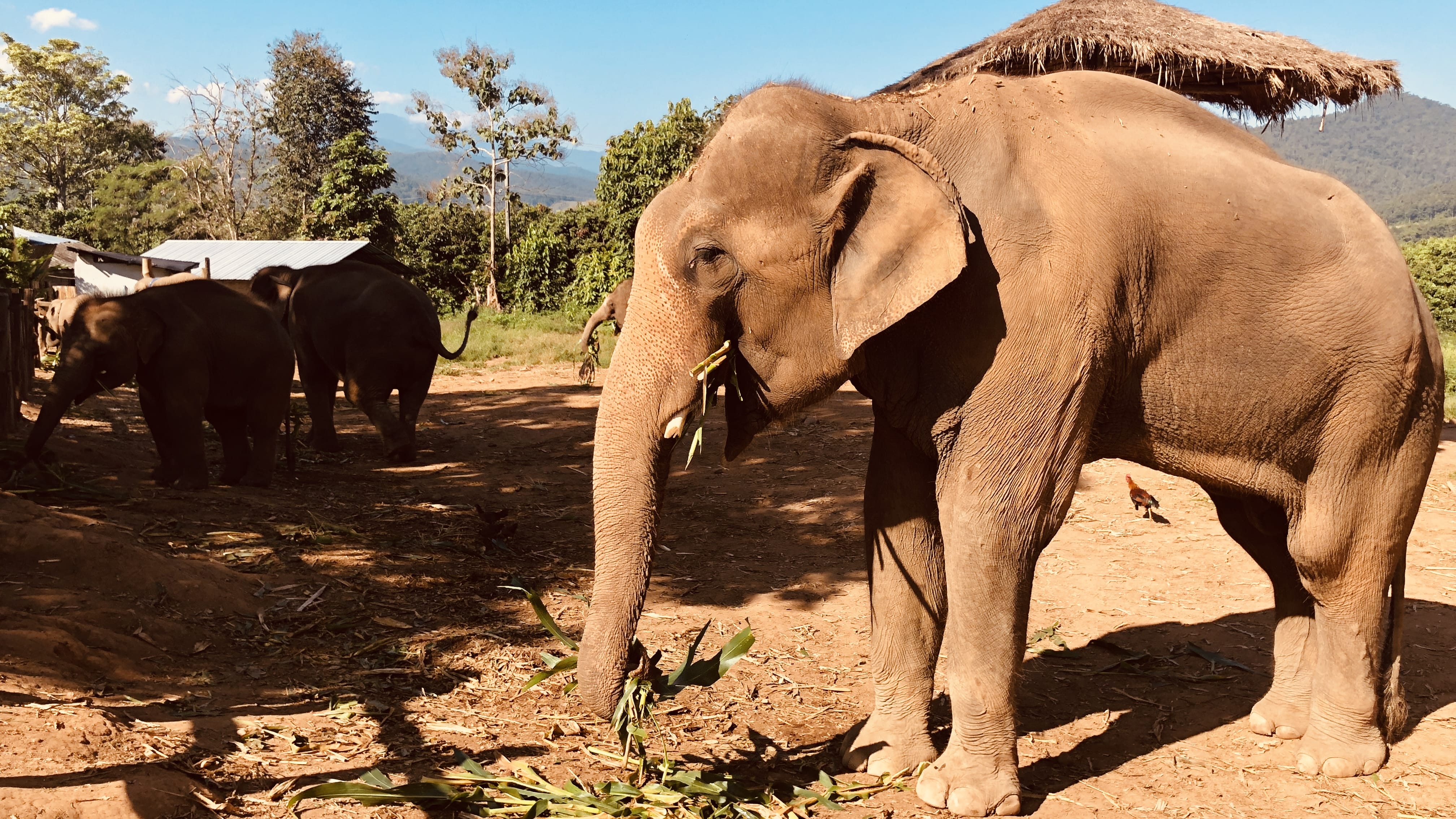
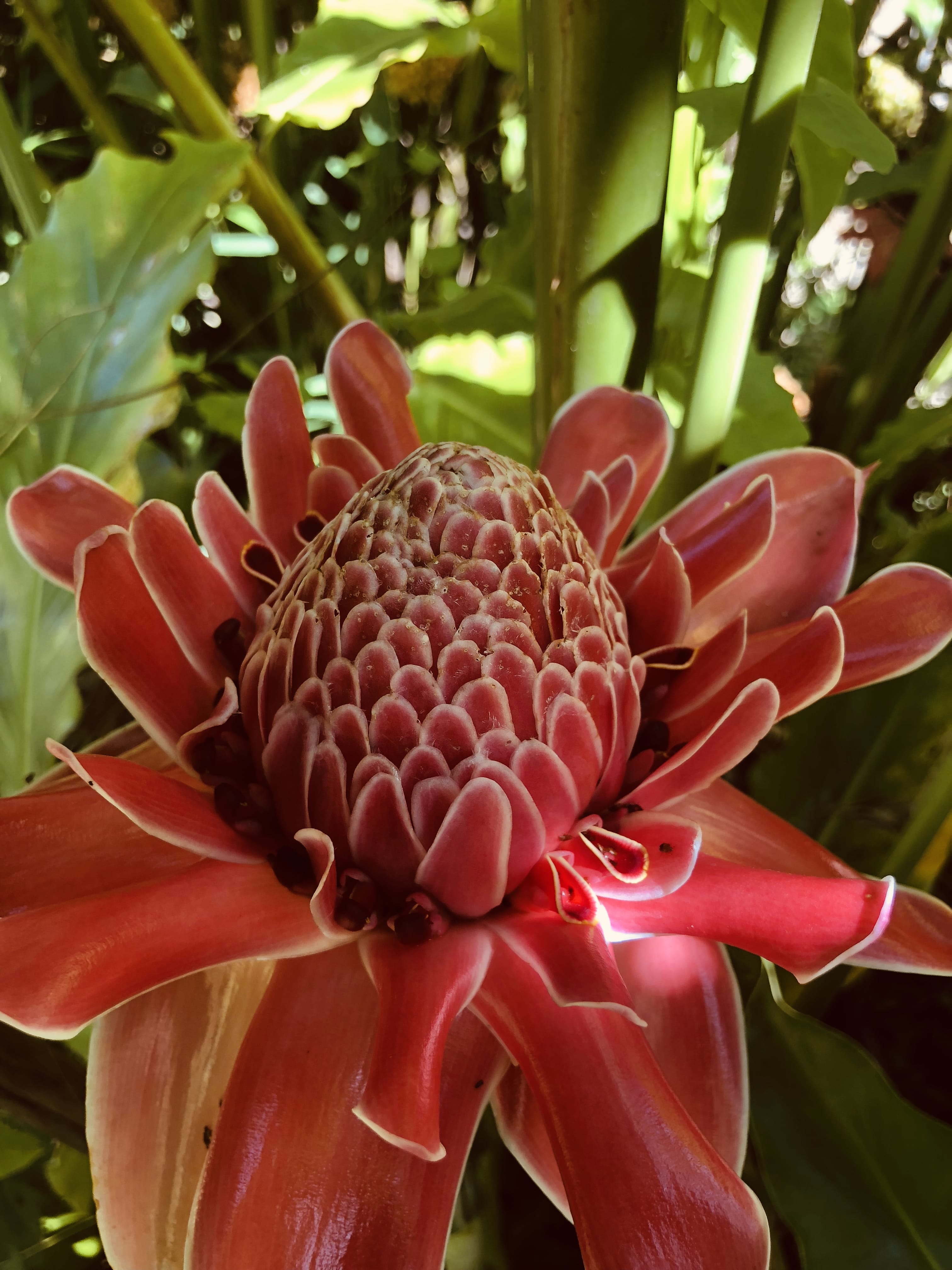
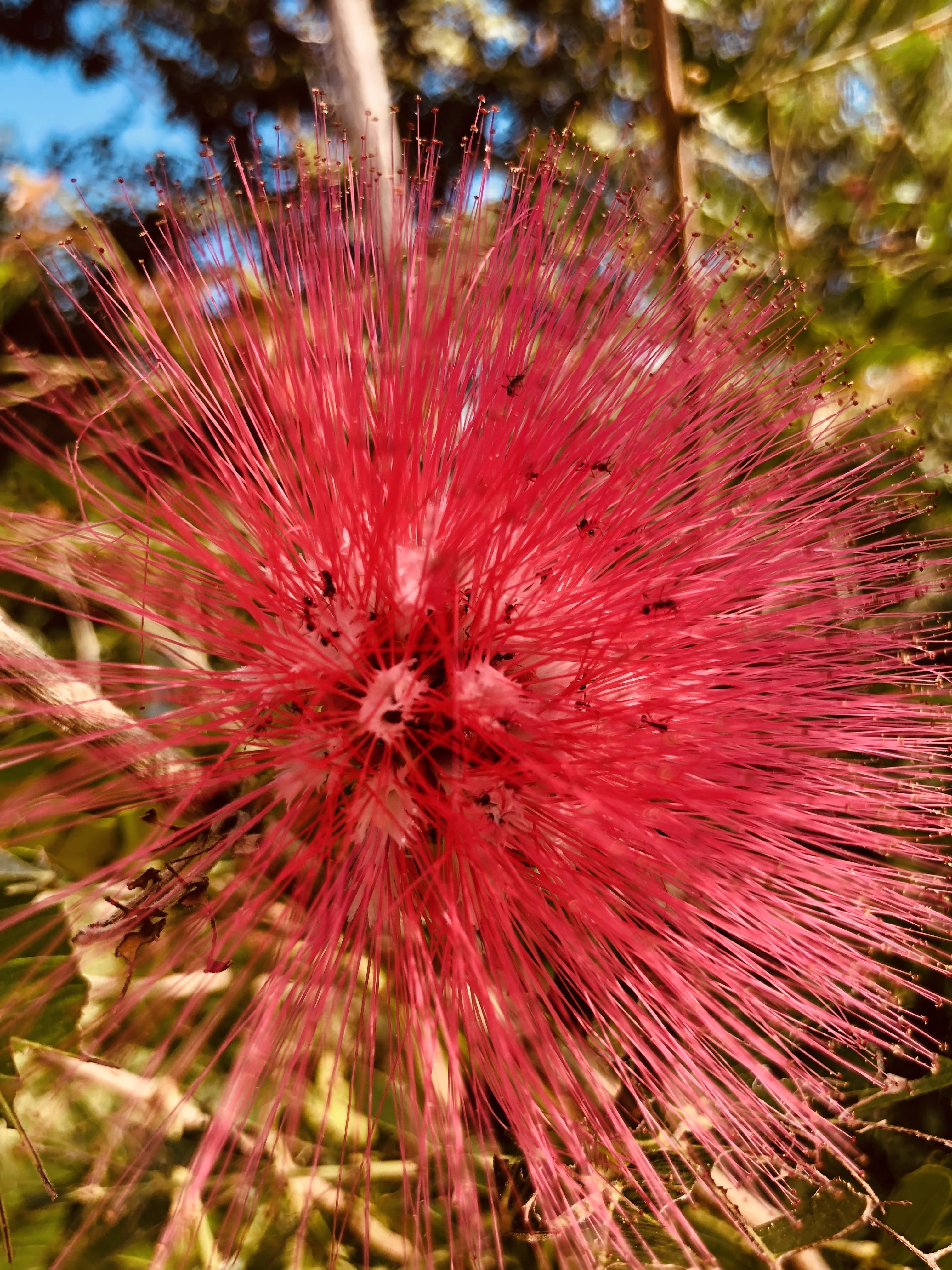
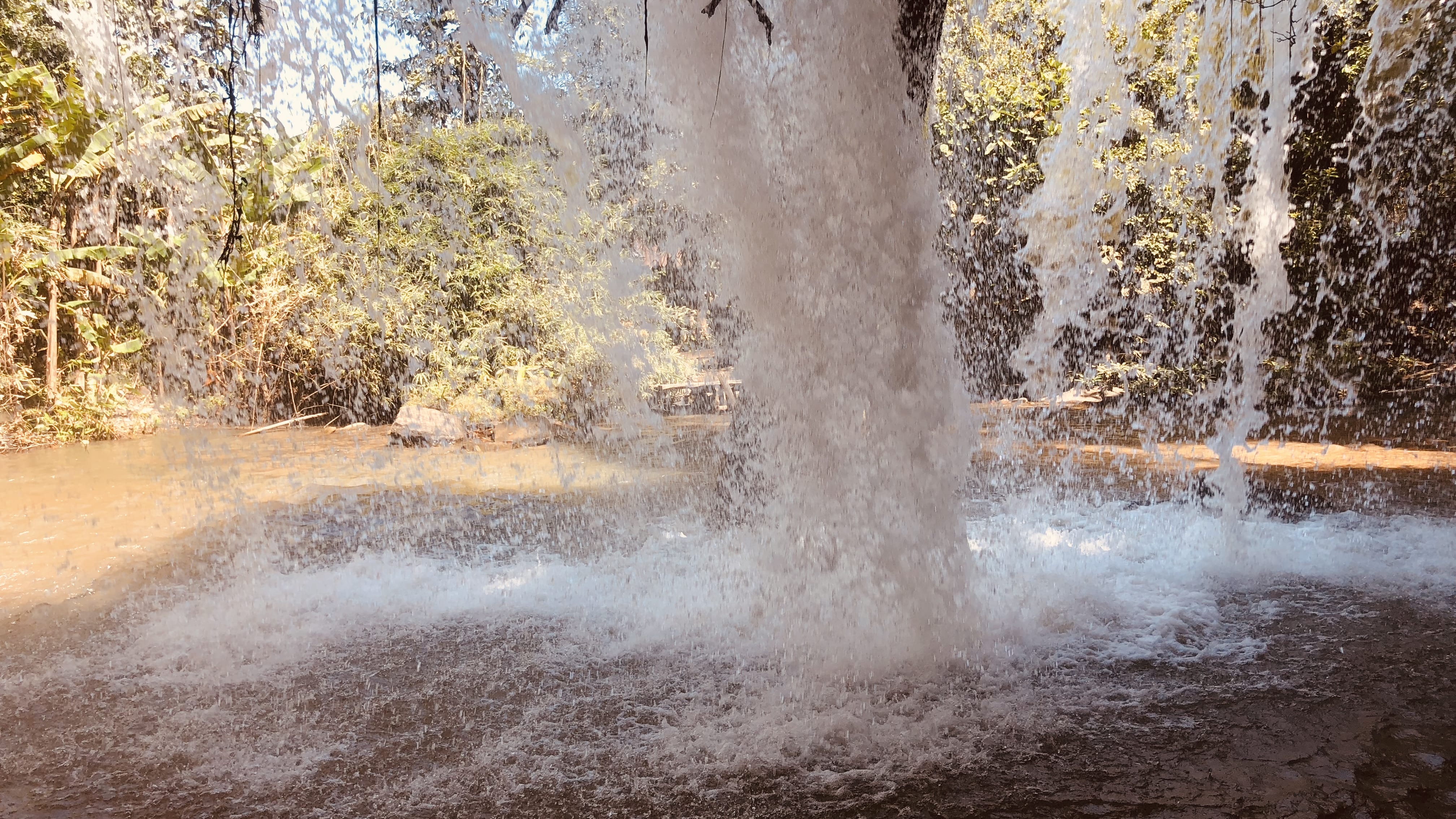
After spending some time feeding the elephants and observing them, we met our hiking guide for the Mae Wang Waterfall Trail. The hike was a few hours long, following a dirt path through dense greenery. Along the way we passed banana trees, poinsettia-like plants with deep pink leaves, bright red powder-puff flowers, wild ginger, shelf fungi clinging to fallen logs, and other tropical plants I couldn’t name . The trail was nicely shaded and quiet—the highlight was reaching the waterfall.
Lunch was set up nearby, and it turned out to be one of the most memorable meals of the trip. We ate fried rice wrapped and served in banana leaves, simple and fragrant, alongside freshly cut pineapple that tasted impossibly sweet. Nothing complicated, just well-prepared food eaten outdoors after a long walk — which somehow made it perfect.
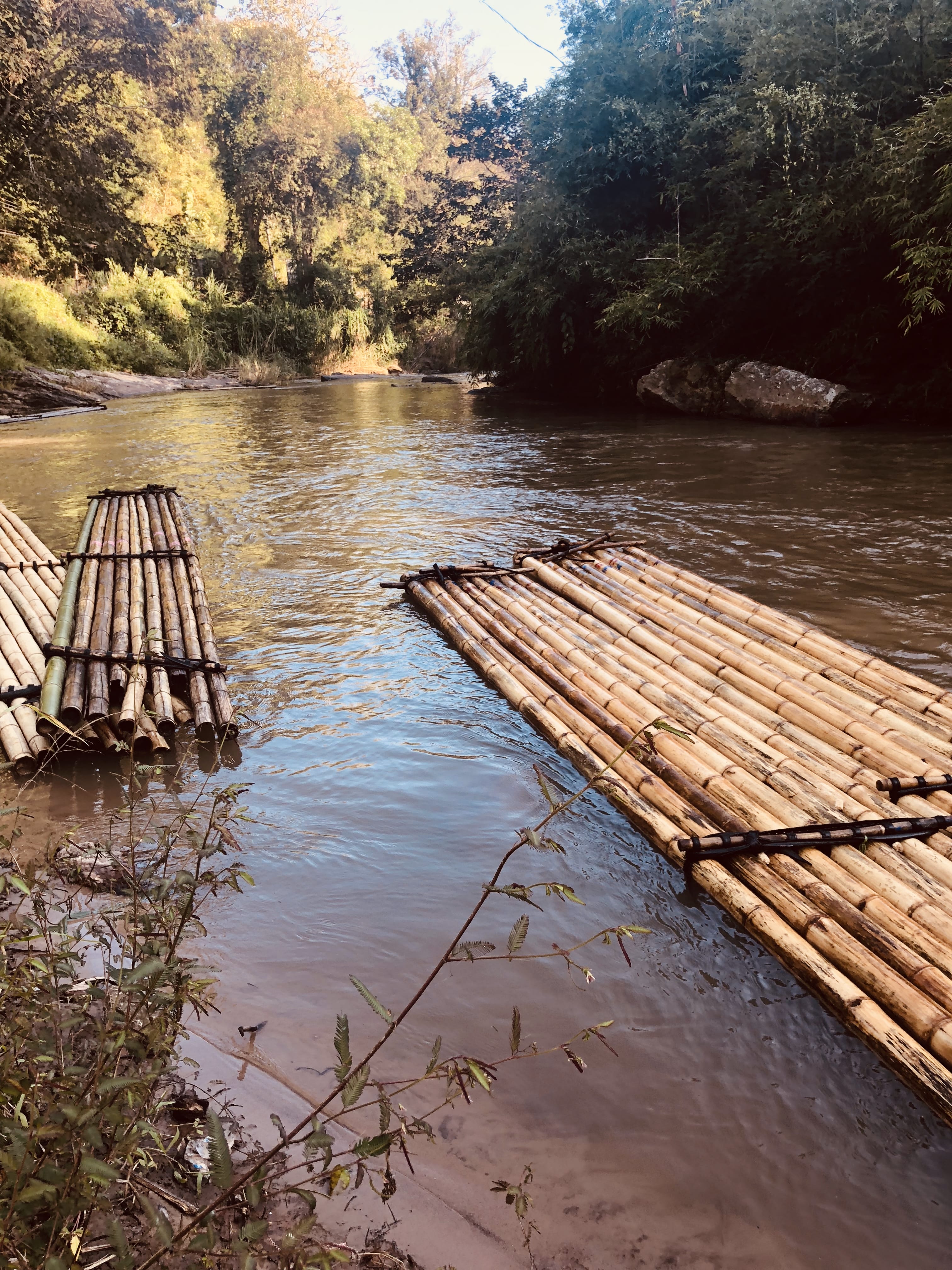
And because the day apparently wasn’t full enough yet, we finished with an bamboo raft ride down the Mae Wang River. Floating quietly along the water, surrounded by trees, felt like an extra gift — relaxed, scenic, and completely unhurried.
When we got back, we grabbed dinner at a small local place near our hotel — green curry, pad kra pao (Thai basil stir-fry), and a couple of fried eggs — a simple, satisfying way to end the day.
I ended the night the way I’d ended many nights in Thailand: with a Thai massage. I got one every chance I could — not only because they’re incredible and originated here, but because the cost was almost unbelievable. Around $25 for a full hour felt like a small luxury I could justify again and again. After a day that included markets, elephants, hiking, food, and floating down a river, it was exactly the right way to close out my time in Thailand.
This seven-day stretch in Thailand covered a lot of ground, both geographically and experientially. I began in Bangkok, spending time in temples, markets, and along the canals, before traveling west to Kanchanaburi, where history and daily life intersect in quieter ways. From there, I continued on to Ayutthaya, exploring the ruins and temples that hint at the city’s past.
The final days were spent in Chiang Mai, where the pace slowed—time in local markets, visits with elephants, and walks through the countryside around Mae Wang. It was a busy trip, but a balanced one, mixing well-known sites with smaller, everyday moments that often stayed with me the longest.
Hi, I’m JoAnne—writer, wanderer, and lover of places that surprise me. I’ve traveled to 60+ countries (and counting), usually with a camera in one hand and a notebook in the other. I’m drawn to mosaics, markets, and mountains, and I write to remember what moved me. When I’m not traveling, I’m working on my blog Travels Afoot, trying new creative projects, or planning my next adventure.