If you missed the first post, you can read Part 1 here. This second half of my 7 Days in Armenia picks up in Dilijan and ends back in Yerevan, where I added an extra day to explore a bit more before flying out.
This morning we left Yerevan and headed northeast toward Lake Sevan, Armenia’s largest body of water and one of the world’s highest alpine freshwater lakes. The drive itself felt different—cooler air and wide-open views. Sevan covers about 5% of Armenia’s land area and is deeply woven into the country’s identity—spiritual, cultural, and political. In summer, people come here to swim, boat, picnic, and escape the heat.

Besides the lake itself, the area is also known for Sevanavank Monastery, which sits on a hill overlooking the water—you really couldn’t ask for a better spot. It was founded in 874 AD by Princess Mariam, daughter of Ashot I, who later became king. She built the monastery in memory of her late husband, Prince Vasak of Syunik, and it’s said that monks who trained here helped spread Christianity throughout the region.
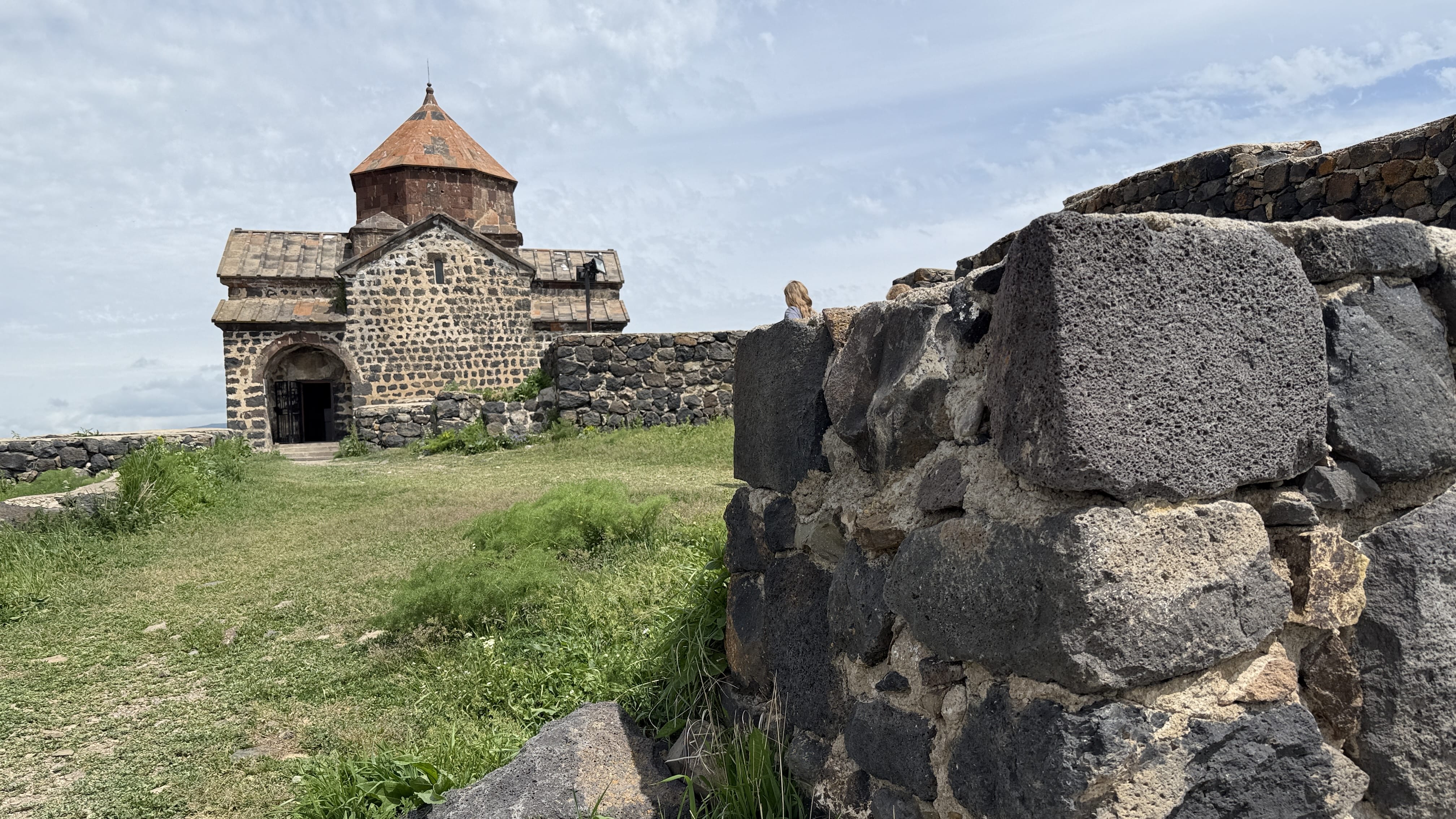
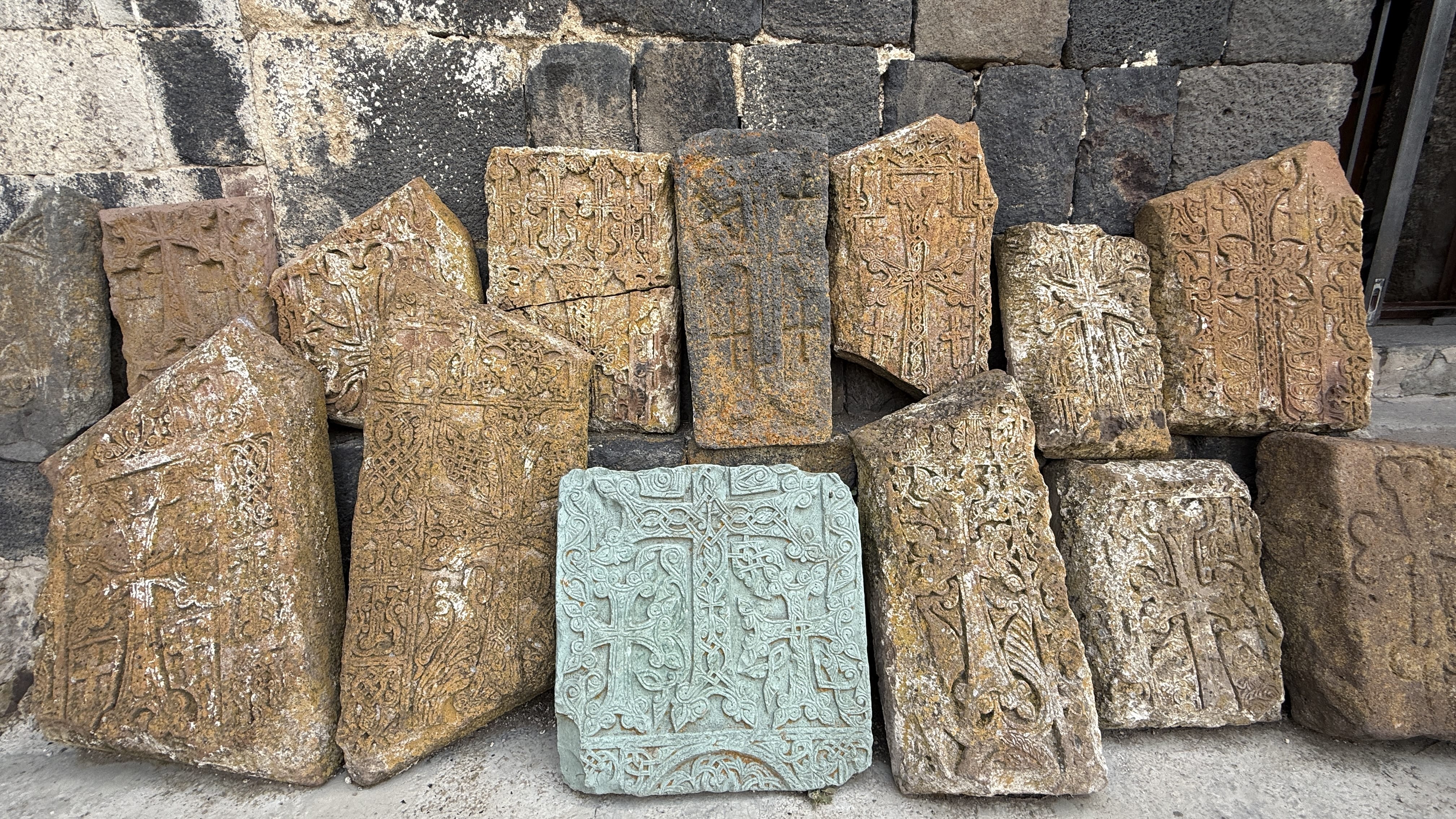
From the parking lot it’s a steady climb—about 200 steps, 10 to 15 minutes. At the top, the monastery comes into view, plain but impressive with the lake stretching out behind it. Like other monasteries in Armenia, Sevanavank has khachkars—carved cross-stones—set along the walls, their patterns worn but still clear.
The wooden entry door is equally beautiful, with saints and vines carved in relief around a central cross. Inside, the church feels small and cave-like, its black stone walls keeping the interior dim. A single candle glows in front of the altar, joined only by the faint daylight spilling through the doorway.

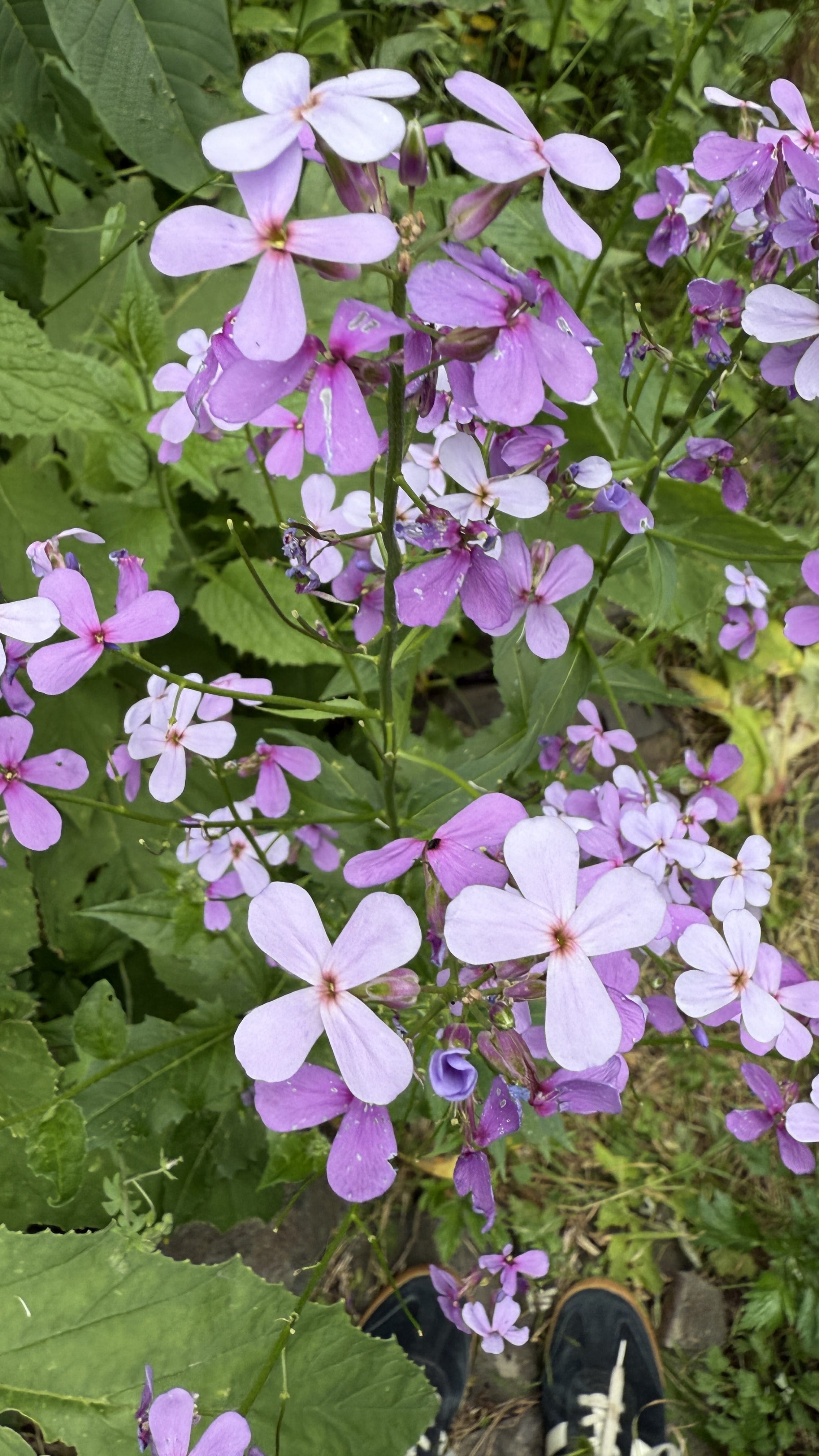
Outside, paths branch off along the hillside, where yellow fennel-like blooms, red poppies, and small purple clusters dot the slopes.
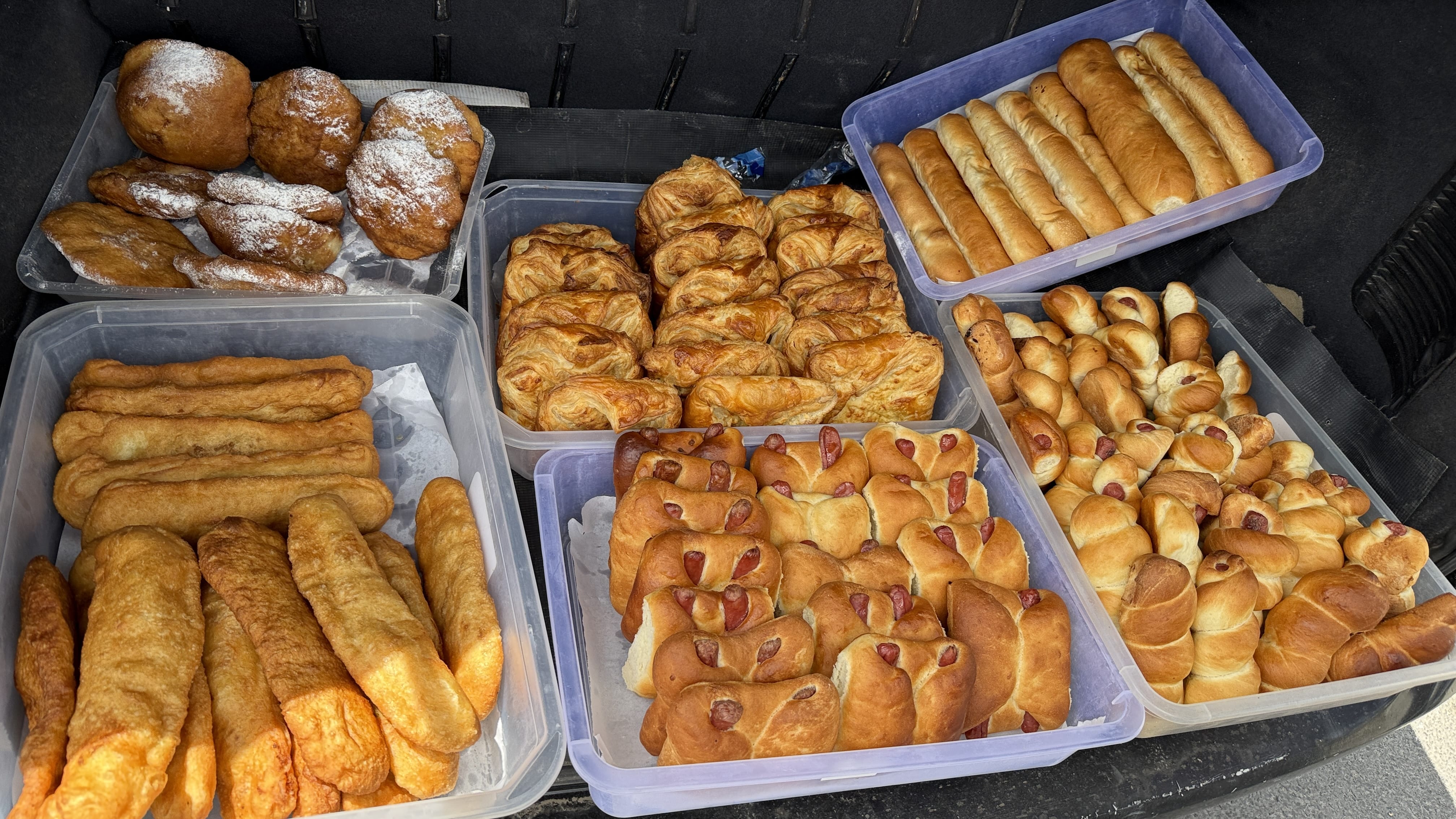
Shops lined the trail to the monastery, and on the way back I lingered a bit, browsing while I waited for the others. At the bottom, a man was selling the most incredible-looking breads straight from the trunk of his car—flat rounds stacked high, drawing a steady crowd. I was tempted, but still too full from breakfast.
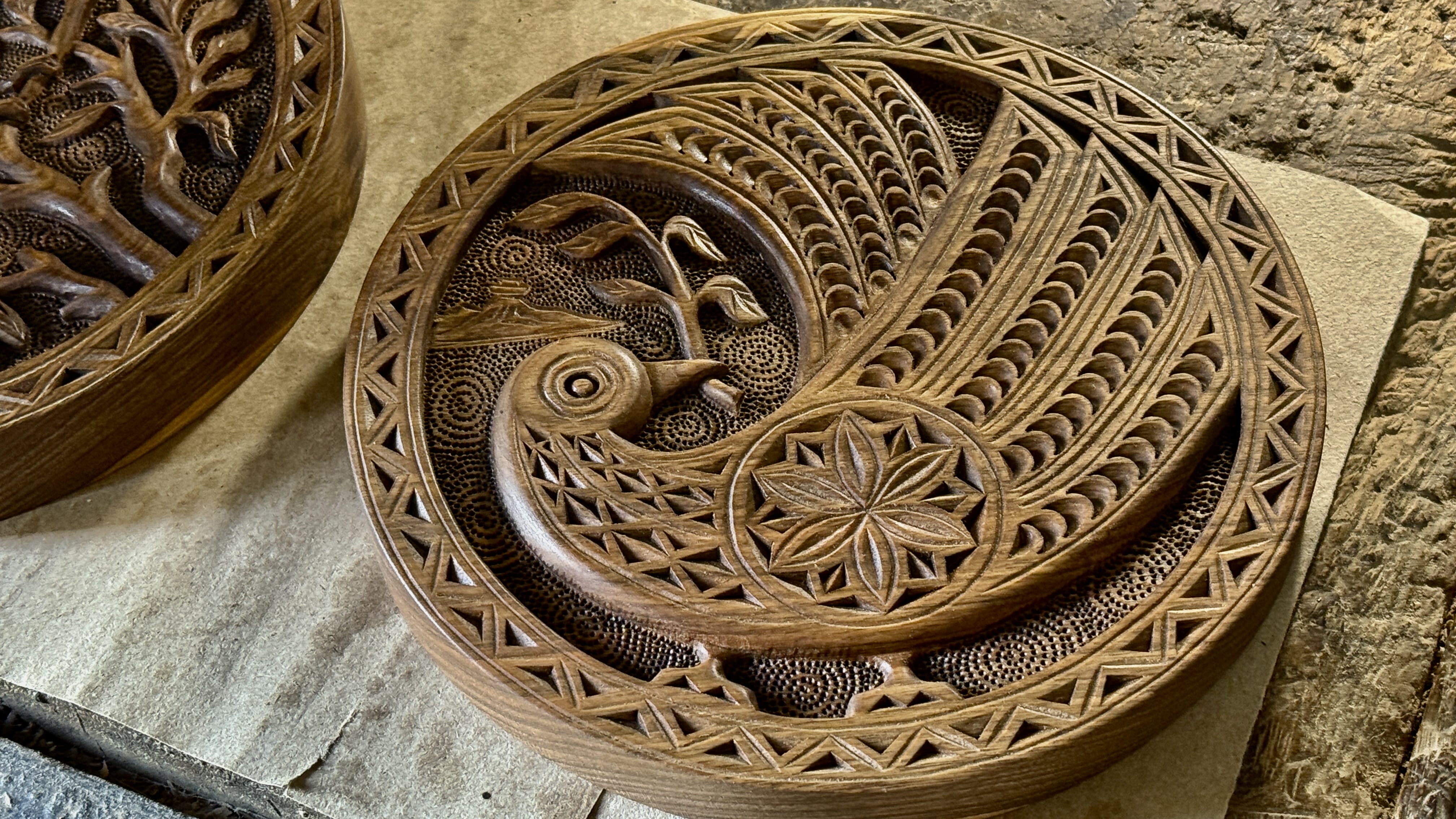
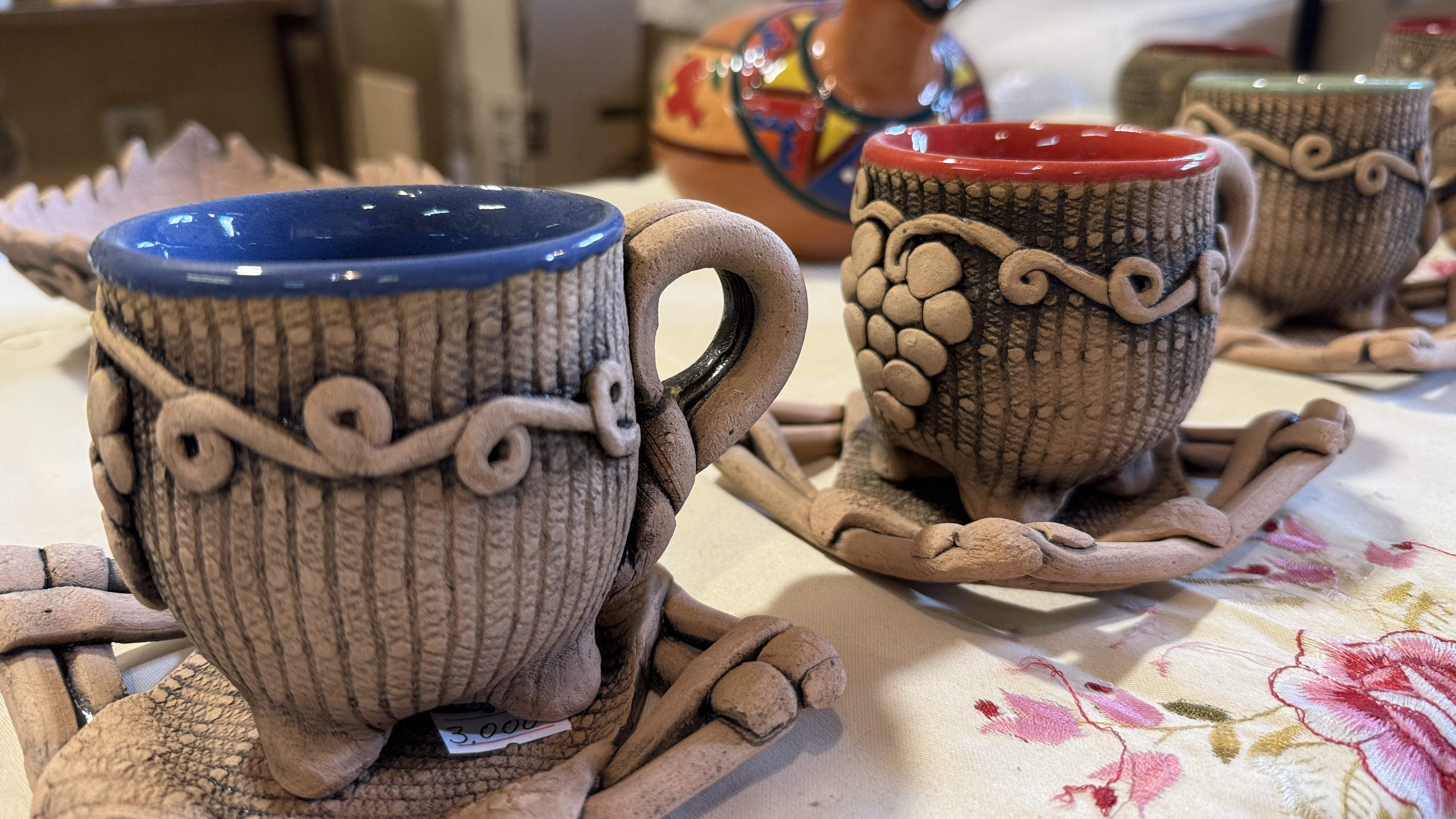
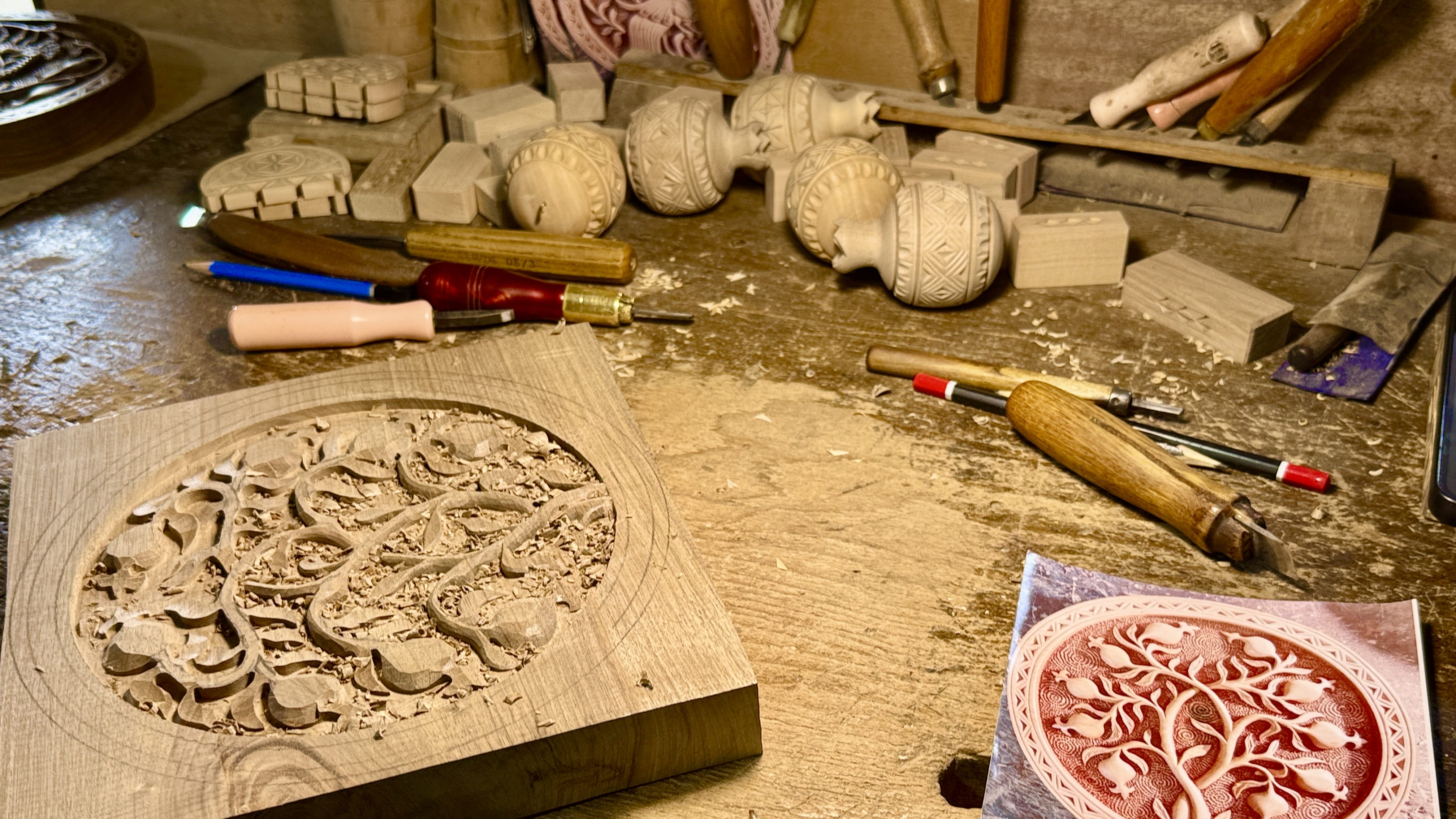
The town has a long history as a resort, especially during the Soviet era. Artists, writers, and musicians came here looking for inspiration, and it still carries a creative, slightly bohemian energy. In the historic district, Sharambeyan Street, 19th-century houses have been restored into workshops and galleries. We stopped to watch pottery being thrown, woodcarvers at work, and traditional crafts laid out in quiet little studios.
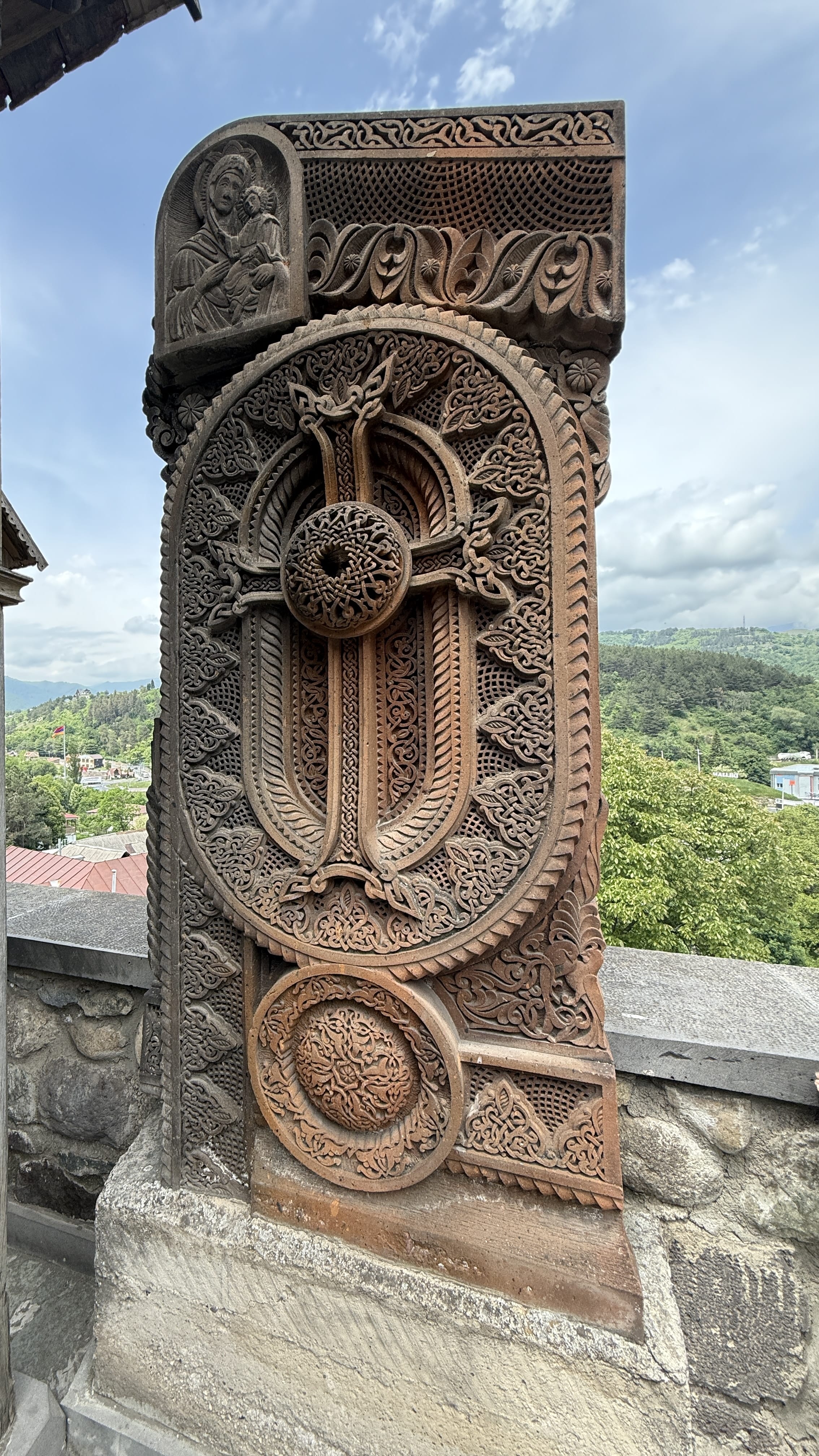
Along the walkway outside one of the workshops, I stopped to admire a beautifully carved khachkar—one of Armenia’s traditional cross-stones. Its surface was covered with knotwork and floral patterns, and at first it looked like many others I’d seen. But my guide urged me to look closer, and only then did I notice a face carved beneath a floret at the center. It was a truly incredible piece.
Faces are unusual in khachkars, which more often feature crosses, rosettes, and vines. Whether this one was meant as a saint, a patron, or simply the carver’s choice, it stood out as different.
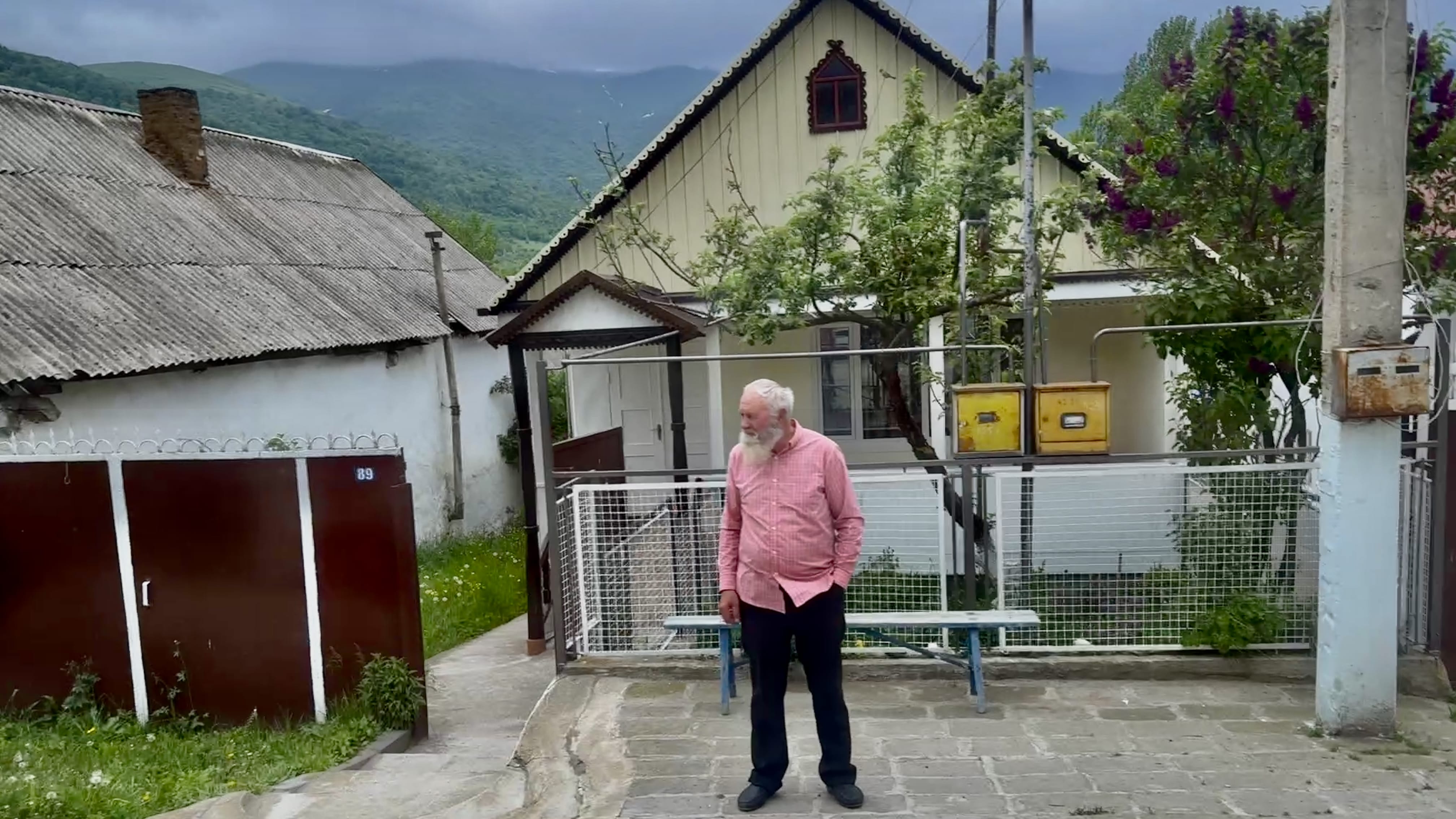
Next we visited a nearby Molokan village. I’d never even heard of the Molokans before this trip. Their name means “milk drinkers,” a label they got back in the 17th century when they refused to follow the Orthodox Church’s strict fasting rules, including giving up dairy, so they were branded heretics. In the 1800s, many were exiled from Russia to the far reaches of the empire—places like Armenia—where their descendants still live today.
From what I learned, Molokans see themselves as “true-spirited Christians”—favoring simplicity over icons, ornate churches, or formal clergy, and often steering clear of alcohol and dancing. What struck me most, though, wasn’t the rules but their hospitality, their sense of community, and the incredibly hearty food they served.
The village wasn’t fancy. Houses were simple—whitewashed walls, tin roofs, metal gates, and small gardens—often in the Russian rural style.
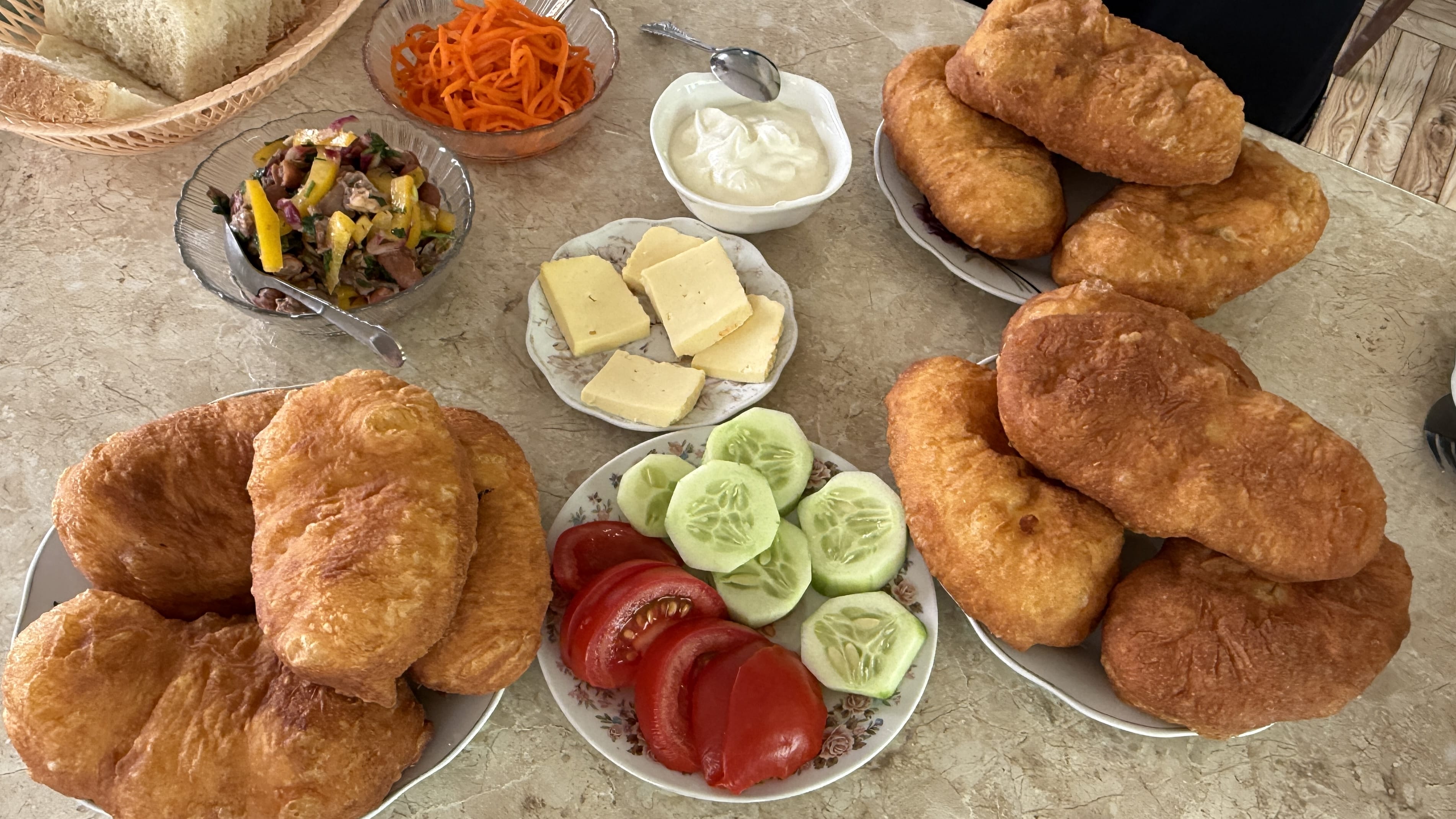
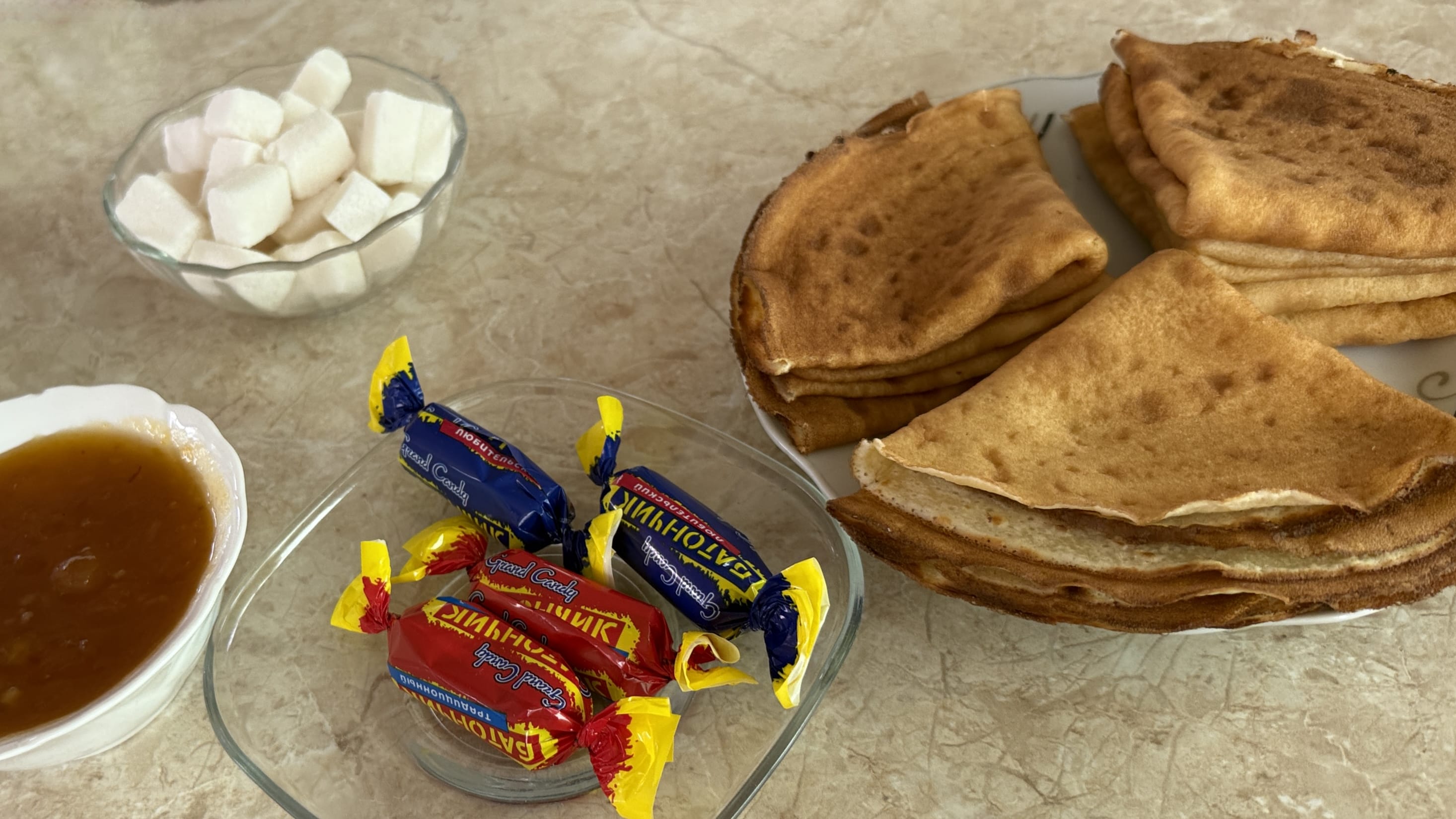
Lunch was at the home of a local family, and they had a feast waiting for us when we arrived— pirozhki (stuffed buns), some filled with potato, others with cheese or cabbage, along with warm flatbreads, pickled vegetables, fresh tomatoes and cucumbers, and slices of cheese. Afterward, tea was poured from a steaming samovar and served with thin crepes and jam that our hostess brought out.
Molokans are known for tending kitchen gardens and growing much of their own food. While I can’t say for sure what was homegrown that day, everything tasted simple, fresh, and made with care. It was filling, comforting, and the kind of food that feels like it’s been made the same way for generations.
Our hosts were a wonderful couple—especially the woman, who seemed to take a liking to me. She kept touching my face and calling me her daughter, though I suspect I was actually older than she was. (Still, I’ll take it.)
They’ve been hosting visitors for about ten years, sharing this kind of meal and hospitality, and it couldn’t have felt more genuine. It ended up being my favorite meal in Armenia, because it felt the closest to truly authentic, without actually being welcomed into a private home.
On the way into town, we passed a string of Yazidi communities with deep roots in Armenia. Many families here descend from those who fled Ottoman-era persecution. Armenia officially recognized the Yazidi genocide in 2014, and today the Yazidis practice their traditions openly. Because herding and dairy are central here, we saw sheep and cattle in the fields and families at roadside stands selling fresh cheeses, herbs, and preserves.
That night we stayed at Avan Dzoraget, a hotel set along the Debed River in northern Armenia. The river ran fast, cutting through a steep canyon, and the sound of the rushing water was constant and loud. The rooms were fine, but the place itself felt isolated.
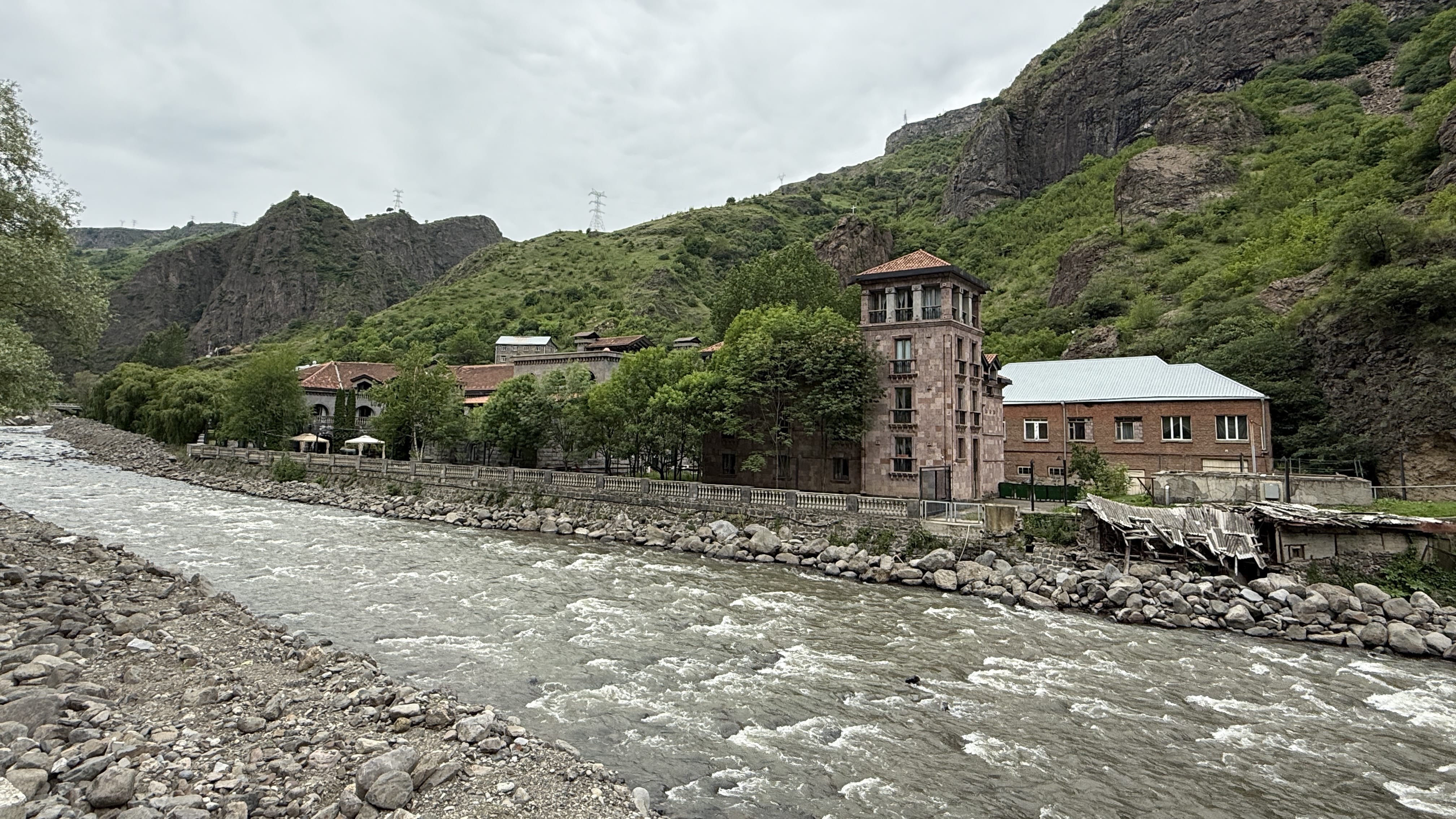
My options here were either walking along the highway or taking the trail behind the hotel. I chose the trail, which started out clear enough but quickly grew overgrown and hard to follow. I climbed until the markers disappeared, took in the view over the river and hills, then turned back.
By late afternoon I found myself wishing for more to explore. The stillness would have been perfect for someone after a quiet retreat, but with only a week in Armenia I was eager to see more. Out in remote areas, especially with a group, you learn that the pace isn’t always yours to set.
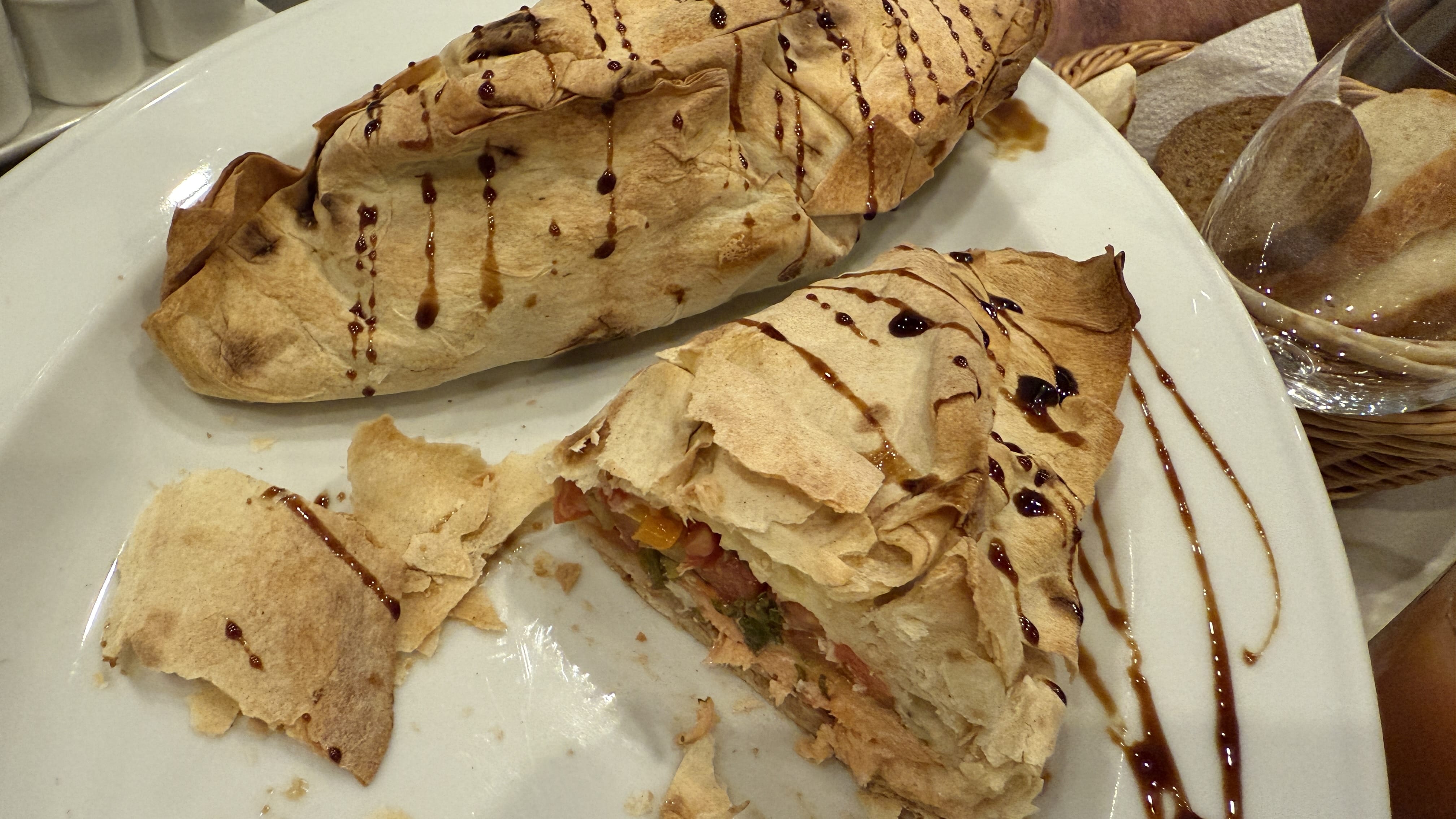
Dinner in the hotel’s restaurant ended up being the highlight. I had a baked lavash wrap stuffed with vegetables, drizzled with pomegranate molasses, served with Armenian salads, and paired with a glass of Tufenkian Armenian wine. It was fresh, filling, and easily the best part of an otherwise quiet stop.
We left Dilijan in the morning, winding our way back toward Yerevan. It happened to be May 28th—First Republic Day, a national holiday marking Armenia’s brief independence in 1918. Celebrations were everywhere: flags draped from balconies, music in the streets, kids running around in traditional dress.
We made a quick stop in Aparan, just long enough to catch a glimpse of the festivities. The town square was packed. A band played, people cheered, and two helicopters passed overhead—one trailing an enormous Armenian flag, the other releasing streams of red, blue, and orange smoke. Confetti drifted down over the crowd. It felt spontaneous, chaotic, joyful.
And then, we were back in the van.
I felt a flicker of frustration. This was the kind of moment you can’t schedule but wish you could—just a little more time to stand, watch, and take it in. Group travel makes things efficient, but it also means losing the chance to linger. It wasn’t a big deal in the grand scheme
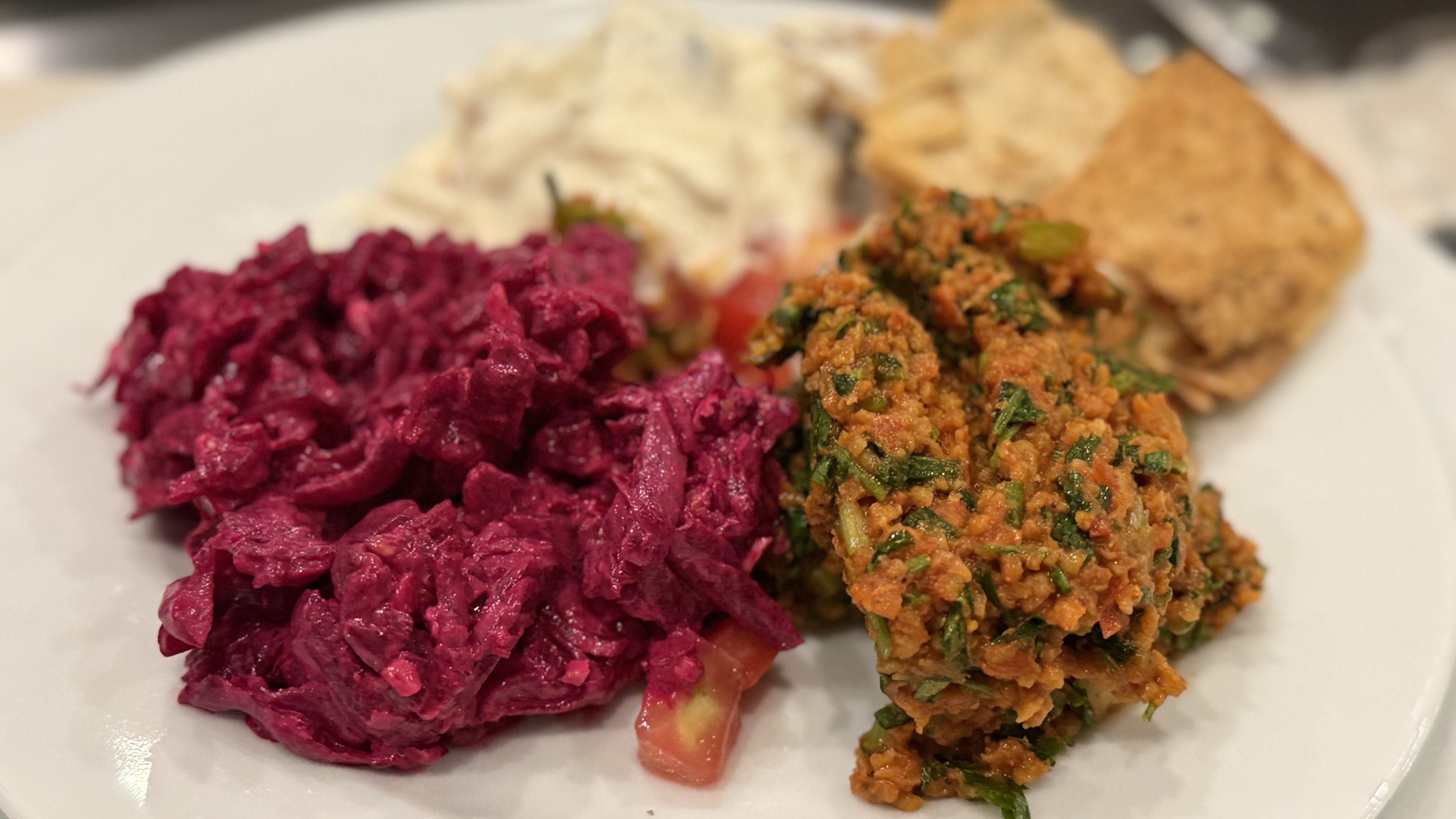
Later that afternoon we stopped for lunch at Chir’s House, a small agrotourism center in a rural village, supported by NGOs to promote sustainable tourism. The meal was simple: several kinds of local cheeses, fresh herbs, warm bread, a carrot salad, and a crisp cucumber–tomato salad tossed with dill. Pitchers of ruby-red pomegranate juice were on the table, and, in true Armenian fashion, it ended with small cups of strong, thick coffee.
For dessert there was dried watermelon and cherries, plus sharots (sweet sujukh—similar to Georgia’s churchkhela): chewy ropes of walnuts dipped in grape syrup and dried like candy. Before leaving, we all stocked up on extra sujukh to take with us.
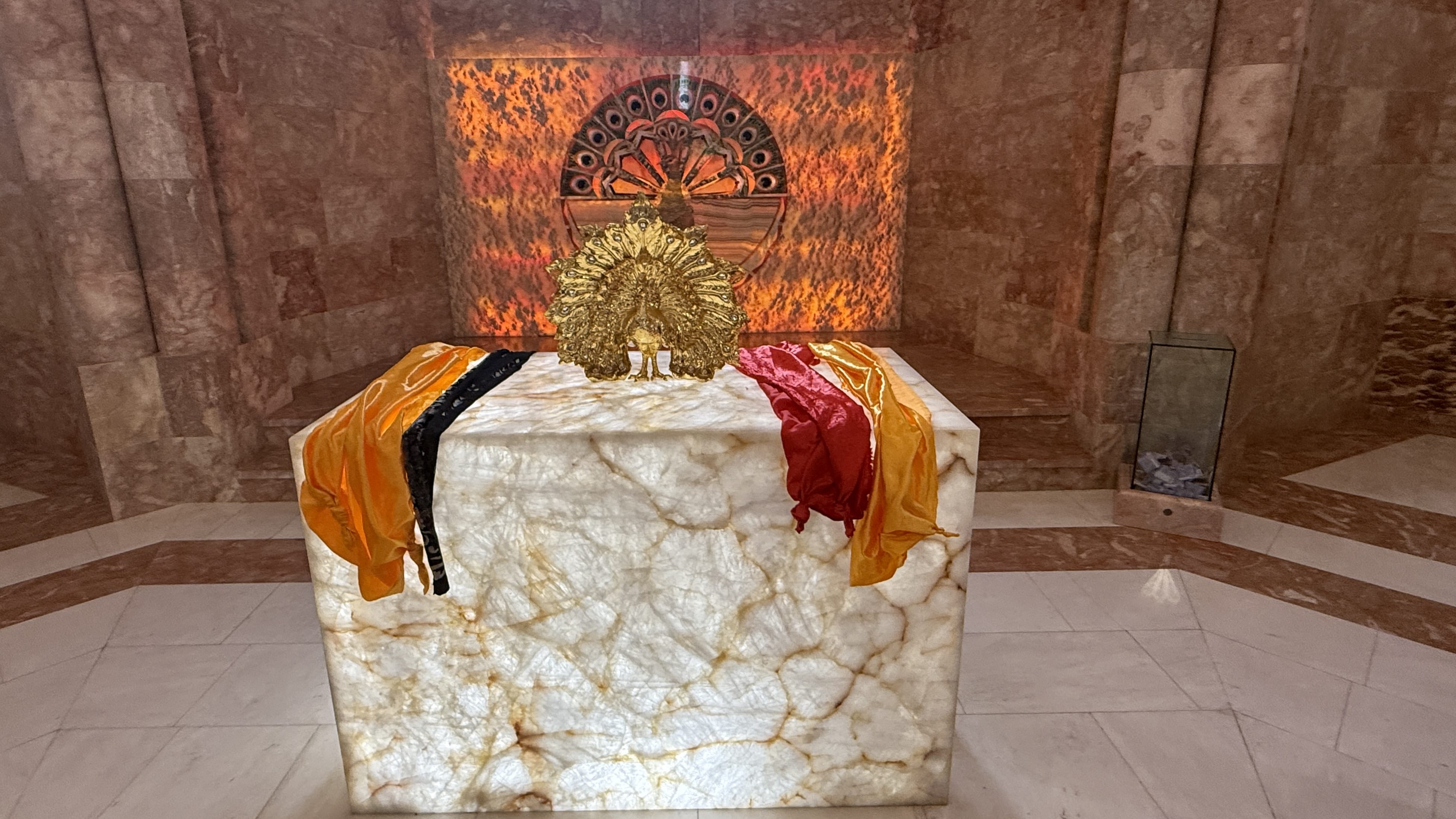
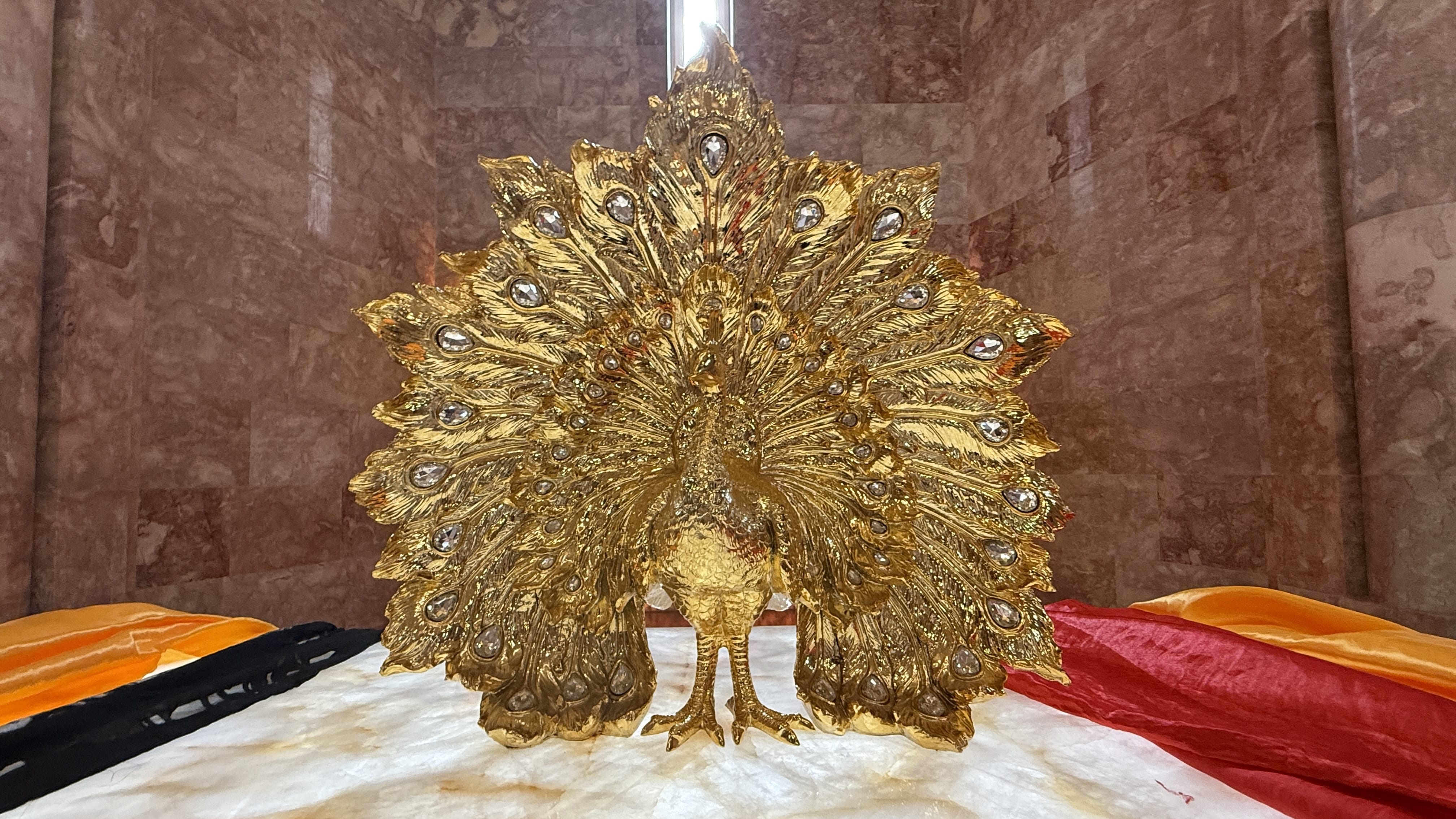
Next we drove to the village of Aknalich to see the Yazidi Temple (also called the Ziarat Temple). From a distance, it looked radiant against the sky: white stone and cone-shaped spires, eight in total. Seven represent the Seven Holy Beings, and the tallest honors Melek Taus (MEH-lek Tah-OOS)—the Peacock Angel, who stands at the center of Yazidi faith as a figure of light and renewal. Each spire was crowned with a golden sun,
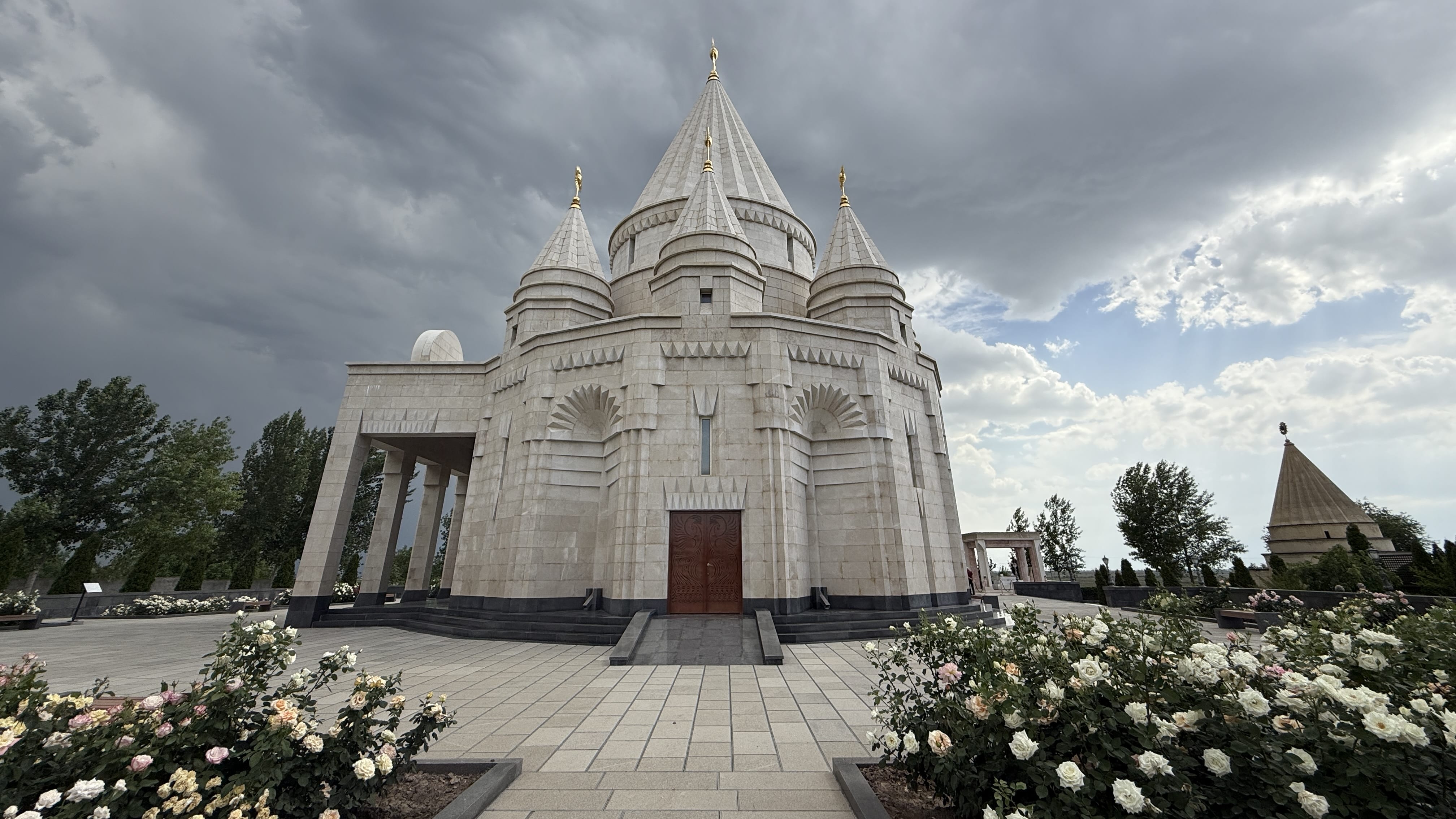
Inside, the space was cool and gleaming. Every surface—walls, floor, altar—was marble, inlaid with bands of rose and white stone. We left our shoes at the door, so the only sound was the faint slap of bare feet on marble. At the center stood a golden peacock, shimmering in the light.
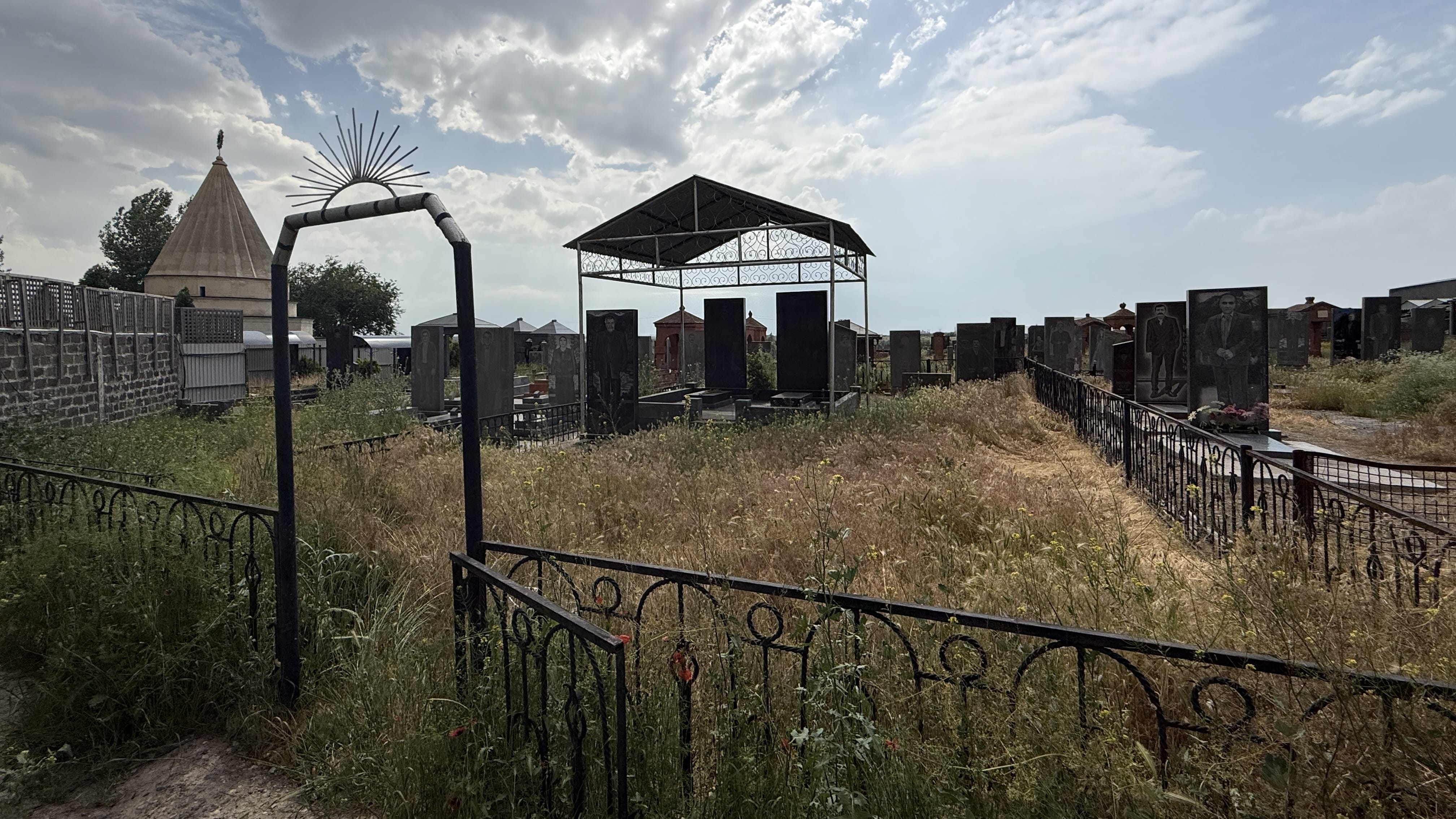
Outside, a walkway lined with busts of Yazidi leaders and scholars stretched in both directions. Armenia is home to one of the largest Yazidi populations outside Iraq, and the temple felt like more than a house of worship—it was a statement of endurance. Off to the side, the cemetery caught my attention. Many of the gravestones had etched portraits of the deceased.
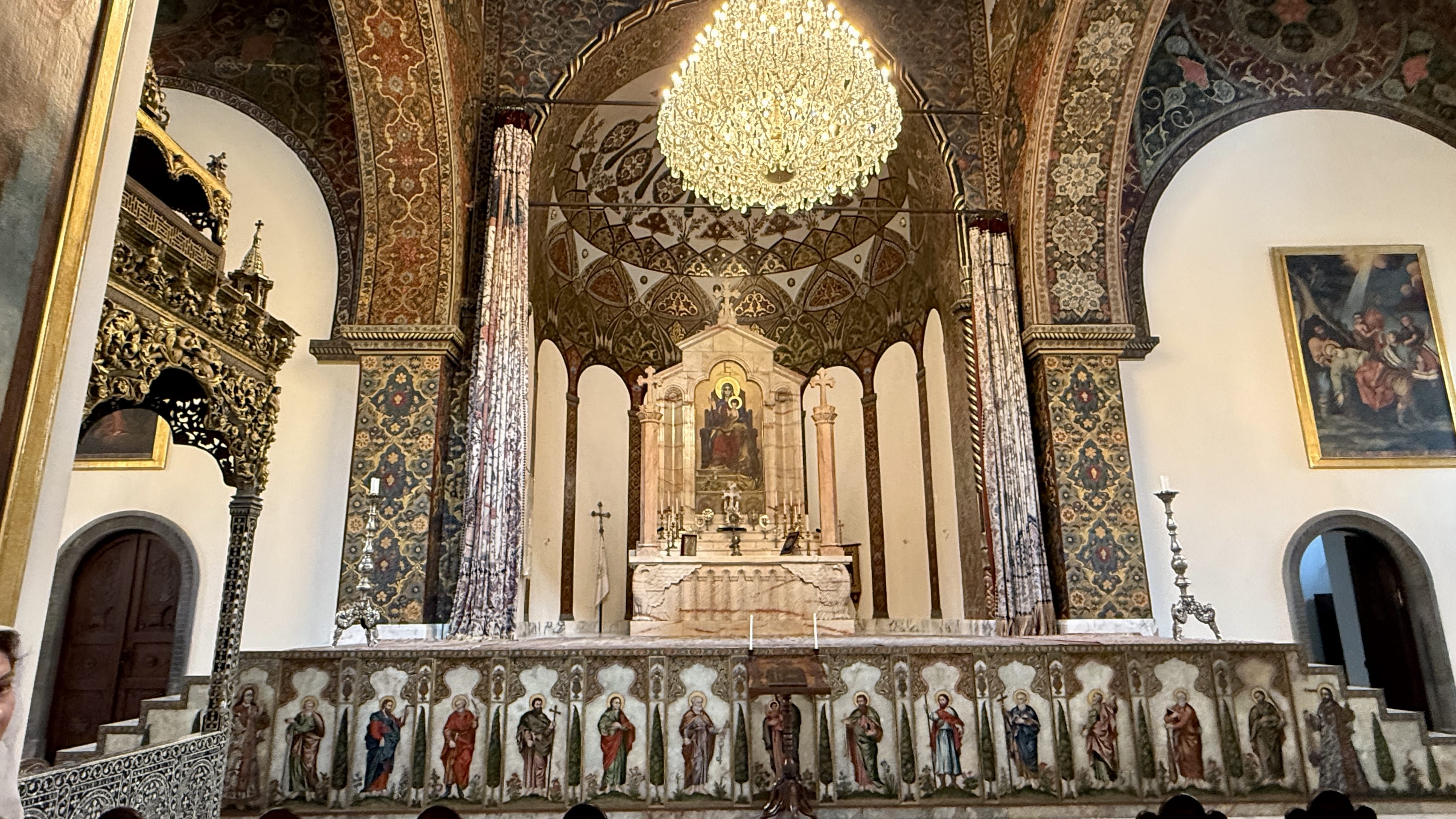
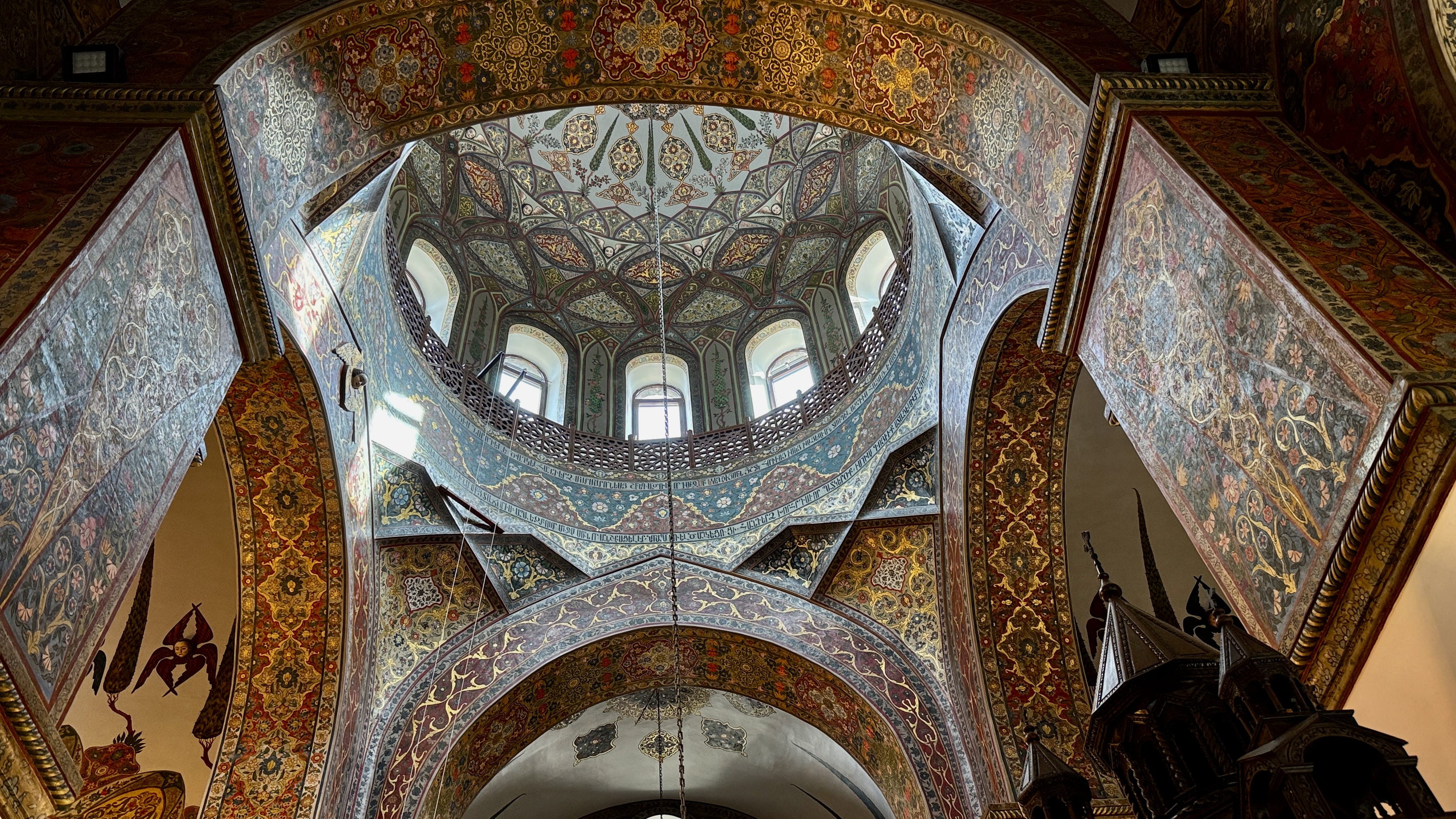
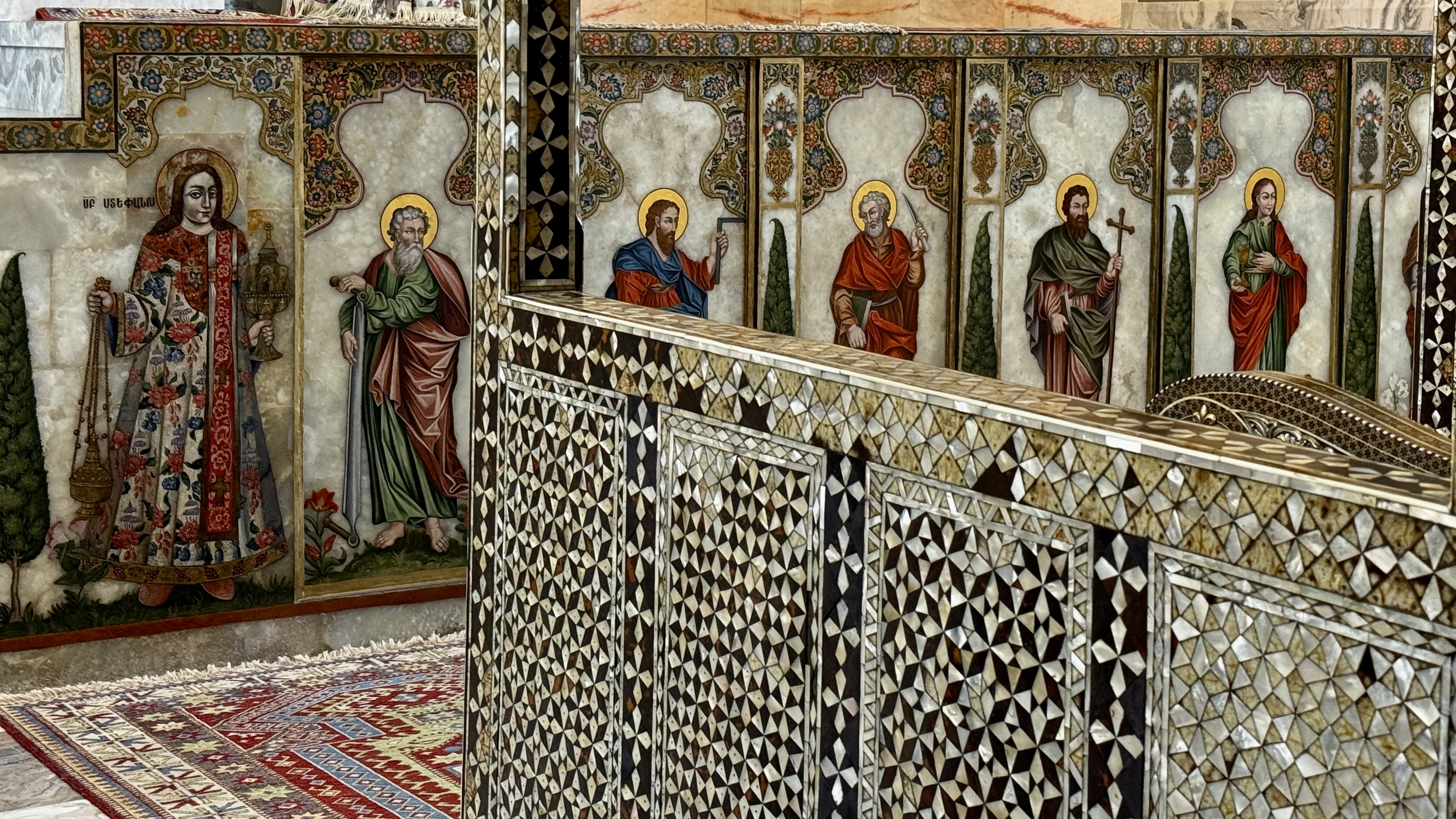
Our next stop was Vagharshapat—better known as Etchmiadzin—the spiritual center of the Armenian Apostolic Church. The Mother See of Holy Etchmiadzin is often called the Vatican of Armenia. Its main cathedral dates back to the early 4th century, built soon after Armenia became the first country to adopt Christianity as a state religion.
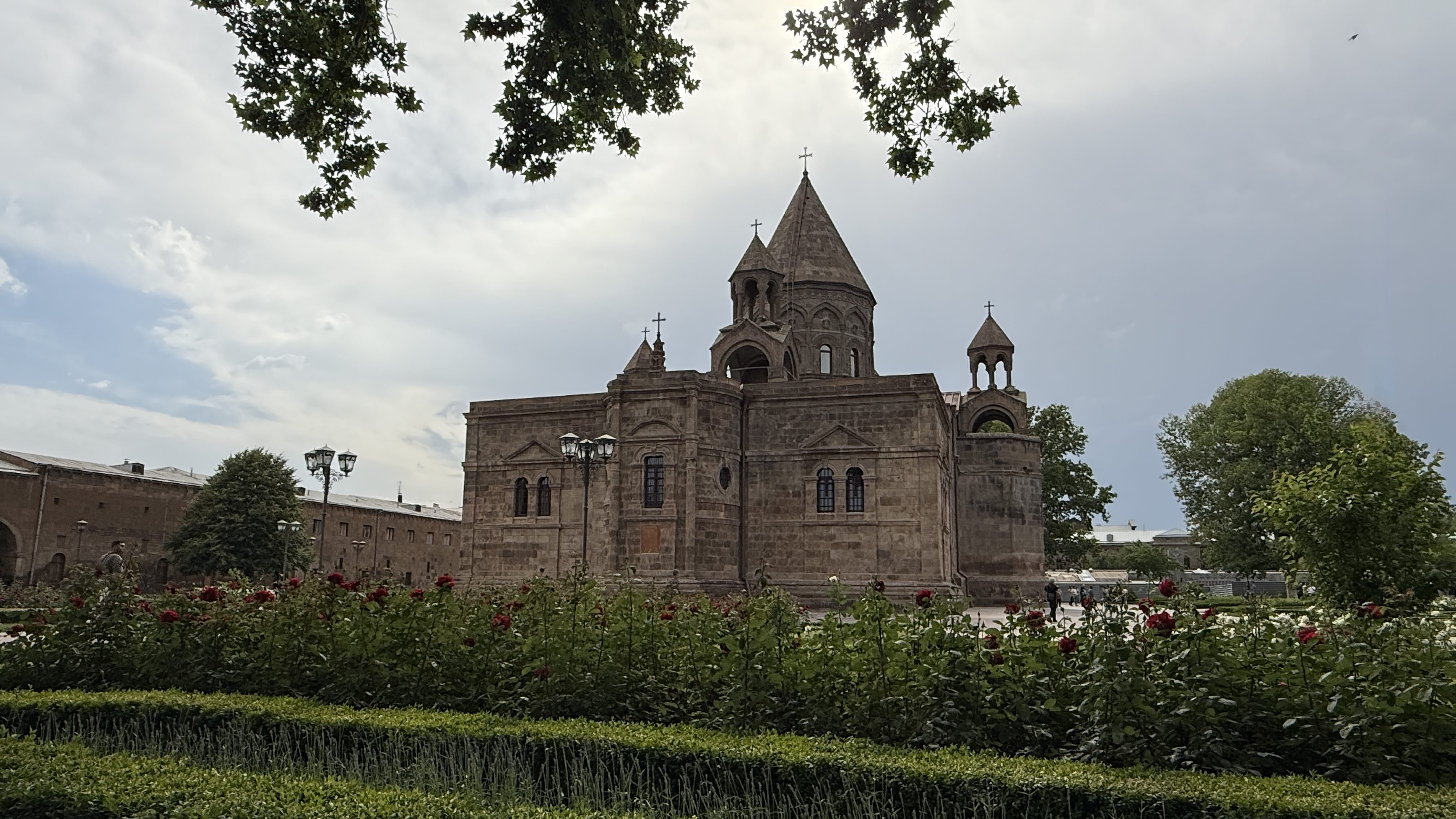
The main cathedral was under renovation when we visited, so we stepped into one of the chapels instead. Its walls and ceilings were painted with angels and geometric designs, and chandeliers cast a warm light across the marble floor. Even without the main church open, the sense of history could be felt.
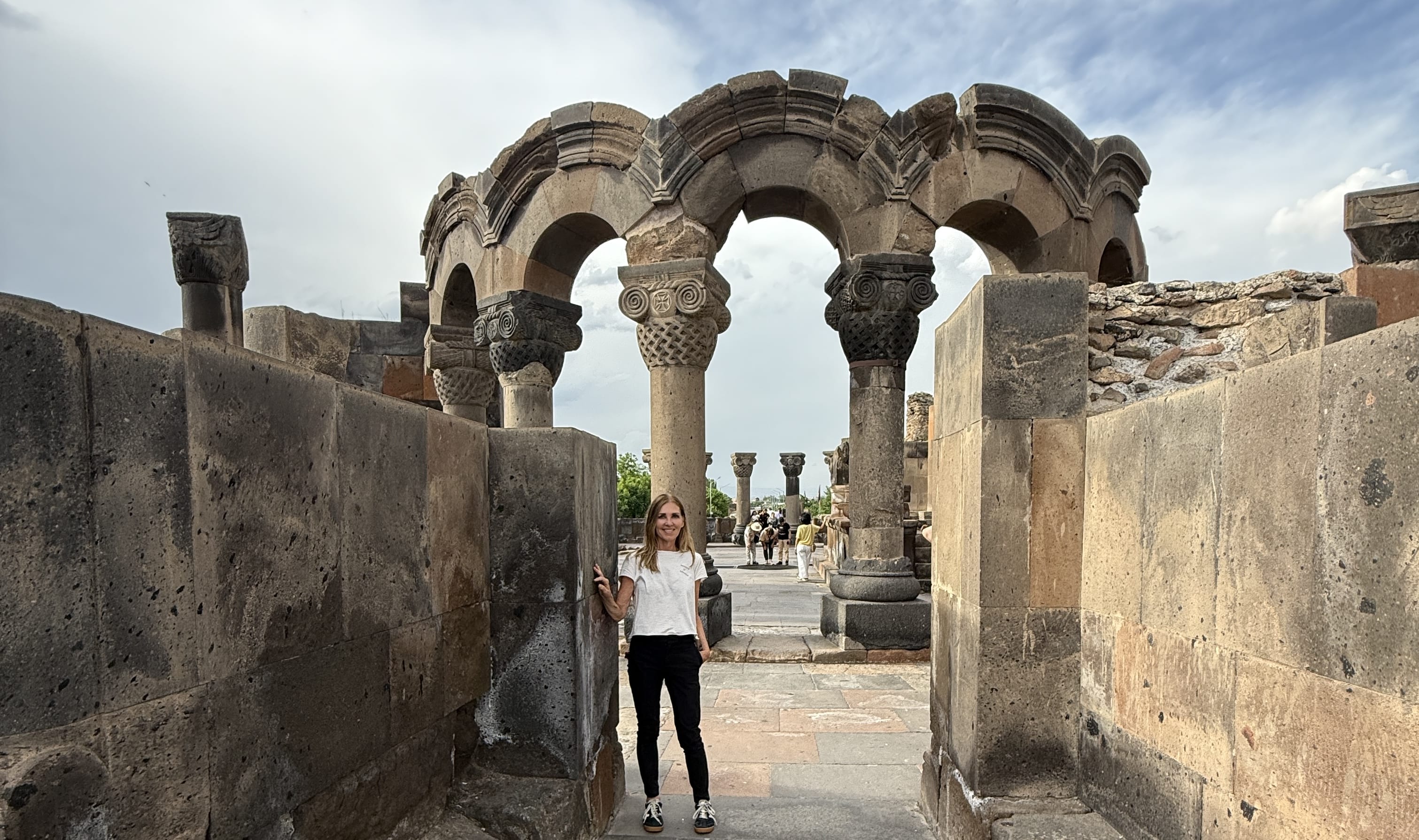
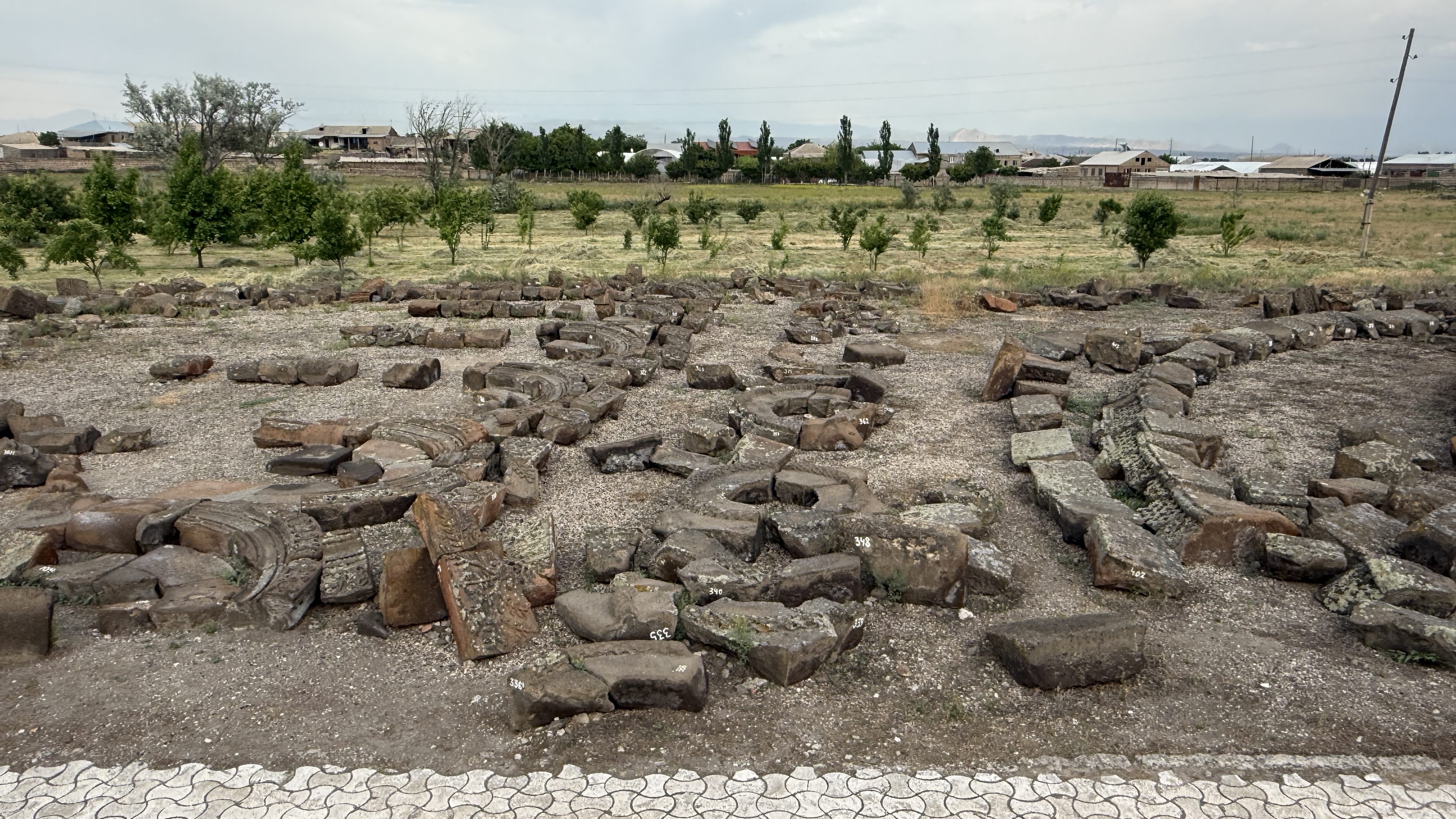
Our last stop before Yerevan was Zvartnots Cathedral ruins. Built in the 7th century, it must have been massive in its prime—tall columns, carved capitals, wide arches. An earthquake brought it down centuries ago; now you walk among the broken stones, some still standing, others scattered like pieces of a giant puzzle.
Standing there, you can picture how it must have looked with Mount Ararat in the background. Its style felt different from the other churches I’d seen in Armenia. The arches and columns showed Roman and Byzantine influence, unlike the compact stone monasteries scattered across the country. Today it’s recognized as a UNESCO World Heritage Site.
We reached Yerevan by early evening, just in time for dinner and to catch one of the city’s nightly dancing fountain shows.
We started the day heading out of Yerevan again, this time toward some of Armenia’s best-known landmarks.

First up was Garni Temple, probably one of the most photographed sites in the country—and when you see it, you get why.
It’s a 1st-century pagan temple built by King Tiridates I and dedicated to Mihr, the sun god. With its stone columns and triangular pediment, it looked more like something from Greece or Rome than anything else I’d seen in Armenia.
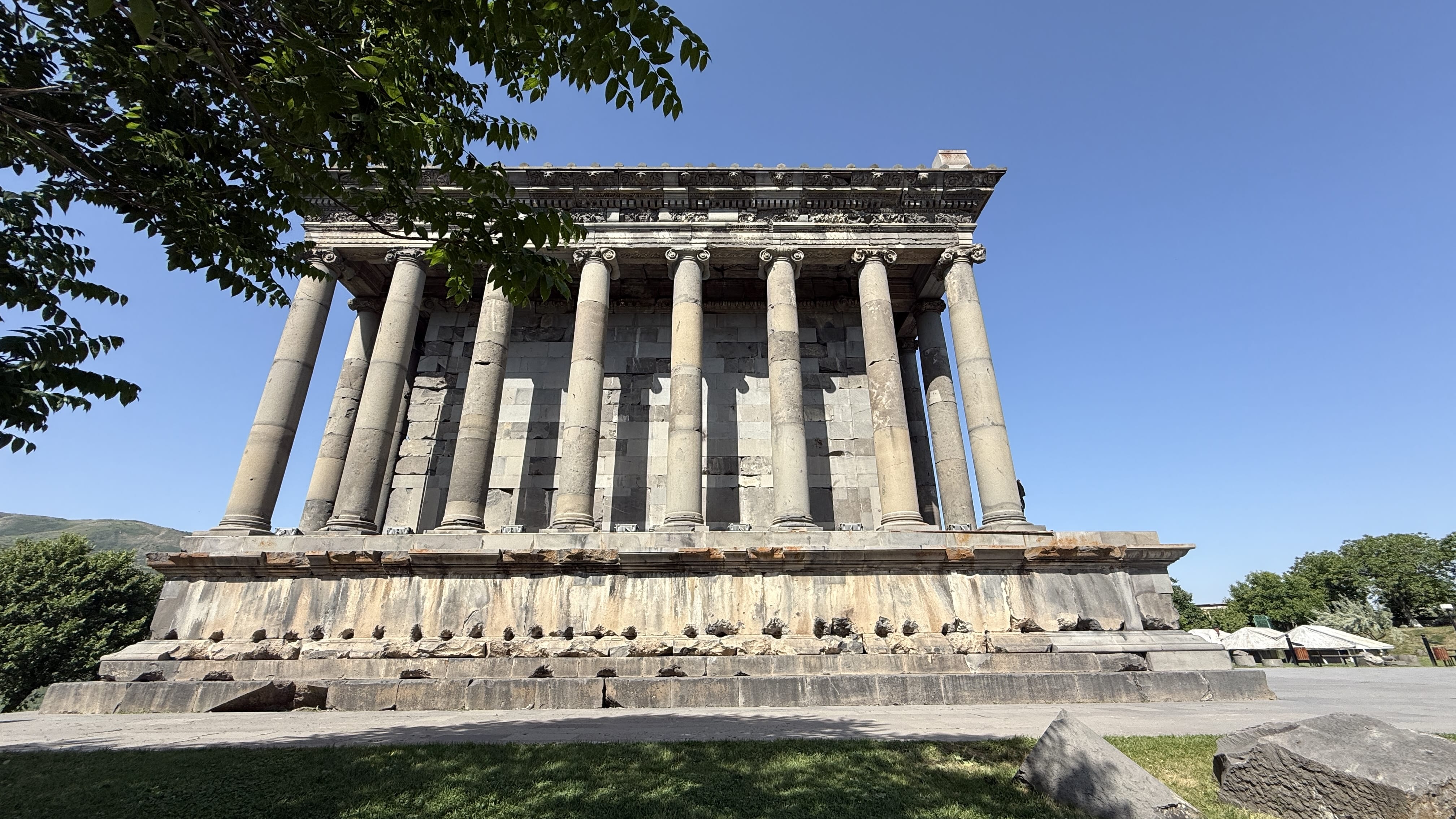
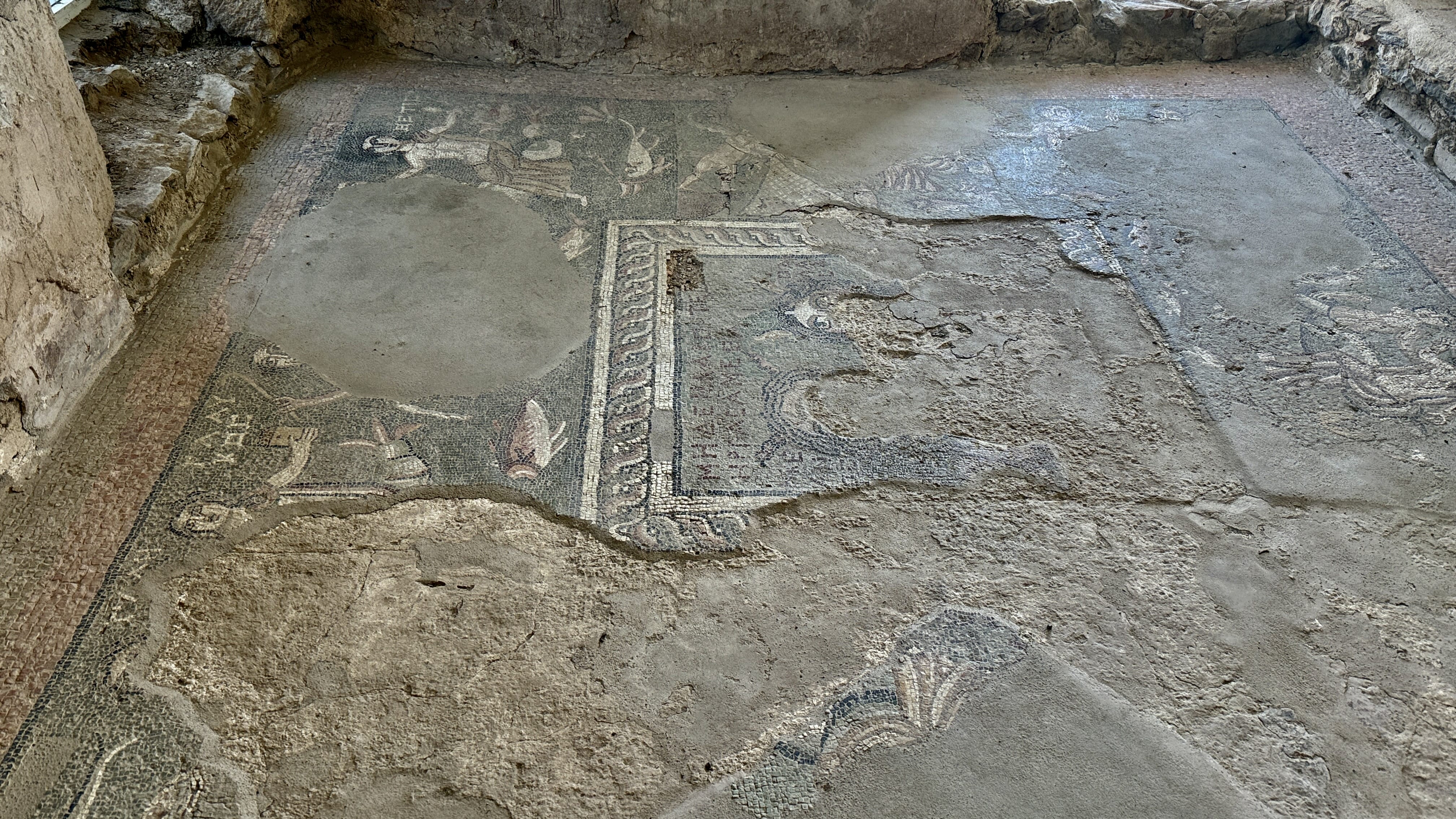
The original temple was destroyed by an earthquake in the 1600s but rebuilt in the 1970s using its original stones. Nearby are the remains of a Roman-style bathhouse with a mosaic floor made from fifteen shades of naturally colored stone.
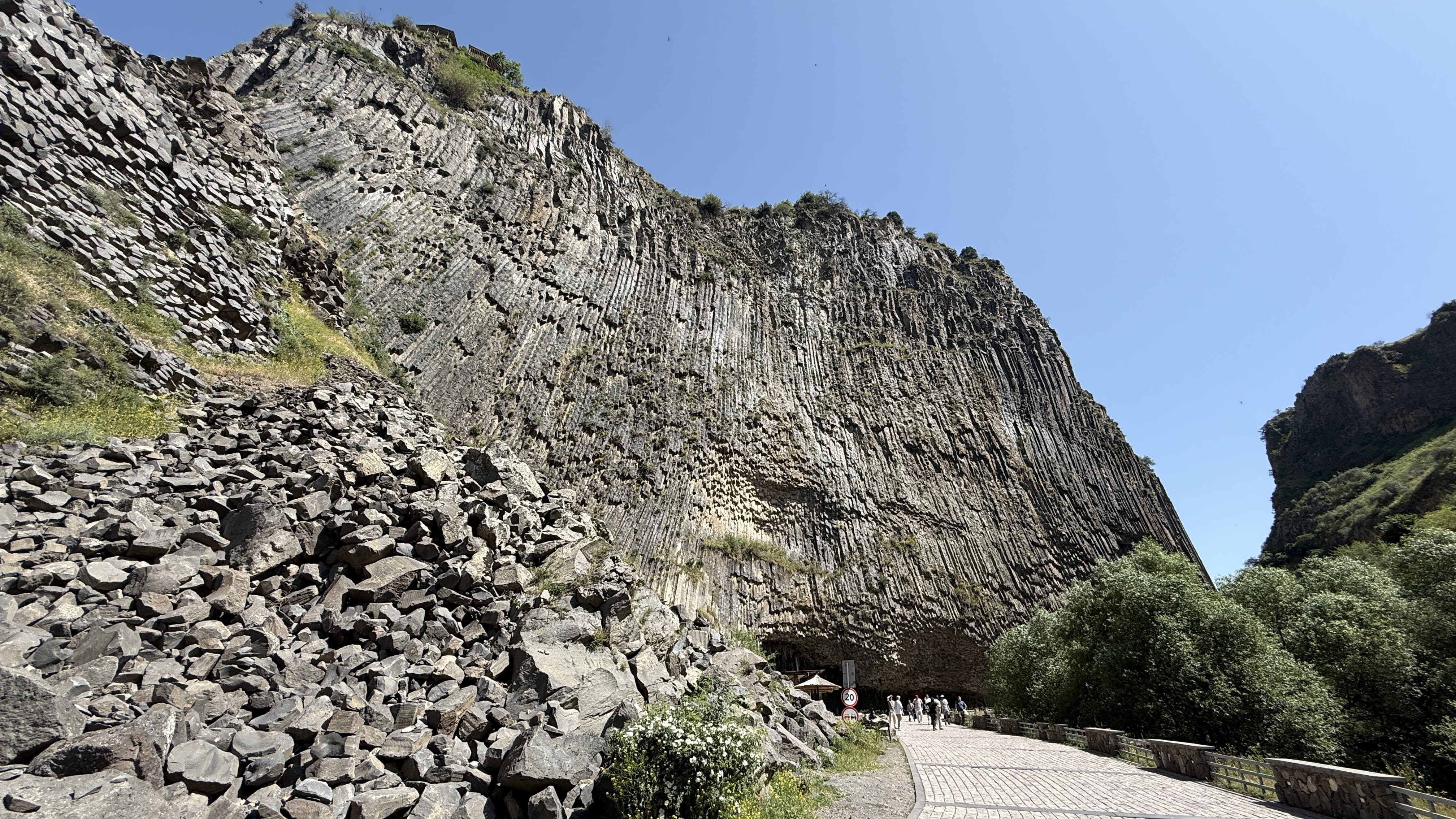
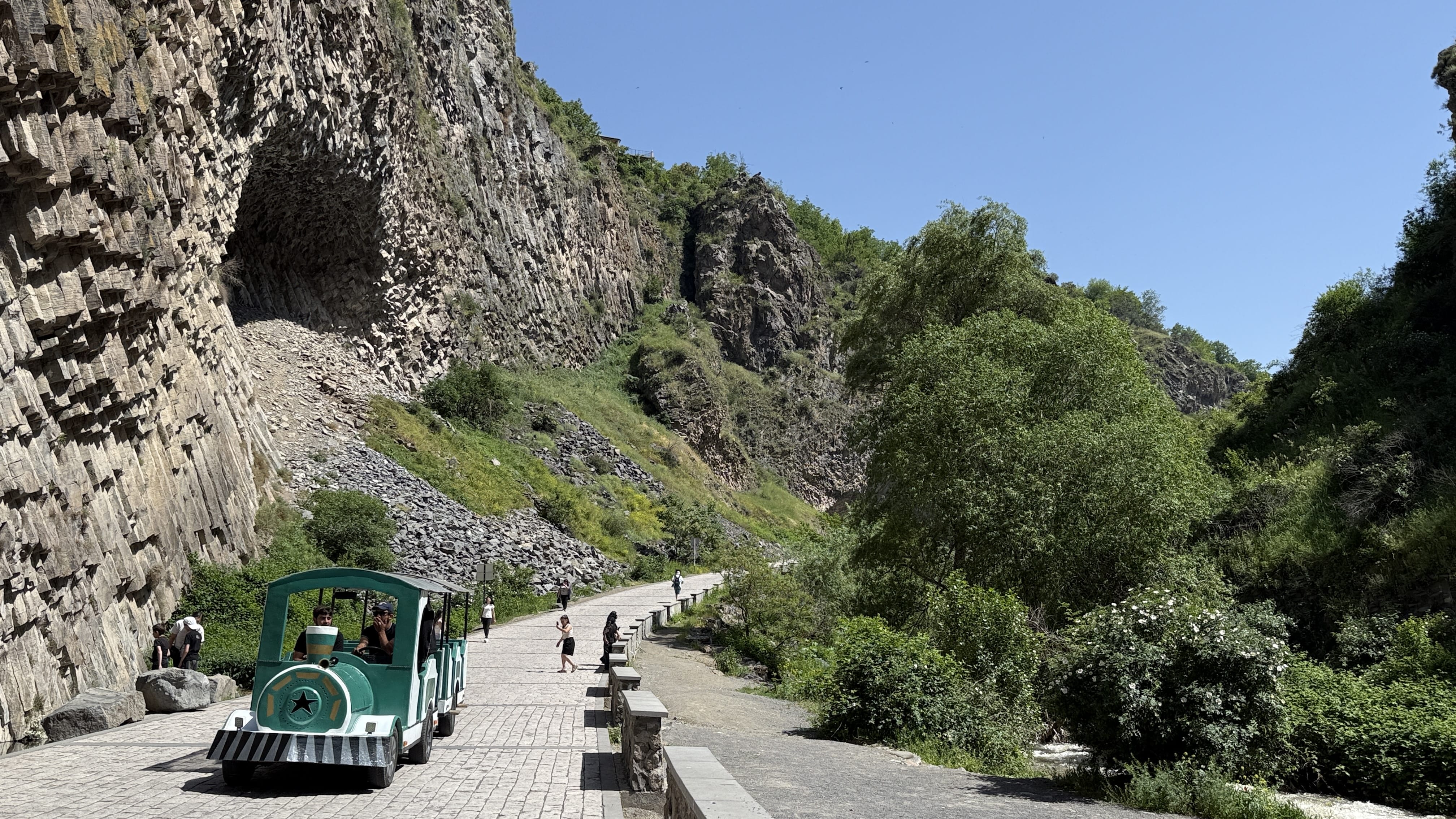
From there, we walked down into the gorge to see the Symphony of Stones—a dramatic wall of hexagonal basalt columns stacked like a giant stone organ.
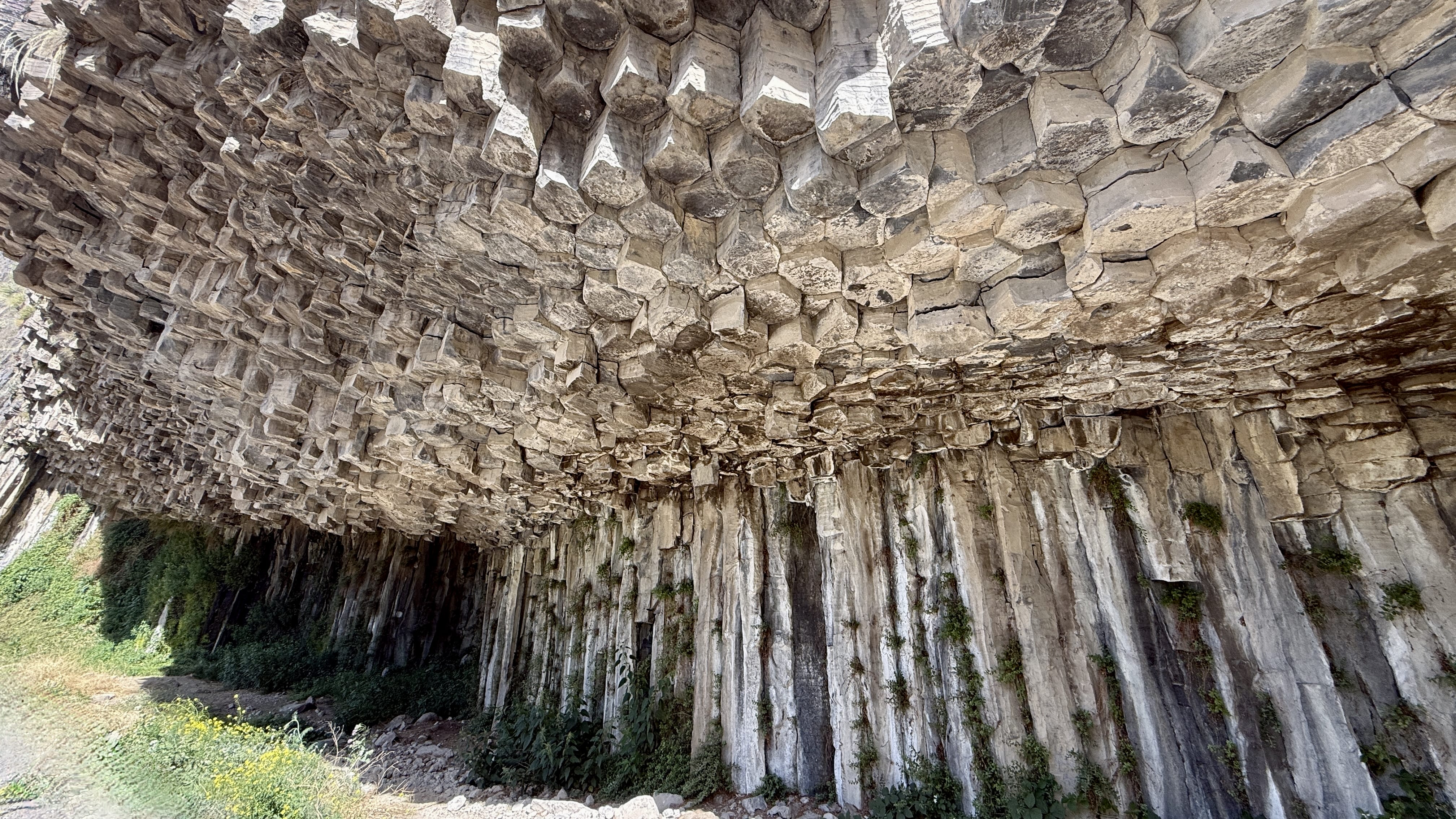
It was beautiful, but also one of the few places that felt a bit too tourist-ready. I mean, any place that has a little train to shuttle tourists around is usually one I try to avoid. Still, the formation itself was strange and wonderful, and it made you stop and wonder how the earth manages to shape itself like that. One section even reminded me of a honeycomb, but in stone.
After the walk, we headed to Geghard Monastery, a UNESCO World Heritage Site carved into the cliffs, surrounded by steep mountains that keep much of it in shadow.
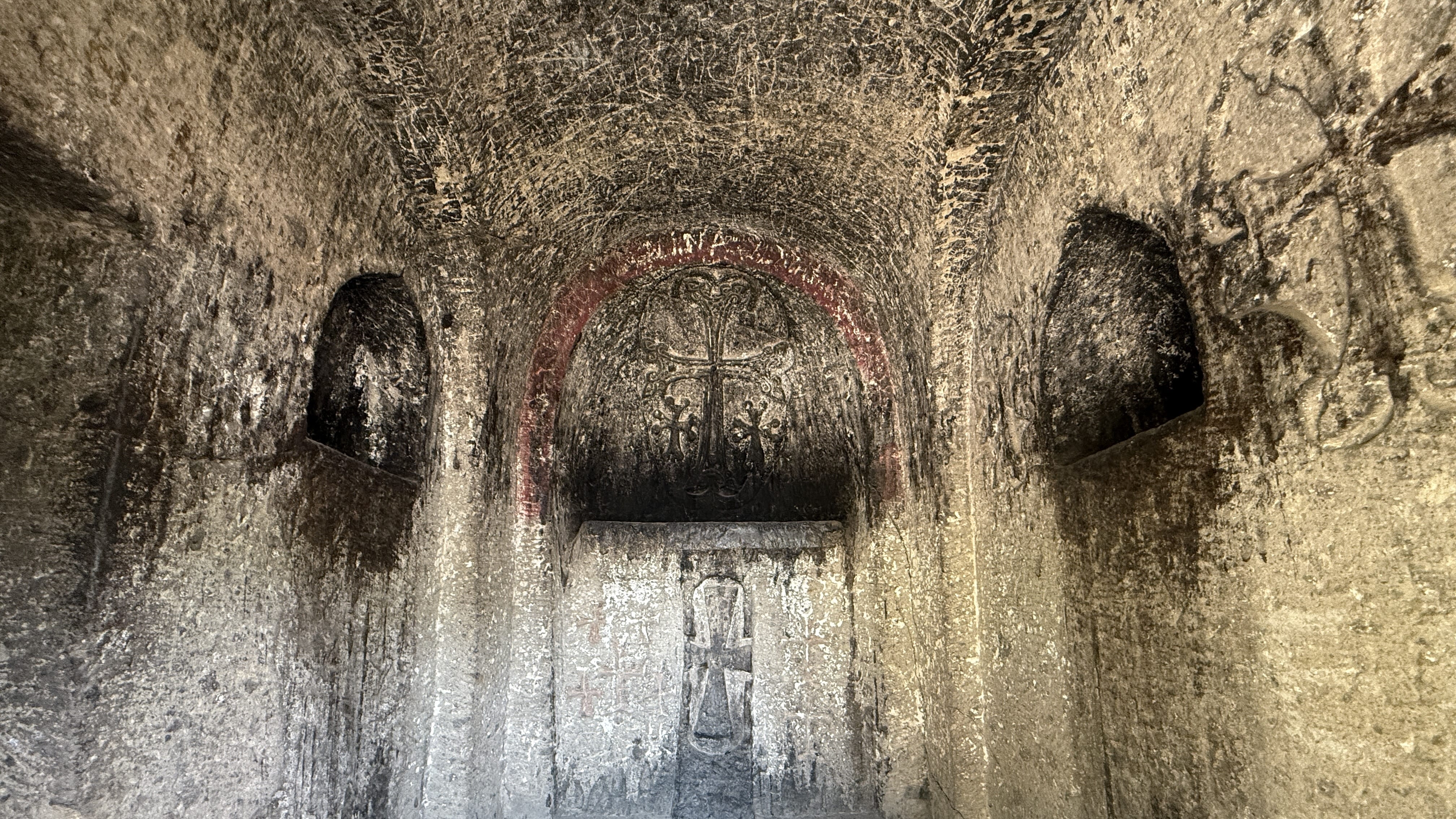
Parts of the monastery are carved directly into the rock. Inside, it was cool and dark, the chambers and chapels echoing with centuries of sound. We happened to walk in while a small vocal group was singing, and the acoustics were so clear and resonant they gave me chills. Light poured through a single opening in the dome above, making the moment feel almost sacred.
Geghard dates back to the 4th century, though most of what stands today is from the 1200s. It was once home to a major music school, and one thing I hadn’t known before visiting was that Armenia didn’t have nunneries—cloistering women was seen as potentially abusive. Still, women took part in church life; one even taught music here, which felt surprisingly progressive for the time.
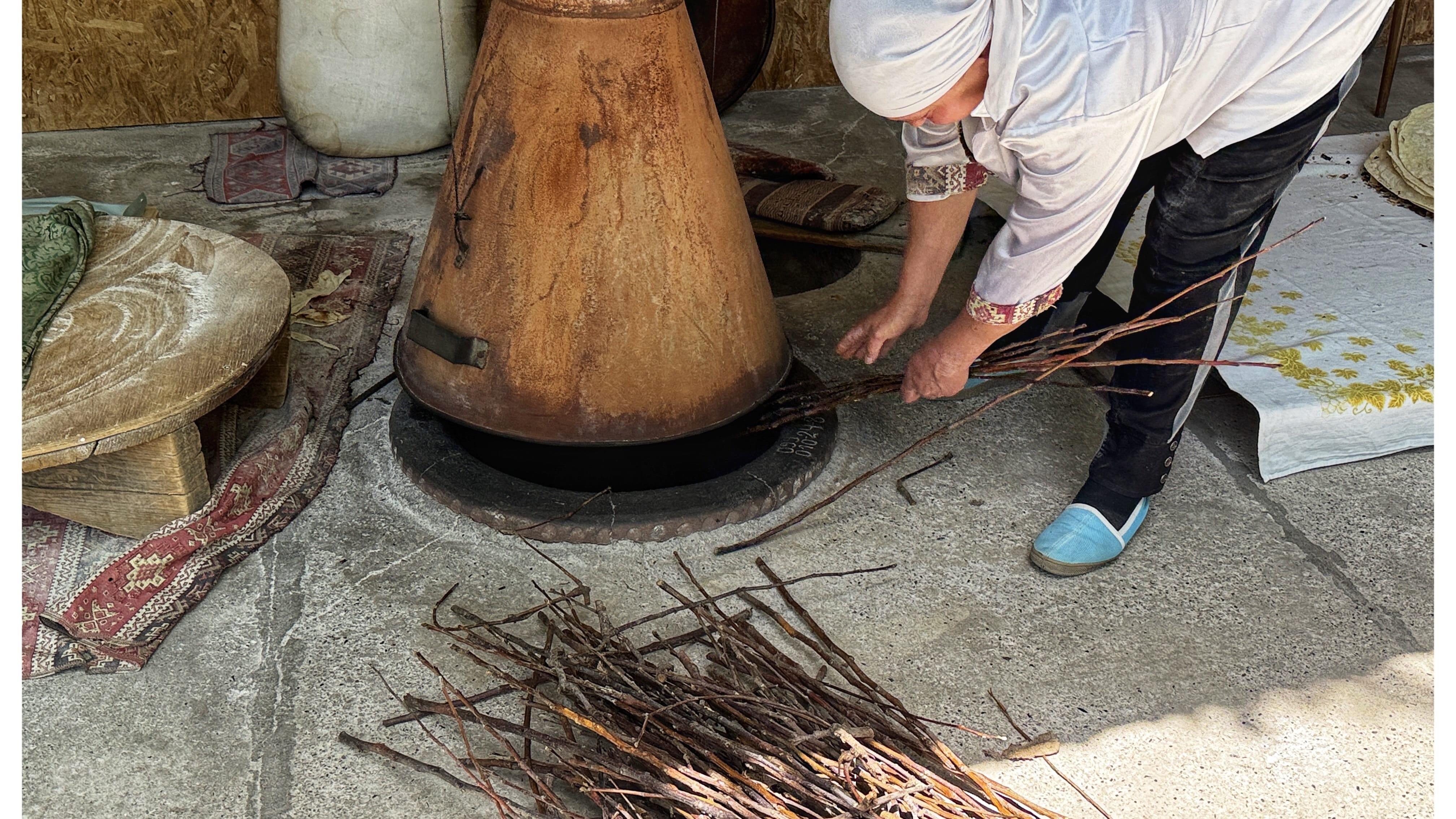
After the monastery, we stopped for lunch at Mer Ojakh Family Garden Restaurant—“Our Home.” It really did feel that way. There were trees overhead, a shaded courtyard, and two women in the corner making lavash by hand.
The process looked simple, but I know it isn’t. The women had clearly done this a thousand times, moving with a rhythm that made something difficult look effortless. One rolled the dough thin and passed it across the table as if it were second nature. The other caught it, stretched it further, and draped it over a soft cushion before pressing it into the inside wall of a clay tonir oven.
She made the sign of the cross just before baking it—a small, quiet gesture. The fire was made with apricot wood, which smelled subtly sweet and burned hot and fast. The bread baked in seconds, coming out crisp, warm, and slightly blistered. And let’s face it—what’s better than freshly made bread?
We tore it apart by hand and filled it with cheese and herbs. It was messy and perfect.
Families in this part of Armenia often bake huge batches of lavash to dry and store—it keeps for weeks, almost like a giant cracker. When it’s time to eat, they just sprinkle it with water and wrap it in a cloth to soften.
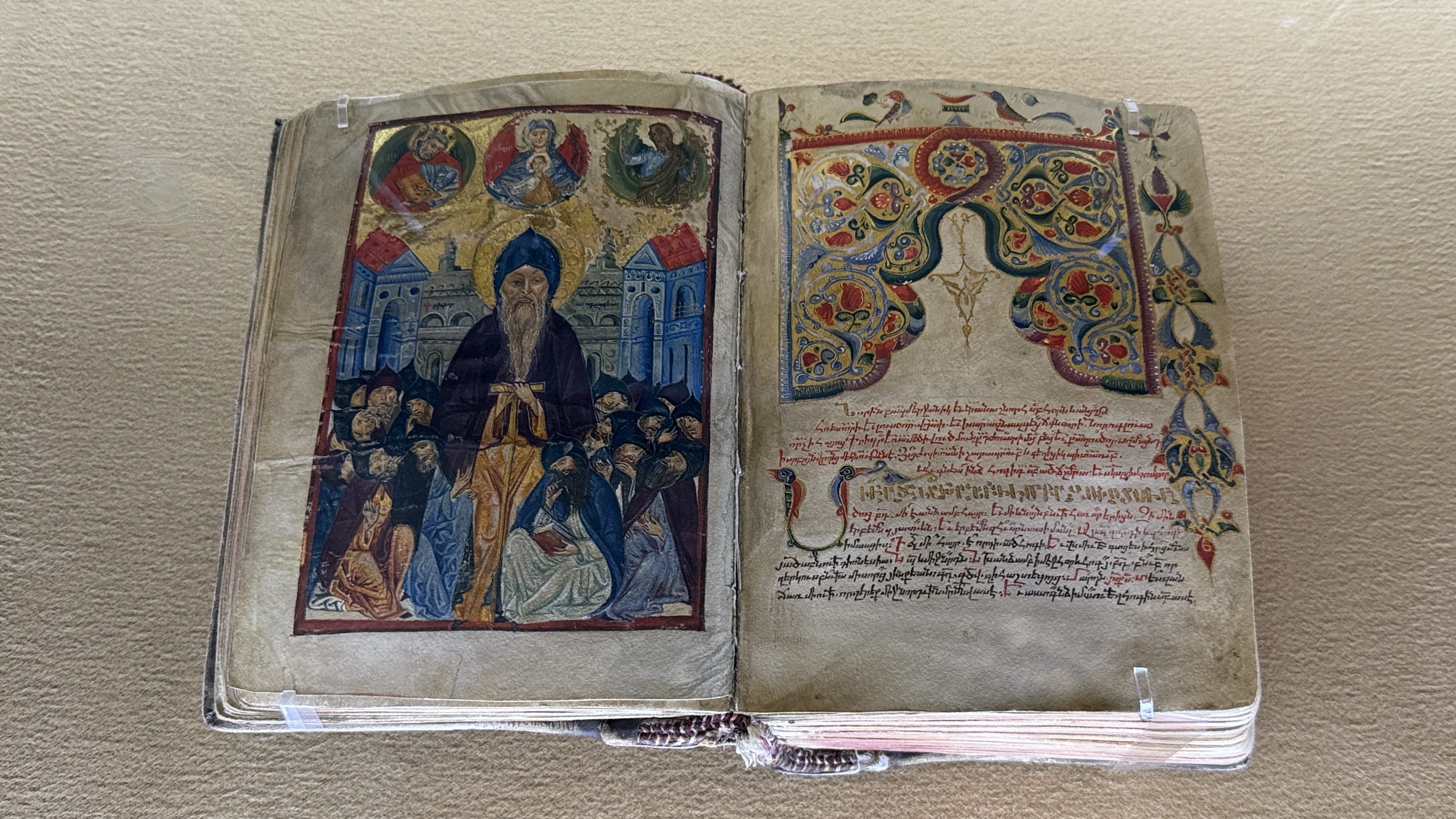
Later in the day, back in Yerevan, we visited the Matenadaran—a museum of ancient manuscripts. Out front stood a statue of Mesrop Mashtots, the man credited with creating the Armenian alphabet and preserving the language.
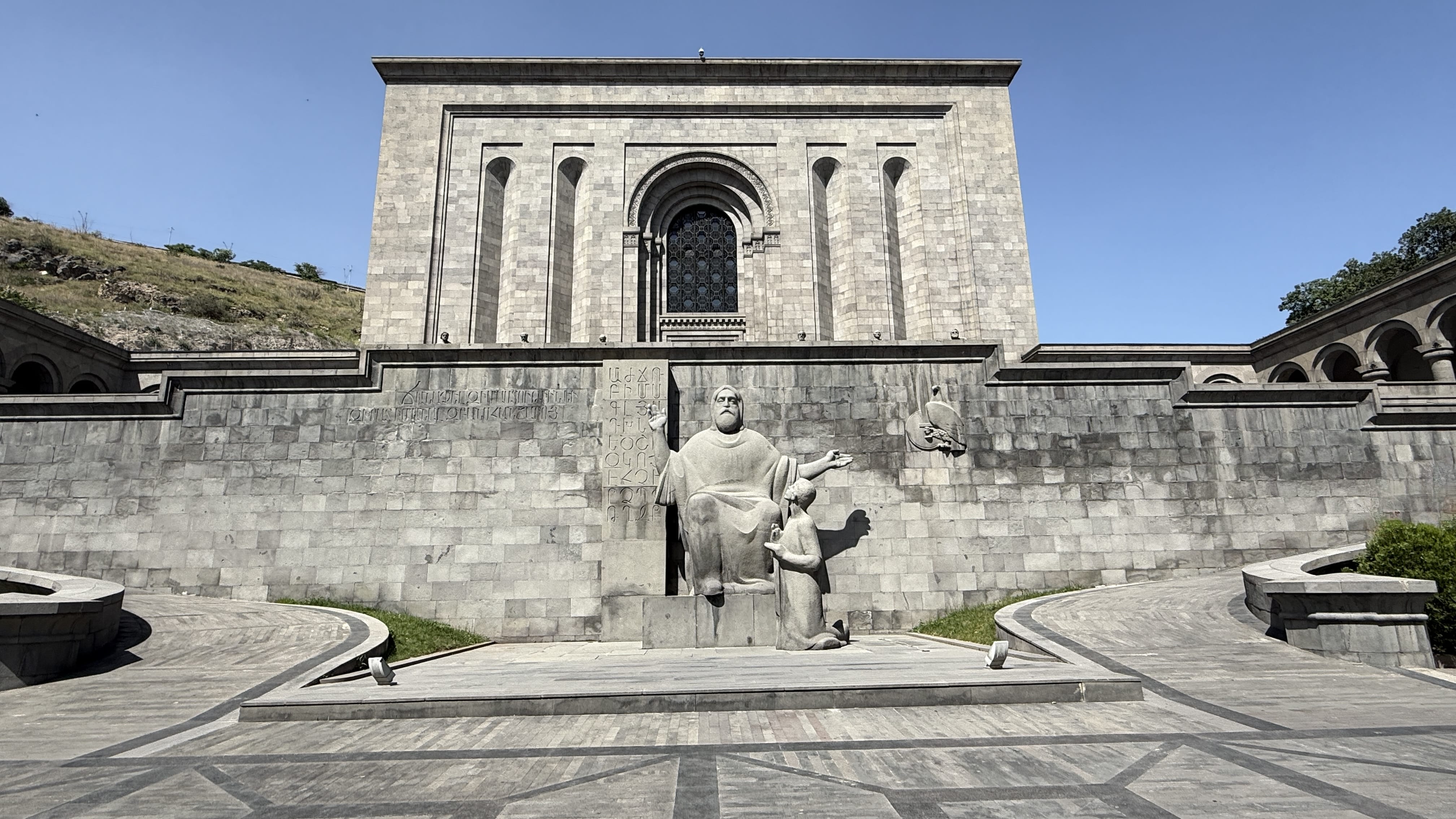
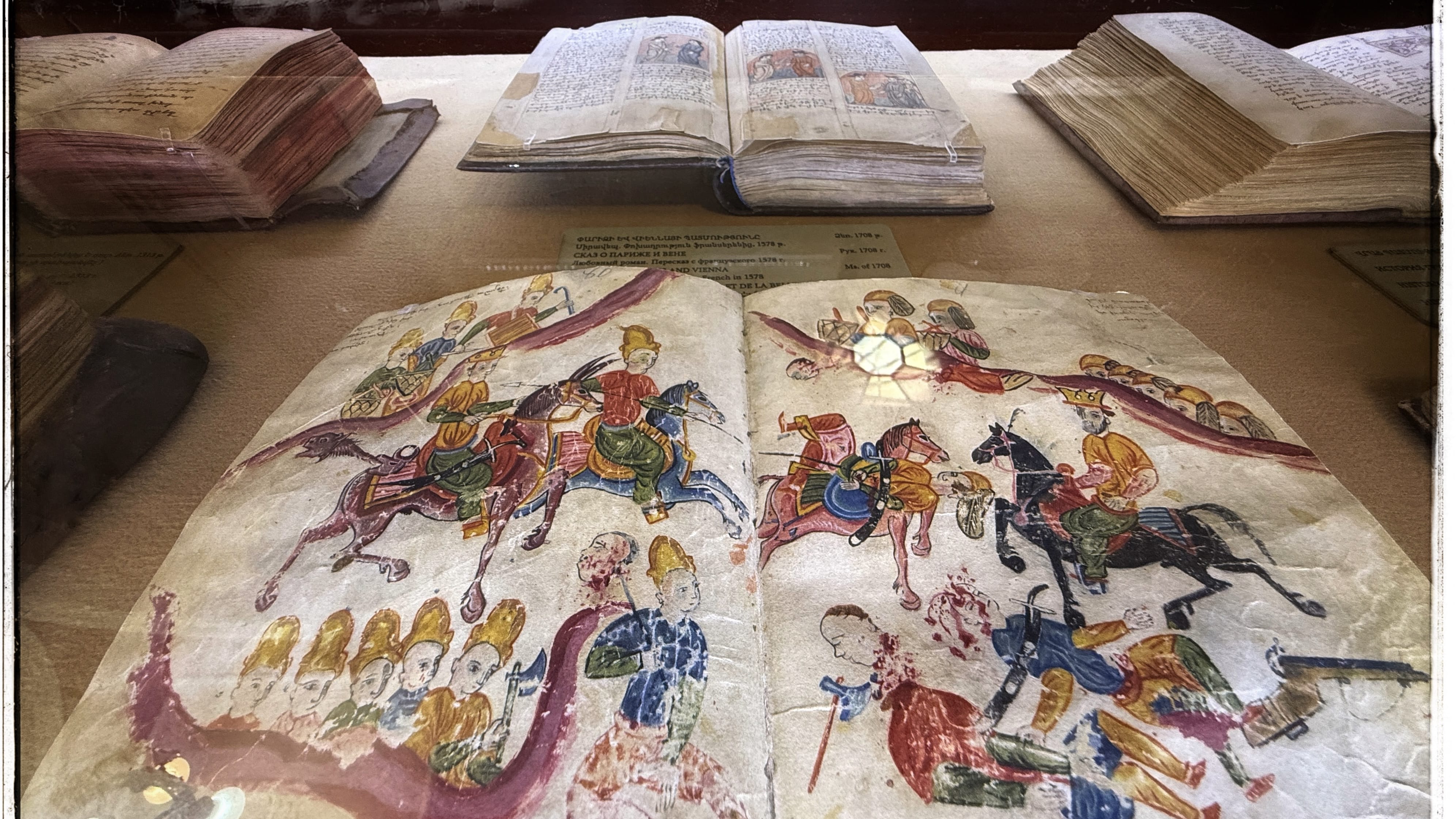
The collection is enormous—over 17,000 manuscripts—but what struck me most was the way they were displayed: open pages of tiny script, gold-leafed edges, and delicate illuminations still glowing with color. One manuscript from Geghard even mentioned the music school and named the woman who taught music there, which I thought was pretty remarkable.
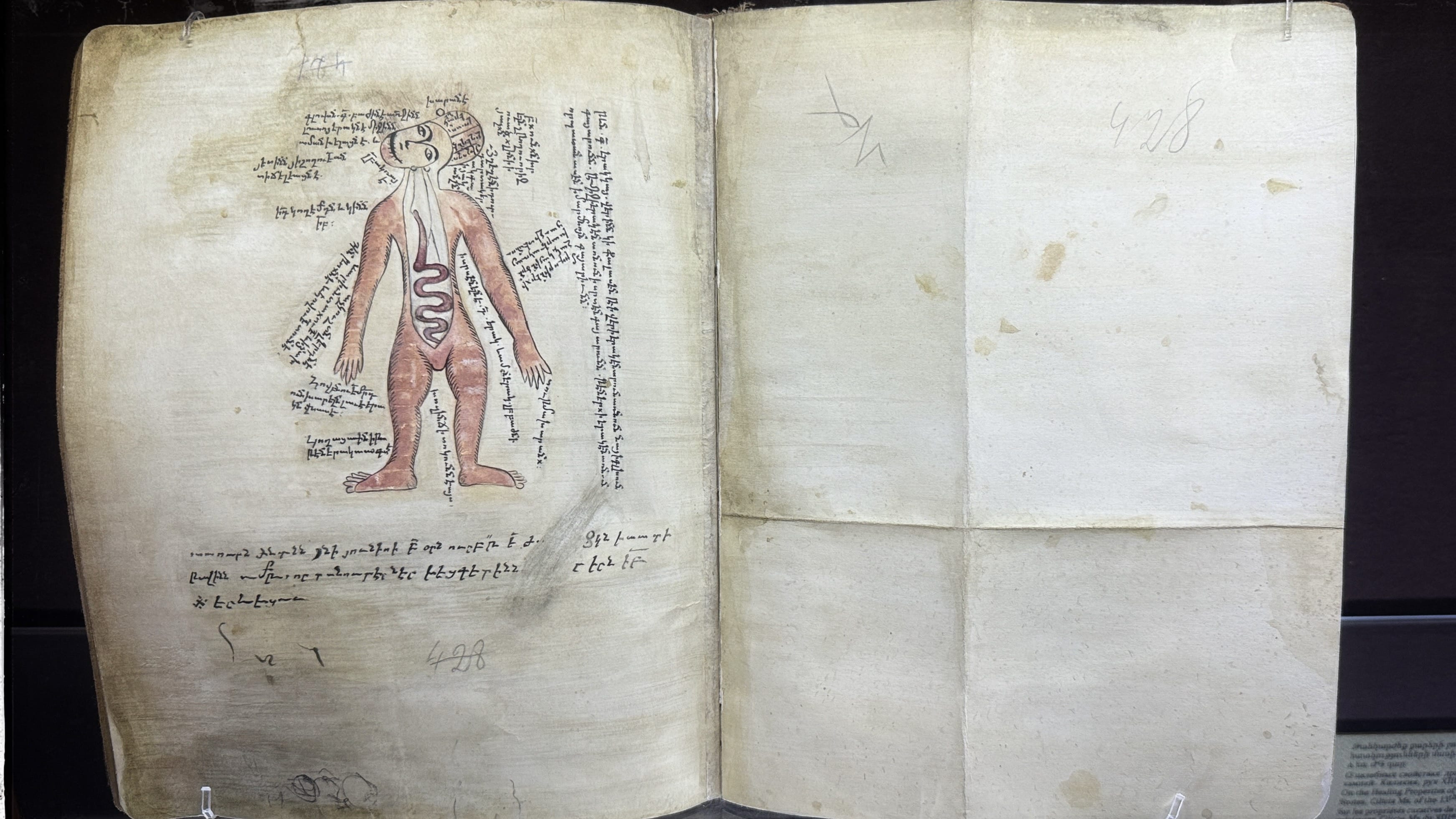
Some of the manuscripts were unbelievable in their detail and age. A volume on horse healing from 1298 was filled with careful drawings and notes. Another medical text from 1459 included an anatomical sketch of the human body—primitively rendered yet surprisingly modern in intent. Battle scenes stood out in vivid reds and golds, while saints and scholars sat framed by elaborate borders that still looked fresh centuries later.
Standing in front of them, it was hard to believe these books had survived invasions, earthquakes, and time itself—proof of Armenia’s long tradition of scholarship, art, and memory.
We ended the day at a Ararat brandy distillery, which felt like a fitting finish. Armenian brandy is a point of pride—Churchill was supposedly a fan—and after a few sips, I could see why. Even the younger ones were smooth, and the older ones had a quiet depth. We got a short tour and a very generous tasting.
Later that evening, our group met for dinner at Sherep, a restaurant in the heart of downtown that our guide had chosen. The food was delicious and beautifully presented—the perfect spot to close out not just our week in Armenia but three unforgettable weeks exploring the Caucasus. For me, though, the evening came with a tougher choice than I expected. All week I’d been passing the National Opera and Ballet Theatre in Yerevan, and that night they were performing Giacomo Puccini’s Tosca. Tickets were still available.
So I found myself torn—do I share one last meal with the people I’d been traveling alongside for nearly three weeks, or slip away to the opera? In the end, I chose dinner. Some were leaving that night, and I knew I wouldn’t see them again at breakfast. Saying goodbye felt more important.
But still… Tosca..
That morning, after breakfast at the Best Western Plus Congress Hotel, my trip officially ended. Some of the group had already left on early flights, others slipped away before I could say goodbye. After nearly three weeks traveling together across the Caucasus, it felt strange to part so quickly.
A couple of us, though, were lingering in Yerevan for an extra day. We agreed to meet up for dinner later that evening, a softer landing after so many goodbyes.
But for the first time in weeks, my day was wide open—no van, no guide, no schedule. Just me and the city.
You can read about it here → 24 Hours in Yerevan: Exploring Solo
Together, both parts of this travelogue make up my seven days in Armenia—through monasteries and manuscripts, markets and meals, heavy history and lighthearted dance. What I carried home wasn’t just the sights, but the way Armenia holds its past and present together. In the same day, you can stand in a ruined temple, listen to a choir echo through a cave church, and share homemade bread with strangers.
It’s a country still healing, still vibrant, and unforgettable. I’d go back in a heartbeat.
7 Days in Armenia: Yerevan & Southern Monasteries (Part 1)
24 Hours in Yerevan: Exploring Solo
7 Days in Georgia – Part 1: Tbilisi, Sighnaghi & Kutaisi (Days 1–3)
7 Days in Georgia – Part 2: Kutaisi, Mestia, Ushguli & Tbilisi (Days 4–7)
Tbilisi Sulfur Bath Experience: Soaking in History

Hi, I’m JoAnne—writer, wanderer, and lover of places that surprise me. I’ve traveled to 60+ countries (and counting), usually with a camera in one hand and a notebook in the other. I’m drawn to mosaics, markets, and mountains, and I write to remember what moved me. When I’m not traveling, I’m working on my blog Travels Afoot, trying new creative projects, or planning my next adventure.