If you’re starting from the beginning of my Central Asia trip, start here: 2 Days in Almaty, then 7 Days in Kyrgyzstan: From Bishkek to Osh Along the Silk Road.
We left Osh in the late morning, boarding our van and heading toward the Osh–Andijon border crossing (Dostuk/Doʻstlik). That marked our exit from Kyrgyzstan — but it wasn’t a straight shot into Tajikistan. Because of closures and ongoing disputes along the Kyrgyz–Tajik border, we had to detour south through Uzbekistan before looping back in. It made for a long travel day: three countries crossed, backtracked, and reentered, with most of it spent on the road.
Once we cleared customs, we drove through the Fergana Valley, a fertile plain stretching across Uzbekistan, Kyrgyzstan, and Tajikistan. For centuries, this valley was one of the Silk Road’s most important corridors, with caravans carrying silk, spices, and produce between China, Persia, and beyond. Today it’s just as known for its tangled borders and periodic disputes. Still, the landscape itself was beautiful — fields rolling toward the foothills, villages strung along the road, and bazaars that felt like the lifeblood of every town.
We stopped for lunch in Rishtan, sitting at outdoor tables beside the Great Fergana Canal and digging into a generous Uzbek feast — platters of plov, fresh bread, salads, tea, and fruit laid out family-style. After hours on the road, it was exactly what we needed.
From there, we continued on toward Kokand, once the capital of the Kokand Khanate and an important Silk Road hub.
In Kokand, we visited the Palace of Khudayar Khan, a building so lavish it almost felt unreal — tiled arches, painted ceilings, carved wooden doors, every inch decorated. Inside, we even saw artists sketching traditional motifs, carrying forward designs that have been part of this region for centuries. Afterwards, we wandered Kokand’s central bazaar, buzzing with life. Stalls overflowed with fruits, nuts, and spices, the air thick with the smell of fresh bread. Women sold handwoven carpets, and in one corner an elderly potter shaped clay with a practiced hand. It wasn’t staged or curated — just everyday life unfolding around us.

By afternoon we pushed west, finally reaching the Uzbekistan–Tajikistan border at Oybek (Bekabad), the main crossing between the two countries. The long waits, extra stamps, and repeated searches quickly explained why the day kept stretching on. By the time we officially entered Tajikistan, it was around 4 p.m., making it a true three-country day: breakfast in Kyrgyzstan, lunch in Uzbekistan, and dinner ahead in Tajikistan. Border formalities alone had essentially eaten up a full travel day.
Not far into Tajikistan, in the Ghafurov District, the mood shifted. We passed houses gutted by fire — walls still standing but hollow — entire stretches abandoned. These were the scars of the April 2021 border clashes between Kyrgyzstan and Tajikistan, a short but violent conflict over a water intake facility that left dozens dead and thousands displaced. Seeing it in person was humbling and unsettling. This wasn’t distant history or something preserved behind glass — it was right there along the road, a reminder of how quickly ordinary life can change.
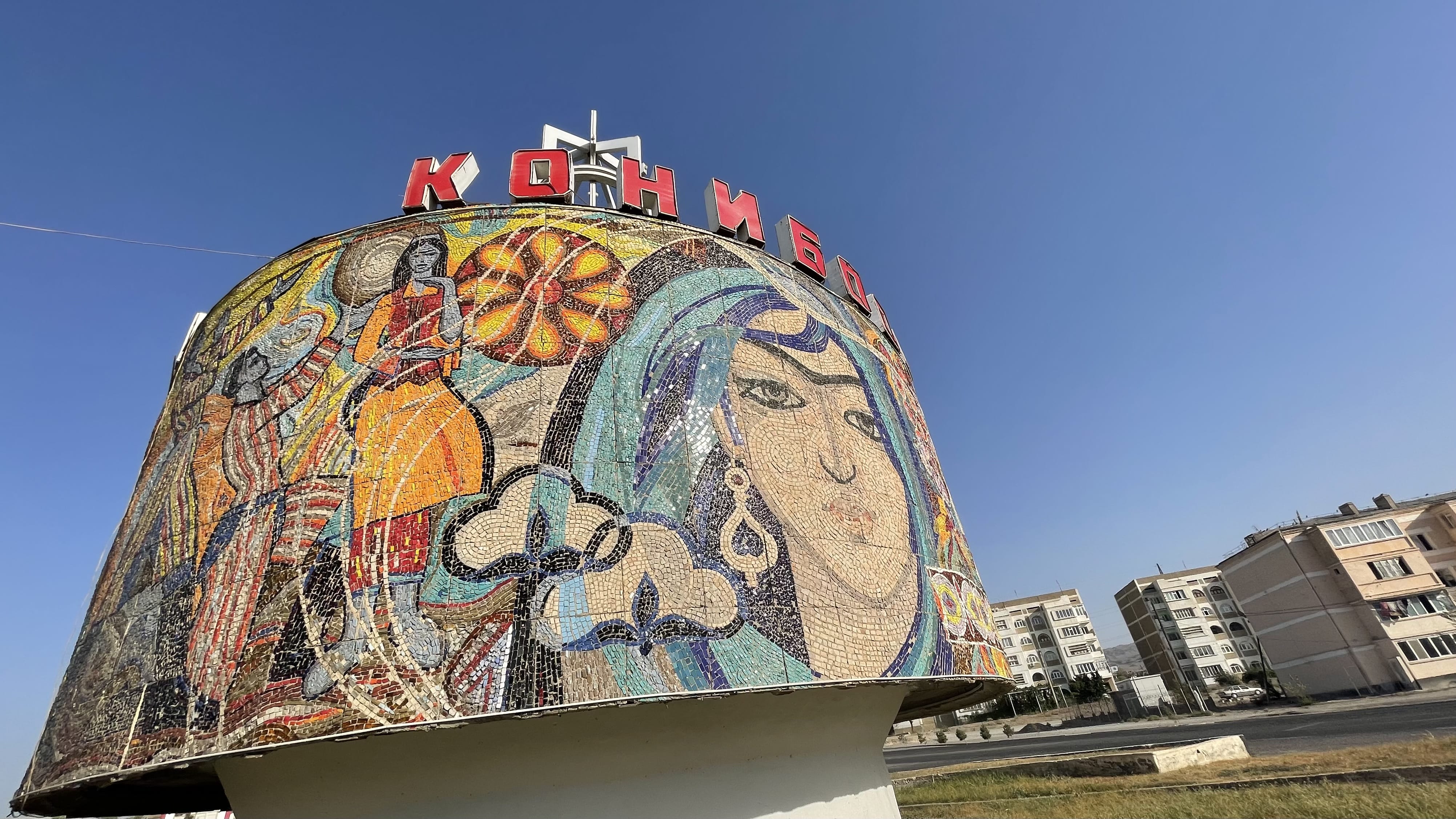
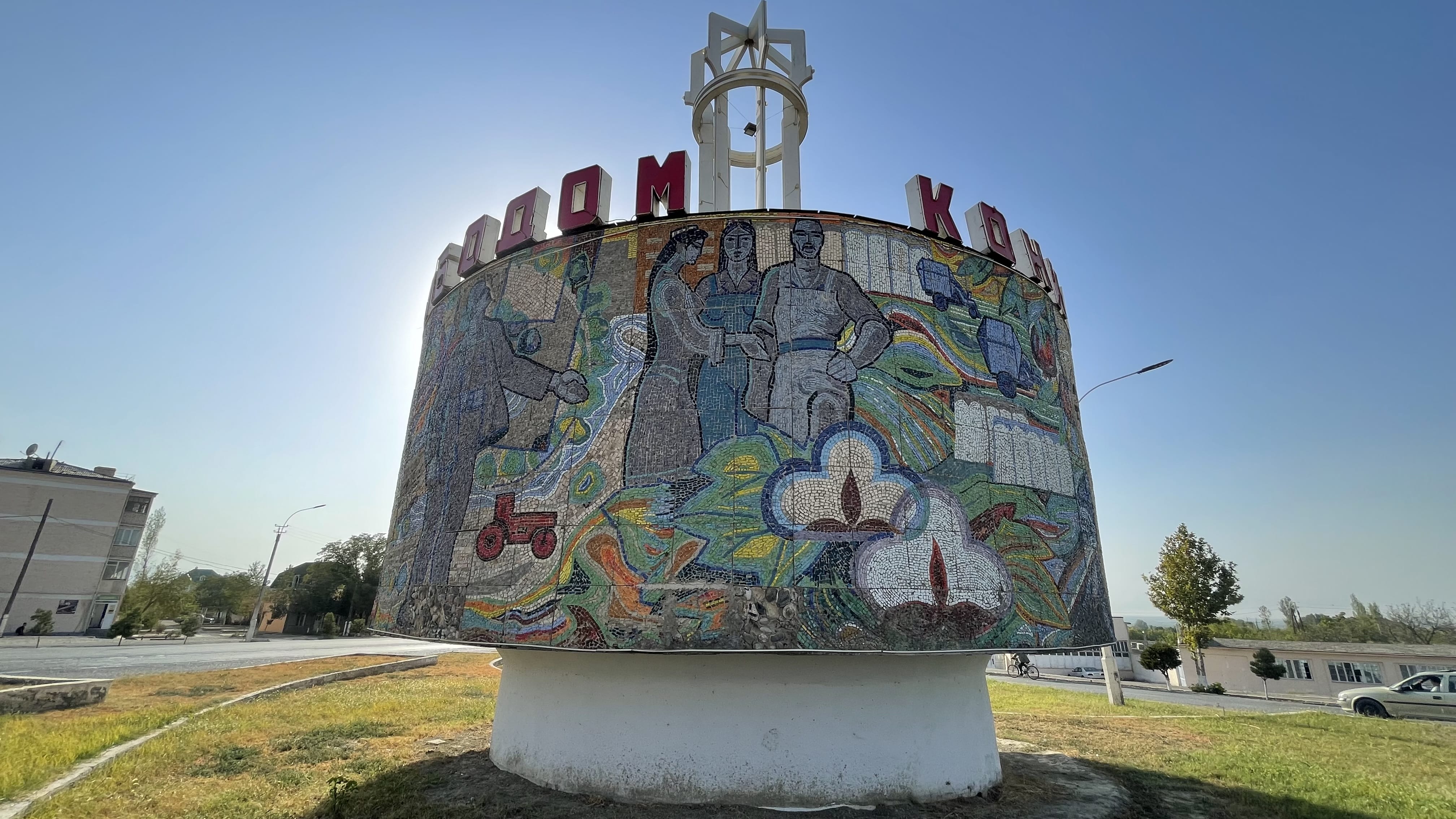
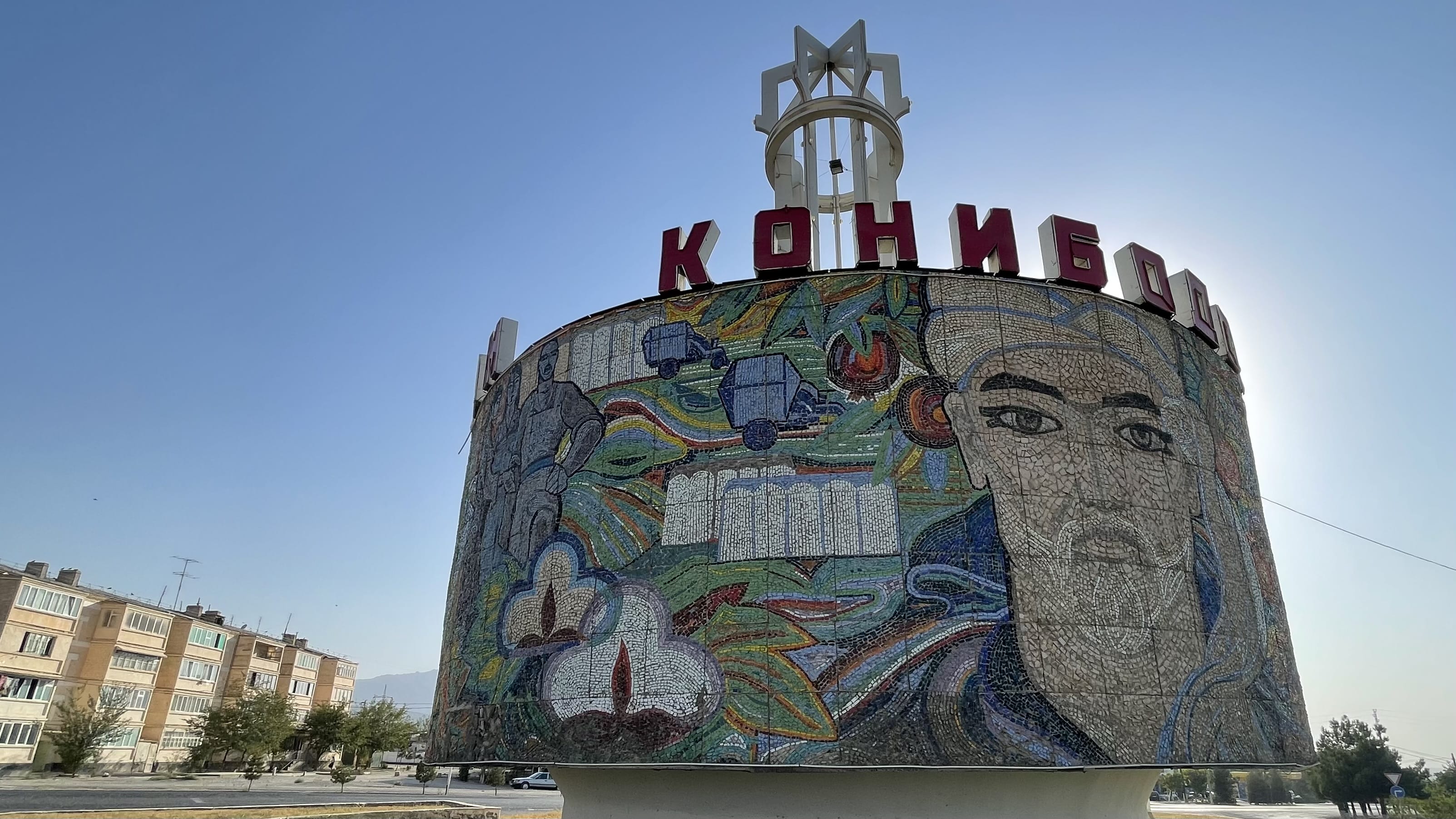
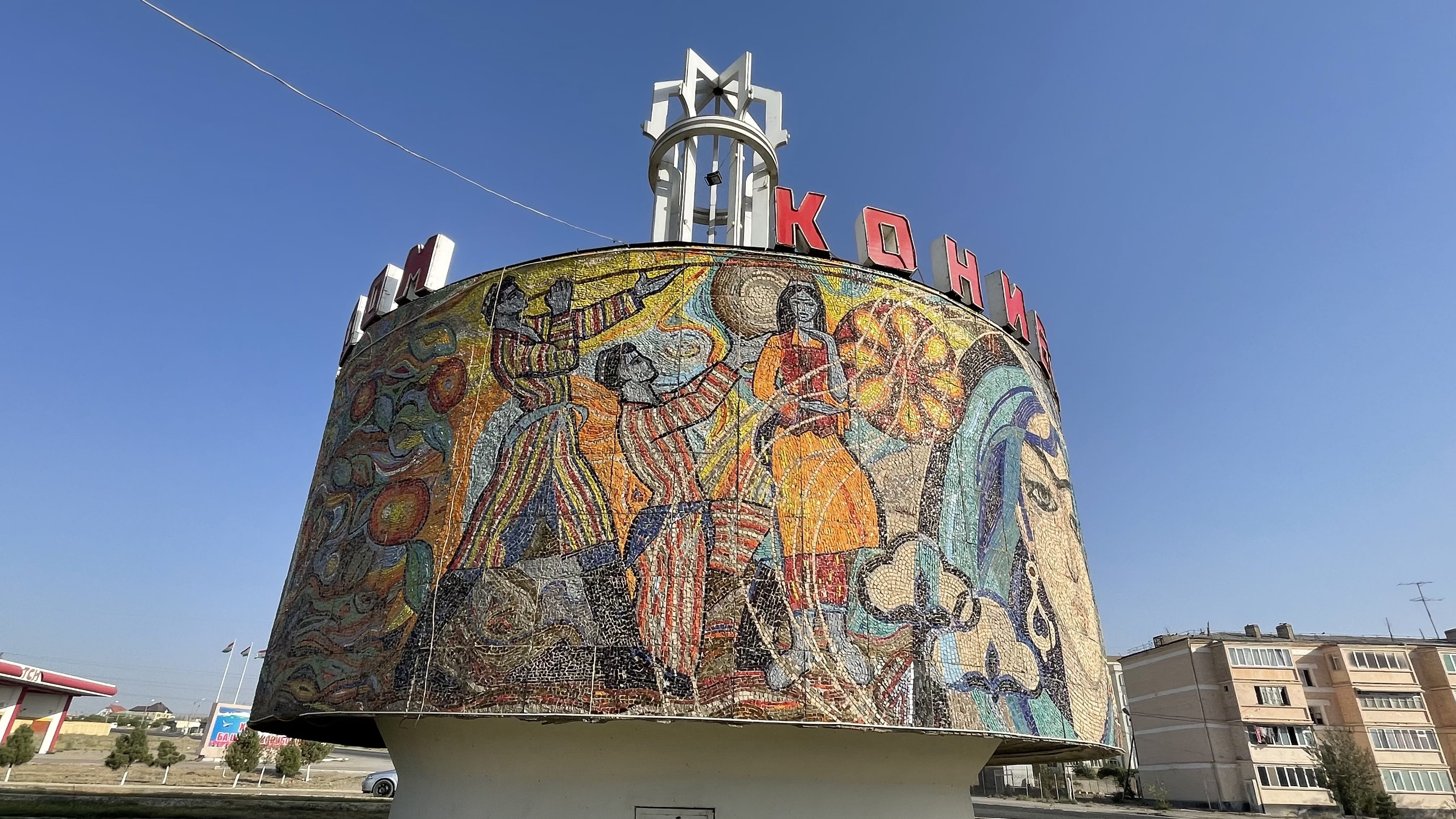
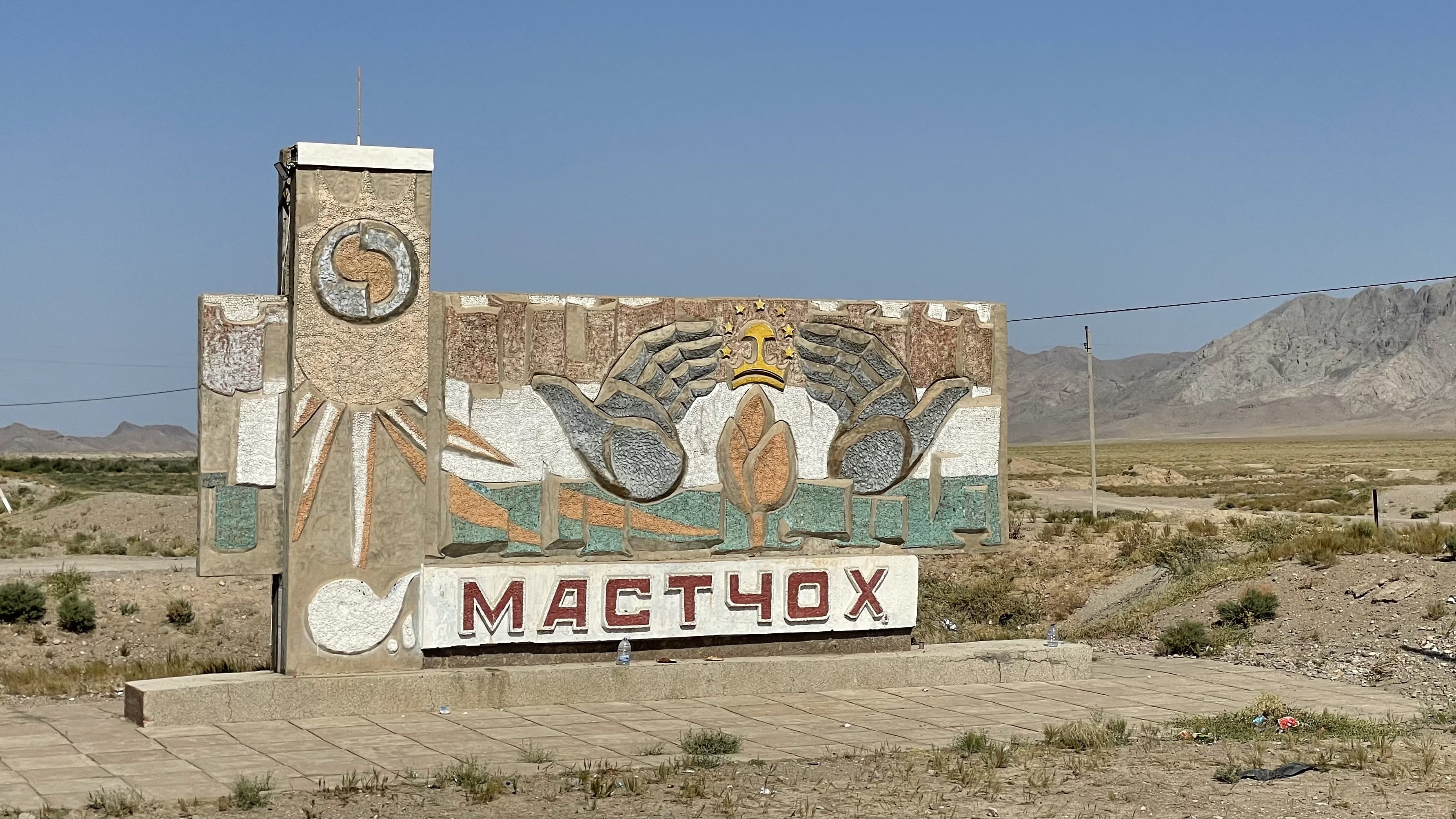
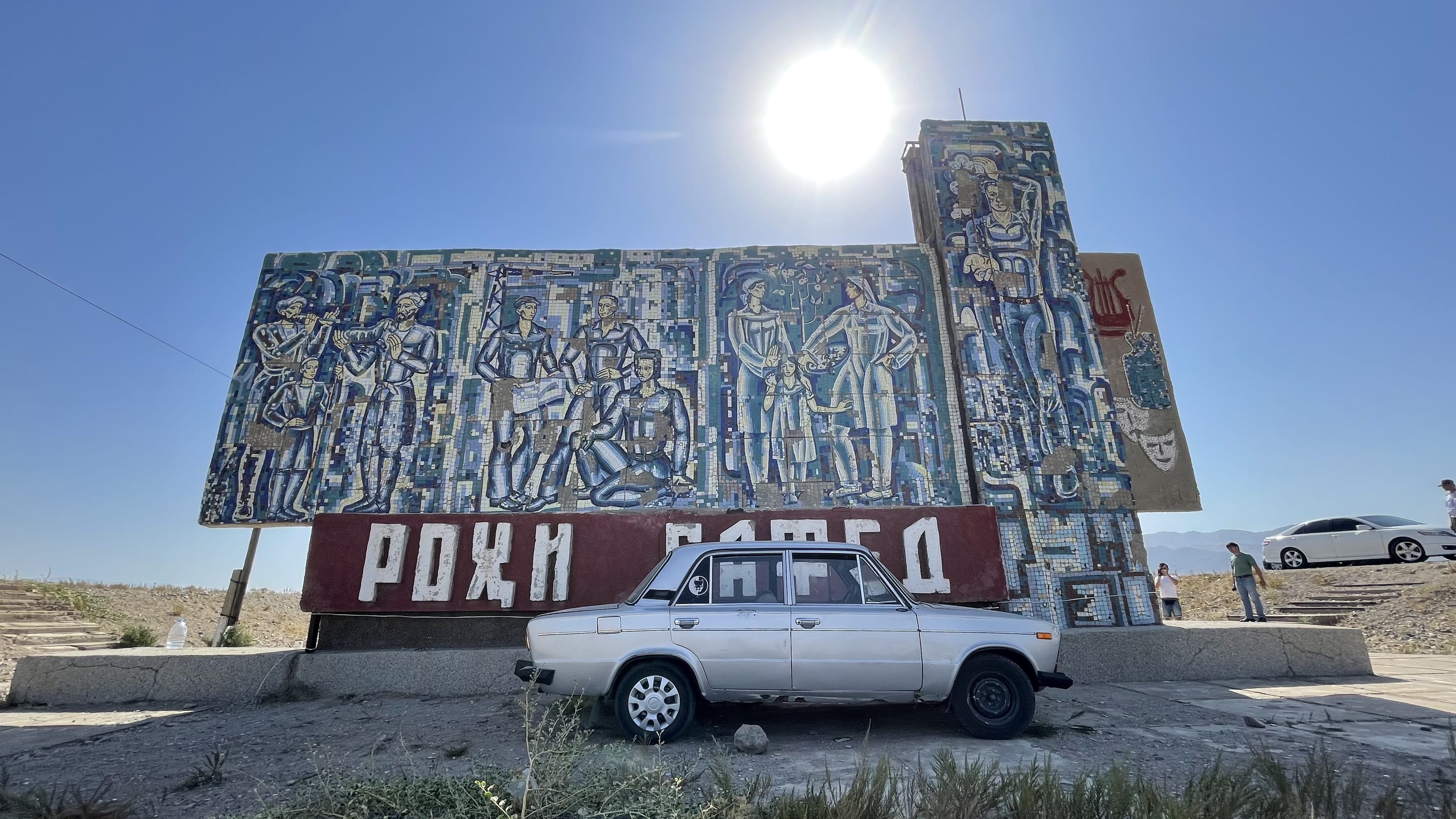
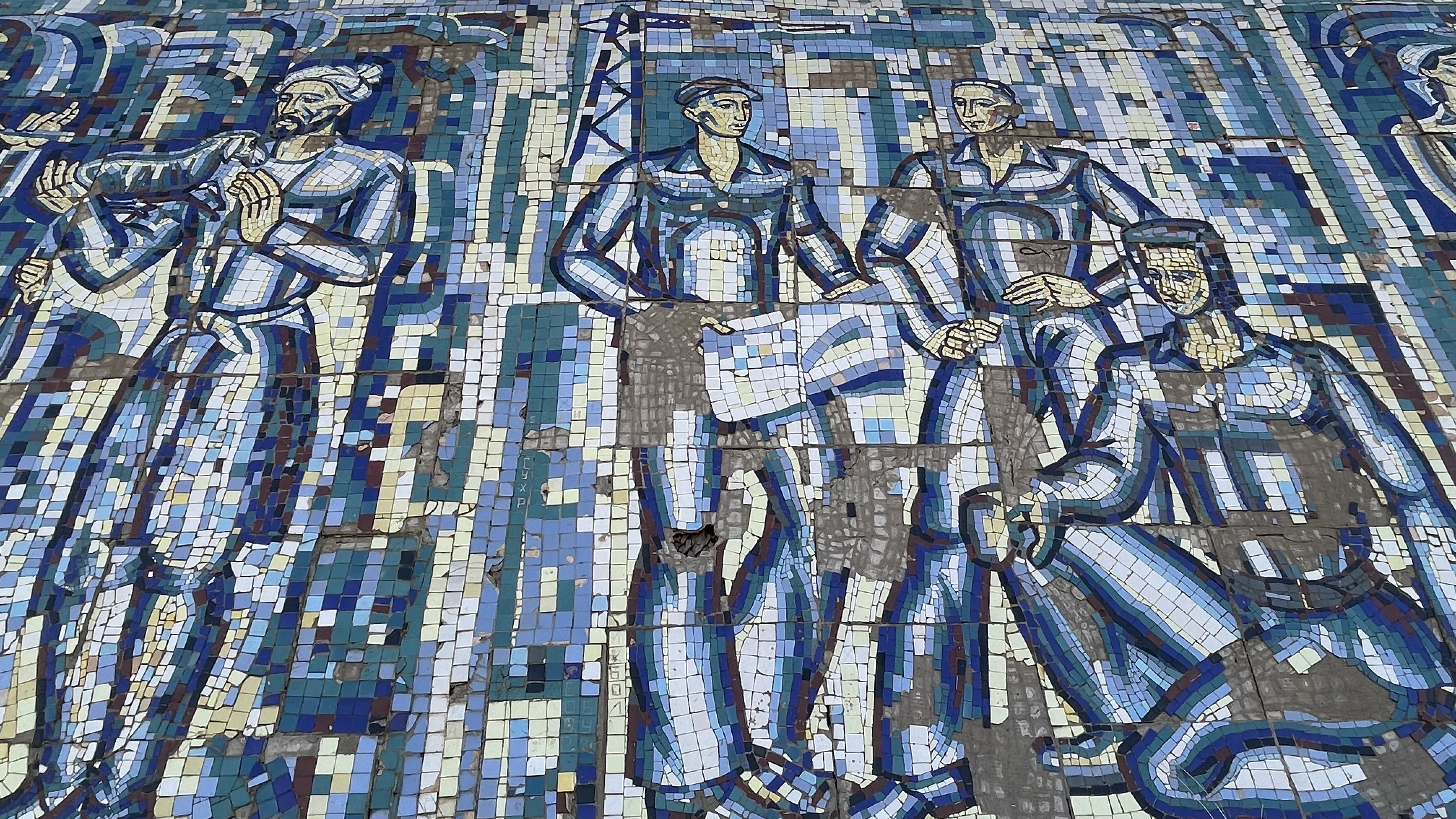
Before reaching Khujand, we made one more stop: a striking 360-degree Soviet mosaic, an unexpected burst of color at the end of an already long day.
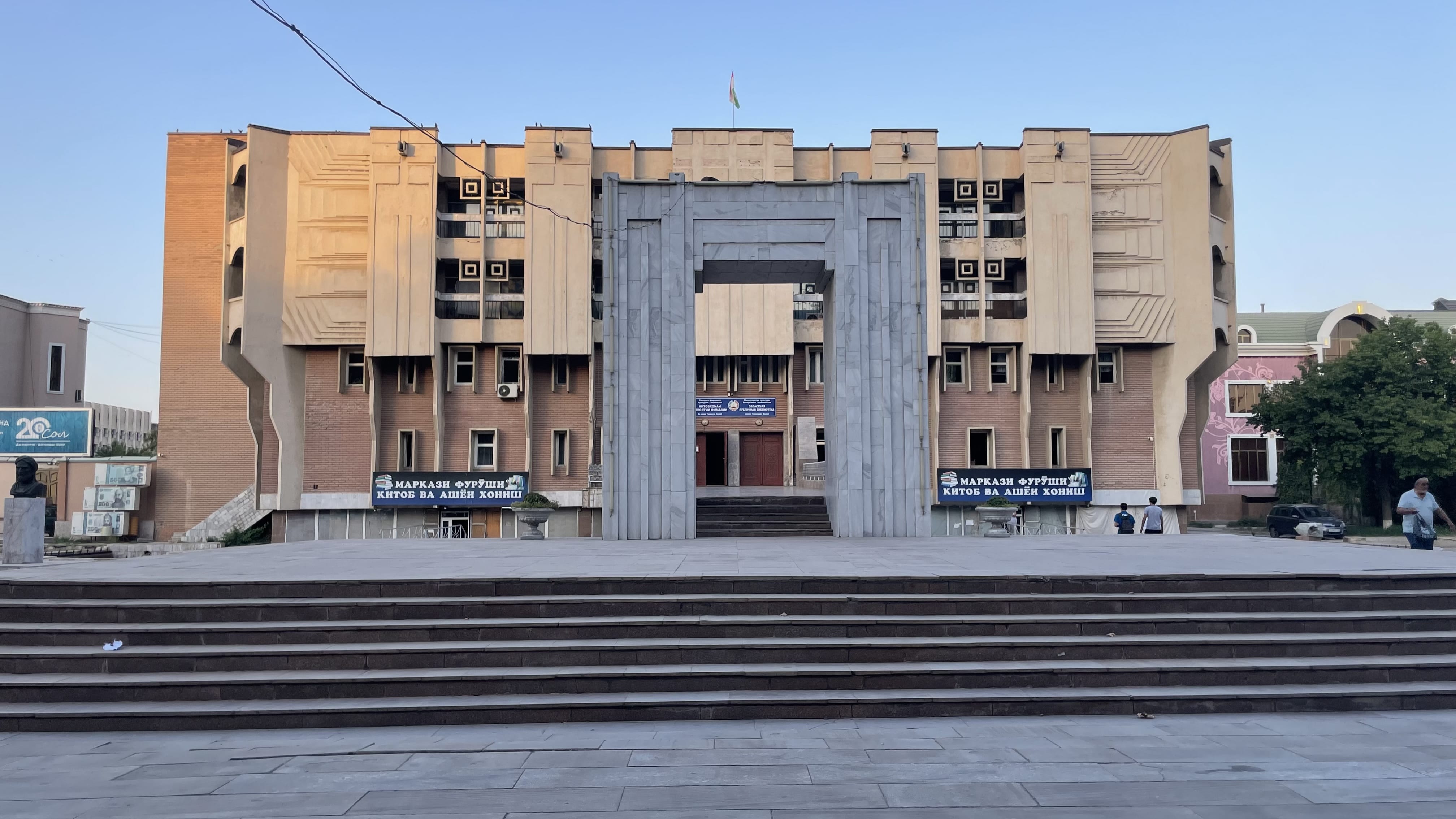
Since the hotel restaurant was unavailable, we headed out instead and ended up in the square in front of the Khujand Fortress Museum. The space was lively — a temporary stage had been set up on the wide paved terrace, and groups were dancing there while families gathered around to watch. People lingered, drifted in and out, and the whole square felt like an evening meeting place rather than a tourist stop.
By the time we finally arrived in Khujand, nearly eight hours after leaving Osh, it was late. We checked into the Khujand Deluxe Hotel, only to find that the restaurant we’d been counting on was closed to the public — fully booked for a wedding. An anticlimactic ending, maybe, but somehow fitting. The day had been a mix of feast, beauty, exhaustion, and heartbreak — an introduction to Tajikistan that felt as layered and complicated as the region itself.
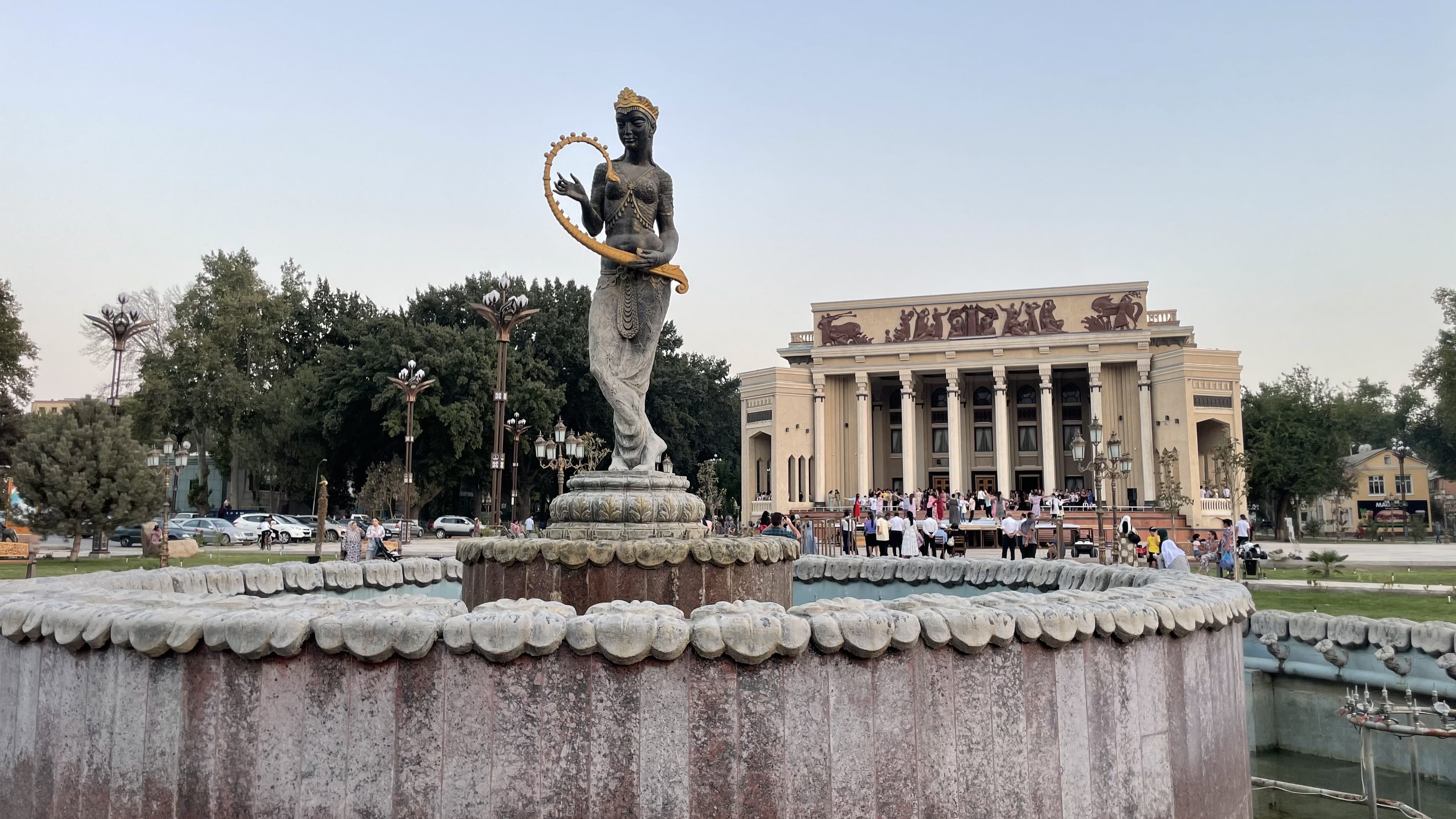
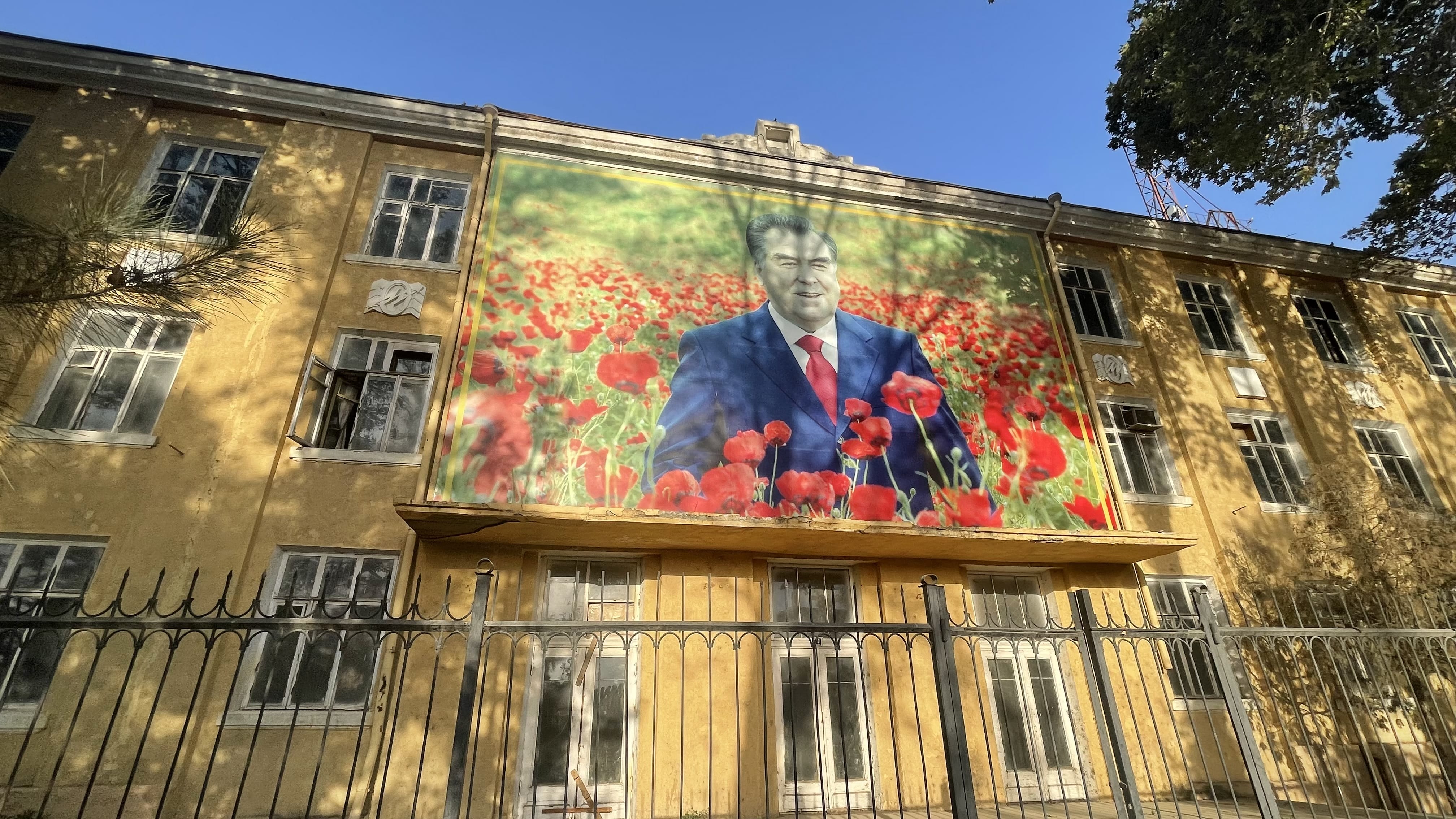
As we walked around, I couldn’t help but notice the layers of the city — Soviet-era buildings, a few leftover statues, and then, everywhere, portraits of President Emomali Rahmon. His image appeared on banners, posters, and even illuminated on buildings. It was impossible to miss and said a lot about the atmosphere of the city.
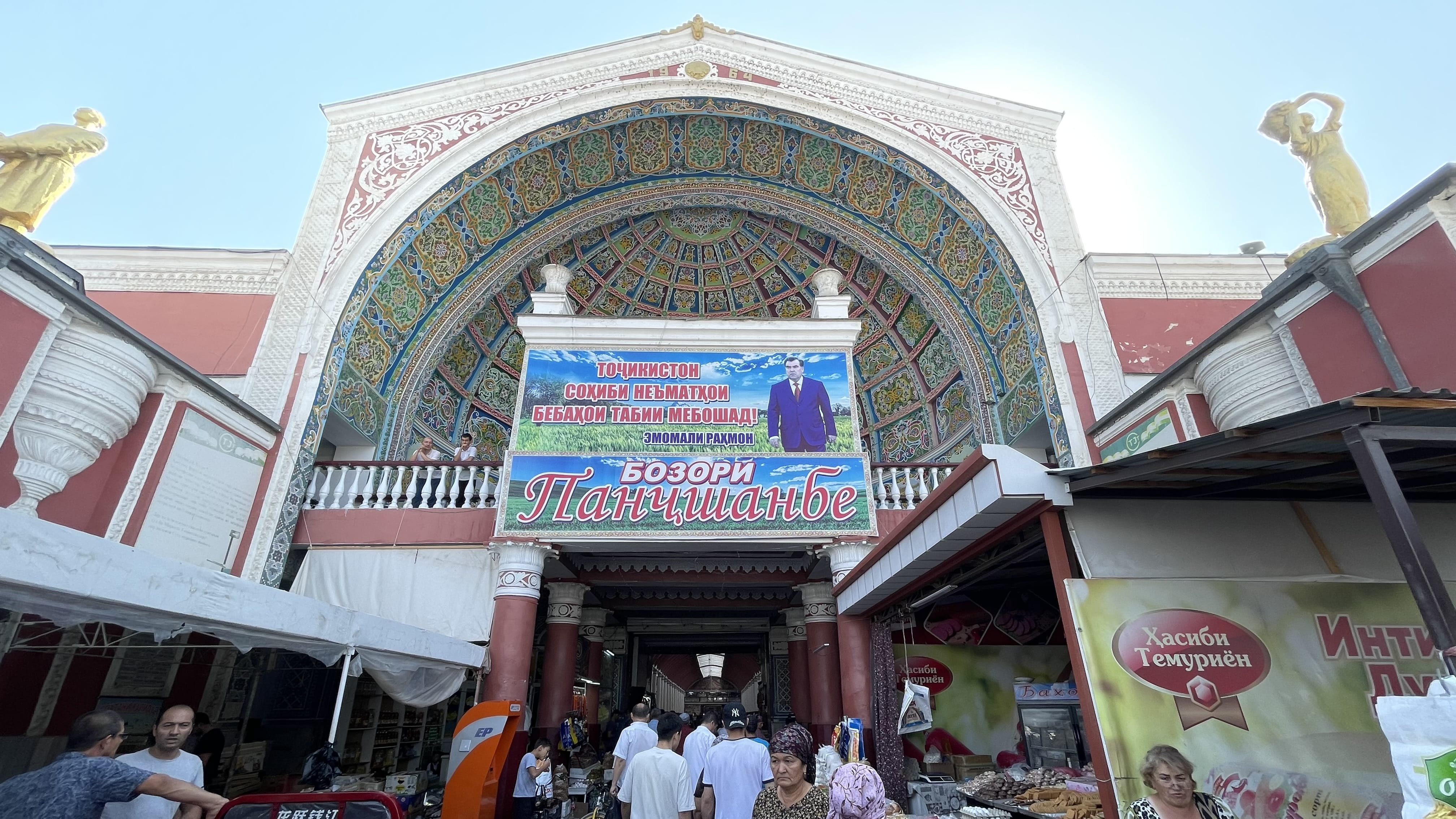
The day started at Panjshanbe Bazaar, Khujand’s huge central market and one of the oldest in Central Asia. It has long been a trading hub, part of the Silk Road network that once moved silk, spices, and grain across this valley. Even today, it feels like the city’s beating heart.
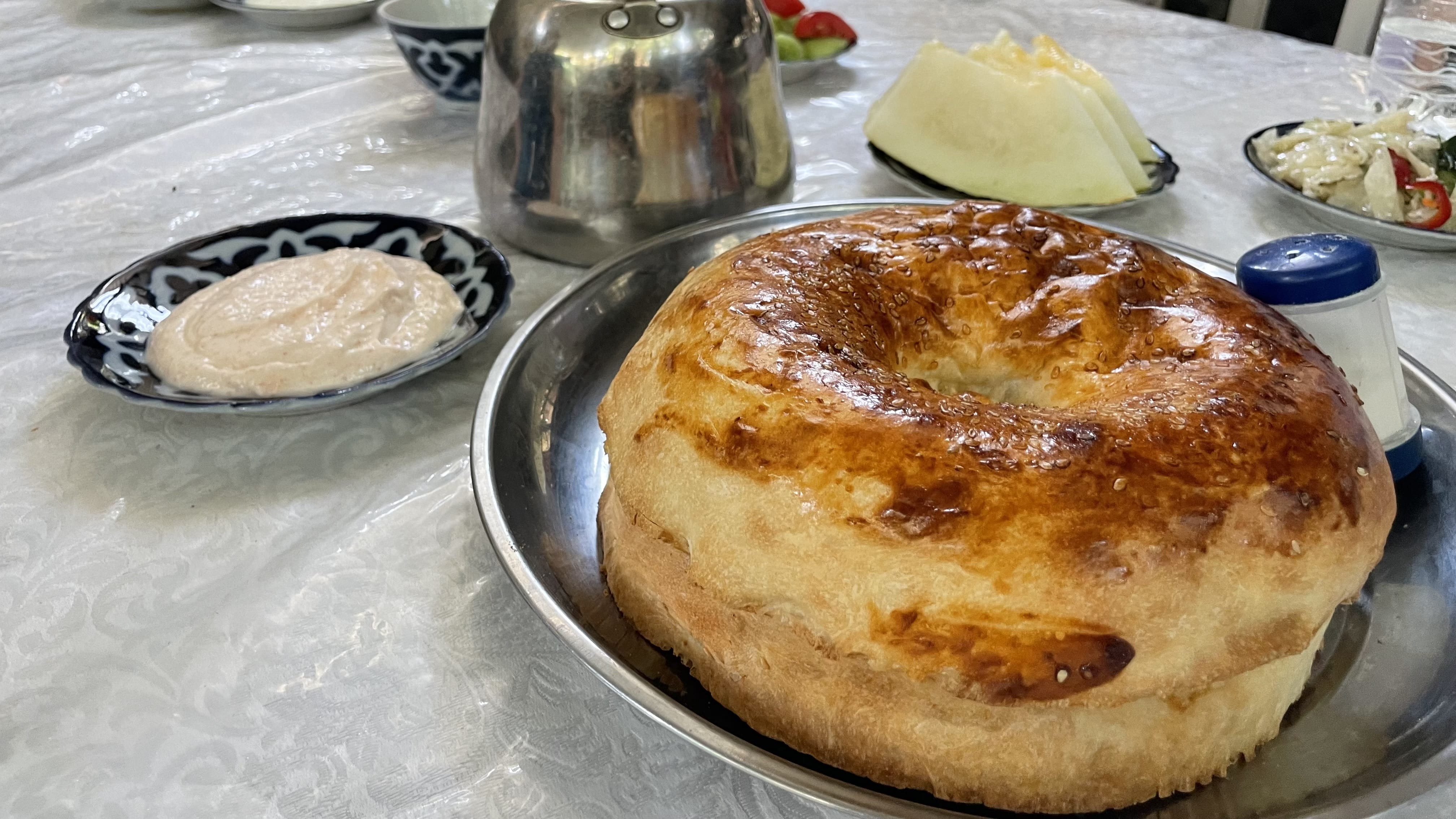
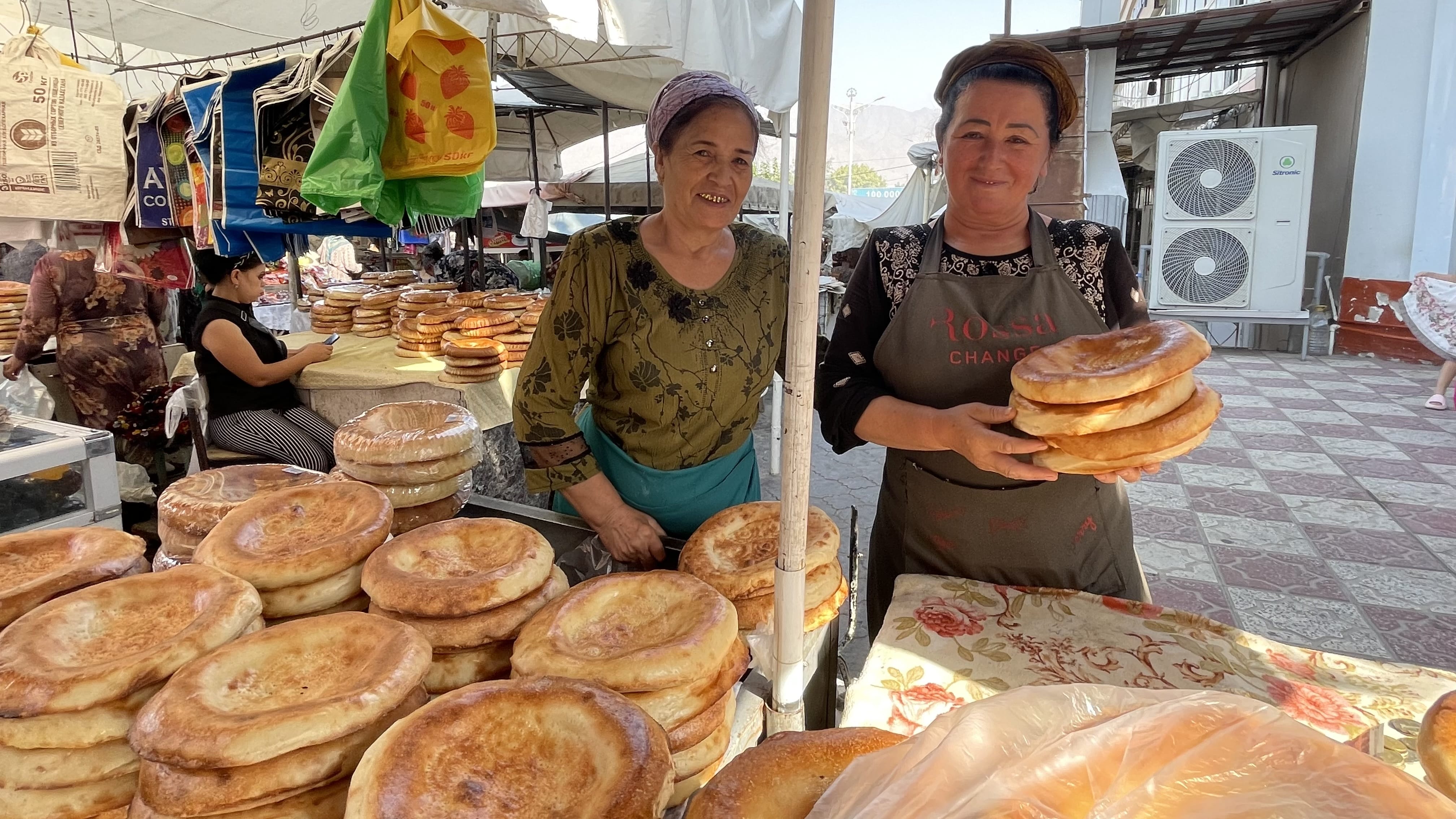
The building itself is striking — a pink-and-lime neoclassical structure from the 1960s, with arched entrances and long interior aisles. Inside, though, it was the bread that completely stole my attention. There wasn’t just one kind — there were dozens.
Large round non stamped with intricate patterns, flatter loaves with deep indentations, thicker breads brushed with oil, others sprinkled with sesame or nigella seeds. Some were pale and soft, others deeply golden and blistered from the heat of the oven. Each one looked slightly different, like a signature rather than a standard recipe.
On the west side of the food bazaar, near the fruit stalls, we found a bakery where men were pulling bread straight from hot tandoor ovens with long paddles. Trays of patterned loaves stacked higher and higher as customers came and went, the rhythm of baking and selling moving at a steady pace.
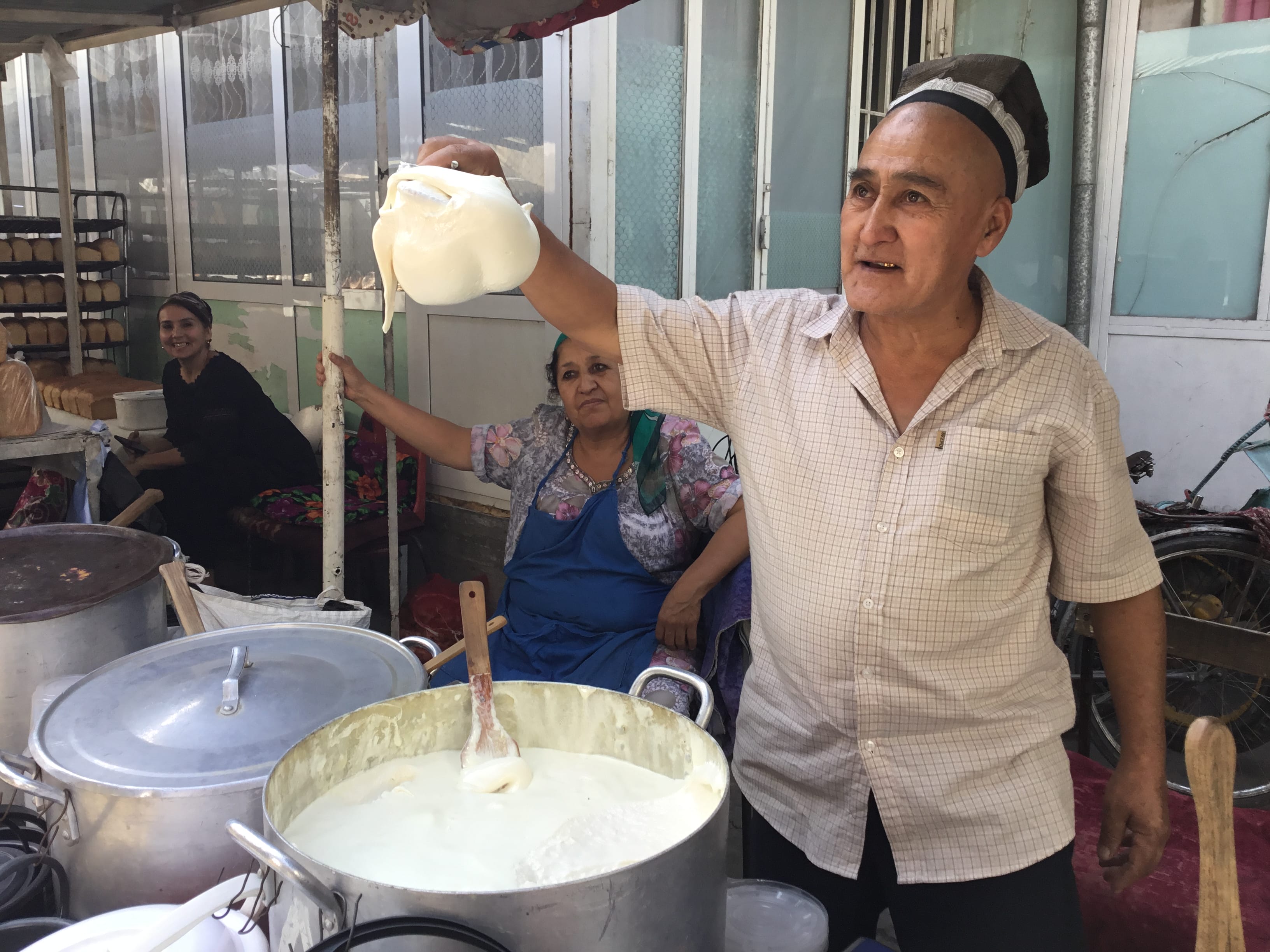
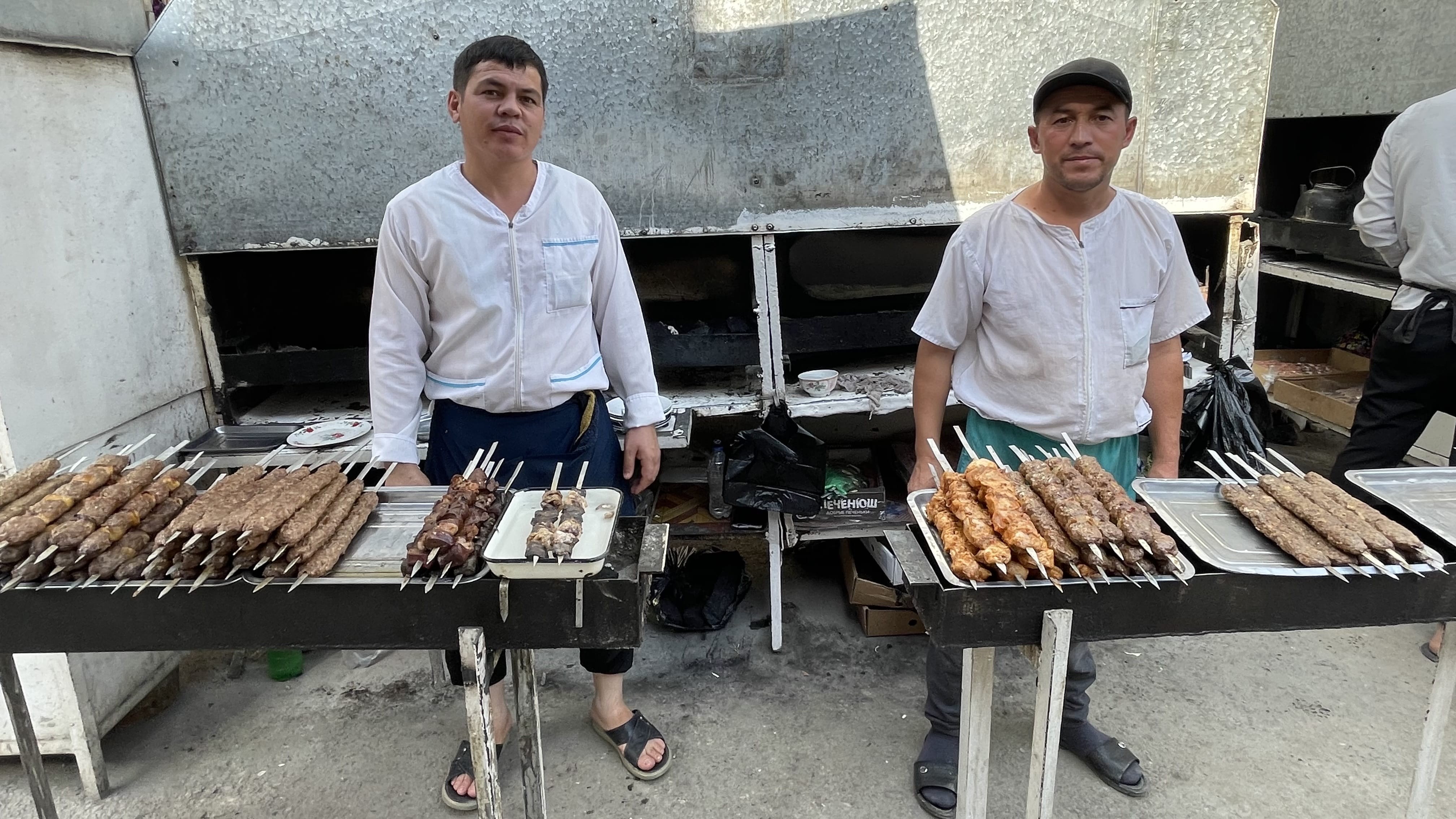
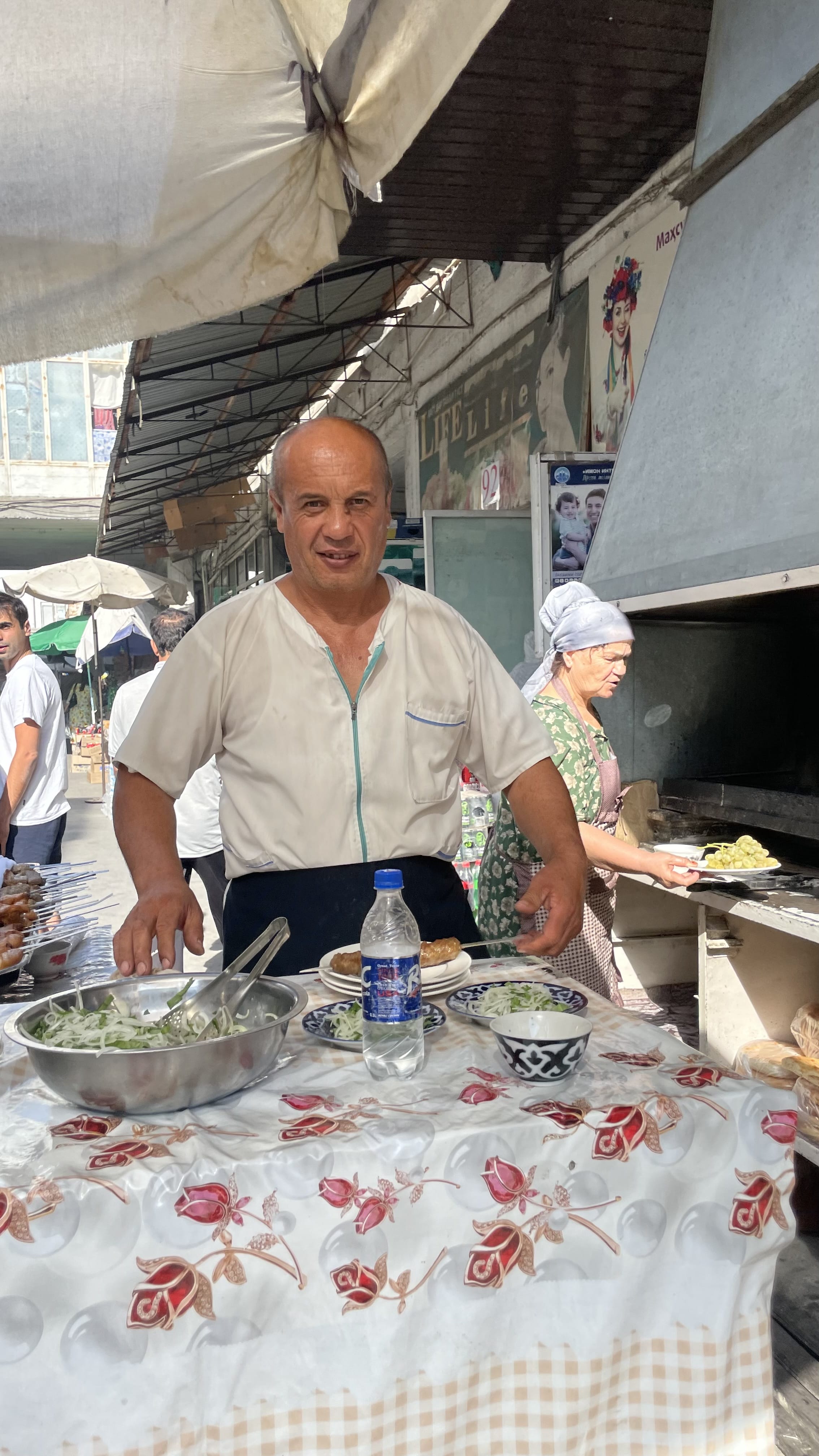
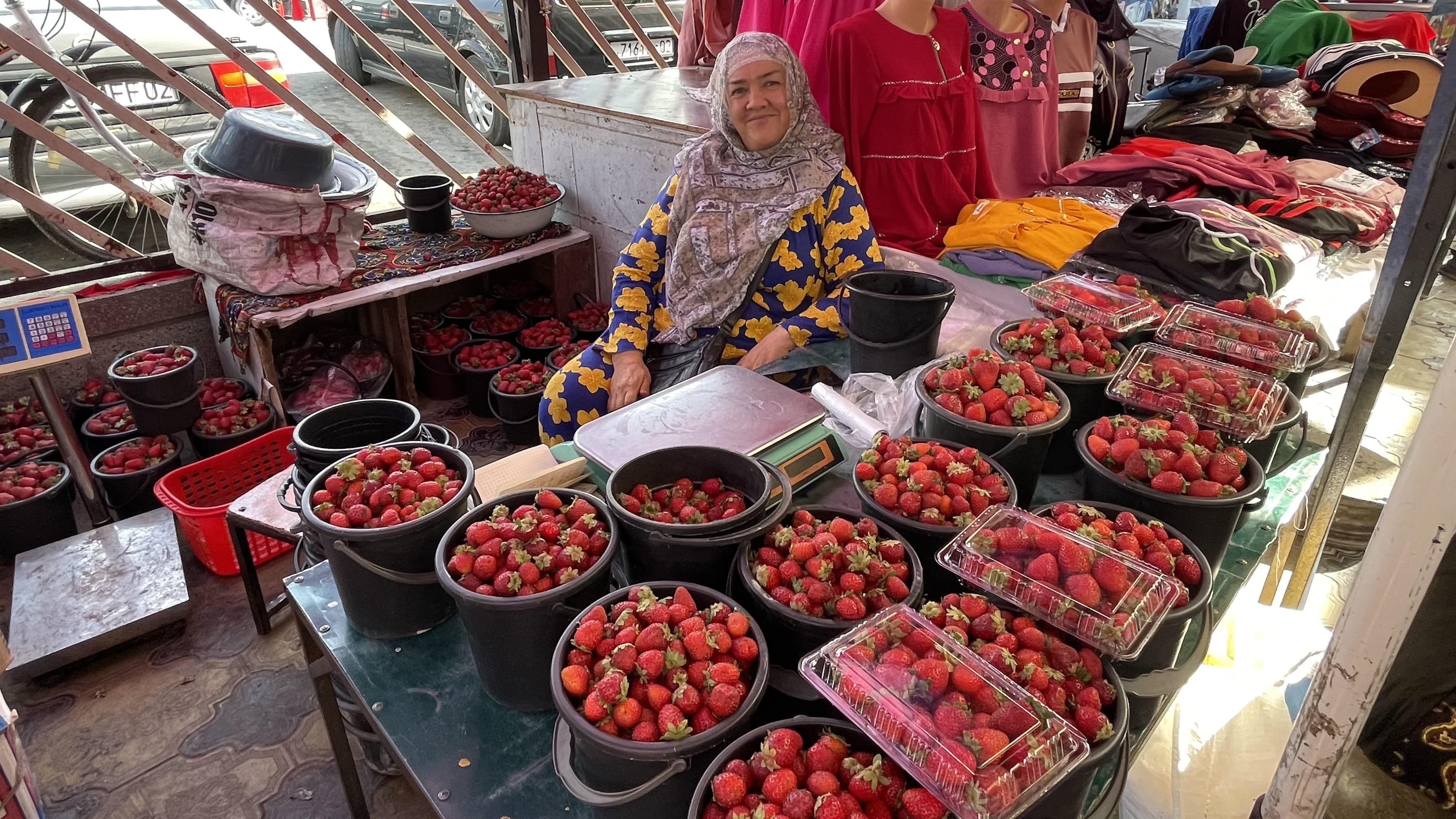
Every corner of the bazaar had its own energy. Pyramids of spices in reds and yellows. Men grilling skewers of meat over hot coals. Fresh cheese being shaped at nearby stalls. And everywhere you turned, more bread — stacked high, laid out on cloths, tucked beside fruit and cheese stalls — each vendor offering their own version. The strawberries caught my eye too: oversized, bright red, and impossibly sweet, the kind that taste like summer.
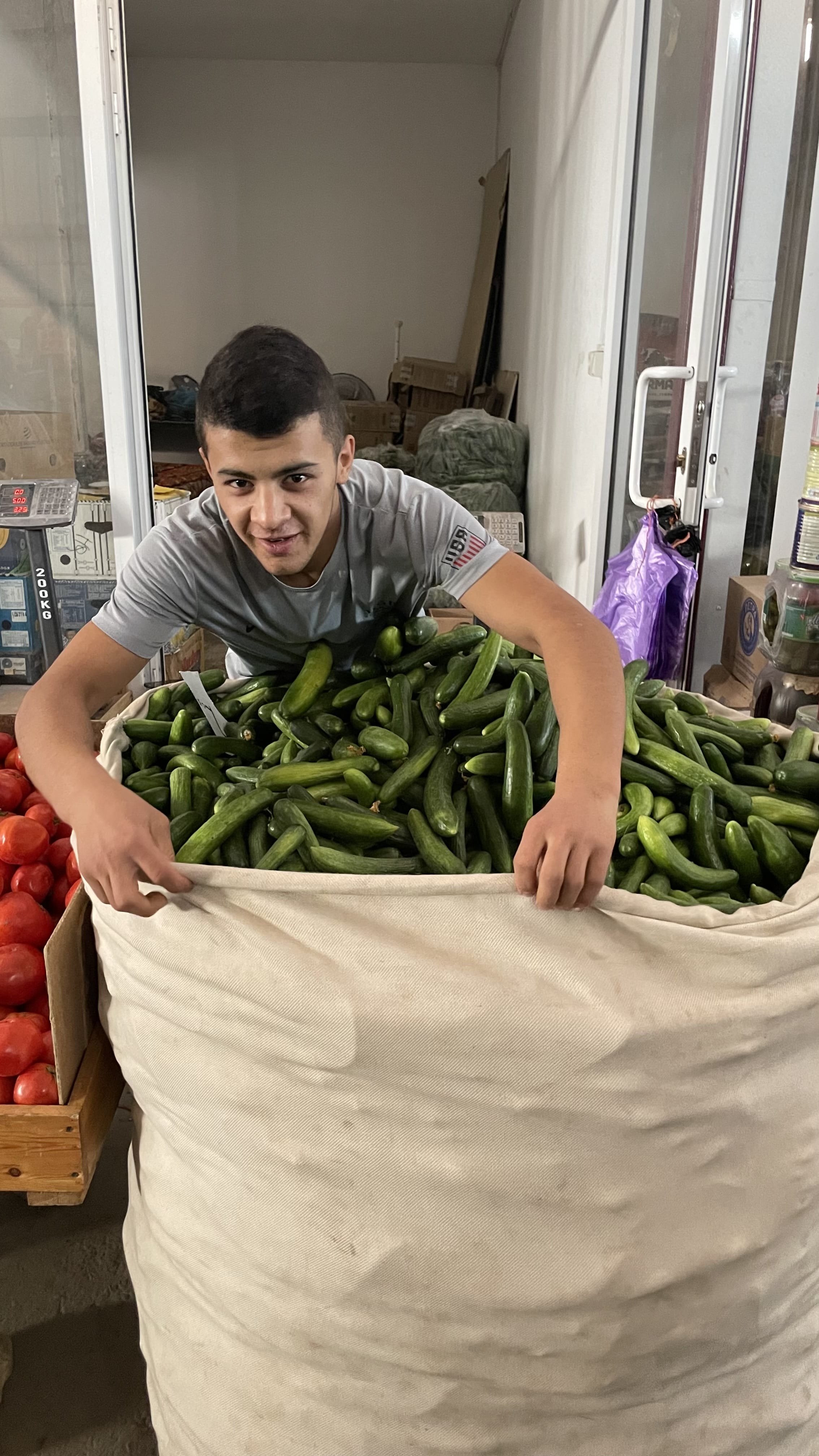
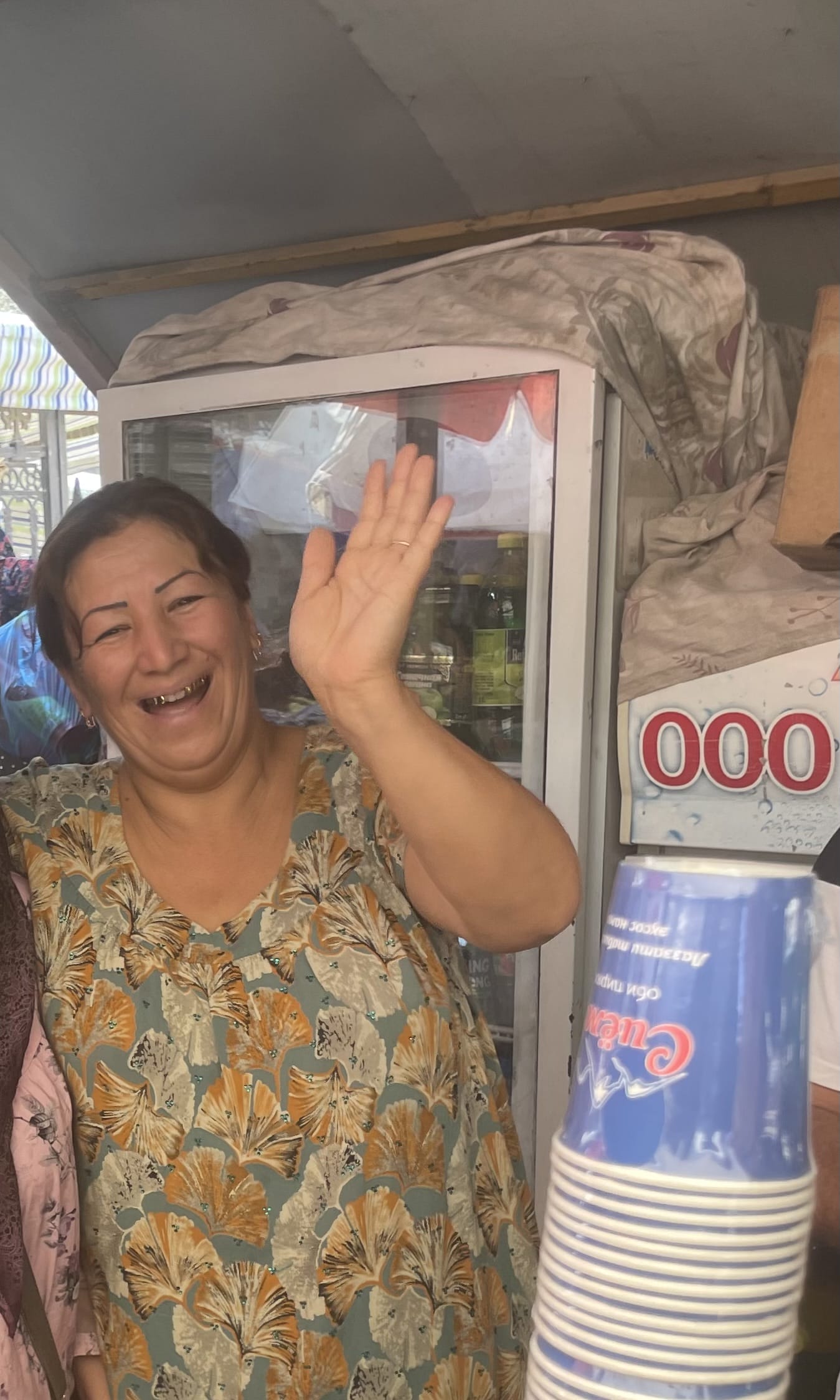
The people were incredibly friendly. Whenever I asked to take a photo, vendors didn’t just agree — they often pulled me closer, smiling wide into the camera. There was teasing, laughter, and more than a few hugs.
One detail stood out almost as much as the bread: the gold teeth. So many women flashed gold when they smiled. Later I learned it was once a sign of prosperity — even beauty. Once you noticed it, you couldn’t stop noticing, and it made those smiles all the more memorable.
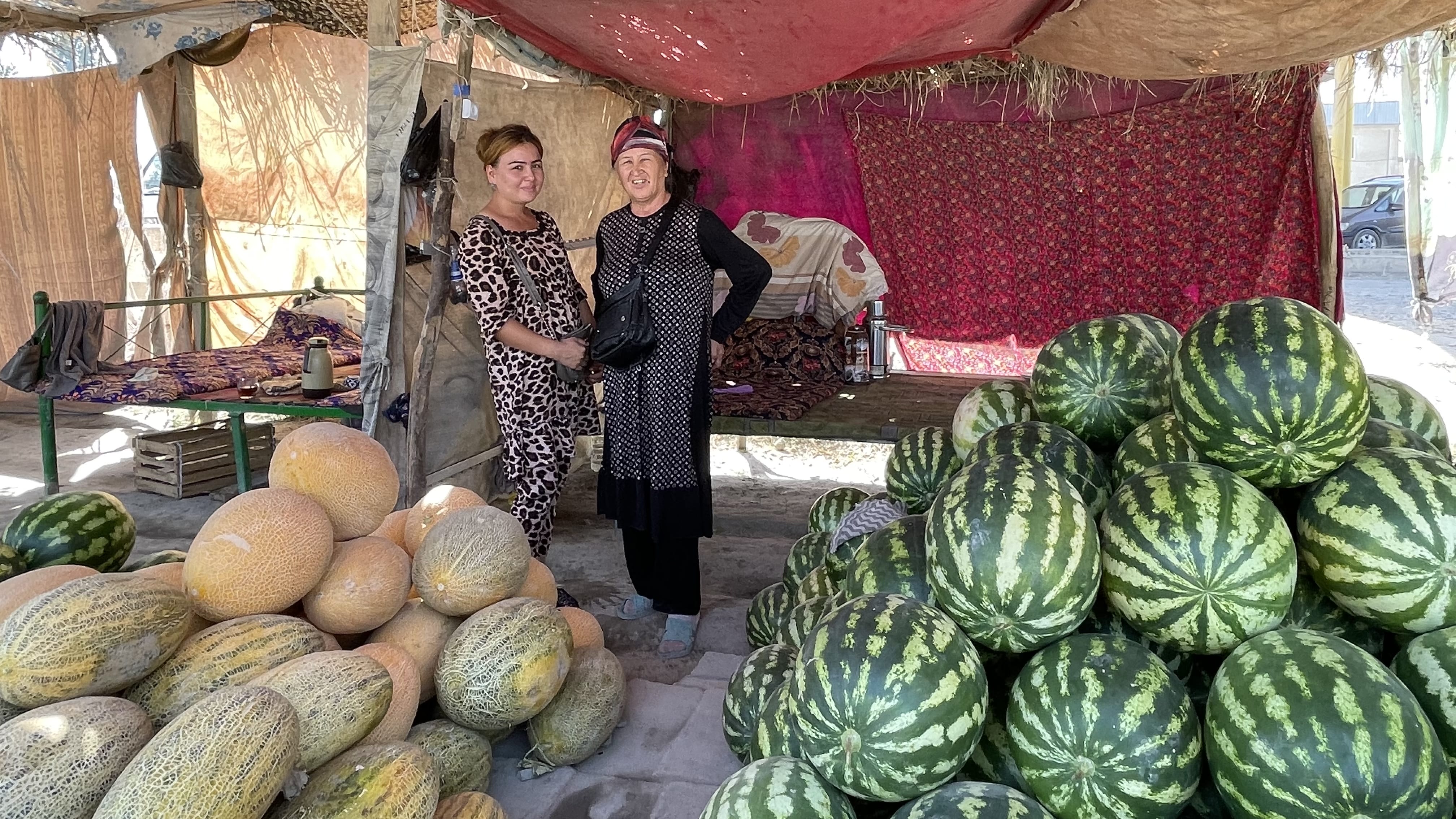
Not long from the bazaar we we stopped at a roadside fruit stand where everyone seemed to be selling the exact same thing: melons. Watermelons, cantaloupes, and a few varieties I couldn’t name, all piled high and looking equally good. It made choosing which stand to buy from surprisingly hard — when everything looks perfect, how do you decide?
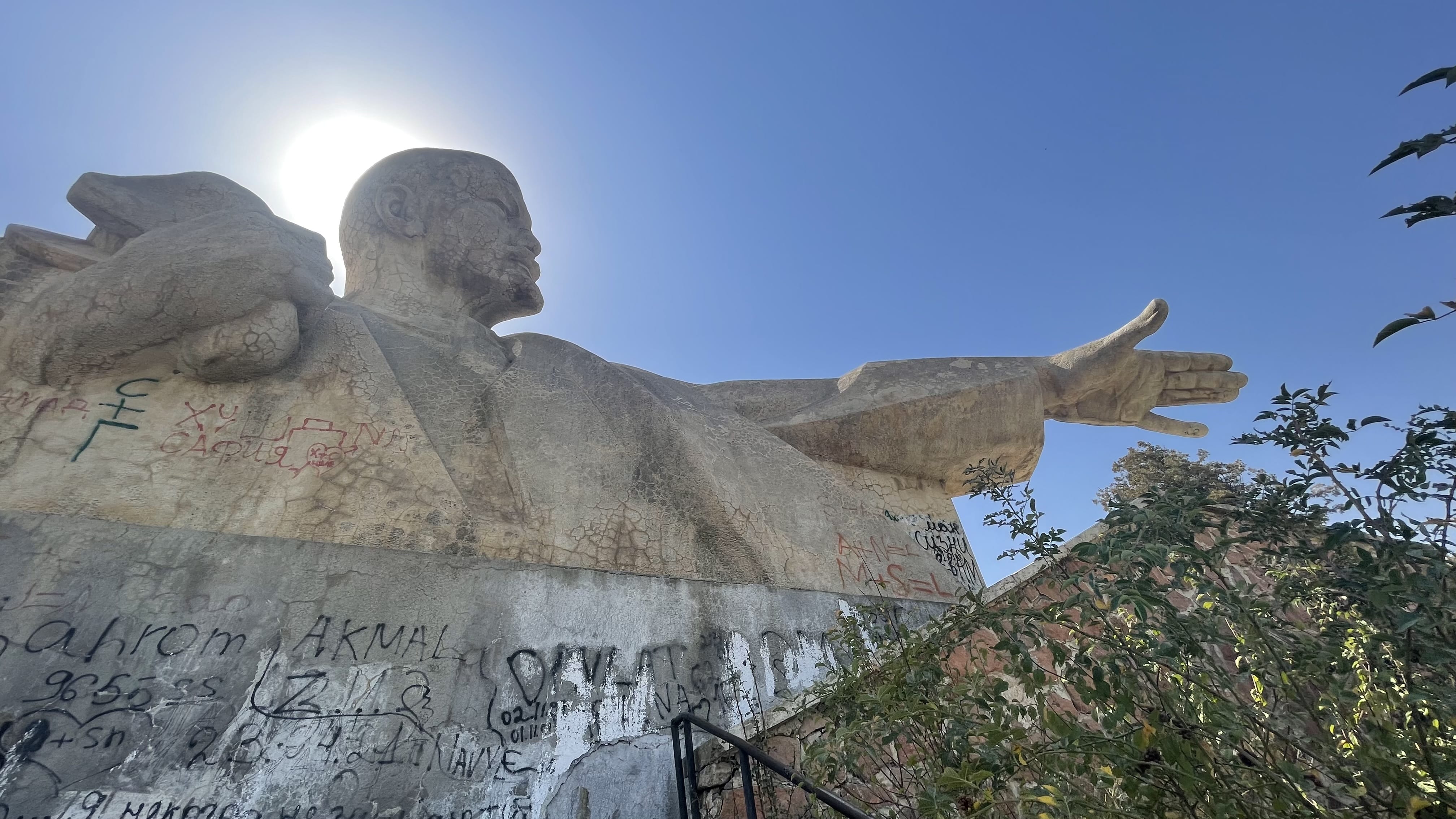
After the market, we drove about two hours toward Shahriston, where our guide had arranged a picnic lunch. Along the way, we made a quick stop in Istaravshan to see what might be the largest Lenin bust I’ve ever encountered. Built in the 1960s, the massive monument sits on a hill overlooking the city and is reached by a long climb of stone steps — 365 of them, to be exact. Standing at the top, face to face with Vladimir Lenin, his arm thrust forward in a permanent gesture, the scale of it all felt even more imposing than it had from below.
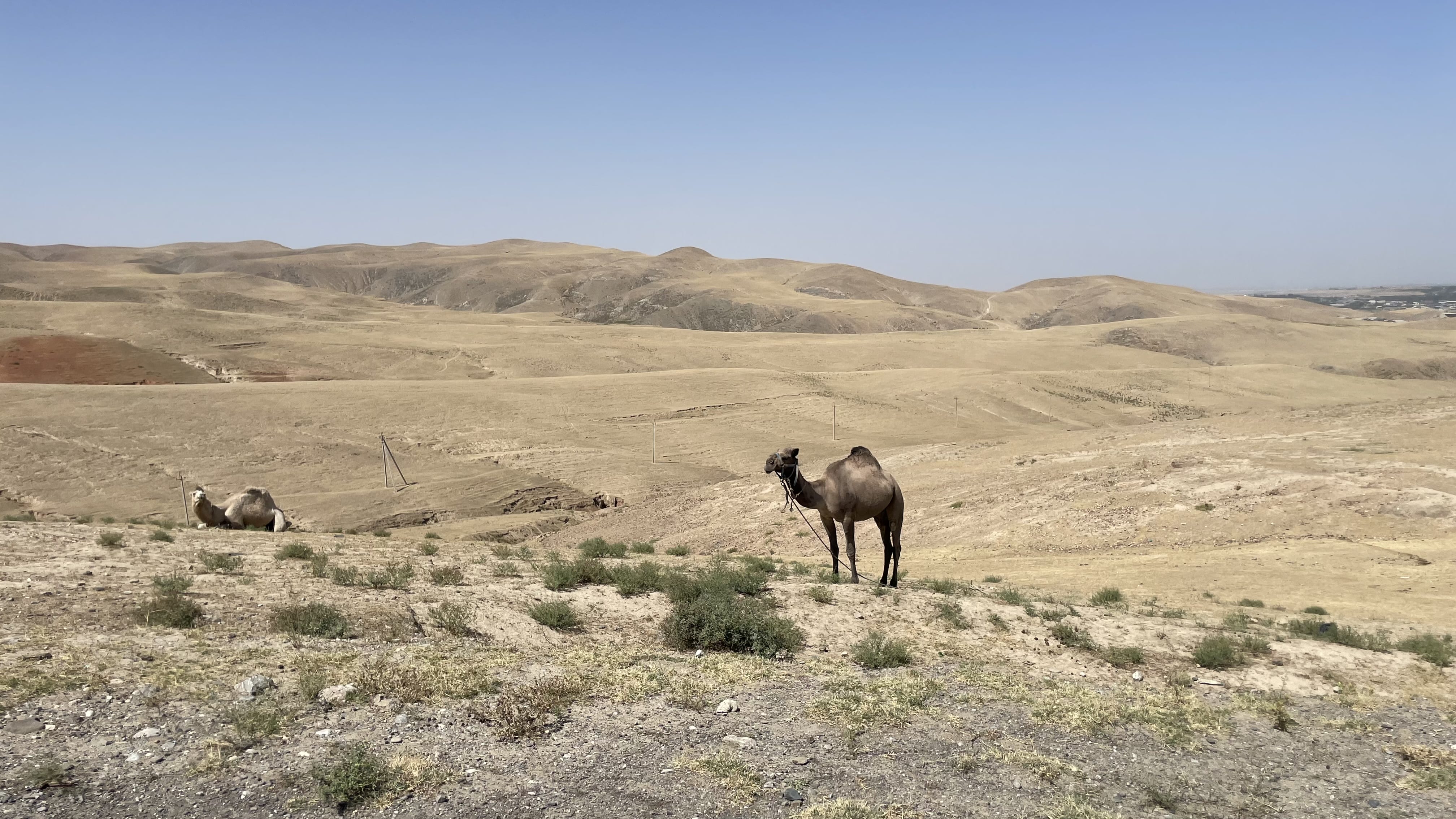
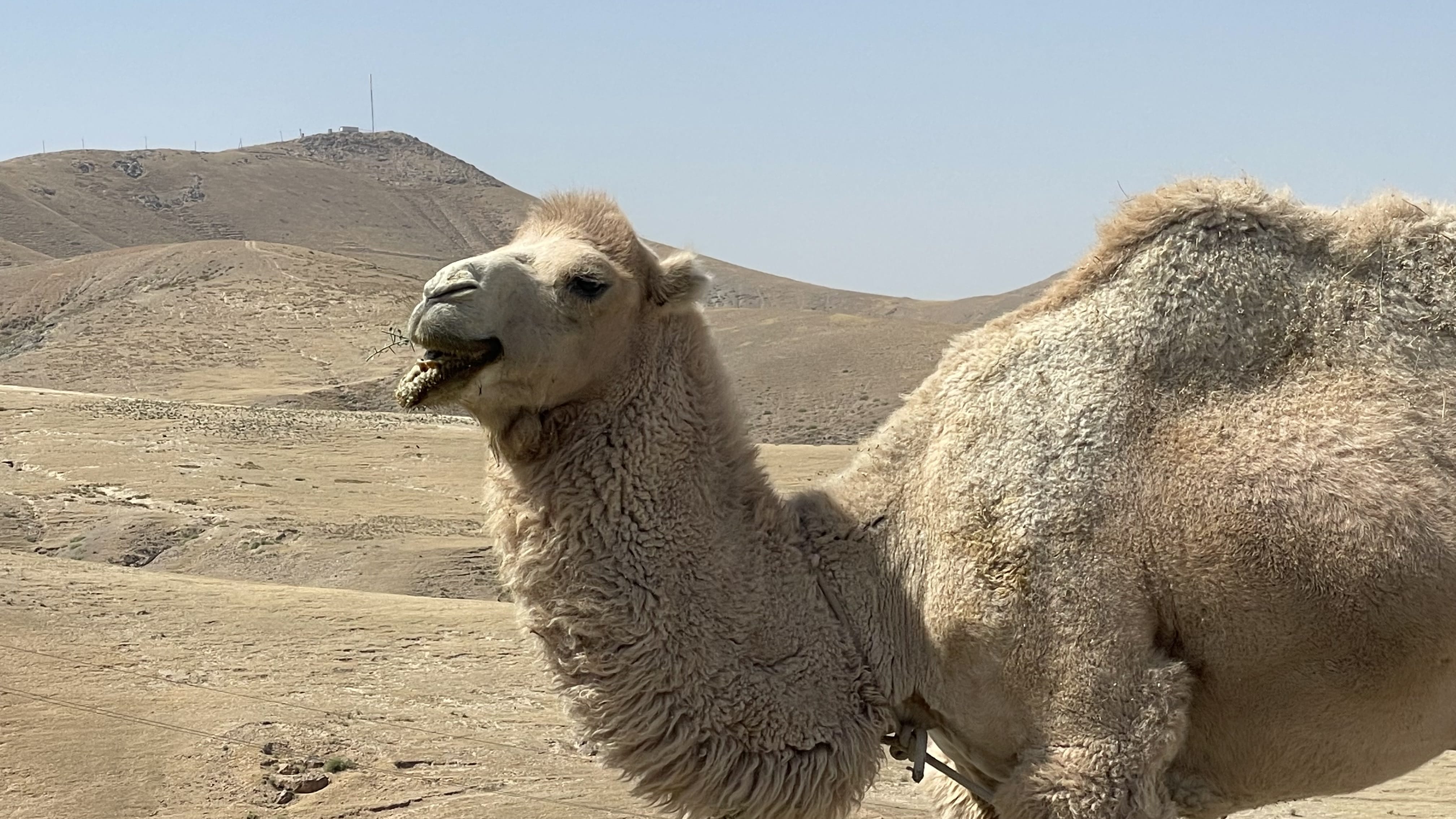
A little farther along the road, we spotted camels on the dry hills — not roaming freely, but tethered by ropes, likely grazing on owned land rather than wandering wild. Even so, they were a reminder that this region has long been a crossroads between steppe and desert.
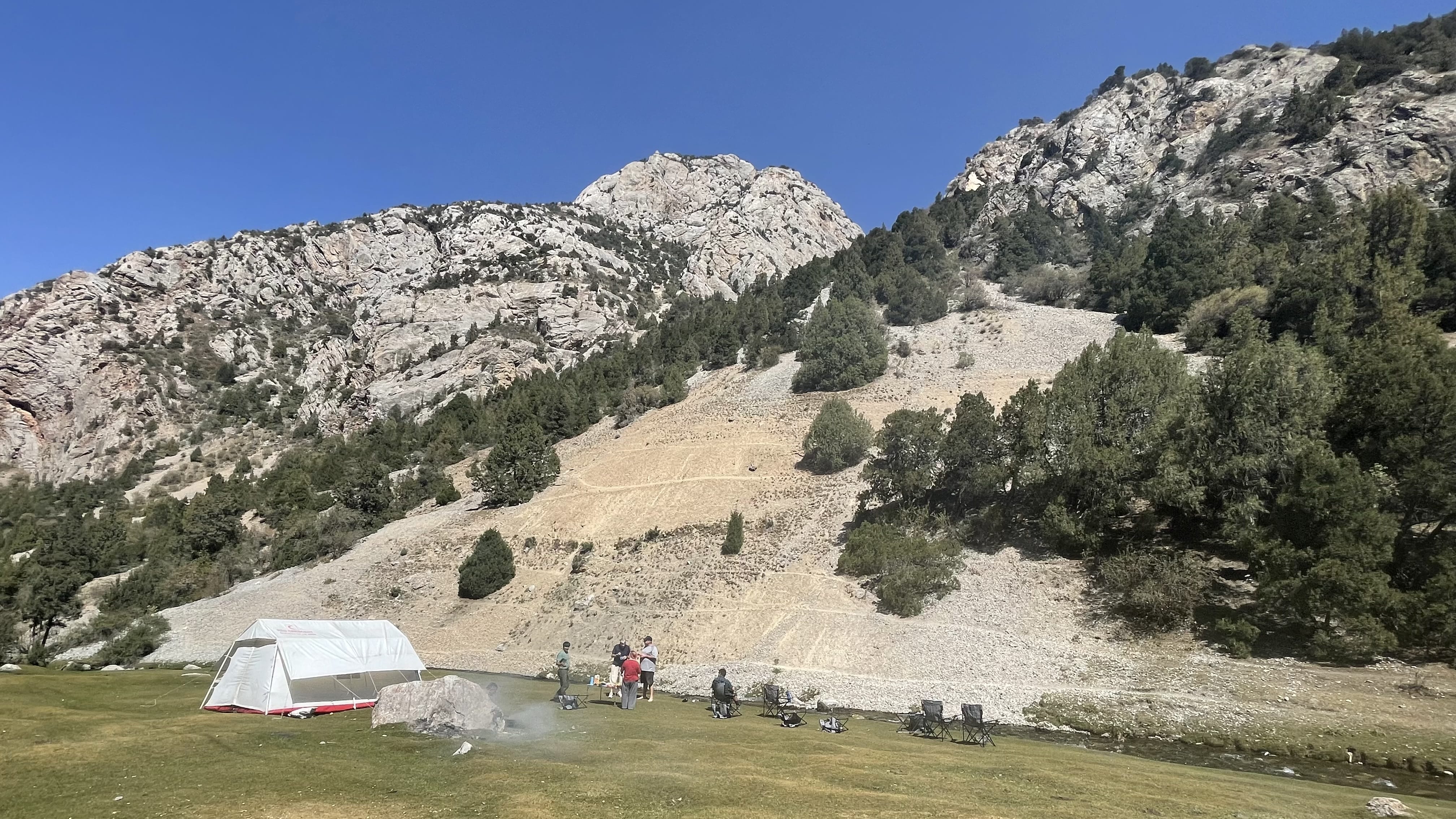
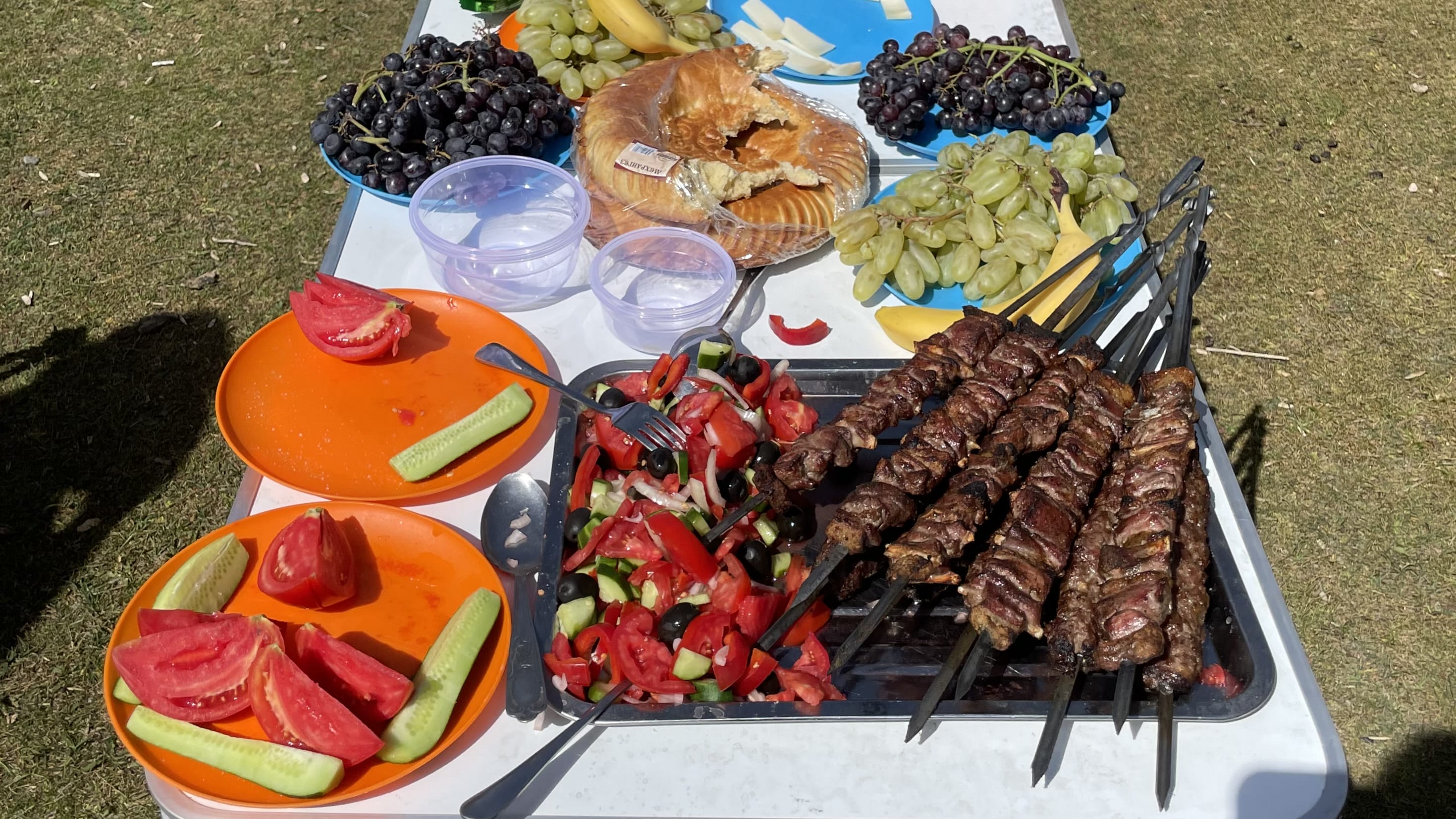
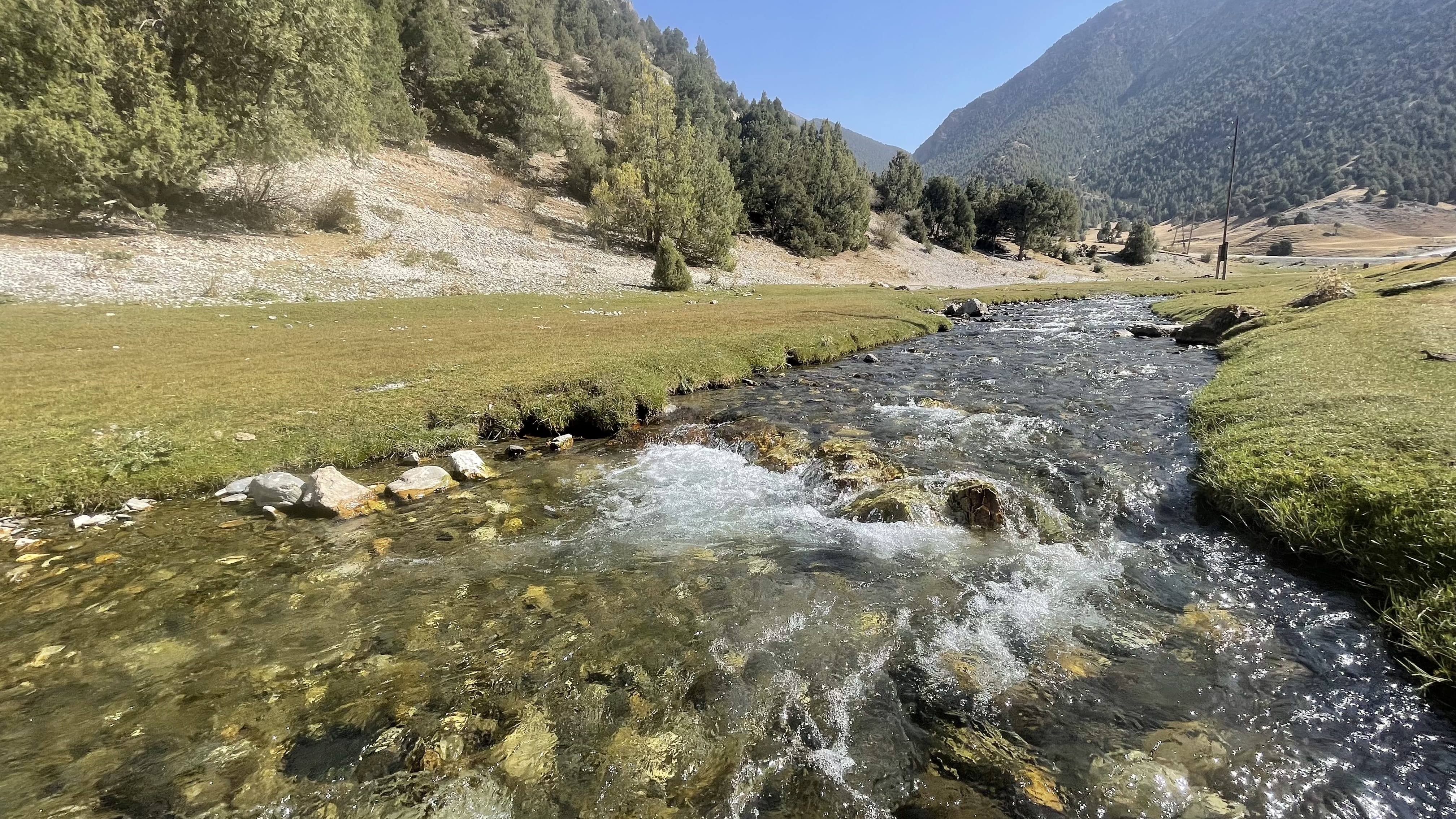
We stopped in a quieter stretch of countryside near Shahriston, where a tent had been set up with cushions for shade and our guide and driver put together a full outdoor spread. A grill sizzled with kabobs — both meat and vegetables — while chairs were arranged along the edge of a small stream. The Shahriston area sits along a mountain pass that has long been a natural stopping point between valleys, offering a very different view of Tajikistan from what we’d seen in Khujand.
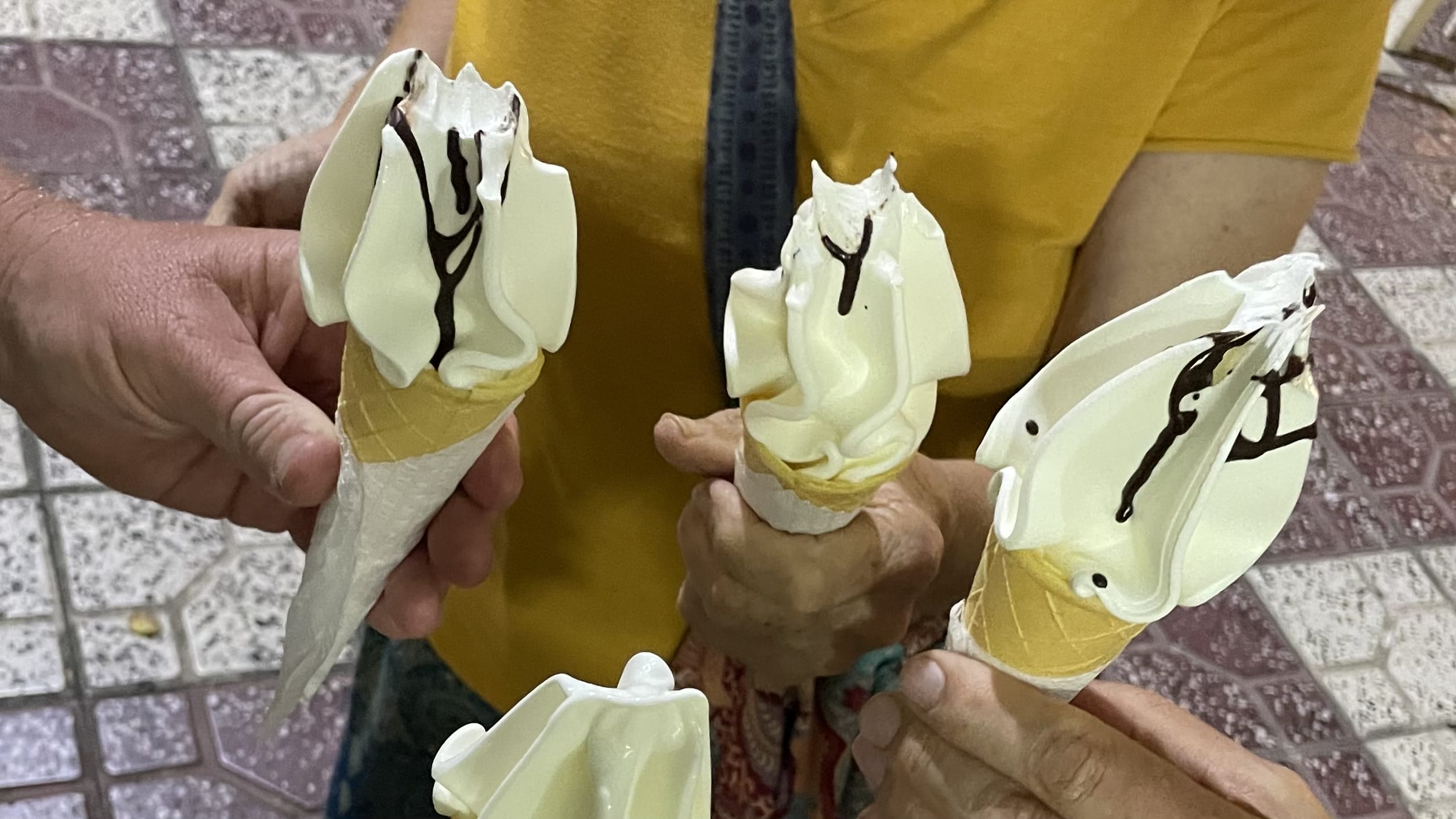
Back in Khujand later, we went out for ice cream and wandered the streets. We ended the night with simple vanilla custard cones — cool, sweet, and exactly right after a long day. And once again, Rahmon’s face was everywhere — on billboards, posters at building entrances, even lit up on walls. His presence seemed to watch over everything, part of the city’s visual landscape whether you wanted to notice it or not.
On our way out of Khujand, we made a quick stop to see another Lenin statue — this one set in a small park. Statues of Lenin still appear in pockets across Tajikistan, less as symbols of ideology now than as quiet remnants of the country’s Soviet past, sitting alongside everyday life.
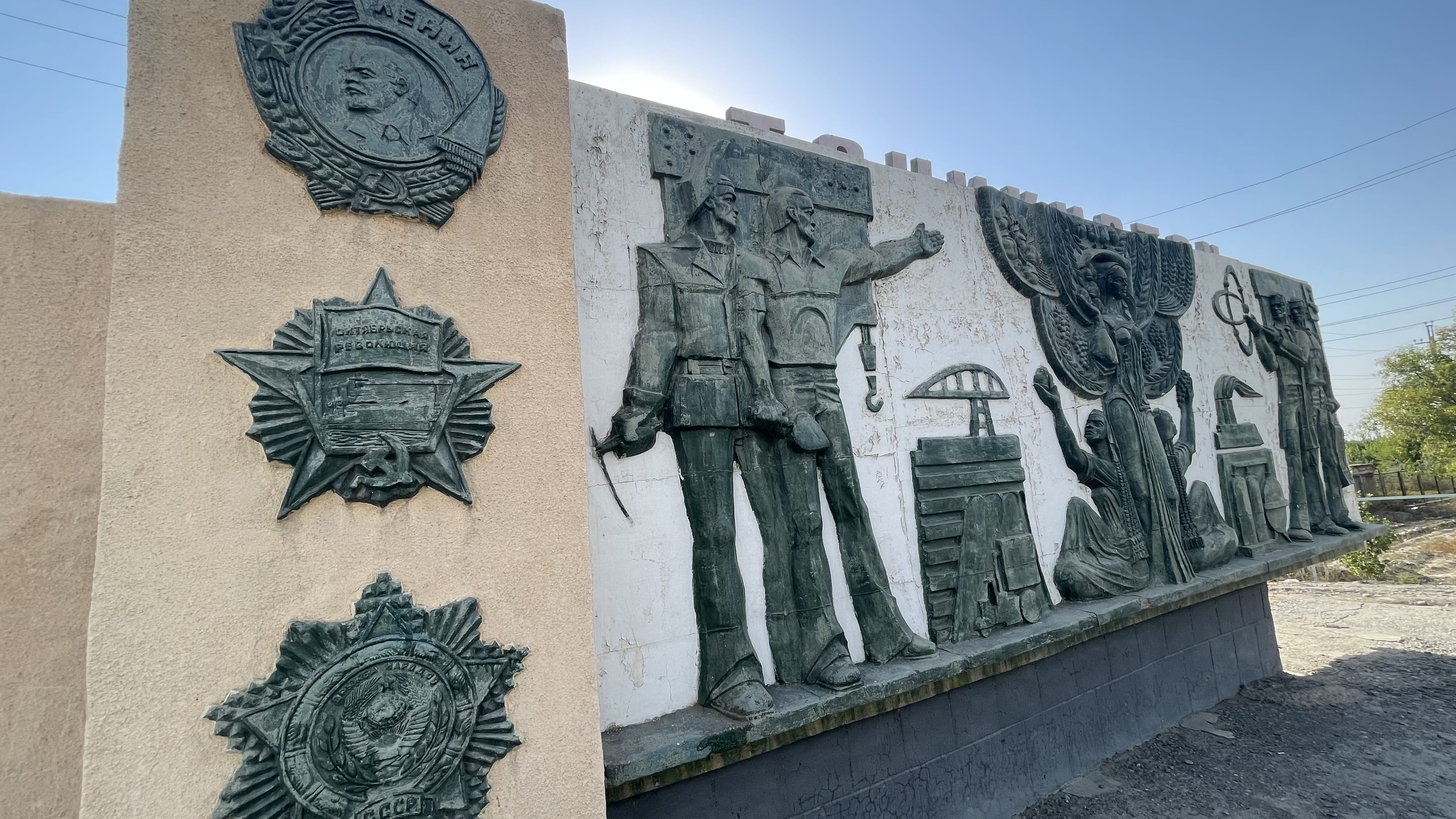
Back on the road, we came across another piece of Soviet-era mosaic art — something I’d been noticing more and more as we traveled. What stood out about this one wasn’t the subject, but the dimension. Massive panels covered the entire façade of a building, with figures and patterns built in deep relief so the faces, arms, and folds of clothing actually projected from the wall. Up close, it felt almost sculptural, more like carved stone than a flat mosaic.
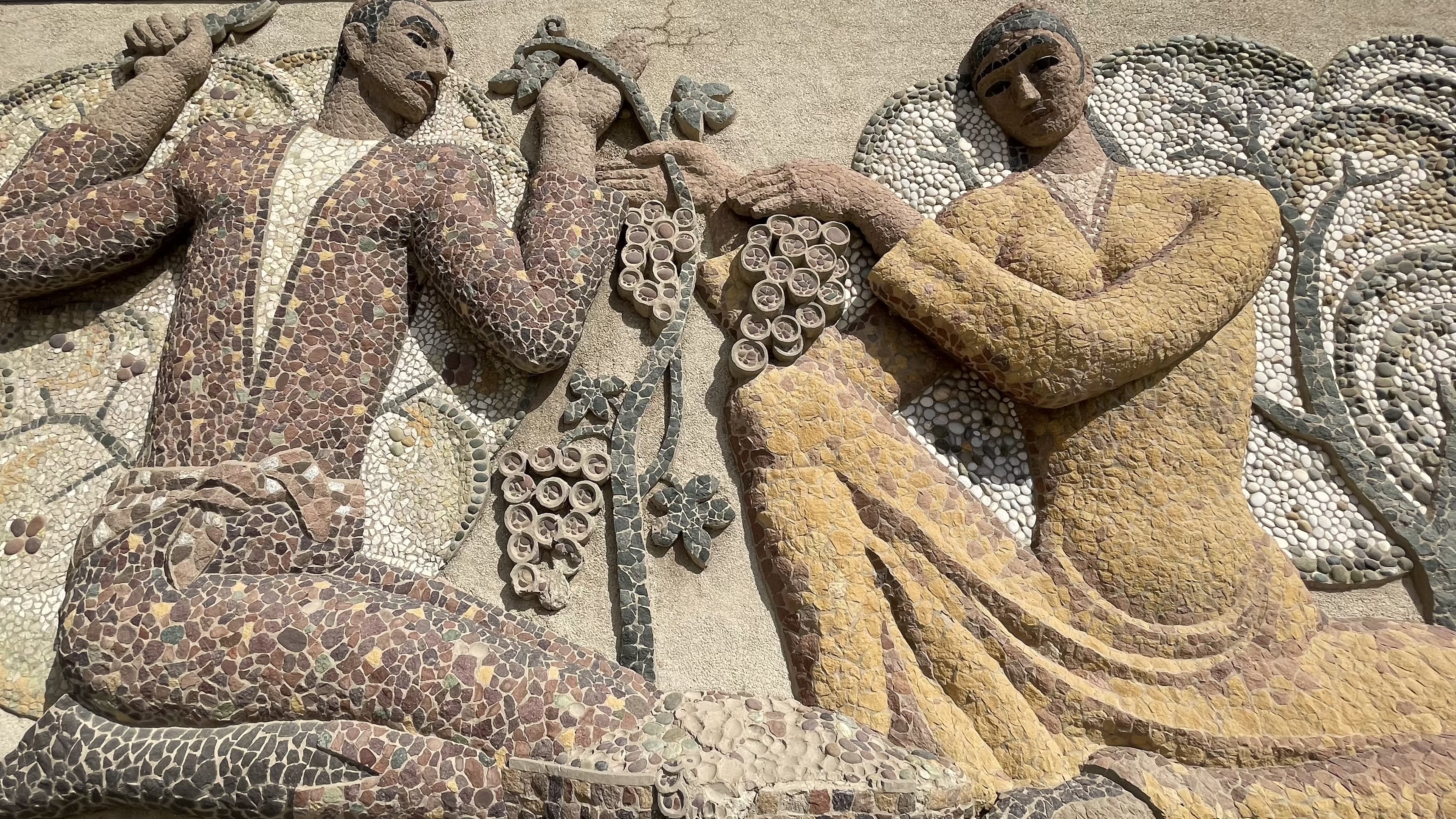
A little farther down the road, another mosaic stretched along both sides of a wall beside the highway, bold and graphic against the landscape.
These kinds of public artworks were once everywhere across the Soviet Union, and Central Asia still feels like an open-air archive of them. Again and again on this trip, I found myself surprised by where the most extraordinary art appeared — along roadsides, on civic buildings, in places I never would have expected. Of all the things I’ve seen across the Stans, the mosaics may be what’s stayed with me the most.
And then, just like that, it was time to leave Tajikistan behind. We crossed the Tajikistan–Uzbekistan border, switched into another van, and continued on toward Samarkand. The drive took nearly five hours — a detour completely out of our way, but unavoidable given the borders as they were.
It felt like such a short glimpse of Tajikistan — just Khujand and its surroundings — yet even in three days, the country revealed itself as layered and complex: Silk Road bazaars still pulsing with life, Soviet statues and mosaics dominating public spaces, traces of recent conflict, and the everyday warmth of people who greet you with bread, smiles, and laughter. Tajikistan wasn’t a place we explored so much as one we moved carefully through, shaped by borders, history, and circumstance as much as intention.
👉 From here, the journey continues into Uzbekistan.
If you missed the earlier posts, you can catch up on 2 Days in Kazakhstan and 7 Days in Kyrgyzstan.
Update (2025): Since my visit, Kyrgyzstan and Tajikistan have signed a historic border agreement, formally resolving their long-running dispute. It doesn’t erase the larger concerns around water access and climate change, but it feels like a hopeful shift. Travel does this to me — once I’ve walked through a place, I keep paying attention to it. It’s no longer just a headline; it’s somewhere I’ve been, and people I’ve met, and that makes me care differently.