Eating in Bhutan: Ten Days of Buffets, Chilies, and a Few Bright Spots

Over the course of ten days in Bhutan, food followed a fairly predictable rhythm. Most meals were served buffet-style — breakfast and dinner at the hotel where we were staying, and lunch at a restaurant along the route, which was also usually a buffet. The system clearly favors efficiency and consistency, especially for group travel, and in that sense it works. But it also means meals tend to blend together.

Eating in Bhutan

This isn’t a food guide so much as a snapshot of what meals were actually like on a guided trip.

Breakfast buffets felt very much Western. Most mornings looked familiar: scrambled eggs, sausages, bacon, fresh fruit, yogurt, cereals, pastries, toast, and juice. There were usually a few local touches mixed in too—red rice, a local curry, or the occasional buckwheat pancake, typically served with jam or honey instead of syrup.

Breakfast was my favorite meal. It was easy to get protein, the eggs were consistently well cooked, and it made mornings feel straightforward before long days on the road.

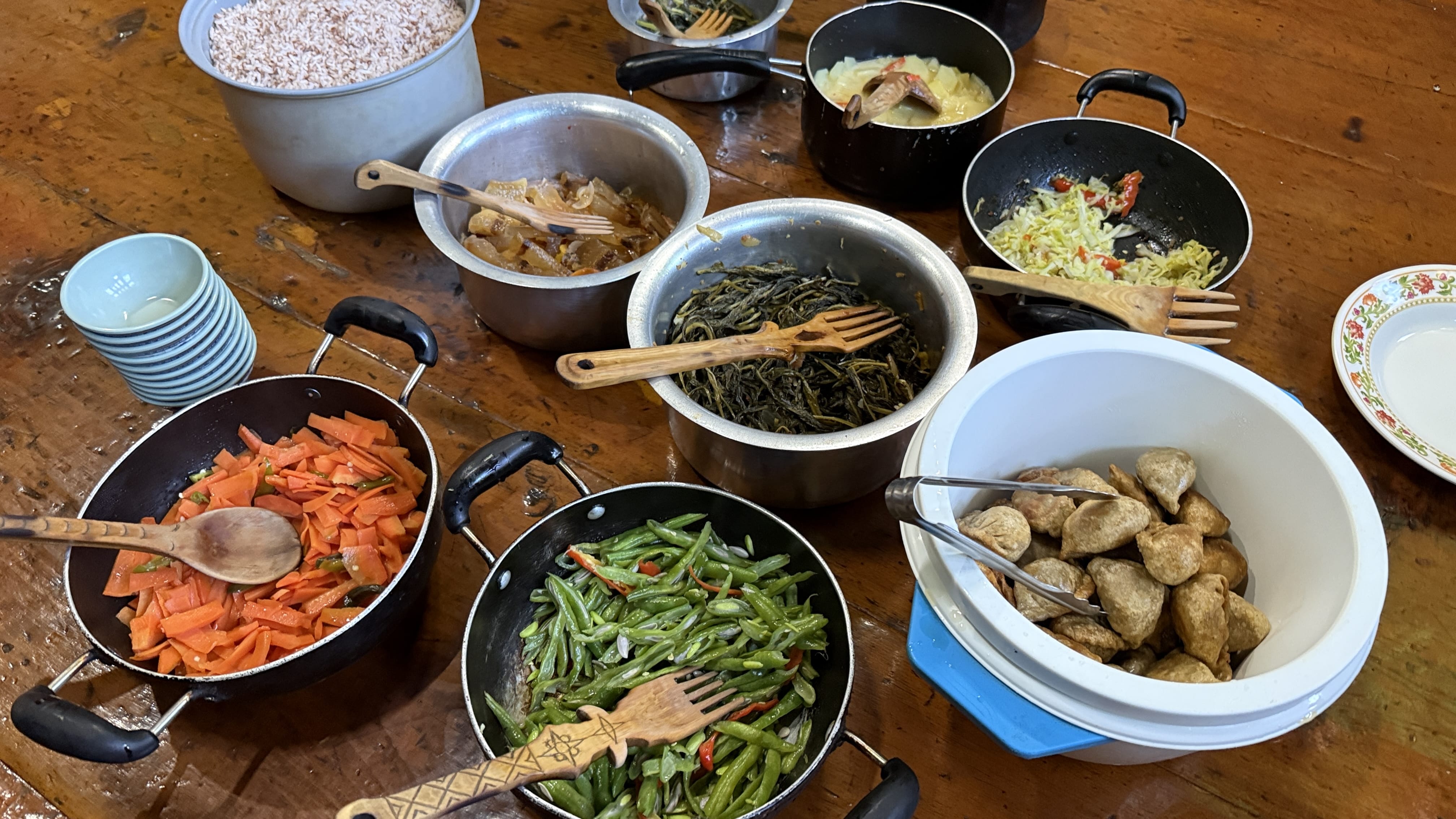
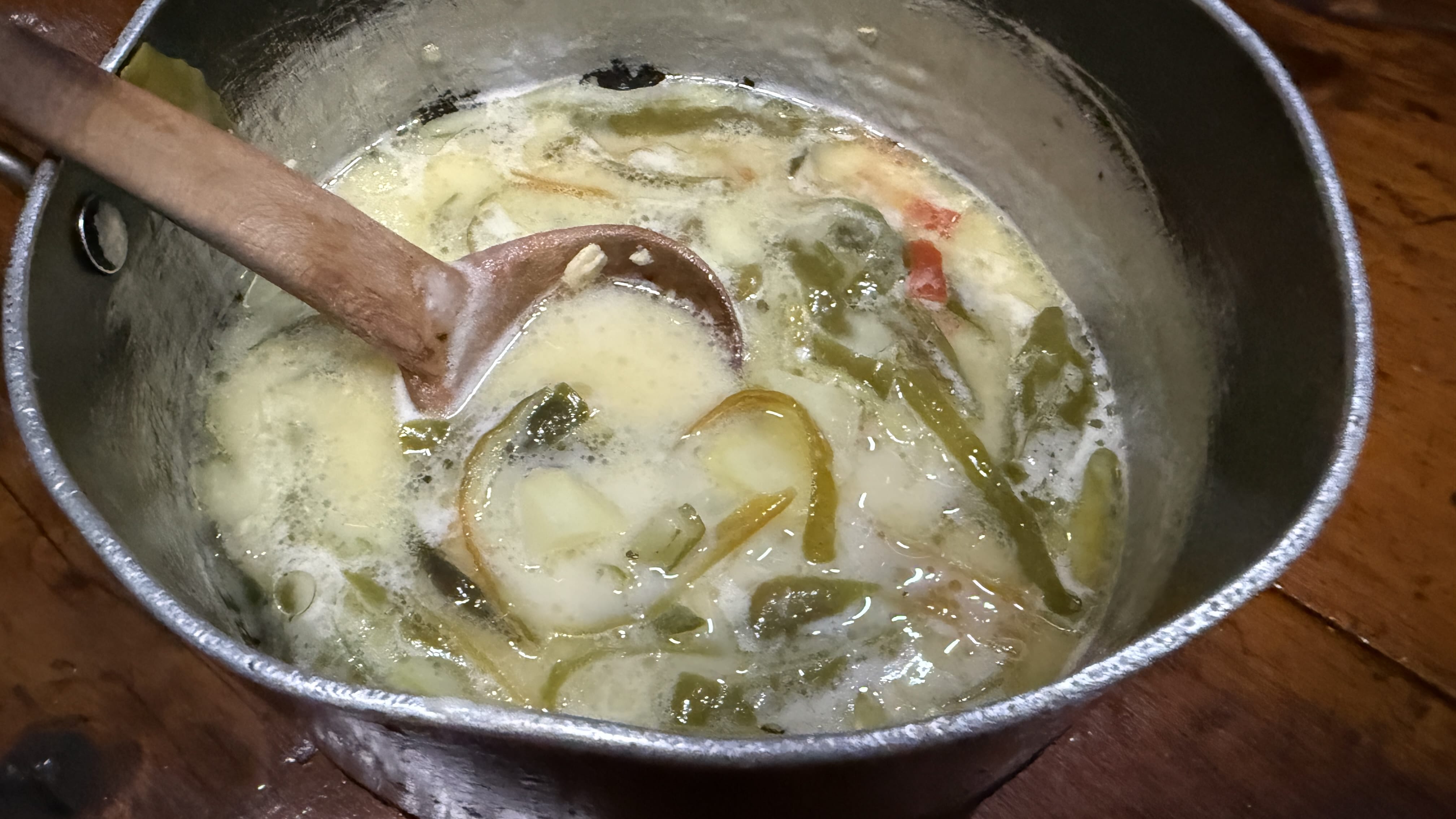
Lunch and dinner often felt interchangeable. The same core dishes rotated day after day: red rice or white rice, lentils, sautéed or stewed vegetables, and some version of datshi — Bhutan’s signature combination of cheese and chilies. Sometimes it was ema datshi (chilies and cheese), other times kewa datshi (potatoes), shamu datshi (mushrooms), or mixed vegetables folded into the same creamy, chili-flecked base. None of it was bad, and some of it was quite good, but the repetition was noticeable.

Protein options were limited, particularly for vegetarians, so in Thimphu I ordered off the menu when it was available — something that particular hotel offered, though some didn’t. Otherwise, meals followed the same buffet formula, rotating familiar dishes rather than introducing much in the way of variety.

There were also occasional trays of deep-fried vegetables — sometimes some mystery vegetable I couldn’t quite identify. But every now and then, something stood out — like the carrots. At times they were served almost tempura-style: lightly battered, crisp on the outside, naturally sweet, and finished with sesame seeds. And so good.

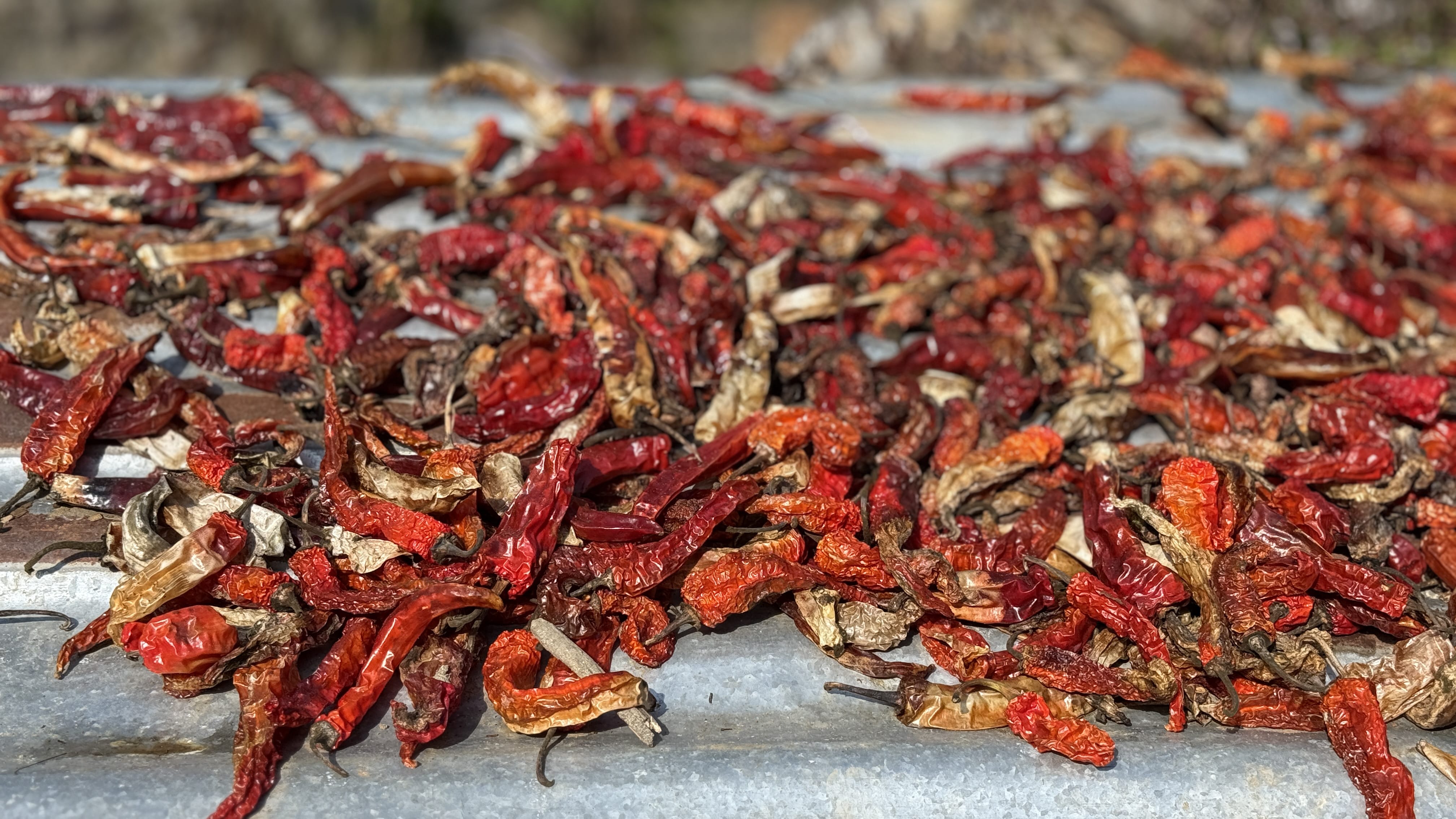
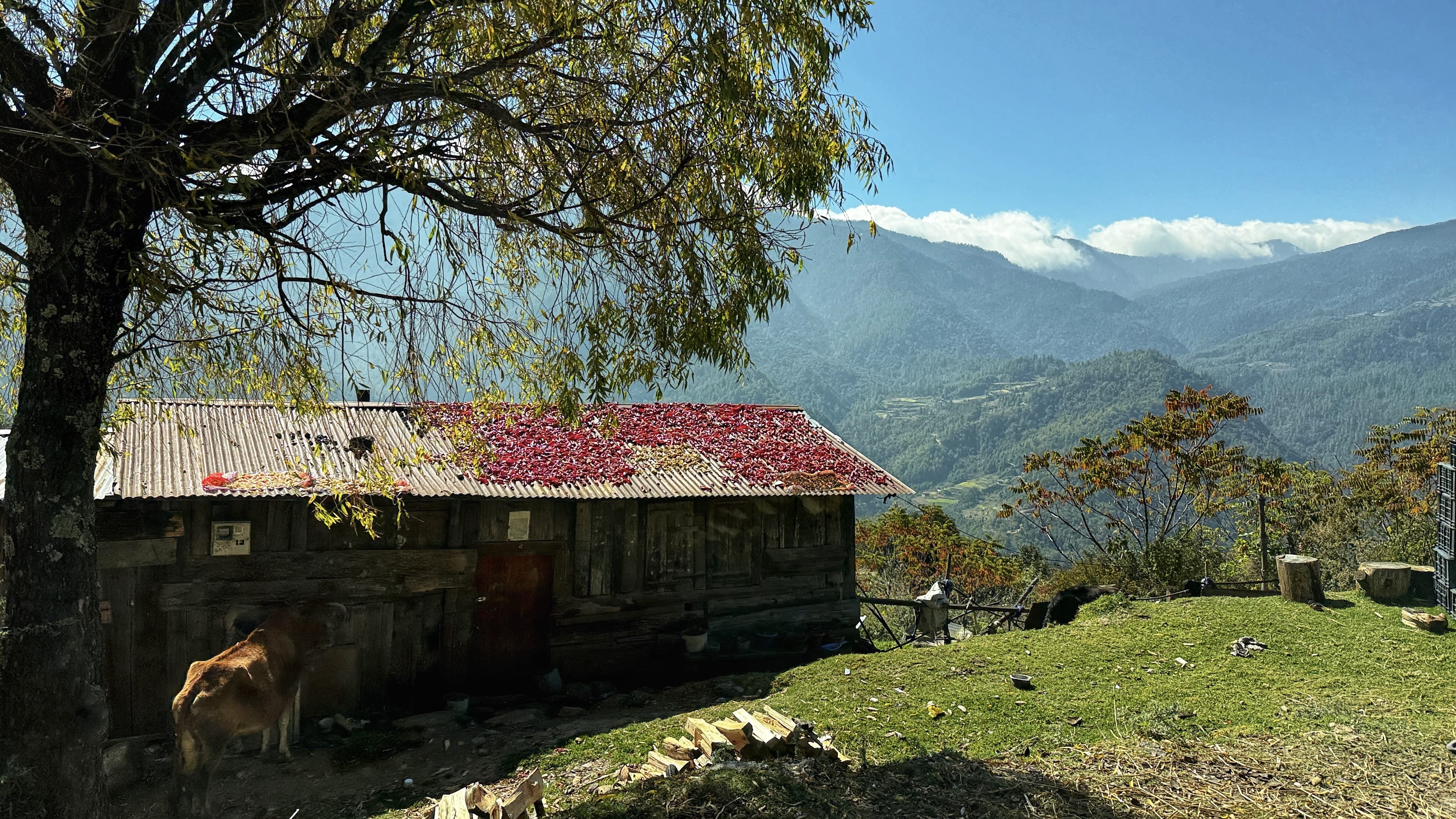
What consistently improved the food was heat. I’d heard a lot about Bhutanese chilies before arriving, but I usually had to ask for them. Once I did, even relatively mild dishes came alive. Chilies are everywhere in Bhutan — spread across rooftops to dry in the sun, piled high in markets, woven into daily life — and they’re what gave many meals their character.

Eating in Bhutan: red chilies spread across a rooftop to dry in the sun at a rural home in the Haa Valley.
Chilies are central to Bhutanese cooking, dried on rooftops and used in most meals.

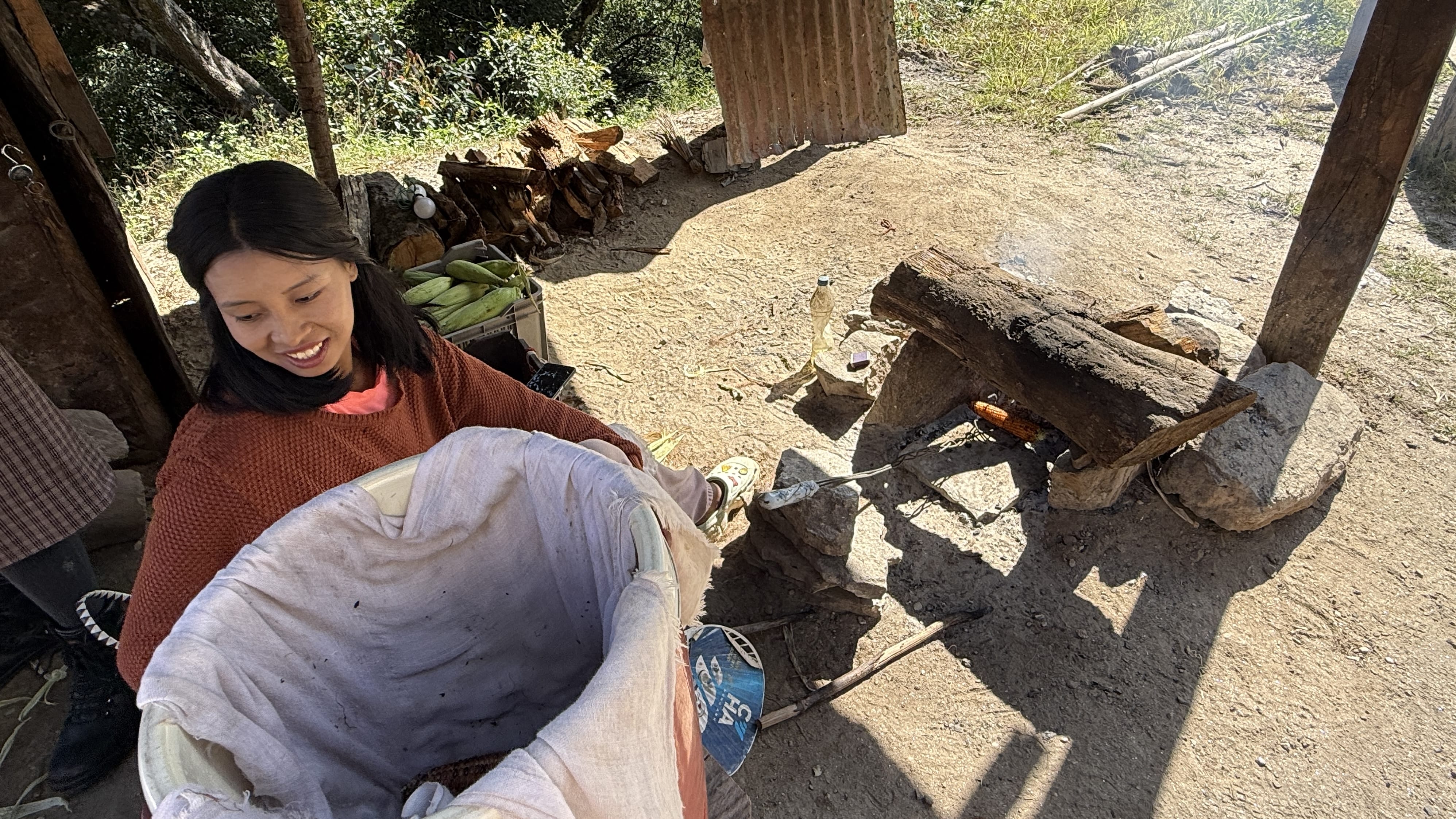
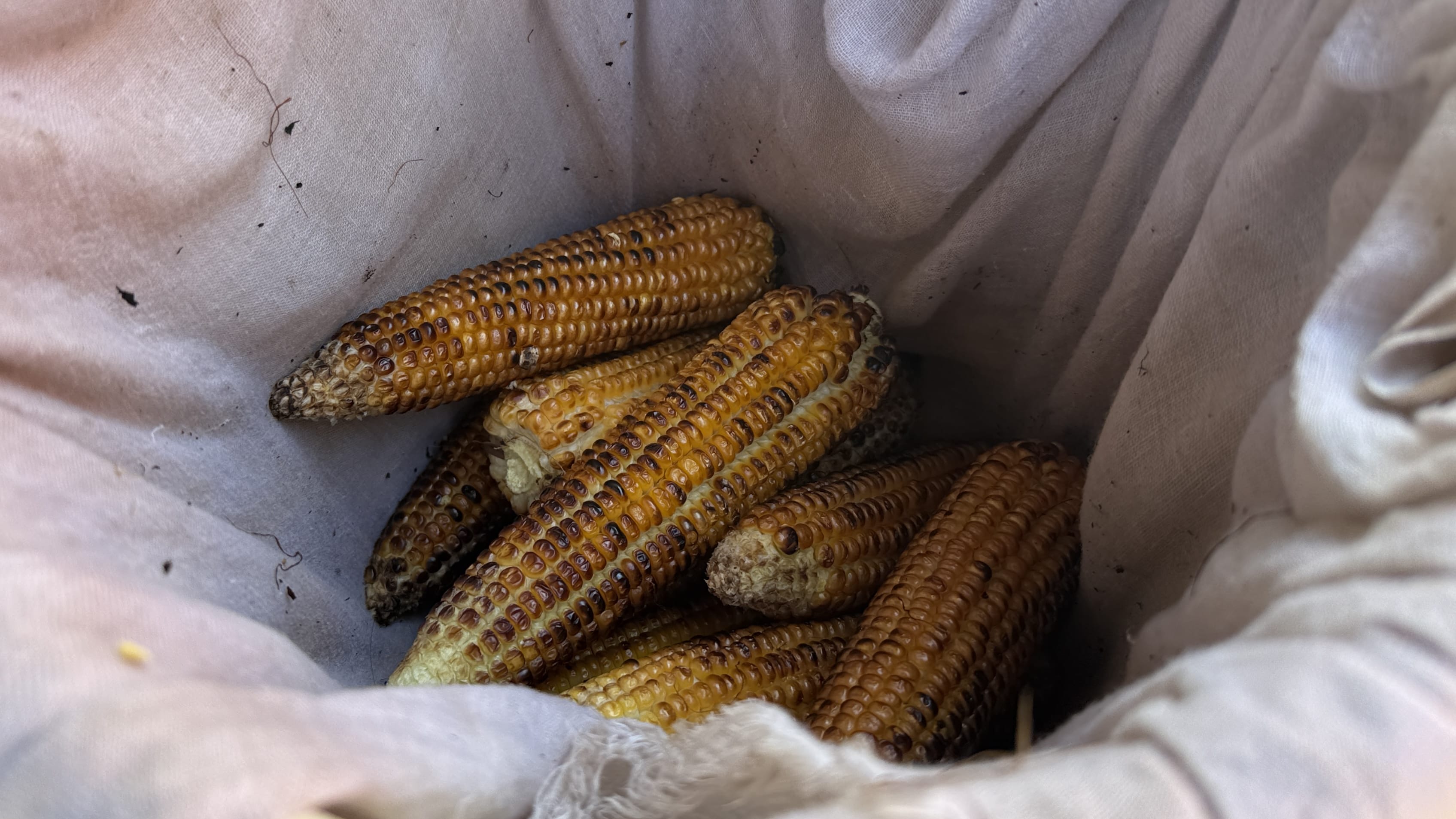
There were a few smaller moments that stood out as well. We stopped at a roadside stand for roasted corn — not originally planned, but a couple of us asked to stop. Simple, smoky, eaten standing by the road.

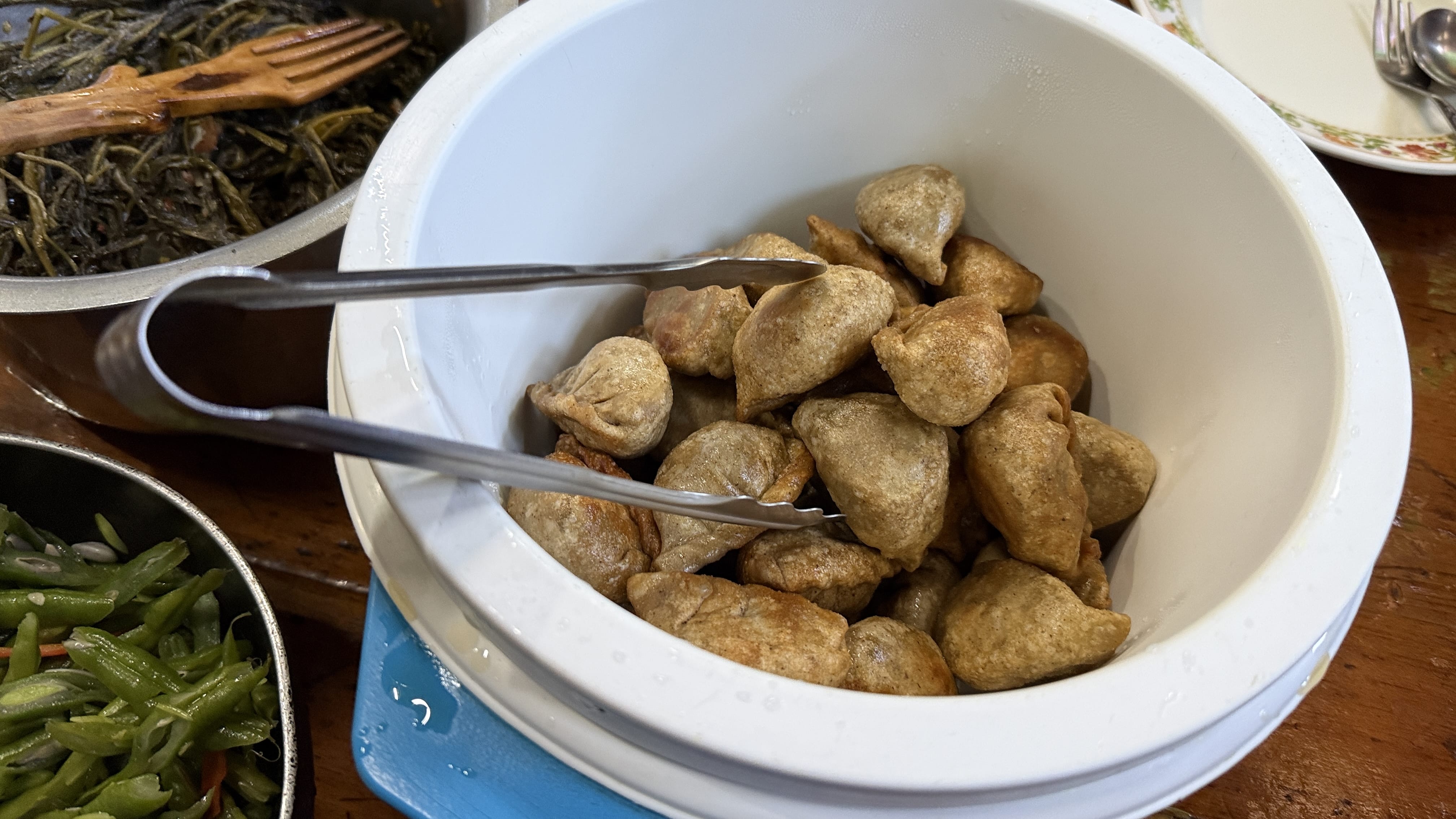
The most memorable food experience came during a homestay in the Haa Valley. The dishes themselves were familiar — vegetables, rice, lentils — but everything tasted fresher and more personal. This was also where I finally tried buckwheat momo, something I’d been hoping to find. I love momo, but I’d never had them made with buckwheat. Earthier and heartier than the usual versions, they felt tied to place in a way many meals didn’t.

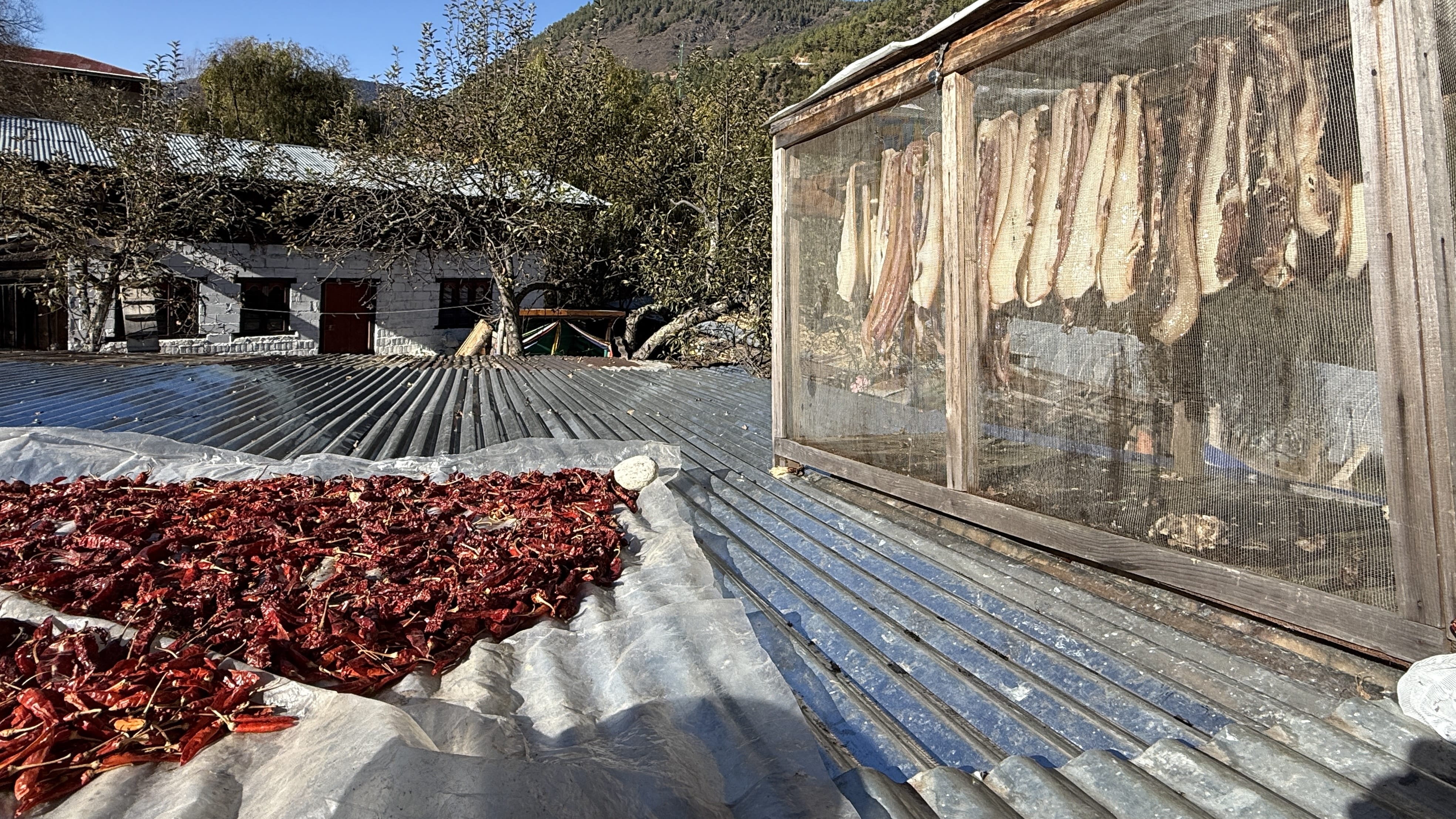
Like many homes in rural Bhutan, the family was drying red chilies on the roof and hanging long strips of pork to use later in cooking—simple preservation methods used year-round.

Eating in Bhutan: red chilies drying on a rooftop and strips of pork air-drying in a screened wooden box at a rural Haa Valley homestay.
Taditional food preservation at a Haa Valley homestay.

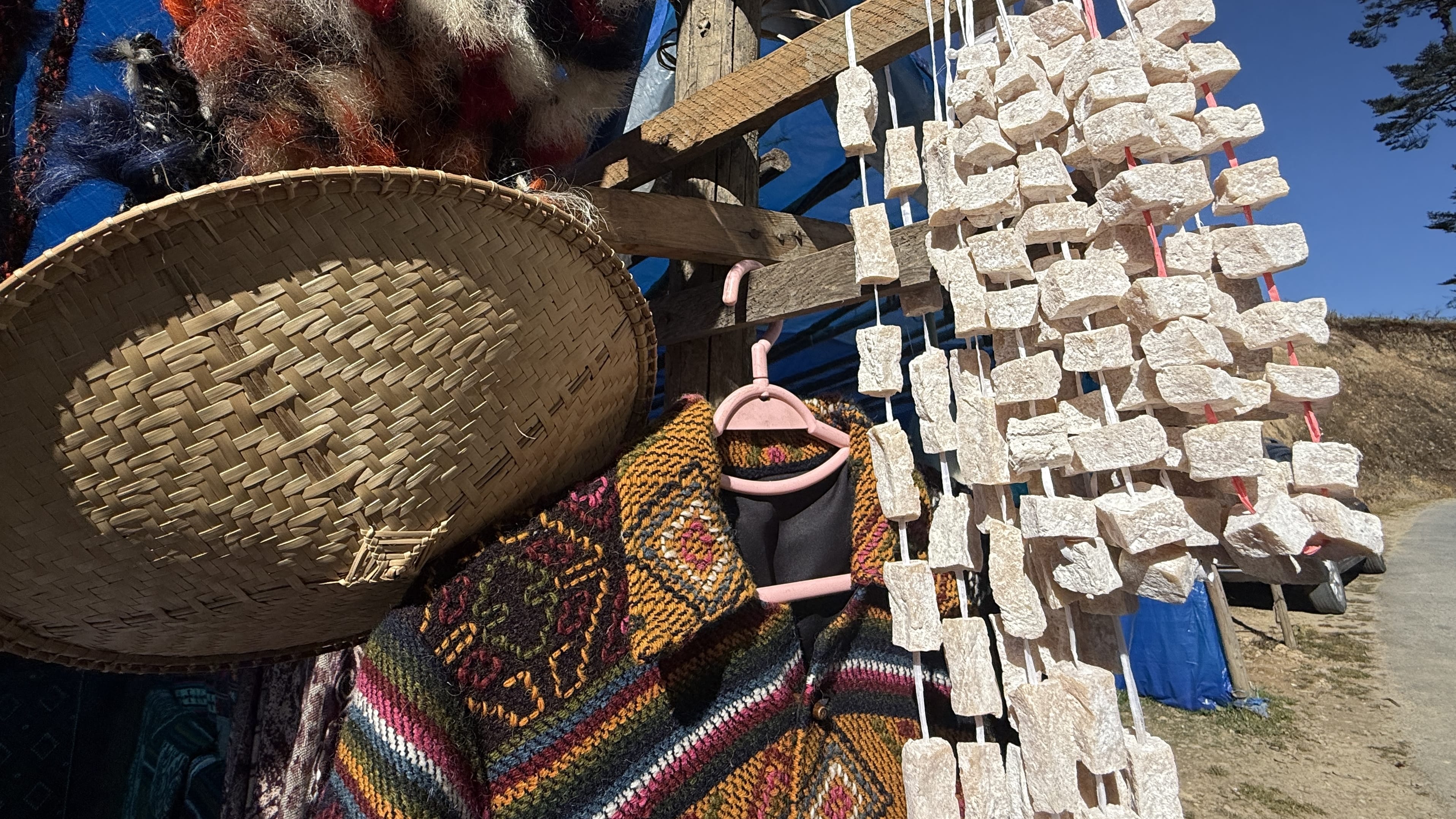
I also tried dried yak cheese. You often see them hanging from stalls, almost like square beaded necklaces, but they’re actually yak cheese cut into hard cubes. You buy one at a stand, take a square, and pop it in your mouth. It’s very hard, so you have to suck on it slowly before chewing. I admired the tradition more than the experience. At one stop, our driver bought a strand and passed it around. 

Eating in Bhutan: dried cubes of yak cheese hanging for sale, a common roadside snack in rural Bhutan.
Dried yak cheese cubes, a popular Bhutanese snack.

The cube was about the size of a large sugar cube. It wasn’t the taste I couldn’t handle—it was the size. Almost immediately, it triggered my gag reflex, and I had to discreetly spit it out. I couldn’t keep it in my mouth long enough for it to soften, which meant I couldn’t bite it into a more reasonable size to suck on.

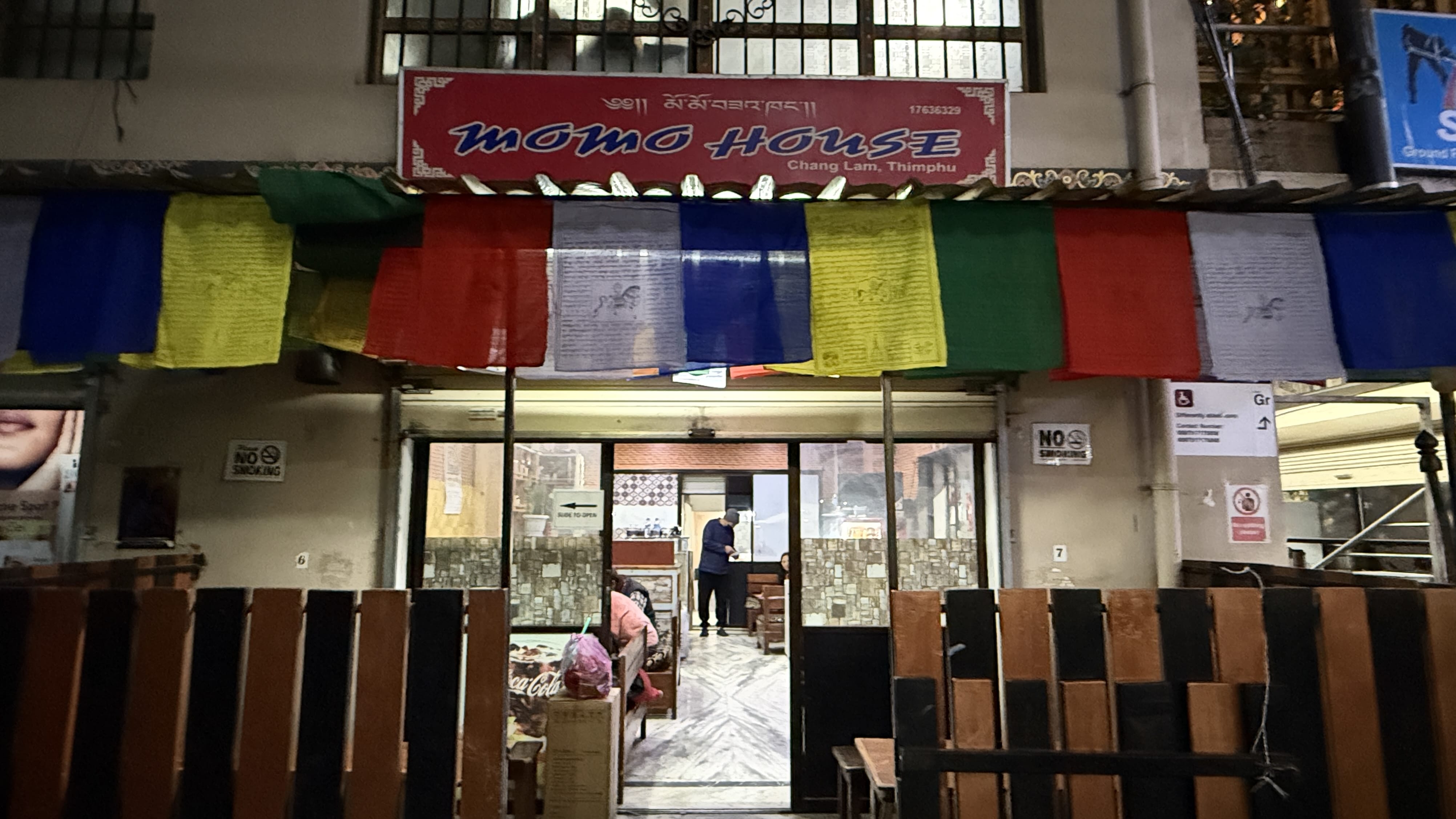
In larger cities like Thimphu, you sometimes had the option of eating at a restaurant—if time allowed. I found a local spot packed with Bhutanese diners, which always feels like a good sign. I was craving momo, so when I saw a place called Momo House, it felt perfect. I went in, sat down, and ordered—only to be told they were completely out of momo that night.

It was 6 p.m. How does a place named Momo House run out of momo? Too funny. Of all the places to run out of momo, the one called Momo House felt especially cruel.

Eating in Bhutan
Momo House in Thimphu but no Momo.

By the time we reached Paro—which meant another buffet—I asked if I could order off the menu. I could. I’d been craving a salad, and as luck would have it, they had one with sesame dressing, and I also ordered a pumpkin soup. I’m not sure either was traditional Bhutanese cuisine, but it was exactly what I wanted.

Our last evening, we ate at a place our guide picked out. The food was served family-style, and there was a lot in general, including plenty of vegetarian options. It was probably the best meal after our homestay. Everything was seasoned perfectly — red rice, noodle dishes, vegetables, and those familiar cheese dishes — a fitting farewell meal to Bhutan.

Looking back, I realized how few photos I took of the food. Not because it was bad, but because so much of it blended together. Meals in Bhutan were nourishing and functional. The moments that stayed with me weren’t the buffets themselves, but the exceptions: the homestay in Haa, the roadside corn, the buckwheat momo, the unexpected carrots, and, of course, the chilies.

Related Blogs

Bhutan Part 1: Arrival, Rituals, and First Impressions
The start of my journey through Bhutan—covering the route in, early impressions, and the cultural context that shaped everything that followed, including how and what we ate along the way.

Bhutan Part 2: Valleys, Villages, and Daily Life
A continuation of the journey beyond the highlights, moving through Bhutan’s valleys and villages and offering a fuller picture of daily life beyond the meals.

5 Days in McLeod Ganj: A Scenic and Spiritual Adventure
A personal travelogue through the Indian Himalayas, where monasteries, mountain walks, and everyday rhythms.

8 Days of Momo: The Best Bites in McLeod Ganj, India
A food-focused deep dive into Tibetan momo culture in McLeod Ganj, told through daily walks, repeat meals, and the small places that leave the strongest impressions.

JoAnne Cross headshot

About the Author

Hi, I’m JoAnne—writer, wanderer, and lover of places that surprise me. I’ve traveled to 60+ countries (and counting), usually with a camera in one hand and a notebook in the other. I’m drawn to mosaics, markets, and mountains, and I write to remember what moved me. When I’m not traveling, I’m working on my blog Travels Afoot, trying new creative projects, or planning my next adventure. 📍 More about me | ✈️ Explore destinations