If you missed Part 1 of my 10 Days in Romania, that’s where the journey begins—with Bucharest, Bran Castle, and the first stretch through Transylvania.
Day 6: Sighișoara — Clock Tower, houses with “eyes,” Vlad the Impaler’s birthplace, Scholars’ Staircase, Church on the Hill
Day 7: Salina Turda & Alba Iulia — Rudolf Mine, underground lake, Alba Carolina Citadel, dinner inside the fortress
Day 8: Alba Iulia, Hunedoara & Sibiu — Alba Carolina Citadel, Corvin Castle, arrival in Sibiu, Bridge of Lies
Day 9: Sibiu & Rășinari — Historic tram ride, village visit, ASTRA Museum, Grand Square
Day 10: Return to Bucharest — Mountain roads, Bâlea Lac area, roadside bears, Vidraru Dam, Poenari Fortress
Arriving late the afternoon before gave me just enough time to wander. Smaller and quieter than Brașov, Sighișoara felt incredibly well preserved.
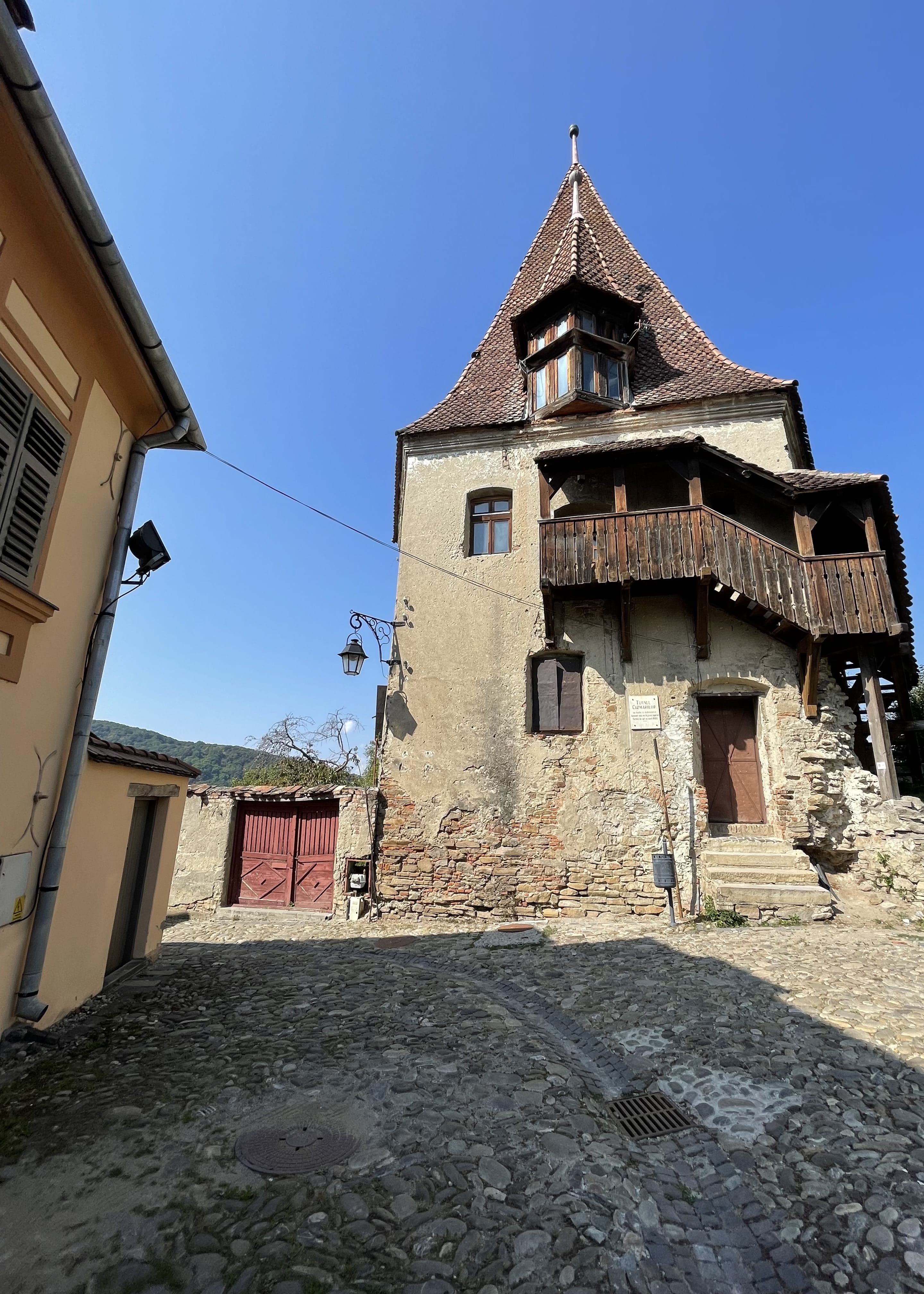
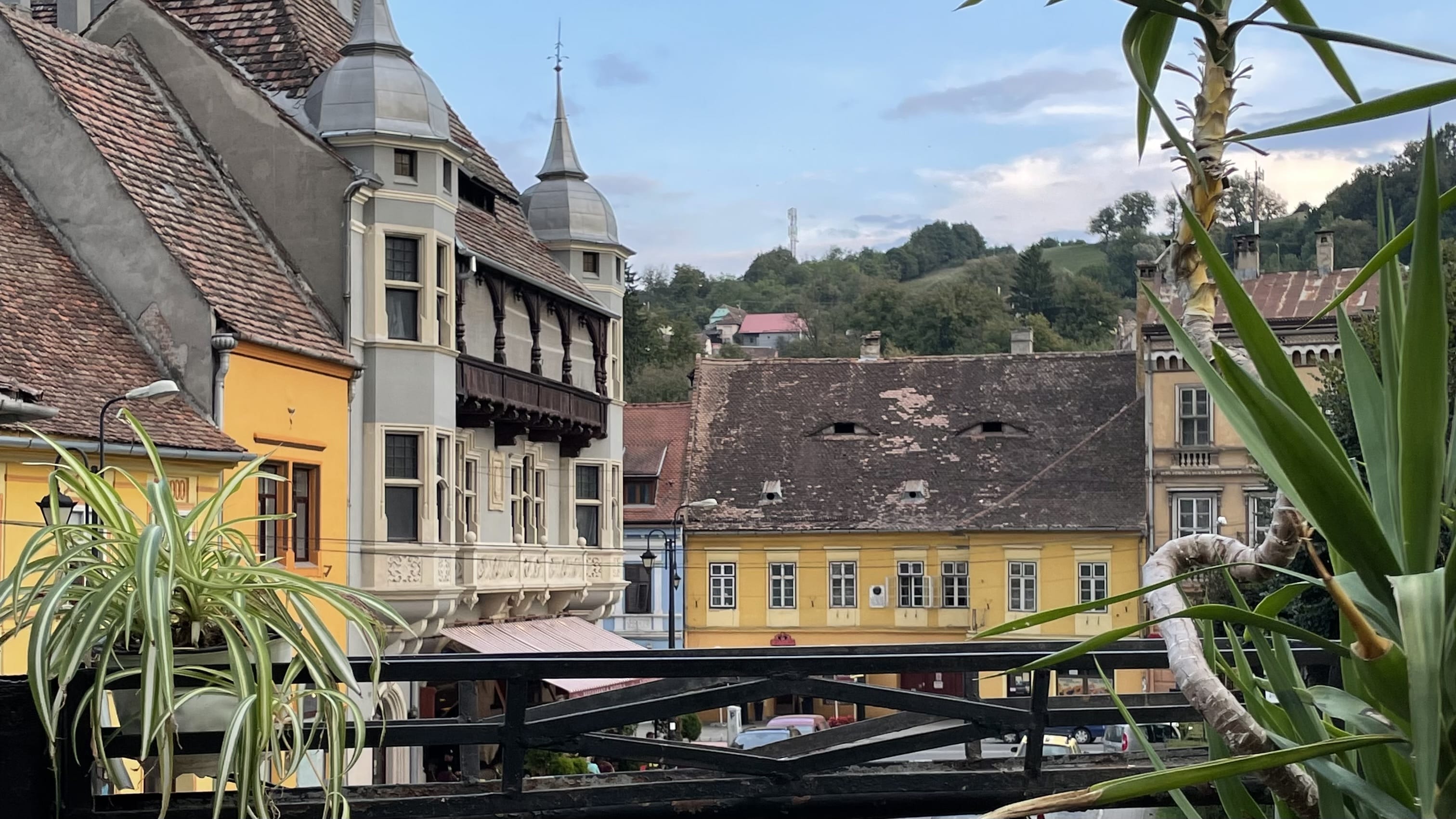
One of the things this town is known for is the houses with “eyes”—those small, arched openings just below the roofline. It really does make it look like the buildings are watching you—but they actually served a purpose. These were ventilation openings, used to air out attics where things like meat and grains were stored. Still, once you see them, it’s hard not to feel like the town is looking back at you—I kind of loved it.
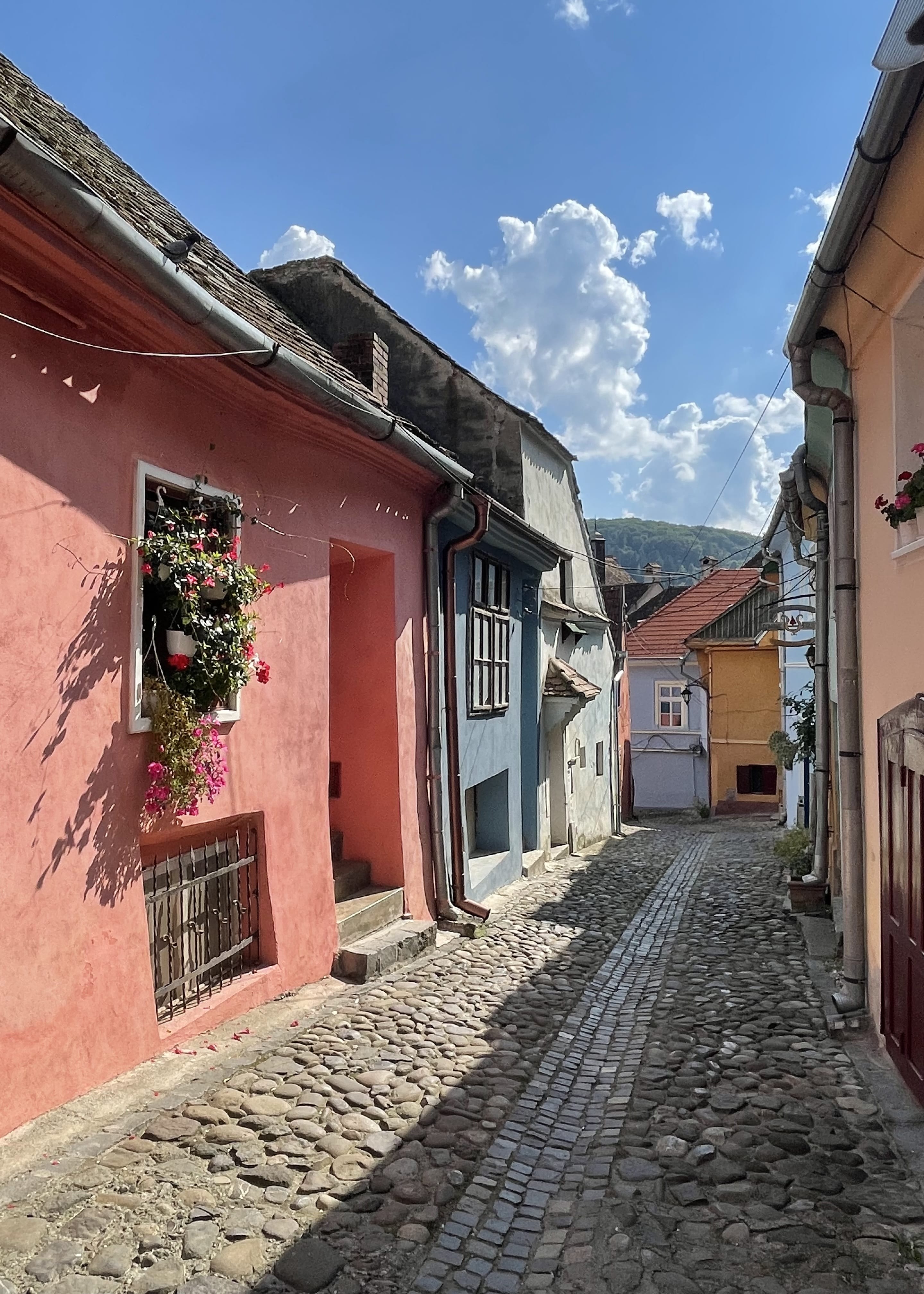
Sighișoara is incredibly easy to explore on foot. Narrow cobblestone streets wind past colorful buildings, small squares, and quiet corners that, if it weren’t for the other tourists and souvenir shops, could easily feel like stepping into another century.
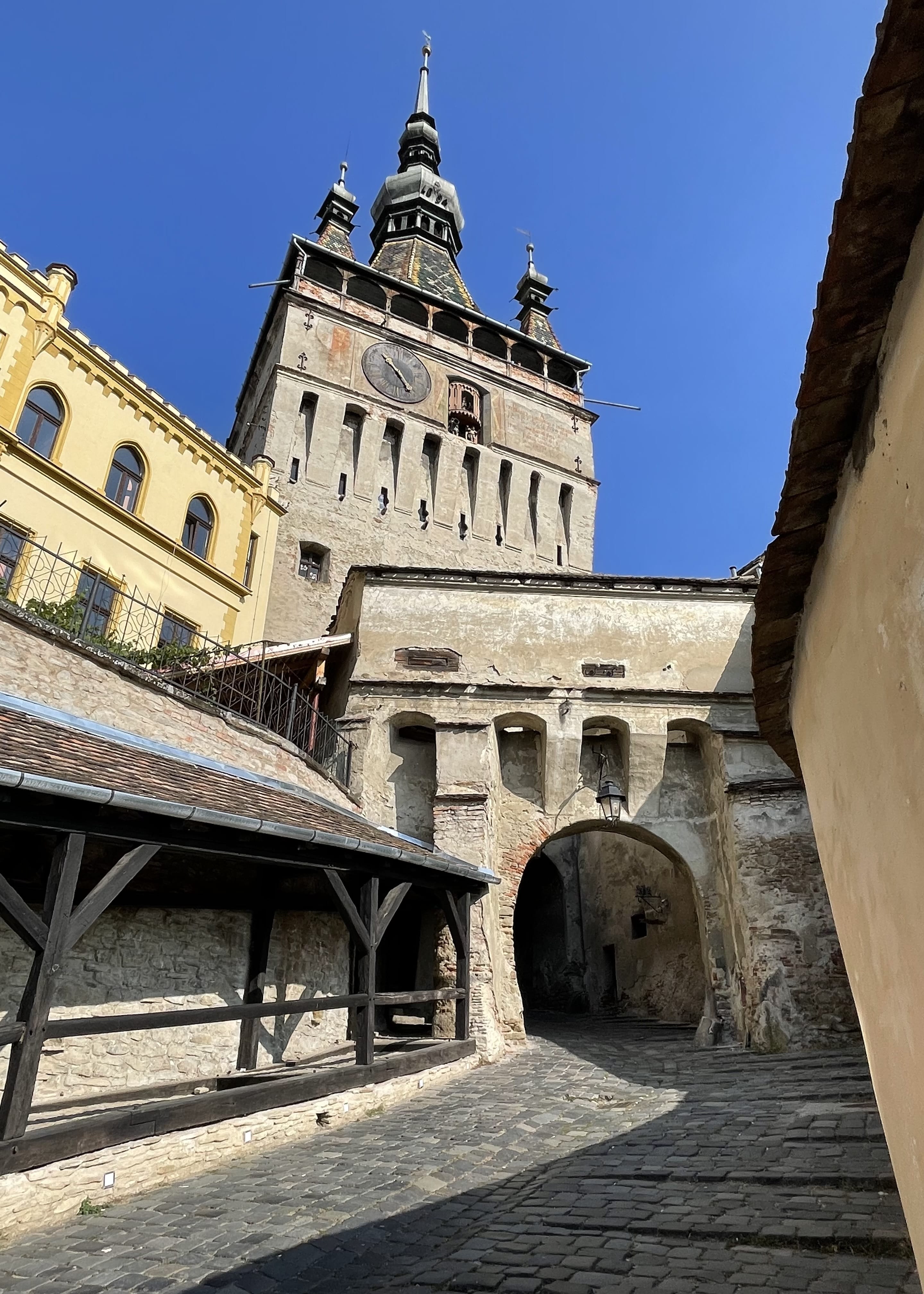
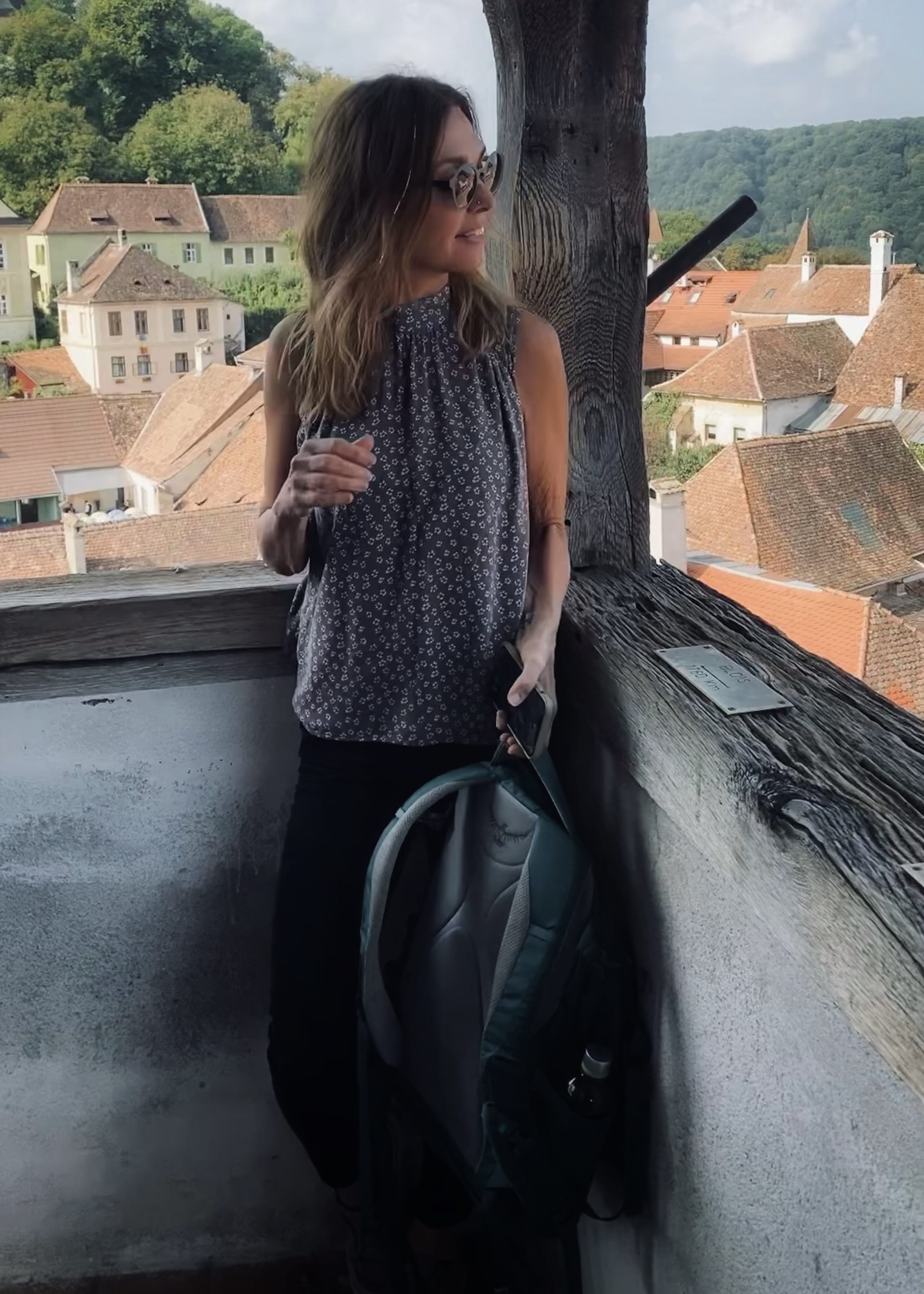
I made my way to the 14th-century Clock Tower—hard to miss since it dominates the skyline and acts as the main gateway into the old town. Inside, there’s a small museum, but the real reason to go up is for the view. From the top, you get a full look over the town—red rooftops, church spires, and the surrounding hills stretching out in every direction.
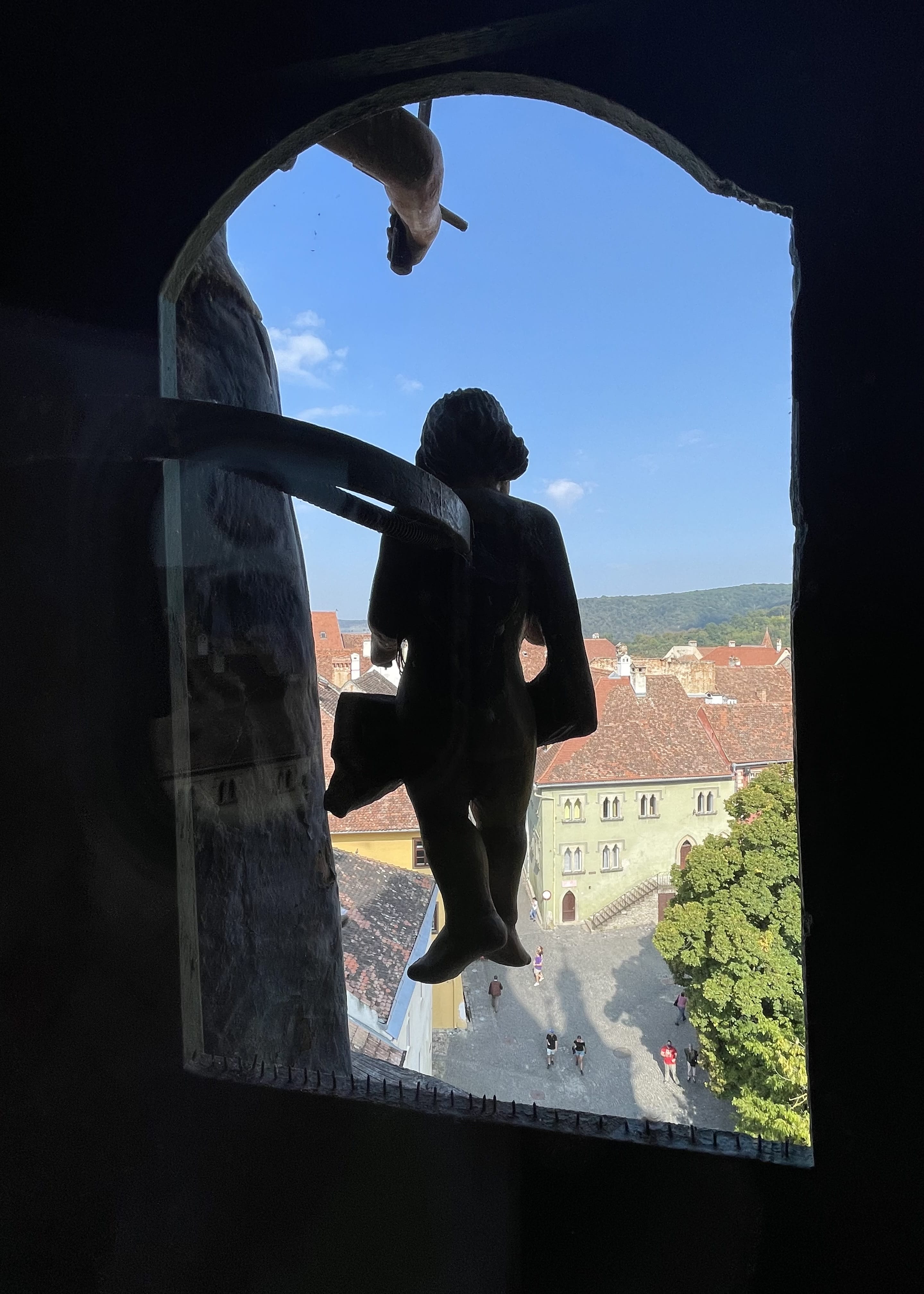
The roof is worth noticing too, covered in patterned tiles and topped with a tall spire you can spot from just about anywhere in town. Below the clock, there’s also a small mechanical display with wooden figures that mark the time, moving at set intervals throughout the day.
From there, I wandered over to a bright yellow building with a small plaque outside—one of the most talked-about spots in town. It’s known as the birthplace of Vlad the Impaler.
If the name doesn’t immediately ring a bell, he’s the 15th-century ruler often linked to the legend of Dracula. The connection is more literary than real—Bram Stoker borrowed the name, but the character has very little to do with the actual man. Vlad himself was known for his brutal methods, which is where the darker reputation comes from.
It’s now home to a restaurant.
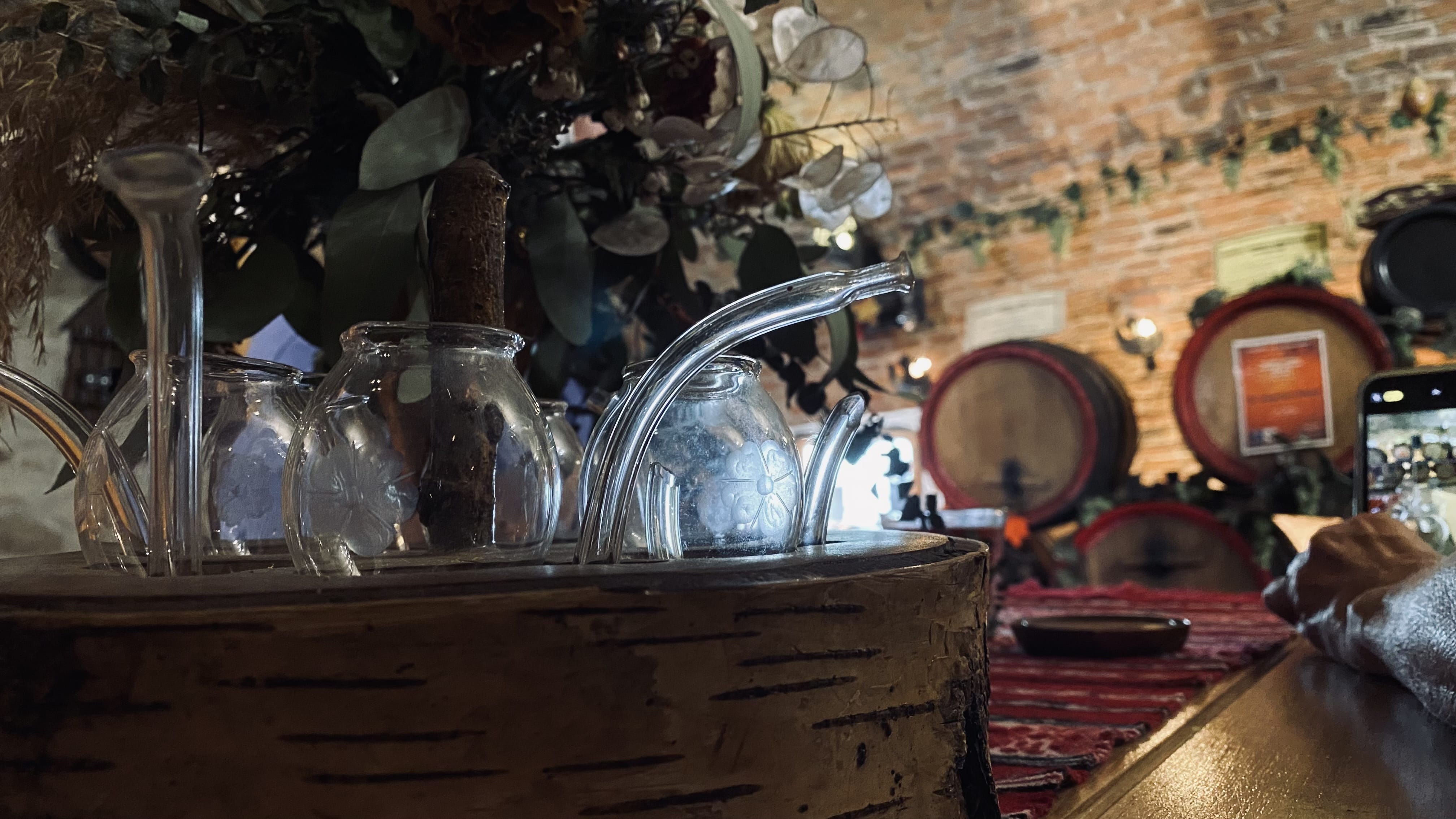
Later, I stopped at a small cellar called Pivnița lui Teo for a liquor tasting. Inside, it was all brick walls, wooden barrels, and long tables set with small glasses waiting for us.
They were local spirits—mostly țuică and palincă—made from things like plums, pears, and apricots. Strong is probably the best way to describe it, but also surprisingly good and definitely something meant for sipping.
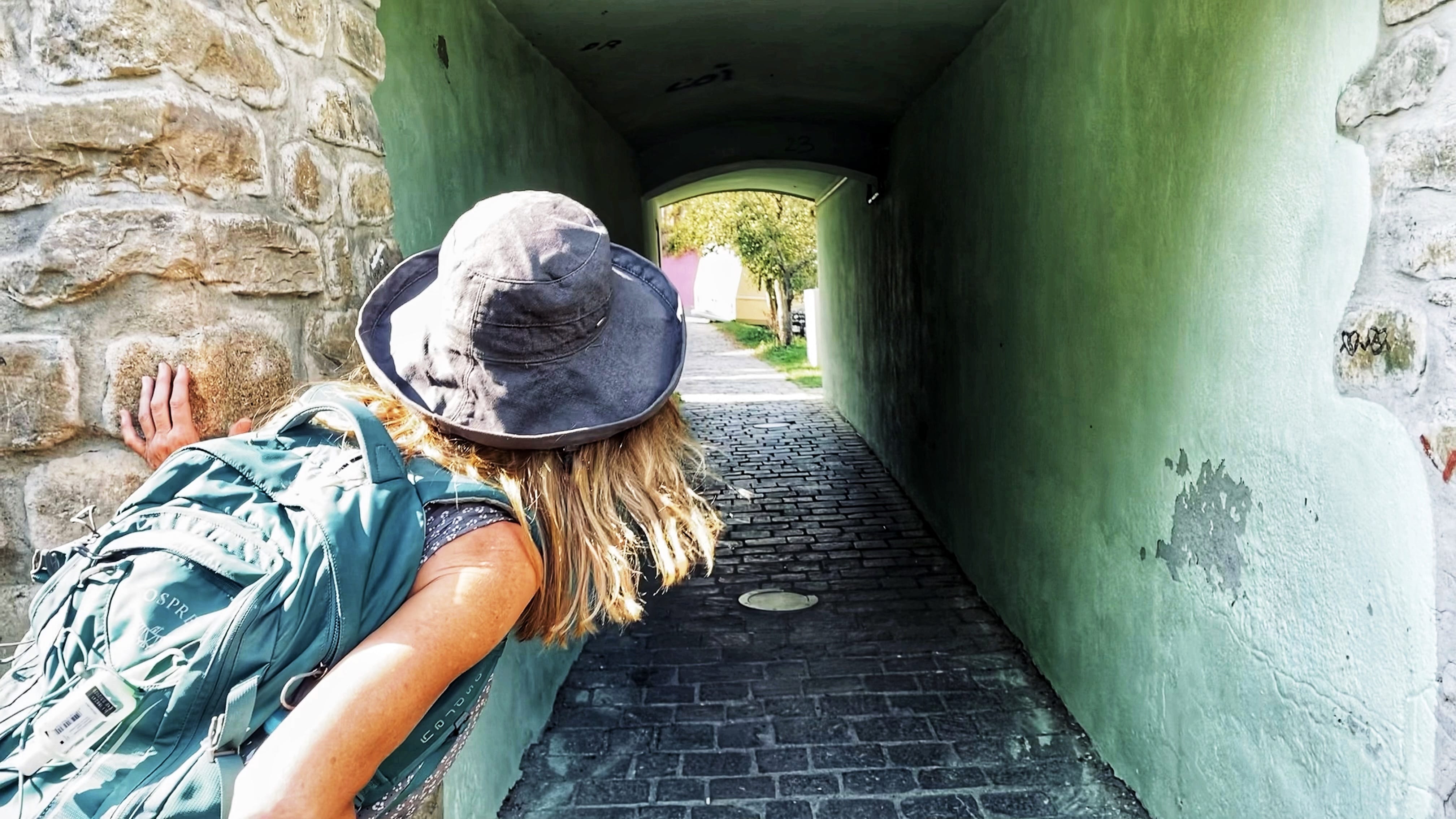
After lunch, I continued exploring, moving through arched passageways in the citadel walls, down uneven cobblestone paths, and into quiet corners. Every turn seemed to lead to something different—another view, another tower, another stretch of wall.
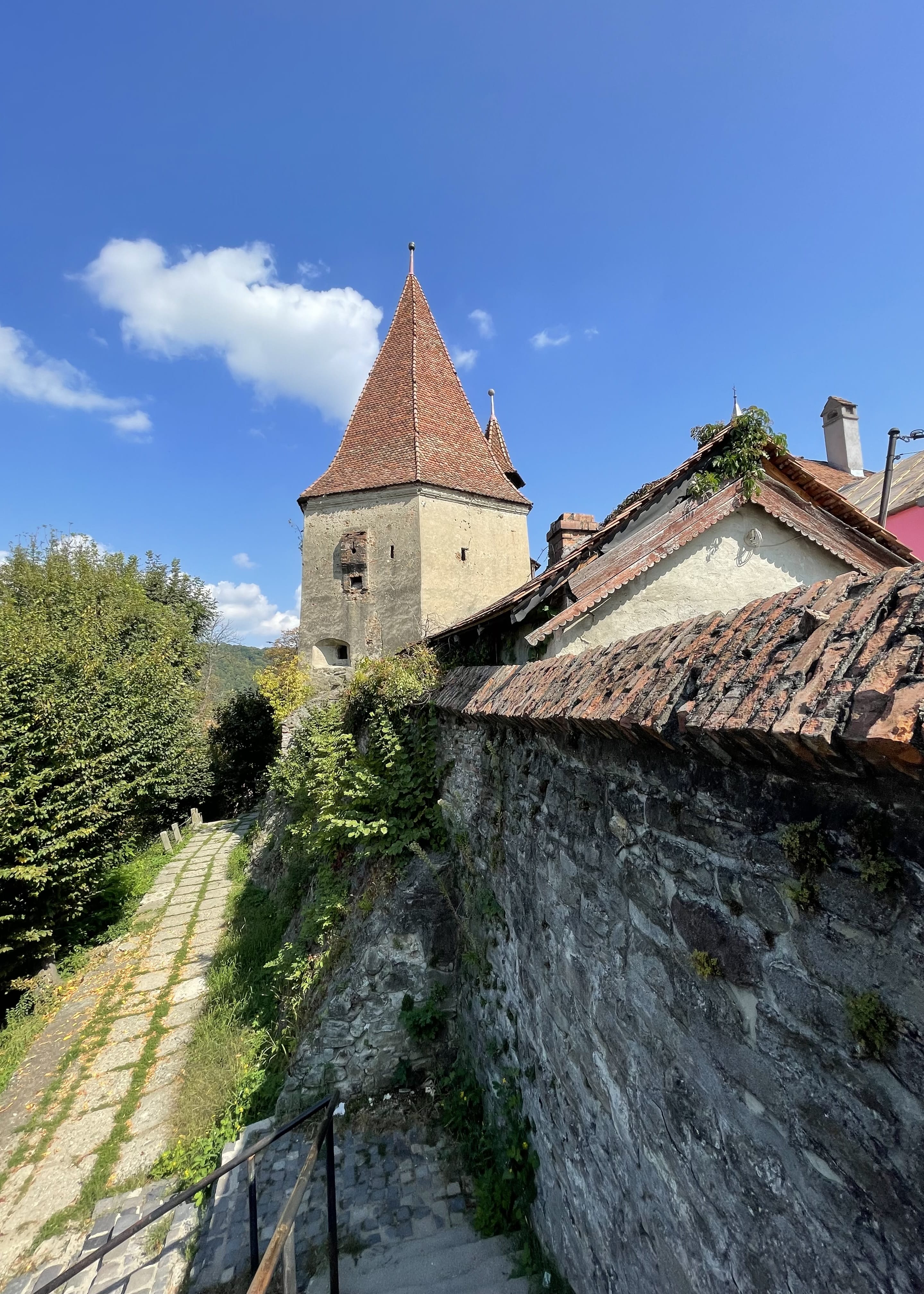
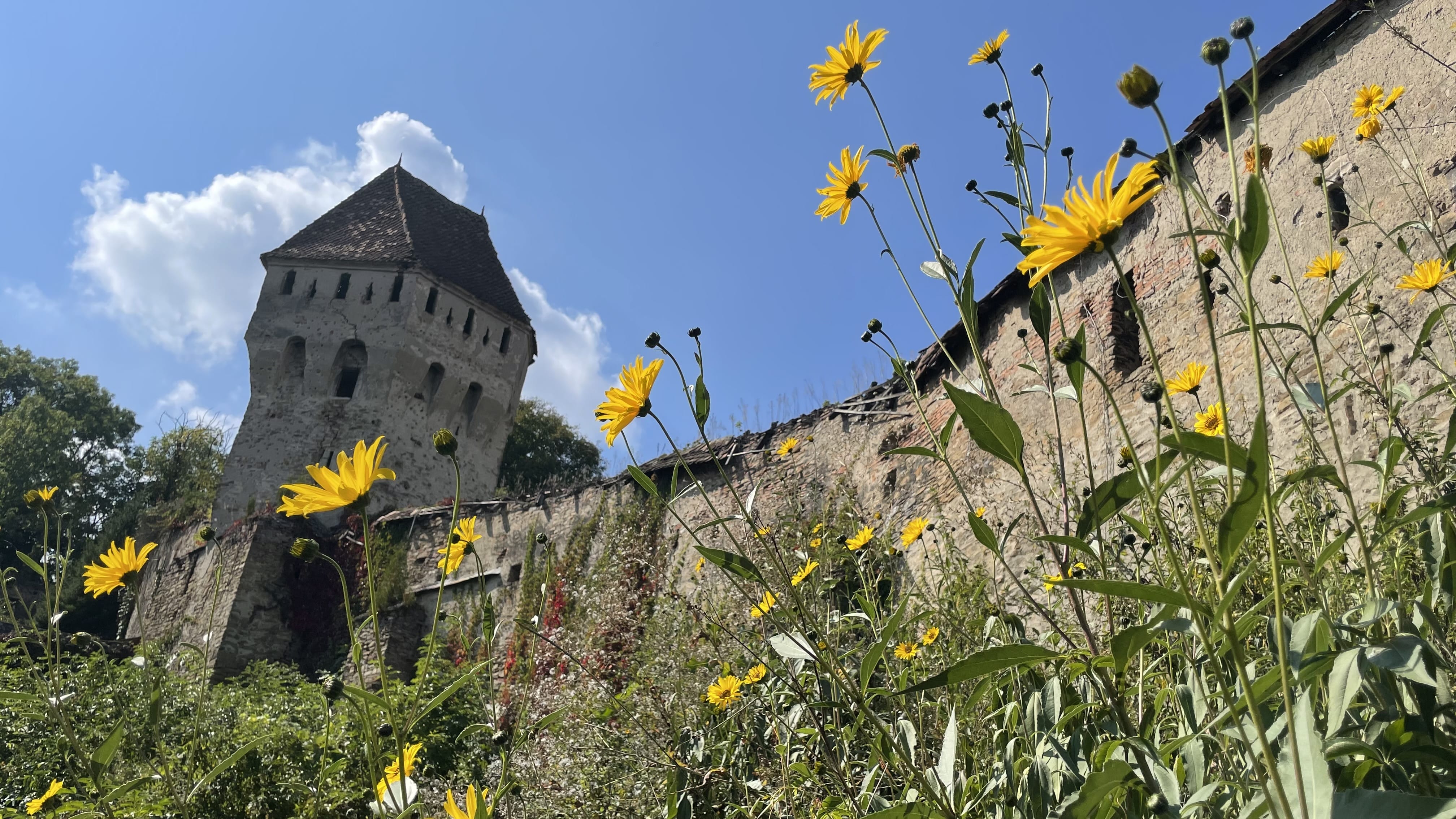
Sighișoara is a fortified Saxon town, and you can still see sections of the original defensive walls and towers built to protect it. Each tower was maintained by a different guild—tailors, shoemakers, tinsmiths—each responsible for defending their section of the city. Some of the towers are easy to spot; others you might walk right past without realizing what they are.
I made my way through the covered wooden Scholars’ Staircase, which dates back to the 1600s. It creaks a bit under your feet as you go, and the light filters through the slats as you climb. It leads up to the Church on the Hill, an old church surrounded by a small cemetery, with views back over the town.
Not sure why, but it’s always interesting to walk through old cemeteries—reading the headstones and wondering about the people who once lived here.
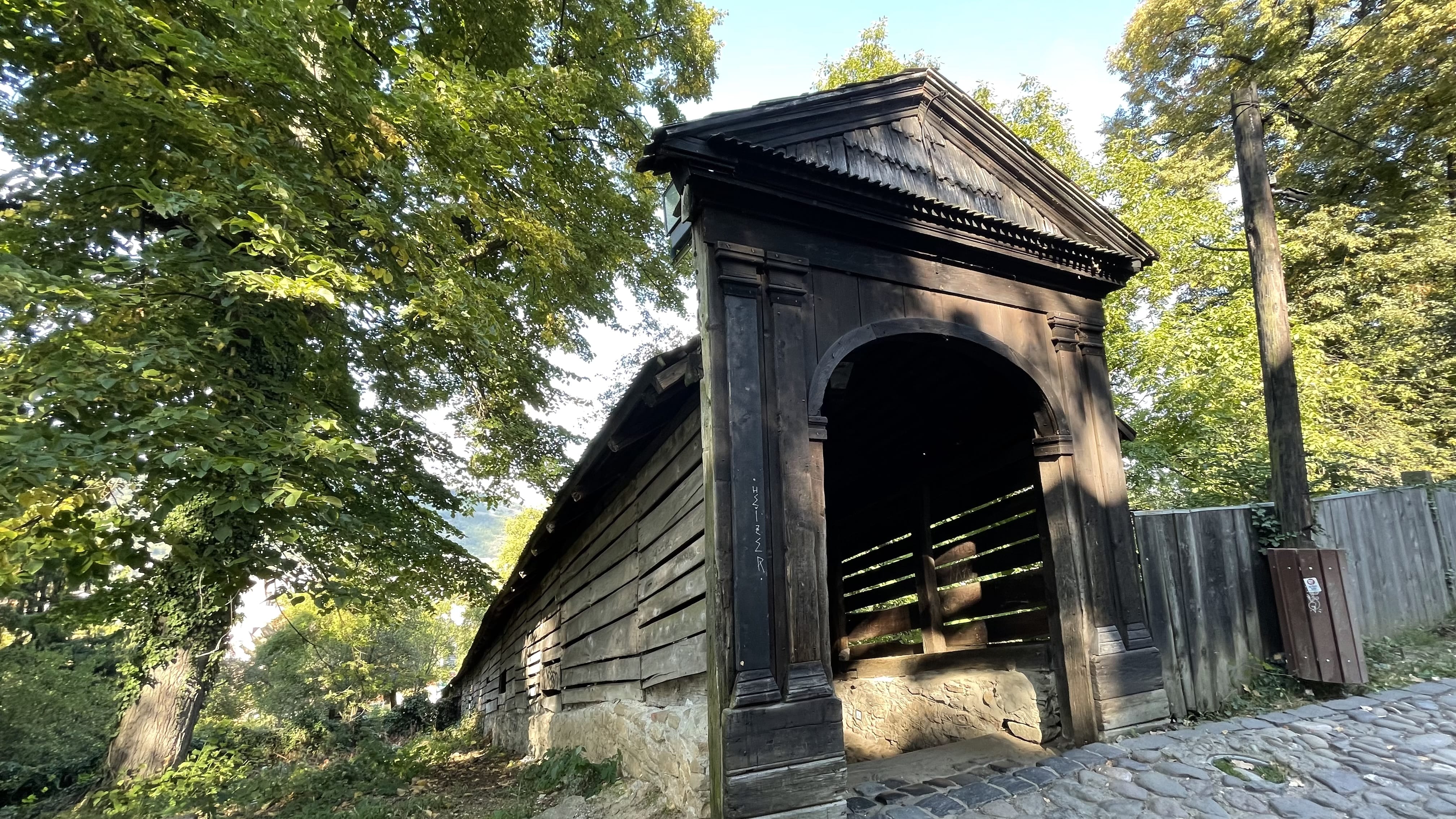
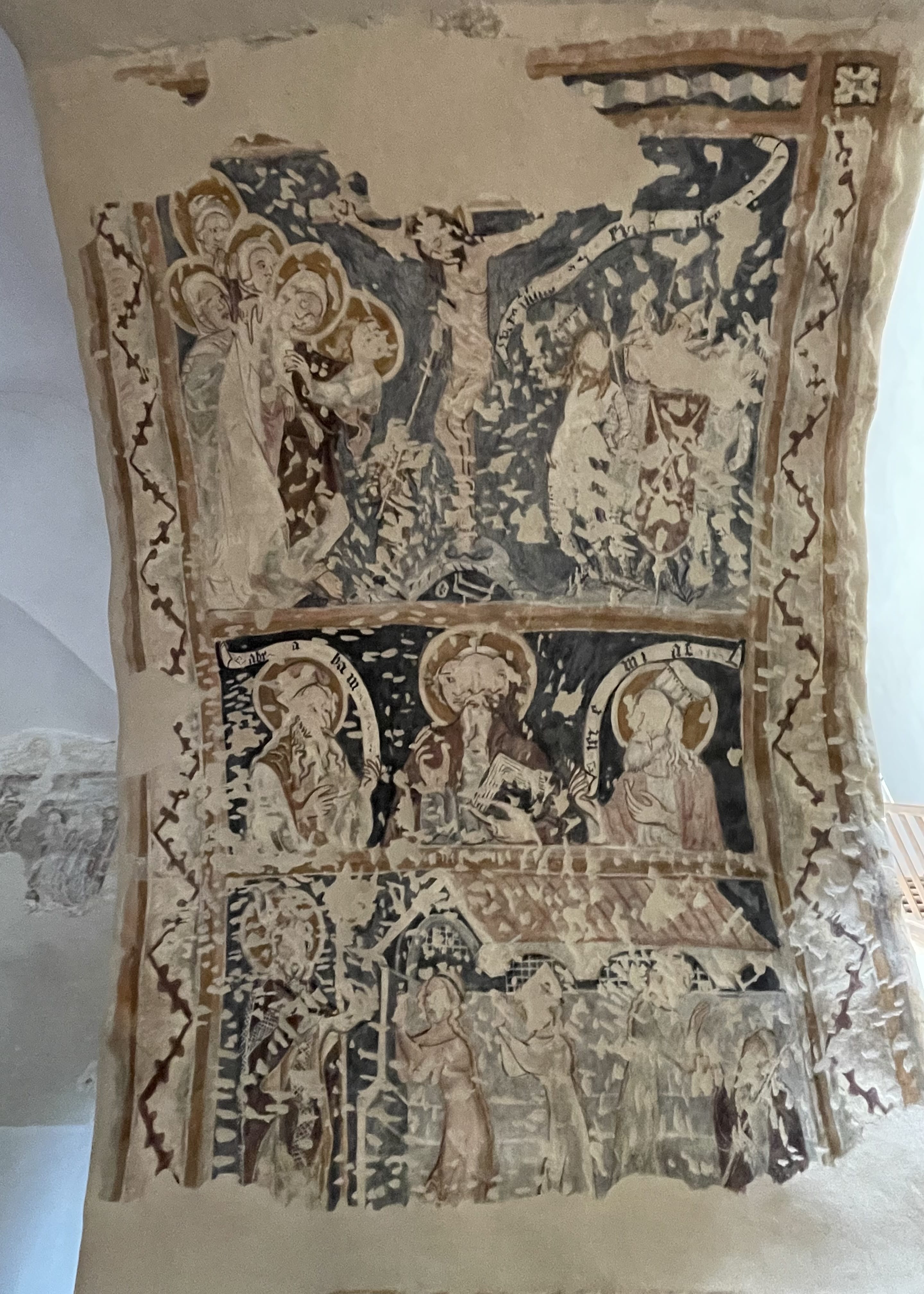
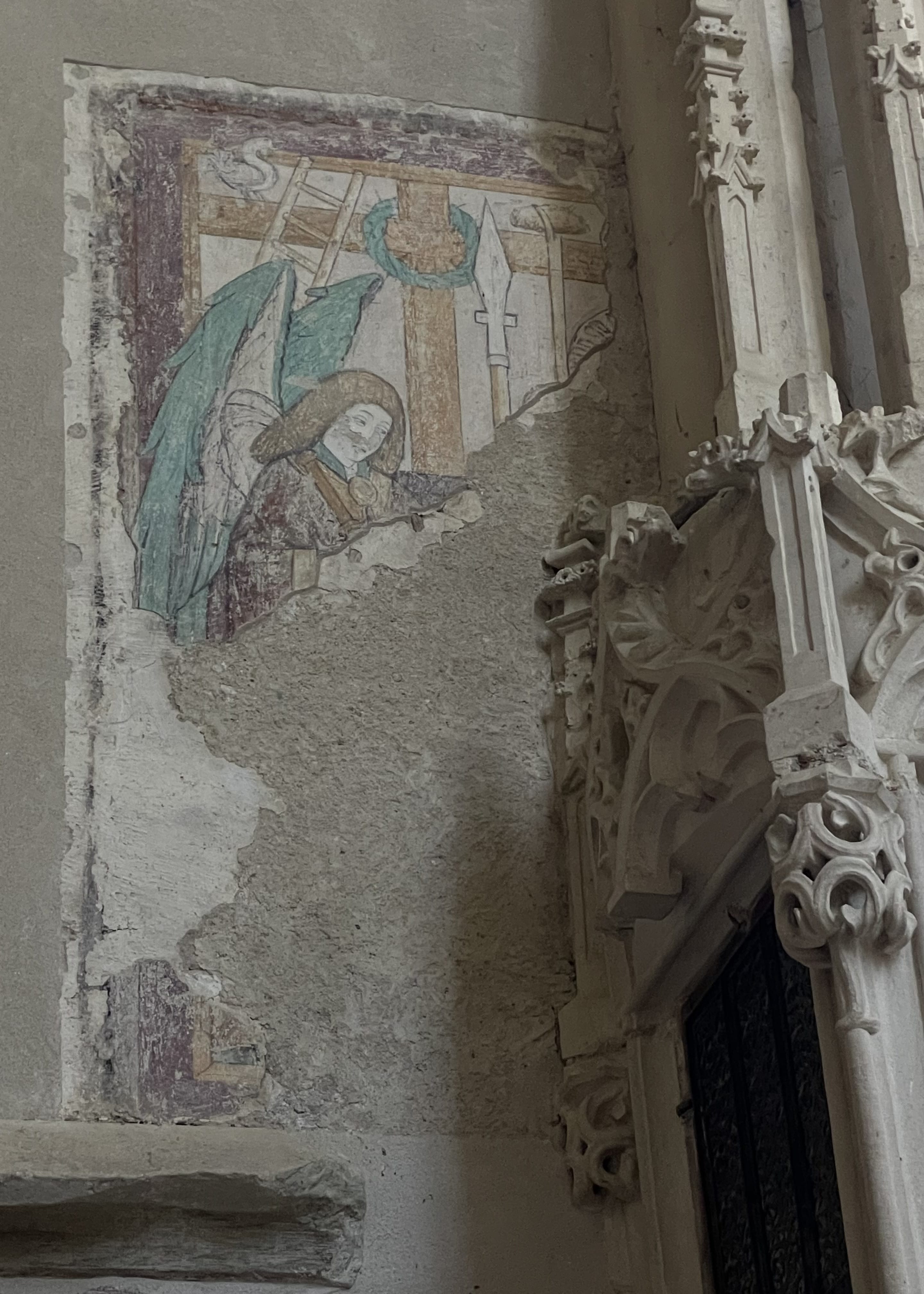
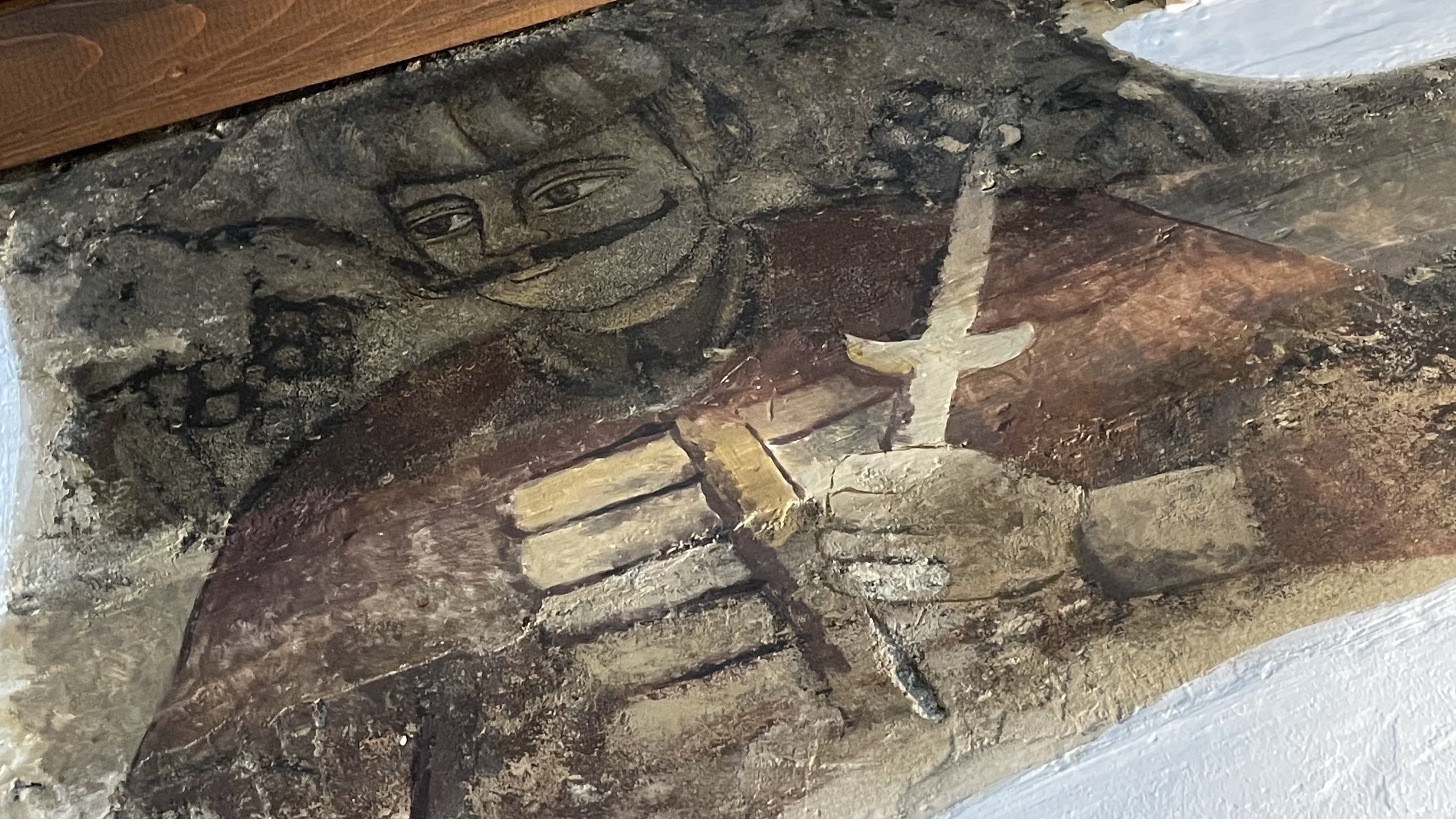
Inside the church, the frescoes are faded but still visible—worn down over time, but just enough remains to give you a sense of what once covered the walls. Like a lot of places here, it feels quiet and slightly untouched.
Back down in the citadel, we continued wandering—past more towers, along the walls, and through streets lined with pastel-colored houses and flower boxes spilling over windowsills. I was there in September, and the flowers still in bloom added to how picturesque everything felt.
Could I have spent another day here? Absolutely. But with so much more of Romania still ahead, two nights and a full day felt like a good balance. It gave me enough time to explore without feeling like I was missing out on what came next.
I started the day exploring Salina Turda on a guided tour before continuing to Alba Iulia.
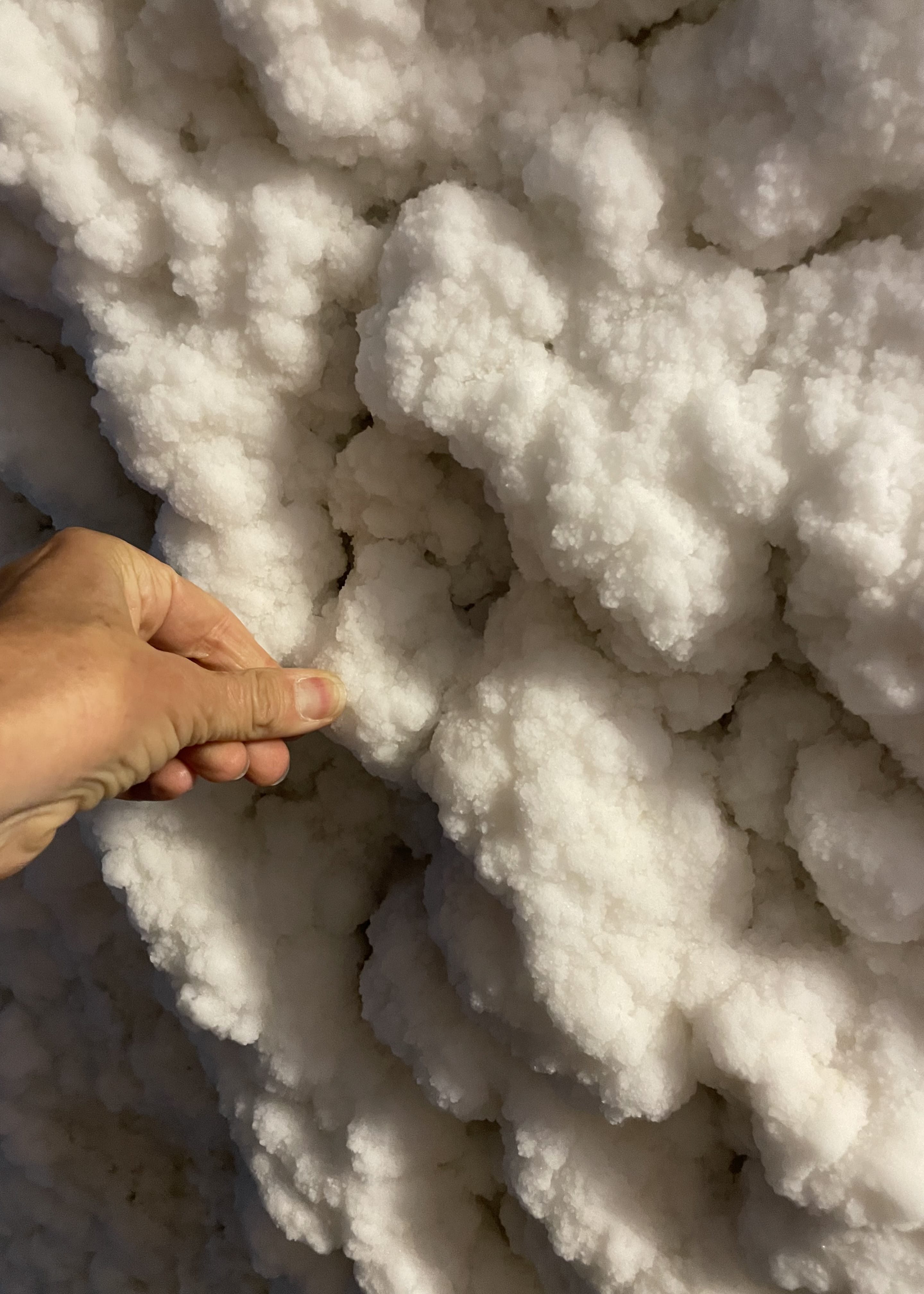
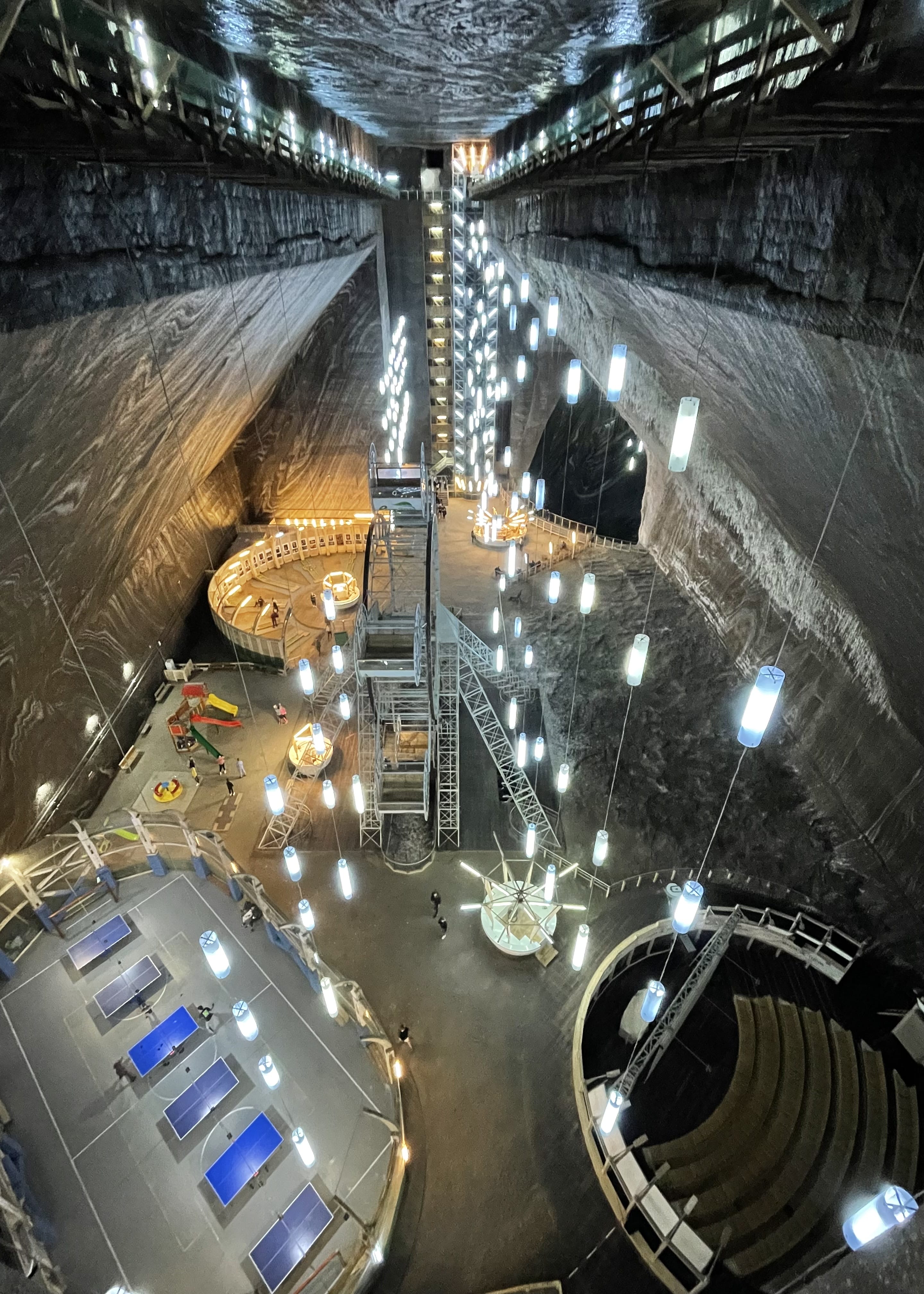
Once a working salt mine, it’s now equal parts history lesson and amusement park. To reach the lowest level, you descend what feels like endless staircases—about 13 in total, nearly 400 feet underground. Along the way, you start to see it: glowing lights in the distance, the outline of rides in a space that was once completely dark.
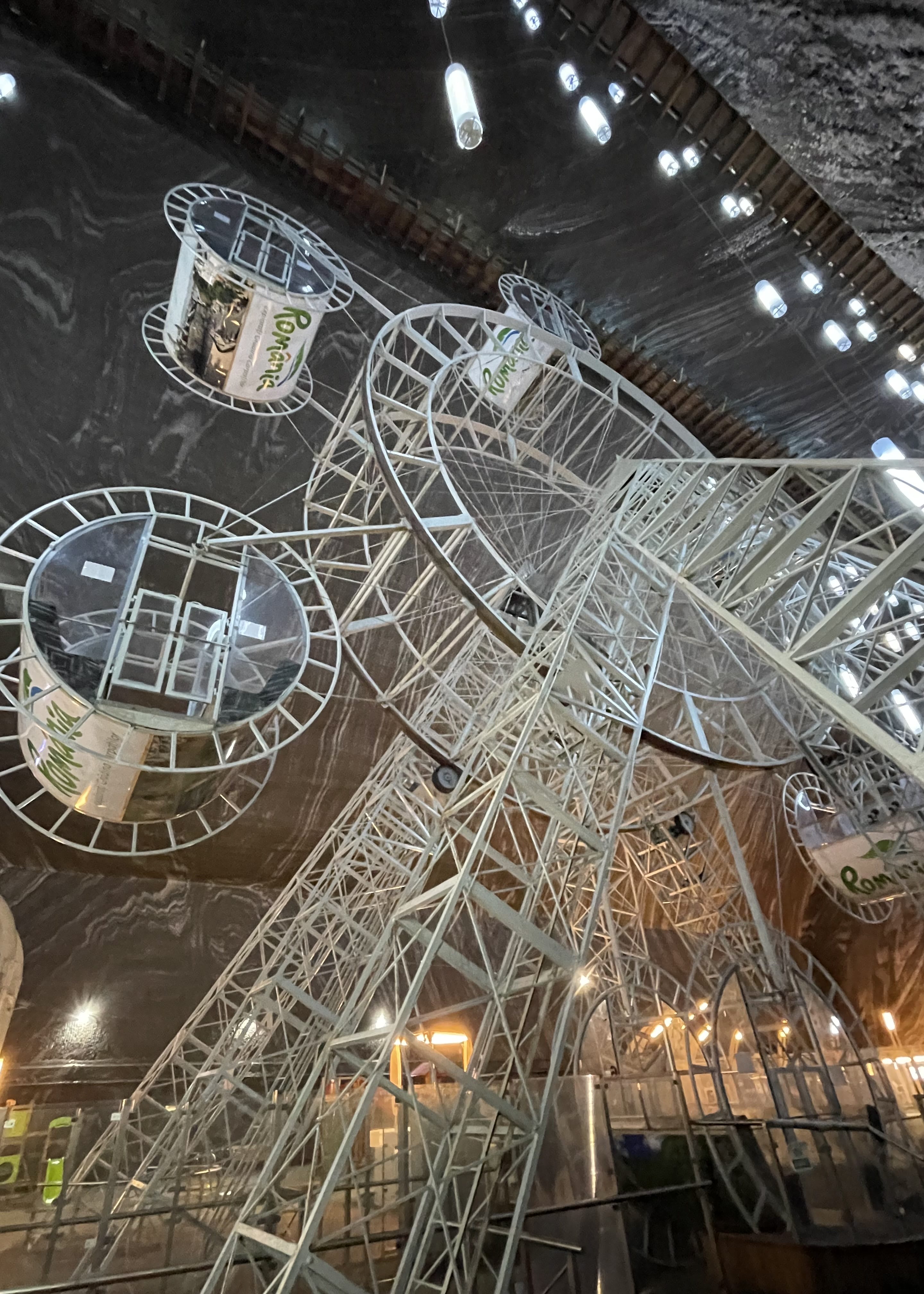
At the bottom is a vast cavern with a subterranean lake and a small island lit up by almost futuristic-looking structures. I rented one of the little rowboats and paddled around, which ended up being the most fun part. The Ferris wheel, on the other hand, was pretty underwhelming.
Mining here ended in the early 20th century, and the space has been repurposed several times since. It was used as a shelter during World War II and later as a cheese storage facility until the 1990s.
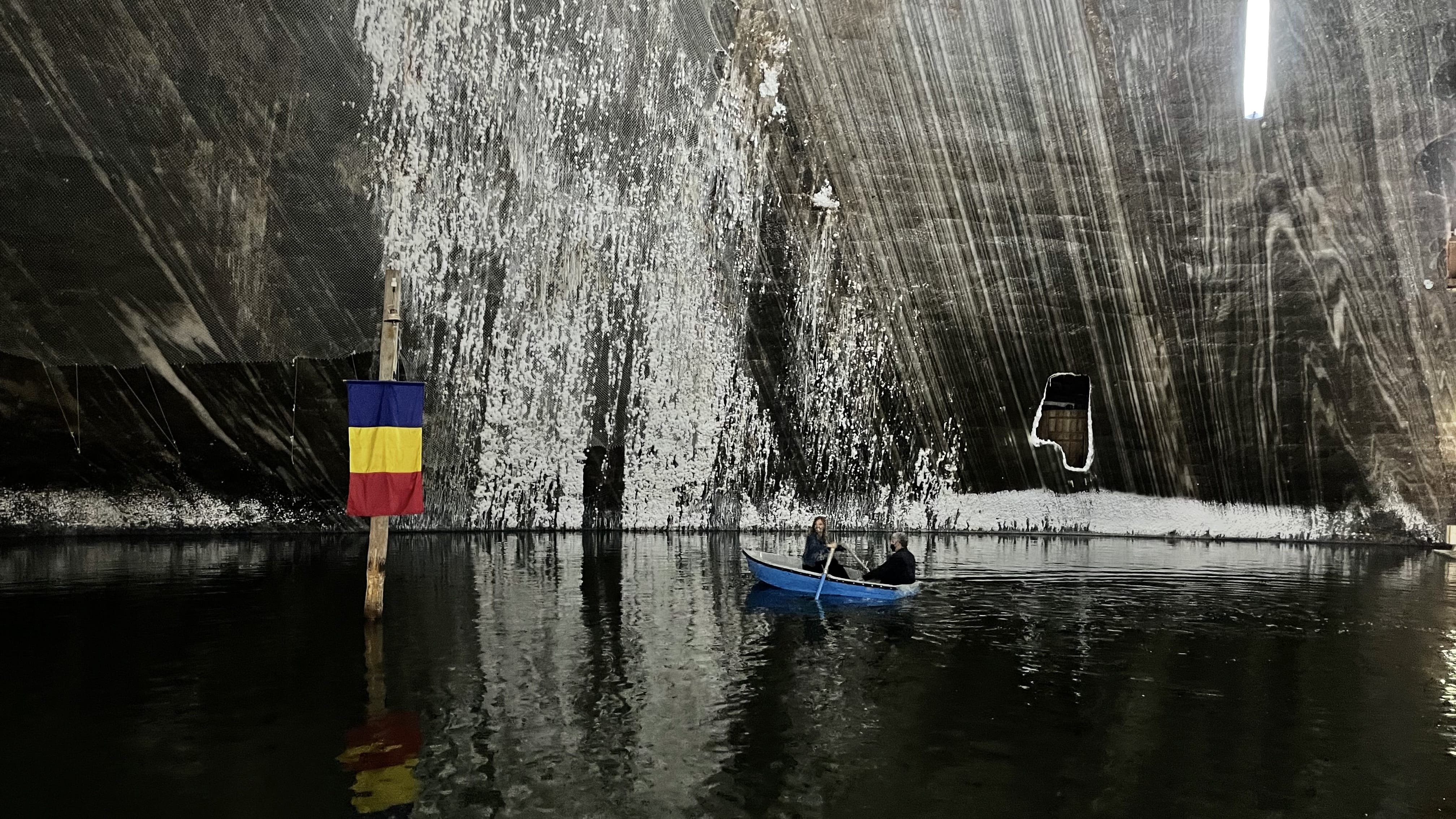
Was it unique? Absolutely. But I couldn’t quite connect the Ferris wheel and amusement features with the idea of a former salt mine.
The only downside was how much time I ended up spending here. After exploring the mine, rowing around the underground lake, and taking it all in, I still had plenty of time left. Personally, I would’ve preferred spending a little less time here and a little more time exploring Alba Iulia later that day.
Once I’d had my fill of rowing around the underground lake, I headed back up. (There is an elevator, but it’s slow and only holds a few people at a time, so I took the stairs.) Once above ground, I found a nearby café and enjoyed a drink before continuing on.
To be fair, the mine itself was genuinely interesting. But the amusement side of it? Not really for me. I can only imagine how crowded it gets—I happened to be there when it wasn’t too bad, but if it had been packed, I probably would’ve felt very differently.
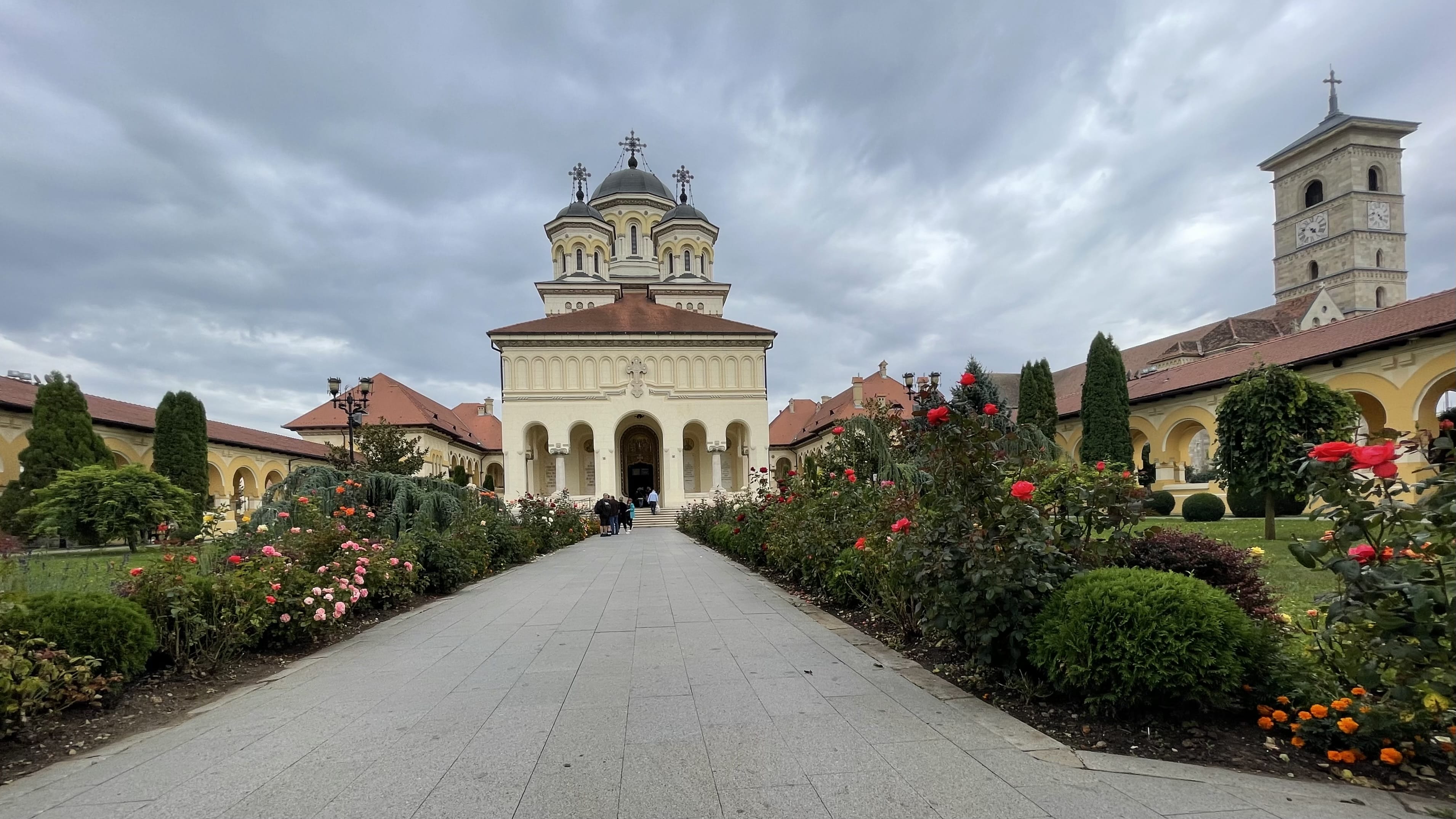
After leaving the salt mine, I continued on to Alba Iulia, a city built around the massive, star-shaped Alba Carolina Citadel. It was here that the union which created modern Romania was proclaimed in 1918. It may not be as picturesque as Brașov or Sighișoara, but it ended up being one of the most historically interesting places I visited.
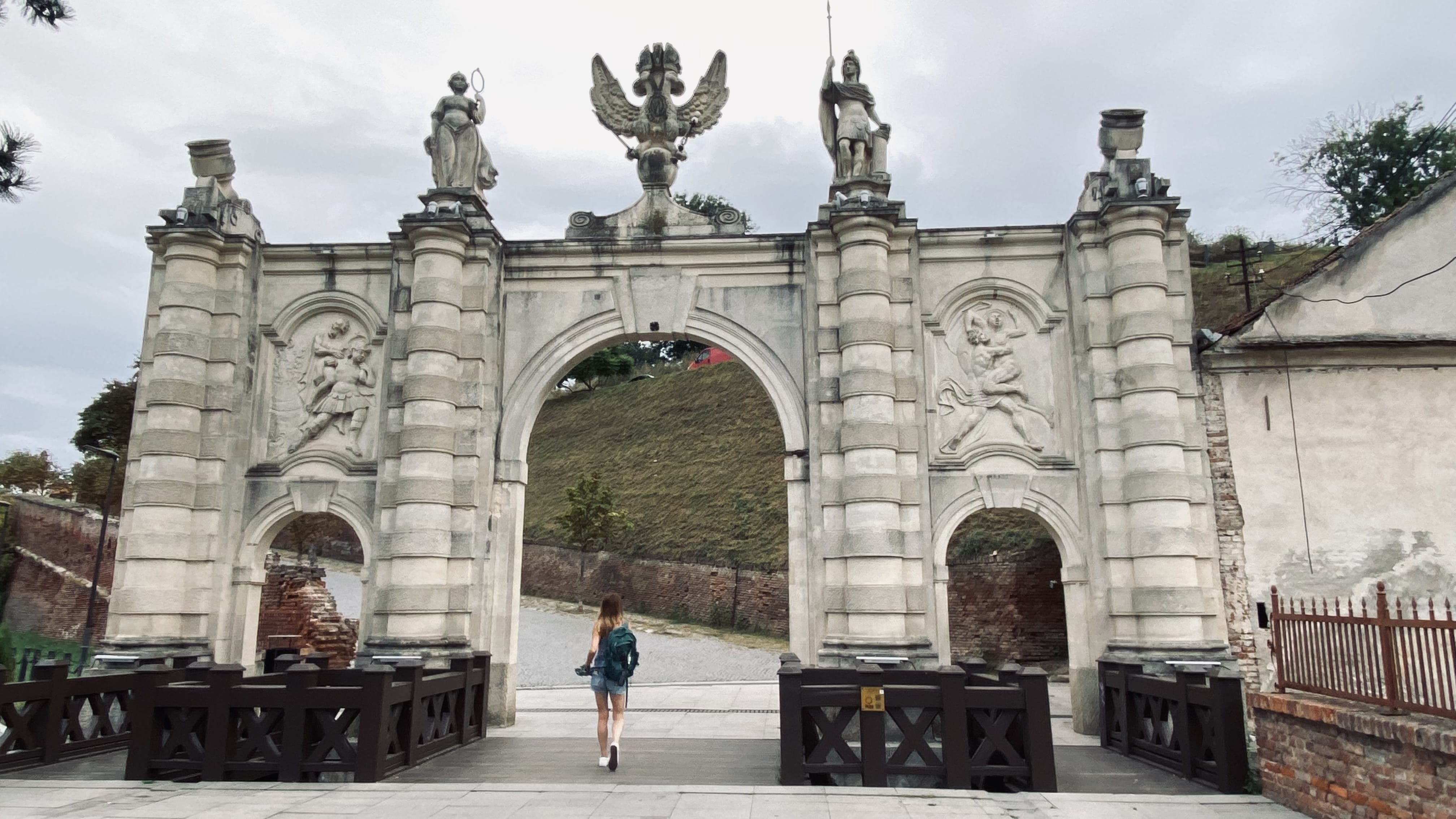
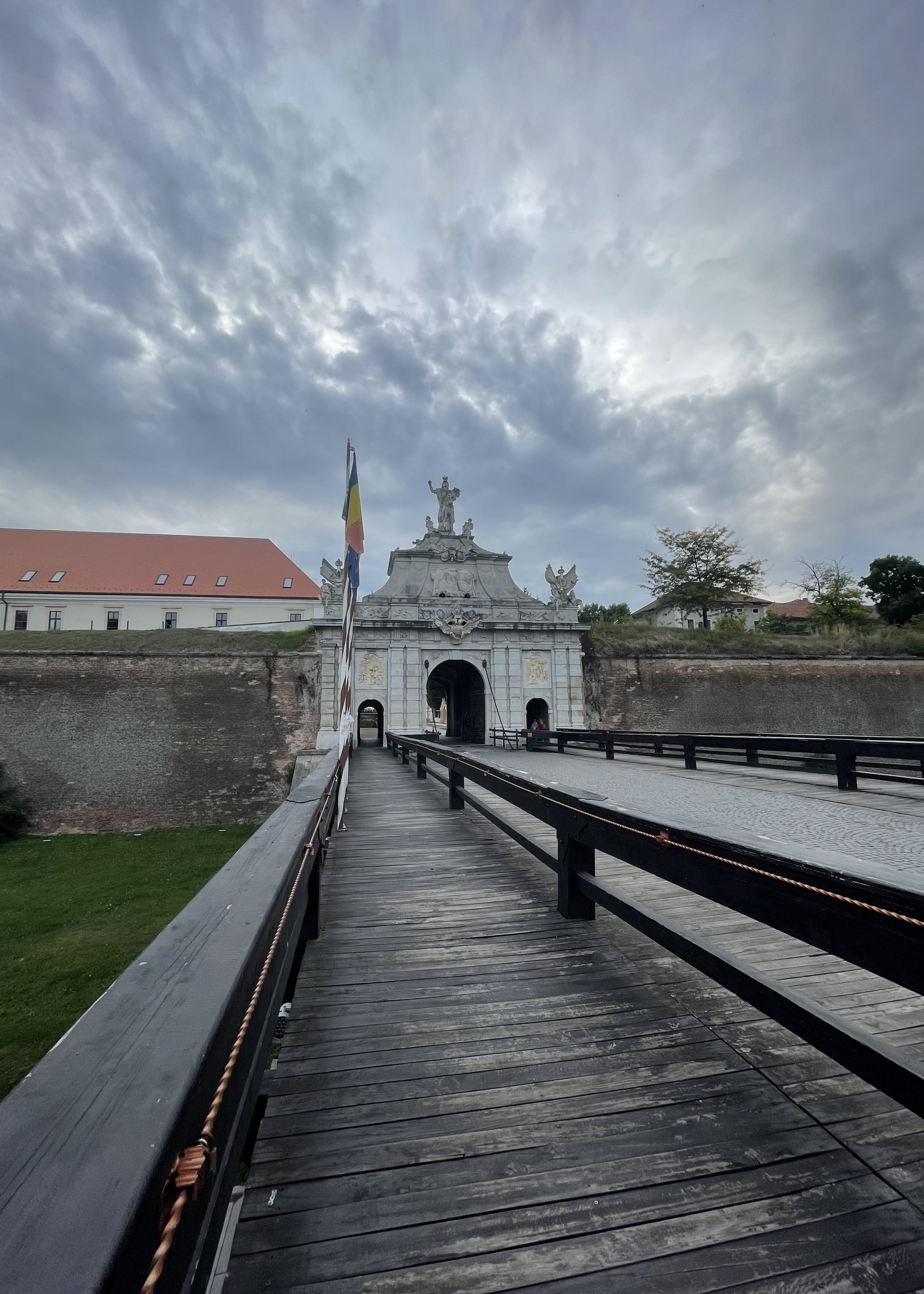
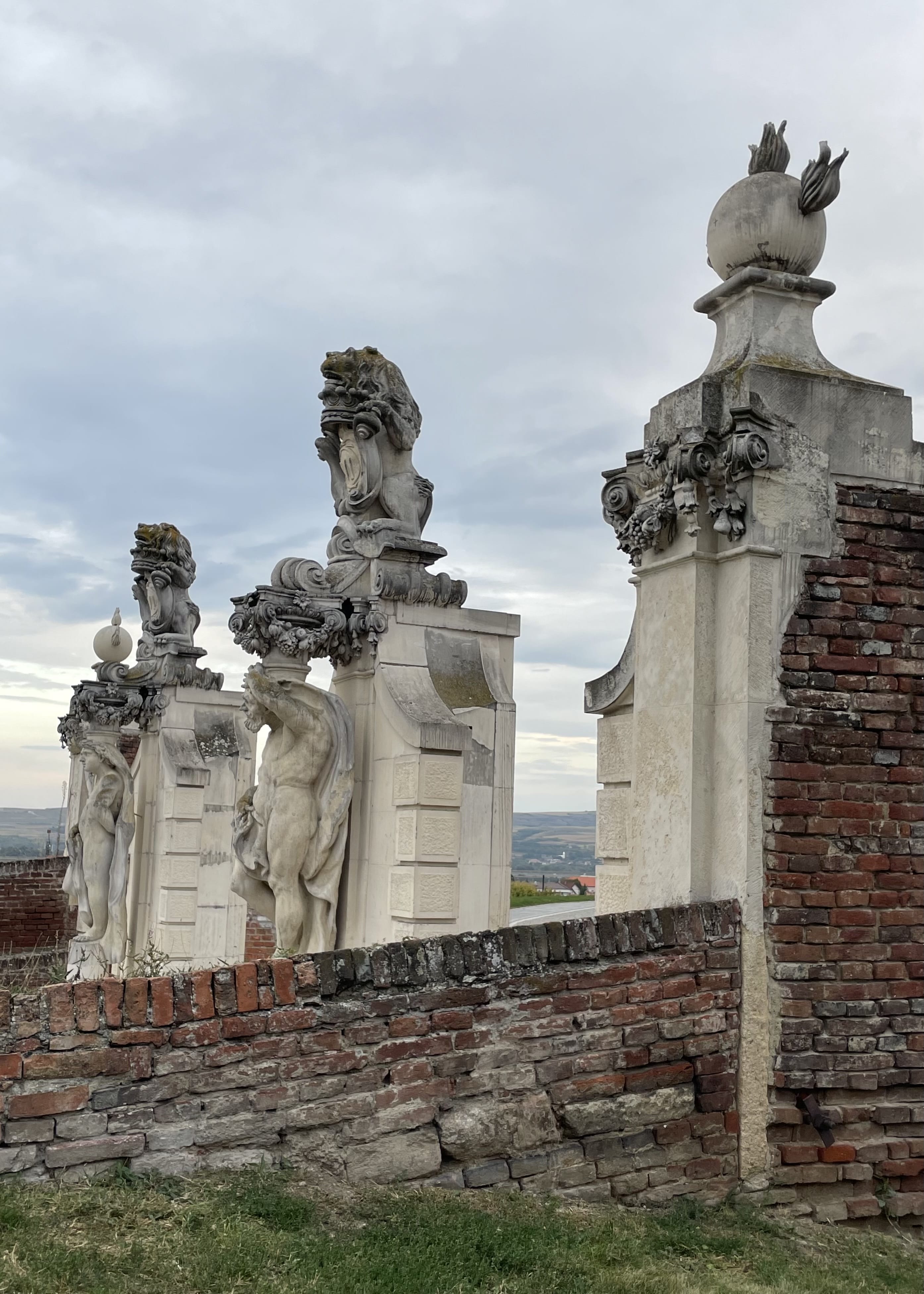
The fortress is part of the experience. You cross a long wooden bridge over what were once defensive trenches, heading toward one of the grand baroque gates—covered in statues, carved details, and figures that look like they’re guarding the entrance.
Wide paths, long stretches of brick walls, and layered fortifications spread out in every direction. It feels less like stepping into a single site and more like entering an entire contained world.
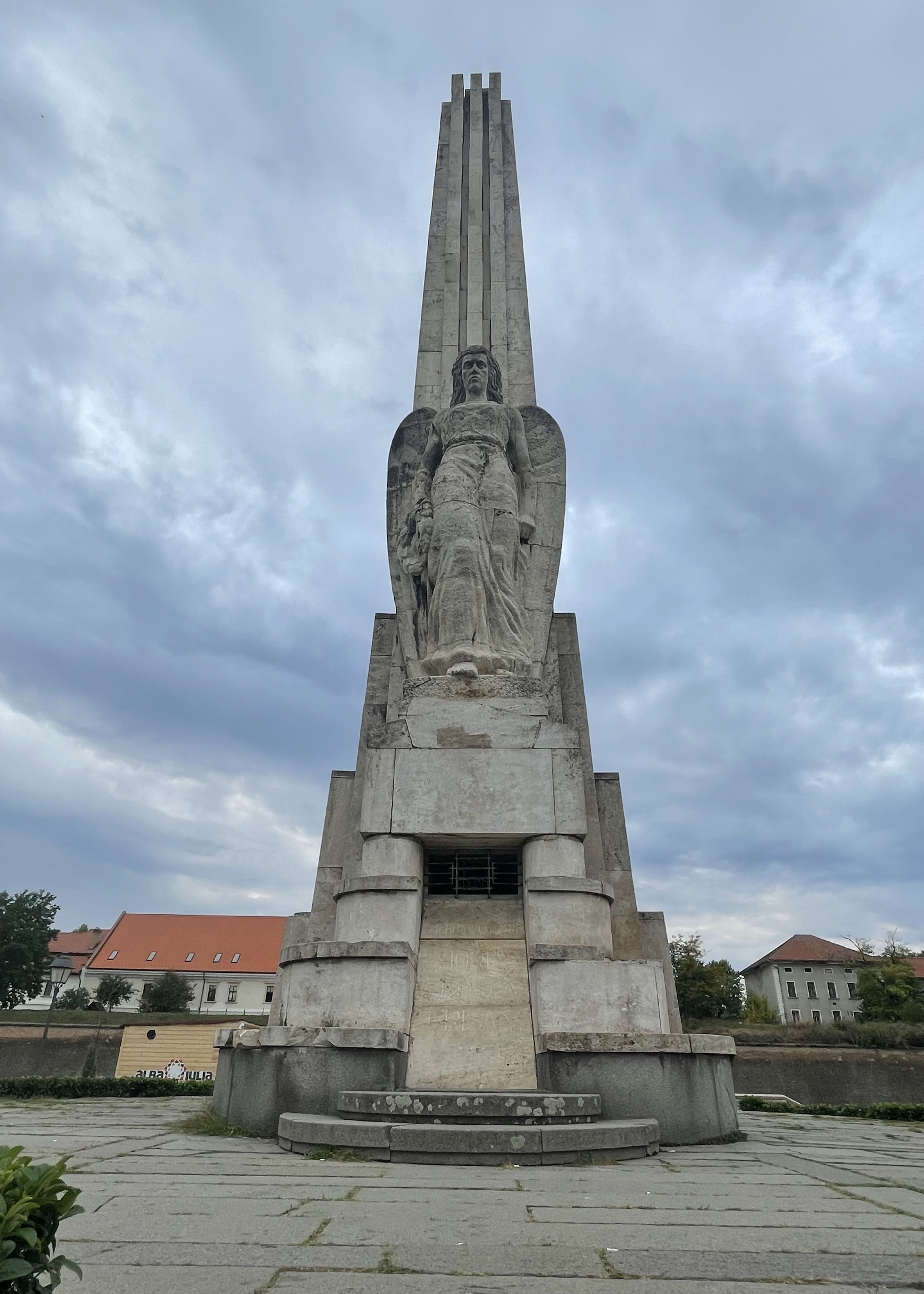
I wandered through the citadel, passing through multiple gates and open courtyards, following the walls to see where they led. Eventually, I came to a large open square with a tall stone monument rising in the center. From there, you can look out beyond the fortress and get a sense of why this was such a strategic location.
What I found most interesting was seeing so many different periods of history in one place. Roman ruins, medieval influences, and later Baroque architecture all come together inside the fortress.
That evening, we had dinner inside the fortress at Restaurant Cetățuie, a place that leans fully into the medieval theme.
The setting was theatrical—stone walls, vaulted ceilings, and servers dressed in period-style clothing carrying out heavy platters. It felt more like stepping into a scene than just sitting down to eat.
Was it a little touristy? Sure. But sometimes it’s fun to just go with it—especially in a place like this.
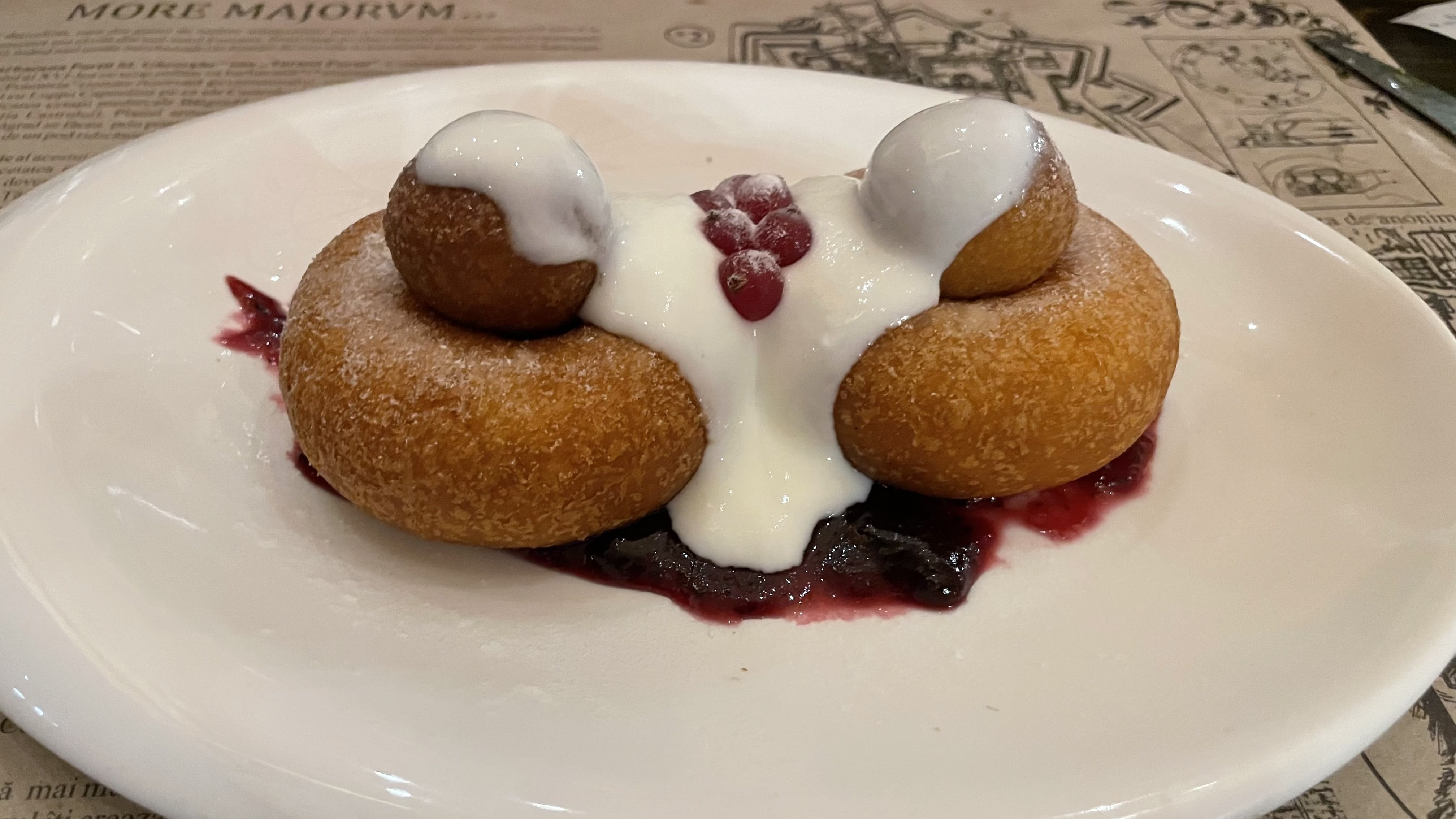
The meal was hearty and traditional, but my favorite part came at the end: papanași (pah-pah-NAH-sh).
This is one of Romania’s signature desserts, and it’s as good as it sounds. Think of a soft, fried doughnut made with cheese in the dough, topped with sour cream and a generous spoonful of fruit jam—usually blueberry or sour cherry. Then, for no real reason other than tradition, a smaller dough ball sits on top like a little cap.
My plate arrived with the papanași resting in a pool of berry sauce, the sour cream slowly melting down the sides.
Sweet, tangy, rich—one of those desserts you don’t forget.
By the end of the day, I’d gone from underground salt caverns to fortress walls and centuries of history. And if I’m being honest, I would’ve traded some of that underground time for a little more time wandering the fortress.
The next morning, I spent a little more time exploring Alba Iulia before continuing toward Sibiu. I visited both cathedrals inside the citadel before taking one last walk through the fortress.
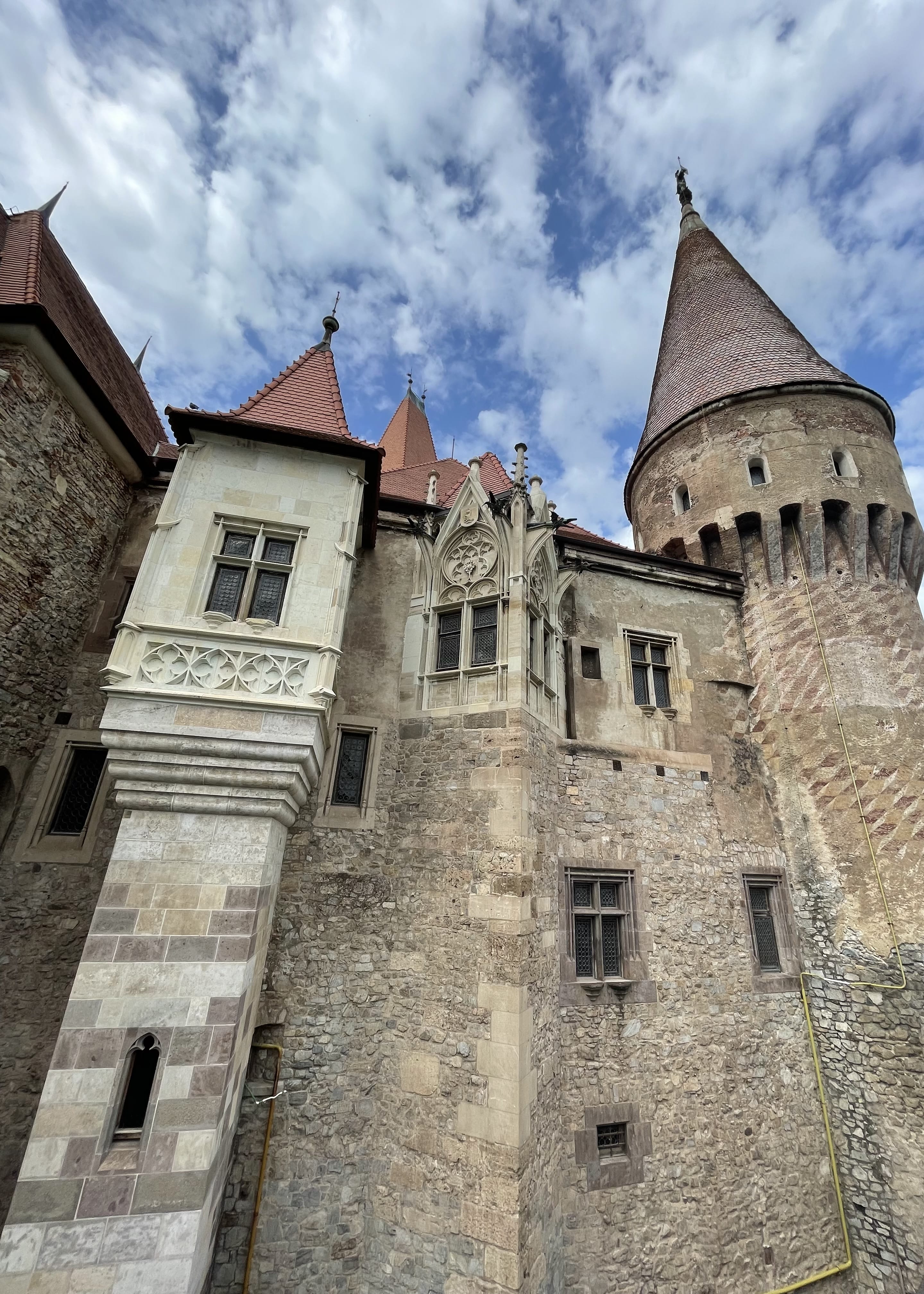
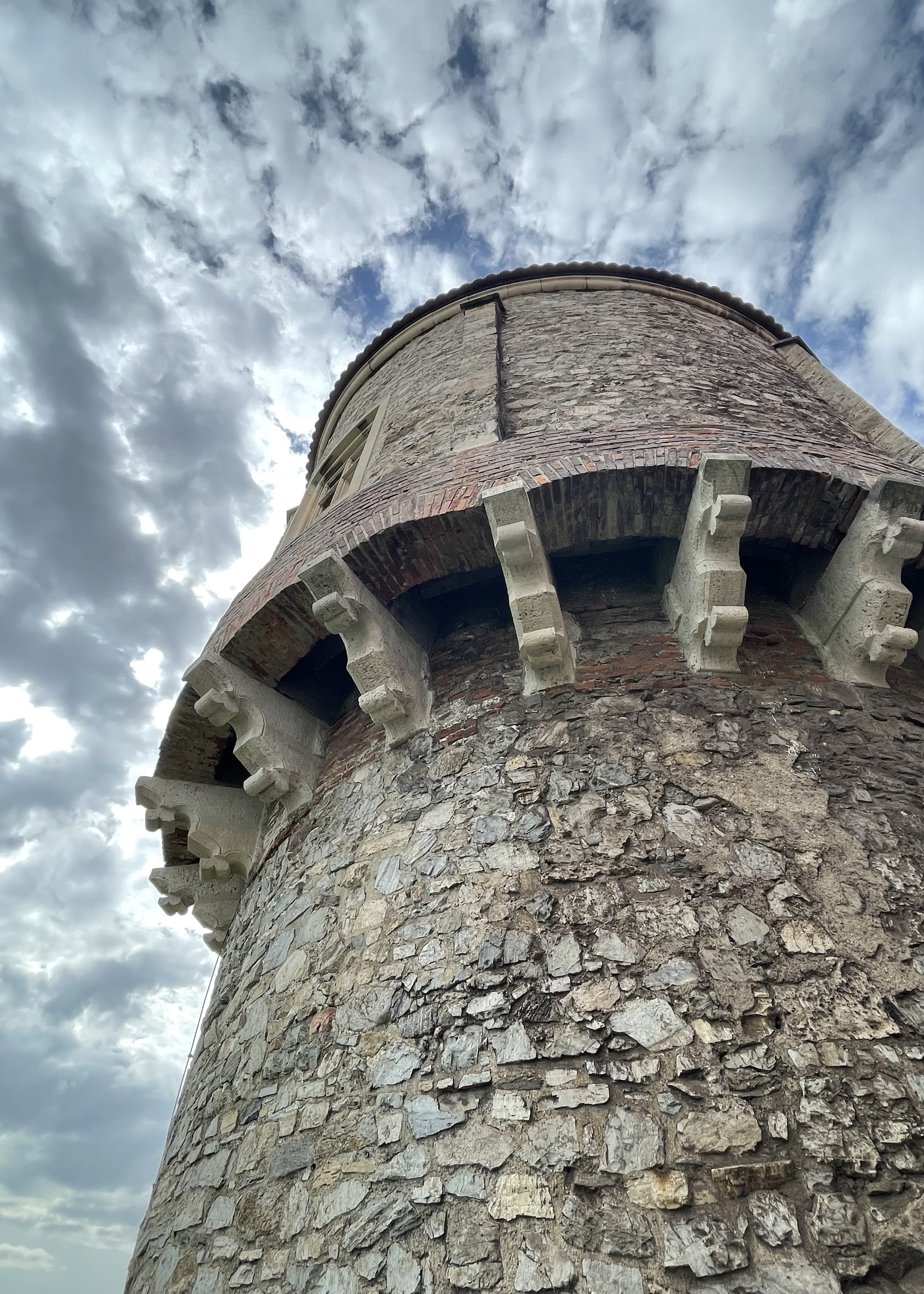
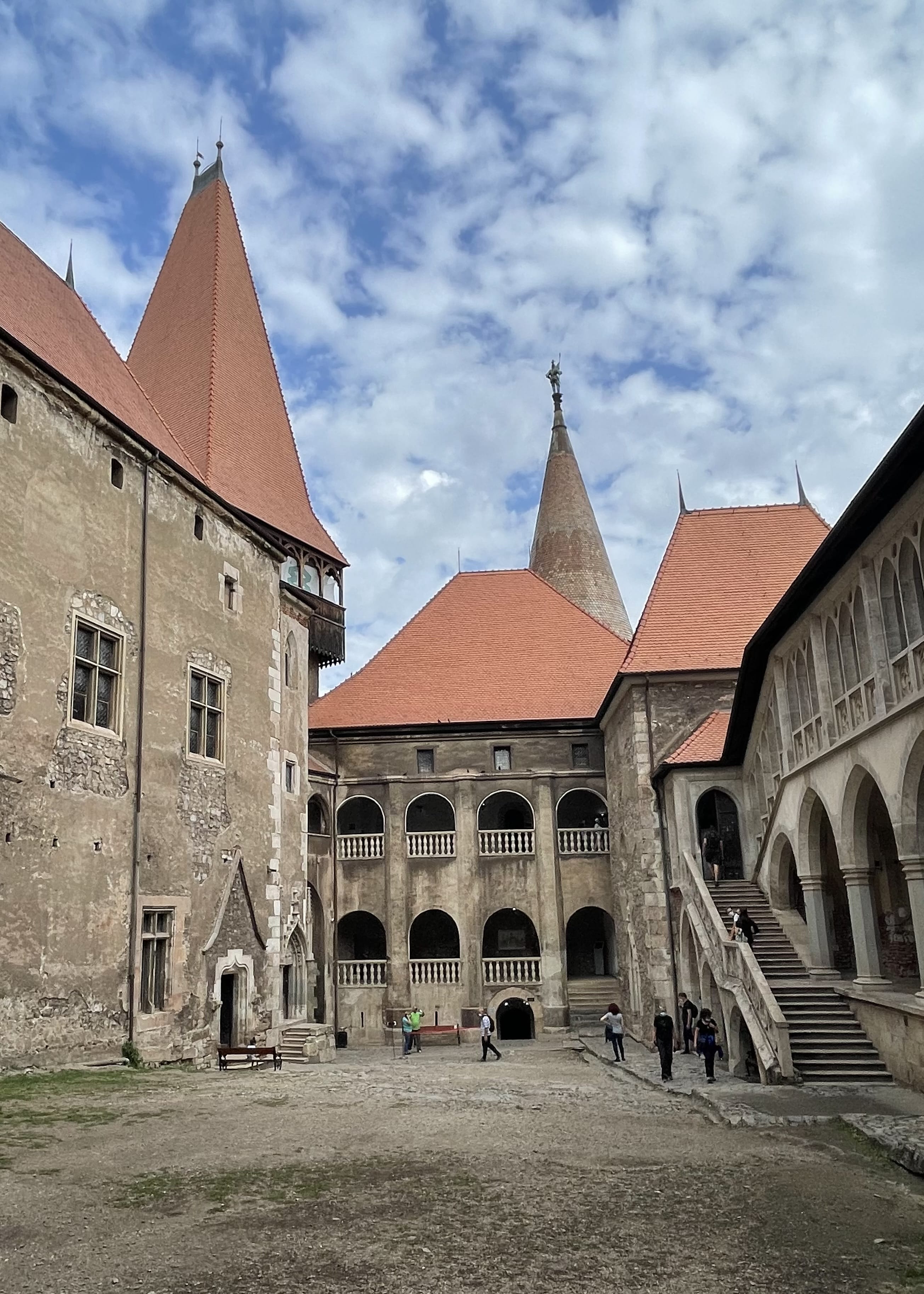
Before reaching Sibiu, I made a stop in Hunedoara to visit Corvin Castle. I know I tend to say this whenever I see a castle, but this one really did stand out. It’s enormous, with tall towers, a long wooden bridge leading to the entrance, and room after room to explore. It almost doesn’t seem real until you’re actually walking through it.
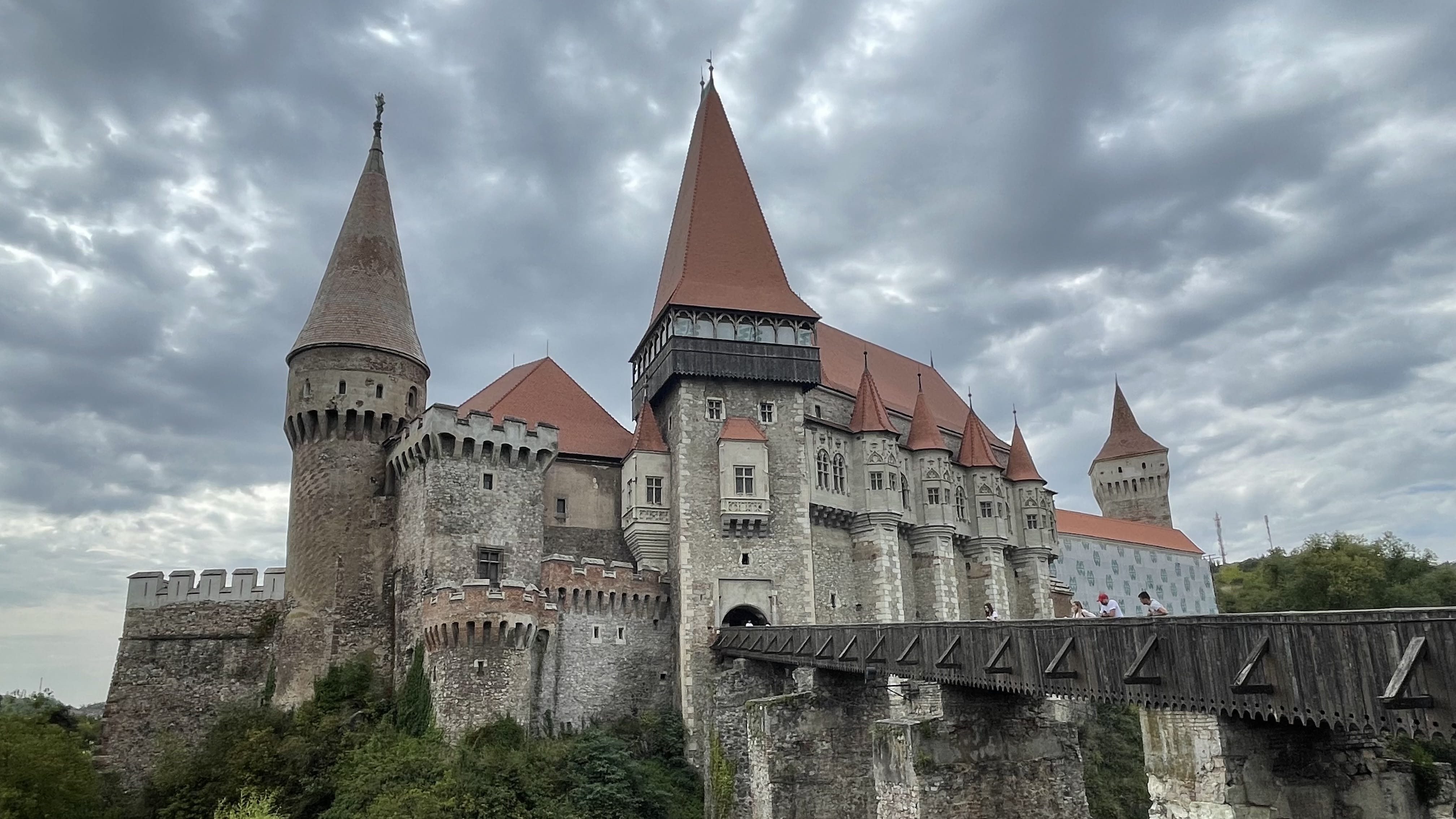
Built in the 15th century by John Hunyadi, a military leader who fought against the Ottomans, the castle has that mix of grandeur and grit. There are open courtyards and larger halls, but also narrow staircases, dark corners, and lower levels with dungeons and even a so-called “bear pit.” Walking through it, you get a pretty good sense of how harsh life here must have been.
And that’s always the thing that strikes me with places like this—no matter how impressive they look from the outside, they couldn’t have been all that comfortable. Thick stone walls, drafty rooms, endless staircases… I kept thinking how cold it must have been, even with fireplaces going. It’s easy to romanticize castles, but actually living in one? That’s a different story.
Corvin Castle is the reason to visit Hunedoara, and I’m glad I stopped.
I arrived in Sibiu in the rain but still headed out for a quick walk. As luck would have it, the rain stopped, and a beautiful rainbow appeared over the rooftops.
Sibiu felt a little bigger and more open than some of the other towns we’d visited. The old town is split into two levels—the Upper Town, with its wide squares and larger buildings, and the Lower Town, which feels more tucked into narrower streets and passageways. It has history, but it also feels like a place people actually live, not just a preserved medieval center.
I’d first noticed the famous rooftop “eyes” in Sighișoara, but Sibiu is the city most associated with them. Here, they seemed to be everywhere.
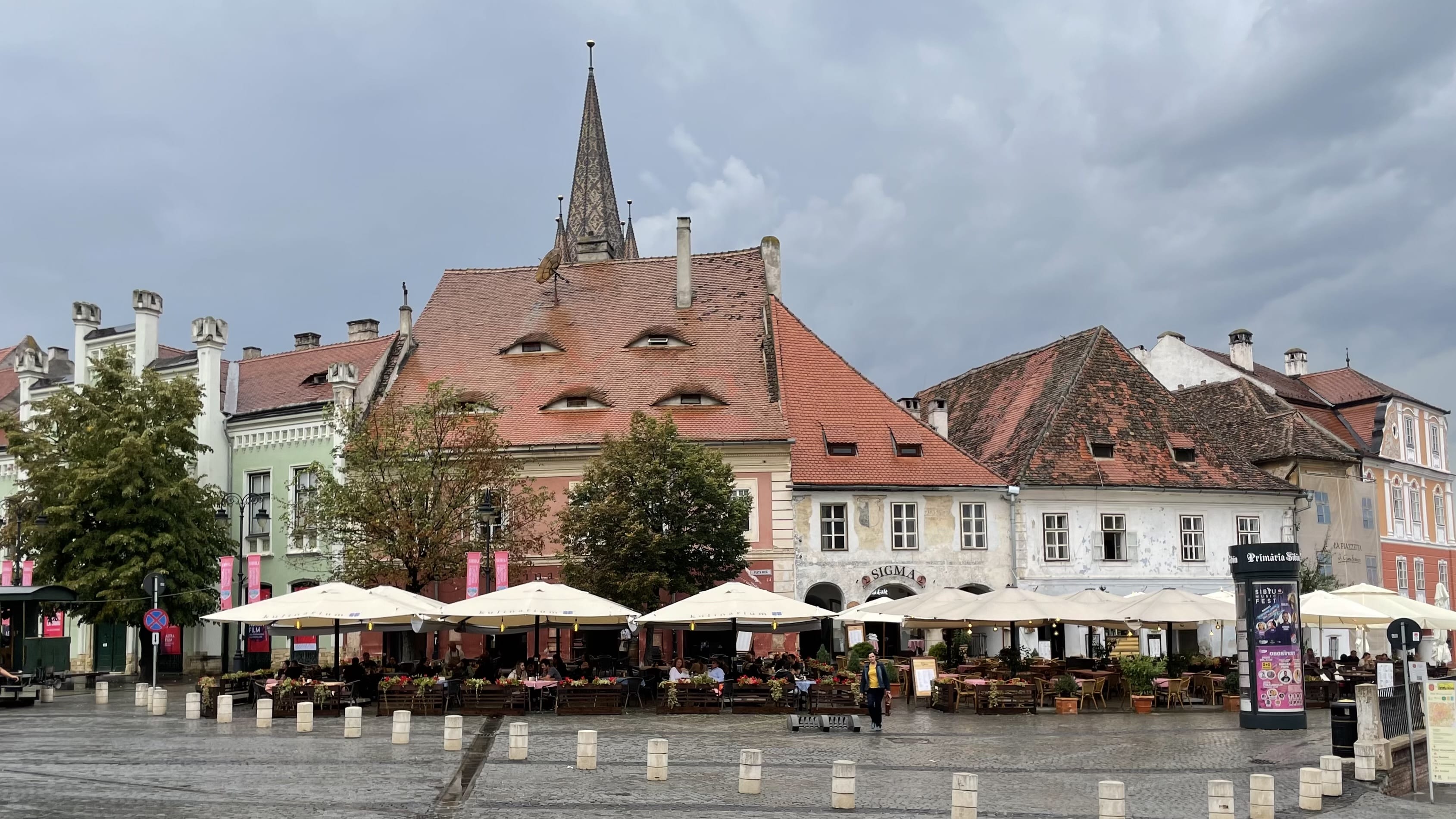
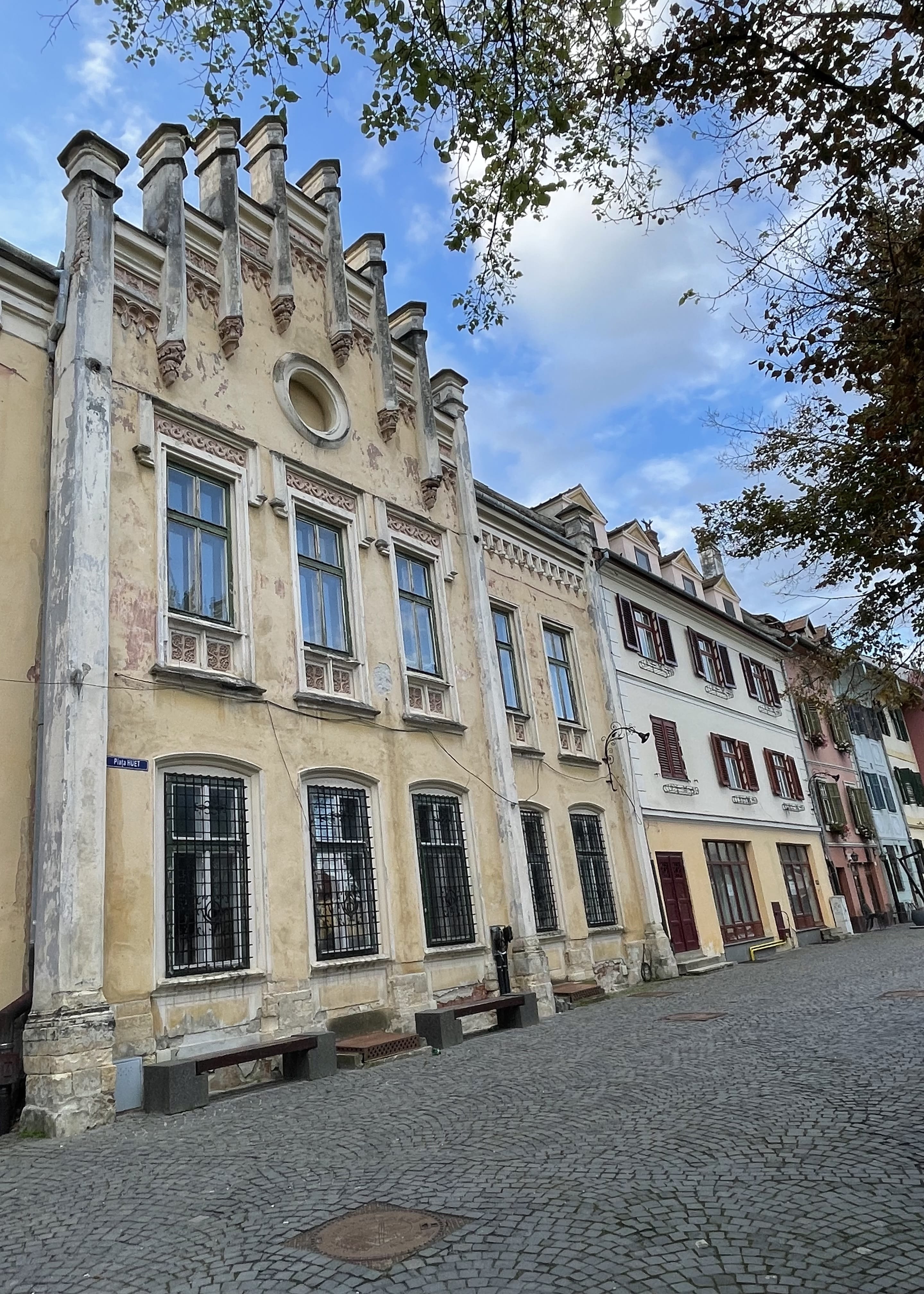
I spent time walking through Piața Mare and over to the Council Tower, which sits at the edge of the square. From there, I wandered onto Strada Nicolae Bălcescu, a pedestrian street lined with shops and cafés that connects different parts of the old town.
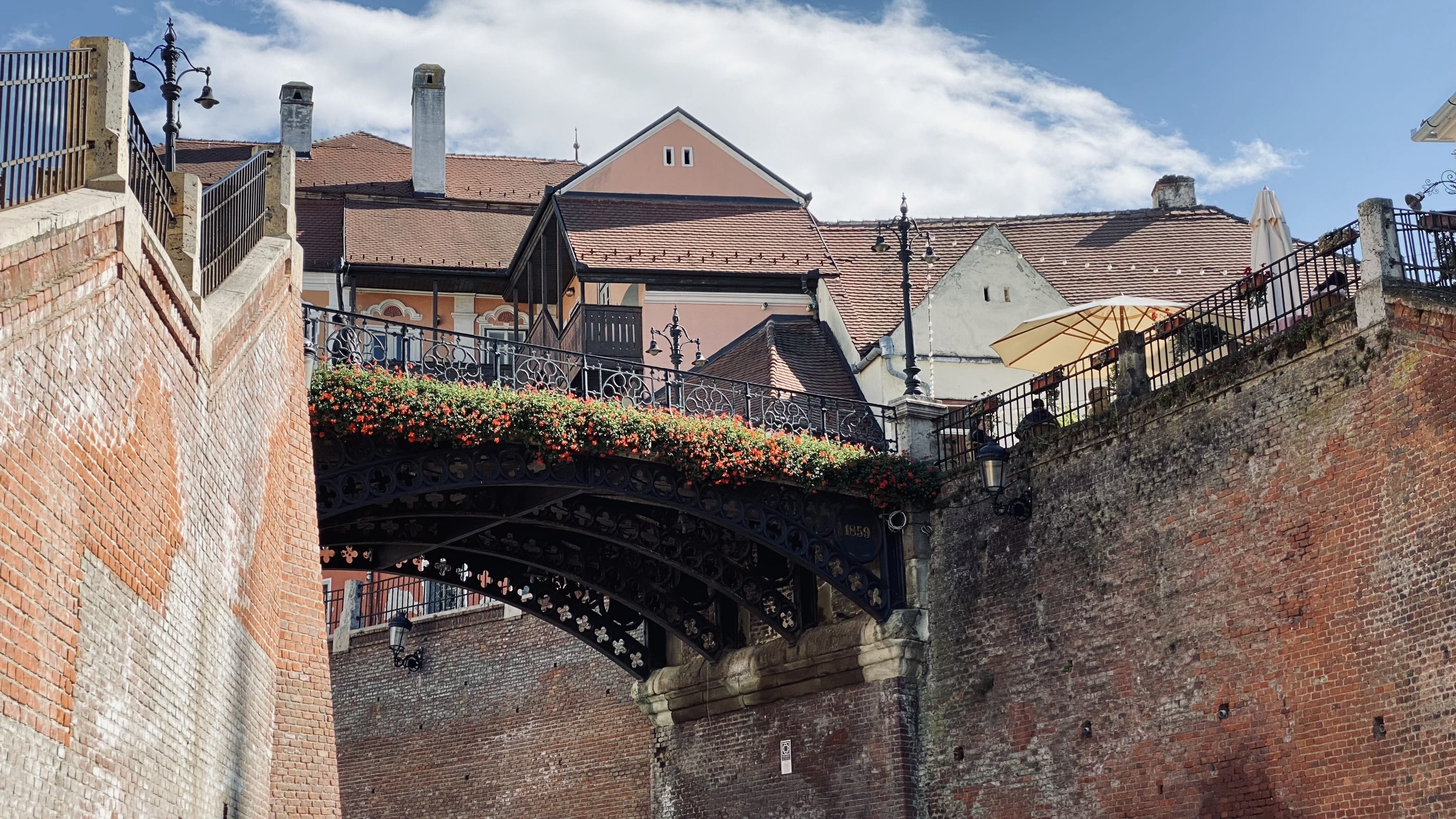
I also crossed the Bridge of Lies, one of the city’s more well-known spots, tied to local stories about lies being exposed. Whether you believe that or not, it’s a nice detail in the middle of the city—and one of those places you naturally pass through as you walk.
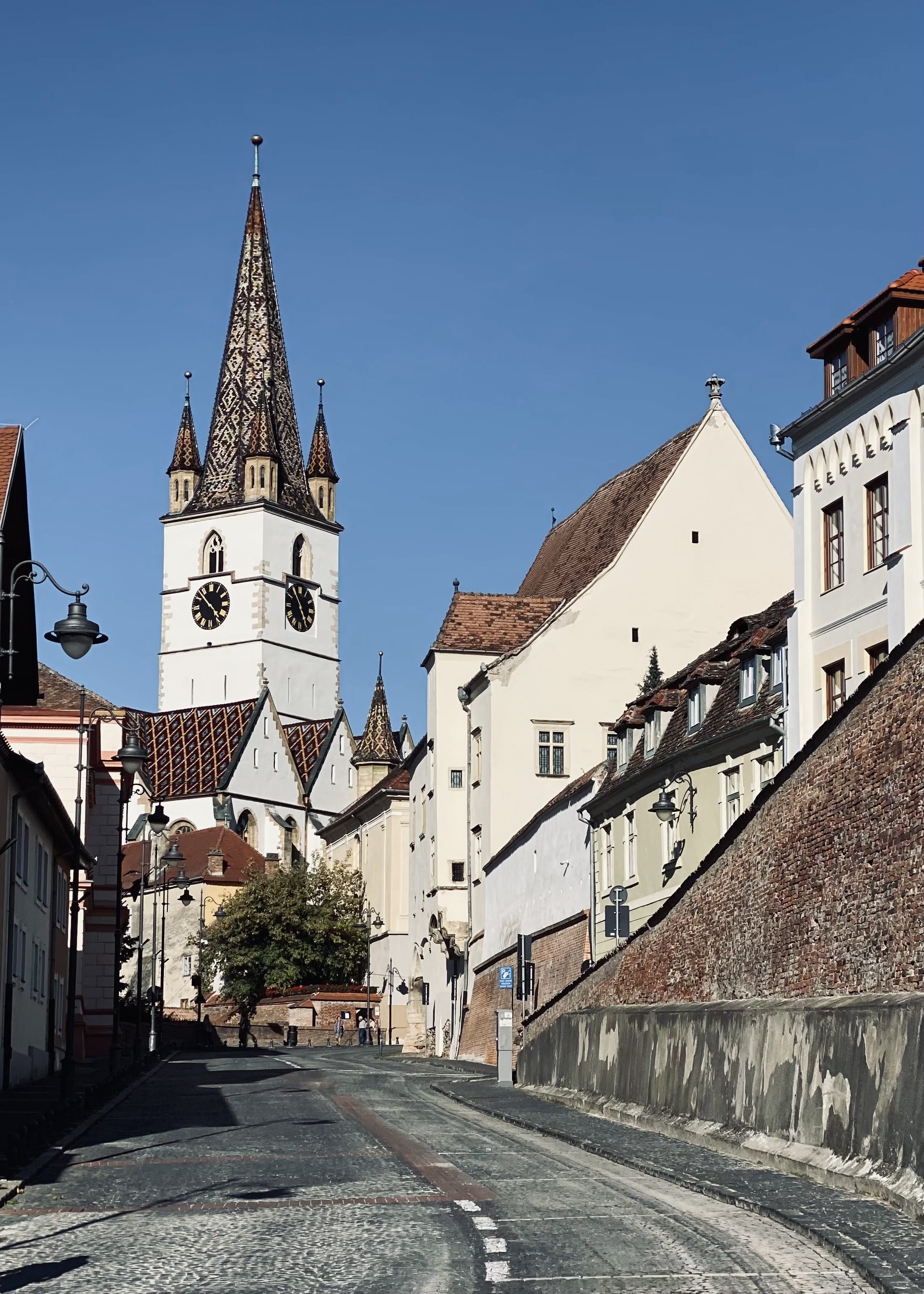
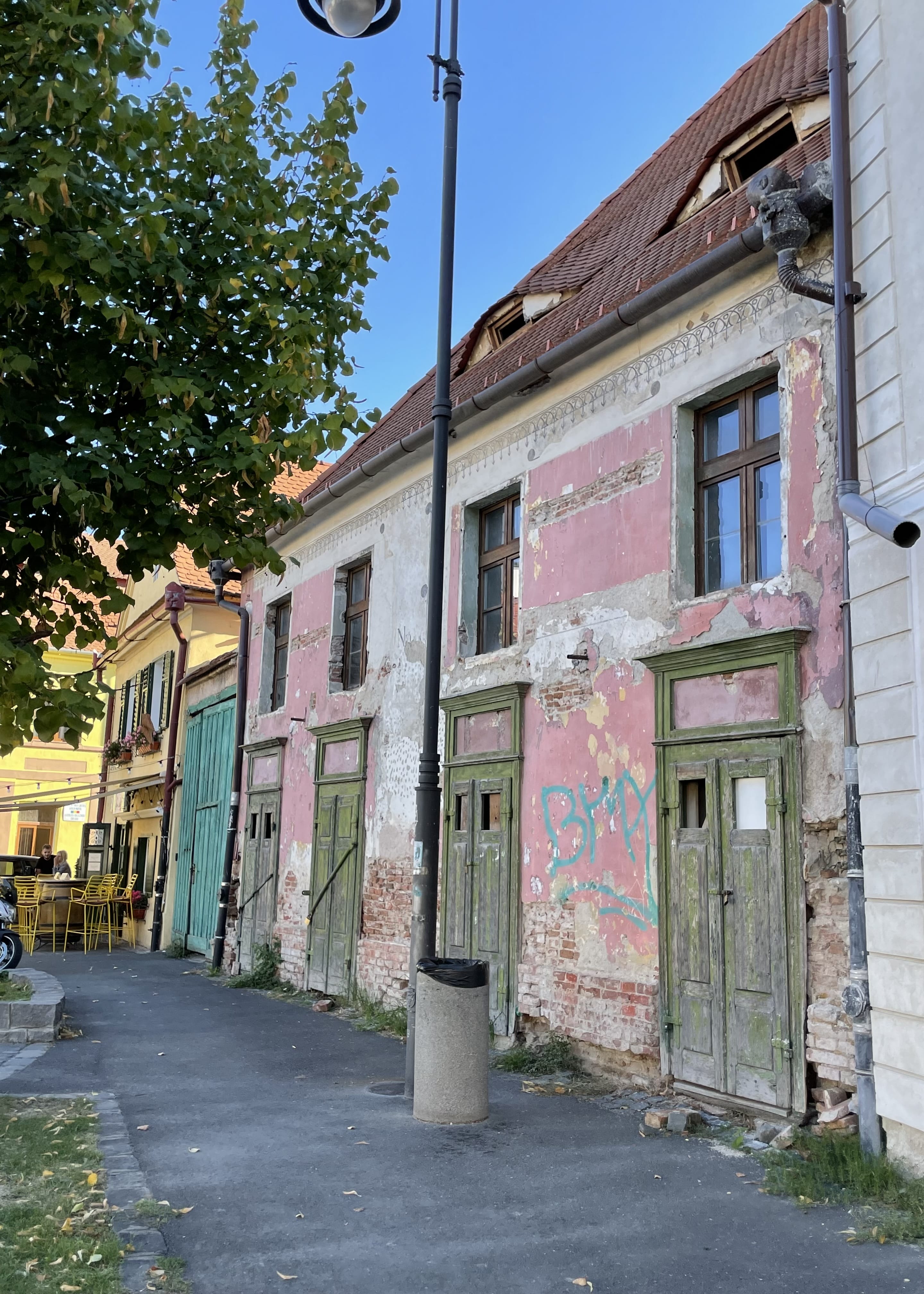
From there, I ended up on Strada Cetății, one of the quieter streets, lined with old towers and colorful buildings. It felt a little less polished than the main square, which I actually liked—it gave a better sense of the city beyond the main tourist areas.
Later, I climbed the tower of the Lutheran Cathedral for views over Sibiu’s rooftops and toward the surrounding mountains.
Then it was time for a late dinner before heading back to the hotel after a full day.
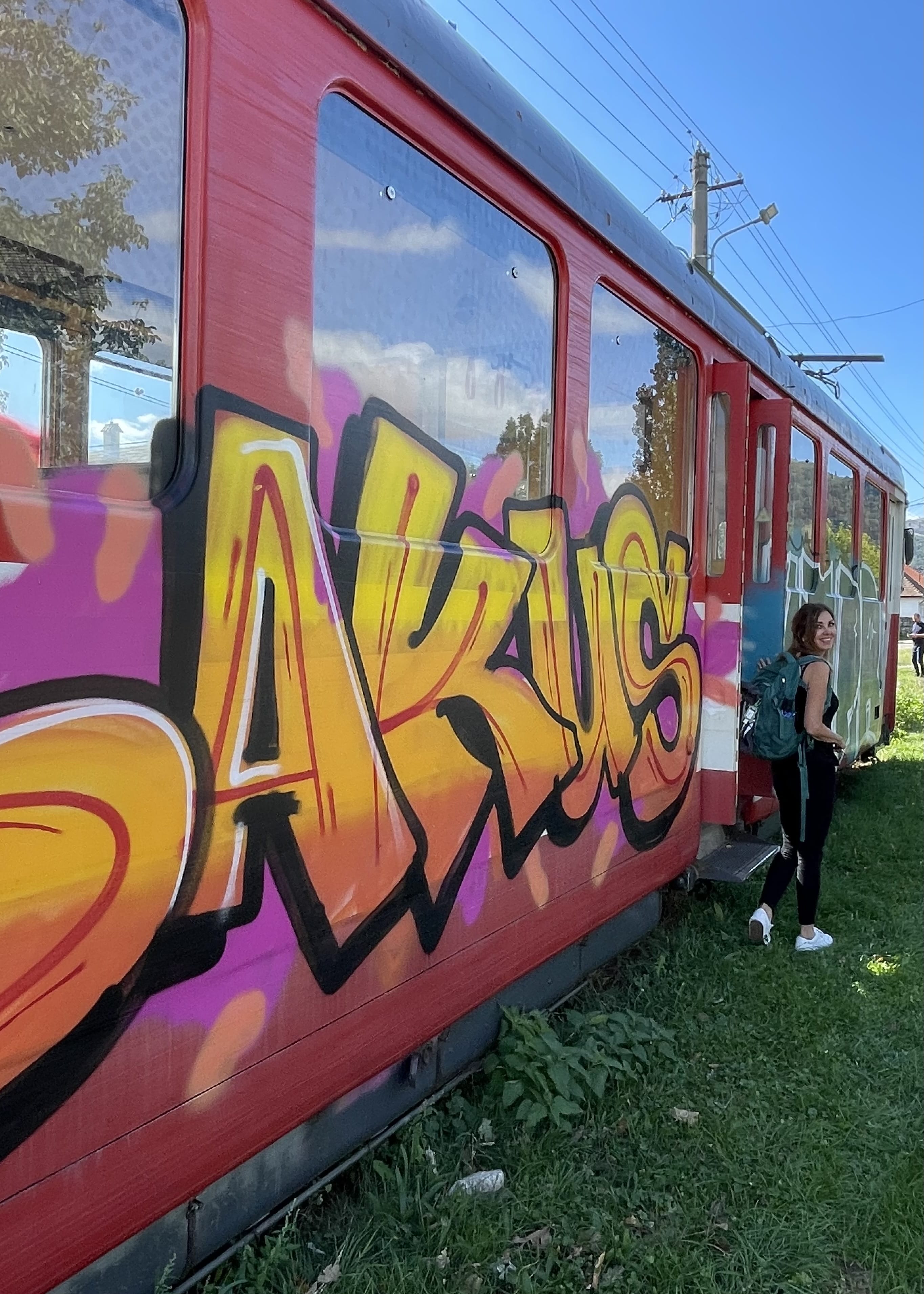
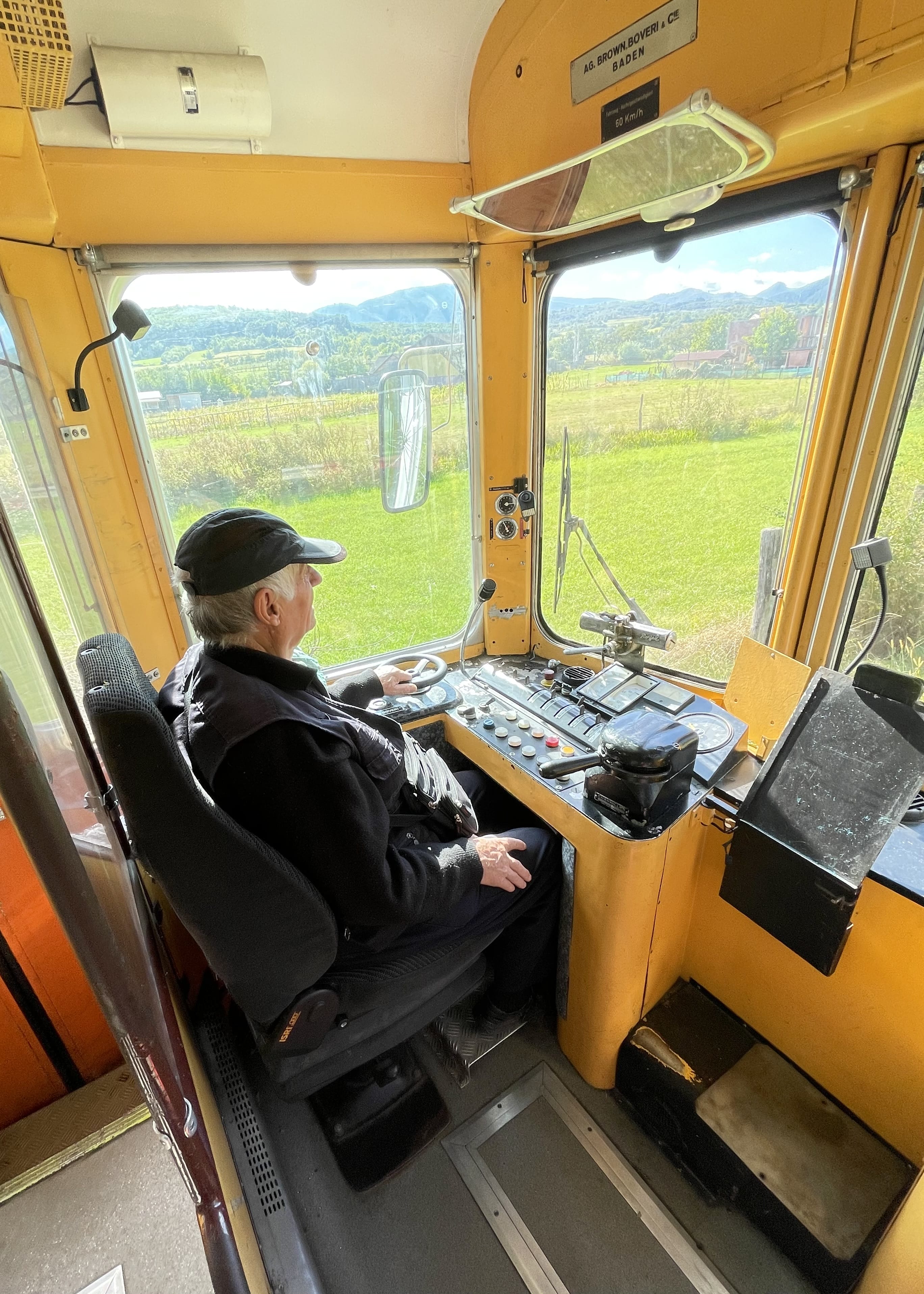
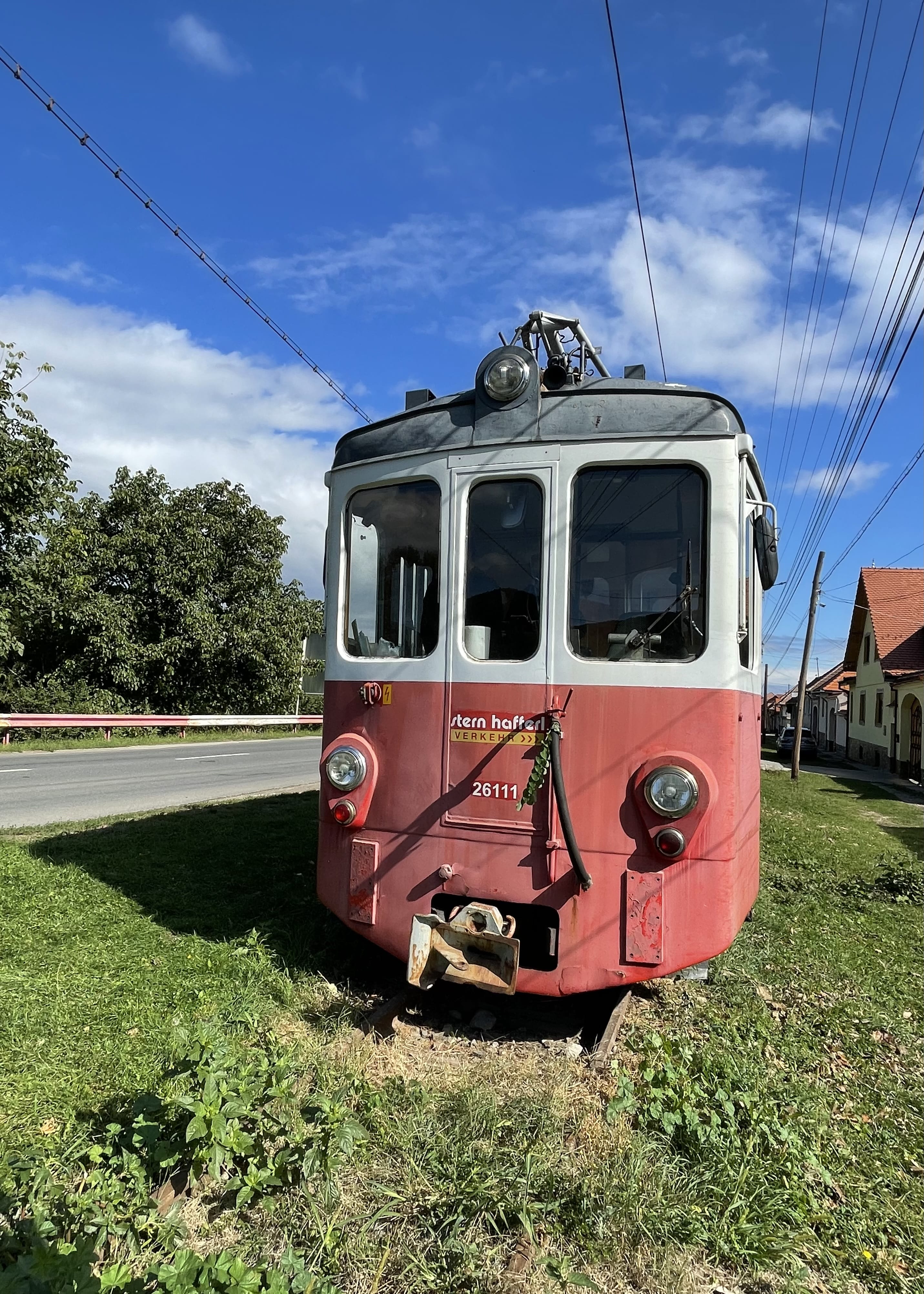
This morning, I took the historic tram out to the village of Rășinari, one of the oldest villages in the region. The ride itself was short and a little rough—more rattling than smooth—but that was part of it. At one point, the tram slowed and stopped right alongside people’s homes, which made it easy to imagine how this once functioned as part of everyday life rather than something set up for visitors.
The Sibiu–Rășinari line used to run all the way from the city into the village as part of the public transport system. When most of it shut down, a small section was preserved, largely thanks to locals who didn’t want to see it disappear entirely. The cars themselves aren’t even Romanian—they’re older Swiss trams, brought in second-hand, which explains the German writing still visible inside. It’s a bit of a mix, and honestly, probably something I could have skipped—but I’m still glad I saw it.
Rășinari itself was quiet, with traditional houses and a slower pace that felt very different from the cities and castles I’d been visiting. I spent a little time wandering through the village before continuing on toward Sibiu.
On the way back toward Sibiu, I stopped at Muzeul Astra, an open-air museum showcasing traditional Romanian village life. I had lunch at Cârciuma din Bătrâni, a rustic restaurant inside the grounds. The name translates roughly to “The Old Folks’ Tavern,” which pretty much sums up the feel of the place.
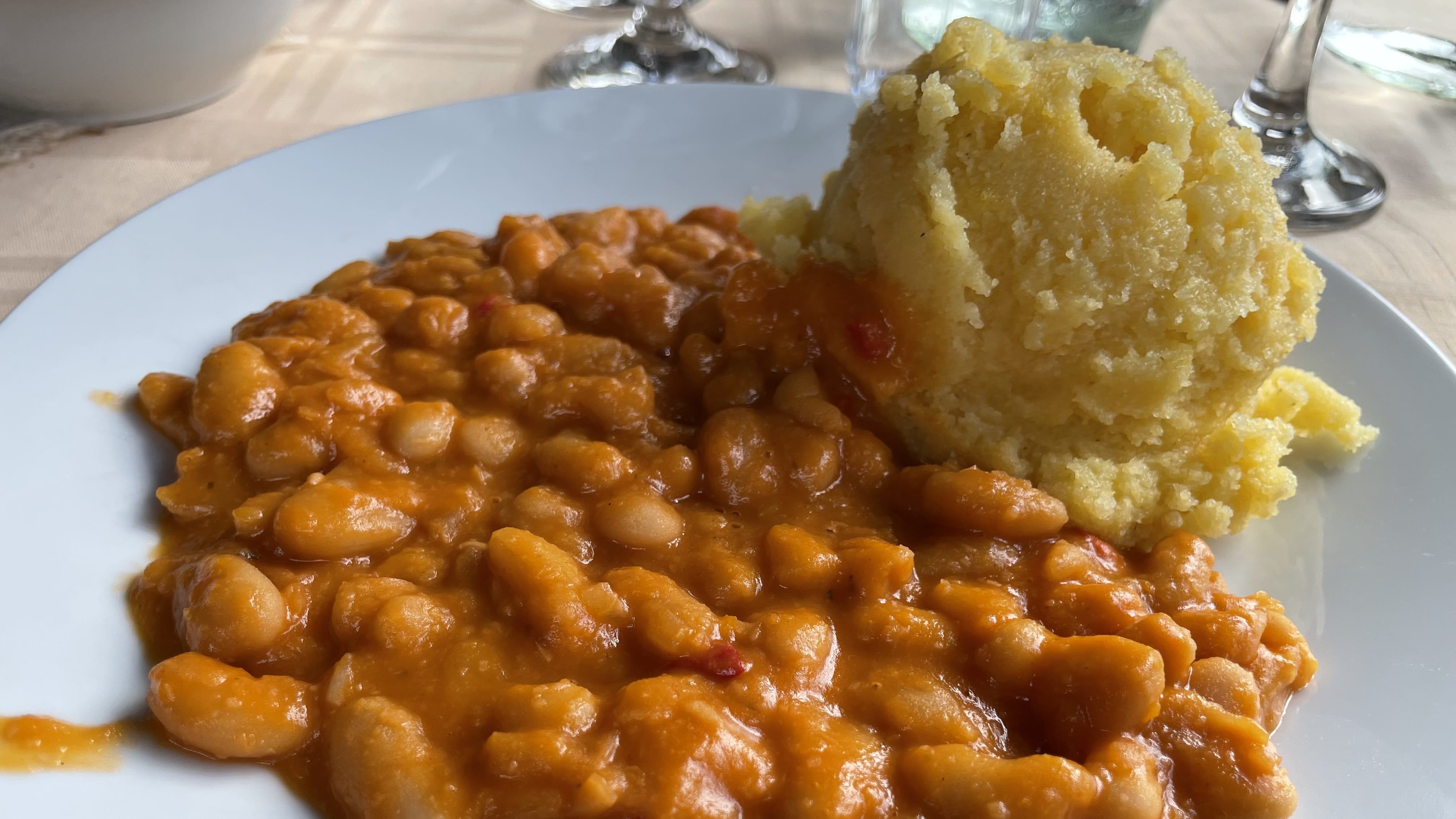
I ordered iahnia de fasole cu mămăligă—slow-cooked beans in a rich tomato sauce with a side of cornmeal. It was hearty and filling and hit the spot.
And of course, I couldn’t skip dessert. I went for papanași again—this time with sour cream and blueberry jam—and yes, it was just as indulgent as it sounds.
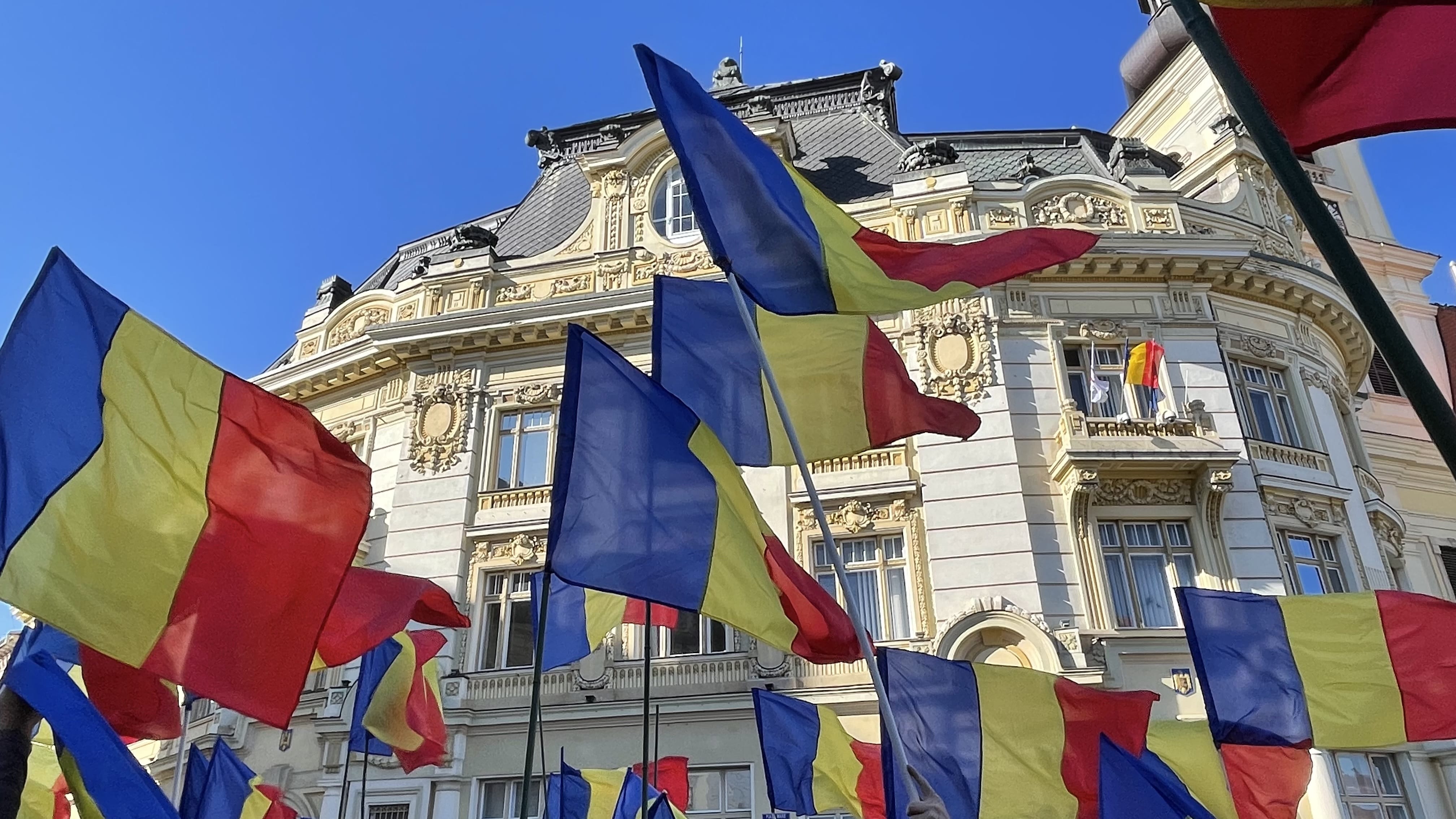
Back in Sibiu, I walked into the Grand Square (Piața Mare) and found myself right in the middle of a crowd. People were gathered waving Romanian flags—some in traditional embroidered clothing, others holding signs. What at first looked like a celebration turned out to be more of a protest. Either way, it was hard to miss. The square was full, with flags moving through the air against the backdrop of the old buildings.
After watching for a while, I continued wandering through the city. One thing I liked about Sibiu was how quickly it changed depending on where you were—open squares giving way to quieter streets just a few minutes away.
Still full from my late lunch, I spent my last evening in Sibiu simply wandering the streets one more time. It was a quiet ending to one of my favorite stops of the trip.
Before leaving Sibiu, I stopped at a small café I’d noticed the day before for one last Romanian breakfast before beginning the drive back to Bucharest.
Sadly, it was time to head back to Bucharest, but the drive ended up being one of the most scenic parts of the trip. Rolling countryside gradually gave way to mountain views, especially as we passed through Cârțișoara, where the road dramatically cuts through the peaks.
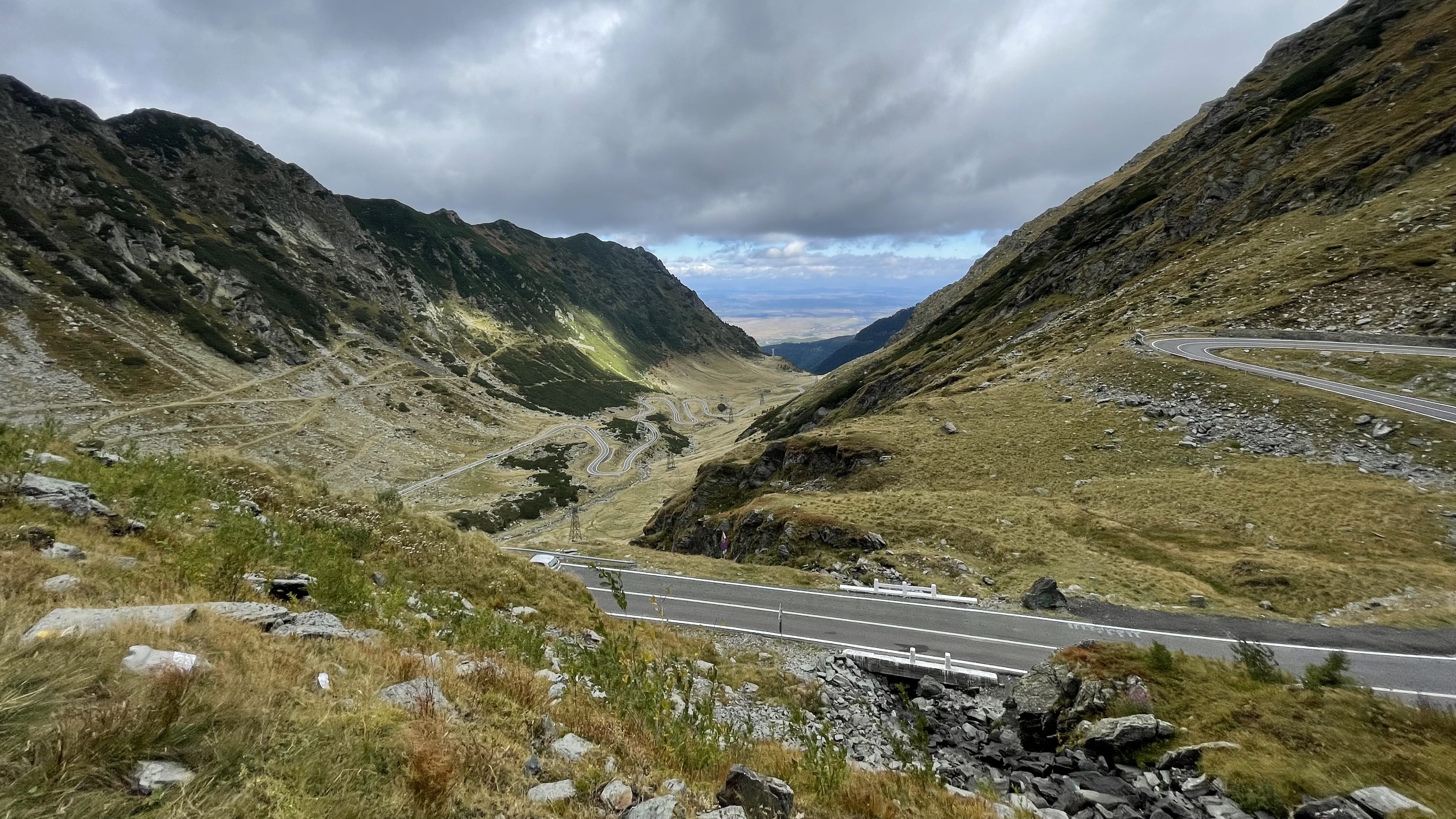
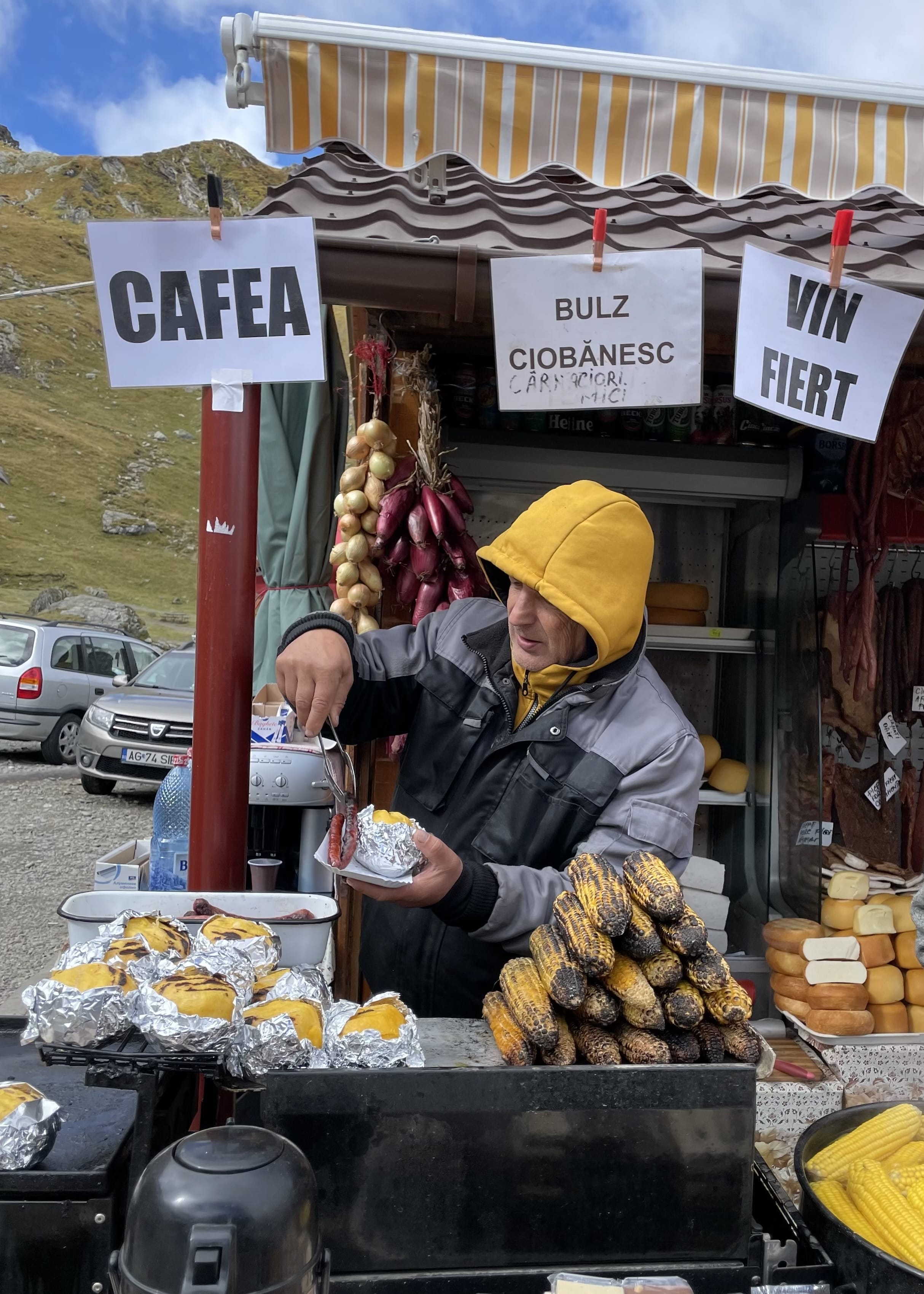
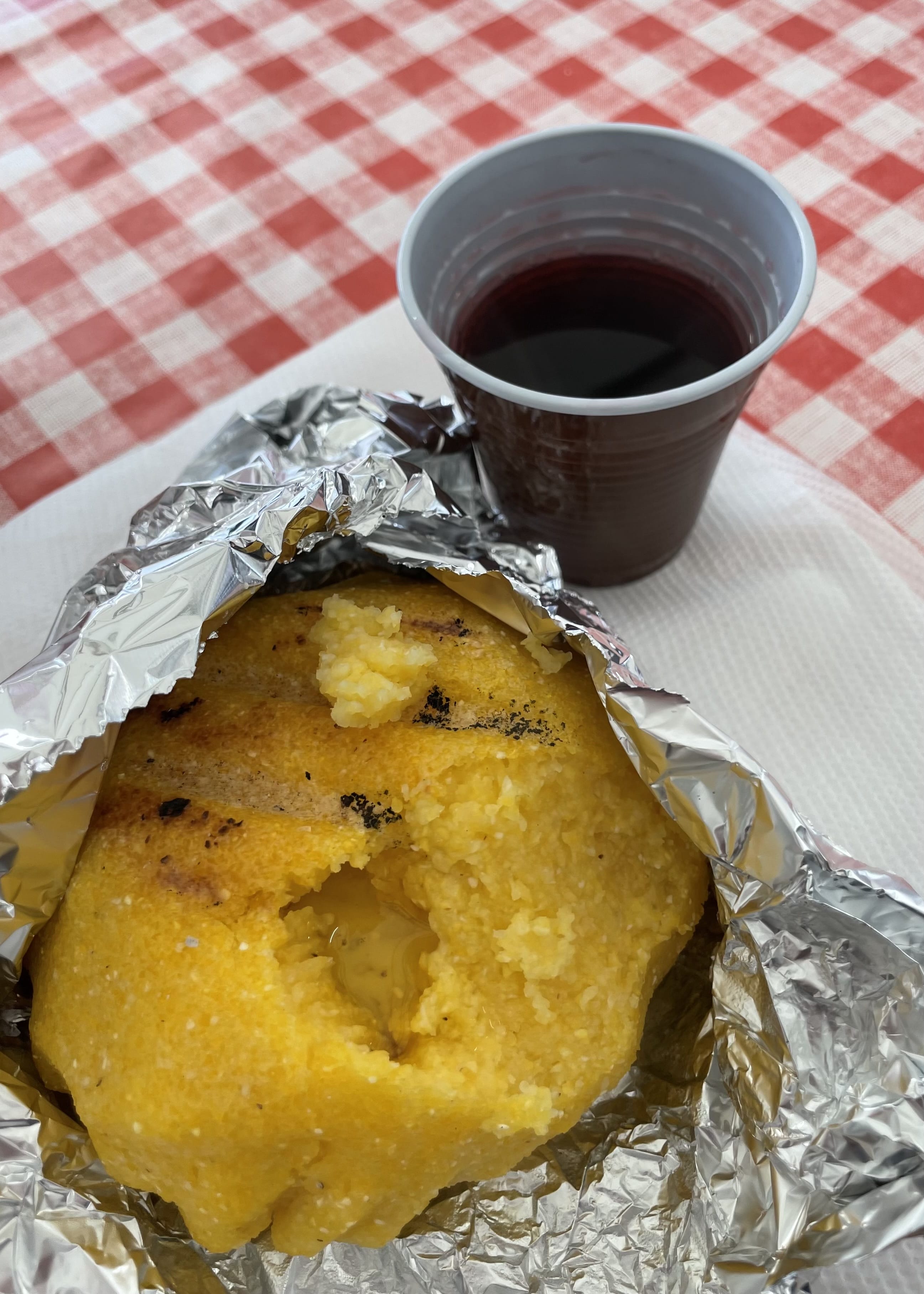
One of the highlights along the way was a stop near Bâlea Lac, at a busy roadside area lined with vendors selling everything from roasted corn to sausages and grilled polenta balls stuffed with cheese. By this point, I’d grown pretty fond of mămăligă, so I tried the grilled version. It was smoky, cheesy, and exactly what I was hoping for. I didn’t have much time to explore, and as someone who loves to hike, I would’ve happily spent longer here. Unfortunately, this was more of a quick stop before continuing on.
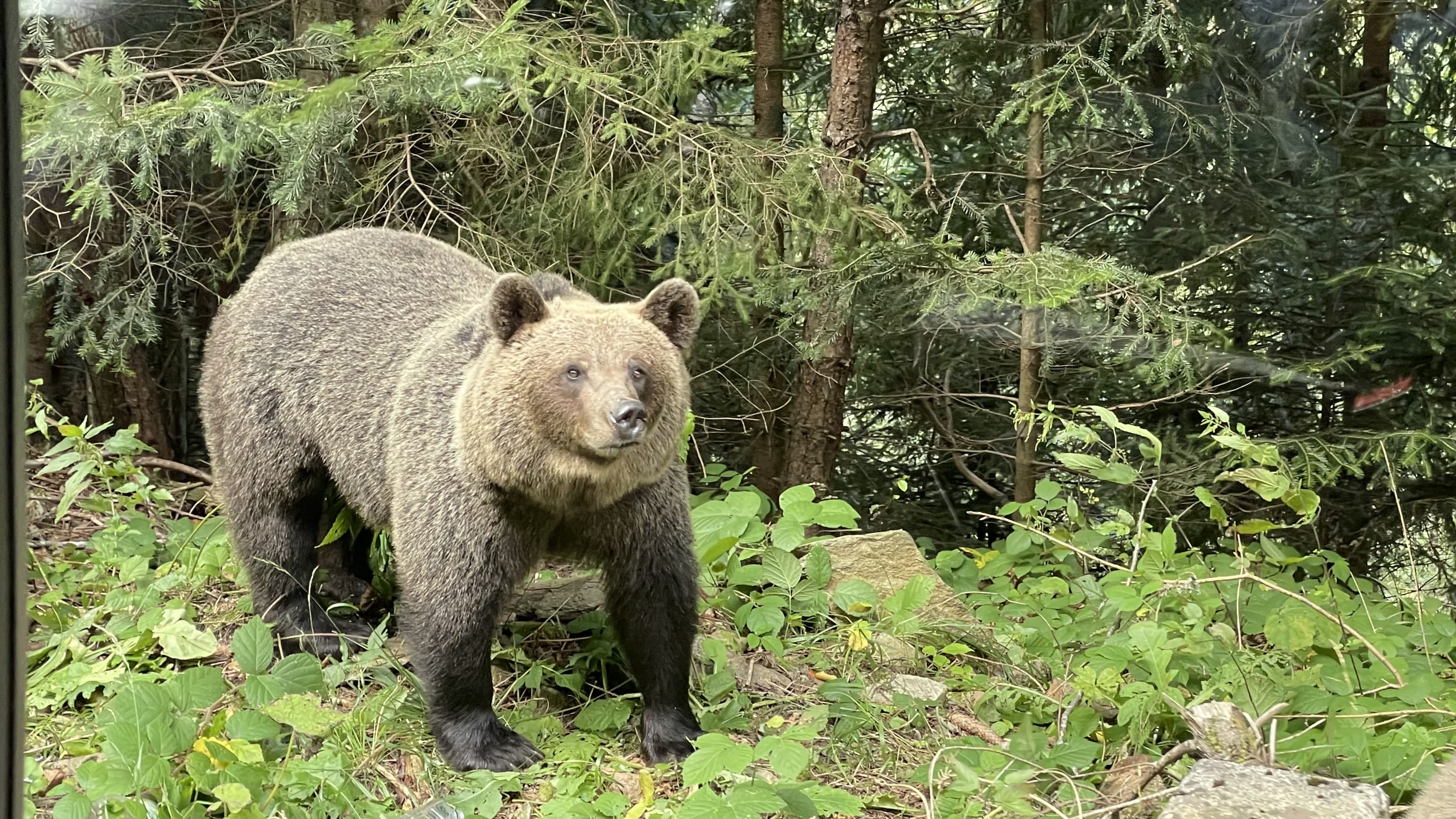
Not long after, I spotted several brown bears sitting right along the roadside. They were impossible to miss—and much larger than I’d expected—just as my guide had warned me back in Brașov. They were surprisingly calm, almost as if they were used to the attention. Apparently, it’s become a real issue, with bears lingering near the roads in search of food.
We also passed the massive Vidraru Dam, set between the mountains, before stopping for lunch at La Cetate Cabana Restaurant. The place looked like a classic mountain chalet, with wooden beams and flower boxes. Like most of the food we’d had in Romania, it was hearty and traditional, though this one leaned a bit more touristy. The restaurant was packed, and the food was fine, just not especially memorable. What did stand out was the large sign at the entrance warning about bears in the area—a reminder of just how deep into the mountains we were.
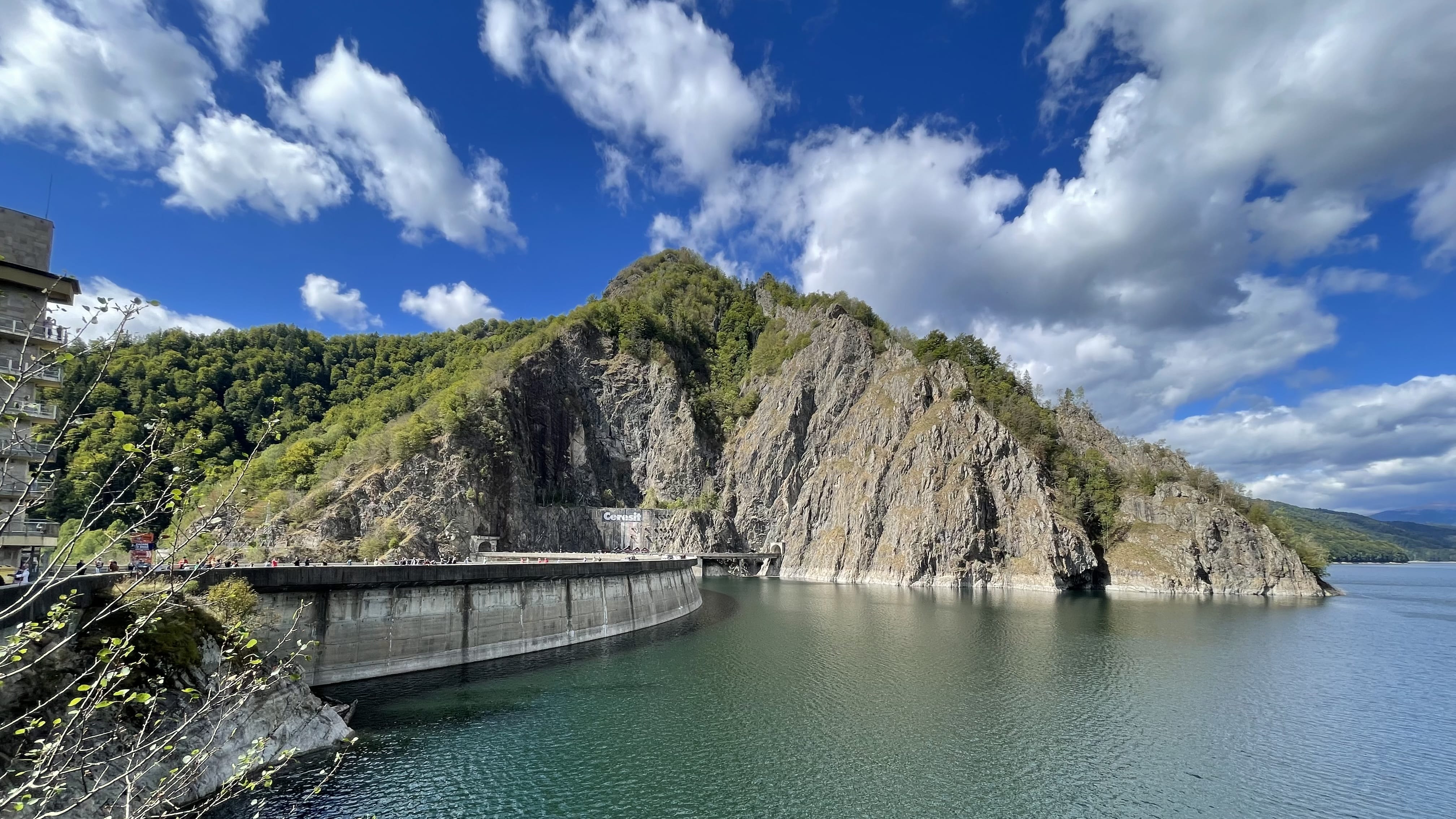
Back on the road, I passed Poenari Fortress, perched high on a cliff above the Argeș Valley. This was an actual stronghold of Vlad the Impaler—unlike Bran Castle, which leans more into the Dracula legend for visitors. I only wish I’d known more about it when planning my trip because I would’ve loved to stop. Reaching the fortress requires climbing nearly 1,500 steep steps, but even from below, it felt like one of the most authentic connections to Vlad’s history that I’d seen in Romania.
The drive from Sibiu back to Bucharest takes about six hours without stops, but with several along the way, it easily filled the day. By the time I arrived back in the capital, I was ready for one last evening before heading home.
My final morning in Romania came too soon. Before heading to the airport, I had a few hours to wander Bucharest one last time. It felt like a full-circle moment—starting and ending in the capital, but with castles, fortified churches, medieval towns, mountain roads, and countless memorable stops in between.
Looking back on my 10 days in Romania, I was surprised by just how much variety I found. While my trip focused on Bucharest and much of Transylvania, every stop had its own personality—from the energy of the capital to colorful Saxon villages, medieval towns, castles, and mountain scenery. There were places I wished I’d had more time to explore, and others that turned out to be highlights I never expected.
Joining local guides at many of the historic sites added a level of context I never would have gotten on my own. Their stories brought many of the places I visited to life.
As a vegetarian, I wasn’t quite sure what to expect, but eating turned out to be much easier than I’d imagined. I was always able to find something—often involving mămăligă in one form or another—which, by the end of the trip, I’d grown surprisingly fond of. And yes…I’d happily order papanași again too.
My 10 days in Romania left me wanting to see more. Ten days gave me a wonderful introduction, but there are still regions I haven’t explored, hiking trails I’d love to return for, and places like Poenari Fortress that are already on my list for next time. If you enjoy medieval towns, fascinating history, mountain scenery, and destinations that still feel a little under the radar, Romania is well worth considering.
Something tells me this won’t be my last trip to Romania.

Hi, I’m JoAnne—writer, wanderer, and lover of places that surprise me. I’ve traveled to 60+ countries (and counting), usually with a camera in one hand and a notebook in the other. I’m drawn to mosaics, markets, and mountains, and I write to remember what moved me. When I’m not traveling, I’m working on my blog Travels Afoot, trying new creative projects, or planning my next adventure.