I didn’t know much about Rwanda before booking this trip—beyond the genocide of 1994 and the name Dian Fossey. What pulled me in wasn’t certainty. It was curiosity.
When I saw a trip offered by Intrepid Travel through Rwanda and Uganda—one that included game drives and, even more exciting, mountain gorilla trekking—it immediately caught my attention.
I also knew of Dian Fossey and her years spent in this region studying and protecting these animals. And although gorillas are still endangered, their numbers are increasing, thanks in part to her work and the conservation laws that followed.
I had also been wanting to explore more of Africa. I’d traveled to Tanzania and Kenya years ago, and later to Morocco, Tunisia, and Egypt—but there was still so much of the continent I hadn’t seen.
So it didn’t take long to say yes.
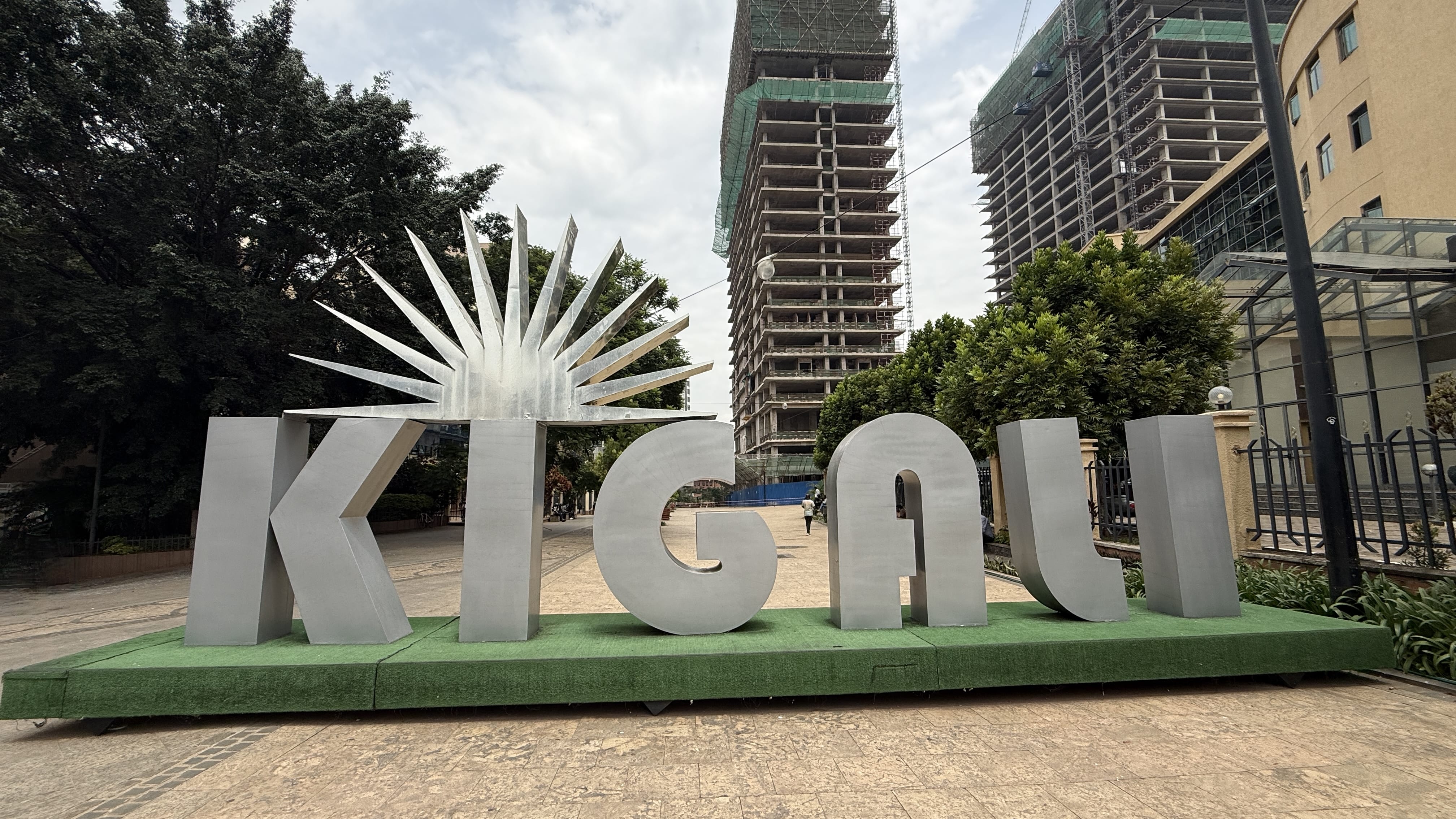
I arrived in Kigali in early February to begin a nine-day journey through Rwanda and Uganda. The trip would start with two days in Kigali before moving on to Musanze, then crossing into Uganda.
I landed in Kigali in the evening after a long but smooth journey. Passport control and baggage claim were straightforward, and just outside the airport my driver was waiting. We paused briefly for another couple from my flight who would also be part of the Intrepid trip, then continued into the city together.
Kigali has been Rwanda’s capital since independence in 1962, following decades of colonial rule under Germany and later Belgium. Today it’s often described as one of the cleanest and safest cities in Africa.
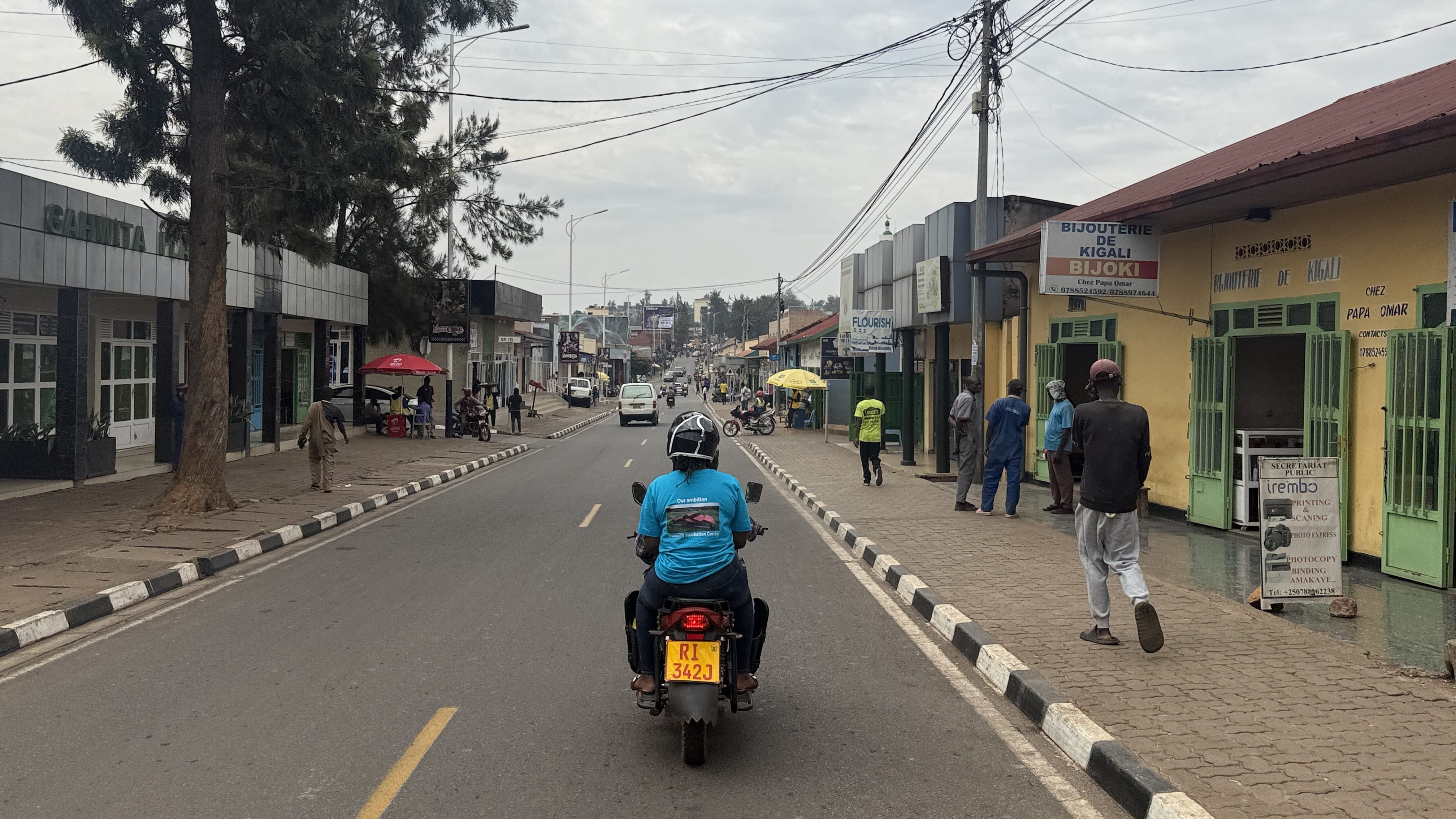
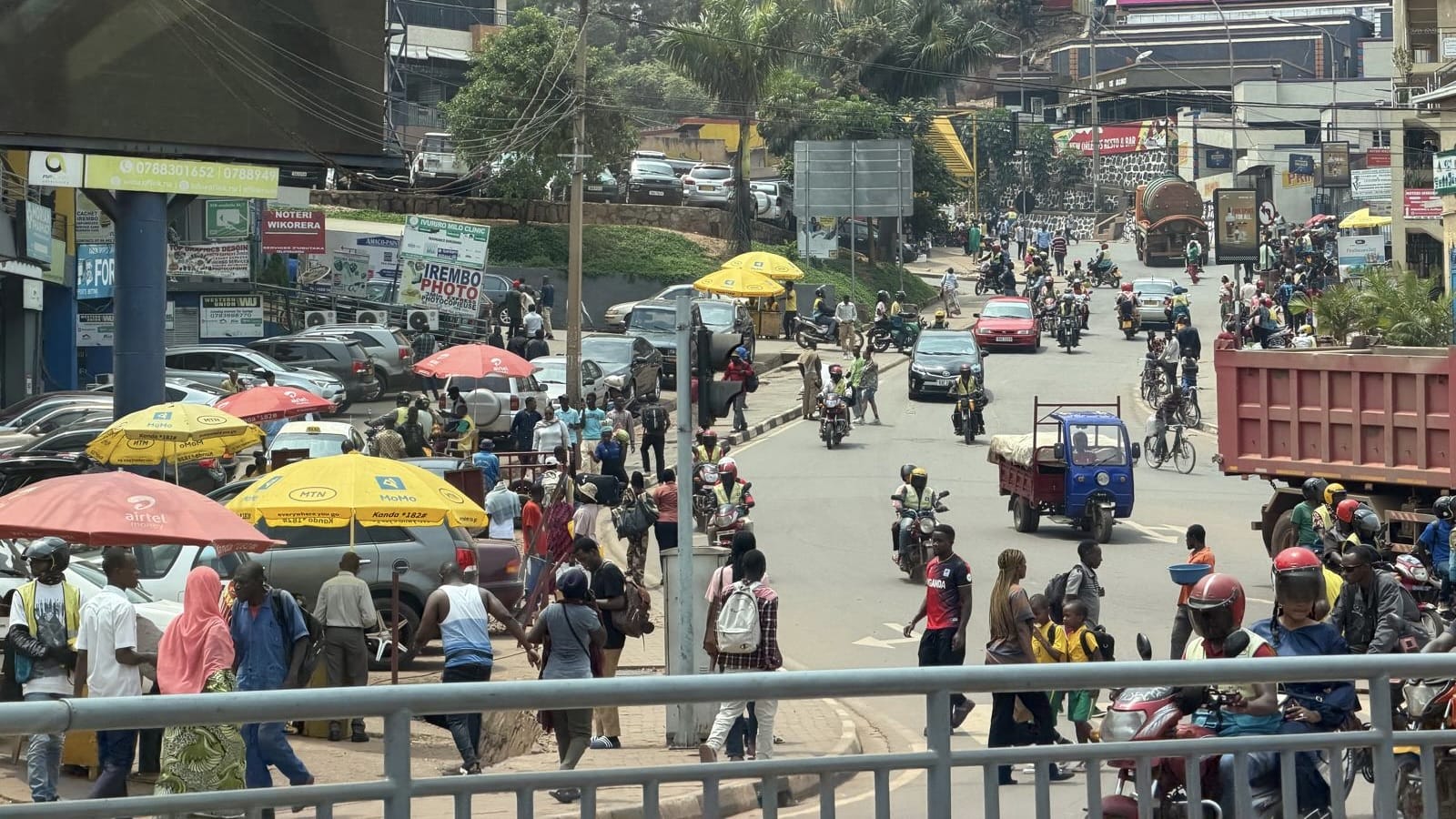
One of the first things that stood out was the sheer number of motorcycle taxis weaving through traffic. I had read that there are tens of thousands operating in the city, and the constant motion of motos felt like part of Kigali’s rhythm.
The next day, I would find myself riding on the back of one. Earlier, I had booked a motorbike tour of the city through WhatsApp with the Nyamirambo Women’s Center, not entirely sure what to expect.
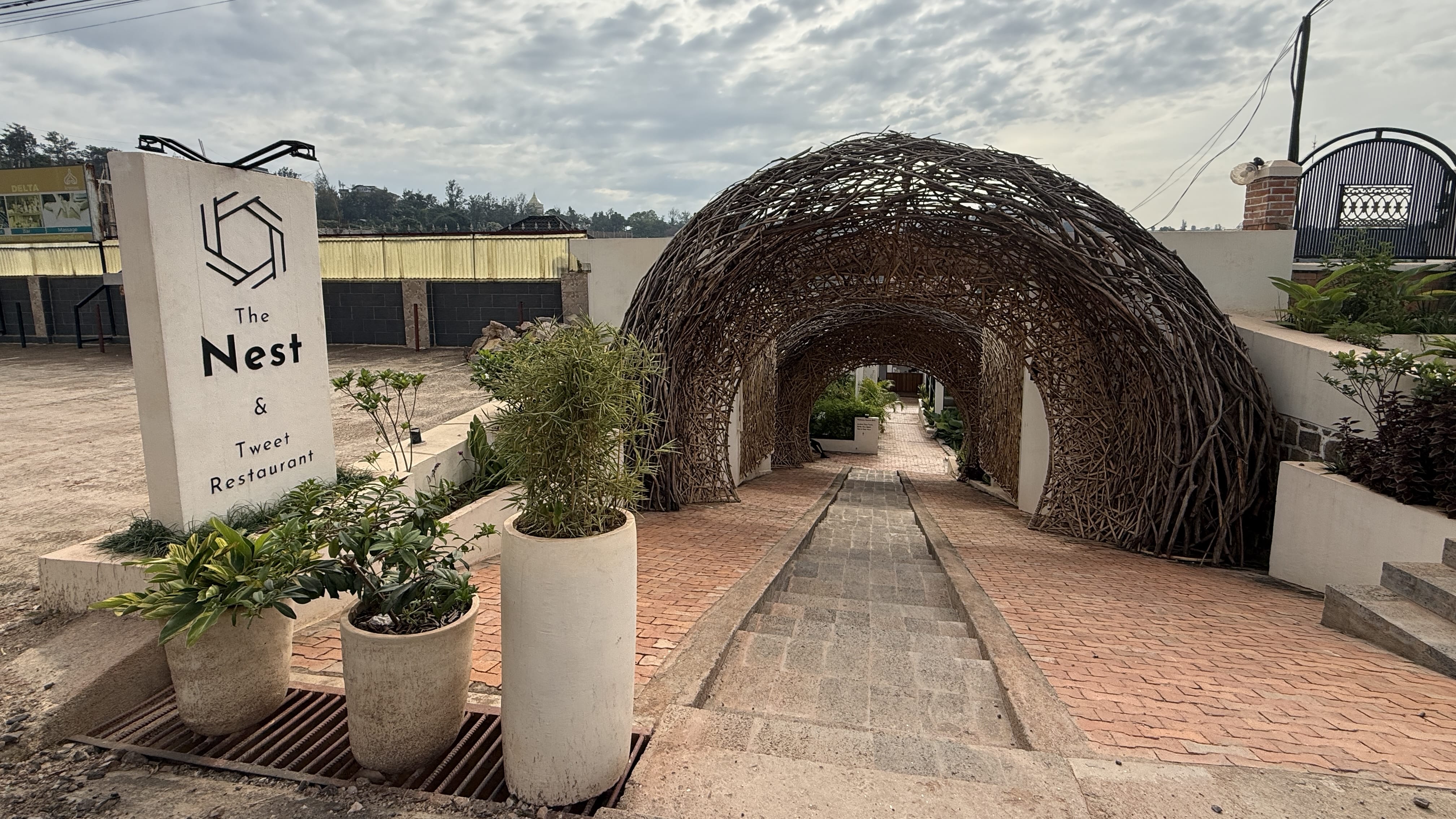
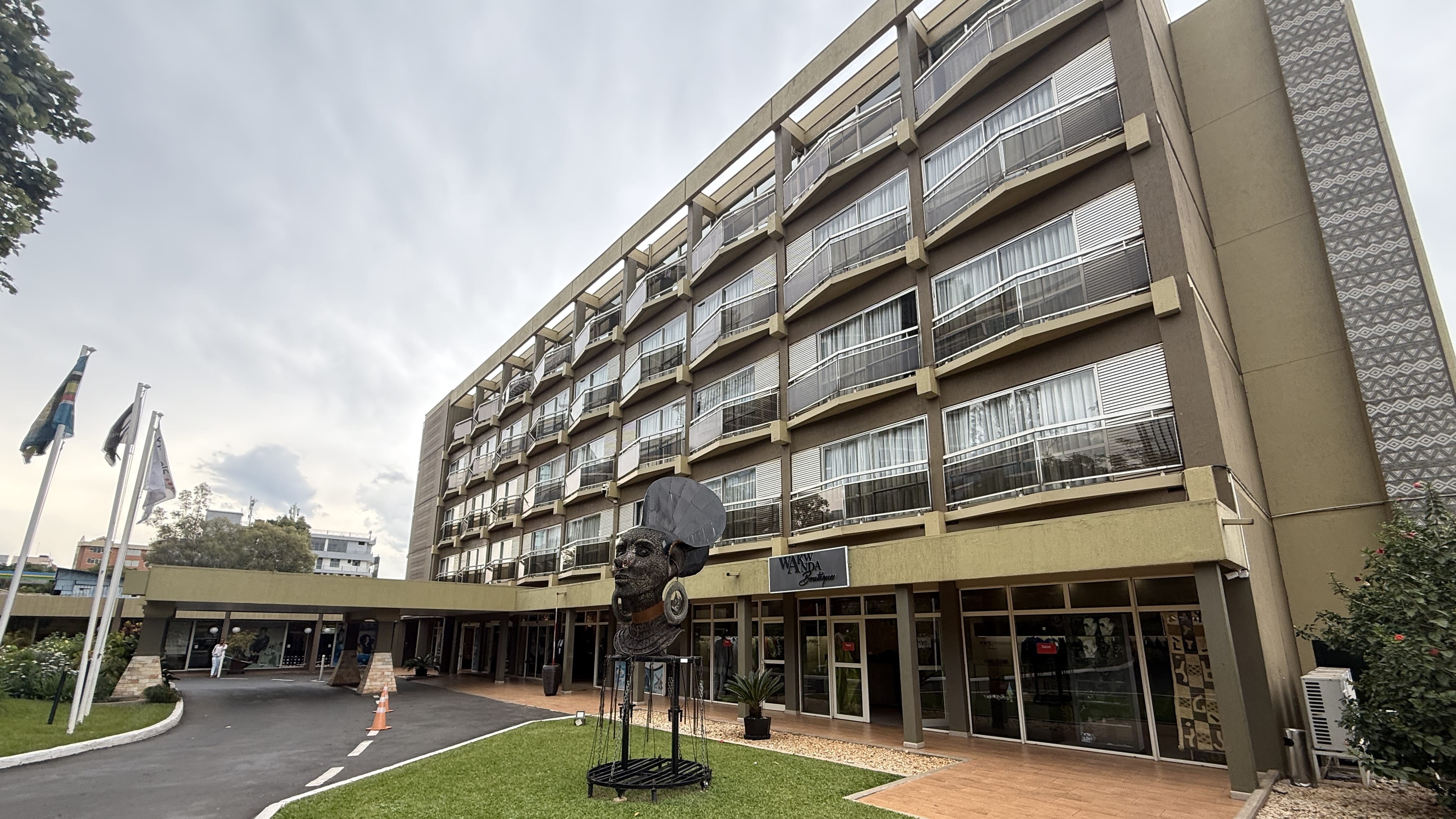
When we reached my hotel—The Nest—I checked in, unpacked, ordered a drink, and settled into my room for the night.
The Nest was Intrepid’s host hotel for the start of the trip, so I booked my stay for the night before as well. It made arrival easy and gave me a full day in Kigali before meeting the group.
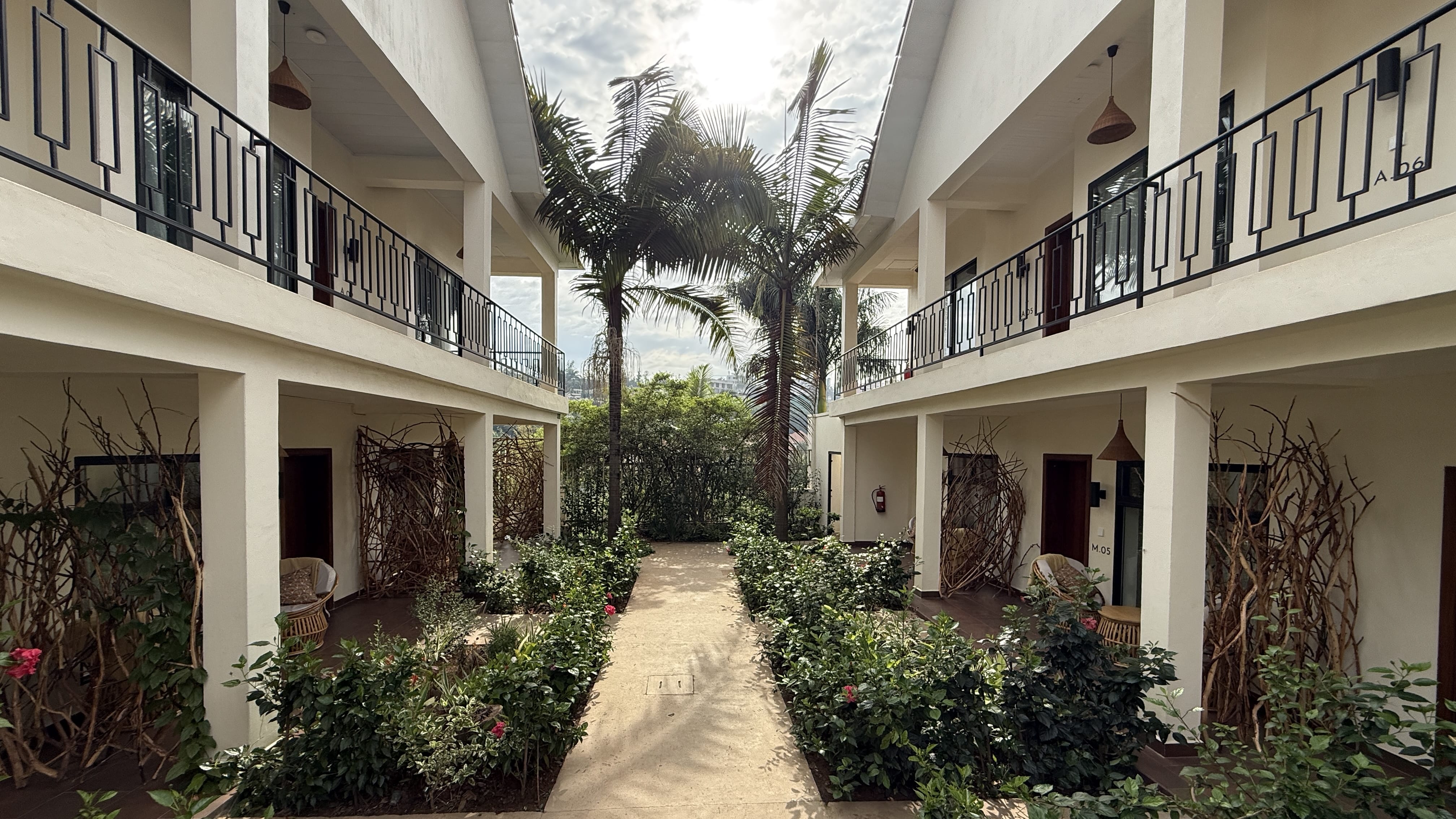
Although it’s not right in the center of the city, there were several places within walking distance to grab coffee or dinner if you didn’t want to eat at the hotel. That said, the food on-site was excellent, with several vegetarian options in addition to soups and salads.
The layout is modern and comfortable, with rooms arranged around a central courtyard and restaurant space. It felt relaxed without being overly polished.
They also have a massage therapist on-site. Sadly, I wasn’t able to get an appointment—apparently the Thai hot stone massage she offers is very good.
The hotel sat just far enough from the center that Kigali felt present but not loud—traffic humming somewhere in the distance, hills rising beyond the buildings.
Motorcycle taxis were constantly coming and going near the entrance. In Rwanda, only two people are allowed on a motorbike, and both must wear helmets, so drivers always carry an extra one. If I wanted a quick ride to a nearby coffee shop, all I had to do was put on a helmet and hop on.
A staff member at The Nest arranged a taxi to take me to the Nyamirambo Women’s Center, located in one of Kigali’s oldest and liveliest neighborhoods just southwest of downtown. The area felt busy and deeply local—lined with small shops, mosques, and the rhythm of everyday life, very different from the quieter, more polished parts of the city I had seen the night before.
The visit began with a brief introduction to the center and its work supporting women through training, education, and small business programs. Founded by local women, the center offers opportunities in sewing, handicrafts, English lessons, and community tourism—creating both income and independence for the women involved. Knowing the tour directly supported their work made the experience feel more meaningful from the start.
Soon after, I was handed a helmet, climbed onto the back of a motorcycle, and just like that I was in the middle of Kigali traffic—moving with the flow of bikes and cars, weaving through the city in a way that felt both chaotic and completely natural at the same time.
The guide rode just ahead on another motorcycle with her driver, while I followed behind on mine. All three of them were women—a small reflection of the Nyamirambo Women’s Center’s work supporting women in the community.
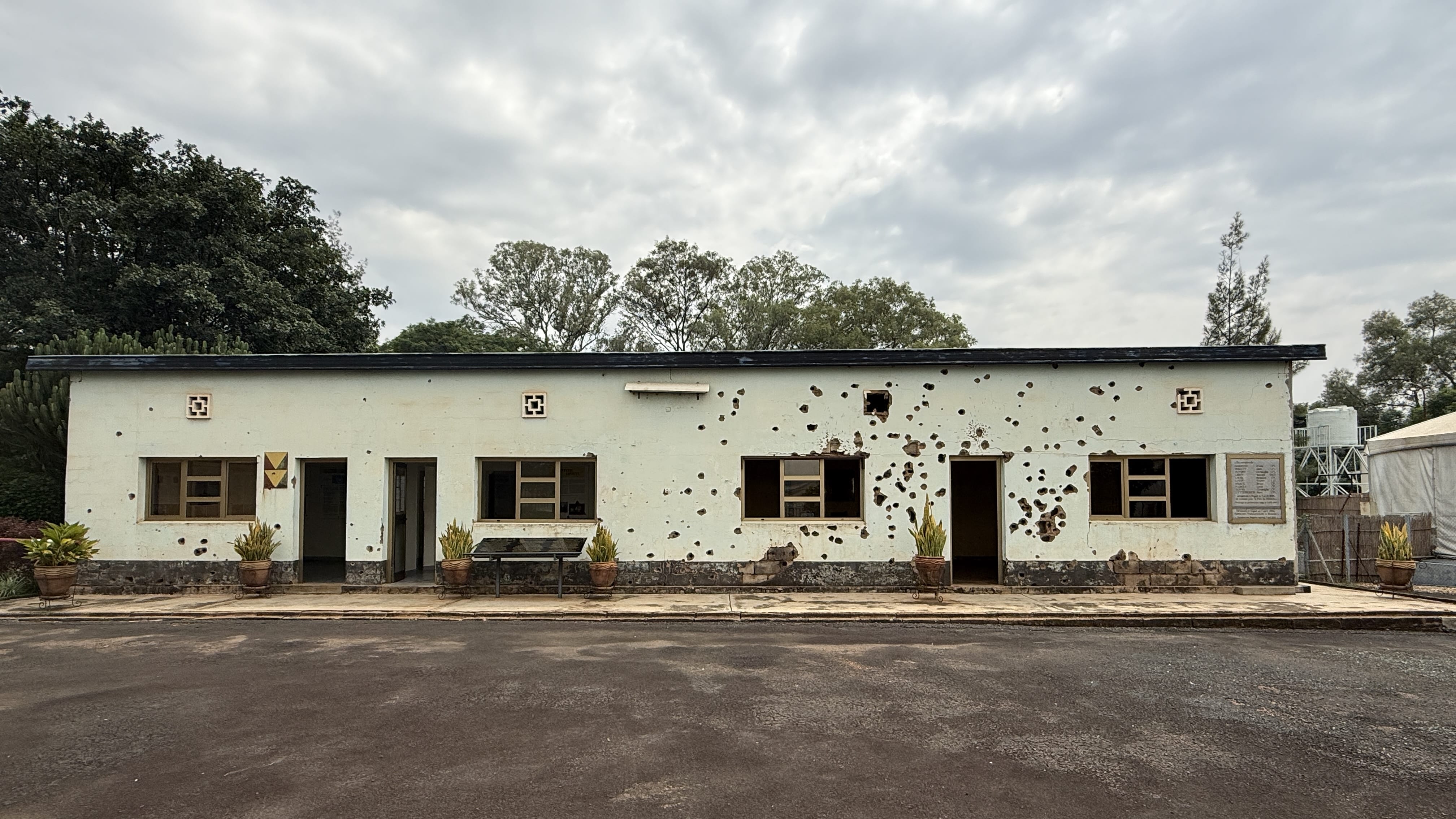
Our first stop was the Belgian Peacekeepers Memorial at Camp Kigali, a place I hadn’t known about before and one that felt immediately somber.
The memorial sits inside what was once a military camp. Behind it stands a low, ordinary-looking building, its walls marked with scattered bullet holes. In one section the damage is especially heavy.
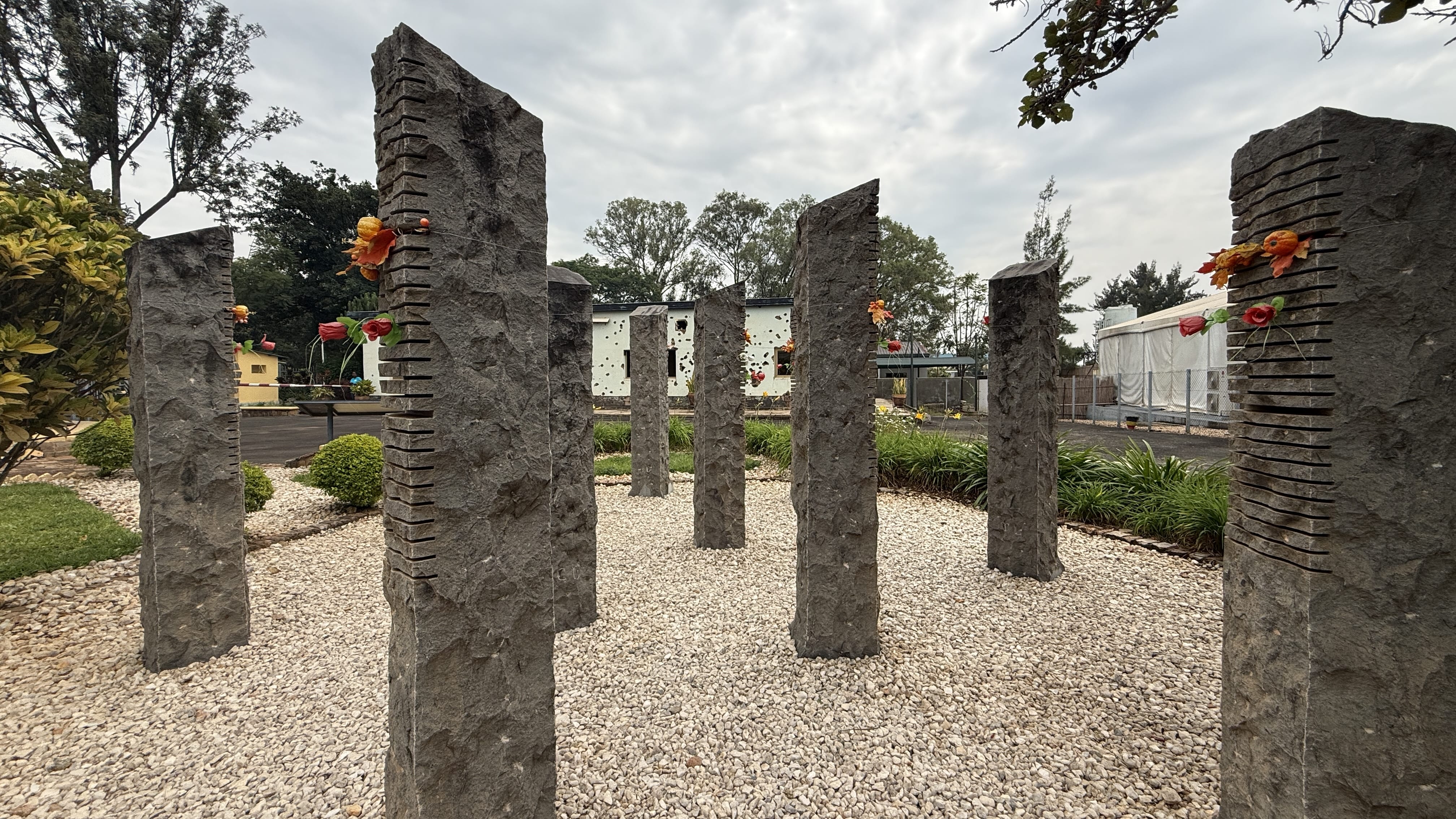
In front of the building stand ten tall stone pillars—one for each of the Belgian UN peacekeepers killed here in the first hours of the 1994 genocide. They had been assigned to protect Rwanda’s prime minister, Agathe Uwilingiyimana—the first and only woman to hold that office—who was also killed that same morning.
Small flowers rest in narrow grooves carved into the stone, a quiet contrast to the brutality preserved in the walls behind them.
We continued to the Kigali Car-Free Zone, a pedestrian street in the city center with cafés and shops on both sides. My guide and I got off the bike and walked through. It was busy, with a steady flow of people moving along the street.
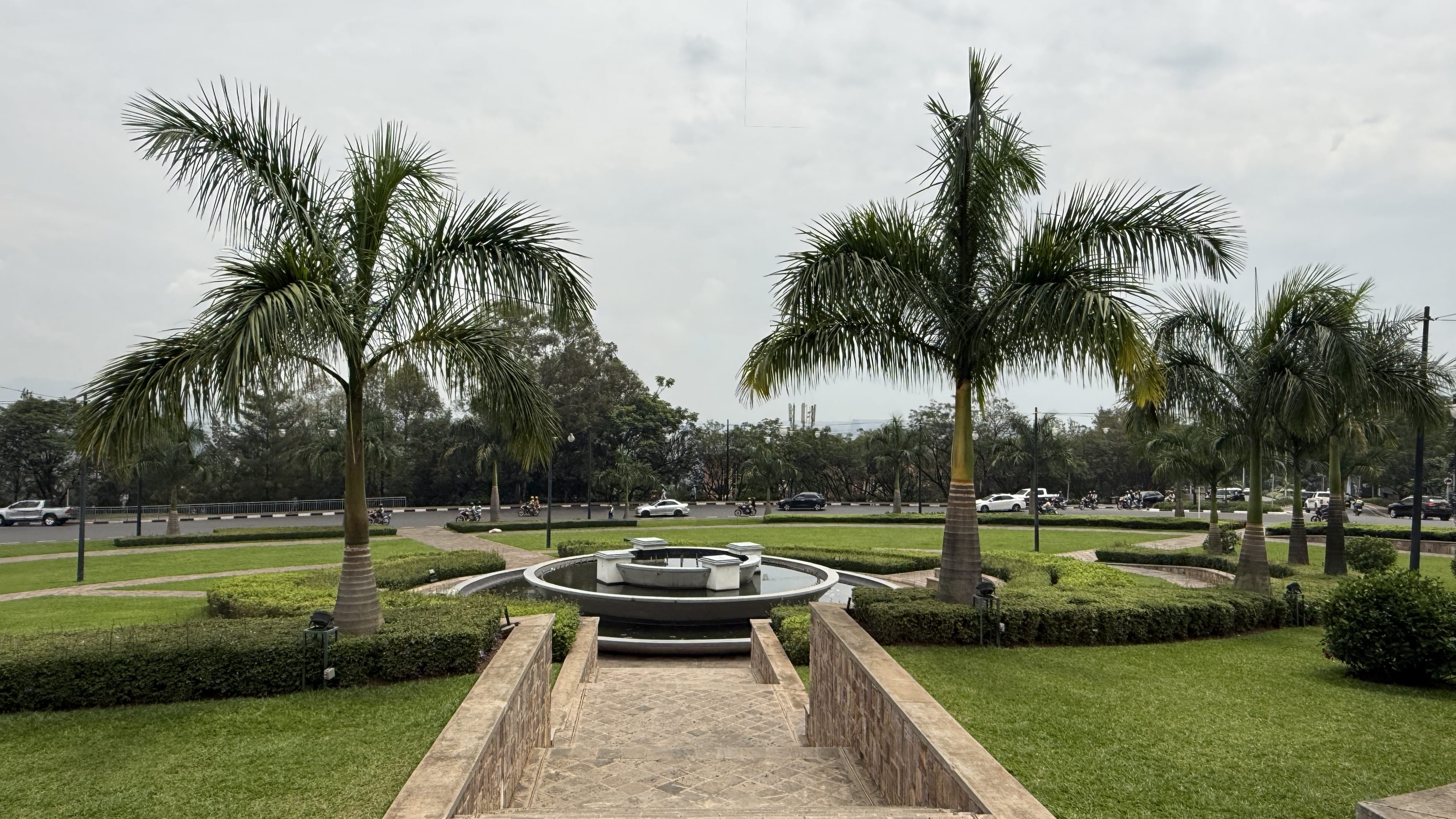
From the car-free zone we headed downhill toward the Place de l’Unité Nationale roundabout, where rooftops and neighborhoods spread across the hills in every direction.
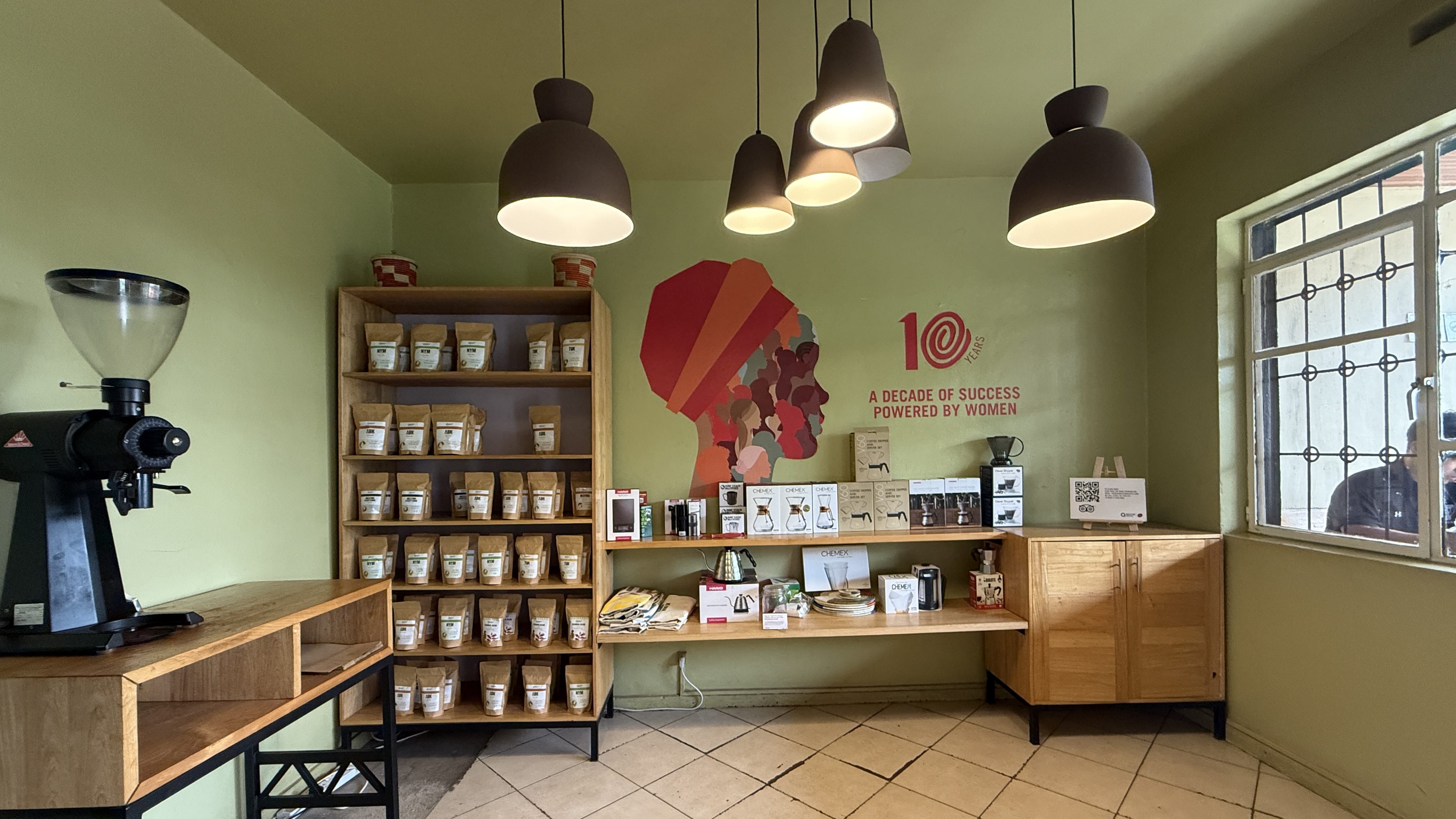
Back on the motorcycles, we rode to Question Coffee in Kiyovu, a women-focused coffee company that works with and supports female coffee farmers in Rwanda. I ordered an iced coffee—absolutely delicious—and bought a bag of beans before we left.
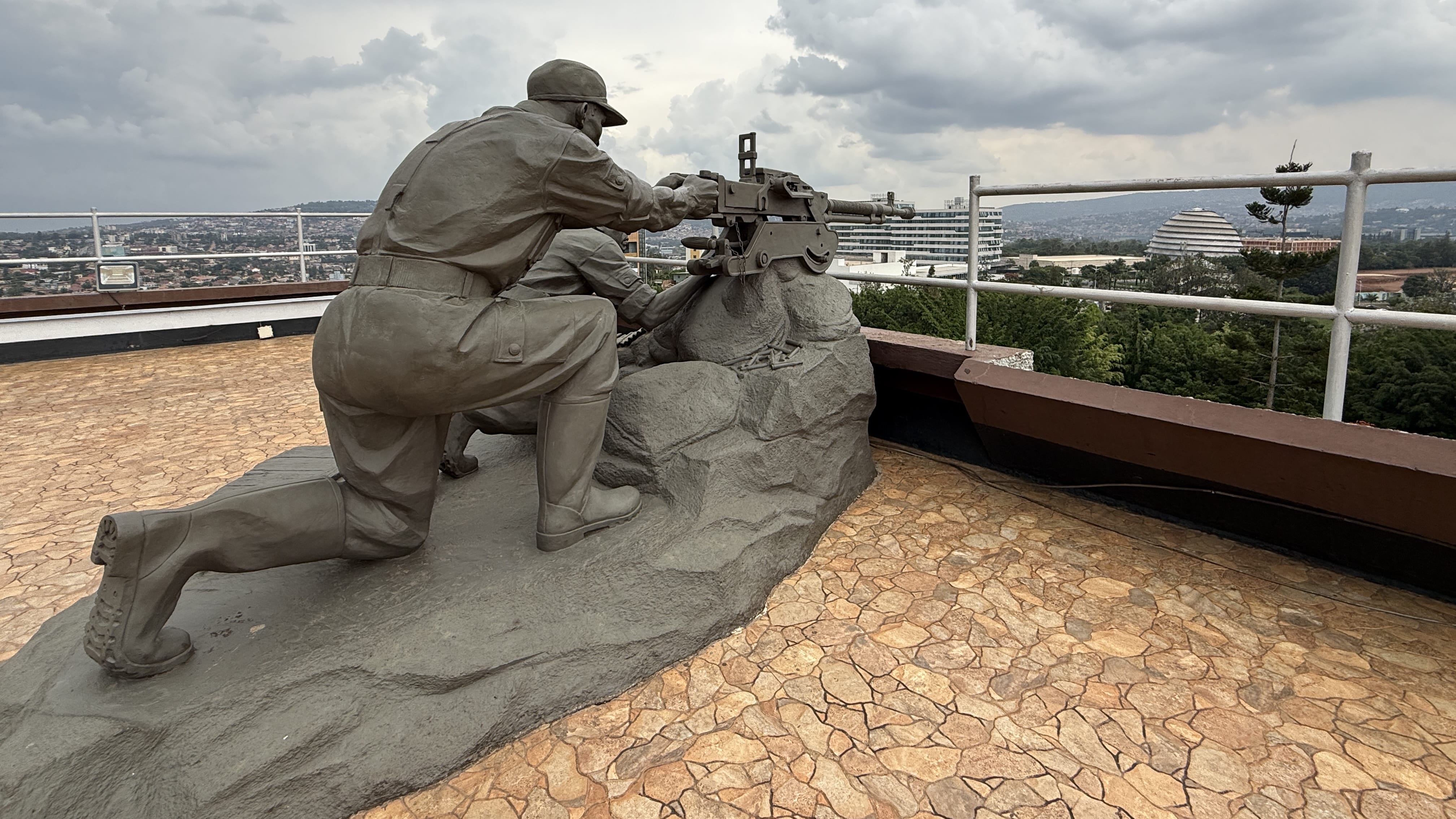
From there, we rode along a long, palm-lined road toward Rwanda’s Parliament and stopped at the Museum for the Campaign Against Genocide. The museum documents how the Rwandan Patriotic Front fought to end the genocide in 1994, and parts of the building still show damage from the fighting that took place during those final months.
Dark clouds began rolling in, thunder echoing in the distance, so we skipped the Kigali Convention Center and returned toward Nyamirambo.
Not far from the women’s center, we visited a local home for a traditional Rwandan lunch—the same space used for the cooking classes offered through the Nyamirambo Women’s Center.
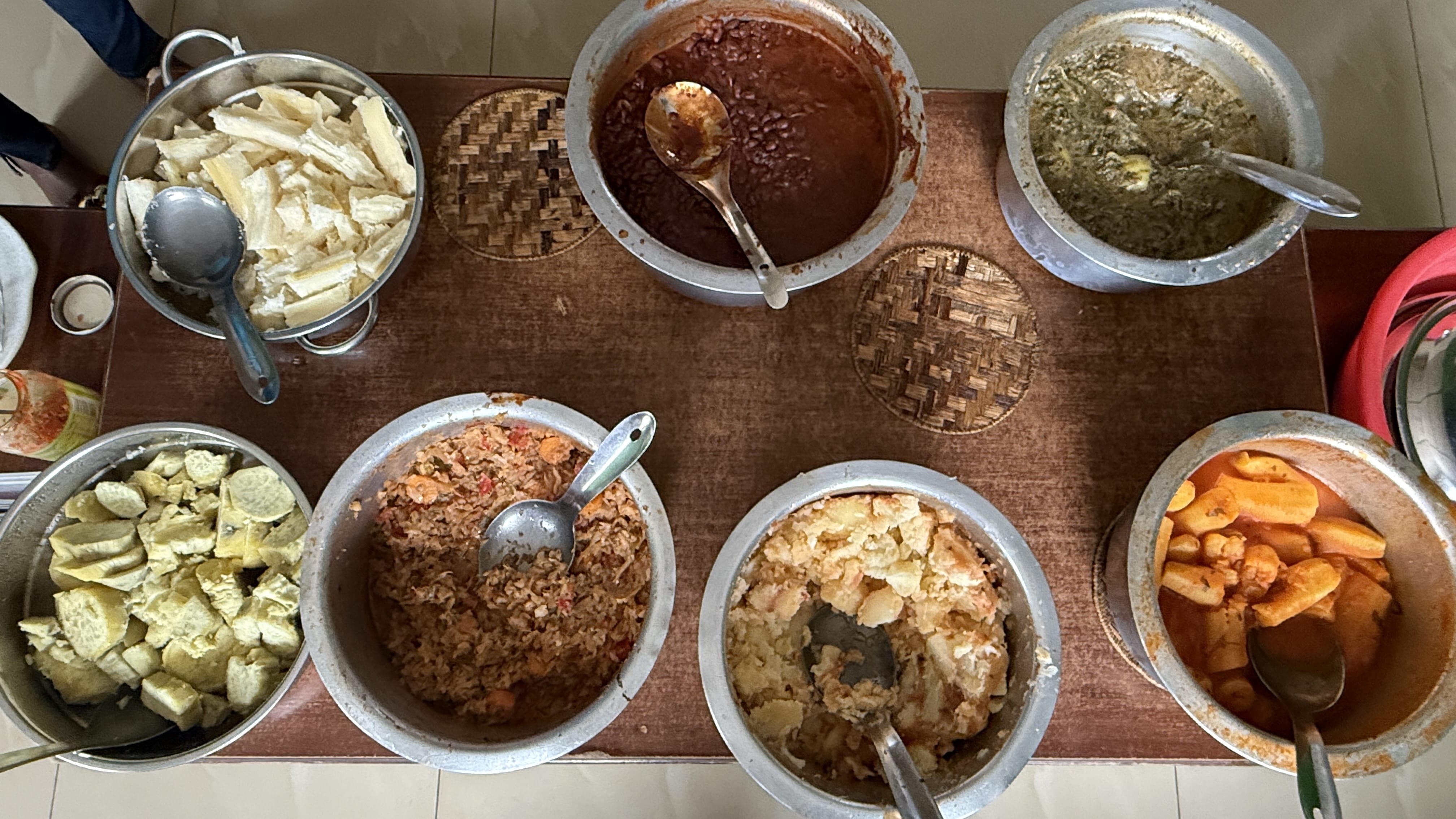
Everything was vegetarian and built around everyday staples: beans in tomato sauce, soft leafy greens called dodo, boiled potatoes, stewed cabbage and carrots, cooking bananas, and dense pieces of cassava root.
I had never had cassava before, but it was vegetarian, so I tried it. Cassava is a starchy root vegetable—something like a firmer, more fibrous potato—and it’s a staple across much of Africa. When boiled, it becomes thick and filling rather than especially flavorful.
I quickly regretted that first bite.
The texture was dense and slightly chalky, and as I sat there with the cook and my guide watching, I realized I wasn’t going to be able to quietly push it aside. So I chewed. And chewed. And chewed until I swallowed it.
It would show up again in later meals during the trip, and I quietly made sure to avoid it whenever I could
The rest of the meal was simple and good. A small bowl of pili pili, Rwanda’s fiery chili sauce, sat on the table. With my trip just beginning, I was probably being overly cautious about anything raw and decided to skip it. In hindsight, it was likely the magic sauce that would have elevated the otherwise fairly mild dishes
I’ll be honest—the main reason I booked the tour was to experience Kigali from the back of a motorbike, riding through the streets rather than just watching from a car. In that sense, it delivered.
But I realized later I had wanted something less structured and more exploratory. Aside from the memorial, the coffee stop, and lunch, the tour felt more like a brief overview than a deeper look at the city.
It was still a good introduction.
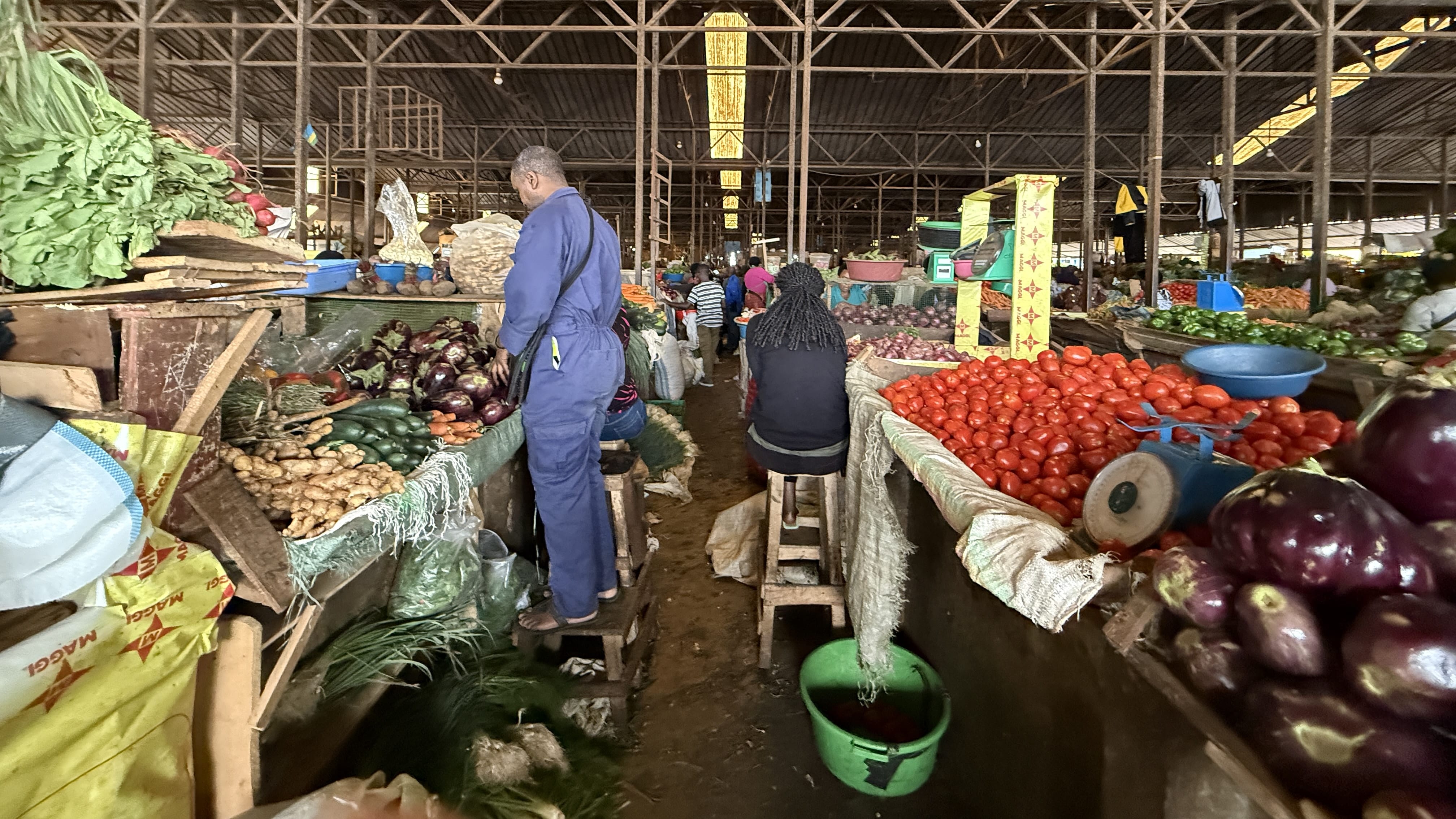
My taxi driver was waiting when I returned, and he offered to show me a few more places in the city. Kimironko Market had already been on my list, so I agreed.
Along the covered entrance sat rows of sewing machines, with more lining the interior near stalls overflowing with bright patterned fabric. Vendors described garments they could sew, sometimes promising something finished within an hour.
I usually love markets—for photography, for people-watching, for the rhythm of daily life.
But this time felt different.
The selling was constant and close. Voices called out, hands reached toward me with fabric, people stepped into my path before I could move on. There was no space to simply stand and observe.
I was probably still a bit jet-lagged. I won’t pretend it wasn’t overwhelming.
At one point, I ran into the couple from my flight — the same two who would be joining the Intrepid trip later that evening. They laughed and admitted they were feeling the same way. That small moment of shared overwhelm somehow made it easier.
On the drive back, we passed the Hôtel des Mille Collines, the hotel associated with Hotel Rwanda. Knowing what happened there, it felt strange to see it in person—so ordinary from the outside, just another building in the city.
Only later did I realize that what I assumed would be a simple extension of the ride had added up. I hadn’t clarified the cost before we set off again, and the total came to around $60 USD—more than I expected. It was a small wake-up moment. I know better than not to ask about pricing ahead of time, and I didn’t.
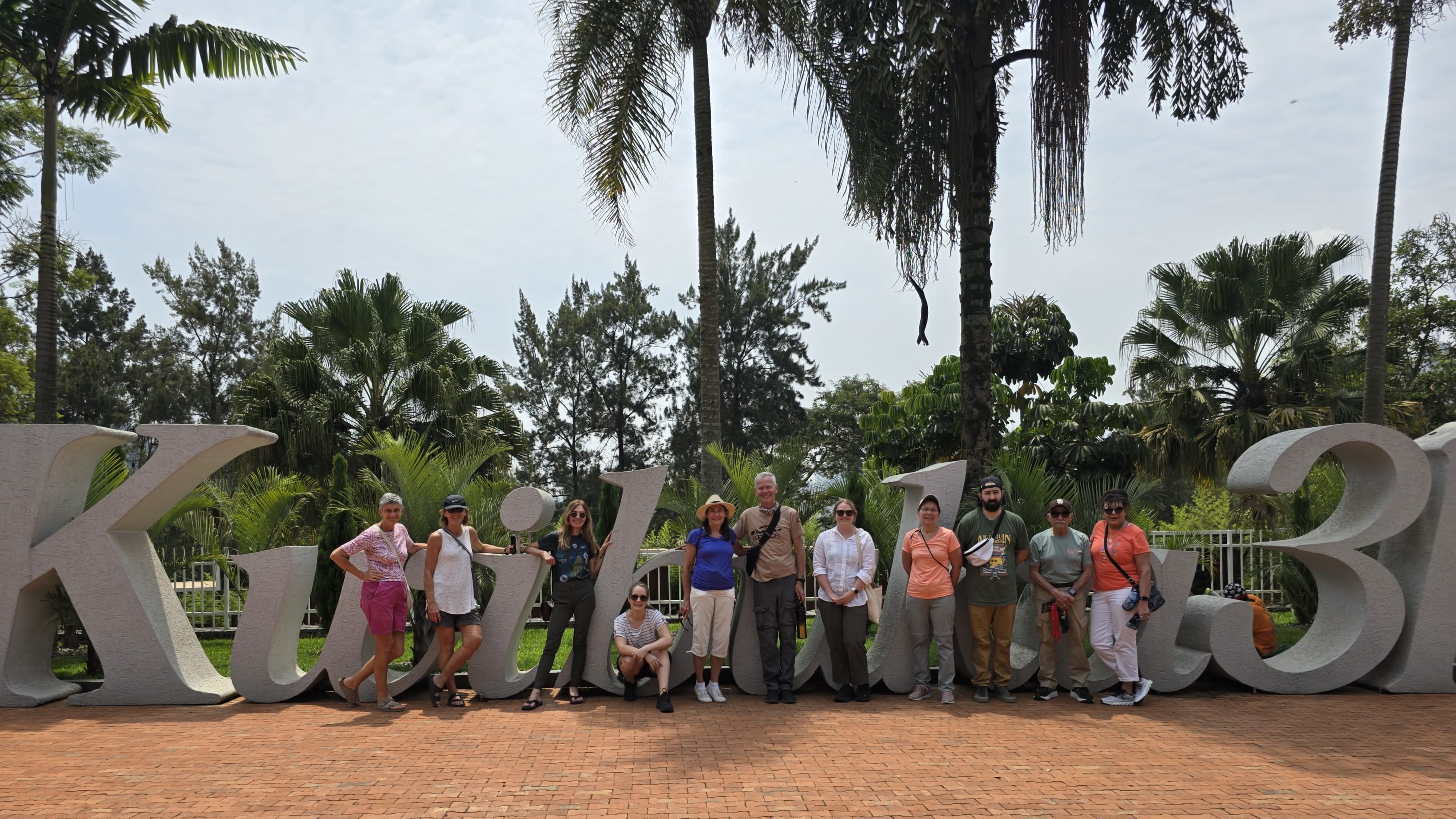
Then it was back to The Nest to finally meet the ten people I’d be traveling with—two Australians, five Canadians, three other Americans, and one from the UK. We had a short briefing before I grabbed a quick dinner at the hotel restaurant and called it a night.
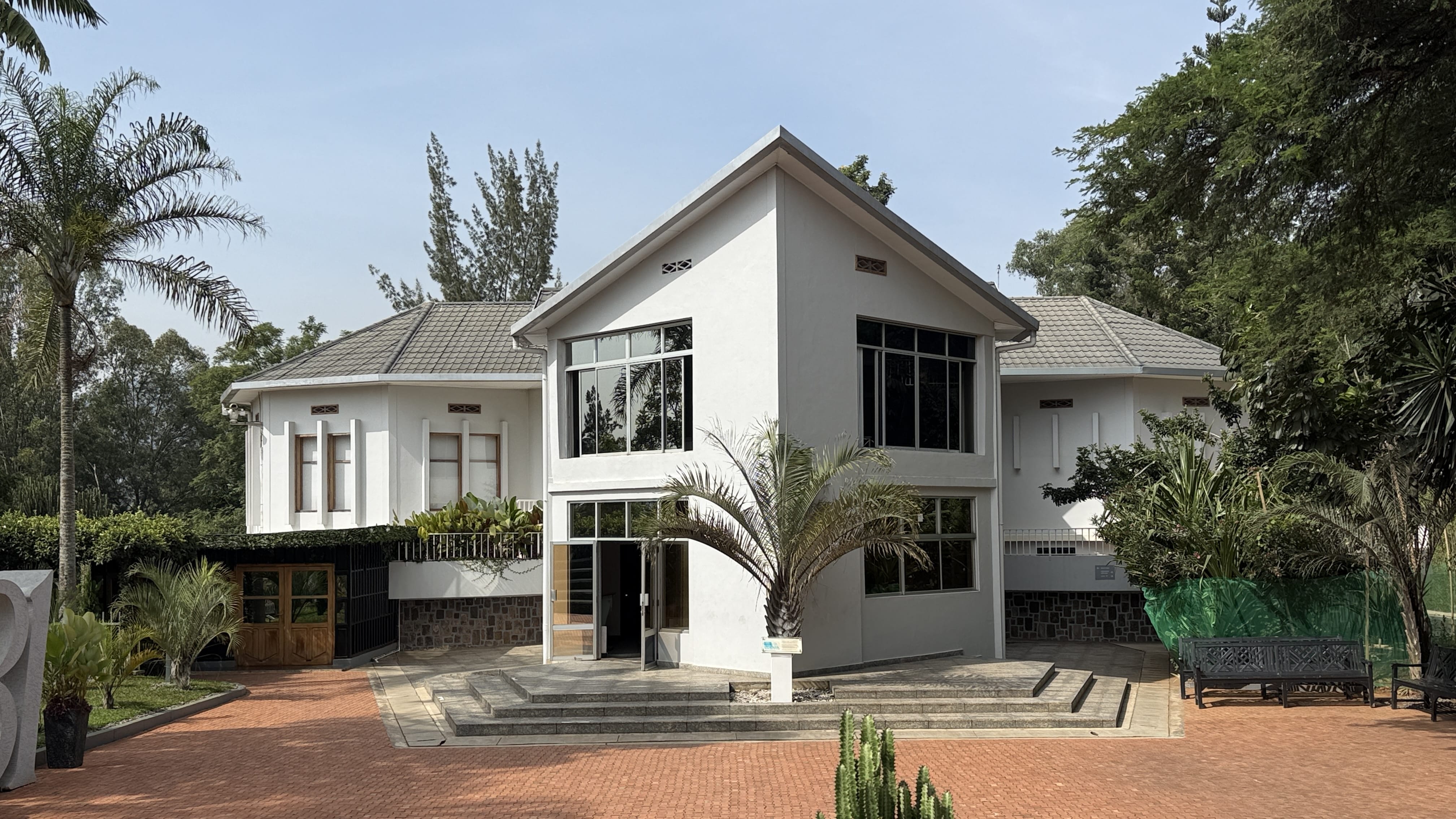
After breakfast at The Nest — fresh fruit, coffee, and a made-to-order omelet — we headed to the Kigali Genocide Memorial Centre.
I wasn’t sure what to expect.
The memorial opened in 2004, marking ten years since the genocide against the Tutsi. It documents what happened and also serves as a place for remembrance and mourning.
Walking through the museum takes about an hour and a half. The audio guide was an important addition, but there are also plaques along the walls describing the events and providing context throughout the exhibits.
Inside are stark displays that are difficult to take in—glass cases filled with skulls and bones, many visibly fractured, and clothing from victims hanging in silence.
The children’s room was especially hard to see. Families had shared photographs and small details about their children—their favorite foods, games, and dreams for the future.
One girl loved Fanta mixed with milk and hoped to become a doctor.
Another was remembered for making people laugh.
Another loved singing and dancing.
Each description ended with the same quiet fact: how they were killed.
Some victims had sought refuge in churches, believing they would be safe there.
Nothing inside the memorial softens what happened.
Outside, the grounds include mass graves and quiet garden spaces where families come to sit with their loss. The landscaping is calm and carefully tended. There is a peacefulness to it that feels almost strange after everything inside—but perhaps that is part of the purpose: remembrance without forgetting.
After the visit, we climbed back into the vehicle and began the drive north toward Musanze. The city sits at the base of Rwanda’s Volcanoes National Park and would be our base for the next part of the trip. It’s the main gateway for gorilla trekking and other hikes into the Virunga volcanoes.
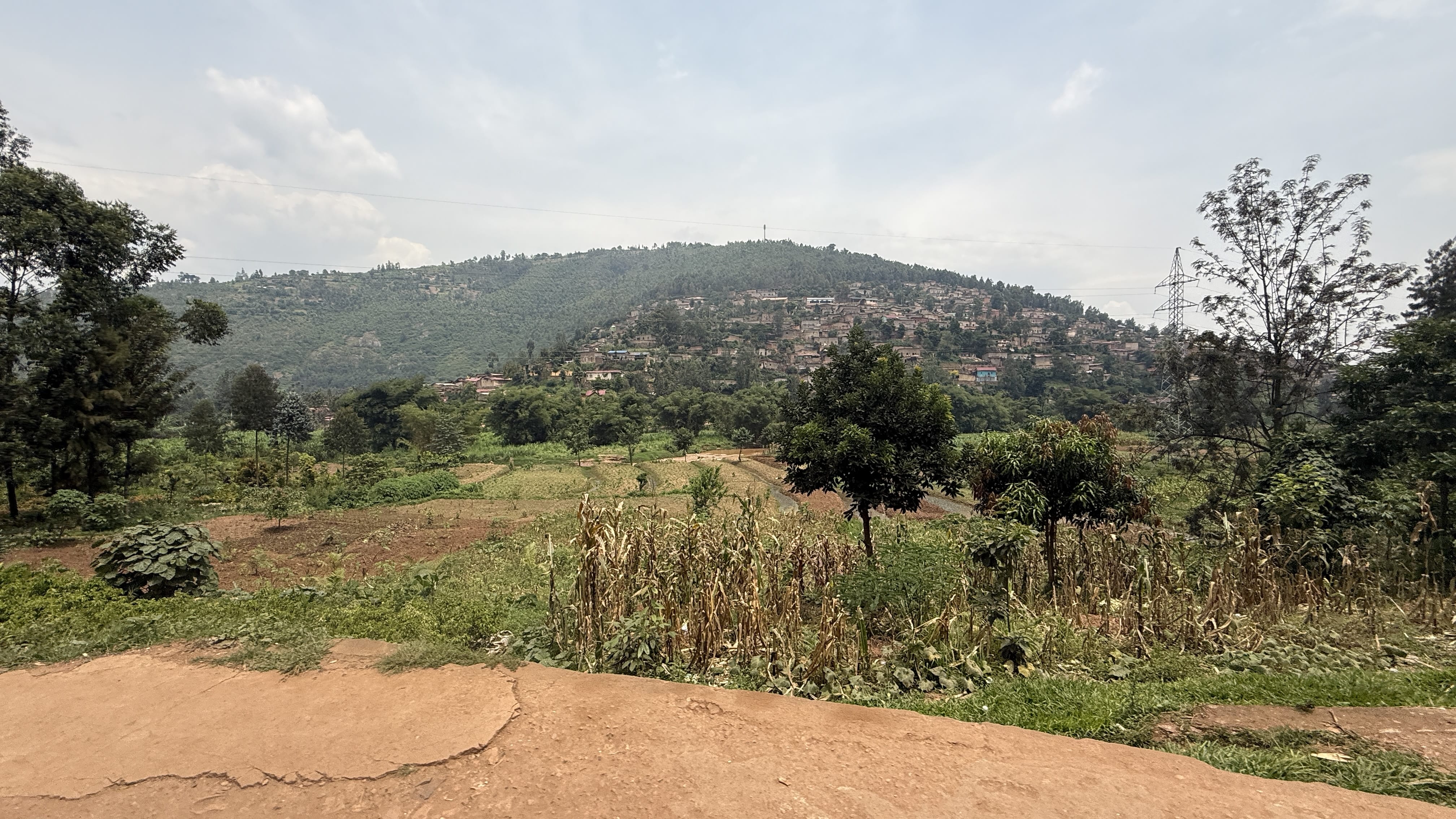
The landscape quickly changed as we left Kigali behind—rolling hills, small farms, and villages appearing along the road.
That evening we arrived in Musanze, where we would spend the next two nights before crossing into Uganda.
👉 Continue reading:
2 Nights in Musanze: Golden Monkeys and First Glimpses of the Volcanoes

Hi, I’m JoAnne—writer, wanderer, and lover of places that surprise me. I’ve traveled to 60+ countries (and counting), usually with a camera in one hand and a notebook in the other. I’m drawn to mosaics, markets, and mountains, and I write to remember what moved me. When I’m not traveling, I’m working on my blog Travels Afoot, trying new creative projects, or planning my next adventure.