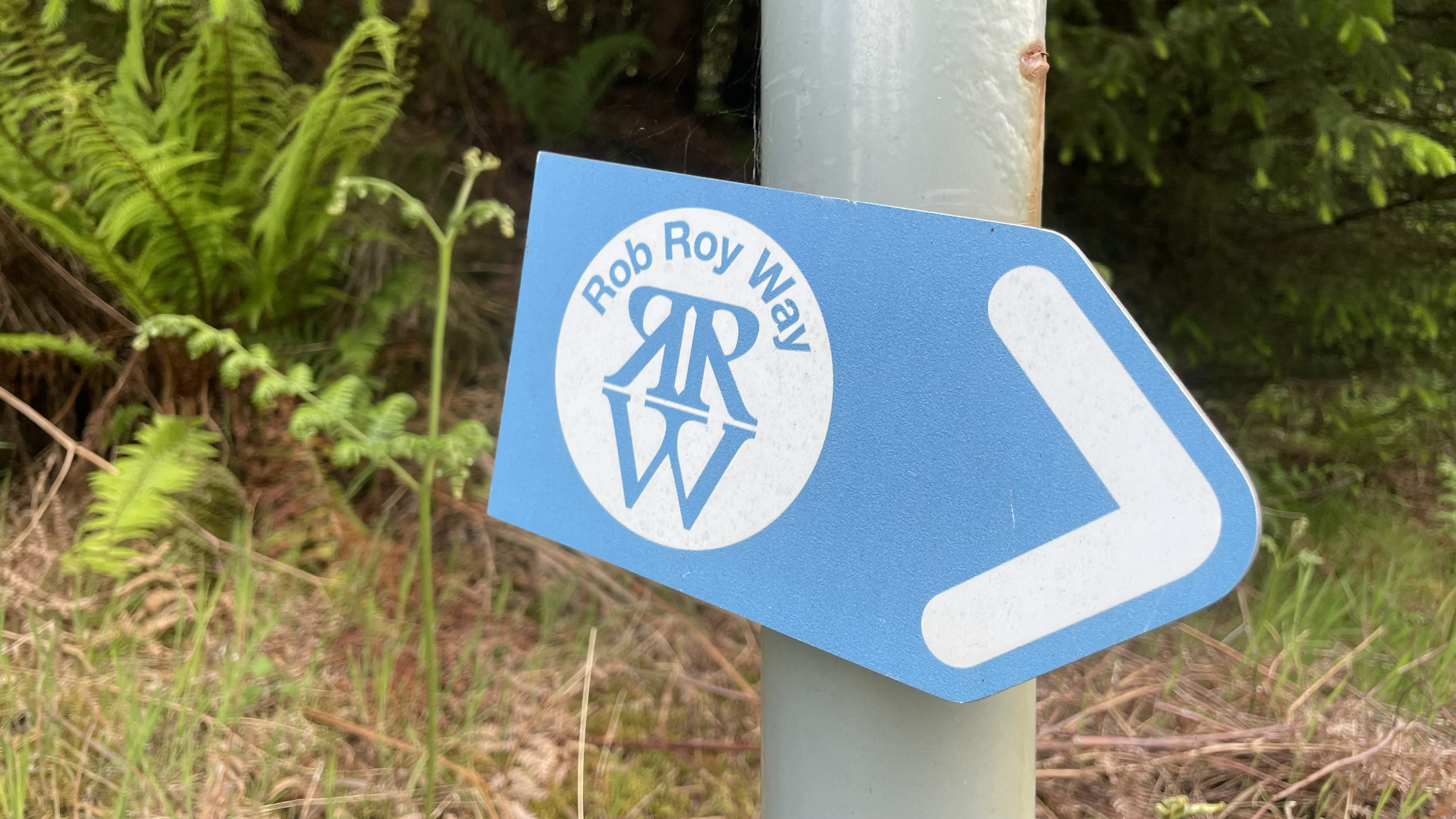
I’d been dreaming about going to Scotland for years. After joining a seven-day women’s trip with AdventureWomen through the Highlands and coast, starting and ending in Edinburgh, I decided to extend my stay and try something different—a self-guided hiking trip. That’s how I ended up on the Rob Roy Way.
For the second part of my journey, I contacted Hillwalk Tours, a company that organizes self-guided, inn-to-inn walking holidays across Ireland and the UK. There are several companies offering trips like this, but Hillwalk stood out — their Rob Roy Way route sounded ideal: scenic, peaceful, and manageable. It’s not as crowded as the West Highland Way, but still offers a classic mix of lochs, hills, and Highland history.
When my husband flew in to meet me, we set off together on the 8-day route from Callander to Pitlochry, averaging 8 to 10 miles a day. Hillwalk Tours arranged the maps, lodging, and luggage transfers, so all we had to do was walk—no group, no guide, just us and the trail.
Every morning, we set out with just our daypacks, and by the time we arrived in the next village, our luggage was already waiting. It made the whole experience feel easy and relaxed—low-stress, but still an adventure. Most of the B&Bs could pack a lunch for a small fee, and for the ones that couldn’t, Hillwalk made sure we’d be near a market or shop.
The Rob Roy Way runs about 79 miles through lochs, glens, forests, and farmland. It felt peaceful but not isolated, with the occasional offbeat stop—Rob Roy’s grave, a gin distillery, and a few local spots along the way.
We booked a transfer from Edinburgh to Callander, which took just over an hour. As we left the city behind, the landscape began to shift—rolling hills, more green, fewer buildings.
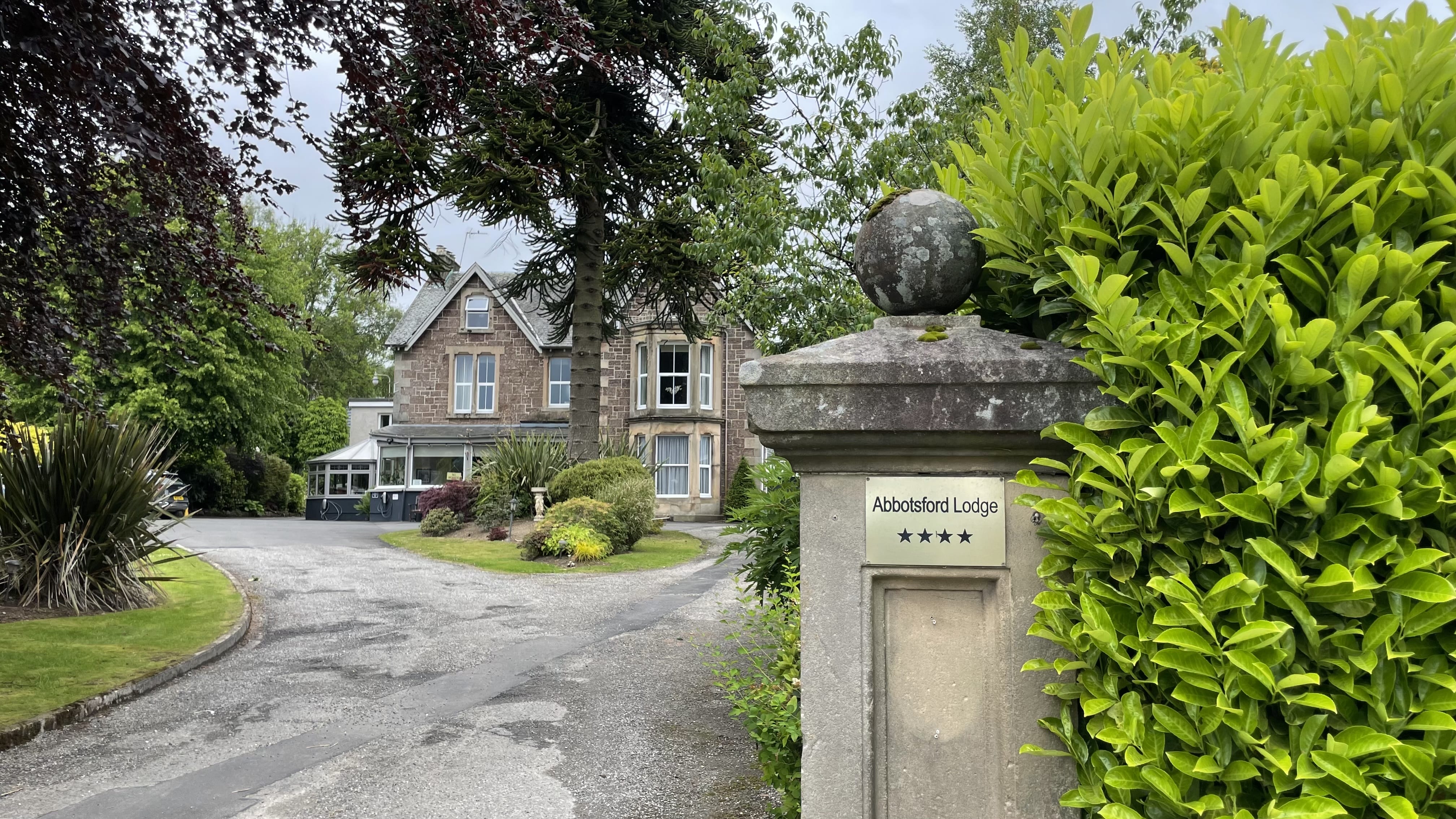
We arrived the night before the hike officially started and checked into Abbotsford Lodge, a stone guesthouse just off the main road. The place was comfortable and nicely decorated. It felt like we had the place to ourselves. Dinner and breakfast were both very good—we ate in their small restaurant, which had a quiet charm to it.
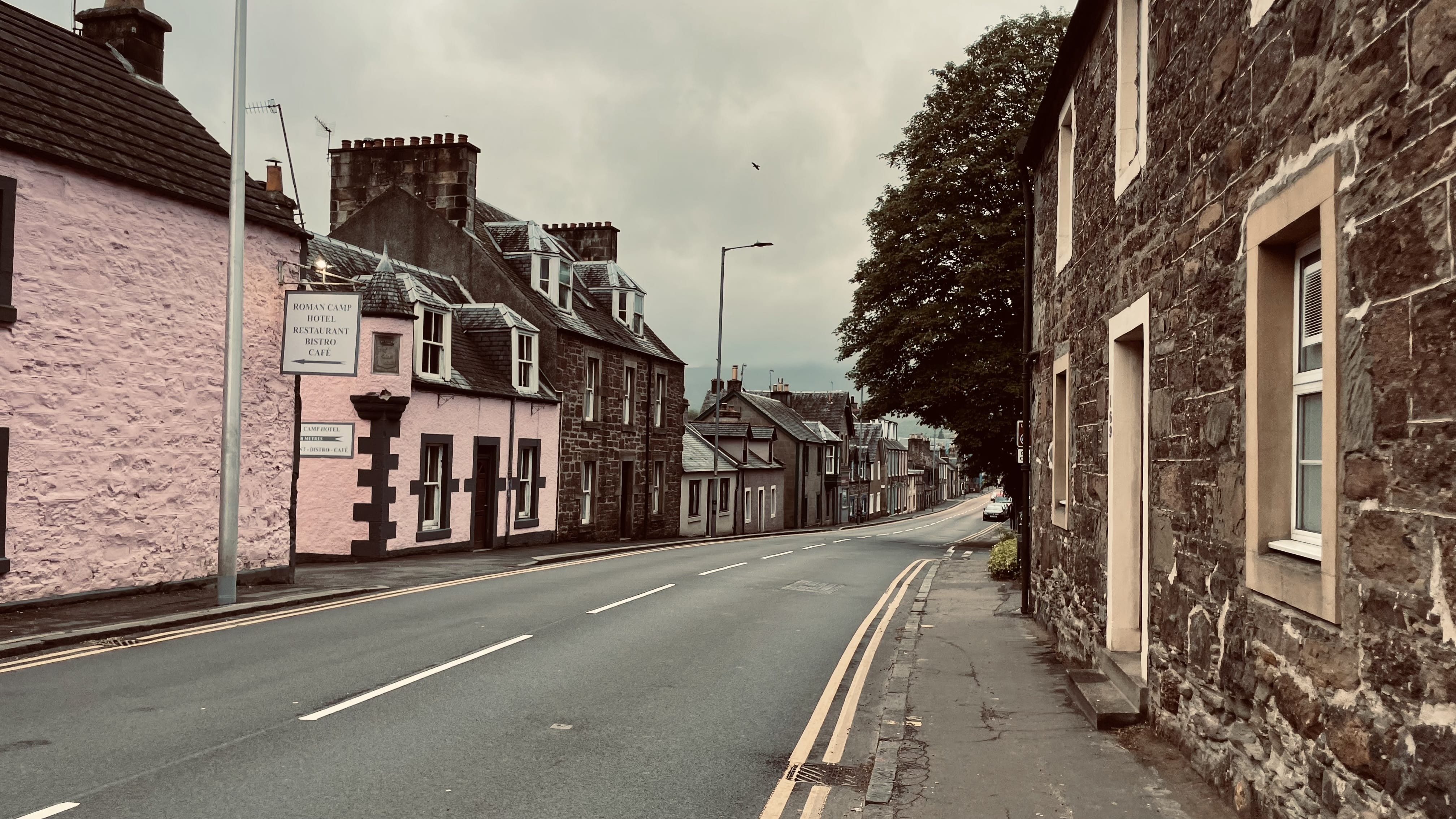
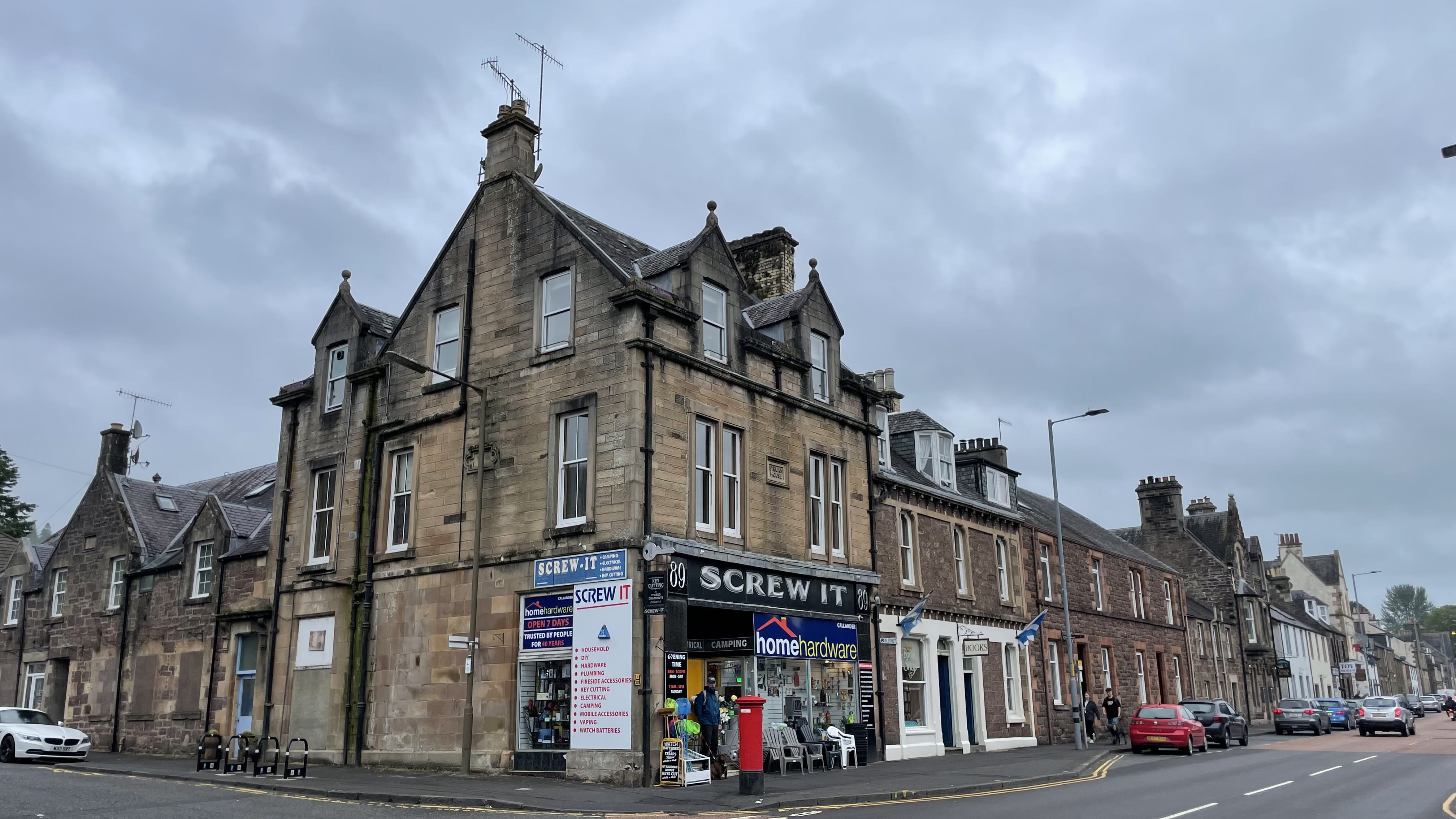
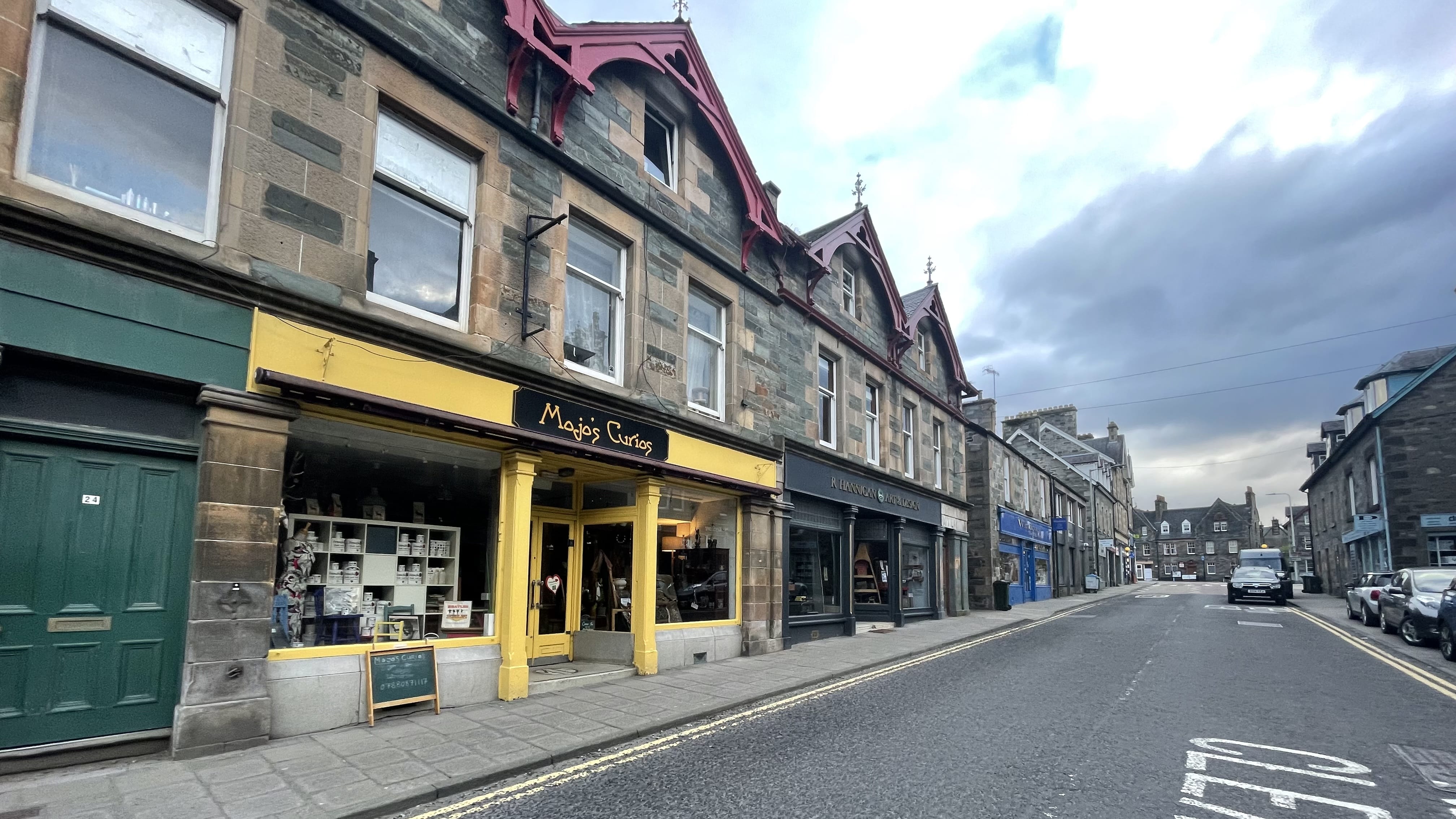
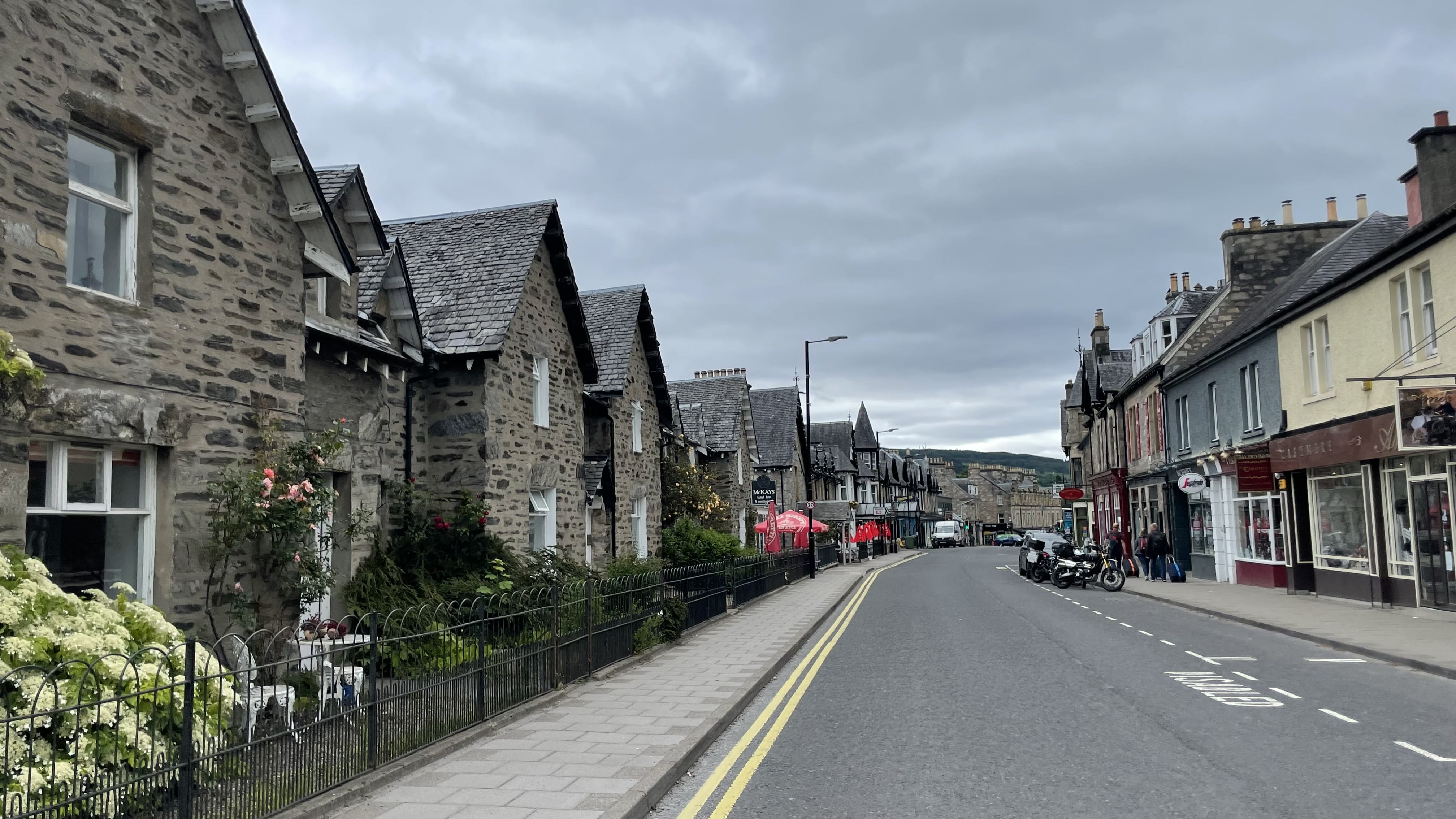
Callander felt like a place in between. It’s often called the gateway to the Trossachs, and it really does feel like a threshold—like you’re right on the edge of the Highlands. The main street runs through town with traditional stone buildings, shops, and pubs. Some are practical, some are quirky, and some are both.
A hardware store called “Screw It” made me laugh out loud. We passed a fudge shop with a window display that hadn’t been updated since maybe the 1980s—gnomes, Union Jack bunting, cartoon candy characters. Weirdly endearing.
We didn’t do much that night—just wandered a bit, took in the town, and got ready to start walking.
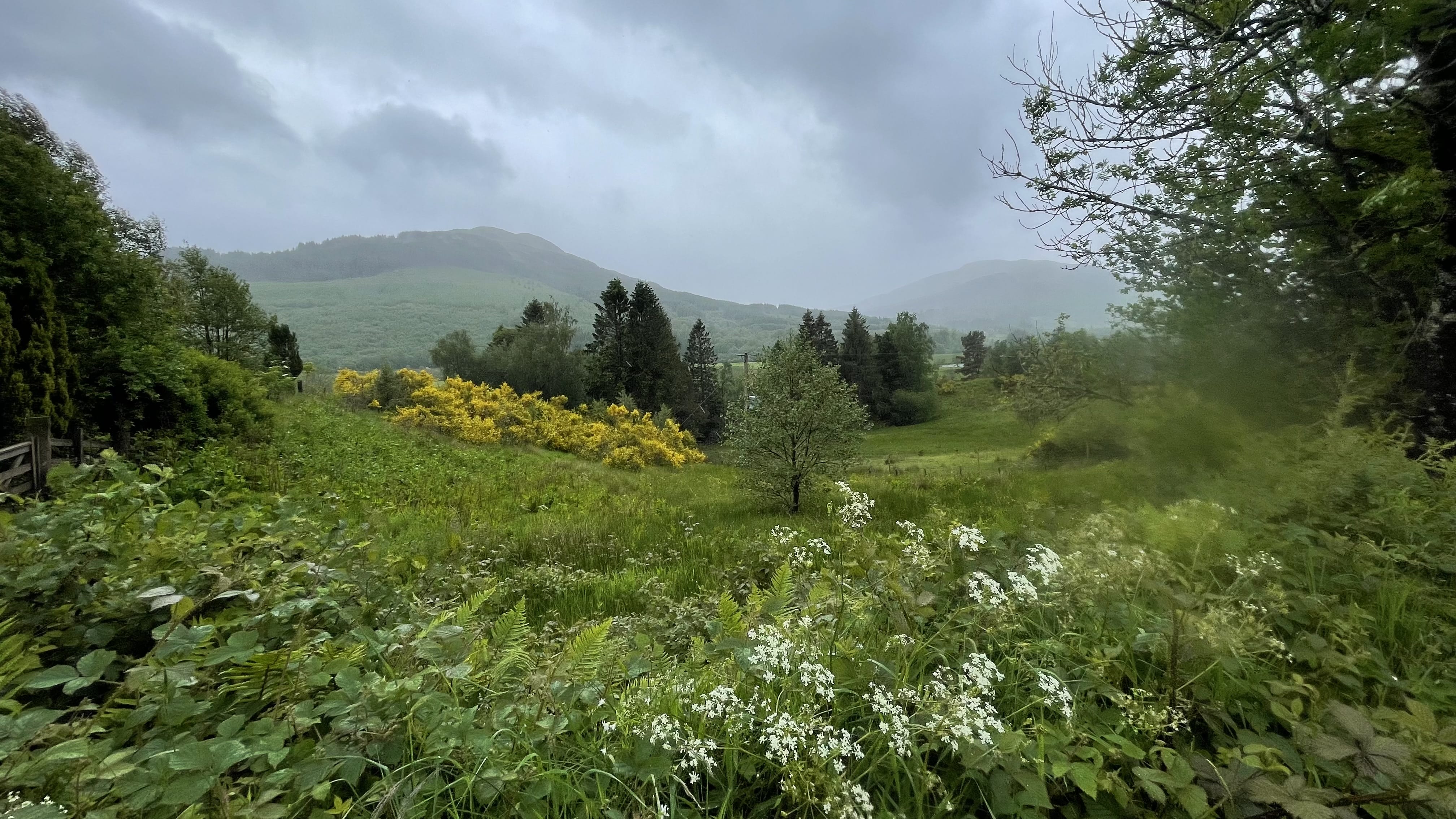
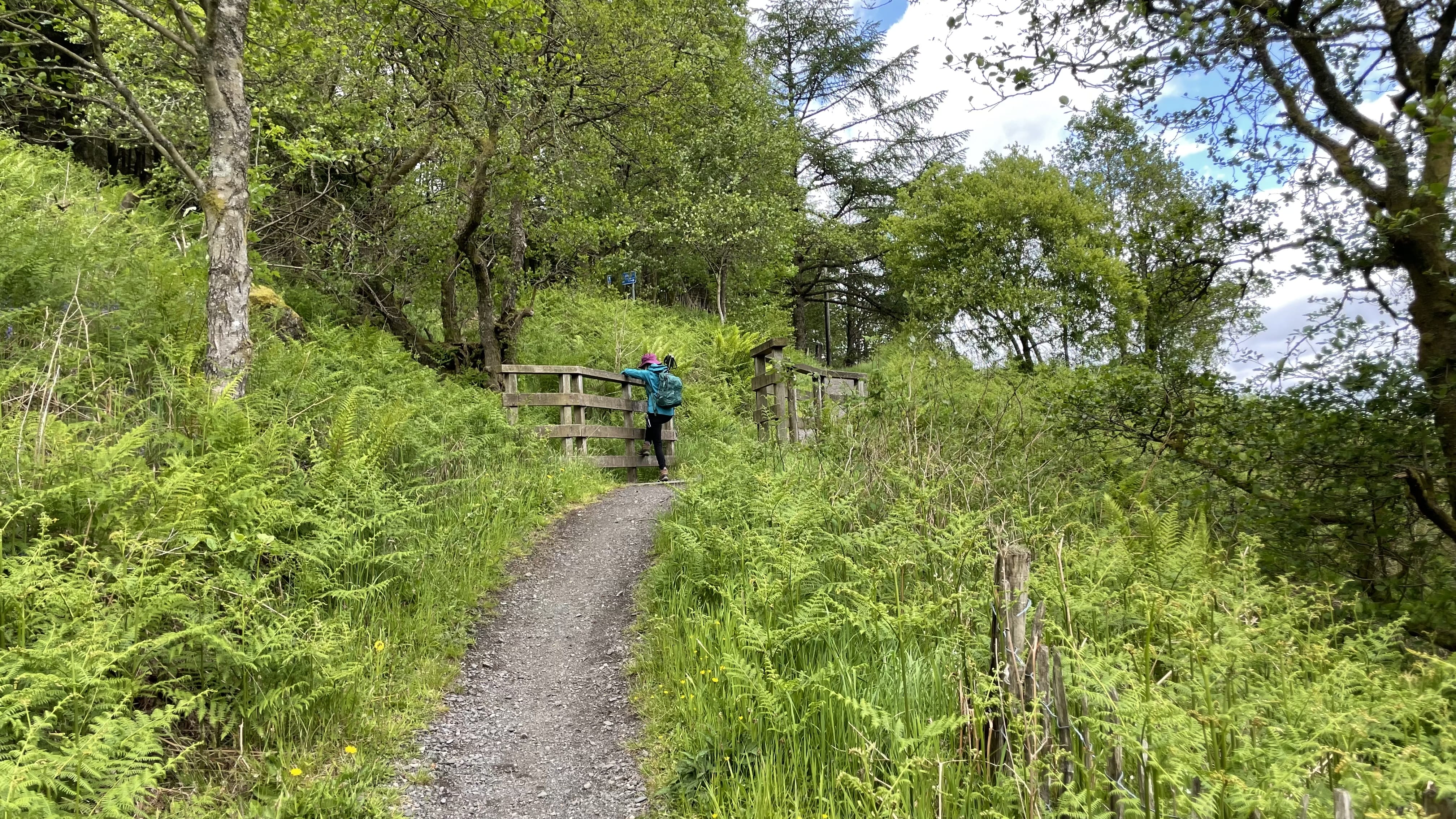
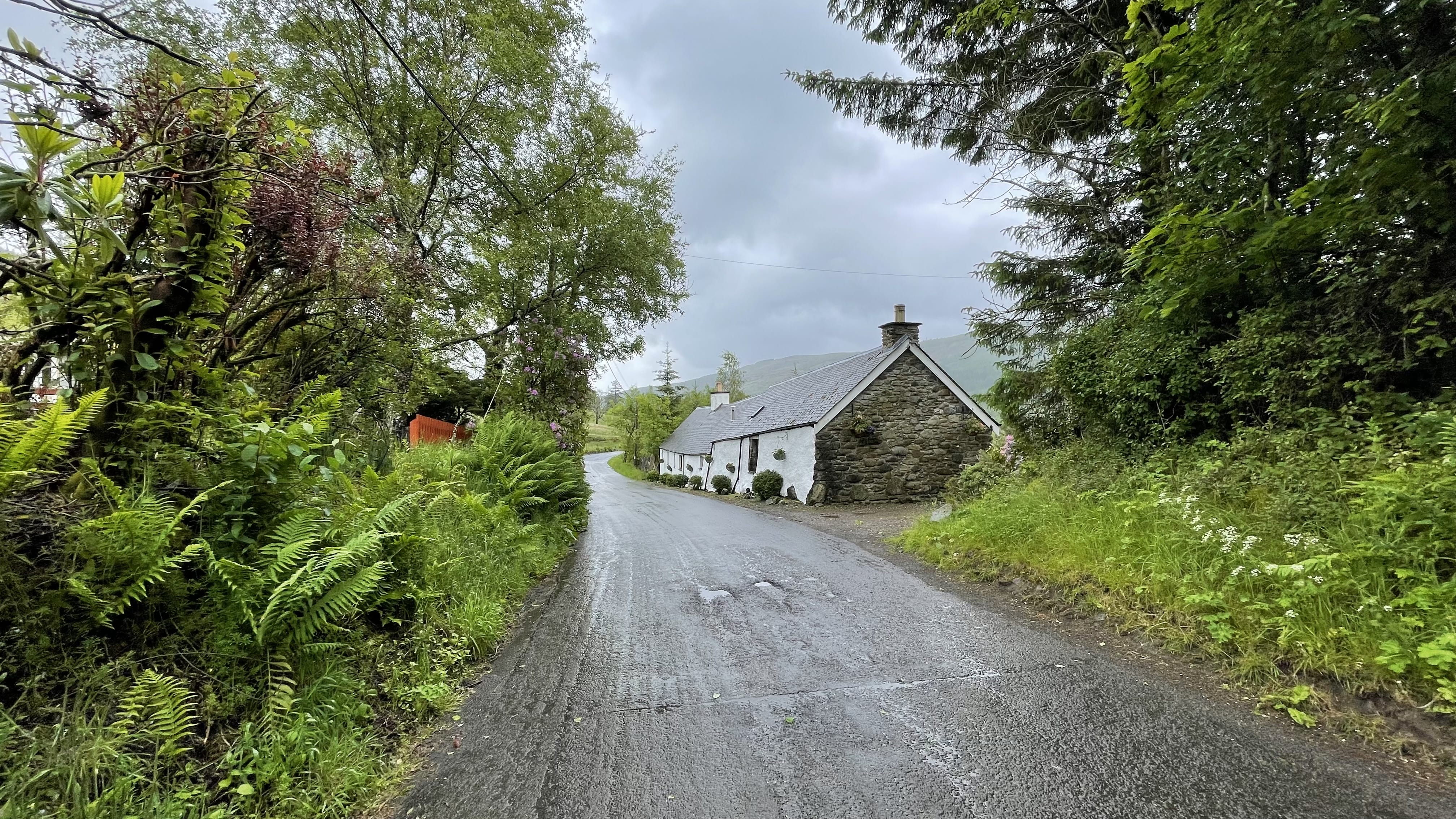
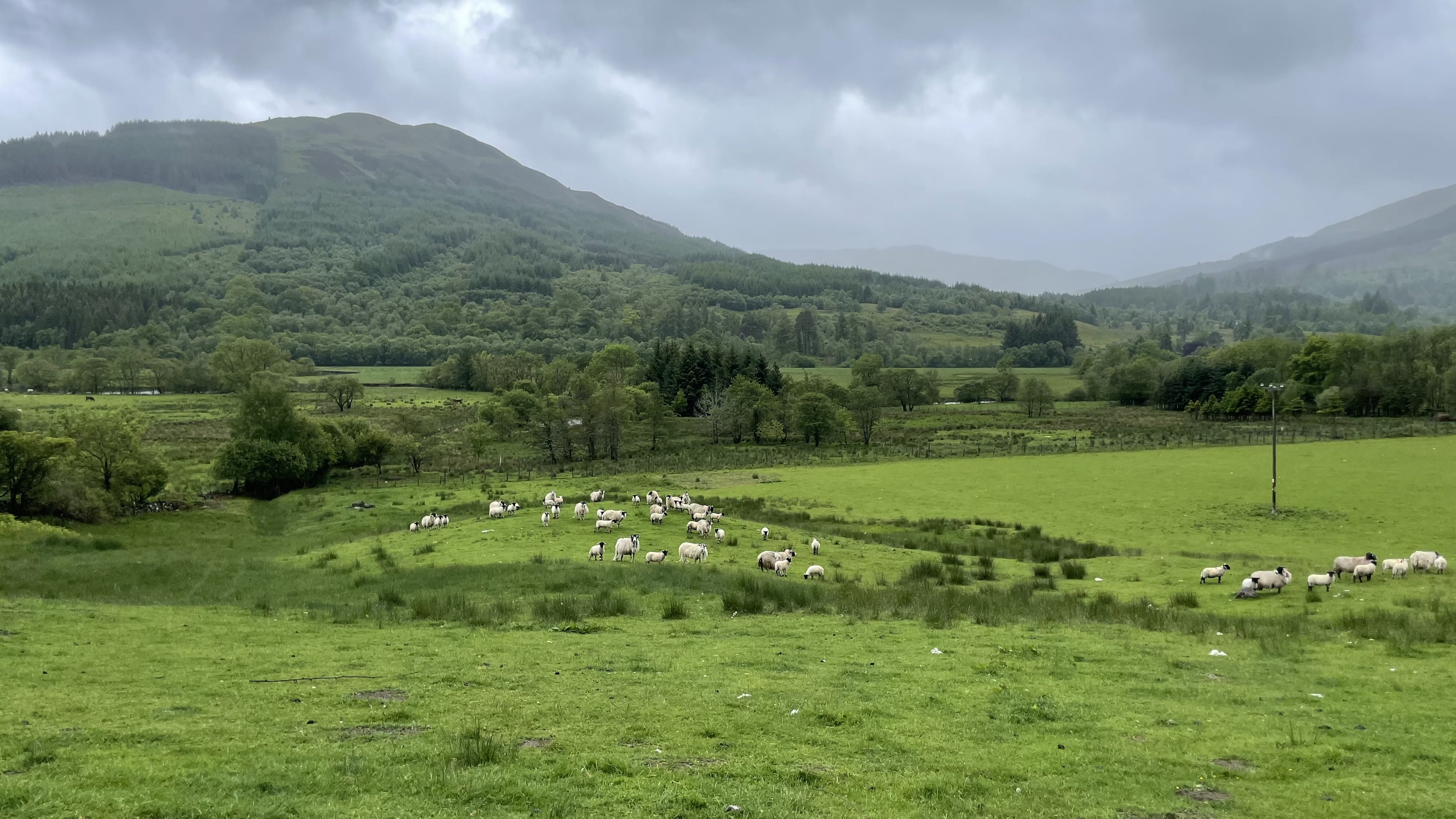
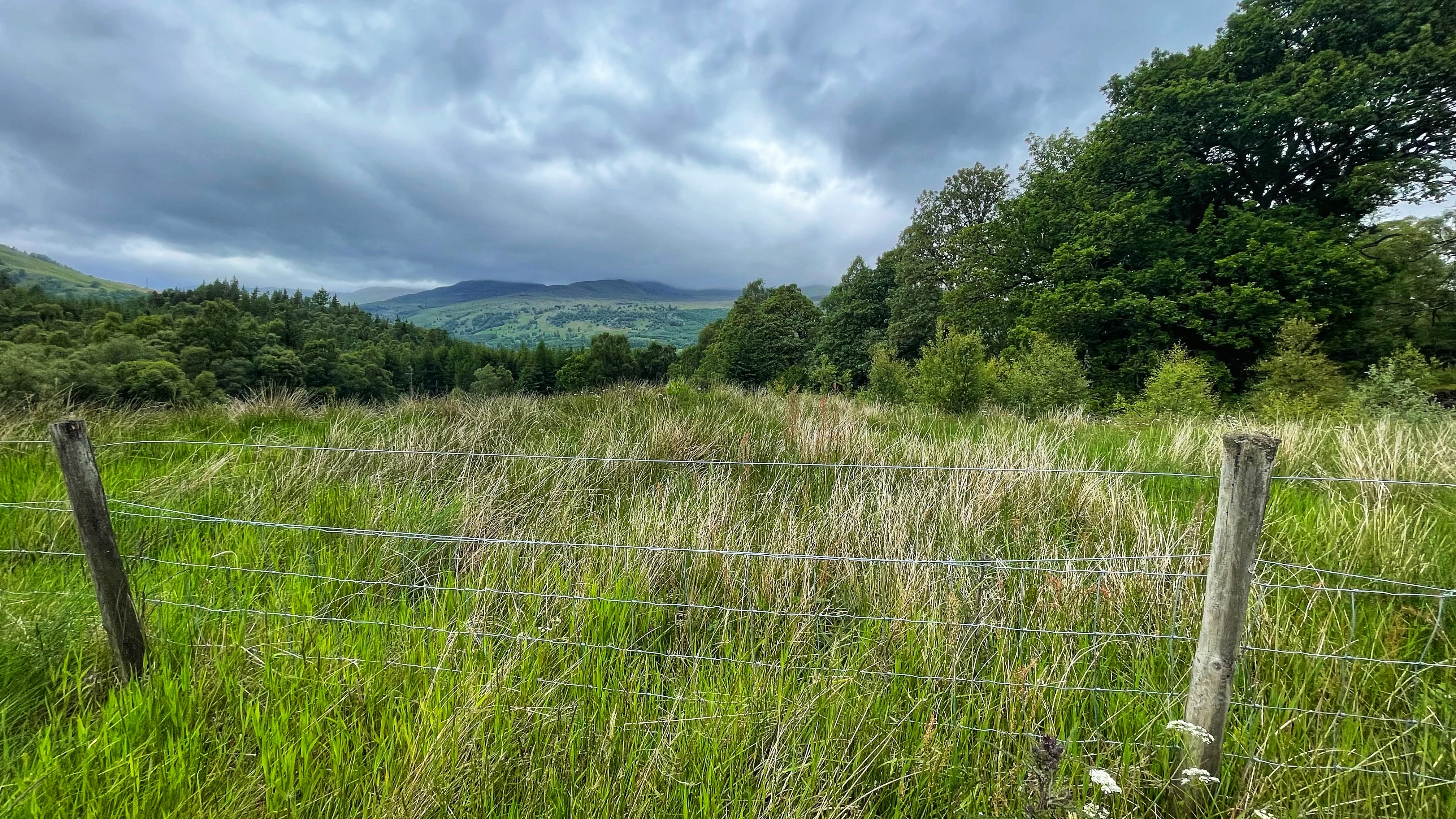
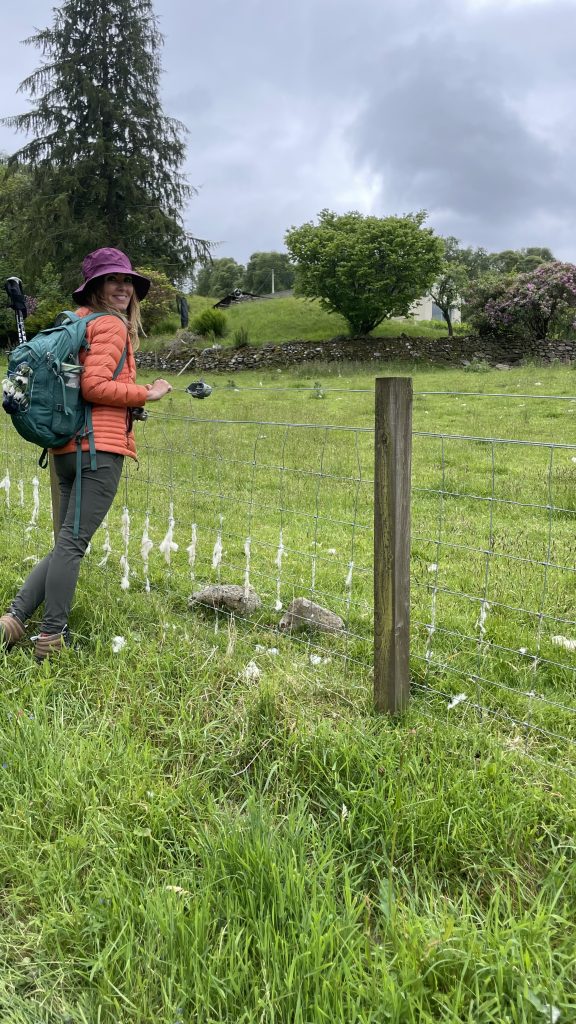
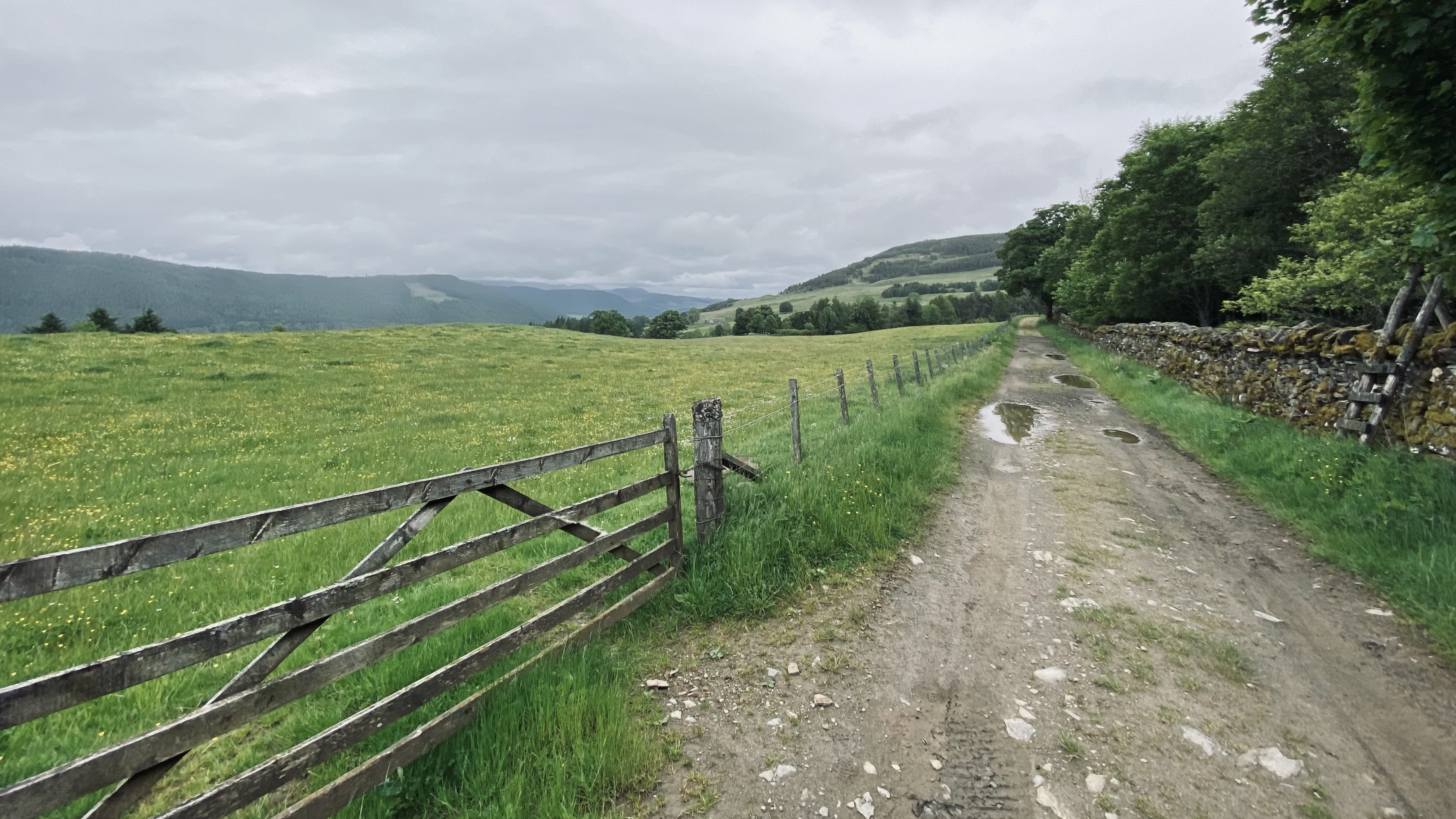
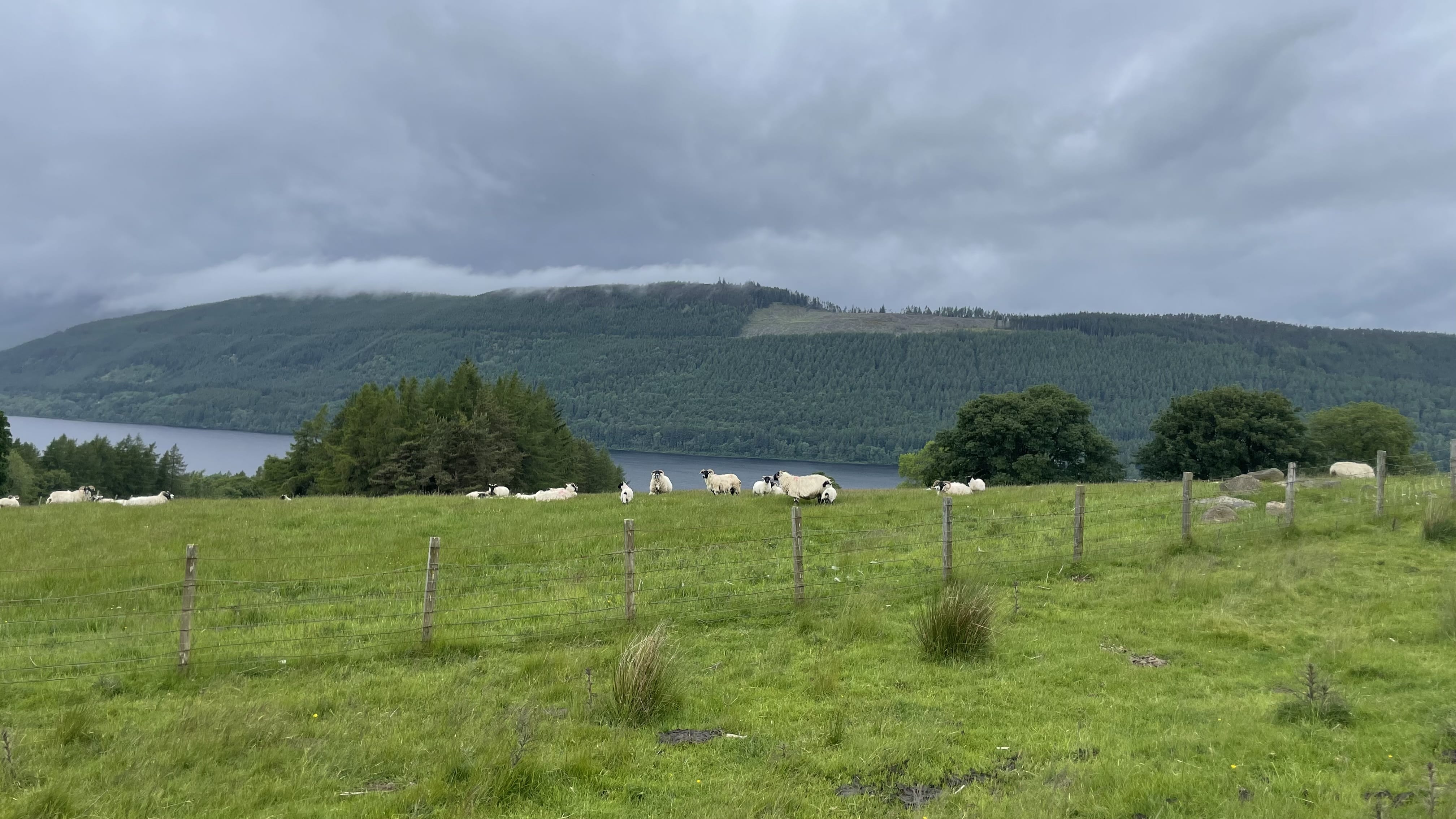
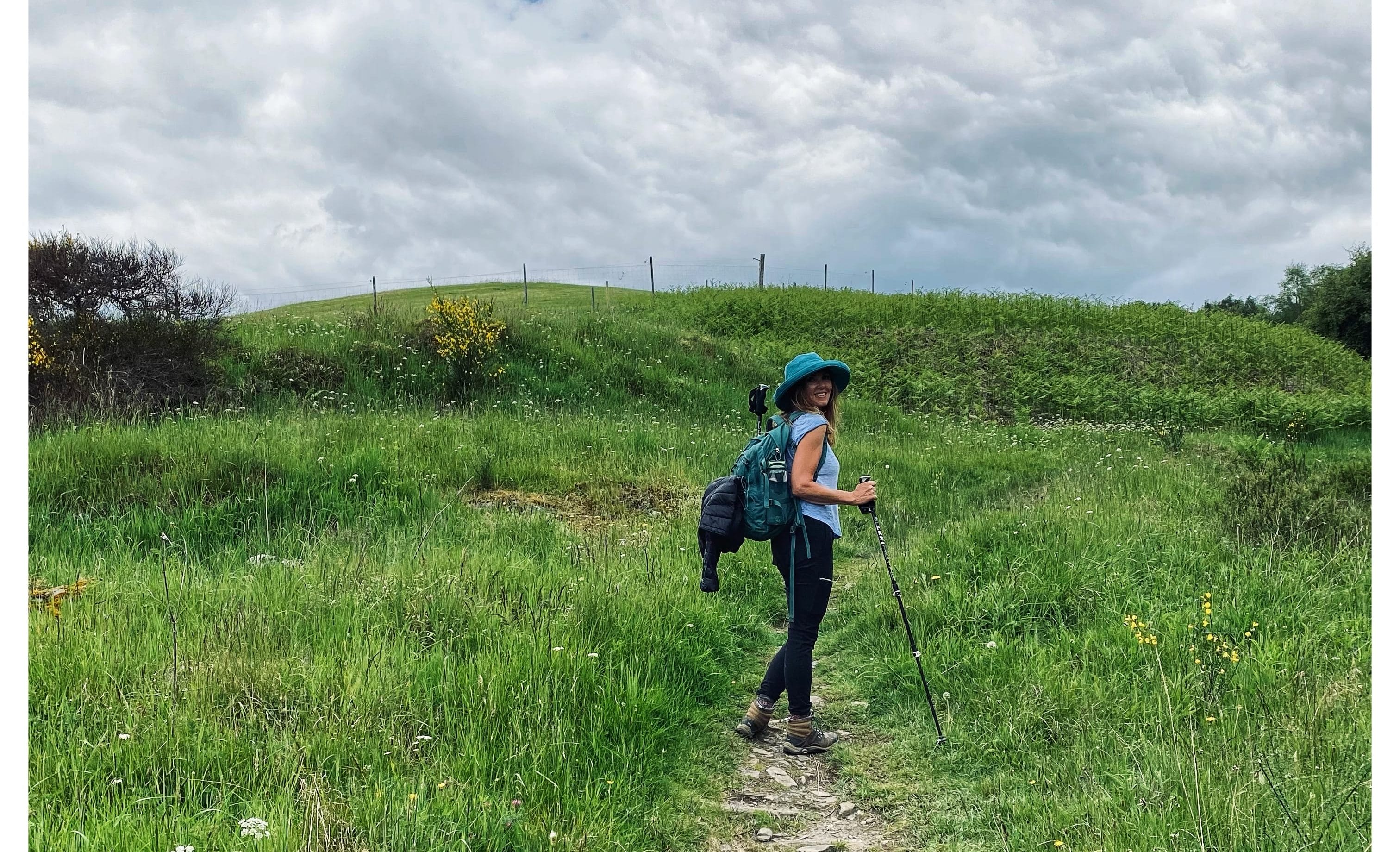
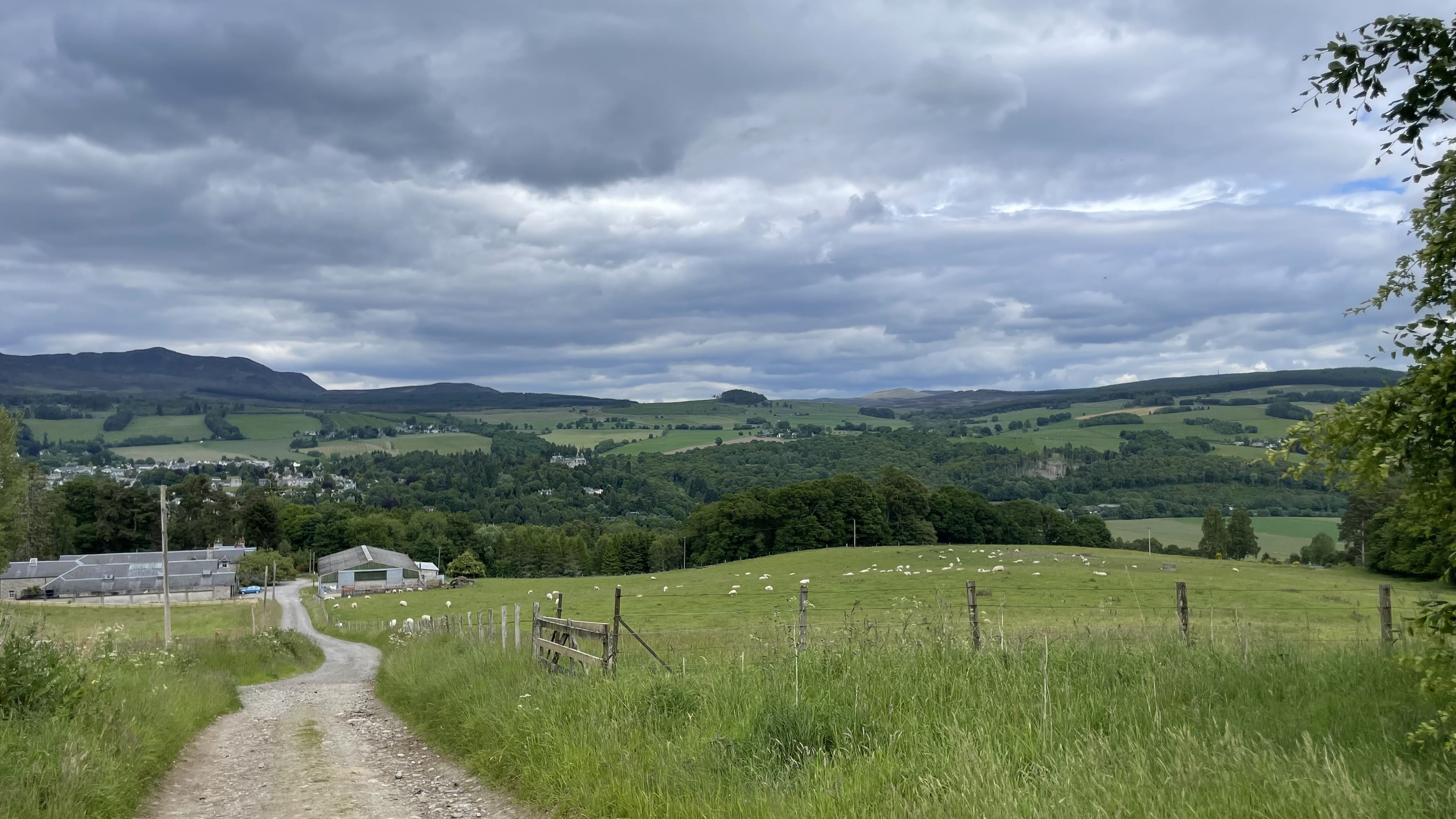
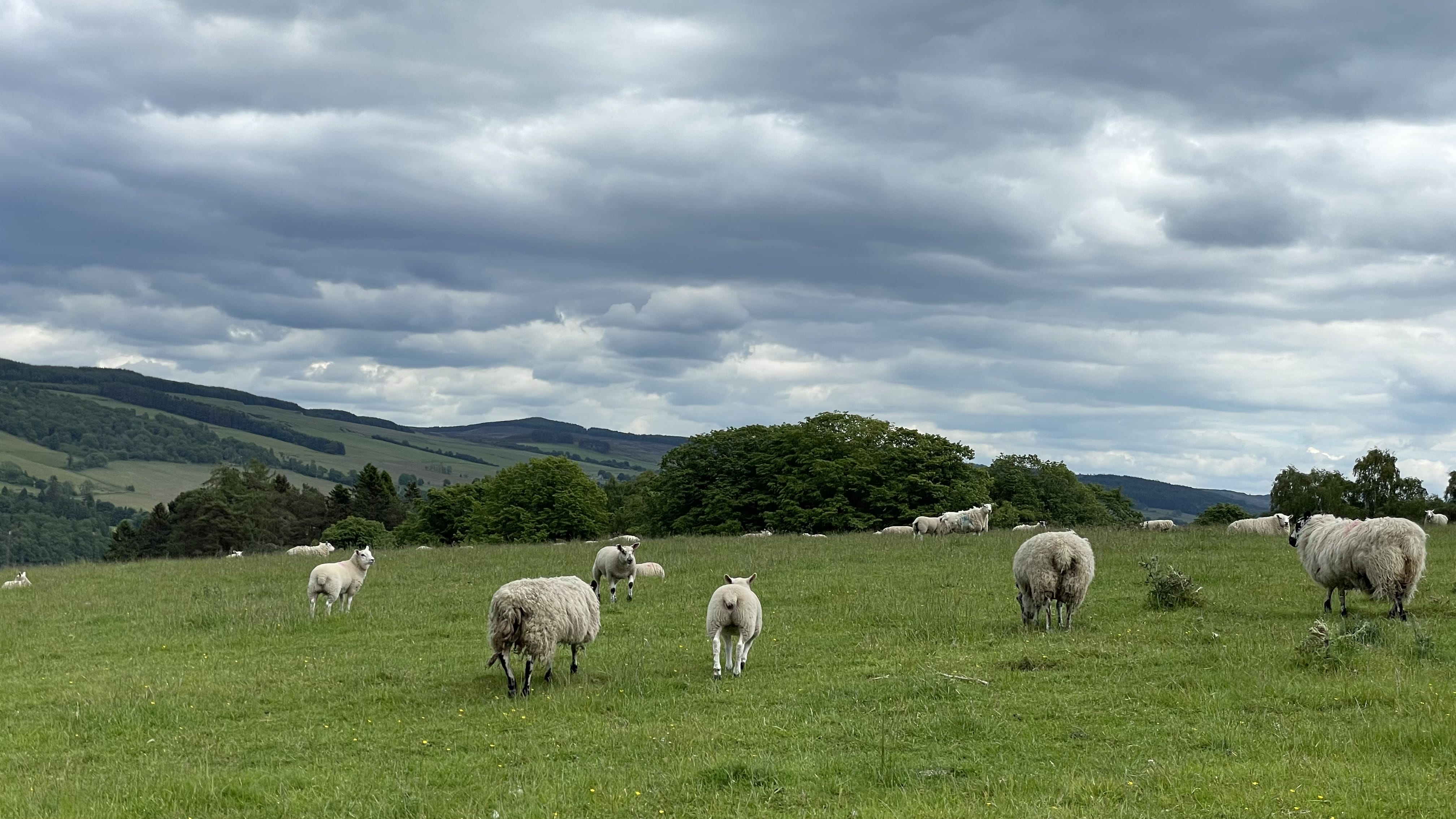
We set out just before 8 a.m. with our daypacks and a quiet kind of excitement. The trail began along a paved bike path—not the most atmospheric start—but it quickly gave way to softer tracks through farmland and forest. We crossed a few bridges early on, including a suspension bridge over the River Balvag, and passed through a working farm with sheep grazing on thick, green hills.
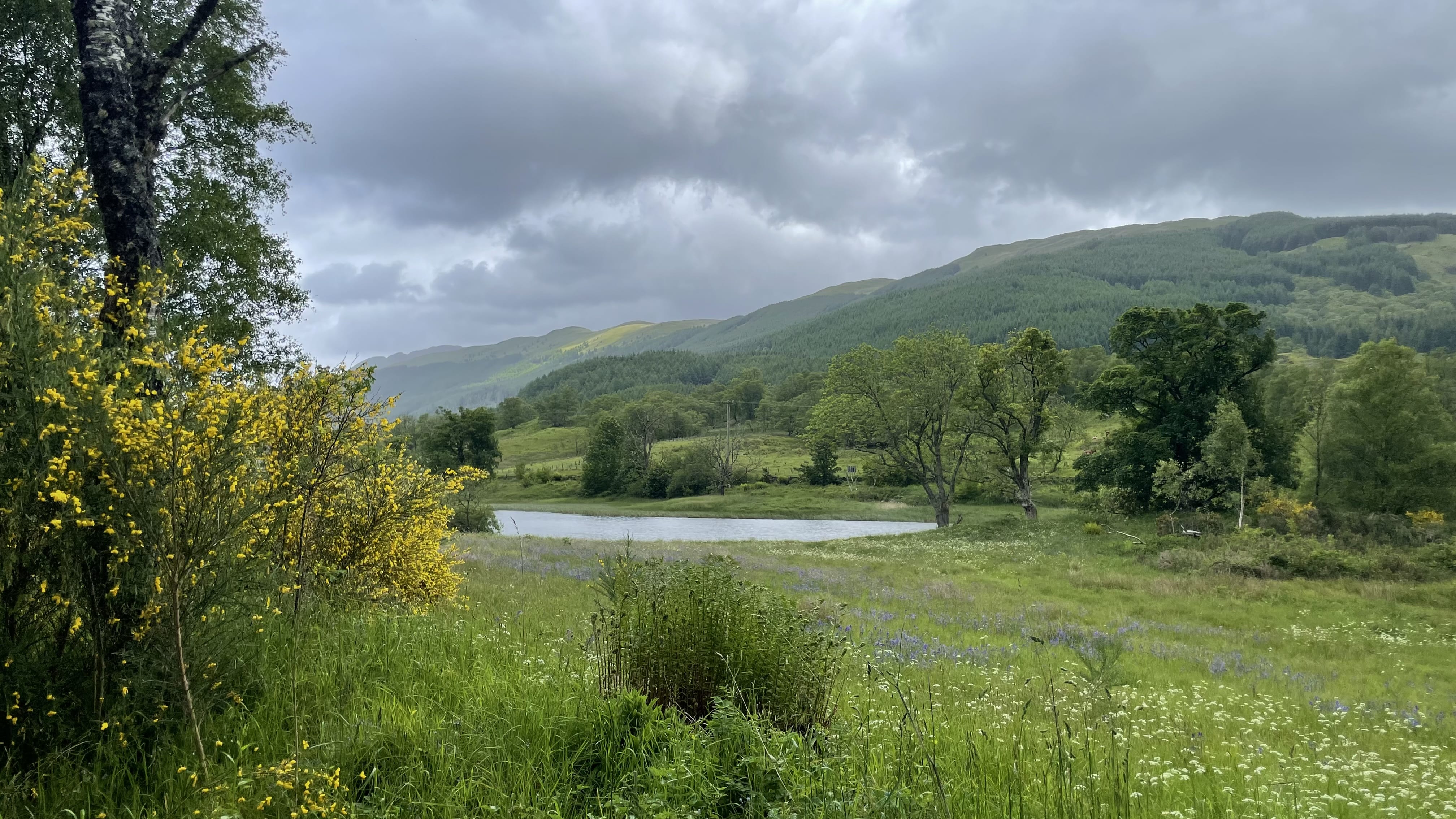
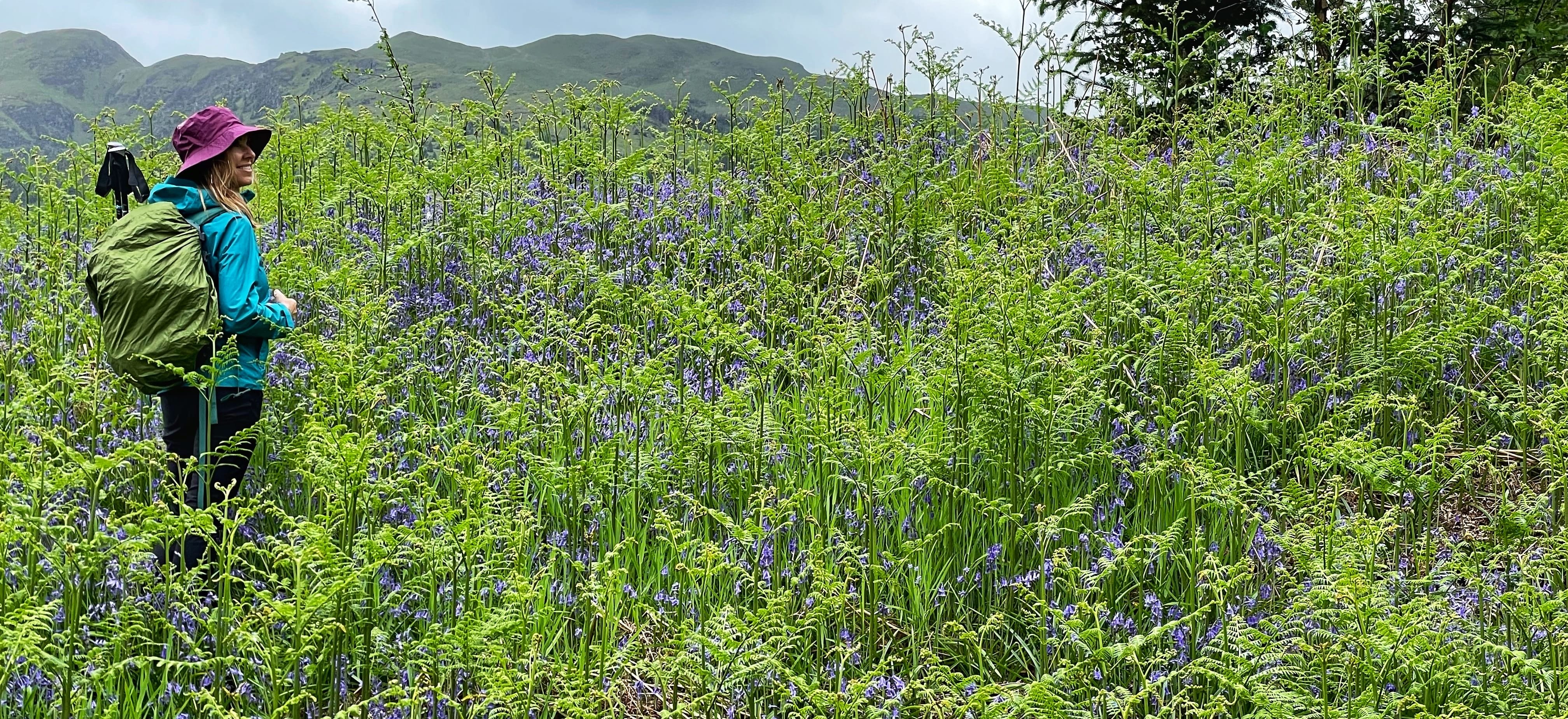
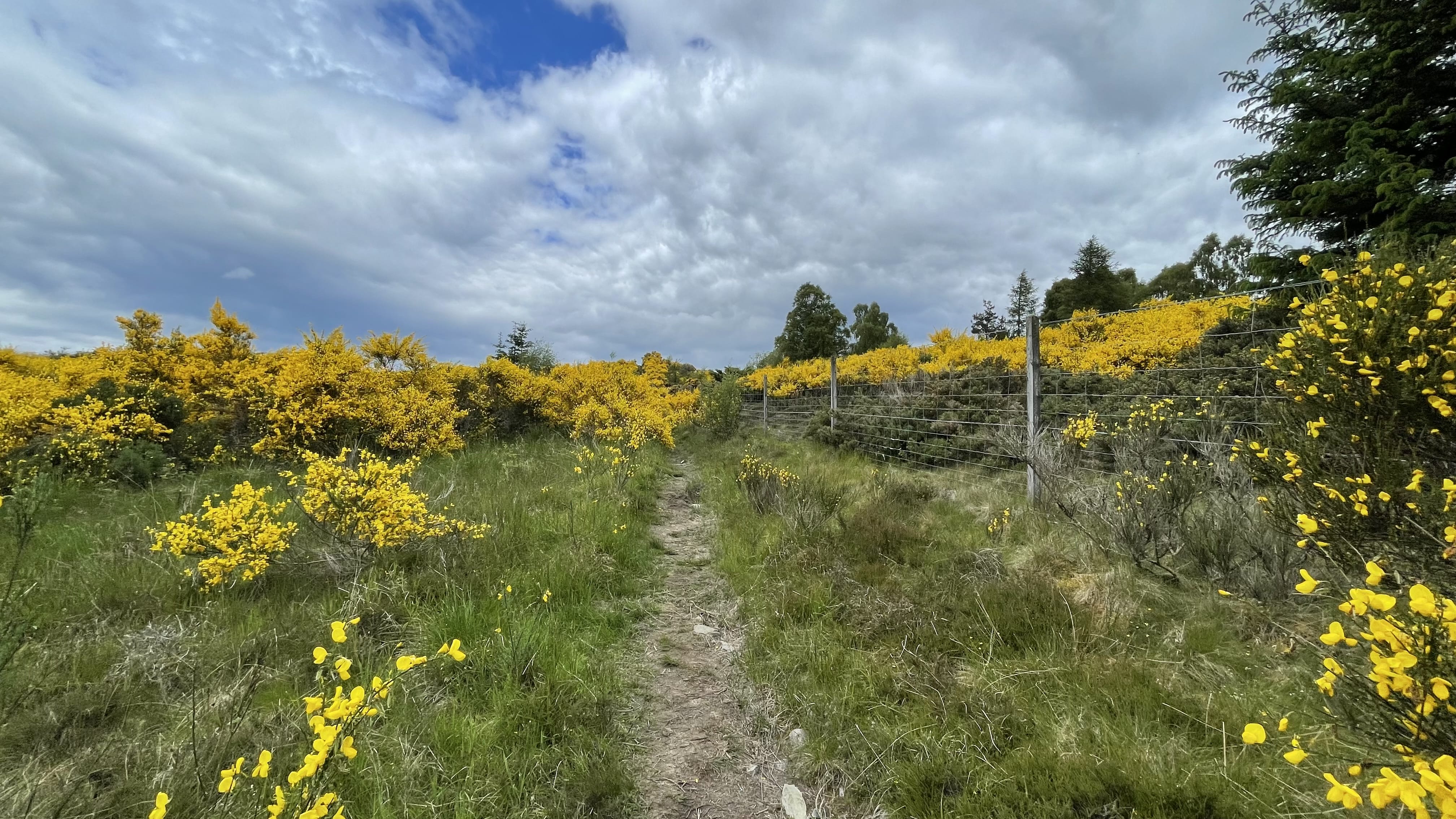
Bright yellow shrubs lined parts of the trail—later I learned they were called Scotch broom—but at the time, they just looked like someone had taken a paintbrush to the hillside. In other places, we walked through fields of soft purple wildflowers—common bluebells. If there really were fairies, I could see them living here. Something about the mossy rocks, fern-covered ground, soft light, and damp air made it feel possible.
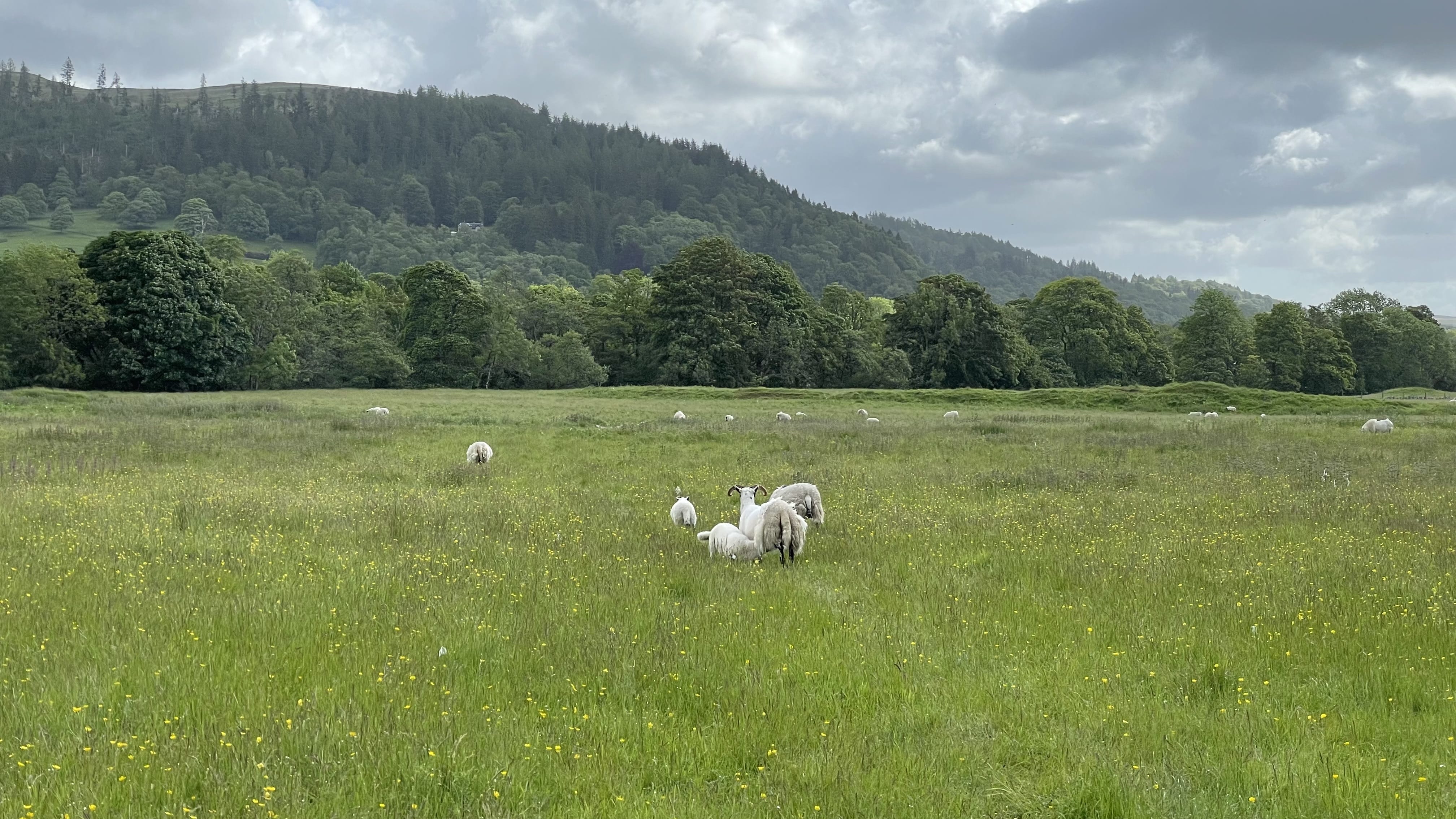
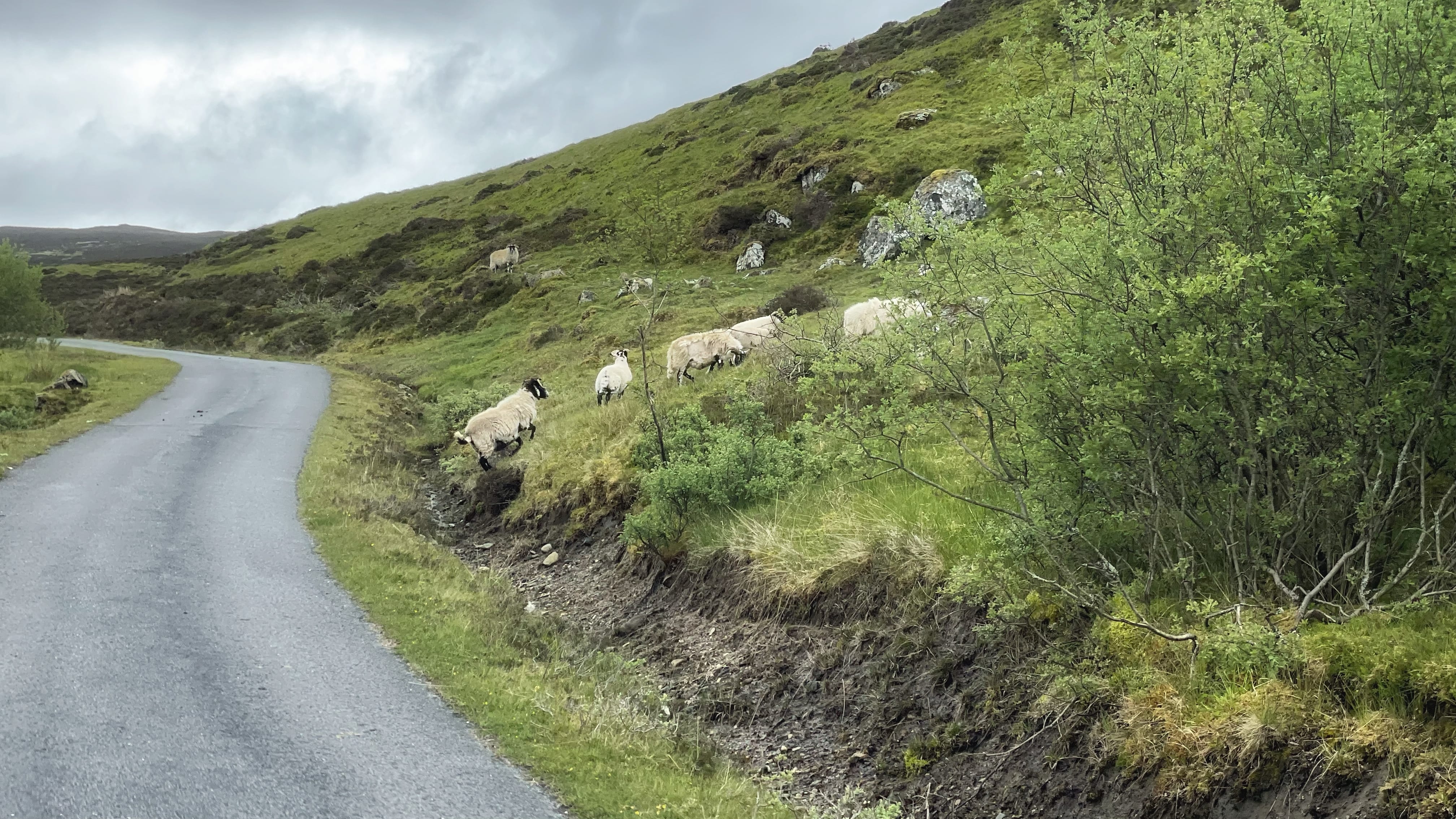
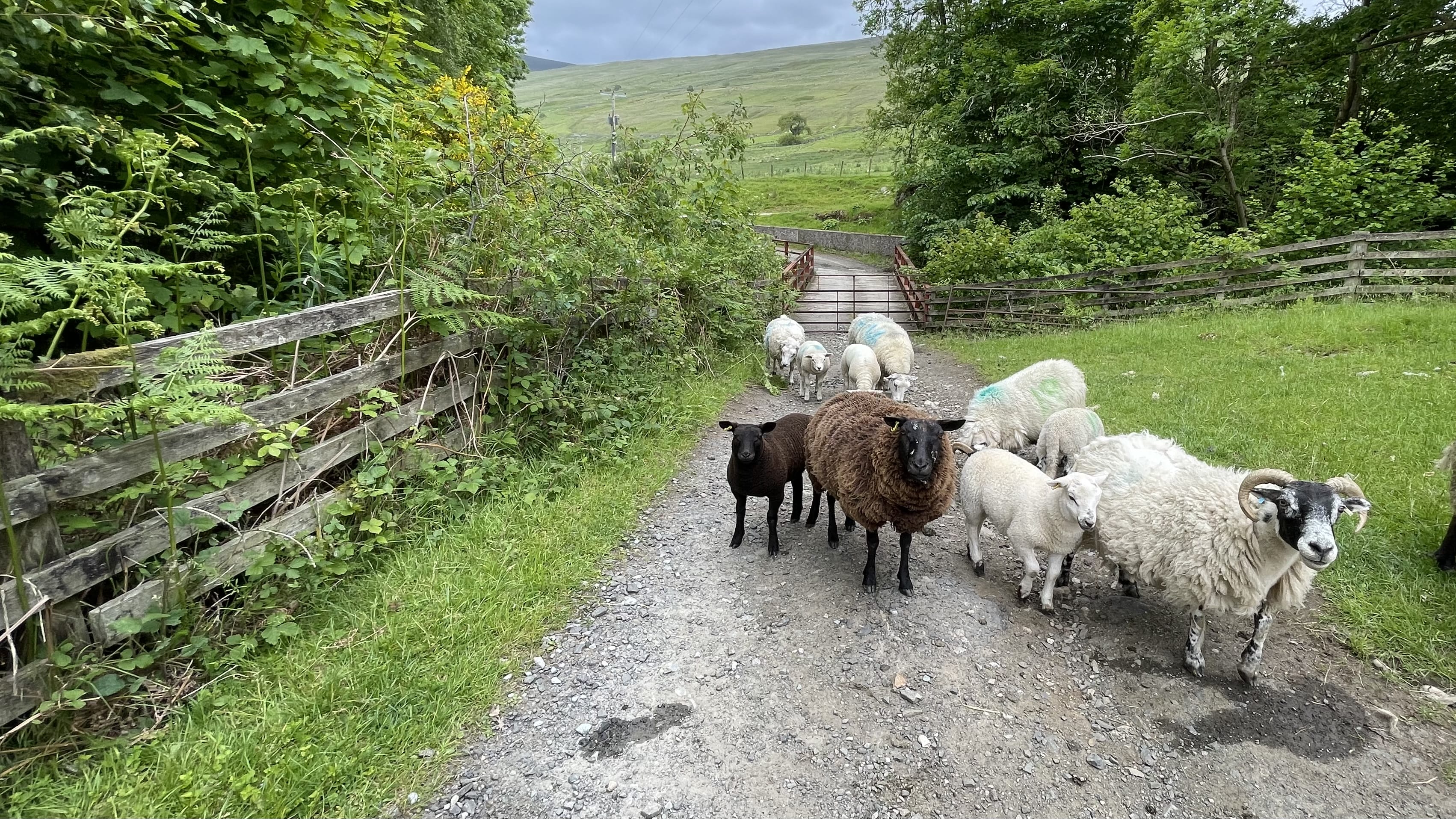
We barely saw anyone all day, which quickly became one of my favorite parts of the trail. What we did see, though, were sheep—everywhere.
We ended our day in Strathyre, a small village surrounded by pine-covered hills. Since lodging wasn’t available there that night, Hillwalk arranged a transfer to nearby Lochearnhead.
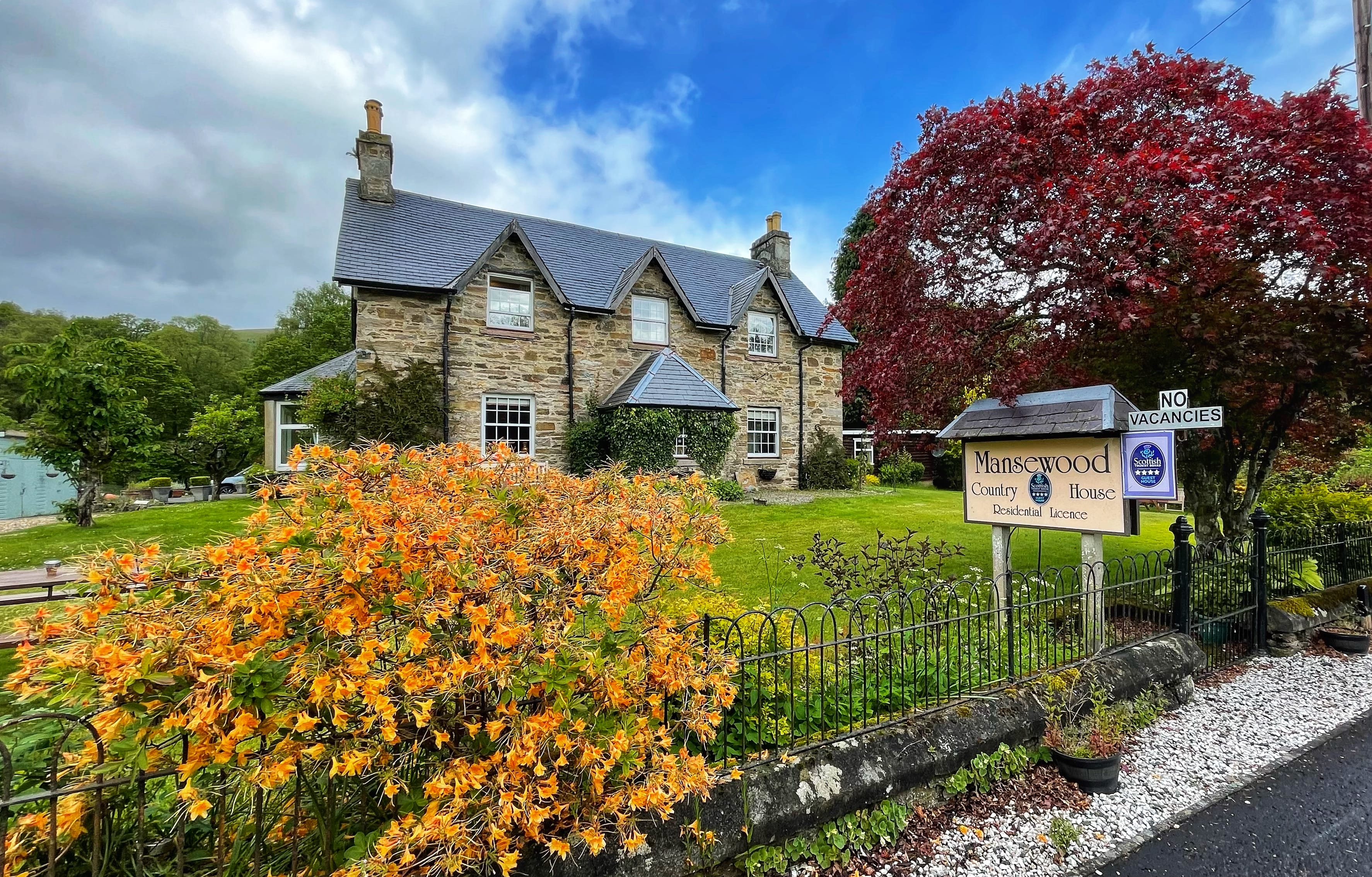
We stayed at Mansewood Country House, run by partners John and Chip, who immediately made us feel welcome. Their home was beautifully decorated—elegant, but cozy and lived-in.
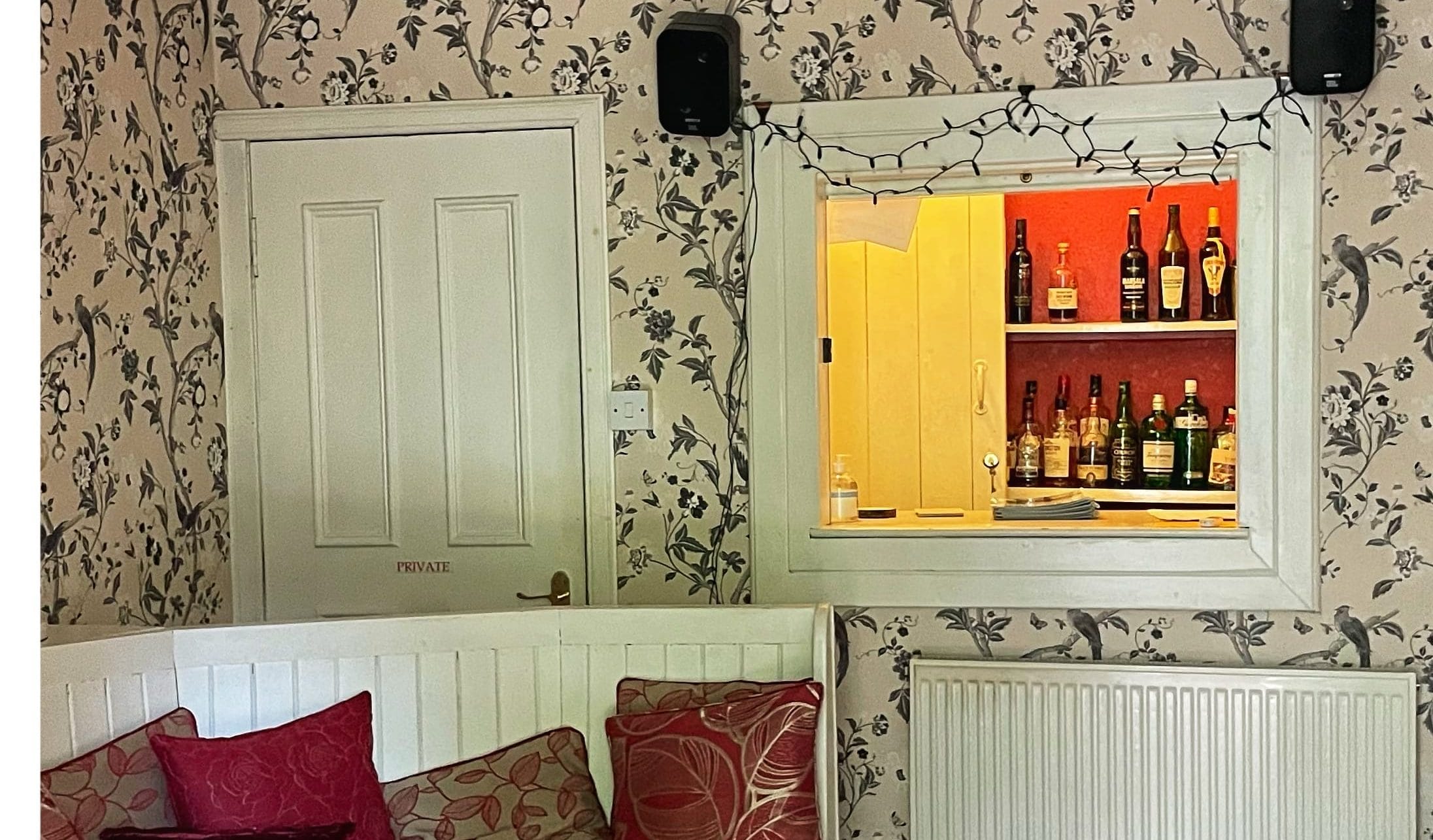
I half-jokingly asked if they happened to have a “wee” bar. And sure enough, they did. It was just a tiny cutout in the sitting room wall—probably once a closet—with shelves of bottles tucked behind wooden shutters that John would open or close depending on whether the bar was “open.”
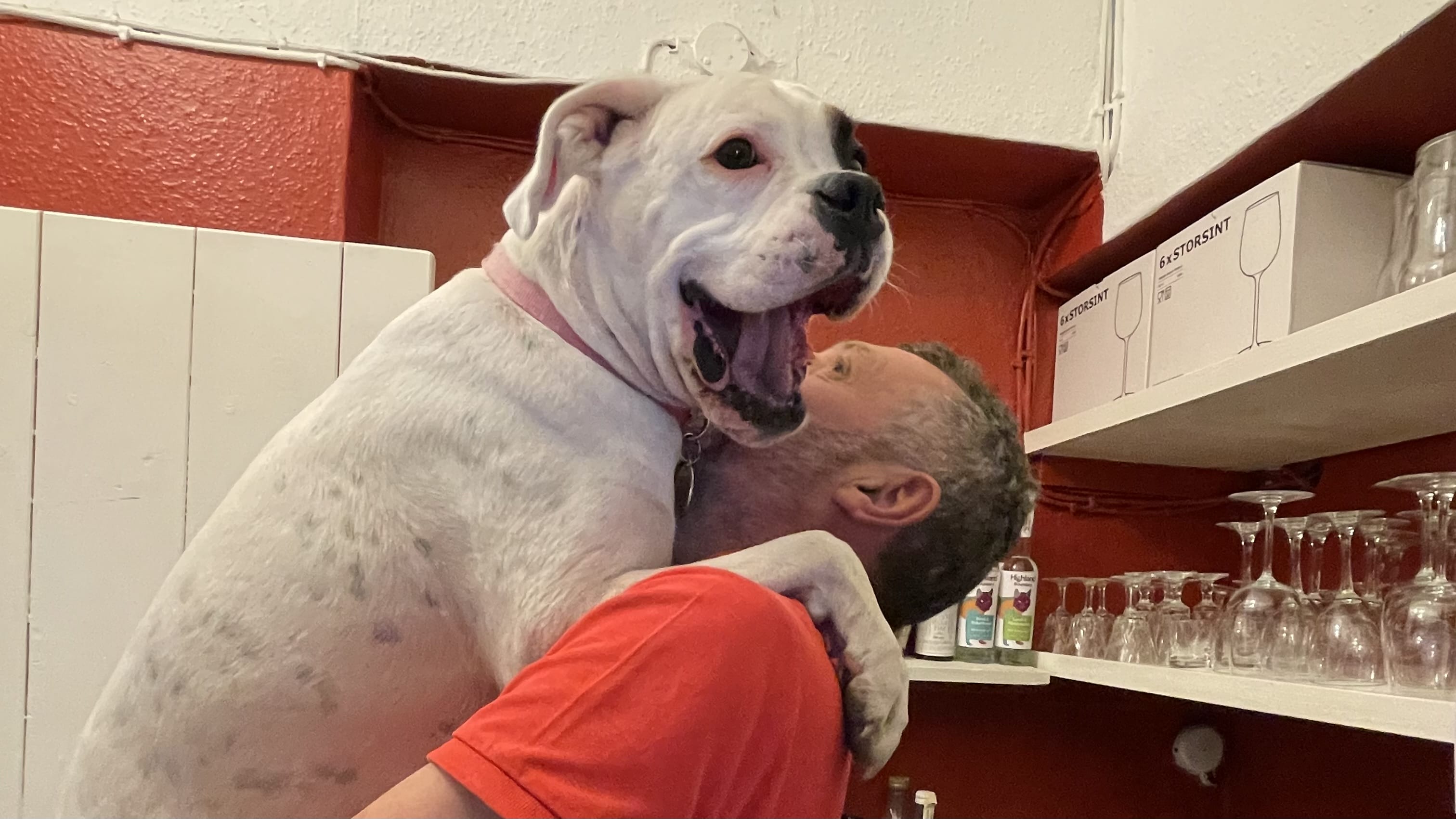
It’s also where we met their dog, Sophia. She was sweet, affectionate, and clearly adored John, who scooped her up in his arms like a toddler, even though she was far too big to be carried. She didn’t seem to mind.
Dinner was fabulous. They offered vegetarian options, and I had a hearty vegetarian chili served with freshly made bread—exactly what I wanted after a day on the trail.
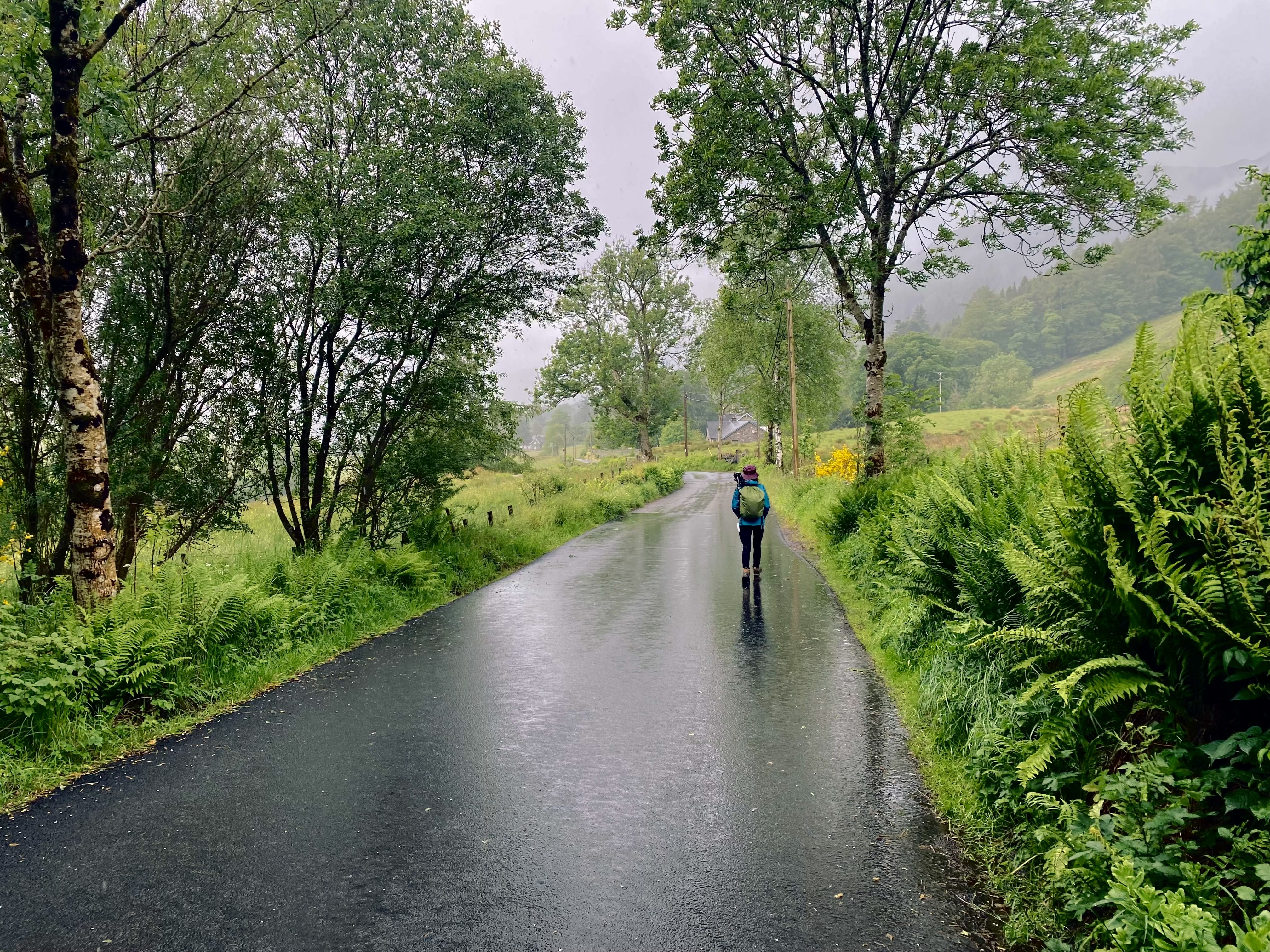
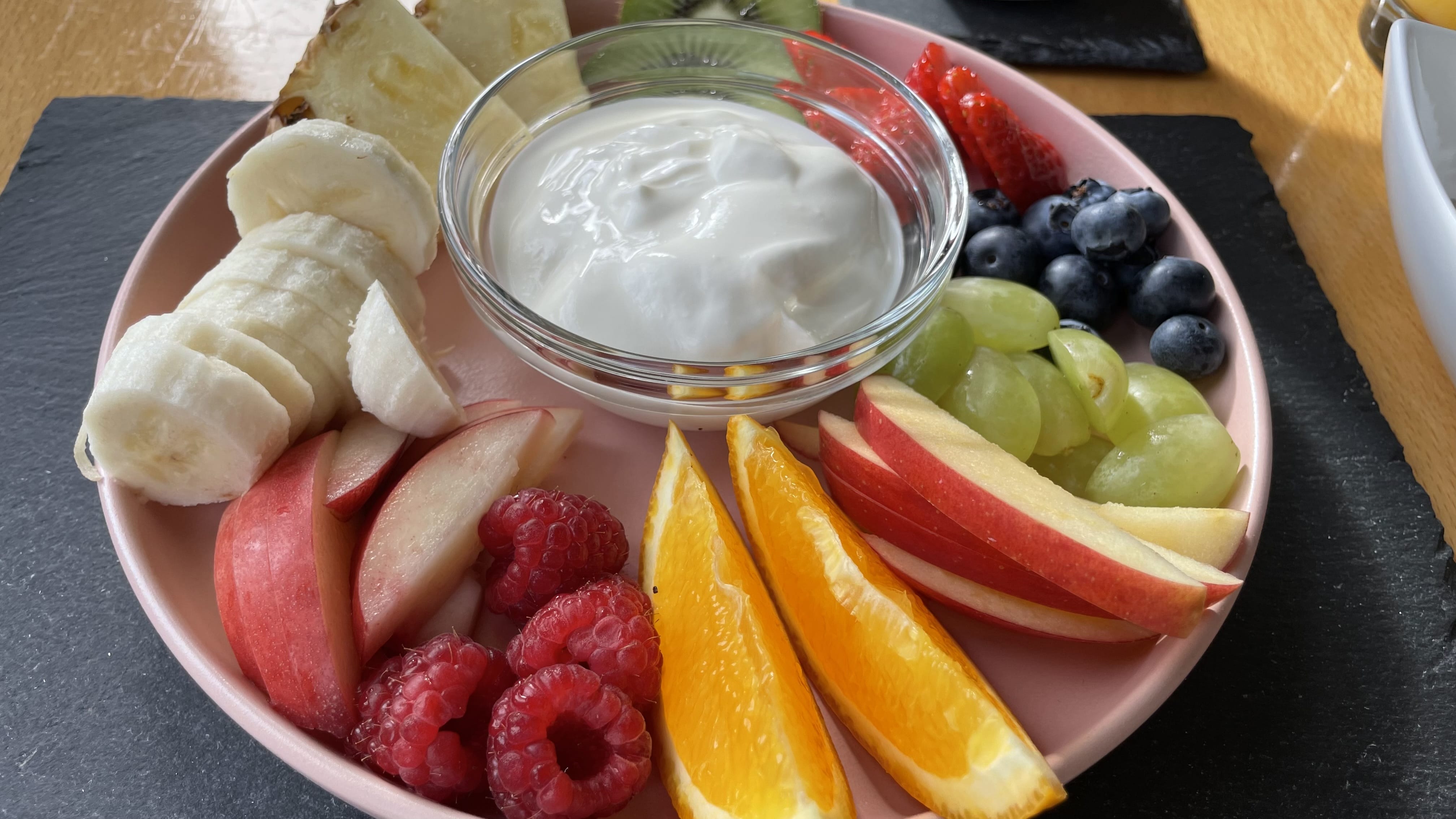
After a delicious breakfast—homemade granola, fresh fruit, and yogurt—we were dropped back off in Strathyre. It was raining—not hard, just a light, steady drizzle that lasted most of the day.
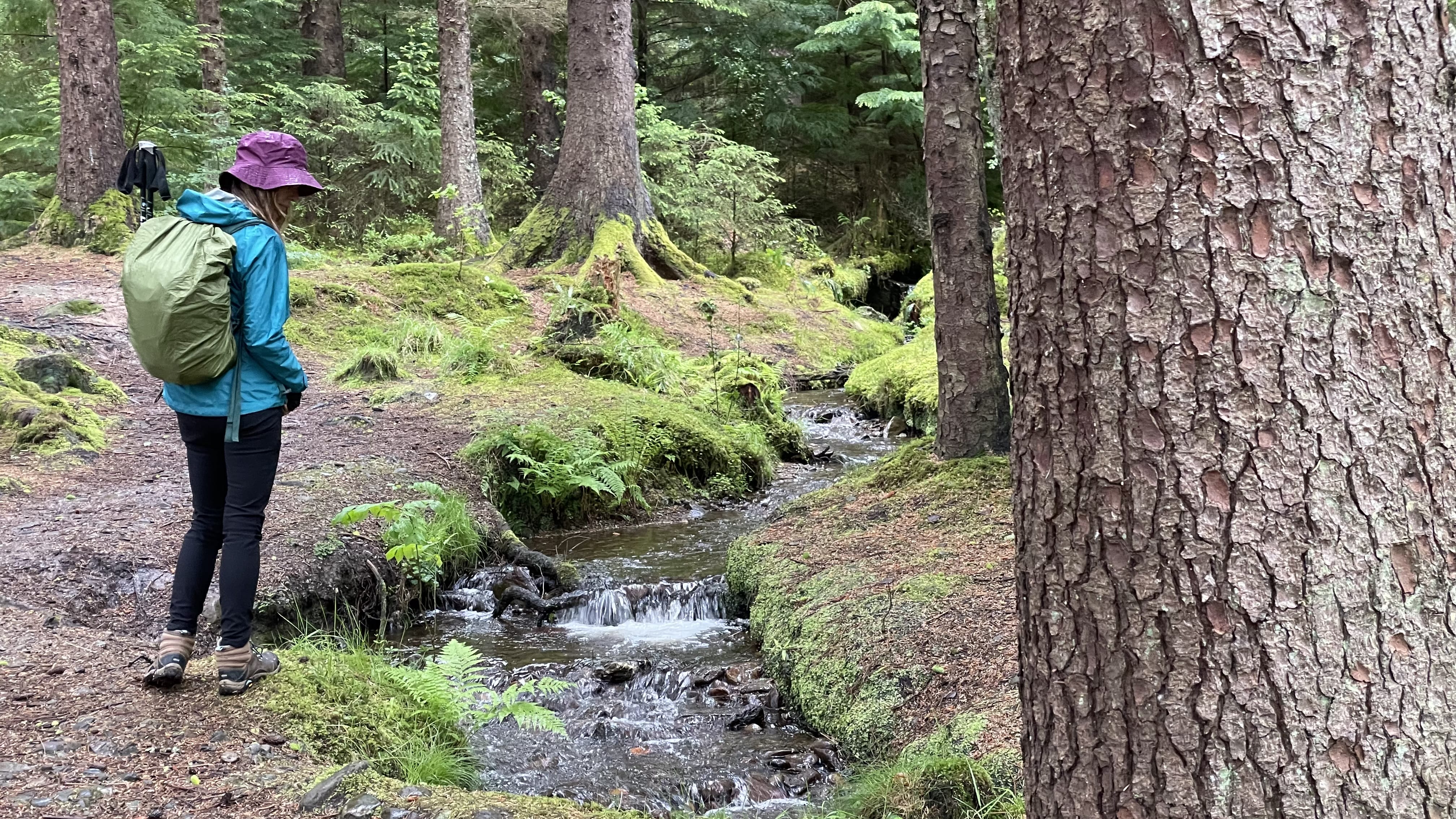
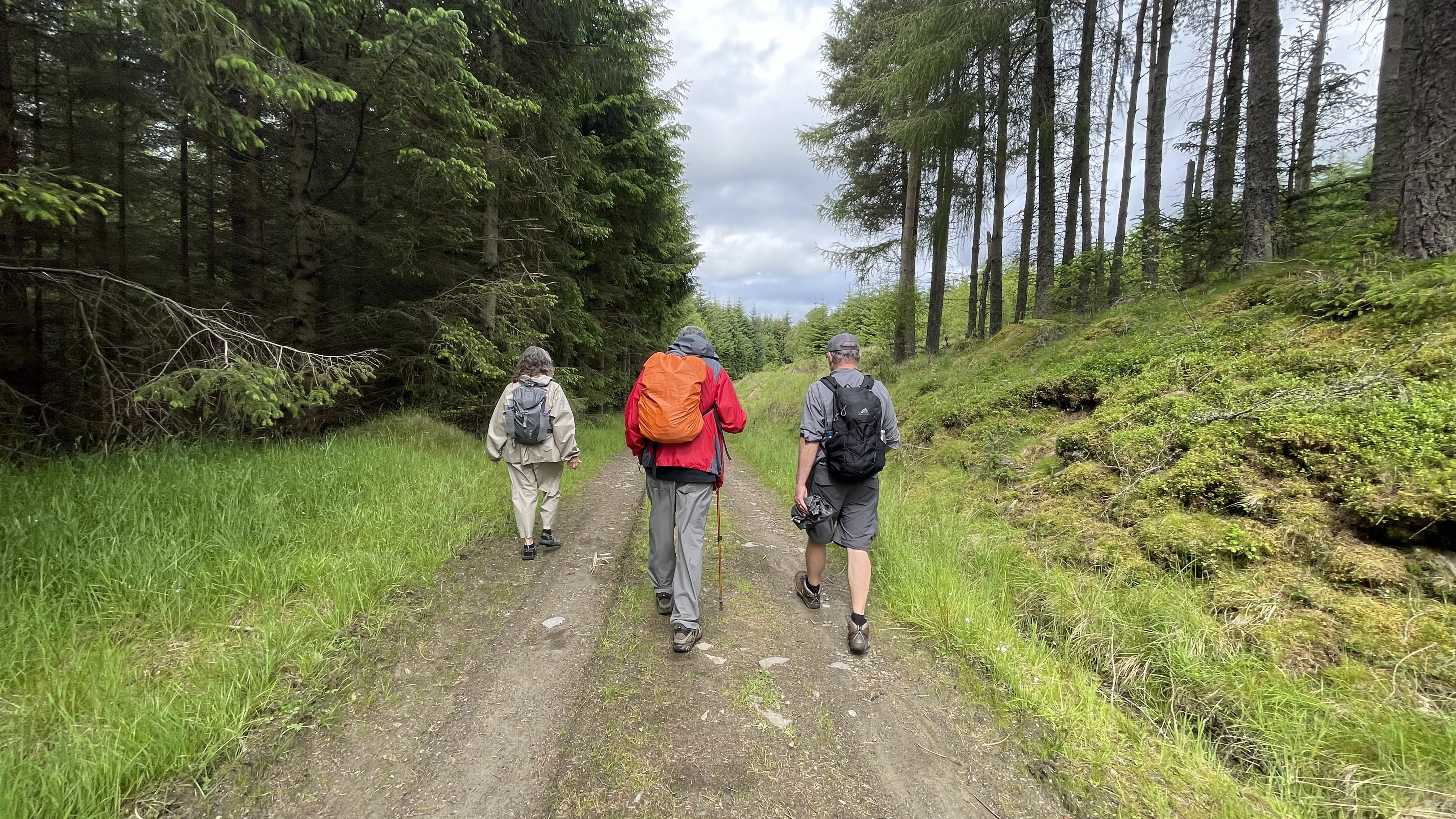
The trail led through a dense pine forest that felt especially peaceful in the rain. Everything smelled fresh and earthy. It was the kind of day that could have felt dreary, but instead it felt calm and almost timeless.
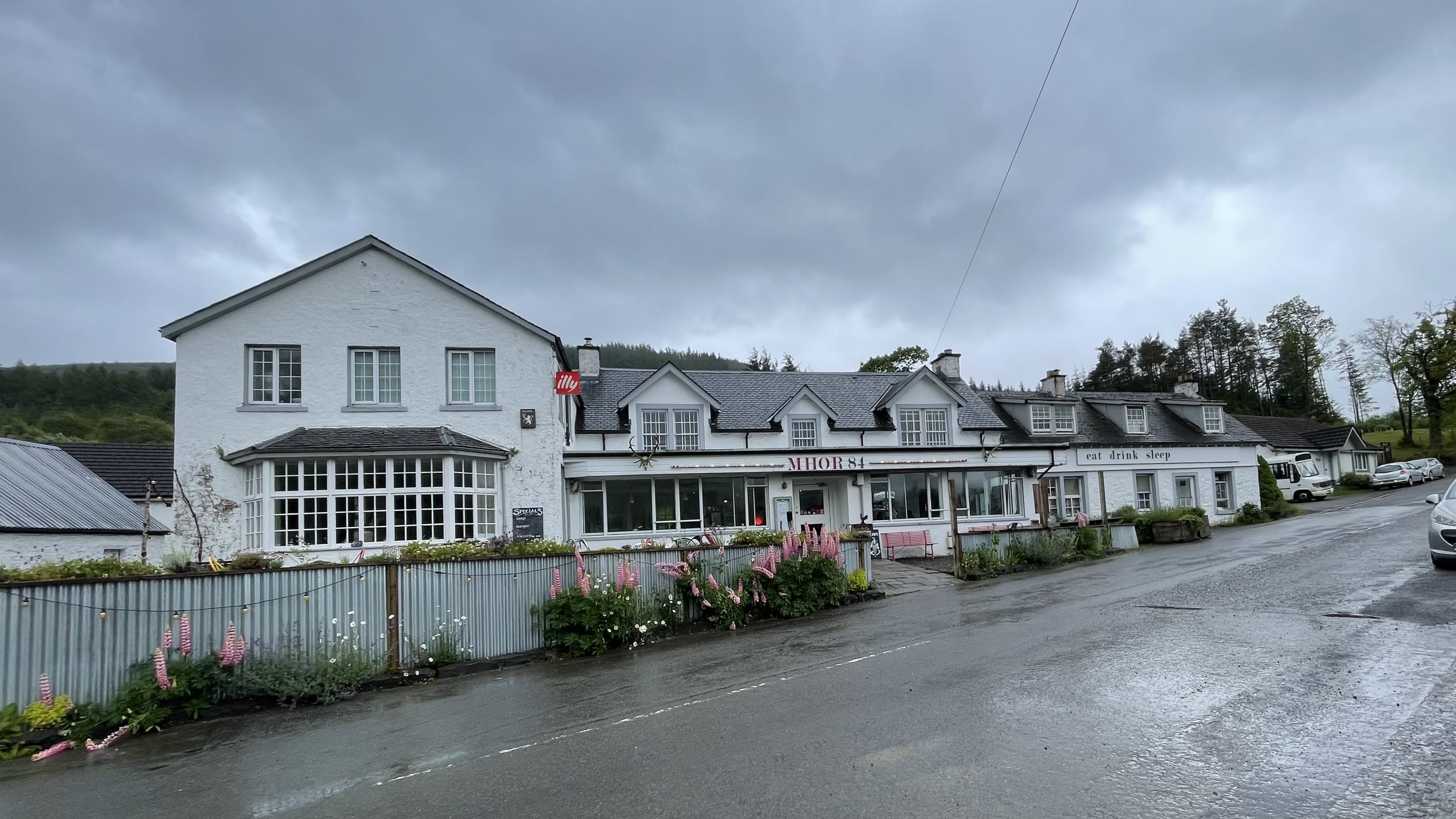
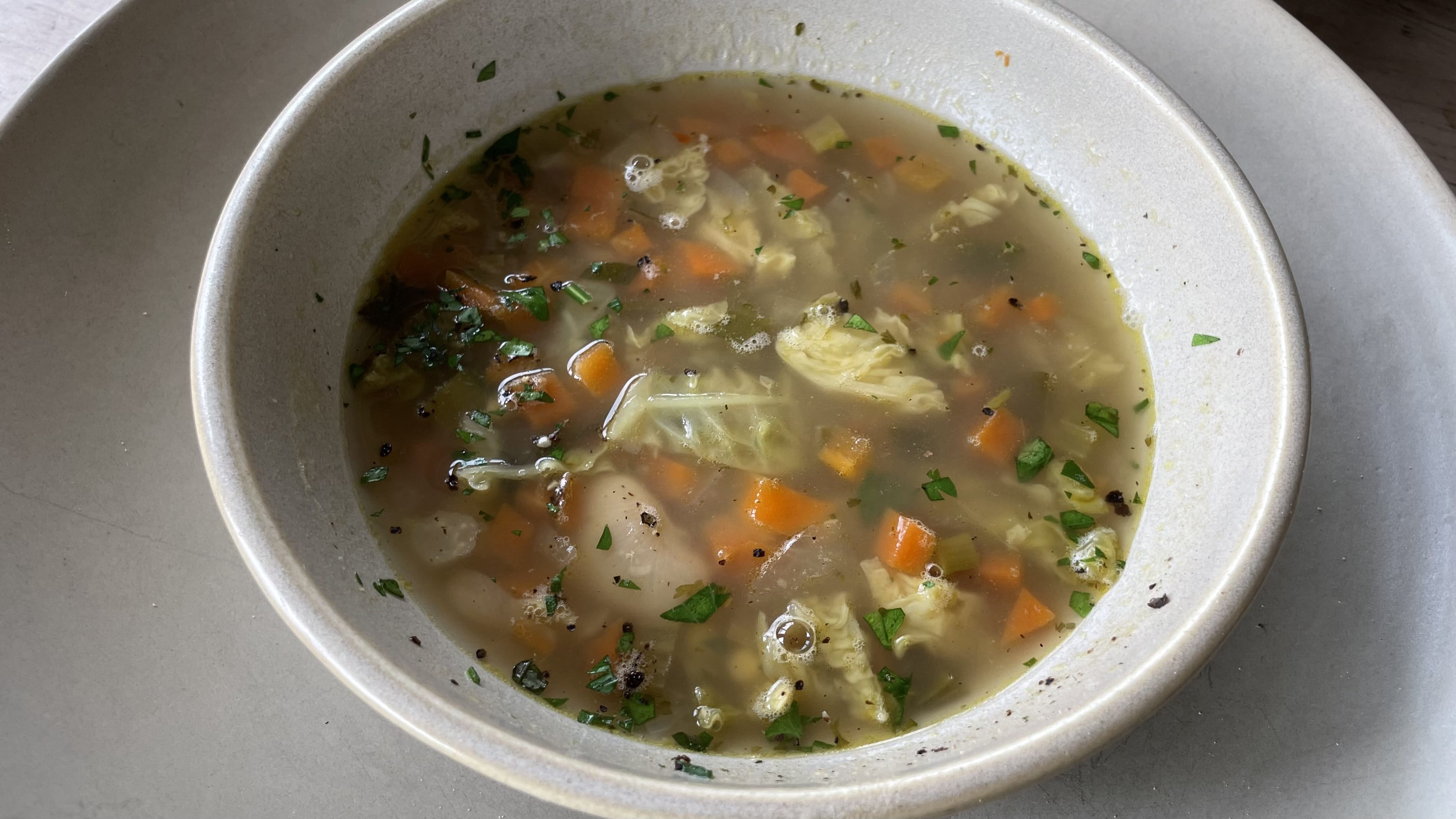
By the time we reached Lochearnhead, we were ready for something warm. We stopped at Mhor 84, a roadside inn just outside of town, and ordered soup—mine was butter bean and vegetable, and it might’ve been one of the best things I ate all week.
A warm bowl of veggie soup at Mhor 84—exactly what I needed after a damp morning on the trail.
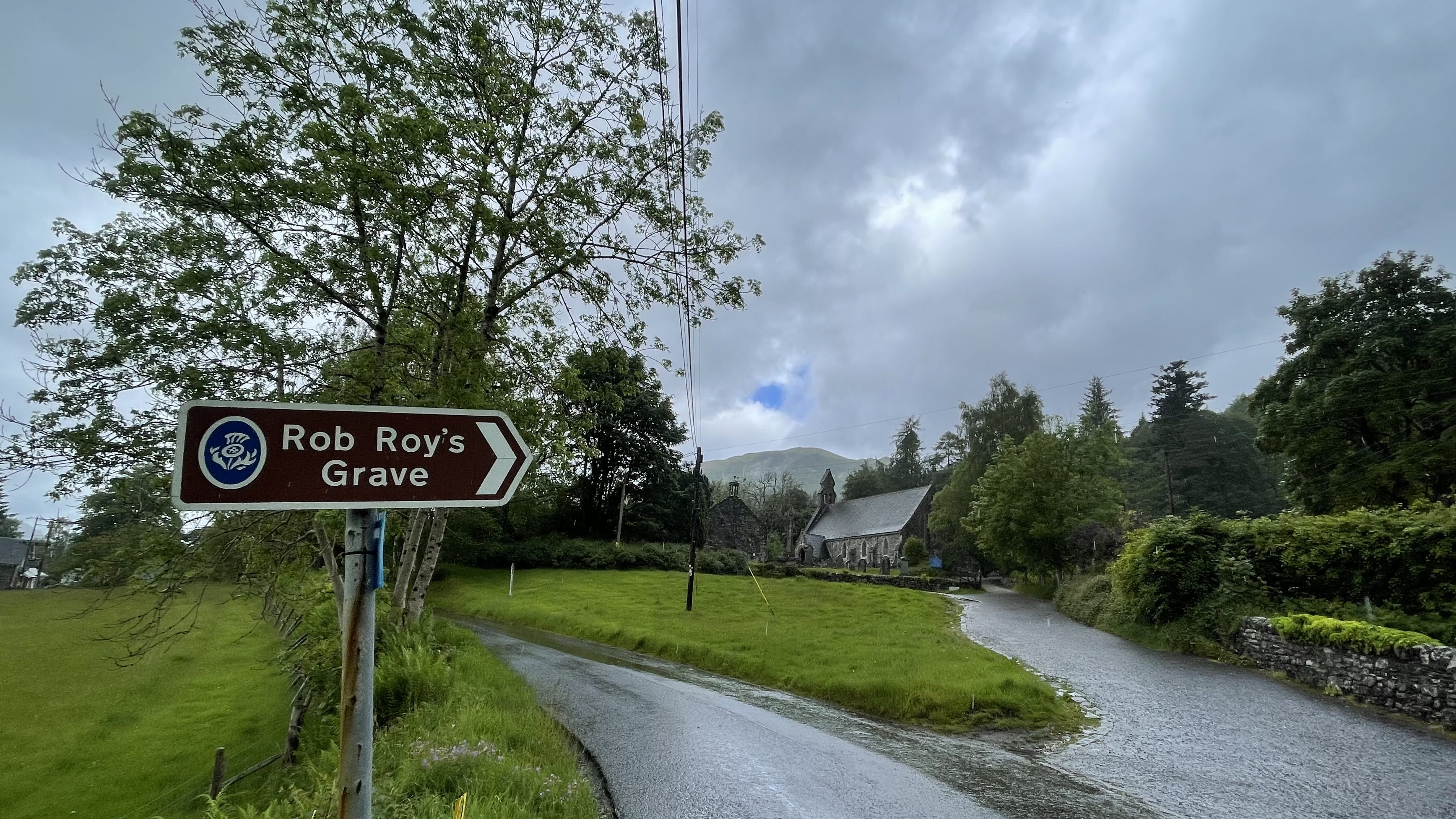
After warming up and filling our bellies, we picked the trail back up and set off toward Rob Roy’s grave. The rain hadn’t let up, but it didn’t matter—it made the greens more vivid, the moss more golden, and the whole landscape feel even more alive.
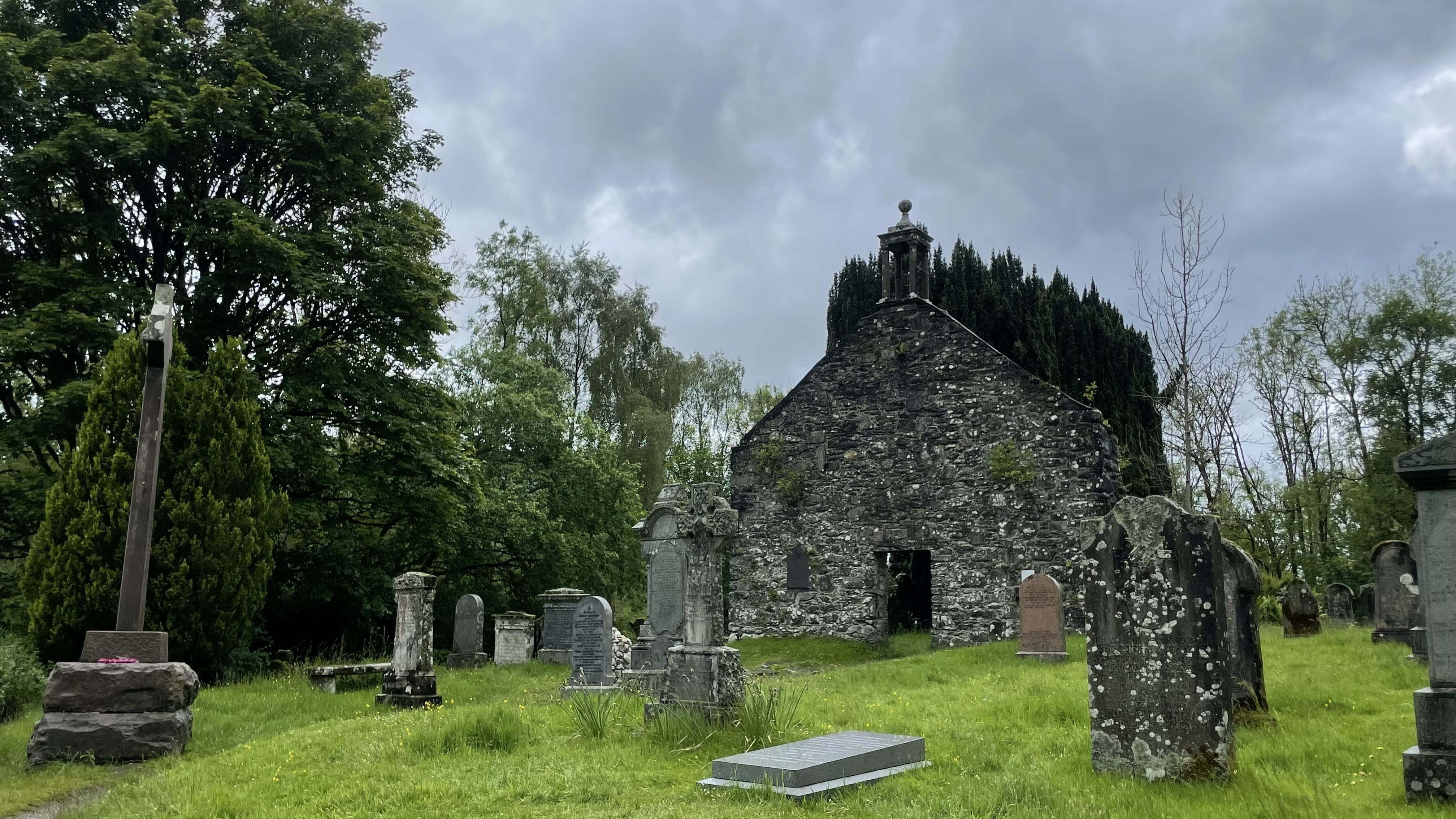
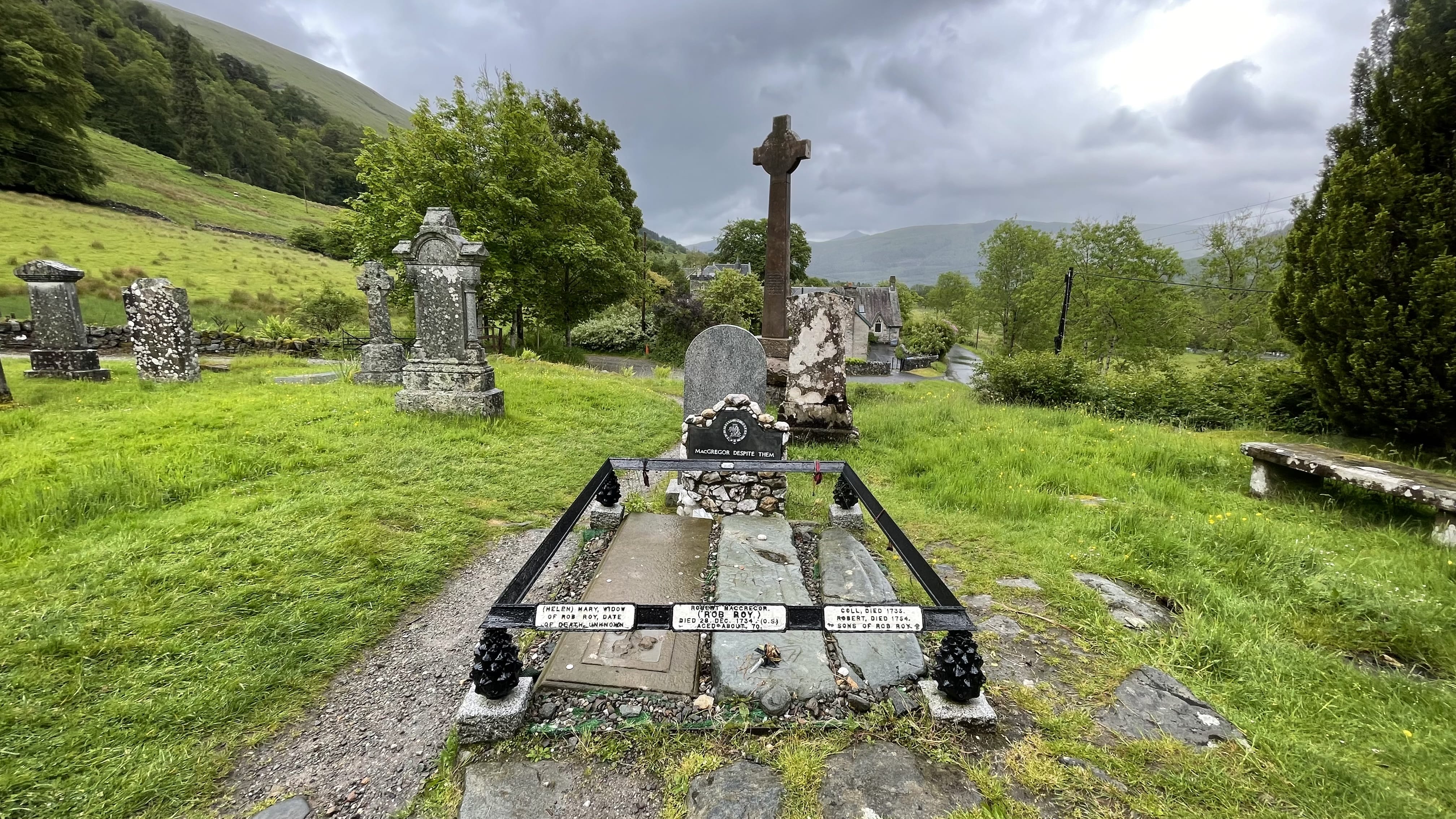
That afternoon, we took a short detour to visit Rob Roy’s grave in the Balquhidder Kirkyard. The cemetery is quiet and historic, with a restored church. Rob Roy was a kind of Scottish folk hero—sometimes called an outlaw, sometimes a legend. Being at his grave made the history feel closer, more real. One of the headstones reads, “MacGregor Despite Them All.”
We retraced our steps and continued on. Yes, it had rained the entire day, but honestly, it didn’t matter. We were prepared, and rain had added a kind of richness to everything.
Back at Mansewood (lucky us—another night there), John greeted us with a bottle of wine he’d picked up just for me and two single malt scotches he thought Tom (my husband) would enjoy. It was such a thoughtful gesture—one of those small touches that really showed how welcoming John and Chip are.
We had dinner elsewhere that night, which I quickly regretted. The food was fine, but it didn’t come close to what we’d had at Mansewood the night before. Honestly, I would’ve preferred to be back at the wee bar, hanging out with “the boys.”
Viaduct views, cozy creaks, and a carrot sandwich trick
Breakfast was just as good as the day before—fresh yogurt, ripe fruit, and coffee in a quiet room with windows looking out over the trees and side yard. It was hard to leave. It was hard to leave—if we hadn’t already been booked elsewhere, I might’ve asked to stay another night.
Mansewood felt like one of those rare places you’d come back to even if you weren’t hiking.
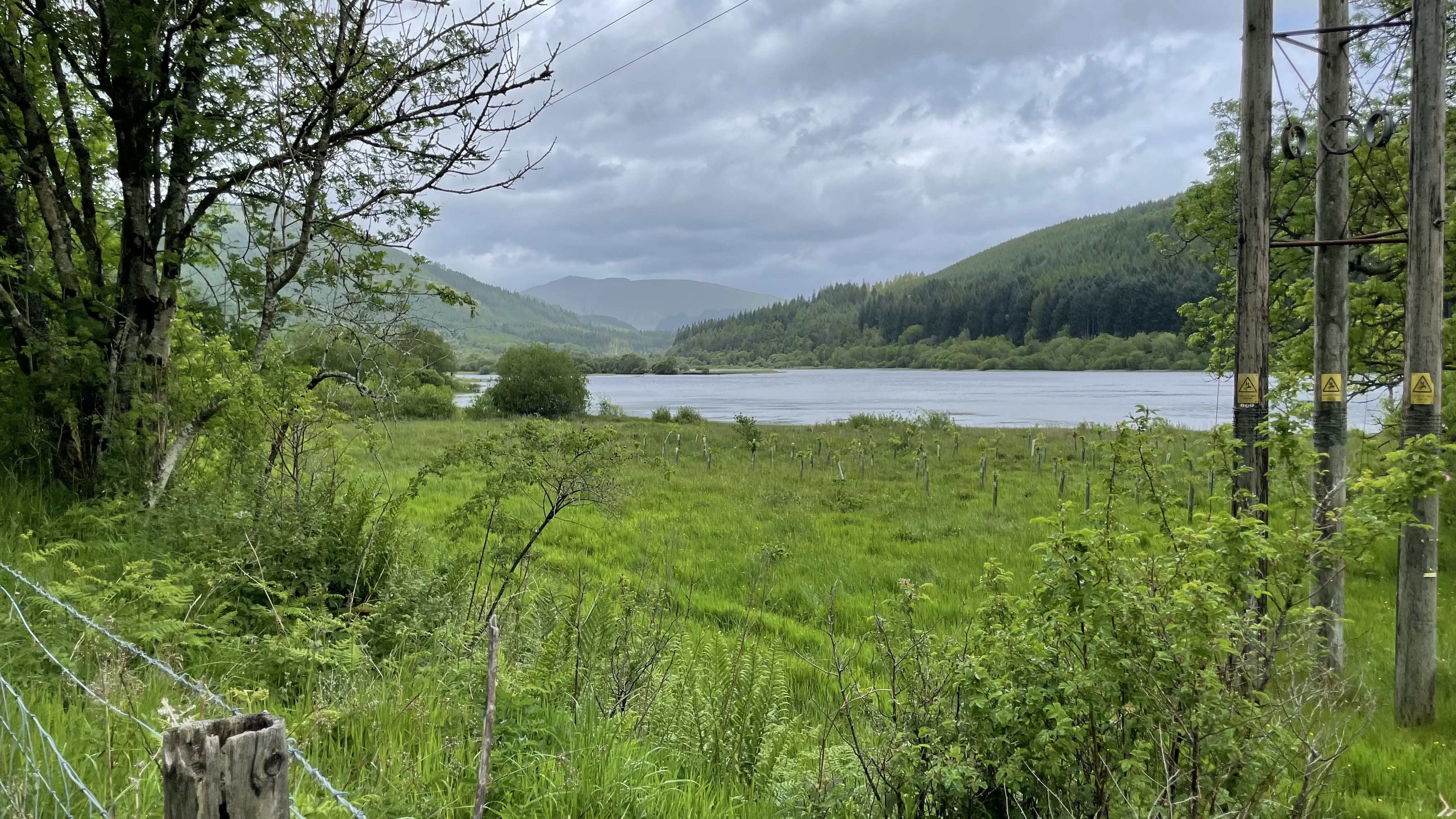
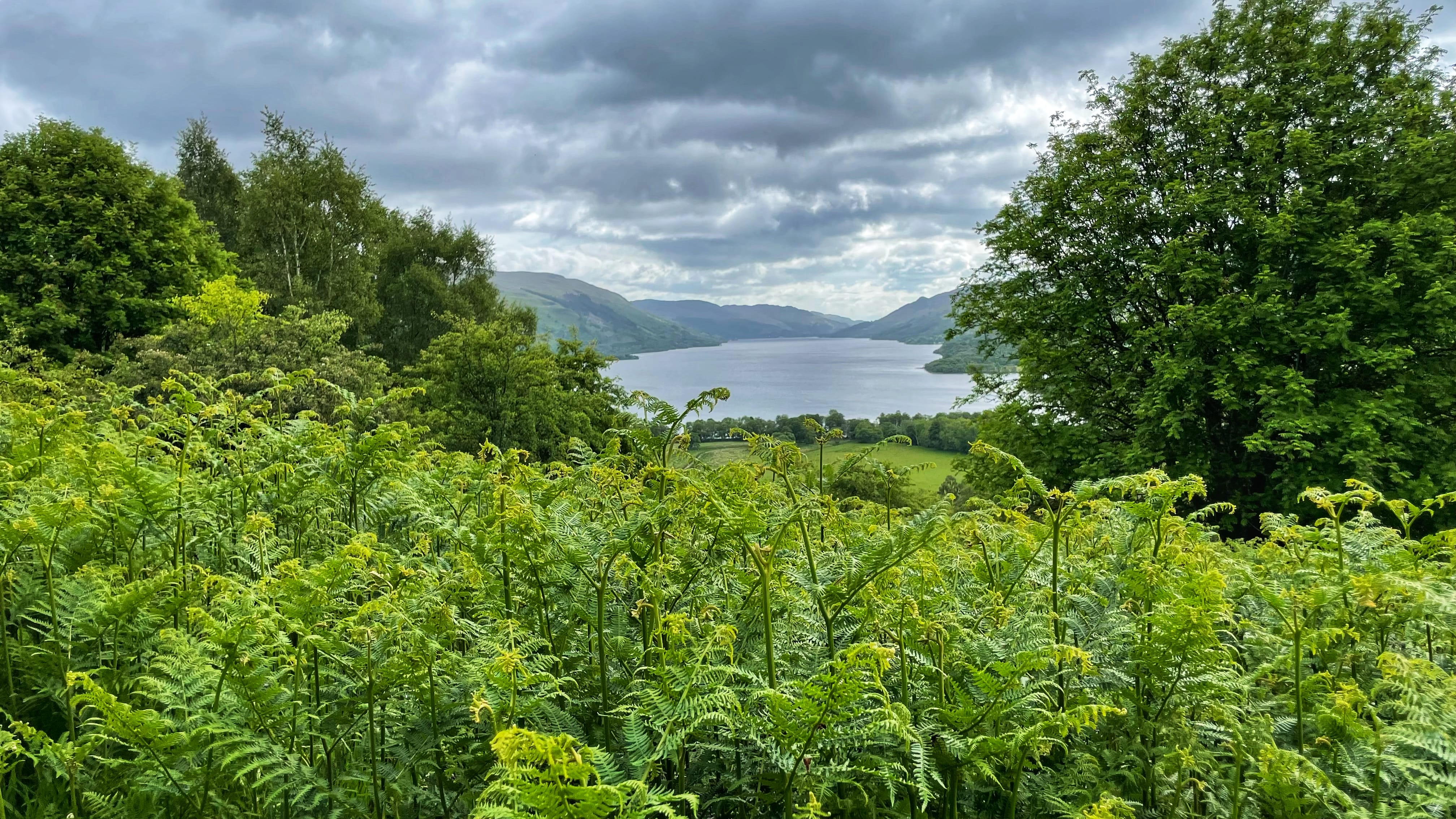
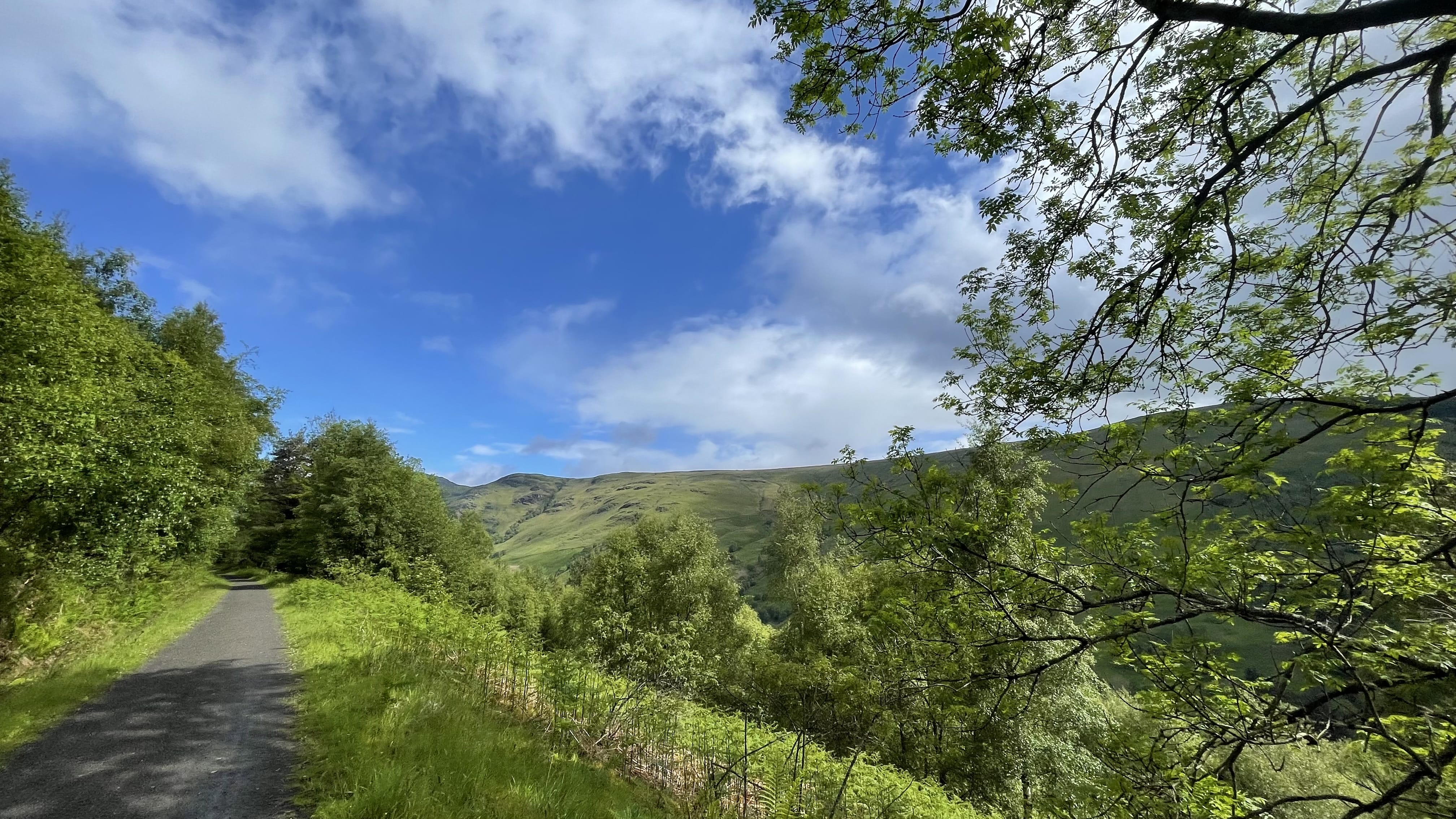
The trail picked up just a short walk from the guesthouse, passing Loch Earn as we headed out. After a full day of rain, the skies were blue, and everything looked extra vivid—clean and glowing in the morning light. The trail climbed steadily above the loch.
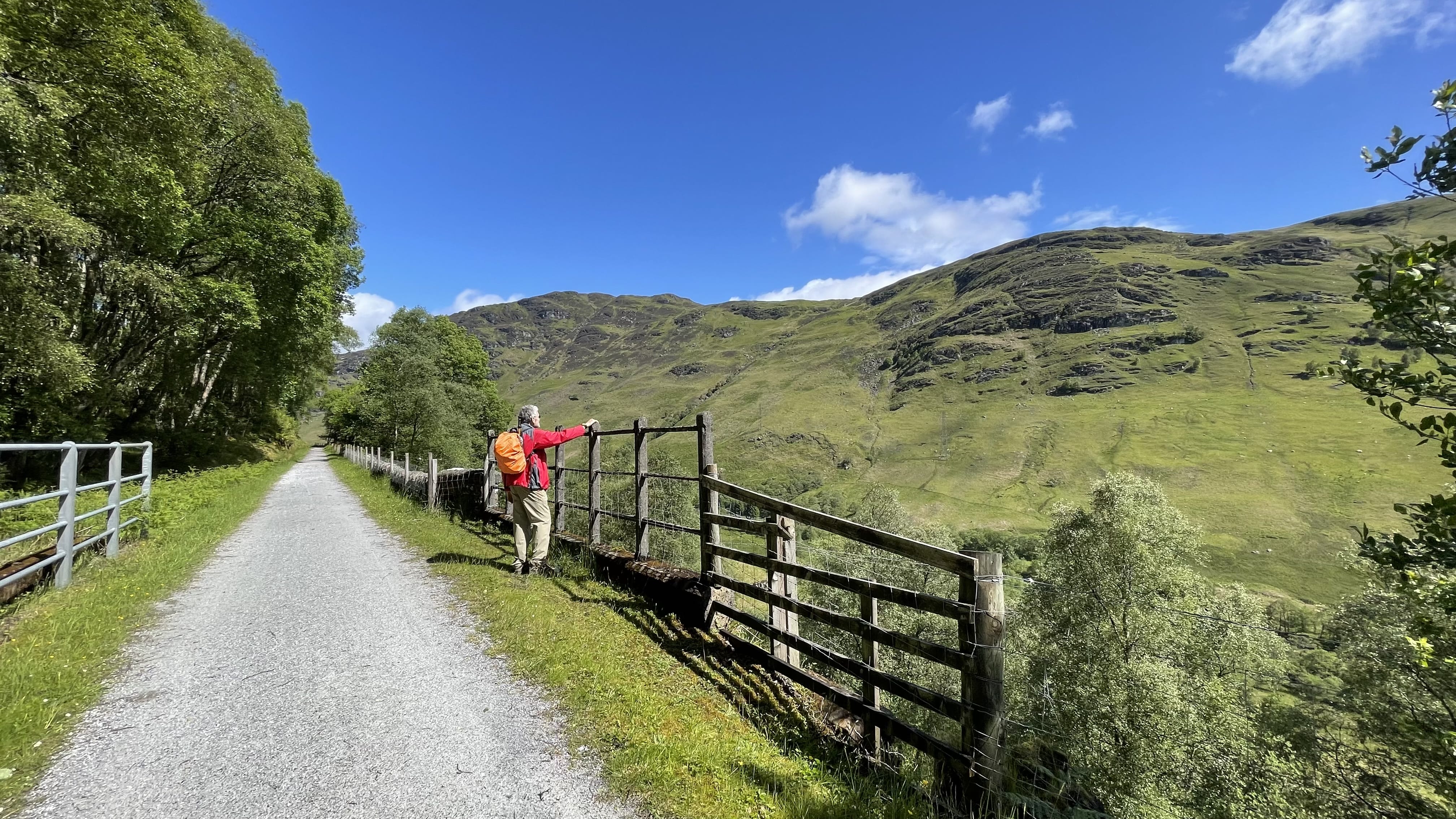
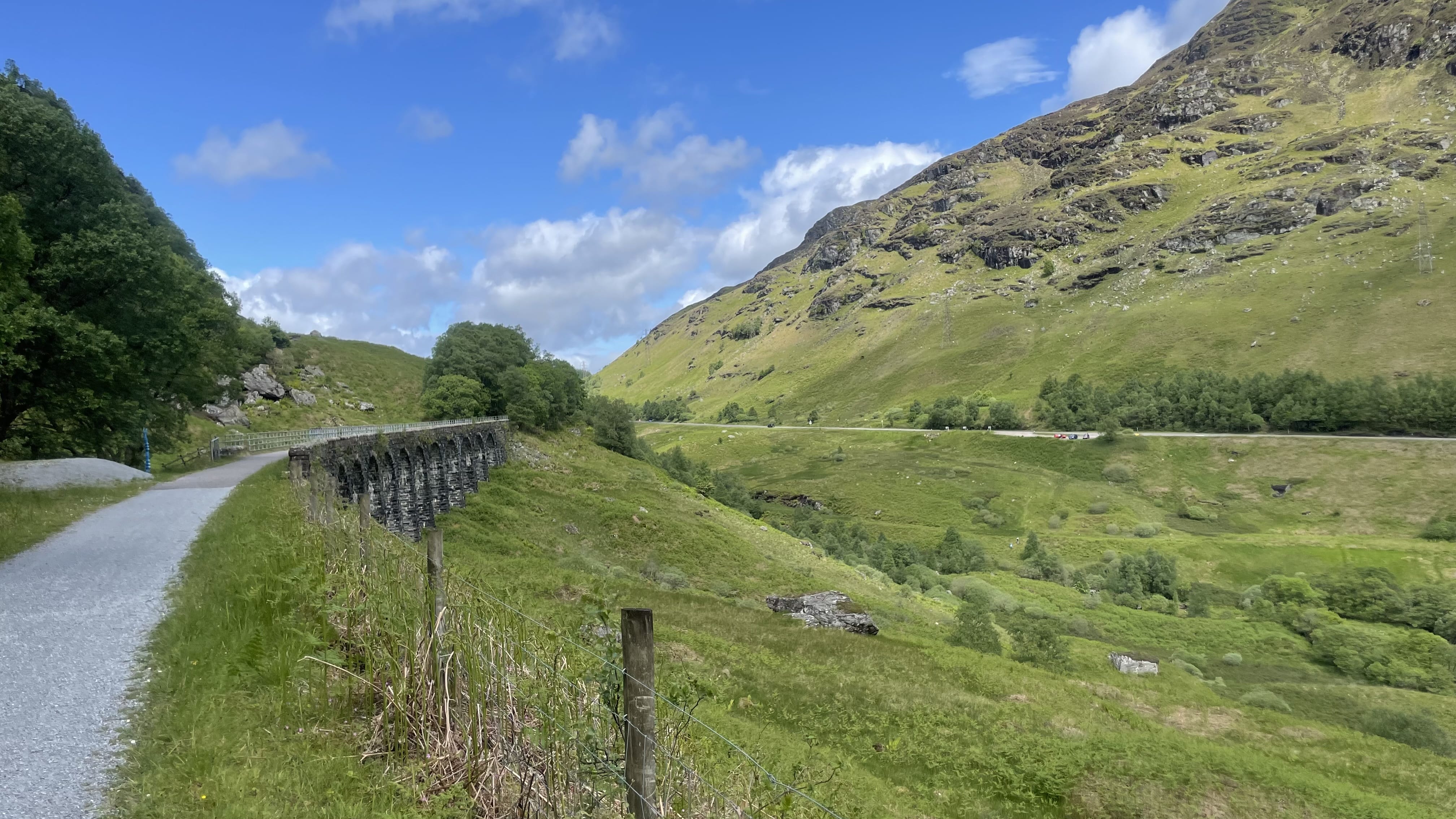
Eventually, we joined the old military road through Glen Ogle, built in the 1700s after the Jacobite uprisings. You can still feel the shape of it underfoot—broad, solid, built to last.
Along the way, we passed the Glen Ogle Viaduct, a long line of stone arches stretching across the hillside. It was once part of the old railway line, and it’s hard to miss. Not long after, we passed under a smaller stone bridge, another leftover from the railway that’s now part of the trail.
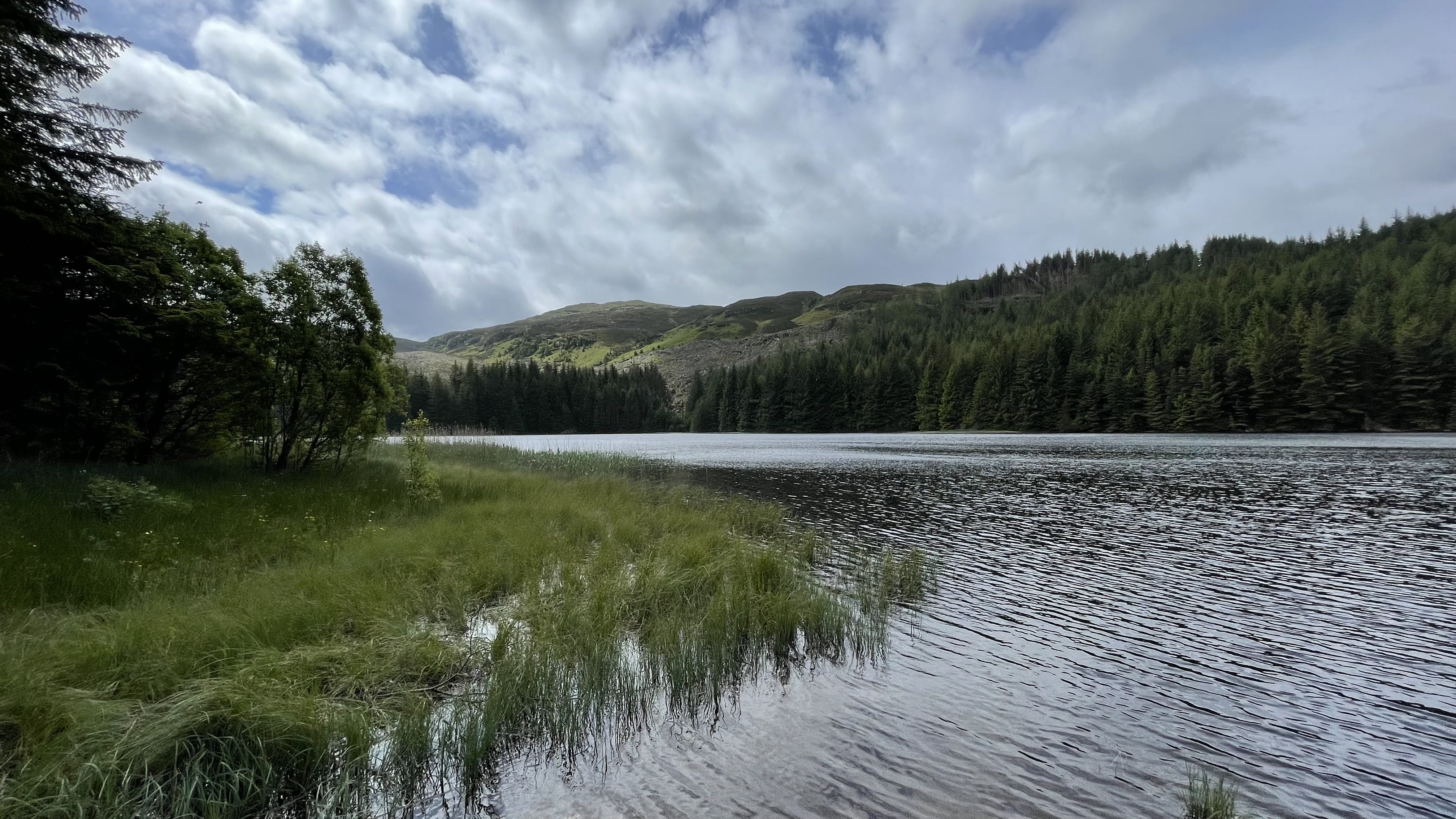
We continued past Lochan Lairig Cheile, its still water reflecting the hills around it, before eventually reaching a gate that marked the entrance to Acharn Forest.
We passed a picnic area and stopped for lunch. The sandwiches from Mansewood were veggie—simple, fresh, and surprisingly not soggy. Chip had a trick: squeeze the shredded carrots first so the sandwiches wouldn’t get soggy.
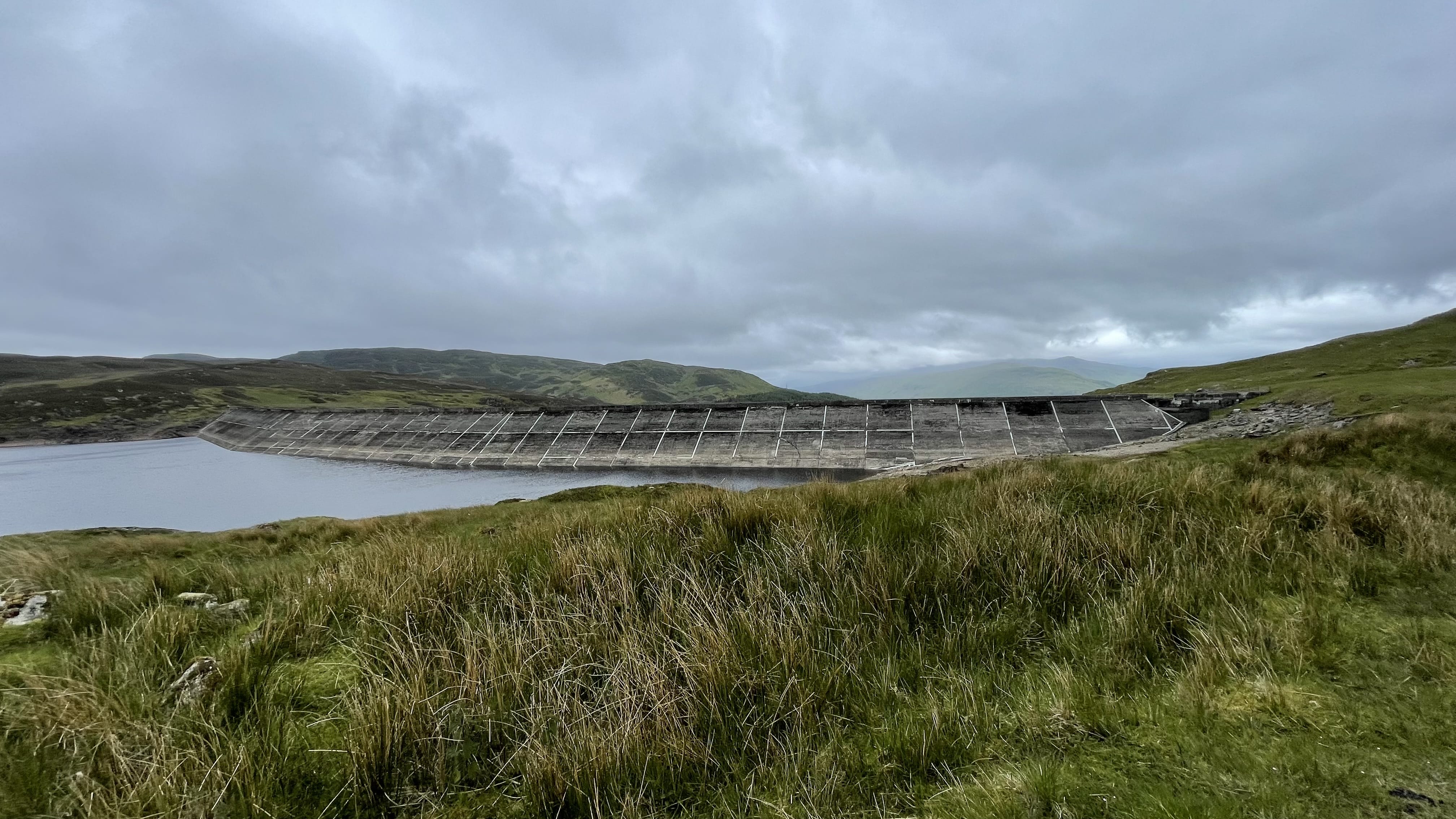
From there, the trail climbed toward Lochan Breaclaich, a remote reservoir tucked into the hills.
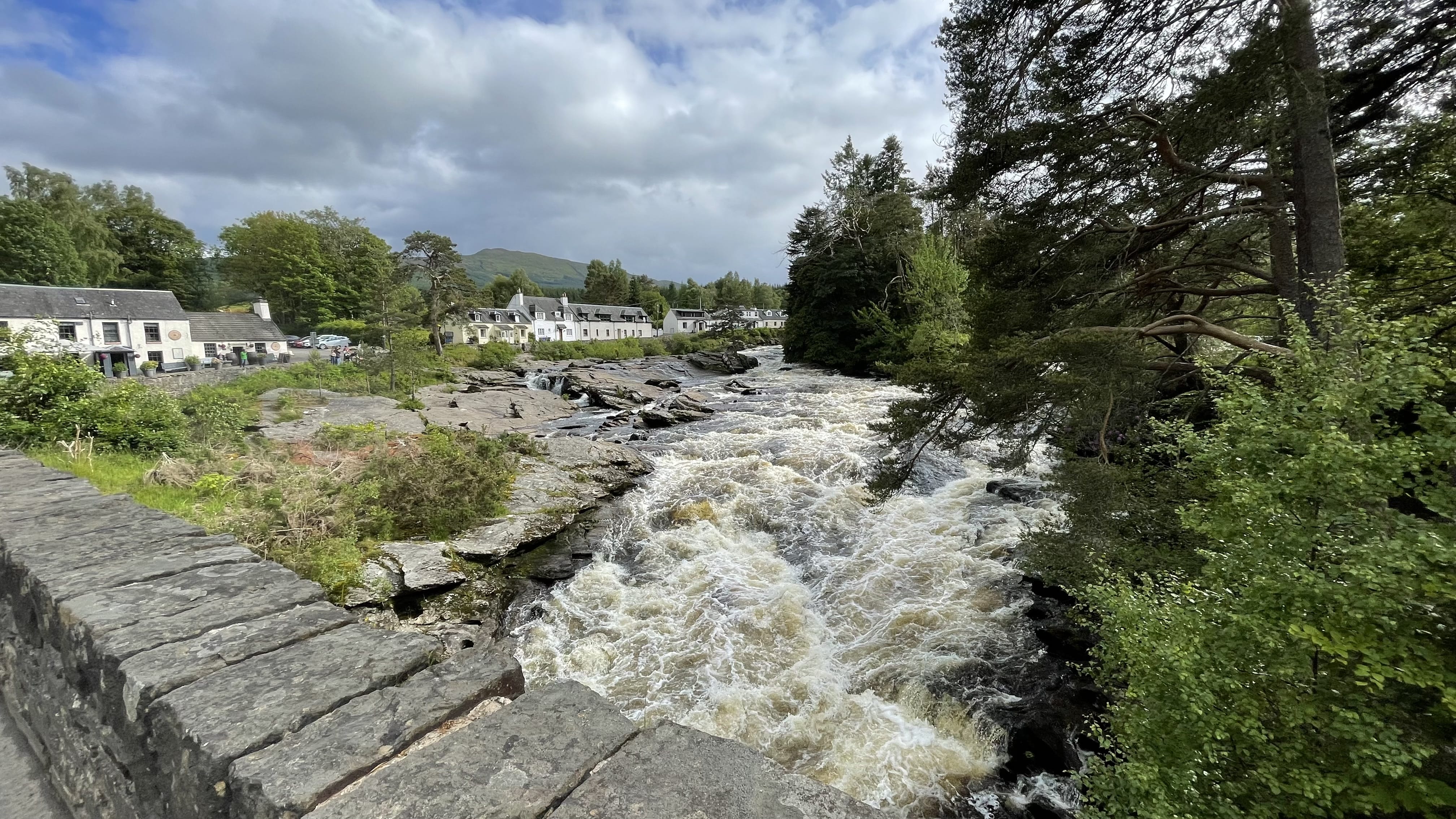
By mid-afternoon, we’d reached Killin, our stop for the day. It’s built around the Falls of Dochart—wide, rushing water right through the center. We stayed at the Falls of Dochart Inn, which was exactly what the name implies. Creaky floors, narrow halls, and a pub with dark walls—it was a bit worn, but comfortable and full of character.
We wandered through the village and into an old churchyard with ancient stones and partial ruins, then made our way back to the inn for dinner.
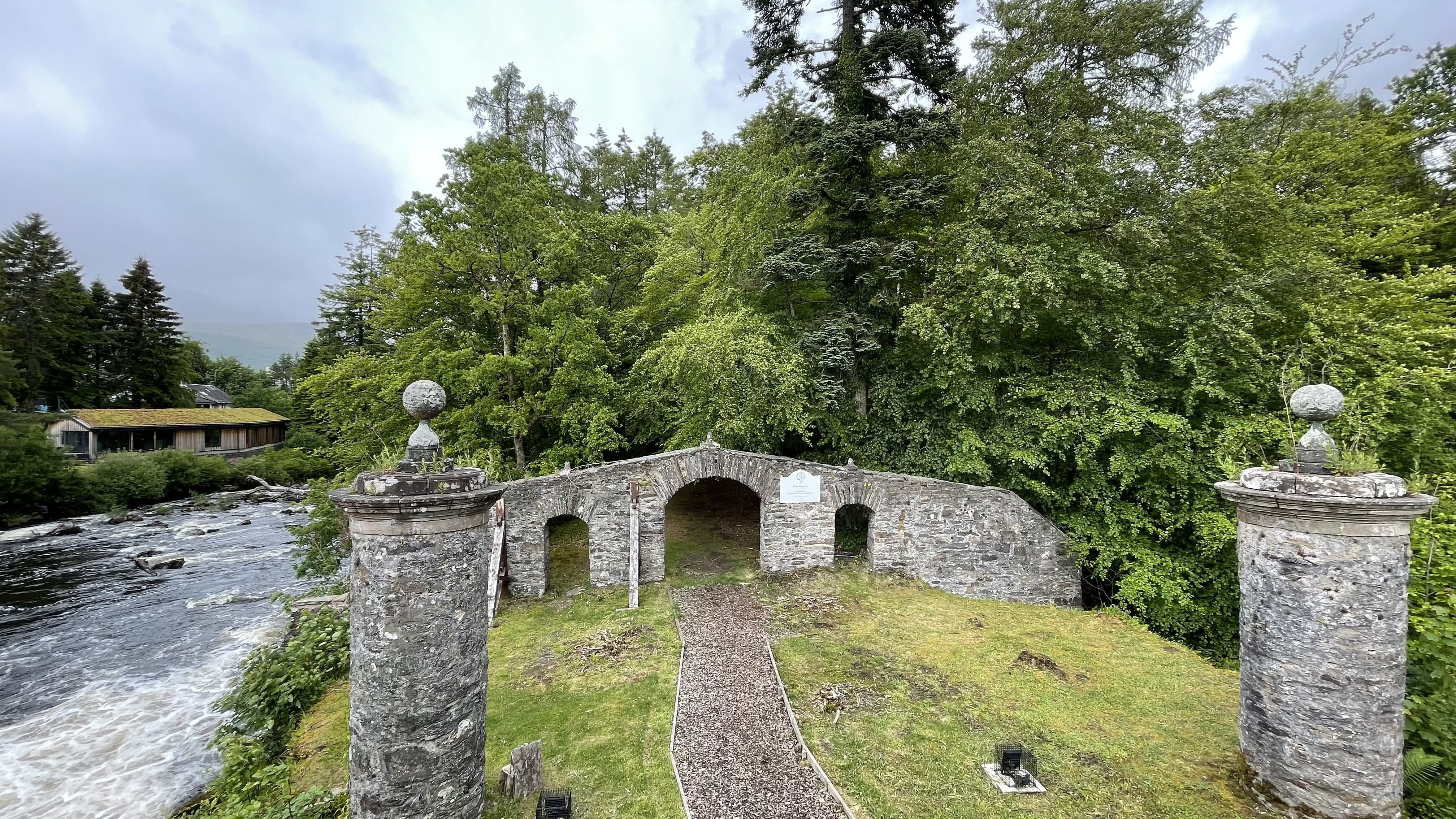
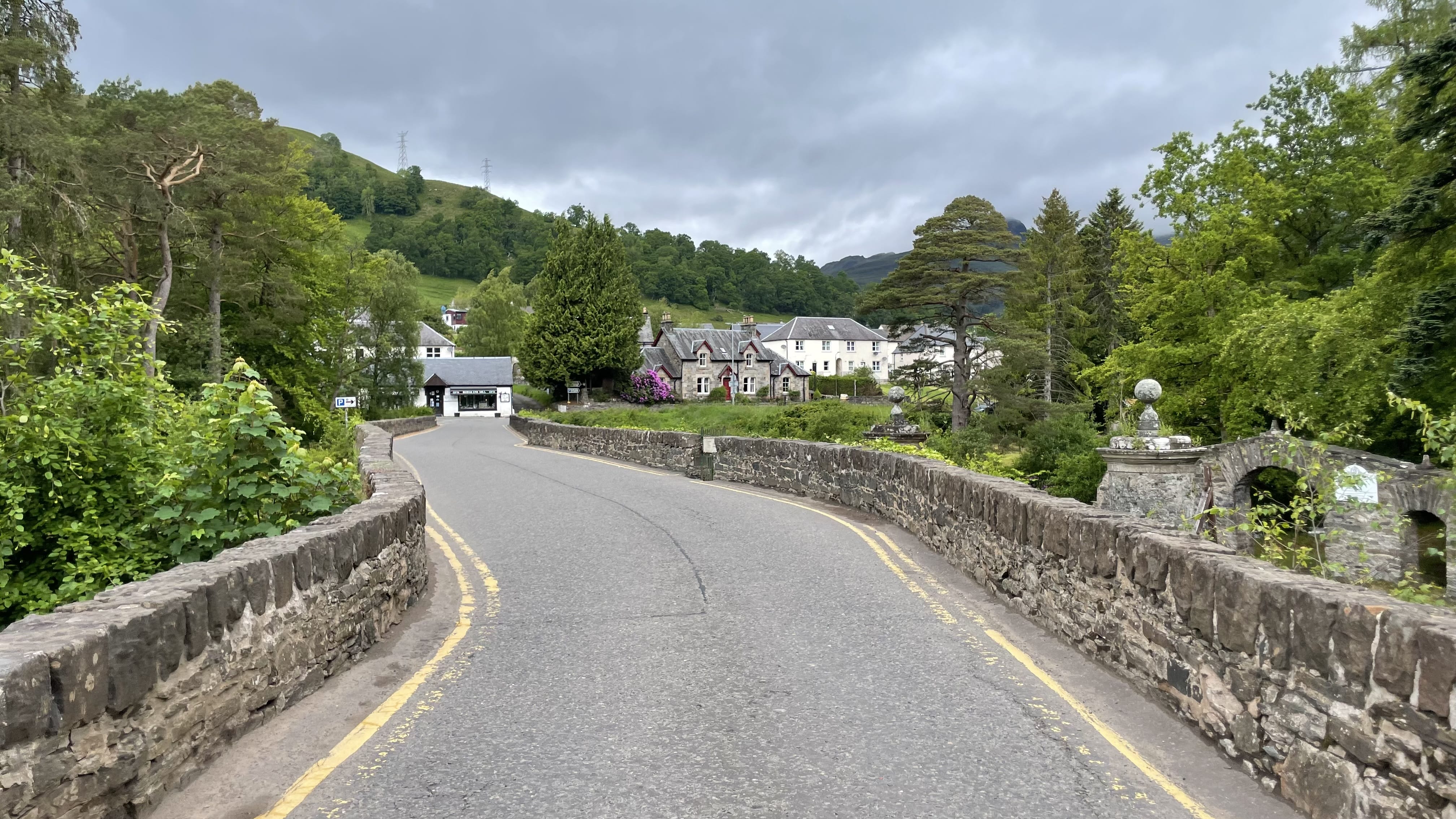
We left Killin by crossing the old stone bridge and started climbing through recently replanted forest. It was cooler and windier than I expected. Thankfully, I’d packed the knit cap I bought in Edinburgh and had a heavier jacket with me too.
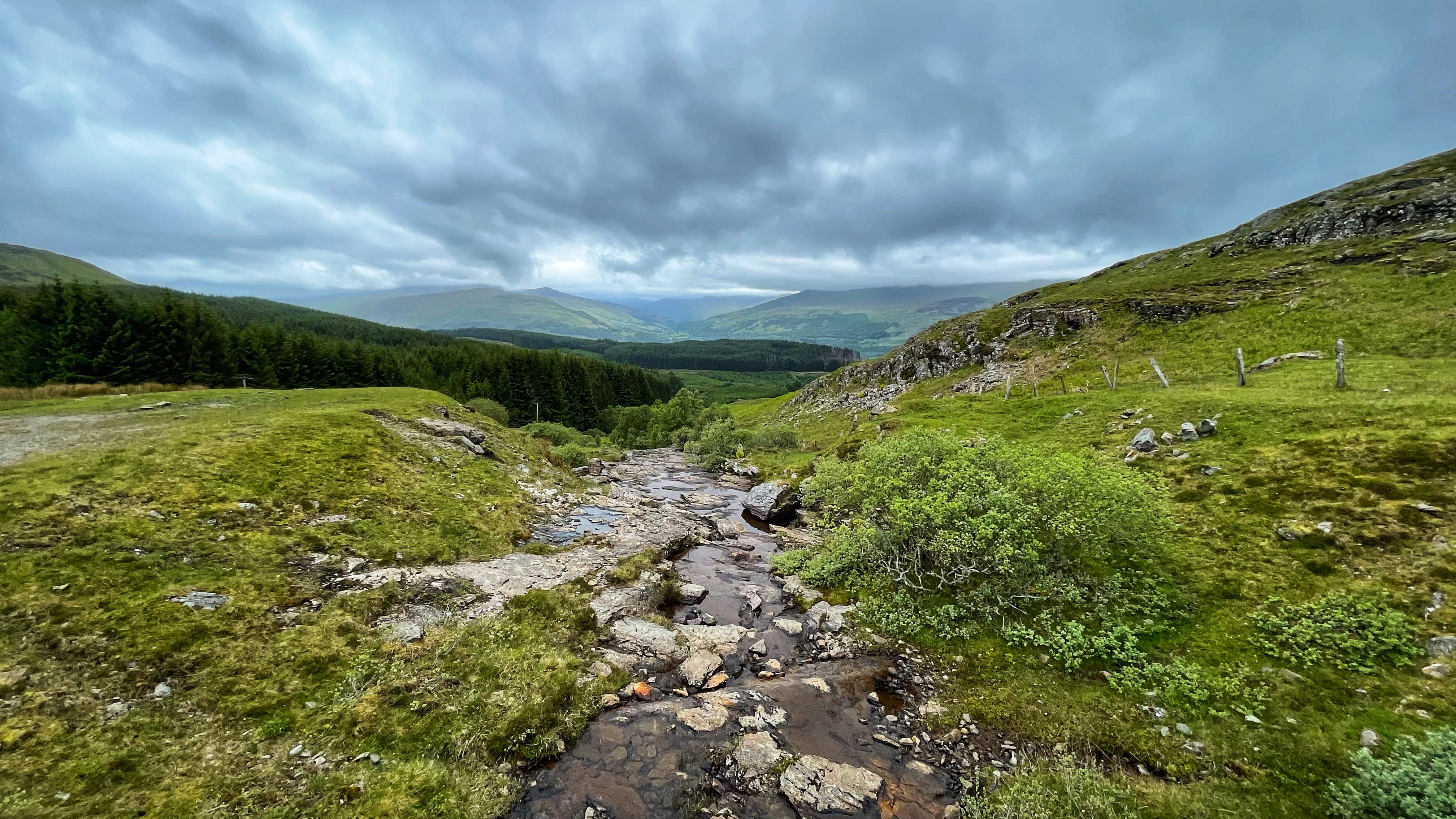
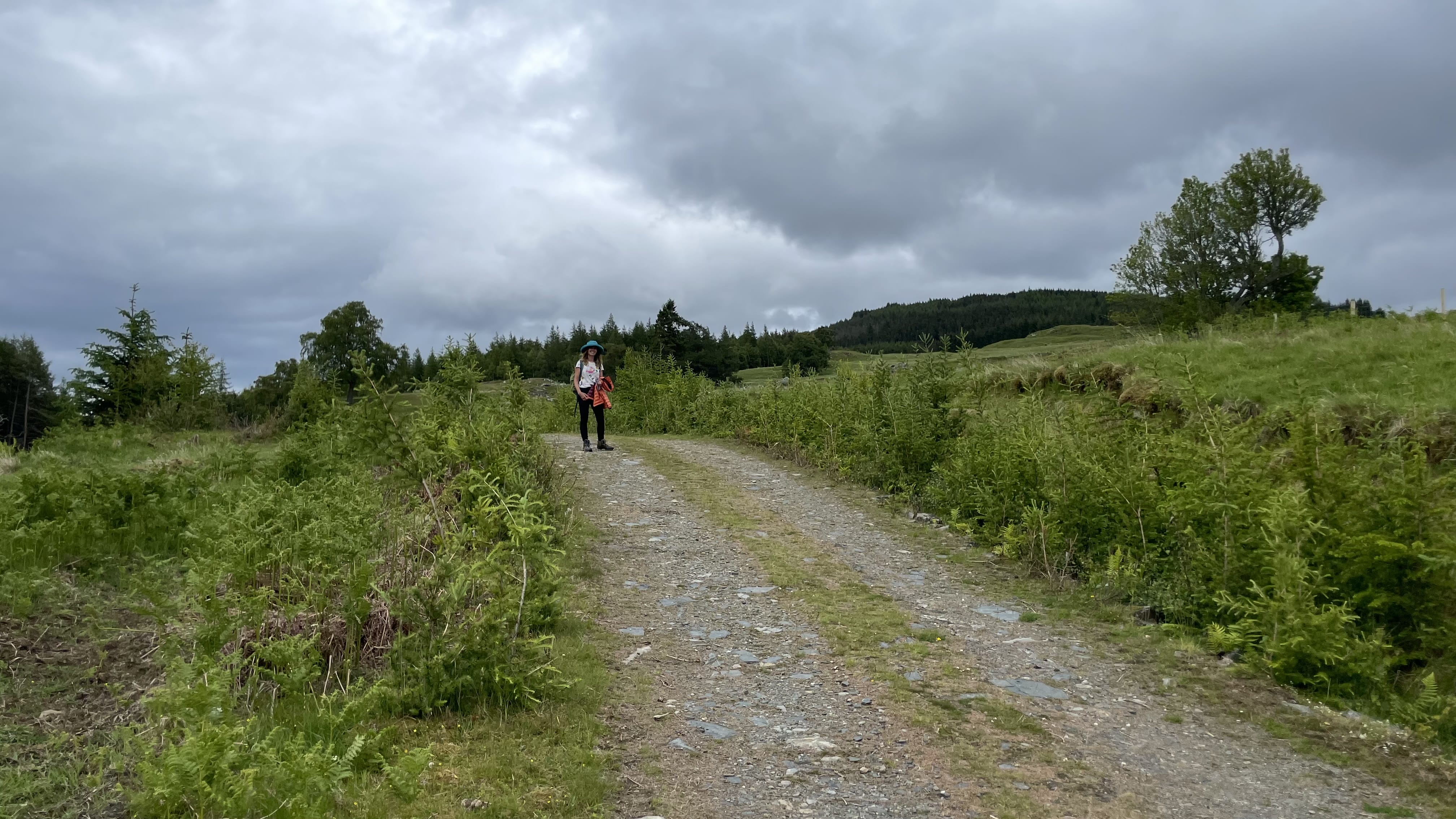
We took a short detour up toward a radio mast where the views opened up. From there, we could see Ben Lawers, the highest peak in the southern Highlands, off in the distance. That stretch felt more remote—rolling hills, long open views, and no one else in sight.
A little farther on, we passed the Breachlich Dam—and more sheep. Always more sheep.
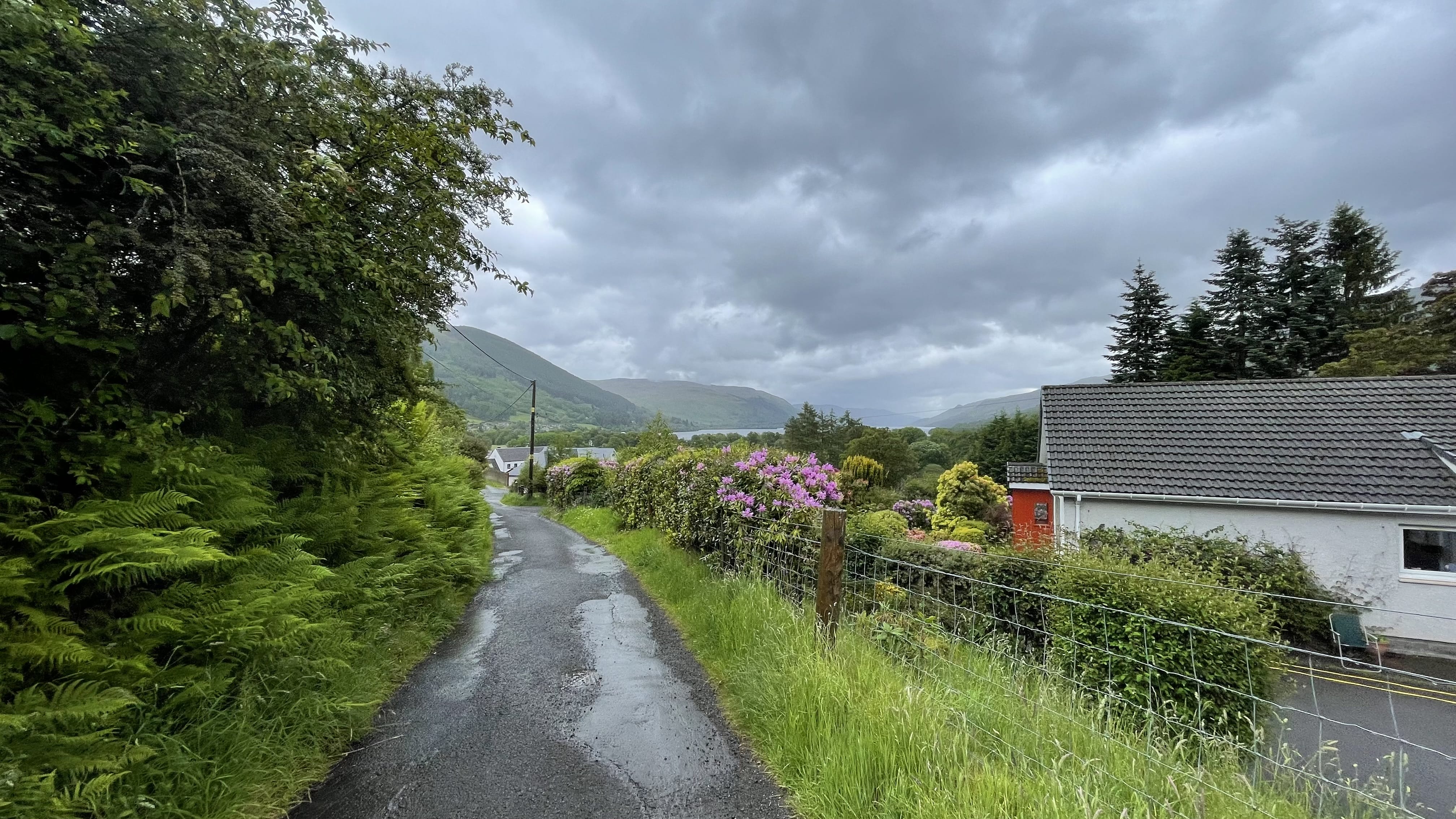
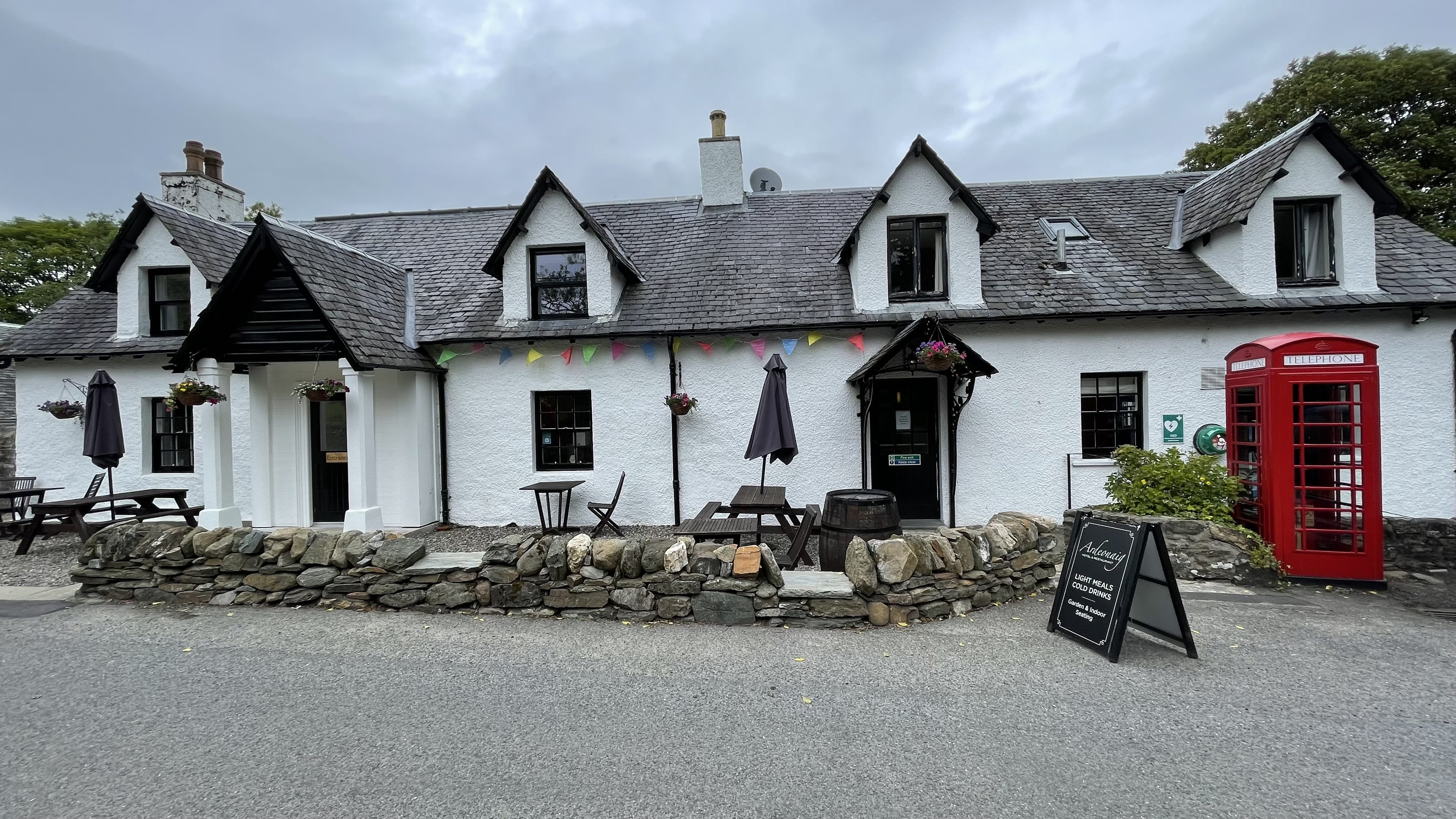
The trail began to descend toward Loch Tay. As we made our way down, we passed a small farm (yes, more sheep), and followed the road toward the Ardeonaig Hotel. The whitewashed stone building sat right on the edge of the loch, with hanging flower baskets, a red phone box out front, and views across the water. We had a drink, watched the waves, and waited for our transfer back to Killin.
Like on Day 2 in Strathyre, there weren’t any lodging options in Ardeonaig that night—but I didn’t mind heading back to the Falls of Dochart Inn again. There was something comforting about returning to a place we already knew.
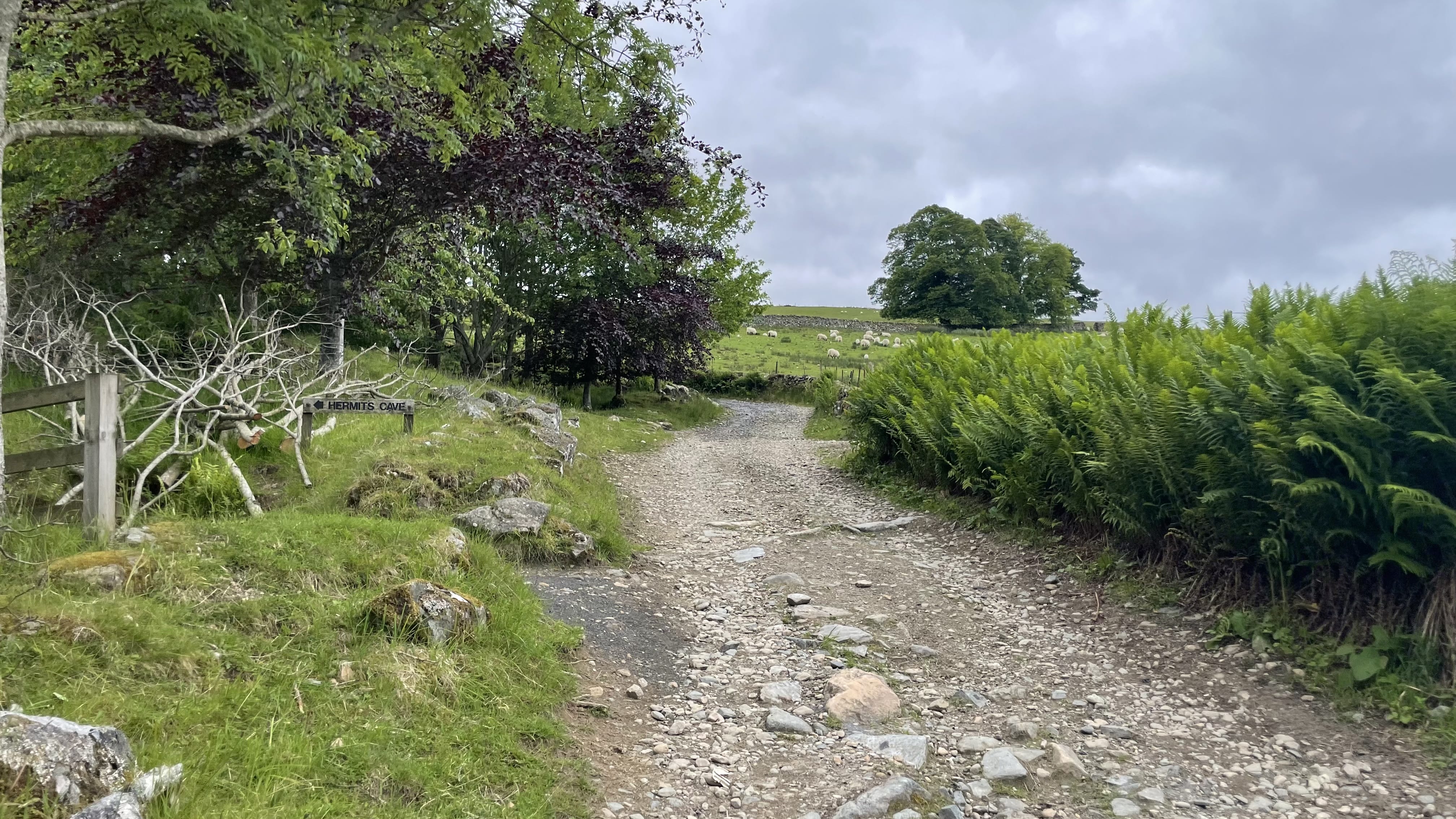
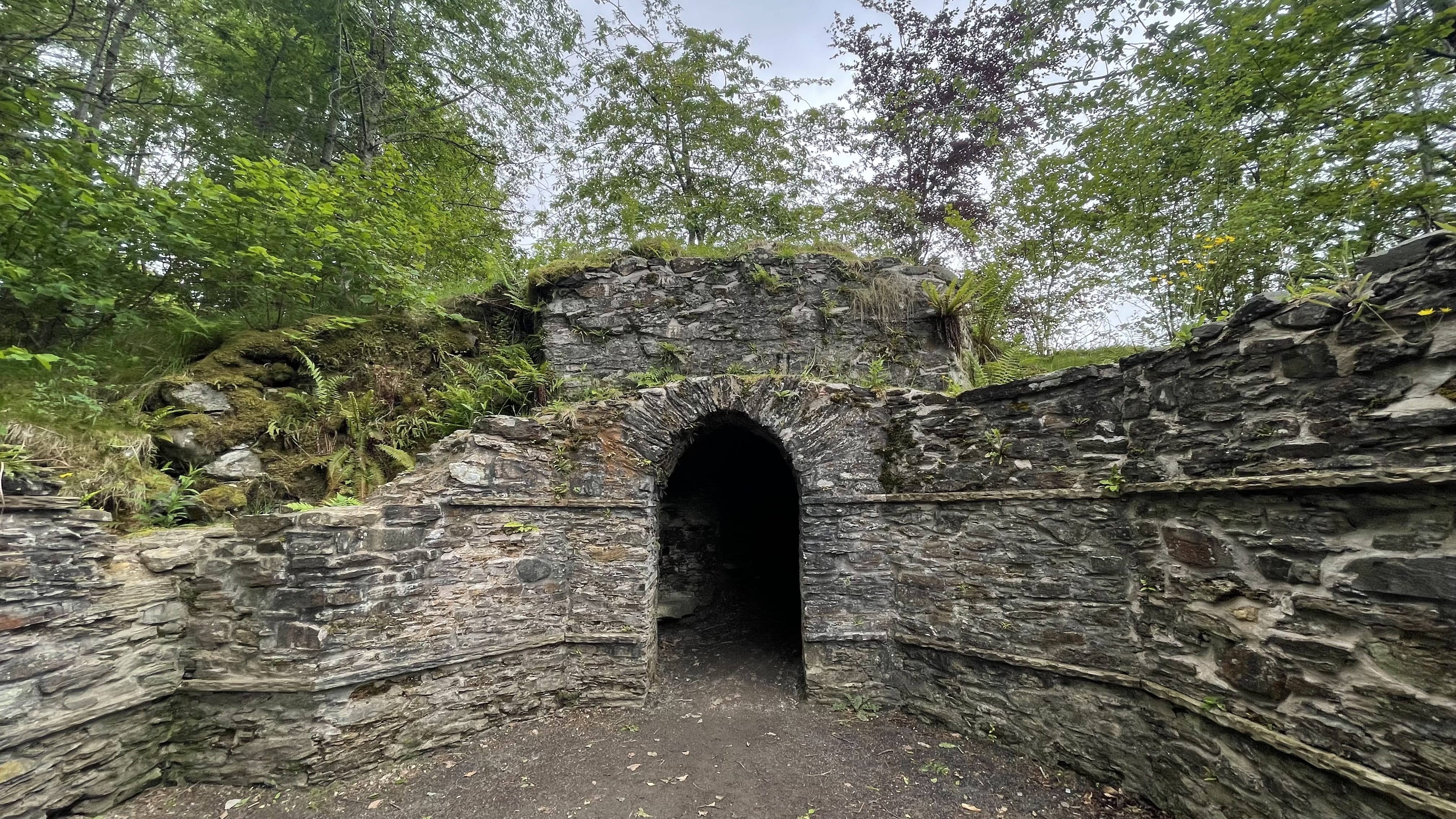
After breakfast, we were transferred to the small village of Acharn. The trail began with a rocky climb to the Falls of Acharn, passing a strange little 18th-century stone tunnel known as the Hermit’s Cave.
The trail kept climbing—open moorland, grassy hills, old farm tracks. It was a long day, but a beautiful one. We passed Taymouth Castle, saw a few nods to Robert Burns and Scottish literary history, crossed Wade’s Bridge (built in the 1730s), and eventually entered Aberfeldy.
Along the way, we’d heard from another hiker about a couple from North Carolina also walking the trail. That day, we finally met them—Al and Bette—and ended up hiking the rest of the way together.
When we realized we’d gone off track, we just laughed. None of us had been paying attention, but it felt like part of the day’s adventure.
It was fine—we figured out where we’d gone wrong and turned back. As we retraced our steps, a line of old roadsters drove past us, the drivers all waving as they went by.
The hike was gorgeous—green open fields, more sheep, and even a toad. Another lovely day. As we arrived in Aberfeldy, we said goodbye to Al and Bette since we were staying in different places.
We stayed the night at Tigh’n Eilean Guest House—a spotless, charming spot set in beautiful gardens overlooking the River Tay.
After several quiet villages, Aberfeldy felt lively—shops, cafés, and people. Not bustling, but definitely with more energy.
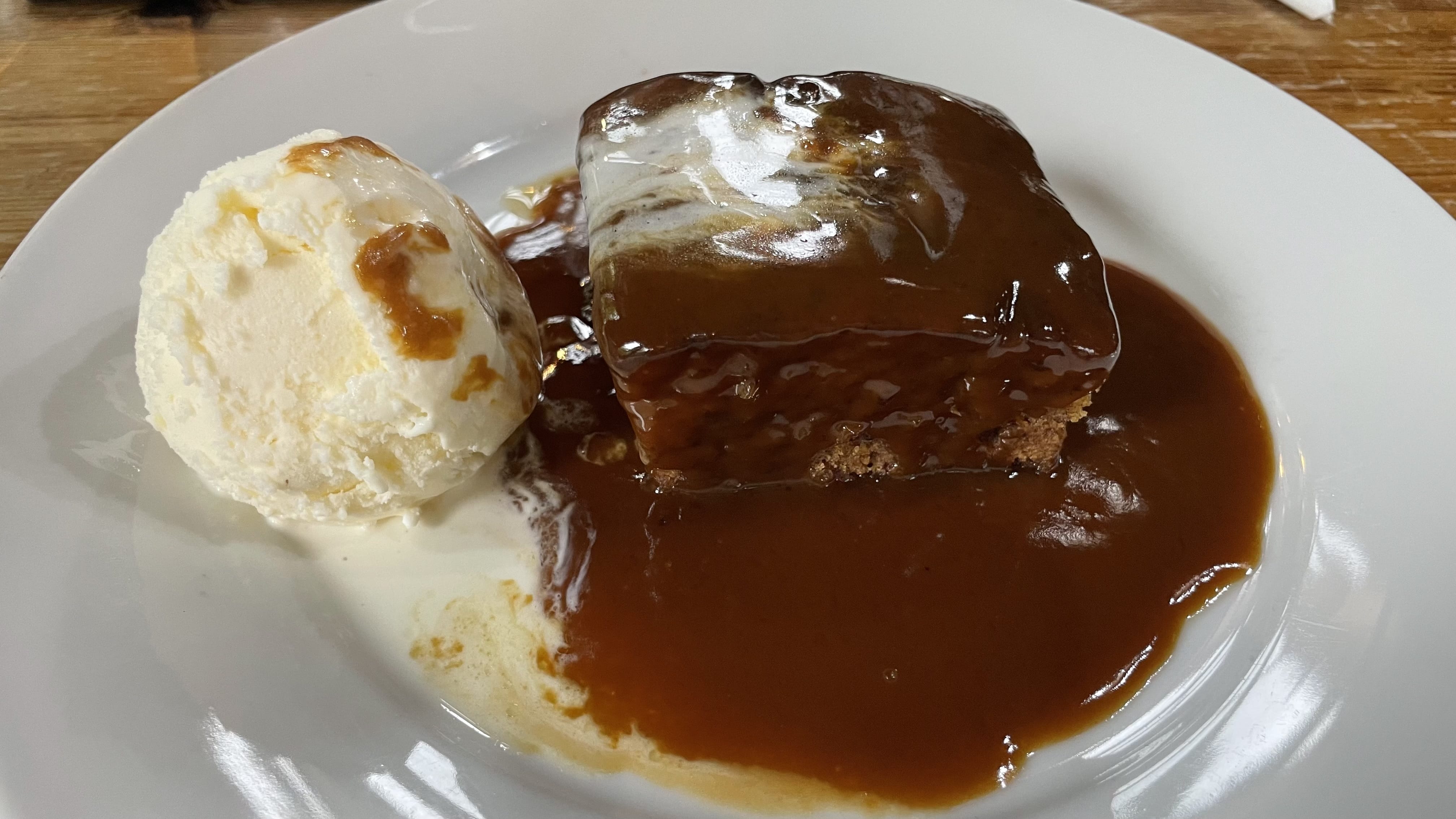
We grabbed dinner at The Black Watch Inn and Croft Restaurant—Aberfeldy’s oldest bar, apparently. I had the chili (which was fantastic), and to celebrate the day, I ordered sticky toffee pudding with ice cream. I’d never had it before, but it was on most pub menus here. Warm sponge cake soaked in toffee sauce, paired with cold vanilla ice cream—I get the appeal.
It was fun walking around town after dinner—I even bought myself a new pair of hiking boots—not because I needed them, but because I liked the way they looked and felt like treating myself.
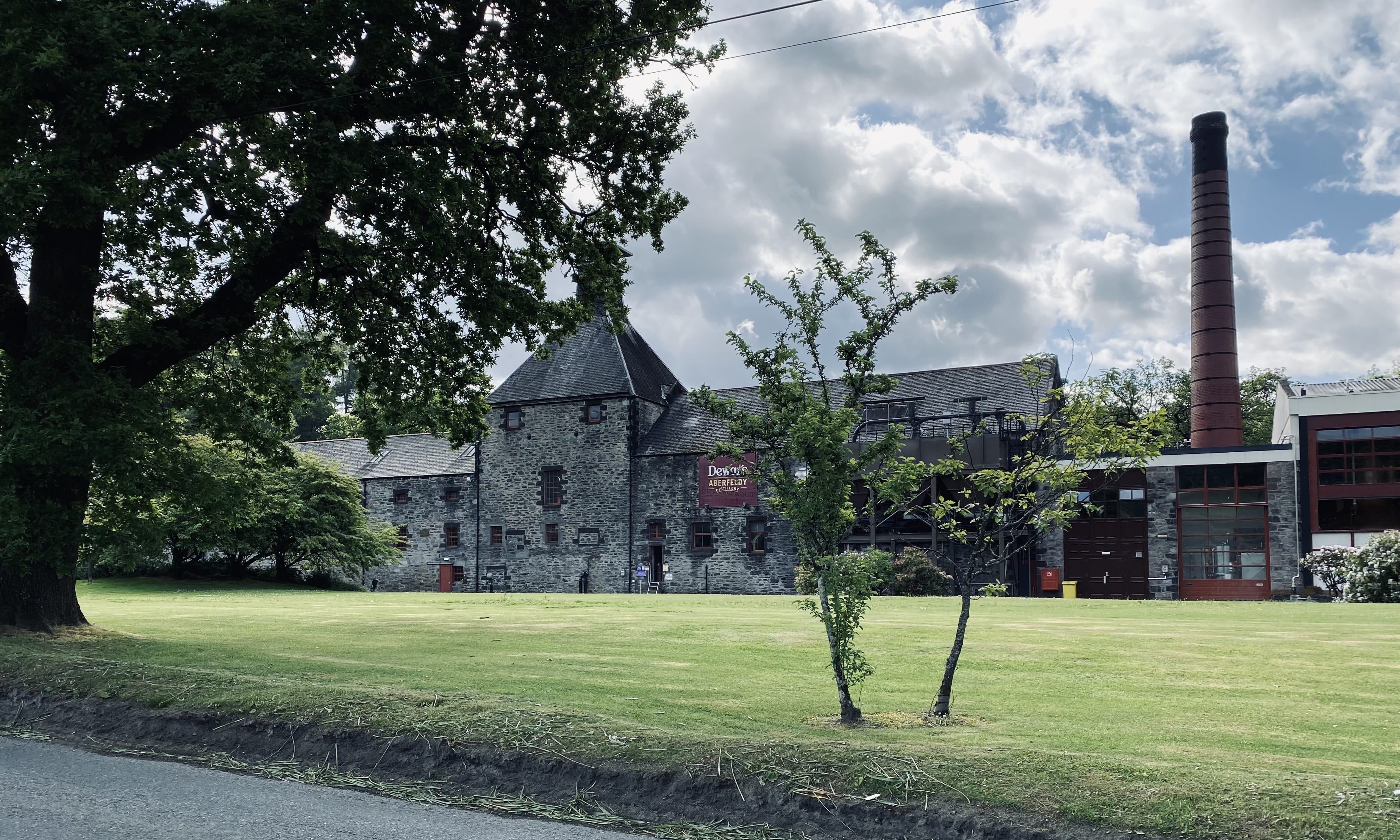
We passed the Dewar’s Aberfeldy Distillery on our way out of town, then crossed Wade’s Bridge again. The trail followed the River Tay for a while—flat and peaceful—then gradually climbed into the hills. I couldn’t believe this was our last day of hiking.
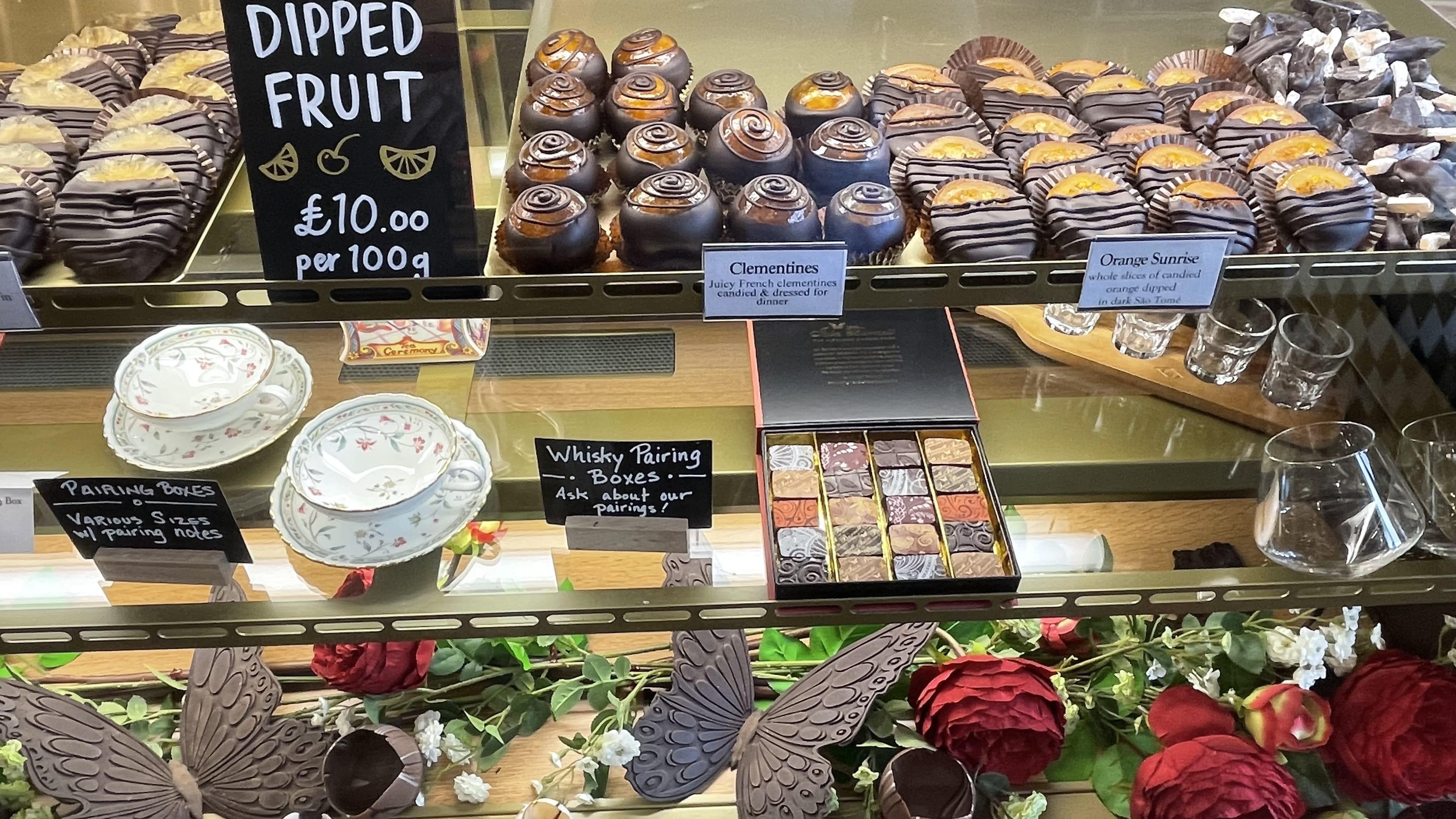
After a couple of miles, we came to—of all things—a chocolate shop: the Iain Burnett Highland Chocolatier Café.
Well, if you know me, you already know I stopped. I do love chocolate. Apparently, this guy’s kind of a big deal—his handmade truffles have won international awards, and everything behind the glass looked dangerously tempting. We grabbed a little table on the patio and had coffee and a chocolate treat (okay, two treats—a brownie and a chocolate-covered clementine). Yes, I know—absolutely sinful. And I loved every bite.
What a treat for the last day on the trail.
Then we hit the trail again, continuing to along the River Tay. The path was mostly gentle and scenic, winding through farmland, bits of woodland, and the occasional small settlement. Scotch broom lined the trail nearly the whole way—more than I’d seen on any other day. It was everywhere, spilling over the hillsides in bright yellow patches.
Eventually, the trail climbed again, and as we came down the biggest hill of the day, we entered a very different kind of place—Pitlochry, full of life and energy. After so much open space and solitude, stepping into town felt like crossing a finish line.
Pitlochry is built for wandering: stone buildings, small shops, cafés. Before we even checked in to our B&B, Tom grabbed a Guinness to celebrate the trip and the end of our last day of hiking.
We spent the night in Pitlochry at Rosehill Guest House and met up again with Bette and Al, who we’d really enjoyed hiking with earlier in the trip. It was great to see them again—we all shared a celebratory drink at a place in town called The Old Mill Inn, toasting to a great hike and new friends.
After a great night in Pitlochry, we took the train (booked through Rail Europe) back to Edinburgh for one final night before flying home. Hiking the Rob Roy Way had left me full of appreciation—for Scotland’s wild beauty, its cozy villages, and the quiet kind of magic that lingers on its trails.
This was my first time hiking with Hillwalk Tours, and I’d absolutely do it again. Everything ran smoothly—the accommodations, the trail notes, the transfers, the route itself.
Plenty of companies offer self-guided walks like this, but I chose Hillwalk Tours and was really impressed. They made everything seamless, which meant I could focus on the trail instead of the logistics.
The Rob Roy Way was the perfect first long-distance walk—quiet, scenic, and manageable, with just enough villages and historic stops to keep it interesting. I had a fantastic time, and I was genuinely sorry to see it end.
I’d happily recommend this route—and Hillwalk Tours—to anyone looking for a self-guided hiking experience in Scotland.
If I had to do it over again, I would’ve added an extra day in Pitlochry. There was more to see and do than we had time for—distilleries like Edradour and Blair Athol, more time to wander, and just a chance to slow down at the end.
Hi, I’m JoAnne—writer, wanderer, and lover of places that surprise me. I’ve traveled to 60+ countries (and counting), usually with a camera in one hand and a notebook in the other. I’m drawn to mosaics, markets, and mountains, and I write to remember what moved me. When I’m not traveling, I’m working on my blog Travels Afoot, trying new creative projects, or planning my next adventure.