I came across this small-group trip through a company I’d recently discovered — AdventureWomen — called Scotland: Hiking the Highlands and the Coast. As the name suggests, it’s a women-only trip. The itinerary looked great: starting in Edinburgh, heading north through Pitlochry to Cairngorms National Park, then on to the Isle of Skye, finishing in Glencoe before circling back to Edinburgh.
It didn’t take long for me to book it.
I’ll admit, I hesitated briefly about the group size—the trip was capped at 15, which is more than I usually prefer. I tend to like smaller groups, closer to 10 or 12, and the price was also higher than I typically spend. But the itinerary was strong enough that I decided it was worth it.
I wasn’t wrong—this 7-day trip through Scotland’s Highlands and the Isle of Skye was fantastic, with time in the Cairngorms, coastal walks on Skye, and days spent moving through constantly changing landscapes.
Since I was already going to be in Scotland, I added on a second trip—an eight-day self-guided hike along the Rob Roy Way with Hillwalk Tours. I wrote more about that experience in Hiking the Rob Roy Way: An 8-Day Self-Guided Adventure in Scotland with Hillwalk Tours.
I also had four full days in Edinburgh, split between two visits—two solo days before the trip and two more after, before heading out on the Rob Roy Way. You can read more about that in Exploring Edinburgh: Four Days in Scotland’s Storybook City.But I digress—back to the trip.
Scotland Trip at a Glance
Trip length: 7 days on the group trip, not including arrival day
Route: Edinburgh → Aviemore/Cairngorms National Park → Loch Ness → Isle of Skye → Glencoe → Edinburgh
Trip style: Small-group hiking and cultural trip with scenic walks, local food experiences, and hotel stays
Main highlights: Cairngorms National Park, a cooking day in Ballindalloch, crofting traditions near Grantown-on-Spey, Urquhart Castle and Loch Ness, coastal walks on Skye, the Old Man of Storr, and Glencoe
Who this trip is good for: Travelers who want a guided introduction to the Scottish Highlands and Isle of Skye with moderate walks, constantly changing scenery, and a mix of nature and local experiences
Good to know: The pace covers a lot of ground, so while you see a lot in a week, some places — especially Glencoe — may leave you wishing for more time
After leaving Edinburgh, we drove north into greener, more open countryside.
Buildings gave way to farmland, then hills, then wider stretches of land that felt distinctly Highland.
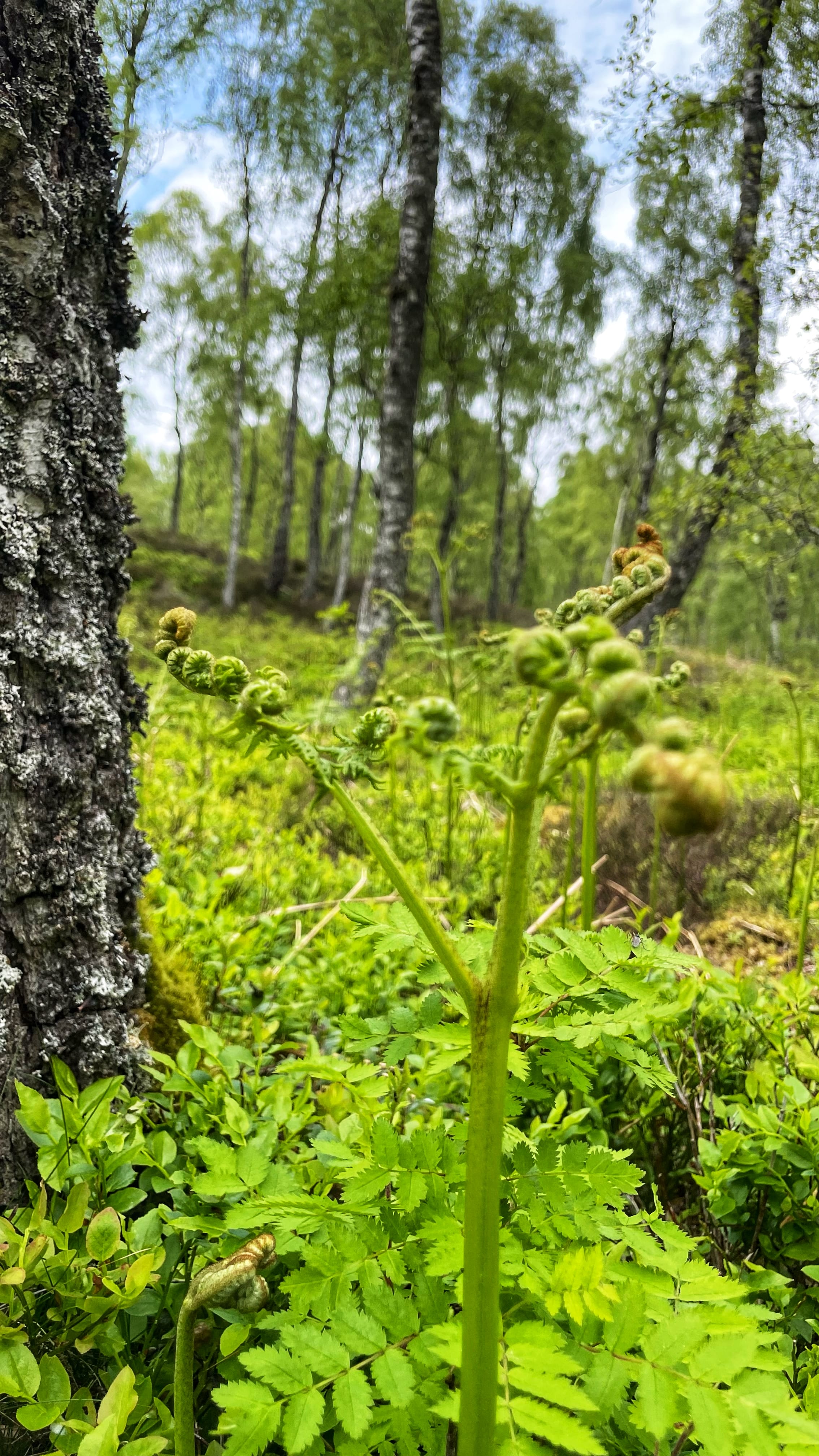
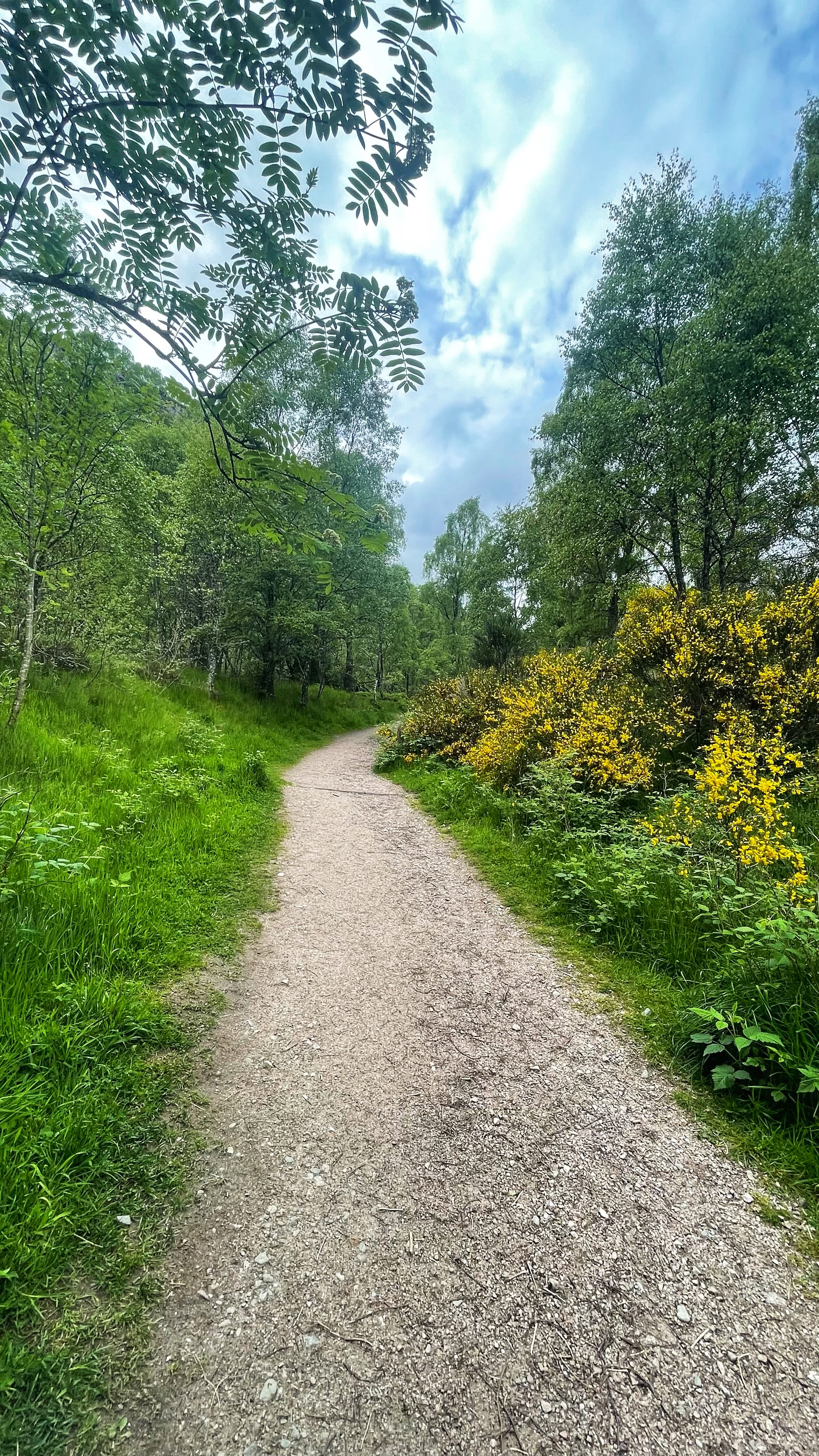
At one point we stopped at a trailhead in Cairngorms National Park for a quick hike.
The trail led us through bright woodland where fresh ferns were just beginning to unfurl and yellow gorse lined sections of the path. It was exactly what I had imagined—rolling hills, trees, and wide views all around.
By late afternoon we arrived at the Ravenscraig Guest House in Aviemore, where we would stay for the next two nights.
We drove deeper into the Highlands toward Ballindalloch, where we were welcomed into the home of Scottish cookbook author Ghillie Basan for an afternoon of cooking together. I wasn’t entirely sure what to expect—or whether cooking with fifteen women in one kitchen would feel chaotic—but it quickly became one of the highlights of the trip.
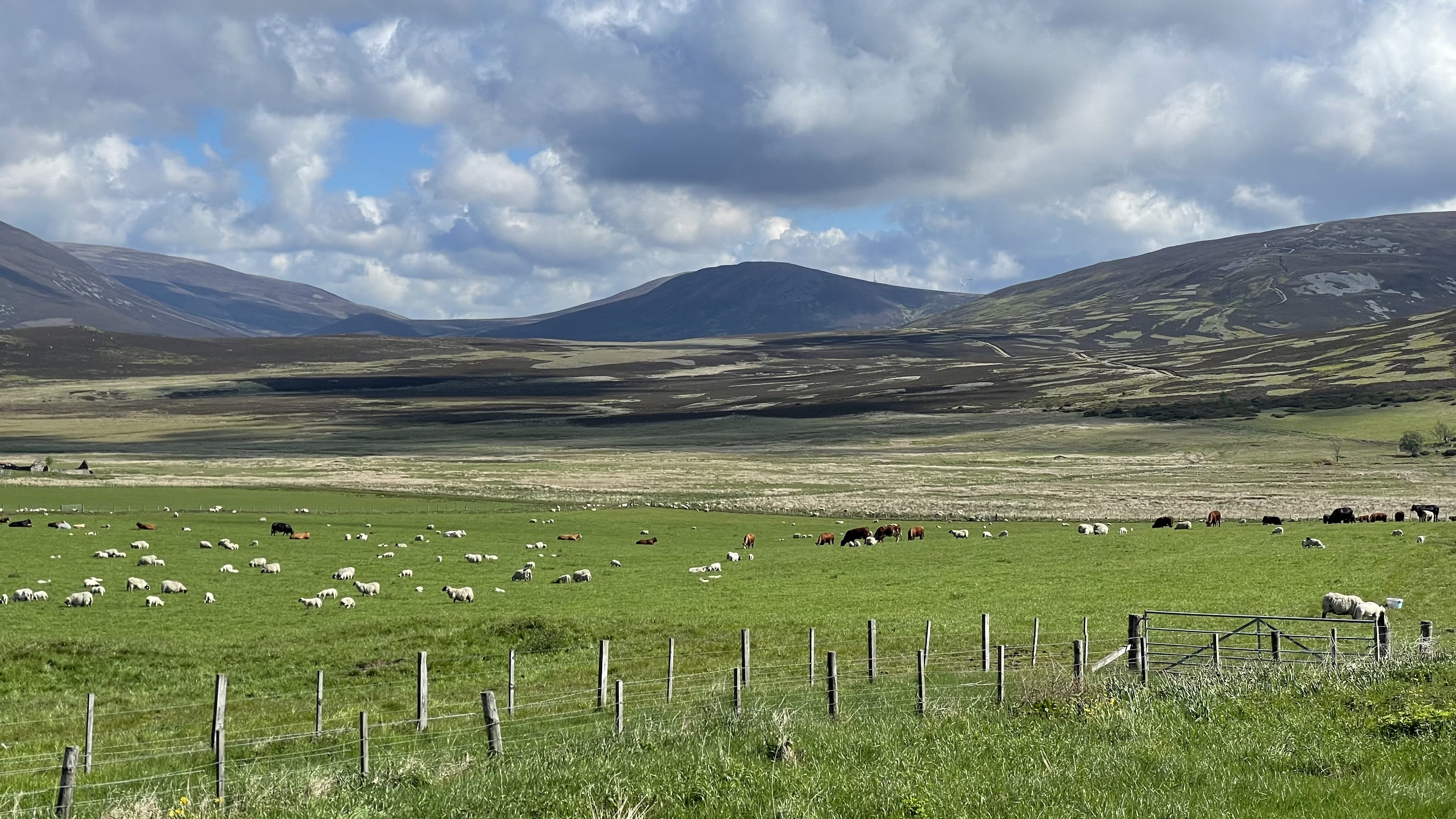
Her Highland home was remote, surrounded by open countryside and views of distant hills. She said she fell in love with the area because it reminded her of Kenya, where she had grown up as a child—and having been to Kenya, I could finally see what she meant.
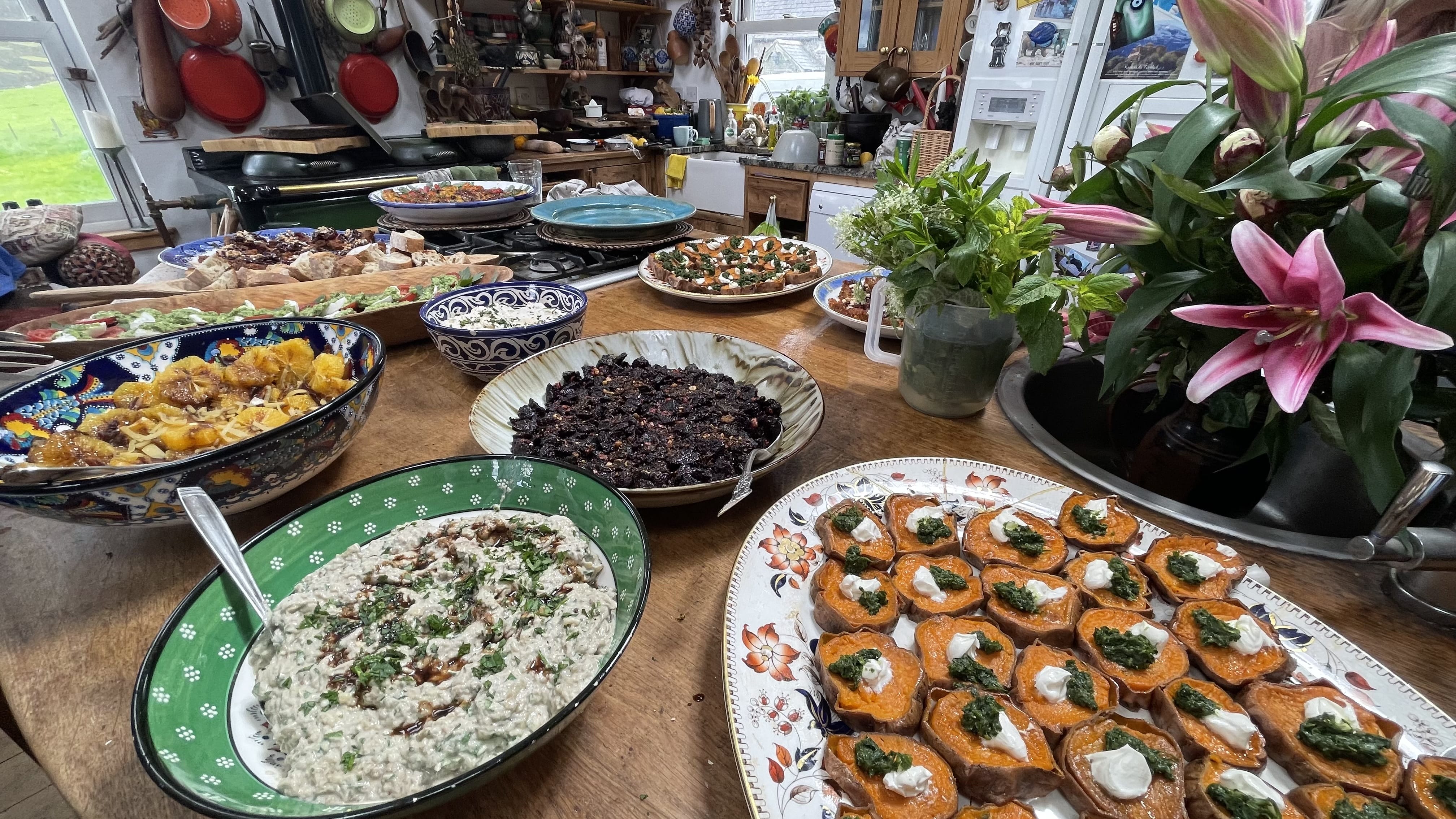
Before we began cooking, she introduced us to local ingredients gathered from her garden—fresh herbs, greens, and other flavors. Having spent several years living in Morocco, her cooking reflected that influence. We crushed spices in a large wooden mortar, the scent of chili and aromatics filling the room, while trays of vegetables roasted in the oven.
Lunch turned into a long, relaxed meal. There were plenty of vegetarian dishes—roasted peppers drizzled with a rich glaze, thick slices of tomato layered with fresh cheese and a bright green herb sauce, roasted sweet potatoes, and a citrus salad with thin slices of fruit and spice. We lingered over the meal, talking, tasting, and taking in the quiet beauty of the countryside.
After lunch we headed out on a hike in the surrounding countryside, following wide farm tracks through gently rolling hills. Lines of dark forest framed the distance, and the landscape felt open and quiet. It was an easy walk, and we paused often along the way. After the meal, it felt good to stretch our legs before returning to her home for coffee, thanking her before heading back to Aviemore.
Today we drove toward Grantown-on-Spey in the Cairngorms National Park to visit a small croft run by two local women called Lynbreck Croft, a small regenerative croft that works closely with the land and their animals.
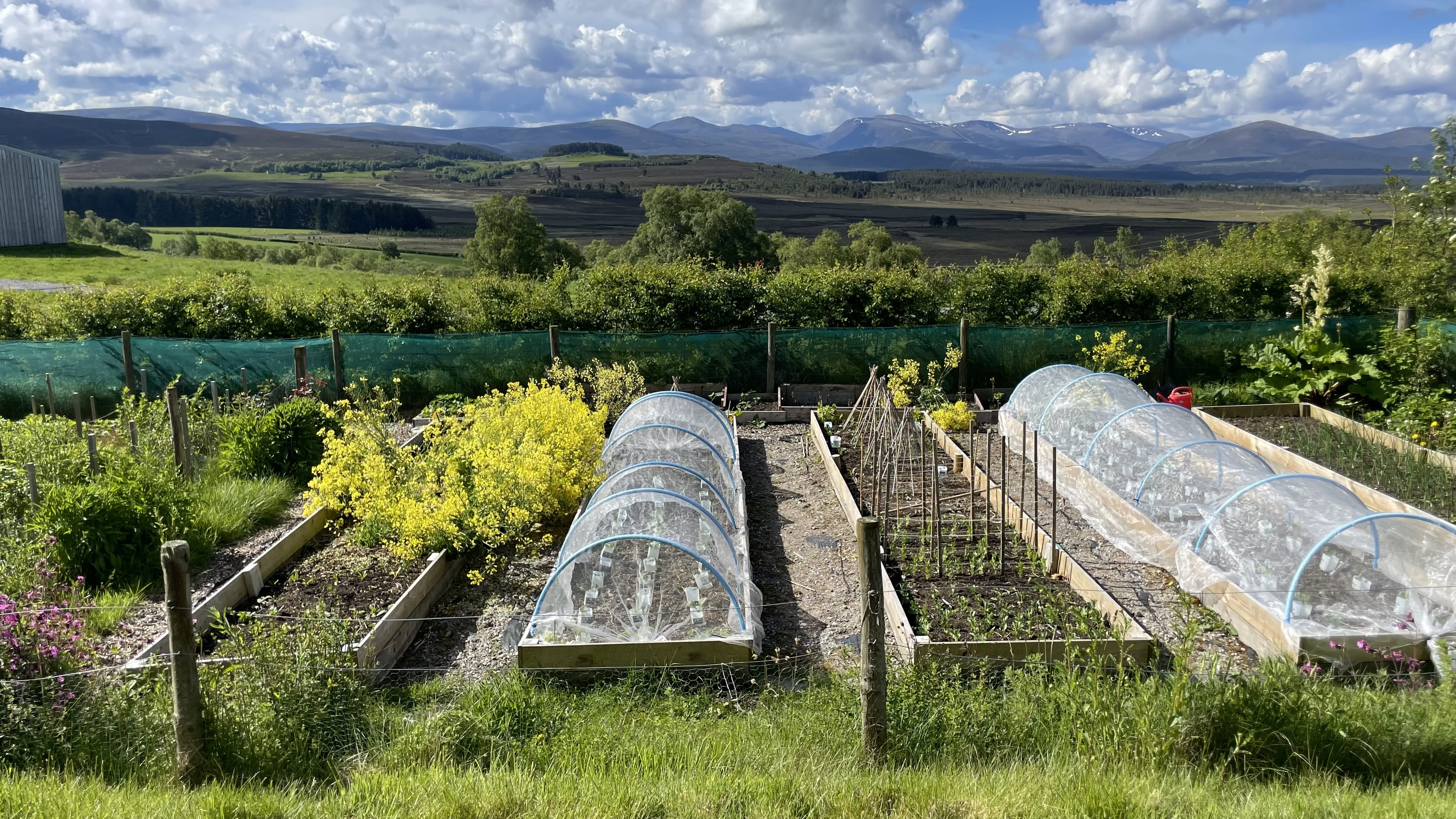
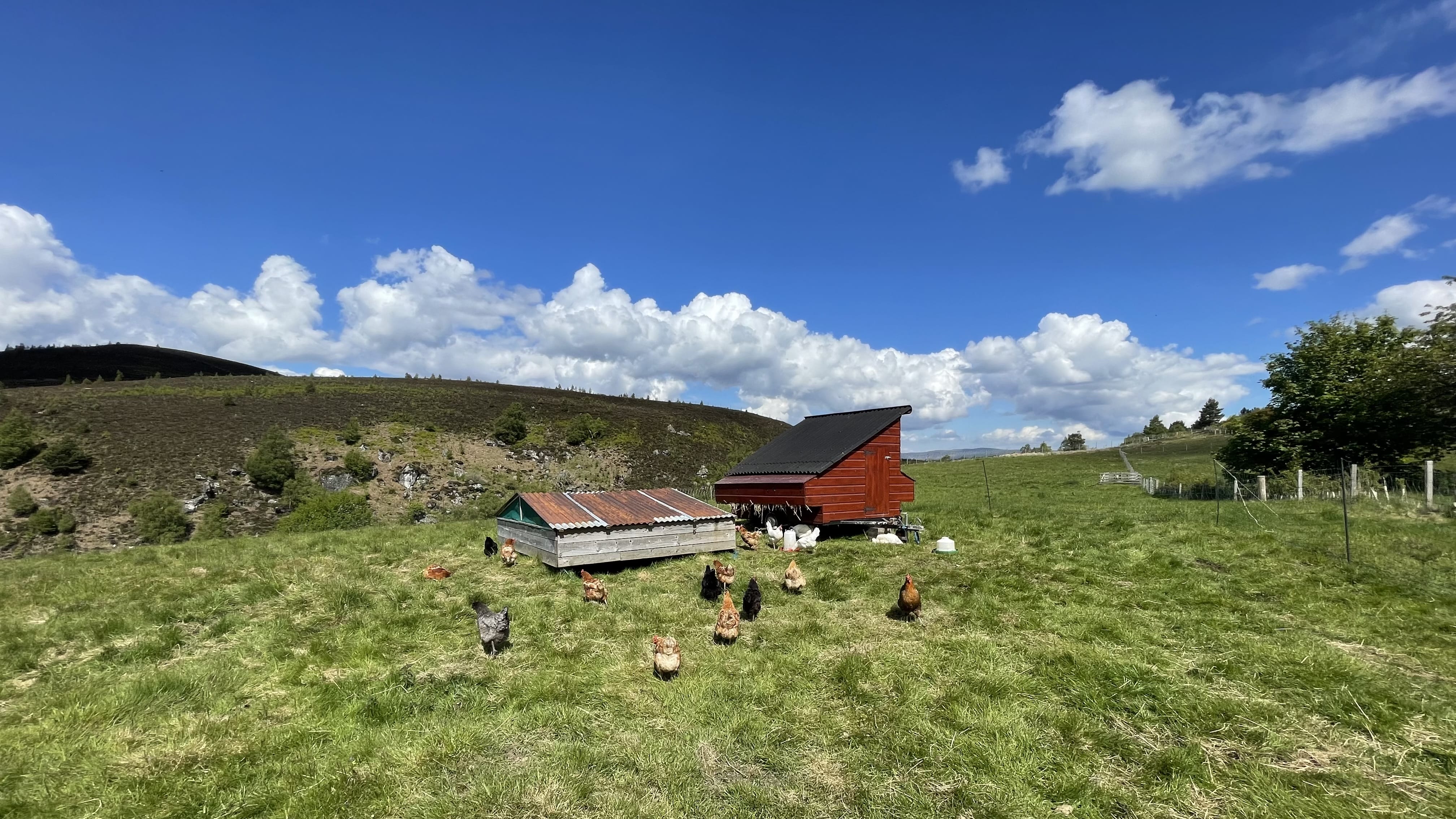
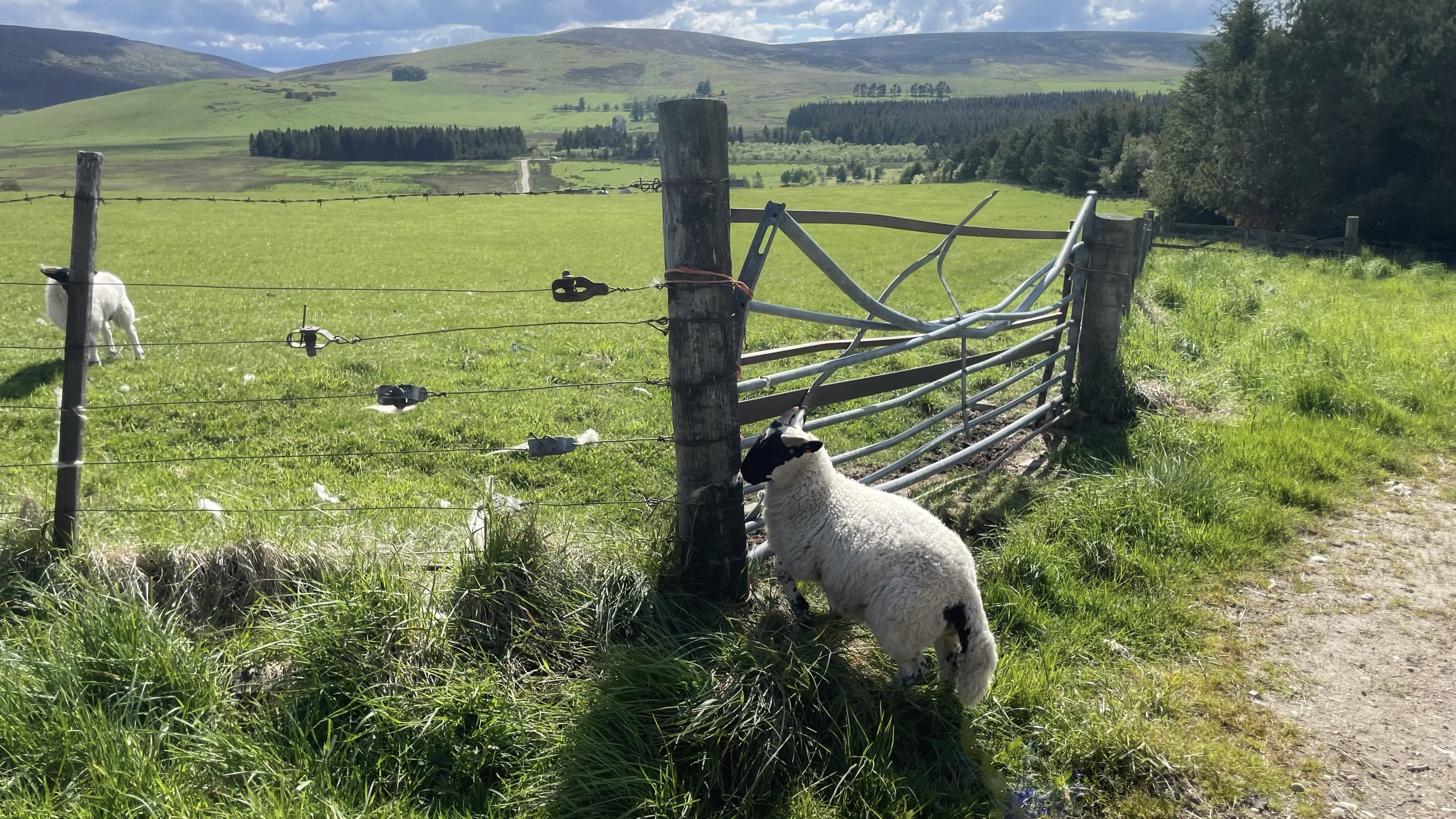
Crofting is still part of daily life in this region. One of the women gave us a tour, taking us past raised vegetable beds, chickens moved between grazing areas in a mobile coop, and into the barn where I noticed a large brush the animals rubbed against.
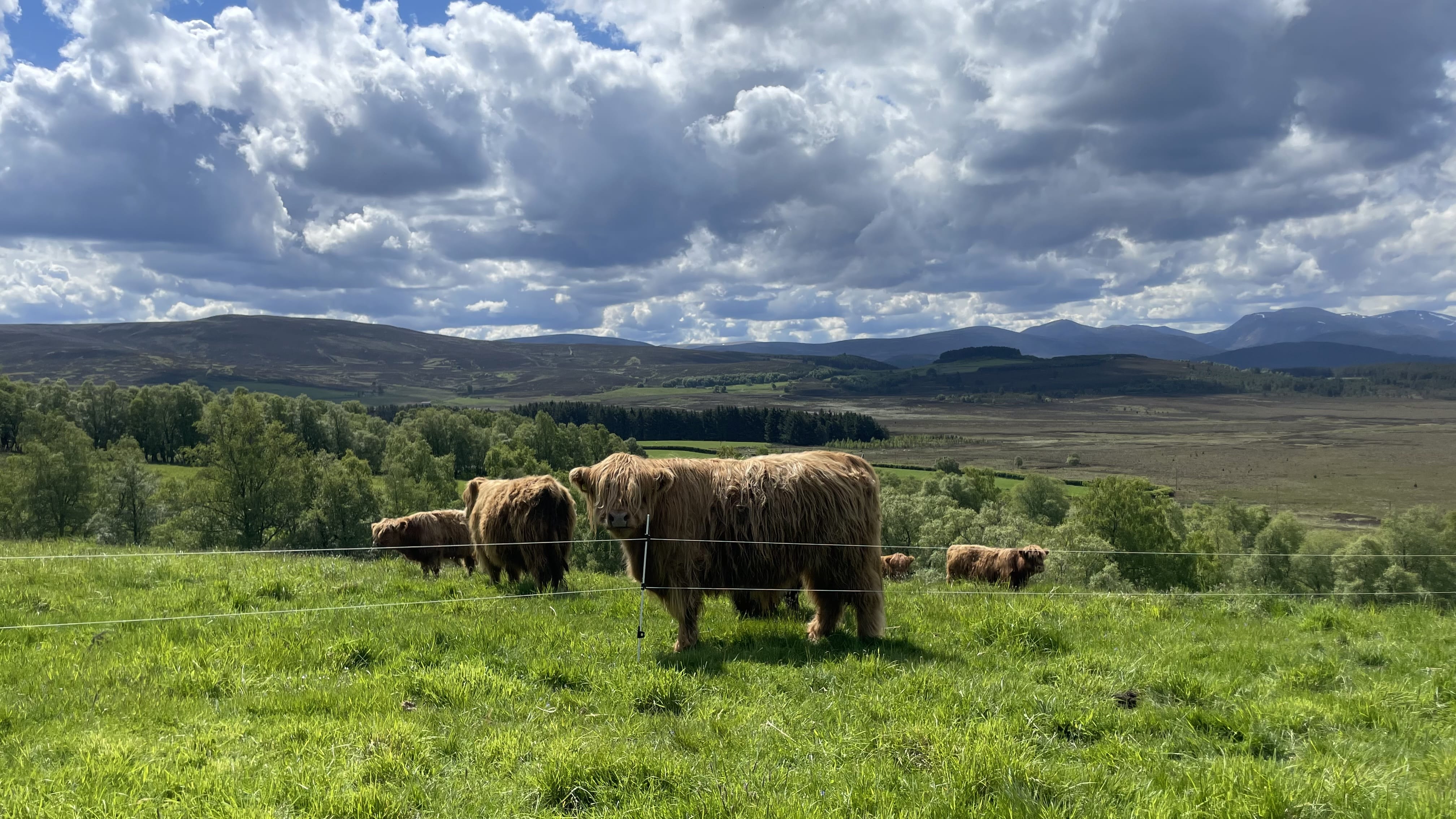
Highland cattle grazed in nearby fields, their long horns and thick coats hard to miss—they looked right at home. It all felt practical and unpolished, shaped by the land and the weather.
Afterward, we headed to lunch at the Glenfinnan Station Museum Dining Car, a restaurant set inside a converted train carriage.
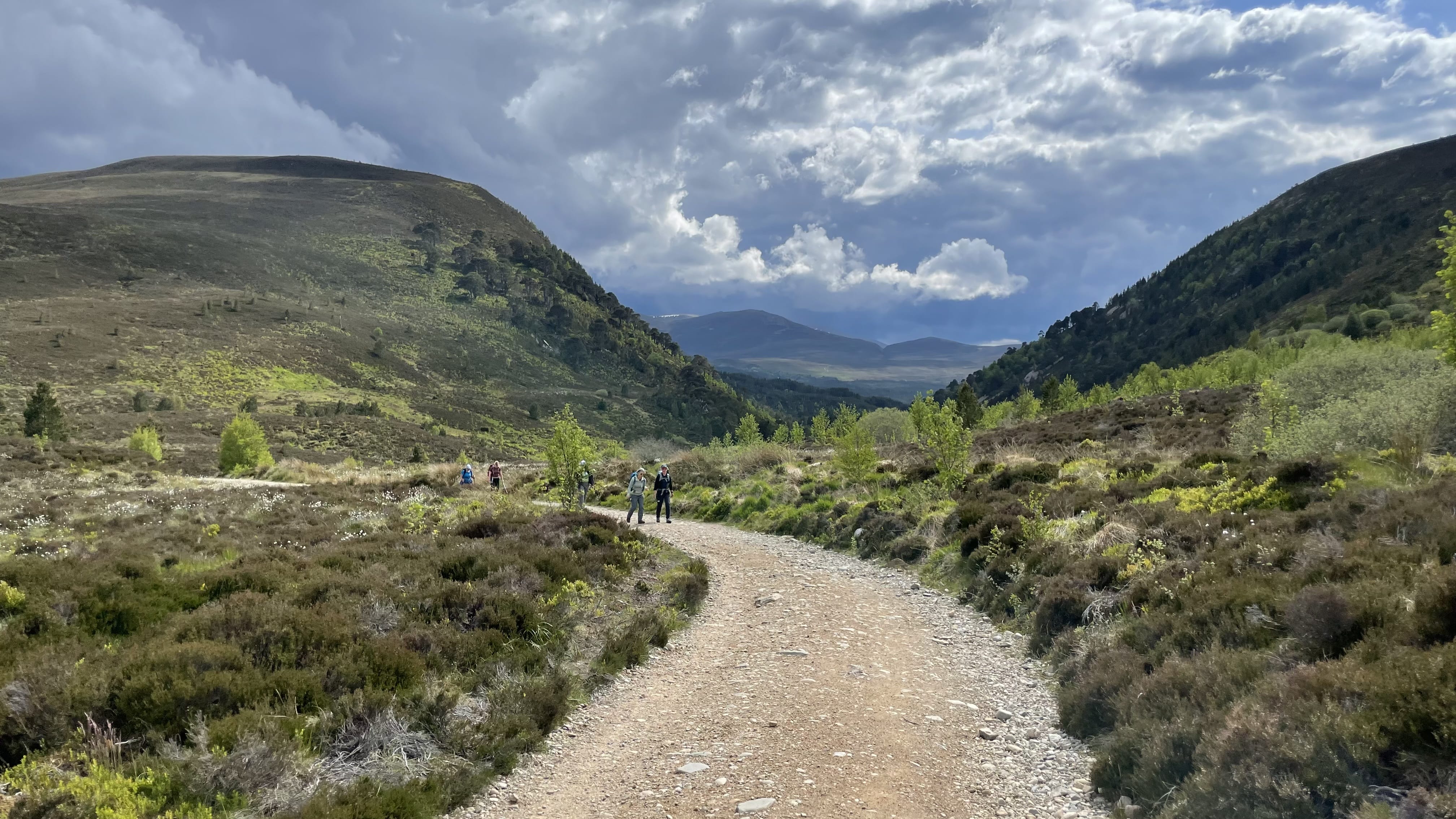
From there, we drove to the Glenmore Visitor Centre, where we set out on the Lochan Uaine/Ryvoan Pass loop trail.
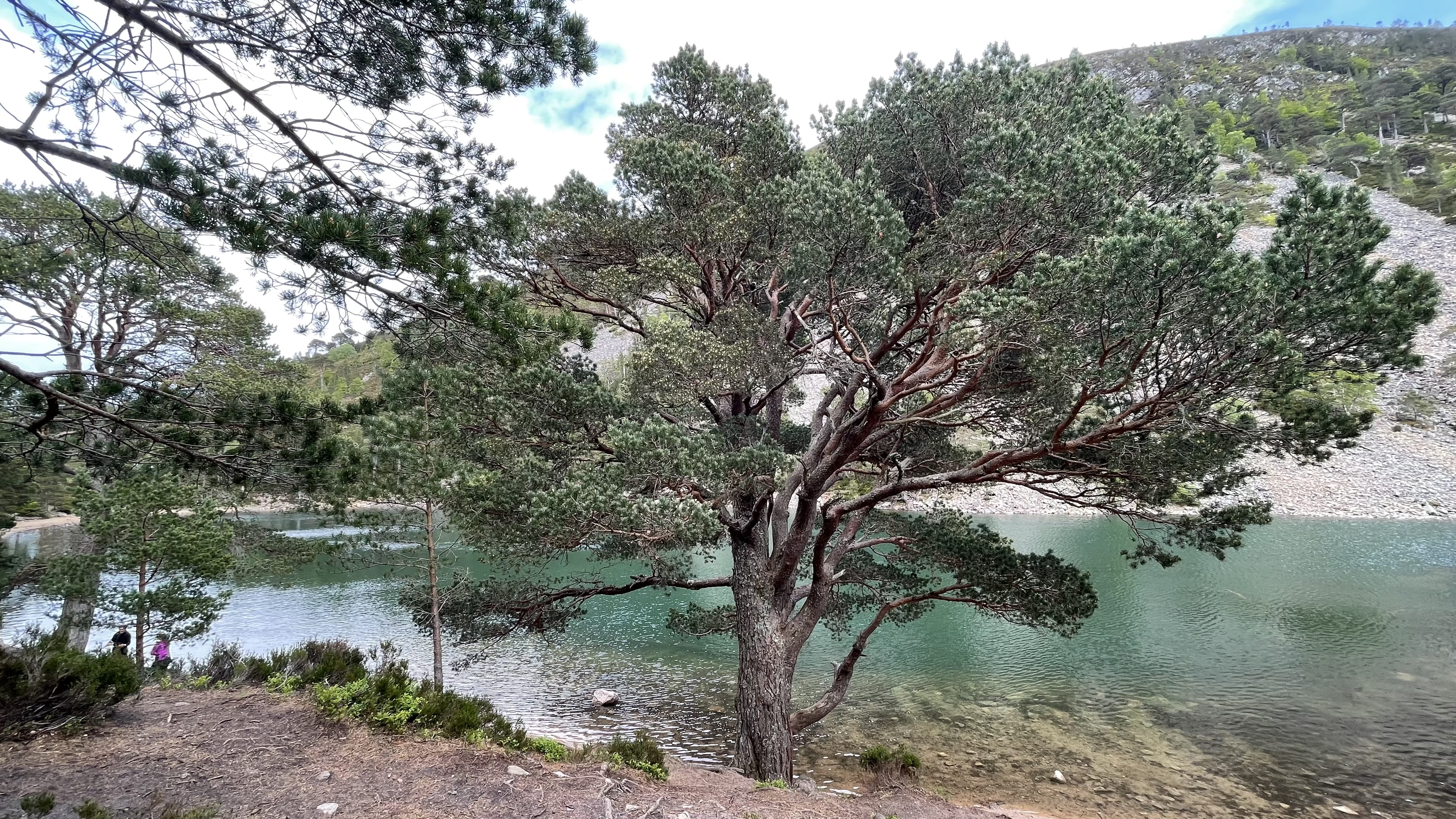
Starting from the visitor centre, we followed a wide track before passing Lochan Uaine—often called the Green Loch because of its deep color. According to local legend, the color comes from pixies washing their clothes in the water.
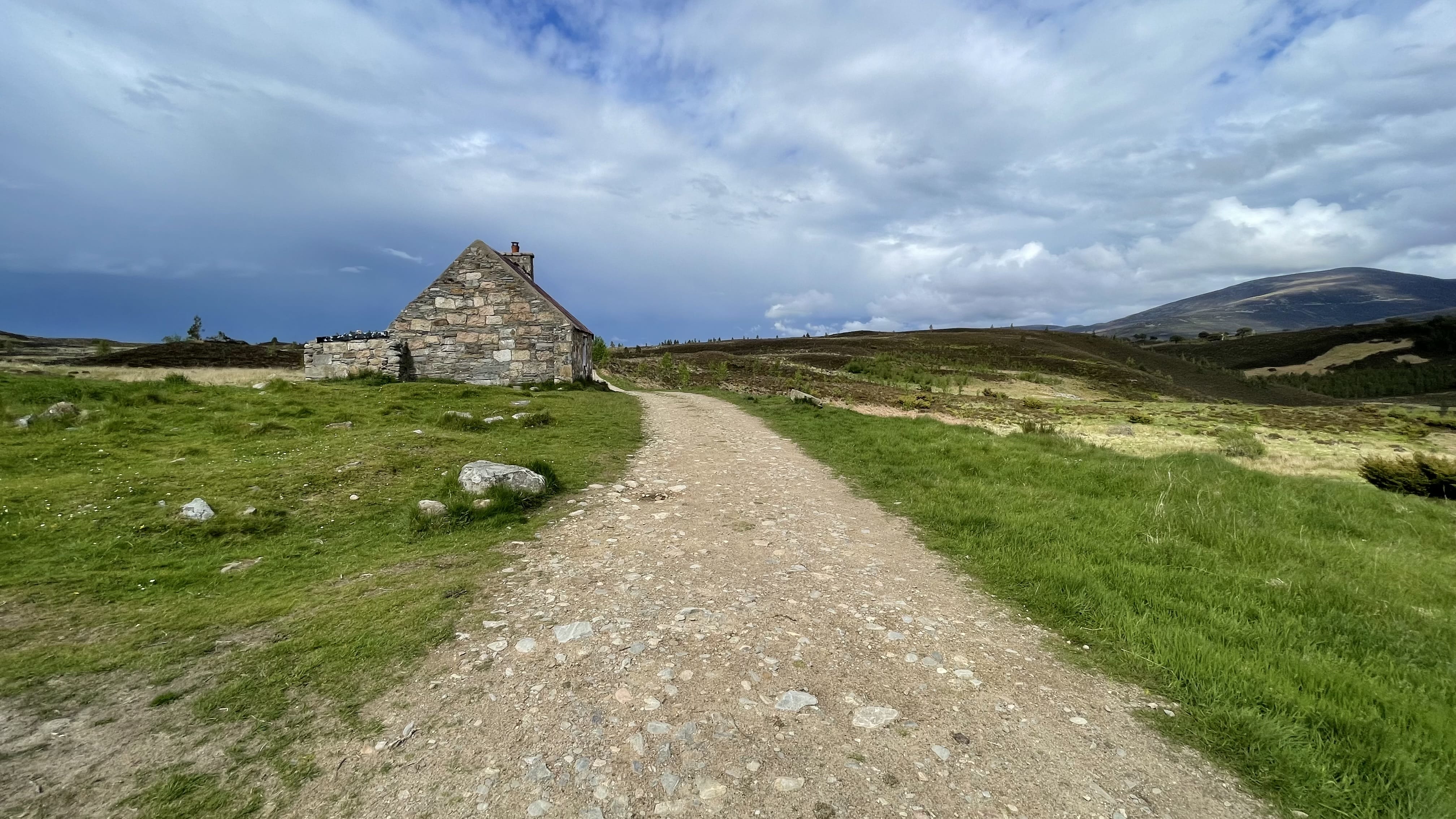
From there, the trail opened up into heather-covered hills and wider, more open ground with long views across the valley. We continued along farm tracks, eventually passing Ryvoan Bothy, a small stone shelter used by walkers in this part of the Cairngorms.
It was an easy walk with a steady path and long views most of the way.
We left Cairngorms National Park and drove west toward Loch Ness, stopping briefly at Urquhart Castle. The castle dates back to the 13th century and sits in ruins along the edge of the loch.
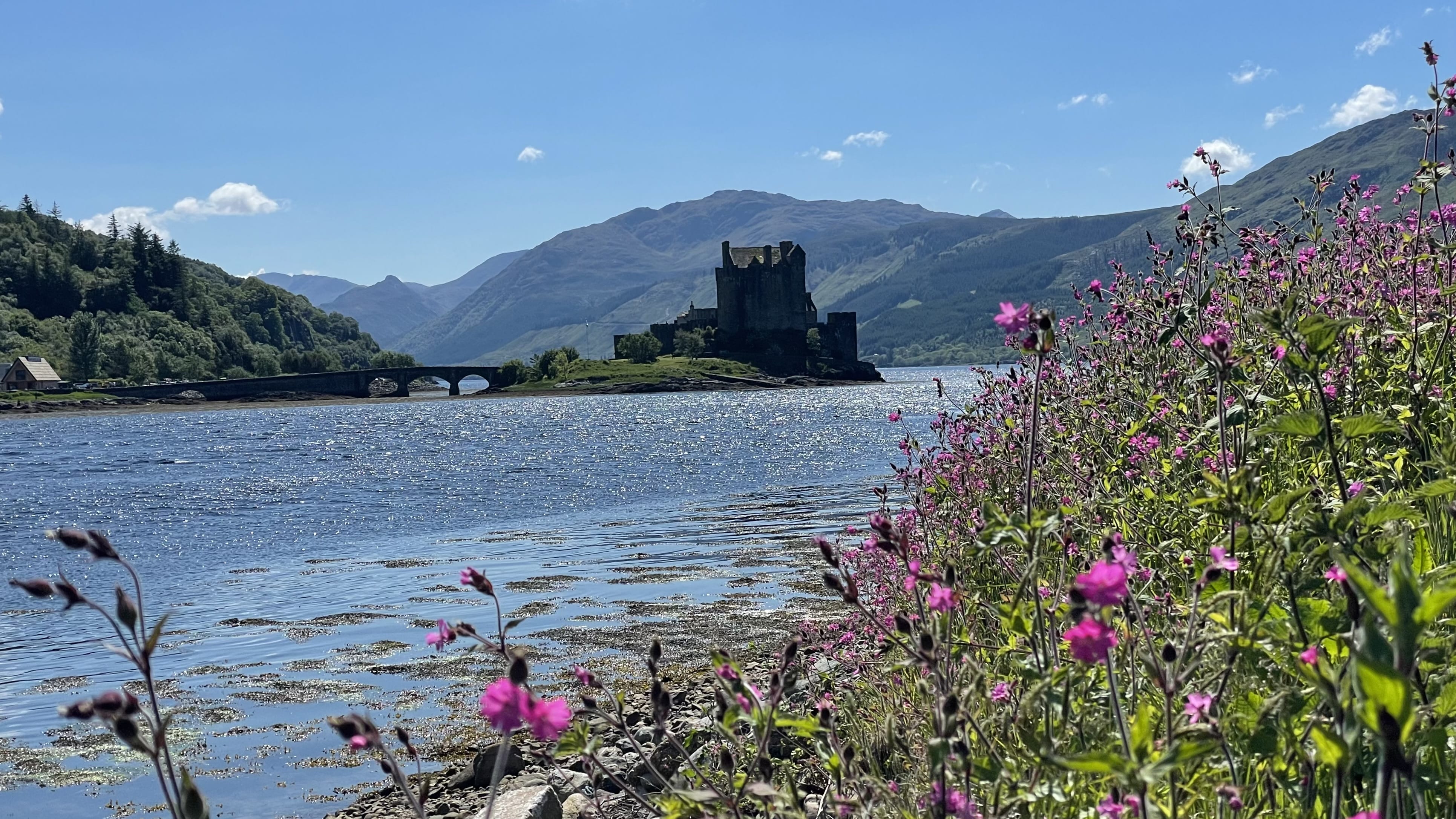
After lunch at a local restaurant, we continued toward the coast and crossed the Skye Bridge, leaving the mainland behind. The landscape changed quickly—more rugged, more exposed, and somehow more dramatic.
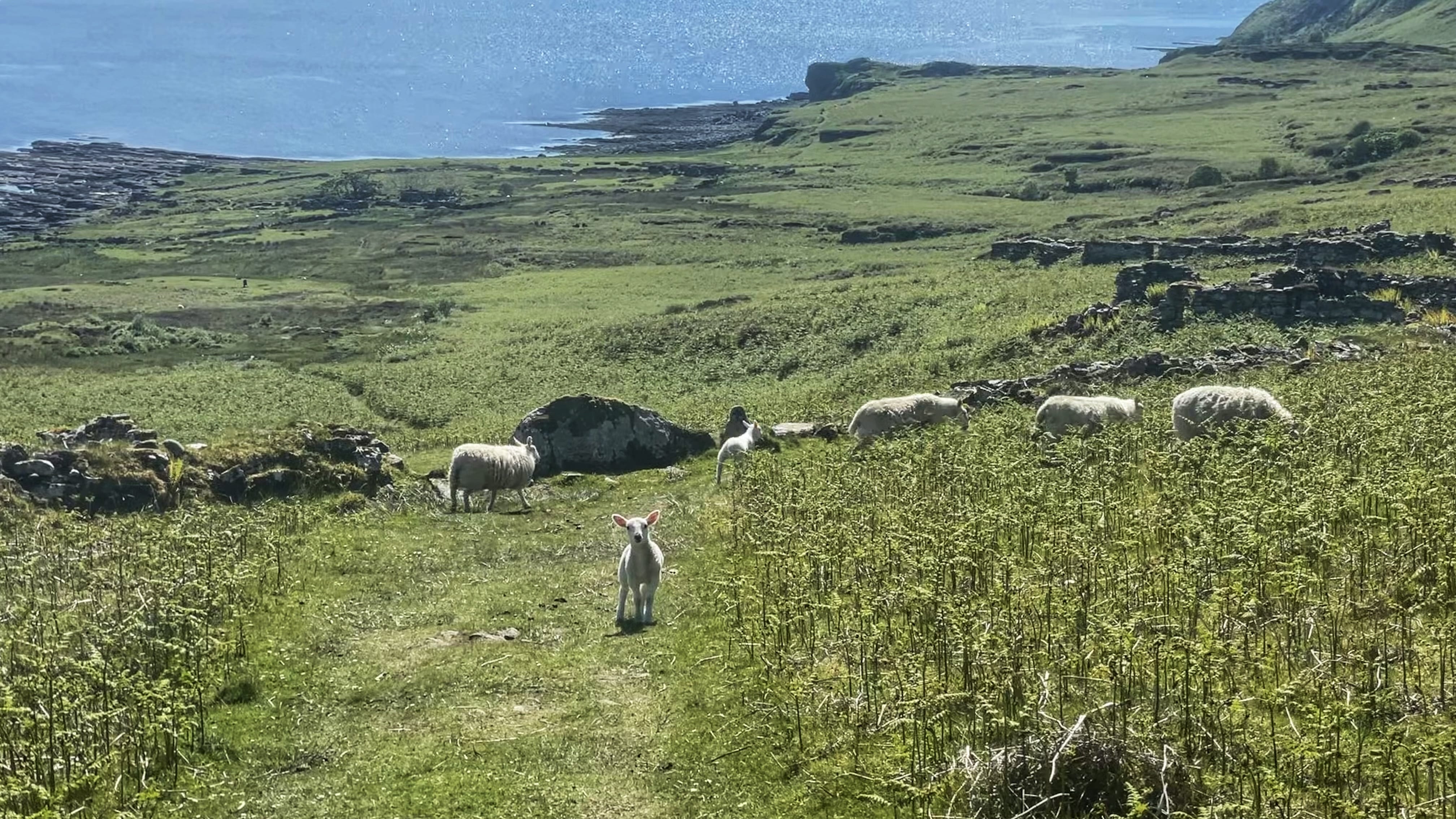
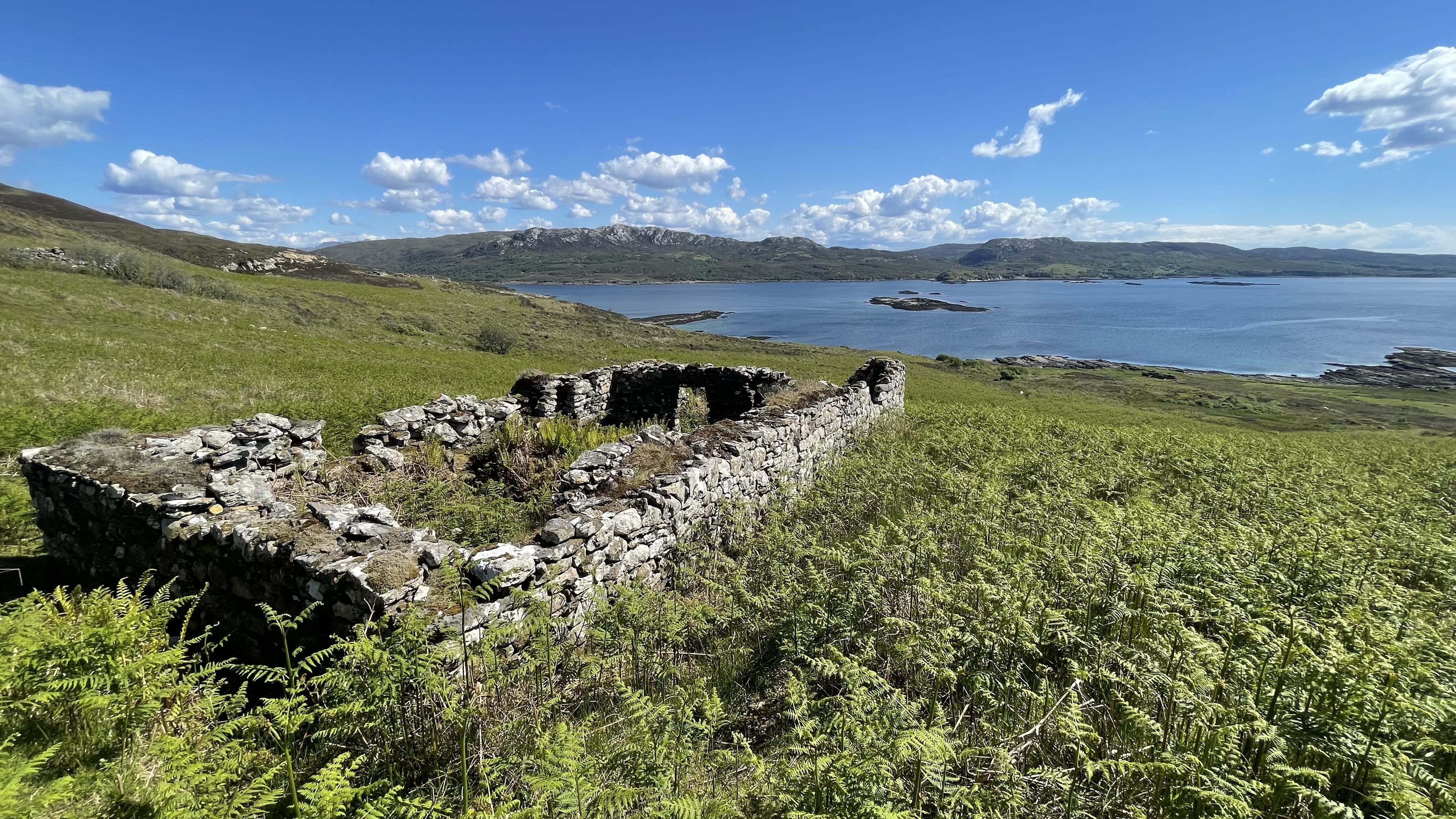
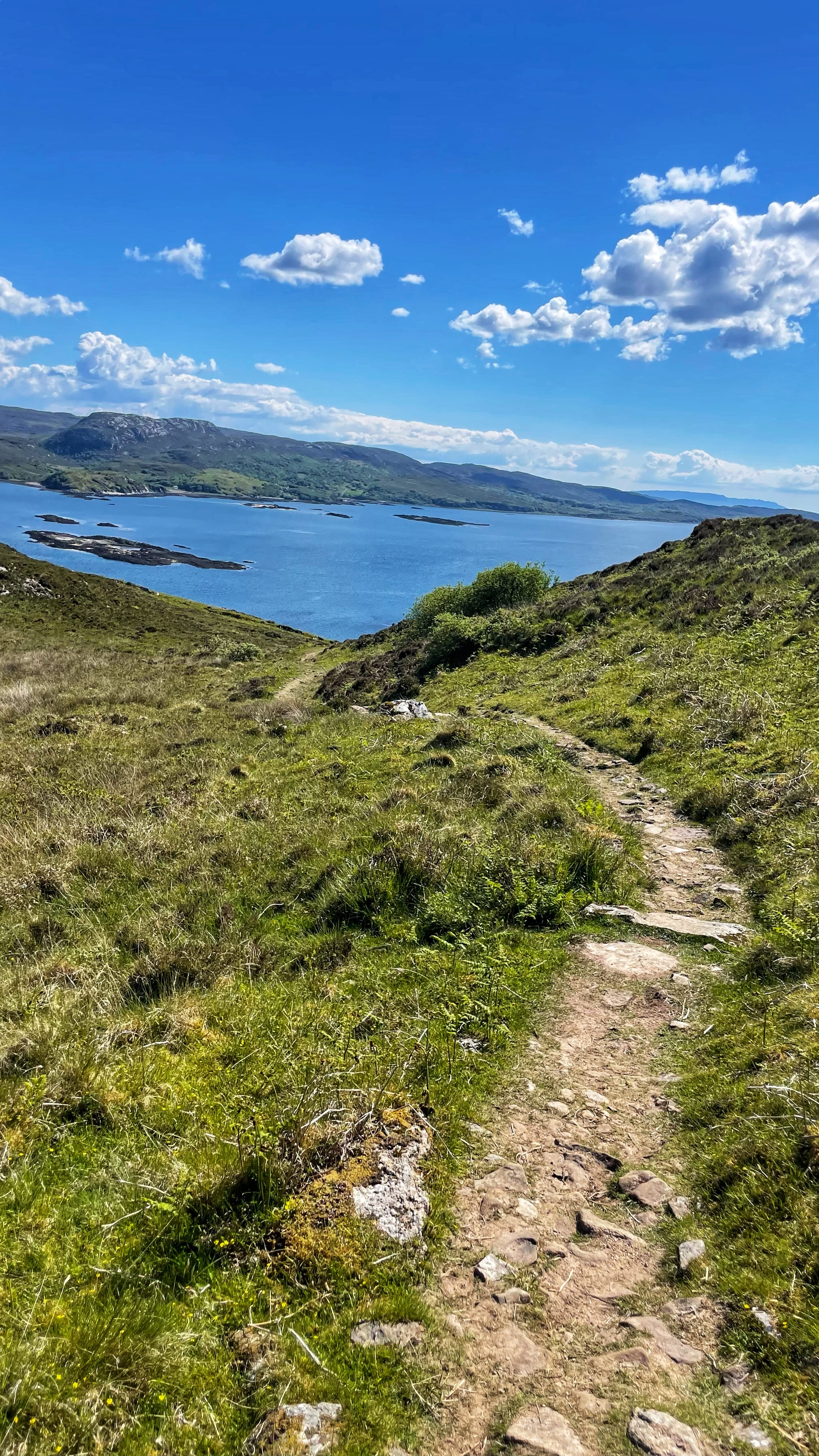
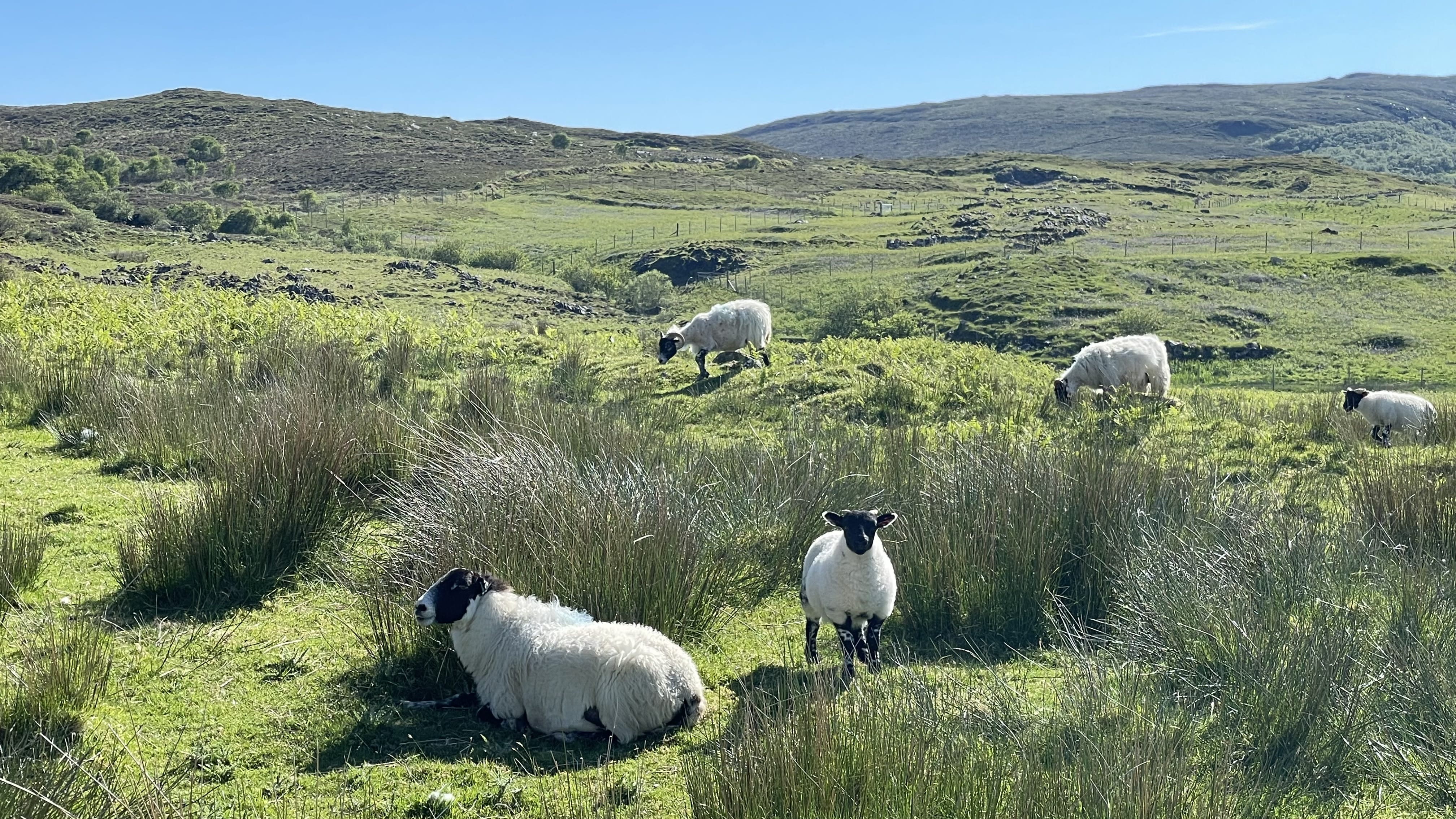
We stopped for a coastal walk on the Duirinish Peninsula, beginning near Cill Chriosd Church and passing through the old churchyard before heading out toward the ruins of Boreraig. The path led us along rough coastal tracks above Loch Eishort, with scattered ruins, grazing sheep, and wide views across the water.
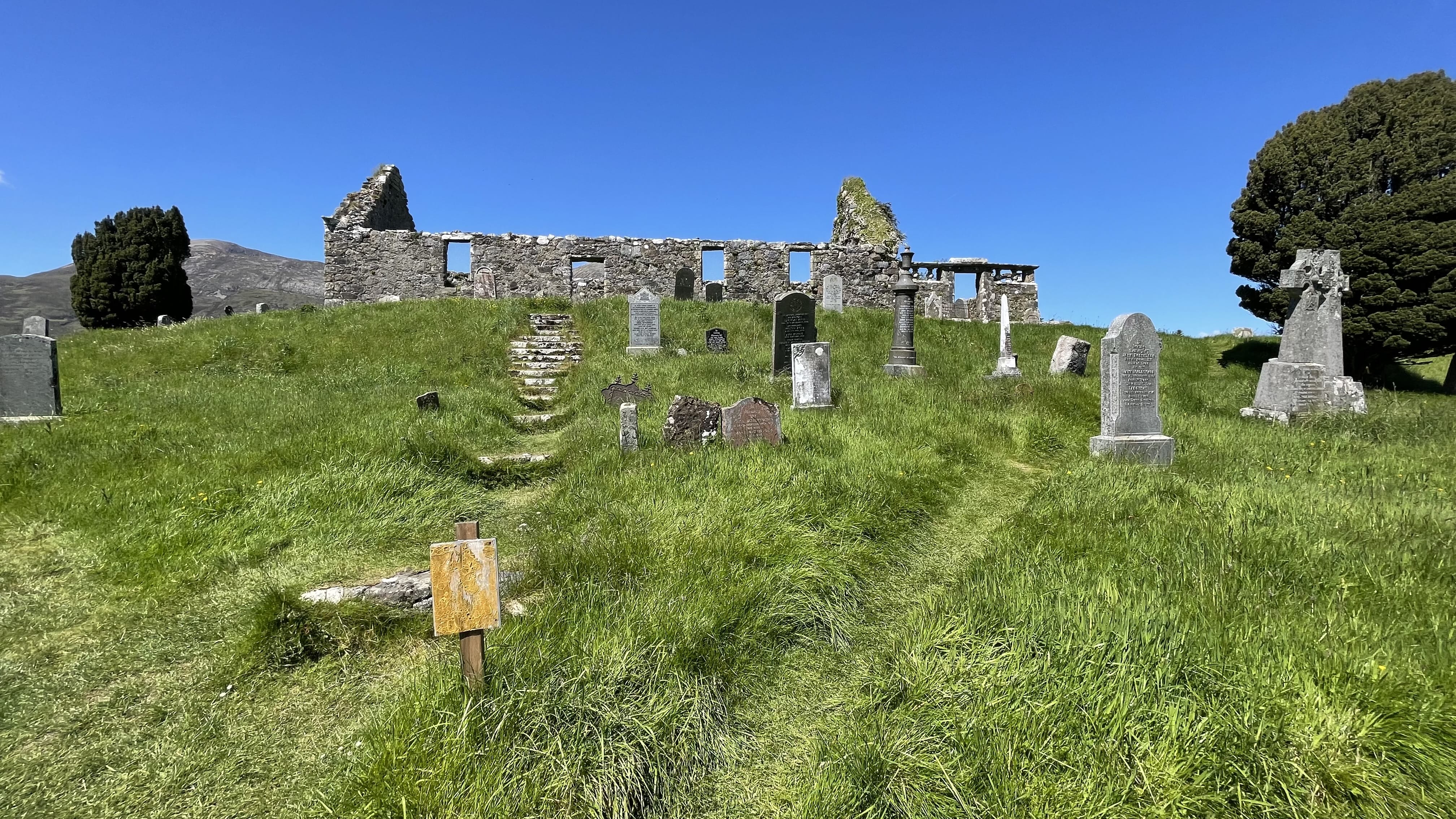
Boreraig was cleared during the Highland Clearances in the mid-19th century, when tenants were forced off the land to make way for sheep farming.
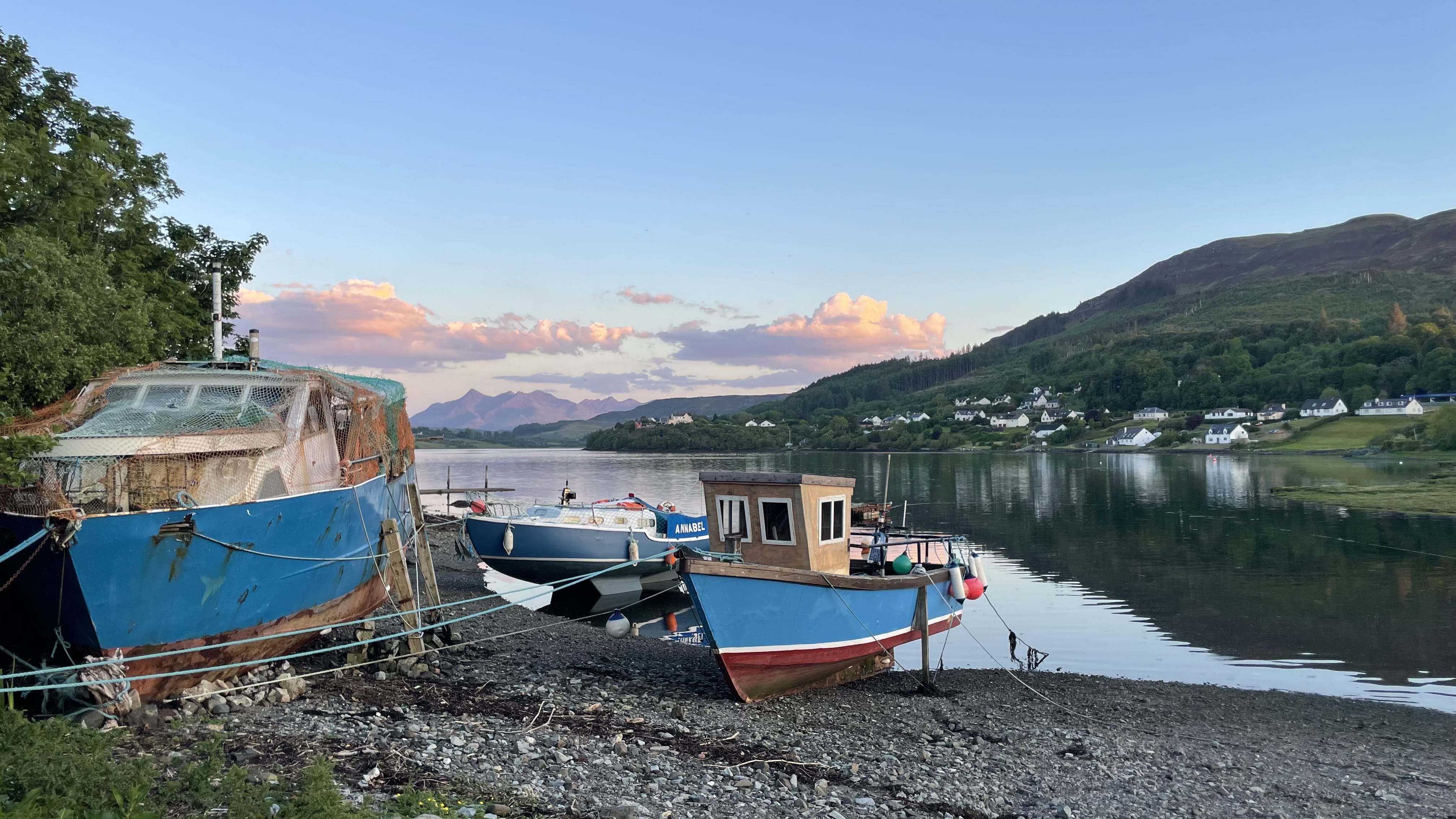
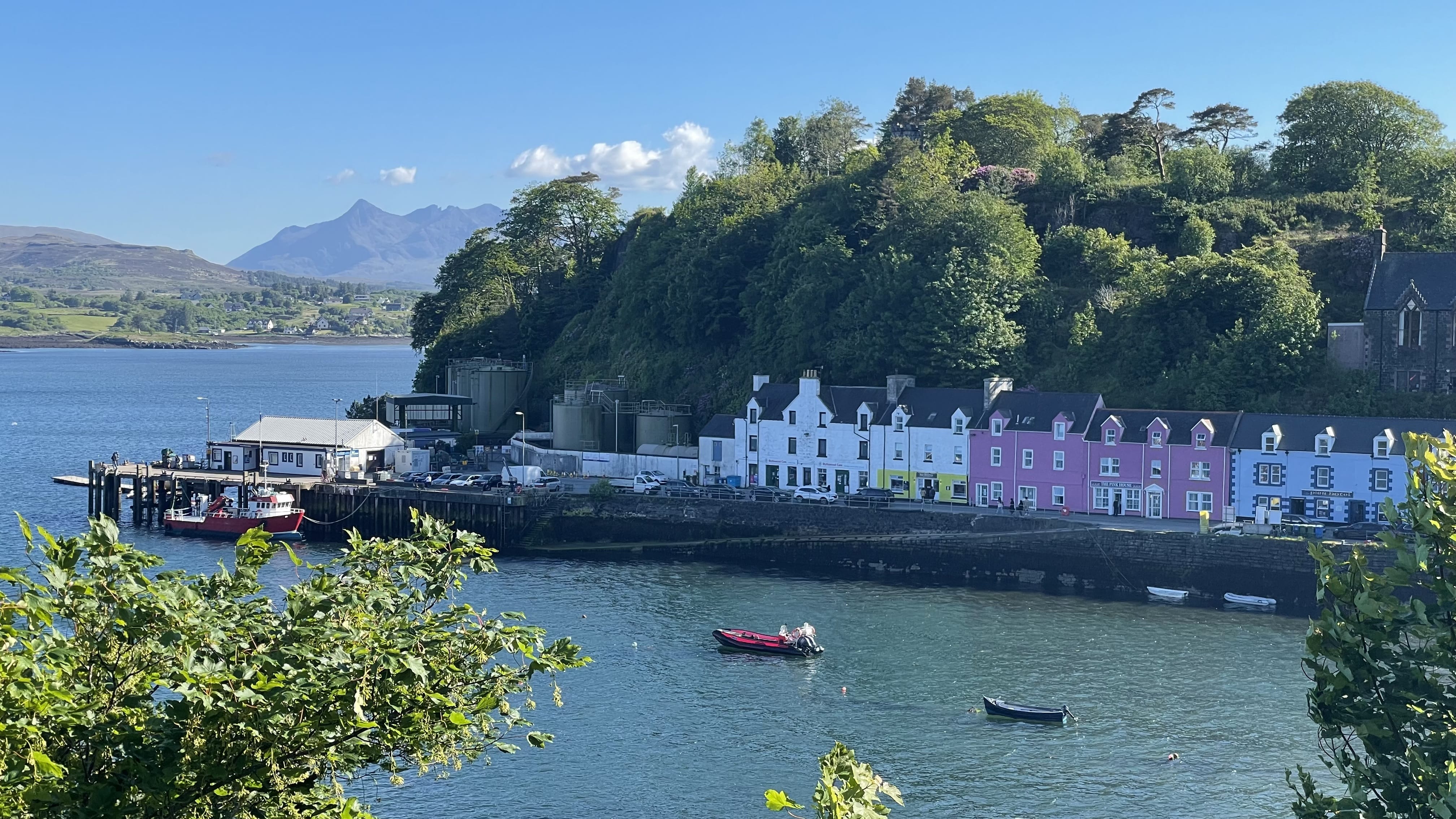
We spent the night at the Uig Hotel on the Trotternish Peninsula, just north of Portree, where we would be staying for the next two nights. It’s the island’s main town—small but lively, with a harbor lined with colorful buildings, a few pubs and restaurants, and ferries coming and going.
That evening, there was a local celebration in the town square. Music was playing and townspeople were dancing—and a few of us were happily pulled into the circle. Afterward, I walked down to the harbor, where the light lingered late and the water was perfectly still. It felt like a gentle welcome to Skye.
The next day we headed out for another hike—this one starting near Trumpan Church on the Waternish Peninsula. The church, now in ruins, sits in a quiet graveyard with quite a history of violence—most notably a massacre in 1578, when members of Clan MacLeod were killed by Clan Macdonald.
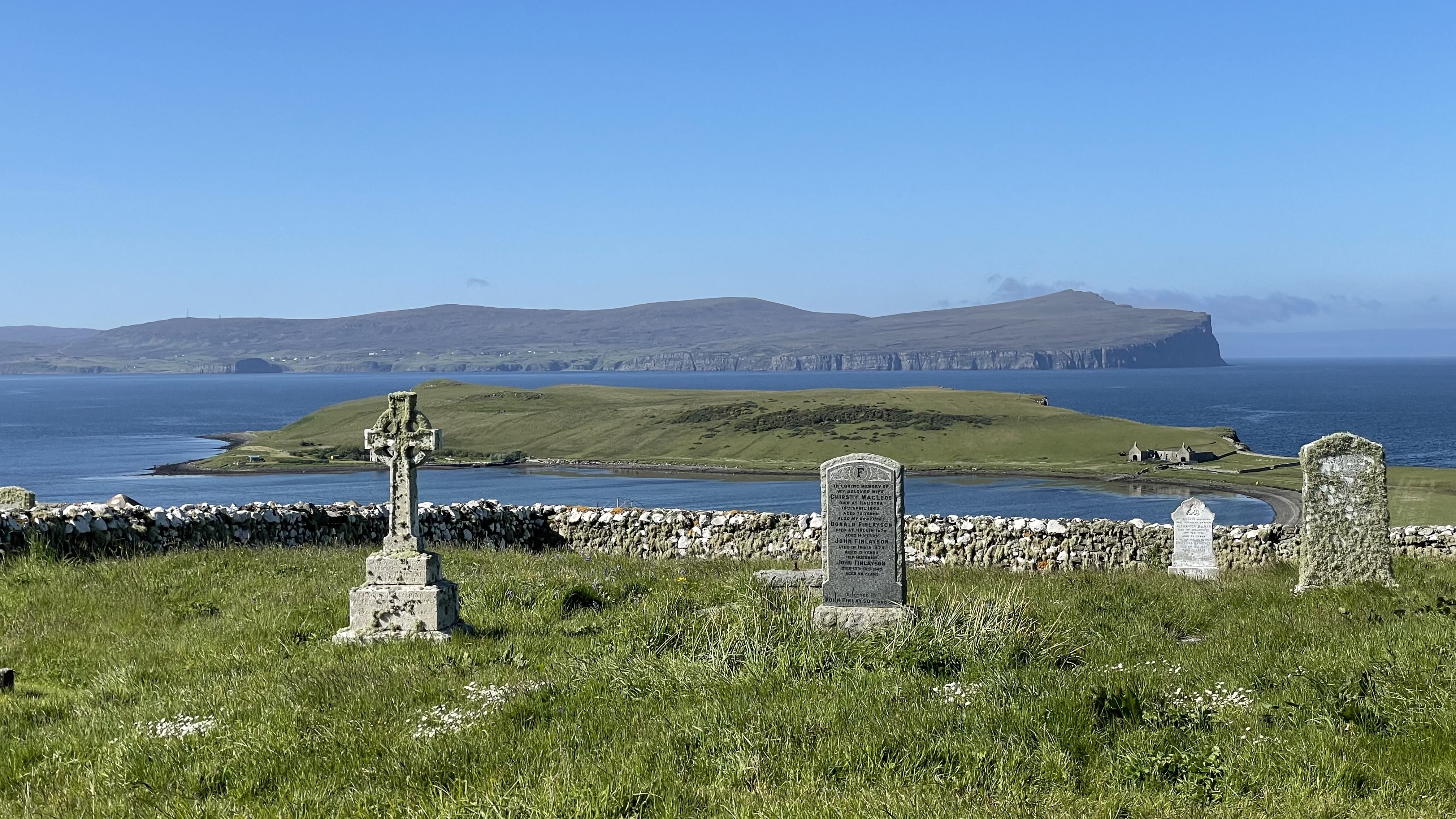
It’s a beautiful place to be buried, overlooking the coastline and the water beyond. I even noticed several graves with the McDonald name—which stood out, since that was the clan involved in the massacre and also happens to be my daughter-in-law’s maiden name.
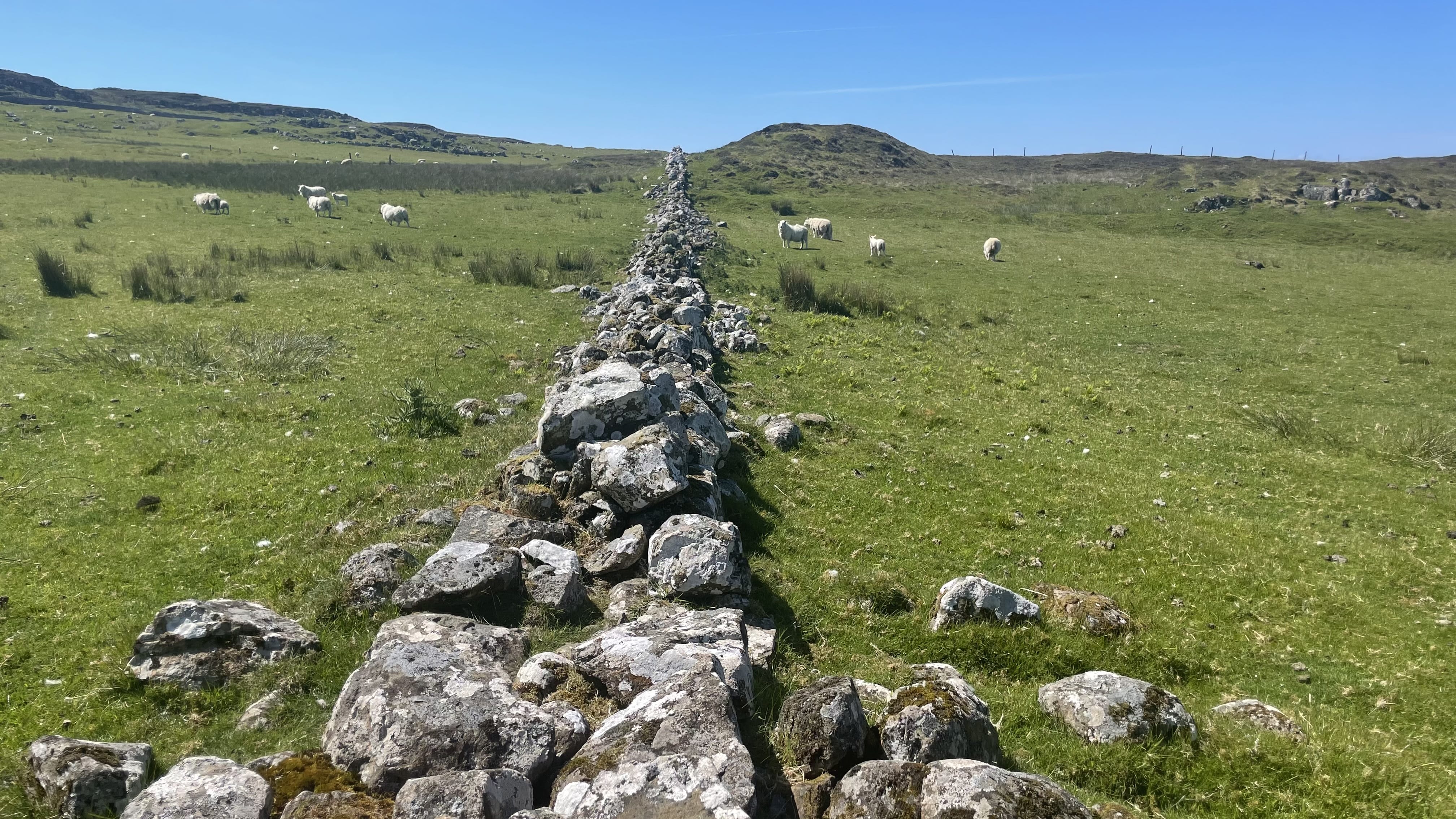
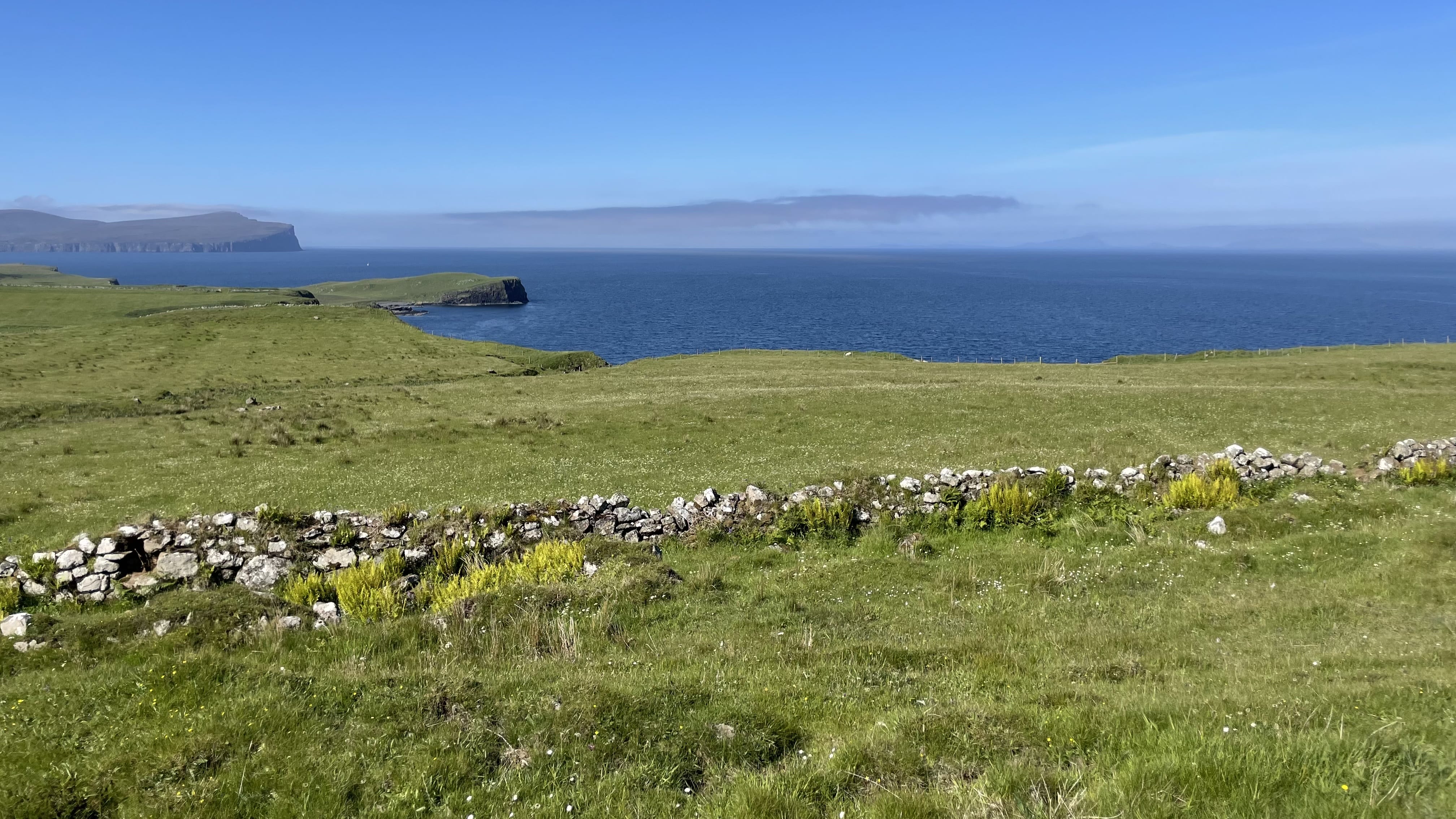
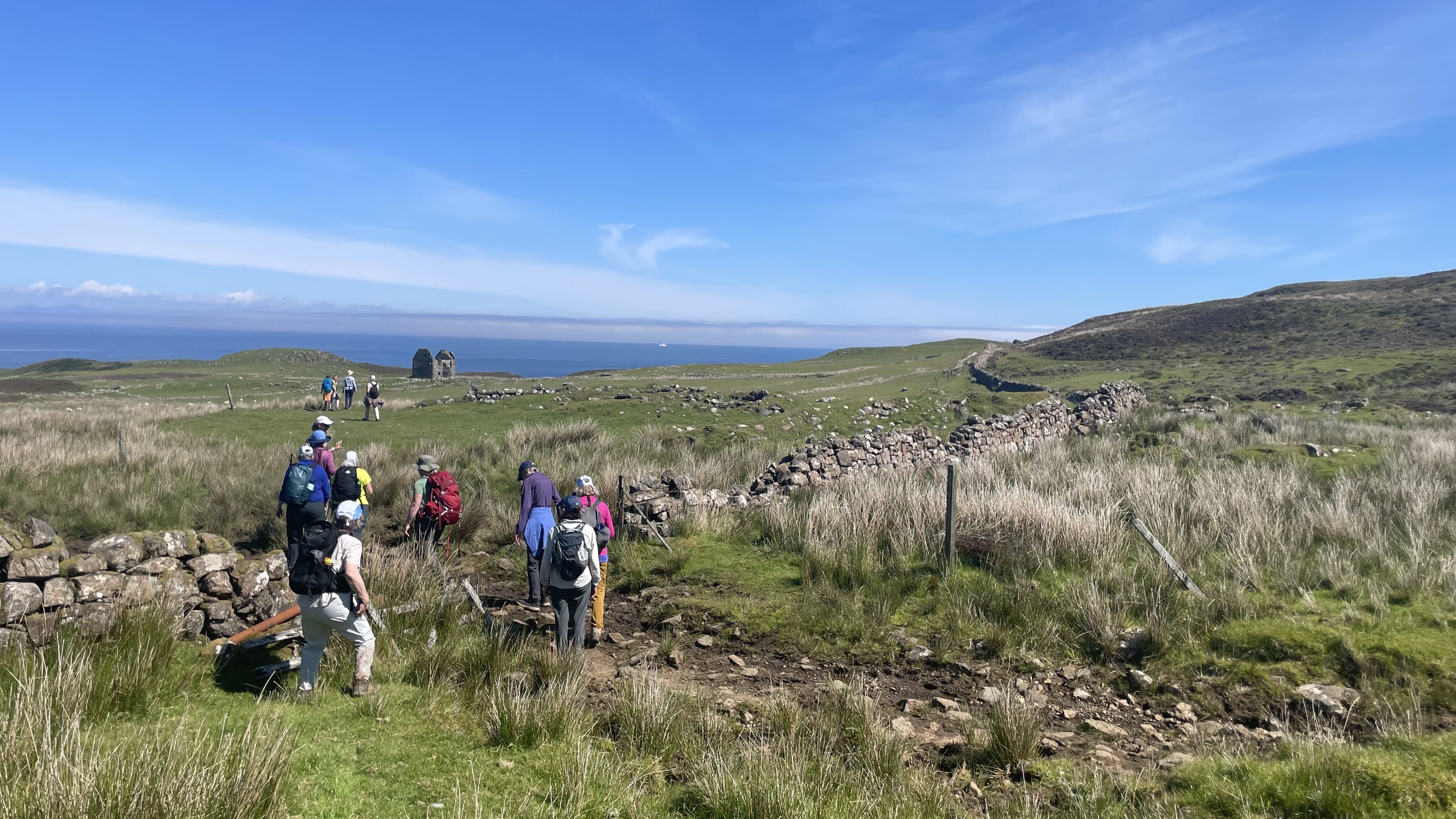
From the church, we cut across the field and picked up a rough, rocky dirt track lined with grass and long stretches of low stone walls that ran across the landscape.
For most of the walk, there were wide, open views over the Minch toward the Outer Hebrides, with the coastline always nearby and the wind coming off the water. It was exactly what you picture—better in person—with cows and sheep grazing, which only added to the scene. The stone walls and open land reminded me a bit of Ireland, which isn’t all that surprising.
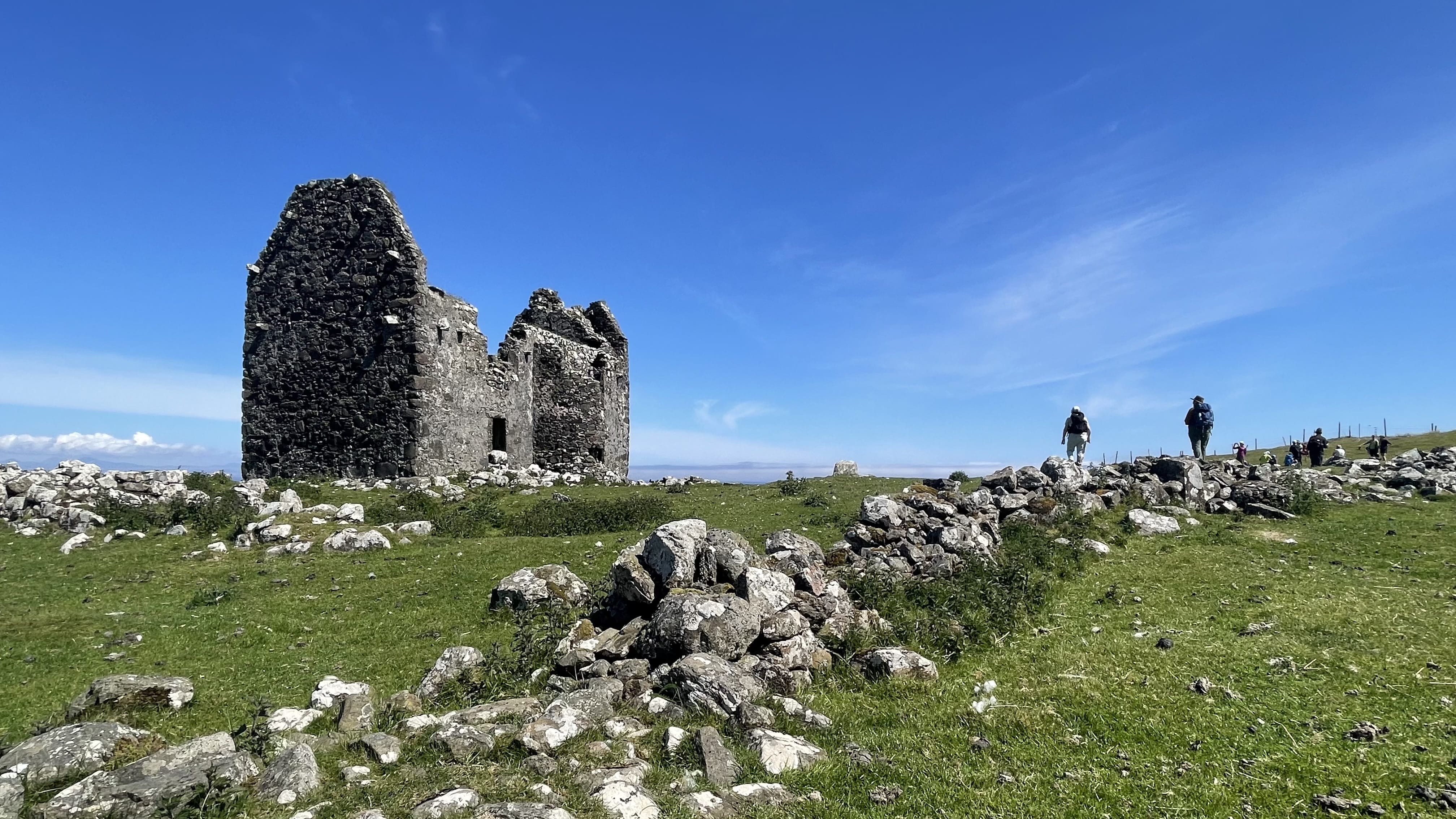
As we made our way out toward Waternish Point, we passed the remains of Unish House, which dates to the 17th century and is thought to have been built by one of the Fife merchant venturers, along with the scattered ruins of the township that once stood there before the Highland Clearances, when people were forced off the land. The ruins sit out on their own, exposed above the coastline.
That evening, we returned to Portree for another night, which was just fine with me. I loved walking down to the harbor to look at the boats and the colorful houses lining the waterfront. There were also plenty of small places to grab a drink or something to eat, which made it easy to settle in for the evening.
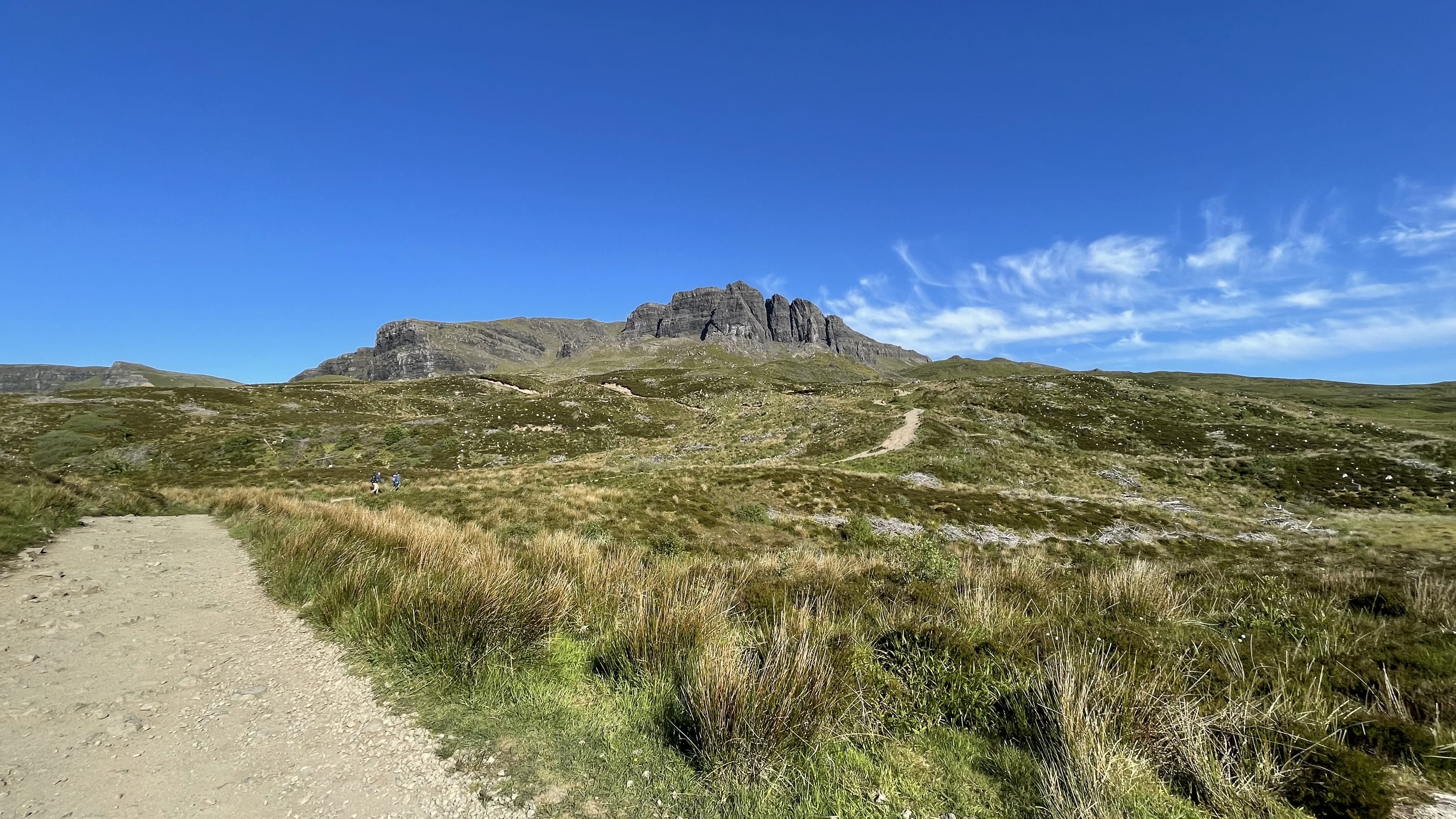
Today we headed to one of Skye’s most iconic landmarks: Old Man of Storr, a dramatic rocky pinnacle rising from the hillside. From the trail, and especially as we gained elevation along the Trotternish Ridge, we could see across the water toward the islands of Raasay and Rona.
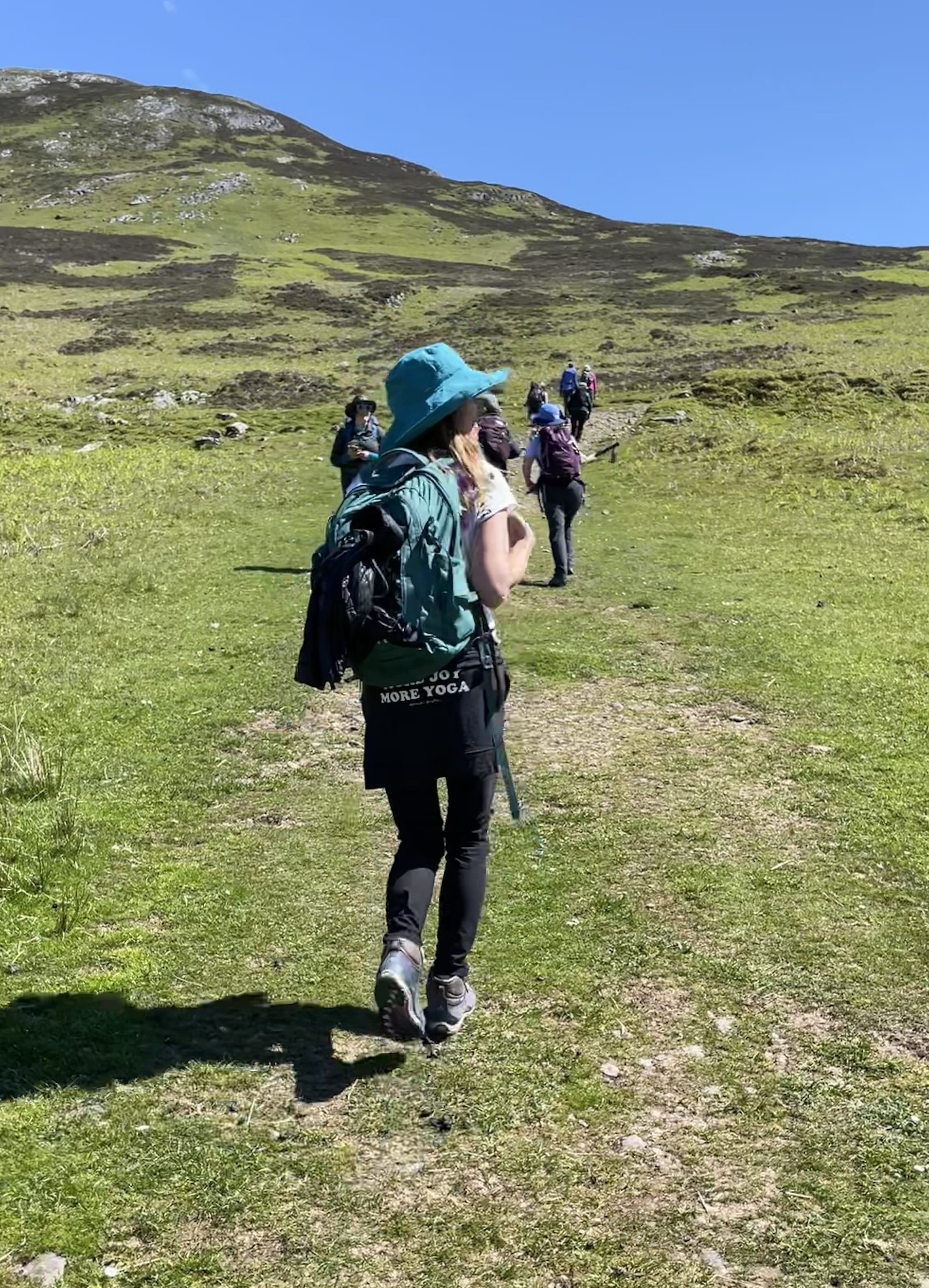
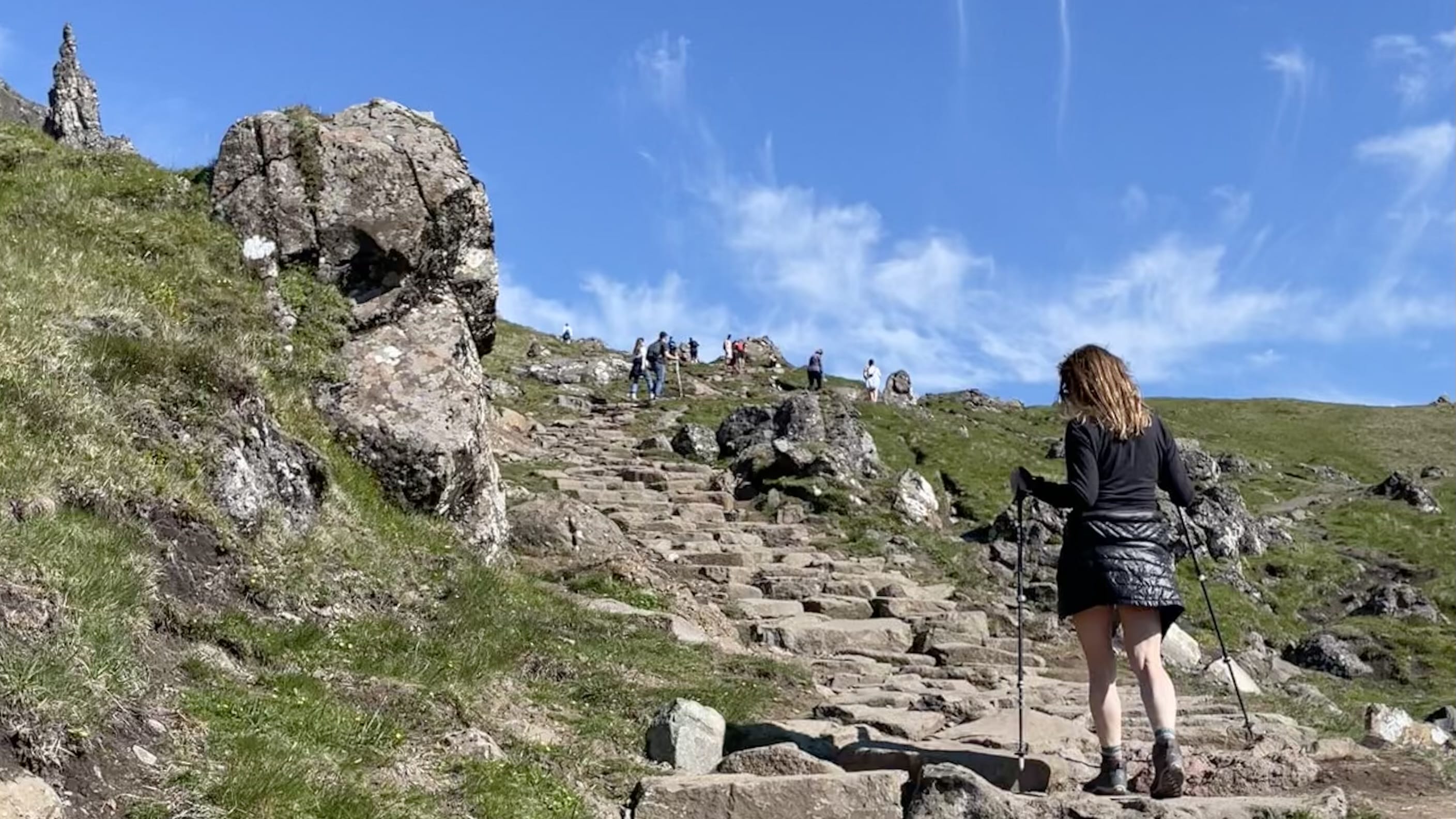
The hike itself was about three miles round trip, zigzagging steadily uphill before retracing our steps back down. The views were wide open the entire way—rolling hills, coastline, and water stretching out in every direction. There were definitely some uneven, rocky sections where I had to watch my footing, but nothing too difficult overall.
A few scenes from Prometheus were filmed here in 2012, and it’s easy to see why—the landscape feels almost otherworldly. The Old Man of Storr has also inspired a number of songs; one I came across later, by Hanno Herbst, is particularly beautiful—an instrumental piece with a soft flute that fits the setting.
Afterward, we left Skye, taking the ferry from Armadale Ferry Terminal to Mallaig, a crossing of about 30 minutes. From there, we continued by road toward the mountainous region of Glencoe.
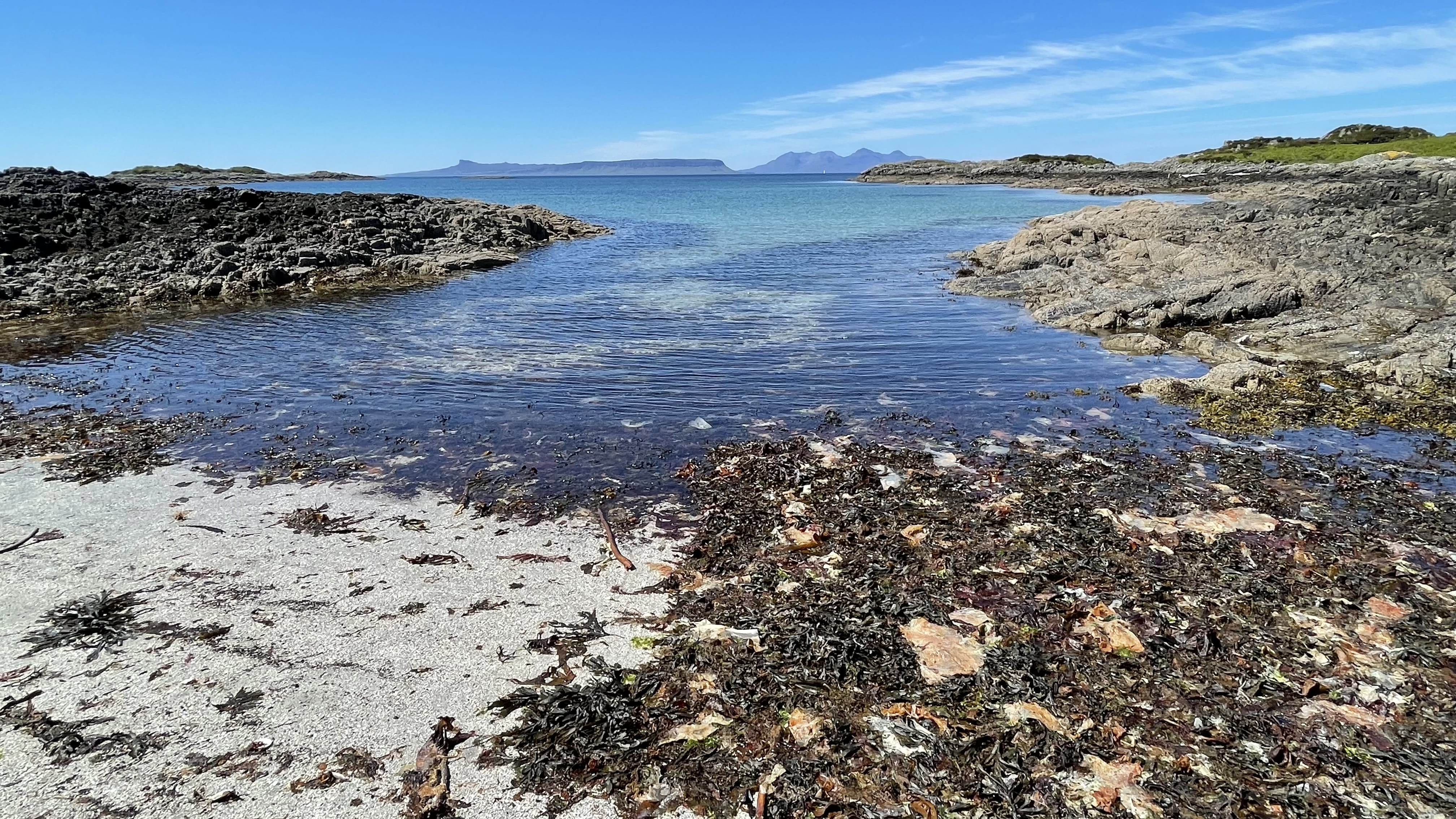
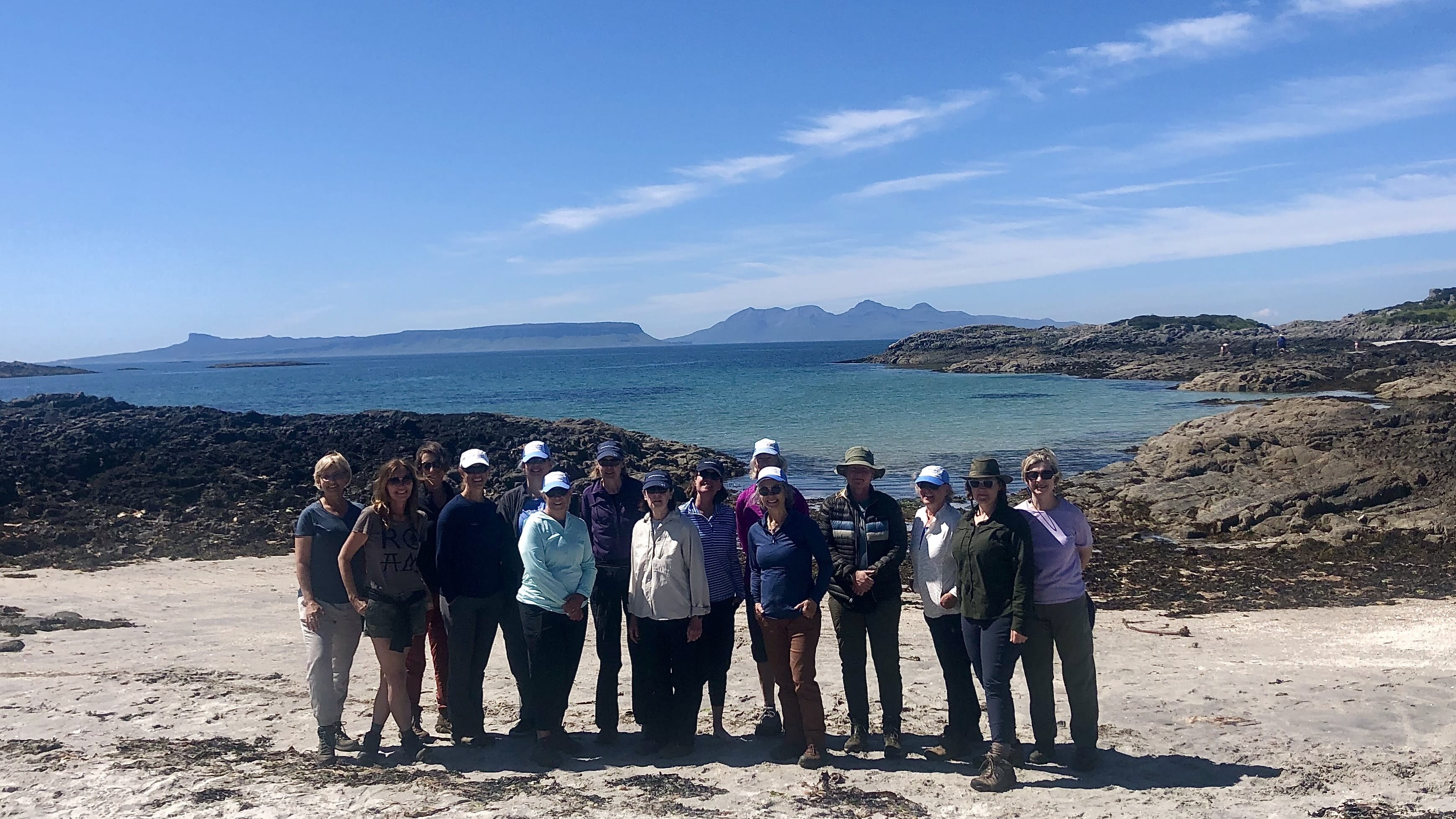
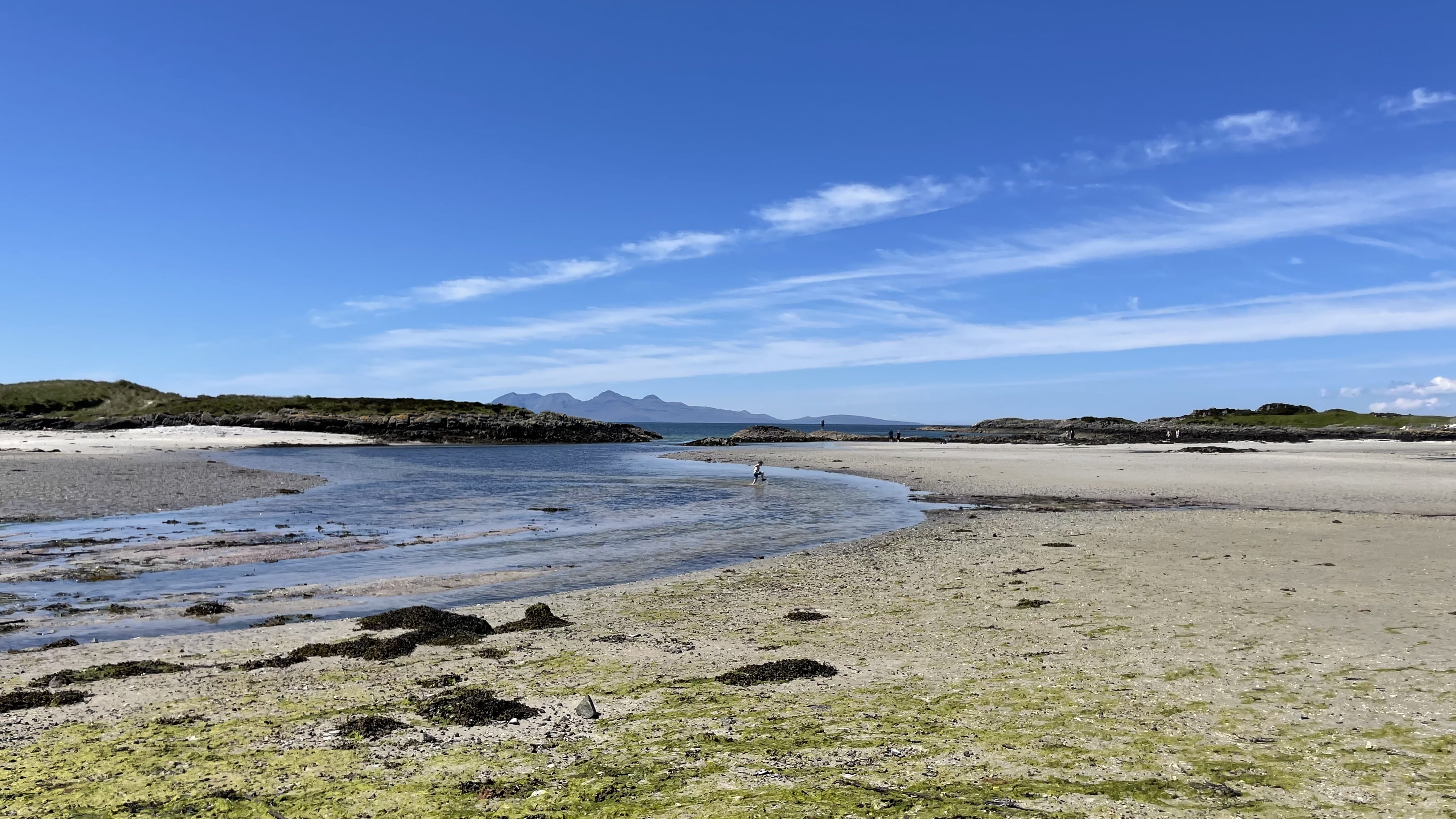
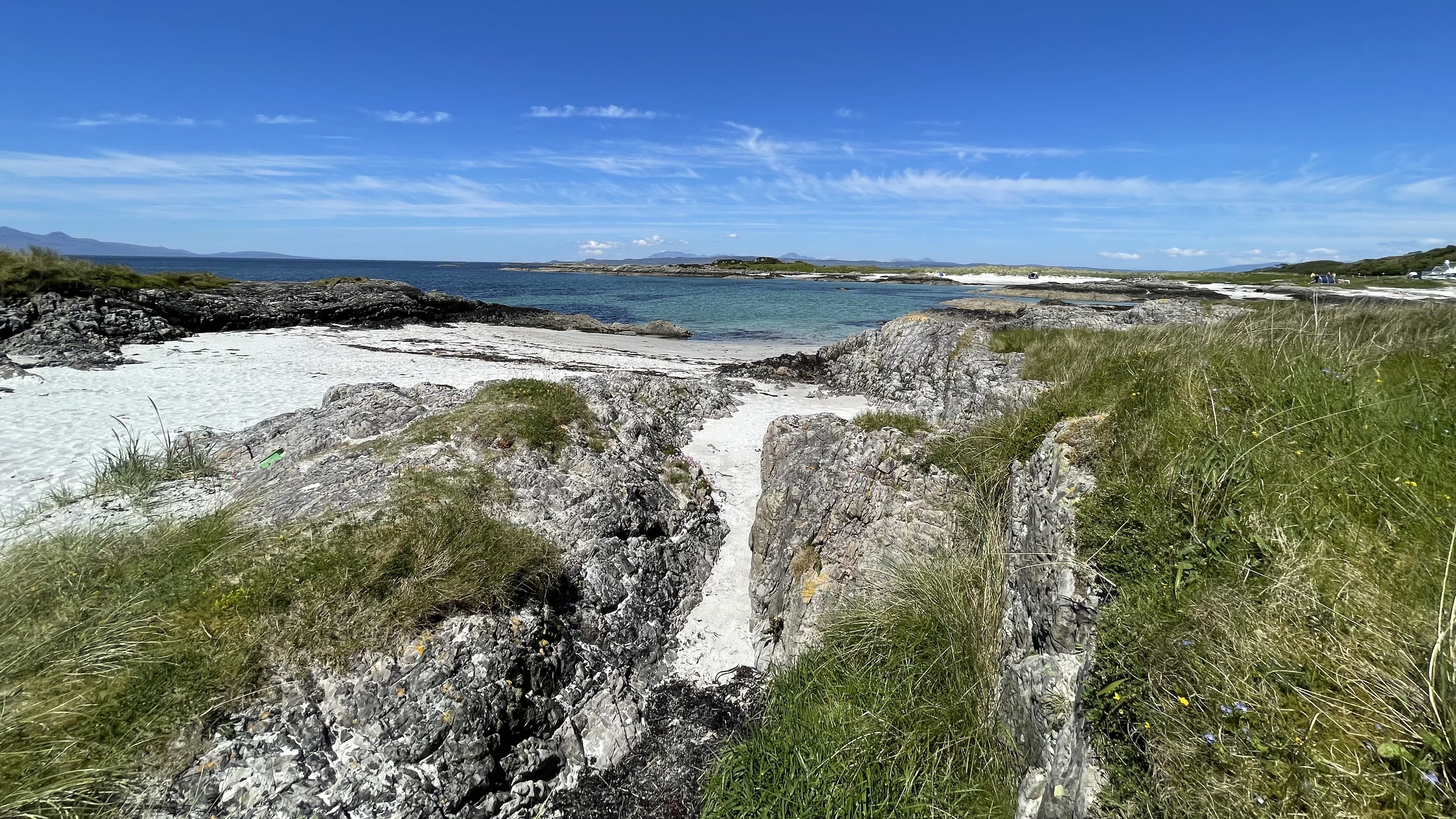
We made a stop in Arisaig, walking along the rocky coastline and taking some time to explore the shore before continuing inland.
Glencoe is known not only for its soaring mountains and dramatic scenery, but also for its brutal history. The most infamous event was the Glencoe Massacre, when members of the MacDonald clan were killed—around 38 men, with others later dying from exposure. I had mentioned the MacDonalds on yesterday’s hike.
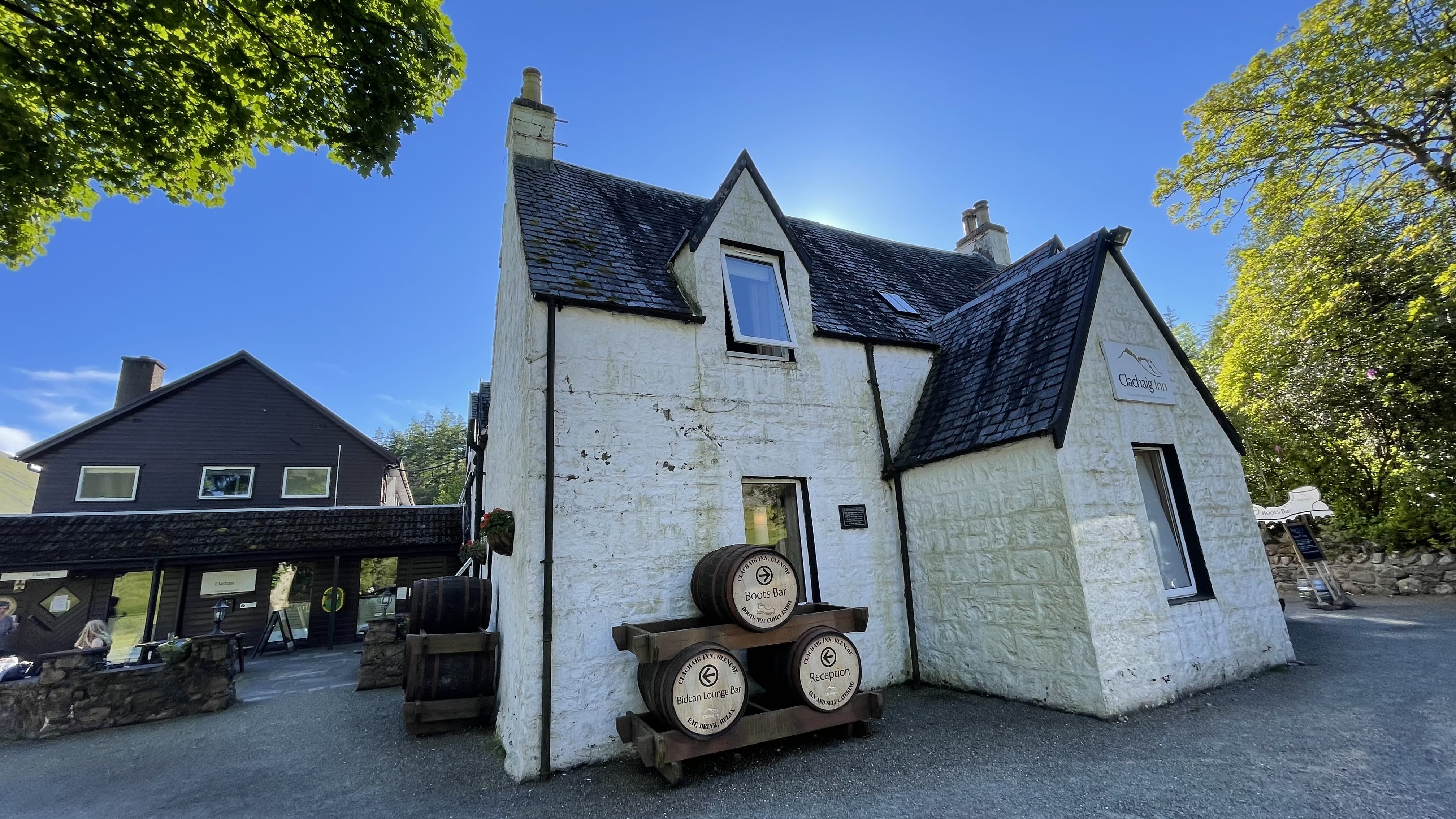
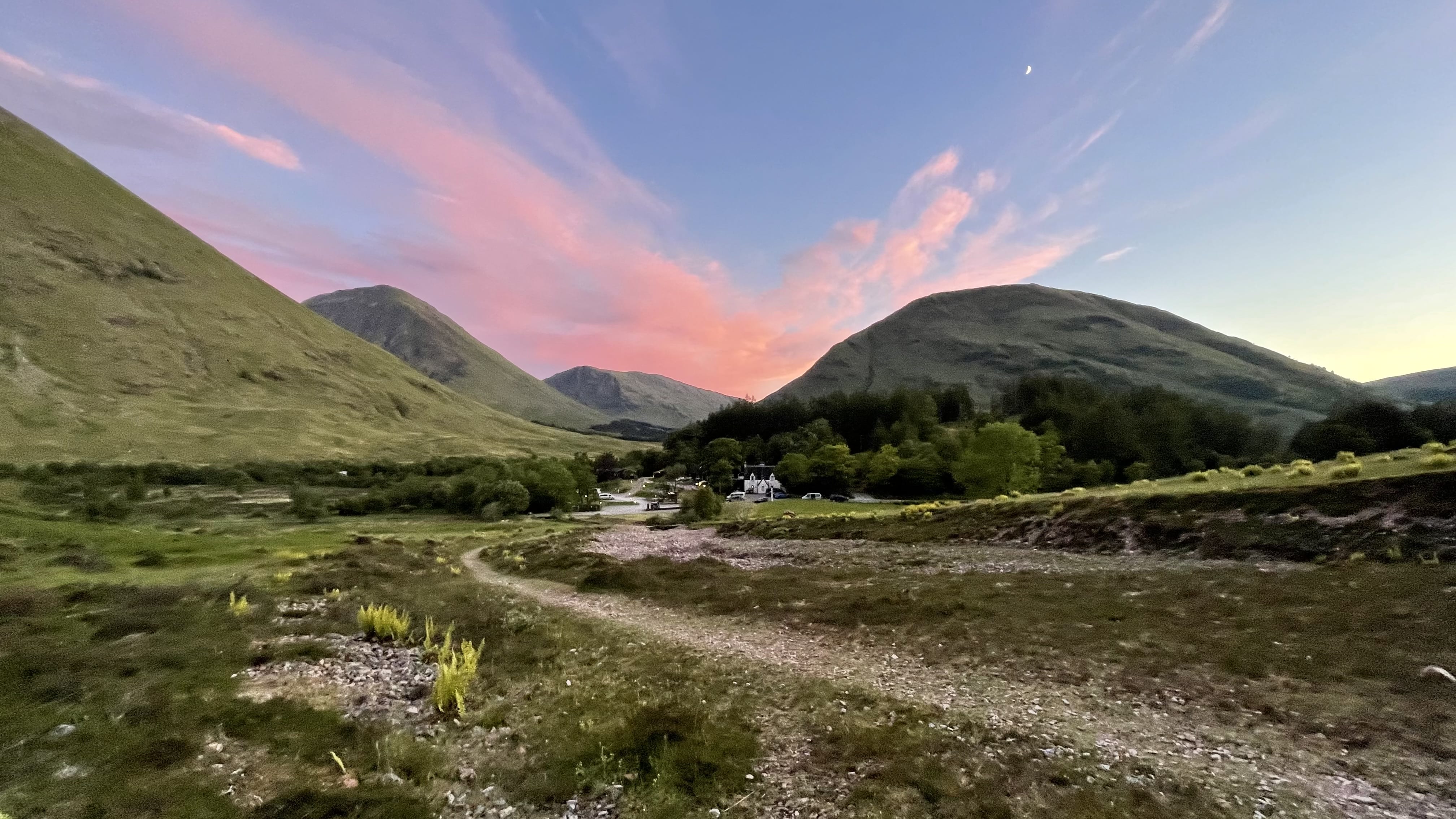
We stayed at Clachaig Inn, which had numerous nearby trails that I couldn’t resist exploring. I immediately loved the area and found myself wishing we had planned more time there. The inn also has a small bar called the Boots Bar, where most of the group gathered for a drink before dinner.
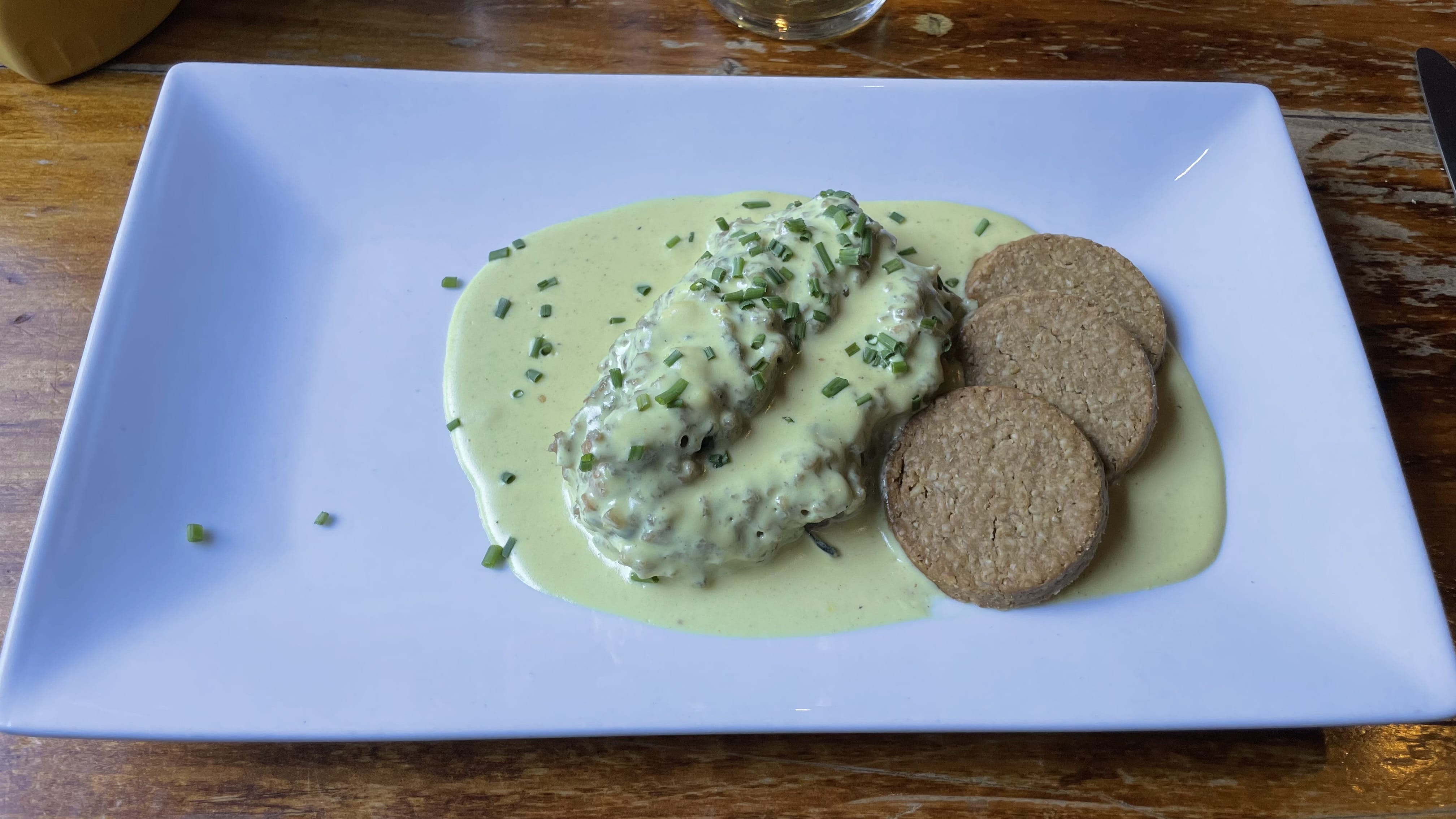
That evening we had dinner in the inn’s restaurant—I ordered vegetarian haggis with neeps (turnips) and tatties (potatoes), served with an onion and red wine gravy. They had a couple of other vegetarian options as well.
One of the strangest and most wonderful things about being there in early June was the daylight. It stayed light until after 11 pm. Even after dinner, I went out wandering again, watching the sun slowly begin to set around 10:15.
After breakfast, it was time to head back to Edinburgh. It had been a great trip—a mix of walking, good food, and landscapes that kept changing just when I thought I had a sense of them. I was especially glad I had added a few extra days in Scotland, because I wasn’t quite ready to say goodbye.
If I had one complaint, it’s that the itinerary didn’t allow for more time in Glencoe. It felt like a hiker’s paradise, and what we saw was only a glimpse. That’s always the trade-off with a group trip—you cover a lot of ground, but don’t always have time to stay longer in the places that stand out. Still, the positives far outweighed the drawbacks.
How I Spent 5 Hours in Glasgow: A Quick Visit to Scotland’s Second City
A whirlwind few hours exploring Glasgow’s architecture, street art, and lively city energy.
Exploring Edinburgh: Four Days in Scotland’s Storybook City
Cobbled streets, castle views, pubs, and hidden corners — four days in Edinburgh felt like stepping into a storybook.
Hiking the Rob Roy Way: An 8-Day Self-Guided Adventure in Scotland with Hillwalk Tours
A day-by-day account of walking through forests, glens, and quiet Highland villages along one of Scotland’s lesser-known long-distance trails, with cozy B&B stays and the simple rhythm of covering miles on foot.
Hiking Mount Kenya: A 5-Day Adventure to Africa’s Second-Highest Peak
A five-day hike on Mount Kenya, moving through forest, moorland, and alpine terrain on the way to Africa’s second-highest peak.
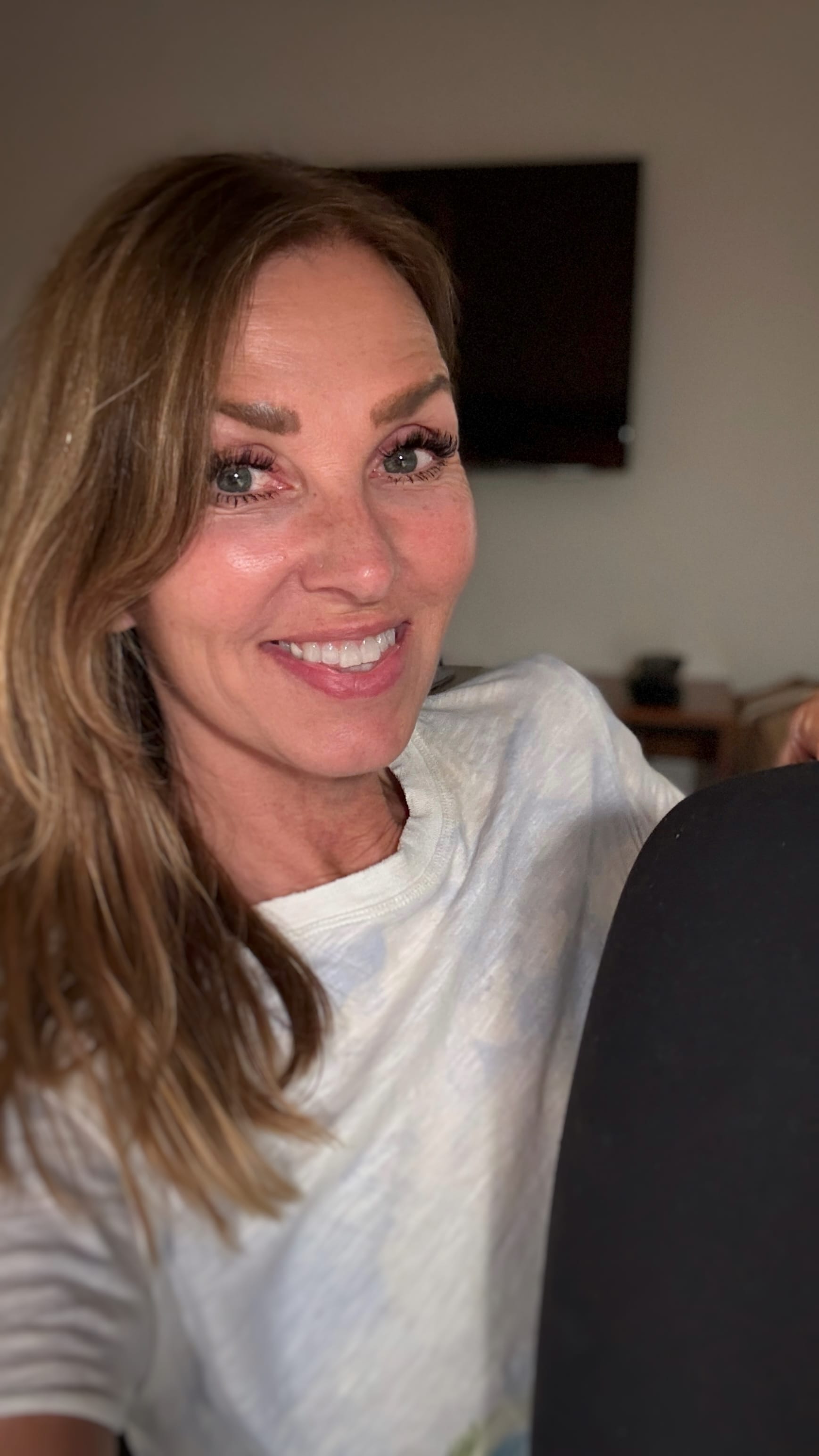
Hi, I’m JoAnne—writer, wanderer, and lover of places that surprise me. I’ve traveled to 60+ countries (and counting), usually with a camera in one hand and a notebook in the other. I’m drawn to mosaics, markets, and mountains, and I write to remember what moved me. When I’m not traveling, I’m working on my blog Travels Afoot, trying new creative projects, or planning my next adventure.